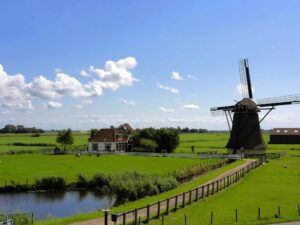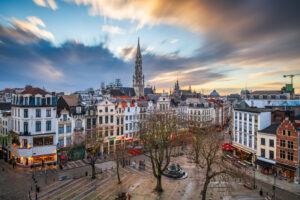
The Netherlands is a tapestry of flat, water-managed polders, vibrant tulip fields, historic canals, and modern urban centers. Roughly a quarter of its land lies below sea level, reclaimed and protected by an elaborate system of dikes and drainage networks that define much of its low-lying terrain. Endless green pastures dotted with grazing sheep and iconic windmills speak to centuries of human–water interaction, while colorful bulb fields in regions like Keukenhof draw visitors each spring. Beyond its rural charm, the Netherlands boasts intricate canal networks in cities such as Amsterdam and Utrecht, where narrow brick houses line waterways threaded by arched bridges. Modern Dutch cities blend historic façades with cutting-edge architecture—from Rotterdam’s skyline of futuristic towers to sustainable building projects throughout the Randstad. Bike-friendly streets, extensive coastal dunes along the North Sea, and pockets of dense woodland complete a landscape that is both carefully engineered and remarkably diverse.
Flat, Low-Lying Polder Landscapes
Polders & Dikes
- Definition: A polder is land reclaimed from water and enclosed by dikes, with water levels controlled via canals and pumping stations.
- Extent: Approximately 20–26% of Dutch land has been reclaimed, notably the Beemster, Schermer, and Noordoostpolder regions.
- Cultural Significance: Polders are both hydraulic feats and cultural symbols, immortalized in Golden Age paintings by artists like Jan van Goyen.
Tulip & Bulb Fields
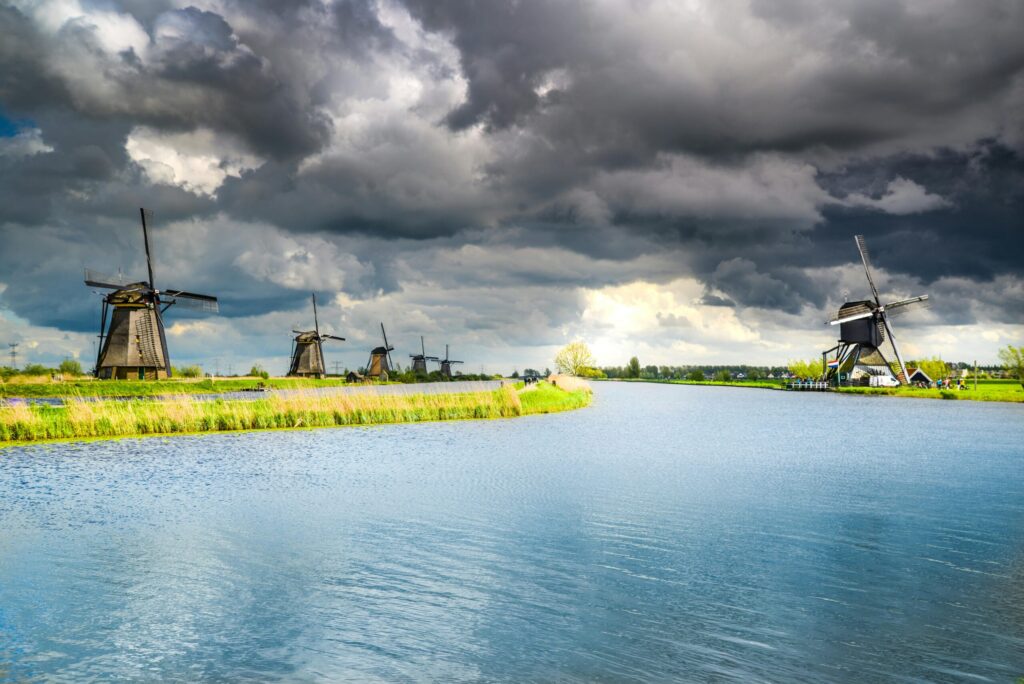
- Spring Spectacle: Blooms in Lisse and Noordoostpolder transform fields into stripes of red, yellow, purple, and white.
- Economic Role: The Netherlands is the world’s leading flower exporter, shipping billions of bulbs annually.
Waterways & Canals
- City Canals: Amsterdam’s 17th-century canal belt—over 100 km of waterways—illustrates Dutch Golden Age wealth and urban planning.
- Rural Waterways: A network of drainage canals crisscross the countryside, serving both transport and flood control.
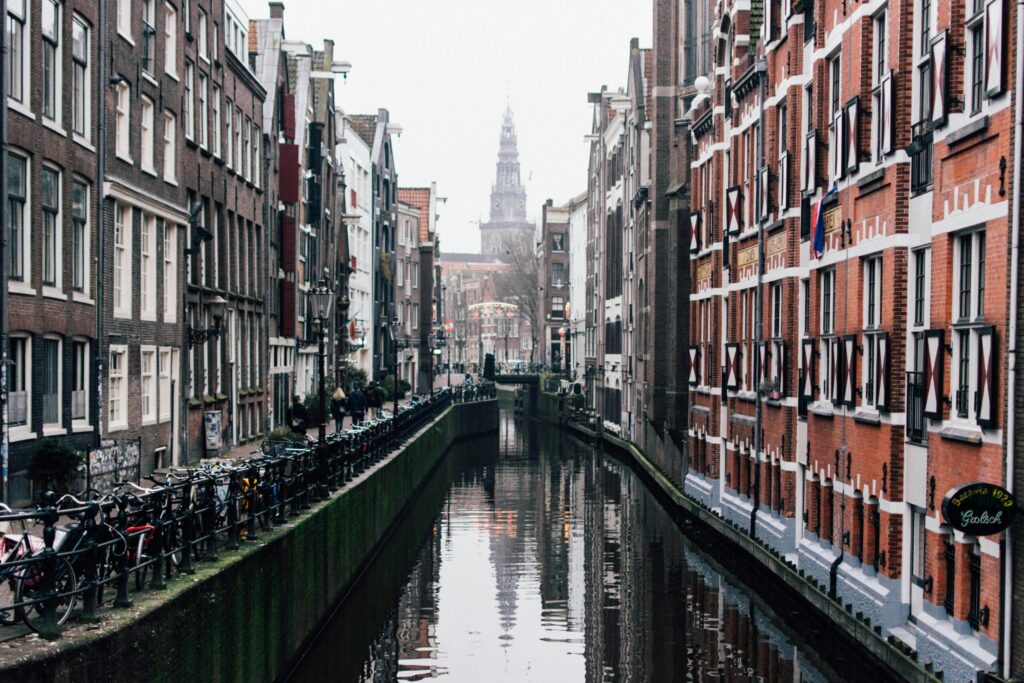
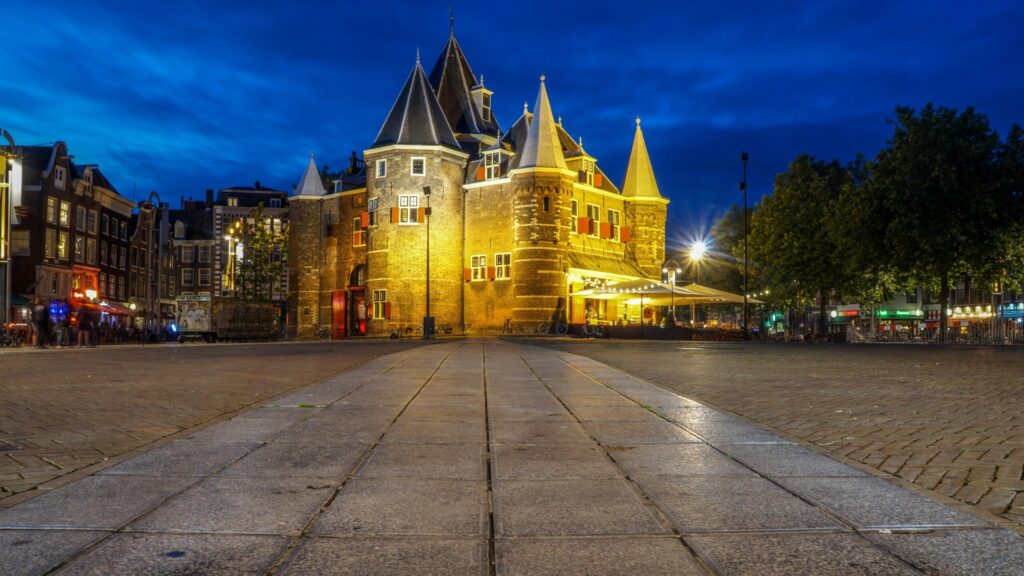
Historic & Modern Architecture
| Feature | Historic | Modern |
|---|---|---|
| Iconic Landmark | Rijksmuseum, 1885 | Rotterdam’s Erasmus Bridge, 1996 |
| Residential Style | Amsterdam canal houses, 17th–18th century | Sustainable “energy-neutral” apartment blocks |
| Urban Planning | Star-shaped forts (Naarden) | High-tech business districts (Zuidas, Amsterdam) |
- Heritage Sites: Medieval towns like Utrecht and Maastricht boast cobblestone streets and Gothic cathedrals.
- Contemporary Design: The modern skyline of Rotterdam features daring structural designs by architects like Rem Koolhaas.
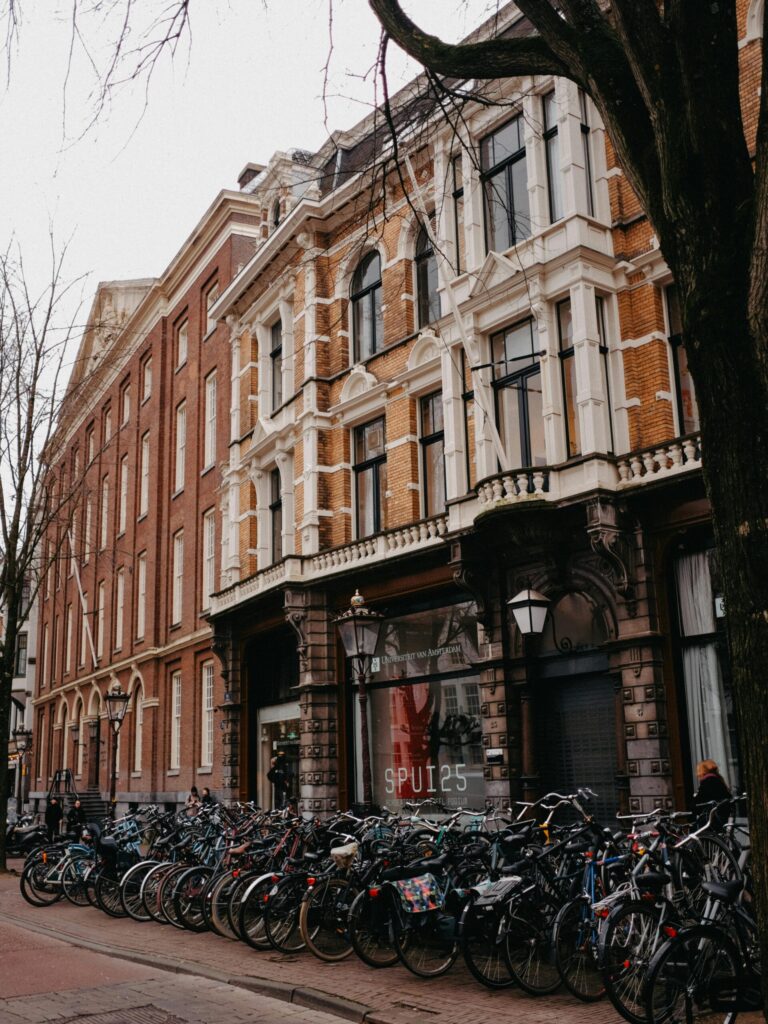
Bike-Centric Culture
- Bicycle Density: Over 23 million bikes for 17 million people, with separated lanes and multi-story parking garages.
- Health & Sustainability: Cycling accounts for nearly 30% of all trips, reinforcing eco-friendly urban mobility.
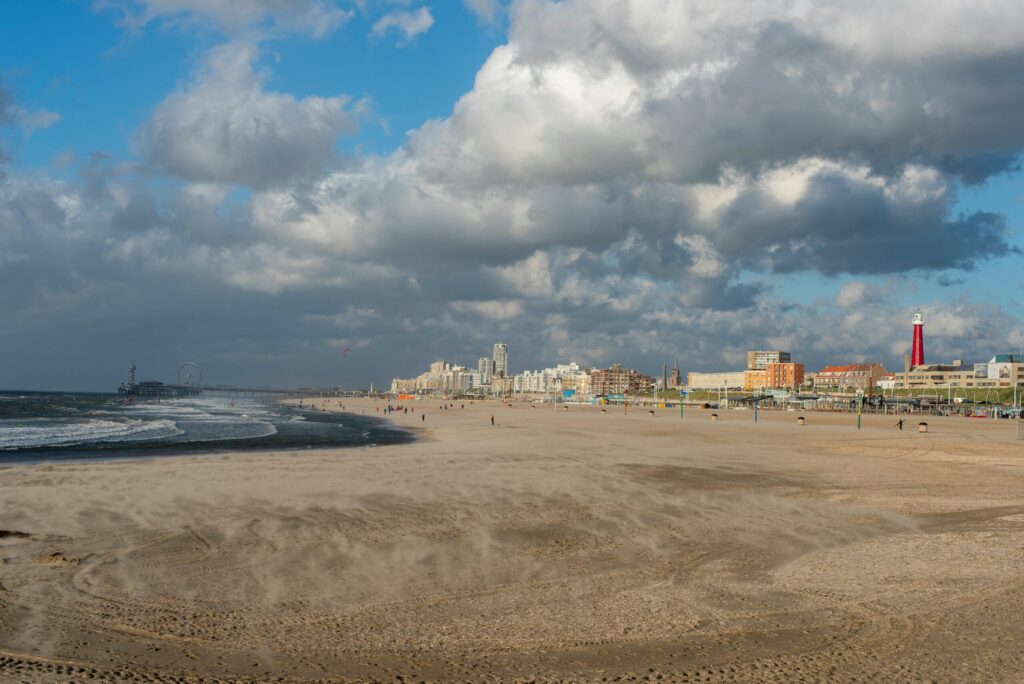
Coastal Dunes, Beaches & Woodlands
- North Sea Coast: Dune belts protect inland polders and offer sandy beaches at Scheveningen and Zandvoort.
- Wooded Areas: National parks like Hoge Veluwe showcase heathlands, forests, and wildlife habitats.
Iconic Windmills
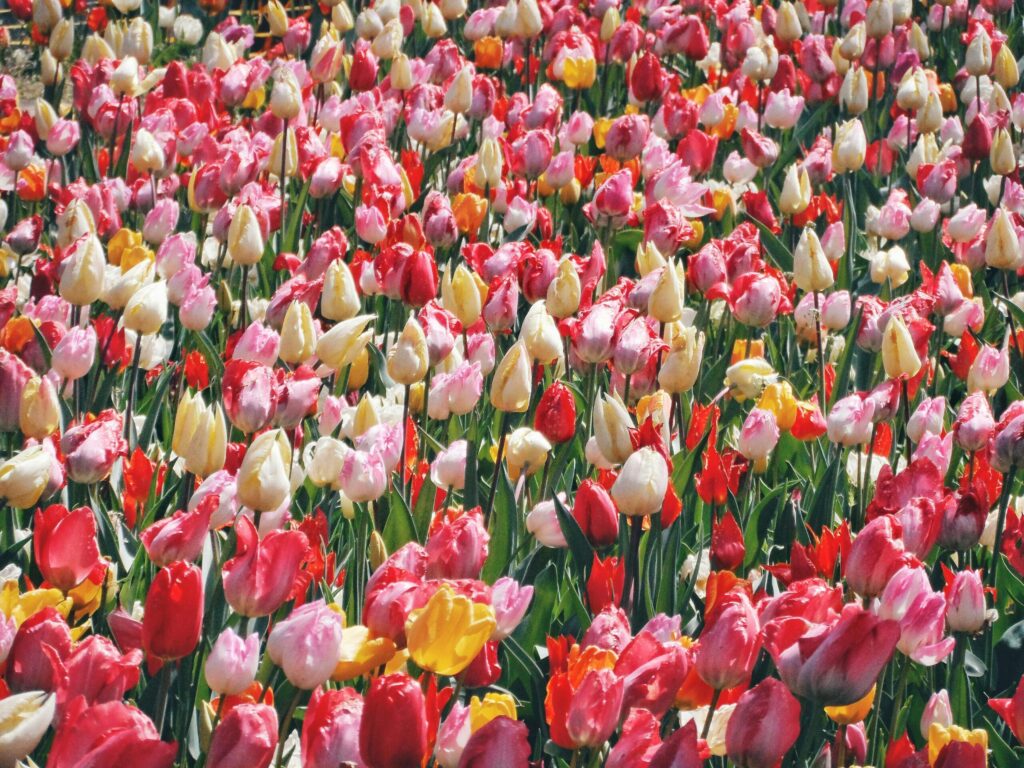
Windmills are among the most enduring symbols of the Netherlands’ innovative relationship with water and land. Originally developed in the late Middle Ages, Dutch windmills harnessed wind power to pump water out of low-lying polders and back into surrounding rivers, protecting reclaimed land from flooding. Beyond drainage, windmills also powered industrial processes such as grinding grain, sawing timber, and processing oil seeds—functions that underpinned the Dutch Golden Age economy.
By the 18th century, regions like Kinderdijk saw the construction of elaborate windmill complexes—19 mills built around 1740—that formed a coordinated hydraulic network to manage water levels and safeguard farmland. In 1997, Kinderdijk’s ensemble was designated a UNESCO World Heritage Site, both for its engineering ingenuity and its cultural significance as a testament to Dutch water management expertise. Today, millers still operate many of these historic structures, preserving traditional skills and ensuring the sails continue to turn as living heritage attractions.
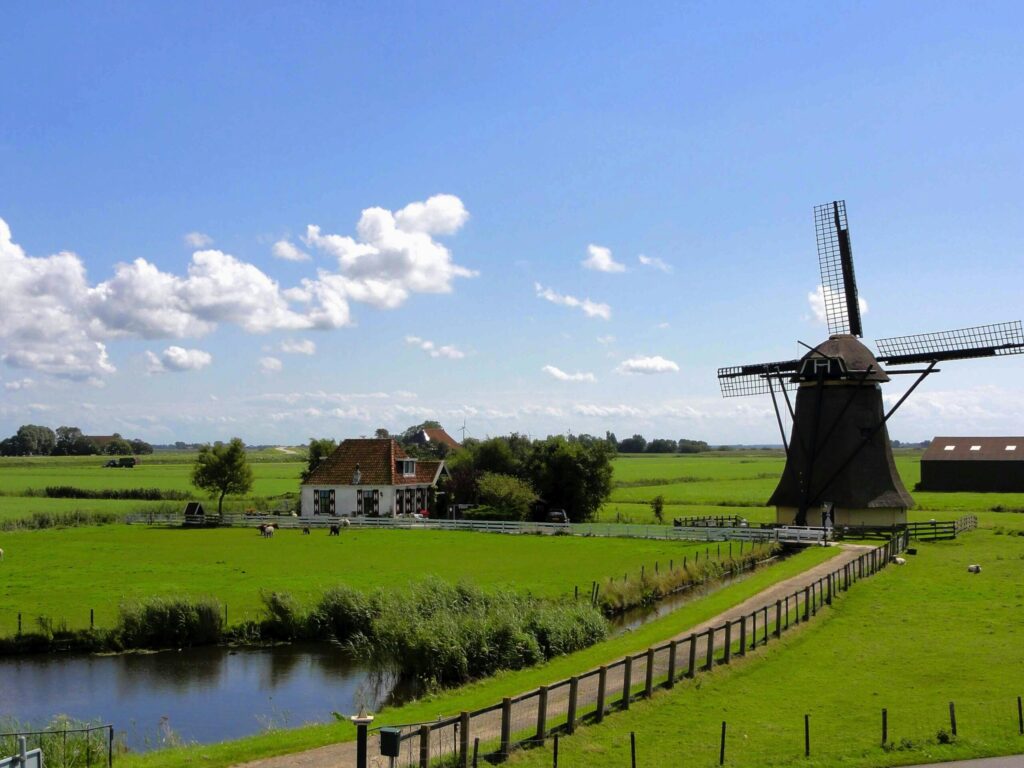
Dutch windmills come in several classic forms: the smock mill, recognizable by its tapered wooden tower and thatched sides; the post mill, an earlier design on a single rotating post ideal for unstable polder soils; and the tower mill, built of brick or stone for greater durability and height. Each type reflects specific regional needs and construction methods, from the lightweight post mills of Friesland to the robust tower mills of South Holland.
Visiting windmills remains a highlight for travelers seeking both natural beauty and industrial heritage. The Windmill Route—a curated tour through provinces like North Holland and Gelderland—links dozens of sites where visitors can explore interiors, attend milling demonstrations, and learn about the miller’s craft. Other notable locations include Zaanse Schans near Amsterdam and the village of Schiedam, home to some of the world’s tallest traditional windmills. Whether appreciated for their scenic charm, engineering history, or ongoing agricultural role, Dutch windmills stand as dynamic monuments to a country shaped by its waters.
Whether you’re drawn to pastoral polder vistas or the buzzing canals of Amsterdam, the Netherlands offers a uniquely engineered landscape that balances tradition with innovation. Trust VanOnSite for your fully GPS-tracked, door-to-door removal to the Netherlands—and start exploring its diverse scenery with peace of mind.
🔗 Learn more about our services
🔗 Get your quick quote for removals to the Netherlands
Planning a Removal to Netherlands?
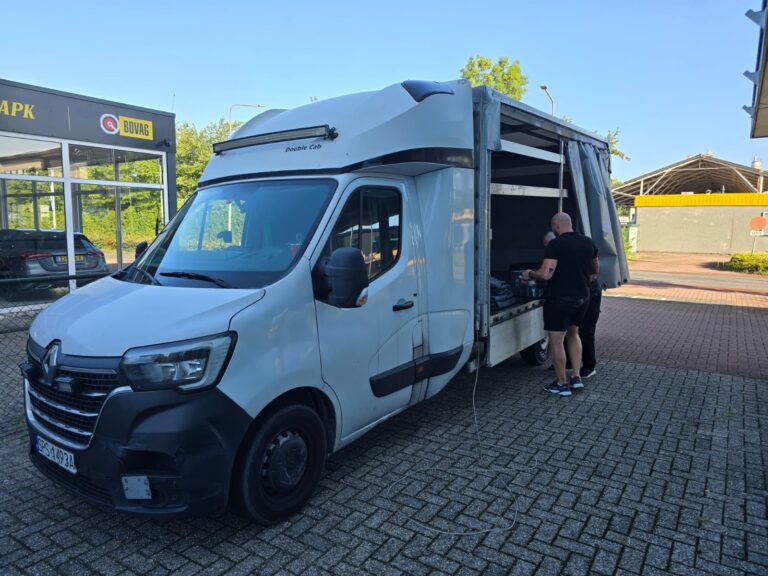
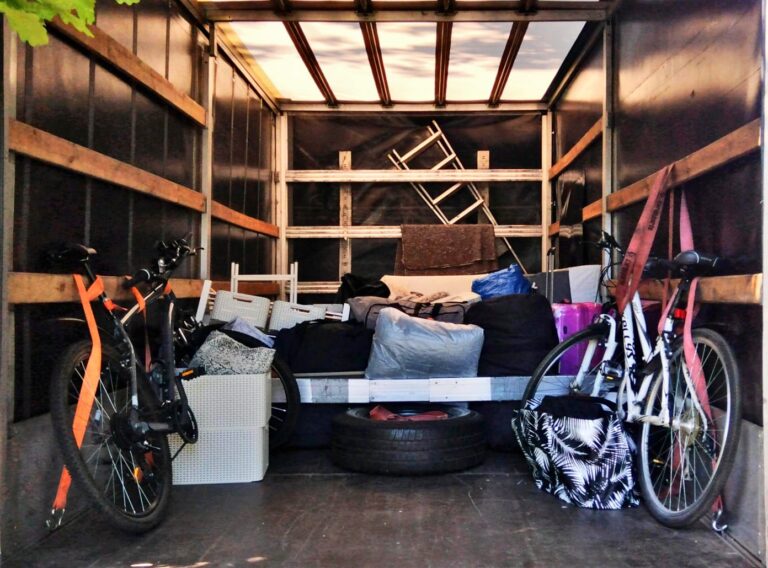
Planning a removal to the Netherlands? With VanOnSite, you benefit from a turnkey service that handles every step of your move—door-to-door transport, expert packing, customs clearance, and even last-minute scheduling. Our transparent online quoting tool delivers a fixed-price estimate in under 60 seconds, so you can budget with confidence.




Once booked, you’ll receive a unique GPS-tracking link to monitor your shipment in real time, plus dedicated support from our logistics team. Whether you’re shipping a few boxes of student essentials, delicate antiques, or an entire household, our professional crews use premium materials and specialist vehicles to ensure everything arrives safely. Let VanOnSite transform your relocation into a seamless journey—so you can focus on settling into life in the Netherlands.
Article Summary
The Netherlands is a uniquely engineered, low-lying country defined by its interplay with water. Roughly a quarter of its land lies below sea level, protected by an extensive network of dikes, polders, and pumping stations. In spring, vibrant tulip and bulb fields transform the flat landscape into sweeping ribbons of color. Historic windmills—once vital for land reclamation and industry—still dot the countryside, while UNESCO-listed sites like Kinderdijk celebrate this heritage. Urban centers such as Amsterdam and Utrecht feature centuries-old canal belts lined with narrow brick houses and arched bridges, contrasted by Rotterdam’s bold, modern skyline. Bicycle infrastructure underpins a culture of eco-friendly mobility, with over 23 million bikes across the population. Coastal dunes on the North Sea and pockets of woodland in national parks like Hoge Veluwe round out a landscape that balances tradition, innovation, and natural beauty. VanOnSite’s door-to-door, GPS-tracked removals to the Netherlands ensure your transition into this remarkable setting is as seamless as the landscape itself.
Frequently Asked Questions
1. Why is so much of the Netherlands below sea level?
Through centuries of land reclamation, the Dutch built polders—tracts of land reclaimed from lakes, marshes, and the sea—and surround them with dikes. Water levels are actively managed by canals and pumping stations to keep the land dry.
2. What are the best places to see tulip fields?
The most famous bulb-field areas are around Lisse (home to the Keukenhof gardens) and the Noordoostpolder. In April and May, organized “flower routes” let you drive or cycle past endless rows of colorful blooms.
3. How many windmills are still operational?
While thousands once powered drainage and industry, today around 1,000 historic windmills remain, many preserved as working museums. Kinderdijk’s 19-mill complex is the largest and best-known UNESCO World Heritage site.
4. What makes Dutch canals unique?
Amsterdam’s 17th-century canal belt features over 100 km of waterways organized in concentric arcs. These canals served both for defense and transport, creating the city’s iconic “Venice of the North” aesthetic.
5. Is cycling really that common?
Yes—there are more bikes than people in the Netherlands. Separated lanes, bike-only traffic lights, and multi-story parking garages make cycling safe and convenient, accounting for roughly 30% of all trips.
6. Where can I experience Dutch coastal dunes and beaches?
The island-dotted North Sea coast offers dune belts and beaches at Scheveningen, Zandvoort, and Texel. These dunes not only provide recreation but also act as natural flood defenses.
7. What natural parks showcase Holland’s countryside?
De Hoge Veluwe National Park combines heathlands, forest, and sand drifts, while the Biesbosch wetlands near Dordrecht offer river-delta landscapes and rich birdlife.
8. How can VanOnSite help me settle into the Netherlands?
Beyond expert, GPS-tracked removals from anywhere in Europe, VanOnSite provides door-to-door service, customs handling, and flexible scheduling—so you can focus on exploring your new Dutch surroundings.