
Moving to Sweden for work is an exciting step toward career growth and a better quality of life. Sweden offers a strong job market, excellent work-life balance, and extensive social benefits. To succeed, you’ll need to prepare carefully: from securing the right visa or work permit, to arranging health insurance, housing, and banking. Planning every detail — from documents and employment contracts to choosing the right van size and packing method — is essential. With VANonsite, your move becomes more than transport; it’s a GPS-tracked, fully managed relocation with options like Packing Service and White Glove Delivery.
TL;DR — 7 Key Takeaways
- Plan your relocation 8–12 weeks ahead: job contracts, documents, housing, and inventory.
- Work permits are required for non-EU/EEA citizens; EU citizens benefit from free movement.
- Costs depend on volume, distance, and service level. See live tables at Removals to Sweden.
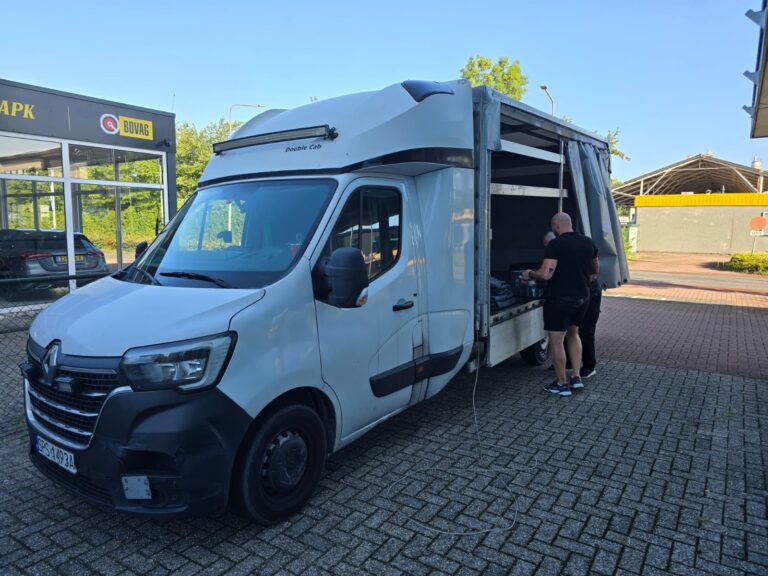
- Choose the right van: 5–90 m³, all shipments with live GPS tracking.
- Arrange moving to Sweden health insurance (EU citizens use EHIC initially; others need coverage until registered).
- Packing matters: DIY or book Packing Service; fragile items suit White Glove Delivery.
- First week focus: register at Skatteverket, get your personnummer, arrange housing contracts, and set up utilities.
Why Move to Sweden for Work?
Sweden ranks high in global quality-of-life and work-life balance. Relocating for work is not only about career development, but also about enjoying safe cities, excellent healthcare, and a strong welfare system. Understanding pros and cons will help set expectations.
Pros:
- Strong job market, especially in tech, engineering, and life sciences.
- High standard of living with reliable public transport.
- English widely spoken, easing workplace integration.
- Strong workers’ rights and parental leave policies.
Cons (and how to plan around them):
- Housing competition in Stockholm, Gothenburg, and Malmö — start early.
- Long winters with limited daylight — plan moves in daylight hours.
- Higher costs of living compared to many EU countries — budget accordingly.
Work Culture Snapshot
- Flat hierarchies and collaborative decision-making.
- Emphasis on work–life balance and punctuality.
- Meetings are structured; come prepared and concise.
- Expect generous vacation policies and parental leave norms.


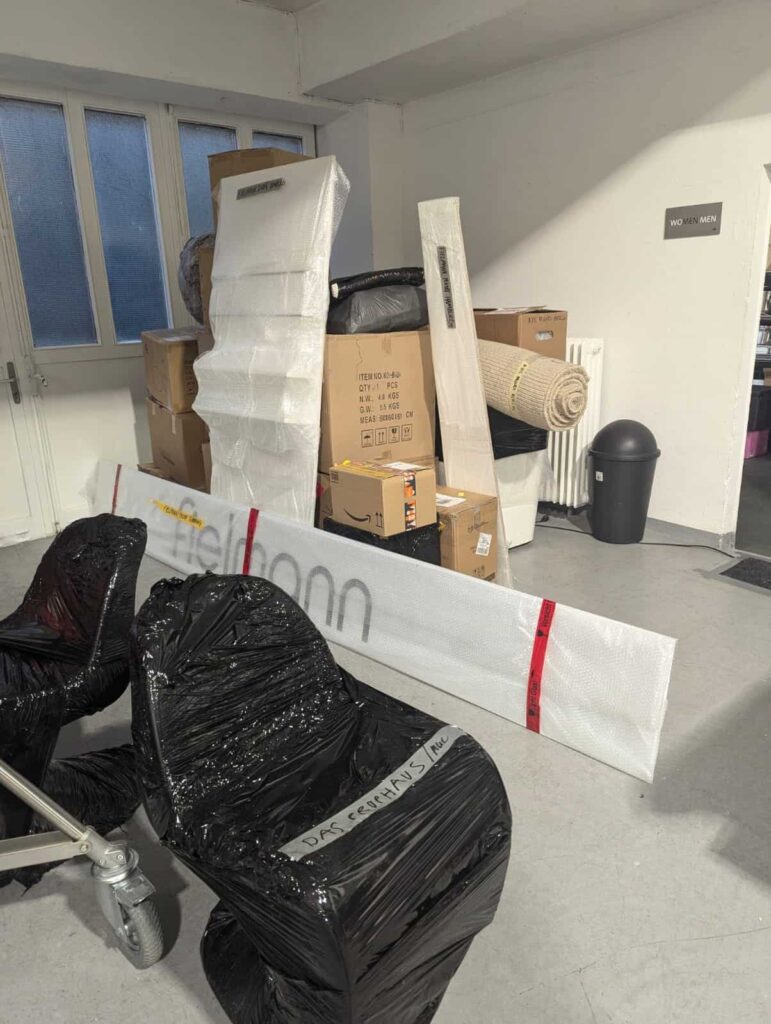
Documents & Work Permits
For EU/EEA/Swiss citizens
- No visa required — free movement applies.
- If you will live and work long‑term, register at Skatteverket (population register) to obtain your personnummer.
- Bring: passport/ID, Swedish address/lease or host letter, and employment contract or proof of income.
- After the personnummer: apply for ID‑kort, set up BankID, open a bank account, and register with healthcare (see next section).
- If you don’t yet qualify for a personnummer (short stay), ask your employer about a samordningsnummer (coordination number) for payroll/tax while you settle.
For non‑EU citizens
- Secure a job offer first; your employer initiates a work‑permit application with the Swedish Migration Agency.
- Ensure the offer meets Swedish salary and insurance standards for the role; your employer will confirm compliance.
- Steps in brief: online application → biometrics appointment (photo/fingerprints) → decision → residence permit card issuance.
- You generally must receive your permit before entering Sweden to work. Family members can often apply at the same time.
- Typical processing time can vary (often 1–3 months for straightforward cases), and longer if dependants are included.
- Alternatives for highly qualified roles may include the EU Blue Card route; confirm eligibility with your employer.
- Keep copies of: passport, employment contract, insurance documents, proof of housing, and marriage/birth certificates (if applicable).
Salary, Contract & Tax Basics (high level)
- Offer letters should clearly state role, salary, benefits, working hours, and probation (provanställning).
- Sweden’s vacation minimum is generous; many workplaces have collective agreements covering pensions and insurance — ask HR for details.
- Keep contracts and payslips; they’re useful for banking and rental applications.
- Newcomers typically arrange tax after receiving a personnummer; if you’re waiting, your employer can use a samordningsnummer.
- Some newcomers may be eligible for non‑resident tax (SINK) during short assignments — discuss with payroll.
Moving to Sweden Health Insurance
Healthcare access depends on your residency status and registration.
- EU/EEA/Swiss citizens: covered by EHIC for medically necessary care until you register in Sweden. After registration, sign up with Försäkringskassan for full access to the national system.
- Non‑EU citizens: maintain private health insurance covering the period until your personnummer/registration is complete. Your work‑permit package usually requires proof of insurance.
Practical checklist
- Carry your EHIC (if applicable) or private insurance certificate; keep scans on your phone.
- Register with Försäkringskassan once you have your personnummer.
- Choose a local Vårdcentral (GP) and save their contact details.
- Keep vaccination records and regular prescriptions handy; ask your current doctor for an English summary.
- Consider a top‑up private plan for dental/vision or faster specialist access during your first months.
Pro tip: If timing is tight, use tele‑consultations to renew prescriptions while your GP registration completes.
Costs of Moving
Every move is unique, and we don’t publish fixed prices here. Key drivers:
- Volume/weight of belongings (van size and crew time).
- Route and distance (e.g., bridge vs short ferry; overnight staging).
- Access constraints: stairs, long carries, narrow streets, city permits.
- Season & lead time: end‑of‑month peaks, winter buffers, holidays.
- Service level: DIY vs Packing Service vs White Glove.
- Stops & extras: additional pick‑ups/drops, debris removal, storage.
Where to check prices: See live capacity bands at Removals to Sweden and request a tailored quote.
Service Bundles (scope clarity — no prices)
| Bundle name | What’s included (typical) | Best for |
|---|---|---|
| Transport Only | Load → linehaul → unload, basic protection, GPS ETAs | Minimal volume, DIY packers |
| Assisted Pack | As above + partial kitchen/glass pack + mattress/TV covers | Balanced time vs budget |
| Full Pack | Full home pack + dis/assembly + room‑by‑room placement | Time‑poor families, long distance |
| White Glove | Crating for art/IT, premium protection, precise placement & install | High‑value items, executives |
| Storage Add‑on | Secure storage with staged delivery when keys don’t align | Chain breaks & long searches |
Quote checklist (expanded):
- Pickup/delivery floors & lift sizes, door widths, stair turns.
- Parking distance to door, height/length limits, LEZ/permits.
- Fragile list (TVs/art/IT), dis/assembly needs, wall‑mount removals.
- Children/pets timing, preferred dates & flexibility window.
- Extra stops, debris collection, White Glove or special handling.
Groupage vs Dedicated (choose your model)
| Model | How it works | Pros | Considerations |
|---|---|---|---|
| Groupage | Share space with others | Lower cost for small/medium loads | Wider delivery window; stricter item rules |
| Dedicated | Your goods only, direct | Precise timing; fewer touch‑points | Higher cost; ideal for fragile/premium, tight ETAs |
| Express | Dedicated, time‑critical | Fastest door‑to‑door | Premium service; requires date certainty |
Why Choose VANonsite?
Choosing the right partner speeds up your start date and reduces downtime. With VANonsite you get precision, safety, and control.




- Live GPS tracking and proactive ETAs for every load.
- Fleet from 5–90 m³, fitting students to whole‑house moves (single items to full offices).
- Packing Service and White Glove Delivery for safe transport.
- Expert crews who manage stairs, lifts, permits, and old‑town access.
- Sustainable fleet and route planning to reduce idle time and emissions.
- End‑to‑end support: packing, Furniture Removals, Home Removals, Office Removals, Storage, and student moves.
- Transparent quoting via Removals to Sweden.
Ready in three steps:
- Share dates, from/to postcodes, and rough volume (or room count).
- We confirm the corridor, van size, and crew plan with GPS milestones.
- You track progress and receive delivery to room, with optional unpack.
Start your Sweden work relocation with confidence — request your tailored quote today.
Choosing the Right Van Size
All vans come with live GPS tracking so you always know where your shipment is.
| Vehicle | Capacity | Max Weight | Best For | Example Load |
|---|---|---|---|---|
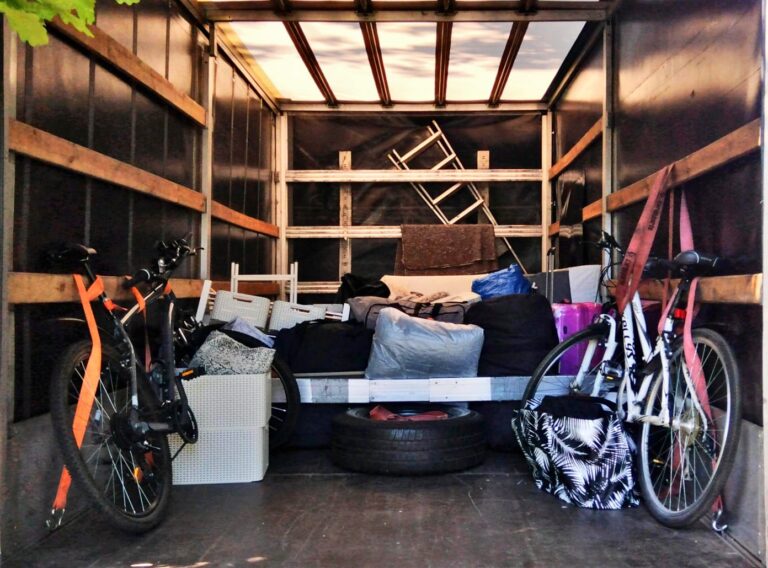
| Moving Basic | 5 m³ | 300 kg | Students or minimal | 20–30 boxes + bike |
| Moving Medium | 10 m³ | 600 kg | 1–2 rooms | Boxes + small sofa + desk |
| Moving Premium | 15 m³ | 1,000 kg | 2–3 rooms | Bed + wardrobe + dining set |
| Moving Premium Plus | 30 m³ | 3,500 kg | Family apartments | Multiple rooms + appliances + outdoor gear |
| Moving Full House XXL | 90 m³ | 20,000 kg | Large homes or offices | Whole household + garage/garden |
Weight awareness: books/tools can hit limits before the van looks full. Split heavy items across boxes and mark HEAVY.
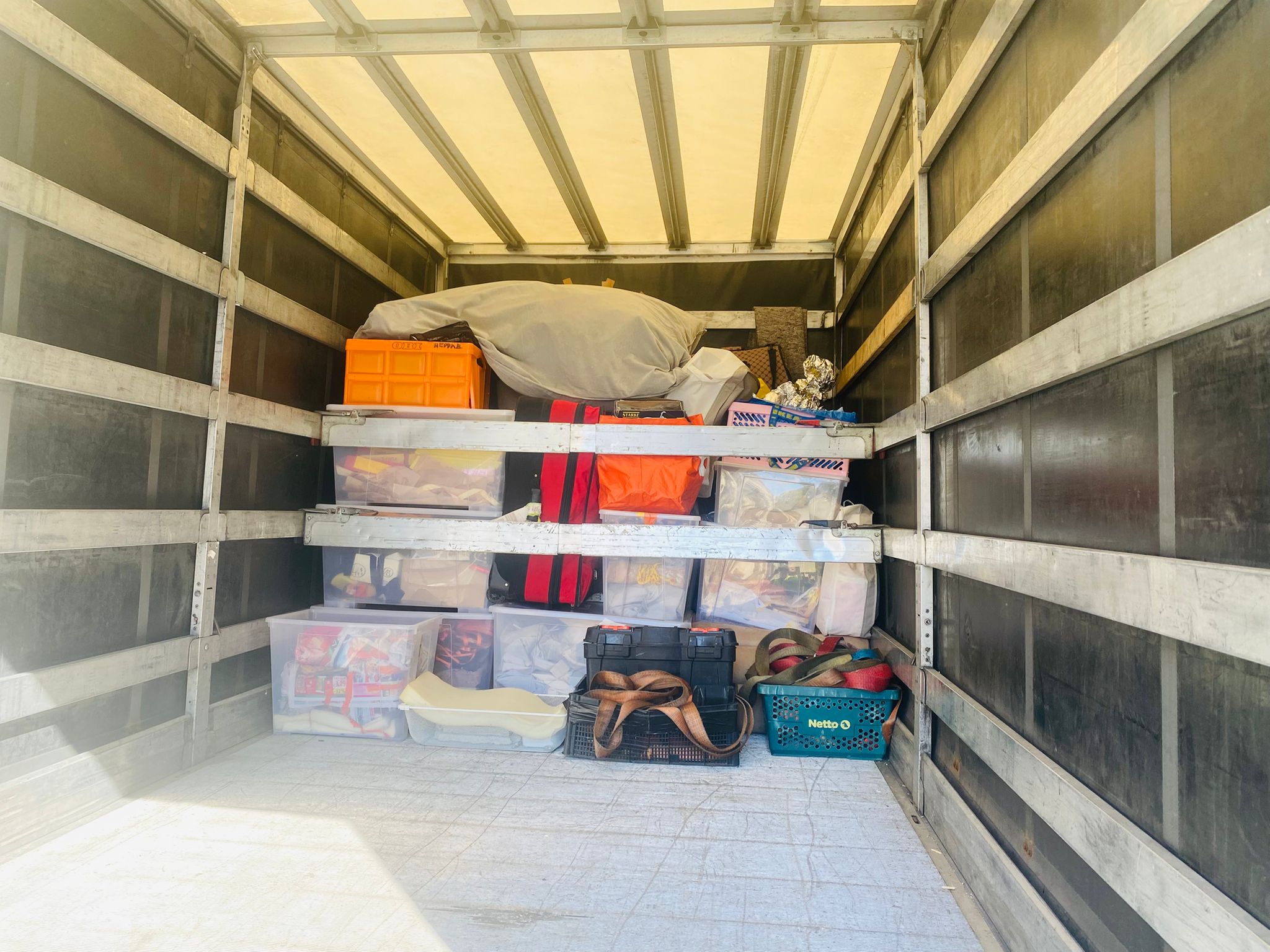
Box‑to‑m³ shortcuts: Small ≈ 3 boxes = 1 m³ • Medium ≈ 2 boxes = 1 m³ • Wardrobe/TV crates ≈ 0.3–0.5 m³ each. Add 10–15% buffer for padding and last‑minute items.
Two‑van logic: Narrow streets, low arches, or tight stairwells? Two 15 m³ vans can beat one 30 m³ on speed and access, with similar total capacity and fewer risks.
Access decision matrix
| Access constraint | Risk if oversized | Safer plan (examples) |
|---|---|---|
| Old‑town/narrow lanes | Van can’t reach door | Smaller van or shuttle from wider road |
| No lift, tight turns | Damage/slow carries | 10–15 m³ + extra crew; pre‑planned disassembly |
| Height/length limits | Garage/arch clearance | Share limits early; pick a compatible vehicle |
| Long carry (50 m +) | Crew fatigue/time loss | Trolleys/ramps; staging close to entrance |
Routes & Timing
Smart routing saves days and lowers risk. Share dates early so we can match you to the most reliable corridor and avoid peak surcharges.
Most common corridors:
- Germany/Denmark → Øresund Bridge → Sweden — land‑based and predictable. Ideal for precise ETAs and winter stability.
- Ferry routes from Poland, Germany, or the Baltics — shorter sea legs can reduce driver hours and add an overnight rest.
- Direct Germany ↔ Sweden ferries (e.g., long overnight sailings) — good for heavy loads and fewer touch‑points.
- Norway/Finland land entries — relevant for cross‑Nordic assignments (E6/E4 corridors). Useful if your employer is splitting deliveries.
Route matrix (compare at a glance)
| Corridor | Road miles | Sea time | Predictability | Best when |
|---|---|---|---|---|
| All‑land via DK + Øresund | High | None | Very high | Tight slots, winter stability |
| Hybrid (short ferry + bridges) | Moderate | Short | High | Prefer a break/overnight rest |
| Long overnight DE ↔ SE ferry | Low‑mod | Long | High | Heavy loads, fewer touch‑points |
Example transit windows (typical): Northern Germany → south Sweden 1–2 days; central Germany/Poland → Stockholm/Gothenburg 2–3 days; Iberia/Baltics can add extra stages. Exact ETAs depend on van size, rest rules, and weather.
Timing windows & seasons
- Avoid end‑of‑month peaks when possible; mid‑week loading is smoother.
- In winter, add buffer days and target daylight unloading windows.
- Share building lift reservations and parking permits upfront; we’ll align crew timing and shuttle plans for narrow streets/LEZ zones.
- Watch for public holidays in Sweden and along the route; some buildings restrict weekend access.
- Long corridors follow driver hours & rest rules; we stage overnight stops to keep ETAs realistic.
Winter tip: Plan extra days for weather disruptions; keep essentials in an Open‑First box.
Packing & Protection
Good packing protects your career start. Faster unloading means you can focus on HR onboarding and your new role.
Choose between:
- DIY packing: use sturdy boxes, label by room & priority, keep boxes under 20 kg.
- Packing Service************************: professionals handle fragile/delicate items and full‑home packs.
- White Glove Delivery************************: for art, pianos, premium electronics — crating, precise placement, assembly.
Checklist:
- Build Open‑First box (IDs, meds, chargers, bedding, tools).
- Use double‑walled boxes, mattress covers, and furniture blankets.
- Photograph valuables and serial numbers before packing.
- Color‑code labels by room; add Priority 1–3 to speed delivery.
Room‑by‑room plan (work edition):
- Work kit: laptop, dock, monitor/stand, cables, multi‑plug, router, ID lanyard, HR/contract folder. Pack last, unload first.
- Kitchen: kettle, coffee/tea, two sets of cutlery, pan, cleaning basics.
- Bedroom: bedding for first two nights; warm layer for winter arrivals.
- Bathroom: toiletries, basic meds, towels, tissue.
- Living/IT: label remotes and keep screws/bolts in zip bags taped to furniture.
Protection tips:
- Electronics: let them acclimatise 12–24h before power‑on after winter transit.
- Liquids/perishables: avoid in groupage; seal and bag anything that might leak.
- Wall mounts/shelves: photograph layouts; keep fixings together.
Do‑not‑pack (ADR/safety): paints/solvents, gas cylinders/fuel, bulk aerosols, corrosive chemicals, fireworks, and large lithium batteries (declare any lithium packs; some travel separately).
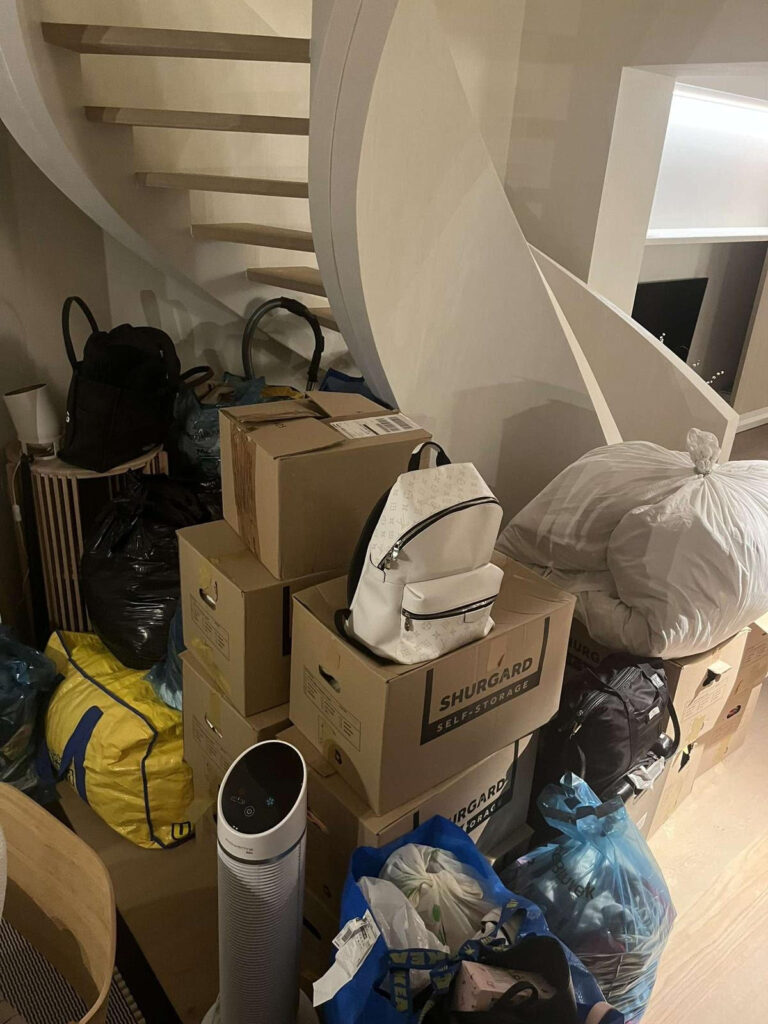


Arrival in Sweden: First Week Essentials
Your first week sets the tone. Handle identity, banking, and healthcare quickly so payroll and housing proceed without delays.
- Register at Skatteverket (for personnummer).
- Apply for ID‑kort and BankID (digital ID).
- Open a bank account.
- Register with Försäkringskassan for healthcare.
- Set up housing contracts, utilities, and waste services.
- Explore schools/daycare if moving with family.
- Get a SIM card and transport card (e.g., SL/Västtrafik/Skånetrafiken).
- Share your address & personnummer with HR/payroll to avoid delays.
7‑Day Admin Sprint (printable table)
| Day | Task cluster | Tip | Owner |
|---|---|---|---|
| 1 | Utilities & internet | Photograph meter readings; connect router early | You |
| 2 | Skatteverket registration | Bring ID + lease/host letter; keep names/addresses consistent | You |
| 3 | ID‑kort & BankID | Book the ID‑kort slot as soon as personnummer is issued | You |
| 4 | Banking | Use passport + employment contract + personnummer | You |
| 5 | Försäkringskassan (healthcare) | Keep EHIC/private insurance as backup until fully registered | You |
| 6 | GP (Vårdcentral) | Take vaccination records; ask about English‑speaking doctors | You |
| 7 | Schools/childcare (if relevant) | Share previous school reports; request a buddy/mentor programme | You |
| 1–7 | Employer/HR updates | Provide personnummer/address; confirm tax code or SINK status | You |
First‑week extras: get home insurance, register for recycling apps, and note local quiet‑hours.
Work–Life & Housing Tips
A smoother daily life starts with a solid housing plan and predictable commutes. Use the steps below and avoid avoidable costs.
Housing — how to win the search
- Start early (4–8 weeks before arrival). Prepare ID, employment contract, payslips, references, and a brief tenant intro.
- Target areas by commute time, not distance. Check transit to your office and late‑evening options.
- Shortlist listings and book viewings for your first 72 hours in Sweden; consider temporary housing for overlap.
- Measure big items (sofa, wardrobes, desks). Check stair turns and lift dimensions before you sign.
- Understand contract types: first‑hand vs second‑hand; warm rent (heating included) vs cold.
- Document handover with photos of every room and meter readings.
Quick rental glossary
| Term (SV) | Meaning (EN) | Why it matters |
|---|---|---|
| Förstahandskontrakt | First‑hand rental contract | Long‑term security; harder to obtain in cities |
| Andrahandskontrakt | Second‑hand/sublet | Flexible; verify landlord permission |
| Hyresrätt | Tenancy (rental) | Standard rental form |
| Bostadsrätt | Tenant‑owned/condo | Sublets require permission; check house rules |
| Deposition | Security deposit | Confirm amount, return conditions, inspection |
| Uppsägningstid | Notice period | Typical 1–3 months; check exact clause |
| Besiktningsprotokoll | Move‑in/out inspection protocol | Protects your deposit |
Landlord document checklist: passport/ID • employment contract • last 3 payslips • references • personnummer (if available) • home insurance proof (often requested).
Commuting — pick the best daily route
| City/Region | Typical modes | Pass name (example) | Insider tip |
|---|---|---|---|
| Stockholm | Metro, rail, bus, ferry, bike | SL travelcard | Combine bike + metro for fastest crosstown |
| Gothenburg | Tram, bus, rail, bike | Västtrafik card | Trams are frequent; allow transfer time |
| Malmö/Skåne | Train (Öresund), bus, bike | Skånetrafiken card | Easy commute to Copenhagen via Öresund |
Cycling notes: excellent bike lanes; invest in lights and winter tires if riding year‑round.
Seasonal living — small habits, big comfort
- Winter: daylight is short; schedule deliveries in daylight. Keep warm layers and lamps handy.
- Home care: ventilate to reduce condensation; photograph radiators and thermostats on handover.
- Safety: winter shoes with grip; keep a torch and basic toolkit.
Community & integration
- Join industry meetups and expat groups; say yes to fika invites.
- Consider SFI (Swedish for Immigrants) classes; many workplaces support language learning.
- Ask HR about union membership and benefits covered by collective agreements.
- Explore local sports clubs and volunteering to grow your network.
Family & pets: pre‑book daycare/school meetings; carry vaccination records for kids and pets; check pet rules in your lease.
Common Mistakes (and How to Avoid Them)
- Under‑declaring volume → share photos/video for accurate van sizing; choose the right 5–90 m³ van early.
- Skipping permits/lift bookings → reserve bays/lifts in both locations; align with crew arrival.
- No measurements → measure sofa/wardrobes + stair turns; confirm lift size to avoid failed delivery.
- Packing liquids/perishables → avoid in groupage; bag anything that could leak; protect electronics from temperature shock.
- No Open‑First box → pack IDs, meds, chargers, bedding, tools; keep with you, not in the van.
- Not syncing HR data → give payroll your personnummer and address in week one.
- Forgetting winter risks → add buffer days; target daylight unload; plan snow/ice access.
- Ignoring LEZ/old‑town access → disclose restrictions; we’ll plan shuttles or smaller vans.
- Lithium batteries undeclared → tell us device models/Wh rating; some packs travel separately.
- Keys/contract mis‑timed → book Storage add‑on or interim delivery to avoid re‑routing costs.
- No inspection photos → record meter readings and room condition at move‑in/out to protect your deposit.
- Late banking setup → schedule ID‑kort/BankID early to avoid payroll/rent delays.
Accessibility & Special Items
Every relocation is unique. If anyone in your household has mobility or sensory needs, plan access and handling at both ends. We can deploy ramps, extra crew, and room‑by‑room placement — and we coordinate directly with building management to reserve bays and lifts.
Pre‑move accessibility audit (15‑minute call):
- Map the path of travel (street → entrance → lift/stairs → rooms). Share photos/videos of tight spots.
- Reserve lift slots and parking nearest the entrance; confirm out‑of‑hours access if needed.
- Share door widths, stair turn radii, thresholds/steps, and flooring types.
- Flag continuous‑care items (wheelchairs, hospital beds, hoists) and any cold‑chain meds.
Medical, mobility & assistive tech:
- White‑glove handling for wheelchairs, scooters, walkers, hoists; we crate sensitive parts and label charge cables.
- Keep daily‑use meds and documents with you; pack a 72‑hour personal kit.
- Electronics and medical devices arriving from cold climates should acclimatise 12–24h before use.
Sensory‑friendly move options:
- Quieter AM slots or split‑day crews to reduce noise and fatigue.
- Advance notice before each phase (load, transit, unload); predictable routines help.
- Minimal‑touch unpack for key rooms (bedroom, bathroom, workspace).
Accommodation playbook (examples)
| Need | Adjustment we can provide |
|---|---|
| No‑stairs delivery | Portable ramps, extra crew, shuttle plan |
| Narrow doors/corridors | Smaller vans, sectional moves, on‑site disassembly |
| Limited lift capacity/time | Staged loads, priority order, off‑peak scheduling |
| Low‑stimulus requirement | Quiet tools, shorter shifts, single‑point contact |
See our dedicated guide: Moving to Sweden with a Disability.
FAQs
How early should I book my move? 8–12 weeks before departure is ideal.
Do EU citizens need a visa? No, only registration in Sweden is required.
Do I need health insurance before personnummer? Yes. Use EHIC (EU) or private cover until you register; then join Försäkringskassan.
How much does the move cost? It depends on volume, route, access, and service level. See the live tables at Removals to Sweden and request a tailored quote.
Can I bring my car? Yes, but you must register it after arrival; plan for inspections and insurance.
What if my keys are delayed? VANonsite offers Storage with flexible delivery.
Is everything tracked? Yes, all vans provide GPS tracking with milestone updates.
Can you handle pianos or premium items? Yes — ask about White Glove Delivery for crating and precise placement.
Do you offer last‑minute moving? Yes — see Last Minute Moving and contact us for availability.