
TL:DR (7 bullets)
- Map a crisp 30‑day plan: declutter 10–20%, right‑size your vehicle, lock your corridor via Denmark/Germany, and prep a clean Swiss customs inventory with box numbers and realistic values.
- Sort permits and numbers early: residence formalities, address registration, and mandatory Swiss health insurance within the first 3 months after arrival.
- Claim duty‑free relief on used household goods when eligible. Bring an itemised list, proof of residence abroad, and the Swiss relocation form at the border.
- Decide your route by season: Oslo–Gothenburg–Malmö–Germany–Switzerland for full control, or ferries via Denmark to trim fatigue. Add buffers for winter.
- Match capacity to your life, from 5 m³ to 90 m³. Validate payload if you own books, tools, or gym gear.
- Buy peace of mind: pro Packing Service, White Glove for art and instruments, Last Minute support, and live GPS tracking on every VANonsite load.
- Spend smarter: reduce volume, pre‑book access and parking, travel off‑peak, and share a flexible delivery window. Start with a transparent quote at VANonsite Removals to Norway.
Introduction
Moving to Switzerland from Norway swaps fjords for peaks, midnight sun for meticulous timetables, and wooden docks for clockwork cities. You want precision without pressure, safety without compromise, and a partner who treats your timeline like a promise. That is how VANonsite works. Winter‑aware routing, immaculate packing, careful stair handling, and live GPS so you can watch your shipment cross borders with calm.
What you get with VANonsite
- Capacity sized right: 5, 10, 15, 30, or 90 m³, with payload checked for dense loads.
- Route design that respects seasons, ferries, and Alpine passes.
- Packing Services, White Glove Delivery, Furniture Removals, Storage, and Last Minute Moving when the clock is tight.
- Transparent comms and live tracking from door to door.
Even when the destination is Switzerland, you benefit from the same long‑haul European expertise that powers our Norway corridors.




Snapshot: Norway vs Switzerland Essentials
| Topic | Norway (origin) | Switzerland (destination) |
|---|---|---|
| EU/EEA/Schengen | EEA, Schengen | Non‑EU, Schengen |
| Currency | NOK | CHF |
| Power | Type F, 230V | Type C/J, 230V |
| Driving | Right‑hand traffic | Right‑hand traffic; motorway e‑vignette required |
| Winter roads | Snow/ice common; studded tyres in some cities | Alpine passes; winter equipment rules vary by conditions |
| Cost of living | High | Very high (plan buffers) |
| Languages | Norwegian; English widely spoken | German, French, Italian, Romansh; English widely spoken |
| Health insurance | Public system via Helsenorge | Mandatory basic health insurance within 3 months of taking residence |
| Tolls | AutoPASS tolling | Motorway vignette (annual), some city or Alpine tunnel fees |
| Time zone | CET/CEST | CET/CEST |
| Public transport | Ruter zones, period passes | SBB/CFF network, Half‑Fare Card and GA options |
| Banking & payments | BankID, Vipps after D‑number | E‑banking, QR‑bill payments, TWINT after local account |
| SIM & registration | ID for SIM in many cases | ID required for SIM; keep contract receipts for address proof |
| Waste & recycling | Sorting required; bottle‑deposit system “pant” | Strict sorting; taxed refuse bags in some cantons, recycling points are well signposted |
| Sunday retail | Limited in many areas | Often closed on Sundays except selected stations and tourist zones |
| Emergency numbers | 110 fire, 112 police, 113 ambulance | 118 fire, 117 police, 144 ambulance; 112 works EU‑wide |
Key takeaway
Switzerland replaces Norway’s toll ring logic with an annual motorway vignette and a short customs formality at entry. Budget in CHF, plan for health insurance onboarding in week one, and carry a precise, numbered inventory so customs takes minutes, not hours.
Your 30‑Day Move Timeline (Actionable Checklists)
T‑30 to T‑21 days: Foundations
- Build a room‑by‑room inventory with values and box numbers; flag fragile and high‑value items.
- Photograph art, instruments, and electronics; save serial numbers.
- Measure access at both ends: door widths, stair turns, lift size, loading distance, garage heights.
- Record videos of tight corners; share with your coordinator.
- Pick a corridor: Oslo → Sweden → Germany → Switzerland for maximum control, or Norway → Denmark ferries → Germany to reduce fatigue.
- Right‑size vehicle: 5, 10, 15, 30, or 90 m³; validate payload if you have books, tools, or ceramics.
- Decide insurance level; list declared values. Note items needing White Glove or soft crating.
- Start a paperwork folder: passports/IDs, tenancy or purchase contract, employment or study proof, pet docs, ferry bookings.
- If you plan to drive Swiss motorways soon after entry, note the e‑vignette requirement for your vehicle.
T‑20 to T‑10 days: Lock logistics
- Declutter 10–20% to cut cost and carbon. Donate or sell duplicates and heavy items.
- Book materials or Packing Service. Order wardrobe boxes, dish barrels, picture cartons, corner protectors.
- Notify utilities, internet, and banking; request mail redirection. Export statements you may need for address verification.
- Reserve parking bays and lifts at both addresses; confirm time windows and quiet hours with building managers.
- Lock ferry and hotel stages; align with delivery slots and expected customs opening hours at your chosen border.
- Draft your Swiss customs inventory grouped by room; add serial numbers for tech and photos for high‑value pieces.
T‑9 to T‑3 days: Prep and proof
- Label two sides, number every box; color by room. Print a master list and keep a cloud copy.
- Defrost and drain appliances 24 hours before loading; air dry seals and hoses.
- Pack an essentials kit: documents, chargers, tools, bedding, adapters, rainwear, snacks, kids or pet items.
- Confirm route, weather, and access contacts; separate no‑load items like passports, jewellery, medication, and laptops.
- Share concierge and lift contacts with your coordinator; reconfirm parking vouchers or codes.
T‑2 to T‑1 days: Stage
- Protect floors and corners; clear walkways. Stage first‑off boxes near truck access.
- Photograph meter readings and final room states. Prepare keys, fobs, and customs papers in one folder.
Moving day: Execute
- Walkthrough with crew lead; confirm handling priorities and first‑off boxes for kitchen and bedrooms.
- Sign a short condition note; keep critical documents with you. Track the trip live via GPS.
- If you are self‑driving, check ferry and weather updates before departure.
In transit: Stay flexible
- Keep devices charged for ferry check‑ins and weather advisories. Rest well on overnight stages.
- If a ferry is cancelled or a pass is closed, switch to your backup corridor and inform your coordinator.
- Choose a manned customs office on arrival and keep your relocation form, inventory, and proof of residence abroad ready.
Week 1 in Switzerland: Settle fast
- Register your address at the local commune, arrange residence formalities, select basic health insurance, and open a bank account.
- Buy the motorway e‑vignette and schedule vehicle inspection where applicable.
- Set up payments and everyday mobility: TWINT, public transport card, and local recycling bags. Unpack kitchen and bedrooms first for fast comfort.
Documents & Formalities (Official Links Only)
Use only official Swiss resources when you prepare documents. Rules change; always re‑check before travel.
Residence and registration (EU/EFTA nationals)
- Where to start: State Secretariat for Migration (SEM) guidance for EU/EFTA citizens.
- Local registration: Register your address with your commune, generally within 14 days. See the federal portal notification of departure and registration.
- Why it matters: Establishes your right to live and work; needed for local registration, banking, and insurance.
- Bring: Passport/ID, employment or study proof, housing contract, passport photos.
Health insurance (basic, mandatory)
- What: Everyone resident in Switzerland must take out basic health insurance within 3 months of taking residence.
- Where to read: Federal Office of Public Health overview on health insurance for people resident in Switzerland.
- Action: Choose a provider promptly; premiums vary by canton and deductible.
Customs: Household goods on relocation
- Goal: Duty‑ and VAT‑free import of used personal effects when conditions are met.
- Official guidance: Federal Office for Customs and Border Security on moving household effects. The relocation page includes the declaration form and FAQs.
- What to prepare: Itemised inventory with values and box numbers, proof of residence abroad, and the Swiss relocation declaration form.
- Bans and restrictions: Review prohibited and restricted goods before packing.
- Border tip: Pick a manned customs office that clears merchandise; confirm opening hours and offices. Present originals calmly and keep copies.
Vehicles (bringing your car)
- At the border: Declare the vehicle on arrival. See FOCBS guidance on permanent vehicle import.
- Next steps: Technical inspection and registration are handled by your cantonal road traffic office; see the federal page on registering and deregistering vehicles.
- Motorways: Buy the official e‑vignette before using Swiss motorways.
Pets
- Rules: Microchip, valid rabies vaccination, and entry conditions apply. See the Federal Food Safety and Veterinary Office guidance for dogs, cats and ferrets.
Quick printable doc pack
| Document / Task | Where / Authority | When | Bring |
| Residence guidance for EU/EFTA | SEM | Week 1 | Passport/ID, employment/study proof, housing contract |
| Local address registration | Federal portal: notification & registration | Week 1–2 | Passport/ID, lease, confirmations |
| Basic health insurance | FOPH | Within 3 months | ID, residence proof |
| Relocation household effects (duty‑free) | FOCBS relocation page | Border / on entry | Inventory, proof of residence abroad, form, IDs |
| Vehicle import/registration & inspection | FOCBS vehicle import → Cantonal registration | Border then Week 1–4 | Registration docs, purchase proof, customs forms |
| Pets entry documentation | FSVO | Before travel | Microchip, vaccinations, vet certificates |
| Customs office opening hours | FOCBS list of offices | Before travel | Select an office handling merchandise clearance |


Smart Route Planning From Norway → Switzerland
Pick a corridor that fits your origin, season, and tolerance for sea legs. Then build a small weather buffer around Alpine sections.
Main corridors at a glance
| Route choice | Typical pattern from Norway | Best for | Pros | Consider |
| All road via Sweden & Germany | Oslo → Gothenburg → Malmö → Hamburg → Basel/Zurich | Control and pets | Ferry free, flexible stops, great rest areas | Longest road miles; winter ice in Sweden/Germany |
| Ferry via Denmark, then Germany | Oslo/Kristiansand/Larvik → Hirtshals → Hamburg → Switzerland | Balanced comfort | Short sea leg, trims fatigue | Summer demand; book cabins early |
| Overnight ferry Oslo → Kiel | Oslo → Kiel overnight ferry → A7/A5 → Basel/Zurich | Rested arrival in Germany | One sleep on board, direct jump into German motorways | Cabin availability, vehicle length booking, peak pricing |
| Split run with staging nights | Norway → Denmark/North Germany → Southern Germany → CH | Families and bigger loads | Predictable pace, easier access coordination | Extra hotel nights |
Distance and timing snapshot
| Origin → Destination | Typical distance | Wheel time (no long breaks) | Realistic plan with rests |
| Oslo → Zurich | 1,900–2,200 km | 20–24 h | 2–3 driving days |
| Bergen → Geneva | 2,300–2,600 km | 25–30 h | 3–4 driving days |
| Trondheim → Basel | 2,200–2,500 km | 23–28 h | 3–4 driving days |
Times vary with weather, traffic, ferries, and access windows. Build buffers around Alpine sections.
Seasonal strategy
- Winter: Add 12–24 h buffer, monitor passes, carry warm layers and traction aids. Keep an eye on Alpine sections and be ready to re route around closures.
- Summer: Reserve hotels and ferries early; avoid weekend peaks. Heat can affect long climbs; plan cool hour driving where possible.
- Shoulder seasons: Calm seas, lighter traffic, better pricing. Great time for families and pets.
Alpine diversion matrix
| Primary section | If slowed or closed | Safer alternative |
| Gotthard route (A2) | Holiday traffic or incidents | San Bernardino (A13) via Chur |
| Western access via Basel | Congestion around Basel | Enter via St. Margrethen or Schaffhausen where viable |
| Southern access via A2/A9 | Heavy weather on main axis | Simplon via Brig (arrivals via Italy) |
Border and motorway essentials
- Choose a customs office that processes merchandise clearance for household effects and check its opening hours on the FOCBS office list. Not all border posts are manned at all times.
- Keep your relocation form, inventory, IDs, and proof of residence abroad in a single folder within reach.
- Buy the official motorway e‑vignette before using Swiss motorways. If towing a trailer, you will typically need a separate vignette for the trailer.
- Transiting Germany: if you plan to enter some city centres, an Umweltplakette may be required. Stay on motorways to avoid city low emission zones unless permitted.
Major border posts people often use
| Border post | Region | Notes |
| Basel/Weil am Rhein Autobahn | Northwest CH | High capacity; good for Zurich and central Switzerland |
| St. Margrethen Autobahn | Northeast CH | Handy for St. Gallen and eastern cantons |
| Chiasso Brogeda (A2) | South CH | For routes arriving via Italy; connects to A2 northbound |
| Genève Bardonnex (A1) | West CH | For French approaches; check opening hours for full services |
Always verify opening times and merchandise clearance capability on the official list before you set off.
EV and fueling notes
- Germany’s A7 and A5 corridors have dense high power charging. Plan stops near major interchanges and keep a cold weather buffer for range.
- In Switzerland, fast chargers cluster along A1, A2, and A13. Many garages require height checks for vans.
Last‑mile reality in Swiss cities
- Historic centres with narrow lanes and timed access windows.
- Loading bay permits and lift bookings are essential in many buildings.
- Share driveway photos, height limits, and turning space; use a shuttle van when streets are tight.
- Blue zone timings and short loading slots are common. Early morning or early afternoon windows reduce friction.
Vehicle Sizes & What Fits (m³ + Payload)
Choose capacity by both cubic meters and kilograms. Dense inventories need payload headroom.
| Service | Volume | Max Payload | Ideal For | What usually fits (examples) |
| Moving Basic | 5 m³ | 300 kg | Studio essentials, students | 40–70 mixed boxes, compact desk, 1 chair, TV up to 40″, two suitcases |
| Moving Medium | 10 m³ | 600 kg | Small apartment | 70–120 boxes, double bed, small sofa, coffee table, 2 bookshelves |
| Moving Premium | 15 m³ | 1000 kg | 1–2 bed flat | 120–180 boxes, 3‑seater sofa, dining for 4, washer/dryer, 2 bikes |
| Moving Premium Plus | 30 m³ | 3500 kg | Larger flats, partial house | 180–350 boxes, 3 beds, wardrobes, freezer, bikes, garden items |
| Moving Full House XXL | 90 m³ | 20000 kg | Full family home | 350–700 boxes, full room sets, outdoor gear, workshop tools |
Quick cues
60 L box ≈ 0.06 m³, so 50 boxes ≈ 3 m³. 3‑seater sofa ≈ 1.4–1.8 m³. King bed with frame ≈ 1.5–2 m³. Books and tools spike kg fast.
Payload red flags
- 10+ full book boxes, gym plates, tile samples, or power tools.
- American fridge freezers, stone tables, pianos, aquariums.
- Boxes over 25 kg. Split them to protect payload and backs.
Fast capacity calculator
- Count big pieces first. Add 0.06 m³ per 60 L box. Add 10–15% buffer for awkward shapes.
- If your total volume sits within 10% of a size limit, size up or plan a shuttle.
When to split or shuttle
Old‑town lanes, low arches, long carries, or timed windows. We stage the main truck nearby and shuttle the last mile to protect schedules and neighbours. For inner city cores, two short delivery windows often beat one long attempt.
Services That Remove Friction
When borders, ferries, building managers, and keys all have to line up, small things can derail a day. This is the kit and choreography we use to keep your move silky smooth.
Included
- Dedicated coordinator who handles permits, ferries, parking bays, customs window timing, and contingencies. One point of contact, all the way.
- Live GPS tracking with shareable ETAs by SMS or email, plus status pings at departure, border, and arrival.
- Premium protection at both ends: floor runners, door‑jamb guards, corner shields, moisture‑aware wrapping, and load restraint for long Alpine stretches.
- Photo checkpoints at load and delivery for clean documentation, linked to your box numbers and room codes.
- Access planning support: lift dimensions, garage heights, turning circles, and shuttle van decisioning for tight old‑town streets.
- Basic tool kit on board for standard disassembly and reassembly where safe and allowed by building rules.
Add what you need
- Packing Service: full‑home pack, fragile‑only, or kitchen‑first with same‑day setup.
- White Glove Delivery: soft crating for art and instruments, climate‑considerate routing, room‑of‑choice placement, debris removal.
- Furniture Removals for precise dismantling, hardware bagging, and careful reassembly.
- Home Removals for family moves with evening delivery options.
- Office Removals with lift bookings, COI handling for building managers, and weekend changeovers.
- Student Removals for compact, budget‑savvy shipments.
- Storage for staged moves or renovation gaps, with flexible in‑out.
- Time‑critical Last Minute Moving support when plans shift fast.
How move day flows
- Pre‑arrival message with ETA and crew names.
- Protection walk‑through and room‑code confirmation.
- Box numbering check against the master list.
- Load order set by first‑night priorities.
- Photo sign‑off and customs pack ready at hand.
- Border check and live ETA update.
- Delivery playbook: lift slot, bay timing, room‑of‑choice placement.
Signature bundles
| Bundle | Perfect for | What is included |
| Starter | Budget, self‑packers | Vehicle + crew, GPS, floor & corner protection, basic liability, photo checkpoints |
| Comfort | Balanced speed and care | Starter + fragile pack, lift coordination, evening delivery option |
| Premium | Families and fixed deadlines | Comfort + full pack, disassembly/reassembly, priority slot, split‑drop option |
| White Glove | Art, instruments, designer pieces | Premium + custom crating, climate‑aware routing, micro‑timed setup, debris removal |
Enhancements you can add to any bundle: 2‑hour delivery window, out‑of‑hours delivery, furniture felt‑padting, carton removal, second address drop.
Packing Like a Pro (Short Playbook)
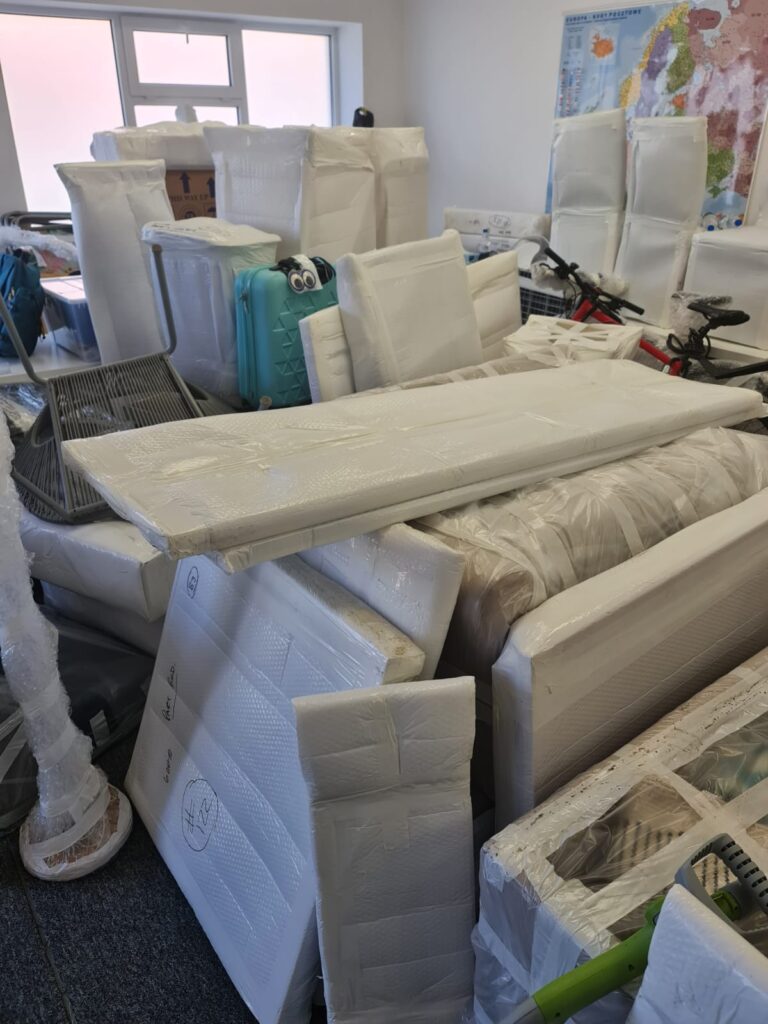
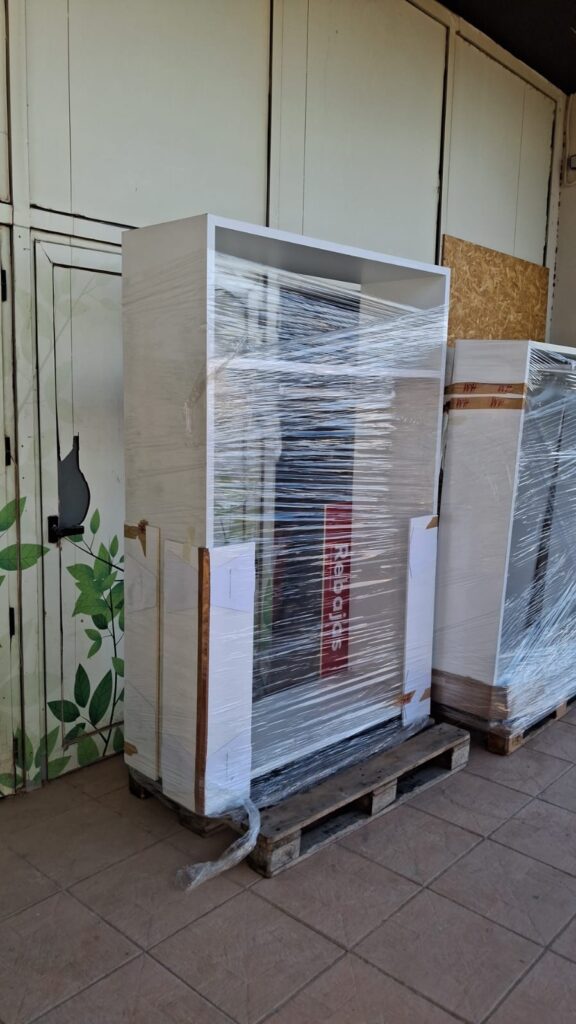
Packing is half the move. Do it with intention and every other stage becomes easier, safer, and faster.
- Heavy in small boxes, light in large. Zero rattles. Plates vertical with soft dividers.
- Electronics: anti‑static sleeves, remove batteries, photograph cable setups, and tape remote controls to their devices.
- Label two sides with room, short contents, and priority level. Number every box and record it on the master list.
- Protect corners and floors before you start. Bag and tape fixings to furniture frames.
- Weatherproof for winter carries: mattress and sofa covers, silica packs for instruments and tech, quick‑dry towels at the door.
- Create a first‑night kit: bedding, basic cookware, toiletries, meds, chargers, router, and a small tool set.
Room‑by‑room rhythm
- Kitchen first: dish barrels, pan lids vertical, knives in blade guards, spices wrapped to stop leaks.
- Living room: picture cartons with corner protectors, lamp shades wrapped separately, cables coiled and labelled.
- Bedrooms: wardrobe boxes for hanging clothes, vacuum bags for seasonal bedding.
- Study and tech: original boxes if you have them, otherwise double‑box with foam corners.
Do‑not‑pack list
Passports and IDs, jewellery, medication, bank cards, cash, work laptops, chargers, keys, and customs papers travel with you, not in the truck.
Materials checklist
Double‑wall cartons, dish barrels, picture cartons, wardrobe boxes, bubble and foam sheets, paper pads, tape, marker pens, zip bags for hardware, silica packs.
Box cheat sheet
| Box type | Liters | Best for | Notes |
| Book box 30–40 L | 30–40 | Books, records, dense items | Keeps weight safe for carrying |
| Standard 60 L | 60 | Books, kitchenware, general items | Keep weight manageable |
| Wardrobe box | 100+ | Hanging clothes | Crease‑free arrival |
| Dish barrel | 60 | Plates and bowls | Extra thick walls, pack vertical |
| Picture carton | var. | Mirrors, framed art | Corner protectors and face shields |
| Lamp box | tall | Floor lamps, shades | Wrap shades separately, fill voids |
Labelling formula that saves time
Room code + box number + short contents + priority. Example: KITCHEN #14 Glassware A.
Cost Factors & Real‑World Scenarios
| Cost driver | What influences it | How to reduce |
| Distance & route | Corridor choice, detours, season | Pick the most direct safe corridor, avoid storm days |
| Ferries & tolls | Cabin type, vehicle length, vignette or toll network | Standard cabins, off‑peak sailings, buy Swiss e‑vignette early |
| Volume & weight | Box count, bulky items, dense loads | Declutter 10–20%, right‑size capacity, validate payload |
| Access & parking | Stairs, long carries, historic centres, lift bookings | Pre‑book bays and lifts, add a shuttle van for tight last miles |
| Packing complexity | Fragility, crating, owner vs pro packed | Self‑pack basics, pro‑pack glass, art, instruments |
| Season & weather | Winter pacing, summer peaks, public holidays | Add a weather buffer, aim for shoulder seasons |
| Waiting time | Keys, concierge delays, ferry changes | Confirm keys and codes, share live GPS with building managers |
| Storage or split drops | Storage days, second address deliveries | Consolidate dates, combine deliveries where possible |
| Customs & paperwork | Inventory quality, missing forms, border opening hours | Numbered inventory, originals ready, choose a manned customs office |
| Insurance level | Declared value, deductible, special riders | Pick a sensible deductible, add riders only for items that need them |
| Crew size & duration | Extra helpers, overtime, out‑of‑hours windows | Accurate access info, realistic slot booking, flexible delivery window |
| Special items | Pianos, safes, aquariums, gym plates, stone tables | Flag early for White Glove or hoist planning, split loads if needed |
| Fuel & energy | Diesel prices, EV charging, long Alpine climbs | Plan efficient staging, charge during meal stops, avoid high‑congestion hrs |
| Currency & fees | CHF cash handling, card fees, international transfers | Use fee‑light methods, group payments, avoid last minute cash withdrawals |
Hidden costs to avoid
- Parking fines from unreserved bays or timed zones.
- Lift overrun charges when the slot is short or off‑schedule.
- Stair carries that could have been avoided with a small shuttle.
- Repacking fragile items that were loosely self‑packed.
- Customs delays caused by missing serial numbers or vague descriptions.
Scenario snapshots
- Oslo → Zurich: 15 m³, 700–1000 kg. All‑road via Sweden and Germany. Package: Premium with fragile‑only pack. Evening delivery to avoid city peaks.
- Bergen → Geneva: 30 m³, up to 2500 kg. Ferry via Denmark. Package: Premium Plus + Furniture Removals. Book lifts at both ends, consider shuttle for old town.
- Trondheim → Basel: 10–15 m³. All‑road corridor. Package: Moving Medium or Premium. Stage overnight near Hamburg for steady pacing.
- Stavanger → Lausanne: 20 m³, 1200–1800 kg. Hirtshals corridor, two hotel nights. Package: Premium with kitchen‑first unpack. Swiss e‑vignette purchased ahead.
- Tromsø → Lugano: 10 m³ winter move. Split into two stages, winter gear on board. Package: Premium with White Glove for instruments, diversion ready via A13.
- Oslo → Basel with storage: 15 m³ plus 5 m³ storage for 30 days. Package: Premium + Storage coverage, single delivery window after keys released.
Insurance & Peace of Mind
Coverage quick compare
| Option | What it covers | Typical limit | Best for | Notes |
| Basic carrier liability | Limited per‑kilo coverage during transit | Often tied to CMR, e.g. ~8.33 SDR per kg¹ | Minimal risk, low‑value moves | Not designed for art or collectibles; exclusions for owner‑packed fragiles may apply |
| Full value protection | Repair, replace, or cash settle up to your declared value | Up to the sum insured you choose | Most home moves | Set realistic totals, choose a sensible deductible; covers named perils per policy |
| Item‑specific riders | Extra cover for single high‑value pieces | Item limit as agreed | Art, instruments, designer furniture | Pair with White Glove handling and soft crating |
| Storage coverage | Goods held between load and delivery | Per storage T&Cs | Staggered moves or renovation gaps | Confirm start and end dates of storage and inventory state |
¹ Check your contract for exact limits and definitions.
What is usually not covered
- Normal wear, minor scuffs, or pre‑existing damage.
- Prohibited or undeclared contents.
- Self‑packed fragile items with inadequate protection where cause cannot be shown.
- Mechanical or electrical derangement not linked to visible external impact.
- Hidden contents in drawers or bags that were not declared or properly packed.
Packing and claims: how pro‑pack helps
- Pro‑packed fragile items create a clear chain of custody and higher claim defensibility.
- White Glove with soft crating reduces shock and vibration on Alpine stretches.
- Photologs at load and delivery, tied to box numbers, speed up assessments.
How to set your declared value
- Use current replacement value in Switzerland, not original purchase price.
- Group by room for clarity, then add a small buffer for incidentals.
- List individual values for items over your rider threshold.
Mini valuation worksheet (example)
| Room | Key items | Est. CHF |
| Living room | 3‑seater sofa, coffee table, TV 55″, art | 5,200 |
| Kitchen | Cookware, small appliances, dinner set | 2,100 |
| Bedroom | King bed, wardrobe contents, dresser | 3,800 |
| Study | Laptop, monitor, peripherals, books | 3,200 |
| Total | 14,300 |
Claims timeline that actually works
- Note issues on the delivery sheet before the crew leaves.
- Photograph the item and packaging from 2–3 angles.
- Provide box number, description, and proof of value.
- Keep packaging until the claim is closed.
- Response target and next steps are confirmed in writing by your coordinator.
- Where policy requires, notify within the specified time window; earlier is always better.
After Arrival: First‑Week Checklist (Official Swiss Links)
Your first week is about quick wins. Focus on registration, healthcare, mobility, and payments. Use only official links for anything that needs a stamp or a fee.
Day 1–2: Register and anchor
- Residence guidance (EU/EFTA): Review eligibility and permit types on the SEM portal. Decide whether your situation points to an L or B residence permit and what your commune expects.
- Register address: Visit your local commune office soon after arrival, usually within 14 days. Bring ID and housing proof. Follow the federal portal guide.
- Driving licence exchange: If you plan to reside, review rules and timing. Many residents exchange within the first 12 months; some cantons require an eye test. See foreign driving licences.
Days 3–5: Healthcare, mobility, and payments
- Health insurance: Choose basic cover within 3 months of taking residence. Keep the policy confirmation with your documents. Read the FOPH overview. Consider accident cover if your employment contract does not include it.
- Motorway vignette: Buy the official e‑vignette before motorway use. If you tow a trailer, you typically need a separate vignette for the trailer.
- Vehicle: If you imported a car, arrange inspection and registration at your cantonal road traffic office. Start from the federal overview.
- Banking & payments: Open a CHF account, set up e‑billing, and enable TWINT after your account is active. Keep your lease and registration confirmations for address proof.
Days 6–7: Everyday life that saves time
- Radio/TV fee: Households are subject to the national fee. See radio and TV fees.
- Waste & recycling: Learn your local rules for taxed refuse bags and sorting. Start with the waste and recycling overview. Buy official refuse bags early.
- Mail forwarding: Set up a Swiss Post redirect if needed.
- Dog owners: Register your dog, vaccinations, and ID chip. See the FSVO dog owner obligations.
- School & childcare: If moving with children, explore enrolment with your commune. See compulsory education.
Public transport primer
- Half‑Fare Card (Halbtax): Cuts most fares by 50%.
- GA Travelcard: Flat‑rate pass for nationwide networks if you ride daily.
- Local passes: City or regional subscriptions often pay back within weeks.
First‑week admin at a glance
| Task | Where to go | Typical deadline | Bring |
| Address registration | Your commune office | Within 14 days | ID, lease, confirmations |
| Health insurance selection | Any approved Swiss health insurer | Within 3 months | ID, residence proof |
| Motorway e‑vignette | Official customs portal | Before motorway usage | Vehicle details |
| Bank account + TWINT | Local bank branch or online onboarding | Week 1 | ID, proof of address |
| Vehicle inspection/plates | Cantonal road traffic office | After import, Week 1–4 | Registration docs |
Canton‑specific extras to note
- Resident parking permits for blue zones.
- Official refuse bags and recycling rules by commune.
- Deposit schemes for rentals and blocked accounts for deposits.
- Quiet hours and moving day access windows in older buildings.
FAQs
- How long is Norway → Switzerland door to door?
Typical direct moves take 3–6 days depending on origin, season, ferries, and access. - Do I need a motorway vignette?
Yes for Swiss motorways. Buy an official e‑vignette before using the network. See the Federal Office for Customs and Border Security guide to the motorway vignette. - Can I import my used household goods duty free?
Usually yes, if you meet relocation conditions and present a clean, itemised inventory plus the relocation declaration at the border. Read the FOCBS page on moving household effects. - Which permit applies to EU/EFTA citizens?
Many new residents hold an L (short term) or B (residence) permit. Start with the State Secretariat for Migration overview for EU/EFTA citizens, then follow your commune’s instructions. - Where do I register my new Swiss address and by when?
Register with your commune, often within 14 days of arrival. Federal instructions live here: notification of departure and registration. - What must be on my customs inventory?
Numbered boxes, plain English descriptions, room of origin, and realistic values. Add serial numbers for electronics and photos for art. Bring proof of residence abroad and your Swiss housing contract. Use the official FOCBS relocation guidance linked above. - What items are restricted or prohibited?
Check the FOCBS list of prohibited and restricted goods before packing. - Can I bring my car from Norway?
Yes. Declare it at the border, then complete inspection and cantonal registration. Start at vehicle import and the federal guide to registering a car. - Do I have to exchange my driving licence?
Check timelines and tests on the federal page for foreign driving licences. Many residents exchange within 12 months. Some cantons require an eye test. - When must I take out health insurance?
Within 3 months of taking residence you must select basic cover. Read the Federal Office of Public Health primer on health insurance for residents. - Which route is best from Norway to Switzerland?
All‑road via Sweden and Germany gives control and avoids ferries. Ferries via Denmark reduce fatigue. In winter, add 12–24 hours of buffer and monitor Alpine passes. Pick customs posts that process merchandise and check opening hours. - How do winters change the plan?
Use winter tyres, pack traction aids, and watch for pass closures. We design diversions via A13 San Bernardino if A2 Gotthard is congested or closed, and we add buffer for storms and black ice. - Can movers handle customs formalities for me?
We prepare inventories and assist at the border window you choose. You bring originals and IDs. We also time arrivals to match office opening hours. - Can I send later consignments duty free?
Often yes, if they were declared up front on your initial inventory and meet relocation rules. Confirm details on the FOCBS relocation page and keep clear cross references to your first shipment. - What about pets?
Pets need a microchip and valid rabies vaccination. Review the Federal Food Safety and Veterinary Office rules for dogs, cats and ferrets and travel with printed certificates. - Do Swiss cities restrict truck access?
Many old‑town cores have timed windows and tight lanes. We book lifts and loading bays in advance and use shuttle vans where streets are narrow. - How can I lower my moving cost without risking damage?
Declutter 10–20%, avoid peak weekends, pre‑book parking bays and lifts, and let us pack only the fragile or high‑value items. Sharing a flexible delivery window can also help. - How much space do I need?
Use capacity cues. A 60 L box is about 0.06 m³. A king bed with frame is 1.5–2 m³. If your total volume sits within 10 percent of a size limit, size up or plan a shuttle. We offer 5, 10, 15, 30, and 90 m³ options. - Will I get live tracking?
Yes. Every VANonsite load includes GPS tracking with ETA pings at departure, border, and arrival. - Do I pay a radio and TV fee after arrival?
Yes. Households are subject to a national levy. See federal guidance on the radio and TV fee. - How do I handle waste and recycling rules?
Many communes require official taxed refuse bags and strict sorting. Begin with the waste and recycling overview. - What payment tools will I use day to day?
Open a CHF account, set up e‑billing, and enable TWINT once your account is live. Keep your lease and commune registration as proof of address. - Can you store my goods if my keys are delayed?
Yes. We can stage in secure storage, then deliver on your release date. Storage coverage is available on request. - Do children need documents for school enrolment?
Bring passports, vaccination records, and proof of address. Your commune will guide you. Start at the federal page on compulsory education.
Summary
Moving to Switzerland from Norway rewards precision. Start 30 days out. Declutter, right size your vehicle from 5 to 90 m³, and lock a season smart corridor through Sweden and Germany or via Denmark’s ferries. Build a numbered inventory with calm, realistic values. Photograph art and electronics, then keep originals and IDs in one folder for the border.
On arrival, move fast on foundations. Register your address with the commune within about 14 days, choose basic health insurance within 3 months, and buy the official e‑vignette before motorway use. If you import a car, follow inspection and cantonal registration steps. Open a bank account, enable TWINT, learn recycling rules, and set up a public transport pass.
Let specialists remove friction. Pro packing for fragile items. White Glove for art and instruments. Shuttle plans for old town lanes. Live GPS all the way. Costs fall when you reduce volume, pre‑book access, avoid peaks, and accept a flexible window.
Ready to land soft in Switzerland. Request your tailored plan and a transparent quote today: VANonsite Removals to Norway.