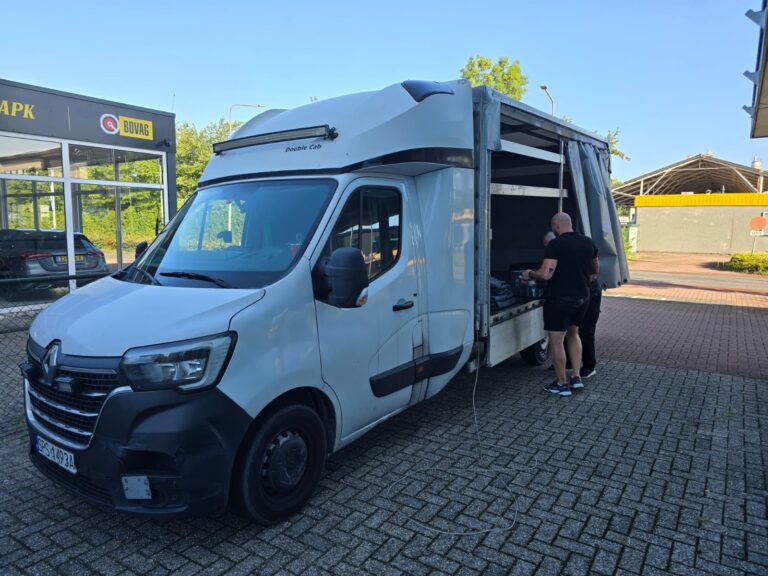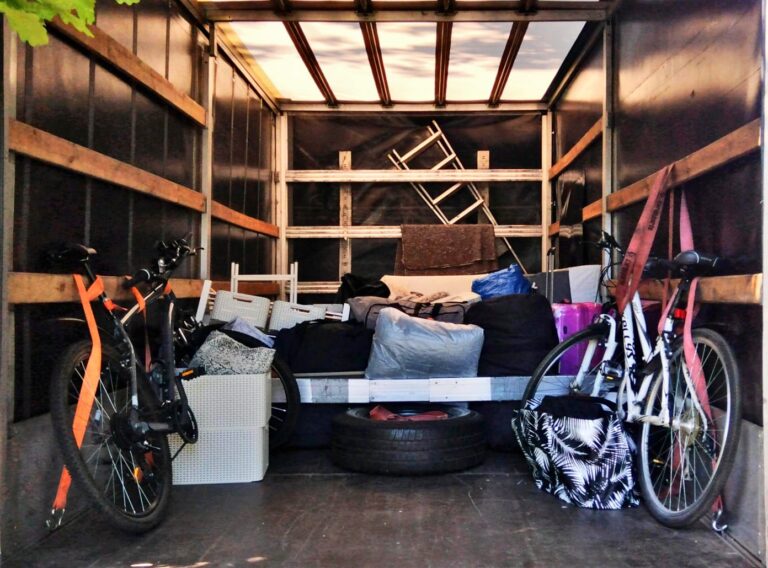

Intro
Can I move to Spain from UK is the question that sits between excitement and anxiety. The truth is reassuring: yes, many British citizens can relocate, but the route depends on how long you want to stay and what you plan to do once you arrive. If you get the legal pathway right early, the rest becomes a practical project: documents, budget, timeline, then moving your belongings with a service that feels safe and predictable.
TL:DR
- Yes, you can move, but stays over 90 days normally require a visa or residence route that matches your purpose
- Short visits follow the Schengen rule, up to 90 days in any 180 day period
- The fastest relocations start with a clean document folder and an itemised inventory
- Budget planning is easier when you separate life costs from removals costs
- Dedicated man and van removals give the most control and faster delivery
- Part load removals can cut transport costs by 15% to 35% if you can be flexible on dates
- VANonsite keeps moves calmer with safety-first handling and GPS tracking for every load




Quick answer
Here is the straight answer, then the roadmap.
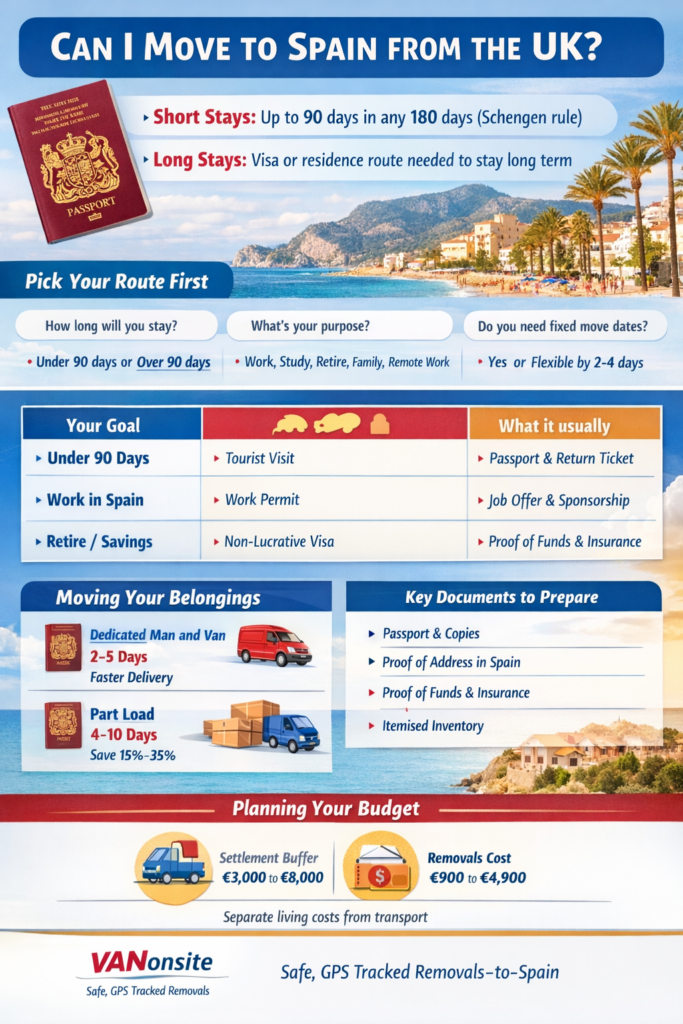
- Short stays: UK citizens can usually visit Spain in the Schengen area for up to 90 days in any 180 day period. If you want longer, you need a route that leads to residency.
- Long stays and relocation: Yes, you can move, but you normally need a visa or residence status that matches your purpose, work, study, family, retirement, or remote income.
- Moving your stuff: Yes, you can ship household goods. Plan paperwork early, especially inventories and customs steps. For transport, dedicated man and van is often faster, while part load can be cheaper when you have flexibility.
Internal links to place here:
- https://vanonsite.com/spain-removals/how-long-can-british-stay-in-spain/
- https://vanonsite.com/spain-removals/how-to-move-to-spain-from-uk/
Your route to Spain in 60 seconds
The fastest way to answer can i move to spain from uk is to pick your route first. Your route is not a vibe. It is a purpose. Spain cares why you are coming, how long you will stay, and how you will support yourself.
Before you look at visas, answer three questions:
- How long do you want to stay, under 90 days or over 90 days
- Will you work in Spain, study, join family, or live on savings or external income
- Do you need a fixed move date, or can you be flexible by 2 to 4 days
If you are staying over 90 days, plan for lead time. Many people need 6 to 12 weeks to gather documents, get appointments, and submit a clean application.
Decision table
Pick the row that feels most like you. Then use the “best first step” column as your next action. This turns the move from emotional to structured.
| Your goal | Typical route | What it usually requires | Best first step |
|---|---|---|---|
| Stay under 90 days | Tourist visit | Passport, travel plan, return plan | Confirm the 90 in 180 rule and make a simple travel folder |
| Work in Spain | Work permit route | Job offer or employer sponsorship in many cases | Start with official UK guidance and consular information for your region |
| Study | Student route | Acceptance letter, funds, accommodation proof | Confirm visa steps, appointment timing, and start date alignment |
| Retire or live off savings | Non lucrative route | Proof of funds plus private health insurance | Check minimum funds guidance and plan your insurance evidence |
| Remote work | Digital nomad style route | Proof of remote income, contracts, and work relationship | Gather income proof, contract dates, and tax planning notes |
| Join family | Family route | Relationship proof plus residency status details | Request official certificates early and plan sworn translations |
Quick self check, what usually gets rejected
Common reasons applications become slow or fragile:
- Funds evidence is unclear or inconsistent across documents
- Health insurance does not meet the stated requirements for the route
- Accommodation proof is missing, vague, or mismatched
- Dates do not line up, contract start, study start, and travel dates
Internal links to place near the end of this section:
- https://vanonsite.com/spain-removals/how-long-can-british-stay-in-spain/
- https://vanonsite.com/spain-removals/how-to-move-to-spain-from-uk/
The legal basics after Brexit
Brexit changed the default assumption. Before, many UK citizens could treat Spain like a simple move. Now, the legal line is clearer.
- Under 90 days, it is usually travel, not relocation
- Over 90 days, it is normally a visa and residency process
This does not mean the move is impossible. It means the order matters. Legal pathway first, then logistics.
Key concepts, explained simply
Use this mini glossary to keep the rest of the guide easy to follow.
- Schengen 90 in 180 rule: a short stay limit, not a relocation plan. You can visit, but you cannot quietly settle long term on this rule.
- Visa vs residency: a visa helps you enter and start the process, residency is what lets you stay long term.
- NIE: your administrative number for many Spanish processes. It appears in property, banking, and life setup steps.
- TIE: the physical residency card for many non EU residents. Many people confuse it with the NIE.
- Padron registration: local registration in your town or city. It often unlocks practical steps like schooling, healthcare processes, and some municipal services.
What stayed simple
A lot still works smoothly if you prepare.
- You can still visit Spain for short stays within the Schengen rule
- You can still ship your belongings, but paperwork must be clean
- You can still relocate, but you need a route that matches your purpose
What changed in practice
These are the friction points you can plan around.
- More document evidence is typically needed
- Appointments and timelines matter more than before
- Inventory and customs details have higher impact on your moving schedule
Government links to include in this section:
- UK government overview: https://www.gov.uk/guidance/living-in-spain
- Spain Ministry of Foreign Affairs: https://www.exteriores.gob.es/
Visa and residency routes for UK citizens
This is where the answer becomes personal. Yes, you can move, but only if your visa or residence route matches your real life. Pick the wrong one and you lose weeks, sometimes months.
Use this section as a quick filter. Choose the route that matches your goal, then build a document pack around it.
Non lucrative visa
This route is popular because it feels clean and predictable. It is not a work route, so it fits best when your income does not depend on working in Spain.
Best for:
- retirees
- people living on savings, pensions, or passive income
- couples who want stability and a slower landing
Usually requires:
- proof of funds, stable and clearly documented
- private health insurance that meets the stated visa requirements
- accommodation proof, even if temporary at first
Common mistakes to avoid:
- applying while still planning to work locally, even part time
- sending mixed bank statements that do not clearly show accessible funds
- leaving insurance evidence until the last minute
Planning buffer:
- Many applicants should allow 6 to 12 weeks to gather evidence and attend appointments, especially in peak seasons.
Work route
This route is driven by the role, the employer, and the paper trail. If the job offer is real and the employer is prepared, the process becomes clearer.
Best for:
- people with a confirmed offer in Spain
- people whose work is tied to Spain, not just remote
Usually requires:
- employer documentation and support
- proof of qualifications where relevant
- a realistic lead time, because steps often happen in sequence
Common mistakes to avoid:
- booking a moving date before your legal timeline is stable
- assuming a contract alone is enough, without the right supporting evidence
Planning buffer:
- For many people this is not a fast route. Build a lead time of 8 to 12 weeks into your expectations.
Student route
Students want certainty. The easiest way to get it is to keep your documents aligned with your start date and your accommodation proof.
Best for:
- university courses, language schools, structured study programs
Usually requires:
- admission letter
- accommodation proof
- financial proof for living costs
Common mistakes to avoid:
- leaving appointments too late, then missing the course start date
- unclear accommodation proof, especially short lets with weak paperwork
Planning buffer:
- Build a buffer of 2 to 4 weeks beyond your ideal schedule for appointments and document fixes.
Remote income route
This route fits people paid from outside Spain. Your approval strength is usually tied to how clean your contracts and income evidence are.
Best for:
- remote employees or contractors paid from outside Spain
- people with stable income history and clear documentation
Usually requires:
- proof of contracts and ongoing work relationship
- recent income evidence, consistent across documents
- clear identity and address evidence
Common mistakes to avoid:
- mixing multiple income streams without a simple summary
- sending inconsistent contract dates and payment proof
- relying on screenshots instead of formal statements
Practical tip:
- Create a one page income summary that mirrors your evidence. It reduces confusion and speeds review.
Family reunification route
Family moves are emotional. They are also paperwork heavy. The biggest risk is not the move itself. It is the time you lose waiting for official documents and translations.
Best for:
- partners and spouses
- dependent children
- cases where a family member already has residence rights
Usually requires:
- official relationship certificates
- evidence of the sponsor’s status in Spain
- translations where required
Common mistakes to avoid:
- using old copies of certificates instead of recent official versions
- starting translations late and losing weeks
Planning buffer:
- Start early. Certificates and sworn translations can easily consume 2 to 6 weeks.


A realistic relocation timeline
A calm relocation is rarely a sprint. It is a sequence. The goal is not to do everything fast. The goal is to do the right tasks in the right order so you do not pay for panic later.
Use this as your planning spine. If your case is complex, add 2 to 4 extra weeks at the start.
Timeline table
Screenshot this table and treat it like a simple project plan. The earlier tasks protect everything that comes later.
| When | What to do | Why it matters |
|---|---|---|
| 12 to 16 weeks before | Shortlist your route, check official guidance, build a document folder | Complex routes and translations need margin |
| 10 to 12 weeks before | Choose your visa path, start evidence gathering | Approval speed loves organisation |
| 8 weeks before | Start housing search, plan moving volume in m3 | Your move cost is anchored in space |
| 6 weeks before | Book removals dates and service type | Good slots disappear first |
| 4 weeks before | Inventory your belongings, declutter 10% to 25% | Cutting 2 m3 can reduce quotes meaningfully |
| 3 weeks before | Confirm insurance, fragile items plan, and packing choice | Protection reduces breakage and wasted space |
| 2 weeks before | Confirm access at both addresses, lifts, parking, restrictions | Access mistakes trigger delays and extra charges |
| Move week | Pack essentials separately, keep paperwork with you | Calm landing beats panic unpacking |
| First 14 days in Spain | Padron, bank basics, healthcare setup | Admin unlocks daily life |
| First 30 days in Spain | Stabilise address proof, bills, and ongoing admin tasks | Small admin tasks become big blockers if delayed |
How much money do I need to move to Spain from UK
This is where people want blunt truth. Costs are not mysterious. They are just layered. Your move budget usually breaks into three buckets: getting legally and logistically ready, getting your belongings there, and surviving the first month without financial pressure.
Treat the numbers below as planning ranges, not promises. The goal is to stop you under budgeting.
Budget snapshot
- Minimum relocation buffer many people plan: €3,000 to €8,000 depending on city, rent deposits, and move size
- Typical removals range for many UK to Spain moves: €900 to €4,900 depending on m3, service type, and deadlines
- A flexible delivery window can reduce transport cost by 15% to 35% when part load fits
Internal link to place here:
The three biggest cost levers
If you only remember three things, remember these.
- Your m3 volume. It decides the vehicle tier and how easy it is to route.
- Your access reality. Stairs, long carries, lift booking, and restricted parking add time.
- Your date flexibility. A 2 to 4 day window can be the difference between part load savings and premium pricing.
Planning examples, so it feels real
These examples are designed to remove uncertainty. They are not legal advice, just practical budget framing.
- Essentials only move, 1 to 3 m3: plan for €900 to €1,400 for transport, plus a life buffer that fits your rent and deposit.
- Small move, 4 to 8 m3: plan for €1,200 to €2,200, especially if you can accept part load timing.
- Medium home, 9 to 15 m3: plan for €1,900 to €3,200, with higher risk from access issues and furniture handling.
- Larger home, 16 to 30 m3: plan for €3,000 to €4,900, often best served by a dedicated move.
Cost breakdown table
Most “surprises” come from life setup costs, not transport. This table shows where your money tends to go, and what pushes each line up.
| Cost item | Typical range | What changes it |
|---|---|---|
| Rental deposit and agency fees | varies by region | city, competition, rental terms |
| First month living costs | varies | lifestyle, family size |
| Removals transport | €900 to €4,900 | m3 volume, access, deadlines |
| Packing materials or service | +5% to +20% | fragility, time pressure |
| Storage buffer | varies | key gaps and handover timing |
| Admin and translations | varies | document needs and urgency |
| Emergency buffer | 10% to 20% of your plan | unexpected delays and appointment shifts |
Micro calculator, build your budget in 90 seconds
Use this quick method and your numbers become stable.
- Choose your transport band from the removals table above
- Add 10% to 20% as an emergency buffer
- Add your estimated first month costs in Spain
- Add deposits you expect to pay upfront
- Add admin costs and translations if your route needs them
If the total feels heavy, reduce m3 before you reduce safety. Cutting 10% to 25% of belongings can lower transport costs and reduce packing stress.
How to cut removals cost without cutting corners
These tactics are simple, but they work.
- Reduce volume by 1 to 2 m3 by selling low value bulky items
- Offer a 2 to 4 day delivery window so part load becomes possible
- Make access easy by reserving parking or confirming loading rules
- Pack smart, heavier items in smaller boxes to protect handling time
What usually increases the quote
These are the classic triggers.
- Central city access with restricted zones
- Stairs and long carries at either end
- Tight delivery day requirements
- Furniture that needs special handling
If you want the deeper money plan after Brexit, use:
Moving your belongings from the UK to Spain
This is the part that should feel powerful, not stressful. Your move is not just transport. It is the moment your plan becomes real. The right setup makes arrival day feel like relief.
VANonsite focuses on high care removals across Europe, with safety first handling and GPS tracking for every load. So your belongings are not just moving, they are accounted for.
Dedicated vs part load
This choice shapes your entire experience. Dedicated buys certainty. Part load buys savings.
- Dedicated man and van: often faster, fewer handling touchpoints, clearer arrival planning
- Part load: often cheaper, wider delivery windows, ideal for smaller loads and flexible timelines
A simple decision rule:
- Choose dedicated man and van if being late would cost you more than the price difference.
- Choose part load if your dates are flexible and your load is mostly boxes.
Comparison table
| Feature | Dedicated man and van | Part load |
|---|---|---|
| Typical delivery | 2 to 5 days | 4 to 10 days |
| Price | higher | lower |
| Handling touchpoints | fewer | more |
| Best for | deadlines, furniture, premium items | budget, small loads, flexible dates |
| Best when you can offer | fixed day | 2 to 4 day window |
Internal link:
Vehicle size guide
Volume decides the tier. Guessing volume is the fastest way to overpay or get stuck on moving day. If you want calm, measure m3 and add a 10% to 20% buffer.
| Vehicle tier | Capacity | Max payload | Best for |
|---|---|---|---|
| Moving One | 1 m3 | 100 kg | documents, essentials, a few boxes |
| Moving Basic | 5 m3 | 300 kg | student room, compact loads |
| Moving Medium | 10 m3 | 600 kg | studio move, light furniture |
| Moving Premium | 15 m3 | 1,000 kg | 1 bed with furniture |
| Moving Premium Plus | 30 m3 | 3,500 kg | 2 to 3 bed, bulky pieces |
| Moving Full House XXL | 90 m3 | 20,000 kg | full household relocation |
Fast volume anchors
Use these anchors as a quick estimate.
- 10 to 15 medium boxes often equal about 1 m3
- A wrapped sofa often takes 1.5 to 3 m3
- A mattress often takes 1 to 2 m3
Services that remove stress
Upgrades are not luxury. They are tools. They protect the two things you cannot replace: time and peace.
- Packing Service: https://vanonsite.com/packing-services/
- White Glove Delivery: https://vanonsite.com/white-glove-delivery-service/
- Furniture Removals: https://vanonsite.com/furniture-removals/
- Home Removals: https://vanonsite.com/home-removals/
- Office removals: https://vanonsite.com/office-removals/
- Student Removals: https://vanonsite.com/student-removals/
When each service is worth it
- Choose Packing Service if you are short on time, you have fragile items, or your building has strict loading rules.
- Choose Furniture Removals if you have bulky pieces that need proper protection and controlled handling.
- Choose White Glove Delivery if you want room of choice placement and premium item care on arrival.
What happens on moving day
This is where calm planning pays off.
- Confirm access, lifts, and parking early
- Keep documents with you, not in boxes
- Keep essentials separate, so you can function on day one
- Track your load with GPS, so you are not guessing
Discovere more:
If you want the fastest route to a clean quote, start here:
Documents you need to move to Spain from UK
Keep this section extremely practical. The reader should feel organised by the end.
UK side essentials
Add a short paragraph that tells readers to bookmark official pages.
- Living in Spain overview: https://www.gov.uk/guidance/living-in-spain
- EORI number guidance: https://www.gov.uk/eori
- Export goods overview: https://www.gov.uk/export-goods
- Personal goods declaration guidance: https://www.gov.uk/guidance/check-how-to-declare-personal-goods-you-bring-into-or-take-out-of-the-uk
Spain side official starting points
Keep links strictly governmental.
- Spain public administration portal: https://administracion.gob.es/
- Spain Ministry of Foreign Affairs: https://www.exteriores.gob.es/
- Spanish Tax Agency portal: https://sede.agenciatributaria.gob.es/
Document checklist
Introduce the list with a paragraph that tells readers to keep originals with them.
- Passport plus copies
- Proof of address in Spain, rental contract or purchase documents
- Proof of funds or income, depending on route
- Health insurance documents, often required for certain visas
- Itemised inventory for your shipment, with estimated values for high value items
- Contact sheet, including your mover and your building contact
Want know more?
Customs and shipping household goods
Customs is where a smooth move can suddenly feel heavy. Most delays do not happen because someone is unlucky. They happen because paperwork is vague, inventories are inconsistent, or the shipment includes something that triggers extra checks.
If you want your move to stay calm, treat customs like a simple admin project: clean list, clear values, no restricted items, and enough time buffer.
What usually causes delays
A quick warning paragraph here protects the reader.
- Vague inventories: “misc”, “kitchen items”, “personal stuff” invites questions
- No values for high value items, or values that look unrealistic
- Restricted items inside boxes that are not declared
- Tight delivery windows that leave no time for checks
- Missing identifiers: serial numbers for electronics and photos for premium items
Practical guidance
Start with this mindset: if a stranger opens your inventory, can they understand it in 60 seconds.
- Keep an itemised inventory. Avoid vague labels like misc.
- Photograph high value items before packing.
- Avoid restricted items and check guidance early.
Inventory template that prevents confusion
Use a simple structure. It is not about perfection. It is about clarity.
| Box or item | Room | Description | Quantity | Estimated value | Notes |
|---|---|---|---|---|---|
| Box 1 | Kitchen | Plates, bowls, cutlery | 1 | 80 | fragile |
| Sofa | Living room | 3 seater fabric sofa | 1 | 600 | wrapped |
| Laptop | Office | laptop, model, serial | 1 | 900 | serial included |
Practical tip: label boxes with the same numbering as your inventory. This sounds small, but it can save 30 to 90 minutes if questions appear.
Restricted and high risk items, avoid surprises
Do not pack these unless you are sure of the rules for your route and you have declared them properly.
- alcohol and tobacco
- medicines, supplements, and controlled substances
- weapons, ammunition, and any self defence items
- flammable liquids, aerosols, gas canisters
- perishables and food that can spoil
If you are unsure, keep it out of the shipment. A single restricted item can delay a whole load.
Timing buffer for customs, keep your schedule realistic
If your move has fixed key handover dates, build a buffer.
- Dedicated man and van moves give stronger timing control, but still benefit from paperwork readiness
- Part load moves can be cheaper, but they work best when you can accept a wider delivery window
Official references to include
Use these links as your reader’s source of truth. They are also your safety net against outdated advice.
- UK export goods overview: https://www.gov.uk/export-goods
- Personal goods declarations: https://www.gov.uk/guidance/check-how-to-declare-personal-goods-you-bring-into-or-take-out-of-the-uk
- EORI number guidance: https://www.gov.uk/eori
- Spanish Tax Agency portal: https://sede.agenciatributaria.gob.es/


Healthcare, banking, and life setup
This is the part that makes Spain feel real. The fastest way to feel settled is to handle three foundations early: health cover, money access, and everyday identity basics. Do not try to solve everything in week one. Solve the blockers first.
Healthcare
Most people confuse travel cover with relocation health cover. Treat them as two different needs.
- GHIC helps with necessary state provided healthcare during a temporary stay, where it is accepted
- Private insurance is often needed for certain visa routes, especially when the route expects comprehensive cover
Practical steps:
- Confirm what your route requires before you pay for insurance
- Keep digital and printed copies of your policy and proof of cover
- Carry GHIC details separately from your shipment
Official link to include:
Banking and phone
A Spanish bank account makes everyday life smoother. It helps with rent, utilities, deposits, and recurring payments. It also reduces friction when you need proof of transactions.
What you often need to open an account:
- passport
- NIE or proof that you have applied, depending on the bank
- proof of address in Spain, rental contract or registration documents
- proof of income or funds for some account types
Phone setup tips:
- Get a Spanish SIM early, because many services send one time codes
- Keep your UK number active for at least 30 days after arrival to protect banking logins
9.3 Driving and bringing a car
Driving is often a quality of life decision, not a legal one. The legal side still matters, so keep it official and simple.
Practical steps:
- Confirm what rules apply to your licence based on your residency status and how long you have been in Spain
- If you are bringing a car, research registration and insurance early, because timelines can be slower than expected
Official links:
- UK driving abroad overview: https://www.gov.uk/driving-abroad
- Spain traffic authority: https://www.dgt.es/
Pets
Moving with a pet is not logistics, it is family. The goal is to protect comfort and reduce stress, for you and for them.
Practical steps:
- Book a vet appointment early for microchip checks and documents
- Keep your pet travel documents in your personal bag, not in the shipment
- Plan a calm travel day with water, familiar smells, and fewer surprises
Official link:
- Pet travel guidance: https://www.gov.uk/taking-your-pet-abroad
The biggest mistakes UK movers make
Most UK to Spain relocations do not fail because people are careless. They fail because tiny assumptions quietly become expensive. Use this section like a pre flight check. Catch the mistakes now, and your move feels controlled later.
Mistake 1: Underestimating volume by 10% to 20%
This is the most common trigger for last minute stress. A small volume mistake can force a vehicle change, extend loading time, or split your move into two trips.
How to avoid it:
- Measure m3, then add a 10% to 20% buffer
- List bulky items separately, sofa, mattress, wardrobes, desk, bikes
- If you are close to a tier boundary, choose the next tier up rather than gambling
Mistake 2: Booking the wrong service type for your deadline
Price should not be the only decision lever. The real question is timing control.
A simple rule:
- Choose dedicated man and van if a delay of 24 to 48 hours would cost you more than the price difference
- Choose part load if your dates are flexible by 2 to 4 days and your load is mostly boxes
Mistake 3: Missing access details at either end
Access is where moving time disappears. A perfect route can still stall if the van cannot stop close to the entrance.
Confirm these early:
- Floor number, lift yes or no, and whether the lift needs booking
- Parking distance from curb to door, even 100 metres changes labour time
- Any restricted zones or timed loading rules in the street
- Stairs, narrow turns, and fragile furniture pathways
Mistake 4: Rushing paperwork and relying on outdated advice
Brexit shifted expectations. What worked years ago can be incomplete today. Clean paperwork does not just help the visa side. It also protects shipping timelines.
A fast fix:
- Use official sources first and keep a single document folder
- Build an itemised inventory that matches your box labels
- Keep your key identifiers ready, passport copies, contacts, and address proof
Mistake 5: Packing fragile items like normal items
Fragile packing errors do not only cause breakage. They also waste space, which pushes m3 up and can increase the quote.
Quick upgrade:
- Pack fragile items as a category, not as an afterthought
- Use smaller boxes for heavy items and reinforce the bottom
- If you have premium furniture or glass, choose packing support or White Glove delivery
Mistake 6: Moving essentials inside the shipment
If your passport copies, chargers, medication, and first night basics are in a sealed box, arrival day becomes harder than it needs to be.
Keep a personal essentials bag with:
- documents and copies
- phone chargers and a power bank
- 2 days of clothes
- basic toiletries
- keys and building contact details
For a deeper read with real examples:
Why VANonsite
A relocation is emotional. It is also a chain of handoffs. VANonsite is built to reduce those handoffs, protect your belongings, and keep you informed, so the move feels steady instead of uncertain.
What you get in plain terms
| Benefit | What it means for you | Why it matters |
|---|---|---|
| GPS tracking for every load | You can see where your shipment is | Less guessing, more peace |
| Safety first handling | Strong protection, careful loading order | Fewer damages and fewer re wraps |
| Dedicated man and van option | Faster routes and clearer delivery windows | Best for deadlines and premium items |
| Part load options | Share space and routing when you can be flexible | Strong value for smaller loads |
When VANonsite is a perfect fit
- You want speed and certainty, not vague timelines
- You are moving furniture, fragile items, or sentimental pieces
- You need a clear plan for access, stairs, lifts, and restricted zones
- You want a quote that feels precise because it is based on m3 and real access details
The fastest way to get an accurate quote
Send your pickup postcode, delivery city and postcode, estimated m3, and access notes at both ends. If you can offer a 2 to 4 day window, mention it. Flexibility can unlock better routing.
CTA link:
Summary
Can I move to Spain from UK? Yes, but the easiest relocations start with one decision: your legal route. If you are visiting, the Schengen limit is usually 90 days in any 180 day period. If you want to stay longer, you typically need a visa or residence pathway that matches your reality, work, study, remote income, family, or living on savings.
Once the legal path is clear, the move becomes a practical plan with four pillars:
- Timeline: allow 6 to 12 weeks for admin lead time in many cases, then schedule removals around a stable approval window
- Documents: keep one folder with official proofs, plus an itemised inventory that matches box labels to avoid customs slowdowns
- Budget: many people plan €3,000 to €8,000 for settling in and first month costs, plus removals of roughly €900 to €4,900 depending on m3, access, and deadlines
- Logistics: dedicated man and van is usually best for speed and control, often 2 to 5 days door to door, while part load can be 15% to 35% cheaper if you can accept a 2 to 4 day window, often 4 to 10 days delivery
To keep your move calm, measure volume in m3 with a 10% to 20% buffer, confirm access at both ends, and avoid restricted items in the shipment. Customs problems usually come from vague inventories, missing values, and last minute timelines, not from distance.
If you want a clear next step, start with the practical guides and the Spain removals hub:
- https://vanonsite.com/spain-removals/how-to-move-to-spain-from-uk/
- https://vanonsite.com/removals-to-spain/
FAQ
1. Can I move to Spain from UK permanently?
Yes, but “permanently” usually means you need a long stay visa or residence route that matches your situation. Most people fit into one of these paths: non lucrative, work, study, remote income, or family.
Next steps:
- Pick your route first, then build your document folder around it
- Start with official guidance: https://www.gov.uk/guidance/living-in-spain
- Use the practical relocation guide and removals hub:
2. How long can British stay in Spain without residency?
For short visits, it is usually up to 90 days in any 180 day period in the Schengen area. If you want to stay longer, you normally need a visa or residence route.
Next steps:
- Map your last 180 days of travel so you do not accidentally overstay
- Read the practical breakdown here: https://vanonsite.com/spain-removals/how-long-can-british-stay-in-spain/
3. What is the cheapest way to move my belongings to Spain?
The cheapest option is usually a part load move, paired with a smaller volume and flexible dates. In real terms, cutting 1 to 2 m3 and offering a 2 to 4 day window often creates the biggest savings.
Next steps:
- Declutter 10% to 25% before you ask for quotes
- Choose part load if you can be flexible, and dedicated man and van if you need tight timing
- Learn how part loads work: https://vanonsite.com/spain-removals/removals-to-spain-part-loads/
4. Do I need an EORI number to move household goods from the UK?
Sometimes. Many private removals are handled through the mover or customs broker, but if you are moving goods yourself, or moving anything that looks like a commercial shipment, an EORI can become important.
Next steps:
- Check the official HMRC guidance and apply if needed:
- Keep your shipment paperwork clean, especially your itemised inventory and address proof
5. How long do UK to Spain removals take door to door?
As a planning range:
- Dedicated man and van is often 2 to 5 days depending on distance, access, and route
- Part load is often 4 to 10 days because it depends on shared routing
Next steps:
- Decide whether speed or price matters more for your situation
- Share access details at both ends, stairs, parking distance, lift rules, to avoid delays
6. Is a man and van good for a small UK to Spain move?
Yes. For small moves, boxes, suitcases, a few pieces of furniture, man and van is often the best balance of control and speed. It also reduces handling touchpoints, which can protect fragile or sentimental items.
Next steps:
- Estimate volume in m3 and choose the vehicle tier that fits
- If you have fragile furniture, consider packing support or White Glove delivery
7. How hard is it to move to Spain from the UK?
It is manageable, but it is not casual. The difficulty is usually paperwork and timing, not the physical move. If you plan for 6 to 12 weeks of admin lead time, the process becomes far calmer.
Next steps:
- Choose your visa or residence route
- Build a document folder with funds, accommodation proof, and insurance evidence if required
- Plan removals last, once your legal timeline is stable
8. How much money do you need to move to Spain from the UK?
A realistic planning range depends on your city, rent deposits, and how much you ship. Many people plan:
- A relocation buffer of €3,000 to €8,000 for settling in, deposits, and first month costs
- Removals transport of €900 to €4,900 depending on m3, deadlines, and service type
Next steps:
- Separate life setup costs from removals costs
- Use the budget guide here: https://vanonsite.com/spain-removals/how-much-money-do-i-need-to-move-to-spain-after-brexit/
9. Can I just move to Spain and live there?
Not usually. You can visit for short stays under the Schengen rule, but living in Spain long term typically requires a visa or residence route.
Next steps:
- If you want to stay over 90 days, choose your route before booking a one way move
- Start with the complete relocation guide:
10. Where can Brits emigrate to easily?
“Easy” depends on your passport, income, family ties, and whether you want to work. For many people, the easiest option is a country where Brits already have a clear legal pathway, or where there is a straightforward residence route based on work, study, or remote income.
Practical next steps:
- Pick 3 countries, then check their immigration rules and timeline before you move anything
- Use GOV.UK country pages as a safe starting point for official direction:
- If Spain is your target, lock your route first, then plan removals: