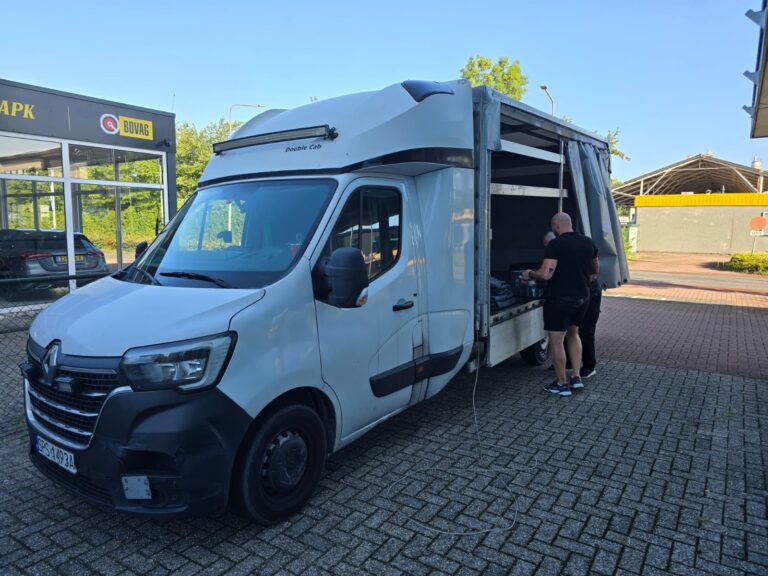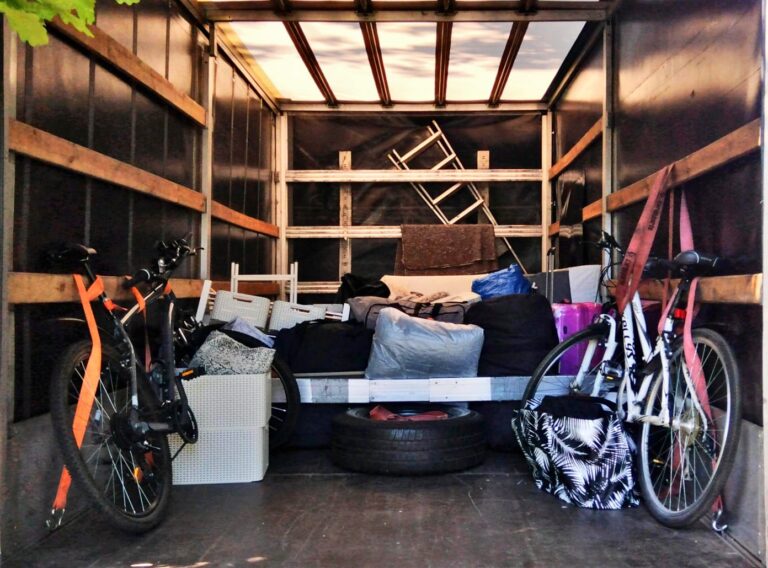
Moving to the Netherlands? Whether you’re an expat, digital nomad, or young professional, understanding the ins and outs of daily life—from housing to healthcare—will help you settle in smoothly. At VANonsite, we specialize in seamless relocations, so once you’ve decided to make the move, check out our Removals to the Netherlands service for a stress-free experience.
Key Takeouts
- Experience Life in the Netherlands by Bike: Discover over 16,000 km of dedicated cycle paths that make everyday commuting and weekend adventures effortless.
- Streamlined Living in the Netherlands: From BSN registration to opening a Dutch bank account, settling into life in the Netherlands is simple with digital e-government services.
- Affordable Cost of Life in the Netherlands: Enjoy competitive rental rates, efficient public transport, and transparent healthcare premiums that keep your monthly budget in check.
- Vibrant Expat Life in the Netherlands: Tap into active international communities, language cafés, and integration programs that help you thrive socially and professionally.
- Rich Culture & Sustainability in the Netherlands: Celebrate iconic festivals like King’s Day, explore tulip fields each spring, and embrace eco-friendly initiatives that define life in the Netherlands.
House Rental Pricing
Rental costs vary significantly across the Netherlands’ major cities, depending on property type and location. According to RentHunter (March 19, 2025):
- Amsterdam:
- Room: €800–€1,200 (centre), €700–€1,000 (outside)
- Studio: €1,500–€2,000 (centre), €1,200–€1,600 (outside)
- 1-Bedroom Apartment: €2,200 (centre), €1,800 (outside)
- 2/3-Bedroom Apartment: €3,500–€4,500 (centre), €3,000–€4,000 (outside)
- Rotterdam:
- Room: €600–€900 (centre), €500–€800 (outside)
- Studio: €1,000–€1,400 (centre), €800–€1,200 (outside)
- 1-Bedroom Apartment: €1,600 (centre), €1,300 (outside)
- 3-Bedroom Apartment: €2,000–€2,800 (centre), €1,800–€2,500 (outside)
- Utrecht:
- Room: €700–€1,000 (centre), €600–€900 (outside)
- Studio: €1,200–€1,600 (centre), €900–€1,300 (outside)
- 1-Bedroom Apartment: €1,700 (centre), €1,400 (outside)
- 3-Bedroom Apartment: €2,500–€3,200 (centre), €2,200–€2,800 (outside)
- The Hague:
- Room: €600–€900 (centre), €500–€800 (outside)
- Studio: €1,000–€1,400 (centre), €800–€1,200 (outside)
- 1-Bedroom Apartment: €1,500 (centre), €1,200 (outside)
- 3-Bedroom Apartment: €2,000–€2,800 (centre), €1,800–€2,500 (outside)
Below is a snapshot of typical annual salaries across key sectors, providing context for what you might expect to spend on rent relative to your income:
| Sector | Example Role | Average Annual Salary (Gross) |
|---|---|---|
| Information Technology | IT Consultant | €50,935 |
| Finance | Financial Analyst | €49,653 |
| Healthcare | Registered Nurse | €65,425 |
| Education | Public School Teacher | €51,667 |
Tips for savvy renters:
- Look beyond city centers for more affordable neighborhoods.
- Consider shared housing to split costs.
- Use reliable rental platforms like Pararius, HousingAnywhere, and Funda.
Public Transport & Connectivity
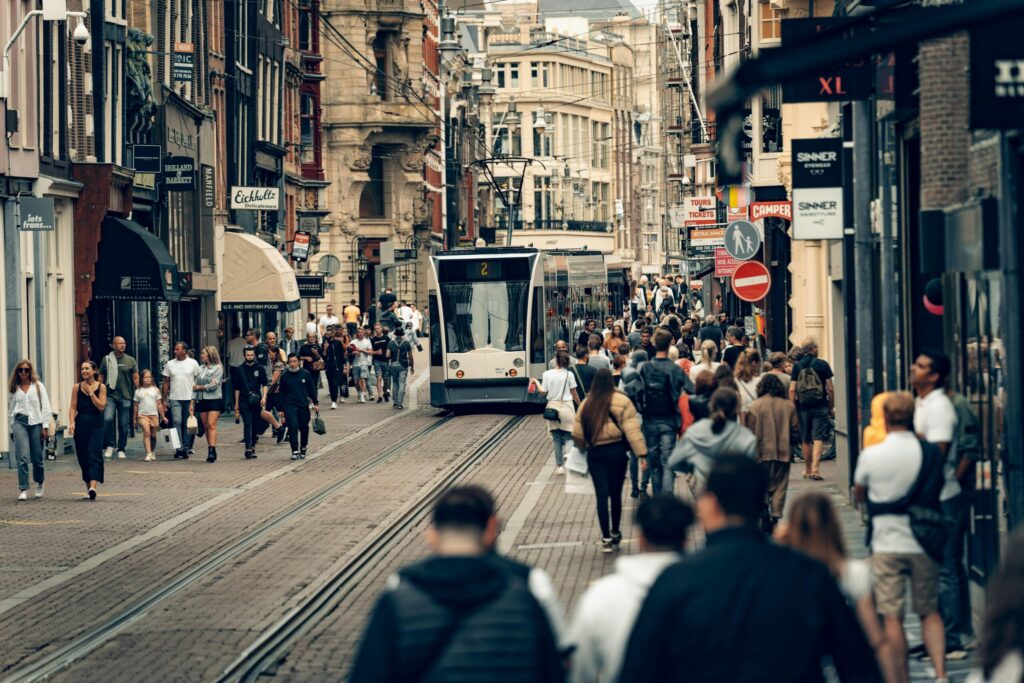
The Netherlands boasts an extensive network of trains, trams, buses, and ferries—all accessible via the OV-The Netherlands offers a unified, user-friendly public transport network built around the OV-chipkaart, a single smart card valid on trains, trams, buses, metros, and ferries. A personal OV-chipkaart requires a one-time deposit of €7.50 (valid for five years) and can be topped up at ticket machines, retail outlets, or set to automatic reload for uninterrupted travel. Fares combine a boarding fee plus distance-based charges, with the standard NS boarding fare at €1.12 and €0.193 per kilometre (full rate), deducted upon check-in and check-out. For frequent travellers, regional season tickets (Net abonnement) offer unlimited journeys within zones—e.g., €335.45/month (young-adult reduced rate €221.40)—while discount cards like Dal Voordeel provide up to 40 % off on off-peak train travel. Contactless options such as OVpay also let you tap in and out with your debit or credit card, eliminating the need for top-ups altogether.
Key highlights:
- Cycling alternative: Complimentary use of over 35,000 km of dedicated bike paths and 195,000+ mapped routes
- OV-chipkaart: €7.50 deposit, top-up at stations or shops, auto top-up available
- Fare structure: €1.12 boarding fee + €0.193/km deducted on check-in/out
- Season tickets & discounts: Regional pass at €335.45/month (reduced €221.40); Dal Voordeel card for 40% off
- OVpay: Direct check-in/out with debit/credit cards, no card or balance required
Healthcare System
The Dutch healthcare system is a universal, regulated model combining mandatory basic insurance with voluntary supplemental plans. Basic health insurance (basisverzekering) is compulsory for all residents, must be obtained within four months of registering your BSN, and covers essential services such as GP visits, hospital care, maternity care, and prescribed medications.
Key features include:
- Average monthly premium: approximately €158.50–€159 in 2025, an increase of about €11–12 compared with 2024.
- Annual deductible (eigen risico): €385 per person; insurers cover costs only above this threshold.
- Supplemental insurance: optional add-ons (e.g., adult dental care, physiotherapy, vision) available at extra cost and subject to health acceptance.
- Out-of-pocket caps: regulated maximums on uncovered services ensure financial predictability.
- Children’s coverage: basic insurance covers residents under age 18 at no extra premium or deductible.
Registrations and claims are handled digitally via your insurer’s portal and the government’s DigiD/MijnOverheid system, streamlining reimbursements, medical records access, and e-prescriptions. Subsidies and allowances are available for low-income households to guarantee equitable access to care.
Food in the Netherlands
Dutch cuisine is renowned for hearty stews like stamppot and savory deep-fried bitterballen, as well as sweet treats such as stroopwafels and fluffy poffertjes. Other beloved dishes include raw herring (haring) served with onions and pickles, crispy kibbeling (battered fish snacks), and traditional pea soup (snert) during the colder months. Indulge also in Gouda and Edam cheese varieties, or treat yourself to warm appeltaart (Dutch apple pie) for dessert.
Local specialties to try:
- Stamppot (mashed potatoes with vegetables and sausage)
- Bitterballen (crispy meat-filled snacks)
- Stroopwafels (caramel-filled waffle cookies)
- Poffertjes (mini pancakes)
- Haring (raw herring with onions and pickles)
- Kibbeling (battered and fried fish bites)
- Snert (thick split-pea soup)
- Gouda & Edam cheese

Job Market & Opportunities
The Dutch labour market remains robust, with over 393,100 job vacancies as of March 2025 and a 4.20 % vacancy rate in Q1 2025, underscoring strong demand across multiple sectors . Growth is particularly pronounced in Information Technology, Finance, Engineering, Healthcare, and Education, each offering competitive salaries and clear career pathways.
| Sector | Example Role | Average Annual Salary (Gross) |
|---|---|---|
| Information Technology | IT Consultant | €50,935 |
| Finance | Financial Analyst | €69,250 |
| Engineering | Engineer | €84,775 |
| Healthcare | Registered Nurse | €65,425 |
| Education | Public School Teacher | €51,667 |
Sources:
Public School Teacher salary from SalaryExpert
IT Consultant salary from PayScale payscale.com
Finance role salary from Glassdoor glassdoor.com
Engineer salary from SalaryExpert en.wikipedia.org
Registered Nurse salary from SalaryExpert salaryexpert.com
Cost of Utilities & Living Expenses
Monthly utilities in the Netherlands typically run between €150 and €200 for a standard apartment, varying by consumption and contract type. On average, you can expect to pay for electricity and gas (€120–€150), water and sewage (€15–€20), internet and TV (€30–€45), a basic mobile-phone plan (€15), and trash collection (€26). Beyond utilities, average non-housing living expenses come to about €840.90 for a single person and €2,121.38 for a family of four each month, covering groceries, local transport, insurance, and leisure.
| Expense | Monthly Cost |
|---|---|
| Electricity & Gas | €120–€150 |
| Water & Sewage | €15–€20 |
| Internet & TV | €30–€45 |
| Mobile-Phone Plan | €15 |
| Trash Collection | €26 |
| Average Total Utilities | €206–€256 |
| Average Living Expenses (excl. rent, single) | €840.90 |
| Average Living Expenses (excl. rent, family of four) | €2,121.38 |
Source: GlobalPassport.ai; LivingCost.net.
Additional Activities & Lifestyle
Life in the Netherlands goes beyond work and studies—there’s always something fun or active to enjoy in your free time.
Top leisure activities include:
- Cinema outings: Standard tickets in major cities average €12–€16, with midweek and student discounts often available.
- Gym memberships: Popular budget chains like Basic-Fit offer a Comfort plan at €24.99/4 weeks and Premium at €29.99/4 weeks, while multi-sport networks such as Urban Sports Club start at €33/month.
- Cycling adventures: Take advantage of over 35,000 km of dedicated bike paths and nearly 195,000 community-mapped routes—free to use year-round.
Cafés & Restaurant Prices – example of prices
| Item | Average Price (EUR) |
|---|---|
| Cup of coffee (regular) | 2.80 – 3.50 |
| Cappuccino / Latte | 3.50 – 4.50 |
| Pastry (croissant, donut) | 1.50 – 2.50 |
| Inexpensive restaurant meal | 12.00 – 18.00 |
| Mid-range 3-course dinner | 30.00 – 50.00 |
| Beer (0.5 L draught) | 3.50 – 5.00 |
| Glass of wine (0.2 L) | 4.00 – 6.50 |
| Soft drink (0.33 L bottle) | 2.50 – 3.50 |
| Bottle of water (1.5 L) | 1.00 – 2.00 |
These prices reflect typical café and restaurant menus across Dutch cities, helping you budget for everyday dining when experiencing life in the Netherlands.
Sources: Hikersbay (coffee); StudyCountry (meals)
Why Choose the Netherlands?
The Netherlands combines an exceptional work–life balance, world-class infrastructure, a dynamic open economy, vibrant culture, and pioneering sustainability initiatives—making it a top destination for living, working, and exploring.
Key reasons to choose the Netherlands:
- World-leader in work–life balance: With Europe’s shortest average workweek of just 32.2 hours, the Dutch enjoy ample personal and family time, leading to high life satisfaction and reduced burnout.
- World-class logistics & transport infrastructure: Tied for 3rd with a 4.10 score in the 2023 Logistics Performance Index and ranked 4th globally for transport infrastructure by the World Economic Forum, the Netherlands offers fast, reliable connectivity for both people and goods.
- Strategic economic gateway: Anchored by the Port of Rotterdam—the largest seaport in Europe—and Schiphol International Airport—among the world’s busiest—this open economy ranks as one of Europe’s top 5, with stable growth and a significant current account surplus.
- Rich cultural fabric: Home to 13 UNESCO World Heritage Sites and major events like King’s Day and the Amsterdam Dance Event (500,000+ annual visitors), the Netherlands offers endless cultural experiences.
- Sustainability pioneer: Over half of electricity now comes from renewables—53% in early 2024—and 27% of all trips are made by bicycle, supported by 35,000 km of segregated cycle tracks.
How VANonsite Can Help
At VANonsite, we specialize in making your relocation to the Netherlands seamless, secure, and stress-free. With our comprehensive suite of European moving services and a commitment to clear, upfront pricing, we handle every detail so you can focus on settling into your new home.
- Fast-track options, including Last-Minute Moving and specialized Student Removals, for urgent or budget-friendly timelines
- Transparent, all-inclusive pricing with no hidden fees, so you know exactly what to expect from your door-to-door move.
- Customizable moving packages ranging from 5 m³ student options to full-house solutions up to 90 m³, tailored to fit any size and budget.
- Professional packing services and expert handling to protect your belongings during transit.
- Comprehensive customs clearance assistance for international shipments, including to and from the Netherlands.
- Personalized support with dedicated coordinators guiding you from the initial quote through final delivery.
- Optional insurance and secure storage solutions for added peace of mind.
Geography & Climate
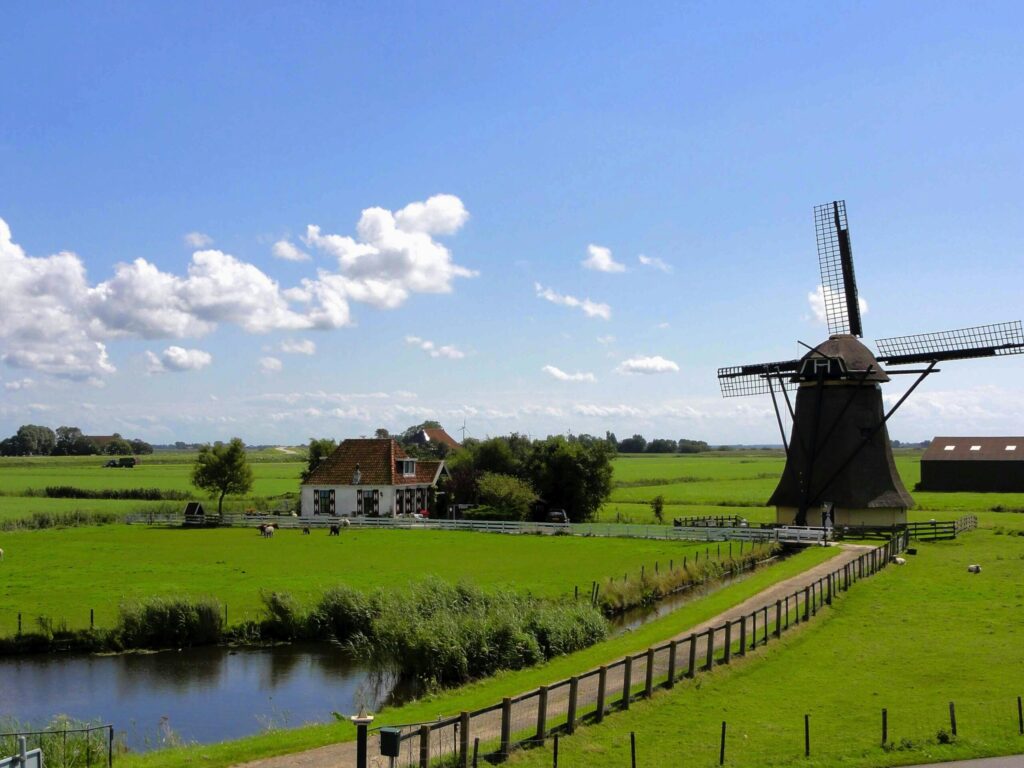
The Netherlands is renowned for its predominantly flat landscape—nearly half the country lies below sea level—shaped by centuries of water management and reclaimed polders. Its temperate maritime climate, influenced by the North Sea and Atlantic currents, offers relatively mild conditions year-round. Winters are cool, averaging 2–6 °C, while summers remain comfortable at 17–20 °C. Rainfall is evenly spread across all seasons, so a light raincoat is essential for both daily commuting and leisure cycling.
Key features at a glance:
- Approximately 1,600–2,000 hours of sunshine annually, perfect for outdoor activities
- Flat topography with extensive polders and dikes, ideal for cycling and agriculture
- Mild temperatures: winters typically 2–6 °C, summers 17–20 °C
- Evenly distributed precipitation—around 800 mm per year—making waterproof gear a must
- Distinct seasons, from vibrant spring tulip blooms to crisp, windy autumns
Visas, Residence Permits & BSN Registration
Non-EU citizens must apply for the appropriate visa or residence permit before arrival. Common options include the Highly Skilled Migrant permit and the EU Blue Card for specialists. Upon arrival, you’ll register at your municipality (gemeente) to obtain your BSN (citizen service number), which you’ll need for banking, healthcare, and employment.
Key steps:
- Check visa requirements on the Dutch Immigration and Naturalisation Service (IND) website.
- Arrange sponsorship through your future employer (if applicable).
- Register at the gemeente within five days of arrival to secure your BSN.
Banking & Tax System
Opening a Dutch bank account is straightforward once you have your BSN. Major banks like ABN AMRO, ING, and Rabobank offer English-friendly online banking apps. The Netherlands also has a favorable tax regime for expats, including the 30% ruling that provides income tax relief for highly skilled migrants.
| Service | Details |
|---|---|
| Bank account | Free with basic package; online setup |
| Debit card (Maestro) | Included |
| 30% ruling | Reduces taxable income by 30% |
| Tax return deadline | May 1 each year |
Education System & Schools for Expats
The Netherlands offers a structured, high-quality education system from primary through tertiary levels, with options that cater specifically to expat families. Children start primary school at age four and continue until age twelve, then move on to secondary education (VMBO, HAVO, VWO) which lasts another four to six years depending on the track. For expats, there are three main pathways:
- Dutch-medium public schools: Free, government-funded education where Dutch is the language of instruction; many schools offer additional support for newcomers.
- Bilingual streams: Public or private schools that split lessons between Dutch and English, easing the language transition for international students.
- International schools: Fully English-taught curricula (IB, British GCSE/A-Levels, American AP) with annual tuition typically ranging from €10,000 to €20,000.
Most schools require registration several months before the school year begins (typically springtime), and placement often depends on local catchment areas or, for internationals, school capacity. Many municipalities also provide subsidized Dutch language classes and cultural orientation programs to help children—and parents—integrate smoothly into the community.
Language Learning & Cultural Integration
Although most Dutch speak excellent English, learning Dutch will help you integrate socially and professionally. Language schools like the Goethe-Institut and private tutors offer courses from beginner to advanced. Many municipalities offer subsidized integration programs that cover language and cultural norms.
Tips for immersion:
- Join a “tafel” (conversation table) at your local library.
- Volunteer at community events (king’s day celebrations, local markets).
- Use language apps like Duolingo or Babbel for daily practice.
Top Cities & Regions to Live
While Amsterdam and Rotterdam are popular, other regions offer great value:
| Region | Highlights | Approx. Rent (1-BR) |
|---|---|---|
| Randstad | Jobs, international vibe | €1,500–€2,200 |
| Utrecht area | Central location, historic centre | €1,400–€1,700 |
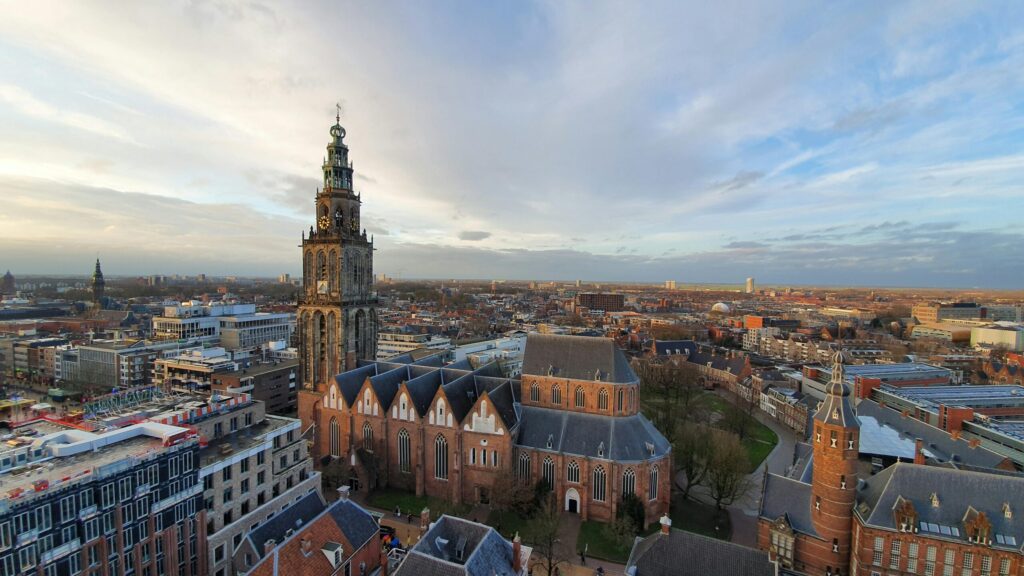
| Groningen | Student city with youthful energy | €850–€1,200 |
| Maastricht | Southern charm, lower cost of living | €900–€1,300 |
Safety & Quality of Life
The Netherlands consistently ranks among the world’s safest and most content countries. According to the 2024 Global Peace Index, it sits 18th out of 163 nations with a low score of 1.527, reflecting minimal levels of internal conflict and violence. Homicide rates have fallen to just 0.7 per 100,000 inhabitants in 2023, placing the country among Europe’s lowest for violent crime. Beyond personal safety, the OECD Better Life Index highlights that the Netherlands outperforms the OECD average in safety, civic engagement, and overall life satisfaction, underpinned by reliable emergency services and transparent governance.
Complementing this security is exceptional work–life balance: the average Dutch workweek is only 32.2 hours, allowing ample time for family, leisure, and community involvement. Together, these factors create an environment where both physical safety and quality of life thrive.
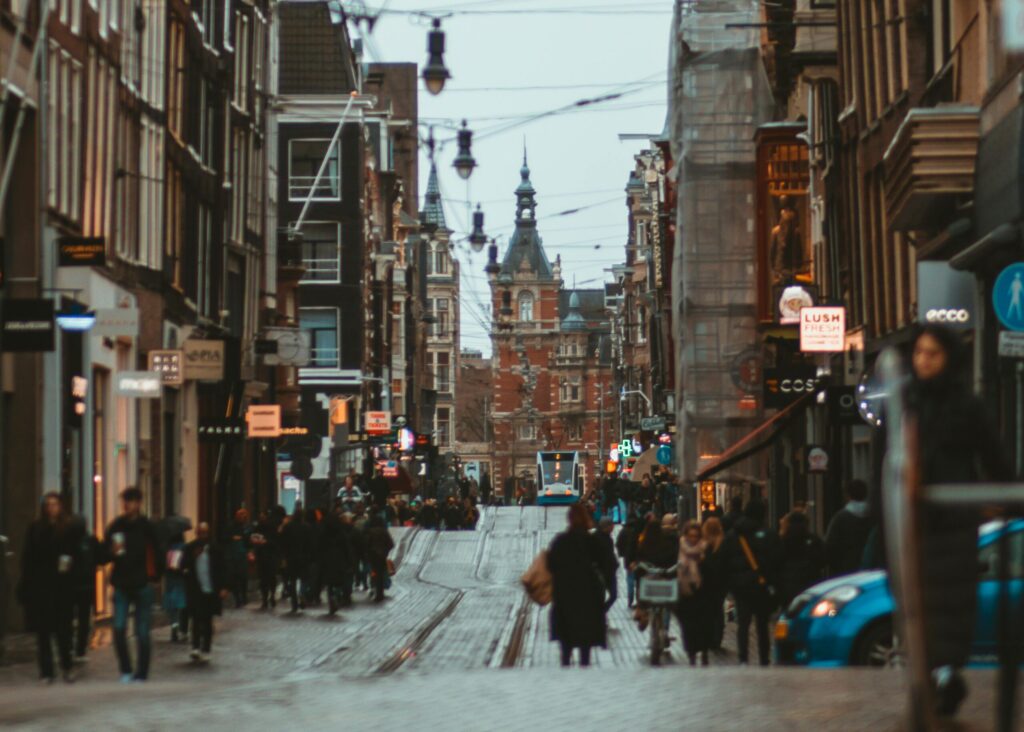
Women Safety in Netherlands
Here’s a snapshot comparison of the Netherlands against a selection of European peers using the Women, Peace and Security (WPS) Index 2023/24, which includes a “community safety” indicator based on women’s reported feeling of safety walking alone where they live:
| Country | WPS Index Score | Rank in WPS Index 2023/24 |
|---|---|---|
| Denmark | 0.932 | 1 |
| Netherlands | 0.908 | 9 |
| Germany | 0.871 | 21 |
| France | 0.864 | 24 |
| Italy | 0.827 | 34 |
- Top performer: Denmark leads all countries with a score of 0.932.
- Netherlands: At 0.908 (9th), the Netherlands ranks among Europe’s safest for women.
- Regional context: Germany and France fall just below the EU average (≈ 0.865), while Italy sits further down the list.
This table highlights that the Netherlands not only outperforms most major Western European countries in terms of women’s perceived safety but also sits well above the broader European average on this composite index.
Digital Infrastructure & Connectivity
The Netherlands boasts one of Europe’s most robust digital backbones: fixed broadband adoption stands at 97%, well above the EU average of 78%, with Next Generation Access (NGA) coverage reaching 99% and Fixed Very High Capacity Networks (VHCN) covering 91% of households. Over half of all residences (52%) are connected via Fibre to the Premises (FTTP), and 47% of users subscribe to plans offering at least 100 Mbit/s. On the mobile front, 94% of the population uses mobile broadband and 5G networks cover 97% of populated areas—though only 33% of total spectrum has been allocated for 5G services so far.
Internet subscriptions are competitively priced, with basic plans starting around €32.50/month, mid-tier fiber packages (100 Mbit/s) typically costing €35–€45/month, and gigabit-capable plans exceeding €70/month. Complementing this connectivity, 92% of Dutch citizens engage with e-government services—from tax filings via DigiD to municipal registrations through MijnOverheid—placing the country among the EU’s top five for digital public service delivery
Social Life & Expat Communities
Building a vibrant social circle in the Netherlands is easy, thanks to well-established expat networks and local meetups. InterNations alone boasts over 124,000 members, hosts 69 monthly events, and offers 92 interest-based groups across the country, from networking mixers to hobby clubs. While Dutch people may seem reserved at first, they are known for being warm, loyal, and refreshingly direct once you break the ice. Beyond InterNations, platforms like Meetup, Facebook expat groups, and IamExpat events (film nights, language tandems, sports socials) fill calendars with opportunities to connect.
Don’t miss the famous after-work “borrels” at local cafés, volunteer buddy schemes organized by municipal integration programs, or international women’s groups such as After5 for more intimate gatherings. No matter where you settle—whether bustling Amsterdam or quieter Groningen—you’ll find a supportive expat community; in fact, 77 % of expats report being happy with life here.
Higher Education & Student Life
The Netherlands offers a world-class higher education system with extensive support for international students and a vibrant campus culture. Top Dutch institutions rank among the best globally, and over 2,500 English-taught Bachelor’s and Master’s programmes ensure accessibility for non-Dutch speakers. Tuition remains highly competitive: EU/EEA students pay a statutory fee of €2,530 for the 2024–2025 academic year (rising to €2,601 in 2025–2026), while non-EU/EEA students typically face institutional fees around €20,900–€21,600 per year. Beyond the classroom, Dutch universities excel in student services—offering career orientation support, recreational facilities, and financial benefits that make life as a student both affordable and engaging.
Key benefits of studying in the Netherlands include:
- Affordable Tuition & Financial Aid: Subsidised fees for EU/EEA students at €2,530/year (2024–25) with loan options; non-EU/EEA fees from €20,900–€21,600/year.
- Extensive English-Taught Programmes: More than 2,500 degree tracks in English, from STEM fields to humanities.
- Career-Focused Orientation Year: Graduates gain a three-year “zoekjaar” to secure employment as highly skilled migrants, boosting post-study job prospects.
- Student Travel Product: Full-time students travel free or with up to 40% discount on trains, buses, trams, and metros nationwide.
- Vibrant Campus Life: Hundreds of student associations, cultural centres, and sports clubs offer discounted memberships and regular events.
This combination of high-quality education, affordable costs, and dynamic student communities makes the Netherlands an exceptional destination for higher learning.
Seasonal Attractions & Cultural Events
The Netherlands comes alive year‐round with vibrant festivals and cultural highlights. From the nationwide sea of orange on King’s Day to the historic Sinterklaas festivities, the blooming tulip fields in spring, and the global electronic music showcase at Amsterdam Dance Event, there’s something for everyone to enjoy. These events not only offer memorable experiences but also foster community spirit, cultural understanding, and unique networking opportunities.
Key seasonal events include:
- King’s Day (April 27): The entire country turns orange in celebration of King Willem-Alexander’s birthday, with street markets, boat parties on Amsterdam’s canals, and free concerts. The national holiday ensures a day off for most, making it the perfect time to experience authentic Dutch traditions.
- Sinterklaas (December 5): A beloved family festival marking St. Nicholas Eve, complete with festive parades, gift-giving traditions, and traditional treats like spiced cookies and chocolate letters.
- Tulip Season (March–May): With gardens like Keukenhof open from March 20 to May 11, visitors can witness millions of tulips in peak bloom—ideal for scenic day trips, photography, and spring picnics.
- Amsterdam Dance Event (October): Attracting over 500,000 music professionals and enthusiasts, ADE combines daytime conferences, masterclasses, and a city-wide festival, offering unparalleled networking in the global electronic music industry.
Benefits of these events include:
- Cultural immersion and deep local insights
- Opportunities for community bonding and making new friends
- Access to unique traditions and seasonal specialties
- Stunning natural landscapes and festive atmospheres
- Professional networking and entertainment experiences
Sustainability & Green Initiatives
The Netherlands is a global front‐runner in environmental stewardship, integrating renewable energy, circular‐economy policies, waste management, and electric mobility into everyday life. In 2024, renewables contributed 19.8 % of the country’s total energy consumption—and for the first half of the year, over half of its electricity production came from wind, solar, and biomass. The nation recycles 56.3 % of its household waste, keeping landfill rates among the lowest in Europe. It also leads on eco‐innovation: the Dutch government’s Circular Economy Monitoring Framework (ICER) guides policies that reduce resource consumption and promote reuse. Meanwhile, the Netherlands hosts Europe’s largest public charging network with over 180,000 stations supporting its rapid EV adoption. Finally, more than 27 % of all trips are made by bicycle, offering a low‐carbon, healthy transport mode backed by 153,000 km of dedicated bike infrastructure.
Key green initiatives include:
Cycling Culture: Bikes account for more than a quarter of all trips, powered by an extensive 153,000 km cycle path network.
Renewable Energy Expansion: Nearly 20 % of total energy consumption and 53 % of electricity generation now comes from renewables.
Waste Management & Recycling: Over 56 % of domestic waste is recycled, minimizing landfill and incineration.
Circular Economy Leadership: The ICER framework drives sustainable production, consumption, and resource recovery.
EV Charging Infrastructure: A network of 180,000+ public charging points makes EV travel seamless nationwide.
Article Summary
This comprehensive guide to life in the Netherlands covers everything a newcomer needs to know: from navigating the country’s flat, maritime climate and essential visa and BSN registration steps, to opening a Dutch bank account and understanding the 30% tax ruling. You’ll learn about the education system and school options for expat families, practical tips for learning Dutch and integrating culturally, and a comparison of top regions—from bustling Randstad cities to more affordable student hubs like Groningen. Other key topics include everyday costs (rent, utilities, café and restaurant prices), the healthcare and public transport networks, digital infrastructure, vibrant expat communities, and seasonal cultural highlights. Finally, discover how sustainability initiatives and world-class cycling routes make the Netherlands a green, bike-friendly country.
Frequently Asked Questions
Q: What is the typical climate and geography of the Netherlands?
A: The Netherlands is predominantly flat and at or below sea level, with mild, maritime weather—winters average 2–6 °C and summers 17–20 °C. Rain is evenly distributed year-round, so a lightweight raincoat is essential.
Q: Do I need a visa or permit to live and work in the Netherlands?
A: EU/EEA citizens do not need a visa but must register for a BSN at the gemeente. Non-EU nationals typically apply for a Highly Skilled Migrant permit or EU Blue Card before arrival and register for a BSN within five days.
Q: How do I open a bank account and benefit from the 30% ruling?
A: With your BSN, visit any major bank (ABN AMRO, ING, Rabobank) to open an account—basic packages are free. Highly skilled migrants can apply for the 30% ruling through their employer to receive a 30 % tax exemption on a portion of their salary.
Q: Is it necessary to learn Dutch?
A: While most Dutch speak excellent English, learning Dutch helps with social integration and career opportunities. Many municipalities offer subsidized courses, and conversation tables (“tafels”) allow you to practice in a supportive environment.
Q: What’s the best way to get around?
A: The OV-chipkaart provides seamless access to trains, trams, buses, and ferries—monthly national passes run around €87. Cycling is equally popular; with over 16,000 km of dedicated bike paths, it’s often the fastest and most budget-friendly option.