Introduction
Industrial moves have a different kind of pressure. A sofa can wait a day. A production line cannot. When an installation slot is booked, engineers are on standby, and a lease clock is ticking, one delay can ripple into real losses.
That is why industrial equipment removals to France should feel controlled, not chaotic. You need a plan that is practical, fast to execute, and built around safe handling.
VANonsite provides premium industrial equipment removals to France with GPS tracking for every load. You see where your shipment is, you know what to expect, and you can plan people and access on time.
Start here: https://vanonsite.com/removals-to-france/
Quick answer
If you want industrial equipment removals to France to run smoothly, these 10 steps cover 90% of what matters.
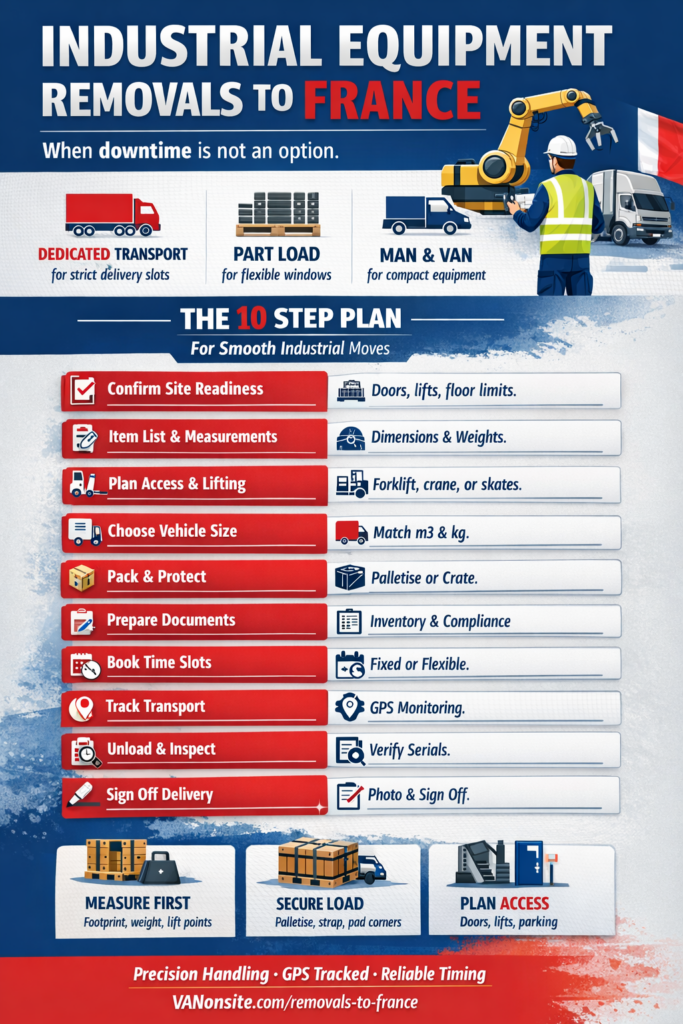
Industrial equipment removals to France in 10 steps
- Confirm site readiness at pickup and delivery
Doors, lifts, floor limits, loading bays, parking. - Choose dedicated vs part load vs man and van
Dedicated for strict slots. Part load for flexible windows. Man and van for compact equipment. - Create an item list with photos, measurements, and weights
Add serials, lift points, and “keep upright” notes. - Plan access and lifting needs
Forklift, tail lift, skates, crane, or hiab. - Select the right vehicle size and payload
Match m3, kg, and the longest side length. - Decide protection level
Palletise, wrap, or crate based on sensitivity. - Prepare documents and compliance
Keep everything readable in 60 seconds. - Book time windows and site contacts
One decision maker at each site. - Load, secure, transport with GPS tracking
Stable load, padded straps, balanced weight. - Unload, position, inspect, sign off
Photograph condition, verify serials, confirm placement.
What counts as industrial equipment
Industrial equipment is not defined by a logo or a sector. It is defined by consequence. If the item is heavy, valuable, awkward, sensitive to vibration, or essential to operations, treat it as industrial equipment.
In industrial equipment removals to France, the biggest risk is not the drive itself. It is poor planning at the edges: a doorway that is 6 cm too narrow, a lift with a lower weight limit than expected, or a machine that looks robust but arrives slightly out of alignment.
Typical industrial equipment examples
These are common items moved under industrial equipment removals to France.
- Production machines, stations, and line components
- CNC units, lathes, milling machines, precision machinery
- Compressors, pumps, generators, and air systems
- Conveyors, lifts, and warehouse equipment
- Refrigeration and food production equipment
- Lab devices and sensitive instruments
- Printing, cutting, and packaging machines
The three reasons industrial equipment needs controlled handling
Industrial loads require controlled handling for three reasons.
- Weight concentration can damage floors and lifts. A single base can carry 70% of the load on a small footprint.
- Calibration risk can cost more than the transport itself. Even minor vibration can turn a perfect setup into a long recalibration.
- Time slots are strict, and missed appointments often mean rebooking. That can add 24 to 72 hours on busy sites.
Quick classification table
Use this quick table to label your shipment in seconds.
| If this is true | Treat it as | Why it matters |
|---|---|---|
| One day of downtime hurts | Critical equipment | Choose predictable transport and timing |
| It must stay upright or level | High sensitivity | Packaging and securement become priority |
| It is awkward, long, or top heavy | Handling risk | Vehicle choice and loading plan matter |
| It is expensive or hard to replace | High value | Crating and careful unloading reduce risk |
If you tick two or more rows, plan industrial equipment removals to France like a high stakes operation.
Common industrial equipment categories
Most industrial equipment removals to France fall into these groups. If yours sits between categories, that is normal. It just means the packing and handling plan needs a little more thought.
Here is what usually sits inside each category, and what it typically needs.
Category breakdown with the real world risk
| Category | Common examples | Typical risk | Best protection move |
|---|---|---|---|
| Light industrial and workshop equipment | Benches, small machines, tool cabinets | Dents, loose parts, weight traps | Palletise, strap with padding |
| CNC and precision machinery | CNC, mills, lathes, measuring units | Calibration drift, vibration | Crate or White Glove handling |
| Food production and hospitality equipment | Ovens, mixers, chillers, prep lines | Fluids, dents, upright rules | Upright labels, edge guards |
| Medical and lab devices | Analysers, microscopes, lab systems | Shock sensitivity, high value | Crate, moisture control |
| Warehouse and logistics systems | Racking parts, rollers, small lifts | Scrapes, missing hardware | Accessory log, labeled bundles |
| Printing and packaging equipment | Cutters, packers, labelers | Alignment shift | Stable base, securement plan |
| Pumps, compressors, and air systems | Compressors, pumps, generators | Weight concentration | Correct lift points, low centre |
You do not need to overcomplicate it. You need to be honest about what hurts most: impact, vibration, moisture, or missing parts. That is the heart of safe industrial equipment removals to France.
Quick prep list by category
A short prep routine can reduce handling time by 15% to 30%.
- Workshop equipment: empty drawers, wrap edges, strap doors
- CNC and precision: lock moving parts, protect controls, consider crating
- Food equipment: drain fluids, secure hoses, keep upright rules visible
- Lab devices: protect optics, add shock labels on all sides, use moisture control
- Warehouse gear: bundle rails, bag hardware, label every bundle with Item ID
- Packaging machines: mark lift points, secure belts, remove loose tooling
Fast check: is your equipment high sensitivity?
If you answer yes to two or more, treat it as high sensitivity.
- Does it have precision alignment or calibration?
- Would a dent affect function or safety?
- Is it expensive or slow to replace?
- Does it have strict upright or level requirements?
High sensitivity industrial equipment removals to France often benefit from crating or White Glove handling. For compact, well packed loads, a man and van option can still work, as long as weight and access remain manageable and the equipment is properly protected.
A simple sensitivity score
Score each line from 0 to 2 and add the total.
| Factor | 0 | 1 | 2 |
|---|---|---|---|
| Vibration sensitivity | low | medium | high |
| Replacement speed | fast | days | weeks |
| Delivery slot pressure | flexible | limited | appointment only |
| Access complexity | easy | moderate | difficult |
If the total is 6 or more, dedicated transport or White Glove handling is usually the smarter choice for industrial equipment removals to France.
Why choose VANonsite for industrial equipment removals to France
Industrial moves are not only about transport. They are about keeping momentum. VANonsite plans industrial equipment removals to France to protect schedules and reduce risk, so your engineers are not waiting on a mystery arrival.
What you get:
- GPS tracking for every load so you can plan teams and site access with confidence
- Premium handling and secure loading plans that reduce vibration, rubbing, and pressure marks
- Clear communication and realistic timelines, built around site rules and delivery slots
- Flexible options, dedicated, part load, and man and van
What a premium move looks like in practice
A good plan keeps the day calm.
- You share measurements, photos, and access details
- We match the right vehicle and handling method
- Your load is protected, strapped, and balanced correctly
- You track the journey with GPS
- The delivery is placed, inspected, and signed off cleanly
Add on services that upgrade your move
Choose the support level that matches your risk profile.
- Packing Service: https://vanonsite.com/packing-services/
- White Glove Delivery: https://vanonsite.com/white-glove-delivery-service/
- Office removals: https://vanonsite.com/office-removals/
- Storage for staged moves
If your delivery location has strict rules or you need careful placement, White Glove support can turn stressful industrial equipment removals to France into a clean handover.
For route options and planning support, start here: https://vanonsite.com/removals-to-france/
Choose the right transport model
The best transport model is the one that protects the timeline and reduces handling. For industrial equipment removals to France, think in terms of downtime cost.
Dedicated transport
Dedicated industrial equipment removals to France are best when the delivery slot is strict or the equipment is high value.
Best for:
- Appointment only unloading
- Precision machines
- High downtime cost operations
- Long distance moves where delays are expensive
Why it works:
- Fewer handoffs
- Cleaner scheduling
- Lower risk of reloading pressure or stacking issues
Part load and shared routes
Part load is ideal for smaller shipments and flexible delivery windows. You pay for the space you use.
Best for:
- 1 to 15 m3 loads
- Non urgent equipment, spares, and replacements
- Flexible delivery windows, often 4 to 12 days
To keep part load safe in industrial equipment removals to France:
- Palletise loose items
- Strap securely with padding
- Label lift points and orientation
- Avoid sending ultra sensitive items without crating
Man and van for compact equipment
A man and van option is perfect for compact equipment and parts, especially in cities.
Best for:
- 1 to 5 m3 shipments
- Manageable weight and easy access
- Faster handling and simpler parking
A man and van move is lean and fast, and it can be a brilliant choice for compact industrial equipment removals to France.
Decision table
| Your priority | Best option | Why it fits |
|---|---|---|
| Strict delivery slot | Dedicated | Predictable timing |
| Best value | Part load | Pay for space used |
| Small shipment | Man and van | Quick, practical access |
| High sensitivity | Dedicated plus White Glove | Less risk, careful placement |
Site survey and risk planning
Most problems in industrial equipment removals to France start with access. A site survey is the quickest way to prevent delays and damage.
Access checks that matter
- Door widths, turns, corridors
- Lift size and lift weight limits
- Stairs, ramps, thresholds
- Floor load limits and fragile surfaces
- Parking distance, loading bay rules
If parking is 30 metres away instead of 5 metres, handling time can jump by 20% to 40%.
Hidden traps that cause delays
- Ceiling height, sprinklers, and overhead obstructions
- Handrails and tight stair turns
- Gate passes, ID checks, security bookings
- Noise or working hour restrictions
Risk rating table
| Risk level | What it looks like | Best action |
|---|---|---|
| Low | Wide access, ground floor, easy parking | Standard palletising and straps |
| Medium | Tight turns, limited parking, small lift | Add skates, longer time slot |
| High | Heavy items, lift limits, appointment only | Dedicated, lift plan, White Glove |
The five photos that make quotes accurate
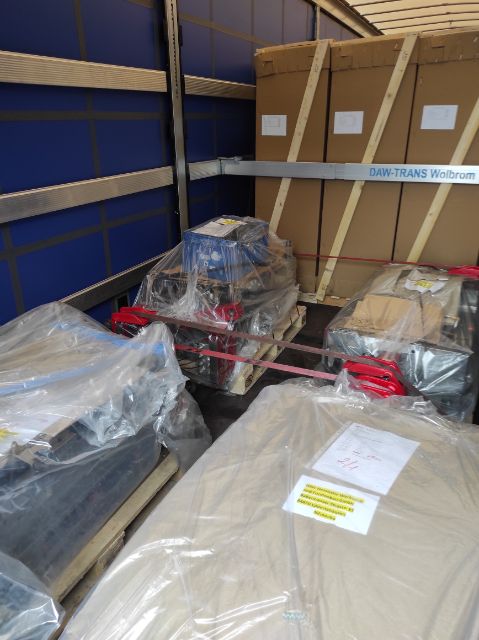
For accurate industrial equipment removals to France, send:
- Machine from all sides
- Serial plate and label area
- Exit route, including corners
- Pickup parking and loading point
- Delivery access and unloading zone
Tip: photograph tight points with a tape measure visible.
Vehicle sizes for industrial equipment removals to France
Choose a vehicle using three numbers:
- Volume in m3
- Weight in kg
- Longest side length
Then add a safety buffer so loading is not forced. Tight packing is where damage begins.
VANonsite fleet overview
| Vehicle package | Volume | Max payload | Best for |
|---|---|---|---|
| Moving One | 1 m3 | 100 kg | Tiny shipments and documents |
| Moving Basic | 5 m3 | 300 kg | Compact equipment and boxed tools |
| Moving Medium | 10 m3 | 500 kg | Small machine plus pallets or crates |
| Moving Premium | 15 m3 | 1100 kg | Larger equipment and multiple pallets |
| Moving Premium Plus | 30 m3 | 3500 kg | Multi pallet loads and heavier equipment |
| Moving Full House XXL | 90 m3 | 20000 kg | Heavy and high volume relocations |
Pallet and crate planning shortcuts
| Unit type | Typical footprint | Typical note |
|---|---|---|
| Euro pallet | 120 x 80 cm | Common for parts and compact units |
| Industrial pallet | 120 x 100 cm | Better for heavier bases |
| Custom crate | Varies | Best for precision and fragile units |
Add a 10% to 15% volume buffer for safe loading in industrial equipment removals to France.
Weight distribution basics
- Heavy items low and stable
- Balance left to right
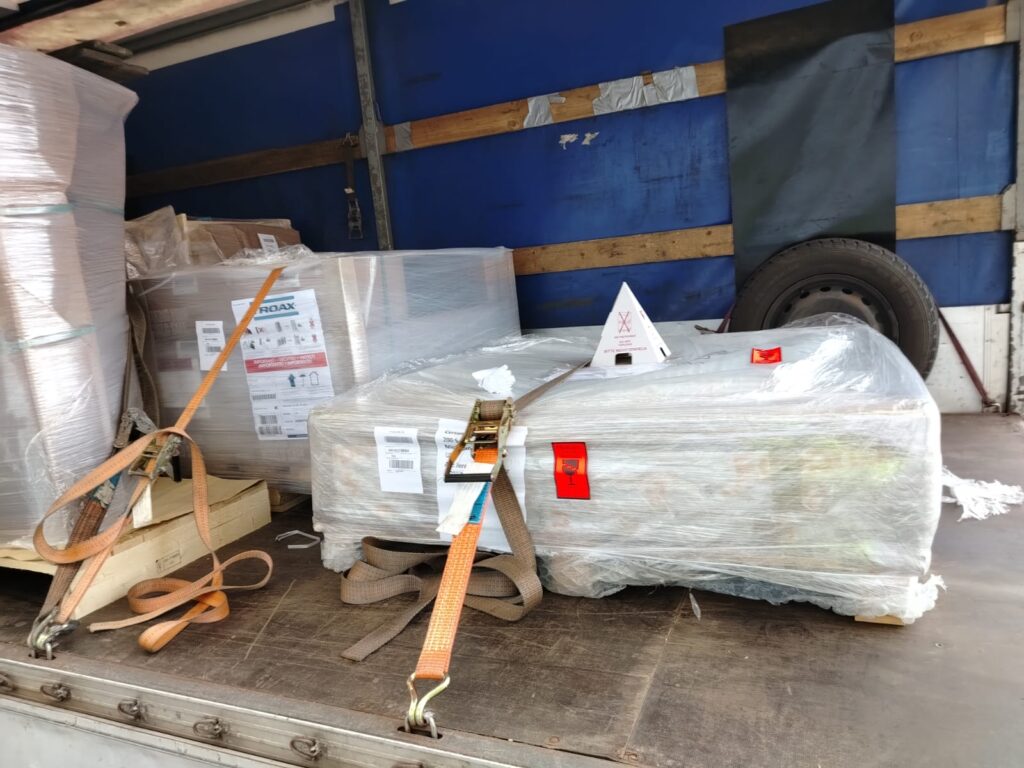
- Padding under straps to prevent crushing
Packing, crating, and protection
Protection is not decoration. It is performance insurance.
Protection methods
- Palletising and strapping for stable units
- Corner protection and edge guards
- Custom crating for precision equipment
- Moisture control for long routes
Labeling that speeds unloading
Use labels that prevent mistakes:
- Item ID
- Weight
- Lift points
- Orientation arrows
What not to pack inside equipment
Avoid:
- Loose accessories
- Unsealed fluids
- Unsecured tooling
Pack accessories separately and label them with the same Item ID.
Loading, lifting, and safe handling
For industrial equipment removals to France, handling quality decides outcome. Most damage does not happen on the motorway. It happens at the doorway, on the tail lift, or during that one rushed corner where someone says, “It will be fine.”
A securement plan should exist before the first strap is tightened. Not in someone’s head. On paper, in simple steps.
Tools and methods
The right tool lowers risk and speeds up handling.
- Tail lift for controlled height changes
- Pallet truck for stable pallet moves on smooth surfaces
- Skates for heavy bases and tight manoeuvres
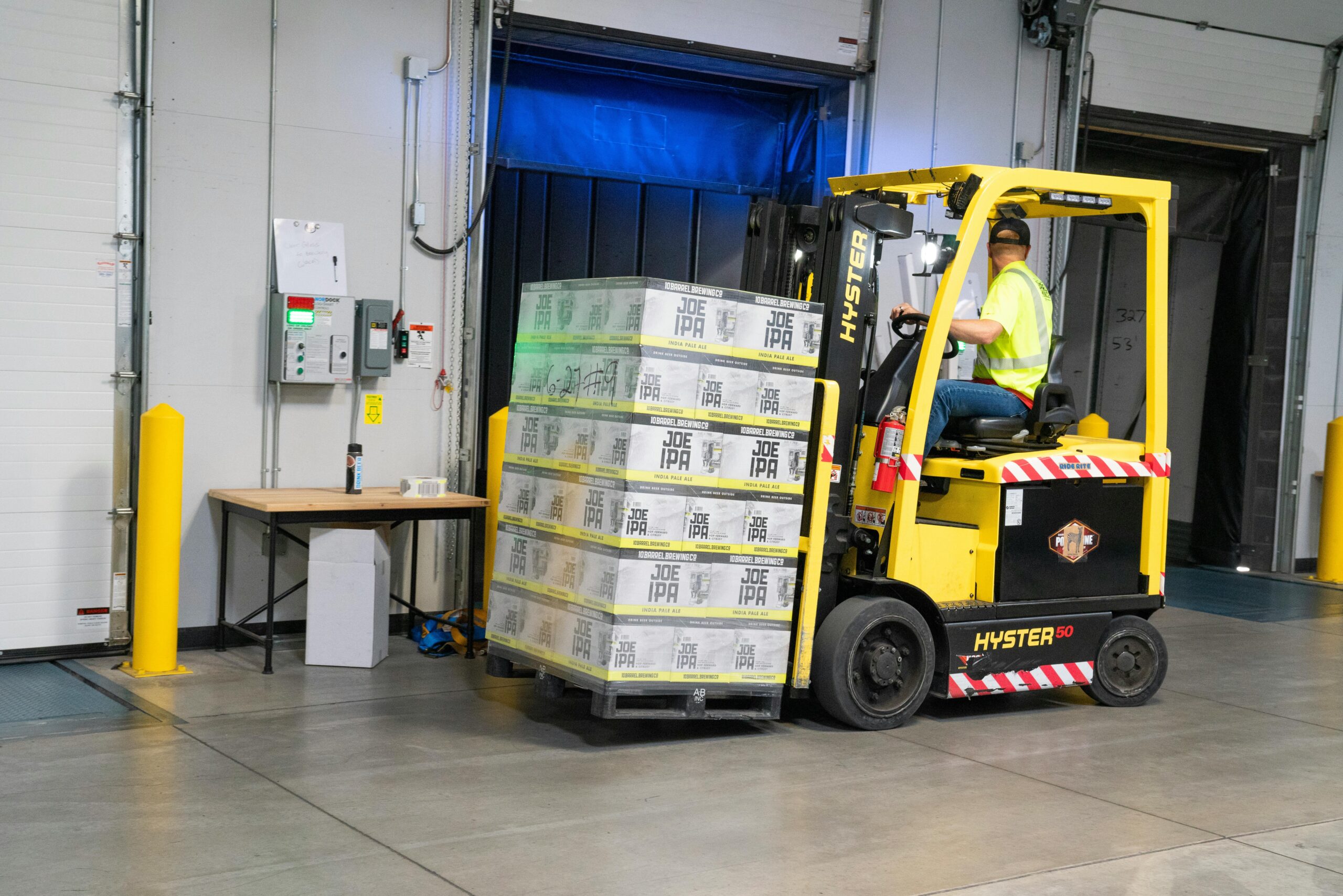
- Forklift coordination for pallets, crates, and loading bay work
Quick tool selector
| Situation | Best method | Why it works |
|---|---|---|
| Pallet or crate, smooth floor | Pallet truck | Fast, stable, low shock |
| Heavy base, tight corridor | Skates | Micro control, safer corners |
| Loading bay available | Forklift | Lowest handling time |
| No bay, height change | Tail lift | Safer transitions |
Safe handling rules
These rules keep industrial equipment removals to France calm and predictable.
- Plan the route before lifting
Walk the full path. Measure the tightest point. Remove obstacles. - Use correct lift points
Only use marked lift points or fork pockets. Never lift from panels or fragile edges. - Stabilise, then move
If it shifts under a gentle push, it is not ready to travel. - Protect before you strap
Use padding under straps. Tight straps without padding can crack housings or crush covers. - Keep the centre of gravity low
Heavy low, balanced left to right. This reduces sway and tip risk.
Securement plan checklist
Before loading starts, confirm:
- Weight per item and total load
- Orientation rules, keep upright, do not tilt, do not stack
- Shock sensitive notes
- Strap points and padding plan
- Load balance and separation between units
A practical rule: if the load can move even 2 cm, it can arrive as a different machine.
Vibration and shock control
Vibration is a quiet threat. It does not always leave a visible mark, but it can shift alignment and cause long commissioning delays.
Use these upgrades for safer industrial equipment removals to France:
- Crate shock sensitive units
- Add internal bracing when parts can swing
- Keep space between units so pressure is not transferred
- Use stable pallets and avoid “loose mixed cartons” around equipment
When crating is strongly recommended
| If this is true | Crating level | Why it matters |
|---|---|---|
| Precision alignment or calibration | Full crate | Minimises micro movement |
| Fragile panels or control units | Partial crate plus padding | Protects weak points |
| Long route or multiple handling points | Full crate | Reduces transit wear |
If you want extra protection and careful placement, combine packing with White Glove delivery:
- Packing Service: https://vanonsite.com/packing-services/
- White Glove Delivery: https://vanonsite.com/white-glove-delivery-service/
Documents and compliance
Paperwork should be boring. Clear, complete, and readable. In industrial equipment removals to France, your goal is simple: anyone checking the shipment should understand what it is, where it is going, and who is responsible within 60 seconds.
If the move is inside the EU
For EU to EU routes, you still want a clean inventory and clear consignee details.
- EU guidance: https://europa.eu/youreurope/
If the route crosses the UK border
If the route touches the UK, customs planning becomes crucial. Missing information can freeze timelines and trigger rebooking on the French side.
- UK EORI guidance: https://www.gov.uk/eori
- French customs portal: https://www.douane.gouv.fr/particuliers
Recommended paperwork pack
Bring a simple pack that supports fast checks and clean sign off.
- Itemised inventory with values
- Serial numbers and photos
- CMR consignment note
- Site contacts and delivery rules
What a strong inventory includes
| Inventory field | Why it matters |
|---|---|
| Item name and model | Clear identification |
| Serial number | Prevents disputes |
| Dimensions and weight | Supports safe handling |
| Value | Helps with declarations and risk control |
| Orientation and lift points | Reduces damage risk |
If you send an item list plus the five access photos, quote accuracy improves fast and back and forth usually drops by 50%.
Timelines and scheduling
A strong timeline is not only about speed. It is about certainty. In industrial equipment removals to France, certainty protects your install slot, your engineers, and your first day of production.
Typical planning windows
- Dedicated: 2 to 6 days
- Part load: 4 to 12 days
- Man and van: 2 to 8 days
These windows assume paperwork is ready and access is confirmed. If access is unknown, add a buffer.
What can stretch your timeline
Small friction points often create the biggest delays.
- Appointment only unloading, add 1 day buffer
- Lift booking requirements, add 2 to 4 hours handling
- Long carry distance from parking to site, add 20% to 40% handling time
- Crating prep for sensitive units, add 1 to 2 days
- Security and gate passes, add 30 to 90 minutes on day of delivery
A simple scheduling formula
Use this quick formula for industrial equipment removals to France and you will avoid most “surprise” downtime.
- Choose transport model window
- Add access buffer, 0.5 day for medium access, 1 day for difficult access
- Add commissioning buffer, 1 day if an engineer must attend
If your delivery slot is appointment only, treat your buffer as sacred.
How to reduce downtime
Downtime is rarely caused by the drive. It is caused by missing parts, late access, or a site that is not ready.
- Book engineers after the delivery window is confirmed
- Use staged delivery with storage when keys or access are uncertain
- Keep accessories and manuals together, label them with the same Item ID
- Confirm forklift availability and operator timing
- Prepare a clear unloading zone and protect floors
A clean timeline checklist
Use this checklist 48 hours before pickup.
- Inventory and serials finalised
- Site contact numbers confirmed
- Loading bay and parking reserved
- Lifting equipment confirmed, tail lift, forklift, skates
- Delivery slot confirmed in writing if the site requires it
Industrial equipment removals to France cost
Pricing should be transparent, not theatrical. For industrial equipment removals to France, cost is built from time, handling risk, access, and protection level.
Two moves can travel the same distance and still vary by 30% because one has difficult access, strict appointment rules, and a machine that requires crating.
Cost drivers
- Weight concentration
- Awkward dimensions
- Access difficulty
- Appointment only delivery
- Crating level
- Timing and peak demand, often adds 15% to 35%
Cost drivers, made practical
| Cost driver | Typical impact | What to share for an accurate quote |
|---|---|---|
| Weight concentration | More handling time and equipment | Weight per item, not just total |
| Awkward dimensions | Slower loading, more space planning | Longest side length and height |
| Access difficulty | Extra labour, longer slot | Photos of doors, lifts, stairs |
| Appointment only delivery | Scheduling pressure | Slot rules and contact details |
| Crating level | Higher protection cost, lower risk | Sensitivity notes, handling rules |
Practical cost ranges
These ranges are planning anchors for industrial equipment removals to France. Exact quotes depend on measurements, access, and dates.
| Load type | Typical example | Typical range |
|---|---|---|
| Light | Parts, boxed tools, compact units | €450 to €1,500 |
| Medium | Palletised equipment, 5 to 15 m3 | €1,200 to €4,500 |
| Heavy | Multi pallet loads, heavy equipment | €3,800 to €12,000+ |
Example scenarios
These examples help you plan fast.
| Scenario | What is moving | Planning range |
|---|---|---|
| Compact parts shipment | 1 to 3 m3 tooling and spares | €450 to €1,150 |
| One palletised unit | 1 pallet or compact crate | €900 to €2,900 |
| Sensitive precision unit | Crated, shock sensitive | €1,800 to €5,900 |
| Multi pallet relocation | 4 to 10 pallets mixed weight | €3,500 to €9,500 |
How to lower cost without lowering standards
The safest savings reduce uncertainty and handling time.
- Use flexible delivery windows for part load
- Choose midweek pickup where possible
- Send accurate photos and measurements
- Confirm site access and parking
- Palletise loose items, avoid mixed cartons
- Keep dense parts in smaller boxes, most under 20 kg
If you want a fast quote for industrial equipment removals to France, send a one page item list and the five access photos. It can reduce back and forth by 50%.
Delivery day checklist
Delivery day should feel like a controlled landing, not a scramble. The goal is simple: no surprises, no missing parts, and no “where do we put this” debate when the vehicle arrives.
Before arrival
Start with the boring basics. They are boring because they work.
- Clear routes from parking to final position
- Protect floors and corners, especially in tight corridors
- Confirm handling equipment: forklift, pallet truck, tail lift, skates
- Reserve parking and confirm loading bay rules
- Share a single point of contact who can make decisions fast
30 minute pre arrival reset
Use this mini routine to prevent last minute chaos.
- Walk the access route end to end
- Remove obstacles and mark tight corners
- Confirm the unloading zone is clear
- Prepare labels and paperwork for sign off
On arrival
The first five minutes set the tone for the whole delivery.
- Inspect packaging and note any visible damage
- Verify serials against the inventory
- Photograph condition from all sides
- Confirm orientation rules before moving, keep upright, do not tilt
- Agree the placement position before lifting
Condition check table
| Check | What to look for | What to do if something is off |
|---|---|---|
| Packaging | Tears, crushed corners, wet marks | Photograph, note on paperwork |
| Straps and padding | Strap marks, pressure points | Adjust before moving further |
| Base and frame | Bends, cracked feet, loose bolts | Pause handling, re assess |
| Accessories | Missing boxes or bundles | Cross check Item IDs, call it out |
After delivery: positioning and commissioning
A machine can arrive in perfect condition and still lose time if setup is rushed. For industrial equipment removals to France, treat commissioning as a quiet, careful finish.
Positioning rules that prevent rework
- Place heavy equipment first, then build around it
- Keep clear access to panels, vents, and service points
- Leave a working gap, even 20 cm can save hours later
Commissioning steps
- Allow temperature stabilisation for sensitive equipment
- Run calibration checks
- Stage setup to reduce downtime
- Test power, air, and connections before full start
Fast sign off checklist
- Serial numbers confirmed
- Accessories accounted for
- Photos taken and stored
- Placement confirmed by the site decision maker
- Paperwork signed and archived
FAQ
How long do industrial equipment removals to France take?
Most industrial equipment removals to France sit in these planning windows:
- Dedicated: 2 to 6 days
- Part load: 4 to 12 days
- Man and van: 2 to 8 days
If your site is appointment only, add a buffer of 1 day. If access is difficult, add 2 to 4 hours handling time.
Dedicated vs part load vs man and van
Dedicated is best for strict delivery slots and high sensitivity equipment. Part load is best for value if you can offer a flexible window. Man and van is best for compact shipments and city access.
What paperwork is needed inside the EU?
Within the EU, you still want a clean inventory, values, and clear consignee details.
- EU guidance: https://europa.eu/youreurope/
What paperwork is needed from the UK?
If the route crosses the UK border, plan customs early. Missing customs details can freeze timelines.
- UK EORI guidance: https://www.gov.uk/eori
- French customs portal: https://www.douane.gouv.fr/particuliers
How do you protect precision equipment?
For precision equipment, the priority is preventing micro movement.
- Palletise or crate
- Add padding under straps
- Use shock labels on all sides
- Keep space between units so pressure is not transferred
If the total sensitivity score is high, dedicated transport and White Glove handling are usually the safest choices.
What details are needed for an accurate quote?
For accurate industrial equipment removals to France pricing, send:
- Pickup and delivery postcodes
- Measurements and weight per item
- Photos of equipment from all sides
- Photos of access routes, doors, lifts, stairs, parking
- Delivery window preferences
Summary
Industrial moves succeed when they feel predictable. This guide shows you how to plan industrial equipment removals to France with fewer surprises, lower damage risk, and less downtime.
Here is the whole approach, simplified.
- Plan the edges first: access, parking, lift limits, and site rules. Miss one detail and handling time can jump 20% to 40%.
- Choose the right transport model: dedicated for strict delivery slots, part load for flexible value, and man and van for compact equipment and spares.
- Measure and document properly: photos, weights per item, dimensions, serials, lift points. Clear data can cut quote back and forth by 50%.
- Protect for function, not appearance: palletise, strap with padding, crate high sensitivity units, and control vibration to avoid calibration drift.
- Finish strong on delivery day: inspect, verify serials, photograph condition, place equipment correctly, and sign off cleanly.
VANonsite delivers premium industrial equipment removals to France with GPS tracking for every load, plus packing, White Glove handling, office support, and storage when you need extra control.
Get started here: https://vanonsite.com/removals-to-france/