
There is a special kind of tension the night before a cross border move. Your keys are in one pocket. Your passport is on the table. And your life is split into two worlds: the one you are leaving, and the one waiting in France.
After Brexit, moving personal belongings from UK to France after Brexit can feel intimidating because customs is now part of the journey. But here is the honest truth. With the right documents and a strong inventory, the border becomes predictable.
This guide is built to do one job: help you complete moving personal belongings from UK to France after Brexit with fewer delays, fewer surprises, and a calmer delivery day. If you want a smooth move across Europe with visibility, VANonsite supports UK to France relocations with careful handling, GPS tracking on every load, and a flexible man and van option for small and medium loads.
TL:DR
- UK to France is now a non EU move, so French customs rules apply.
- If you qualify for duty relief, you may import household goods without duty and VAT, but paperwork matters.
- The biggest delay trigger is a weak inventory plus missing proof of residence change.
- You usually need the French entry form and a clear inventory.
- Restricted items can stop or slow a load.
- A mover can support declarations, but you must provide correct documents.
- GPS tracking plus a clear delivery window makes arrival far calmer.
Quick answers first
| Question | Fast answer |
|---|---|
| Do I have to pay duty on my personal belongings after Brexit? | Often no if you qualify for duty relief, but your documents must prove a real residence transfer. |
| What documents do I need for French customs? | ID, proof of French address, a detailed inventory, and the correct French customs form. |
| What is the single most important document? | Your inventory. A vague list is the number one reason for questions and delays. |
| How long does the process take? | Many moves run 1 to 4 days door to door, but customs readiness decides whether it stays smooth. |
| What triggers extra checks at the border? | Restricted items, unclear values, vague descriptions, or missing proof of residence change. |
| Can I move my belongings in stages? | Yes. Split into two or three shipments, but keep a separate inventory and documents for each stage. |
| What is the safest way to move a small load? | A man and van service with strong packing, a clear inventory, and GPS tracking for visibility. |
If your goal is simple, this is the path: prepare documents, build a clean inventory, then book transport with a clear plan. That is how moving personal belongings from UK to France after Brexit stays smooth.
What changed after Brexit
Brexit changed the status of the UK in relation to EU customs.
- The UK is treated as a third country for EU customs.
- Your belongings are now an import into France, not a free EU movement.
- Customs paperwork, proof, and eligibility conditions now matter.
- Border checks can pause a load if your inventory is unclear or your residence change is not proven.
In other words, moving personal belongings from UK to France after Brexit is no longer just transport. It is transport plus import formalities.
What this changes in practical terms
| Before Brexit | After Brexit |
|---|---|
| You could move household goods like a normal EU relocation | You must be ready for customs checks and supporting documents |
| Inventory was useful for organisation | Inventory is essential for clearance |
| Border timing was mostly about traffic | Border timing depends on paperwork quality |
The real impact on your move
This is what people usually feel, day to day.
- You need a stronger admin folder. Copies matter. Dates matter.
- You need a proper inventory, not a casual list.
- You should expect a border process. If the paperwork is clean, it is usually routine.
The 4 most common reasons a load gets delayed
- Inventory uses vague words like miscellaneous or various.
- Proof of residence change is missing, unclear, or does not match dates.
- High value items are not listed separately.
- Restricted items are packed without disclosure.
A simple checklist that keeps it predictable
Before pickup, make sure you have:
- A clear inventory with grouped items and quantities
- Proof of French address that matches your delivery details
- The correct French customs form, filled and signed where needed
- A folder with copies of key documents saved offline
The good news is simple. If your documents are complete and your inventory is clear, the process becomes predictable.
Do you qualify for duty free entry
Many people moving homes can qualify for relief from customs duty and VAT when transferring their normal residence. It is not automatic. You must prove it.
Common scenarios where people look for relief:
- Transferring your main residence to France
- Marriage and settling in France
- Studies in France
A useful starting point is the official Service Public guidance:
https://www.service-public.gouv.fr/particuliers/vosdroits/F492
Typical conditions in plain English
You will usually need to show that:
- you are moving your normal residence
- the goods are personal and not for sale
- you can prove the move and your new address
Proof that usually helps
This is a practical checklist. The goal is to show a real life change of residence.
- A lease or proof of accommodation in France
- Evidence that you are leaving the UK address
- Dates that make sense, move out and move in
- An inventory that looks like household goods, not commercial stock
The two biggest misconceptions
- It is my stuff, so it must be duty free.
Relief depends on conditions and proof. - My mover will handle everything.
A mover can support the process, but only you can provide your personal proof.
If you are unsure whether your case fits, do not guess. Use the official links in the documents section and prepare your evidence properly. That is a key part of moving personal belongings from UK to France after Brexit without surprise charges.
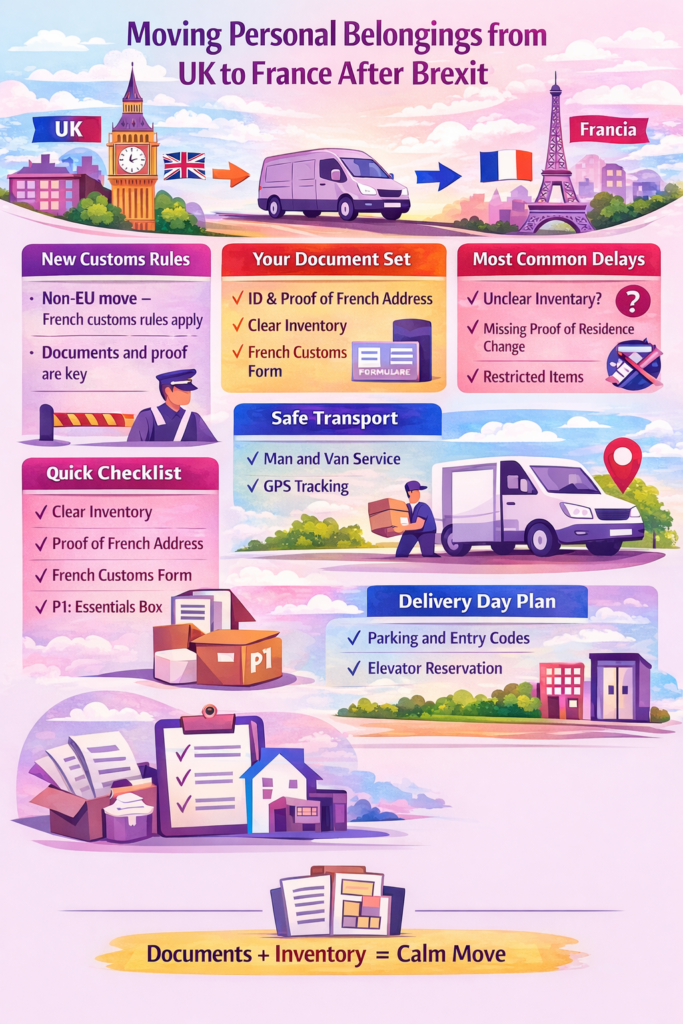
The documents you need for French customs
Customs does not want drama. Customs wants clarity.
Below is a practical checklist. The common mistake column is where most delays are born.
| Document | Why it matters | Common mistake |
|---|---|---|
| ID | identity check | expired passport |
| Proof of French address | confirms residence | missing apartment number |
| Inventory | the core customs document | vague descriptions |
| The French entry form | supports duty relief request | wrong form version |
| Proof of residence change | supports eligibility | mismatched dates |
A few small details that make a big difference
These are tiny admin moves, but they are powerful for moving personal belongings from UK to France after Brexit.
- Use the exact same name spelling on every document.
- Make sure your French address is complete: building name if any, apartment number, floor if useful.
- Keep dates consistent across proof of leaving the UK address and moving into France.
- Prepare at least 2 paper copies of key documents, plus PDFs saved offline.
What to include in your customs folder
Keep this in one place, and keep it accessible on move day.
- Printed documents
- Digital PDFs stored offline
- A note with key contacts and delivery address details
- A one page summary sheet with:
- your full name
- your French address
- your phone number
- pickup address and delivery address
- the total number of boxes and large items
Official links you should use
French Customs moving guidance:
https://www.douane.gouv.fr/particuliers/vous-demenagez
French Customs process page:
French customs entry form reference:
https://www.service-public.gouv.fr/particuliers/vosdroits/R42719
Form 10070 page:
UK guidance for declaring personal goods:
https://www.gov.uk/guidance/check-how-to-declare-personal-goods-you-bring-into-or-take-out-of-the-uk
For moving personal belongings from UK to France after Brexit, treat these links like your roadmap. They keep you on official ground.
Inventory that passes customs without drama
If there is one document that decides whether your move feels smooth or stressful, it is the inventory.
A good inventory is:
- grouped items, quantities, plain descriptions
- values where needed
- high value items listed separately
- box numbering and room labels
The golden rule
If a stranger can picture what it is, it is clear enough.
If a stranger needs to ask what does that mean, you are inviting delays.
Words to avoid
Avoid these because they trigger questions:
- miscellaneous
- stuff
- various
Add these small upgrades
These upgrades keep moving personal belongings from UK to France after Brexit cleaner and calmer.
- Add a box ID and keep it consistent: B01, B02, B03.
- Add a room label: kitchen, bedroom, living room.
- Add an estimated value for high value items.
- Put fragile or high value items in a separate section.
Example inventory table
| Box or item | Room | Item group | Quantity | Notes |
|---|---|---|---|---|
| B01 to B06 | kitchen | boxed kitchenware | 6 | plates wrapped, glasses boxed |
| B07 to B10 | bedroom | clothes and linens | 4 | vacuum bags, labelled |
| B11 | office | cables and accessories | 1 | zip bagged and labelled |
| Laptop | office | high value item | 1 | serial number noted |
| Sofa | living room | furniture | 1 | wrapped, two seater |
A quick inventory quality check
If your inventory meets these, you are in a strong position.
- No vague words
- Every box has a label and a number
- High value items are listed separately
- Large items are listed individually
For moving personal belongings from UK to France after Brexit, an inventory like this is your quiet superpower. It tells customs what is inside without forcing them to guess.
Step by step process for moving personal belongings from UK to France after Brexit
This is the sequence that keeps your move clean.
- Decide if this is a residence transfer or a temporary move
- Gather documents and build inventory
- Book transport and confirm who handles declarations
- Separate restricted items and list them clearly
- Border and customs clearance
- Delivery day access plan in France
Mini timeline
| When | What to do |
|---|---|
| 6 to 8 weeks | confirm your move type, start documents, declutter 20 to 30 percent |
| 4 weeks | build inventory draft, choose transport size, book a slot |
| 2 weeks | finalise inventory, confirm proof of address and dates |
| 48 hours | print copies, prepare P1 essentials, seal and label boxes |
| moving day | load, cross border process, delivery plan and access notes |
If you follow this, moving personal belongings from UK to France after Brexit becomes a planned transfer, not a last minute scramble.
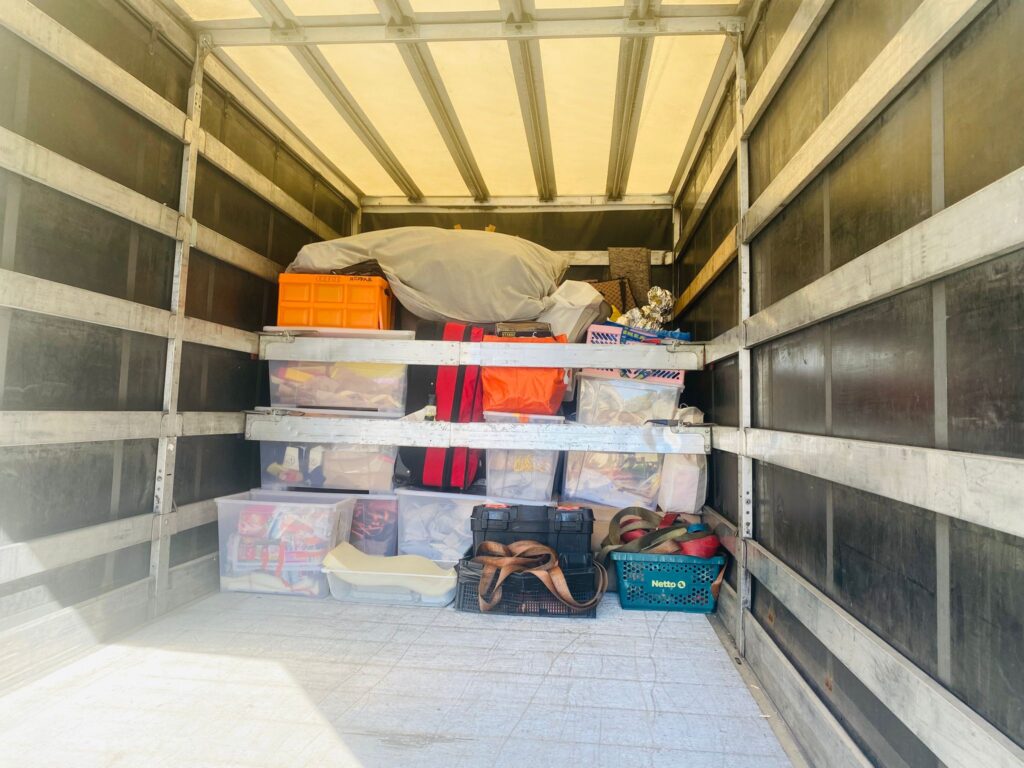
Restricted and sensitive items
Some items trigger extra rules or delays. The goal is not perfection. The goal is honesty and clarity, so customs does not have to guess.
Common categories to think about
- alcohol and tobacco
- plants and food
- medicines
- weapons and sharp items
Why this section matters
If something is restricted and it is not declared, it can pause the entire load. That can turn a smooth day into a stressful wait. For moving personal belongings from UK to France after Brexit, a clean disclosure is often the cheapest form of protection.
Practical rules that keep you safe
- If you are unsure, disclose it and ask before shipping.
- Keep restricted items separate and clearly labelled.
- Do not hide anything inside miscellaneous boxes.
- Keep receipts or prescriptions for anything sensitive.
Quick guidance by category
| Category | What to do before shipping | Low drama alternative |
|---|---|---|
| Alcohol and tobacco | disclose, confirm limits and rules before packing | buy after arrival when possible |
| Plants and food | avoid shipping unless you have clear guidance | replace on arrival |
| Medicines | keep prescriptions, pack in original packaging | carry essentials with you |
| Weapons and sharp items | do not ship unless you have explicit permission and correct handling | leave behind or replace |
The border friendly packing tip
Create one small sensitive items list for yourself. Even if you do not ship them, the act of listing prevents accidental packing.
If in doubt, disclose and ask before shipping. A hidden item can become a border pause. An honest list usually becomes a quick decision.
Choose the right transport format
Transport should match your load. It should also match your life. If you need speed and flexibility, small and medium moves often work best with a man and van.
The two goals you are balancing
For moving personal belongings from UK to France after Brexit, you are balancing:
- speed and simplicity
- safe stacking and easy clearance
The wrong choice creates stress. The right choice feels almost boring. In the best way.
When man and van is a smart choice
A man and van option often fits when:
- you are moving boxes, suitcases, and a few furniture pieces
- your volume is roughly 5 to 15 m³
- you need city access and tight street flexibility
- you want fewer moving parts and a simpler pickup and delivery
When to go bigger than man and van
Choose a larger vehicle when:
- you have bulky furniture and need safer stacking space
- you are close to the upper m³ limit and do not want squeezing
- you are moving a full home or doing a multi room relocation
VANonsite vehicle sizes
| VANonsite option | Volume | Payload | Best for UK to France |
|---|---|---|---|
| Moving One | 1 m³ | 100 kg | a few boxes, valuables, urgent items |
| Moving Basic | 5 m³ | 300 kg | student room, small studio, light load |
| Moving Medium | 10 m³ | 500 kg | studio, 1 bedroom light setup |
| Moving Premium | 15 m³ | 1100 kg | furniture plus boxes, safer stacking |
| Moving Premium Plus | 30 m³ | 3500 kg | larger flat, heavier furniture |
| Moving Full House XXL | 90 m³ | 20000 kg | full house relocations |
A quick matching guide
- 1 to 3 m³: essentials, luggage, a few boxes
- 4 to 7 m³: student room or small studio
- 8 to 12 m³: studio to light 1 bedroom
- 12 to 16 m³: furniture plus boxes, safer stacking
Why GPS tracking reduces stress
When you are moving personal belongings from UK to France after Brexit, timing matters. Tracking helps you plan:
- key handovers
- lift slots
- parking access
- delivery windows
It also reduces silence. And silence is where anxiety grows.
Tracking also protects your schedule. You can coordinate your day without guessing, which reduces waiting time and makes delivery calmer.
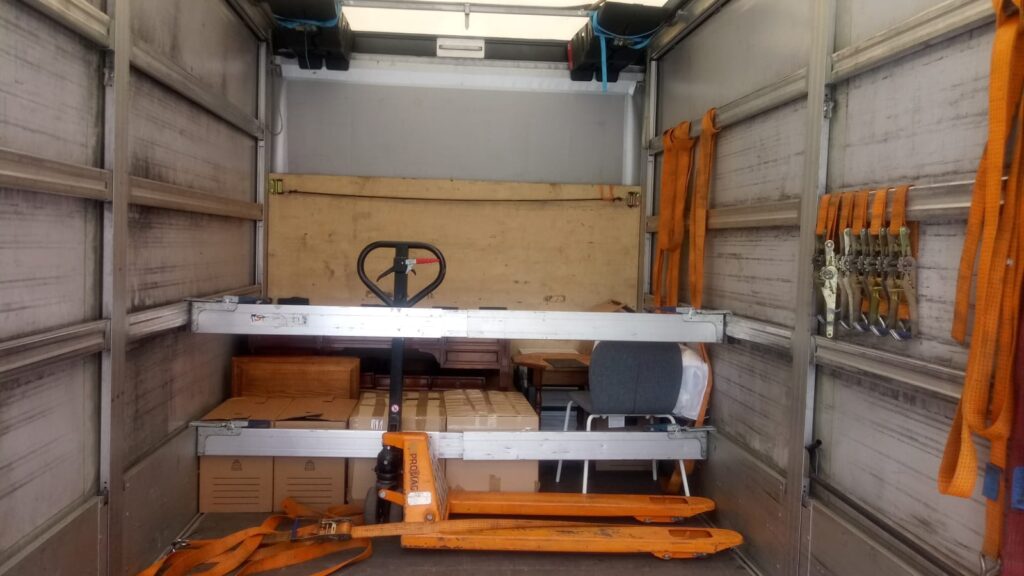

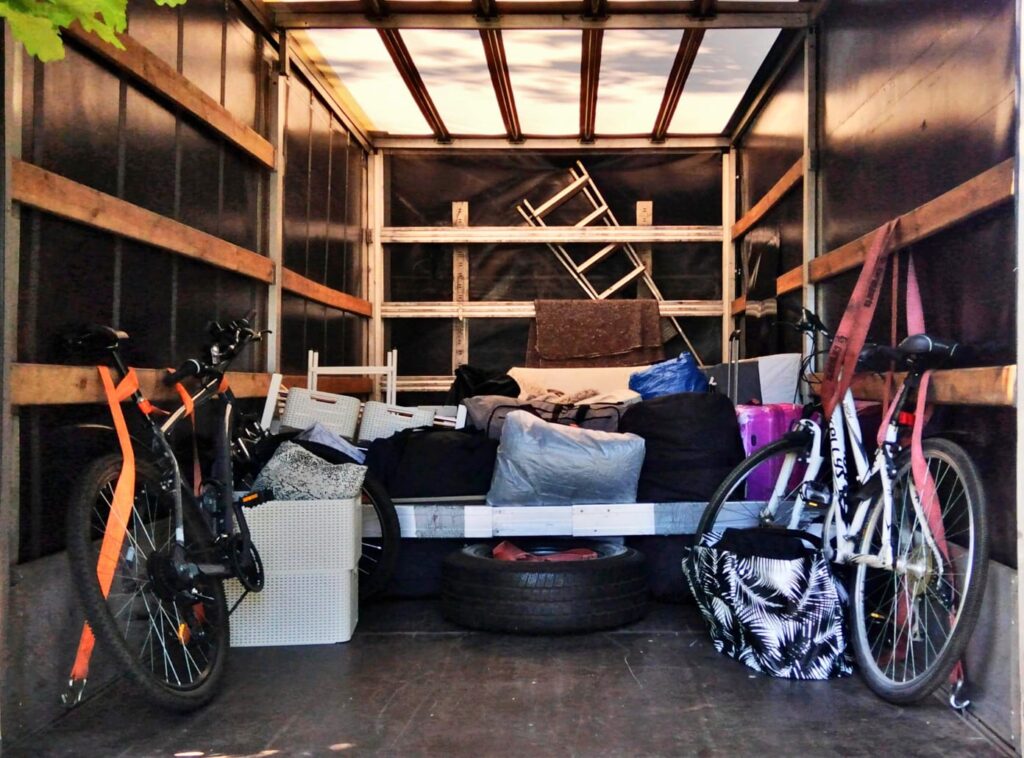

Packing that protects you at the border and on the road
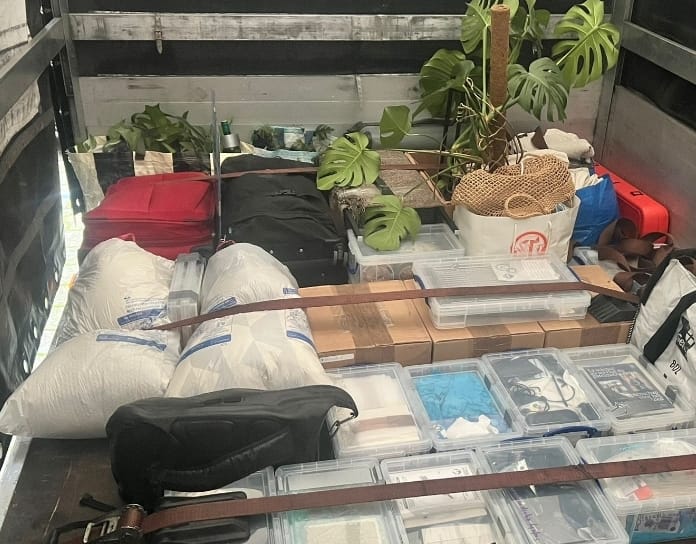
Packing is not only about protection. It is about speed. After Brexit, it is also about clarity. When boxes are sealed, labelled, and numbered, your inventory becomes believable at a glance. That makes moving personal belongings from UK to France after Brexit feel smoother at the border and calmer at delivery.
Practical packing rules
- keep boxes at 15 to 20 kg
- tape bottoms in an H pattern for anything heavy
- seal strongly and label clearly on two sides
- number boxes: 1 of 20, 2 of 20, or use B01, B02, B03
- keep books in small boxes and soft items in larger boxes
- bag screws and fittings in zip bags and tape them to the matching furniture part
Border friendly labelling that speeds checks
Write these on each box:
- box ID: B01, B02, B03
- room: kitchen, bedroom, office
- item group: kitchenware, clothes, cables
- priority: P1, P2, or P3
This makes your inventory and your physical boxes match, which reduces questions.
The cheapest packing materials that protect the most
| Material | Why it matters | Best for |
|---|---|---|
| Double wall boxes | fewer collapses, less repacking | books, dishes, dense items |
| Bubble wrap or paper | shock absorption | glass, plates, small electronics |
| Stretch film | fast securing and bundling | drawers, cables, chair legs |
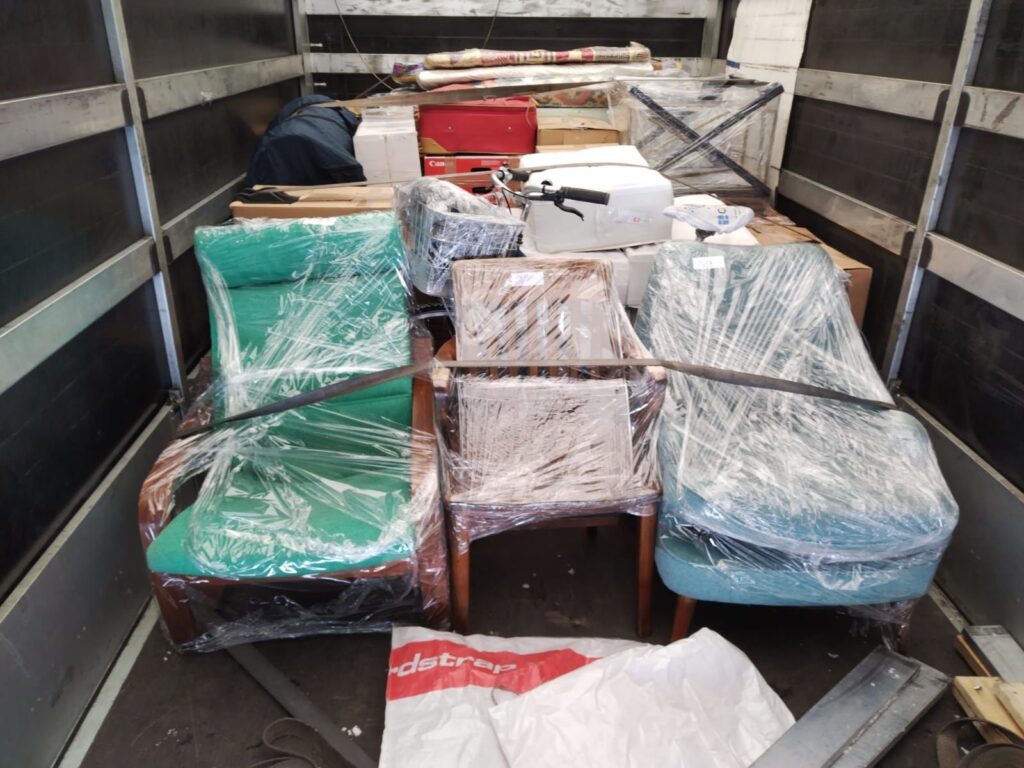
| Blankets | soft edge protection | sofa arms, table corners |
| Zip bags | no lost parts | bed frames, desks, shelves |
The 3 second shake test
Shake each box for 3 seconds before sealing.
- If it rattles, add padding.
- If it sags, reduce weight.
- If corners flex, reinforce with tape.
P1 essentials box
Your first night in France should not be a scavenger hunt. P1 is the box that protects your mood.
Put in P1:
- documents folder
- chargers and adapters
- toiletries
- bedding basics
- medication
- one change of clothes
- basic cutlery and a mug
Keep P1 with you or make it unmissable with a bright label.
Two photos that can save an argument
Before the van doors close, take two photos:
- the packed load inside the van
- your P1 essentials box and any high value items
It is simple, fast, and it protects you if anything looks different later.
If you want professional packing support:
Delivery day in France
Delivery day is where delays either happen or disappear. Access planning is everything. The fastest moves feel quiet because every small detail has been handled in advance.
| Risk | What it causes | How to prevent it |
|---|---|---|
| No unloading spot | long carry, delays | share a street photo, propose best stopping point |
| Stairs, no lift | slow unloading | reserve lift slot, clear corridor |
| Narrow street | reroute and waiting | share restrictions and entrance photos |
| Quiet hours | forced pause | confirm delivery hours with building |
| Missing door codes | waiting outside | confirm codes, intercom name, contact number |
| Long carry distance | extra time and fatigue | confirm closest legal stop point |
| Tight corners inside | slower unloading | remove obstacles, protect edges |
A 10 minute prep that saves an hour
- Clear the hallway and remove trip hazards.
- Prop doors open where allowed.
- Keep a small hardware bag ready: scissors, tape, marker, hex key.
- Keep pets and children safely out of the path.
Simple message template for delivery day
Send this 24 hours before delivery:
- Address: full address, apartment number
- Floor: number
- Lift: yes or no, booking time if any
- Best parking spot: street name, landmark
- Door code and intercom name: details
- Contact phone number: number
- Access notes: narrow street, one way, gate, quiet hours
This message keeps moving personal belongings from UK to France after Brexit from turning into a waiting game.
Why VANonsite is a smart partner post Brexit
After Brexit, the move is not only distance. It is coordination. Customs clarity, timing, and calm communication matter as much as the miles.
VANonsite supports moving personal belongings from UK to France after Brexit with practical strengths that reduce stress and protect your schedule.
What you get with VANonsite
- GPS tracking on every load for real visibility during transit
- A focus on speed and safety, with careful handling and smarter stacking
- Right size vehicles so you do not pay for empty space
- A flexible man and van approach that works well in tight streets and city centres
Why tracking matters more after Brexit
When customs is part of the journey, timing gets delicate.
- You can plan key handovers and building access windows with fewer guesses
- You can book lift slots more accurately
- You can avoid a long day of waiting because you can see progress in real time
A quick fit guide
| Your move style | Typical volume | A smart VANonsite starting point |
|---|---|---|
| A few boxes and essentials | 1 to 3 m³ | Moving One |
| Small studio or student load | 4 to 7 m³ | Moving Basic |
| Studio to light 1 bedroom | 8 to 12 m³ | Moving Medium |
| Furniture plus boxes | 12 to 16 m³ | Moving Premium |
If you want a France focused starting point, start here:
FAQ
Can I move personal belongings from UK to France after Brexit duty free?
Often yes if you qualify for relief, but you must prove a real change of residence and submit the right documents. Use Service Public as a reference:
https://www.service-public.gouv.fr/particuliers/vosdroits/F492
What paperwork do I need at French customs?
At minimum: ID, proof of French address, a clear inventory, and the correct French form. Start with French Customs guidance:
https://www.douane.gouv.fr/particuliers/vous-demenagez
Which customs document causes the most delays?
The inventory. If it is vague or looks incomplete, it triggers questions. Questions create waiting.
How long does customs clearance take?
It depends on readiness. A strong inventory and correct documents help you avoid delays. Missing proof, mismatched dates, or unclear item descriptions can slow clearance.
What happens if my inventory is incomplete?
Expect questions, and sometimes a pause. That is why inventory quality is the most important part of moving personal belongings from UK to France after Brexit.
Can I send belongings in stages?
Yes. Many people do a staged move, essentials first, then the rest. Keep a separate inventory and documents for each stage so nothing gets mixed.
What is the safest way to move a small load?
A properly sized man and van move with strong packing, a clear inventory, and a defined delivery window.
Can I track my shipment?
Yes. VANonsite provides GPS tracking on every load, which makes timing, handovers, and access planning far easier.
Summary and next step
A calm move after Brexit is not about luck. It is about evidence and clarity.
This guide showed you what changed, how to check duty relief, which documents matter most, and how to build an inventory that customs can accept without drama. It also gave you a step by step process, a restricted items guide, and a delivery day plan that prevents delays.
If you want moving personal belongings from UK to France after Brexit to feel controlled, focus on five actions:
- Decide your move type, residence transfer or temporary.
- Build a clean inventory with grouped items and box numbers.
- Collect proof of French address and residence change.
- Pack for the road and prepare a P1 essentials box.
- Plan delivery access in France, parking, lift, codes, timing.
When you are ready, start with the France route page and build your plan around your real volume and access notes: