Relocation to France can feel like two emotions fighting for the same space. On one side, anticipation. New streets, new routines, a life that suddenly has better coffee and longer lunches. On the other side, the logistics monster. Forms, boxes, doorways that hate sofas, and the quiet fear that something important will be forgotten.
If you are planning a relocation to France, you do not need vague inspiration. You need a clear plan that protects your time, your belongings, and your budget. This guide is built to be direct, practical, and genuinely useful.
If you already have dates in mind and want a premium move with GPS tracked visibility, start here: Removals to France.
Relocation to France in 60 seconds
A successful relocation to France is not about doing everything. It is about doing the right things in the right order.
- Confirm your legal pathway and required documents.
- Choose your destination and a realistic move week.
- Build an inventory, then choose the correct vehicle size.
- Pack by priority, not by panic.
- Plan access. Parking, stairs, lift limits.
- Keep essentials with you.
- Use GPS tracking so you can coordinate keys, arrivals, and appointments.
If you want to feel calmer today, do two actions now: pick a target move week and start your inventory. Those two steps turn relocation to France from someday into scheduled.
A simple timeline that works
| Time before pickup | What to do for relocation to France | Outcome you get |
|---|---|---|
| 6 to 8 weeks | Decide route, book transport, start paperwork | More choice, less stress |
| 4 weeks | Inventory, declutter 20% to 30%, confirm access | Cleaner quote, smoother loading |
| 2 weeks | Pack non-essentials, label by room and priority | Faster moving day |
| 72 hours | Confirm parking, lift bookings, key handover | Fewer delays |
| Moving day | Run your essentials plan, track the load | Calm handover |
Where to live in France: choose your Monday, not your postcard
The best relocation to France starts with one honest question: what do you want your ordinary day to feel like?
France can deliver wildly different lives. Paris can energise and drain you on the same day. Lyon can feel balanced and liveable. Bordeaux can be refined and slower. Coastal towns can be restorative, but seasonality is real.
So, decide with three filters. They are boring. They are powerful.
- Daily friction: commute time, school run, parking, stairs, noise.
- Budget reality: rent, deposits, agency fees, ongoing bills.
- Your rhythm: do you want pulse, calm, or space?
Quick region fit table
| Lifestyle you want | Regions and cities that often fit | What to watch |
|---|---|---|
| Big career engine | Paris, Île-de-France | Smaller flats, tight access, higher pressure |
| Balanced city life | Lyon, Nantes, Toulouse | Competition for good rentals |
| Calm elegance | Bordeaux and nearby towns | Summer demand spikes |
| Sea air and space | Brittany, Atlantic coast | Seasonal rhythms, car dependence |
| Mountains and seasons | Alps, Pyrenees | Winter access, weather planning |
A practical shortlist method
If you are stuck between three cities, use this 5 point scoring. It is simple, and it stops endless scrolling.
- Housing quality for your budget
- Access and parking ease
- Job or client access
- Travel links (train, airport, motorway)
- Your happiness triggers (nature, culture, quiet, community)
Score each city from 1 to 10 for each point. The top total is your best relocation to France match.
What movers notice that renters forget
Your relocation to France becomes smoother when you match the destination to your transport reality. Old buildings mean stairs. City centres mean restricted access. That changes your vehicle choice and how fast unloading can happen.
Watch for these details before you sign a lease:
- Floor number and lift size
- Street width and legal parking distance
- Entry codes, concierge rules, delivery time windows
- Tight stair turns and narrow door frames
If any of those are messy, a direct man and van can be the smarter fit for an essentials-first delivery.
City centre vs suburbs: a quick decision guide
Choose city centre if you want:
- walkable life and quick access to restaurants, services, trains
- smaller living space but higher daily convenience
Choose suburbs or nearby towns if you want:
- more space for the same budget
- easier parking and easier loading
- calmer nights and simpler logistics
A winning relocation to France does not always mean the most famous postcode. It means the least daily friction.
Costs and budgeting for relocation to France
Most people think the move is the expensive part. Often, the first month is.
A well planned relocation to France includes cash for deposits, setup costs, and a buffer that protects you from surprises.
The three money moments to plan for
- Before the move: deposits, agency fees, transport booking, packing materials.
- On arrival: temporary accommodation, utilities activation, basic furniture replacements.
- First 30 days: overlapping rent, commuting, admin appointments, unexpected fixes.
A realistic first month cost map
| Cost category | What typically happens | Smart move |
|---|---|---|
| Deposit | Commonly 1 month (unfurnished) or 2 months (furnished) | Keep savings liquid |
| Agency fees | Can apply in many markets | Ask for a written breakdown |
| Utilities | Setup delays are common | Prioritise electricity and internet |
| Transport | Price shifts with volume and access | Inventory first, then choose vehicle size |
| Extras | Boxes, tape, small replacements | Add a 10% buffer |
A small buffer makes a huge difference. Add 10% to your move budget. That buffer is not waste. It is protection.
Cost drivers that change your quote fast
Two moves can have the same distance and still land at very different costs. For relocation to France, these are the biggest levers:
- Volume: more cubic metres means a bigger vehicle and more labour time
- Access: stairs, no lift, long carry distances, tight corridors
- Timeline pressure: weekends and peak dates can be more expensive
- Special handling: fragile items, bulky furniture, white glove requirements
A smart cost reduction list
If you want a relocation to France that is affordable without feeling cheap, focus on high impact actions.
- Declutter 20% to 30% before you pack.
- Pack non-essentials early, so loading is faster.
- Photograph access at both addresses to avoid surprises.
- Choose the correct vehicle size, then add a 15% buffer.
- Use a man and van for partial loads or staged moves.
Staged move strategy that protects budget and sanity
A staged relocation to France is often the calmest option, especially when keys and dates do not align.
- Stage 1: essentials and priority boxes with a man and van
- Stage 2: the main household load once your access and timeline are locked
This approach can reduce waiting time and stop you paying for rushed, last minute fixes.
A simple quote checklist
Before you accept a quote for relocation to France, confirm these points in writing:
- What inventory or volume the quote is based on
- Whether stairs and long carry distances are included
- Your pickup and delivery time window
- What packing and protection are included
- How tracking and updates work during transit
If you want a clear route plan and a premium service with GPS tracked loads, start here: Removals to France.
Documents and admin for relocation to France
Paperwork is the silent gatekeeper of relocation to France. It affects rentals, banking, healthcare, schooling, driving, and sometimes customs. Handle it early and you gain momentum.
Think of admin as a lock with five keys. When you collect the keys, life opens.
- Identity
- Address
- Income or resources
- Health cover
- A clean dossier you can present in minutes
Visa and residence
Your requirements depend on citizenship and purpose. Use official sources first.
- Visas and entry rules: https://france-visas.gouv.fr/
- French administration portal (official): https://www.service-public.fr/
For a relocation to France, these are the most common pathways:
- Work contract or self-employment activity
- Studies
- Family situation and dependent status
- Sufficient resources plus health cover
Tip that saves time: keep two versions of every document.
- One digital PDF bundle on your phone
- One printed pack in a slim folder
Your France admin dossier: what to prepare
Most delays come from missing one simple proof. Build a folder that can answer any question fast.
| Document | Why it matters for relocation to France | Keep it as |
|---|---|---|
| Passport or national ID | identity checks everywhere | original plus copy |
| Proof of income or contract | rentals, banking, residence | PDF and print |
| Proof of address (even temporary) | utilities, SIM, admin | PDF and print |
| Birth certificate or civil status docs | some healthcare and family admin | scan plus print |
| Bank statements | resources and rental screening | last 3 months |
| Reference letters (optional) | rental strength and confidence |
Renting in France: the dossier that wins apartments
A relocation to France can stall at the rental stage if your dossier is weak. Landlords often want the same items, presented cleanly.
Your renter dossier should include:
- ID
- Work contract or proof of income
- Recent payslips or invoices
- Tax notice if you have one, otherwise a brief explanation
- Bank statements
- Previous landlord reference if available
Make it elegant. One PDF. Clear filenames. No chaos.
Banking: the reality check
Some banks move quickly. Some move slowly. Either way, a relocation to France gets smoother when you bring a full dossier.
Do this in order:
- Get a French phone number.
- Secure an address proof.
- Book the bank appointment.
- Bring your dossier and a calm explanation of your move.
Customs and household goods
Customs depends on where you are coming from and what you are bringing. For official customs guidance, start with French Customs:
For relocation to France, your fastest win is a clean inventory. It reduces questions and protects your delivery timeline.
- Number each box.
- Write key contents in plain language.
- Separate new items from used personal belongings.
- Keep receipts for expensive items when available.
Inventory template:
| Box | Room | Key contents | New or used | Notes |
|---|---|---|---|---|
| 01 | Kitchen | Plates, mugs, pans | Used | Fragile |
| 02 | Bedroom | Bedding, towels | Used | Day 1 |
| 03 | Office | Monitor, cables | Used | Priority |
A tidy inventory makes relocation to France faster at every step. It also protects you if you ever need to prove what was packed.
The border pack that prevents delays
If your relocation to France involves a border crossing from outside the EU, keep a dedicated border pack ready.
- Inventory with box numbers
- Proof of departure address
- Proof of destination address
- A short move summary: who is moving, from where, to where, and when
- Receipts for high value items if available
Keep this with you, not inside the load.
Healthcare
Healthcare setup can take time. Start early.
- French health insurance portal: https://www.ameli.fr/
Relocation to France healthcare steps that save weeks:
- Keep civil status documents accessible.
- Keep proof of address ready.
- Keep proof of work, studies, or resources ready.
Driving and vehicles
If you need to handle driving documents or vehicle registration steps, use the official platform:
If you are bringing a vehicle, your relocation to France becomes easier if you keep every car document in one folder, including purchase invoice if available.
Taxes
You do not need to master tax rules on day one, but you should know the official starting point:
A practical rule for relocation to France: keep a calendar reminder for your first tax season and store payslips and invoices from day one. It keeps everything clean later.
Schools and family admin
If your relocation to France includes children, treat school admin like a priority move, not a side quest.
- Ask the mairie (town hall) what they require for enrolment.
- Keep proof of address, ID, and your child’s documents ready.


Transport choices for relocation to France
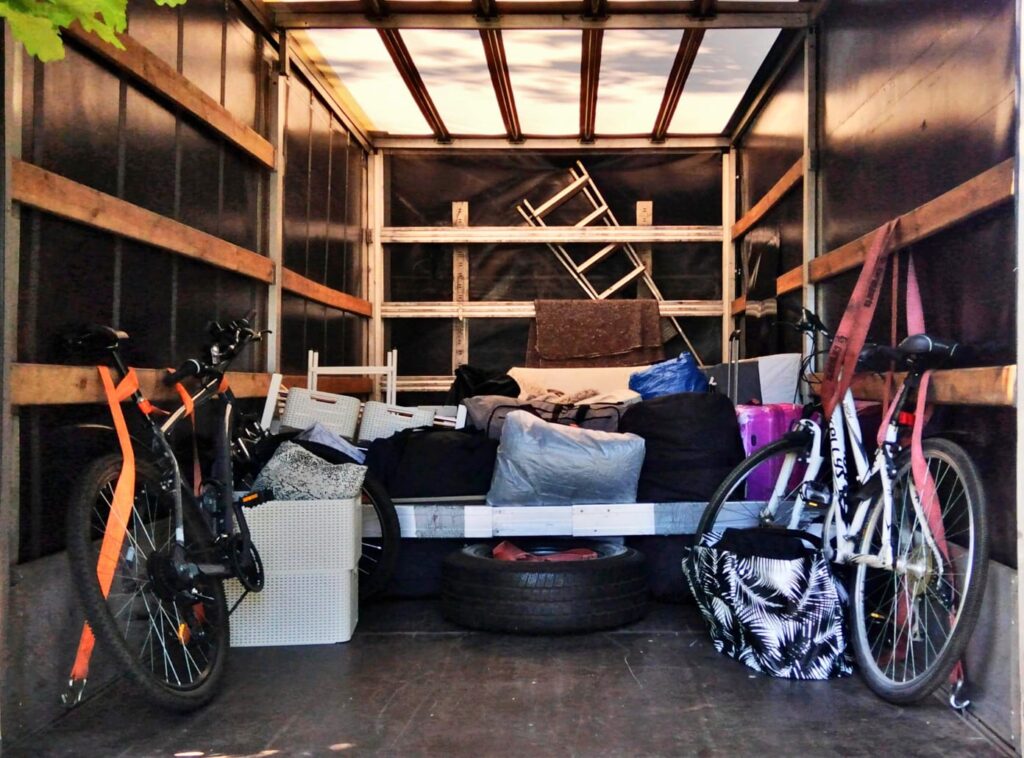
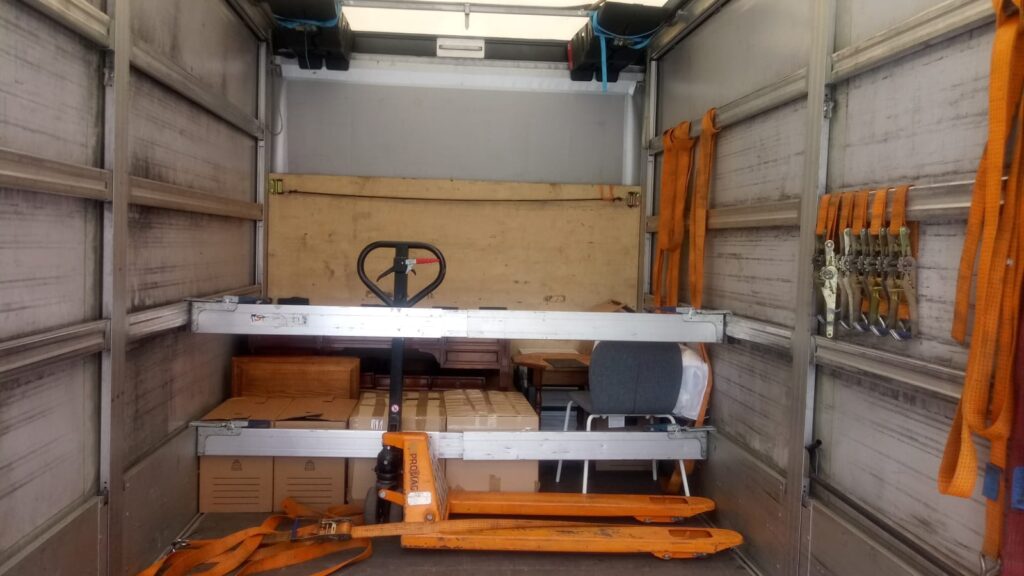
Transport is where relocation to France becomes real. Your plan should match three things.
- Your volume
- Your access constraints
- Your delivery deadline
Man and van vs full removals: a clear choice
| Option | Best for relocation to France | Why it feels good | Watch outs |
|---|---|---|---|
| man and van | partial loads, essentials-first, tight access | direct route, flexible timing | volume must be honest |
| Full removals | full households, bulky furniture, complex access | structured loading and flow | needs clearer access planning |
When a man and van is the smartest option
A man and van approach can be brilliant for a relocation to France when you want speed, flexibility, and a direct route.
Choose man and van when:
- You have a partial load.
- You are a student or moving essentials.
- You have tight access in city streets.
- You need a sharp delivery window.
A direct man and van move can also deliver essentials first, so you can live while the rest follows.
If you are moving a room, a studio, or a student setup, you may also want: Student Removals
When full removals make more sense
A full household relocation to France needs flow. Not just transport. Flow.
Choose a full removals approach when:
- You have multiple large furniture pieces.
- You need dismantling, protection, and careful staging.
- Your building access is tricky and you want a structured load plan.
Useful service pages:
The VANonsite advantage: speed, safety, visibility
VANonsite focuses on premium transport across Europe with careful handling, fast execution, and GPS tracking for every load. GPS tracking is not a gimmick. It is control. It helps you time key handovers, building access, and delivery appointments.
If you want to start planning your relocation to France now, go here: Removals to France.
VANonsite vehicle sizes
Choosing the right vehicle is one of the biggest wins for relocation to France. Wrong size leads to repacking, delays, or extra trips.
| Vehicle option | Volume | Payload | Best for |
|---|---|---|---|
| Moving One | 1 m3 | 100 kg | A few boxes, urgent essentials |
| Moving Basic | 5 m3 | 300 kg | Student move, studio basics |
| Moving Medium | 10 m3 | 500 kg | Small flat, partial furniture |
| Moving Premium | 15 m3 | 1100 kg | 1 to 2 bedroom move |
| Moving Premium Plus | 30 m3 | 3500 kg | Family move, larger furniture |
| Moving Full House XXL | 90 m3 | 20000 kg | Full house, large project loads |
A practical rule for relocation to France: add a 15% buffer to your volume estimate. That buffer prevents the classic last minute panic where the door will not close.
Services you can match to your move
A strong relocation to France often uses the right service, not the biggest service.
- Last Minute Moving for urgent timelines
- Packing Service for fragile items and time-poor movers
- White Glove Delivery for delicate, high value deliveries
- Office removals for businesses
- Storage for gaps between keys and dates
Packing that survives real roads
Packing decides outcomes. A relocation to France can cross-borders smoothly and still end badly if boxes are weak and items can move inside them.
Here is the goal: silence inside the box. If nothing rattles, you massively reduce damage risk. In real terms, that can cut breakage by 50% or more, because most damage comes from movement and pressure, not distance.
Think of packing for relocation to France like building a tiny, stable world inside each box. No drama; No empty space; No guessing.
Core packing rules
- Keep box weight around 18 to 22 kg. For books, stay closer to 12 to 16 kg.
- Pack tightly so nothing can shift. Fill gaps with paper, towels, or soft clothing.
- Label on two sides: room plus priority, then the box number.
- Use double wall boxes for books and kitchenware.
- Wrap corners, not only glass. Corners take the hits.
The 3 layer protection method for fragile items
For relocation to France, fragile packing should be boring and consistent.
- Wrap the item so it cannot scratch.
- Cushion the empty space so it cannot move.
- Reinforce the box so it stays rigid in the stack.
If you can shake the box and hear movement, repack it. This one habit saves more plates than any expensive label.
Packing materials that genuinely matter
You do not need a warehouse of supplies. You need the right few.
| Material | Best use | Quick tip |
|---|---|---|
| Double wall boxes | books, kitchen, fragile | tape the base in an H shape |
| Packing paper | glass, ceramics, decor | paper beats newspaper for clean surfaces |
| Bubble wrap | high risk items | wrap twice on corners |
| Stretch film | drawers, sofas, loose parts | stop scratches and sliding |
| Zip bags | screws, fittings, small parts | tape the bag to the item |
| Thick marker | labels | write big, from 2 metres away |
What not to pack in the main load
For relocation to France, avoid risky items that can cause delays or damage.
- Unsealed liquids, aerosols, cleaning chemicals
- Anything with fuel or oil smell
- Loose batteries without protection
- Open food that can leak or attract pests
If you must move liquids, seal them in zip bags, keep them upright, and separate them from textiles.
Furniture packing that keeps edges intact
Most furniture damage happens on edges and legs. Protect those first.
- Wrap table corners and chair legs with extra layers.
- Remove legs where possible and bag the screws.
- Use blankets or stretch film to prevent rubbing.
If you have bulky pieces and tight stairs, a professional furniture move is often the cleanest path: Furniture Removals
Priority labels that save your first night
For relocation to France, label by priority, not by optimism. This is how you arrive and still feel like a human.
- Day 1: bedding, chargers, toiletries, kettle
- Week 1: kitchen basics, work setup, key clothes
- Later: decor, rarely used items
Add one more label that changes everything: OPEN FIRST.
Your OPEN FIRST box should hold:
- documents folder and spare copies
- one set of bedding
- toiletries and basic meds
- chargers, extension lead
- 2 mugs, tea or coffee, small snacks
A single OPEN FIRST box can turn your arrival from frantic to calm.
Label system that prevents lost boxes
For relocation to France, keep labels simple and consistent.
- Room code: KITCHEN, BED 1, OFFICE
- Priority: P1, P2, P3
- Box number: 01, 02, 03
Example: OFFICE P1 03
If you are doing a staged move, this system makes a man and van essentials run feel effortless.
Moving day plan for relocation to France
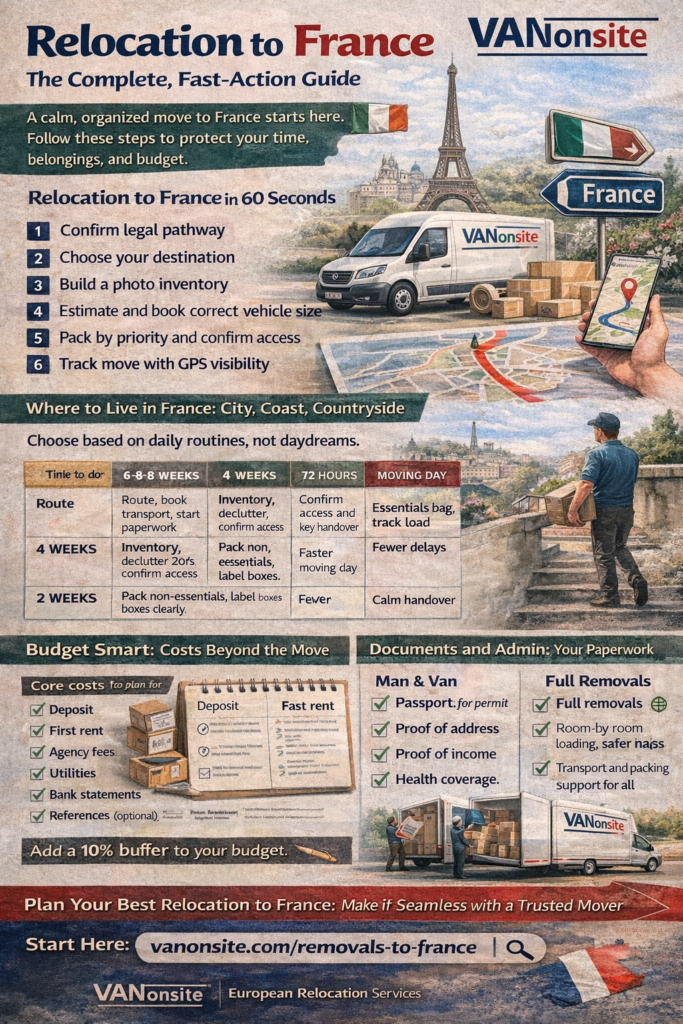
Moving day is not the time for complex decisions. Your job is to protect flow.
Before anything moves, do one fast walk through both routes. Door to van. Van to door. If there is friction, fix it now. Every extra 10 metres of carry distance can add 20 to 40 minutes across a full load, so small obstacles become real money and real stress.
Do this before loading starts:
- Walk the route from door to van and clear obstacles.
- Keep documents and valuables on you.
- Keep your Day 1 essentials separate and visible.
- Confirm parking distance and lift booking.
- Confirm building rules. Some blocks require a delivery slot, a concierge sign off, or quiet hours.
The 10 minute pre load routine
This is the tiny routine that makes relocation to France feel controlled.
- Put floor protection down in high traffic areas.
- Reserve a safe corner for OPEN FIRST and valuables.
- Photograph high value items and any existing furniture marks.
- Confirm contact numbers and access codes.
- Confirm where boxes should go by room at delivery.
Add two micro moves that prevent 80% of moving day panic:
- Put a roll of tape, a marker, and scissors in your pocket.
- Keep one small bag for screws, keys, and door fobs, and do not put it down in a random room.
The parking and access truth
Relocation to France often succeeds or fails at the curb.
- If parking is uncertain, scout it the day before at the same hour.
- If you are in a city, ask the building or mairie about temporary loading permission early.
- If the street is narrow, agree on a safe meeting point and a short carry route.
If access is tight, a direct man and van can be the most elegant solution for a relocation to France essentials run, especially when timing is strict.
A clean moving day schedule
| Time block | What to do | Why it helps relocation to France |
|---|---|---|
| 90 minutes before | Clear routes, protect floors, set essentials aside | Prevents delays |
| Loading phase | Load heavy first, fragile protected, priority last | Better stacking |
| Departure | Confirm inventory count and contact plan | Fewer surprises |
| En route | Use GPS tracking to coordinate arrival | Better timing |
| Delivery | Place priority boxes first, then rooms | Faster settling |
The two checklists that save your day
Use these as hard rules for relocation to France.
Last 30 minutes before departure
- Take quick photos of each room after it is emptied.
- Check cupboards, drawers, lofts, and behind doors.
- Count boxes against your inventory and confirm the final number.
- Confirm keys handover plan and where you will meet at delivery.
- Put passports, admin dossier, and border pack on your body, not in the load.
Arrival protocol in France
- Place OPEN FIRST and Priority 1 boxes into the home first.
- Walk the delivery route once. Identify tight turns and protect corners.
- Place boxes by room before opening anything.
- Check fragile items early. If something is damaged, photos taken within 15 minutes are the strongest proof.
Loading order that keeps the van stable
For relocation to France, stability is the secret.
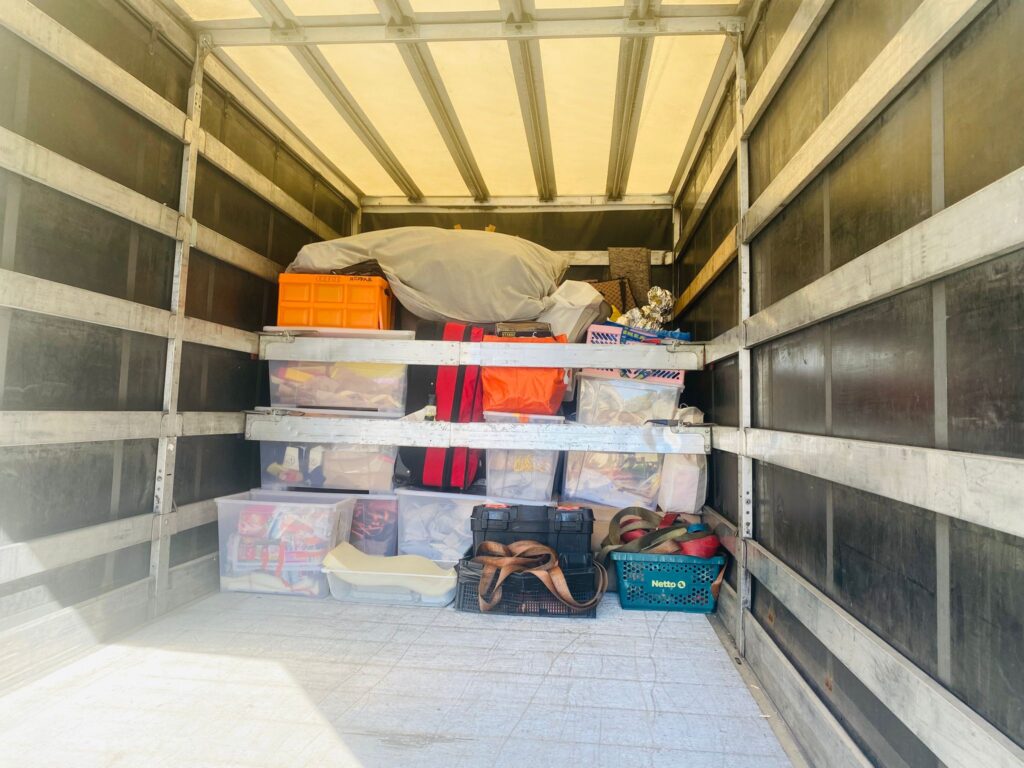
- Heavy and solid items first.
- Flat items against the sides.
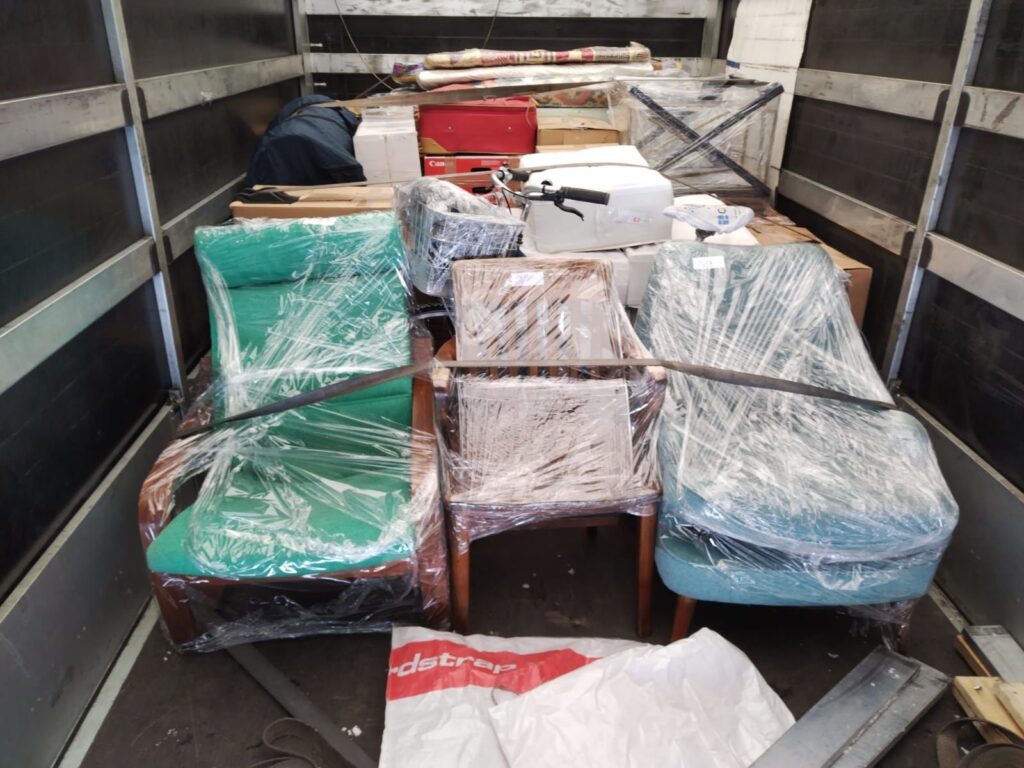
- Fragile boxes on top, never under pressure.
- OPEN FIRST last, so it comes out first.
If you have a mixed load, use this simple stability split:
- 70% of the weight low and tight
- 30% of the light items up top and protected
Delivery in 20 minutes: how to unpack smarter
Do not open everything. Place everything.
- Put boxes into the correct rooms first.
- Build one sleeping space before anything else.
- Set up charging and basic hygiene.
Then choose one high value win for your first evening:
- Connect internet if it is already live, or set up a hotspot.
- Assemble one table or desk so you can eat and work.
- Unpack kitchen basics only, not the entire kitchen.
A smooth relocation to France is not heroic. It is organised.
Your first 7 days after relocation to France
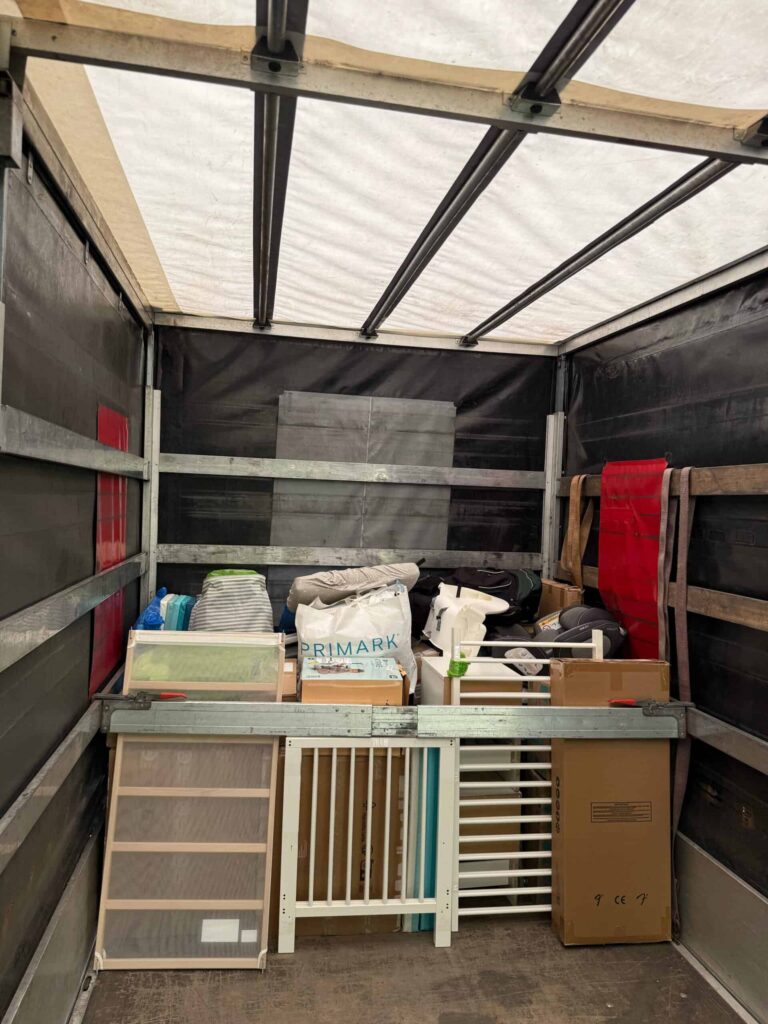
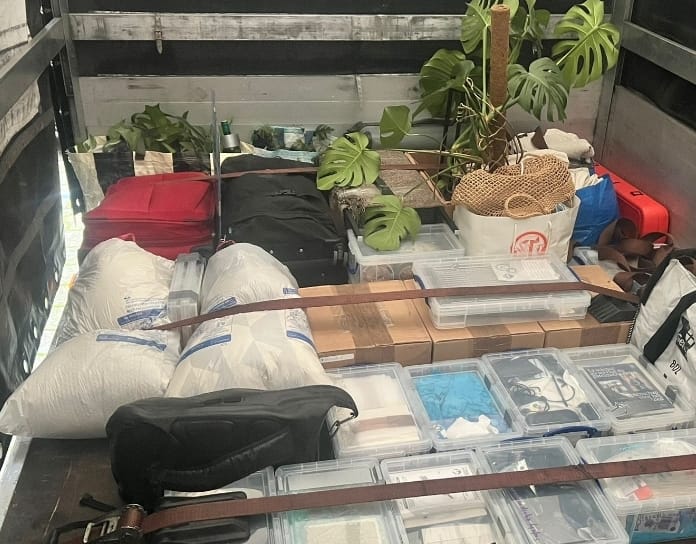
Arrival is where your new life either starts working, or keeps stalling. The first week of relocation to France is a sprint, not a marathon. You are not trying to decorate. You are trying to become operational.
Aim for three wins:
- A home that functions
- Admin that moves forward
- A body that still has energy
Most people underestimate how much friction comes from tiny gaps. No SIM means no banking; No address proof means no utilities; No electricity appointment means you cannot settle. Your relocation to France becomes easier when you treat Day 1 to Day 7 like a chain.
The 7 day landing sprint
| Day | Focus | Quick win | What to do in 20 to 60 minutes |
|---|---|---|---|
| 1 | Connectivity | SIM active, chargers found | Buy or activate a SIM, set up hotspot, locate OPEN FIRST, charge everything |
| 2 | Utilities | Electricity confirmed | Confirm electricity contract, book internet, note meter readings, photograph them |
| 3 | Proof | Documents organised, copies ready | Create one digital folder, scan key documents, print 5 to 10 copies of proof items |
| 4 | Banking | Appointment booked or steps started | Book appointment, bring dossier, prepare a short explanation of your relocation to France |
| 5 | Healthcare | Pathway started on ameli | Start steps on ameli, gather civil status docs, save confirmation screenshots |
| 6 | Home setup | Internet scheduled, basics arranged | Set up a work corner, assemble one table, unpack kitchen basics only |
| 7 | Stabilise | Unpack by priority, rest | Unpack P1 and P2, do one small shop, take a proper evening off |
Your Day 1 survival kit
Keep these with you, not in the load. This kit can save 24 hours of stress.
- passport or ID, plus copies
- phone charger and power bank
- basic meds and prescriptions
- water bottle and small snacks
- one change of clothes
- spare keys and door fobs
If you are doing a staged relocation to France, this is the perfect time for a man and van essentials run.
The 5 proofs that unlock France
If you feel stuck, it is usually because one proof is missing. Build these early and your relocation to France speeds up.
- Proof of identity
- Proof of address
- Proof of income or resources
- Proof of health cover pathway
- A clean dossier in one PDF
Keep your documents folder in one place. Do not bury it in a random box. This is a classic way a relocation to France becomes slower than it needs to be.
FAQ: relocation to France
How early should I plan a relocation to France?
For most people, 2 to 6 weeks is a strong range depending on volume and season. If you have tight access, fragile items, or a fixed key date, plan earlier. A better plan almost always delivers a smoother relocation to France.
Is man and van really suitable for relocation to France?
Yes. A man and van is ideal for partial loads, student moves, urgent deliveries, and tight city access. If you do not need a full truck, a direct man and van can make relocation to France faster and more cost-effective.
What documents matter most?
The essentials for relocation to France are your ID, proof of income, proof of address, and a clean inventory for your belongings. For official guidance, use France-Visas and Service-Public.
How do I avoid delays at the border?
For a relocation to France, delays usually happen when the inventory is unclear or documents are packed inside the load. Keep your border pack with you. Use clear box numbering. Keep proof of departure and destination addresses ready.
For official customs guidance, use French Customs: https://www.douane.gouv.fr/
What is the best way to choose the right vehicle size?
Start with an inventory, then estimate volume and add a 15% buffer. If you are unsure, choose staged delivery. Many people start their relocation to France with a man and van for essentials, then move the main load once access and keys are secure.
Should I pay for packing service?
If you have fragile items, tight timelines, or you want fewer breakages, packing service is often worth it. It can reduce packing time by 50% to 70% compared to doing everything alone. It also improves stacking and protection.
If you want professional packing for your relocation to France, explore: Packing Service
Where do I start if I want professional help?
Start here and build your plan from your dates, volume, and access details: Removals to France.
Summary: relocation to France, without the chaos
A successful relocation to France is not about perfection. It is about removing friction before it shows up at your door. Choose the right place to live based on your real Monday, not a fantasy weekend. Build a clean admin dossier early, because proofs unlock rentals, banking, and healthcare. Then treat logistics like a sequence: inventory, vehicle size, packing, access, and a calm moving day plan.
If you remember only five things from this guide, make them these:
- Decide destination with daily life filters: commute, budget, and rhythm.
- Build one tidy dossier with ID, address proof, and income proof.
- Inventory first, then choose vehicle size with a 15% buffer.
- Pack by priority so your first night in France feels easy.
- Use GPS tracking so your relocation to France feels visible and controlled.
If you are moving in stages, a man and van essentials run can be the smartest first step. It gets you operational fast while you line up keys, appointments, and the main delivery.
When you want speed, safety, and calm control, VANonsite supports relocation to France across Europe with GPS tracked loads and flexible services, from packing support to full home removals.
Ready to lock in dates and move with confidence? Start here: Removals to France.