
You arrive in France and the light feels different. Even the air has a kind of softness. You grab a coffee, you stroll past a bakery window, and for five minutes it feels like you already belong.
Then admin hits. A form needs a document you did not know existed. A landlord asks for a dossier. A bank appointment is “next month”.
If you are searching for things to know before moving to France, you are already doing the smartest part. You are preparing for real life, not only the postcard.
This guide gives you fast answers, official links, and a step by step plan that keeps your move controlled. It also shows how VANonsite can make the moving day itself feel calm, with safety first transport, GPS tracking for every load, and flexible man and van options.
When you are ready to plan your route, start here: https://vanonsite.com/removals-to-france/
TL;DR: 12 fast things to know before moving to France
Here are the things to know before moving to France that save time, money, and nerves.
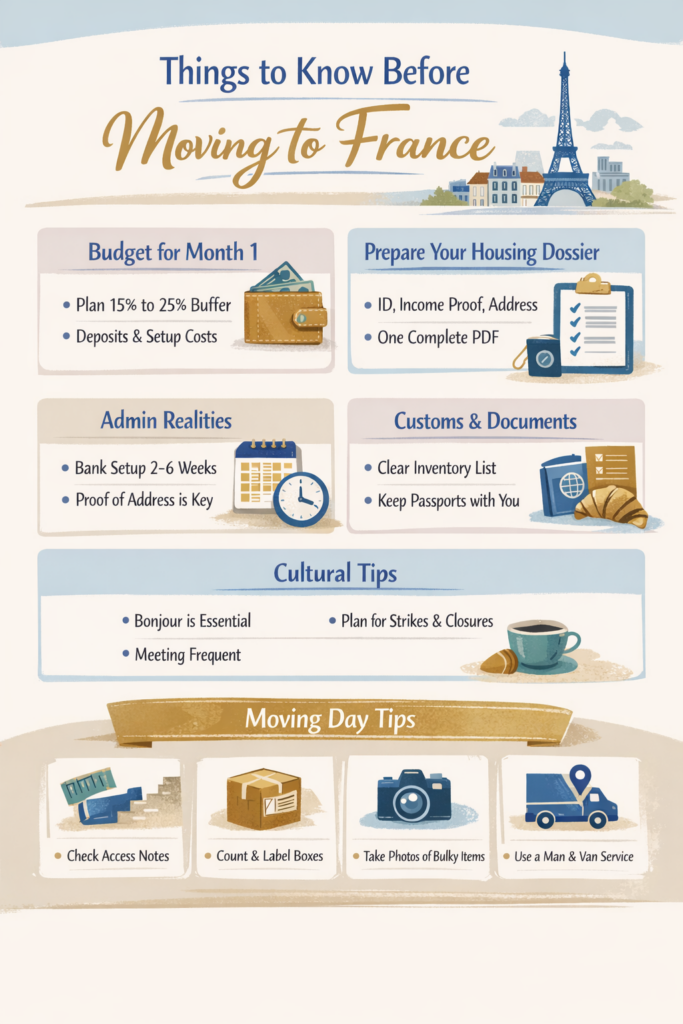
- Month 1 is the most expensive month. Budget a 15% to 25% buffer.
- Housing often requires a dossier. Prepare one PDF before you view.
- Proof of address unlocks everything. Secure it early.
- Bank admin can be slower than expected. Plan 2 to 6 weeks.
- Healthcare setup is strong, but the first steps can feel paperwork heavy.
- If you drive, tolls and parking costs can add €40 to €120 a month for regular motorway use.
- If you move from the UK or outside the EU, customs and visa steps can change your timeline.
- A clean inventory with quantities prevents delays and protects your move day.
- Access matters. Stairs and long carry can add 10% to 30% labour time.
- Wrapping increases volume by 10% to 20%. Choose the right vehicle size.
- Keep passports and medicines with you, never in the load.
- A GPS tracked man and van move reduces uncertainty when keys and timing are tight.
The biggest culture and lifestyle surprises
Some things to know before moving to France are not about paperwork. They are about rhythm. France is not “slower”. It is more structured. Once you learn the structure, life feels easy.
Think of your first weeks like learning a dance. You will step on a few toes. Then one day it clicks, and suddenly you are moving with the music.
Bonjour is not optional
A simple “Bonjour” can change the entire tone of an interaction. It is a small ritual, but it is powerful. Say it first, then ask.
Try this pattern:
- Bonjour.
- One sentence of context.
- Your request.
- Merci.
It feels tiny. It is one of the most valuable things to know before moving to France.
Lunch culture and opening hours
In many places, lunch hours are real hours. Some shops pause. Some services shift. Plan your errands like you are moving through a timetable.
Fast wins:
- do admin tasks in the morning
- plan groceries for Saturday, not Sunday
- keep a small “weekday pantry” so closures do not force takeaways
Quiet hours and building rules
Apartment life can come with clear expectations: noise, bins, shared spaces. Ask early. It prevents awkward neighbour tension later.
Ask these on day one:
- what time is considered quiet in the building
- where to put recycling and bulky waste
- how deliveries are handled, intercom names, codes
Service can feel blunt, not rude
This is one of those things to know before moving to France that saves your mood.
People can sound direct. It is often efficiency, not hostility. If you stay calm, greet first, and keep your request short, you usually get a better outcome.
Strikes and service interruptions
Strikes happen. They can disrupt transport. The best mindset is preparation, not panic.
- keep a backup route
- keep a little time buffer before key appointments
- keep digital copies of important documents
Mini table: common surprises and quick fixes
| Surprise | Why it matters | Quick fix |
|---|---|---|
| Bonjour etiquette | affects service tone | greet first, always |
| Strikes | disrupt transport | keep a backup route |
| Sunday closures | plan groceries | shop Saturday |
| Lunch hours | services may pause | do errands early |
| Building rules | neighbour tension risk | ask the caretaker early |
Paperwork and residence routes: EU vs UK vs non EU
One of the biggest things to know before moving to France is that rules depend on nationality and route. Do not assume your friend’s process is your process.
A practical rule: build one “admin folder” before you arrive. Keep it digital and print 2 sets.
EU and EEA citizens
Many steps are simpler, but admin still needs proof.
Keep ready:
- proof of address or accommodation
- a housing dossier folder
- a basic admin folder with copies
To speed up housing and banking, prepare these in advance:
- ID scan
- proof of income or contract
- recent payslips or equivalent
- a short cover note, 3 sentences
UK and non EU citizens
Visa and residence steps can shape timing. Start early and follow official guidance.
Official links:
- France Visas: https://france-visas.gouv.fr/
- Service Public, foreigners in France: https://www.service-public.fr/particuliers/vosdroits/N110
What people underestimate most
These are the things to know before moving to France that affect timelines:
- appointments can take weeks, plan 2 to 6 weeks for some steps
- proof of address unlocks many processes
- customs and residence rules can change what you can bring and when
If you are moving from the UK, add extra time. It is one of the most important things to know before moving to France because it changes your schedule.


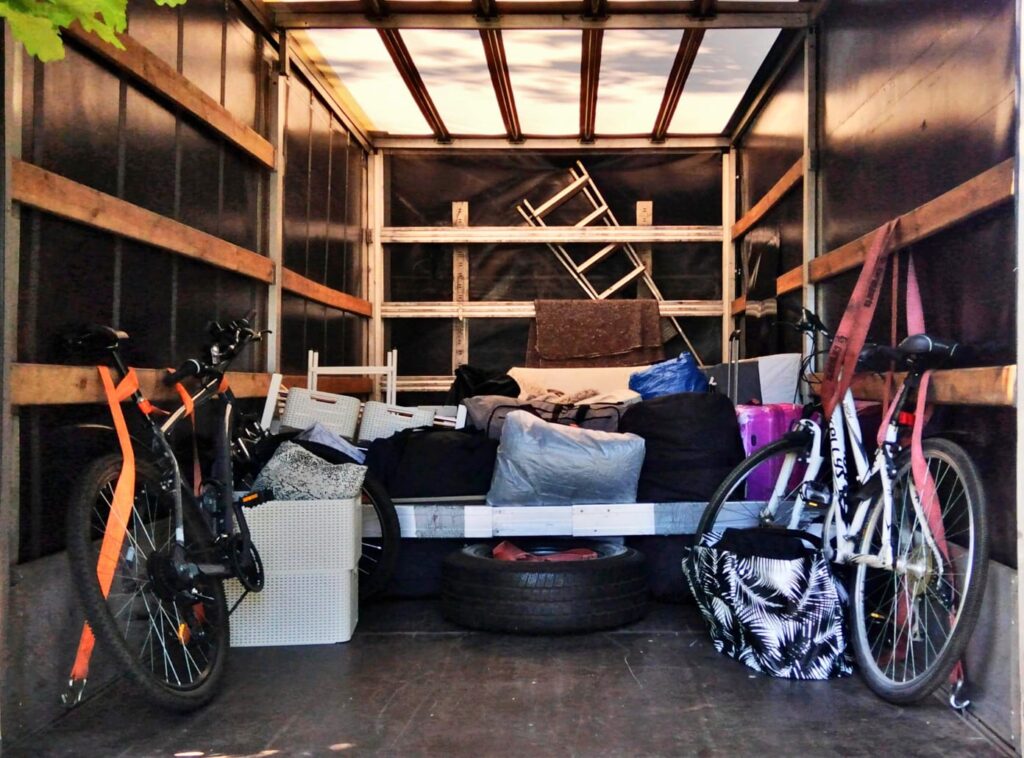
Customs for household goods: what to know before moving to France
Customs is a word that scares people. In practice, it is usually about proof and clarity. If your move is personal, your inventory is honest, and your documents match, it often goes smoothly.
This is one of the most overlooked things to know before moving to France: customs friction is often self inflicted by vague lists.
The simple difference that changes everything
When customs applies, the goal is to show two truths.
- You are relocating your home, not importing goods for resale.
- The items are your household belongings, described clearly and consistently.
If those truths are easy to read, most things to know before moving to France suddenly feel less intimidating.
Official reference:
- French Customs moving home: https://www.douane.gouv.fr/particuliers/vous-demenagez
What to prepare before your move
Use this mini checklist so customs never becomes a last minute panic.
- a readable inventory with quantities
- a short move note, one paragraph explaining your relocation
- proof of address or accommodation in France
- receipts for a few high value items if you have them
Inventory template
Keep your list understandable in 60 seconds. Use quantities and clear categories.
| Category or item | Quantity | Notes |
|---|---|---|
| Boxes, kitchen | 8 | fragile, upright |
| Wardrobe | 1 | disassembled |
| TV | 1 | upright only |
Inventory rules that reduce questions
- avoid the word miscellaneous
- separate 3 to 5 high value items on their own lines
- use simple notes like fragile, upright only, disassembled
- make box labels match your inventory categories
What to keep out of the load
Do not pack restricted or risky items. Keep valuables with you.
- weapons and ammunition
- fireworks, flammables, aerosols
- hazardous chemicals and strong solvents
- illegal drugs
- cash and jewellery
A small but powerful habit
Take 5 to 10 photos of your biggest items and any fragile finishes. It helps you plan volume, protection, and the right vehicle size. It also keeps your story consistent if questions come up.
Housing in France: dossier culture and how to get accepted
Housing is one of the most expensive parts of the move, so it belongs on every list of things to know before moving to France.
A dossier is your rental identity. It is the difference between “maybe” and “yes”. In busy cities, it is also your speed advantage. When your file is ready, you can say yes without fear.
What a dossier really is
A dossier is a clean package of proof that shows you are stable. Landlords often want clarity, not drama.
Your aim is simple: one PDF, easy to read, no missing pieces.
What to prepare
- ID
- proof of income or contract
- recent payslips or equivalent
- proof of address
- guarantor if needed
Optional extras that can help
- a short bank statement snapshot if requested
- a reference letter if you have one
- a clear move timeline, one line
The 3 sentence cover note idea
Keep it short. Clean. Confident.
- Who you are and what you do.
- What you are looking for and when you move.
- Why you are stable and reliable.
Here is a fast example you can adapt.
- Bonjour, I am a project manager relocating to France for work.
- I am looking for a one bedroom apartment from a specific date.
- I have a stable income and can provide a complete dossier today.
The speed rule
Micro tip: speed wins in busy cities. Send the dossier the same day. If you can send it within 60 minutes of a viewing, you often jump ahead of slower applicants.
Money: cost of living, deposits, and the month one spike
Another essential entry on the things to know before moving to France list: month one is not “normal life”. It is setup life.
Month one often includes deposit, first rent, setup fees, and moving costs all at once. That is why a buffer matters. Your budget is not failing. Your timeline is simply front loaded.
The two buffer rules that stop stress
- Month 1 buffer: 15% to 25%
- Next 60 days buffer: 10% to 15%
If you are moving as a couple or a family, aim closer to the higher end. If you are moving solo with a small load, you can often stay closer to the lower end.
What usually creates the month one spike
These costs appear fast, sometimes in the same week.
- deposit and first rent
- agency fees where applicable
- utilities activation and deposits
- internet installation or contract start
- transport costs in the first days, taxis, temporary parking
- moving costs, packaging, and protection materials
- replacement spending because essentials were not packed correctly
Planning table: month one versus month two and three
| Cost bucket | Month 1 | Month 2 to 3 |
|---|---|---|
| Deposit and first rent | high | none |
| Utilities setup | medium | medium |
| Internet and mobile setup | low to medium | low |
| Transport and commuting setup | low to medium | medium |
| Moving costs | high | low |
| Replacement spending | medium risk | low if planned |
A simple cash flow split that works
If you want a clean plan for the first 90 days, split your money like this:
- Fixed costs: rent, utilities, transport.
- Settling costs: deposit, setup fees, moving costs.
- Buffer: 15% to 25% for month one, then 10% to 15%.
The 3 boxes that prevent expensive replacements
This is one of the most underrated things to know before moving to France.
Pack these separately and label them Priority 1.
- First night box: bedding, towels, kettle, mugs, basic plates.
- Admin box: printed copies, pens, folder, spare passport photos if you use them.
- Toolkit box: tape, scissors, marker, small screwdriver.
A tiny budget model you can copy
If the things to know before moving to France list feels overwhelming, use this model to get control fast.
- Fixed monthly costs: rent, utilities, transport.
- Setup costs: deposit, activation fees, basic furniture gaps.
- Move costs: transport, packing, protection.
Then apply two rules:
- Keep fixed costs under 45% to 55% of your net income if you can.
- Keep month one cash available for the spike, not only for rent.
Where people accidentally lose money
These are common leaks in the first 30 days.
- buying duplicates because you cannot find essentials
- emergency taxis because the commute plan is not tested
- rush buying kitchen basics because the first night box was not packed
- last minute storage because keys do not line up
If you plan for those leaks, the month one spike feels controlled.
A calm rule: protect your savings. Do not drain everything in month one.
Healthcare and insurance: how to avoid gaps
Healthcare in France can be excellent, but the first steps can feel admin heavy. This is one of the most important things to know before moving to France if you want peace of mind.
The goal is to avoid gaps. Not only financial gaps, but practical ones. You do not want to arrive and realise you cannot refill a prescription easily.
Official links:
- Assurance Maladie (ameli): https://www.ameli.fr/
- Service Public health guidance: https://www.service-public.fr/particuliers/vosdroits/N19806
30 day health plan
- Arrive with a health coverage bridge for the first 30 days.
- Keep ID and proof of address ready.
- Start the admin steps within 2 to 4 weeks.
- Keep prescriptions and essential medication with you.
What to pack in your carry bag
- medication for 30 to 60 days if essential
- prescriptions and a short list
- a brief medical summary if needed
- spare glasses or contacts if relevant
The health admin folder
Keep these ready as part of your broader move folder.
- ID
- proof of address or accommodation
- basic employment or status document if relevant
- any existing insurance details you need for the bridge period
A simple healthcare timeline
This is one of those things to know before moving to France that reduces stress instantly.
- Week 1: keep your bridge cover active and store all documents in one folder.
- Week 2: start the admin steps, book appointments if needed.
- Week 3: follow up, keep copies of everything.
- Week 4: confirm next steps so you are not stuck in limbo.
What people forget when planning healthcare
These are small, but they can cause stress in week one.
- renewing prescriptions during travel
- pharmacies with limited opening hours in smaller areas
- replacing essentials like glasses when you did not bring a spare
Quick checklist for a calm first month
- keep medication and key documents with you
- save digital copies of your documents on your phone and email
- choose one local pharmacy early and stick with it
- keep a short emergency contact note in your wallet
If you handle these early, healthcare becomes one of the best parts of life in France.
Driving, parking, and low emission zones
If you drive, there are practical things to know before moving to France that can save money and avoid nasty fines.
Driving in France can feel wonderfully smooth on the open road. Then you hit a city centre, a permit zone, and a sign you have never seen before. The secret is simple: price the routine, not the dream.
The 3 costs drivers most people underestimate
- Tolls: regular motorway use can quietly add €40 to €120 a month.
- Parking: city parking can be strict, and long stays can get expensive fast.
- Low emission zones: some cities require a Crit’Air sticker and have restrictions.
A quick monthly driving budget model
Use this to keep the cost realistic.
| Cost type | Light driving | Regular commuting | What changes it most |
|---|---|---|---|
| Tolls | €0 to €25 | €40 to €120 | route and motorway use |
| Parking | €20 to €60 | €60 to €180 | city rules and overnight needs |
| Fuel | varies | varies | distance and vehicle type |
Low emission zones in plain English
Some areas restrict which vehicles can enter, or restrict them on certain days. This is one of the key things to know before moving to France if you plan to drive to work, school, or city centre.
Official links:
- Crit’Air official site: https://www.certificat-air.gouv.fr/
- Service Public driving licence: https://www.service-public.fr/particuliers/vosdroits/N530
- Government overview of low emission zones: https://www.ecologie.gouv.fr/zones-faibles-emissions-zfe
A simple driving checklist for new arrivals
- check your city zone rules and restrictions
- apply for Crit’Air early if you will drive into cities
- price your commute before signing a lease
- find your nearest reliable parking option, not the cheapest on paper
- keep a small “parking plan” for move day and delivery day
Tip: if you are choosing housing, a place with easier parking can save you time and money every week. That is often more valuable than saving a little on rent.
The moving plan: how to move without chaos
A calm relocation is a sequence. This is one of the best things to know before moving to France because it removes the frantic last week and protects your month one budget.
If you want moving day to feel clean, your goal is flow. Flow comes from three things: a clear inventory, smart labels, and access notes that match reality.
The 30 14 7 72 timeline
Use this timeline as your spine. Then add your personal details on top.
| When | Your main goal | What to do |
|---|---|---|
| 30 days | reduce volume and build proof | declutter 10% to 25%, start inventory, collect documents |
| 14 days | remove access surprises | confirm parking, lift rules, stairs, carry distance in metres |
| 7 days | lock the plan | freeze inventory, label boxes, prepare hardware bags |
| 72 hours | protect essentials | print documents, pack essentials bag, separate Priority 1 boxes |
What to keep with you
Do not let these disappear into the load.
- passports
- contracts and key paperwork
- medicines for 30 to 60 days
- chargers
- bank cards and small cash
The “Priority 1” rule that saves your first week
Label a small set of boxes as Priority 1 and keep them together.
- bedding and towels
- kettle, mugs, basic plates
- basic toiletries
- a small toolkit, tape, scissors, marker
This is one of the most powerful things to know before moving to France because it prevents expensive, stress driven replacement spending.
Access notes in metres
Access changes time, and time changes cost.
Stairs and long carry can add 10% to 30% labour time. Share:
- floor number
- lift yes or no
- stairs count if no lift
- parking distance in metres
- any tight turns, narrow doors, low ceilings
Micro tip for a smoother quote
If you want an accurate quote fast, send postcodes, access notes in metres, and 5 to 10 photos of bulky items. Then start here: https://vanonsite.com/removals-to-france/
Why VANonsite makes the move easier
Trust is built in the small details. Clear planning. Careful handling. Real time visibility.
Moving to France is emotional. You are not transporting “stuff”. You are transporting the scaffolding of your life. And in the first week, when you are tired and slightly overwhelmed, the right move partner feels like oxygen.
VANonsite supports moves across Europe with a calm, professional approach. Not loud. Not pushy. Just reliable.
What VANonsite adds to a move
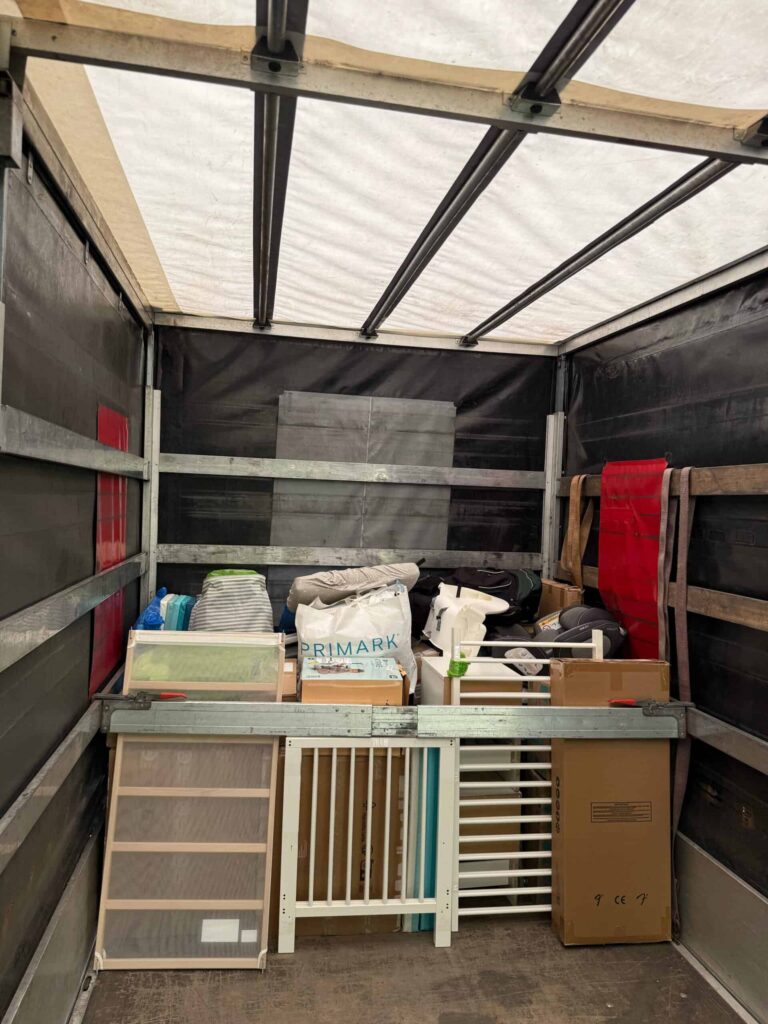
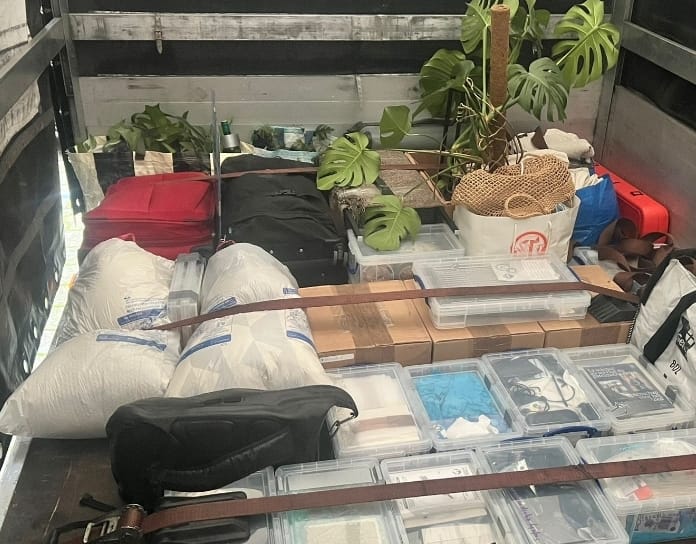
- GPS tracking for every load, so you can coordinate keys, parking, and arrival without guessing
- flexible man and van options for tight streets, partial loads, and staged moves
- packing support for speed and protection: https://vanonsite.com/packing-services/
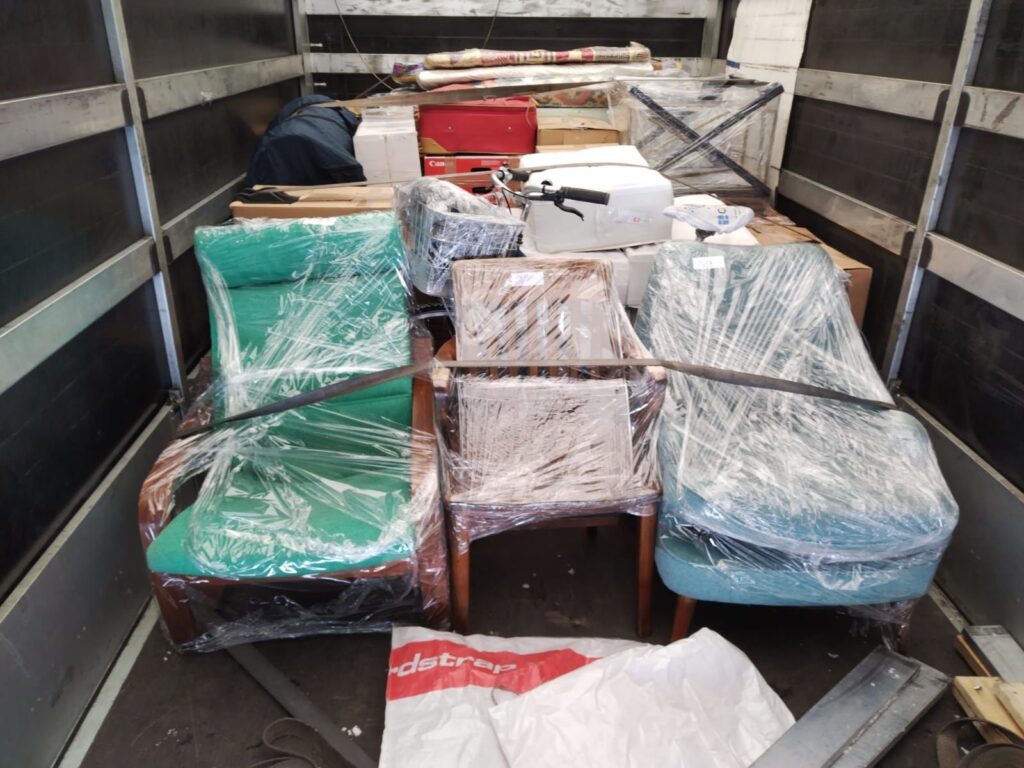
- white glove delivery for fragile, high value items: https://vanonsite.com/white-glove-delivery-service/
The hidden benefit: a cleaner first month
One of the most practical things to know before moving to France is that a messy move creates expensive leaks.
- rush purchases because essentials are buried
- replacement spending because items got damaged
- extra taxis because timing went off
A well planned move protects your first month budget as much as it protects your furniture.
Pick the right service by your situation
| Your situation | Best fit | Why it works |
|---|---|---|
| You are moving a few key items | man and van | flexible and cost efficient |
| You have heavy furniture | Furniture Removals | controlled loading and better protection |
| You are moving the whole home | Home Removals | structured plan and fewer unknowns |
| You have fragile finishes | White Glove Delivery | careful handling with extra protection |
| You cannot pack in time | Packing Service | faster move day, lower damage risk |
Helpful pages:
- Removals to France: https://vanonsite.com/removals-to-france/
- Home Removals: https://vanonsite.com/home-removals/
- Furniture Removals: https://vanonsite.com/furniture-removals/
- Student Removals: https://vanonsite.com/student-removals/
VANonsite vehicle sizes
Wrapping increases volume by 10% to 20%, so choose the right size. Space is protection. It lets items travel without pressure marks, crushed corners, or scratched finishes.
| Option | Volume | Max load | Best for |
|---|---|---|---|
| Moving One | 1 m3 | 100 kg | tiny essentials |
| Moving Basic | 5 m3 | 300 kg | student or single room |
| Moving Medium | 10 m3 | 500 kg | studio or compact 1 bed |
| Moving Premium | 15 m3 | 1100 kg | 1 to 2 bed |
| Moving Premium Plus | 30 m3 | 3500 kg | family partial or full |
| Moving Full House XXL | 90 m3 | 20000 kg | large relocations |
The 3 details that unlock an accurate quote
If you want an accurate quote quickly, share:
- pickup and delivery postcodes
- access notes in metres, floor, lift, stairs, parking
- 5 to 10 photos of bulky items and fragile surfaces
Then start here: https://vanonsite.com/removals-to-france/
FAQ: things to know before moving to France
What documents do I need before moving to France
At minimum: ID, proof of address or accommodation, and a clean admin folder. If you are non EU, use official sources first.
- France Visas: https://france-visas.gouv.fr/
- Service Public, foreigners in France: https://www.service-public.fr/particuliers/vosdroits/N110
Keep 2 printed sets plus one digital folder. It speeds up housing and banking.
How much money do I need for the first month
Month one is setup life. Plan a buffer of 15% to 25% because deposits, activation fees, and moving costs hit together.
If you want a quick personal rule:
- solo, small load: closer to 15%
- couple or family: closer to 25%
Do I need customs paperwork from the UK
It can apply. Start with the official French Customs page for moving home:
Your best defence is a clear inventory with quantities and a simple move note.
What should my inventory include
Keep it readable in 60 seconds.
- quantities for every line
- 3 to 5 high value items listed separately
- notes like fragile, upright only, disassembled
- box labels that match your categories
This is one of the most practical things to know before moving to France if you want fewer questions and a smoother delivery.
How long does it take to set up healthcare
Start within 2 to 4 weeks. Use the official sources:
- ameli: https://www.ameli.fr/
- Service Public health guidance: https://www.service-public.fr/particuliers/vosdroits/N19806
Bring medication for 30 to 60 days if essential.
How do I find housing faster
Prepare a dossier PDF before you view. Then send it the same day.
Include:
- ID
- proof of income or contract
- recent payslips or equivalent
- a 3 sentence cover note
Speed wins in busy cities. If you can send it within 60 minutes, you often jump ahead.
How long does it take to open a bank account
Plan 2 to 6 weeks in many cases. The fastest path is usually proof of address plus a stable income story.
Tip: keep your admin folder consistent. Same name spelling, same address formatting, same documents.
Can I drive in France with my current licence
It depends on your situation. Start with the official Service Public page:
Also plan for low emission zones if you will drive into cities.
Do I need a Crit’Air sticker
If you will drive into cities with low emission zones, it can matter.
Official site:
Government overview:
What should I keep with me on move day
Never put these in the load:
- passports and key documents
- medicines for 30 to 60 days
- chargers and a power bank
- bank cards and a little cash
- keys and entry codes
What items should I never pack
Avoid restricted or risky items.
- weapons and ammunition
- flammables, aerosols, strong solvents
- hazardous chemicals
- illegal drugs
Keep cash and jewellery with you.
Is man and van good for cross border moves
Yes, especially for partial loads and tight access. A man and van option can be flexible and cost efficient. It is also perfect when keys and timing are tight.
How do I choose the right vehicle size
Wrapping increases volume by 10% to 20%. If you are between sizes, go one size up.
If you want the safest recommendation, send photos of the biggest items plus your box count.
How to get an accurate quote quickly
Send:
- pickup and delivery postcodes
- access notes in metres, floor, lift, stairs, parking
- 5 to 10 photos of bulky items and fragile surfaces
Then request your route plan here: https://vanonsite.com/removals-to-france/
If you want packing help, see: https://vanonsite.com/packing-services/
If you have fragile, high value items, see: https://vanonsite.com/white-glove-delivery-service/
Summary
Moving to France feels magical until the practical reality shows up. This guide focuses on the things to know before moving to France that protect your time and your budget.
The key idea is simple: month one is not normal life, it is setup life. Plan a 15% to 25% buffer for deposits, activation fees, and the inevitable “first week purchases”. At the same time, prepare your housing dossier as one clean PDF, because speed and completeness win in competitive cities.
On the admin side, the biggest unlock is proof of address. It helps with housing, banking, and healthcare timelines. If you are moving from the UK or outside the EU, start earlier and use official sources, because visas and customs can shape the entire schedule.
For the move itself, keep it organised: build a clear inventory with quantities, take 5 to 10 photos of bulky items, and share access notes in metres. That prevents delays, reduces damage risk, and stops expensive replacement spending in week one.
Finally, choose moving support that matches your reality. A flexible man and van option can be perfect for partial loads and tight streets, while packing support or white glove handling can protect high value, fragile items.
The calm next step
If you remember only a few things to know before moving to France, remember these:
- month one is expensive, protect it with a buffer
- proof of address unlocks everything
- a clean inventory prevents delays
- access notes in metres keep move day smooth
Preparation turns stress into routine.
For a route specific plan with GPS tracking and flexible man and van options, start here: https://vanonsite.com/removals-to-france/