
Moving to Germany as an EU citizen is one of those decisions that looks simple on paper and suddenly feels huge the moment the boxes appear in your hallway. The good news is clear. In most cases, an EU citizen moving to Germany does not need a visa and does not follow the same immigration path as a non EU national. Still, the move is not just about crossing a border. It is about timing, registration, health insurance, housing, transport, and making sure your life arrives in one piece.
That is exactly where people feel the pressure. One day you are comparing rents in Berlin, Hamburg, or Munich. A few days later, you are trying to understand Anmeldung deadlines, deciding whether your sofa is worth taking, and searching for a man and van service that will actually show up on time. A successful relocation depends on two things working together: the right paperwork and dependable transport. When both are handled well, the move feels exciting instead of chaotic.
TL:DR
- EU citizens can usually move to Germany without a visa, but they still need to complete key local formalities after arrival.
- One of the first priorities for an EU citizen moving to Germany is address registration, often called Anmeldung, usually within 2 weeks of moving into a permanent home.
- You should prepare essential documents before departure, including ID, proof of address, health insurance details, and work or study paperwork.
- Health insurance matters early, because long term life in Germany usually requires proper coverage, even if short term arrangements may vary.
- Moving costs depend on distance, volume, access, urgency, and whether you need extras like packing, storage, or white glove support.
- A reliable man and van or removals service can save enormous stress, especially when timing affects work, family routines, and registration appointments.
- VANonsite helps make moving to Germany smoother with high quality transport, fast service, and GPS tracking for every load.
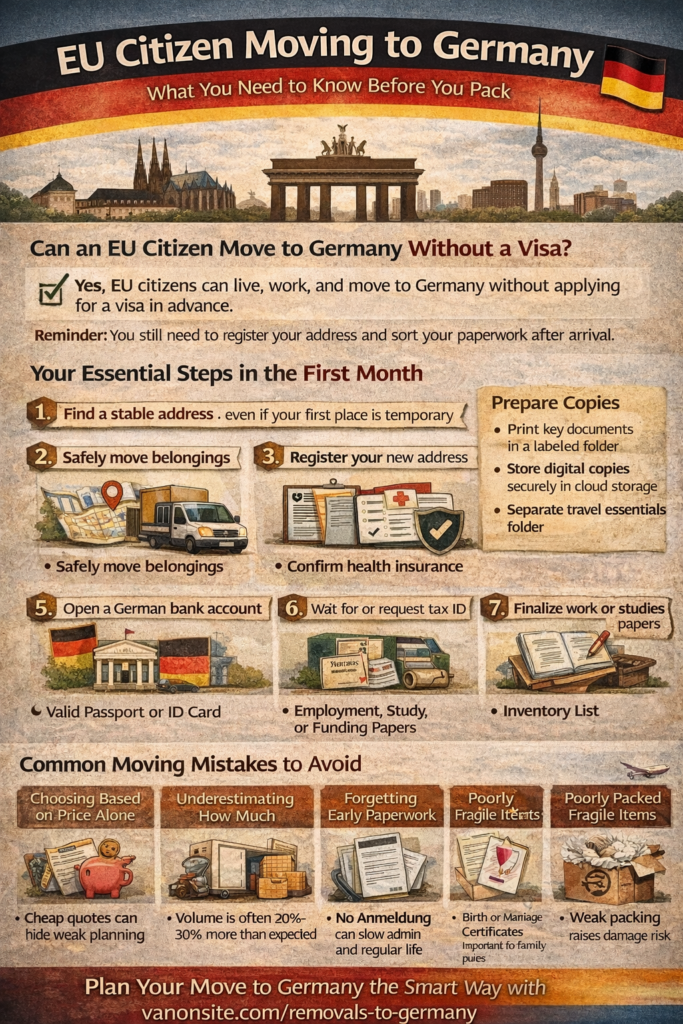
Can an EU Citizen Move to Germany Without a Visa?
Yes, in most cases an EU citizen moving to Germany can enter, live, and work there without applying for a visa in advance. That is one of the strongest practical advantages of EU freedom of movement. Instead of facing a long visa process, most EU nationals can focus on the real challenges of the move itself: finding a home, organising transport, securing paperwork, and settling into daily life without delays.
This is the part many readers want to understand straight away. Legally, the move is usually far more accessible than people fear. According to the EU rules on residence rights, EU citizens can move to another EU country and stay there under the framework of free movement. Germany also confirms that EU nationals benefit from freedom of movement rights. See the official guidance from Your Europe and the German Federal Ministry of the Interior.
Still, easy entry does not mean a completely effortless relocation. That is where many people get caught off guard. An EU citizen moving to Germany still needs to handle local obligations after arrival, and those practical steps can shape the entire first month. In real life, that means registering your address, sorting your health insurance, gathering proof of residence, and making sure your move is timed properly so you are not sleeping on suitcases while chasing appointments.
The short answer is simple:
- Yes, you can usually move to Germany as an EU citizen without a visa.
- No, most EU nationals do not need a standard residence permit to start living there.
- Yes, local registration rules still matter.
- Yes, good preparation saves time, money, and stress.
There is also an emotional side to this that should not be ignored. People often think the hardest part is the legal right to move. In reality, the hardest part is usually the transition itself. A delayed van, missing paperwork, or a poorly planned delivery can create more chaos than any border rule. That is why a smart move is never just about legal eligibility. It is about making sure the first days in Germany feel stable, functional, and calm.
Your First 30 Days in Germany at a Glance
The first month matters more than most people expect. If you treat it like a sequence instead of a whirlwind, the move feels lighter almost immediately. For an EU citizen moving to Germany, the smartest approach is to focus on the essentials first, then build momentum from there.
- Find a stable address, even if your first place is temporary.
- Move your belongings to Germany safely and on schedule.
- Register your address within the local deadline.
- Confirm your health insurance situation.
- Open a bank account if your daily life or employer requires one.
- Wait for or request your tax ID where needed.
- Finalise work, study, or family paperwork.
Each of these steps matters because they connect. If one slips, the next one often becomes harder. For example, if your housing arrangement is unclear, registration may be delayed. If your registration is delayed, some parts of daily administration may feel slower. If your belongings arrive late, the first week can become uncomfortable and disorganised very quickly.
That is why the first 30 days should be treated like a landing phase, not an afterthought. During this period, speed matters, but clarity matters even more. Many people waste valuable time on minor details while overlooking the essentials that shape daily life. A bed, a table, documents, chargers, medication, work equipment, and internet access can do more for your first week than unpacking every decorative item you own.
A practical way to think about your first month is to divide it into three stages:
- Days 1 to 7: arrival, basic unpacking, registration prep, immediate essentials
- Days 8 to 14: Anmeldung, document follow up, daily routine setup
- Days 15 to 30: bank, tax, work, study, school, and longer term household planning
This structure matters because life in Germany starts running fast once you arrive. Your employer may need documents. Your landlord may need confirmation. Your family may need basics unpacked on day one, not day six. Children may need stability quickly. Remote workers may need immediate access to equipment. Students may need to move from temporary housing to a more settled arrangement without losing time.
That is where professional removals become more than a convenience. They become a buffer against avoidable stress. A service with real time planning and GPS tracked transport gives you more control when your schedule is already packed. For an EU citizen moving to Germany, that control can be the difference between a confident start and a draining first month full of small disruptions.
Documents You Should Prepare Before Moving to Germany
Many people assume that because the border part is simple, the whole move will be simple. That is where trouble begins. A well prepared document folder can save hours of admin friction and prevent the painful cycle of rebooking appointments, scrambling for scanned copies, or discovering at the worst possible moment that one missing page is holding up the next step.
For an EU citizen moving to Germany, documents are not just paperwork. They are leverage. They speed up appointments, reduce confusion, and make your first weeks feel organised instead of fragile. The smoother your document pack is, the easier it becomes to deal with landlords, registration offices, employers, schools, and service providers.
| Document | Why it matters | When you may need it |
|---|---|---|
| Valid passport or national ID card | Confirms identity and EU nationality | Travel, registration, contracts |
| Rental agreement or landlord confirmation | Supports proof of address | Anmeldung and housing admin |
| Employment contract, university letter, or proof of funds | Shows the basis of your stay | Work, study, practical checks |
| Health insurance proof or EHIC where applicable | Helps with healthcare access and administration | Early days after arrival |
| Birth or marriage certificates | Useful for family administration | Schools, family records, local paperwork |
| Vehicle documents | Important if you bring a car | Insurance, driving related formalities |
| Moving inventory list | Supports planning and claims | Packing, transport, customs context |
Not every EU citizen moving to Germany will need every document in the table. Still, families, students, remote workers, and professionals relocating for a new job often need more proof than they first imagine. It is wise to keep both digital and printed copies. A simple habit like that can cut stress dramatically.
Alongside your core documents, it helps to prepare:
- printed copies in a single clearly labelled folder
- digital copies stored securely in cloud storage
- a short checklist of what is original and what is a copy
- translations if a specific institution asks for them
- a separate essentials folder for travel day
That last point matters more than people expect. Travel day has a strange way of turning simple things into stressful things. If your phone battery drops, your email login fails, or your luggage ends up in the wrong corner of the van, physical access to important papers can save a lot of panic.
Families should think one step ahead. If children are part of the move, school or childcare questions can appear quickly. Couples should keep relationship records accessible if joint administration comes up. Professionals moving for work should have contract details easy to reach. Students should keep their university confirmation and housing papers together. Small differences in preparation can make a huge difference once appointments begin.
It is also worth separating documents into three categories:
- Travel and identity documents such as ID cards, passports, and driving related papers.
- Settlement documents such as rental agreements, landlord confirmation, and health insurance proof.
- Support documents such as certificates, work letters, university papers, and your moving inventory.
This simple structure helps because you do not need every paper every day. You just need the right paper at the right moment. That is often what makes the process feel efficient.
For broader residence formalities in the EU, see Your Europe on documents and formalities. If you will bring a car, you should also review the official EU page on driving licence recognition and exchange. If your move raises customs questions, especially around transferred residence and personal belongings, the official German customs guidance is here: German customs for transferring residence.
One more practical detail deserves attention. If you are using a man and van or a larger removals service, keep your most important documents with you, not inside the main shipment. Even with a smooth, professional move, passports, contracts, medication papers, and registration documents should travel in your personal bag. That small choice protects you from a truly unnecessary headache.
Address Registration in Germany: What Is Anmeldung and How Fast Must You Do It?
For many people, Anmeldung is the moment the move starts to feel real. It is the formal registration of your address with the local authorities. It sounds simple, and often it is, but it has serious importance because it connects to many parts of daily life in Germany.
For an EU citizen moving to Germany, Anmeldung is often one of the first major administrative steps after arrival. It can shape how quickly you move from feeling like you are still in transit to feeling genuinely settled. In many cases, you are expected to register within 2 weeks of moving into your new home. Germany explains the general registration obligation through the Federal Ministry of the Interior, while Make it in Germany gives a useful overview of housing and registration.
Why does Anmeldung matter so much? Because it is often tied to the practical rhythm of life in Germany. It may influence how smoothly you handle tax related communication, banking tasks, local administration, and other day to day formalities. It is not just a bureaucratic footnote. It is one of the pillars of getting established properly.
Typical documents for Anmeldung often include:
- passport or national ID
- a completed registration form
- landlord confirmation or proof of occupancy
- rental agreement if requested by the local office
Some people assume they can deal with registration whenever they have time. That is risky. Appointment systems can vary by city, and busy locations may require more planning than smaller towns. Berlin, Hamburg, Munich, and other large cities can feel especially intense when housing and administration collide. That is why it helps to think about Anmeldung before you move, not after the van is unloaded.
A good rule is to prepare for registration as soon as your address is confirmed. Save your landlord documents in one place. Check local appointment availability early. Keep your ID accessible. If your move involves a partner, children, or a family relocation, make sure each person’s essential paperwork is ready in advance.
This is where logistics and paperwork meet in a very real way. If your furniture arrives late, your sleeping setup is missing, or your work equipment is stuck in transit, your first week becomes far more draining than it needs to be. A late delivery can turn a simple admin week into a messy scramble.
That is why transport quality matters. If you arrive ready for registration but your essentials are scattered, delayed, or damaged, your energy disappears into avoidable chaos. A dependable service with clear communication and GPS tracking can make the first stage of life in Germany feel sharper, calmer, and far more manageable.
There is also a psychological side to Anmeldung that should not be underestimated. Once it is done, many people feel the move click into place. The new city feels less temporary. The flat feels more like home. The entire relocation becomes more solid. That emotional shift matters, especially after weeks of planning, packing, and uncertainty.
Do EU Citizens Need Health Insurance in Germany?
Yes, health insurance becomes important very quickly once you start building daily life in Germany. For an EU citizen moving to Germany, this is not a detail to leave for later. It sits right next to housing and registration as one of the pillars of a secure start. The broad rule is simple: long term life in Germany generally goes hand in hand with proper health coverage. The official health information portal explains the basics here: Health insurance in Germany.
What makes this topic feel confusing is that the right path depends on your situation. A person starting a job, a student beginning a course, a freelancer relocating independently, and a family moving together may all face slightly different insurance choices. Some people may rely on existing EU coverage for a short period, depending on their circumstances. However, once life in Germany begins to settle into a real routine, many residents need a solution that fits German rules and everyday practical needs.
A simple way to think about it is this:
- Employees often enter the standard system quickly.
- Students may need to follow specific education related rules.
- Families should check dependent cover early.
- Freelancers should compare options carefully before choosing.
The smartest approach is not to panic, but to identify your category early. Once you know whether you are moving for work, study, self employment, or family reasons, the next step becomes much easier. That clarity saves time and prevents expensive guesswork.
Health insurance also affects peace of mind in a very human way. Moving country is tiring enough without worrying about what happens if a child gets sick, a prescription needs renewing, or an accident interrupts your first week. People often focus so intensely on the move itself that they postpone the less visible parts of settling in. Yet this is exactly the kind of issue that feels small until it suddenly feels urgent.
A practical checklist can help here:
- Confirm what type of status you will have in Germany from day one.
- Check whether your current EU coverage helps in the short term.
- Prepare your insurance documents before you travel.
- Keep proof of cover easy to access during the first month.
- Review whether your work, studies, or family setup requires a German based solution.
For an EU citizen moving to Germany, this kind of preparation creates confidence. It stops health insurance from becoming a vague worry in the background and turns it into one more step already under control. Calm planning always feels lighter than last minute confusion.
Moving Your Furniture and Personal Belongings to Germany Without Damage or Delays
Paperwork gets you legally settled, but your move itself shapes your first real days in Germany. If your bed arrives damaged, your boxes disappear into confusion, or your delivery shows up late, the emotional cost is huge. Even a dream relocation can start to feel heavy when the logistics go wrong.
That is why an EU citizen moving to Germany should not choose transport on price alone. A casual man and van can be enough for a few boxes or a light student move. However, once you are moving furniture, fragile items, work equipment, family belongings, or a whole apartment, you need structure, communication, and reliability.
A strong removals service should help with:
- realistic volume planning
- careful furniture handling
- clear delivery timing
- packing support where needed
- protection for fragile or valuable items
- visibility during transport
The truth is simple. Cross border moving is not only about getting items from one address to another. It is about preserving momentum. If your essentials arrive on time, you can sleep properly, work properly, and settle properly. If they do not, the first week starts to fray around the edges. Stress builds fast when the kettle is missing, the child’s bed has not arrived, the office monitor is still in transit, or half the kitchen is buried in unlabelled boxes.
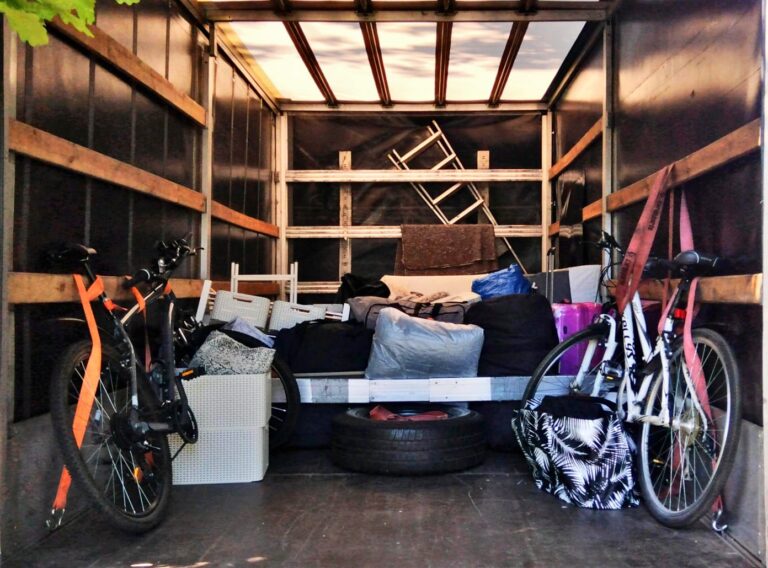
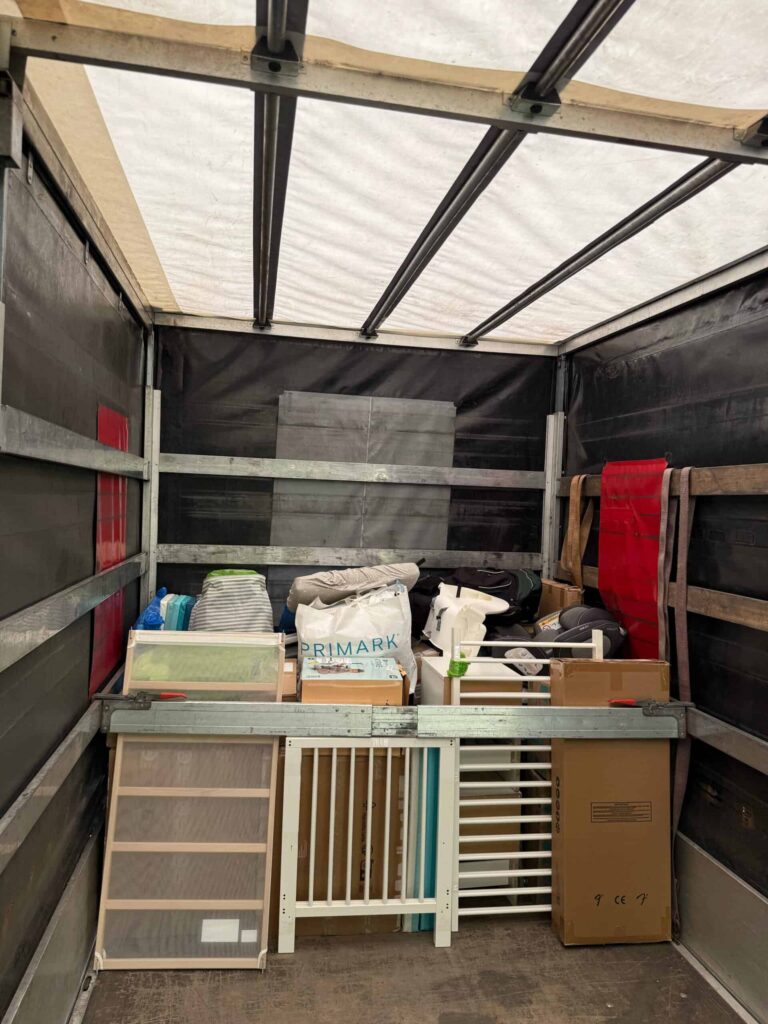
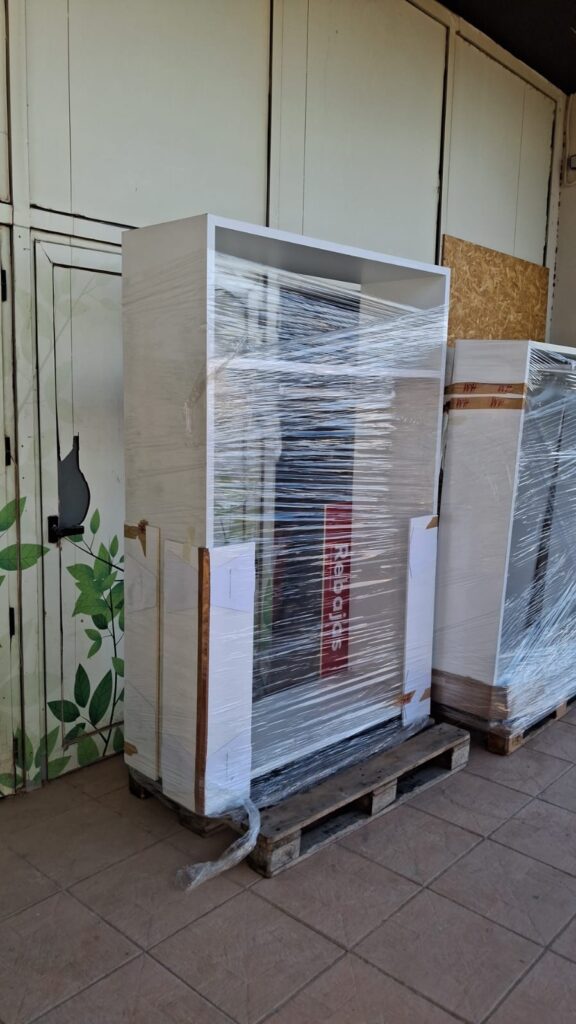
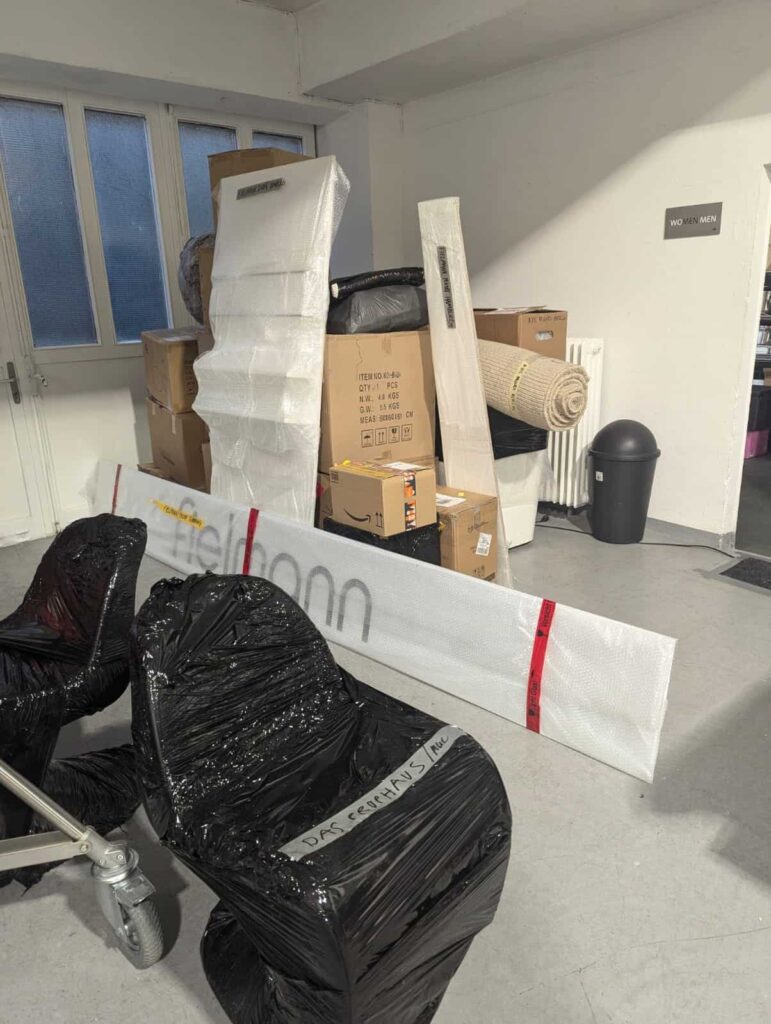
That is why planning volume properly matters so much. Many people underestimate the amount they need to move. They picture a few chairs, a table, and some clothing, then forget the lamps, mirrors, kitchen equipment, seasonal storage, bikes, and fragile items that fill real homes. Underestimating your move by even 20% can trigger delays, second runs, and needless expense.
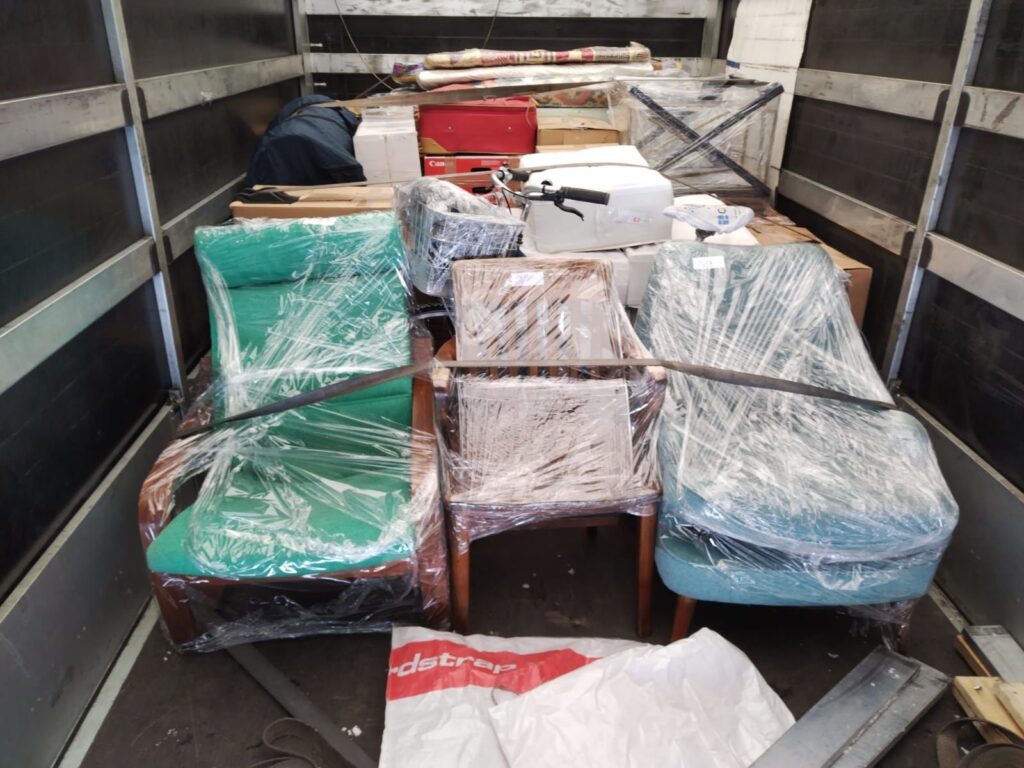
A good removals partner does more than load a van. It helps you think clearly about what is actually being moved, how it should be packed, how long it may take, and which items need more protection than others. That is especially important for:
- large or awkward furniture
- fragile décor and glassware
- electronics and work equipment
- antiques or high value items
- student moves with tight timing
- family relocations with zero room for delay
This is where VANonsite stands out naturally. The company focuses on high quality transport across Europe, with safety, speed, and GPS tracking for every load. That visibility matters. During a cross border move, knowing where your belongings are can remove a surprising amount of anxiety. If you are planning removals to Germany, that kind of control is not a luxury. It is peace of mind.
There is also a major difference between a basic transport booking and a service that truly supports the move. Some relocations only need a straightforward man and van solution. Others call for packing support, furniture protection, careful handling, white glove delivery, temporary storage, or last minute flexibility. The best option depends on your load, your schedule, your access conditions, and how much disruption you can realistically absorb.
VANonsite can support different move types depending on your needs, including Furniture Removals, Home Removals, Packing Service, White Glove Delivery, Office Removals, Storage, Student Removals, and Last Minute Moving. That flexibility is valuable because not every move is neat, predictable, or perfectly timed.
If you are moving into a city apartment with stairs and tight access, your needs may be very different from a family moving into a house with a larger volume of furniture. If you are starting work immediately, delivery timing becomes crucial. If you are relocating a student room, budget and speed may matter most. If you are bringing delicate furniture or premium items, careful handling becomes non negotiable.
A few simple habits can make the move far smoother:
- label boxes by room and priority
- keep your first 72 hour essentials separate
- photograph fragile items before loading
- carry your documents and valuables personally
- confirm access details for both addresses in advance
- choose a mover with clear communication, not just a low headline price
For an EU citizen moving to Germany, these details create the difference between a move that feels controlled and a move that feels chaotic. Logistics may sound dry on paper, but in real life they shape your mood, your schedule, and your ability to settle into the new country with confidence.
When the transport side is handled properly, everything else becomes easier. Registration feels easier. Unpacking feels easier. Family routines return faster. Work starts with less friction. That is why strong removals support is not an extra. It is part of a smart relocation strategy.


Which VANonsite Vehicle Size Fits Your Move?
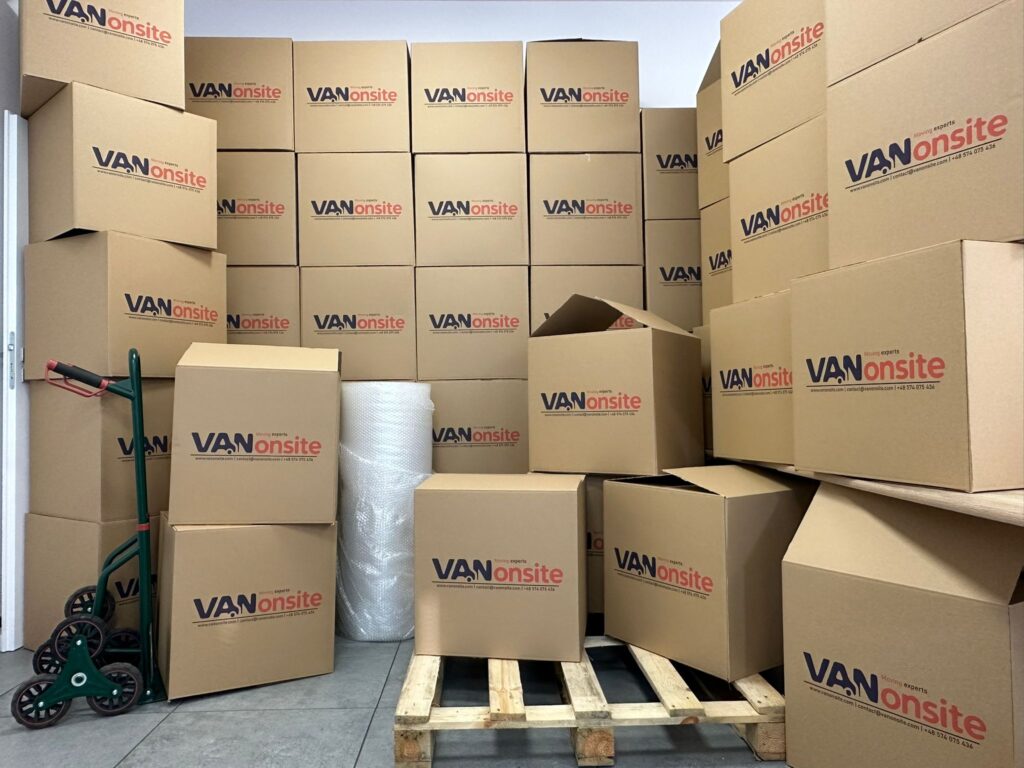
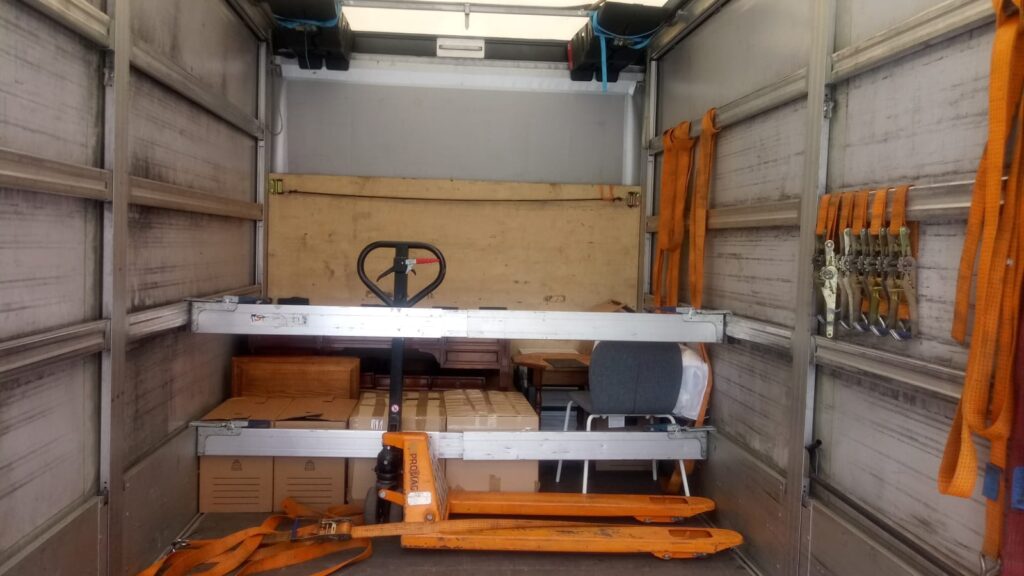
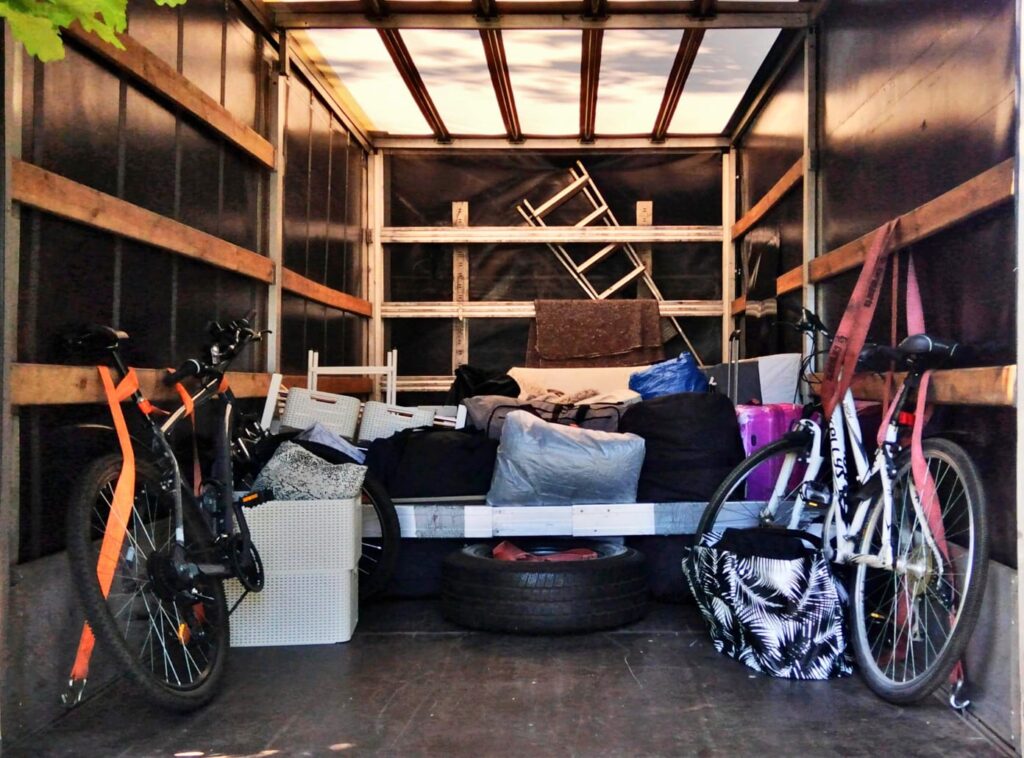
Choosing the right vehicle is one of the most underrated parts of a successful relocation. People often spend hours comparing prices, yet they guess the load size in a few rushed minutes. That is exactly where problems begin. A few wardrobes, a mattress, a washing machine, and 15 boxes can easily take far more space than expected. In many cases, people underestimate moving volume by 20% to 30%, and that mistake can lead to second trips, delivery delays, extra labour, or a quote that no longer reflects reality.
For an EU citizen moving to Germany, vehicle size is not just a transport detail. It shapes cost, speed, comfort, and the entire rhythm of the move. A van that is too small can create a cascade of frustration. A van that matches your real load gives you control from the start.
| Service option | Capacity | Max load | Best for |
|---|---|---|---|
| Moving One | 1 m3 | 100 kg | A few boxes, documents, urgent essentials |
| Moving Basic | 5 m3 | 300 kg | Student move, light studio contents |
| Moving Medium | 10 m3 | 500 kg | Small flat, furniture and boxes |
| Moving Premium | 15 m3 | 1100 kg | One bedroom move, larger furniture |
| Moving Premium Plus | 30 m3 | 3500 kg | Family move, partial house contents |
| Moving Full House XXL | 90 m3 | 20000 kg | Full household relocation |
If you are unsure, think in rooms, not in individual items. A single chest of drawers sounds small. A bedroom setup, kitchen appliances, packed storage boxes, dining chairs, and hallway shelves are a completely different story. For an EU citizen moving to Germany, the right service should be chosen based on volume, fragility, urgency, and access conditions, not just the cheapest headline price.
A practical way to estimate your needs is to picture your move in layers:
- Essentials only: documents, a few boxes, key work items, and urgent personal belongings
- Light home move: student furniture, basic appliances, boxed clothing, and small décor
- Standard flat move: bed, sofa, table, chairs, boxes, kitchen items, and storage contents
- Family relocation: multiple rooms, white goods, children’s furniture, bulky items, and higher total weight
This approach makes it easier to avoid the classic mistake of counting only the visible furniture and forgetting everything tucked into cupboards, lofts, storage rooms, or spare corners. Real homes always contain more than people first imagine.
Here is how the vehicle options translate into real life scenarios:
Moving One
This is best when speed matters more than volume. It suits a very small load such as urgent documents, a handful of boxes, valuable essentials, or a compact emergency transfer. If you need a fast man and van style move for critical items, this is the leanest option.
Moving Basic
A strong fit for students, minimalists, or anyone moving out of a room or very small studio. It can work well for light furniture, boxed personal items, and the kind of move where efficiency matters more than transporting a whole home.
Moving Medium
This is often the sweet spot for a small flat. It gives more breathing room for furniture and boxes, which matters when people discover that their compact move is not as compact as they thought.
Moving Premium
A sensible choice for a one bedroom move with heavier furniture, larger appliances, or more demanding logistics. This option becomes especially attractive when you want fewer compromises and less risk of overflow.
Moving Premium Plus
Ideal for a family move, a larger apartment, or a partial house relocation. If your goal is to move efficiently without cutting corners on volume, this is where the move starts to feel properly substantial.
Moving Full House XXL
This is designed for full scale household relocations where volume, weight, and organisation all matter. It is the right solution when the move is not a simple transfer of items, but a major life shift involving an entire home.
There are also a few high impact questions worth asking before you choose:
- How many rooms are being moved in reality, not in theory?
- Are there heavy appliances or bulky furniture pieces involved?
- Do you need space for fragile items that require careful loading?
- Is access tight, with stairs, narrow hallways, or limited parking?
- Do you want one clean trip or are you willing to risk a second run?
Those questions matter because the best vehicle is not just about cubic metres. It is about margin. A little extra room can protect fragile items, improve loading efficiency, and reduce the frantic pressure that often appears on moving day.
This is another area where VANonsite has a strong practical edge. Instead of forcing every move into one rigid model, the service range makes it easier to match the vehicle to the real scope of the relocation. That means a student move does not get oversized unnecessarily, while a family move does not end up squeezed into a vehicle that creates delays and stress.
How Much Does It Cost to Move to Germany from Another EU Country?
This is one of the first questions people ask, and rightly so. The honest answer is that the final cost depends on several moving parts. A trustworthy quote should not feel vague, slippery, or suspiciously cheap. It should make sense from the first line to the last.
For an EU citizen moving to Germany, cost matters not only because of budget pressure, but because relocation already comes with enough uncertainty. Rent deposits, travel expenses, registration related admin, temporary accommodation, and first month setup costs can add up quickly. That is why a transparent moving quote feels so valuable. It gives structure to a moment that can otherwise feel financially blurry.
| Cost factor | Why it changes the quote |
|---|---|
| Distance | Longer routes require more fuel, time, and route planning |
| Load volume | More cubic meters usually means a bigger vehicle or more labour |
| Weight | Heavy items affect handling and transport conditions |
| Access | Stairs, narrow entrances, and lack of lift increase labour time |
| Packing support | Full packing adds materials and skilled handling |
| Urgency | Last minute bookings may limit options and raise costs |
| Storage | Temporary storage adds flexibility and service time |
Each of these factors can change the quote in a real and reasonable way. Distance affects route complexity and driver time. Volume shapes the vehicle size and the loading plan. Access can transform a smooth move into a labour heavy one. A fourth floor apartment with no lift is simply a different operation from a ground floor property with easy parking.
That is why the cheapest figure on the screen is not always the best deal. A low headline price may look attractive, but if it ignores actual volume, difficult access, or the need for proper protection, it can collapse later into add on fees, delays, or a frustrating service gap. In the moving world, false economy is very real.
A professional quote should answer the questions people are often too stressed to ask:
- What exactly is included?
- Is loading and unloading covered?
- Are there extra fees for stairs or poor access?
- Is packing support optional?
- What happens if the load is larger than expected?
- Is storage available if timing changes?
- How clearly will the service communicate before and during the move?
Those answers matter because clear pricing builds trust. It also helps you compare services fairly instead of comparing two numbers that actually represent two very different levels of service.
A useful way to think about cost is to separate it into three layers:
Base transport cost
This is the foundation. It usually reflects route length, vehicle size, and the basic logistics of getting your belongings from one address to another.
Handling and access cost
This is shaped by real world conditions such as stairs, lifts, walking distance, building access, parking, and awkward or heavy furniture.
Optional service cost
This includes extras that may be worth every cent, such as packing, storage, white glove delivery, urgent scheduling, or more tailored handling for premium items.
For an EU citizen moving to Germany, this layered view makes the quote feel much easier to understand. Instead of staring at one total and wondering how it was calculated, you can see what is driving the price and where your choices affect the final number.
There is also a strong emotional reason to choose transparency over a bargain that feels too good to be true. Moving to a new country already asks a lot from your attention. You should not have to burn energy decoding hidden charges or worrying that the final bill will balloon on moving day.
This is where a dependable provider can make a striking difference. VANonsite positions itself around safety, speed, and clarity, while offering a service range that can adapt to light moves, student moves, furniture removals, office removals, storage needs, and more complex household relocations. That flexibility is important because cost efficiency does not mean choosing the smallest service at all costs. It means choosing the right service once.
If you want a smarter quote, gather these details before requesting one:
- pickup and delivery postcodes
- approximate volume or room count
- major furniture and appliance list
- floor level and lift information
- access or parking restrictions
- preferred moving date
- any need for packing, storage, or white glove support
The more precise your information, the more accurate and useful the quote becomes. That protects both your budget and your moving day.
A professional quote should explain what drives the price. That transparency protects you from ugly surprises later. It also helps you compare services fairly. A cheap man and van quote may look tempting, but if it lacks planning, protection, or communication, it can become expensive in all the wrong ways.
Common Mistakes EU Citizens Make When Moving to Germany
Even a well intentioned move can go off course when key details are ignored. Most moving disasters do not begin with one huge mistake. They begin with a chain of small assumptions. One missed document. One late booking. One van that looked cheap but turned out to be badly planned. For an EU citizen moving to Germany, these details matter because the move is not only about transport. It is about arriving ready for real life.
The most common mistakes include:
- booking too late and losing the best moving dates
- underestimating furniture and box volume
- arriving without the right registration documents
- assuming health insurance will sort itself out automatically
- failing to protect fragile or high value items properly
- choosing the cheapest man and van without checking reliability
- ignoring the gap between tenancy start, delivery date, and registration timing
Each of these can create a ripple effect. Book your move too late and you may end up paying more or accepting a less suitable date. Underestimate your load and you risk delays, second trips, or a chaotic loading day. Arrive without the right paperwork and your first week in Germany may become a frustrating loop of postponed admin.
A few mistakes are especially common because people underestimate how connected everything is.
Waiting Too Long to Book the Move
Good moving slots disappear quickly, especially around peak periods, end of month dates, and summer relocations. If your work start date, rental handover, and travel schedule are all fixed, leaving the moving service until the last minute creates unnecessary pressure. The earlier you lock in transport, the more control you keep.
Guessing the Volume Instead of Measuring It
People almost always think they have less stuff than they actually do. Drawers, storage corners, bulky bedding, lamps, mirrors, office chairs, and kitchen equipment all add up faster than expected. A rushed estimate can break the rhythm of the move before it even starts.
Treating Paperwork as a Later Problem
For an EU citizen moving to Germany, the legal route may be simple, but local formalities are not optional. Address registration, health insurance proof, rental paperwork, and identity documents should be ready before the move, not hunted down afterwards.
Choosing Price Over Reliability
A bargain can become expensive very fast if communication is poor, timing slips, or fragile items are handled carelessly. A low quote may look attractive in the moment, but quality transport often saves money by preventing damage, delays, and last minute fixes.
Ignoring the First Week Reality
Many people plan the move itself and forget the first 72 hours after arrival. That is the window when you need access to basics. Clothes, chargers, toiletries, medicines, documents, work equipment, and a few kitchen essentials should never disappear into the general load.
Forgetting Access Conditions
A perfect quote can go wrong if nobody checks stairs, narrow entrances, parking limits, or long carry distances. Access details shape labour, timing, and vehicle choice. They are not side notes. They are moving day facts.
Failing to Protect High Value Items Properly
Glass, electronics, antiques, mirrors, monitors, and premium furniture need more than optimism. They need proper wrapping, secure placement, and careful handling. Damage often happens not because people do not care, but because they underestimate how vulnerable some items really are.
These mistakes are common because people focus on the destination and forget the mechanics of getting there. A strong moving plan is not glamorous, but it is powerful. It protects your budget, your energy, and your first impression of your new life.
The good news is that most of these problems are preventable. A realistic inventory, better timing, stronger packing, and a dependable removals partner can eliminate a huge share of the friction before it begins. That is one of the quiet advantages of using a provider like VANonsite. A move backed by clear planning, flexible service options, and GPS tracked transport simply gives you fewer chances to fall into avoidable chaos.
A Simple Moving Checklist for an EU Citizen Moving to Germany
A checklist turns stress into action. Instead of carrying everything in your head, you break the move into steps that can actually be finished. For an EU citizen moving to Germany, that matters because the move is not one task. It is dozens of tasks that need to happen in the right order.
Below is a practical checklist that keeps the process grounded and manageable.
6 to 8 Weeks Before the Move
- confirm your moving date
- compare housing options and access conditions
- organise your core documents
- book your removals service
- declutter and measure large furniture
- check notice periods, contract dates, and key handover timing
- estimate your real moving volume, not your optimistic guess
- decide whether you need packing support, storage, or white glove service
At this stage, the goal is clarity. You want firm dates, a realistic picture of your load, and enough time to avoid rushed decisions. This is also the best moment to choose the right vehicle size and decide whether a simple man and van solution is enough or whether your relocation needs broader removals support.
3 to 4 Weeks Before the Move
- confirm landlord paperwork and move in details
- start gathering packing materials
- create a room by room inventory
- review health insurance documents and essentials
- separate valuables, documents, and travel day items
- measure stairwells, lifts, and access points if needed
- notify relevant services or institutions where appropriate
This stage is where hidden problems often appear. A sofa may be larger than expected. Access may be tighter than it looked. Some documents may still be missing. Solving those details now is far easier than solving them during the final week.
2 to 3 Weeks Before the Move
- confirm your removals booking in writing
- organise packing supplies
- prepare a detailed moving inventory
- separate essentials for the first 72 hours
- label fragile items clearly
- identify what will travel with you personally
- review delivery timing against your tenancy start and registration plans
This is also a good moment to think emotionally as well as practically. Ask yourself what you will need to feel functional on day one. Not what looks tidy in a packed van, but what helps you sleep, eat, work, and settle quickly.
Final Week
- pack documents and valuables separately
- confirm your delivery window
- label boxes clearly by room and priority
- keep chargers, medication, and work items easy to reach
- defrost appliances if needed
- photograph high value or fragile items before loading
- double check access and parking details at both addresses
- keep cleaning supplies and basic tools available
A calm final week changes everything. The more clearly you mark priorities now, the easier unpacking becomes later. A well labelled move saves time, protects fragile items, and reduces the chance that essential boxes vanish into the wrong room.
Moving Day
- keep passports, IDs, contracts, and health documents with you
- check that priority items are easy to unload first
- confirm the route and arrival window
- do a final sweep of cupboards, storage areas, and utility spaces
- take quick photos of the empty property if needed
- stay reachable throughout the journey
Moving day rarely feels glamorous, but it should feel structured. A good plan, a good team, and clear communication can make a high pressure day feel remarkably smooth.
First Week in Germany
- complete address registration
- review health insurance requirements
- set up local essentials
- track your delivery and unpack priority rooms first
- organise sleeping, cooking, and work basics before décor
- store important papers in one safe place
- check whether banking, tax, or employer follow up is needed
For an EU citizen moving to Germany, this kind of step by step planning makes the process feel far less overwhelming. It also helps ensure that your transport, paperwork, and new daily routine line up instead of clashing.
A good checklist does more than keep you organised. It protects your energy. It creates momentum. It reduces the mental fog that often comes with an international move. And when the logistics side is handled by a reliable service, the checklist becomes far easier to follow because fewer things go wrong in the first place.
Why VANonsite Is a Smart Choice for Moving to Germany
A moving company should not just carry things. It should reduce friction. That is what makes the difference between a stressful relocation and a clean, confident start. For an EU citizen moving to Germany, trust is not built on slogans. It is built on timing, communication, protection, and the feeling that the move is being handled by people who understand how much is at stake.
VANonsite brings several strengths that matter:
- high quality transport services across Europe
- strong focus on safety and speed
- GPS tracking for every load
- flexible options from a small man and van move to a full household relocation
- specialist support for packing, furniture removals, white glove delivery, office removals, storage, and student removals
What makes these strengths valuable is not the wording itself, but what they mean in practice. Safety means your furniture, electronics, and personal belongings are treated with real care. Speed means the move supports your timeline instead of quietly wrecking it. GPS tracking means you are not left in the dark, wondering where your shipment is while your tenancy, job, or family routine hangs in the balance.
This matters because relocation stress rarely comes from one dramatic moment. It usually comes from silence, uncertainty, and small delays that pile up until they drain your energy. When life is changing fast, silence is the last thing you need from a mover. You want updates. You want clarity. You want to know your belongings are being handled by people who respect both the items and the deadline. That is exactly the kind of quiet confidence that builds trust.
For some people, the right solution is a fast man and van service for a smaller load. For others, it is a broader removals package with packing support, larger vehicle capacity, careful handling for furniture, or temporary storage while housing details settle. VANonsite works well in this space because it does not force every customer into one narrow model. The service range is flexible enough to suit student moves, home removals, furniture removals, office relocations, and more demanding cross border household moves.
That flexibility matters because two moves to Germany can look similar on paper and feel completely different in reality. A student relocating with a compact load needs agility, value, and speed. A family moving with children, appliances, and a tight tenancy window needs more structure, more space, and less risk. A professional relocating for work may need exact timing, fast setup, and clear communication from start to finish. The best moving partner understands those differences instead of pretending every move is the same.
VANonsite also stands out because visibility changes the emotional texture of a move. When every load is GPS tracked, the experience feels more grounded. You are not guessing. You are not waiting in the dark. You have a stronger sense of control during a period when many other parts of life may still feel unsettled.
That is especially important for an EU citizen moving to Germany, because the move is never just about transport. It is about protecting the first chapter of life after arrival. A delayed bed affects sleep. A delayed desk affects work. A delayed kitchen setup affects family rhythm. Good logistics do not just move belongings. They protect momentum.
A strong moving company also earns trust by reducing friction in the small but decisive moments:
- clearer planning before moving day
- better matching between load size and vehicle size
- stronger handling of fragile or valuable items
- better timing for work, tenancy, and family schedules
- more confidence during long distance transport
That is why VANonsite fits naturally into this article, not as a hard sell, but as a practical answer. If the goal is to make moving to Germany feel smoother, safer, and more controlled, then the choice of mover becomes part of the strategy, not an afterthought.
FAQ
Can an EU citizen live in Germany permanently?
EU citizens benefit from freedom of movement, so long term residence in Germany is generally possible. Still, practical formalities such as registration, health cover, and proof connected to work, study, or family life may still matter. In simple terms, the legal path is clear, but daily life still depends on getting the practical steps right.
Do I need Anmeldung if I already have an EU passport?
Yes. In normal situations, having an EU passport does not remove the need to register your address after moving into a residence in Germany. Your passport confirms who you are. Anmeldung confirms where you live.
Can I use a man and van service for moving to Germany?
Yes. A man and van service can work very well for smaller moves, student relocations, urgent deliveries, or partial household transport. For larger or more complex moves, a structured removals service is usually the safer option. The right choice depends on how much you are moving, how fragile it is, and how tightly your timing is connected to work, family, or housing.
How long does it take to move furniture to Germany?
It depends on the country of departure, the route, the size of the load, access conditions, and how urgent the service is. Smaller dedicated moves are often faster, while larger household relocations need more planning. Timing is also affected by how well the load is prepared and whether both addresses are easy to access.
What is the best moving option for a family relocation?
For a family move, a larger capacity service with careful furniture handling, schedule coordination, and optional packing support usually gives the smoothest result. Families often need more than transport alone. They need reliability, clear timing, and a setup that keeps disruption as low as possible.
Can I bring my car and personal belongings when moving to Germany?
Usually yes, but the details depend on what you bring and your situation. Review the official guidance on driving licence recognition in the EU and German customs for transferring residence if relevant.
Is VANonsite suitable for small moves as well as full relocations?
Yes. One of the strongest advantages of VANonsite is flexibility. The company can support everything from a small man and van booking to a larger, more structured household move. That makes it easier to choose a service that fits your real load instead of paying for something that feels mismatched.
What should I keep with me instead of putting into the van?
Keep passports, national ID cards, contracts, health insurance papers, medication, valuables, chargers, and your first 24 to 72 hour essentials with you personally. Even the best move feels safer when the most important items stay within reach.
Final Thoughts
An EU citizen moving to Germany has a clear legal path, but a smooth relocation still depends on what happens around that legal right. The real success of the move comes down to preparation, timing, paperwork, housing, and transport that does not let you down when the pressure rises.
Germany can offer remarkable opportunities, but your first days there should not be spent chasing missing boxes, guessing at deadlines, or dealing with avoidable delays. The smartest moves are the ones that connect practical planning with dependable execution. That means getting your documents ready, understanding your first month, protecting your essentials, and choosing a mover that supports the move instead of complicating it.
If you want the move to feel simpler, safer, and more controlled, choose a transport partner that combines professionalism with visibility. VANonsite does exactly that, whether you need a small man and van booking, a carefully planned furniture move, or a full house relocation across Europe. In a moment as important as starting life in Germany, that kind of reliability is not just helpful. It is powerful.