
Moving to Germany health insurance is one of the first topics people should understand before the move becomes real. You can find a flat later than planned. You can unpack boxes a few days late. However, if your health insurance situation is unclear, the whole relocation can start to feel shaky very fast.
Germany is known for structure, security, and a strong healthcare system. That sounds reassuring, and it is. Still, newcomers often feel overwhelmed when they start reading about public insurance, private insurance, registration, work contracts, and proof of coverage. The system can feel like a locked door with several keys, and nobody wants to discover they brought the wrong one.
That is exactly why this article matters. If you are planning a relocation and searching for answers about moving to Germany health insurance, you probably want fast clarity. You want to know what health insurance you need, when you need it, how much it may cost, what documents matter, and how it fits into the wider process of moving to Germany.
This guide explains the essentials in a practical, answer-focused way. It also connects health insurance to the bigger moving picture, including documents, housing, registration, and choosing the right man and van support for a smoother transition.
TL:DR
- Moving to Germany health insurance is one of the most important parts of relocation planning because it affects healthcare access, legal peace of mind, and early life setup after arrival.
- Most newcomers will need either public or private health insurance, but the right option depends heavily on employment status, income level, student status, family situation, and long-term plans.
- Health insurance in Germany is not an isolated admin task. It often connects directly to work, registration, banking, daily paperwork, and the wider process of settling into a new home.
- Proof of coverage may be needed early, which means waiting until the last minute can create stress, delays, or avoidable confusion during the move.
- Costs can vary significantly depending on provider, income, and insurance type, so the cheapest-looking option is not always the smartest one.
- Good preparation saves more than time. It can protect your budget, reduce first-week chaos, and make the move feel calmer and more controlled.
- VANonsite can make the physical side of moving to Germany easier with flexible transport, GPS tracking, and practical moving support while you handle the health insurance side with more confidence.
Why Health Insurance Matters So Much When Moving to Germany
Health insurance is not a minor admin detail that can be pushed to the bottom of the list. In Germany, it sits close to the heart of everyday stability. It shapes how secure you feel, how prepared you are, and how smoothly your first days and weeks unfold after arrival. That is exactly why moving to Germany health insurance becomes such an urgent search topic for newcomers.
A lot of people imagine the hardest part of the move will be the physical relocation. They picture the boxes, the route, the furniture, the keys, and the stress of getting everything from one country to another. Yet once the move begins to feel real, another pressure point appears. People realize that if their health insurance is unclear, many other parts of life can feel uncertain too.
That uncertainty hits hard because healthcare is deeply emotional. It is not just about forms, providers, and paperwork. It is about knowing that if something goes wrong, you are protected. It is about stepping into a new country without carrying the fear of being unprepared.
Why health insurance is not a minor admin task
It may look like one more form to complete, but it carries much more weight than that. Health insurance in Germany is closely tied to how functional your new life becomes. When it is sorted early, the rest of the move feels more grounded. When it is vague or delayed, the whole relocation can feel fragile.
That is because healthcare coverage often connects to:
- Peace of mind after arrival
- Access to medical care when needed
- Employment and onboarding processes
- Registration and wider admin readiness
- A stronger sense of control during the move
In other words, moving to Germany health insurance is not only about being compliant. It is about building a safe foundation.
How it affects peace of mind, access to care, and first-week stability
The first weeks in a new country can feel exhilarating and exhausting at the same time. Everything is unfamiliar. Even simple tasks can take more energy than expected. In that moment, knowing your healthcare situation is clear can feel like a hidden source of strength.
Health insurance supports first-week stability because it reduces one of the biggest invisible fears people carry during relocation. Nobody wants to wonder what happens if they get ill, need medication, or face an unexpected health issue right after arrival.
It also supports a calmer mindset. When you know your coverage is being handled properly, you can focus more clearly on the rest of the move, including housing, work, local registration, and getting settled in.
Why people researching moving to Germany health insurance often feel overwhelmed
There is a reason this topic creates so much confusion. The German system can appear simple from the outside, but once newcomers begin researching it, they run into layers of detail. Public versus private. Income thresholds. Student situations. Work-linked coverage. Registration timing. Required documents. Each part seems to open another door.
That is why people often feel overwhelmed. They are not only learning about insurance. They are trying to understand how insurance fits into a much bigger life change.
Common reasons people feel stuck include:
- Not knowing whether public or private insurance fits their status
- Worrying about cost before understanding the structure
- Uncertainty about what documents are required
- Confusion about timing before and after arrival
- Stress from managing insurance while also planning the physical move
The emotional weight of relocation magnifies all of this. A question that looks simple on paper can feel much heavier when it sits next to tenancy agreements, moving quotes, packed boxes, and a departure date that keeps getting closer.
The connection between healthcare security and a confident relocation
There is a strong emotional link between healthcare security and confidence. When people feel covered, they often feel steadier in every other part of the move. They make decisions more clearly. They handle paperwork with less panic. They step into the new country feeling less exposed.
That is one reason moving to Germany health insurance matters so much. It does not just protect your access to medical care. It changes the emotional texture of the relocation itself.
A confident move usually rests on a few practical pillars:
- Clear documents
- A realistic housing plan
- Reliable transport
- Strong admin preparation
- Health insurance that makes sense for your situation
When those pieces work together, the whole move feels more controlled and far less chaotic.
How the German Health Insurance System Works
The German health insurance system is built around a simple principle: people living in Germany are expected to have health coverage. That is one reason moving to Germany health insurance becomes such an important topic before arrival. It is not a luxury. It is a core part of how life functions.
At first glance, the system can seem intimidating. Newcomers often run into unfamiliar terms, different provider types, income-linked rules, and questions about whether they belong in public or private insurance. Yet the basic model is easier to understand when broken into two main paths.
In broad terms, the system is built around:
- Public health insurance for many employees, students, and families
- Private health insurance for certain higher earners, self-employed people, and some other eligible groups
That is the foundation. Once you understand those two routes, the rest of the system starts to feel less mysterious.
The basic model in simple language
Public health insurance is often the more familiar and widely used option. Contributions are generally linked to income, which gives the system a sense of predictability for many workers and families. Private health insurance works differently. Pricing is usually based more on the policy, the provider, and the individual situation rather than simply following the same contribution logic as public cover.
This is where many people researching moving to Germany health insurance begin to feel lost. The words sound simple, but the implications can be quite different depending on whether you are moving as an employee, student, self-employed professional, or family member.
Why the system feels complex to newcomers
The complexity is rarely about one single rule. It comes from how everything connects. Health insurance is tied to work status, income, family situation, age, paperwork, and longer-term planning. People do not just want to know what insurance exists. They want to know which route makes sense for their life.
That is why the topic can feel heavy. A newcomer may be asking several questions at once:
- Will I work in Germany straight away?
- Am I moving as a student or employee?
- Is public insurance better for my family?
- Could private insurance save money now but cost more later?
- What proof of insurance will I need during setup?
These questions are normal. They also show why clear structure matters.
What most movers need to understand first
Before comparing providers in detail, most movers should focus on four practical basics:
- Whether they are more likely to fit public or private insurance
- How their work or study status affects that choice
- What documents they may need early
- How insurance fits into the broader relocation timeline
That approach makes the whole decision feel less abstract. Instead of trying to understand every detail at once, you begin with the part that actually shapes your path.
Public vs Private Health Insurance in Germany
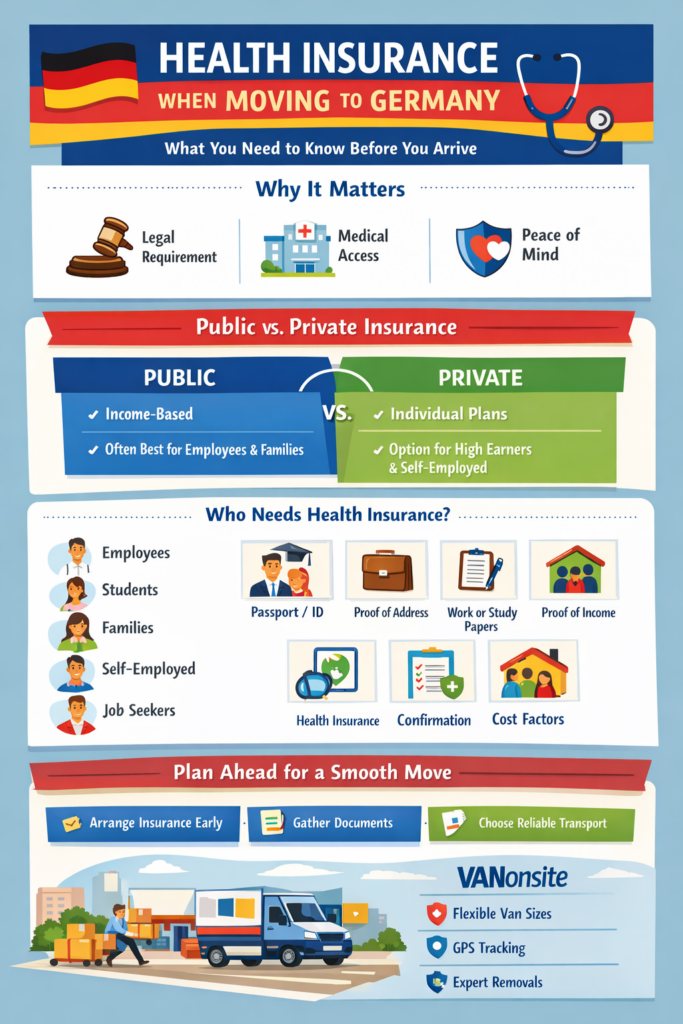
One of the biggest questions in moving to Germany health insurance is whether public or private cover makes more sense. The answer is not identical for everyone. It depends on status, income, long-term plans, and what kind of balance you want between predictability, flexibility, and future planning.
For many newcomers, the smartest first step is not asking which system sounds better in theory. It is asking which one realistically fits their life in Germany.
Public Health Insurance
Public health insurance is the route many newcomers know first, and for good reason. It is often the standard path for employees, students, and many families. For people who want structure, predictability, and a system that feels established and widely used, public insurance can feel reassuring.
It is especially common because it often aligns naturally with normal working life. Employees moving to Germany frequently encounter public insurance as the most straightforward route, and families often appreciate its practical stability.
Public health insurance is typically attractive for:
- Employees with standard salaried roles
- Students in many common relocation scenarios
- Families looking for a more predictable structure
- People who prefer a widely used and familiar system
Main strengths often include:
- Contributions linked more clearly to income logic
- A strong sense of structure and stability
- Broad familiarity for employers and everyday admin
- Practical suitability for many family situations
For many people, public insurance feels easier because it is less about building a highly individualized product and more about stepping into a well-established framework.
Private Health Insurance
Private health insurance may appeal to people whose status, income level, or professional path makes it a realistic option. It can look attractive because it may offer more flexibility in certain situations and a different pricing structure from public cover.
However, this is also where newcomers should think carefully. Private insurance is not simply the “better” option or the “premium” option. It is a different structure, and that difference matters over time.
Private health insurance may be considered by:
- Certain higher earners
- Some self-employed people
- People whose eligibility and long-term plans make private cover realistic
- Movers who want to compare flexibility more closely
Its appeal often comes from:
- More individualized policy structure
- Different pricing logic from public insurance
- Potential flexibility in coverage design
- Suitability for specific professional or personal situations
Still, moving to Germany health insurance should never be approached as a quick public-versus-private beauty contest. What feels attractive in the first month may not always feel best after several years, especially if income, family structure, or future plans change.
Public vs Private at a Glance
| Factor | Public Health Insurance | Private Health Insurance |
|---|---|---|
| Main logic | Structured, widely used system | More individualized policy model |
| Common fit | Employees, students, many families | Certain higher earners, some self-employed people |
| Cost structure | Often more income-linked | Often more policy and individual-based |
| Simplicity for newcomers | Often feels more straightforward | Can require more comparison and long-term thinking |
| Family suitability | Often seen as practical for families | Depends more on the individual situation |
| Long-term thinking | Strong for stability and predictability | Strong only if it fits the person’s long-term path |
What matters most when comparing them
The best choice is rarely about hype. It is about fit. Public insurance may feel stronger for people who want a stable and familiar route. Private insurance may look attractive for people whose status and long-term goals make that structure more suitable.
That is why the most useful mindset is this: do not ask which system sounds more impressive. Ask which one makes your move, your paperwork, your monthly planning, and your future in Germany feel more secure and more sustainable.
Who Needs Health Insurance When Moving to Germany?
Almost everyone planning a relocation will need to think seriously about health coverage, but the exact route can look very different from one person to another. That is why moving to Germany health insurance cannot be answered with a single one-size-fits-all checklist. Your work status, nationality, income, age, and family setup all shape what kind of insurance you may need and how early you should prepare it.
For some people, the path is relatively straightforward. For others, it takes more comparison and more paperwork. The important thing is to identify your category early rather than assuming the same rules apply to everyone.
The groups most often asking these questions include:
- Employees
- Self-employed people
- Students
- Families
- Job seekers
- EU and non-EU newcomers
Employees
Employees are one of the largest groups moving to Germany, which is why their insurance path is often the best known. In many cases, employment creates a clearer route into the system because work contracts, salary level, and employer processes often shape how insurance is handled.
Self-employed people
Self-employed movers usually need to think more carefully about structure, provider choice, and long-term cost logic. Their route may require more active decision-making than the path taken by many salaried employees.
Students
Students often have a smaller budget and a tighter timeline, which makes early planning especially important. They may also be juggling admission paperwork, housing, and travel at the same time, so insurance can quickly become one more high-pressure detail if it is left too late.
Families
Families need to think beyond one individual. The emotional side of moving to Germany health insurance becomes stronger when partners, children, and everyday healthcare security all come into the picture. Stability matters even more when several people depend on the move going smoothly.
Job seekers
Job seekers may face a more delicate planning stage because they are preparing for relocation without the same certainty that comes with a signed work contract. In these situations, the insurance decision can feel more exposed and more urgent.
EU and non-EU newcomers
Nationality and residence path can also shape the process. EU and non-EU movers do not always approach the same paperwork in the same way, which is why official guidance matters so much before making assumptions.
Why personal status changes what you need
This is the key point. Insurance in Germany is not just about where you are going. It is about who you are in the system once you arrive. The same country can present different insurance paths depending on whether you arrive as:
- A salaried employee
- A student
- A self-employed person
- A parent moving with dependants
- A newcomer still searching for work
That is exactly why moving to Germany health insurance should be planned around your actual personal situation, not around generic advice copied from someone with a completely different profile.
Moving to Germany Health Insurance for Employees
For many newcomers, employment is the most common and most structured relocation path. That is one reason employees often find it easier to build a clearer insurance route than some other groups. A work contract gives shape to the move. It helps define timing, documents, and often the insurance logic too.
Still, that does not mean employees should treat the topic casually. Even when the route is more familiar, there are still important details to prepare before arrival.
How employment affects insurance setup
Employment often becomes the anchor point for health insurance setup in Germany. Your salary, contract type, and employer processes can all influence what insurance path is realistic and what paperwork needs to be prepared first.
For many people researching moving to Germany health insurance, this is where the topic starts to feel more concrete. Once work enters the picture, insurance stops being an abstract question and becomes part of the real onboarding process.
What employers may require
Employers often expect administrative readiness. While the exact process can vary, newcomers should be prepared for requests connected to:
- Identity documents
- Employment paperwork
- Proof of insurance or insurance-related setup
- Address or registration-related documents at the relevant stage
The important point is not to guess what will be needed at the last minute. It is smarter to prepare a clean folder of key documents before departure so you can respond quickly when onboarding begins.
Why this is often the most common relocation path
Germany attracts many international professionals because of its strong labour market, stable sectors, and structured working environment. That makes employees one of the most common groups asking about moving to Germany health insurance.
For many people, the move begins with a job offer, and once that happens, health insurance becomes one of the next practical questions. Not because it is glamorous, but because it is essential.
What to prepare before arrival
Employees moving to Germany usually benefit from preparing these basics early:
- Passport or national ID
- Work contract or employment confirmation
- Any insurance-related paperwork requested in advance
- Proof of address or temporary accommodation details where relevant
- Digital and printed copies of key documents
This kind of preparation gives the move more structure. It also reduces the risk of arriving with the job confirmed but the administrative side still unclear.
Why early clarity matters for employees
A new job already brings enough pressure. There is a new city, a new routine, often a new language environment, and the emotional weight of starting again. The last thing most people want is to begin that chapter while still feeling uncertain about healthcare coverage.
That is why getting ahead on moving to Germany health insurance is so valuable for employees. It turns one of the biggest invisible anxieties into something concrete and manageable. And when that piece is handled well, the whole relocation can feel stronger from the very beginning.



Moving to Germany Health Insurance for Students
Students often imagine the biggest challenge will be admission, housing, or learning how to settle into a new city. Then the paperwork begins, and health insurance suddenly moves from the background to the centre of the plan. That is why moving to Germany health insurance matters so much for students. The timeline is often tight, the budget is often limited, and the margin for avoidable mistakes feels very small.
Why students need to plan early
Student relocations usually involve several moving parts happening at once. Admission letters, accommodation searches, travel dates, registration requirements, and everyday budgeting all compete for attention. If health insurance is left too late, it can quickly become one more urgent problem inside an already crowded schedule.
Planning early gives students more breathing room. It helps them understand what kind of cover may be expected, what documents they may need, and how insurance fits into the wider process of moving to Germany.
Common insurance concerns for international students
Many students feel pressure because they are making decisions in an unfamiliar system while also trying to stay within a realistic budget. They often ask:
- What kind of insurance will I need as a student?
- How early should I prepare proof of coverage?
- What paperwork may be needed for university or local setup?
- How do I avoid overpaying while still staying properly prepared?
These worries are completely normal. Student life already comes with enough uncertainty. Health insurance should not become the reason the move feels unstable.
The student budget angle
Cost matters deeply for students. Even moderate monthly expenses can feel heavy when added to rent, deposits, books, transport, and first-month living costs. That is why moving to Germany health insurance for students should always be approached with a clear, realistic budget mindset.
The smartest route is not always the option that looks cheapest at first glance. It is the option that fits the student’s actual status, documents, and living plan without creating problems later.
Why student moves are often smaller and more flexible
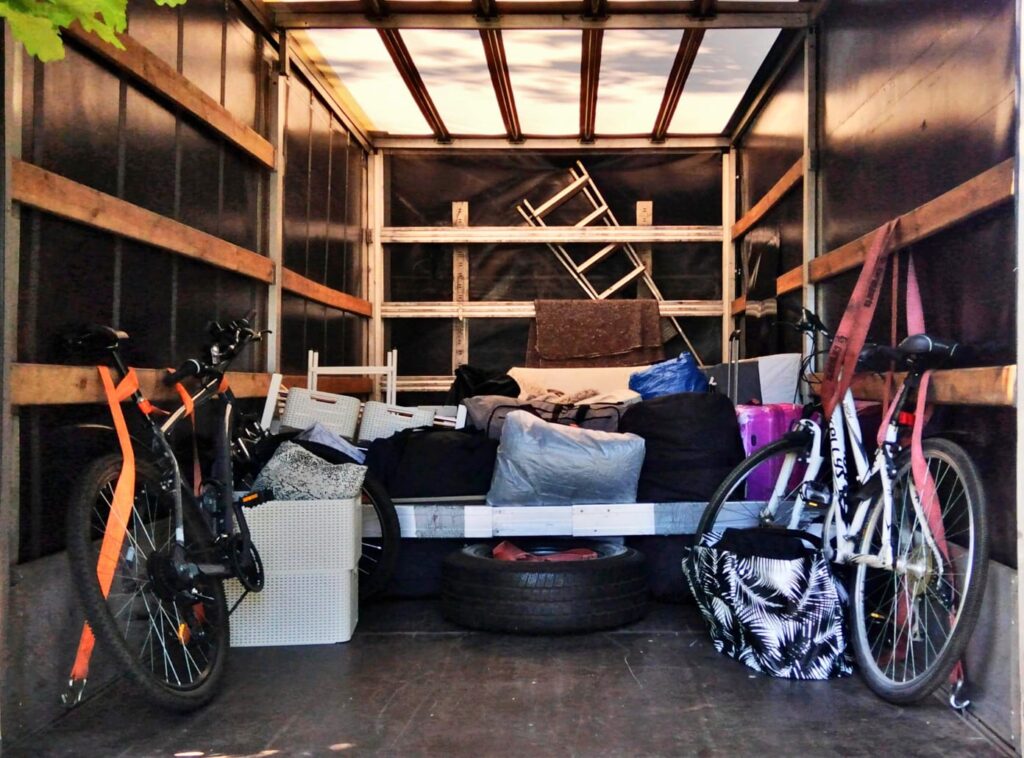
Student relocations are often physically smaller than family or full household moves. Many students travel with clothing, books, a laptop, bedding, kitchen basics, and a few practical furniture pieces rather than a full apartment.
That is exactly why the transport side of the move may suit a man and van approach. A smaller load can often be moved more flexibly and more cost-effectively, which helps students protect their budget while still using a professional service.
A typical student move may include:
- Several boxes of personal belongings
- One desk chair or small desk
- Bedding and room essentials
- Study equipment such as a monitor or printer
- A few selected furniture pieces
When the physical move is kept lean and efficient, students have more energy and more money left to handle the administrative side, including health insurance.
Moving to Germany Health Insurance for Families
Families usually need to think beyond forms and provider options. For them, moving to Germany health insurance is also about emotional security. When adults are relocating alone, uncertainty can be stressful. When children and dependants are part of the move, that stress becomes far more personal.
Why families need more planning
Family relocation always multiplies complexity. More people means more documents, more timing pressure, more practical decisions, and more emotional stakes. Health insurance becomes one of the most important pieces because it affects not only the adults making the move, but also the people depending on them.
That is why families usually benefit from earlier and more structured planning than solo movers.
Children, dependants, and everyday peace of mind
For families, healthcare is not an abstract issue. It is tied to ordinary life. It is tied to children getting ill, needing medication, adjusting to a new environment, and requiring stability during a major transition.
That is why clear preparation matters so much. Parents often feel calmer when they know:
- What insurance route fits the family structure
- What documents should be prepared in advance
- How coverage connects to the wider relocation timeline
- That one part of the move will not create problems for the rest
How health coverage changes the emotional side of relocation
Families often experience relocation in a more layered way. There is the practical side of moving furniture and boxes, but there is also the emotional responsibility of creating a safe landing for everyone. In that context, health insurance becomes part of the family’s sense of protection.
A clear insurance plan helps the move feel less exposed. It reduces background worry and gives parents more confidence to focus on other essentials such as housing, school logistics, registration, and settling the household.
That is one reason families often benefit from strong planning on both sides of the move:
- Clear health insurance preparation for the admin side
- Reliable moving support for the physical side
When those two pieces work together, the relocation feels more stable, more human, and much easier to manage as a whole.
How Much Does Health Insurance Cost in Germany?
Cost is one of the first questions people ask, and understandably so. Relocation already stretches the budget through rent deposits, travel, furniture, documents, and first-month expenses. So when people search for moving to Germany health insurance, they are often looking for one clear answer: how much will this actually cost me?
The honest answer is that the cost depends heavily on your status and the type of insurance route that fits your situation. There is no single flat price that applies to everyone. Germany’s system is structured, but it is not simplistic.
Cost overview in broad practical terms
Public and private insurance follow different pricing logic. That is why two newcomers moving to the same city can face very different monthly costs depending on whether they arrive as employees, students, self-employed professionals, or families.
In broad terms, public insurance is often more income-linked, which can feel more predictable for many employees and families. Private insurance follows a different pricing structure and may depend more on the plan, provider, and personal profile.
For newcomers, the most practical way to think about cost is not to chase one headline number. It is to understand what drives the number in the first place.
What affects pricing
Several factors can shape what you pay or what kind of insurance route becomes realistic for you:
- Employment status
- Income level
- Student status
- Family situation
- Insurance type
- Provider and policy structure
- Long-term plans in Germany
Even a small change in status can alter the cost logic. A student, a salaried employee, and a self-employed mover are not usually entering the system from the same starting point.
Public vs private cost logic
This is one of the most important distinctions in moving to Germany health insurance. Public insurance often feels more stable because the cost logic tends to follow income more clearly. Private insurance can feel more flexible or more tailored, but the structure is different and needs more careful comparison.
That does not mean one is automatically cheaper or better. It means the cost should always be understood in context. A low-looking monthly figure can be attractive in the short term, but the real value depends on the wider fit with your life, your work, and your future plans.
Why cheapest is not always best
The cheapest-looking option can be seductive when the move already feels expensive. But health insurance is not like buying the cheapest suitcase online. It is part of your long-term security in a new country.
That is why the right question is not only “What costs less today?” It is also:
- Does this fit my status?
- Will it work smoothly with my paperwork?
- Does it support my longer-term plans?
- Will it still make sense if my situation changes?
In many cases, the smarter option is the one that creates fewer problems later, even if it does not look like the absolute lowest monthly cost at first glance.
Cost factors at a glance
| Cost factor | Why it matters |
|---|---|
| Employment status | Often shapes which insurance route is realistic |
| Income level | Can strongly affect public insurance contribution logic |
| Student status | May create a different cost path from salaried workers |
| Family structure | Changes how coverage should be considered overall |
| Insurance type | Public and private use different pricing models |
| Provider choice | Different providers and policies may vary in structure |
| Long-term plans | Short-term savings may not equal long-term fit |
A practical way to approach cost
The clearest path is to compare cost through the lens of your real situation rather than chasing a generic average. When you know your status, your expected paperwork, and your likely insurance route, the pricing question becomes much easier to understand.
That is why moving to Germany health insurance should always be planned as part of the full relocation strategy, not treated as a random monthly expense separate from everything else.





What Documents Do You Need for Health Insurance in Germany?
Documents are where many relocations slow down. Not because the system is impossible, but because people underestimate how quickly one missing paper can create confusion. When it comes to moving to Germany health insurance, strong document preparation is one of the simplest ways to reduce stress before arrival and avoid delays after it.
The exact list can vary depending on your status, but there are several core documents that many newcomers should expect to organize early.
Common documents may include:
- Passport or national ID
- Proof of address
- Employment or student documents
- Registration documents where relevant
- Proof of status or income
Passport or ID
Identity documents are a basic starting point. Your passport or national ID will often be one of the first pieces of paperwork you need across the entire relocation process, not only for insurance but also for other admin tasks connected to the move.
Proof of address
Proof of address can matter because insurance setup often sits inside a wider administrative chain. Temporary accommodation details, rental agreements, or later local address confirmation may become relevant depending on the stage of the move.
Employment or student documents
Your work contract, employment confirmation, university documents, or student paperwork may all help define your status in the system. That is why these documents are so important. They do not just prove who you are. They help explain how your insurance route should be understood.
Registration documents where relevant
In Germany, registration often connects to many parts of daily setup. That is why registration-related documents may become important at the relevant stage. The exact timing can vary, but it is wise to be prepared for health insurance and local admin to overlap more than expected.
Proof of status or income
Income and status can shape insurance logic significantly. That is one reason newcomers should keep any relevant documentation clean, accessible, and easy to share when needed.
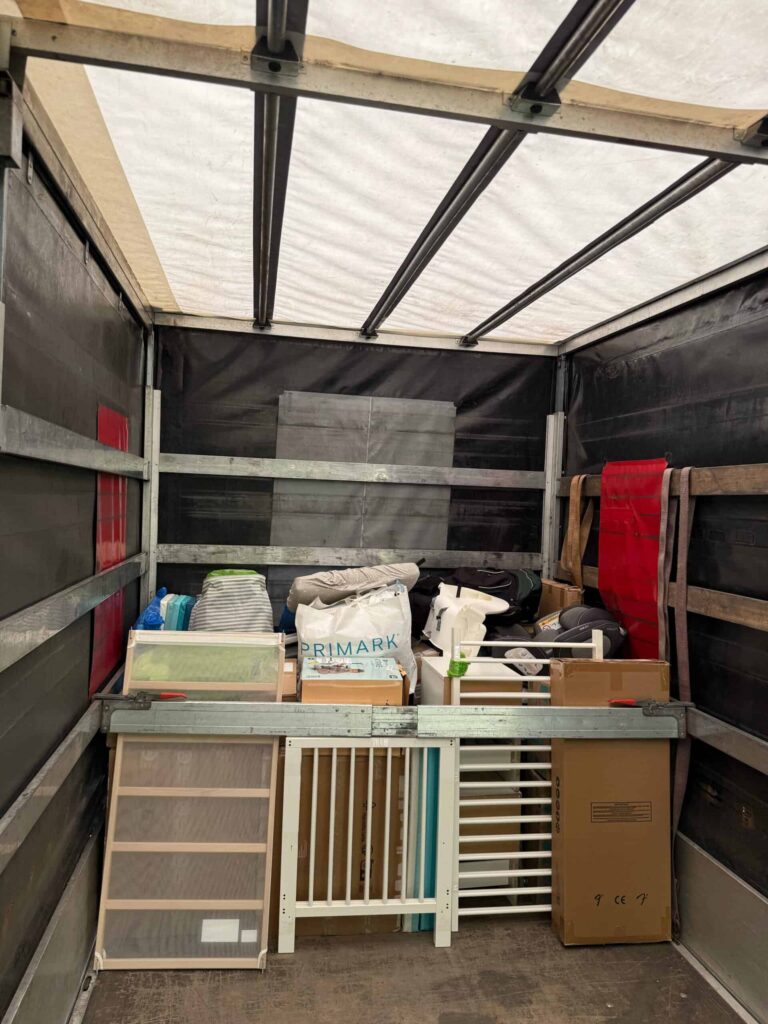
Why document timing matters
It is not only about which documents you have. It is also about when you have them ready. The earlier you organize your paperwork, the less likely you are to end up rushing through important decisions while also handling housing, transport, work, and registration.
A practical document folder for moving to Germany health insurance should usually include:
- Original identity documents
- Printed copies of key paperwork
- Digital scans saved in cloud storage
- A clearly named folder for quick access during the move
Use official German sources for current requirements
Because document expectations can change depending on status and circumstance, official sources matter. For current information, check the relevant German government pages, including:
- German Federal Foreign Office
- Make it in Germany
- Official local city registration pages for the district where you will live
Using official guidance matters because it helps you avoid relying on outdated summaries or advice meant for someone with a completely different relocation path.
Smart document habits that make the move smoother
A few small habits can save a surprising amount of stress:
- Keep originals separate from packed boxes
- Save digital backups before departure
- Print key pages even if you mostly use digital copies
- Store health insurance documents with other core relocation papers
- Check official requirements again shortly before the move
These are simple steps, but they create real stability. When the move gets noisy, a well-prepared document folder can feel like a quiet superpower.
When Should You Arrange Health Insurance Before Moving to Germany?
Timing matters more than many people expect. A lot of newcomers assume health insurance can be sorted casually after arrival. Sometimes parts of the process do continue after the move, but treating insurance as a purely post-arrival task is risky. When people search for moving to Germany health insurance, they are often really asking a deeper question: how early do I need to act so I do not create avoidable stress later?
The safest answer is this: start earlier than feels necessary. Early planning gives you room to understand your route, prepare documents, compare realistic options, and avoid the panic of trying to solve important admin while surrounded by boxes, tenancy paperwork, and travel fatigue.
Before departure vs after arrival
The insurance process does not always fit into one single moment. Some preparation may need to happen before departure, while some parts may continue after arrival depending on your status and the route that applies to you.
That is why the smartest approach is not to ask whether it is only before departure or only after arrival. It is to treat the process as a timeline with two connected stages:
- Before departure, you should understand your likely insurance path, gather documents, and clarify what proof may be needed early.
- After arrival, you may need to complete the remaining setup steps as your work, address, and local registration move into place.
This is one reason moving to Germany health insurance should be planned like part of the move itself, not like a side task you will “figure out later.”
Why early planning reduces risk
Early planning reduces risk because it removes uncertainty at exactly the moment when everything else is becoming more intense. A relocation already involves time pressure, financial decisions, accommodation stress, and transport coordination. Leaving insurance vague adds another layer of instability.
Starting earlier helps reduce the risk of:
- Missing a document you need quickly
- Misunderstanding which insurance route fits your status
- Delaying other admin tasks that connect to insurance
- Making a rushed decision based only on price or panic
- Beginning life in Germany with avoidable uncertainty
The earlier you create clarity, the calmer the rest of the move tends to feel.
Best timeline for preparation
A practical timeline works better than vague good intentions. You do not need to handle every detail months in advance, but you also do not want to leave the entire topic to the final week.
A realistic timeline often looks like this:
- 6 to 8 weeks before the move: understand your likely insurance path and begin checking official requirements
- 4 to 6 weeks before the move: gather identity, work, study, or family documents and start organizing proof you may need
- 2 to 4 weeks before the move: confirm what still needs to be completed before departure and what may continue after arrival
- Moving week: keep all insurance-related documents accessible, printed, and backed up digitally
- First days after arrival: complete the next steps that depend on your address, work setup, or local registration
This kind of structure does not make the move perfect, but it makes it far more manageable.
A simple checklist by stage of the move
Before departure
- Identify whether your situation points more toward public or private insurance
- Check official German sources for requirements tied to your status
- Prepare passport or ID and supporting documents
- Organize employment, student, or family paperwork
- Save digital copies and print key pages
During the move
- Keep all health insurance paperwork in your personal travel folder
- Do not pack important documents inside the moving load
- Keep access to cloud backups and emails
- Make sure you can quickly show proof if needed
After arrival
- Complete the next insurance-related steps connected to your local setup
- Keep your address, work, and registration paperwork aligned
- Store all completed insurance documents with your other core admin papers
This type of checklist keeps the topic grounded. It turns a vague worry into a sequence of manageable actions.
How Health Insurance Fits Into the Full Moving Process
One of the biggest mistakes people make is treating health insurance like a separate island. In reality, moving to Germany health insurance is woven into the entire relocation process. It connects to admin, work, registration, housing, and the rhythm of daily life after arrival.
That is why insurance planning works best when it is handled as part of the full relocation strategy, not as a disconnected form-filling task.
Connection to Anmeldung and registration
In Germany, local registration often plays a major role in how everyday life becomes official. While the exact steps can vary depending on status and location, health insurance and registration often sit close to each other in the broader administrative process.
That means newcomers should expect some overlap between:
- Address-related paperwork
- Registration timing
- Insurance-related setup
- Wider first-week admin tasks
If you think about those pieces together, the move feels more coherent. If you think about them separately, it is much easier to lose track.
Connection to work, housing, bank account, and daily setup
Health insurance is also connected to other pillars of relocation. It does not sit in a vacuum. It often interacts with:
- Employment onboarding
- Housing documents and address readiness
- Local paperwork needed for everyday life
- The broader process of becoming settled rather than just physically present
This is why moving to Germany health insurance matters so much. It is one of the systems that helps transform a move from temporary arrival into a functioning life.
Why health insurance cannot be planned in isolation
The simplest way to understand this is to see the move as a chain. Housing affects registration. Registration can affect other admin. Work can affect insurance route. Insurance influences how secure and prepared you feel while the rest of the setup unfolds.
If one link is weak, the rest of the chain feels shakier. That does not mean the move falls apart. It means it becomes harder than it needs to be.
A smoother relocation usually comes from planning these areas together:
- Health insurance
- Documents
- Housing
- Registration
- Transport and delivery timing
When these pieces are coordinated, the whole move feels more stable, faster to manage, and much less emotionally draining.
Common Mistakes People Make With Moving to Germany Health Insurance
It is surprisingly easy to make a preventable mistake here, especially when health insurance becomes just one more task on a long relocation list. The problem is not usually laziness. It is overload. People are trying to compare housing, confirm travel dates, pack belongings, manage documents, and prepare for a new life all at once.
That is exactly why moving to Germany health insurance so often gets mishandled. Not because it is unimportant, but because it sits inside a storm of competing priorities.
The most common mistakes include:
- Waiting too long
- Assuming all insurance works the same way
- Not checking what documents are needed
- Focusing only on price
- Ignoring how insurance connects to the rest of the move
Waiting too long
This is one of the most common mistakes, and one of the most expensive emotionally. When people delay the insurance question until the final stretch, the topic becomes heavier than it needs to be. Instead of comparing options calmly, they end up trying to solve it under pressure.
That late rush can create avoidable confusion, missing paperwork, and poor decisions made for speed rather than fit.
Assuming all insurance works the same way
A lot of newcomers treat the topic as if there is one universal insurance path for everyone moving to Germany. That assumption causes trouble quickly. Employees, students, self-employed people, and families do not always face the same logic, the same timing, or the same practical questions.
That is why moving to Germany health insurance should always be handled in context. Your status matters.
Not checking what documents are needed
This mistake sounds small, but it can ripple into everything else. Missing identity paperwork, unclear proof of status, or an incomplete document folder can delay decisions and increase stress just when you need clarity most.
The cure is simple: build your document set early and keep it accessible.
Focusing only on price
Budget matters, of course. Moving to Germany is expensive enough without pretending otherwise. Still, price alone is a poor guide. The cheapest-looking option is not always the best fit for your status, your paperwork, or your longer-term plans.
A good decision is usually the one that balances cost with stability, suitability, and fewer future complications.
Ignoring how insurance connects to the rest of the move
This is the hidden mistake. People sometimes treat insurance like a stand-alone form to complete, when in reality it is connected to registration, work, housing, and daily setup. When you ignore those connections, the move starts feeling fragmented.
A smarter approach is to treat moving to Germany health insurance as one link in the relocation chain, not as an isolated box to tick.
A simple way to avoid these mistakes
A few habits dramatically improve the process:
- Start earlier than feels necessary
- Check official guidance rather than relying on vague summaries
- Organize your documents before the move becomes hectic
- Compare options through the lens of your real status
- Plan insurance alongside housing, registration, and transport timing
These steps are not glamorous, but they are powerful. They turn uncertainty into structure.
How to Make the Physical Move Less Stressful While Handling Health Insurance Admin
There is a special kind of exhaustion that comes from juggling paperwork and logistics at the same time. You are comparing documents in one tab, checking move dates in another, and wondering whether your boxes, your insurance, and your new address will all align before the move actually begins.
That is why the physical move matters so much. When the transport side is chaotic, the admin side becomes harder too. And when the transport side is calm, the mind suddenly has more space to handle the paperwork properly.
Why admin and logistics together can feel overwhelming
Relocation pressure rarely arrives in neat categories. The brain does not separate “health insurance stress” from “moving stress” very effectively. It all lands in the same nervous system.
That is why people often feel more exhausted than they expected. They are not only moving furniture. They are managing uncertainty on multiple fronts at once.
How reducing transport stress helps you focus on documents and setup
A smoother transport plan gives you back mental bandwidth. When pickup, route, load size, and delivery timing are clearer, you can focus more effectively on:
- Insurance paperwork
- Registration prep
- Housing documents
- Work onboarding
- First-week admin tasks
In simple terms, a well-managed move frees up energy for the decisions that cannot be improvised carelessly.
Why a flexible man and van service matters for smaller and mid-sized moves
Not every relocation to Germany means a full truck and a full household. Many moves are smaller. A student may only need a few boxes and room essentials. A professional may be moving in stages. A couple may send selected furniture and key belongings first.
That is where a flexible man and van service becomes valuable. It can suit:
- Compact relocations
- Student moves
- Partial flat moves
- Mixed loads of furniture and boxes
- Staged moves where not everything travels at once
When the physical move fits the real scale of the relocation, everything feels cleaner, cheaper, and more manageable.
Why this matters emotionally as well as practically
A calmer moving service does more than move belongings. It lowers background stress. It lets you concentrate on health insurance, documents, and arrival planning without feeling like every part of the move is screaming for attention at the same time.
That emotional difference is real. And during relocation, it can be worth far more than people expect.
Why VANonsite Is a Smart Choice When Moving to Germany
When people think about moving to Germany health insurance, they often forget how much the transport side of the move can shape the entire experience. Yet the truth is simple. If your belongings are delayed, your route is unclear, or your load size is wrong, it becomes much harder to focus on the administrative side of relocation.
That is why a reliable removals partner matters. VANonsite helps bridge that gap between paperwork pressure and physical moving reality. While you focus on health insurance, registration, and daily setup, the transport side of the move can stay structured, visible, and easier to trust.
Why this connection matters
Health insurance may be an administrative topic, but relocation never happens in admin alone. It happens in real life. Boxes need collecting. Furniture needs protecting. Timelines need to hold together. The move only feels calm when both the paperwork and the physical transition are under control.
That is exactly where VANonsite becomes useful. The company supports the practical side of moving to Germany in a way that complements the administrative side rather than adding more chaos to it.
What VANonsite offers
VANonsite offers a broad service mix that fits different kinds of relocations, including:
- Home Removals
- Furniture Removals
- Packing Service
- Student Removals
- White Glove Delivery
- Storage
- Office removals
- Last Minute Moving
This range matters because not every move looks the same. A student relocation, a family move, and a staged professional move all need different kinds of support.
Why GPS tracking makes a real difference
One of VANonsite’s strongest practical advantages is GPS tracking for every load. That matters because visibility reduces uncertainty. When you know where your belongings are, the move feels less mysterious and much easier to manage.
That is especially useful when you are also handling moving to Germany health insurance, local registration, and first-week admin. The more certainty you have on the transport side, the more clearly you can focus on the rest.
Why the vehicle sizes help
VANonsite also offers multiple vehicle sizes, which makes it easier to match the service to the actual scale of the move instead of overpaying for unnecessary space.
That flexibility is powerful for:
- Very small moves with essentials only
- Student relocations
- Partial flat moves
- 1-bedroom moves with mixed furniture
- Larger family relocations
For readers planning the wider move, a natural next step is to explore removals to Germany.
Vehicle Sizes for Different Types of Moves to Germany
Choosing the right vehicle size can make the entire relocation feel lighter, faster, and far more affordable. This is especially true when you are balancing moving to Germany health insurance with every other moving decision. A vehicle that fits your real load means fewer wasted costs, less confusion on moving day, and a cleaner connection between the transport plan and the administrative plan.
That matters because not every move to Germany looks the same. Some people move with only documents, clothing, and daily essentials. Others travel with furniture, family items, office equipment, or a partial household while they sort insurance, registration, and accommodation at the same time.
| Service level | Capacity | Max load | Best for |
|---|---|---|---|
| Moving One | 1 m3 | 100 kg | Documents, essentials, very small loads |
| Moving Basic | 5 m3 | 300 kg | Student moves, boxes, compact relocations |
| Moving Medium | 10 m3 | 500 kg | Partial flat moves |
| Moving Premium | 15 m3 | 1100 kg | 1-bedroom or mixed furniture loads |
| Moving Premium Plus | 30 m3 | 3500 kg | Family relocations |
| Moving Full House XXL | 90 m3 | 20000 kg | Full household moves |
Moving One
This option works well for people carrying only the absolute essentials. It can suit a minimal relocation built around documents, clothing, electronics, and a few personal items. If your biggest focus is settling the admin side quickly, including moving to Germany health insurance, this kind of compact move can be a very efficient starting point.
Moving Basic
Moving Basic is often a smart fit for students, smaller personal moves, and compact relocations where the load is light but still too much for simple luggage or parcel shipping. It can hold boxes, room essentials, and a few useful pieces of furniture without pushing the move into a larger, more expensive setup.
Moving Medium
This size often fits partial flat moves very well. It is useful for people moving in stages, relocating with mixed belongings, or sending a more practical slice of home while the rest of the setup is still being arranged. Professionals moving to Germany while handling contracts, registration, and insurance may find this size especially useful.
Moving Premium
Moving Premium can be a strong option for a 1-bedroom relocation or a mixed move with furniture, boxes, and higher-value home items. It creates more room for comfort, which matters when the move includes both emotional belongings and practical items needed to begin daily life quickly.
Moving Premium Plus
This is where family moves begin to feel more realistic and less compressed. Moving Premium Plus can suit larger staged relocations, more complex household loads, and family transitions where multiple priorities are colliding at once.
Moving Full House XXL
For full household relocations, this option gives the scale needed for a major move without forcing difficult compromises about what gets left behind. It is the strongest fit for customers relocating the whole home rather than just a selected part of it.
Why the right size changes the whole experience
Choosing the right van is not only a transport decision. It is a stress decision. If the load is too small for the vehicle, you may overpay. If the load is too large, the move becomes more chaotic than it should be. The best match creates calm, and calm is incredibly valuable when you are also managing health insurance, documents, and the pressure of settling into Germany.
FAQ About Moving to Germany Health Insurance
Do I need health insurance before moving to Germany?
In many cases, you should begin arranging it before departure rather than waiting until the last moment. Some parts may continue after arrival, but early preparation is usually the safest route because it helps you understand your likely insurance path, collect the right documents, and reduce pressure during the move.
Is public or private insurance better for newcomers?
Neither option is automatically better for everyone. The right choice depends on your employment status, income, student situation, family setup, and long-term plans in Germany. Public insurance often feels more predictable for many employees and families, while private insurance may suit certain other profiles better.
How much does health insurance cost in Germany?
There is no single flat answer because costs depend on your status and the insurance route that fits your situation. Public and private insurance follow different pricing logic, which is why the smartest approach is to compare them through the lens of your actual relocation plans rather than chase one generic average.
Can I move to Germany without health insurance?
Treating health insurance as optional is risky. Germany expects health coverage to be part of normal life, and the topic often connects to other admin tasks such as work setup and registration. That is why moving to Germany health insurance should be handled as a core part of the relocation rather than something to postpone casually.
What documents do I need?
Many newcomers should prepare a passport or national ID, proof of address, employment or student documents, registration-related paperwork where relevant, and proof of status or income. Exact requirements can vary, which is why official German sources should always be checked before relying on assumptions.
Does health insurance affect registration or work setup?
It can connect closely to both. While the exact process depends on your situation, health insurance often sits near employment onboarding, registration, and broader first-week admin. That is why it should be planned as part of the wider relocation process, not as a separate issue.
What is the best way to make the move less stressful?
The best approach is to reduce uncertainty on both fronts. Organize health insurance and documents early, and make the physical move as simple as possible with the right transport plan. A reliable man and van service, accurate load size, and GPS tracking can give you more mental space to handle the administrative side with confidence.
Can I manage health insurance and a smaller move at the same time?
Yes, and for many people that is the smartest path. A smaller, better-planned relocation often makes it easier to focus on insurance, registration, housing, and first-week admin without being overwhelmed by a huge physical move at the same time.
Why do people choose VANonsite during a move to Germany?
Many customers choose VANonsite because the company makes the physical side of the relocation more transparent and more manageable. Flexible vehicle sizes, GPS tracking, and service options for students, families, partial flat moves, and full home relocations help reduce pressure while the administrative side of the move is still unfolding.
Final Summary
Moving to Germany health insurance is not just a checkbox. It is one of the foundations of a stable move. When it is handled early and thoughtfully, the whole relocation feels more secure. You make better decisions, you avoid unnecessary panic, and you begin life in Germany with more confidence.
The strongest relocations are rarely the ones built on improvisation. They are the ones built on structure. That means understanding your likely insurance path, preparing documents early, linking insurance to registration and work setup, and avoiding the common mistakes that turn a manageable move into a chaotic one.
At the same time, the physical move deserves the same care. A calm transport plan gives you the space to focus on health insurance, first-week paperwork, and daily setup without feeling overwhelmed from every direction.
That is exactly why VANonsite can be such a smart partner when moving to Germany. With flexible vehicle sizes, practical removals support, and GPS tracking for every load, the company helps make the transport side of relocation more reliable, more visible, and far less stressful. And when that happens, the rest of the move becomes much easier to handle.