Introduction
Moving to Ireland from Germany can be a smart, realistic, and surprisingly smooth relocation when the move is planned early and the logistics are handled with care. This is not a simple domestic shift from one city to another. It is a cross-border move with more moving parts, more timing pressure, and more room for avoidable stress if the planning starts too late.
Still, the route is absolutely manageable. The key is not guessing. The key is structure. The first major decisions shape almost everything that follows: your moving date, the true size of the load, the documents you may need, and the type of service that matches the real move rather than the imagined one.
That matters because a badly planned relocation from Germany to Ireland can feel far harder than it should. Furniture gets underestimated. Essentials get buried. Delivery timing becomes fuzzier. Costs rise in frustrating ways. A route that should feel exciting starts feeling heavy. By contrast, a well-organised move gives you something priceless: breathing room.
The right transport setup lowers damage risk, cuts down on cost surprises, and makes the arrival feel more controlled from the first hour. This is exactly where a dependable European moving partner matters. When the service is matched to the real volume, when access details are clear, and when GPS tracking lets you follow the journey with confidence, the move stops feeling chaotic and starts feeling possible.
In practical terms, moving to Ireland from Germany usually becomes easier when you sort what is worth taking, measure furniture properly, protect fragile items well, and choose a service that suits the real route. For a smaller staged relocation, man and van may be the smartest option. For a full household move, stronger structure often protects both the load and your sanity.
This guide breaks the route down clearly, so you can make faster decisions, avoid expensive mistakes, and move with far more confidence.
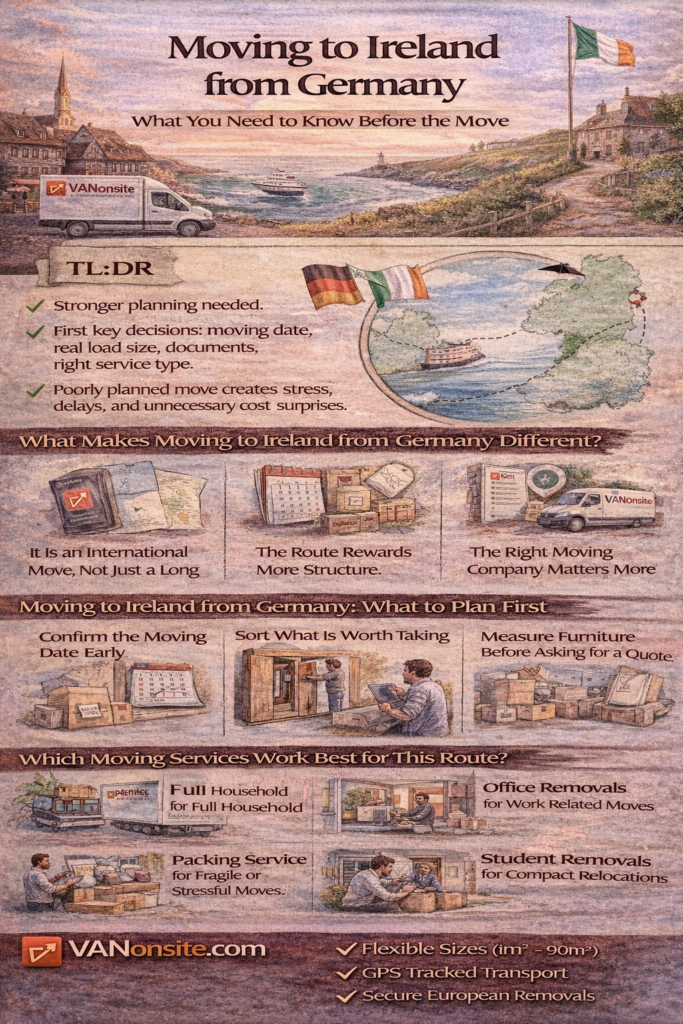
TL:DR
- Moving to Ireland from Germany is very manageable, but it needs stronger planning than a domestic move.
- The first key decisions are your moving date, real load size, documents, and the right service type.
- A poorly planned move can quickly create stress, delays, and unnecessary cost surprises.
- The right transport setup reduces damage risk and makes delivery timing feel more predictable.
- Man and van is often a strong fit for smaller, staged, or partial moves.
- Larger household relocations usually need more structure, especially when bulky furniture is involved.
- GPS tracking, accurate load assessment, and early planning make the whole Germany to Ireland route feel far more controlled.
What Makes Moving to Ireland from Germany Different?
Moving to Ireland from Germany is not just a long-distance relocation. It is an international move with more coordination points, more timing pressure, and a greater need for visibility from pickup to arrival. That does not make the route overwhelming, but it does mean the move rewards structure far more than improvisation.
On a shorter domestic route, small mistakes can often be absorbed more easily. On the Germany to Ireland route, those same mistakes can grow teeth. A weak inventory, an underestimated load, late access details, or the wrong service choice can ripple through the whole relocation and create avoidable stress at exactly the wrong moment.
It Is an International Move, Not Just a Long Drive
This route needs to be treated as an international move from the first conversation, not as a simple extension of a local removal. The difference is not only the distance. It is the number of moving parts that have to line up cleanly.
That usually includes:
- route planning across countries
- tighter timing pressure
- coordination around ferry stages and delivery windows
- more sensitivity to delays or weak preparation
The emotional weight changes too. When your belongings are travelling from Germany to Ireland, uncertainty feels louder. People do not just want the move to work. They want to understand where things are, when they are arriving, and whether the process still feels under control.
Why the Germany to Ireland Route Needs Structure
The Germany to Ireland route needs structure because it is longer, more layered, and less forgiving than a short internal move. It involves more than loading a van and driving from one address to another. The route depends on cleaner coordination, stronger timing discipline, and much better communication around what is actually being moved.
This is exactly why visibility matters more on this route. When the distance is longer, the journey is more complex, and delivery depends on several stages working properly together, people need more than reassurance. They need clarity.
That is where better planning pays off. A structured move usually means:
- more realistic timing
- fewer last-minute surprises
- a better match between load and service
- less risk of the first days in Ireland starting with chaos
Why the Right Moving Company Matters More on This Route
On a route like this, the moving company shapes far more than the transport itself. It shapes how the whole relocation feels. A poorly matched service can make the move feel vague, delayed, stressful, and far more fragile than it should be. By contrast, a strong moving company creates steadiness.
That steadiness often comes from three things:
- better planning before pickup
- clearer service matching to the real load
- GPS tracking that reduces uncertainty during the journey
Those details matter because they protect the emotional side of the move as much as the practical one. When the route is visible, timing feels more believable, and the service fits the real job, the relocation stops feeling like a gamble.
Moving to Ireland from Germany: What to Plan First
The first planning decisions shape almost everything that follows. When they are made early and honestly, the move feels cleaner, calmer, and easier to control. When they are left too late, the relocation starts to gather pressure fast.
The good news is that the first steps are not complicated. They simply need to happen in the right order. If you want moving to Ireland from Germany to feel manageable rather than messy, start with timing, load clarity, furniture logic, and first-day survival.
Confirm the Moving Date Early
The moving date is the anchor for the rest of the plan. Without it, quotes stay vague, service availability becomes harder to judge, and the whole relocation remains softer around the edges than it should be.
Early confirmation helps because it:
- gives the route a real structure
- improves service availability
- reduces the risk of last-minute cost pressure
- makes the rest of the planning feel more concrete
Late decisions often narrow your options at the exact moment you need flexibility most.
Sort What Is Worth Taking
Before asking for quotes, sort your belongings into four simple categories:
- take
- sell
- donate
- store
This step is more powerful than it looks. It reduces clutter, sharpens the real size of the move, and helps you stop paying to move items that do not deserve the journey.
A stronger move is rarely the one that takes everything. It is the one that takes what still makes sense in the next chapter.
Measure Furniture Before Asking for a Quote
Furniture should be measured before the quote, not guessed at loosely. Beds, sofas, wardrobes, desks, storage units, and tables often determine the real complexity of the move far more than people expect.
Accurate measuring helps with:
- service matching
- vehicle sizing
- more realistic pricing
- safer loading plans
This is especially important on a longer route where bulky furniture can change both space planning and cost logic very quickly.
Pack an Essentials Zone for the First 48 Hours
The first 48 hours after arrival matter enormously. If important items vanish into the main load, the move often feels harsher than it needs to.
Keep one clearly separated essentials zone with:
- clothes for 2 to 3 days
- toiletries
- chargers
- medication
- basic kitchen items
- important documents
This small decision can transform the first night in Ireland from exhausting to manageable.
Confirm Access Details at Both Addresses
Access details are not tiny side notes. They are part of the actual move. A narrow staircase, difficult parking, long carry distance, awkward entrance, or limited lift access can change the real effort and timing of the route much more than customers first expect.
Share access details early for both the pickup address in Germany and the delivery address in Ireland. That helps the quote reflect reality and lowers the risk of unpleasant surprises on moving day.
Which Moving Services Work Best for This Route?
The best service for moving to Ireland from Germany depends on four core things: the size of the load, the urgency of the move, the value of the furniture, and how much support you want around packing, handling, and coordination. There is no single perfect setup for every relocation. What works brilliantly for a staged student move may be completely wrong for a full household transfer.
That is why service matching matters so much on this route. A better match lowers friction, protects the load more effectively, and makes the first days after arrival feel more controlled.
Home Removals for Full Household Relocations
If you are moving most of your household, home removals are usually the strongest fit. This option works best when the route includes multiple rooms of furniture, a larger number of boxes, and the need for cleaner coordination from pickup in Germany to delivery in Ireland.
Home removals usually make sense when:
- the move includes most of your home
- several bulky items are travelling
- delivery timing matters on both ends
- you want a more structured process from start to finish
For this kind of relocation, stronger structure usually reduces stress far more than people expect.
Furniture Removals for Bulky or Valuable Pieces
If the move is driven by large, awkward, or expensive items, furniture removals are often the smarter option. Sofas, wardrobes, dining tables, bed frames, cabinets, and delicate statement pieces often shape the real difficulty of the route more than box count alone.
Furniture removals are especially useful when:
- the move is furniture-heavy rather than box-heavy
- some items are valuable or hard to replace
- bulky pieces need safer handling
- the route is long enough that stable loading really matters
One damaged piece can sour the whole arrival. That is why careful furniture handling is often worth far more than it first seems.
Packing Service for Fragile or Stressful Moves
A professional packing service can remove a huge amount of stress from an international relocation. It is especially valuable when the move includes fragile items, tight timing, or the kind of mental overload that makes every additional task feel heavier than it should.
Packing support is often worth considering when:
- the move includes glass, ceramics, electronics, or delicate decor
- housing and admin are already draining attention
- the timeline is short
- you want the first unpacking phase to feel calmer and cleaner
Good packing does not only protect objects. It protects energy, pace, and peace of mind.
White Glove Delivery for Premium Items
If the move includes premium, sentimental, or irreplaceable items, White Glove Delivery becomes a practical safeguard rather than a luxury extra. This is often the strongest choice when finish, surface condition, careful indoor handling, or peace of mind matter more than pure speed.
White glove delivery usually makes the most sense when:
- the item is expensive or emotionally significant
- the finish is delicate
- the piece needs careful placement indoors
- any damage would feel costly financially or emotionally
For certain items, stronger protection is not indulgent. It is simply sensible.
Student Removals for Compact Relocations
For lighter, budget-aware relocations, student removals can be an excellent fit. This is one of the clearest cases where man and van can work beautifully, especially when the move is compact, well controlled, and focused on essentials rather than a whole household.
Student removals often work best when:
- the load is limited to boxes, essentials, and a few smaller furniture pieces
- cost control matters more than scale
- flexibility is more valuable than a heavy service setup
- the route is built around study dates or shared housing schedules
A smaller move still deserves professional handling. It just needs the right scale.
Office Removals for Work-Related Moves
If the move includes desks, monitors, storage, or office equipment, office removals bring a more organised structure to the route. This matters when the relocation affects business rhythm, daily productivity, or the speed of getting fully operational again.
Office removals are especially useful when:
- work equipment is part of the load
- continuity matters after arrival
- safe handling is more important than generic loading
- timing affects professional responsibilities directly
This kind of relocation usually needs more than simple transport. It needs order and predictability.
When Man and Van Is the Best Fit
Man and van is often the best fit for smaller, leaner, staged, or partial moves. It works especially well when the relocation does not involve a full household but still needs reliable handling and a professional timeline.
A man and van setup is often ideal when:
- the move is compact
- the load is moderate
- flexibility matters more than large-scale capacity
- the route is time-sensitive
- only part of the home is travelling first
The key question is not whether man and van sounds simple. It is whether it truly matches the move you have.


Moving to Ireland from Germany Cost: What Shapes the Price?
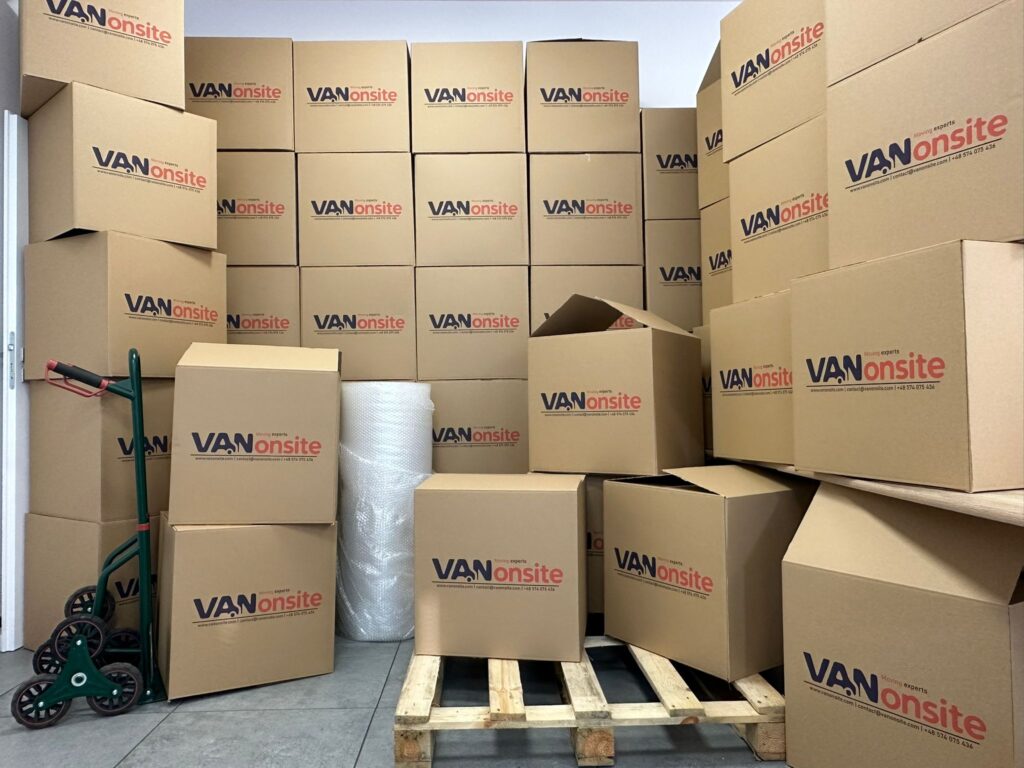
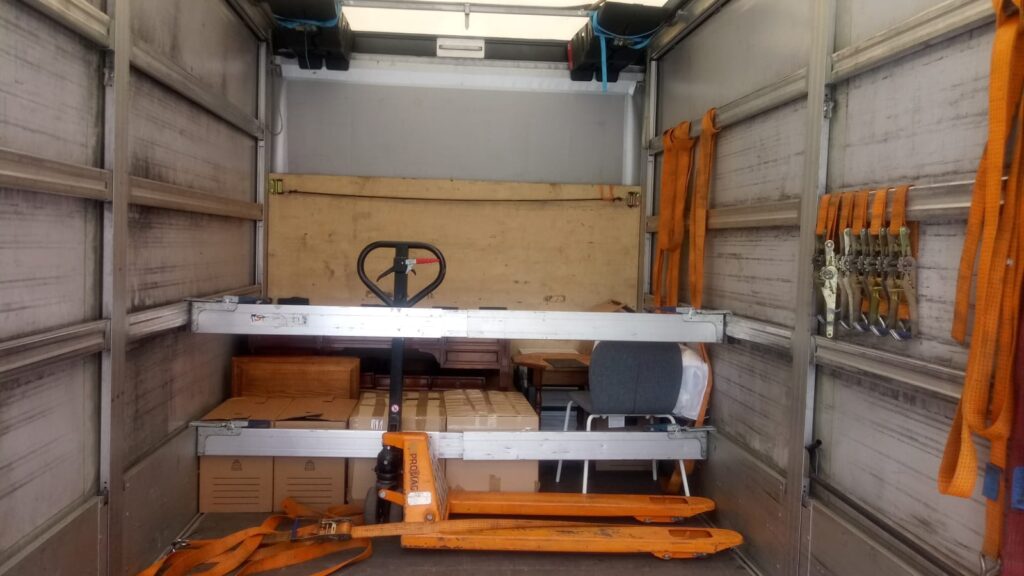
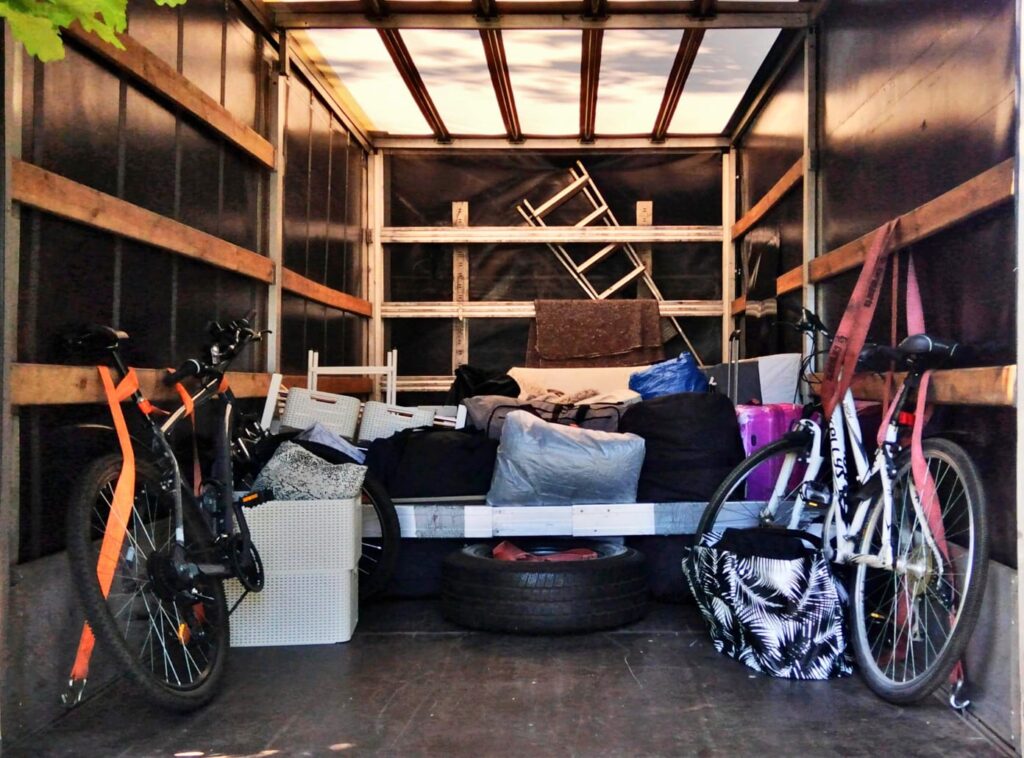
The final cost depends on far more than distance alone. That is one of the biggest misconceptions around moving to Ireland from Germany. Distance matters, of course, but it is only one piece of the picture. The real price is shaped by how much you are moving, how difficult it is to handle, and how much complexity the service needs to absorb.
That is why cost surprises often feel so frustrating. People expect one clean number, but the real quote changes when the real move changes.
Main Cost Drivers
The biggest cost drivers usually include:
- load volume
- weight
- furniture size
- access conditions
- packing needs
- storage
- urgency
These details turn a vague estimate into a grounded quote. The more accurate the information is, the more honest the price usually becomes.
Why Bulky Furniture Changes the Quote
Bulky furniture changes the quote because it affects far more than space. It shapes loading difficulty, route planning, handling time, and how the vehicle is organised.
Large beds, wardrobes, sofas, desks, and dining sets often raise the real complexity of the move because they:
- consume more usable vehicle space
- need more careful loading and protection
- reduce flexibility inside the load
- increase labour and time pressure
This is why furniture-heavy routes often feel more expensive than box-heavy routes, even when the total item count looks similar on paper.
Hidden Costs People Forget
A surprising amount of moving stress comes from details that seem small until they start changing the quote.
The most common hidden cost triggers include:
- long carry distance
- stairs
- difficult parking
- weak inventory estimate
- last-minute booking
Each of these can make the route slower, harder, or less predictable. That is why early accuracy matters so much.
How to Reduce Cost Without Making the Move Riskier
- declutter early
- measure properly
- choose the right vehicle size
- share details early
- protect fragile items properly
These steps matter because the goal is not simply to spend less. The goal is to spend more intelligently. Saving money by creating chaos is rarely a real saving.
| Cost factor | Why it matters | How to reduce stress |
|---|---|---|
| Load volume | Larger loads raise transport cost | Move only what matters |
| Furniture | Bulky items affect space and labour | Measure and sort early |
| Access | Difficult access adds effort | Share details in advance |
| Packing | Adds cost but lowers damage risk | Use for fragile items |
| Urgency | Short-notice moves cost more | Book as early as possible |
A Smarter Way to Think About the Budget
Many people search for the lowest possible quote. A better question is whether the quote matches the real route, the real load, and the real risks of the move.
A smaller relocation usually rewards flexibility. A full household move usually rewards more structure. A fragile or premium-item route usually rewards stronger protection, even if the price rises. That way of thinking usually leads to a better move, not just a cheaper-looking one.
What Documents May Matter When Moving to Ireland from Germany?
Paperwork feels far less intimidating when it is prepared early. Most people do not regret documents because they exist. They regret them because they become urgent at exactly the wrong moment, while the move is already underway and emotional bandwidth is low.
A calm document setup protects both the practical side of the relocation and the emotional tone of the first days after arrival. On a route like this, documents are not a side task. They are part of what makes the move feel controlled.
Basic Personal Documents
Most movers should keep these ready and easy to access:
- passport or ID
- proof of address
- tenancy agreement or address confirmation
- inventory list
These basics matter because they support identity checks, address clarity, and smoother communication around the move itself. They should stay with you or in a clearly separated essentials folder, not disappear into the main load.
Why an Inventory List Helps More Than Expected
An inventory list sounds simple, yet it quietly improves almost every part of an international move. It gives the route more structure, makes the quote more realistic, and helps reduce the low-level panic that comes from not knowing exactly what is travelling.
A good inventory list helps you:
- track priority items
- identify fragile pieces clearly
- support a more accurate service match
- unpack faster after arrival
For many people, the inventory becomes the silent backbone of the whole move. It is one of those small practical tools that saves a surprising amount of stress later.
Vehicle, Pet, and Special-Item Paperwork
If the move includes a vehicle, pets, or special items, extra paperwork may matter. This is where checking official Ireland sources before moving day becomes especially important.
Useful official sources include:
These sources are the best place to verify current requirements for issues such as entry rules, registration processes, pet documentation, or special transport questions.
| Document | Why it matters |
|---|---|
| Passport or ID | Identity verification |
| Proof of address | Helps with admin and delivery clarity |
| Inventory list | Improves moving control and tracking |
| Vehicle papers | Useful for special transport situations |
| Pet documents | Important for compliant animal transport |
A Practical Way to Organise Your Moving Documents
A simple method works best. Split paperwork into three groups:
- documents you must carry with you
- documents you may need in the first days after arrival
- documents you only need as digital backup
That tiny bit of structure saves a great deal of confusion. It stops the move from turning into a frantic search for papers at exactly the wrong moment.
What Furniture Is Worth Moving to Ireland from Germany?
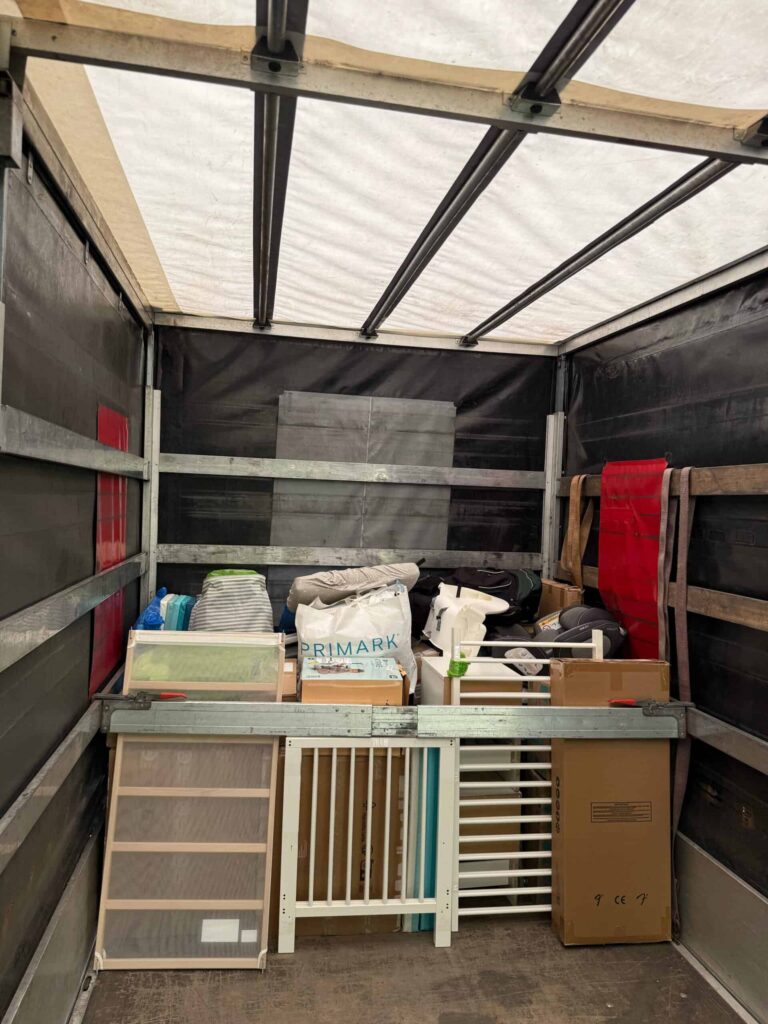
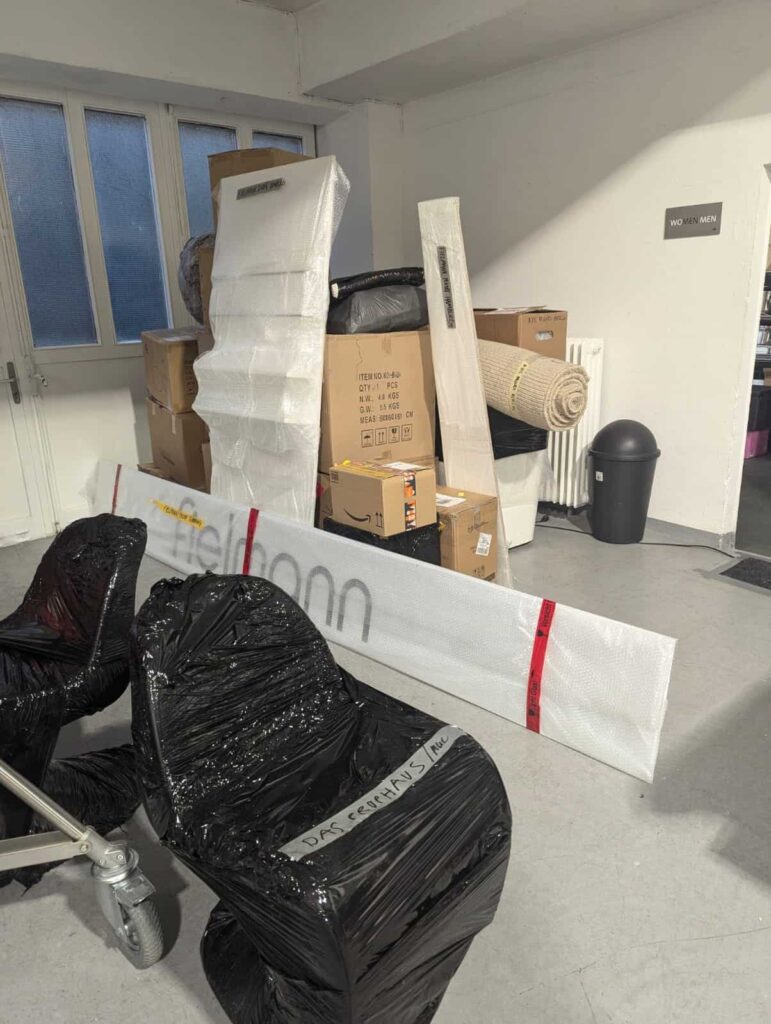
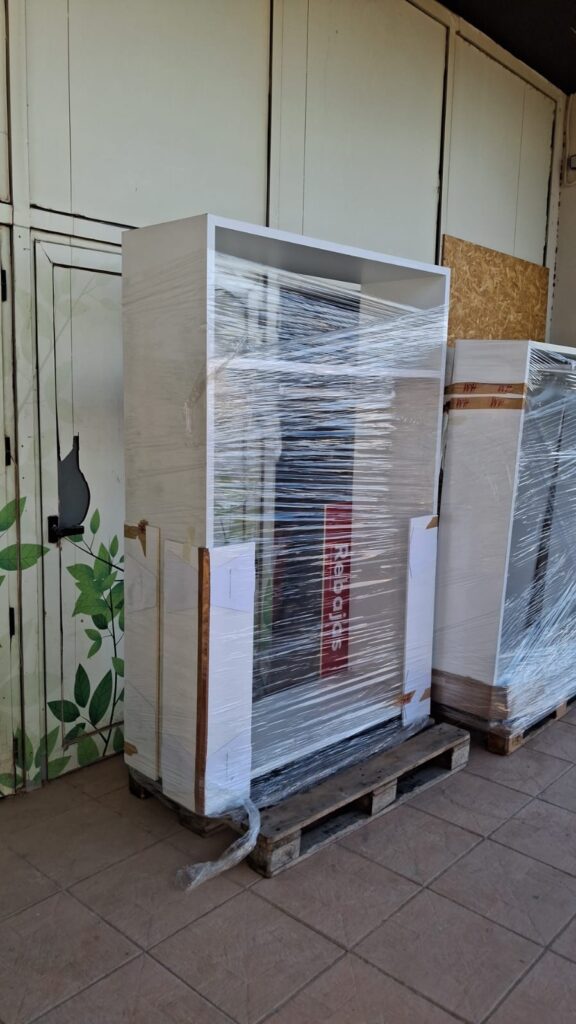
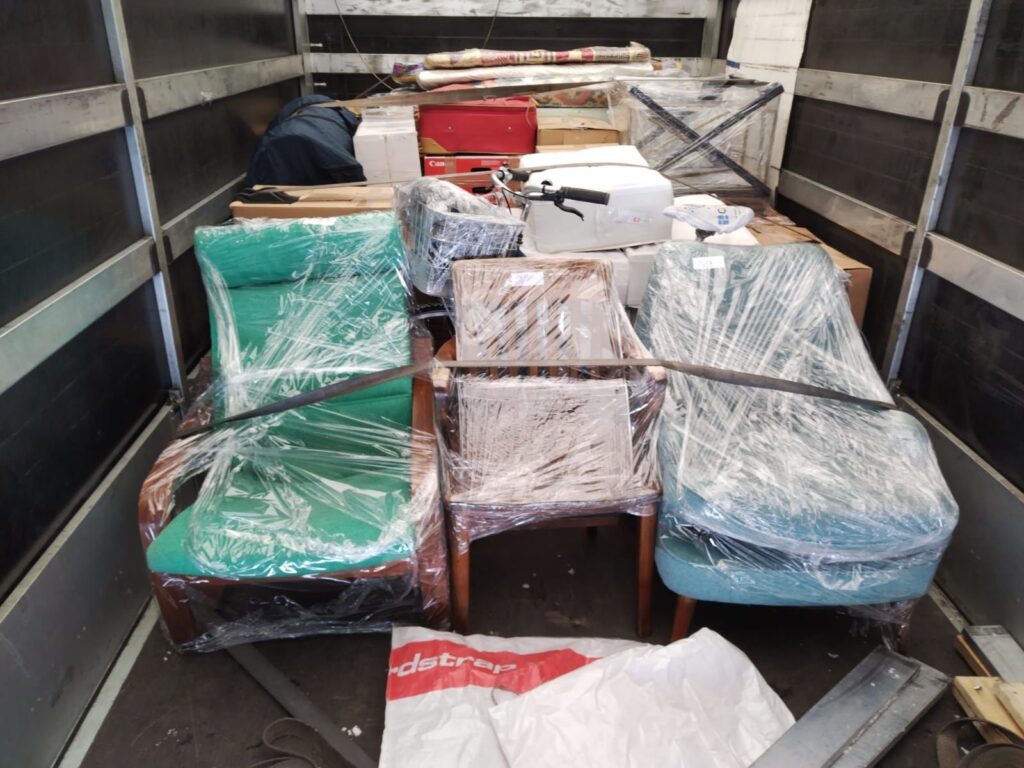
This decision affects far more than cost alone. It shapes the vehicle size, the labour needed, the packing strategy, and how functional your new home feels in the first week. The strongest rule is simple: move what still deserves a place in your next chapter, not what happens to exist in the current one.
For many people, this is where the move becomes smarter. When you stop treating every item as automatically worth transporting, the whole route becomes easier to price, easier to plan, and easier to live through.
Furniture Usually Worth Moving
These pieces are often worth taking to Ireland:
- solid wood furniture
- premium beds and sofas
- antiques
- sentimental pieces
- quality desks and storage
These items usually justify the journey because replacing them at the same standard often costs more than moving them properly. They also tend to bring immediate comfort and stability once you arrive.
Furniture Often Better to Replace
Some pieces travel badly because they were never worth the route in the first place. These are often better replaced after arrival:
- worn flat-pack units
- damaged pieces
- bulky low-value items
- furniture unlikely to suit the new home
Leaving behind low-value bulk can cut cost, simplify the route, and make the move feel lighter from the start. Not every object deserves cross-border transport just because it is already in the room.
How to Protect Furniture Properly
Good protection matters even more on a longer route. Furniture needs to survive loading, the journey itself, and unloading without arriving as a source of regret.
Use the basics consistently:
- disassemble when possible
- wrap corners and glass
- label fragile parts
- keep screws and fittings organised
This is one of the simplest ways to lower damage risk without creating a huge amount of extra work.
When White Glove Delivery Makes Sense
If the move includes premium, delicate, or highly sentimental items, White Glove Delivery can be the difference between confident transport and unnecessary risk.
It is especially worth considering when:
- the item is expensive or difficult to replace
- the finish is easy to damage
- placement indoors matters as much as transport itself
- the emotional value is higher than the item’s size suggests
For certain pieces, stronger handling is not an extra. It is the smartest protection in the whole move.
Which Vehicle Size Fits Your Move?
Wrong sizing is one of the most common moving mistakes because people often picture the move in headline items rather than real lived volume. The right size protects more than the budget. It protects order, safety, and calm on moving day.
| Service Option | Capacity | Max Weight | Best for |
|---|---|---|---|
| Moving One | 1 m3 | 100 kg | A few urgent essentials |
| Moving Basic | 5 m3 | 300 kg | Student or compact part-load move |
| Moving Medium | 10 m3 | 500 kg | Studio or small flat move |
| Moving Premium | 15 m3 | 1100 kg | One-bedroom relocation |
| Moving Premium Plus | 30 m3 | 3500 kg | Family move or furniture-heavy relocation |
| Moving Full House XXL | 90 m3 | 20000 kg | Full household move |
What Those Sizes Mean in Real Life
A few boxes quickly become far more volume once bedding, kitchenware, clothes, lamps, chairs, and storage are added to the picture. That is why visual guesswork fails so often.
When Man and Van Works Best
Man and van works best when the move is smaller, staged, flexible, or only part of the household is travelling. It is often the strongest option for compact international moves that still deserve professional handling.
Signs You Need More Space Than Expected
You probably need more space if the move includes:
- more than 15 to 20 boxes
- a sofa, bed, wardrobe, or table set
- several fragile items
- appliances or awkward-shaped items
Common Mistakes People Make When Moving to Ireland from Germany
Even a promising relocation can become far more stressful than it needs to be when a few preventable mistakes pile up together. That is the frustrating part. Many of the problems people later describe as “the route being difficult” were not caused by Germany, Ireland, or distance alone. They were caused by weak decisions made too early, too late, or with too little detail.
The good news is that the most common mistakes are also the easiest to avoid once you know where the real pressure points are. A better move is not the one with zero stress. It is the one that avoids the unnecessary stress.
Choosing by Price Alone
The cheapest-looking quote can be deeply tempting, especially when the move already feels expensive. However, the lowest number on paper often says very little about how smooth the relocation will actually feel.
A weak quote may hide:
- poor service matching
- vague communication
- unrealistic timing
- too little protection for the load
- weak visibility once the route begins
This matters because a move that looks cheap on the first page can become expensive in damage risk, delays, and emotional noise. A better question is not “What costs least?” but “What gives this move the best chance to feel stable?”
Underestimating Volume
This mistake happens constantly because people remember the headline items and forget the hidden layers. They count the sofa, the bed, the wardrobe, and the obvious boxes. They forget the folded bedding, kitchenware, lamps, storage baskets, cleaning supplies, coats, shoes, cables, and the dozens of smaller items that quietly consume real space.
Underestimating volume can cause:
- the wrong vehicle size
- tighter and riskier loading
- slower decisions on moving day
- more pressure on fragile items
- extra stress exactly when the move should be settling down
That is why honest measuring and a realistic inventory matter so much on this route.
Moving Low-Value Furniture
Some furniture travels badly because it was never worth the route in the first place. Worn flat-pack pieces, damaged storage units, unstable tables, or bulky items that will not suit the new home can quietly drain both budget and patience.
This kind of mistake often creates double frustration. First, it inflates the quote. Then it arrives in Ireland and still does not feel worth having there.
A stronger move is built on selectivity. Not every object deserves cross-border transport just because it is already sitting in the room.
Leaving Documents Too Late
Late paperwork turns calm preparation into moving-week panic. Documents that should have been easy to find suddenly become urgent, and the search begins at exactly the moment when attention is already stretched.
This can affect:
- identity verification
- delivery clarity
- housing processes
- special-item transport
- the general feeling of control
The emotional cost of late documents is often bigger than the practical one. They create background pressure in a phase that already has enough noise.
Packing Fragile Items Badly
Fragile items do not forgive rushed handling. Weak wrapping, overloaded boxes, unprotected corners, or loose glass can turn a manageable route into a bitter arrival.
This matters even more on a longer international move because the load needs to stay stable for much longer than on a short local transfer. Good packing protects not only the object, but also the emotional tone of the first unpacking day.
Not Sharing Access Details
Access conditions shape the route far more than many people expect. A narrow staircase, difficult parking, long carry distance, awkward hallway, or limited lift access can completely change the real effort of loading and unloading.
When those details are shared too late, the quote becomes weaker and moving day becomes harder. These are not tiny side notes. They are part of the move itself.
Choosing a Service Without Tracking
Silence feels heavier on an international route. When your belongings are travelling from Germany to Ireland, people do not only want the move to work. They want to know where the load is, whether timing still feels realistic, and when arrival is actually getting closer.
A service without tracking often increases the exact kind of uncertainty that makes the first days feel emotionally louder than they need to be.
Why VANonsite Is a Strong Fit for This Route
People rarely want grand promises during relocation. They want signs that the move will feel less chaotic, less vague, and more manageable. That is exactly where practical, dependable support matters.
VANonsite is a strong fit for this route because the service reflects the real shape of a European move, not an idealised one. The company supports lighter man and van relocations, full household moves, furniture-focused routes, urgent transport, and more sensitive deliveries, while keeping the process grounded in visibility, flexibility, and careful handling.
What Makes the Service Strong
Several strengths matter especially on the Germany to Ireland route:
- secure and fast transport across Europe
- GPS tracking on every load
- flexible vehicle sizes
- support for home, furniture, office, student, and urgent moves
- practical service with a human touch
These points are not just nice-sounding features. They influence how the relocation actually feels in real life.
A move becomes calmer when the service matches the true size of the load, when communication feels clear, and when the route remains visible instead of vague. That is where trust starts to build naturally.
Why This Matters on the Germany to Ireland Route
Longer routes amplify uncertainty. That is simply how international moving feels. When belongings are travelling across countries and delivery depends on multiple stages working well together, even small doubts can become emotionally heavy.
Better logistics lower that pressure. When the route is planned properly, the service is matched to the real job, and timing feels grounded instead of guessed, the first week in Ireland starts with far less strain.
That matters more than people often realise. A smoother move does not only protect furniture. It protects your first impression of the new chapter.
Why GPS Tracking Changes the Moving Experience
GPS tracking is not a technical extra that looks nice on a list. It changes the emotional texture of the move.
When the journey is visible:
- timing feels more believable
- arrival becomes easier to plan
- worst-case assumptions lose power
- attention can shift from guessing to settling in
That clarity is deeply valuable on a route like this. It replaces low, constant uncertainty with something far more useful: confidence.
Final Checklist Before Moving to Ireland from Germany
A strong checklist turns vague worry into visible action. That alone changes the emotional tone of the move. Instead of carrying everything in your head at once, you can move through the final stage step by step and reduce the chance of avoidable mistakes.
This is especially useful on a route like this, where timing, documents, furniture, access details, and delivery structure all affect each other. When the basics are handled in the right order, moving to Ireland from Germany feels far more controlled from the first day.
- confirm the move date
- sort what to take
- measure furniture
- prepare documents
- confirm service type and vehicle size
- separate essentials
- share access details
- confirm the delivery address
Each point matters for a reason. Confirming the date anchors the route. Sorting what to take protects the budget and cuts clutter. Measuring furniture improves the quote and vehicle match. Preparing documents removes last-minute panic. Confirming the service type helps the move fit the real load. Separating essentials protects the first 48 hours. Sharing access details lowers surprises. Confirming the delivery address protects the final stage of the journey.
Last 24-Hour Check
The last 24 hours before pickup are usually louder than people expect. Even well-planned moves can start to feel chaotic in the final stretch. That is why a short, focused check matters so much.
Make sure you:
- keep documents easy to reach
- make sure essentials are separate
- confirm contact details and timing
- label fragile items clearly
- keep chargers, food, and toiletries accessible
It also helps to do one quick visual sweep of the whole home. Check cupboards, bathroom shelves, storage corners, hallway hooks, and bedside drawers. The last forgotten items are often hiding in quiet places, not obvious ones.
First-Night Essentials After Arrival
The first night in Ireland carries more emotional weight than many people expect. If basic items are easy to reach, the new home starts feeling livable faster. If everything disappears into the main load, even a well-run move can suddenly feel punishing.
Keep these ready first:
- clean clothes
- toiletries
- bed linen
- chargers
- basic kitchen items
- medication
A small comfort layer helps too. Tea, coffee, a simple snack, or one small lamp can make the first evening feel less raw and much more human.
First-Morning Essentials Check
The first morning often reveals whether the move was truly organised well. When the basics are easy to find, daily life starts to come back much faster.
Make sure you can quickly reach:
- coffee or kettle basics
- cups and cutlery
- towel and toiletries
- next-day clothes and shoes
- chargers and devices
- key documents and medication
A good first morning is not about luxury. It is about rhythm. Once you can wash, dress, charge your phone, and make a hot drink without tearing through half the move, the whole relocation starts feeling more manageable.
FAQ About Moving to Ireland from Germany
Is Moving to Ireland from Germany Difficult?
It can feel demanding, but it is absolutely manageable when the route is planned properly. The biggest challenges usually come from timing, weak preparation, underestimating the load, or choosing a service that does not fit the real move.
The route itself is not the enemy. In most cases, stress rises because too many important details were left soft for too long.
How Much Does Moving to Ireland from Germany Cost?
The price depends on several factors, not only distance. Load volume, furniture size, access conditions, packing needs, urgency, and storage can all affect the final cost.
That is why accurate information matters so much. A better inventory and better measuring usually lead to a more honest quote and fewer frustrating surprises later.
Is Man and Van Enough for Moving to Ireland from Germany?
Yes, for many smaller, staged, or partial relocations. Man and van can be a strong fit when the load is compact, flexibility matters, and the move does not involve a full household.
For larger household relocations, furniture-heavy routes, or moves with more fragile items, a fuller service is often the smarter option.
What Documents Should I Prepare Before Moving?
Identity documents, proof of address, an inventory list, and any papers linked to pets, vehicles, or special items are the most important basics to organise early.
The smartest approach is to keep the most important documents with you, keep digital backups available, and avoid burying essential paperwork inside the main load.
Is Professional Packing Worth It?
Yes, especially when the move includes fragile, premium, or emotionally valuable items. It often lowers stress more than people expect because it protects both the load and your mental energy.
It is also worth considering when the timeline is short or when housing and admin are already stretching your attention.
What Furniture Is Worth Taking to Ireland?
Solid wood furniture, premium beds and sofas, antiques, sentimental pieces, and quality desks are usually worth the route. Worn flat-pack furniture, damaged units, and bulky low-value items are often better replaced after arrival.
The right decision usually comes down to one question: does this piece deserve the journey into the next chapter of your life?
Conclusion
Moving to Ireland from Germany becomes much easier when the route is planned properly, the service matches the real load, and the first days after arrival are protected from avoidable chaos.
This is what really shapes the experience. Not only the distance, and not only the country change, but the quality of the planning around the move itself.
When the furniture is measured honestly, the essentials are kept close, the access details are shared early, and the transport remains visible through GPS tracking, the whole relocation feels steadier from start to finish.
That is why smart logistics matter so much. They do not just protect boxes and furniture. They protect your first impression of life in Ireland, your emotional energy, and your ability to arrive ready for the next chapter instead of simply exhausted by the journey.
With the right preparation and the right moving support, this route stops feeling overwhelming and starts feeling exactly what it can be: a bold move, handled well.