France can feel like a beautiful next chapter. Elegant cities. Better bread. Slower lunches. Streets that seem to hold history in every corner. For many people, the idea of leaving Germany for France carries a very particular kind of pull. It is not only about changing countries. It is about changing rhythm. The days may feel softer. The routine may feel more spacious. Life can start to look a little different.
Still, the move itself can become tangled very quickly. Documents need attention. Furniture needs protection. Delivery dates need to line up. Property access can complicate everything. A relocation that sounds exciting in theory can suddenly feel like a heavy stack of practical decisions.
That is exactly why removals from Germany to France need structure from the beginning. The smoother the plan, the calmer the experience. With the right timeline, the right vehicle, and the right moving support, what feels overwhelming at first can become far more manageable. This guide explains how removals from Germany to France work, what to prepare, what affects timing and cost, and how to keep the whole move controlled instead of chaotic.
TL:DR
- Removals from Germany to France start with one key step: measure your load properly before booking anything.
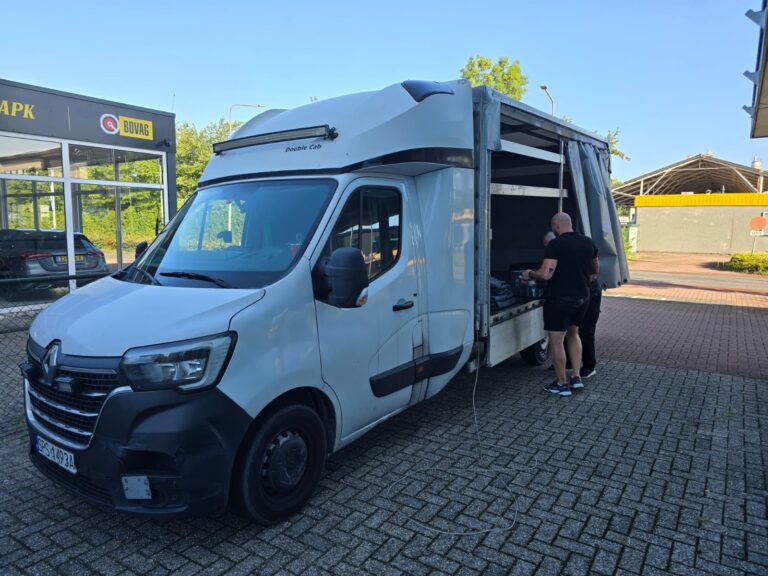
- A dedicated man and van service is usually the best option for speed, direct delivery, and clearer tracking.
- Shared load removals can lower the price, but they often reduce timing control and flexibility.
- The final cost depends on distance, load size, property access, urgency, and any packing or storage needs.
- Identity documents, housing proof, and a clear moving inventory should be ready before transport is confirmed.
- Choosing the right van size can reduce waste, improve protection, and prevent avoidable extra costs.
- VANonsite stands out through GPS tracked transport, flexible vehicle sizes, and specialist support for furniture, home, office, student, and last minute moves.
Quick Answer: How Do Removals from Germany to France Work?
Removals from Germany to France usually begin with a simple but crucial step: understanding exactly how much you are moving. Once your volume and weight are clear, you can choose between direct transport for faster, more predictable delivery or a shared load if your dates are flexible and budget matters most. After that, prepare your identity and housing documents, create a clean inventory, choose the right van size, keep essentials outside the main load, and book a tracked man and van option if you want stronger visibility and a smoother move overall.
In practical terms, the process is far less mysterious than many people expect. First, you assess what is actually going with you. Then you match that load to the right transport option. After that, the move becomes a series of manageable steps: confirm your address details, prepare the key documents, separate your essentials, and make sure your delivery timing fits the reality of your route. The cleaner this preparation is, the lighter the whole relocation feels.
For many people, the smartest choice is a direct, tracked service because it reduces the number of unknowns. Fewer stops usually mean fewer delays. Fewer handovers usually mean less damage risk. That is exactly why a dedicated man and van option often feels so reassuring on this route.
- Best for speed: dedicated man and van
- Best for budget: shared load, if your dates are flexible
- Best for fragile furniture: professional packing and careful handling
- Best for families: full home removals planning
Why People Move from Germany to France
People rarely choose France for just one reason. Sometimes it is practical. Sometimes it is emotional. Very often, it is both. Germany can feel efficient, fast, and highly structured. France, by contrast, can feel more textured, more social, and more atmospheric in daily life. For many people, that difference is not a small detail. It is the whole point.
That is why removals from Germany to France are often connected to something larger than transport. A career shift. A family decision. A long imagined retirement. A desire to live somewhere that feels more open, more expressive, or simply more aligned with the kind of life someone wants next. The move itself begins with logistics, but the decision behind it usually begins much earlier.
Common Reasons Behind the Move
The reasons vary, yet certain patterns appear again and again. People planning removals from Germany to France are often moving toward a different lifestyle, not just a different postcode.
- lifestyle change and a different daily rhythm
- work opportunities or cross border career moves
- remote work flexibility
- family relocation
- retirement plans
- study and student life
- fresh start after personal or professional change
- attraction to French culture, food, language, and pace of life
For some, the appeal is grounded in daily quality of life. They want slower mornings, stronger food culture, more spontaneous social time, or a routine that feels less mechanical. For others, France offers practical possibilities, such as a job opportunity, a university place, or the chance to live closer to family or a partner.
There is also the undeniable emotional pull. France carries a sense of richness that many people find deeply attractive. The culture feels layered. The language has weight. Even ordinary days can seem to hold more texture. When that attraction combines with the right life moment, removals from Germany to France start to feel less like a disruption and more like a deliberate step toward something better.
What to Plan Before Booking Removals from Germany to France
A successful move starts long before moving day. The strongest relocations are not powered by luck. They are built on timing, clarity, and preparation. When you plan early, removals from Germany to France become easier to price, easier to schedule, and far easier to manage from beginning to end.
This stage matters because rushed decisions are expensive. They lead to oversized loads, poor packing, weak timing, and stress that could have been avoided. By contrast, organised planning gives you control. You know what is travelling, when it is leaving, how much space it needs, and what must be ready when you arrive in France.
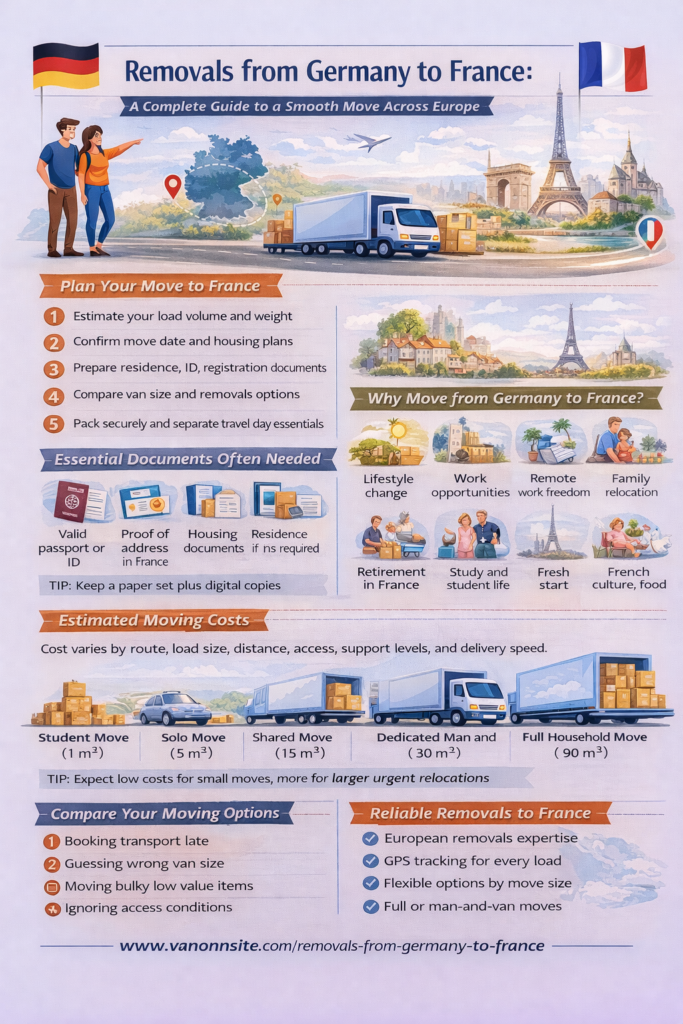
Pre Move Checklist
- confirm your move date and preferred delivery window
- decide what to take, store, sell, or replace
- confirm your housing plan in France
- prepare identity and registration documents
- build a full moving inventory
- estimate the volume and weight of your load
- choose the right removals option
- book transport early
- prepare a first 48 hours essentials bag
- plan your first week after arrival
Each of these steps removes friction from the move. A clear delivery window helps you choose the right service. A realistic inventory makes van size selection much more accurate. A confirmed housing plan prevents the move from drifting into uncertainty. Even something as simple as preparing an essentials bag can transform your first evening in France from chaotic to manageable.
One of the smartest decisions at this stage is to be brutally honest about what deserves to travel. International moving is not the place for vague sentiment around bulky, low value items. If something is easy to replace, awkward to transport, or no longer fits the life you are moving toward, it may not deserve precious van space. By contrast, furniture that suits your new home, work equipment, meaningful belongings, and dependable essentials usually earn their place very quickly.
Early planning protects both budget and peace of mind because it gives you more choice. More choice usually means cleaner pricing, stronger timing, and fewer nasty surprises. Instead of being chased by the calendar, you start to feel in control of it. That shift alone is one of the biggest reasons why well planned removals from Germany to France feel smoother from the very first step.
Documents You May Need When Moving from Germany to France
Documents rarely feel urgent until one missing paper delays everything. This is one of the most important parts of planning removals from Germany to France, because the exact requirements depend on your nationality, your reason for moving, and how long you intend to stay. Some people can move with relatively light formalities. Others need a far more structured route involving residence permits, tax updates, visa steps, or proof of resources.
The smartest way to handle this is to treat documents as part of the move itself, not as an admin problem to solve later. Good paperwork supports everything. It helps you confirm transport dates with more confidence, settle into France with less uncertainty, and avoid those ugly last minute delays that drain time, money, and emotional energy.
Core Documents to Prepare
Before moving day, most people should prepare a clean, accessible document set that covers both travel and settlement.
- valid passport or national ID
- proof of address in France
- rental agreement or property documents
- employment, pension, self employment, study, or financial proof if relevant
- residence documents if applicable
- pet travel documents if needed
- moving inventory for transport and insurance
- driving licence and vehicle documents if bringing a car
A practical way to avoid document chaos is to keep everything in three places. First, carry one printed folder for the journey itself. Second, keep a digital folder saved offline on your phone or laptop. Third, back everything up securely in the cloud. That simple structure can save an enormous amount of stress if you suddenly need to prove your address, show identity documents, or locate your transport inventory quickly.
When legal steps or official requirements are mentioned, use trusted public sources so the article stays useful and credible. For Germany, the strongest references include the Federal Ministry of the Interior and Bundesportal residence deregistration. For EU wide residence formalities, use Your Europe residence documents and formalities.
For France, link to official services such as Service-Public, residence permits and residence cards in France, France-Visas official portal, France-Visas application process, France-Visas visa wizard, Residents of France for tax purposes, Moving abroad or arriving in France, and Your Europe driving licence exchange and recognition.
These links are especially useful because they give readers a concrete next step instead of vague advice. When the article discusses residence, visas, tax residence, or driving licence recognition, official references make the content far more trustworthy.
EU Citizens vs Non EU Citizens
The route is not identical for everyone, and that distinction matters before you lock in your move timeline.
| Topic | EU citizens moving from Germany | Non EU citizens moving from Germany |
|---|---|---|
| Entry to France | usually straightforward with valid ID or passport | depends on nationality and visa status |
| Residence steps | may still involve local admin and proof of resources | visa or residence permit route often applies |
| Local registration and admin | likely needed depending on your situation | likely needed depending on status |
| Customs complexity | usually simpler for an EU internal move | may vary depending on goods and legal status |
| Supporting proof | housing and purpose of stay still matter | extra visa or permit documents may be required |
For EU citizens, the move often feels lighter on paper, but that does not mean it is paperwork free. Address related admin, proof of means, and other local steps may still matter once you arrive. For non EU citizens, the legal route can be much more specific, and it is worth checking every requirement before you commit to fixed transport dates.
Before booking removals from Germany to France, verify your exact legal route based on nationality, stay length, and purpose of residence. That single step can prevent a surprisingly large amount of disruption later.
How Much Do Removals from Germany to France Cost?
This is one of the first questions nearly everyone asks, and for good reason. Yet there is no honest one size fits all number. Removals from Germany to France can vary widely depending on the route, the amount you are moving, the complexity of both properties, and how quickly you need the transport. A compact student move from Berlin to Strasbourg is a completely different job from a full family relocation from Hamburg to Lyon with premium furniture, narrow access, and a fixed handover deadline.
The smartest way to look at price is not to hunt for a fantasy average. It is to understand what shapes the quote. Once those cost drivers are clear, you can make sharper decisions, protect your budget, and avoid paying for the wrong kind of service.
Main Price Factors
The price of removals from Germany to France is usually shaped by a mix of distance, size, complexity, and urgency.
- pickup city in Germany
- delivery city in France
- total distance
- load volume in cubic metres
- total weight
- access conditions at both properties
- urgency of the booking
- packing or white glove support
- storage needs
- direct transport vs shared load
Volume often starts the conversation, but complexity usually decides the final figure. Two moves that look similar on paper can produce very different quotes if one involves easy ground floor access and flexible dates while the other involves stairs, awkward parking, long carrying distances, fragile furniture, or a very narrow delivery window.
Cost Framing Table by Move Type
| Move type | Typical load | Cost pressure | Best option |
|---|---|---|---|
| student move | boxes and essentials | low to medium | Moving Basic or Moving Medium |
| solo flat move | boxes plus light furniture | medium | dedicated man and van |
| couple move | partial furniture setup | medium to high | Moving Premium |
| family move | large household load | high | Moving Premium Plus or Full House XXL |
| urgent move | any load with short notice | medium to high | direct transport |
This table gives readers a quick reference point, but real value comes from the details. A well planned move booked early often works out better than a supposedly cheaper move arranged under pressure. A shared load may cut the initial price, but it usually brings less control over timing, which can become costly if your tenancy, work schedule, or school dates are fixed.
That is why the best value is not always the cheapest quote. The smartest option is usually the one that protects your schedule, your belongings, and your peace of mind all at once.
How Long Do Removals from Germany to France Take?
Time is one of the biggest buying questions in any cross border move, and understandably so. When people ask about removals from Germany to France, they are not only asking how long a van will be on the road. They are asking when life can start feeling normal again. Delivery time affects key handovers, work starts, family plans, and how stressful the first days in France are likely to feel.
The honest answer is that timing depends on several moving parts. Some routes are quick and clean. Others involve much more friction. The difference is not only geography. It is also access, service type, season, and how tightly your move is scheduled.
Main Factors That Affect Delivery Time
Several details shape how long removals from Germany to France actually take.
- route length
- collection and delivery access
- direct vs shared transport
- weekend or peak season scheduling
- document or admin issues where relevant
A move from Cologne to Paris will not feel the same as a move from Berlin to Bordeaux or Hamburg to Nice. Distance matters, but property conditions matter as well. A clean collection from a ground floor property with easy access can move quickly, while a third floor flat with no lift, poor parking, or a long walk from the vehicle can slow everything down.
Shared transport may look attractive when price is the priority, but it often introduces more waiting. More stops, more coordination, and more competing delivery needs usually mean a wider window and less control. Direct transport, by contrast, tends to feel faster because the route is cleaner and the schedule is centred on your move rather than several others.
That is exactly why direct transport often feels not only faster, but safer. Fewer stops usually mean fewer handovers. Fewer handovers usually mean less handling. Less handling usually means a lower risk of delays, confusion, and damage. For many customers, a tracked man and van option offers the strongest balance of speed, visibility, and reassurance on this route.
Choosing the Right Van Size for Your Move from Germany to France
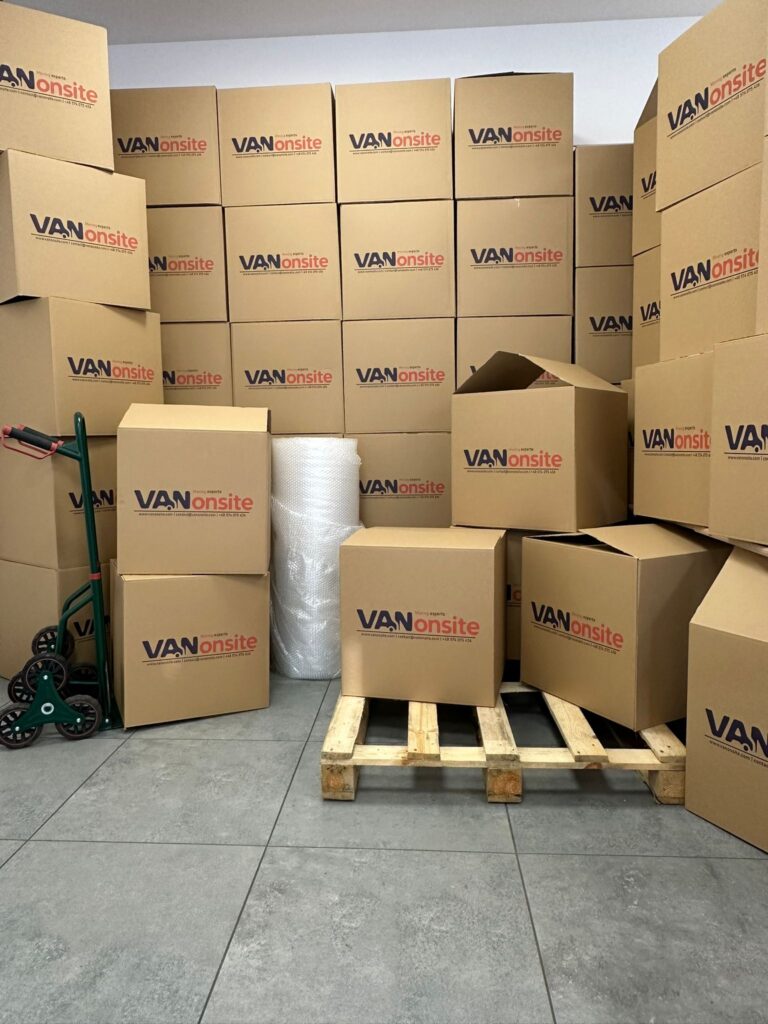
Vehicle size shapes far more than the final quote. It influences how efficiently the move is loaded, how well your items are protected, and how smoothly the delivery works at the other end. Choose a van that is too small, and the whole move can become cramped, stressful, and badly organised. Choose one that is too large, and you may pay for space you never needed. The smartest result comes from matching the vehicle to the real size of your move, not to a hopeful guess.
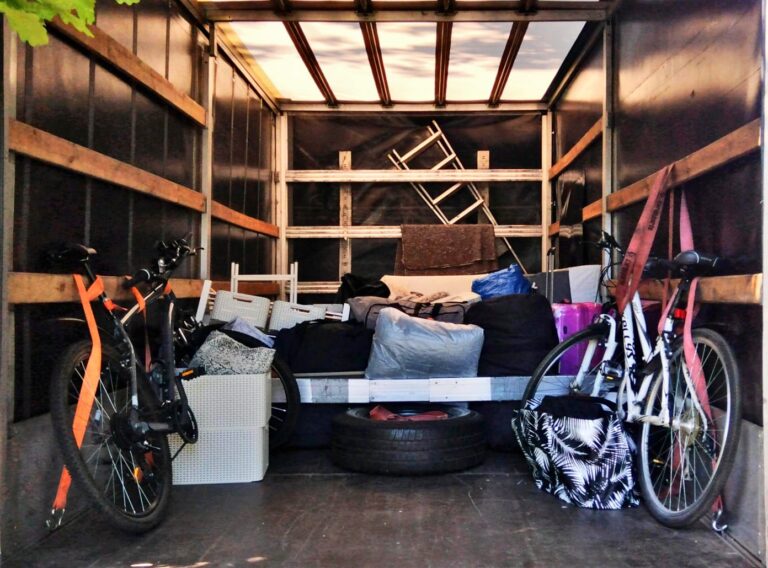
This is why realistic volume planning matters so much. Boxes, bedding, kitchenware, chairs, mirrors, and fragile household pieces almost always take up more practical space than people expect. A van is not simply empty volume. It is working volume. Space for protection, careful stacking, and safe access matters just as much as raw capacity.
VANonsite Vehicle Guide
| Vehicle option | Capacity | Weight limit | Best for |
|---|---|---|---|
| Moving One | 1 m3 | 100 kg | documents, essentials, a few boxes |
| Moving Basic | 5 m3 | 300 kg | student move, suitcases, small load |
| Moving Medium | 10 m3 | 500 kg | studio move or partial furniture |
| Moving Premium | 15 m3 | 1100 kg | one bedroom move |
| Moving Premium Plus | 30 m3 | 3500 kg | large flat or small house |
| Moving Full House XXL | 90 m3 | 20000 kg | full household relocation |
This range makes it much easier to match the transport to the real shape of your move. A light relocation with a few essentials, work items, and personal boxes has completely different needs from a couple’s move with furniture or a full family household.
Fast Matching Guide
A quick way to narrow the choice is to match the vehicle to the type of move you are actually making.
- Minimal move: Moving One
- Student or solo move: Moving Basic or Moving Medium
- Couple move: Moving Premium
- Family move: Moving Premium Plus or Full House XXL
A flexible man and van service works especially well here because it lets you choose a vehicle that fits your move properly rather than forcing everything into a generic setup.
The more accurate your inventory is, the better this choice becomes. A move planned around real volume usually means cleaner loading, safer transport, stronger protection for fragile items, and better cost control. That is exactly what most people want when planning removals from Germany to France.


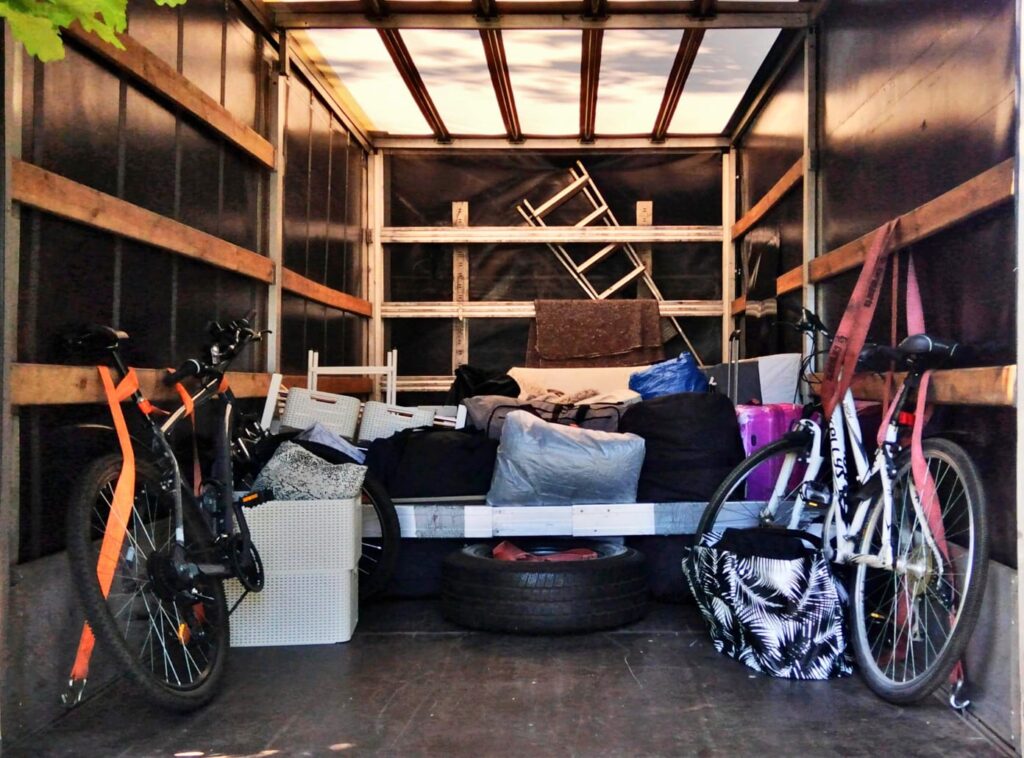
Best Way to Move from Germany to France
When people compare transport methods, they often begin with price. That is understandable, but price on its own can be dangerously misleading. The best method for removals from Germany to France is the one that fits your load, your timing, and your tolerance for uncertainty. A cheap option that arrives late, adds stress, or handles items badly may end up costing more in all the ways that matter.
Cross border European moves place more pressure on every weak point. Timing matters more. Communication matters more. Handling quality matters more. That is why the right transport choice shapes the entire experience, not just the invoice.
Compare Transport Options
| Option | Best for | Pros | Cons |
|---|---|---|---|
| Self drive | very small loads | schedule freedom | stressful, tiring, hidden costs |
| Courier | a few boxes | simple for parcels | poor for furniture |
| Shared load removals | flexible budgets | lower price | slower and less predictable |
| Dedicated man and van | fast cross border moves | direct route, GPS tracking, more control | not the cheapest option |
| Full removals service | households and offices | least stress, most support | premium level price |
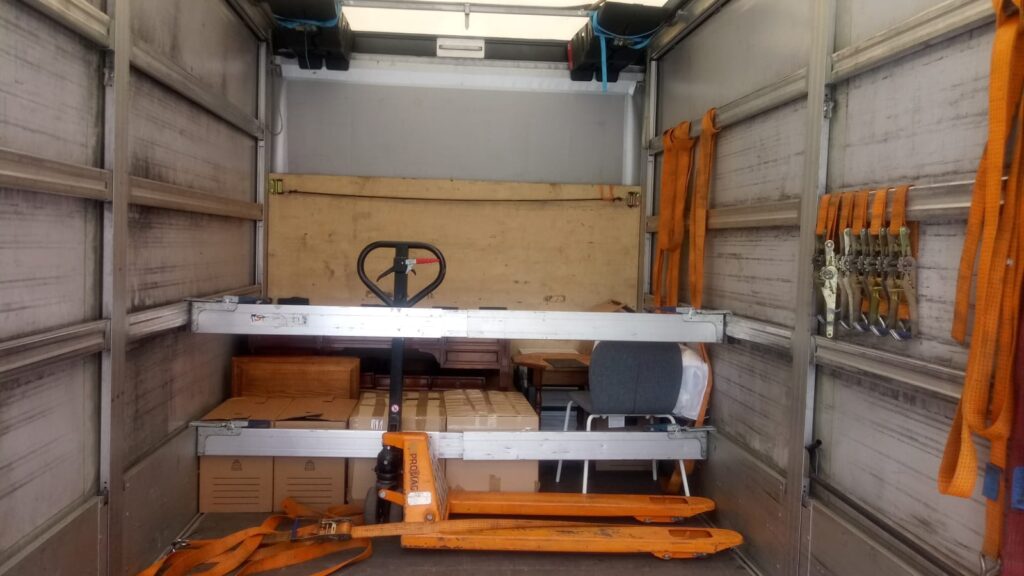
Self drive can work for a tiny move, especially if you are only transporting a few boxes and essentials. Still, it often comes with more strain than people expect. Fuel, tolls, parking, fatigue, overnight stops, and loading pressure can quietly eat into both budget and energy.
Courier services are fine for a few sturdy parcels, but they are a weak fit for furniture, delicate household items, or anything that needs thoughtful handling. Shared load removals can lower the initial quote, yet they usually bring less timing control, more waiting, and more uncertainty. That trade off matters a lot when tenancy dates or work deadlines are fixed.
This is exactly where direct tracked transport often wins. A dedicated man and van option usually gives you a cleaner route, tighter scheduling, better visibility, and fewer handling stages. Fewer stops mean fewer delays. Fewer handovers mean a lower risk of damage or confusion. For many customers planning removals from Germany to France, that calm clarity is worth far more than chasing the lowest number.
For cross border European moves, direct tracked transport often delivers the strongest balance of speed, control, and peace of mind. It is not always the cheapest on paper, but it is very often the smartest value in practice.
How to Pack for Removals from Germany to France
Packing shapes the move far more than most people expect. Good packing protects not only your belongings, but also your timing, your energy, and your first days after arrival. Poor packing does the opposite. It creates delays, increases the risk of breakage, and turns the first evening in a new place into a stressful search through badly marked boxes.
For removals from Germany to France, the smartest approach is to pack for the journey, not just for storage. Your items are travelling across borders. They need structure, protection, and logic. The aim is not to cram everything into boxes and hope for the best. The aim is to make loading safer, delivery smoother, and unpacking much easier.
Smart Packing Rules
- declutter before packing
- label every box clearly
- separate essentials for the first 48 hours
- wrap fragile furniture and electronics properly
- photograph valuable items before loading
- keep screws and fittings organised
- avoid overloading boxes
- use professional packing for premium or delicate items
Each of these rules saves stress later. Decluttering cuts both cost and volume. Clear labels help the unloading process move faster. A separate essentials bag protects your first night and first morning in France. Good wrapping reduces the chance that fragile pieces arrive marked, cracked, or worse.
Room by Room Packing Table
| Room | Packing priority |
|---|---|
| kitchen | strong boxes, fragile labels, dish protection |
| bedroom | essentials bag, bedding, mirror protection |
| living room | electronics, cables, furniture corners |
| bathroom | liquids sealed, toiletries accessible |
| office | backup files, protect screens, label accessories |
Packing room by room works because it brings order to a process that can become chaotic very quickly. It also makes unloading more intuitive. Instead of opening random boxes and hoping for luck, you create a move that feels readable and manageable from the moment the van opens.
Professional packing often saves both time and damage risk because it removes rushed decisions from the most fragile stage of the move. Furniture, mirrors, electronics, artwork, and premium household items all benefit from stronger wrapping and cleaner protection. On a longer route, that extra care often pays for itself very quickly.
Moving from Germany to France With Furniture, Family, Pets, or a Home Office
Some moves look easy until real life enters the picture. A few boxes and a suitcase are one thing. A dining table, a child who needs routine, a nervous pet, or a full home office that must be ready within days is something else entirely. This is where removals from Germany to France stop being only about transport and start becoming a much bigger life operation.
The strongest moves are planned around the realities of daily life, not only around volume. That means thinking ahead about what matters most once the van arrives: comfort, continuity, fragile furniture, emotional calm, and fast access to the things that keep life functioning.
Furniture Removals
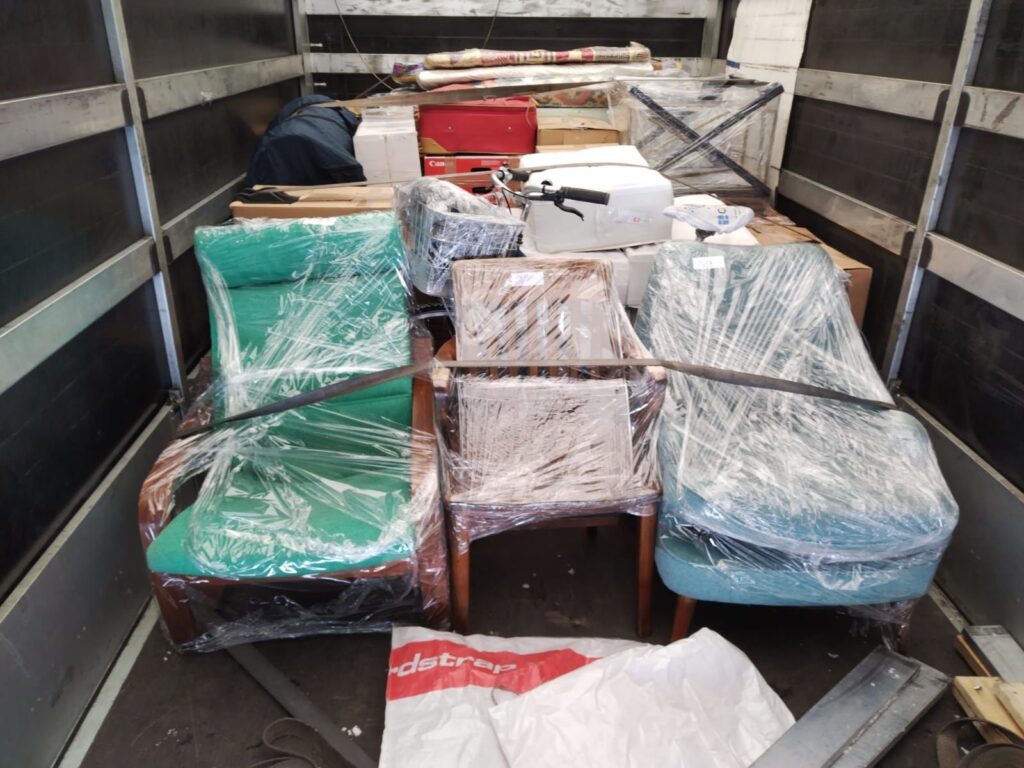
Furniture changes the move immediately. It adds bulk, weight, awkward dimensions, and a much higher risk of damage if the loading is rushed or careless. That is why proper wrapping, careful handling, and route planning matter so much. Sofas, wardrobes, bed frames, dining tables, mirrors, and premium pieces need more than basic lifting. They need protection, sequencing, and enough space in the van to travel safely.
For longer removals from Germany to France, this becomes even more important. Long routes punish careless packing. Corners get marked. Surfaces get scratched. Fragile pieces suffer first. That is exactly why specialist support such as Furniture Removals can make such a visible difference. Better wrapping and cleaner handling often mean the furniture arrives in the condition you expected, not as a repair project.
Moving With Children
Children feel a move long before they understand it logically. Even when adults stay calm, children notice the boxes, the broken routines, and the sense that something familiar is slipping away. That is why stability matters more than perfection.
A smoother family move usually comes down to a few practical choices:
- keep favourite toys and comfort items close
- preserve mealtimes and sleep rhythm where possible
- plan realistic breaks during travel
- avoid turning the first evening into a frantic unpacking session
- set up the child’s bed space as early as possible
A direct man and van option can be especially helpful here because it reduces uncertainty and helps the move feel more contained. For families, that extra control often matters just as much as speed.
Moving With Pets
Pets need their own moving plan. Long before moving day, it is worth checking travel documents, identification, health records, and any transport related requirements. Leaving that work too late is one of the fastest ways to add avoidable stress.
The emotional environment matters too. Loading day can feel noisy, unfamiliar, and unsettling for animals. Open doors, strangers moving around the home, and broken routines can quickly create anxiety. The smartest goal is not only legal readiness, but calm.
A few steps help a lot:
- check travel documents early
- keep food, water, bedding, and leads in one easy access bag
- create a quiet waiting space away from the loading area
- make the first evening feel familiar as quickly as possible
For removals from Germany to France, that mix of paperwork and calm routine usually creates a much smoother experience for both pets and owners.
Moving a Home Office
A home office move is not only about electronics. It is about continuity. If your work depends on screens, hard drives, chargers, cameras, documents, or specialist tools, those items should never disappear into the main load without a plan. They need to be protected, clearly labelled, and quick to reach when you arrive.
That matters even more for remote workers, consultants, freelancers, and business owners. A delayed work setup can mean lost hours, missed calls, and a stressful first week. A better move protects your earning power as much as your belongings.
| Situation | Main risk | Best focus |
|---|---|---|
| premium furniture | damage | added protection and careful loading |
| family move | stress and disruption | direct timing and essentials access |
| pets | anxiety and travel issues | calm routine and paperwork |
| home office | work interruption | safe packing and quick setup |
When removals from Germany to France are planned around real life rather than only transport volume, the whole process becomes more manageable, more human, and much less draining.
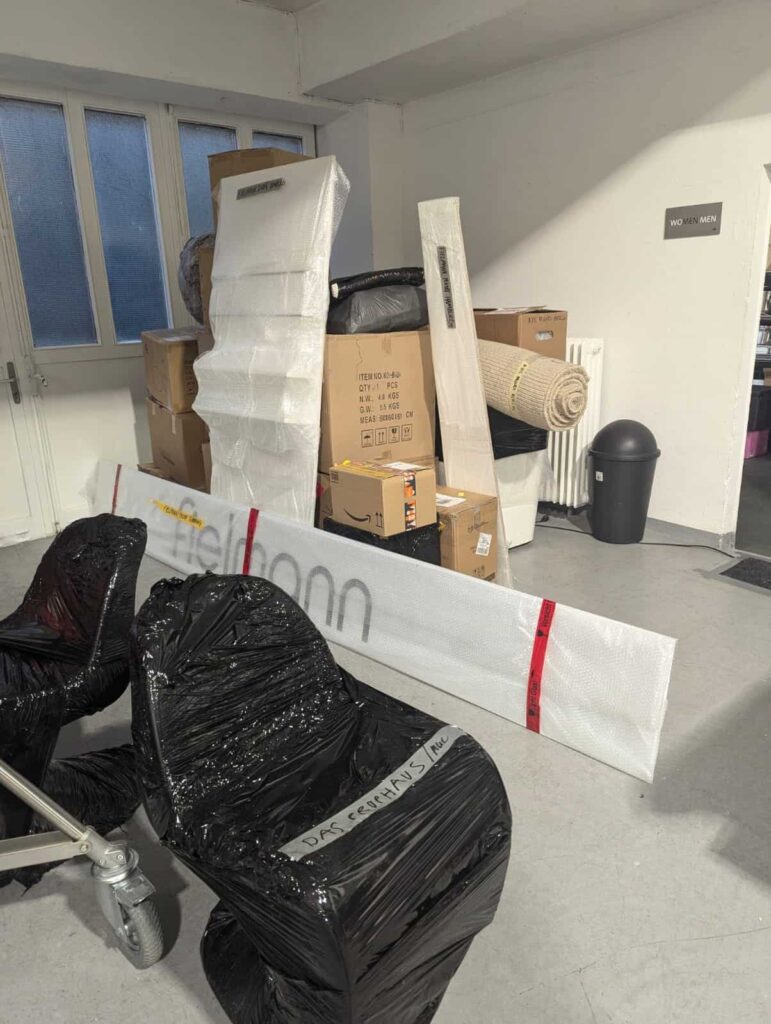
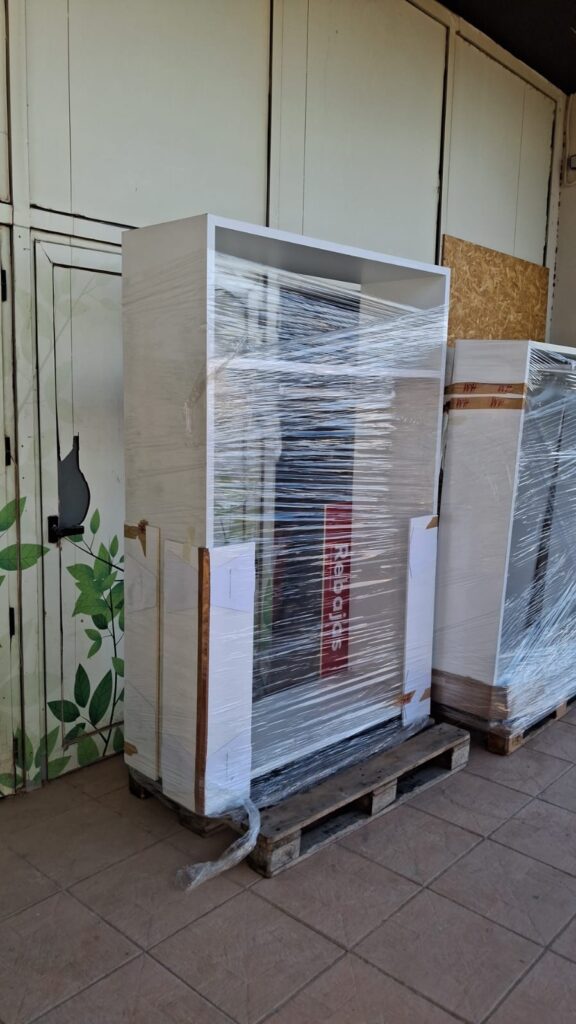
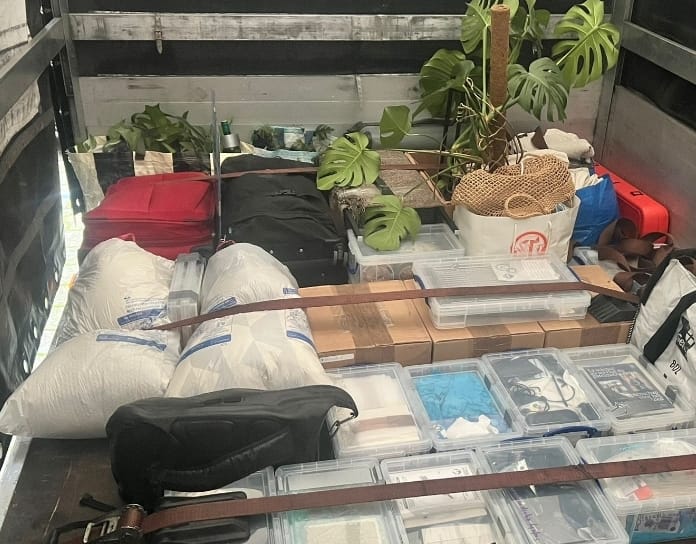
What to Do in Your First Days After Arrival in France
Arrival can feel exciting and unfinished at the same time. You have made it, but nothing quite feels settled yet. Boxes sit where furniture should be. Routines are missing. Even a beautiful new place can feel strangely temporary in the first 24 to 72 hours. That is completely normal.
The smartest goal in those first days is not perfection. It is stability. If you create a working base quickly, the move starts to feel lighter almost immediately. That first layer of order matters more than decorative details or full unpacking.
First Arrival Priorities
- settle your sleeping and hygiene essentials
- confirm local residence or admin steps if relevant
- update your tax address or residency status if needed
- set up phone and internet
- unpack kitchen basics and work items first
- get to know your local area and transport links
- create a simple routine for the first week
This order works because it removes pressure in the right sequence. Sleep, hygiene, communication, food, and work come first. Styling the shelves and hanging every picture can wait. A functional home beats a perfect looking home every single time in the first week.
A useful way to think about arrival is in layers. The first layer is pure function. You need the bed ready, the bathroom usable, chargers accessible, and enough kitchen basics to get through the first breakfast. The second layer is admin. That includes confirming any local steps, checking your address and tax details if needed, and making sure phone and internet access are working properly. The third layer is comfort. That is where the new place starts to feel like yours rather than simply temporary.
A few small habits can make an enormous difference:
- unpack bedroom essentials before decorative boxes
- fully set up the bathroom on day one
- keep one box for the first breakfast and simple meals
- find your nearest supermarket, pharmacy, and transport stop early
- create one working corner quickly if you work remotely
Building stability before perfection is what turns a draining arrival into a manageable beginning. Once that base is in place, France starts to feel less like a moving destination and more like home.
Common Mistakes During Removals from Germany to France
Even well planned relocations can unravel because of a few mistakes that look harmless at first. The real problem is rarely one dramatic disaster. More often, it is a chain of smaller errors that quietly pile pressure onto the move until everything starts to feel heavier, slower, and more expensive than it should.
That is why this section matters. The clearer people are about the classic traps, the easier it becomes to avoid wasted money, lost time, and preventable stress. In long distance European moves, small decisions often carry surprisingly large consequences.
The most common mistakes during removals from Germany to France include:
- booking too late
- guessing van size
- transporting low value bulky furniture
- failing to separate essentials
- ignoring access issues at the property
- choosing the cheapest quote without checking what is included
- underestimating French admin and residence steps
Late booking is one of the costliest errors because it shrinks your options immediately. Better delivery windows disappear. Flexibility drops. The move starts controlling you instead of the other way around. Guessing van size creates a different kind of pressure. Too small, and the move becomes cramped, inefficient, or split into more than one stage. Too large, and you may end up paying for wasted capacity.
Another common mistake is moving furniture that no longer makes sense. A bulky wardrobe, a tired shelf unit, or an awkward table can quietly push the quote up without making your new life in France any better. Sentimental value can feel very different once transport costs become real.
Then there is the cheap quote trap. A low number looks attractive until you realise it excludes meaningful handling, realistic timing, proper tracking, or practical support. At that point, the bargain often starts to look fragile.
| Mistake | What it causes | Smarter move |
|---|---|---|
| wrong van size | delay or extra cost | match volume properly |
| late booking | stress and weaker timing | book earlier |
| poor packing | breakage risk | protect or outsource packing |
| no essentials bag | chaotic first day | keep vital items separate |
The strongest relocations are not built on one heroic decision. They are built on a series of clear, practical decisions made at the right time. Avoiding these mistakes is one of the fastest ways to make removals from Germany to France feel calmer, safer, and much easier to manage.
Why VANonsite Is a Strong Choice for Removals from Germany to France
When people search for removals from Germany to France, they are not only looking for a vehicle. They are looking for reassurance. They want to know their belongings will be handled carefully, the route will be managed professionally, and the delivery will not dissolve into guesswork halfway through the move. That is exactly where VANonsite becomes a compelling choice.
The strongest moving companies do more than transport possessions. They reduce uncertainty. VANonsite does that by combining a clear European removals focus, GPS tracking for every load, fast and secure transport, and a flexible fleet that can support anything from a compact student move to a full household relocation. That combination matters because cross border transport is never only about distance. It is about trust.
One of VANonsite’s biggest strengths is flexibility. Some customers need a lean man and van option for a fast, efficient move with a smaller load. Others need more space, more protection, or a more structured service because the move includes valuable furniture, home office equipment, or a full family setup. VANonsite can respond to those different realities without squeezing every relocation into the same one size fits all model.
The vehicle range makes that flexibility very practical:
- Moving One: 1 m3, 100 kg
- Moving Basic: 5 m3, 300 kg
- Moving Medium: 10 m3, 500 kg
- Moving Premium: 15 m3, 1100 kg
- Moving Premium Plus: 30 m3, 3500 kg
- Moving Full House XXL: 90 m3, 20000 kg
That means the move can be matched more precisely to the actual load. Better matching usually means cleaner loading, smarter pricing, stronger protection, and fewer unpleasant surprises on moving day.
VANonsite also offers far more than standard transport. Customers can combine their move with services such as Packing Service, White Glove Delivery, Office removals, Home Removals, storage, student relocations, and last minute moving support. That breadth matters because real life moves rarely stay simple for long.
For people who want a broader look at route options and service support, Removals to France also fits naturally as a useful internal next step.
Why VANonsite Feels Reassuring on This Route
A move from Germany to France is long enough for every weak point to become obvious. Loose timing feels riskier. Poor communication feels heavier. Weak handling standards feel more expensive. VANonsite answers those concerns with the things customers actually care about:
- European removals focus
- GPS tracking for every load
- fast and secure transport
- flexible vehicle sizes from 1 m3 to 90 m3
- support for student, home, furniture, office, and last minute moves
- extra services such as packing, storage, white glove delivery, and office removals
These are not decorative extras. They shape the lived experience of the move. GPS tracking gives visibility. Flexible sizing helps avoid underbooking or overpaying. Added services make it much easier to protect fragile items, handle a tighter schedule, and reduce the physical and emotional strain that usually comes with relocation.
Best Fit by Customer Type
| Customer type | Why VANonsite works well |
|---|---|
| student mover | compact vehicle options and flexible timing |
| solo or couple move | efficient man and van transport with direct delivery benefits |
| family relocation | larger capacity plus more complete support |
| furniture heavy move | better handling, wrapping, and optional white glove care |
| office move | structured planning and specialist transport options |
| urgent move | last minute moving support with stronger delivery control |
This is what makes VANonsite persuasive without feeling pushy. The service feels built around the realities of moving across Europe rather than around vague promises. For customers planning removals from Germany to France, that difference can be felt from the first quote all the way to final delivery.
FAQ: Removals from Germany to France
How much do removals from Germany to France cost?
The cost depends on the route, load size, weight, access conditions, timing, and service level. A compact student move will cost far less than a full family relocation with furniture, tighter timing, and added handling support.
How long does it take to move from Germany to France?
That depends on the route, the service type, and the conditions at both properties. A direct man and van service is usually faster and more predictable than a shared load because the route is cleaner and the delivery window is tighter.
Is a man and van service enough for moving from Germany to France?
Yes, very often. A man and van option works especially well for small to medium moves, student relocations, partial furniture transport, and anyone who wants direct delivery with better visibility and less handling.
What documents do I need to move from Germany to France?
Most movers should prepare valid ID, proof of address in France, housing documents, any relevant residence or financial proof, and a clear moving inventory. Some moves may also involve vehicle, pet, or visa related documents.
Can I move furniture from Germany to France easily?
Yes, if the move is planned properly. Accurate volume planning, careful wrapping, the right vehicle size, and clean loading all make a major difference. Delicate or premium furniture benefits from extra protection and, in some cases, white glove handling.
What is the cheapest way to move from Germany to France?
The cheapest route is often self drive or a shared load, but the lowest figure is not always the best value. Hidden costs, weaker timing, and a higher damage risk can quickly make a cheap move feel expensive.
When should I book removals from Germany to France?
Earlier is almost always better. Booking in advance gives you more delivery options, cleaner pricing, and less pressure, especially if your move depends on a fixed tenancy, work start, or school date.
Is direct transport worth it?
For many people, yes. Direct transport usually means faster delivery, fewer handling stages, stronger tracking visibility, and a much calmer experience from start to finish.
Summary
A move from Germany to France can feel thrilling, liberating, and overwhelming all at once. The right plan makes all the difference. When your documents are in order, your load is matched to the right vehicle, and your moving partner gives you visibility from start to finish, the whole journey feels lighter.
That is what strong moving support really gives you. Not only transport, but breathing room. Not only delivery, but clarity. Not only a route across Europe, but a calmer start to the life waiting for you on the other side.
If you want safer, faster, and more organised removals from Germany to France, choose VANonsite and move with more confidence from the very beginning. For readers comparing options and planning the wider journey, Removals to France is a natural next step.