
A move from Switzerland to Germany is rarely just about transport. It often means stepping away from a familiar routine, high standards of order, mountain calm, and a daily rhythm built around precision and predictability. That is why this kind of relocation can feel both practical and deeply emotional at the same time. The reassuring truth is that removals from Switzerland to Germany can be smooth, efficient, and far less stressful than many people expect when the move is organised early, matched to the right vehicle size, and handled by a reliable man and van or professional removals service.
This route is increasingly popular for work, family reasons, education, and cost-of-living adjustment. Some people move from Zurich, Basel, Bern, Geneva, or Lausanne to major German cities for a new role, a business shift, or a broader lifestyle change. Others relocate to be closer to relatives, return to Germany after years in Switzerland, or reduce monthly living costs without giving up access to strong infrastructure and career opportunities. Because Switzerland is outside the EU, this route carries one extra layer that many movers want clear answers about from the start: paperwork and customs awareness. That does not have to make the move intimidating, but it does mean structure matters more.
That is exactly why the right removals partner makes such a difference. A trusted service reduces stress, lowers the risk of delays or damage, and makes the entire move feel clear rather than chaotic. VANonsite offers fast European transport, GPS tracking for every shipment, flexible vehicle sizes from 1 m3 to 90 m3, and specialist moving services for everything from compact student moves to full household relocations. In this guide, you will find direct answers on cost, timing, packing, paperwork, and the smartest service choices for removals from Switzerland to Germany.
TL:DR
- Removals from Switzerland to Germany are easier to manage when the move is booked early and planned around the real size of the shipment.
- A man and van service is often the best choice for smaller moves, urgent bookings, student relocations, and part-load transport.
- The final price depends on size, weight, distance, access conditions, customs-related complexity, and any extra services such as packing, storage, or premium handling.
- Direct transport is usually faster than shared loads, which makes a real difference when timing matters.
- Strong packing still matters on this relatively manageable route because better protection means less stress and lower damage risk.
- VANonsite offers GPS tracking for every load and vehicle sizes from 1 m3 to 90 m3.
- This guide gives a practical roadmap for planning removals from Switzerland to Germany with more clarity, confidence, and control.




Why More People Are Choosing Removals from Switzerland to Germany
Removals from Switzerland to Germany are becoming more common because this route combines emotion, opportunity, and realism. For many people, Switzerland represents order, calm, financial stability, and a polished daily rhythm. Germany, on the other hand, often represents scale, variety, broader urban opportunity, and a more flexible cost base. Moving between the two is not simply a change of country. It is often a thoughtful decision about what kind of life feels sustainable, ambitious, or more balanced in the long term.
Career change is one of the strongest reasons behind this move. Germany continues to attract professionals who want access to larger labour markets, more varied corporate ecosystems, and major city economies that offer strong growth potential. Berlin, Munich, Frankfurt, Hamburg, Cologne, and Stuttgart all draw people who want momentum, broader job options, and more room to reposition their careers. For many movers, removals from Switzerland to Germany begin with a contract, a strategic choice, or the feeling that a different professional landscape now makes more sense.
Family is another major reason. Some people are moving back to Germany after years in Switzerland. Others are relocating to be closer to parents, children, partners, or wider support networks. In those moments, the move is not just about logistics. It becomes personal, urgent, and emotionally weighted. Students also play an important role in this route, especially those shifting between Swiss and German academic systems or moving toward a more affordable base during their studies.
Cost of living is another powerful driver. For some households, monthly costs in Switzerland simply become too heavy over time. Germany can offer more breathing room, especially in housing, day-to-day spending, and certain family expenses, depending on the region. That does not mean the move is purely financial. It means practical reality often becomes part of a much bigger life decision.
There is also a broader lifestyle shift involved. Switzerland and Germany share some structural similarities, yet they can still feel very different in market size, urban pace, pricing, and the range of everyday choices available. For some people, that change feels liberating. For others, it feels like a bold but necessary reset. Either way, it helps explain why this route remains so relevant.
Several practical reasons continue to drive demand for removals from Switzerland to Germany:
- Access to major German job markets
- Lower living costs in many cities and regions
- High demand for both part-load and full home removals
- Popular route for professionals, families, and students
- Growing need for flexible cross-border moving services
Because this is a cross-border route with customs awareness in the background, people rarely want vague promises. They want a service that understands how to move furniture, boxes, documents, and daily life without turning the process into a tangle of stress and uncertainty. That is exactly why professional removals from Switzerland to Germany continue to grow in demand.
What Is Included in Professional Removals from Switzerland to Germany?
Professional removals from Switzerland to Germany should feel like much more than a driver, a van, and a delivery slot. Even though the route can be relatively manageable in distance compared with longer European relocations, the cross-border aspect changes the whole experience. Customers do not simply want transport. They want structure, visibility, and the confidence that their belongings will move safely from one country to another without needless delays, damage, or confusion.
In practical terms, a professional service usually begins with collection from a house, apartment, office, or student accommodation in Switzerland. The move then includes loading, route planning, secure transport, and unloading at the final destination in Germany. Yet what really separates a professional move from a basic one is everything that happens around those steps. Protective wrapping, packing support, storage options, premium handling, and GPS tracking create a move that feels organised rather than improvised.
A strong professional removals service may include:
- Door-to-door collection
- Flexible man and van options
- Full or part-load transport
- Careful furniture protection
- GPS shipment visibility
- Short notice availability
That flexibility matters because no two moves are alike. One customer may be relocating an entire family home from Zurich to Munich. Another may be sending selected furniture from Basel to Frankfurt. Someone else may only need a student room moved from Lausanne to Berlin. The best removals from Switzerland to Germany are shaped around the real size, urgency, and complexity of the move rather than forced into a rigid standard package.
This is where VANonsite feels especially strong. Furniture Removals are ideal when the move focuses on bulky, delicate, or high-value pieces that need stronger protection and stable loading. Home Removals are designed for larger household relocations where planning, timing, and reliable coordination make all the difference. Student Removals suit lighter and more budget-aware moves, while Office Removals help businesses relocate with less disruption and more control.
There is also the extra layer of support that often makes the biggest emotional difference. Packing Service helps protect fragile, sentimental, and valuable belongings before they even leave Switzerland. White Glove Delivery adds a higher standard of care for artwork, designer furniture, antiques, musical instruments, and other delicate items that deserve refined handling. Storage can be equally important when move-out and move-in dates do not align neatly, giving the customer breathing room instead of extra pressure.
Most importantly, the move becomes visible rather than uncertain. With live GPS tracking, customers do not have to wonder where their shipment is or how the route is progressing. For removals from Switzerland to Germany, that kind of transparency turns a cross-border move into something far easier to trust from pickup to final delivery.
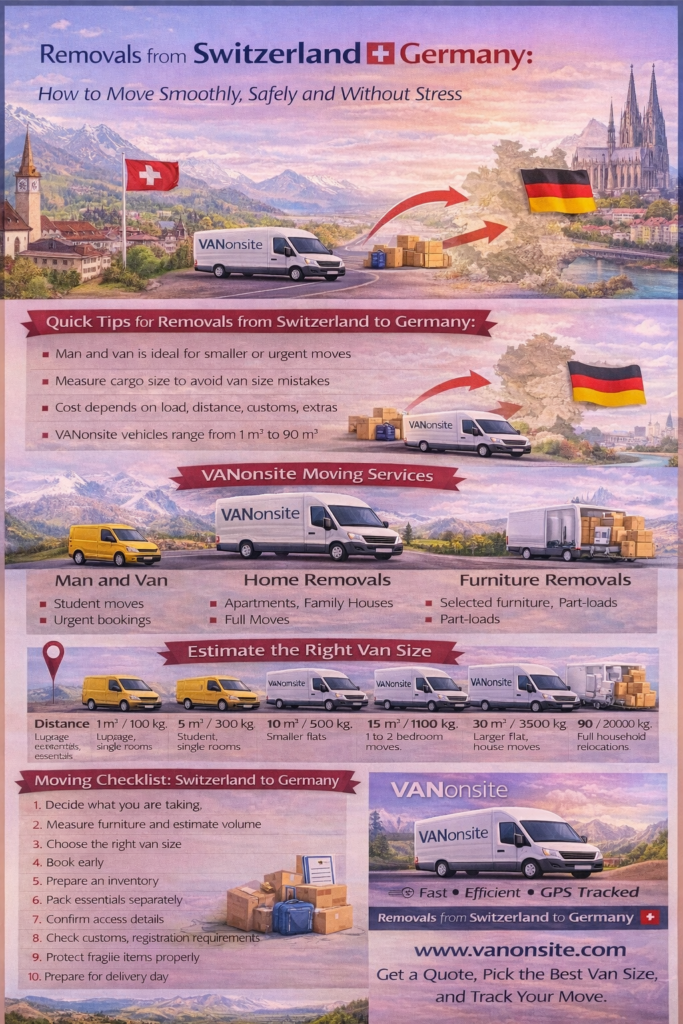
How Much Do Removals from Switzerland to Germany Cost?
The direct answer is simple: removals from Switzerland to Germany can be relatively affordable for a compact shipment and considerably more expensive for a full household relocation. The final cost depends on the size of the move, the exact route, the access conditions at both properties, the urgency of the booking, and any extra services such as packing, storage, dismantling, or premium handling. On this route, there is also one more factor that readers care about early on: cross-border administration. Even when customs-related formalities are straightforward, they still need to be handled properly.
That is why no serious quote should treat a student move to Berlin the same way as a family relocation to Munich or a furniture-heavy household transfer to Hamburg. The route may sound similar in broad terms, but the real move can be completely different. A strong quote reflects the true size, complexity, and handling needs of the shipment.
Main factors that shape the price
Several factors influence the cost of removals from Switzerland to Germany, and each one can shift the final quote in a meaningful way:
- total volume in m3
- total weight in kg
- distance between pickup and destination
- stairs, lift access, parking, or narrow access points
- need for packing or dismantling
- fragile or premium items
- urgent booking or last minute moving
- storage requirements
- customs-related administration or documentation needs where relevant
Volume is usually the biggest cost driver because it determines how much space the shipment needs in the vehicle. Weight matters too, especially when the load includes books, heavy wooden furniture, appliances, or office equipment. Access conditions can add labour time as well. A difficult collection in Geneva, a building without lift access in Zurich, or awkward unloading conditions in a German city centre can all increase the complexity of the move.
Pricing logic readers should understand
A few simple rules make the pricing structure much easier to understand:
- smaller student and studio moves cost less than full house relocations
- part-load options can reduce cost significantly
- direct transport is often faster but may cost more than shared space
- Swiss cross-border moves need accurate planning to avoid hidden friction and delays
Part-load transport is often a smart choice when the shipment is smaller and the customer has some flexibility on timing. It reduces cost because transport space is used more efficiently. Direct transport, by contrast, is usually faster, more private, and easier to schedule precisely, which can make it more expensive. On removals from Switzerland to Germany, that balance between speed and budget is one of the most important decisions a customer will make.
There is also one very common mistake that quietly increases cost: underestimating the real size of the move. People often count boxes and forget how much space wardrobes, mattresses, side tables, chairs, bikes, lamps, and kitchen items actually take. That can lead to poor vehicle choices, repacking, delays, or even the need for additional transport. Accurate planning protects the budget far better than optimistic guessing.
Example vehicle guide for removals from Switzerland to Germany
The easiest way to understand pricing is to match the move to the correct vehicle size:
| Vehicle option | Capacity | Weight limit | Best for |
|---|---|---|---|
| Moving One | 1 m3 | 100 kg | Luggage, urgent essentials, boxes |
| Moving Basic | 5 m3 | 300 kg | Student moves, single room loads |
| Moving Medium | 10 m3 | 500 kg | Small flat, furniture and boxes |
| Moving Premium | 15 m3 | 1100 kg | 1 to 2 bedroom moves |
| Moving Premium Plus | 30 m3 | 3500 kg | Family home or larger apartment |
| Moving Full House XXL | 90 m3 | 20000 kg | Full house relocation |
This range gives VANonsite a clear advantage. It means removals from Switzerland to Germany can be priced with much greater precision, whether the customer needs a compact man and van option for a few essentials or a much larger setup for a complete household move. That precision helps avoid paying for unused space while also preventing the far worse surprise of discovering the vehicle is too small on moving day.
Why a tailored quote matters
The smartest next step is always a tailored quote. It gives the customer a realistic answer based on the actual volume, route, timing, and handling requirements of the move. More importantly, it protects against two expensive mistakes at once: paying for unnecessary capacity and underestimating how much space the shipment truly needs. For removals from Switzerland to Germany, the right vehicle size is not a technical detail. It is one of the clearest ways to keep the move efficient, affordable, and under control.
How Long Do Removals from Switzerland to Germany Take?
Because this route is relatively manageable in distance but more sensitive on paperwork, timing depends on more than miles alone. Removals from Switzerland to Germany can move quickly and smoothly, but the real timeline still depends on the pickup point in Switzerland, the final destination in Germany, the total shipment size, and whether the transport is dedicated or shared. A few boxes from Basel to Freiburg will not follow the same rhythm as a full household move from Geneva to Hamburg.
The final timing usually depends on four practical elements: where in Switzerland the move begins, where in Germany it ends, how large the shipment is, and whether the service is direct or shared. A direct service is usually faster because it reduces handling and avoids unnecessary stops. A shared load may lower cost, but it often comes with a broader delivery window and less precision.
What affects delivery time most?
Several factors shape how quickly the move can happen:
- direct man and van services are faster than shared loads
- large city destinations may be easier to schedule than remote towns
- border procedures and paperwork can affect timing
- early booking improves delivery coordination
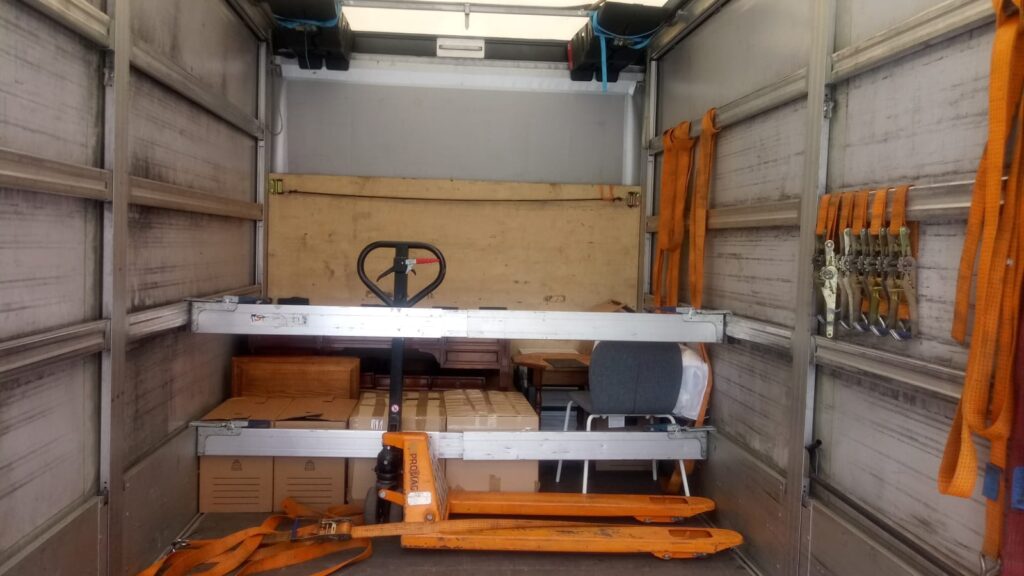
A direct man and van service is often the fastest option because the vehicle is assigned to one customer rather than several. That means fewer stops, less waiting, and a much simpler route from Switzerland to Germany. On a cross-border move, even a small reduction in complexity can make a major difference to the overall experience.
Destination matters too. Large cities such as Berlin, Munich, Frankfurt, Cologne, Hamburg, or Stuttgart may be easier to schedule because routes are more common and delivery patterns are more predictable. Smaller towns or harder-to-access areas may require more careful planning, especially when parking rules, narrow access roads, or building restrictions become part of the delivery.
Border procedures can also affect timing. Switzerland is outside the EU, so even when the move itself is straightforward, documents still need to be prepared correctly. When paperwork is organised early, the move feels much smoother. When documents are left too late, even a relatively short route can become frustrating.
Preparation has a direct effect on speed as well. A move with a clear inventory, well-packed boxes, and furniture ready for loading will almost always move faster than one built on last-minute improvisation.
How the process usually unfolds
Most removals from Switzerland to Germany follow a practical step-by-step sequence, and understanding that sequence makes the move much easier to manage:
- Assess the load volume
The first step is knowing how much you are really moving. That shapes the quote, the timing, and the correct vehicle size. - Choose the correct vehicle
Once the load is clear, the move can be matched to the right option, from a smaller man and van setup to a larger full-house solution. - Confirm pickup and delivery windows
Clear dates help align the move with tenancy endings, work starts, travel plans, customs preparation, and key handovers. - Prepare the inventory
A written inventory keeps the move organised and makes loading, transport, and unloading much smoother. - Pack and load professionally
Strong packing and careful loading save time, reduce breakage risk, and keep the route more efficient. - Track the shipment in transit
GPS tracking gives visibility during the move and removes a great deal of uncertainty. - Receive delivery and settle in Germany
The final stage is unloading, checking essentials, and making sure the first day in the new place feels calm rather than chaotic.
The biggest advantage of a well-run service is not only speed. It is predictability. When removals from Switzerland to Germany are planned properly, the move feels less like a stressful border crossing and more like a controlled transition with clear steps from start to finish.
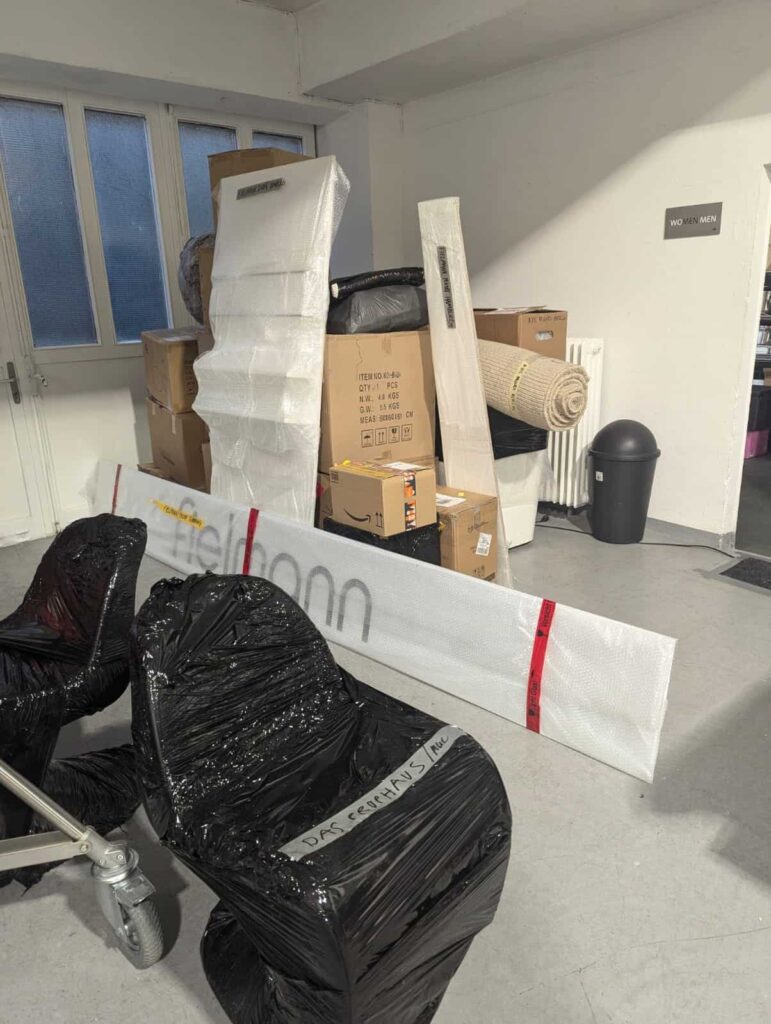

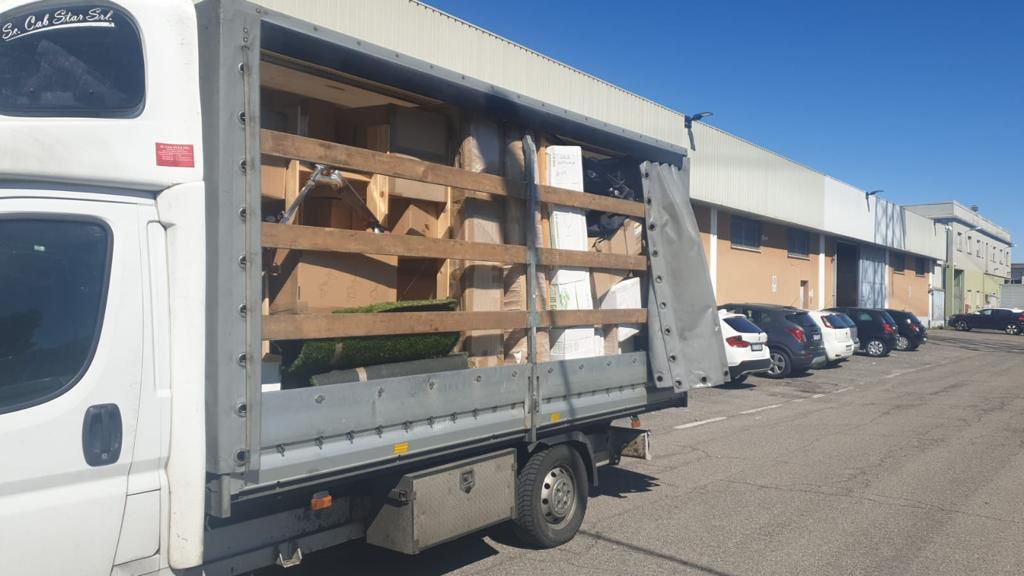
Man and Van from Switzerland to Germany: When Is It the Best Choice?
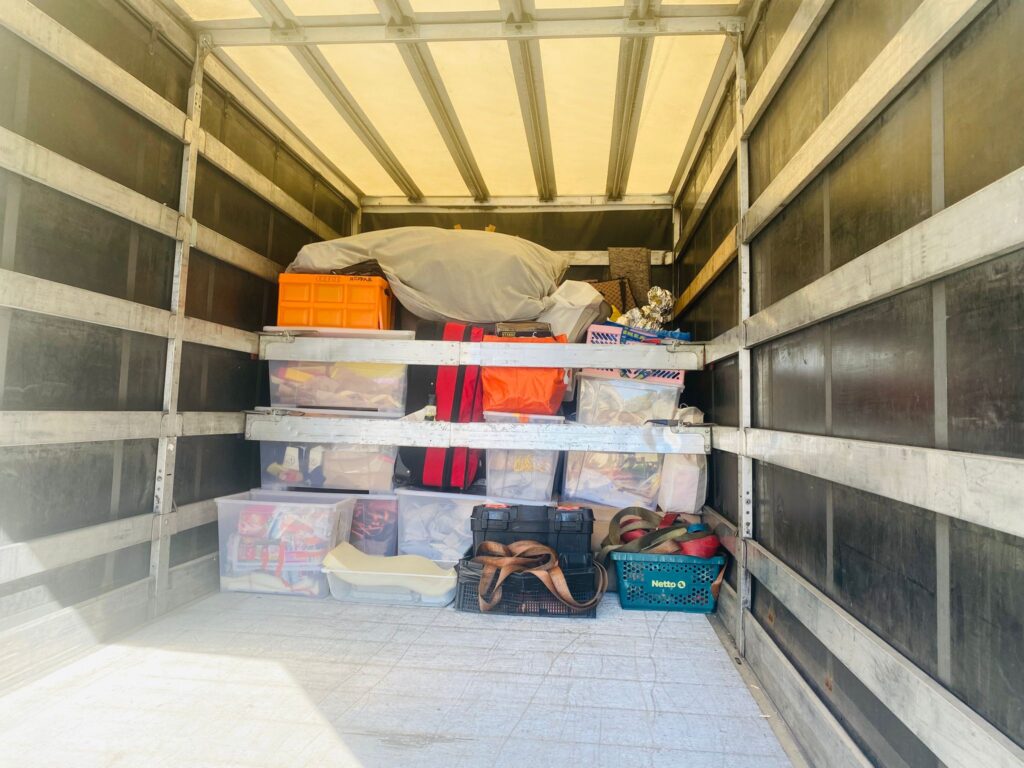
A man and van service is often the smartest choice when the move is smaller, more urgent, or simply does not require a full-scale removals setup. It gives customers something extremely valuable right away: flexibility. It also creates a more direct route, fewer handling stages, and often a faster booking process. On removals from Switzerland to Germany, that simplicity can be a real advantage.
This option works especially well for people who want a leaner move without paying for more space or complexity than they actually need. Instead of forcing a small shipment into a large and expensive structure, a man and van service matches the move to the real size of the load. That keeps the whole process faster, easier to coordinate, and often more affordable.
A man and van solution is especially useful for:
- student removals
- urgent last minute moving
- partial furniture transport
- compact flat moves
- few boxes or single-item delivery
- small office relocation
These are the kinds of moves where agility matters more than scale. A student heading from Zurich to Berlin with books, clothes, and a desk chair does not need the same setup as a family relocating an entire household. The same applies to someone sending a sofa, a mattress, and a few boxes to Munich, or a small business moving selected office equipment to Frankfurt.
The benefits are practical, but they also improve the emotional side of the move:
- faster booking process
- lower cost for smaller loads
- more flexible pickup times
- fewer handling points
- smoother communication
That last point matters more than people sometimes expect. A move feels easier when communication is clear, next steps are obvious, and the route feels visible rather than uncertain. On removals from Switzerland to Germany, that kind of clarity can remove a surprising amount of stress, especially when customs documents or timed handovers are involved.
With VANonsite, the value of man and van becomes even stronger because the service still comes with professional structure. Customers get careful handling, sensible route planning, and GPS tracking without being pushed into a larger and more expensive option than they actually need. For smaller, urgent, or more flexible cross-border moves, that is often exactly the right balance.
Full House, Furniture, or Student Move? Choose the Right Service
Not every move deserves the same setup. Some customers are relocating a full family home. Others are sending selected furniture, a student room, or a few valuable items that need extra care. The smartest removals from Switzerland to Germany are never one-size-fits-all. They are shaped around what is actually being moved, how urgently it needs to arrive, and how much protection it needs across the route.
Choosing the right service does more than protect the shipment. It also protects the customer from wasted money, weak planning, and avoidable stress. Below are the most common move types and the type of support that fits each one best.
Furniture removals from Switzerland to Germany
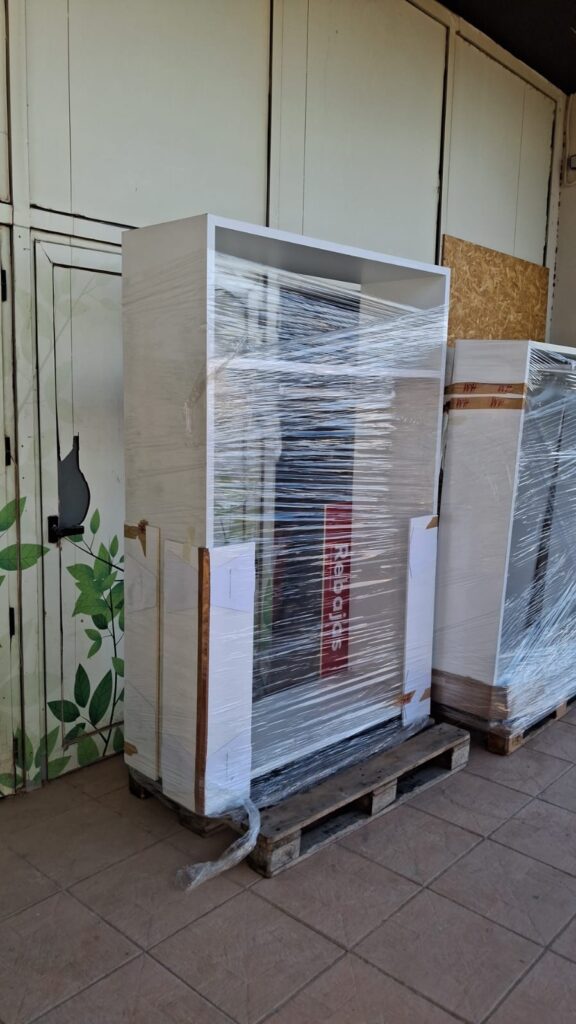
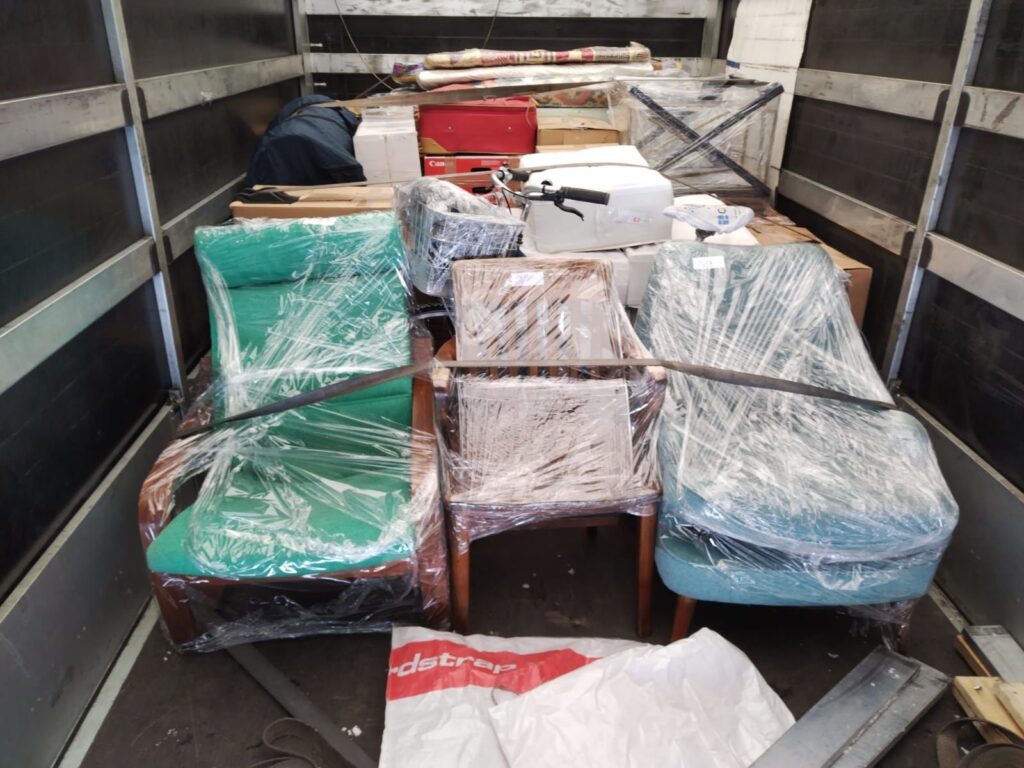
Furniture removals from Switzerland to Germany need more than simple loading and delivery. Even on a relatively manageable route, cross-border transport puts pressure on every weak point in packing and positioning. Sofas, wardrobes, beds, tables, sideboards, shelving units, and decorative pieces do not all move in the same way. Some are bulky and awkward. Others are delicate in ways that only become obvious once the journey starts.
That is why wrapping, padding, corner protection, glass care, and secure loading matter so much. Glass doors, mirrors, polished finishes, and sharp edges need strong protection before the vehicle ever leaves Switzerland. Loose shelves, detachable table legs, and fragile fittings often benefit from partial disassembly because that reduces stress on the furniture and makes loading safer.
Even one badly protected item can create unnecessary damage and stress. For customers sending selected pieces rather than a full household, a man and van option can be a strong fit because it keeps the route more direct while still allowing proper protection and careful handling. With VANonsite, furniture removals from Switzerland to Germany can be managed with the kind of control that protects both practical value and sentimental value.
Home removals from Switzerland to Germany
Home removals from Switzerland to Germany are where structure becomes essential. A family move includes far more than obvious large furniture. It also includes clothing, electronics, documents, kitchenware, children’s belongings, tools, decorations, and dozens of smaller things that quietly make everyday life work. On a cross-border route, anything vague at the beginning can become stressful later.
That is why successful home removals rely on realistic inventory planning, careful timing, and a vehicle size that genuinely matches the full load. A move from Zurich to Munich or from Geneva to Frankfurt should never run on guesswork. It needs a route, a timeline, and enough capacity to avoid chaos on moving day.
Families often benefit from medium, premium, or premium plus transport depending on how furniture-heavy the household is and how many rooms are involved. The goal is not only to make everything fit. It is to move everything safely, efficiently, and without turning the final days before departure into a draining scramble.
Student removals from Switzerland to Germany
Student removals from Switzerland to Germany are usually lighter, quicker, and more budget-sensitive than full household moves. Most students are not transporting an entire apartment. They are moving the essentials: clothes, books, study materials, electronics, personal items, and maybe a few compact furniture pieces.
That is exactly why smaller vans and essentials-only shipping make so much sense here. A man and van service is often ideal because it offers flexibility, lower cost, and a more direct route without pushing the customer into oversized transport options. It also fits the reality of student life, where dates often depend on accommodation, university calendars, travel plans, and budget limits.
There is also an emotional side to student moves. They often happen during uncertain transitions. A service that is easy to book, realistic in price, and clear in communication can remove a huge amount of pressure from that shift.
White glove delivery for valuable items
Some items deserve a much higher level of care from the moment they are wrapped to the moment they are placed inside the new property. Artwork, designer furniture, instruments, antiques, and fragile decor often need more than standard transport. They need refined handling, stronger protection, and a process built around precision.
That is where white glove delivery becomes the right choice. This service is ideal for customers who care deeply about condition, presentation, and peace of mind. It is especially useful when an item is financially important, emotionally irreplaceable, or simply too delicate to risk with ordinary loading.
For removals from Switzerland to Germany, white glove delivery can turn uncertainty into real reassurance. It is particularly valuable when transporting pieces that would be difficult, expensive, or impossible to replace. With VANonsite, that higher level of care supports the same goal as every other service: making the move feel safe, visible, and professionally controlled.
Packing for Removals from Switzerland to Germany Without Chaos
Packing is where many cross-border moves begin to lose momentum. Not because people are careless, but because they try to do everything at once. Suddenly there are half-filled boxes, unlabeled bags, missing screws, taped drawers, and no clear idea what should stay close and what should already be loaded. On removals from Switzerland to Germany, that kind of disorder can create delays, extra labour, and far more stress than necessary.
The good news is that packing does not have to feel chaotic. A strong system makes the move safer, faster, and much easier to manage. Pack in stages. Label clearly. Keep essentials separate. And make sure every box helps the move instead of slowing it down.
What to pack first
The smartest way to begin is with the items you will not need during the final days before departure. That creates quick progress without disrupting daily life too early.
Start with:
- non-daily items
- seasonal clothing
- books and decor
- spare kitchenware
These categories are easier to box, easier to label, and easier to live without for a short period. They also create visible order quickly. Once shelves are cleared and non-essential items are packed properly, the move begins to feel far more controlled.
What to keep with you
Some items should stay out of the main shipment until the very last moment. Even with a well-planned move, you need a personal safety zone for the first 24 to 72 hours.
Keep these items with you:
- passports and IDs
- contracts and rental paperwork
- medicines
- chargers and daily essentials
- valuables
- customs-related documents where relevant
It also helps to keep one clearly marked bag or suitcase with a few clothes, toiletries, keys, snacks, and anything else you would hate to search for after arrival in Germany. On this route, document access matters as much as comfort, so keeping important paperwork close is a smart move.
Packing mistakes that cost time and money
Packing mistakes often seem minor at first. Later, they become delays, breakages, and unnecessary costs. That is why it helps to know which errors create the most trouble.
The most common packing mistakes include:
- mixing heavy and fragile items
- weak labels
- leaving disassembly too late
- overfilled cartons
- failing to mention access challenges
- not preparing documents early enough
Heavy books should never crush delicate kitchenware. Weak labels create confusion during unloading. Furniture that still needs dismantling when the van arrives slows everything down. Overfilled boxes can split under pressure. Hidden access issues such as narrow stairs or difficult parking can create delays if the mover does not know about them in advance. And when documents are prepared too late, the whole route can become more stressful than it needs to be.
A simple room-and-priority labelling system often makes a dramatic difference. For example:
- Bedroom, essentials, open first
- Kitchen, fragile, upright only
- Office, documents, keep accessible
- Living room, decor, fragile
On a cross-border move, that kind of clarity makes both loading and unpacking much smoother.
Why a professional packing service pays off
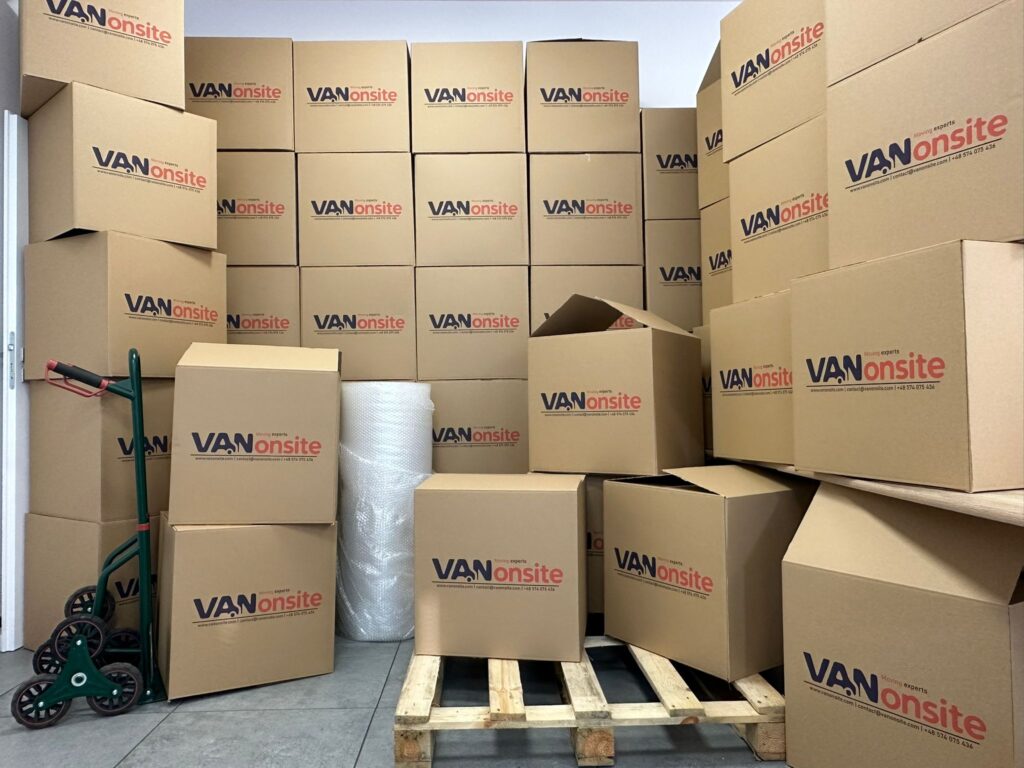
A professional packing service is not only about convenience. It is about reducing risk. Experienced packers know how to protect fragile items, balance box weight, wrap furniture correctly, and prepare the shipment so it travels more safely over the route.
That matters even more for removals from Switzerland to Germany because even a relatively short cross-border route can become expensive when fragile items shift, crack, or arrive damaged because of rushed preparation. Good packing reduces movement, lowers breakage risk, and protects sentimental and expensive belongings that no customer wants to see harmed because of preventable mistakes.
For many people, the biggest benefit is emotional. Instead of spending days surrounded by cardboard, tape, and growing pressure, they can focus on the wider transition itself. VANonsite’s packing support helps turn one of the most exhausting parts of the move into something more structured, reliable, and far less stressful.


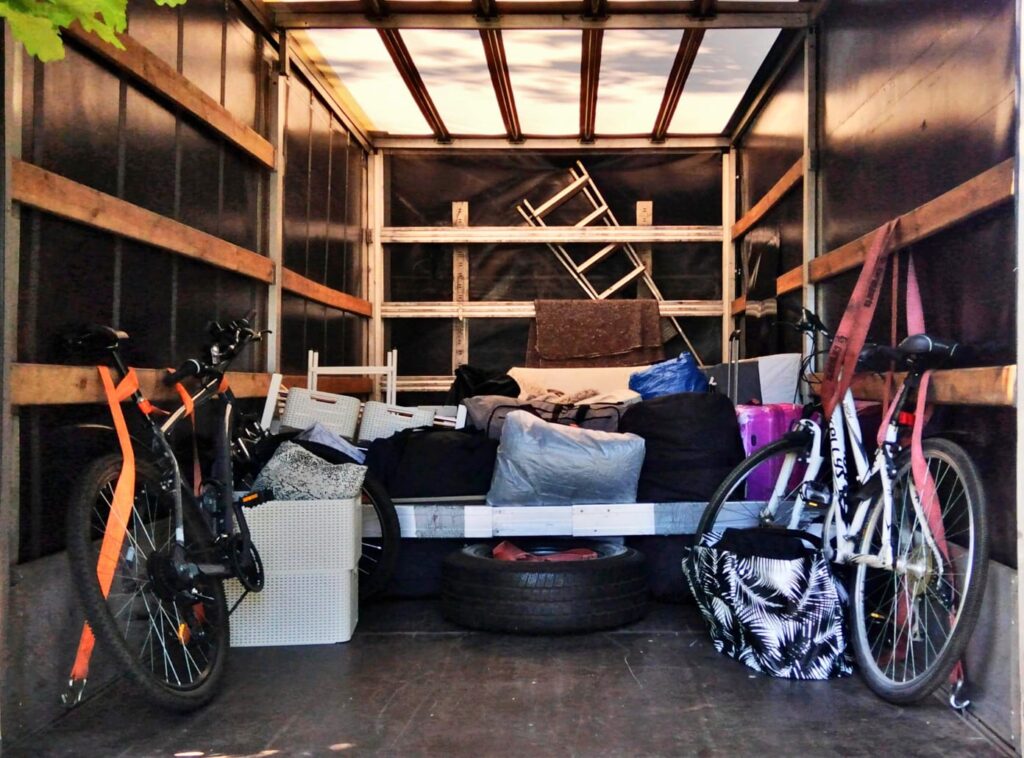
Documents and Rules for Moving from Switzerland to Germany
One of the first things readers want to know about this route is whether the paperwork will be difficult. That concern is understandable. Switzerland is outside the European Union, so removals from Switzerland to Germany naturally raise more questions about documents, customs, and transport formalities than many other European moves. The good news is that the process is usually very manageable when it is planned early and handled with calm, practical structure.
The aim is not to overwhelm the reader with bureaucracy. It is to make clear which documents matter, why they matter, and how better preparation can reduce stress before moving day even begins. When the paperwork is organised early, the entire move feels smoother, faster, and easier to trust.
Documents readers may need
For most personal moves, the most useful documents to prepare in advance include:
- passport or national ID
- proof of address
- tenancy or property documents
- inventory list for transported goods
- customs forms or supporting transport documents where relevant
- proof of work or study if relevant
- pet documents if applicable
A detailed inventory is especially important on this route. It helps keep loading organised, supports smoother customs-related processing where needed, and makes it easier to check the shipment properly once it arrives in Germany. It also reduces confusion when the move includes mixed room contents, valuable furniture, or a large number of boxes.
Depending on the exact circumstances of the move, supporting documents linked to residence, work, study, or pet transport may also be relevant. That does not mean every move becomes document-heavy. It means being prepared early helps prevent avoidable friction later.
Official sources to reference
When readers want to verify residence rules, customs information, or administrative steps, it is always best to point them toward official public sources. For this route, the strongest references include:
- Germany Federal Foreign Office
- German customs
- Your Europe residence information
- Swiss government information portal
- Swiss customs information
These sources help readers verify the latest information about residence, transport documentation, customs-related requirements, and other relocation details. If the move involves work, study, pets, or longer-term relocation formalities, checking official guidance early is always a smart step.
Why the paperwork is usually manageable
For most personal removals from Switzerland to Germany, the paperwork is far more manageable than people fear at first. Once IDs, address documents, tenancy or property papers, and the transport inventory are kept in order, the administrative side becomes much less intimidating.
This is also where a professional removals partner adds real value. When the transport side is organised clearly and efficiently, there is more mental space to focus on housing, registration, work, and the rest of the transition into Germany. With a trusted service like VANonsite, the move starts to feel less like a document maze and much more like a controlled, well-prepared next step.
Common Challenges During Removals from Switzerland to Germany and How to Avoid Them
Cross-border moves rarely become stressful because of one dramatic disaster. More often, they become difficult because several small mistakes stack up at the same time. That is why removals from Switzerland to Germany can feel harder than expected when booking happens too late, the wrong van is chosen, or documents are left until the last moment. The reassuring part is that most of these problems are predictable, which means they can also be prevented.
One of the most common issues is timing. When customers leave booking too late, they reduce their options and create pressure that affects the whole move. Another frequent problem is choosing a vehicle based on guesswork instead of real volume. That can lead to wasted money, awkward repacking, delays, or a shipment that simply does not fit the original plan.
Packing creates another layer of risk. Weak cartons, rushed wrapping, and badly protected furniture may survive a short local move, but they are much more vulnerable on a route that includes border coordination and longer handling windows. Communication is equally important. If the mover is vague about collection times, access conditions, or delivery windows, the customer is left dealing with uncertainty instead of clarity.
Hidden access issues can also create serious friction. Narrow staircases, buildings without lifts, difficult parking, restricted access roads, or awkward delivery points in busy German neighbourhoods can all slow the move down if nobody plans for them in advance. On a cross-border move, those details matter even more because one delay can affect the wider schedule.
Then there is the paperwork. Because Switzerland is outside the EU, not preparing customs-related documents early enough is one of the simplest ways to make the move more stressful than it needs to be. Even when the route itself is short, poor document preparation can create unnecessary delay and confusion.
The smartest way to avoid the most common problems is to build the move around a few practical habits:
- Book early when possible
- Choose the van based on real volume, not guesswork
- Use stronger protective packing
- Share access and parking details upfront
- Keep a written inventory
- Prepare paperwork early
- Choose a company with GPS tracking and clear updates
These steps may sound simple, yet they remove a remarkable amount of friction. They replace uncertainty with structure. And that is exactly what most customers want when organising removals from Switzerland to Germany.
Why VANonsite Is a Strong Choice for Removals from Switzerland to Germany
When people search for a moving company, they are rarely looking for noise. They are looking for calm assurance. They want to know their belongings will be handled properly, the route will be planned intelligently, and the shipment will stay visible instead of disappearing into uncertainty. That is exactly where VANonsite stands out.
VANonsite offers high-quality European transport services built around speed, care, and shipment safety. For removals to Germany, that matters because even a relatively manageable Swiss route can quickly become stressful if planning is weak, visibility disappears, or paperwork is mishandled. Customers need more than transport. They need a service that feels dependable from the first quote to the final delivery.
One of the strongest trust signals is GPS tracking for every load. That feature does more than add convenience. It gives customers visibility, which can remove a huge amount of tension during the move. Instead of wondering where the shipment is or whether the route is progressing on time, they have a clearer sense of what is happening.
Another major advantage is the service range. VANonsite supports everything from last minute moving and student relocations to furniture removals, home removals, packing support, white glove delivery, office removals, and storage. That breadth matters because no two moves are identical. Some customers need a compact man and van booking. Others need a full family relocation. Others need premium handling for delicate or valuable items.
The vehicle range makes that flexibility even stronger:
- Moving One for urgent essentials and compact loads
- Moving Basic for student or single-room shipments
- Moving Medium for smaller flats and mixed furniture loads
- Moving Premium for 1 to 2 bedroom moves
- Moving Premium Plus for larger household relocations
- Moving Full House XXL for complete home removals
With options from 1 m3 to 90 m3, VANonsite can support both part-load shipments and full house moves with far more precision than a generic one-size-fits-all operator. That makes the service a strong fit for both man and van transport and more demanding premium relocation needs.
VANonsite also fits this route particularly well because it combines speed with structure. That matters on a move from Switzerland to Germany, where customers value not only careful handling but also clear communication, route control, and confidence that the process is being managed properly from start to finish.
Most importantly, the brand feels steady and capable. That matters. When people are moving from Switzerland to Germany, they do not want unnecessary drama. They want clarity, competence, and a service that inspires trust without shouting for attention. That kind of professionalism is exactly what makes an international move feel safer from the first step.
Quick Checklist for Moving from Switzerland to Germany
When a cross-border move starts accelerating, even simple tasks can begin to slip. That is exactly why a checklist matters. It turns a complex relocation into a sequence you can actually follow. For removals from Switzerland to Germany, that kind of structure can save time, reduce stress, and stop small oversights from becoming expensive problems.
Use this checklist as a practical guide:
- Decide what you are taking
Separate essentials from items you no longer need. The less unnecessary volume you move, the easier it becomes to control cost, loading time, and vehicle size. - Measure furniture and estimate volume
Large items shape the move more than many people expect. Measuring early helps you avoid underestimating space and choosing the wrong transport option. - Choose the right van size
The correct vehicle keeps the move efficient, protects your budget, and prevents unpleasant surprises on collection day. - Book early
Early booking gives you better date flexibility and reduces pressure, especially when timing matters around contracts, key handovers, work starts, or lease endings. - Prepare an inventory
A written inventory keeps the move organised, supports smoother loading, and makes final delivery checks much easier. - Pack essentials separately
Keep documents, medicines, chargers, toiletries, and first-night basics outside the main shipment. - Confirm access details
Check stairs, lifts, parking, gates, and narrow access points at both addresses before moving day arrives. - Check customs, registration, or residence requirements
Review the relevant official information early so paperwork never becomes a last-minute shock. - Protect fragile items properly
Use strong wrapping, clear labels, and sensible packing order to reduce breakage risk during the move. - Prepare for delivery day
Know where the essentials should go first, keep key contact details close, and make the arrival in Germany feel calmer from the start.
A checklist like this may look simple, yet it removes a remarkable amount of mental clutter. It helps turn removals from Switzerland to Germany into a process that feels planned rather than improvised.
FAQ: Removals from Switzerland to Germany
When people prepare for a cross-border move, they usually come back to the same urgent questions. They want clear answers. They want realistic expectations. Most of all, they want to know whether the move can be handled in a way that feels safe, affordable, and genuinely manageable. These FAQs are designed to answer exactly that.
How much do removals from Switzerland to Germany cost?
The cost depends on volume, weight, route length, access conditions, urgency, and any extra services such as packing, storage, or white glove handling. Depending on the move, customs-related administration can also shape the final process. A small student move will cost far less than a full household relocation. The most accurate way to price removals from Switzerland to Germany is through a tailored quote based on the real shipment.
How long does a move from Switzerland to Germany take?
The timing depends on the pickup location in Switzerland, the destination in Germany, the shipment size, and whether the service is direct or shared. Direct transport is usually faster, while shared loads can reduce cost but often come with a broader delivery window. Properly prepared documents can also make the whole move smoother.
Is man and van a good option for moving from Switzerland to Germany?
Yes, in many cases it is an excellent choice. A man and van service works especially well for smaller moves, student relocations, urgent bookings, partial furniture transport, and compact household shipments. It offers flexibility, speed, and a more direct route.
Can I move only a few items or pieces of furniture?
Yes. Not every customer needs a full household removals service. Many people book removals from Switzerland to Germany for a sofa, a wardrobe, a mattress, a dining set, or a limited number of boxes and personal belongings.
Do you offer packing for removals from Switzerland to Germany?
Yes. Professional packing is available for customers who want stronger protection, better organisation, and less stress before moving day. It is especially useful for fragile items, electronics, artwork, and premium furniture.
Can I track my shipment during the move?
Yes. VANonsite offers GPS tracking for every load. That gives customers better visibility during transit and helps the whole move feel more transparent and reassuring.
What size van do I need for my move?
That depends on the total volume and weight of your belongings. Smaller shipments may fit into Moving One or Moving Basic, while larger home moves may need Moving Premium, Moving Premium Plus, or Full House XXL. Choosing the correct size helps avoid wasted money and loading-day disruption.
Do I need special documents to move from Switzerland to Germany?
For most personal moves, you should prepare a passport or national ID, proof of address, tenancy or property documents, and a transport inventory. Depending on the exact circumstances, customs forms or supporting transport documents may also be relevant. Official government and customs websites are the best places to verify the latest requirements.
Can you help with student removals?
Yes. Student removals are one of the strongest use cases for flexible transport. They are usually lighter, faster, and more budget-sensitive, which makes them a strong fit for man and van services.
Do you offer storage before final delivery?
Yes. Storage can be an excellent option when move-out and move-in dates do not align perfectly. It adds flexibility and helps keep the move calm instead of rushed.
Taken together, these answers show something important: removals from Switzerland to Germany do not need to feel chaotic when the service fits the real shape of the move.
Summary and next steps
A move of this scale carries much more than boxes. It carries routines, plans, deadlines, documents, and the emotional weight of starting again somewhere new. That is why the right moving partner matters so much. You do not only need transport. You need clarity, care, flexibility, and confidence that the whole route is being handled properly.
Whether you are moving a few essentials, a student room, selected furniture, or an entire family home, removals from Switzerland to Germany do not have to feel overwhelming. With the right man and van team, the right vehicle size, and a moving company that values both speed and care, the process becomes simpler, safer, and much easier to trust.
VANonsite brings exactly that balance. Fast European transport. Careful handling. Flexible service options. GPS tracking for every shipment. And a vehicle range wide enough to match the move instead of forcing you into the wrong setup.
If you want removals from Switzerland to Germany to feel smooth from the very first step, request a tailored quote, choose the right vehicle, and move forward with greater confidence. Sometimes the biggest relief in a move arrives before delivery day. It starts the moment you know the right team is handling everything.