
Moving to Germany can feel like standing on a railway platform with a suitcase in one hand and your future in the other. It is exciting. It is bold. It is also a little overwhelming. Between paperwork, packing, housing pressure, transport costs, and the fear of forgetting something important, even a well-planned relocation can suddenly feel heavy.
That is exactly why these tips for moving to Germany matter.
This guide gives you quick answers first, then walks you through the process step by step. You will learn how to plan your budget, which documents to prepare, how to choose the right man and van service, and what to do when you finally arrive. Most importantly, you will see how smart planning can turn a stressful move into a smooth, confident fresh start.
For many people, the fastest way to reduce stress is simple: choose a moving partner that understands European relocations, protects every load, and keeps you informed. VANonsite does exactly that with flexible service levels, fast transport, and GPS tracking for every shipment.
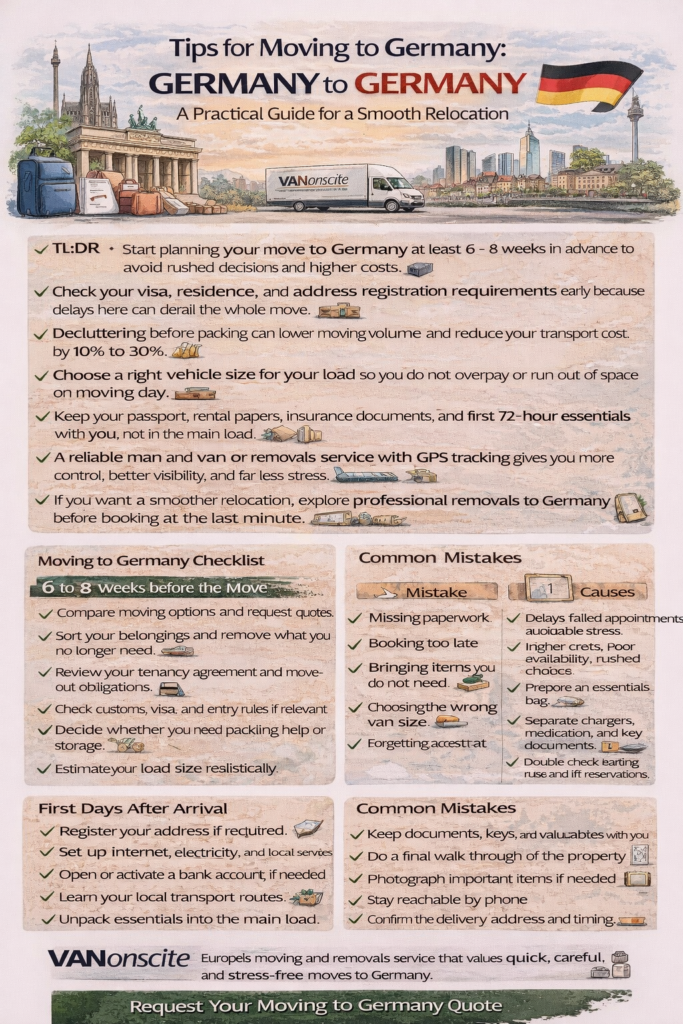
TL:DR
- Start planning your move to Germany at least 6 to 8 weeks in advance to avoid rushed decisions and higher costs.
- Check your visa, residence, and address registration requirements early because delays here can derail the whole move.
- Decluttering before packing can lower moving volume and reduce your transport cost by 10% to 30%.
- Choose the right vehicle size for your load so you do not overpay or run out of space on moving day.
- Keep your passport, rental papers, insurance documents, and first 72-hour essentials with you, not in the main load.
- A reliable man and van or removals service with GPS tracking gives you more control, better visibility, and far less stress.
- If you want a smoother relocation, explore professional removals to Germany before booking at the last minute.
Why Moving to Germany Takes More Planning Than Most People Expect
Germany has a magnetic pull. For some, it is the promise of a stronger career. For others, it is the dream of safer streets, excellent universities, stable public systems, and a better rhythm of life. Families see structure. Students see opportunity. Professionals see momentum. It is easy to understand why so many people look at Germany and feel that quiet spark of possibility.
The country offers strong infrastructure, respected institutions, efficient public transport, and a central European location that makes both work and travel far easier than many expect. In practical terms, Germany often feels dependable. Trains connect major cities. Public services are structured. Health systems are well regarded. Even daily life, once settled, can feel more predictable and secure.
Yet this is exactly where many relocations become deceptively difficult.
From a distance, moving to Germany can seem straightforward. Pack your boxes. Book a van. Drive across Europe. Start fresh. In reality, international relocation is rarely that simple. Housing in cities like Berlin, Munich, Frankfurt, or Hamburg can move at breathtaking speed. Rental paperwork may need to be prepared sooner than expected. Access to buildings can be limited. Parking rules can be strict. Registration deadlines can arrive before you have even unpacked half your kitchen.
Then there is the transport side of the move, which people often underestimate. A cross-border relocation is not just about getting items from one address to another. It is about timing, route planning, load accuracy, handling, coordination, and communication. One wrong guess about volume can leave you with too little space. One fragile item packed poorly can arrive damaged. One missing document can slow the process down at the worst possible moment.
That is why the best tips for moving to Germany are never just about boxes and tape. They are about preparing for the full reality of the move. They are about seeing the road ahead before you are already on it.
A good relocation plan usually rests on five pillars:
- Documents that are prepared early and stored safely.
- Budget that includes transport, deposits, setup costs, and a buffer.
- Timing that gives you breathing room instead of panic.
- Transport that matches the real size and urgency of your move.
- Support from a reliable man and van or removals team that can adapt if plans shift.
This is where many people either gain control or lose it.
If you treat the move as a chain of connected decisions, everything gets easier. Your packing becomes sharper. Your spending becomes smarter. Your stress level drops. And instead of stumbling into Germany exhausted and frustrated, you arrive feeling prepared, focused, and ready to settle in.
Why so many people choose Germany
Germany remains one of the most attractive relocation destinations in Europe for a reason. It combines economic strength with day-to-day livability, which is a rare and powerful mix.
- Better career opportunities
- High public transport standards
- Strong healthcare system
- Excellent student and family options
- Easy access to other European countries
For many movers, Germany also offers something less tangible, but just as important: confidence in the future. That emotional dimension matters. A move is never only logistical. It is personal. It is about building a life, not just changing an address.
Tips for Moving to Germany at a Glance
If you want the fast version, here it is. These are the core tips for moving to Germany that solve most relocation problems before they start.
- Start planning at least 6 to 8 weeks before your move.
- Check visa and residence rules as early as possible.
- Build a realistic budget for transport, deposits, and setup costs.
- Declutter before packing to reduce weight and volume.
- Choose a vehicle size that matches your real load.
- Keep essential documents outside the main shipment.
- Book a trusted man and van or removals service with tracked transport.
- Confirm delivery access, parking, and lift availability in advance.
- Pack a separate survival bag for your first 72 hours.
- Register your address in Germany as soon as required after arrival.
Each of these steps sounds simple on paper. However, together they form the backbone of a smooth move. Skip one, and the entire process can feel shakier than it should.
Start early because time creates options. The earlier you begin, the more likely you are to find the right moving date, the right vehicle size, and the right price. In many cases, early planning can save both money and nerves.
Check your residence rules before anything else because paperwork has a habit of becoming urgent when you least want it to. If your move involves work, study, family reunification, or long-term settlement, document timing matters just as much as transport timing.
Build a budget that reflects reality, not wishful thinking. Too many movers focus only on the transport quote and forget the other major costs around the move, such as rental deposits, first grocery runs, utility setup, local registration costs, and emergency purchases for the first week.
Declutter with honesty. The fewer unnecessary items you carry, the easier and cheaper the move becomes. Many people can reduce their moving volume by 10% to 25% just by separating what they truly use from what they simply kept out of habit.
Choose a vehicle based on real cubic metres, not instinct. This is where professional support pays off. A trusted moving company can help you avoid the classic mistake of underestimating how much space furniture, boxes, and awkward-shaped items really take up.
Keep essentials with you. That means passports, rental papers, insurance documents, phones, chargers, medication, basic toiletries, and enough clothes for the first few days. The main shipment should never hold the one thing you urgently need on arrival.
Finally, book a reliable man and van or removals service that communicates clearly and offers visibility during transport. For an international move, peace of mind is not a luxury. It is one of the most valuable parts of the service.
The Ultimate Moving to Germany Checklist
A good checklist does something magical. It cuts through the noise. Instead of trying to juggle fifty moving parts in your head, you can follow a clear order and stay calm.
6 to 8 Weeks Before the Move
This is the planning phase. It is where the smartest decisions are made.
- Compare moving options and request quotes
- Sort your belongings and remove what you no longer need
- Review your tenancy agreement and move-out obligations
- Check customs, visa, and entry rules if relevant
- Decide whether you need packing help or storage
- Estimate your load size realistically
At this stage, many people discover they do not need to move everything. Cutting your load by even 15% can make a visible difference to transport cost.
3 to 4 Weeks Before the Move
Now the move becomes real. This is the time to lock in logistics and secure your key documents.
- Confirm your moving date
- Arrange storage if your move-in and move-out dates do not align
- Collect passports, tenancy papers, work or study documents
- Notify your landlord, utility providers, and service contracts
- Plan protection for fragile and valuable items
- Confirm building access at both addresses
1 Week Before the Move
This week is all about precision. Loose ends cause panic, so tighten everything now.
- Finish packing room by room
- Label every box clearly on at least two sides
- Confirm arrival windows and contact details
- Prepare an essentials bag
- Separate chargers, medication, and key documents
- Double-check parking rules and lift reservations
On Moving Day
The final hours should feel controlled, not chaotic.
- Keep documents, keys, and valuables with you
- Do a final walk-through of the property
- Photograph important items if needed
- Stay reachable by phone
- Confirm the delivery address and timing one last time
What Documents Do You Need When Moving to Germany?
This is one of the most important tips for moving to Germany because paperwork can either keep your move flowing beautifully or stop it in its tracks. Requirements vary depending on your nationality, employment status, family situation, and length of stay. Even so, most people moving to Germany need the same core bundle of documents ready well before departure.
A smart rule is this: if a paper proves who you are, why you are moving, where you will live, or how you will support yourself, keep it organised, copied, and easy to access.
Essential documents to prepare
- Passport or national ID
- Visa or residence permit documents, if required
- Employment contract or university admission letter
- Proof of accommodation
- Health insurance documents
- Marriage or birth certificates if moving with family
- Pet travel documents if applicable
That list covers the essentials, but the real power lies in preparing them properly. Do not keep everything in one random folder and hope for the best. Instead, create a simple document system before the move.
A practical document checklist that saves stress
- Keep original documents in a waterproof folder that stays with you during the move.
- Save digital copies in secure cloud storage.
- Print spare copies of the most important papers.
- Label documents by category, such as identity, housing, work, insurance, and family.
- Keep emergency contact details in the same folder.
This may sound basic, yet it makes a massive difference when you are tired, under pressure, and suddenly asked for proof of address or insurance. A well-organised document pack can save hours of stress in your first week.
Why paperwork matters so much
Many people focus on the physical move and underestimate the administrative side. That is a mistake. In Germany, official processes often expect accuracy, consistency, and timely submission. If your address paperwork is incomplete, your health insurance is unclear, or your residence application is missing a supporting document, your first days can become far more frustrating than they need to be.
That is why one of the most valuable tips for moving to Germany is to treat paperwork as part of the relocation itself, not as a separate task you will figure out later.
Documents that often matter more than people expect
Beyond the obvious papers, some movers also benefit from preparing:
- Recent payslips or proof of income
- Bank statements or proof of funds
- Tenancy agreement or landlord confirmation
- Academic certificates or translated records
- Vehicle registration documents if driving your own car
- Vaccination or medical summaries if relevant for family needs
Not every person will need every item. However, being overprepared is far better than discovering a missing paper when you are already standing in a queue.
If you are moving for work, study, or family
Different relocation goals often require different supporting documents.
| Reason for moving | Documents commonly needed |
|---|---|
| Work | Employment contract, passport, health insurance, proof of address |
| Study | University admission letter, passport, insurance, proof of finances |
| Family reunification | Identity documents, relationship certificates, accommodation proof |
| Long-term relocation | Residence paperwork, income proof, housing documents, insurance |
Before you travel, it is wise to review official government guidance directly. These sources are especially useful:
Rules can change. Therefore, check the latest requirements before departure, especially if your move depends on work, study, or family reunification.
If the transport side of your move is already demanding, paperwork chaos can make everything feel twice as heavy. That is one reason many people prefer working with an experienced removals team. When the logistics are handled professionally, you have more mental space to focus on documentation, registration, and settling in.
How Much Does It Cost to Move to Germany?
One of the first questions people ask is also one of the most emotional: how much is this really going to cost me?
The honest answer is that the cost of moving to Germany depends on several factors. Distance matters. Volume matters. Access matters. Timing matters. A rushed booking can cost noticeably more than a move planned a month ahead.
There is no single magic number because no two moves are identical. A student taking boxes and a desk from Amsterdam to Cologne will face a very different price point from a family moving a full house from Madrid to Munich. The smartest way to understand cost is not to chase the cheapest headline figure. It is to understand what actually shapes the quote.
What affects the cost most
- Pickup country and delivery city
- Total load volume
- Building access and floor level
- Packing and unpacking support
- Storage needs
- Last-minute booking
- White glove handling or furniture protection requirements
The biggest cost driver is usually volume. The more cubic metres you move, the larger the vehicle you need, the longer loading takes, and the more planning the transport requires. This is why decluttering before your move can create real savings. In many cases, reducing the load by 10% to 20% means a leaner quote and a faster move.
Distance is the next major factor. Cross-border routes within Europe vary in fuel cost, toll exposure, transit complexity, and driver time. Access conditions also matter more than people think. A ground-floor pickup with easy parking is one thing. A narrow city street, a fourth-floor walk-up, or a building with strict time windows is another.
Here is a practical way to think about load size
| Moving option | Capacity | Weight limit | Best for |
|---|---|---|---|
| Moving One | 1 m3 | 100 kg | A few boxes, luggage, or essentials |
| Moving Basic | 5 m3 | 300 kg | Student moves or small studio loads |
| Moving Medium | 10 m3 | 500 kg | One-room flats or partial home moves |
| Moving Premium | 15 m3 | 1100 kg | Small family moves |
| Moving Premium Plus | 30 m3 | 3500 kg | Large home relocations |
| Moving Full House XXL | 90 m3 | 20000 kg | Full house moves and major relocations |
Choosing the right vehicle is not a small detail. It can save money, reduce wasted space, and speed up loading and unloading. That is where professional planning support becomes valuable. VANonsite helps match the service level to the actual move, which means better efficiency and less guesswork. Add GPS tracking to that, and you gain one of the most reassuring things in a stressful move: visibility.
Typical moving cost scenarios by move size
| Move type | Typical load | Service match | Budget logic |
|---|---|---|---|
| Light move | Boxes, suitcases, a few essentials | Moving One or Moving Basic | Best for tight budgets and fast relocation |
| Student move | Bed, desk, boxes, small furniture | Moving Basic or Moving Medium | Good balance between cost and practicality |
| Apartment move | Furniture, appliances, packed household items | Moving Medium or Moving Premium | Often the sweet spot for value and speed |
| Family move | Multiple rooms, fragile items, bulky furniture | Moving Premium or Premium Plus | Higher cost, but far better protection and efficiency |
| Full house relocation | Large full-home load | Premium Plus or Full House XXL | Biggest investment, but also the highest coordination need |
Hidden costs people often forget
This is where budgets quietly go off course. Many movers calculate the transport fee and stop there. In reality, the first stage of life in Germany often includes extra setup costs.
- Rental deposit
- First month of utilities
- Temporary accommodation if move-in dates do not align
- Packing materials
- Storage fees
- Parking permits or access charges
- Basic furniture or household essentials on arrival
A realistic moving budget should include a buffer of at least 10% to 15% for surprises. That buffer can be a lifesaver when plans shift or when your first week costs more than expected.
How to reduce the cost of moving to Germany without making the move harder
You do not always need the cheapest move. You need the smartest one.
- Book early when possible
- Declutter before you request a quote
- Choose the right van size, not the biggest by default
- Combine packing support only where it adds real value
- Use storage strategically instead of forcing awkward timing
- Confirm building access early to avoid last-minute complications
This is where professional guidance becomes genuinely useful. An experienced team can help you choose a service level that fits your budget without sacrificing safety or efficiency. That matters because saving a little upfront can backfire badly if it leads to damaged furniture, delivery delays, or a second transport run.
For many movers, that balance is exactly where VANonsite stands out. The company combines speed, flexibility, careful handling, and GPS-tracked transport in a way that feels reassuring rather than inflated. When every euro matters, clarity matters too.
Choosing the Right Moving Service for Germany
There is a vast difference between chasing the cheapest option and choosing the service that actually protects your move. On paper, a do-it-yourself approach can look attractive. You rent a van, recruit a few friends, load everything in one intense day, and hope the numbers work in your favour. Yet once you add fuel, tolls, loading time, heavy lifting, possible overnight stays, and the real risk of breakage, the so-called bargain often starts to crack.
A professional moving service changes the equation. It brings order where there could be chaos. It gives you a realistic plan, a clearer schedule, safer handling, and something people often underestimate until the final week: emotional breathing room. When your relocation involves crossing borders, adapting to a new housing market, and making sure your life arrives intact, that kind of support becomes incredibly valuable.
The strongest tips for moving to Germany are not only about saving money. They are about avoiding expensive mistakes, unnecessary strain, and fragile decisions made under pressure. The right service does not just transport boxes. It protects momentum.
When a man and van service makes sense
A man and van service is often the perfect fit when the move is compact, flexible, fast, or highly targeted. It is especially useful for people who do not need a full-scale removals operation but still want speed, reliability, and professional handling.
- Smaller moves
- Student relocations
- Urgent cross-border transport
- Partial furniture delivery
- Flexible city-to-city moves across Europe
This type of service works brilliantly when you are moving a limited number of items but still want serious peace of mind. For example, if you are relocating from Brussels to Berlin with boxes, a desk, a mattress, and a few key furniture pieces, a man and van setup can be far more agile than a large removals package. It is also a smart choice when timing is tight and flexibility matters more than scale.
Another big advantage is efficiency. You are not paying for unnecessary space or overly complex logistics. Instead, you get a leaner solution that still feels secure. For students, young professionals, and anyone moving out of a studio or one-bedroom flat, this can be the sweet spot between affordability and control.
When full removals support is the smarter choice
Some moves simply need more structure, more protection, and more coordination. That is where full removals support becomes the stronger option.
- Family relocation
- Office moving
- High-value furniture
- Fragile items
- Multi-room or long-distance moves
If your move includes wardrobes, sofas, dining tables, white goods, delicate decor, office equipment, or sentimental items that cannot be replaced, a more comprehensive service usually pays for itself in reduced risk and smoother execution. The more rooms you are moving, the more likely it is that professional removals support will save time, cut stress, and prevent the sort of damage that can spoil a fresh start.
Families often benefit most from this structure. When children, school schedules, work deadlines, and new tenancy dates are all in play, having expert support can be the difference between a controlled move and a draining one. The same is true for office relocations, where delay, disorder, or damaged equipment can hit both productivity and morale.
How to decide which option fits your move
If you are unsure whether you need a man and van service or a full removals package, ask yourself four practical questions:
- How many cubic metres are you moving?
- Are your items mostly boxes, or do they include bulky and fragile furniture?
- Do you need speed, or do you need more hands and more structure?
- Would a mistake cost you more than the higher service level?
This last question matters more than most people expect. A cheaper option can become expensive very quickly if it leads to broken furniture, missed delivery windows, extra fuel costs, or the need for a second trip. A smart moving decision is rarely about the lowest number alone. It is about value, fit, and confidence.
What builds trust in a moving company
Choosing a provider can feel daunting because the market is full of vague promises. That is why trust signals matter.
- GPS tracking for every load
- Fast European coverage
- Secure handling
- Flexible service levels
- Support for urgent bookings
These features are not marketing fluff when they are delivered properly. GPS tracking gives you clarity. Fast coverage shows operational strength. Secure handling protects what matters. Flexible services mean you do not have to pay for a rigid package that does not suit your move. Urgent booking support matters when life changes suddenly, as it so often does.
A strong moving company should also communicate clearly. That means giving you realistic expectations, asking the right questions about access and load size, and responding quickly when something changes. Silence, vague timing, or one-line answers during the quote stage are often warning signs.
Red flags to avoid when comparing providers
This is one of the most useful tips for moving to Germany because the wrong provider can create stress that lingers long after moving day.
- Unclear pricing with too many vague extras
- No visible process for handling fragile items
- Slow replies before booking
- No mention of tracking, route updates, or delivery clarity
- Poor explanation of what is actually included
If a company cannot explain the basics with confidence, that usually tells you something important. Moving across Europe is too significant to place in uncertain hands.
Why tailored service matters for a move to Germany
No two relocations are the same. One person is moving three suitcases and a desk. Another is relocating a two-bedroom flat with a child, a bike, and fragile furniture. Another needs last-minute transport because a tenancy start date changed without warning. That is why tailored support matters.
The best moving experience usually comes from matching the service to the real move, not forcing the move into a generic package. VANonsite does this especially well by offering different vehicle sizes, multiple service types, and practical solutions for everything from student moves to full household removals. That flexibility creates confidence because the service can adjust to the situation rather than the other way around.
If you are comparing providers, start with transport quality, speed of communication, and service clarity. Then ask whether they can scale to your exact move, whether that is a few boxes or an entire household. For many movers, tailored removals to Germany offer a far safer route than trying to improvise everything alone.
Packing Tips That Make Moving to Germany Easier
Packing is where many moves quietly fall apart. Not with a dramatic crash, but with dozens of small frustrations that pile up fast. A cracked lamp. A box full of tangled cables. A missing charger. A kettle buried under winter coats. A passport packed so safely that nobody can find it. These little failures can drain the energy out of your first week in Germany.
Good packing is not glamorous. Yet it is one of the most powerful ways to protect your budget, your belongings, and your sanity.
When people search for tips for moving to Germany, they often expect advice about documents and transport. That matters, of course. Still, packing is what decides whether your arrival feels calm or chaotic. If your essentials are accessible, your fragile items are protected, and your boxes make sense from the moment they are unloaded, you start your new chapter with far more control.
Smart packing tips for a smoother move
- Pack by room, not by item type
- Label boxes clearly on at least two sides
- Protect corners, glass, and electronics carefully
- Avoid overfilling large boxes
- Keep chargers, medication, and key papers separate
- Use an inventory for valuable items
These basics sound simple because they are simple. However, they work. Packing by room makes unpacking faster. Clear labels reduce confusion on arrival. Lighter boxes protect both your items and your back. A written inventory creates clarity and helps you track high-value belongings with less anxiety.
The golden rule: pack for arrival, not just for transport
This is where many people make a painful mistake. They pack to get things out of the old place, not to make life easier in the new one. That difference matters.
Ask yourself this: when you arrive in Germany after a long day or even a long weekend of moving, what will you need first? Usually the answer is not decorative cushions or spare kitchenware. It is the practical core of daily life.
Create an open-first essentials layer that includes:
- Documents and ID
- Phone and laptop chargers
- Medication
- Toiletries
- A few changes of clothes
- Bedding or a duvet
- Basic kitchen items for the first night
- Snacks, water, and coffee or tea supplies
This one step can completely change the feeling of your arrival. Instead of tearing through box after box at midnight, you have what you need within minutes.
How to pack fragile and valuable items properly
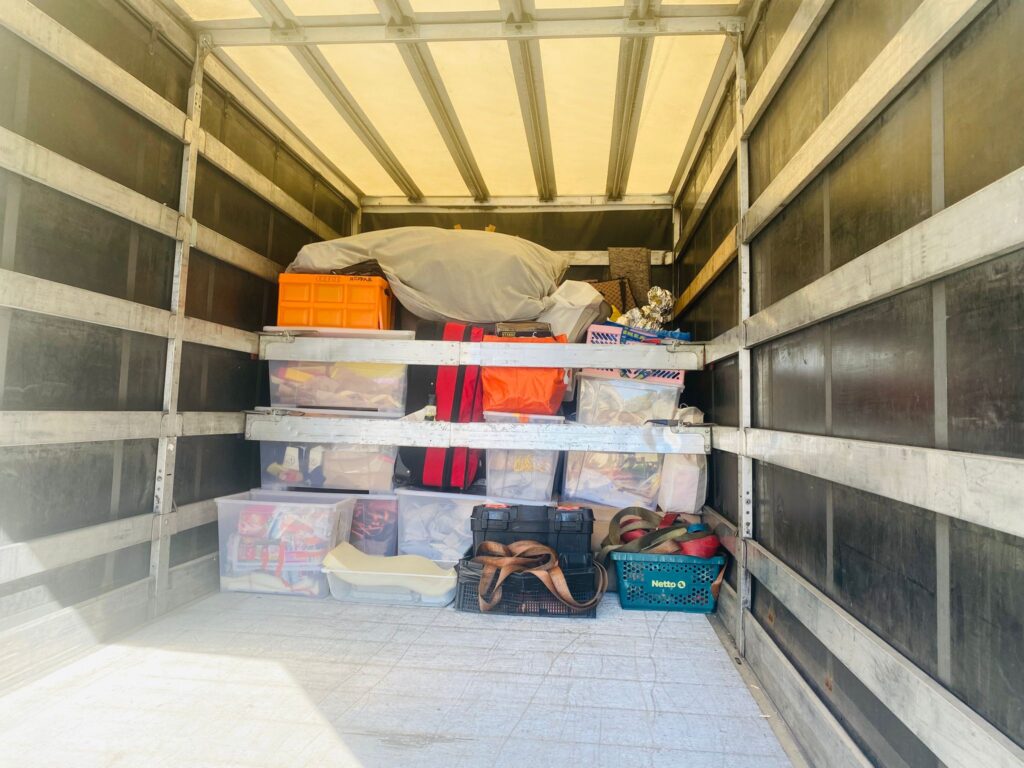
Fragile items deserve strategy, not luck. Plates, glasses, mirrors, lamps, artworks, electronics, and sentimental objects should never be packed in a rush. Use strong materials, wrap items individually, fill empty space inside boxes, and label everything clearly.
It also helps to create categories of care.
| Item type | Best packing approach |
|---|---|
| Glass and ceramics | Wrap individually, cushion gaps, mark as fragile |
| Electronics | Use original boxes when possible, protect screens and corners |
| Artwork and mirrors | Use flat protection, edge guards, and keep upright |
| Small valuables | Carry personally whenever possible |
| Furniture | Wrap surfaces, protect corners, secure moving parts |
If you are moving expensive or emotionally important belongings, specialist support becomes more than convenient. It becomes wise. Professional furniture removals, packing services, or white glove delivery can reduce risk dramatically, especially on longer European routes where repeated handling can increase the chance of damage.
Common packing mistakes that cost time and money
Packing errors often look minor in the moment and expensive later.
- Mixing items from multiple rooms in one box
- Using weak boxes for heavy objects
- Leaving empty space inside fragile-item boxes
- Forgetting to label cables and hardware
- Packing documents into the main load
- Overloading boxes until handles tear or bottoms collapse
Even one of these mistakes can slow unloading, increase breakage risk, and create days of unnecessary frustration once you arrive.
A better way to pack furniture for a move to Germany
Furniture usually creates the biggest visual impact in a move and the biggest risk if packed badly. Sharp corners, delicate finishes, glass inserts, drawers, and loose fittings all need attention.
A few practical rules help enormously:
- Empty drawers unless the item is designed to travel safely loaded.
- Protect corners and legs with proper padding.
- Wrap surfaces to avoid scratches during loading and transit.
- Store screws, bolts, and assembly parts in labelled bags.
- Tape those bags securely to the correct furniture item when possible.
This is one area where professional support can save surprising amounts of time. Furniture removals teams know how to lift, wrap, secure, and position bulky items efficiently. That knowledge protects both the furniture and the walls, doors, and staircases around it.
Why packing support can be worth every euro
Many people hesitate to pay for packing services because it looks like an optional extra. Yet on larger moves, it can be one of the smartest investments in the entire relocation.
Professional packing support can help you:
- Save hours or even days of preparation time
- Reduce damage risk for fragile items
- Organise the load more efficiently
- Lower stress during the final week
- Avoid the messy exhaustion that comes from doing everything alone
If your move includes delicate furniture, valuable home items, or a very tight timeline, this kind of help can feel like a genuine relief. That is especially true for family moves, office relocations, and last-minute departures.
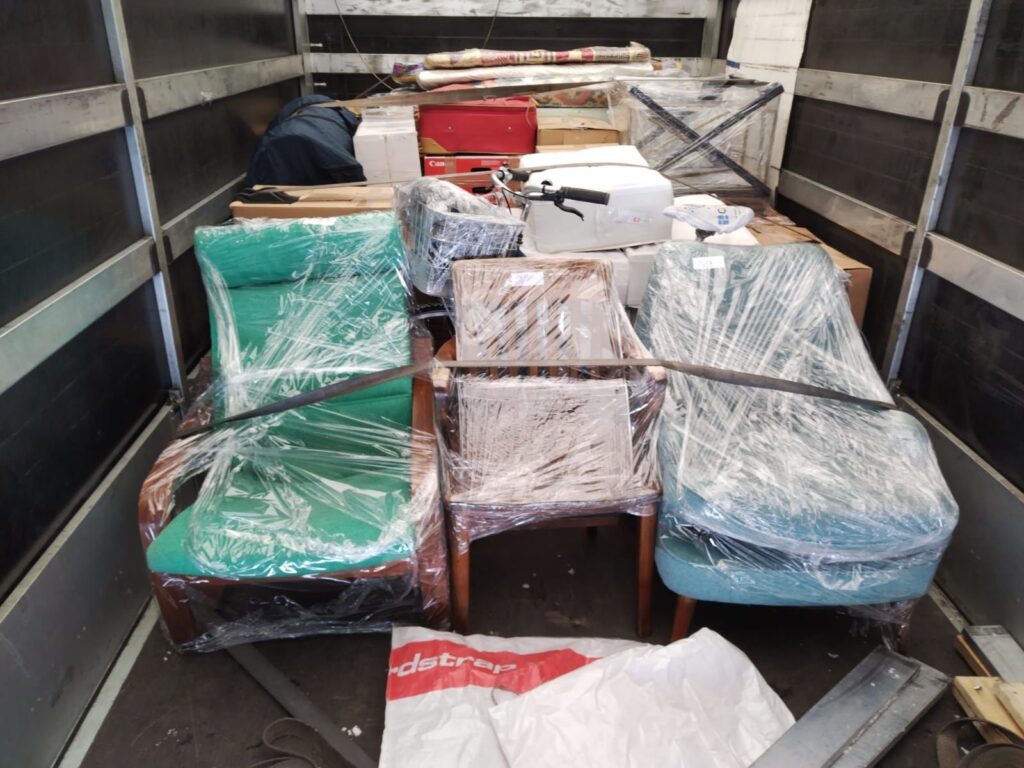
It also helps to think in layers. Essentials first. Fragile items next. Sentimental items with extra care. Furniture should be wrapped properly, especially for long-distance transport. This is where specialist support matters. Services such as furniture removals, professional packing, or white glove delivery can dramatically reduce damage risk and save hours of effort.
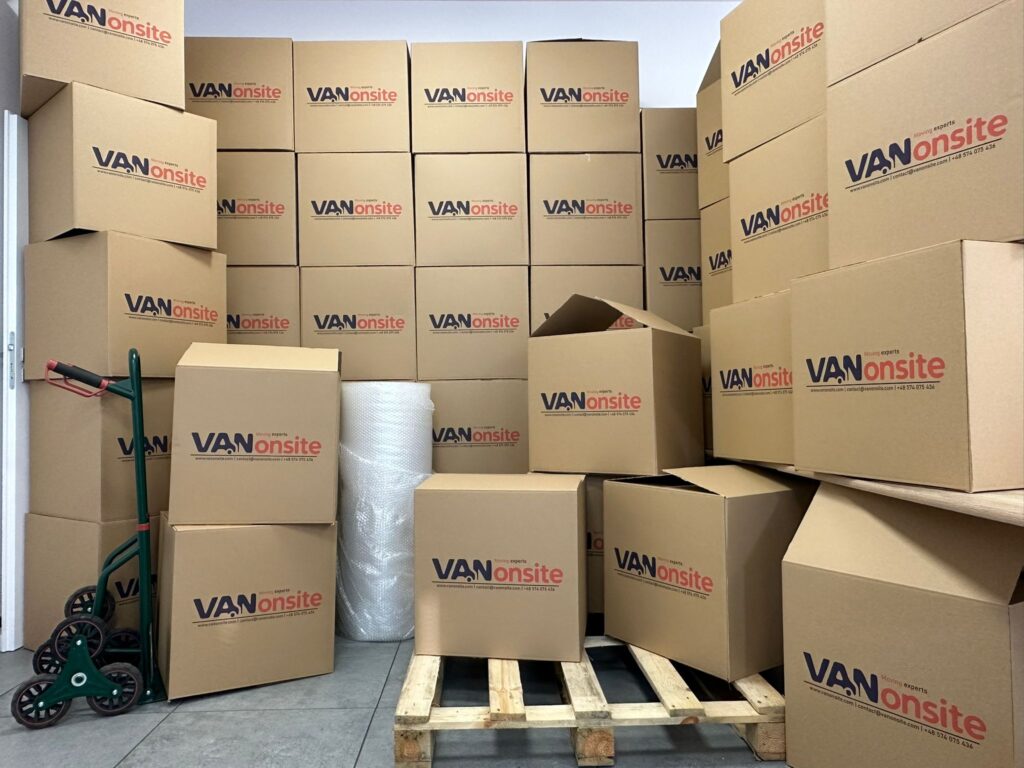
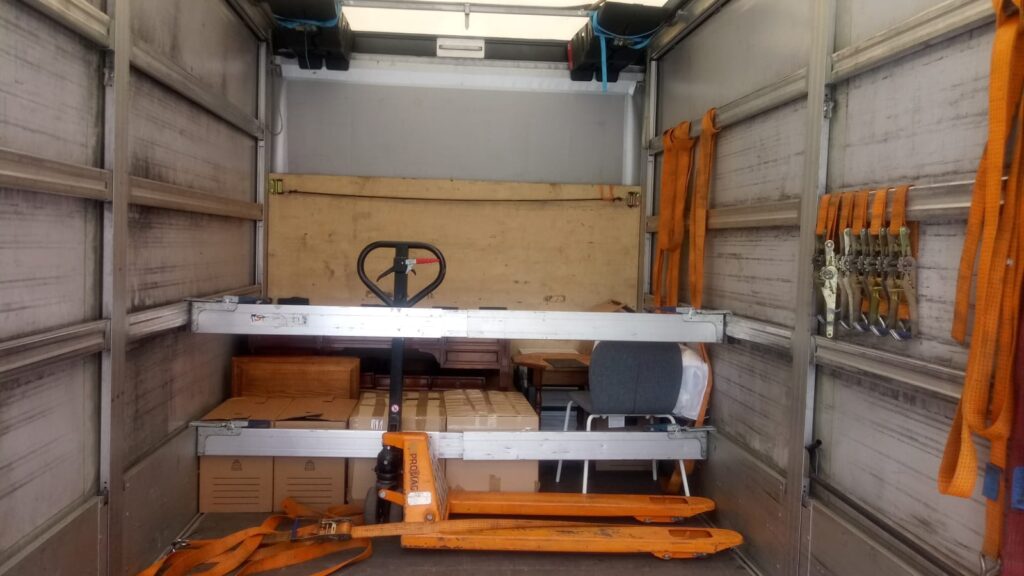

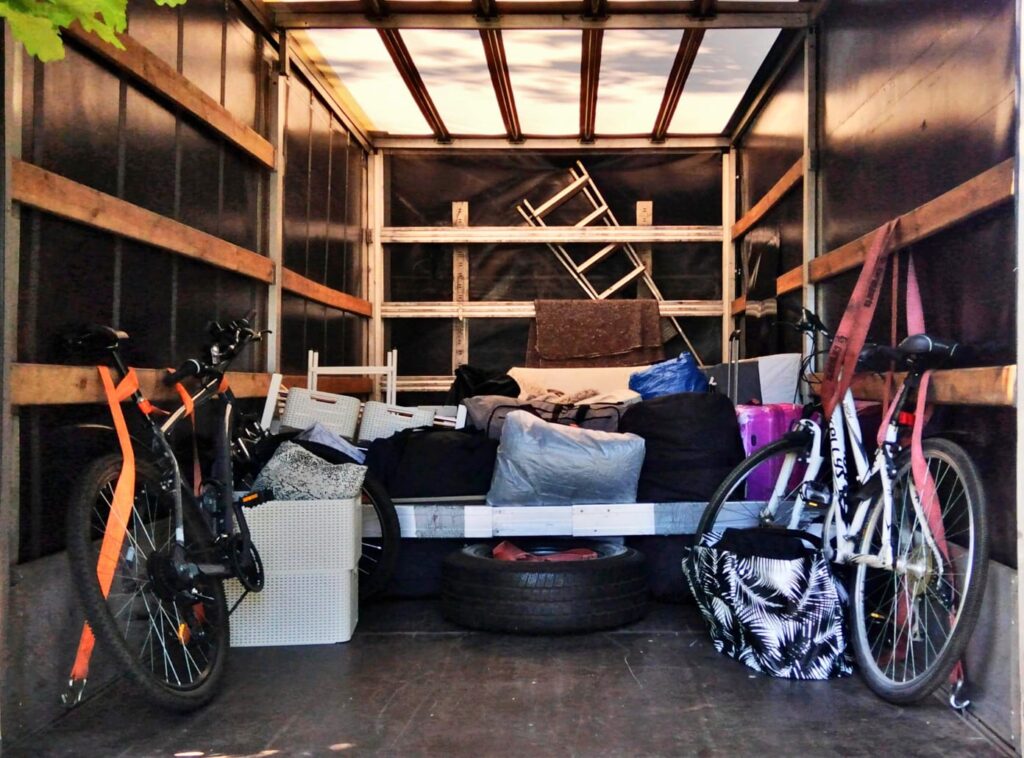

Common Mistakes People Make When Moving to Germany
Some moving mistakes hit your wallet. Others hit your energy, your timing, and your confidence. The most frustrating part is that many of them are completely avoidable. A move to Germany rarely falls apart because of one giant disaster. More often, it unravels through small missteps that build pressure one after another.
That is why this section matters so much. The best tips for moving to Germany are not only about what to do. They are also about what to avoid.
The most common errors
- Underestimating paperwork
- Booking too late
- Bringing items they do not need
- Choosing the wrong van size
- Forgetting building access details
- Packing essentials into the main load
- Not checking local registration deadlines
Each of these mistakes looks harmless at first. Yet each one can create extra costs, delays, confusion, or a miserable first few days in your new home.
Underestimating paperwork
Paperwork is easy to postpone because it feels less urgent than packing furniture or comparing quotes. Still, missing one key document can create a domino effect. It can slow down your move, complicate registration, delay housing formalities, or leave you scrambling for documents when you should be settling in.
The fix is simple but powerful. Treat documentation as one of the first moving tasks, not one of the last. Build one folder for originals, one for printed copies, and one secure digital backup. That small system can save you hours of panic later.
Booking too late
Late booking is one of the costliest mistakes people make. It limits your date options, reduces service availability, and often forces rushed decisions. In busy moving periods, waiting too long can mean paying more for a worse fit.
Booking early does not just improve price flexibility. It also gives you time to compare vehicle sizes, ask the right questions, and avoid settling for a service that does not really suit your move.
Bringing items you do not need
This mistake usually starts with good intentions. People tell themselves they might need that extra shelf, old chair, box of rarely used kitchenware, or winter jacket collection they have not touched in three years. Then moving day arrives, and every unnecessary item becomes weight, volume, time, and money.
One of the smartest tips for moving to Germany is to be ruthless before you pack. If an item is cheap to replace, rarely used, damaged, or emotionally neutral, it may not deserve a place in your moving load.
Choosing the wrong van size
A van that is too small can trigger a second trip, awkward last-minute reshuffling, or a stressful loading day where nothing fits the way you imagined. A van that is too large can mean paying for space you never needed.
This is why accurate volume planning matters. A professional moving company can usually help you avoid this mistake quickly by matching your inventory to the right transport size. It removes guesswork and makes the move feel more controlled from the beginning.
Forgetting building access details
People often focus on the journey between countries and forget the final ten metres at each end of the move. That can be a costly oversight. Narrow staircases, strict building rules, limited lift access, parking restrictions, and time-slot requirements can all disrupt an otherwise smooth relocation.
Before moving day, confirm:
- Parking availability at both addresses
- Lift access and reservation rules
- Floor level and staircase width
- Entry codes or concierge procedures
- Time restrictions for loading or unloading
Those details can look minor on paper. In practice, they can shape the whole day.
Packing essentials into the main load
This is one of the most common and most irritating mistakes. People pack beautifully, load efficiently, arrive exhausted, then realise their charger, medication, toothbrush, documents, kettle, or bedsheets are somewhere deep inside a wall of taped boxes.
Your first-night kit should always travel separately. Think of it as your survival layer. It should include the items that let you function comfortably for the first 24 to 72 hours.
Not checking local registration deadlines
Germany values structure, and that includes local administrative deadlines. If you do not check what needs to be done after arrival, you can lose precious time in your first week and create unnecessary complications.
This is especially important if your move is linked to work, study, or long-term residency. A strong arrival plan helps you move from chaos into routine much faster.
A quick table of mistakes and consequences
| Mistake | What it can cause |
|---|---|
| Missing paperwork | Delays, failed appointments, avoidable stress |
| Booking too late | Higher costs, poor availability, rushed choices |
| Moving too much | Bigger quote, more clutter, slower unloading |
| Wrong van size | Wasted money or transport problems |
| Ignoring access details | Delays, extra charges, difficult loading |
| No essentials bag | Frustrating first night and first morning |
| Delayed registration planning | Slower settling-in and admin pressure |
These mistakes can lead to extra fees, delayed delivery, unnecessary stress, and a rough first week in your new home. One of the best tips for moving to Germany is brutally simple: slow down early so the move can move faster later.
What to Do in Your First Days After Arriving in Germany
Arrival can feel strange, even when everything went well. The boxes are there. The furniture has arrived. The key is in your hand. Yet nothing feels settled yet. That is normal. The first days are not about making everything perfect. They are about creating traction, comfort, and a sense that life is beginning to take shape again.
This stage matters more than many people expect. A smart first week can turn a stressful move into a confident transition. A chaotic first week can make even a successful relocation feel shaky.
Your first priorities after arrival
- Register your address if required.
- Set up internet, electricity, and local services.
- Open or activate a bank account if needed.
- Learn your local transport routes.
- Unpack essentials first.
- Check deliveries and furniture condition.
- Build a simple routine for the first week.
These steps look basic, but they create momentum. Momentum matters because the first days in a new country can feel disorienting even when everything goes to plan.
Start with the practical foundation
The first goal is stability. That means getting the essentials of daily life in place as quickly as possible. Electricity, water, internet access, charging points, a made bed, clean towels, and the ability to prepare a simple meal can change the emotional tone of the whole move.
Do not try to unpack everything at once. Start with what makes the home functional.
- Bedroom essentials
- Bathroom basics
- Kitchen necessities
- Documents and tech setup
- Everyday clothes and toiletries
This creates a base camp effect. Once those basics are ready, the rest of the unpacking feels far less overwhelming.
Register, organise, breathe
One of the smartest tips for moving to Germany is to avoid letting important admin tasks drift into the background. When you are tired, it is tempting to postpone everything official. Yet a little structure now prevents pressure later.
Use the first days to create a simple arrival folder with:
- Rental agreement
- ID and residence documents
- Health insurance papers
- Utility confirmations
- Banking details
- Employer or university documents
When everything has a place, the new environment starts to feel manageable instead of scattered.
Check your shipment properly
Even when the move goes smoothly, it is worth checking your delivery with care. Inspect furniture, fragile items, and key boxes early. If something needs attention, it is better to notice it right away rather than days later when details become harder to track.
This is another area where a professional service makes a real difference. Careful handling, clear communication, and GPS-tracked transport reduce uncertainty and help the first unpacking phase feel much calmer.
Build a routine before you build perfection
Many movers pressure themselves to settle in immediately. That rarely works. A better approach is to build a simple daily structure. Wake up at a normal time. Open the windows. Explore the local area. Learn the route to the supermarket. Find the nearest transport stop. Unpack one priority zone at a time.
Small routines make a new place feel familiar faster. Familiarity lowers stress. That emotional shift is powerful.
A simple first-week plan
| Day range | Best focus |
|---|---|
| Day 1 | Essentials, rest, documents, food, bed setup |
| Day 2 to 3 | Registration planning, utilities, key unpacking |
| Day 4 to 5 | Local area, transport routes, admin organisation |
| Day 6 to 7 | Remaining boxes, furniture checks, light routine building |
This kind of structure is not rigid. It is calming. It helps you make steady progress without feeling buried.
What helps the new place feel like home faster
- Good lighting in the main room
- A fully made bed on the first night
- One clean and functional kitchen zone
- Internet connection as early as possible
- Familiar items unpacked early, such as mugs, photos, or blankets
These little touches matter because moving is emotional, not just practical. People settle faster when the space begins to reflect their routines and comfort.
The goal is not perfection. The goal is stability. Once the bed is assembled, the kettle is working, your essentials are unpacked, and your documents are in one safe place, the new space starts to feel less like a transit point and more like home.
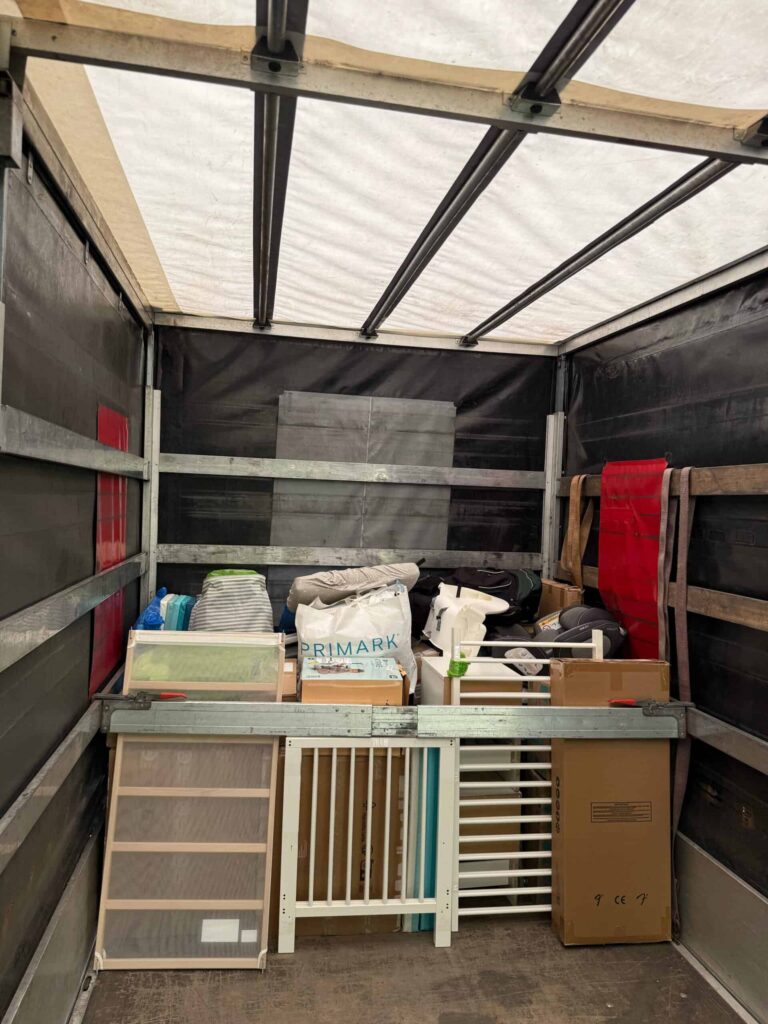
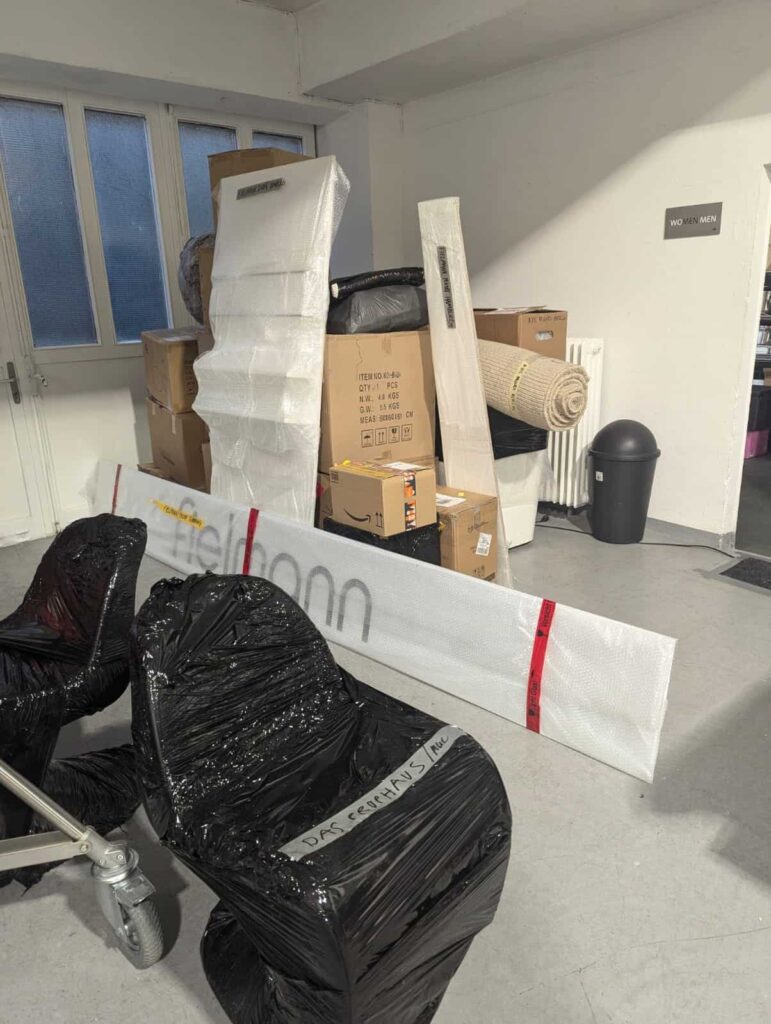
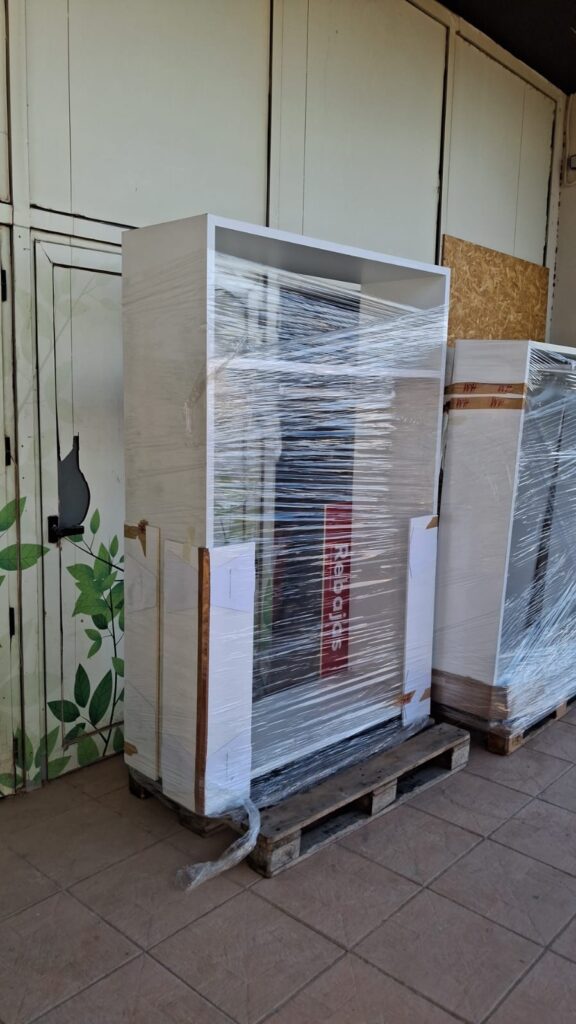
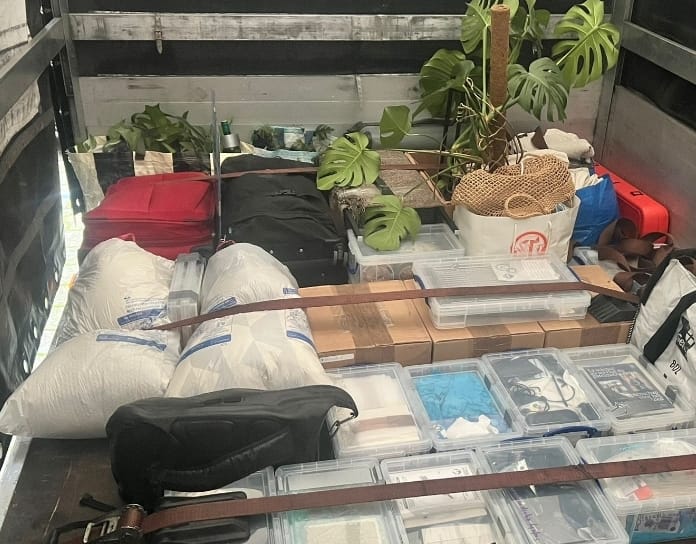
Why Reliable Transport Matters More Than Ever in an International Move
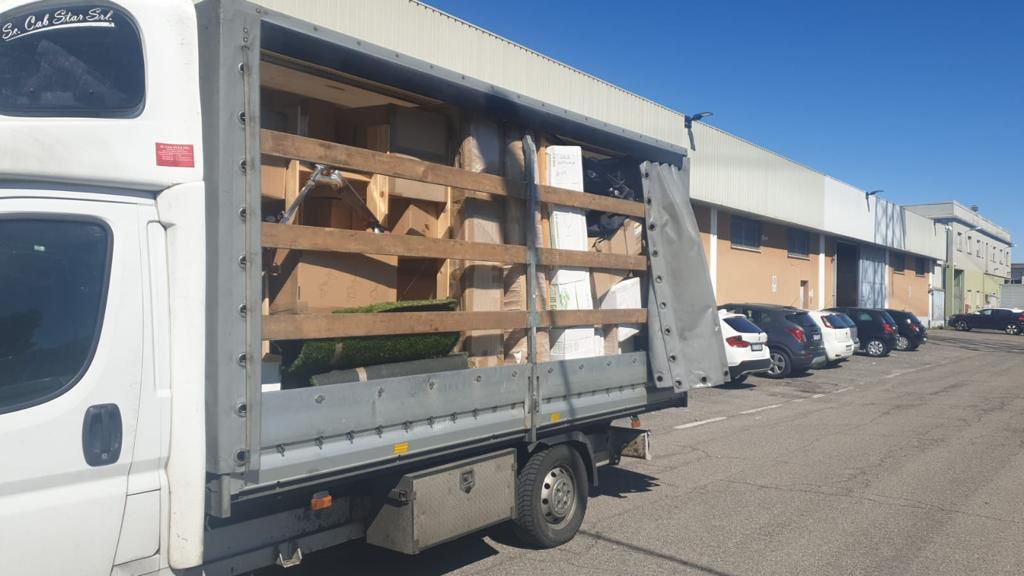
International relocations are less forgiving than local moves. The route is longer. The margin for error is smaller. Timing matters more. Communication matters more. Load security matters more. When your life is crossing borders, reliability stops being a nice bonus and becomes one of the pillars of a successful move.
That is why transport quality matters so deeply in a move to Germany. A delayed local move can be stressful. A delayed international move can affect check-in dates, work starts, family routines, temporary accommodation costs, and the emotional tone of the entire relocation. One missed update or one badly handled item can create a chain reaction that follows you into your first week.
Reliable transport gives you something priceless: calm.
Why reliability changes the whole moving experience
A strong transport setup does more than move furniture from one address to another. It creates confidence before the move, clarity during the journey, and stability when you arrive.
- Clear communication reduces uncertainty
- GPS tracking gives real visibility during transit
- Fast response times help when plans change suddenly
- Careful handling protects fragile and valuable items
- Accurate scheduling reduces disruption on both ends of the move
This is especially important if you are moving with children, working to a fixed start date, coordinating keys with a landlord, or trying to manage a relocation while still handling work or study responsibilities. In those moments, a dependable service is not just practical. It feels like oxygen.
What reliable transport protects beyond your belongings
When people think about transport, they usually think about boxes, furniture, and route planning. Yet good transport protects more than physical items.
| What reliable transport protects | Why it matters |
|---|---|
| Your time | Fewer delays, better coordination, less disruption |
| Your budget | Lower risk of surprise costs caused by avoidable problems |
| Your routine | Easier arrival, smoother first days, faster settling in |
| Your peace of mind | Better visibility, fewer unknowns, calmer decision-making |
| Your belongings | Less breakage risk, better handling, safer delivery |
This wider impact is what many movers only understand once they have experienced both a well-managed move and a badly managed one. The difference is enormous.
GPS tracking is not a gimmick. It is a trust builder.
When a move stretches across multiple countries, silence creates tension. People start wondering where their things are, whether the route is on schedule, and whether the delivery window is still realistic. GPS tracking cuts through that uncertainty.
It gives you visibility. It reduces the need for nervous guesswork. It makes the move feel real, monitored, and under control. That is one reason GPS-tracked transport has become such a powerful trust signal for international removals.
Why careful handling matters even more on long routes
Longer distances usually mean more motion, more loading pressure, and more chances for something to shift if it is not secured correctly. Furniture, electronics, mirrors, decor, and boxed household items all need proper positioning and protection.
A rushed or careless transport setup can turn small packing weaknesses into real damage. By contrast, careful furniture handling protects not just valuable items, but the comfort and rhythm of your first days in a new country. Arriving to scratched tables, damaged boxes, or broken essentials drains energy fast. Arriving to a well-managed delivery creates relief.
When speed matters and when precision matters
A great international move balances both. Speed matters because people have deadlines. Precision matters because people have lives packed into the vehicle.
The right service does not worship speed at the expense of care. It combines fast action with disciplined handling, realistic updates, and route awareness. That balance is where quality shows itself.
This is one of the quiet strengths of VANonsite. The company is built around secure transport, rapid action, and dependable service across Europe. That combination builds trust without needing flashy promises. It feels solid, modern, and reassuring, which is exactly what many people need when planning a move to Germany.
Best VANonsite Services for Moving to Germany
Different relocations call for different solutions. A student moving from Paris to Cologne will not need the same setup as a family relocating from Milan to Munich. A last-minute apartment move creates a very different kind of pressure from a carefully planned office transfer. That is why service flexibility matters.
VANonsite is strongest when the move needs to feel tailored instead of generic. Rather than forcing every customer into one rigid model, the company offers several practical service paths that can match the size, urgency, and sensitivity of the relocation.
VANonsite services that support different moving needs
- Last Minute Moving for urgent relocations
- Furniture Removals for bulky or delicate items
- Home Removals for full household moves
- Packing Service for safer transport and faster preparation
- White Glove Delivery for premium handling
- Office Removals for business relocation
- Storage for timing gaps between move-out and move-in
- Student Removals for affordable smaller moves
How each service supports a different kind of move
| Service | Best fit | Why it matters |
|---|---|---|
| Last Minute Moving | Sudden tenancy changes, urgent starts, short-notice relocation | Helps when speed matters and time pressure is intense |
| Furniture Removals | Bulky, fragile, or high-value pieces | Reduces breakage risk and protects awkward items |
| Home Removals | Family homes, multi-room flats, full household loads | Creates structure for more complex moves |
| Packing Service | Busy schedules, fragile belongings, larger homes | Saves time and reduces packing mistakes |
| White Glove Delivery | Premium items, designer furniture, delicate interiors | Adds a higher level of care and presentation |
| Office Removals | Team moves, equipment transfer, workspace relocation | Supports productivity and continuity |
| Storage | Mismatched move-out and move-in dates | Adds flexibility and breathing room |
| Student Removals | Smaller budgets, compact loads, city-to-city moves | Keeps the move practical and affordable |
That flexibility is valuable because not every move fits a template. Sometimes you need speed. Sometimes you need extra care. Sometimes you need both.
Choosing the right service becomes much easier when it is connected to a real need. If your priority is protecting fragile furniture, Furniture Removals or White Glove Delivery can make the difference. If timing is tight, Last Minute Moving offers a faster route. If you are moving with family, Home Removals brings more structure. If you are relocating on a smaller budget, Student Removals can be a practical fit.
FAQ About Moving to Germany
What is the best way to move to Germany from another European country?
The best approach is to plan early, calculate your load realistically, and choose a service that matches your move size. A man and van service can be ideal for smaller relocations, while full removals support is often better for family homes or larger furniture loads. The key is to match the transport solution to the actual complexity of the move instead of guessing.
How early should I book a move to Germany?
Ideally, book 4 to 8 weeks in advance. In busy seasons, earlier is even better. Early booking usually gives you better availability, more flexible dates, stronger planning support, and a better chance of avoiding last-minute costs.
Is a man and van service enough for moving to Germany?
Yes, for many smaller moves it is. It works especially well for students, partial apartment moves, urgent transport, or compact city-to-city relocations. For larger or fragile household moves, a more comprehensive removals service is often the better fit because it offers more structure, more handling support, and better protection for bulky items.
What documents should I prepare before moving to Germany?
Prepare your passport or ID, any visa or residence paperwork, proof of accommodation, work or study documents, and health insurance confirmation. If you are moving with family or pets, bring the relevant supporting documents too. It is also wise to keep digital copies and printed backups of the most important papers.
Can I move furniture to Germany safely?
Yes, absolutely, but careful packing and professional handling make a major difference. Tracked transport, protective wrapping, and experienced loading reduce the risk of damage significantly. If your items are especially delicate, valuable, or awkward to move, specialist furniture removals support is often the safest option.
How do I reduce the cost of moving to Germany?
Declutter before packing, book early, choose the right vehicle size, and combine services only where they genuinely help. Even trimming a few cubic metres from your load can bring meaningful savings. The goal is not just to spend less. It is to avoid paying for the wrong setup.
What is the biggest mistake people make when moving to Germany?
One of the biggest mistakes is treating the move as only a transport problem. In reality, the move also involves paperwork, timing, building access, registration planning, and first-week essentials. The people who move most smoothly are usually the ones who prepare the full picture, not just the boxes.
Should I choose the cheapest moving quote?
Not automatically. A very cheap quote can look attractive, but it may hide weak communication, limited protection, vague pricing, or poor service fit. The best choice is usually the option that gives you the strongest combination of clarity, care, timing, and value.
Conclusion
A move to Germany can feel thrilling, chaotic, hopeful, and demanding all at once. That is normal. The good news is that a successful relocation rarely depends on luck. It depends on planning, clear priorities, and the right support.
These tips for moving to Germany are designed to help you move with more confidence, less friction, and fewer unpleasant surprises. Start early. Keep your documents close. Pack smart. Choose the right vehicle. And if you want a move that feels faster, safer, and more controlled, work with a partner that values speed, security, visibility, and care.
VANonsite brings those qualities together in a way that feels practical, not pushy. Whether you need a lean man and van service, full home removals, help with packing, or a fast last-minute solution, the company offers the kind of flexible support that makes a major relocation feel manageable.
If you are preparing for your next chapter, now is a strong time to explore the best setup for your move and request tailored support for Germany.
Quick Comparison: DIY Move vs Professional Moving Service
| DIY move | Professional moving service |
|---|---|
| Lower upfront control over planning quality | Less stress and fewer moving parts |
| Higher physical effort | Professional handling |
| More coordination on your side | Better speed and scheduling |
| Greater risk of packing errors | Safer transport for furniture and fragile items |
| Limited visibility during transit | GPS tracking and clearer updates |
The table says a lot in very few words. A do-it-yourself move can still work for very small relocations, especially when budgets are tight and loads are simple. Yet once the move becomes international, the hidden strain rises quickly. There is more lifting, more planning, more risk, and more room for something important to go wrong.
A professional service shifts that burden. It gives you expertise, structure, and far more confidence that the move will not only happen, but happen well.
Final Reminder Before You Move
If you remember only one thing from this guide, let it be this: the best tips for moving to Germany are the ones that protect your time, your belongings, and your peace of mind. A move is not just about transport. It is about arriving ready.
That is why choosing a trusted man and van or removals partner can make such a dramatic difference. The right support helps you protect your schedule, your furniture, your budget, and your energy all at once.
In the end, the real goal is simple. You do not just want your things to reach Germany. You want your new life to start well.