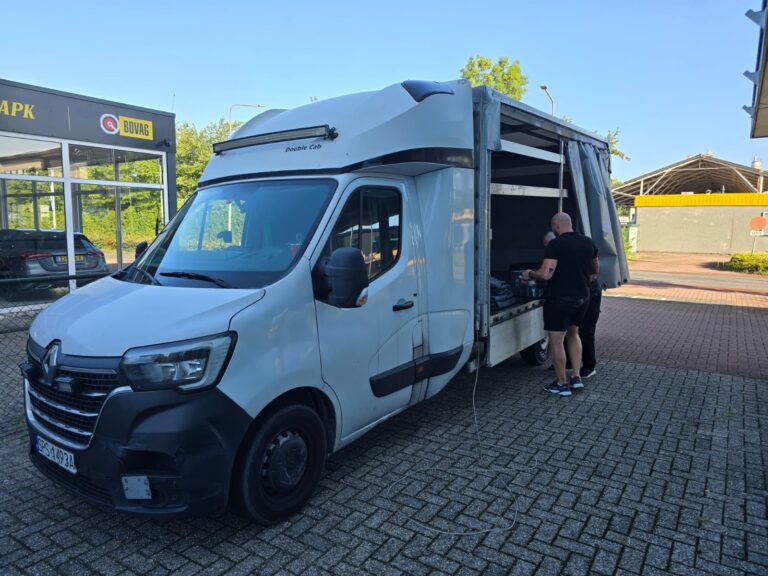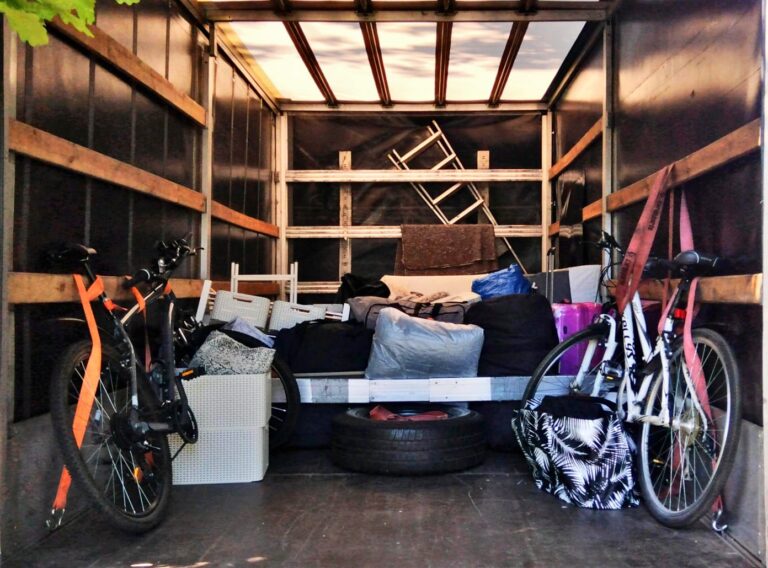

Moving to Ireland from Sweden is a smart EU→EU relocation: the paperwork is lighter, but timing still matters. Plan your dates, inventory, and route, then line up essentials like the PPS Number (PPSN), housing, banking, and healthcare. With VANonsite you get right‑size vans (from 5 m³ to 90 m³), trained crews, and live GPS tracking on every load, so you always know where your belongings are. Choose Packing Services for speed, White Glove Delivery for premium placement and assembly, and Furniture Removals for bulky items.
To build topical authority and prepare both ends of your journey, see also: How to Relocate to Sweden and Removals to Sweden.
TL;DR:
- Moving to Ireland from Sweden is EU→EU: straightforward paperwork; plan PPSN, banking, and housing early.
- Typical move costs run from ~€400 (compact loads) to €7,000+ (large homes). See pricing tables below.
- Pick the right van size — 5, 10, 15, 30, or 90 m³ — each shipment tracked with live GPS.
- Route smart: direct France↔Ireland ferries often beat the UK landbridge for admin; we plan both.
- Pack like a pro or book Packing Service; fragile or premium pieces? choose White Glove Delivery.
- Arrival checklist: PPSN, Revenue, GP registration, utilities, and your Eircode setup.
- Get a tailored plan, timeline, and fixed quote with transparent ETAs.
Conversion CTA: Get your Sweden→Ireland quote (button). Secondary CTAs to Packing Services, Furniture Removals, White Glove Delivery.
Why Ireland? Quick snapshot
Ireland blends an English‑speaking environment with a dynamic economy and easy access to nature. Dublin, Cork, Galway and Limerick host fast‑growing tech, finance and life‑sciences hubs, while the west coast offers a relaxed, coastal lifestyle. As you compare moving to Ireland from Sweden, you’ll find day‑to‑day admin quite manageable, friendly communities, and plenty of green spaces for weekend escapes.
Pros
- English‑speaking market: frictionless communication for work and daily life.
- Career opportunities: strong multinational presence and start‑up scene.
- Coastal lifestyle: beaches, trails and mild Atlantic climate vs. colder Swedish winters.
- Community & culture: welcoming cities, music, festivals and sports.
- EU continuity: EU→EU move simplifies residence, banking and recognition of documents.
Cons (and how to plan around them)
- Higher rents in Dublin: start your search early; consider Cork, Galway, Limerick for value.
- Car import & VRT admin: prepare paperwork in advance; consider ToR relief where eligible.
- Wet, windy weather: invest in quality rain gear and dehumidifiers for coastal homes.
- Commuting & parking in city centres: check permit zones and choose housing near transit.
Step‑by‑step plan & timeline
Good sequencing keeps costs down and stress low. Build buffers around ferry slots, building access and key registrations. Here’s a realistic timeline for a smooth Sweden → Ireland relocation.
8–10 weeks before
- Define dates and destination (Dublin/Cork/Galway/Limerick) and set a working budget.
- Create a room‑by‑room inventory (photos/video help right‑size your van).
- Request a tailored quote; decide self‑pack vs Packing Services.
- Identify special items (piano, art, IT) that may need custom crating.
6–8 weeks before
- Start housing search; shortlist areas close to work/schools and transit.
- Map your route: Direct France↔Ireland ferries vs UK landbridge; we’ll advise on timing and cost.
- Gather documents for PPSN, banking and pet travel (if applicable).
- Pre‑book building permits/elevators at origin and destination if required.
4 weeks before
- Declutter to reduce volume and cost; sell/donate bulky items.
- Confirm ferry/bridge preferences; note seasonal schedules and check‑in windows.
- Lock in parking bays and loading windows; share lift dimensions and long‑carry distances.
- Decide on insurance level and any White Glove needs at destination.
1–2 weeks before
- Label by room + priority; build “Open‑First” boxes (IDs, meds, kettle, bedding, tools, chargers).
- Separate a Do‑Not‑Ship pouch (passports, cash, keys, prescriptions).
- Finalise access notes: gate codes, concierge contacts, Eircode (if known).
Move week
- Protect floors/doors; photograph delicate items pre‑load.
- Walk through the inventory with the team lead; confirm loading order.
- Enable GPS tracking alerts; keep phones on for ferry/ETA updates.
Arrival in Ireland
- Direct room‑by‑room placement; tick off against the inventory.
- Assemble essentials first (beds, kitchen, work desk) or book White Glove Delivery.
- Day‑1 admin sprint: PPSN appointment, bank setup, mobile plan, utilities and Eircode activation.
Documents & registrations (EU→EU move)
Sweden and Ireland are both in the EU, so EU/EEA/Swiss citizens don’t need a visa to live and work in Ireland. The focus is on arrival registrations and practical admin. (If you’re moving with non‑EU family members, additional steps may apply—plan extra time.)
PPS Number (PPSN): what it is and how to get it
The PPSN is your Irish personal number used for tax, social services, and many public/private services.
What you typically need
- Passport or national ID (valid).
- Proof of Irish address (e.g., tenancy/lease, utility/landlord letter, bank or employer letter).
- Proof of need (job offer/contract, school enrolment, childcare application, or similar).
Steps
- Gather documents and scans.
- Submit your application online or book an appointment at an Intreo Centre (Department of Social Protection).
- Receive your PPSN confirmation letter at your Irish address.
Timing & tips
- Typical processing: a few days to ~2 weeks (varies by season and documentation).
- Ensure names/addresses match across documents.
- Keep the PPSN letter safe; you’ll need it for banking, employment, and taxes.
Banking & tax (Revenue)
Open a bank account soon after arrival, then register with Revenue so your employer taxes you correctly.
Bank account
- Bring photo ID, proof of address, and (often) your PPSN.
- If you’ve just arrived and lack bills, ask your employer/landlord for a confirmation letter.
Revenue / tax setup
- Create a myAccount with Revenue using your PPSN and Irish address.
- Link your employment to avoid emergency tax.
- Keep payslips and your employment summary for records; update your address promptly.
Self‑employed or contracting? Register for the appropriate tax head (e.g., income tax) in myAccount and set reminders for filings.
Healthcare (HSE)
Ireland’s public system is run by the HSE.
- GP registration: choose and register with a local GP (family doctor).
- EHIC: your European Health Insurance Card covers medically necessary care on short stays; long‑term residents should register locally.
- Entitlements: depending on income and status you may qualify for a GP Visit Card or Medical Card.
- Emergencies: dial 112/999 for ambulance, fire, or police.
Driving, vehicles & VRT/NCT
Licences
- An EU driving licence is valid in Ireland. Some residents eventually exchange to an Irish licence—optional for many EU citizens.
Importing a car from Sweden
- Within roughly 30 days of arrival, book an NCTS appointment to register the car and assess VRT (Vehicle Registration Tax).
- You may be eligible for Transfer of Residence (ToR) relief on VRT when moving home, typically if you: owned and used the vehicle 6+ months before moving, are taking up normal residence in Ireland, and will keep the vehicle for 12 months after registration.
- After registration: pay motor tax, update insurance, fit Irish plates.
- NCT roadworthiness tests apply to vehicles over a certain age (commonly 4+ years); keep your service records.
Requirements can change—check official Irish guidance when you schedule your NCTS/VRT appointment.
Pets
Moving pets from Sweden to Ireland is straightforward with preparation.
- Microchip and rabies vaccination are mandatory; travel with an EU Pet Passport or official health certificate.
- Dogs usually require tapeworm treatment administered 24–120 hours before entry.
- Use an airline‑approved or vehicle‑safe crate; pack water and familiar bedding.
- Book a local vet visit soon after arrival.
Kids & schools
- Prepare passports/IDs, birth certificates, proof of address, and immunisation records.
- Contact schools early—popular schools can have waiting lists.
- Keep previous school reports for placement; arrange after‑school care if needed.
- School year typically starts in late August/early September; mid‑year transfers are possible.
Fast arrival checklist
- Apply for PPSN (book early).
- Open bank account; set up Revenue myAccount.
- Register with a GP; keep EHIC as backup.
- Car: book NCTS/VRT, arrange motor tax/insurance, check NCT due dates.
- Set up mobile, utilities, broadband; note your Eircode.
- Schools: submit enrolment documents; confirm start dates.
- Pets: vet registration and microchip details.
Who does what (at a glance)
| Authority / Service | Purpose |
|---|---|
| DSP / Intreo | PPS Number applications |
| Revenue (myAccount) | Tax registration, payroll credits |
| HSE & GP practices | Public healthcare and family doctors |
| NCTS | Vehicle registration, VRT assessment |
| NDLS | Driver licence exchange (if desired) |
| Motor Tax Office | Motor tax and registration plates |
| Schools / Patron bodies | Enrolment and admissions |
Internal links for topical authority:
• Related reading: How to Relocate to Sweden (opposite direction context).
• Service hub: Removals to Sweden (for Sweden‑side moves/storage coordination).Why choose VANonsite
- Live GPS tracking on every load with proactive ETA updates.
- EU→EU expertise: streamlined paperwork, guidance on PPSN, VRT/NCTS, and potential ToR relief.
- Route planning for direct France↔Ireland ferries and UK landbridge, with winter resilience.
- Right‑size capacity from 5 m³ to 90 m³—from student moves to full houses and offices.
- Dedicated move planner as your single point of contact.
- Professional packing and White Glove Delivery for premium placement and assembly.
- Damage prevention: trained crews, floor/door protection, screen‑safe crates.
- Storage bridging available when dates don’t line up.
- Eco‑minded options: reusable crates and recyclable materials.
- Transparent quoting with clear bands (see Removals to Sweden for live bands).
Start your Sweden→Ireland move plan today — get a tailored quote and timeline.
What you can and can’t bring (Sweden→Ireland)
Moving within the EU keeps customs simple for household goods, but some categories are restricted or need extra care. A clean inventory and smart packing will prevent delays at ferry terminals and ports.
Household goods (personal use)
Everyday items (clothes, books, furniture, most electronics) are fine for personal moves. To speed things up:
- Prepare a numbered inventory (room → box number → contents).
- Photograph high‑value items and note serial numbers (TVs, laptops, bikes).
- Clean outdoor gear (bikes, tools, camping kit) to remove soil or plant material.
- Empty/defrost fridges and freezers at least 24 hours before loading.
Food, plants & animal products
You can carry limited shelf‑stable foods for personal use. However, many animal‑origin products and plants/seeds/soil face restrictions.
| Category | OK? | Notes |
|---|---|---|
| Shelf‑stable, sealed foods (tea, coffee, pasta, tins) | ✅ | Small personal quantities only; avoid glass jars if possible |
| Perishables (fresh meat, dairy from non‑EU) | ❌ | Do not ship; buy locally on arrival |
| Plant materials (houseplants, seeds, soil, firewood) | ⚠️/❌ | Often require phytosanitary clearance; best to avoid unless verified |
| Pet food | ⚠️ | Sealed, EU‑compliant only; check ingredients and origin |
When in doubt, keep food out of the shipment. It reduces inspection risk and pest concerns.
Alcohol & tobacco (EU personal possession)
Moving within the EU allows transport for personal use, but large quantities can trigger excise/tax scrutiny.
- Keep quantities reasonable and in original packaging.
- Split fragile bottles among boxes with protective dividers.
- Retain receipts where available.
- Avoid placing alcohol/tobacco in shared/groupage loads.
Medicines & medical devices
Bring only what you personally need.
- Keep original packaging and prescriptions (or a doctor’s letter).
- Check whether any medicine contains controlled substances; some require special proof.
- Carry daily/critical meds with you, not in the van.
- Medical devices (CPAP, monitors): pack manuals, spare consumables, and a power adaptor.
Dangerous goods (ADR) — what not to pack
Many household items count as dangerous goods and are restricted or prohibited for road, sea, or air transport.
| Item / Substance | Status | Safer Alternative |
|---|---|---|
| Paints, solvents, thinners | ❌ | Buy in Ireland; empty & dry paint tools |
| Aerosols (sprays, deodorants, paints) | ⚠️/❌ | Limit to a few personal items in luggage; do not ship bulk |
| Gas cylinders (butane/propane), camping fuel | ❌ | Return cylinders; buy/lease locally |
| Petrol/diesel, fuel in tanks/containers | ❌ | Drain equipment; ship engines dry |
| Bleach, strong acids/alkalis, pool chemicals | ❌ | Dispose safely before move |
| Fireworks, flares, ammunition, weapons | ❌ | Not permitted |
| Lithium batteries (e‑bikes, power tools, scooters) | ⚠️ | Remove batteries and declare; provide model details; some packs must travel separately |
Tell us if your inventory includes lithium batteries or pressurised containers. We’ll advise the safest, compliant approach.
Electronics & appliances
- Sweden/Ireland both use 230V/50Hz; Ireland uses Type G plugs. Pack a few quality adaptors.
- For TVs/monitors, keep original boxes where possible; otherwise request screen‑safe crates.
- Back up data and sign out of devices; note serials for insurance.
Paperwork for your shipment
A little admin prevents long checks.
- Master inventory with box numbers and room destination labels.
- Separate list for fragile/high‑value items.
- Keep a Do‑Not‑Ship pouch (passports, cash, keys, jewellery, prescriptions) with you.
- Share access notes (permits, lift slots, long‑carry distances) before collection.
Quick compliance checklist
- ✅ Personal household goods only; no hazardous materials.
- ✅ Boxes double‑walled and under safe weight (≈20 kg where possible).
- ✅ Room + priority labels on two sides and top.
- ✅ Lithium batteries removed/declared; engines drained.
- ✅ No perishables; limited sealed shelf‑stable food only.
- ✅ Inventory shared in advance for a pre‑move compliance review.
Summary table: what’s typically OK vs. restricted
| Category | OK? | Notes |
|---|---|---|
| Clothes, books, furniture | ✅ | Include on inventory; protect edges |
| Electronics (laptops, TVs) | ✅ | Note serials; use screen protection |
| Alcohol/tobacco | ⚠️ | Personal use only; keep quantities modest |
| Plants/seeds/soil | ⚠️/❌ | Verify rules; prefer not to ship |
| Medicines | ✅/⚠️ | Original packs + prescriptions; carry essentials personally |
| Lithium batteries | ⚠️ | Remove/declare; some must travel separately |
| Hazardous chemicals/flammables | ❌ | Not permitted in the shipment |
If you’re unsure, share your draft inventory and we’ll flag risk items before packing.
How much does it cost to move from Sweden to Ireland?
Costs depend on volume/weight, distance/route, access (stairs, permits, long carries), ferries/bridges/tolls, season, and service level (DIY pack vs. Packing Services vs. White Glove). Because these factors shift, we don’t publish fixed figures here.
Where to see current price bands
For up‑to‑date price bands and capacity tiers, check the live table on Removals to Sweden (the same fleet and pricing logic applies in reverse for Sweden→Ireland). Use it to estimate your band, then request a tailored quote.
Capacity & distance overview (no pricing)
Use this table to place your move into a volume/route bracket. Then confirm the cost band via the live table (link above) and your exact addresses.
| Scenario | Volume | Route Distance | Notes |
|---|---|---|---|
| Student/compact | 5 m³ | 1,400–2,200 km | Minimal furniture; fast access |
| 1–2 rooms | 10 m³ | 1,400–2,200 km | Small sofa/bed + boxes |
| 2–3 rooms | 15 m³ | 1,400–2,200 km | Heavier pieces; elevator helpful |
| Family apartment | 30 m³ | 1,400–2,200 km | Multiple rooms; consider parking permits |
| Large household | 60–90 m³ | 1,600–2,600 km | Whole home/office; split loads possible |
Tip: Share a short video walk‑through to right‑size your van and avoid over‑ or under‑capacity.
Sample Sweden→Ireland routes (no pricing)
- Stockholm → Dublin (via France–Ireland ferry): Fewer border formalities; longer sea leg. Great for predictable ETAs.
- Gothenburg → Cork (UK landbridge): Shorter sailings; timing around UK transit and peak traffic.
- Malmö → Galway (Øresund → France–Ireland): Bridge + direct ferry; good balance of road vs. sea time.
Cost drivers checklist
- Volume & weight
- Distance & chosen route (direct ferry vs. landbridge)
- Access conditions (stairs, no lift, long carries, narrow streets)
- Season & timing (peak months, winter weather)
- Service level (DIY pack vs. Packing Services, White Glove)
- Special items (piano, artwork, servers, safes)
Money‑saving tips
- Declutter before you pack; pay only for what you actually move.
- Right‑size the van using photos/video and a room‑by‑room inventory.
- Reserve access (permits, lifts, loading bays) to cut handling time.
- Flexible dates enable consolidation where appropriate.
- Pack smart: DIY non‑fragiles; let pros handle glass, art, appliances.

Pick the right van size (with examples)
Short intro about matching volume/weight/access for safety and cost.
VANonsite fleet
| Vehicle | Capacity | Max Weight | Best For | Example Load |
|---|---|---|---|---|
| Moving Basic | 5 m³ | 300 kg | Minimal loads, students | 20–30 boxes + bike |
| Moving Medium | 10 m³ | 600 kg | 1–2 rooms | Boxes + small sofa + desk |
| Moving Premium | 15 m³ | 1,000 kg | 2–3 rooms | Bed + wardrobe + dining set |
| Moving Premium Plus | 30 m³ | 3,500 kg | Family apartment | Multiple rooms + appliances |
| Moving Full House XXL | 90 m³ | 20,000 kg | Large homes/office | Full household + outdoor gear |
Quick estimator
| Home Size | Typical Range |
|---|---|
| Studio/student | 4–6 m³ |
| 1‑bedroom | 8–15 m³ |
| 2‑bedroom | 15–25 m³ |
| 3‑bedroom | 25–40 m³ |
| 4‑bedroom+ | 40–70+ m³ |
Need help sizing? Share photos/video for a precise recommendation.
Routes, ferries & the UK landbridge
Choosing the safest and quickest route from Sweden to Ireland depends on your timeline, winter conditions, and how much admin you want in the middle. We plan both options end‑to‑end, book tickets, and keep you updated with live GPS ETAs.
Decision helper (quick)
- Prefer fewer borders & paperwork? Choose the Direct France ↔ Ireland ferries.
- Prefer shorter sea legs & more sailing options? Consider the UK landbridge.
- Moving mid‑winter or with kids/pets? Longer ferry can be calmer logistically (rest on board), while landbridge reduces time at sea.
- Tight city access windows? Landbridge offers more daily departures to fine‑tune arrival times.
Option A — Direct France ↔ Ireland
- Typical flow: Sweden → Denmark → Germany → France → Ireland (e.g., Cherbourg → Dublin/Rosslare).
- Pros: Simpler admin (skip UK transit), fewer handovers, and predictable schedules.
- Consider: Longer sea time, fixed check‑in windows, and cabin availability on peak dates.
- Best for: Families, pets, winter moves, and loads where steady ETAs beat tight connections.
Option B — UK Landbridge
- Typical flow: Sweden → Denmark → Germany/Benelux → UK → Wales → Ireland.
- Pros: Shorter sea legs, more sailings per day, flexible layovers.
- Consider: UK transit admin, peak‑hour motorway traffic, and port timing.
- Best for: Tight schedules, drivers who prefer more road/less sea, and moves optimising arrival slots.
Bridge & toll notes en route
- Øresund Bridge (SE↔DK): fast and reliable; plan for tolls.
- Irish ports: Dublin and Rosslare are common gateways; choose based on your final Irish address.
- City access: Reserve loading bays and check any HGV/van restrictions near centre‑city addresses.
Port & ferry checklist
- Check‑in windows: arrive early according to ticket guidance; allow buffer for traffic.
- Vehicle profile: confirm height/length and any roof boxes/bike racks.
- Cabin vs. seats: overnight crossings are smoother with a cabin, especially with children or pets.
- Pets: follow carrier rules (microchip, documents, pet‑friendly cabins/kennels).
- Restricted goods: no hazardous materials; declare lithium batteries and special items (see Section 4).
- Contingency plan: we pre‑plan an alternate sailing or land route if weather disrupts schedules.
Route comparison (at a glance)
| Route | Sea Time | Admin | Weather resilience | Notes |
|---|---|---|---|---|
| France ↔ Ireland | Longer | Simpler | Good (fewer borders) | Predictable ETAs; fewer handovers |
| UK Landbridge | Shorter | More steps | Good (shorter sea) | More sailings; watch peak traffic |
Winter readiness (Nordic to Atlantic)
- Tyres & traction: winter‑ready tyres; chains available for severe stretches.
- Scheduling: earlier departures to maximise daylight and reduce ice risk.
- Equipment: de‑icing, screen wash rated for sub‑zero, blankets, torches, and emergency kits.
- ETAs: if a storm front appears, we re‑plan and update your ETA live—no surprises.
Packing & protection
Smart packing prevents damage and speeds up delivery. You can DIY the basics and let us handle the tricky parts—or book full service.
Pack‑like‑a‑pro: 5‑step system
- Reduce volume (Week −4): donate/sell items you won’t use in Ireland. Aim to cut 10–20%.
- Zone by room (Week −3): group by room and use‑case (daily kitchen vs. storage).
- Protect right (Week −2): double‑walled boxes, corner guards, furniture blankets; bag screws/bolts and tape to the item.
- Label & index (Week −1): code boxes Room‑Category‑Number (e.g., KITCH‑Fragile‑07); record in a simple inventory.
- Essentials first (Move week): one Open‑First box per person + one for the home (kettle, bedding, tools, meds, chargers).
Box sizes & best uses (guide)
| Box Type | Typical Size | Ideal For | Max Safe Weight* | Notes |
|---|---|---|---|---|
| Small | ~40×30×30 cm | Books, tools, tins | 15–20 kg | Dense items → smaller box |
| Medium | ~60×40×40 cm | Kitchenware, decor | 12–18 kg | Most versatile; pad hollow items |
| Large | ~60×40×60 cm | Bedding, pillows | 10–14 kg | Keep bulky items light |
| Wardrobe | Tall w/rail | Hanging clothes | — | Shoes at base; tape doors |
| Dish‑barrel / crate | Double‑walled | Glass/plates | As packed | Use dividers; cushion edges |
*Weights are planning guides; keep boxes lift‑safe for stairs and long carries.
Labelling that saves hours
- Two sides + top labels with room, content, priority (1–3).
- Colour code rooms and place matching stickers on destination doors.
- Inventory app or sheet with photos for quick insurance checks and placement.
Fragile & high‑value items
- Floating‑box technique so the item doesn’t touch box walls.
- Art & mirrors: face‑to‑face cardboard, then bubble; mark THIS SIDE UP.
- TVs/monitors: original packaging or custom crates.
- Carry jewellery, passports, data drives, and prescriptions with you.
Specialty items (pianos, artworks, IT, appliances)
- Pianos: skid boards, stair straps, climate awareness.
- Art & antiques: temperature‑safe wraps; optional shock sensors on crates.
- Servers/PCs: photos of cable layouts, anti‑static bags, rigid crates.
- Appliances: drain hoses, secure doors, protect coils; keep transit bolts for washers.
Eco‑friendly packing
- Reuse sturdy boxes; choose recyclable paper over plastic where possible.
- Use towels/linen as void‑fill.
- Ask for rental crates to cut single‑use packaging.
Insurance & documentation
- Photograph valuables pre‑pack; note serial numbers.
- Ensure your transit cover level matches declared values and route.
- Keep printed/digital copies of your inventory and key receipts with your travel documents.
Professional support when you want it
- Packing Services — full/partial packing by specialists.
- Furniture Removals — disassembly, padded wrapping, careful loading.
- White Glove Delivery — room placement, assembly, and packaging removal in Ireland.
Move‑day & first 72 hours in Ireland
A crisp plan for move‑day removes stress and keeps the handover smooth. Below is a phased, time‑boxed playbook you can follow (and share with building managers). Each phase includes actions for you and the crew lead.
Day‑before (T‑24h)
- Charge phones/power banks; share backup contact numbers.
- Empty/defrost fridge & freezer; drain washing machine hoses.
- Pack Do‑Not‑Ship pouch (passports, keys, cash, prescriptions).
- Prepare Open‑First boxes and keep them last on the van.
- Reserve/confirm parking bay and lift slots at both ends.
- Photograph delicate/high‑value items for insurance.
Move morning (T‑0 to T+60 min)
- 00:00–00:15 Meet crew lead, walkthrough, confirm inventory & loading order.
- 00:15–00:45 Protect floors/doors, wrap large furniture, disconnect appliances.
- 00:45–01:00 Final check of Do‑Not‑Ship pouch; enable GPS tracking notifications.
Loading (T+60 to T+180 min)
- Stair/elevator strategy (priority for heavy/long items first).
- Label check on two sides + top; mark FRAGILE and THIS SIDE UP where needed.
- Long‑carry pathways kept clear; lift etiquette with neighbours.
- Doorway/ramp spotter for bulky items (sofas, appliances, pianos).
Transit
- Real‑time ETA updates via GPS; ferry/bridge timings reconfirmed.
- Weather watch; alternate sailing or timing if storms appear.
- Keep Do‑Not‑Ship pouch with you at all times.
Arrival & unloading (T+0 to T+120 min)
- Quick access scan (parking bay, lift, stairwell widths).
- Room‑by‑room placement following labels/colour codes.
- Reassemble beds, connect major appliances; collect packaging for removal.
- Inventory check‑off; note any exceptions for follow‑up.
“Open‑First” essentials (at a glance)
Pack these so the home works from hour one. Keep the boxes clearly marked and loaded last‑in/first‑out.
| Box | What’s inside | Why it’s first |
|---|---|---|
| Personal | ID, meds, chargers, toiletries, 1–2 outfits | Travel‑proof and immediate comfort |
| Kitchen | Kettle, mugs, basic cutlery/plates, pan, dish soap, cloths | Hot drinks & a simple meal quickly |
| Bedding | Sheets, pillows, duvet, pyjamas | Proper sleep after a long day |
| Tools | Screwdrivers, Allen keys, utility knife, tape, spare bulbs | Fast fixes and furniture assembly |
| Cleaning | Multi‑surface spray, bin bags, paper towels, gloves | Wipe‑downs before placing items |
| Kids/Pets | Snacks, favourite toy/blanket, litter/lead | Settle little ones and pets fast |
First evening (T+2h to T+6h)
- Make beds, set up Wi‑Fi or mobile hotspot, build a simple kitchen setup.
- Test smoke/CO alarms; locate fuse box and water stop‑cock.
- Short walk to learn building access and parking norms.
First 72 hours checklist
- Admin: PPSN appointment confirmed, Revenue myAccount created, bank account opened/updated.
- Utilities & services: electricity, gas, water, broadband, refuse/waste collection on contract; record meter readings.
- Health: register with a GP; note nearest urgent care; update EHIC details.
- Address: verify Eircode; update employer/school/insurer.
- Vehicle: NCTS/VRT booking (if importing), parking permits, insurance switched.
- Home setup: safety check (windows/locks), basic tool/first‑aid kit in a fixed spot.
- Neighbourhood: groceries, pharmacy, public transport card, school routes.
Quick troubleshooting
- Port or weather delay: we rebook and update ETA; critical items diverted if needed.
- Missing box: check inventory numbers and photo log; we trace via load‑order and GPS.
- Minor scuff/damage: photograph, note on delivery sheet; initiate claim/repair route.
- Parking ticket risk: keep the permit visible; if in doubt, relocate the van between stages.
FAQs (expandable)
Do I need a visa to move from Sweden to Ireland?
No visa is required for EU/EEA/Swiss citizens under free movement. Bring a valid passport/ID. If you’re moving with non‑EU family members, they may need additional documentation—plan extra time.
How long does it take to get a PPS Number (PPSN)?
Typically a few days to ~2 weeks after submitting complete documents and proof of need at an Intreo Centre (or online where available). Book early and ensure names/addresses match.
Can I import my car from Sweden?
Yes. Book NCTS within ~30 days of arrival for registration and VRT assessment. You may qualify for Transfer of Residence (ToR) relief if you owned/used the car 6+ months before moving and keep it 12 months after. Arrange Irish insurance and plates after registration.
What’s the cheapest time to move from Sweden to Ireland?
Off‑peak dates, mid‑week collections, and flexible delivery windows usually help. For current price bands/capacity tiers, see the live table on Removals to Sweden and request a tailored quote.
Can you handle last‑minute moves or storage gaps?
Yes. We run Last Minute Moving and can bridge gaps with Storage. Availability varies by season—share your dates and inventory and we’ll secure the nearest slot.
How do I move pets from Sweden to Ireland?
Travel with an EU Pet Passport (microchip, rabies vaccine) and, for dogs, tapeworm treatment 24–120h pre‑entry. Book pet‑friendly cabins/kennels, and pack a familiar blanket/water.
What can’t I pack in the van?
Dangerous goods like paints/solvents, gas cylinders, fuels, strong chemicals, fireworks, and some lithium batteries are restricted or prohibited. See Section 4.5 for a full list and safe alternatives.
How do I choose the right van size?
Match your inventory to 5–90 m³ options in Section 6. Share photos/video and we’ll right‑size your van to avoid over/under‑capacity.
How long does the move take door‑to‑door?
It depends on origin city, route (direct France↔Ireland vs. UK landbridge), ferry slots, and weather. We provide a route plan with live GPS ETAs from collection to delivery.
Do you offer packing and furniture assembly?
Yes. Book Packing Services for full/partial packing, Furniture Removals for disassembly/protection, and White Glove Delivery for placement and assembly in Ireland.
Is moving insurance included?
We arrange transit cover matched to your declared values and route. Photograph high‑value items and keep serial numbers. Ask for upgraded cover if needed.
Can I ship houseplants or food?
It’s best not to ship plants, soil, or perishables. Limited sealed, shelf‑stable foods for personal use are usually fine. See Section 4.2 for details.