EU citizen moving to Italy is not just a change of address, it is a bold decision to rewrite your everyday life in the land of sunshine, slow evenings and unforgettable food. Thanks to EU freedom of movement, the legal part is often easier than you expect, yet there are still crucial things to know before moving to Italy about documents, taxes, healthcare and the practical side of crossing borders with your whole world in boxes. When you combine that legal freedom with a reliable man and van partner like VANonsite, your dream of living in Italy turns into a focused, stress free plan.
TL:DR – moving to Italy as an EU citizen in 7 key points
- You can enter and stay in Italy without a visa as an EU citizen, but you must register your residence if you stay longer than 90 days.
- Sorting documents early, from your ID and codice fiscale to proof of income and health coverage, saves you from last minute stress.
- Understanding Italian tax residency and money rules before you move helps you avoid nasty double taxation surprises later.
- Healthcare is accessible, but you need to know how to move from EHIC to registration with the Italian National Health Service.
- Different regions of Italy offer very different costs of living and lifestyles, so choosing the right city or town is a powerful first step.
- A professional man and van service like VANonsite protects your belongings, offers GPS tracking for each load and keeps your schedule on track.
- The first weeks are intense, but with a clear checklist and the right moving partner you can focus on enjoying your new Italian life instead of fighting chaos.
Why EU Citizens Fall in Love With Moving to Italy
For many people across Europe, moving to Italy feels like finally stepping into the life they secretly imagined on weekend trips. You swap grey commutes for warm evenings in a piazza, quick microwave dinners for long meals with friends, and rushed conversations for slow, human moments that actually matter. As an EU citizen moving to Italy, you are not only changing countries, you are choosing a lifestyle that puts joy, beauty and connection at the center.
Everyday life quickly feels different. You start the morning with a short walk to the bar for an espresso, you pick up fresh fruit and vegetables at the local market, and in the evening you might meet friends in the square or drive a few minutes to the sea or the countryside. Even during the work week there is more space for family, food and simple pleasures.
Some of the charms that make EU citizens fall in love with moving to Italy include:
- Everyday life rituals such as espresso at the bar, open air markets, evening walks and Sunday lunches that stretch for hours
- A family focused culture where children, grandparents and friends are naturally part of daily life
- Diverse landscapes from the dramatic Alps to olive groves, rolling hills, volcanic islands and sparkling coastlines
- Food and wine that celebrate the moment, from simple local trattorie to world famous restaurants and vineyards
On top of this emotional pull, there is the very practical advantage of EU free movement. As an EU citizen you can cross borders without visas or complicated permits, which makes the decision to move feel lighter and more achievable. When you combine your EU rights with the support of an experienced European man and van company like VANonsite, your Italian dream stops being a distant fantasy and becomes a concrete, bookable move date in your calendar.
Moving to Italy as an EU Citizen: Your Rights At a Glance
Moving to Italy as EU citizen means you benefit from one of the strongest advantages of living in the European Union. Thanks to the freedom of movement rules, you can pack your life into a van, drive across the border and start building a new chapter in Italy without facing complex visa procedures. Still, it really helps to know exactly what your rights look like in daily life, so you feel confident at every step.
As an EU citizen you have the right to enter Italy with a valid passport or national ID card. You do not need a visa, and you can stay in the country for up to 3 months while you look for a home, explore different cities or meet potential employers. For the official wording, you can always double check the latest rules on the European Union “Your Europe” portal and on the Italian government websites that explain entry and residence rules for EU nationals.
For stays up to 90 days, formalities are usually very light. In most cases you simply keep your passport or ID with you, have travel insurance or an EHIC card, and be able to show that you have enough money to support yourself. Many people use this period to visit different regions, decide between cities such as Venice or Turin, and plan their long term move with a trusted man and van team.
If you plan to stay longer than 90 days, your status changes from visitor to resident and Italy expects you to register your residence. This is done at the local town hall, in the Ufficio Anagrafe of the Comune where you live. You normally need to show your passport or ID, proof that you live at a specific address, and proof that you work, study or have enough resources and health coverage. When you prepare this step, it is wise to check the specific instructions on the website of your Comune or on national government pages, so you know exactly which documents to bring.
It is also important to remember your family rights. If your close family members are EU citizens as well, they enjoy the same freedom of movement. If your spouse, partner or children are not EU nationals, they can usually join you under EU family reunion rules, but they may need a residence card or entry visa. In that case, checking the requirements on official Italian government sites before you move together will save you from stressful surprises.
The most reassuring part is this: EU rules are on your side. As long as you understand the 90 day rule, register your residence in time and keep basic documents in order, you are fully allowed to live, work and study in Italy. With your legal rights clear and a man and van partner like VANonsite taking care of the physical move, you can focus on the exciting part of the journey.
Things To Know Before Moving To Italy (Especially As An EU Citizen)
There are many beautiful things to know before moving to Italy, and a few tough truths as well. The more honest you are with yourself before you leave, the easier it will be to enjoy your new life instead of feeling overwhelmed. As an EU citizen you already have the legal green light, so this is the moment to look closely at money, housing, language and everyday rhythms.
Cost of living between regions and big cities
One of the most important things to know before moving to Italy is that cost of living changes dramatically from region to region. Milan, Rome and Florence can feel pricey, especially for rent and eating out in tourist zones. Smaller cities in Emilia Romagna or Piedmont, and many towns in the south, can be noticeably cheaper.
In practice this means you should:
- Compare average rents for your target cities and neighbourhoods
- Check local prices for groceries, public transport and utilities
- Factor in travel costs if you want regular trips back to your home country
A realistic budget will help you choose not only a city, but also the right VANonsite man and van option for the volume you can truly afford to move.
Housing market quirks in Italy
The Italian housing market has its own personality. Landlords may ask for two or three months deposit, plus the current month of rent. Some flats are fully furnished, others come almost empty, sometimes even without light fittings or kitchen appliances.
When you look for a place, it is useful to know:
- Short term contracts can be more expensive but give flexibility during your first months
- Long term contracts often offer better prices but come with notice periods and more rules
- Furnished flats can be a smart choice if you are not ready to move a full household yet
If you already have furniture you love, a professional man and van service such as VANonsite can move it safely to Italy, so you do not have to start from zero.
Language reality: English and Italian in daily life
Another key thing to know before moving to Italy is the language reality. In big cities and tourist areas many people speak some English, especially younger generations and professionals. However, in smaller towns, in public offices and in many workplaces, Italian is still the main language.
Because of this, it really helps if you:
- Learn basic Italian phrases before you arrive
- Continue studying once you settle, even with simple apps or local courses
- Bring a bit of patience and a sense of humour to every early conversation
Your future self will thank you every time you visit the Comune, the doctor or a local shop and can handle the basics without stress.
Work culture, schedules and holidays
Work culture in Italy can feel different from northern Europe. Lunch breaks may be longer, office hours can shift later into the evening, and there is a strong habit of taking time off in August. Public holidays and bridge days often turn into long weekends.
This can be wonderful for quality of life, yet it also means you should:
- Ask clearly about working hours and flexibility before accepting a job
- Expect slower responses in August and around major holidays
- Plan your move date so it does not collide with national holidays when many offices are closed
When you coordinate your relocation, choosing a man and van company that understands these rhythms helps you avoid attempting key tasks on days when everything is shut.
Everyday bureaucracy rhythm
Italian bureaucracy has a reputation, and there is some truth in it. Offices may have short opening hours, you often need appointments, and sometimes you have to visit more than once. However, when you accept this slower rhythm and plan for it, the process becomes less frustrating.
To stay sane during your first months:
- Check office opening times online before you go
- Book appointments whenever possible instead of walking in
- Bring copies of all important documents, just in case
This is where a calm relocation plan truly pays off. When your man and van team delivers on time, you can keep energy for these small but important bureaucratic victories.
Life in a northern EU city vs a mid sized Italian city
To make everything more concrete, imagine the contrast between a typical northern EU city and a mid sized Italian city:
- In a northern EU city you may have very efficient public transport and long supermarket opening hours, while in a mid sized Italian city you often walk more, use local buses and plan shopping around shorter hours.
- In many northern cities people go home quickly after work, whereas in Italy you see families and friends outside in the piazza late into the evening.
- Salaries in some northern countries are higher, but rent and daily costs can be much lower in certain Italian regions, which changes how far your money goes.
Understanding these differences ahead of time helps you choose the place that truly fits your personality, not just your Instagram feed.

Legal Requirements When Moving To Italy As An EU Citizen
Even though you do not need a visa, moving to Italy as an EU citizen still comes with clear legal rules. Following them from the start makes your life smoother and protects you when you deal with landlords, employers, schools and Italian offices. Think of this section as your legal safety net.
Short stays up to 90 days: what you can do and what you cannot
For the first 90 days, your life in Italy is usually very simple. With a valid passport or national ID card you can:
- Enter and leave Italy freely
- Stay with friends or in temporary accommodation
- Look for a job or work remotely for a foreign employer
- Explore cities and regions to decide where you want to live long term
During this period you are expected to have enough money to support yourself and some form of health coverage, such as an EHIC or private insurance. You are normally not required to register your residence yet, and you will not access some local benefits that are reserved for residents.
If you feel that your short exploratory stay is turning into a real move, it is wise to start preparing your future residency documents before the 90 days are over.
Stays longer than 90 days: registering residency at the Comune
If you want to stay in Italy longer than 3 months, you enter the world of residenza anagrafica. This is the official registration of your residence in the municipal population registry. Every Comune has an Ufficio Anagrafe that handles these requests.
In practice, you usually:
- Find a stable address, for example a rental contract or a long term sublet.
- Go to the Ufficio Anagrafe of your Comune and fill in the residence declaration form.
- Present the required documents that prove your identity, address, work or resources and health coverage.
To see how this works in detail for EU citizens, you can check the official Anagrafe Nazionale service for European citizens, which explains online residence procedures and requirements in Italian and English: Anagrafe Nazionale services for European citizens.
What “residenza” really means for daily life in Italy
Getting your residenza is much more than a formal stamp. It has a direct impact on your daily life. Once you are registered as a resident in a Comune, you can usually:
- Register with the local health authority and the Italian National Health Service
- Choose a family doctor and receive your tessera sanitaria
- Enrol children in local schools more easily
- Apply for certain local social services and benefits
- Register a car, get parking permits or access residents only zones in some cities
- Vote in local and European elections from Italy, if your country allows it
Residenza is also one of the key factors Italy looks at when deciding if you are a tax resident, which influences how your worldwide income is taxed. It is therefore a small word with a big impact on your future.
Key documents you usually need to register
The exact list of documents can vary slightly between Comuni, but in most cases EU citizens are asked for:
- A valid passport or national ID card
- A rental contract, ownership deed or declaration from the person hosting you
- Proof of your activity in Italy, such as an employment contract, self employment registration, or university enrolment
- Proof that you have sufficient financial resources if you are not working yet
- Proof of health coverage, either from your home country or through private insurance
For a detailed, official description of the documents often required, you can read the guidance for EU citizens on the Polizia di Stato website for citizens of the Union: Cittadini dell’Unione Europea – iscrizione anagrafica. Your local Comune website will also list its specific forms and contact details.
When and how to register with Anagrafe Nazionale and your Comune
You are expected to apply for registration when it becomes clear that you will stay longer than 90 days. Many people do it as soon as they have a stable address and their basic documents ready.
The general steps look like this:
- Check the website of your Comune for the residence form and opening hours of the Ufficio Anagrafe.
- If available, start the process online through the Anagrafe Nazionale citizen services and then complete it at the Comune office.
- Submit your form with all required documents.
- Wait for the local checks. In many Comuni a municipal officer or local police may visit your address to confirm that you really live there.
- Once everything is approved, you receive confirmation of your registration and can request certificates of residence if needed.
Following these steps may take a few weeks, so it helps if your moving plan leaves enough time and if your man and van schedule avoids the busiest holiday periods.
Tax Residency And Money Matters For EU Citizens In Italy
When you move your life to another country, you often move your tax home too. For an EU citizen moving to Italy, understanding when you become an Italian tax resident is just as important as choosing the right city or van size. Getting clarity early protects your savings and lets you enjoy your new lifestyle without worrying about letters from two tax offices at once.
When you become tax resident in Italy
In simple terms, Italy usually treats you as a tax resident if, for most of the calendar year, you:
- Are registered as resident in the Anagrafe of a Comune
- Or have your main home and family life in Italy
- Or have the center of your vital interests in Italy, such as your main job or business
Being tax resident means Italy can tax your worldwide income, not only what you earn in Italy. If you move in the middle of the year, there may be a split year situation, so it is smart to note the exact date when you register your residenza and when you physically move.
Worldwide income and double taxation agreements
The phrase worldwide income can sound scary, but it simply means that Italy wants to know about all your income sources once you are tax resident, whether they are salaries, freelance work, pensions, rental income or investment returns.
To avoid paying tax twice on the same income, Italy has double taxation agreements with many EU countries. These treaties decide which country has the first right to tax certain types of income and how the other country should give credit or exemptions.
Before your move it is a very good idea to:
- List all your current and expected income sources
- Check if your country has a tax treaty with Italy
- Keep payslips, contracts and tax returns in a safe, organised place
This preparation makes any conversation with a tax advisor much smoother.
Main Italian taxes at a glance
You do not need to become an expert overnight, but knowing the basics of Italian taxes will help you plan your budget. Some of the main ones are:
- IRPEF personal income tax, with progressive rates that depend on your income level
- Social security contributions, especially if you are employed or self employed
- IMU and other property related taxes if you own real estate in Italy
- Local taxes and service fees, such as waste collection charges (TARI)
Your employer, accountant or tax advisor can give you precise numbers based on your situation, yet having this overview helps you see the full picture.
Bank accounts, payments and setting up an Italian IBAN
Day to day life in Italy is much easier with a local bank account. Landlords, employers and utility companies often expect you to have an Italian IBAN.
To open a bank account you will normally need:
- Your passport or ID
- Your codice fiscale
- Sometimes proof of address or employment
Some banks allow you to start the process online, while others prefer an in person appointment. A local account makes it simple to pay rent, receive your salary and set up direct debits for bills, so it is a smart early step once your man and van delivery date is fixed.
When to speak with a professional tax advisor
Because every move is different, there comes a point where online articles are not enough. You should seriously consider speaking with a qualified tax advisor when:
- You own property or a business in your home country
- You have investments, stock options or complex bonuses
- You plan to work remotely from Italy for a foreign employer
- You are moving with a partner who has different income sources
A one time consultation before or shortly after your move can save you serious money and stress later.
Money checklist before you move to Italy
To keep everything under control, use this simple checklist in the months before moving:
- Request recent tax statements and payslips from your home country
- Apply for your codice fiscale if possible, or plan when you will obtain it in Italy
- Research tax treaties between your home country and Italy
- Decide whether you will keep or close existing bank accounts abroad
- Compare Italian banks and decide where to open your new account
- Set a realistic monthly budget based on your target city
With this financial groundwork in place, you can enjoy your new Italian routine with far more peace of mind.
Healthcare And Social Security For EU Citizens Moving To Italy
Healthcare is one of the pillars of a secure life abroad. As an EU citizen moving to Italy, you have real choices and strong rights, but you need to understand how to move from short term coverage to full access to the Italian National Health Service. A little planning here protects both your health and your wallet.
Using the European Health Insurance Card for short stays
If you are still insured in your home country and only staying in Italy temporarily, your European Health Insurance Card (EHIC) can cover necessary medical care during your visit, under the same conditions as residents of the country.
This card is issued by the health authority in your home country. It is meant for temporary stays, not for people who have already moved their main home to another country. Before travelling, check the website of your national health system to see how EHIC works in Italy and what is included.
Registering with the Italian National Health Service (SSN)
Once you settle in Italy and register your residence, you will often have the right, or even the obligation, to register with the Servizio Sanitario Nazionale (SSN). This gives you access to doctors, hospitals and other health services similar to Italian citizens.
Official information about how foreign citizens, including EU nationals, can enrol in the SSN is available on the website of the Ministero della Salute. You can start from the section dedicated to registration with the National Health Service and the pages for foreigners in Italy, for example here: Iscrizione dei cittadini stranieri al Servizio Sanitario Nazionale.
In general, EU citizens who work in Italy, are registered as job seekers or join a family member who is already insured can access the SSN without paying extra contributions. Others may have the option of voluntary registration by paying an annual fee.
How to sign up with your local ASL
Healthcare in Italy is organised regionally, through local health authorities known as ASL or Aziende USL. Once you have your residenza and codice fiscale, you usually:
- Go to the ASL office responsible for your area.
- Bring your ID, codice fiscale, proof of residence and, if needed, proof of employment or your registration certificate from the Comune.
- Fill in the registration form for the SSN.
The ASL then processes your request and registers you as an assisted person. Regional health websites, such as those of Emilia Romagna or other regions, publish detailed instructions and required forms, so it is always a good idea to check the official site of your future region before you go.
Choosing a family doctor and getting your tessera sanitaria
When you register with the SSN, you also choose a medico di base, your family doctor. This is your first contact for most health issues, referrals and prescriptions.
After your registration is complete, you will receive your tessera sanitaria, the Italian health card that also contains your tax code. The Agenzia delle Entrate explains what the tessera sanitaria is and how it works on its official pages, for example here: Tessera sanitaria – Agenzia delle Entrate.
You will use this card whenever you visit a doctor, buy prescription medicines or access many public services. Keep it in a safe but accessible place, just like your ID.
When private health insurance still makes sense
Even with the SSN available, there are moments when private health insurance is still a smart choice for an EU citizen moving to Italy:
- During the first months, before you register your residence and enrol in the SSN
- If you work remotely for a foreign employer and your situation does not fit neatly into standard categories
- If you prefer faster access to certain specialists or private clinics
- When you want extra coverage for repatriation or treatment in other countries
A mix of EHIC, SSN and a tailored private policy can give you a powerful sense of security during your transition.
When your healthcare plan is clear and your man and van partner has delivered your belongings safely, it becomes much easier to relax into the sweetness of everyday life in Italy, knowing that both your body and your paperwork are protected.
Choosing Where To Live In Italy As An EU Citizen
Choosing where to live is one of the most emotional and strategic steps when you are moving to Italy as EU citizen. The country feels like a patchwork of mini worlds, each with its own tempo, prices and personality. The right choice turns everyday life into a joy. The wrong one can make even the most romantic views feel frustrating. So it pays to slow down, compare regions and picture your real, daily routine, not just holiday snapshots.
North vs Central vs South vs Islands
Italy is often described as one country with many souls. You can feel it the moment you travel from Milan to Rome, then down to Naples or across to Sicily.
In general terms:
- Northern Italy (Lombardy, Veneto, Emilia Romagna, Piedmont) tends to offer higher salaries, more industry and very good transport connections. Costs of living, especially in big cities, can be higher, yet services are usually efficient.
- Central Italy (Tuscany, Lazio, Umbria, Marche) gives you a softer pace, historic cities and rolling countryside. Prices can be more moderate, especially outside tourist hotspots, while lifestyle quality is incredibly high.
- Southern Italy (Campania, Puglia, Calabria, Basilicata) often brings lower rents, warmer weather and a slower rhythm. Work opportunities can be more limited, but community life is intense and welcoming.
- Islands (Sicily, Sardinia) feel almost like separate worlds. You get dramatic nature and strong traditions, but you must accept more distance from the rest of Europe.
A simple way to think about it is this:
| Area | Typical lifestyle | Cost of living (approx) | Who often loves it most |
|---|---|---|---|
| North | Fast paced, business focused, well connected | Higher in big cities | Professionals, remote workers, frequent travelers |
| Central | Balanced, historic, culturally rich | Medium | Families, creatives, culture lovers |
| South | Slow, social, sun drenched | Lower in many towns | Budget conscious movers, sea and food lovers |
| Islands | Remote, wild, deeply traditional | Mixed, often lower | Nature fans, long term dreamers |
When you speak with a man and van company like VANonsite, sharing which region you are leaning towards also helps them suggest routes, parking strategies and ideal delivery dates.
Big city life vs mid sized cities
A classic question for any EU citizen moving to Italy is: big city or smaller town
Big cities such as Milan, Rome or Turin offer:
- More job opportunities and international companies
- A wider choice of schools, universities and services
- Cultural events, nightlife and a strong expat presence
At the same time, you can expect:
- Higher rents and more competition for good flats
- Traffic, noise and busier public transport
- Stricter parking rules that make professional man and van support almost essential
Mid sized cities like Bologna, Verona, Padua or many provincial capitals often strike a softer balance:
- Shorter commutes and more walkable centres
- Lower housing costs for similar or better quality of life
- A strong local identity and community feeling
If you are curious about life in specific cities, VANonsite already shares dedicated guides. For example, if canals and art are calling you, you can explore their detailed article on Moving to Venice Italy. If a dynamic northern city with mountains nearby feels right, their guide on Moving to Turin Italy gives you a realistic taste of daily life there.
Coastal living, countryside villages and mountain towns
One of the magical things to know before moving to Italy is how different your days look depending on the landscape around you.
- Coastal living means sunrise walks by the sea, fresh fish at local markets and busy summers when tourists arrive. Winter can be peaceful, sometimes almost too quiet, which is bliss for some and boring for others.
- Countryside villages give you space, silence and starry skies. You might grow your own vegetables, know your neighbours by name and enjoy lower housing costs. You also need a car and a good internet connection if you work remotely.
- Mountain towns in the Alps or Apennines feel like a different planet. Winters are cold but full of charm, summers are fresh and green, and outdoor sports are always close.
When you plan your move with a professional man and van service, this choice matters. Coastal towns may have narrow, busy roads in summer. Hilltop villages can come with steep, winding streets. Mountain towns might require careful timing in winter. A team like VANonsite is used to these realities and will help you choose the right vehicle size and route for your chosen landscape.
Transport connections with the rest of Europe
If you plan to visit your home country often, or welcome family and friends regularly, transport connections are crucial.
Ask yourself:
- How quickly can I reach a major international airport
- Are there high speed trains to other Italian cities
- Can my visitors arrive by train or bus instead of flying
- Will my man and van team have easy access, or is the route more complex
Northern cities like Milan, Turin or Bologna are incredibly well connected by flights and trains. Many central and southern cities have solid connections too, but you may need an extra train or bus ride. Islands usually require a flight or long ferry ride.
By thinking about connections early and sharing your ideal city with your moving specialist, you make the whole relocation smoother for everyone, including your future visitors.

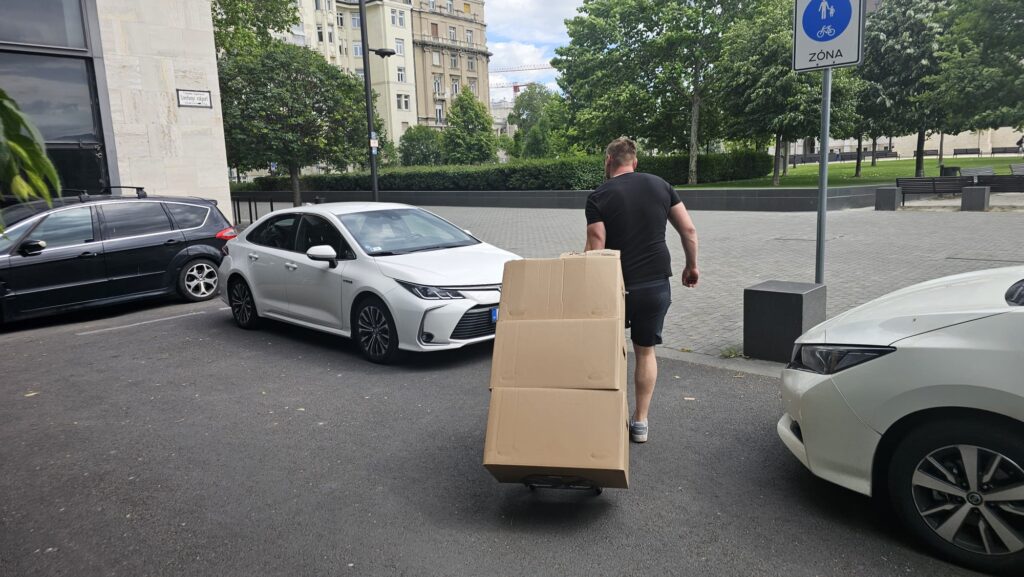
Step by Step: How To Plan Your Move From Any EU Country To Italy
Moving to Italy as EU citizen becomes far less stressful when you break it down into clear stages. Instead of trying to do everything at once, you follow a straightforward timeline from first idea to the moment your last box is unloaded. Here is a simple roadmap that works whether you are moving alone, as a couple or with a family.
Three to six months before your move
This is your vision and foundation phase. You are turning a dream into a real plan.
Focus on:
- Research and city choice: compare regions, cities and neighbourhoods, including costs, climate and job markets.
- Budgeting: calculate expected income, rent, utilities and daily expenses in your chosen area.
- Work or study plan: confirm your job offer, remote work arrangements or university place.
- Initial documents: make sure your passport or ID card is valid, gather important certificates and start learning basic Italian.
At this point you can also request early estimates from a man and van company like VANonsite, based on your rough volume and preferred moving month.
Two to three months before your move
Now your plan becomes more detailed. You are preparing the legal base and the logistics.
Your priorities:
- Documents and residency strategy: read the rules for EU citizens in Italy, decide when you will register your residence and which Comune you will use.
- Healthcare plan: check how your EHIC works and when you will register with the Italian National Health Service.
- Housing search: start seriously looking for a flat or house, either online or through local contacts and agents.
- School or childcare: if you have children, contact schools and understand enrolment procedures.
Share any updates with your chosen man and van partner so they can refine their quote and reserve availability around your target move date.
One to two months before your move
This is the phase where everything starts to feel real. Dates are clearer, boxes slowly appear in your home and emotions can run high.
Key actions:
- Book your man and van service with VANonsite and lock in your moving dates.
- Confirm access details for both addresses: floors, lifts, staircases, parking restrictions and any permits that may be needed.
- Start sorting and decluttering room by room so you only pay to move what you truly want to keep.
- Notify employers, schools and key services in your home country of your upcoming move.
A good moving team will guide you through checklists and help you decide the ideal van size and timing for your route to Italy.
Final weeks: packing, decluttering and inventory
The final weeks before leaving your country can feel intense, but they do not have to be chaotic.
You should:
- Pack non essential items first, keeping daily essentials out until the last days.
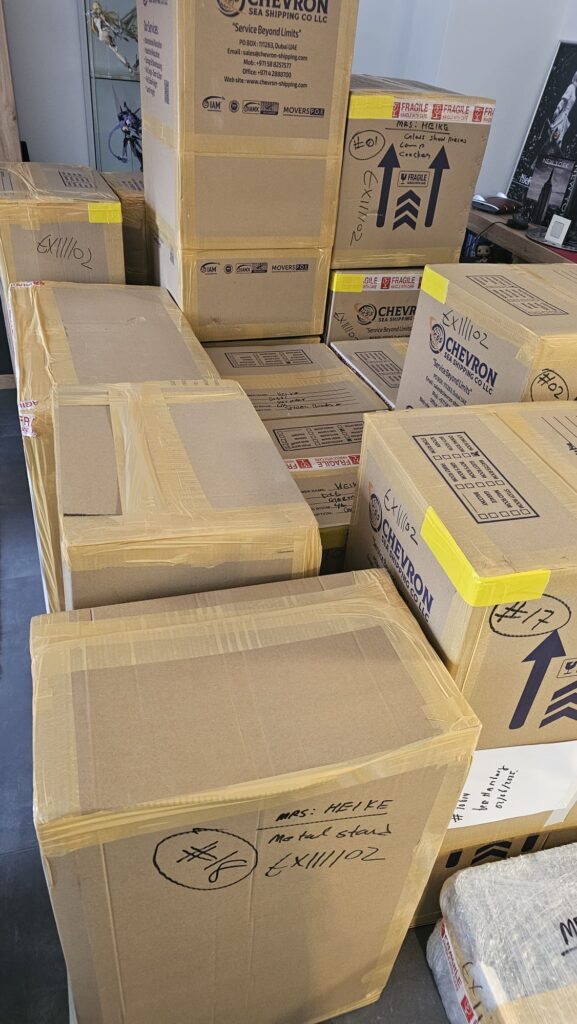
- Label every box clearly with room name and a short content description, ideally in English and Italian.
- Create a simple inventory of larger items and fragile pieces so your man and van crew knows what to handle with extra care.
- Sell, donate or recycle anything you no longer need.
If time is short or you simply want a calmer experience, VANonsite can provide a professional packing service so you can focus on goodbyes instead of tape and bubble wrap.
Moving week: final checks and travel
Moving week is when the plan you have built over months finally comes alive.
Make sure you:
- Confirm arrival times with your man and van team and share any last minute building news.
- Prepare keys, documents and cash or cards for tolls, fuel and small emergencies.
- Pack a personal essentials bag with clothes, toiletries, devices, chargers and important papers.
- Do a final walkthrough of your old home, checking cupboards, attic and basement.
While your belongings travel with the man and van, you can choose your own way to Italy by car, train or plane, knowing that your load is professionally secured and tracked.
Arrival day in Italy
Arrival day is emotional. You are tired, excited and maybe a little nervous. A calm, organised crew makes all the difference.
On this day you will:
- Meet your VANonsite team at the new address and walk through the flat or house together.
- Direct the unloading, making sure boxes go to the right rooms.
- Have your main furniture assembled and placed so you can sleep comfortably from the first night.
- Check that everything on your inventory has arrived and note any issues immediately.
Keep one box or suitcase marked “First night” with bed linen, towels, basic kitchen items and a change of clothes. When the van leaves and the door finally closes, you will be able to breathe, take a slow look around and realise that this is now home.
Highlighting each step like this, and partnering early with a specialist European man and van company, turns a huge life change into a clear sequence of actions that you can handle one by one.
How VANonsite Man And Van Services Support Your EU To Italy Move
When you are an EU citizen moving to Italy, the right man and van partner becomes the quiet force that holds your move together. VANonsite focuses on European relocations, so they understand not only the roads between countries, but also the real life worries people have when they load their whole world into a vehicle. Fast response, careful handling, clear communication and GPS tracking for every load give you something priceless on the road to Italy: peace of mind.
Removals to Italy for EU citizens
VANonsite offers dedicated removals to Italy for EU citizens who want a smooth, door to door experience. Whether you are moving from Germany, France, the Netherlands, Spain or another EU country, their crews are used to planning cross border routes, handling toll roads and coordinating arrival times with building managers and landlords.
You can dive deeper into their service on the page Removals to Italy, where they explain typical routes, timing and how they protect your belongings during long journeys.
Dedicated guide for EU movers
Because moving to Italy as EU citizen raises very specific questions, VANonsite also created a focused resource for you. On the page EU citizen moving to Italy you can explore more tips about documents, planning and logistics, all written with European citizens in mind. Using their guide together with this article gives you a complete picture, from legal steps to the last box off the van.
Last Minute Moving for urgent moves
Life does not always give you months to prepare. Sometimes a new job, a family situation or a sudden change of plans means you have to move fast. VANonsite offers Last Minute Moving options so that even urgent relocations feel structured.
Instead of panicking, you can:
- Share your dates, route and rough inventory with their team.
- Let them propose the fastest realistic solution and van size.
- Use their packing help if you do not have time to do everything yourself.
A last minute man and van service cannot erase all the stress, but in the hands of a professional crew, even rushed moves become manageable.
Home Removals and whole household moves
If you are moving an entire flat or house, you need more than a simple van with a driver. VANonsite organises Home Removals that cover planning, loading, transport and unloading for whole households.
The crew can:
- Protect large furniture with covers and padding.
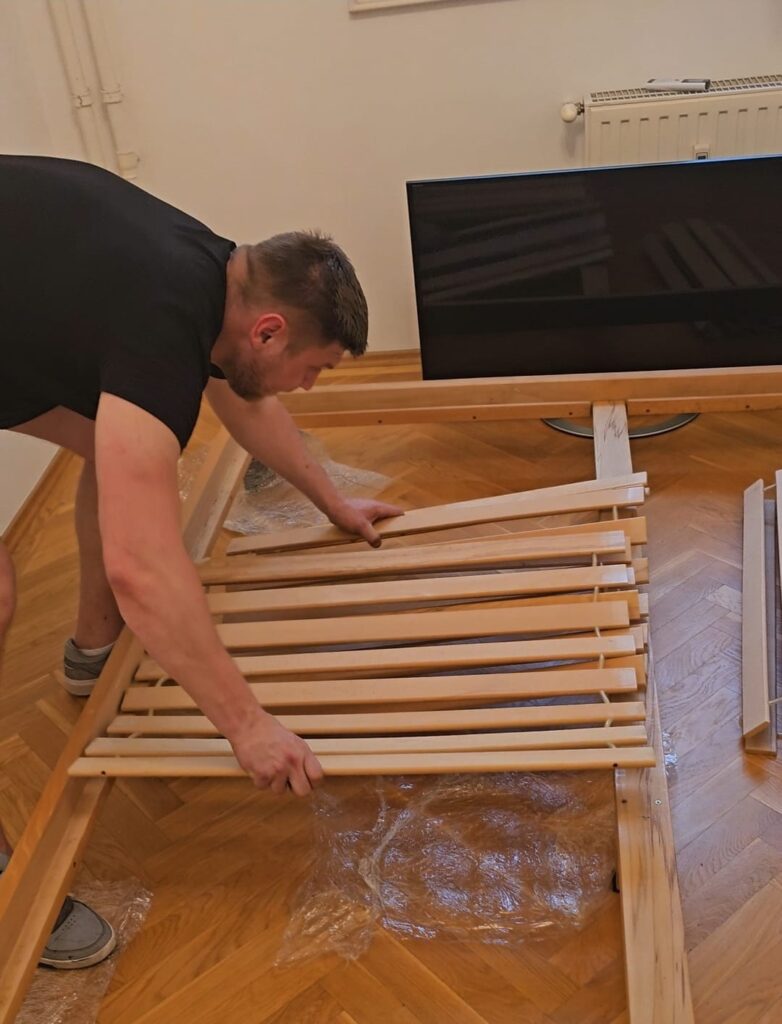
- Disassemble and reassemble simple items where needed.
- Load the van in a way that keeps everything stable during long European drives.
Thanks to this, you arrive in Italy with your home ready to rebuild, not with a pile of damaged pieces.
Furniture Removals for single items or partial loads
Sometimes you are not ready to move everything, but you cannot leave certain items behind. A favourite sofa, a piano, a designer table or a set of wardrobes can still travel with you.
VANonsite offers Furniture Removals for:
- Single bulky items that need special handling.
- Partial loads when you only move part of your furniture.
- Top up moves where you combine your boxes with a few key pieces.
A man and van team trained to handle heavy and awkward shapes will save your back and your budget.
Packing Service for stress free preparation
Packing is often the part people dread the most. It takes time, energy and a surprising amount of materials. If you work full time or have children, evenings spent with boxes and tape can quickly become exhausting.
With VANonsite’s Packing Service you can:
- Ask the crew to bring all packing materials.
- Let them wrap fragile items, electronics and artwork correctly.
- Have boxes labeled clearly by room and content.
You still stay in control of what goes where, but you are no longer the one wrestling with bubble wrap until midnight.
White Glove Delivery for fragile and high value items
Some belongings deserve special treatment. Fine art, luxury furniture, design lighting or high end electronics need a different level of care.
VANonsite provides White Glove Delivery for these pieces, which can include:
- Extra protective wrapping and custom padding.
- Two person handling for delicate or heavy items.
- Careful placement in your new Italian home, exactly where you want them.
For many EU citizens moving to Italy, this service is the difference between worrying about damage every minute and actually enjoying the journey.
Office Removals and business relocations
If your move to Italy includes a business, a co working space or a home office with serious equipment, VANonsite can plan Office Removals as well. They understand that for companies and freelancers, time really is money.
Their crews can:
- Move desks, chairs and storage safely.
- Protect computers, servers and other electronics.
- Coordinate timing so that downtime is as short as possible.
This makes them a strong partner not only for private EU citizens, but also for entrepreneurs and teams expanding into the Italian market.
Student Removals for internships and Erasmus
Not every move is a full family relocation. Many EU citizens move to Italy for a semester abroad, an Erasmus program or an internship. For these situations VANonsite offers Student Removals and compact man and van options.
You can move:
- A few suitcases and boxes.
- A bike, small furniture or study equipment.
- Shared loads with friends heading to the same city.
This is ideal when you want more than what a plane ticket allows, but do not need a full size truck.
Storage options for short and long term
Sometimes the timing between leaving your old home and entering your new Italian place does not match perfectly. Or you prefer to test life in Italy before bringing everything.
VANonsite can help arrange Storage solutions for:
- Short gaps of a few days or weeks between homes.
- Medium term storage while you decide what to keep.
- Long term needs if you split your life between two countries.
Knowing that your belongings are safe, dry and monitored while you settle in takes a huge weight off your shoulders.
Handling parking, narrow streets and Italian city logistics
Many Italian cities were built long before modern vans existed. Streets can be narrow, historic centres may have limited traffic zones, and parking is often tight.
A professional man and van crew like VANonsite knows how to:
- Check access restrictions and permits in advance.
- Choose the right vehicle size for your street.
- Plan loading and unloading to minimise disruption for neighbours.
This practical expertise means you are less likely to face last minute surprises on move in day, especially in busy cities or old town centres.
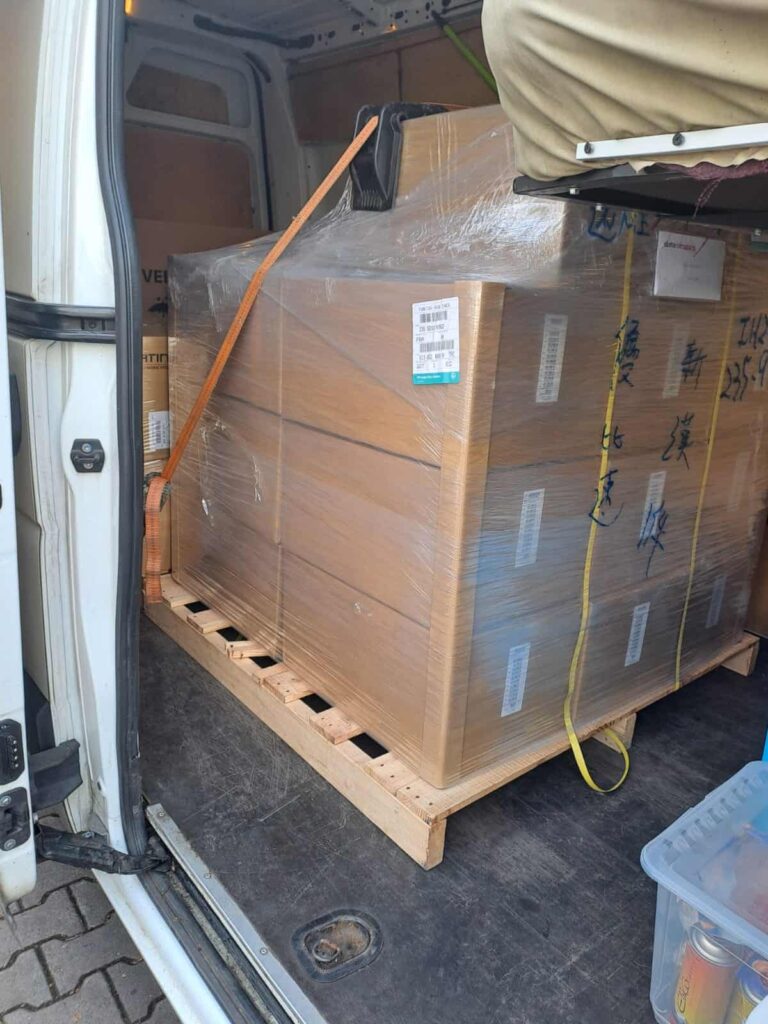
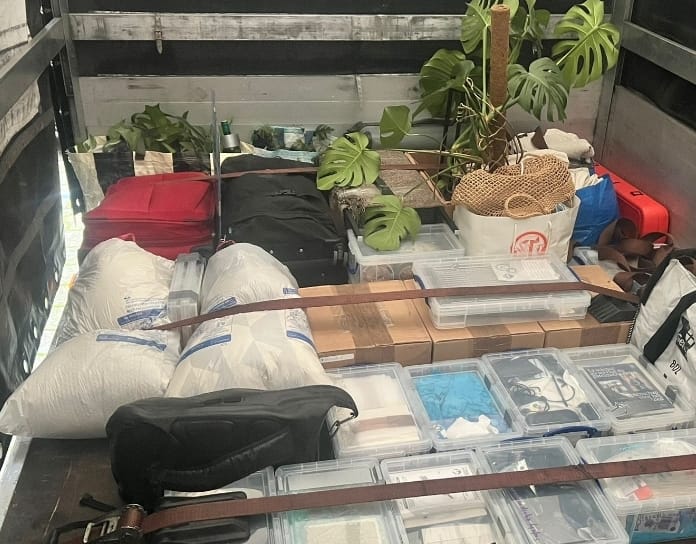
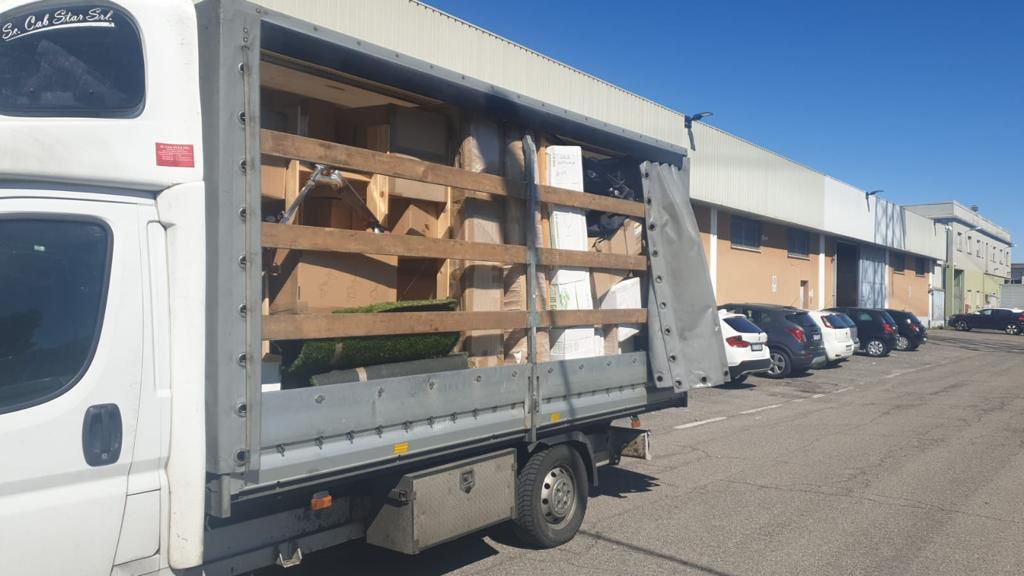
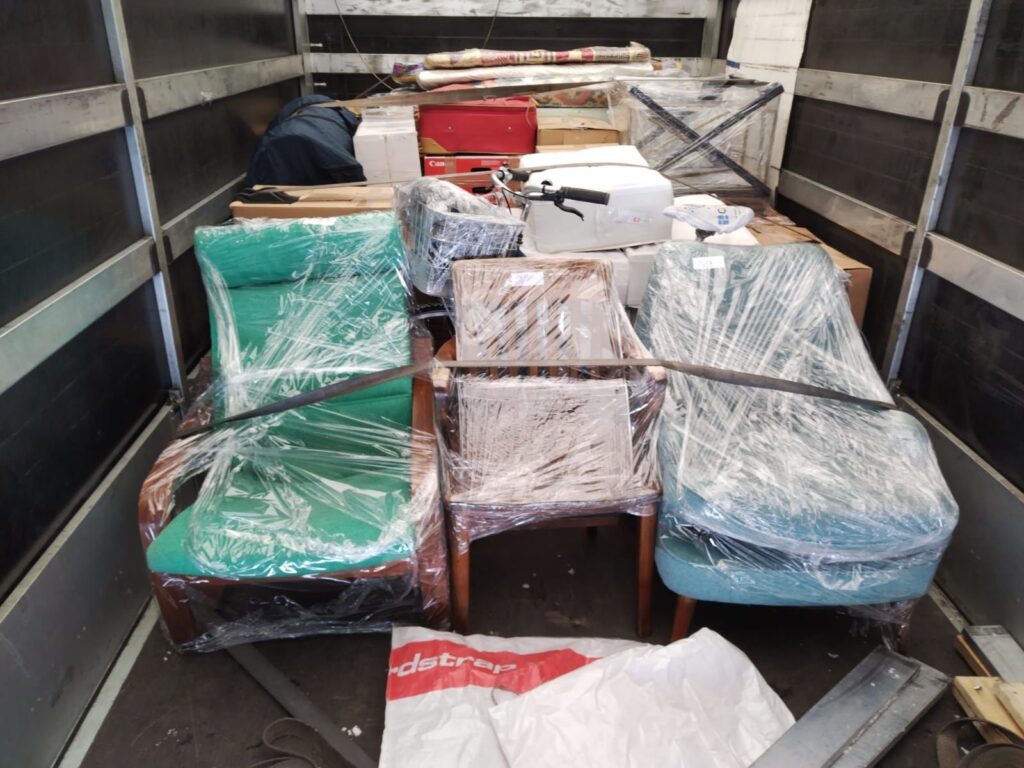
Choosing The Right VANonsite Vehicle Size For Your Move To Italy
Choosing the right van size is not only a technical decision, it is a balance between cost, comfort and peace of mind. Too small, and you face stressful last minute decisions about what to leave behind. Too big, and you may pay for unused space. With VANonsite you can match your real volume to a clear set of vehicle options that work well for EU citizens moving to Italy.
Here is a quick comparison of VANonsite vehicles and typical uses:
| VANonsite vehicle option | Capacity (approx) | Typical load when moving to Italy as an EU citizen |
| Moving Basic | 5 m3, 300 kg | Few boxes, luggage, small student move, parcels |
| Moving Medium | 10 m3, 600 kg | Studio flat, light furniture, compact moves |
| Moving Premium | 15 m3, 1 000 kg | One bedroom flat, more furniture and appliances |
| Moving Premium Plus | 30 m3, 3 500 kg | Larger flats, small houses, family moves |
| Moving Full House XXL | 90 m3, 20 000 kg | Full family home, large international relocation |
Matching your move to the right van size
To choose your ideal option, start by picturing your actual load.
- If you are a student or single person with mostly clothes, books and a few small pieces, Moving Basic or Moving Medium is usually enough.
- If you are moving a one bedroom flat with normal furniture and appliances, Moving Premium often fits perfectly.
- If you have a larger flat or small house, especially with children and full furniture, Moving Premium Plus gives you breathing space.
- If you are relocating a full family home with several rooms, outdoor items and storage, Moving Full House XXL will feel much more comfortable.
When you contact VANonsite, you can share a rough list of your main items and number of boxes. Their team will help you estimate the right volume and suggest the best man and van configuration for your EU to Italy route. This way you pay for what you need, but you also leave enough space for the unexpected items that always seem to appear on moving day.
Packing And Preparing Your Belongings For An Italian Move
Packing is where a move becomes real. Every object you wrap is a memory, a plan or a piece of your future Italian life. Doing it well protects what you love and saves money, because well packed items are faster to load, safer on the road and easier to unpack.
Decluttering before you book your man and van
Before you even reach for the tape, take time to declutter. Moving to Italy as EU citizen is the perfect moment to decide what truly deserves a place in your new life.
Ask yourself:
- Do I use this regularly
- Does it have real emotional value
- Is it cheaper to replace it in Italy than to move it
By clearing out what you do not need, you reduce the number of boxes and the van size required. That can make your man and van quote from VANonsite lighter and your new home less cluttered from day one.
Packing fragile items, art and electronics
Fragile items need extra love. Plates, glasses, vases, pictures, instruments and electronics will all feel every bump in the road between your current country and Italy.
Some simple rules help:
- Wrap each fragile object individually with paper or bubble wrap.
- Use sturdy boxes and fill empty spaces with soft materials.
- Pack heavier items at the bottom and lighter ones on top.
- Mark boxes with “Fragile” and the side that should face up.
If you feel unsure, you can rely on VANonsite’s Packing Service to handle your most delicate belongings with professional materials and techniques.
Labeling boxes clearly in English and Italian
Clear labels are a small detail that has a big impact on how your first days in Italy feel. When boxes arrive, you want to find bed linen, kitchen basics and bathroom items fast.
A simple system could be:
- Room name in English and Italian, for example “Kitchen – Cucina” or “Bedroom – Camera”.
- Short description such as “Pots and pans” or “Towels and bed sheets”.
- A number or code that links to a simple inventory list if you use one.
This helps your man and van crew place boxes in the right rooms and makes unpacking smoother, even if some helpers do not speak your language.
What to keep with you in the car, train or plane
Not everything should go into the van. Some items are better kept by your side during the journey:
- Passports, ID cards and key documents.
- Cash, bank cards and small valuables.
- Medicines and basic first aid.
- One or two outfits per person and essential toiletries.
- Laptops, phones and chargers.
Think of this as your personal survival kit. Even if the van is delayed by a few hours, you will still be comfortable and safe.
When to choose VANonsite’s professional Packing Service
There are moments when doing everything yourself stops making sense. If you are moving on short notice, juggling family and work or simply want a smoother experience, VANonsite’s professional Packing Service can be a wise choice.
It is especially useful when:
- You have many fragile or high value items.
- You cannot afford to take time off work just to pack.
- You want the man and van crew to be fully responsible for how items are prepared for the journey.
You still stay in control of what goes and what stays, but you hand over the heavy lifting, literally and figuratively.
Micro checklist: packing essentials
Before moving day, make sure you have:
- Strong boxes in different sizes.
- Packing tape, scissors and markers.
- Bubble wrap, paper or other padding.
- Stretch wrap or covers for furniture and mattresses.
- Zip bags for screws, cables and small parts.
With good preparation and the right man and van support, packing stops being a nightmare and becomes just another step on the way to your new life in Italy.
Moving Day: What To Expect With A Professional Man And Van
Moving day is the moment all your plans, lists and late night decisions finally become real. The house feels strangely empty and full at the same time. There is excitement, a touch of fear and a lot of emotion. This is exactly when a calm, organised man and van crew changes everything. Instead of chaos, you get structure. Instead of guesswork, you get guidance.
Arrival of your VANonsite team and pre loading walk through
Your moving day usually starts with the arrival of the VANonsite team at the agreed time. They introduce themselves, walk through your home with you and take a quick look at everything that needs to go into the van.
During this walk through they will:
- Confirm which furniture will be disassembled.
- Identify fragile items and special pieces.
- Check access points, stairs, lifts and doors.
- Agree with you on the order of loading.
This short tour sets the tone. You see that there is a clear plan. The crew sees how to protect your belongings best. Everyone starts from the same page.
Loading strategy for safety and balance during a long EU trip
Loading a van for a long European journey is a careful puzzle, not a random game of Tetris. A professional team thinks about weight, balance and protection.
The crew will usually:
- Place heavier items at the bottom and towards the front of the van.
- Secure furniture with straps so it does not move during braking.
- Use blankets, padding and covers to protect surfaces and corners.
- Fill gaps with boxes and soft items to avoid shifting.
This strategy keeps your belongings safe not only on smooth motorways, but also on winding roads in the Alps or narrow streets in Italian towns.
GPS tracking and real time updates on the road
Once the van leaves, a part of your life is literally on the move across Europe. It is normal to feel a little nervous. With VANonsite you have GPS tracking and regular updates, so you always know where your belongings are.
You can:
- Receive information on departure and estimated arrival times.
- Get updates if there are traffic delays or route changes.
- Feel reassured that your load is exactly where it should be.
Instead of wondering if everything is all right, you stay informed. That peace of mind is one of the biggest hidden gifts of a professional man and van move.
Crossing borders inside the EU and rest breaks along the route
One of the practical benefits of moving to Italy as EU citizen is how simple border crossings usually are. Your van travels within the European Union, so there are no complex customs checks like in intercontinental moves.
Even so, the crew will:
- Plan fuel stops and rest breaks at safe locations.
- Respect driving time rules to keep everyone safe on the road.
- Keep an eye on weather and traffic conditions, especially in the mountains.
You can travel by car, train or plane knowing that your team is handling the long drive with a clear, professional plan.
Unloading in Italy, furniture placement and reassembly
Arriving in Italy is a special moment. The air smells different, the light has another quality and suddenly the streets are full of new sounds. When the van pulls up to your new home, the second half of moving day begins.
The VANonsite crew will:
- Unload boxes and furniture in an order that matches your new layout.
- Place items in the correct rooms so you do not have to move everything again later.
- Reassemble basic furniture that was taken apart for transport.
Little by little, an empty space turns into something that feels like home. You see your sofa in the living room, your table in the kitchen, your bed ready for the first Italian night.
Communication, flexibility and handling surprises
Even the best planned move can bring surprises. A neighbour parked where the van should be. A lift that stops working. A sudden storm. What matters is not avoiding every single issue, but how quickly and calmly they are handled.
A professional VANonsite team will:
- Communicate clearly with you about any changes.
- Adjust the plan when needed, without drama.
- Offer practical solutions instead of excuses.
Knowing that you have an experienced man and van crew on your side turns moving day from a stressful test into a powerful first chapter of your life in Italy.
Your First Weeks In Italy As An EU Citizen
Once the last box is in, the real adventure begins. Your first weeks in Italy are a mix of practical tasks and small, unforgettable moments. You taste your new life for the first time. You also need to finish the legal and logistical steps that make your stay solid and secure.
Registering your address and residency with the local Comune
If you plan to stay longer than 90 days, registering your residence is an essential step. You will visit the Comune where you live and apply for registration in the local registry.
In practice you will:
- Check the Comune website for opening hours and necessary forms.
- Bring your ID, rental contract or housing declaration and proof of work or sufficient funds.
- Submit your residency request and wait for confirmation.
This step connects back to the legal section of this guide and turns your presence in Italy into an official, recognised residence.
Applying for or updating your tax code (codice fiscale)
The codice fiscale is your key for almost everything in Italy. It is used for contracts, healthcare, banking and even some online services.
If you do not have it yet, you can apply at the Agenzia delle Entrate. If you already received a temporary code through a consulate, you may simply update your details with your new Italian address.
Having your codice fiscale ready will make every other step smoother.
Registering with the SSN and choosing a family doctor
Once your residency is in progress or confirmed, you can register with the Servizio Sanitario Nazionale (SSN) through your local ASL. This connects to the healthcare section of the guide.
You will:
- Bring your ID, codice fiscale and proof of residence.
- Register for healthcare according to your work or family situation.
- Choose a medico di base, your family doctor.
With this done, you gain access to public healthcare and receive or update your tessera sanitaria.
Setting up utilities, internet and a mobile phone plan
To make your new flat or house truly livable, you need light, water, gas, internet and a mobile plan.
During the first weeks you will:
- Contact utility providers to activate or transfer contracts.
- Compare internet offers and choose a plan that matches your work and lifestyle.
- Get an Italian mobile number, which helps with deliveries, services and local apps.
Keep copies of every contract and note payment dates so you can set reminders or direct debits later.
Opening a bank account and getting used to local payments
Even if you still use a foreign bank for some things, an Italian bank account will make daily life easier. You can pay rent, receive a salary and set up automatic payments.
With your account and IBAN ready, you will start to get used to local habits, such as using cards, cash and contactless payments in different situations.
Meeting neighbours and building a social circle
Practical tasks are important, but people are what make a place feel like home. Your first weeks are a great time to introduce yourself to neighbours, chat with local shop owners and join simple community events.
Small steps help:
- Say hello in the stairwell or courtyard.
- Learn the names of people at your local bar or bakery.
- Join language exchanges, sports clubs or hobby groups.
As your social circle grows, Italy stops being just a beautiful place and becomes your place.
First week in Italy checklist
To keep everything under control, you can use this simple checklist for your first week:
- Walk around your neighbourhood and locate essential places such as supermarkets, pharmacies and bus stops.
- Organise your documents folder with residency papers, codice fiscale and contracts.
- Book any necessary appointments with the Comune, ASL or Agenzia delle Entrate.
- Set up at least basic utilities and a temporary internet or mobile solution.
- Create a short list of Italian phrases you want to use every day.
- Plan one small pleasure, such as a dinner out or a trip to a nearby viewpoint, to celebrate your move.
With the heavy lifting handled by your man and van team, these first weeks become a time of discovery instead of constant crisis management.
Common Mistakes EU Citizens Make When Moving To Italy
Even with the best intentions, it is easy to stumble during a move. Knowing the most common mistakes EU citizens make when moving to Italy helps you avoid costly or stressful surprises. Think of this section as a friendly warning from someone who has seen many relocations up close.
Underestimating bureaucracy and not allowing enough time
Italian bureaucracy is not impossible, but it does require patience. Many newcomers assume everything will be as fast as in their home country and leave too little time for residency registration, healthcare or school enrolments.
How VANonsite helps: by planning your man and van schedule with realistic arrival dates, they give you enough breathing space after the move to focus on offices without being exhausted by delays or last minute changes.
Forgetting to register residency in time
Some EU citizens enjoy their first months so much that they forget about the 90 day rule. Later, they face confusion when they try to access services that require official residency.
How VANonsite helps: their guides and checklists remind you about key legal milestones. When you book your move, you can align your moving date with the moment you plan to apply for residenza.
Not understanding tax residency and double taxation
Ignoring tax residency rules can lead to unpleasant letters from tax authorities in one or even two countries. People often assume that if they keep a bank account abroad, nothing changes.
How VANonsite helps: they cannot replace a tax advisor, but their content points you toward the right questions and timing. When you are not fighting logistics, you have more energy to speak with professionals before problems appear.
Assuming English will be enough everywhere
In large cities and tourist spots, English can take you far. But in many offices, small towns and older neighbourhoods, Italian is still the default.
How VANonsite helps: their crews are used to working across language barriers and can sometimes help with basic communication around delivery and access. Their guides also encourage you to learn key Italian phrases early, so you feel less lost at the Comune or ASL.
Booking the cheapest van instead of a reliable man and van specialist
Going for the lowest price can be tempting, especially if your budget is tight. But a very cheap service may cut corners on packing, insurance, timing or vehicle quality.
How VANonsite helps: they focus on value rather than just price. Transparent quotes, GPS tracking and professional handling reduce the risk of damage, delays or hidden costs that cheap options often bring.
Moving with no packing plan or inventory
Throwing things into boxes at the last minute feels productive, but often leads to broken items, lost documents and chaos during unpacking.
How VANonsite helps: they offer packing services, checklists and advice on how to label boxes and create a simple inventory. This makes loading and unloading smoother and reduces the chance of unpleasant surprises when you open your boxes in Italy.
By learning from these common mistakes, you give yourself a kinder, smoother path into your new Italian life.
Frequently Asked Questions About Moving To Italy As An EU Citizen
Questions are normal. Moving country is a big step, even inside the EU. This quick FAQ answers some of the doubts that almost every EU citizen moving to Italy has at some point.
Do I need a visa if I am moving to Italy as an EU citizen for more than 3 months
No, you do not need a visa. As an EU citizen you can enter Italy with a valid passport or national ID and stay beyond 3 months, as long as you register your residence and meet the conditions for living there, such as work, study or sufficient resources and health coverage.
How soon do I need to register my residence after arriving
You are expected to register your residence when it is clear that you will stay longer than 90 days. Many people do it within the first few weeks after finding a stable address. The earlier you do it, the sooner you can access full local services.
Can I move my pets with me to Italy
Yes, in most cases you can bring pets from other EU countries, as long as they meet requirements such as microchipping, a valid EU pet passport and up to date vaccinations. Check the official regulations in your home country and Italian rules for pet entry before travelling.
How much does a typical man and van move from my country to Italy cost
Prices vary depending on distance, volume, access conditions and services such as packing or storage. A small student move costs much less than a full house relocation. The best way to know is to request a personalised quote from VANonsite with details of your route and inventory.
How long does a move within Europe to Italy usually take
For many routes inside the EU, transport can take from one to a few days, depending on distance and rest breaks. Complex access, ferries or mountain routes may add extra time. When you book, VANonsite will share a realistic time frame for your specific journey.
Can VANonsite help with last minute moves to Italy
Yes, in many cases they can. Availability depends on dates and routes, but their Last Minute Moving service is designed exactly for urgent relocations. The sooner you contact them, the more options you will have.
For deeper answers on legal rights, documents or planning, you can always revisit the earlier sections of this guide and the dedicated VANonsite pages linked throughout.
Why EU Citizens Choose VANonsite For Their Move To Italy
There are many vans on European roads, but not all of them give you the same feeling of safety and care. EU citizens choose VANonsite because they want more than transport. They want a partner who understands what it means to move your life, not just your boxes.
Experience with cross border moves all over Europe
VANonsite specialises in European relocations. Their crews know how to plan long routes, respect regulations and handle practical details at both ends of the journey. This experience shows in the calm way they deal with challenges on the road.
GPS tracking and clear communication
Knowing where your belongings are is essential when you relocate to another country. GPS tracking, regular updates and friendly communication mean you are never left guessing. You feel involved and informed from loading to unloading.
Flexible options from small jobs to full house XXL moves
Every move is different. Some people need a compact man and van service for a light load. Others need a full Moving Full House XXL solution for a big family home. VANonsite offers a range of vehicle sizes and services so you can choose exactly what fits your situation.
Specialist services for every type of mover
From white glove delivery for luxury items to office removals and student moves, VANonsite covers many scenarios. This makes them a one stop partner for EU citizens moving to Italy to study, work, retire or grow a business.
Happy customers and word of mouth
Trust is built through results. Many people who move with VANonsite recommend them to friends, colleagues and family. Positive word of mouth is one of the strongest signs that a company truly delivers on its promises.
If you want to explore their services in more detail, you can visit:
These pages work perfectly alongside this guide to give you a full picture of both the emotional and logistical side of relocating.
Ready To Start Your Move?
At some point, research turns into a decision. If you are reading this and feel a quiet yes in your chest, it may be time to move from ideas to action.
To get started, you can:
- Make a simple list of what you want to move, from furniture to boxes and special items.
- Note your ideal moving month and any flexibility you have with dates.
- Think about the level of support you want, from basic transport to full packing and white glove services.
Then reach out to VANonsite with your route, dates and a rough volume estimate. Their team will create a personalised quote and help you shape a clear, realistic plan.
Choosing a professional man and van service does not remove the emotion from a move. It simply removes a lot of the fear. Instead of worrying about roads, parking and heavy lifting, you can focus on the moment you turn the key in your new Italian front door.
Your life in Italy will be made of many mornings, many coffees, many walks and many conversations. The move is just the first step. Let VANonsite handle the road so you can start living that new chapter as soon as possible.