
Moving to Sweden from Netherlands can be fast, safe, and predictable with a clear plan, right‑sized capacity, and weather‑aware routing. Because this is an EU→EU relocation, the paperwork is lighter; however, timing, route choice, and building access still decide how smooth (and affordable) your journey feels. This guide turns the topic into a high‑converting, reader‑friendly article with short sentences, transitions, checklists, and action‑oriented tables. It also spotlights VANonsite advantages: live GPS tracking on every load, trained crews, flexible van sizes (5–90 m³), and specialist services — Last Minute Moving, Furniture Removals, Home Removals, Packing Service, White Glove Delivery, Office Removals, Storage, Student Removals.
Removals to Sweden • How to Relocate to Sweden • Moving to Ireland from Sweden • Moving to Sweden from Germany
TL;DR (7 key takeaways)
- Plan 8–10 weeks ahead; build a room‑by‑room inventory and reserve parking/lifts at both ends.
- EU→EU essentials: on arrival in Sweden, handle folkbokföring, personnummer, ID‑kort/BankID, banking and healthcare (see the Sweden guide below).
- No fixed prices here: costs depend on volume, route, access, season, and services — use live capacity bands on Removals to Sweden and request a tailored quote.
- Right‑size your vehicle: pick 5, 10, 15, 30, or 90 m³; every shipment is GPS‑tracked with proactive ETAs.
- Route smart: drive via Denmark bridges (Storebælt + Øresund) or combine Puttgarden ↔ Rødby short ferry; for overnight rest choose Kiel/Travemünde/Rostock ferries into Sweden.
- Pack like a pro or book Packing Service; fragile/premium pieces fit White Glove Delivery; prepare clearly labelled Open‑First boxes.
- First 72 hours: utilities/internet, folkbokföring steps, BankID, GP/schools, and waste collection — settle fast.
Why Sweden? Pros & cons at a glance
Sweden mixes modern infrastructure with calm cities and wild nature. Digital public services and high English fluency help newcomers settle quickly. From the Netherlands, many families find the lifestyle familiar, yet winters are longer and housing competition in big hubs is real. Use the snapshot below to check fit before you lock dates and van size.
Pros
- High quality of life; digital‑first admin (BankID, e‑services) and reliable transport.
- Safe, clean cities; family‑friendly policies; strong cycling and outdoor culture.
- English widely spoken; smooth integration while you learn Swedish.
- Work–life balance; nature on your doorstep.
Cons (plan around them)
- Housing competition in Stockholm/Gothenburg/Malmö → start early, consider suburbs.
- Long winters/short daylight → winter‑ready packing and daylight delivery slots.
- Costs can be similar–higher vs the Netherlands in major hubs; plan buffers.
- Some local notices in Swedish → use translation support and learn key terms.
City snapshots (pick your fit)
| City/Region | Vibe & strengths | Housing competition | Good for |
|---|---|---|---|
| Stockholm | Capital, tech/finance, culture | High | Careers, urban life |
| Gothenburg | Ports, R&D, coast | Medium‑High | Families, engineering |
| Malmö/Skåne | Creative, close to Copenhagen | Medium | Cross‑border workers |
| Uppsala/Lund | University hubs | Medium | Students, researchers |
| North/Småland | Nature, space, lower prices | Low‑Medium | Remote work, outdoors |
Support link: How to Relocate to Sweden.
Step‑by‑step plan & timeline (Netherlands → Sweden)
Start early. Share photos/video of each room. Lock in access and route windows. Below is a timeline you can paste into the final article.
8–10 weeks (scope & shortlist)
- Define the move window and short‑list Swedish areas by commute/schools.
- Build a room‑by‑room inventory; measure sofas, wardrobes, appliances.
- Request a quote; choose DIY pack or Packing Service.
- Flag specials (piano/art/IT) for White Glove planning.
- NL admin: plan BRP deregistration (uitschrijven) and mail forwarding.
6–8 weeks (route & permits)
- Pick route: DK bridges + Øresund, Puttgarden ↔ Rødby + bridges, or DE→SE ferries (Kiel/Travemünde/Rostock to SE ports).
- Gather documents for Swedish registrations; confirm pet travel.
- Pre‑book permits/elevators/parking bays in NL and SE.
- Decide insurance level; target collection slot + ETA; share access notes (lift sizes, long‑carry distances).
4 weeks (declutter & materials)
- Declutter (−10–20% volume); sell/donate bulky items.
- Order materials or confirm pro‑pack date.
- Confirm ferry/bridge timing windows and a weather‑proof backup plan.
1–2 weeks (labelling & final checks)
- Label by Room + Category + Number + Priority (1–3); prep Open‑First boxes.
- Separate a Do‑Not‑Ship pouch (passports, keys, meds, chargers, contracts).
- Final access check (both ends); print colour‑coded floor plans.
Move week (handover & tracking)
- Protect floors/doors; walkthrough with crew lead; confirm load order.
- Switch on GPS alerts and share the link; track ferries/bridges.
Arrival (Day 1 — fast comfort)
- Room‑by‑room placement via labels/colours; assemble beds; connect essentials.
- Start the admin sprint (folkbokföring, ID, BankID, utilities); sign off inventory.
Owner split (who does what)
| Task | You | VANonsite |
|---|---|---|
| Inventory & photos | ✅ | ▫️ |
| Van sizing & route plan | ▫️ | ✅ |
| Packing (DIY or pro) | ✅/▫️ | ✅/▫️ |
| Permits/parking | ✅ | ✅ (guidance) |
| Load/unload & protection | ▫️ | ✅ |
| GPS ETA updates | ▫️ | ✅ |
Get your scheduled collection window and fixed ETA.


Documents & registrations (EU focus)
From the Netherlands to Sweden the admin is mostly arrival‑side. The goal is to activate your Swedish identity quickly so banking, healthcare, and daily life work from week one.
Before you leave the Netherlands (admin prep)
Start with Dutch off‑boarding and document gathering. Keep originals with you, not in shipped boxes.
- Uitschrijven (BRP deregistration): inform your Dutch municipality (usually if leaving for 8+ months).
- Post & banking: set up mail forwarding; keep DigiD active for Dutch services/tax if needed.
- Civil docs: passports/IDs, birth/marriage certificates, translations/apostilles if relevant.
- Employment & housing: work contract/offer; Swedish lease/host letter (or temporary address).
- Health: EHIC, insurance certificate, vaccination cards; copies for each family member.
- Driving & car (if importing): registration docs, CoC, service history, spare keys.
- Pets: EU Pet Passport, microchip, rabies vaccination; confirm ferry/bridge/cabin rules.
First steps in Sweden (folkbokföring → personnummer)
These steps unlock most services. Book early in larger cities.
- Where: local Skatteverket office.
- Bring: ID, proof of Swedish address, purpose (work/study), family documents.
- Process: register folkbokföring → receive personnummer → apply for ID‑kort → set up BankID (digital identity for e‑services and banking).
- Tips: make sure all names and addresses match across contracts and IDs; processing times vary by season.
Banking, healthcare & everyday setup
Once you have your basic ID chain, move fast on daily life utilities.
- Banking: open an account and enable BankID for payments and logins.
- Healthcare: choose a local Vårdcentral (GP); EHIC covers interim care.
- Housing utilities: electricity, water, heating, fibre; photograph meter readings at move‑in.
- Schools: contact local municipality schools early; prepare records and vaccinations.
Driving & vehicles (optional)
You can use your EU licence. Only exchange if you prefer a Swedish one.
- Licence: EU driver’s licences are valid in Sweden.
- Vehicle import: register/inspect locally; plan for winter tyres in season; many cities use parking apps — set one up on Day 1.
Non‑EU nationals living in NL (quick note)
If you hold a Dutch residence permit, check your right to move onward to Sweden and any entry/residence steps needed there. Align dates so your Dutch status, travel, and Swedish appointments overlap smoothly.
Family, partners & students (what to prepare)
- Family docs: marriage/birth certificates; translations if applicable.
- Students: acceptance/enrolment letters; housing confirmations; insurance proof.
- Partners: prepare proof of relationship and shared address history where relevant.
Personnummer vs. samordningsnummer (know the difference)
- Personnummer: full population registration; enables ID‑kort and most services.
- Samordningsnummer: coordination number used in some cases when not fully registered; may limit access. Aim for personnummer where eligible.
Arrival‑week micro‑timeline (example)
- Day 0–1: utilities & internet; parking/permit apps; basic groceries.
- Day 1–2: Skatteverket appointment; start ID‑kort/BankID chain.
- Day 2–3: bank account, GP choice; school enrolment; confirm waste/recycling schedule.
Fast arrival checklist
| Task | Why it matters | Who |
|---|---|---|
| Folkbokföring → personnummer | Unlocks ID‑kort, banking, healthcare | You |
| ID‑kort & BankID | Access to banks & e‑services | You |
| Bank account | Salary, rent, utilities | You |
| GP registration | Everyday healthcare access | You |
| Utilities & internet | Comfort & work readiness | You |
| School enrolment | Avoid waiting lists | You |
| Parking/permits | Smooth move‑in & deliveries | You + VANonsite |
What you can and can’t bring (quick compliance)
EU household moves are straightforward, but safety rules still apply. A clean, documented shipment travels faster and reduces claims.
OK for personal moves
Everyday household goods usually travel without issue: clothes, books, furniture, most electronics. Create a numbered inventory and take photos of higher‑value items.
Food, plants & natural materials
Prefer sealed, shelf‑stable foods. Avoid liquids and perishables, especially in shared/groupage loads. Plants, seeds, and soil can be restricted — best avoided unless you have clear guidance.
Medicines & medical devices
Carry daily/critical meds with you in original packaging with prescriptions. Keep a small first‑aid kit accessible.
Dangerous goods (ADR) — do not pack
Some items are prohibited or highly restricted. When in doubt, ask us before packing.
| Item / Substance | Status | Safer Alternative |
|---|---|---|
| Paints/solvents/thinners | ❌ | Buy in Sweden; clean & dry tools |
| Aerosols (bulk) | ⚠️/❌ | Limit personal items only |
| Gas cylinders/fuels | ❌ | Return cylinders; ship engines dry |
| Strong chemicals | ❌ | Dispose safely pre‑move |
| Fireworks/weapons | ❌ | Not permitted |
| Lithium batteries (large) | ⚠️ | Remove/declare; some travel separately |
Also consider
- Alcohol/tobacco: personal‑use limits apply; avoid adding to shared loads.
- Large lithium devices (e‑bikes/scooters): may require special handling or separate transport.
- Aquariums & live plants: plan empty, clean, and dry; avoid transporting water/soil.
Pro help: Add Packing Service for fragile items and White Glove Delivery for premium placement/assembly in Sweden.
How much does it cost to move to Sweden?
Costs depend on volume/weight, route, access, season, and service level. We don’t publish fixed prices here. For live capacity bands, see Removals to Sweden and request a tailored quote.
Cost drivers (summary table)
| Factor | Influence | How to control it |
|---|---|---|
| Volume/weight | Van size, crew time | Declutter 10–20%; right‑size by video survey |
| Access | Carries, stairs, parking | Reserve bays/lifts; share distances & codes |
| Route | Ferries/tolls vs road miles | Flexible on sailing/bridge timings |
| Season & dates | Availability buffers | Mid‑week moves; off‑peak windows |
| Service level | Packing/White Glove time | DIY non‑fragiles; pro‑pack fragile/premium |
What pushes a move into a higher band?
Multiple flights of stairs, long carries (50m+), tight stairwells, shuttle van needs, limited loading hours, last‑minute date changes.
Example scenarios (no prices)
| Scenario | Volume | Service | Route | Access | Typical timeline |
|---|---|---|---|---|---|
| Student kit Utrecht → Malmö | 5–7 m³ | DIY pack | Puttgarden ↔ Rødby + Øresund | 3rd‑floor walk‑up | 2–3 days door‑to‑door |
| Family apartment Amsterdam → Stockholm | 25–35 m³ | Packing + White Glove | DK bridges or Travemünde → Malmö | Lift + tight bay | 3–5 days incl. overnight |
| Large household Eindhoven → Gothenburg | 60–90 m³ | Packing + White Glove | Kiel → Göteborg overnight ferry | Reserved bays, long carry | 4–6 days, staged delivery |
Note: For up‑to‑date capacity bands and service mixes, see Removals to Sweden.
Why choose VANonsite (proof points)
- Live GPS tracking with proactive ETA updates.
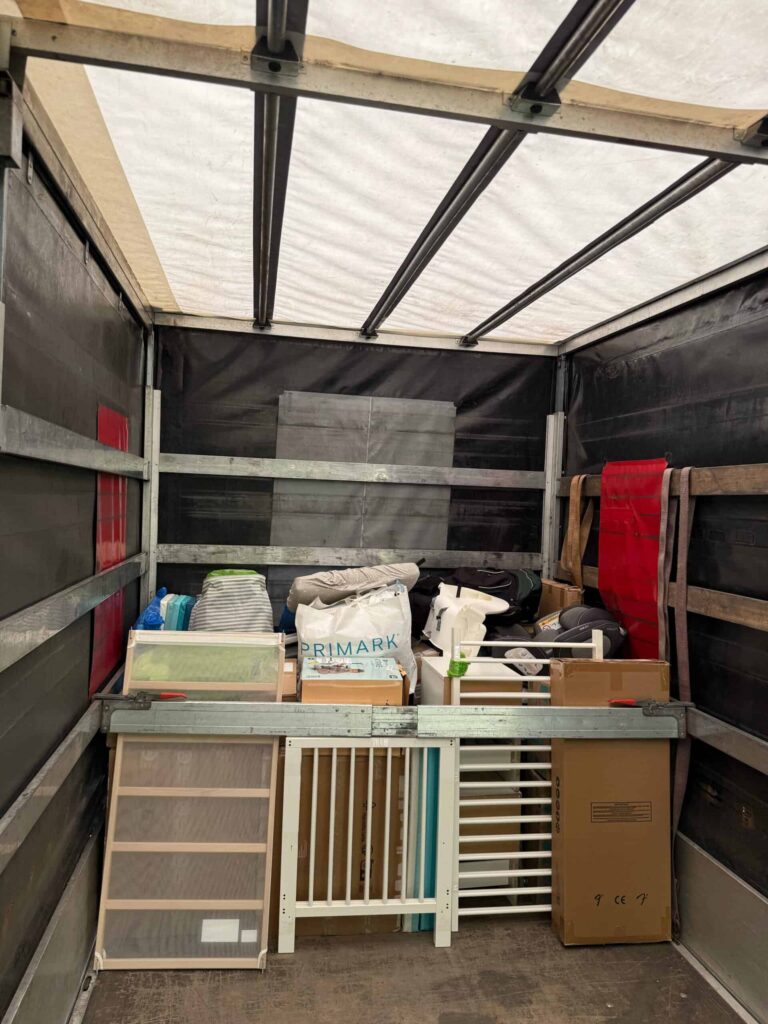
- Right‑size vans (5–90 m³) — pay for capacity you need.
- Trained crews with pro protection (blankets, corner guards, crates).
- Specialist services: Last Minute, Packing Service, White Glove Delivery, Office Removals, Storage, Student Removals.
- Route intelligence (bridges vs ferries) and winter playbook.
- Transparent scoping: video survey, clear inventory, and live capacity bands (see Removals to Sweden).
Outcome‑focused table
Your concern Our solution What it means On‑time arrival GPS‑driven routing, ferry/bridge contingencies Predictable ETAs Item safety Pro materials; White Glove for premium Lower risk, clean install Paying for empty space 5–90 m³ fleet Fair, right‑sized pricing Complex access Permits, lift slots, shuttle plans Fewer delays Last‑minute change Flexible scheduling + Storage Stress‑free buffers Service tiers & add‑ons
Tier Core scope Popular add‑ons Essential Load–transport–unload Packing materials, basic packing Comfort Essential + partial packing + furniture care Wardrobe boxes, crate hire, TV crates Premium (White Glove) Full packing, protection, placement, assembly Art/piano handling, debris removal
Pick the right van size (Netherlands → Sweden)
Right‑sizing protects budget and goods. All vans are GPS‑tracked. Choose a size based on m³, access, season, and how quickly you want to unload.
| Vehicle | Capacity | Max Weight | Best For | Example Load |
|---|---|---|---|---|
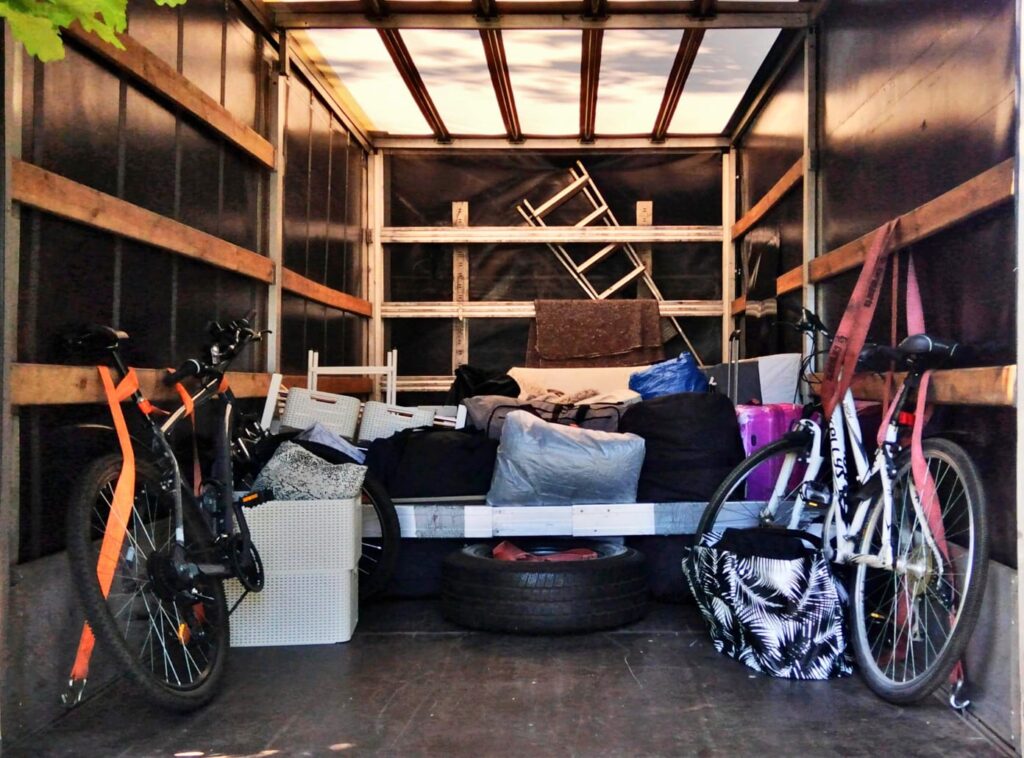
| Moving Basic | 5 m³ | 300 kg | Minimal/student | 20–30 boxes + bike |
| Moving Medium | 10 m³ | 600 kg | 1–2 rooms | Boxes + small sofa + desk |
| Moving Premium | 15 m³ | 1,000 kg | 2–3 rooms | Bed + wardrobe + dining set |
| Moving Premium Plus | 30 m³ | 3,500 kg | Family apartment | Multiple rooms + appliances |
| Moving Full House XXL | 90 m³ | 20,000 kg | Whole home/office | Full household + outdoor gear |
Quick estimator
Studio 4–6 m³ • 1‑bed 8–15 m³ • 2‑bed 15–25 m³ • 3‑bed 25–40 m³ • 4‑bed+ 40–70+ m³.
Three‑step sizing method (fast & accurate)
- Count boxes by room (kitchen is dense): small ×3 ≈ 1 m³; medium ×2 ≈ 1 m³ (heuristics).
- Add furniture: sofas 1–2 m³; double bed + wardrobe 2–3 m³; dining set 2–3 m³.
- Add 10–15% buffer for blankets, odd shapes, and last‑minute items.
Weight & density reality check
- Books, tools, and pantry items are dense. If your list is box‑heavy, you may reach the weight limit before you fill the space.
- Mixed households average out, but studios with many books may suit two trips or a larger van.
- Share photos of dense areas (library/workshop) so we balance weight in the load plan.
Access‑driven sizing
| Access constraint | Risk if oversized | Safer plan |
|---|---|---|
| Old‑town/narrow lanes | Can’t reach door | Two smaller vans or shuttle from wider road |
| No lift, tight turns | Slower carries/damage | 10–15 m³ + extra crew; disassembly where needed |
| Height/length limits | Garage/arch clearance | Share dimensions early; choose compatible van |
| Long carry (50m+) | Crew fatigue/time | Add trolleys/ramps & crew; stage near entrance |
Load order & unloading plan
- Open‑First boxes load last → come off first.
- Heavy boxes low,
FRAGILEtop/front with straps. - Label by Room + Category + Number + Priority (1–3); colours per room speed placement.
Dedicated vs groupage capacity
- Dedicated: van only for you → fastest, precise timing, ideal for large or time‑sensitive moves.
- Groupage: cost‑efficient for smaller volumes; longer windows; stricter on liquids/ADR and packaging.
What measurements/photos to share
Door widths and heights • Stairwell width/turns • Lift cabin & door size • Parking distance to door • Max vehicle height/length • Any steps/thresholds • Photos of the tightest turn.
6.7 Example sizing calls (Netherlands → Sweden)
- Utrecht studio → Malmö: 5–7 m³ (Moving Basic/Medium) if box‑heavy; avoid liquids; label by room.
- Amsterdam 2‑bed → Stockholm: 20–30 m³ (Moving Premium/Plus) with Packing Service; book loading bay and lift.
- Eindhoven family house → Gothenburg: 60–90 m³ (Full House XXL) staged, or split into 30 m³ + 30 m³ if street access is tight.

Routes: bridges & ferries (Netherlands → Sweden)
Two proven corridors connect the Netherlands to Sweden. We plan both for safety, rest, and predictable ETAs.
Corridor overview
- Bridges via Denmark: NL → DE → Storebælt → Øresund. Predictable land route with tolls.
- Hybrid short‑ferry + bridges: Puttgarden ↔ Rødby (short ferry) → Storebælt → Øresund. Balanced sea/road time.
- Overnight ferries (via Germany): Kiel ↔ Göteborg, Travemünde ↔ Malmö, Rostock ↔ Trelleborg. Fewer road miles; cabin rest.
Route matrix — compare fast
| Corridor | Road Miles | Sea Time | Predictability | Best When | Notes |
|---|---|---|---|---|---|
| Denmark bridges (Storebælt+Øresund) | More | None | Very high | Tight arrival slots, flexible timing | Pure land route; tolls |
| Puttgarden short ferry + bridges | Moderate | Short | High | Some sea rest + timing control | Frequent sailings; quick check‑ins |
| Kiel/Travemünde/Rostock → Sweden | Fewer | Longer | High | Winter, pets/kids, overnight rest | Cabins; steady ETAs; weather‑dependent |
Winter & weather playbook
- Build a buffer window around storms and snow.
- Heavy snow → favour ferry‑led plans to cut road risk.
- High winds → favour bridges to avoid sailing disruption.
- Follow GPS ETA updates if plans change mid‑journey.
Family, pets & comfort
- Ferries: book cabins; choose pet‑friendly options; pack a comfort kit.
- Bridges: plan service‑area breaks; keep Open‑First bag accessible.
Port/bridge checklist
Check‑in windows • Vehicle height/length • Cabin vs seats • Pet rules • Backup sailing/route • Toll payment method.
7.5 Sample corridor sequences (no times)
- Bridges route: NL → DE motorways → Storebælt → Øresund → Malmö/Stockholm.
- Hybrid: NL → DE → Puttgarden ferry → Rødby → Storebælt → Øresund → southern Sweden.
- Overnight ferry: NL → DE port (Kiel/Travemünde/Rostock) → cabin rest → morning arrival Sweden → final leg.
Practicalities: tolls, tickets, cities
- Tolls are cashless; keep payment method ready.
- Big‑city deliveries: reserve loading bays ahead; share licence plates if building security requires it.
- Some urban areas have emission/low‑emission rules; we route to comply.
Contingency triggers & re‑routing
- Storm alerts, cancellations, or road closures trigger a switch between ferry‑led and bridge‑led plans.
- Your tracking link shows the new ETA automatically; our team confirms by message.
Packing & protection (DIY or pro)
Great packing reduces claims and speeds unloading. Follow this framework — or let our Packing Service handle it end‑to‑end.
5‑step system
- Declutter (−10–20%) four weeks out.
- Zone by room/use and stage near the door.
- Protect with double‑walled boxes, corner guards, blankets, mattress covers.
- Label/index — Room–Category–Number + Priority (1–3) +
FRAGILEwhere needed. - Open‑First boxes — one per person + one home kit; load last.
Materials bill (per ~10 m³)
- 20–30 medium boxes, 10–15 small, 3–5 large.
- 2 wardrobe boxes per adult.
- 4–6 rolls tape + 1 tape gun; 2 permanent markers.
- 1 pack bubble wrap + 1 pack packing paper; 6–8 furniture blankets.
- TV/monitor crates if needed; mattress covers for each bed.
Room‑by‑room micro‑checklists
Kitchen: plates vertical; glasses in cells; knives guarded; tape lids on jars; avoid oils/liquids.
Living: TV crate; frame corner guards; coil/label cables; protect table edges.
Bedrooms: wardrobe boxes; mattress covers; bag screws/bolts and tape to bed frame.
Bathroom: liquids sealed in zip bags; keep daily meds with you.
Garage/outdoor: drain fuel/oil; clean tools; bundle long items; no gas cylinders.
Fragile & special items matrix
| Item | Protection & notes | Label |
|---|---|---|
| Glass/ceramics | Wrap individually; soft paper bed; fill voids | FRAGILE P1 |
| TVs/monitors | Keep vertical; screen‑safe crate; no pressure on panel | FRAGILE P1 |
| Frames/art | Corner guards; face protection; consider White Glove | FRAGILE P1 |
| Appliances | Drain hoses; tape doors; bag and tape all screws | HEAVY P2 |
| Electronics & cables | Original boxes if possible; cable bags per device | FRAGILE P2 |
| Musical instruments | Use cases; pianos via White Glove carry team | SPECIAL |
Labelling that speeds unloading (examples)
BED2–Clothes–12 (P1)KITCH–Plates–05 (Fragile, P1)LIV–Books–09 (P3)
Tip: add a QR/shortcode linking each box to an inventory photo.
Sustainability & re‑use
- Choose reusable crates where possible.
- Keep a separate bag for tape cores, soft plastics, and cardboard offcuts to recycle on Day 1.
- Donate surplus materials to neighbours or reuse groups after unpacking.
Common packing mistakes (avoid these)
- Over‑weighting large boxes → cracked bases.
- Liquids in groupage loads.
- No inventory → slower claims/admin.
- Ignoring access constraints → longer carries/time.
- No floor plan → slower room placement.
When to upgrade — Packing Service for time‑poor moves; White Glove for pianos/art/premium pieces; Furniture Removals for disassembly/reassembly.
Move‑day & first 72 hours in Sweden
Keep roles clear and use GPS updates. Aim for quick comfort and swift admin.
The day before — expanded checklist
- Charge phones/power banks; download parking/permit apps for both addresses.
- Reserve bays/lifts; print the reservation to display on the day.
- Pack Do‑Not‑Ship pouch (passports, IDs, keys, Bank/ID docs, meds, chargers).
- Defrost freezer; drain/turn off appliances; final photos of high‑value items.
- Lay floor protection at origin for a quicker start.
Move‑morning — handover routine
- Meet crew lead; walkthrough each room; confirm priority boxes and fragile items.
- Recheck load order; remove wall hooks/fixtures you’re taking; lock windows/doors after each room is cleared.
- Sign start‑time; share GPS tracking link with family/landlord.
Transit — stay informed, stay flexible
- Follow live ETAs; ferry/bridge timing may shift.
- Weather or traffic? We re‑route and push updates; you receive a message with the new ETA.
- Keep your Open‑First bag with you, not on the van.
Arrival (first 2 hours) — fast comfort
- Colour labels to rooms; beds assembled first; connect fridge/kettle/router.
- Remove packaging; photograph meters; place waste for local collection rules.
- Quick safety sweep: trip hazards, exposed screws, child/pet gates if needed.
First 72 hours — micro‑timeline
- Hour 0–6: beds, shower basics, kettle, router; meter photos; door locks check.
- Day 1: Skatteverket booking/visit; postal redirection; local transport cards/apps.
- Day 2: bank account + BankID; pick Vårdcentral; school enrolment steps.
- Day 3: recycling schedule, parking permits, insurance confirmations; unpack heavy rooms last to avoid clutter.
Handover & acceptance (template)
- Inventory differences noted ✓
- Damages/remarks with photos ✓
- All rooms placed as labelled ✓
- Packaging removed/recycled ✓
- Keys, codes, permits returned ✓
Open‑First table
| Category | What to pack | Why |
|---|---|---|
| Personal | IDs, meds, chargers | Operational from hour one |
| Kitchen | Kettle, mugs, cutlery, pan, snacks | Hot drinks + quick meal |
| Bedding | Sheets, pillows, duvets | First‑night sleep |
| Tools | Knife, screwdrivers, tape, bulbs | Fast fixes & assembly |
| Cleaning | Cloths, spray, bags, paper towels | Clean handover |
| Kids/Pets | Toys, nightlight, food, bowls/leash | Reduce stress |
Vehicles, winter & special cases
Plan for season, access, and item specifics — from car imports to pets and premium pieces.
Car import — simple timeline
- Before departure: collect registration, CoC, ownership proof, insurance.
- Arrival week: inspection/registration booking; temporary parking permits if needed.
- First winter season: fit winter tyres where appropriate; keep documents in your Do‑Not‑Ship pouch.
Winter readiness pack
Scraper • de‑icer • gloves • blankets • small shovel • traction mats • torch • power bank. Build a buffer window around storms.
City access & parking
- Reserve loading bays; check building delivery hours.
- Share vehicle plate in advance if security requires it.
- Height/length limits? We’ll choose compatible vans or shuttle plans.
Pets — smooth travel plan
- EU Pet Passport, microchip, rabies vaccination.
- Pet‑friendly cabins/kennels on ferries; water, pads, familiar blanket.
- Map rest stops (~2–3 hours apart); keep vet records in Do‑Not‑Ship pouch.
Special items — White Glove matrix
- Pianos, art/antiques, IT/server racks, aquariums.
- Crating, lift tests, stair carry teams; humidity/temperature considerations for art/instruments.
Insurance & documentation
- Choose transit cover level; declare high‑value items with serials/photos.
- Note any delivery issues on the day with photos; we help manage claims quickly.
FAQs
Do EU citizens need a visa to move from the Netherlands to Sweden?
No visa is needed for EU/EEA/Swiss citizens. Focus on folkbokföring → personnummer → ID‑kort/BankID after arrival.
How long until I receive my personnummer?
Varies by city and season. Book early; keep documents consistent. Plan for weeks, not days.
What van size fits a 2‑bed flat?
Often 15–25 m³. Complex access? Consider 15 m³ + extra crew rather than one oversized vehicle.
Which route is best — bridges or ferries?
Winter, pets, and steady ETAs → ferry‑led. Tight delivery slots → bridge‑led. We plan both and update ETAs via GPS.
Can you handle pianos or premium items?
Yes — White Glove Delivery for crating, carry teams, and placement. Furniture Removals for disassembly/reassembly.
What can’t I put on the van?
ADR items like paints, fuels, gas cylinders, strong chemicals, fireworks, weapons. Limit aerosols; declare large lithium batteries.
Do you offer last‑minute moves and storage?
Yes, subject to capacity. We also bridge date gaps with Storage.
Is English enough for everyday life in Sweden?
Yes, especially in cities. Still, learning basic Swedish speeds admin and helps with schools and healthcare.
How far in advance should I book?
Peak months fill fast. Aim for 6–8 weeks lead time. Last‑minute? Ask — capacity varies.
Dedicated van or groupage — what’s right for me?
Small moves with flexible timing → groupage. Tight schedules or large volumes → dedicated.
Can I track my shipment?
Yes. Every vehicle is GPS‑tracked; you get a link and proactive ETA messages.
Do you dismantle and reassemble furniture?
Yes — through Furniture Removals. Tell us which items; we plan tools and crew.