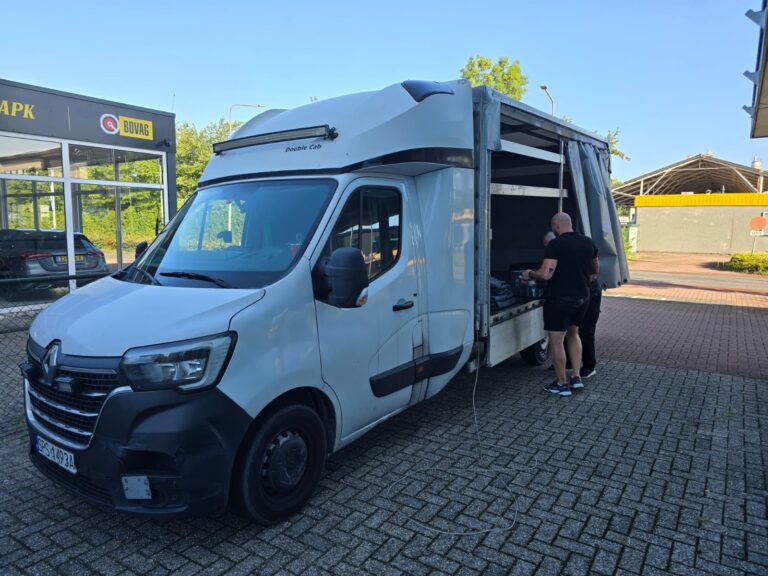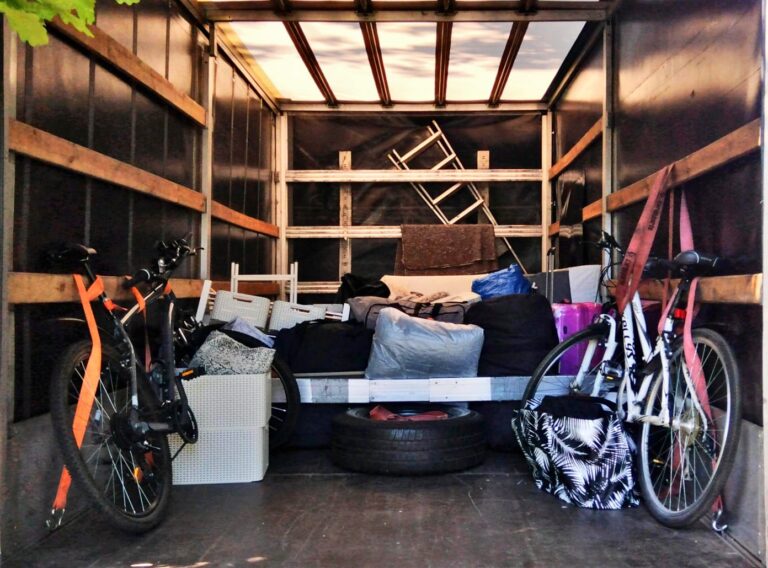

Moving overseas sounds romantic until you are staring at a half-dismantled wardrobe and a spreadsheet of forms. Spain is worth it. The move can be too, if you choose the right transport model and prepare the paperwork before it bites.
This guide gives you a clear plan for overseas removals to Spain. It covers the best shipping options, costs, timelines, documents, and the small decisions that protect your budget and your furniture.
VANonsite delivers premium European transport with careful handling, swift coordination, and GPS tracking for every load. If you want a long-distance man and van feel with serious logistics behind it, you are in the right place.
TL:DR
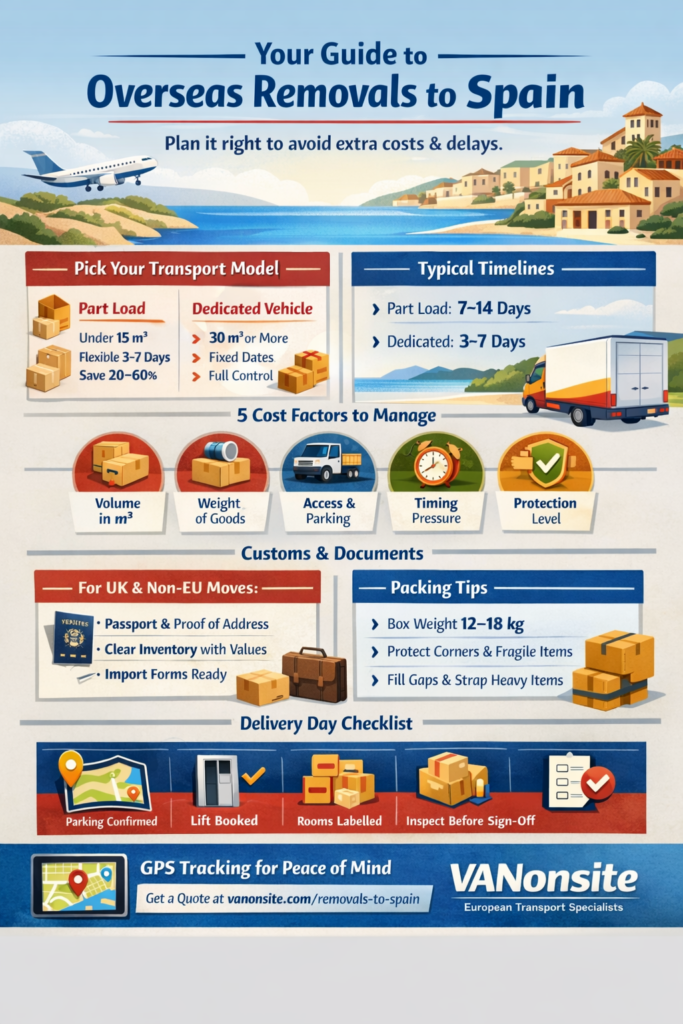
- Under 15 m³ and flexible by 3 to 7 days: part loads are often the best value and can cut costs by 20% to 60%.
- Fixed dates, privacy, or 30 m³+: choose a dedicated vehicle to avoid delays that can cost 150 to 400 EUR in knock-on expenses.
- Your quote is shaped by five levers: m³, weight, access, timing pressure, and protection level.
- Typical timing: dedicated road moves often land in 3 to 7 days, while part loads are usually 7 to 14 days.
- Paperwork wins or loses time: keep a clean inventory with values, plus official UK and Spain guidance links in one folder.
- Packing is cost control: protect corners, strap loads, and keep boxes around 12 to 18 kg for safer handling.
- Want calm visibility: VANonsite offers GPS tracking for every load, so your overseas man and van move feels controlled from pickup to Spain.
The quick answer
Most people searching for overseas removals to Spain want one of two outcomes.
- Move a smaller shipment without paying for an almost empty vehicle.
- Move a full household without delays, damage, or paperwork chaos.
The best option depends on two levers.
- Volume in m³
- Flexibility in dates
Here is the simplest way to choose without overthinking it.
The 30-second decision
- Under 15 m³ and flexible by 3 to 7 days: choose a part load.
- Need a fixed day, privacy, or faster routing: choose a dedicated vehicle.
- Around 30 m³ and above: a dedicated vehicle or full load is usually the cleanest fit.
Why it works: long routes are priced by time and mileage. Sharing a route shares the cost. Booking a whole vehicle buys control.
Quick examples that match real moves
- 10 to 20 boxes, a desk, a chair, a bike: often 1 to 5 m³. Part load is usually best value.
- Sofa, bed, wardrobe, dining table, 15 boxes: often 6 to 12 m³. Part load wins if you can be flexible.
- One-bedroom set with appliances: often 12 to 18 m³. Part load or dedicated depends on your dates.
- Two-bedroom household: often 18 to 30 m³. Dedicated often makes life easier.
A fast comparison table
| What matters most | Best pick | What you are buying |
|---|---|---|
| Lowest cost for a smaller load | Part load | pay per m³, shared mileage |
| Fixed delivery day | Dedicated | direct plan, fewer surprises |
| Privacy from door to door | Dedicated | your items only |
| Best value with flexibility | Part load | smarter routing |
If you are under 15 m³ and can accept a delivery window of 3 to 7 days, a part load is often the best-value choice. It can reduce costs by 20% to 60% compared to booking a dedicated vehicle.
If you need a fixed date, privacy, or you are closer to 30 m³ and above, a dedicated vehicle or full load is usually smarter.
For the Spain overview, start here:
And if you want the part load model explained in plain English:
What “overseas removals to Spain” means in practice
“Overseas” often gets used for any cross-border move. For Spain, it usually means one of these routes.
- UK to Spain (customs matters after Brexit)
- EU to Spain (simpler movement of goods, fewer friction points)
- Non-EU to Spain (customs and proof requirements can be heavier)
The transport can still be road-based, especially across Europe. The difference is not only distance. It is how the move is planned and how the documents are handled.
The big difference between routes
- EU to Spain is usually the smoothest. Focus on inventory, access, and packing quality.
- UK to Spain adds customs detail. A clean inventory and correct paperwork protects your timeline.
- Non-EU to Spain can add deeper checks. Proof and consistency matter even more.
If you want your move to feel controlled, focus on three ideas.
- clear inventory
- strong protection
- predictable access at pickup and delivery
A simple truth: the cheapest overseas move is the one that arrives on time and intact. Planning is not extra. Planning is the price protector.
Choose your transport model
Think of this as a choice between value and control. Each model can be “cheap” on paper. Only the right one stays cheap in real life.
Option A: Part load removals
A part load means you share vehicle space on a planned route to Spain. You pay for the space you use, not the whole trip.
Best for:
- small moves and student relocations
- furniture-only shipments
- 1 to 15 m³ loads
Trade-off:
- delivery is route-based, so you usually accept a delivery window
If your move is small, this is the cleanest way to keep it affordable without gambling on parcel networks.
Option B: Dedicated vehicle
A dedicated vehicle gives you more control.
Best for:
- fixed-date delivery
- privacy from door to door
- larger volumes, often 15 to 30 m³ and above
Trade-off:
- you pay for the whole vehicle, so smaller loads can feel expensive
Option C: Container shipping
Container shipping can be practical for long international moves, but it usually adds handling touchpoints.
Best for:
- very large shipments
- moves that are not time-sensitive
Trade-off:
- more transfers can increase scuff and delay risk
Option D: Pallets and freight networks
Pallet freight can work for boxed items and flat-pack panels. It is not ideal for finished furniture.
Best for:
- robust, well-boxed items
- replaceable pieces
Trade-off:
- more touchpoints, more potential for surface damage
Quick comparison table
| Model | Best for | Typical savings vs dedicated | Handling control | Timing style |
|---|---|---|---|---|
| Part load | 1 to 15 m³, small removals | 20% to 60% | High | delivery window |
| Dedicated | fixed dates, privacy, higher volume | 0% | Very high | fixed schedule |
| Container | very large moves | varies | Medium | port and schedule driven |
| Pallet freight | boxed, non-fragile items | 10% to 40% | Medium to low | network schedule |
Costs: what changes your quote
Overseas removals pricing looks complex until you see the levers. Most quotes are shaped by five drivers.
- Volume in m³
- Weight (books, tools, appliances)
- Access (stairs, carry distance, parking rules)
- Timing pressure (fixed dates cost more)
- Protection level (fragile, premium, white glove)
Flexibility is a hidden discount. If you can offer a window of 3 to 7 days, you often unlock 10% to 25% in savings because your load fits a smarter route.
Cost levers that usually work
- reduce m³ by 15% to 30% via decluttering and disassembly
- keep box weight around 12 to 18 kg for faster handling
- confirm parking and lift bookings early
- choose part load when under 15 m³
A simple cost lever table
| Lever | What you change | Typical impact |
|---|---|---|
| Part load vs dedicated | shared mileage | saves 20% to 60% |
| Flexible dates | route fit | saves 10% to 25% |
| Disassembly | lower m³ | saves 5% to 20% |
| Better access | less labour time | saves 5% to 15% |
| Strong packing | lower damage risk | saves money by avoiding replacement |
If you are budgeting after Brexit, this is worth reading:
Timelines: what is realistic
People underestimate how much timing is shaped by routing, not by kilometres. A move to Spain is a chain. One weak link creates a delay.
As a practical guide:
- Dedicated road moves often land in 3 to 7 days depending on city pair, access, and border rhythm.
- Part loads commonly land in 7 to 14 days because they follow scheduled runs and load compatibility.
Those ranges are normal, but here is what quietly shifts the timeline.
The 6 timeline drivers that matter most
- Access and carry distance at pickup and delivery
- Fixed day requests, especially weekends
- Seasonal pressure, summer and end-of-month spikes
- Customs readiness for UK and non-EU moves
- Island routes and remote rural deliveries
- Packing quality, loose items slow loading and increase risk
If your dates are emotionally fixed, treat that as a cost driver. It is cheaper to buy control than to buy last-minute replacements.
A calm planning window that protects your budget
This is the smoothest schedule for most overseas removals to Spain.
- 4 to 6 weeks before: choose part load or dedicated, start inventory, reduce volume by 15% to 30%.
- 2 to 3 weeks before: confirm parking rules, lift bookings, access notes, and paperwork.
- 7 to 10 days before: finish packing, label fragile items, finalise inventory with values.
- 48 hours before: confirm contacts, access codes, and the exact stopping point.
If you want the money side of timing, this guide helps you budget without panic:


Documents and customs
Paperwork is the part that ruins the mood when you leave it late. The fix is simple: separate your move into two document sets, then keep them clean and consistent.
- your personal residency documents
- your goods transport and customs documents
Keep originals with you. Keep digital copies on your phone. Also keep one printed copy of the inventory and contacts. It saves time when signal is poor.
The one document that prevents 80% of delays
A readable inventory. Not perfect, just clear.
Use this mini template:
- item name
- quantity
- value in EUR
- notes for fragile items and serial numbers
Add photos of the five biggest items if you can. It speeds up checks and reduces questions.
A quick customs folder table
This keeps your move sharp, especially on UK and non-EU routes.
| Folder | What goes inside | Why it matters |
|---|---|---|
| Personal | passport, address proof, residency steps | reduces immigration friction |
| Goods | inventory with values, contact details, access notes | speeds up goods checks |
| Proof | photos, receipts for high-value items | protects you in disputes |
Moving within the EU to Spain
EU moves are usually simpler, but you still want a clear inventory and proof of address. That is how you keep the move fast and calm.
Spain’s public administration portal explains EU residence registration guidance here:
If you need immigration appointments in Spain, the official Extranjería appointment system is here:
UK to Spain after Brexit
UK moves are “third country” moves for EU customs. That is where inventories, proof, and timing matter. A missing detail can turn a quick check into a slow one.
Spain’s Tax Agency explains the residence transfer and relief rules for personal belongings here:
UK guidance on declaring personal goods you bring into or take out of the UK is here:
- https://www.gov.uk/guidance/check-how-to-declare-personal-goods-you-bring-into-or-take-out-of-the-uk
UK guidance for British nationals living in Spain is here:
If you are unsure how long you can stay, this guide helps:
Non-EU to Spain
If you are moving from outside the EU, expect customs checks and documentation expectations. The strongest move you can make is a clean, readable inventory with realistic values. Consistency matters. Your item list should match your reality.
If your situation is complex, use this relocation guide as a shortcut to the right questions:
Items that often trigger delays
Avoid shipping these if you can. They can slow checks or create extra questions.
- aerosols and flammable liquids
- unlabelled mixed boxes
- leaking food items
- anything you cannot describe clearly on the inventory
If you want the plain-English relocation checklist for Spain, use:
And if you want to avoid expensive, avoidable errors, read:
Packing and protection for overseas moves
A cheap move becomes expensive when a corner is crushed. Long routes amplify vibration, humidity changes, and tight stairwells. Good packing is not a nice extra. It is what keeps “overseas removals to Spain” affordable in real life.
If you want a simple mindset, use this:
- protect surfaces
- stop movement
- keep loads predictable
The 3 packing levels
Choose the level that matches your items, not your optimism.
- Basic protection
- best for: robust furniture, boxes, flat-pack
- focus: blankets, corner guards, tight stacking
- Professional packing
- best for: mixed household goods, fragile items, busy schedules
- focus: speed, consistency, reduced damage risk
- White Glove handling
- best for: premium pieces, delicate interiors, sentimental items
- focus: high-touch protection and careful placement
Packing rules that keep furniture safe
- protect corners first
- wrap finished surfaces so nothing rubs
- strap items so they cannot shift
- bag and label hardware per item
- keep liquids out of the shipment
The movement rule that prevents most damage
Most damage happens when items slide inside the vehicle. The fix is simple.
- fill gaps so nothing can travel
- strap heavy items to fixed points
- keep soft items as buffers, not as top weight
If you can shake a box and feel movement inside, repack it.
Box weights and sizes, the safe sweet spot
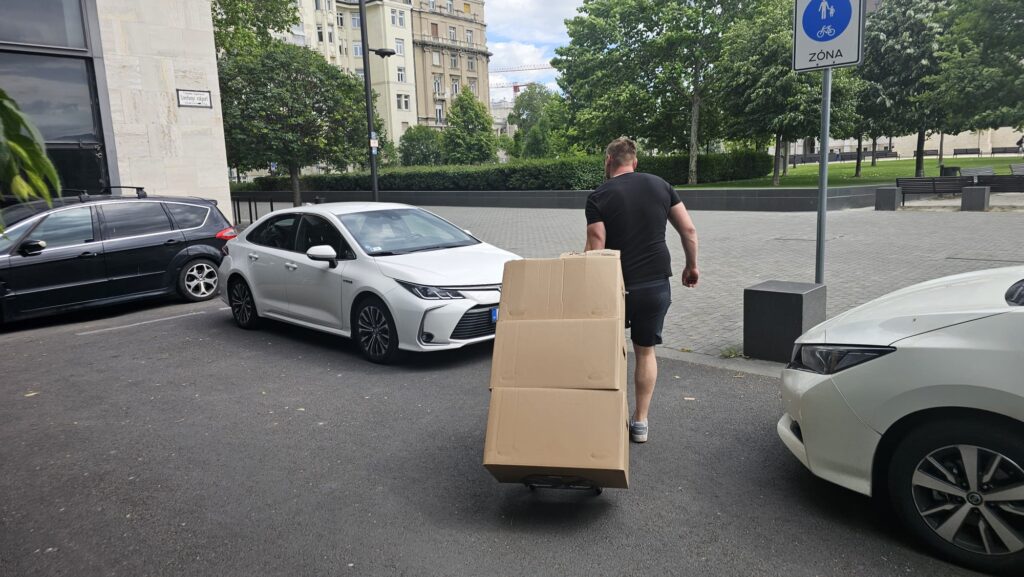
Aim for 12 to 18 kg per box. This protects your items and makes loading faster, which protects your quote.
If you have heavy items like books, use smaller boxes. A heavy large box is a dropped box waiting to happen.
What to pack where, a fast table
| Box type | Best for | Weight target | Pro tip |
|---|---|---|---|
| Small box | books, tools, pantry items | 10 to 15 kg | tape the base twice |
| Medium box | clothes, kitchen items | 12 to 18 kg | fill gaps to stop rattle |
| Wardrobe box | hanging clothes | light to medium | add shoes at the bottom |
| Picture box | mirrors, frames | light | wrap corners, keep upright |
Quick protection table
| Item | Best protection | Extra tip |
|---|---|---|
| Sofa | cover plus blankets | protect feet and corners |
| Wardrobe | blankets plus corner guards | dismantle if possible |
| Table | blanket wrap | remove legs |
| TV | original box or thick foam | keep upright |
High-risk items, pack them like you mean it
These are the pieces that most often get scratched, dented, or stressed on long routes.
Mattresses
- use a sealed mattress bag
- keep it dry and upright where possible
- avoid stacking sharp-edged items against it
Artwork and mirrors
- protect corners with foam
- use a rigid board layer on both sides
- label as fragile and keep upright
Electronics
- use original boxes if possible
- keep cables in labelled zip bags
- never place heavy items on top
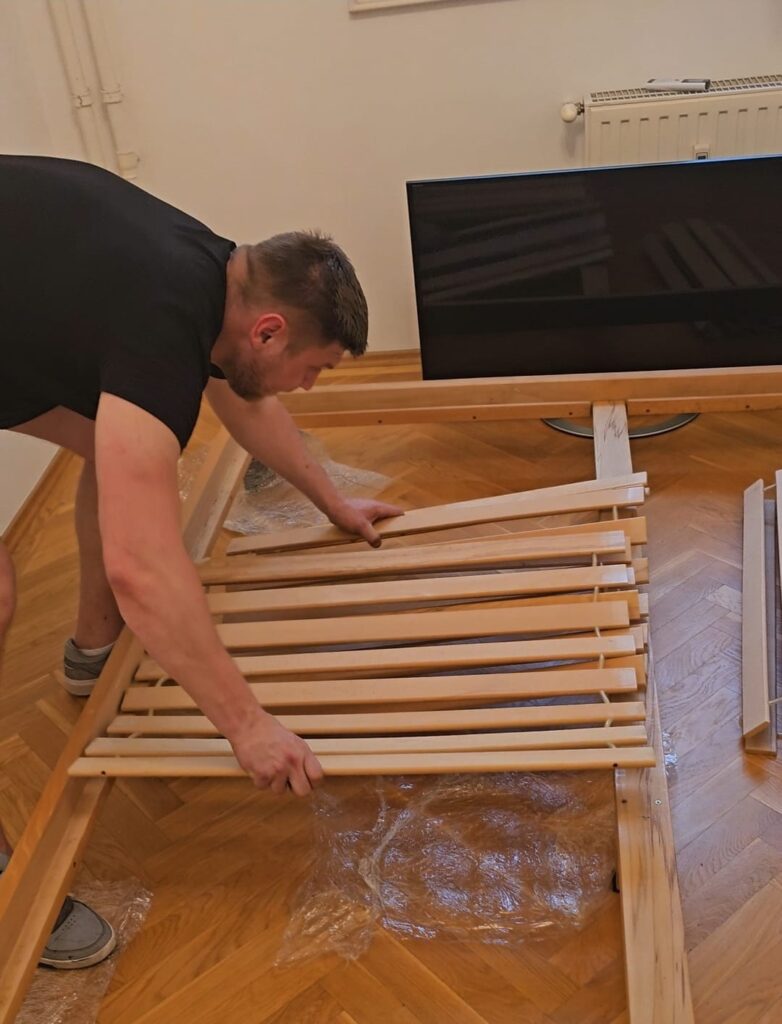
Flat-pack and wardrobes
- remove doors when possible
- tape and label hardware bags to the main panel
- protect edges with cardboard strips
A 10-minute packing checklist before pickup
Do this right before the vehicle arrives.
- All boxes sealed, no open tops.
- Fragile boxes labelled on two sides.
- Hardware bags labelled per item.
- Liquids removed from the shipment.
- One “essentials” pile separated so it cannot be loaded.
If you want packing done fast and properly:
For premium placement and delicate interiors:

Vehicle sizes: choose the right capacity
Choosing the right size is how you stop paying for air, without forcing bad stacking. The goal is simple: the smallest safe fit, with a sensible buffer.
Two simple rules keep you safe.
- Estimate m³ and add 10% to 15% buffer.
- If you have dense items, weight can bite before space does.
The fastest m³ estimate you can do without measuring everything
Use this quick method:
- Count big items: sofa, bed, wardrobe, table, appliances.
- Count boxes.
- Add a buffer for awkward shapes.
If you want a simple shortcut, many real moves cluster like this.
- 10 boxes plus a chair and a small desk: 1 to 3 m³
- studio essentials plus a sofa: 5 to 10 m³
- one-bedroom with furniture: 12 to 18 m³
- two-bedroom household: 18 to 30 m³
VANonsite vehicle sizes
| Vehicle | Capacity | Max payload |
|---|---|---|
| Moving One | 1 m³ | 100 kg |
| Moving Basic | 5 m³ | 300 kg |
| Moving Medium | 10 m³ | 600 kg |
| Moving Premium | 15 m³ | 1000 kg |
| Moving Premium Plus | 30 m³ | 3500 kg |
| Moving Full House XXL | 90 m³ | 20000 kg |
Which size fits, a practical guide
| Typical shipment | Typical m³ | Best starting point |
|---|---|---|
| Suitcases, essentials, 6 to 10 boxes | 1 to 2 | Moving One |
| Student move, boxes plus a bike | 2 to 5 | Moving Basic |
| Sofa, bed, mattress, 10 to 15 boxes | 5 to 8 | Moving Medium |
| Dining set, wardrobe, 20 boxes | 8 to 12 | Moving Medium |
| One-bedroom with appliances | 12 to 18 | Moving Premium |
| Two-bedroom heavier mix | 18 to 30 | Moving Premium Plus |
Payload, the rule that prevents nasty surprises
If your boxes are dense, weight becomes the limiter.
- keep boxes around 12 to 18 kg
- use small boxes for books
- do not combine books and kitchenware in one big box
A load can look small in m³ and still be heavy. That is why payload exists.
Part load vs dedicated, how size works differently
- With a part load, you usually pay for the space you take, measured in m³.
- With a dedicated vehicle, you pay for the whole van, so choosing the correct tier matters more.
If your shipment is under 15 m³, a part load often gives the best blend of cost and care.
Delivery day in Spain: make it calm
A smooth delivery is not luck. It is access plus a simple plan. Spain can be wonderfully relaxed, but buildings and streets can be strict. If the van cannot stop close, every extra 25 meters of carry distance quietly adds minutes, sweat, and risk.
Think of delivery as a short performance. You want a clear stage and a clean script.
24 hours before delivery
- confirm parking rules and the safest stopping point
- book the lift if needed and confirm the time slot
- clear corridors, doorways, and tight turns
- label rooms for big items, especially beds and wardrobes
- separate essentials so they do not get loaded
A Spain-specific access check
Do a quick reality scan. It prevents 80% of delivery friction.
- is the street narrow or one-way
- is there a loading bay or a strict no-stopping zone
- are there time windows set by the building or community rules
- do you need a key, concierge, or code for entry
If you live in a busy area, confirm the unloading plan early. The cheapest move stays cheap when the van can work efficiently.
A fast delivery checklist
| Task | Why it matters | Do it when |
|---|---|---|
| Lift booked | avoids waiting time | before arrival |
| Parking confirmed | faster unload | before arrival |
| Room labels | fewer re-moves | arrival |
| Condition check | protects you | before sign-off |
The 15-minute arrival routine
This is the calmest way to start.
- Walk the route from van to room with the crew.
- Agree the unload order: heavy first, fragile last.
- Create an “essentials corner” that stays untouched.
- Place protective runners or blankets on tight turns.
If you have delicate floors, this routine is priceless.
Signing off without regrets
Do not rush the last step. Check the big pieces first.
- sofa, bed frame, mattress, wardrobe, table
- any premium surfaces: lacquer, glass, stone
- hardware bags: labelled, present, taped to the right item
If something looks wrong, photograph it immediately and note it before sign-off. Small issues are easiest to solve when they are documented in the moment.
VANonsite provides GPS tracking for every load, so you can time arrivals and handovers with confidence. It is the difference between guessing and knowing.
Services that match real overseas moves
Choose the support level that removes your biggest stress. Some people want pure value and speed. Others want the move to feel almost invisible.
Pick the service that fits your life
- Furniture Removals: ideal for furniture-only shipments, fragile pieces, and small moves that still need proper handling.
- Home Removals: best for full households where timing, protection, and placement matter.
- Packing Service: the fastest way to reduce damage risk and speed up loading, especially for mixed household goods.
- White Glove Delivery: premium handling for high-value items and delicate interiors, with careful placement.
- Office Removals: smart for businesses where downtime is expensive and schedules are tight.
- Student Removals: cost-efficient for small removals, boxes, and flexible routes.
If your timing is tight, ask about Last Minute Moving and storage options. Storage can save you from paying urgency prices when keys and dates do not align.
If you are comparing route options to Spain, start here:
Common mistakes that make overseas removals expensive
Most mistakes look harmless. Then they turn into delays, damage, or re-delivery fees. The painful part is that many of these costs are avoidable with a 30-minute prep window.
The biggest cost traps and the fix
- underestimating volume and forcing bad stacking
- fix: add a 10% to 15% buffer and dismantle bulky items
- forgetting lift bookings and parking rules
- fix: confirm rules in writing and share access notes with the crew
- packing hardware loose and losing screws
- fix: bag and label hardware per item, tape it to the main panel
- choosing “cheapest” without asking how items are protected
- fix: ask for the protection plan and loading method before you pay
A quick mistakes table
| Mistake | What it causes | The simple fix |
|---|---|---|
| No inventory detail | customs questions | clear list with values |
| Mixed boxes with no labels | slow delivery | label rooms and fragile items |
| Dense oversized boxes | drops and damage | keep boxes 12 to 18 kg |
| Fixed dates with a small load | higher quote | choose part load if flexible |
The “cheap” decision that often backfires
Trying to squeeze an overseas move into a rushed single-day plan. If a delay would cost you 150 to 400 EUR in hotels, missed handovers, or replacement buys, it is often smarter to pay for control.
For the deeper list of traps, read:
Quick FAQ
Is part load safe for overseas removals to Spain?
Yes, when packing is strong and items are secured. Part loads are a smart pick for small removals because you pay for space, not a full vehicle. If your load is under 15 m³ and you can accept a window, it is usually the best-value route.
For a deeper breakdown, see:
Can I book a man and van for an overseas move to Spain?
Yes. A long-distance man and van style move is ideal for boxes, small furniture, student relocations, and furniture-only shipments. It gives you the personal feel of a smaller service, with proper route planning behind it.
What is the best way to keep costs low without risking damage?
Use this trio. It is the real sweet spot.
- reduce volume by 15% to 30% with decluttering and dismantling
- keep box weight around 12 to 18 kg for safer handling
- choose part load if you can be flexible by 3 to 7 days
How long do overseas removals to Spain usually take?
A practical expectation:
- dedicated road moves often land in 3 to 7 days
- part loads often land in 7 to 14 days
Timing shifts most when access is complicated, paperwork is incomplete, or you insist on a fixed weekend slot.
What documents do I need for overseas removals to Spain?
Keep it simple and consistent.
- passport
- proof of your Spain address
- clear inventory with values in EUR
- contact details and access notes for both addresses
If you want the plain-English version of what to prepare, use:
If you are moving from the UK after Brexit, budgeting and paperwork can feel heavier. This guide helps:
What should I avoid putting in the shipment?
Avoid anything that can leak, ignite, or cause questions.
- aerosols and flammable liquids
- unlabeled mixed boxes
- leaking food items
- items you cannot describe clearly on the inventory
When in doubt, keep it with you or leave it out. Delays are where “cheap” turns expensive.
I am British. How long can I stay in Spain?
Rules depend on your status and paperwork. For the clear overview, see:
How do I get the most accurate quote fast?
Send these five details and you will get a cleaner, more realistic quote.
- pickup postcode and delivery postcode
- your ideal date and your flexible window
- floor level, lift access, carry distance, and parking rules
- box count plus a big items list, with estimated m³ if you have it
- fragile, high-value, or awkward items plus photos of the biggest pieces
What are the biggest mistakes people make with overseas removals to Spain?
Underestimating volume, forgetting lift and parking rules, and skipping protection are the classic ones. The full list is here:
Are island moves like Lanzarote possible?
Yes, but they need extra planning. If you are heading to Lanzarote, use this route guide:
Get a fast quote with VANonsite
Start with the Spain hub:
If you want a bigger relocation roadmap, read:
A good move feels like this: you close the old door, breathe out, and your life in Spain begins without drama.
Summary of the full guide
Overseas removals to Spain feel easy when you decide two things early: how much space you need in m³, and how flexible you can be on dates. If your load is under 15 m³ and you can accept a window of 3 to 7 days, a part load usually delivers the best price because you share mileage. If you need a fixed delivery day, privacy, or you are closer to 30 m³ and above, a dedicated vehicle buys control and protects you from expensive delays.
The guide breaks pricing into five levers you can actually influence: m³, weight, access, timing pressure, and protection level. You reduce cost fastest by decluttering and dismantling to cut volume by 15% to 30%, keeping box weight around 12 to 18 kg, and confirming parking and lift access in advance. On UK and non-EU routes, clean paperwork matters just as much as packing, so the guide shows how to build a simple customs folder and a readable inventory with values.
Finally, it turns delivery day into a calm routine: clear access, label rooms, agree the unload order, and check key items before sign-off. With VANonsite, your overseas man and van move stays visible and predictable thanks to GPS tracking for every load, so you can plan handovers with confidence and settle into Spain without drama.