
Moving from Spain to Sweden can feel like swapping sea air for crisp Nordic mornings overnight. One day you are packing under bright Spanish light. The next, you are thinking about icy pavements, stairwells, and how your sofa will survive a long haul north.
This route is not a small hop. Depending on cities, it is often 2,500 to 3,500 km on the road. That is why planning matters. A smart plan protects your time, your budget, and your sanity.
This guide gives you a clear, fast path for removals from Spain to Sweden. You will learn how to pick part load or full load, how to estimate volume in minutes, what documents actually matter, and how to avoid the mistakes that quietly add days.
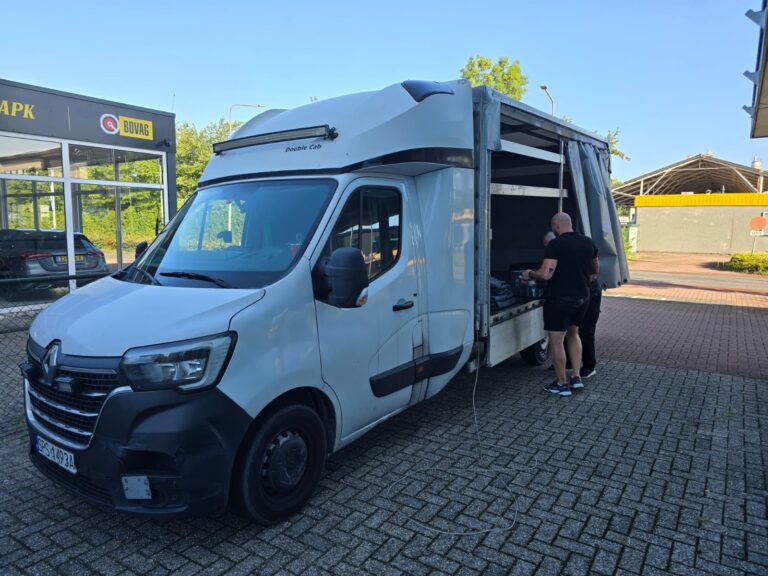
VANonsite delivers premium European relocation services with careful handling, fast coordination, and GPS tracking for every load. If you want a reliable man and van experience that still feels professional at long distance, you are in the right place.
TL:DR
- Most Spain to Sweden moves cover 2,500 to 3,500 km, so route planning is a bigger cost lever than people expect.
- Part loads can save 20% to 60% when your shipment is under 15 m³ and you can accept a delivery window.
- Dedicated full loads are best when you need fixed-day delivery or you are closer to 30 m³ and above.
- Typical delivery timing: dedicated moves often land in 3 to 7 days, part loads in 7 to 14 days.
- Choose the right van size with a 10% to 15% buffer so nothing is crushed or forced.
- Paperwork is easier inside the EU, but you still need a clean inventory and the right registration steps for Sweden.
- VANonsite offers GPS tracking on every load, plus packing, storage, and white glove options for fragile or high-value items.
Why people move from Spain to Sweden
People leave Spain for Sweden for all sorts of brave, sensible, deeply personal reasons. Sometimes it is a job in Stockholm, Gothenburg, Malmö, or Uppsala. Sometimes it is a partner’s new role. Sometimes it is the quiet pull of stability, better work structure, and a feeling of being able to breathe.
Then there is lifestyle. Spain is generous with sunshine and late dinners. Sweden is generous with order, space, and a different kind of calm. The contrast is real, especially in winter. You might go from 18°C afternoons to days that hover around 0°C or below, depending on where you land. That shift is exactly why planning your move matters.
Here are the most common triggers behind removals from Spain to Sweden, in plain English:
- Career upgrades and stronger long-term growth
- Family plans with schooling and stability front and centre
- A reset after burnout, big life changes, or a relationship shift
- Better logistics for life: housing, routines, and predictable services
- A second-home decision becoming permanent
Whatever your reason, your move usually has one shared need: a transport plan you can trust.
Because you are not just moving boxes. You are moving the pieces that make your home feel like home. That is why a reliable man and van service, careful handling, and GPS visibility can turn a stressful route into something you can actually manage.
The fastest way to choose your removals option
Use this quick rule. It works. It gets you to the right answer in under a minute.
- If you have under 15 m³, a part load or smaller dedicated slot is often perfect.
- If you are near 30 m³ or more, a full load becomes smarter.
- If you need a fixed day and tight delivery timing, go dedicated.
- If you can accept a delivery window and want better value, go part load.
Most Spain to Sweden routes are long. Depending on exact cities, road distance is often in the 2,500 to 3,500 km range, so planning matters.
A faster decision method
Ask yourself two questions. Answer honestly.
- Do you need delivery on an exact date, or can you accept a window of a few days?
- Are you moving mostly boxes and a few items, or a full home with bulky furniture?
If you need a fixed date and you are moving larger volume, dedicated transport is usually worth it. If you can be flexible and your shipment is smaller, part load is often the smartest move.
Quick picker table
This is a simple, practical guide. It helps you choose without second guessing.
| What you are moving | Typical volume | Most sensible option | Why it fits |
|---|---|---|---|
| Boxes only, student essentials, a few items | 1 to 5 m³ | Part load | lowest waste, strong value |
| Small flat, compact furniture set | 5 to 10 m³ | Part load or small dedicated slot | balance of price and timing |
| One-bedroom move with bulky items | 10 to 15 m³ | Part load if flexible, dedicated if fixed date | timing is the decision lever |
| Two-bedroom and above, heavier mix | 15 to 30 m³ | Dedicated full load slot | predictability and speed |
| Large household | 30 m³ and above | Full load | cleanest, safest workflow |
A tiny volume trick that saves money
If you are unsure about size, do this:
- count your medium boxes and multiply by 0.05 m³
- add big items like sofa, bed, wardrobe
- add a 10% to 15% buffer so nothing is forced
You do not need a perfect estimate. You need a usable one.
If you want a move that feels simple, not complicated, the goal is clear. Choose the right option, then let a professional man and van team handle the loading, protection, and route coordination while you focus on arriving well.
Part load vs full load
This is the fork in the road. Choose well and everything else becomes easier.
A part load means your shipment shares vehicle space with other customers on a planned route. You pay for the space you use. A full load means the vehicle is dedicated to you. It is quicker and more predictable, because the route is built around your addresses.
The most important truth is simple. Part load is a money tool. Full load is a control tool.
What part loads feel like in real life
Part loads are perfect when you have a smaller shipment and you can accept a delivery window.
- You share mileage, so you share cost.
- You still get careful handling, protection, and a professional man and van workflow.
- You often save 20% to 60% compared to booking the whole vehicle.
The trade-off is timing. Your delivery is planned as part of a route, not a private sprint.
What full loads feel like in real life
Full loads are for people who want clarity.
- Your pickup date is fixed.
- Your delivery day is easier to predict.
- You get more privacy and simpler logistics.
The trade-off is cost. You are paying for the whole vehicle and the full route.
Part load vs full load at a glance
| Option | Best for | Typical delivery style | Biggest advantage | Watch-outs |
|---|---|---|---|---|
| Part load | boxes, small flats, student moves, furniture sets | scheduled route with a delivery window | often saves 20% to 60% vs full load | timing is route-based |
| Full load | whole homes, tight deadlines, high privacy | direct pickup, direct delivery | fastest and most predictable | higher cost |
Decision shortcuts that actually help
If you are still unsure, use these quick checks.
- Volume check
- Under 15 m³ usually points to part load.
- Around 30 m³ and above usually points to full load.
- Timing check
- If you have a key handover and you cannot move it, choose dedicated transport.
- If you can accept a delivery window of a few days, part load often wins.
- Fragile check
- If you are moving high-value items, part load still works, but choose stronger packing and protection.
- For premium placement and delicate interiors, add White Glove Delivery.
Quick scenarios
Here are three common Spain to Sweden moves and what usually fits.
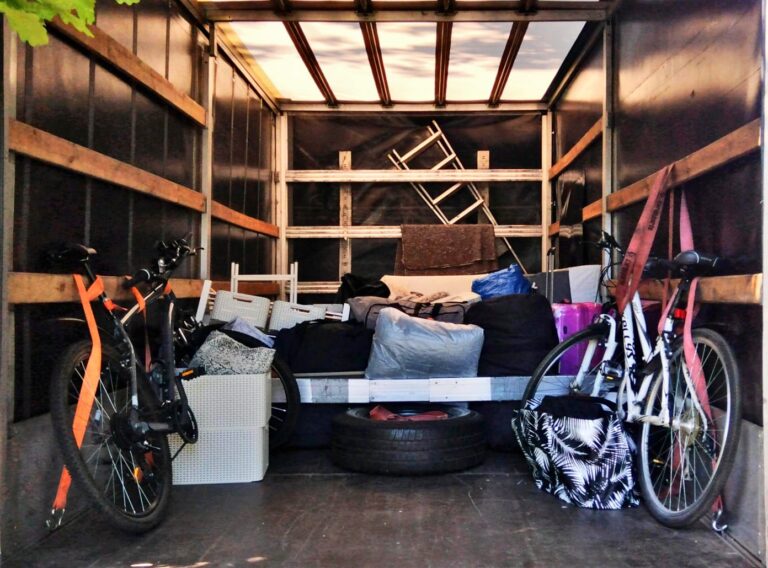
- 25 boxes, a bicycle, and two suitcases
- Often around 2 to 4 m³.
- Best fit: part load.
- Sofa, bed, mattress, table, plus 12 boxes
- Often around 6 to 11 m³ depending on the sofa.
- Best fit: part load if timing is flexible. Dedicated slot if you have a strict delivery day.
- One-bedroom household with wardrobe, appliances, and 35 boxes
- Commonly 12 to 18 m³.
- Best fit: either option, depending on access and how fixed your dates are.
If you are moving furniture only, keep it clean and focused with Furniture Removals.
Pricing: what actually changes your quote
A good quote is built from real drivers, not vague guesses. Think of the quote like a recipe. Change the ingredients and the price changes.
The five biggest cost drivers
- Volume (m³) and item shapes (sofas, wardrobes)
- Weight (books and tools can hit payload limits)
- Access (stairs, long carries, tight parking)
- Timing (flexible windows can reduce cost by 10% to 25%)
- Urgency (last-minute moves can add 10% to 30% in peak periods)
What your quote usually includes
A professional removals quote usually bundles the essentials:
- transport planning and route scheduling
- loading and unloading time
- protection materials for furniture (blankets, straps)
- basic coordination and customer support
If you add packing, white glove handling, or storage, those are additional layers, not hidden surprises.
How to save money without sacrificing safety
You do not need to fight the price. You need to make the move easier.
- Be flexible by 3 to 7 days
That flexibility often unlocks better routing and a better quote. - Reduce volume by 15% to 30%
Selling and donating is not just minimalism. It is cost control. - Make access predictable
A carry of 30 meters is normal. A carry of 100 meters can quietly add time and cost. - Pack tightly and label clearly
Loose items slow loading. Slow loading costs money.
Mini cost levers table
| Lever | What it changes | Typical impact |
|---|---|---|
| Flexible pickup and delivery window | route efficiency | can reduce costs by 10% to 25% |
| Decluttering before moving | m³ reserved | can cut volume by 15% to 30% |
| Better parking and access | labour time | can reduce delays and waiting costs |
| Proper packing and labelling | handling speed and damage risk | fewer breakages, faster loading |
| Avoiding peak urgency | schedule pressure | avoids 10% to 30% uplift in busy periods |
The 7 details that make your quote accurate on the first try
Send these and your quote gets sharper fast:
- pickup and delivery postcodes
- floor level at both ends
- lift availability and size
- parking distance from door to van (meters)
- list of big items
- box count and box size
- your ideal date and your flexible window
A quick checklist you can copy
- Boxes: number and size
- Big items: sofa, bed, wardrobe, appliances
- Access: stairs, lift, parking distance in meters
- Special items: TV, art, glass, instruments
- Timing: ideal date plus your flexible window


Vehicle sizes: match your load and stop paying for air
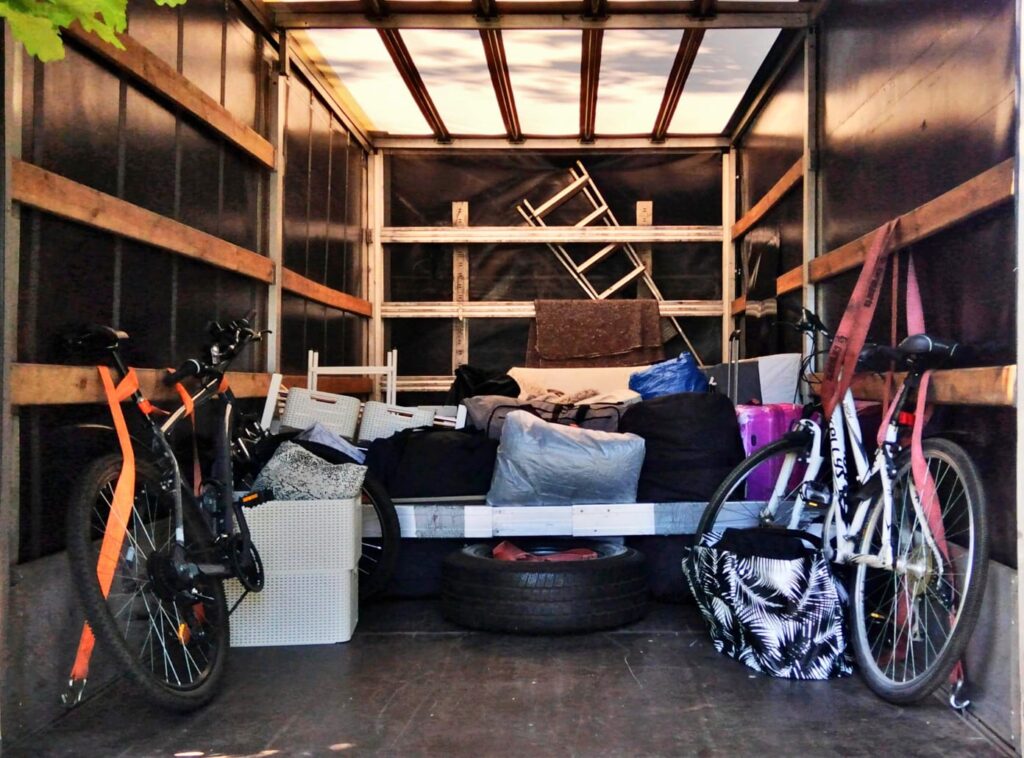
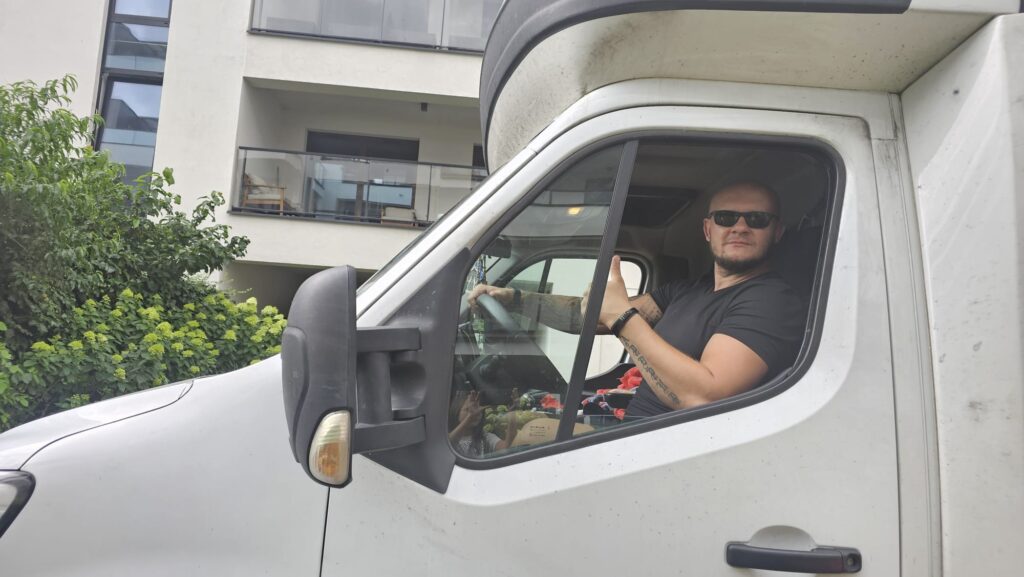
VANonsite offers multiple vehicle sizes, so your move fits your reality. The smartest move is usually not “bigger”. It is “exactly right”. Because every extra cubic metre you do not need is money evaporating.
At the same time, a van that is too small creates chaos. It forces awkward stacking, rushed packing, and that dreadful moment when something has to be left behind.
So let’s make it simple.
VANonsite vehicle sizes
| VANonsite vehicle size | Capacity | Max payload | Best fit examples |
|---|---|---|---|
| Moving One | 1 m³ | 100 kg | a few boxes, suitcases, small essentials |
| Moving Basic | 5 m³ | 300 kg | student room, small moves, boxes plus a few items |
| Moving Medium | 10 m³ | 600 kg | studio or small one-bedroom |
| Moving Premium | 15 m³ | 1000 kg | one-bedroom to two-bedroom light move |
| Moving Premium Plus | 30 m³ | 3500 kg | two-bedroom, heavier furniture mix |
| Moving Full House XXL | 90 m³ | 20000 kg | whole-home moves, large households |
A man and van style move should feel simple. The trick is choosing the smallest size that fits, plus 10% to 15% buffer.
The 60-second vehicle picker
If you are standing in your living room right now, looking at your stuff, do this.
- Count your medium boxes.
- Multiply by 0.05 m³ per box.
- Add big items (sofa, bed, wardrobe, appliances).
- Add 10% to 15% buffer.
- Check weight risk if you have books, tools, or gym gear.
That is your target. Pick the nearest capacity above it.
Box count sanity check
This assumes medium boxes and sensible packing.
| Capacity | Rough medium box range | Best for |
|---|---|---|
| 1 m³ | 15 to 20 | essentials, suitcases, a few boxes |
| 5 m³ | 80 to 100 | student moves, small removals, boxes plus a few items |
| 10 m³ | 160 to 180 | studio or compact one-bedroom |
| 15 m³ | 240 to 260 | one-bedroom plus furniture |
| 30 m³ | 500 to 540 | two-bedroom with heavier mix |
Boxes are predictable. Furniture is where space disappears.
Furniture reality check
A few bulky items can eat half a vehicle. These are typical ranges.
| Item | Typical volume (m³) | Quick note |
|---|---|---|
| 2 to 3 seater sofa | 1.5 to 2.5 | corners and shapes change everything |
| Double mattress | 0.6 to 1.0 | bags protect, they do not shrink |
| Wardrobe | 1.2 to 2.2 | disassembly saves space and reduces damage |
| Washing machine | 0.4 to 0.6 | heavy, needs stable positioning |
The hidden trap: payload limits
Volume is not the only limit. Weight matters too. A van can look half empty and still be close to payload if you are moving books, tools, vinyl collections, or gym weights.
As a quick guide:
- Aim for 12 to 18 kg per box.
- If you have 40 boxes of books at 18 kg, that is 720 kg already.
That is why a careful quote asks about weight. It protects your move from last-minute reshuffles.
Example loads that match real enquiries
These examples help people choose faster, especially for long-distance removals from Spain to Sweden.
- Student essentials
- 35 boxes, a desk chair, two suitcases
- Often 3 to 5 m³
- Best fit: Moving Basic or a part load inside a larger run
- Small flat starter move
- sofa, bed frame, mattress, 20 boxes
- Often 8 to 12 m³
- Best fit: Moving Medium or Moving Premium
- One-bedroom household
- sofa, bed, wardrobe, table, appliances, 35 boxes
- Often 12 to 18 m³
- Best fit: Moving Premium, or Moving Premium Plus if bulky and heavy
If you are moving furniture only, a focused approach is cleaner. Use Furniture Removals and protect surfaces properly.
Timeline: the calm plan from Spain to Sweden
A smooth move is not about speed. It is about removing friction before it bites. Sweden is organised. Your move should be too.
Below is a practical timeline that works for part load and full load. It also keeps your days calm when the route is long.
45 to 31 days before
Start early and you buy options.
- decide: part load or full load
- build a simple inventory
- measure big items
- choose your delivery goal: fastest, cheapest, or most flexible
Add one more step that saves pain later. Walk your home and mark what you are not taking. If you sell or donate 15% to 30%, you often cut costs and packing time.
30 to 21 days before
Now you turn decisions into a plan.
- book your move window
- confirm access rules in both buildings
- consider Packing Services if time is tight
Also confirm your parking plan. If your building requires a permit or a reserved loading spot, start early. Parking problems create delays. Delays create stress.
20 to 14 days before
This is your “calm foundation” week.
- start a Sweden-first box: bedding, chargers, toiletries, kettle
- reduce volume by 15% to 30% by selling and donating
Add a simple labelling system now. It saves hours later.
- Room name
- Priority level (Open First, Open Later)
- Fragile notes where needed
13 to 7 days before
This week decides how delivery day feels.
- pack room by room
- label boxes with room plus priority
- keep important documents with you
If you have fragile items, pack them earlier, not last. Rushed packing is the fastest road to broken glass.
If you are shipping premium furniture, this is a good moment to choose White Glove Delivery. It helps especially when your new home has tight corridors or you want careful placement.
72 to 24 hours before
This is the friction-removal zone.
- confirm parking plan
- drain and dry appliances
- create a do-not-load corner for luggage
Also prepare a “paperwork pocket”. Keep these with you, not in the van:
- passports or IDs
- inventory list
- address proofs
- any booking confirmations and contact numbers
Moving day
The best moving day is calm and predictable.
- big items first, fragile last
- keep a clear path to the vehicle
- final sweep: cupboards, balconies, storage
Do a quick sign-off routine:
- Count big items first (sofa, bed, wardrobe, appliances).
- Check fragile boxes and electronics.
- Confirm nothing is left in the vehicle.
With VANonsite, you also get GPS tracking for every load, which makes timing feel far less uncertain.
First 48 hours in Sweden
You want to land softly. That means essentials first.
- unpack essentials first
- check fragile items early
- keep packaging until you confirm everything is present
A small tip that saves energy. Set up one room fully on day one, usually the bedroom. A good first night makes day two feel easier.


Documents and registration in Sweden
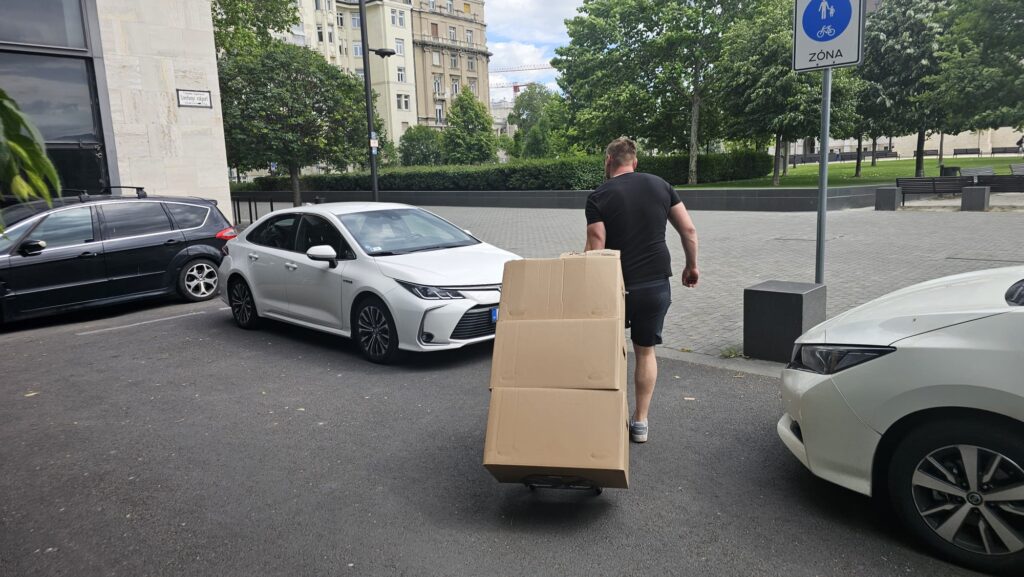
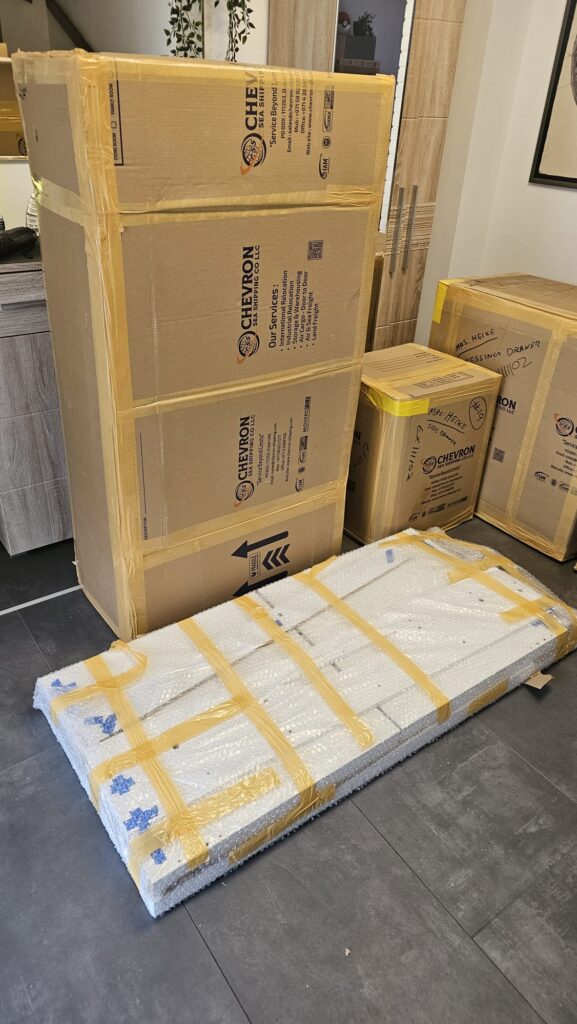
Paperwork sounds boring until it becomes the reason your first week in Sweden feels heavy. The good news is that most Spain to Sweden moves are manageable, especially if you gather the right documents early and keep them in one place.
Your requirements depend on two things:
- your citizenship and residency plan
- where in Spain your goods are coming from, mainland Spain or a special territory
Keep these documents with you, not in the van
These are the basics that make everything else smoother. Have digital copies on your phone and one printed set.
- passport or national ID
- rental contract or property deed in Sweden
- employment contract or proof of funds if relevant
- a simple inventory list of your goods
- proof of address in Spain and your new Swedish address
A clean inventory is not just admin. It helps with customs questions, insurance, and missing item checks.
Inventory template that works
Keep it short and readable. Aim for 12 to 30 lines, not 300.
- category: kitchen, bedroom, electronics
- quantity: 12 boxes, 1 sofa, 1 bed frame
- estimated value: total per category is enough
If you are an EU or EEA citizen
If you are an EU or EEA citizen, your move is usually straightforward. Your biggest priority is getting registered correctly so daily life opens up.
The key step: population registration and personnummer
For many people, the personnummer is the heartbeat of Sweden. It can affect healthcare access, banking, and everyday services.
- Swedish Tax Agency: Moving to Sweden and population registration
What to expect in the first weeks
- You may be asked for proof of identity, address, and reason for stay.
- Processing times vary, so plan essential tasks with a buffer.
- Once registered, you can usually move on to Swedish ID options, banking, and digital services.
Tip: book your appointments early if your timeline is tight. Sweden runs on planning, and your move will feel easier when you match that rhythm.
If you are a non EU citizen
If you are a non EU citizen, your move can still be smooth, but you should think one step earlier. In many cases you need a residence permit, right to work, or family permit arranged before you can fully register.
Start here
- Swedish Migration Agency: permits and staying in Sweden
Then confirm registration guidance
- Swedish Tax Agency: guidance for citizens of a non-EU or non-EEA country
What to prepare to avoid delays
- your permit decision or proof of application status, if applicable
- employment or study documents, if your permit depends on them
- a clear address plan in Sweden, even temporary housing
If you are relocating for work, align your moving dates with your permit timeline. A van can cross Europe in days. Paperwork can take longer.
Customs and personal belongings
If you are moving goods from mainland Spain to Sweden, household goods are generally straightforward because both countries are in the EU. Still, there are important exceptions.
The important exception: special territories
Some Spanish territories can involve different tax or customs rules. The most common examples people forget are:
- Canary Islands
- Ceuta
- Melilla
If your shipment starts from one of these, customs steps can apply even though it is Spain. Do not guess. Check the official guidance.
- Swedish Customs: Moving to and from Sweden
Smart customs habits that prevent headaches
- Keep an inventory and basic values ready.
- Avoid shipping restricted items or anything that can leak.
- Keep important documents and IDs with you.
Packing for Spain to Sweden
Spain to Sweden is a long, mixed-weather route. Your boxes might experience warm loading conditions in Spain and cold unloading in Sweden. That swing can create condensation, especially for electronics and anything wrapped too tightly in plastic.
The goal is simple: nothing moves inside a box, and nothing rubs against a surface.
Packing rules that reduce damage
- keep heavy items low
- fill empty gaps so nothing shifts
- use double-wall boxes for books and glass
- tape every seam in an H pattern
- protect corners on furniture
Weather proof packing, without overthinking
Sweden can be wet and cold. Protect your items from moisture, not just bumps.
- Use strong bin liners inside boxes for textiles.
- Add a layer of paper or cloth around electronics before wrapping.
- Keep mattresses and sofas in proper covers so they stay clean and dry.
What to pack yourself, even on a premium move
Some things belong in your personal luggage.
- passports and permits
- medication
- laptops and essential electronics
- jewellery and irreplaceable documents
Quick protection table
| Item type | Best protection | Extra tip |
|---|---|---|
| Glass and dishes | double-wall box plus wrap | pack upright, fill gaps fully |
| TVs and monitors | original box or thick foam wrap | keep cables in a labelled bag |
| Furniture edges | blankets plus corner guards | protect every sharp corner |
| Clothing and bedding | liner inside box | label as Open First |
For premium items, White Glove Delivery is the calmer choice.
If you are moving furniture only, use Furniture Removals so the plan stays focused.
Delivery day and GPS tracking
Delivery day should feel controlled, not chaotic. It should feel like a clean handover, not a guessing game.
The biggest wins come from doing three things in advance: locking access, reducing surprises, and keeping your essentials separate.
The 30-minute prep that saves hours
Before the van arrives, do this quick reset:
- Clear the hallway and stairwell
- Protect floors if needed, especially in wet Swedish weather
- Keep keys, phone, and paperwork in one pocket
- Put pets and kids in a calm room so doors stay clear
Delivery day checklist
- confirm parking and access
- walk the new home once and decide placement
- count big items first
- check fragile boxes early
Add these two steps and the whole day runs smoother:
- set up a “Do Not Load” corner for personal luggage
- prepare an “Open First” zone inside the new home for essentials
What to check first, in this order
When you are tired, your brain cuts corners. This order keeps you safe.
- Big items: sofa, bed frame, wardrobe, appliances
- Fragile items: glass, electronics, artwork
- Box count and priority labels
- Final placement decisions so nothing is moved twice
GPS tracking: why it changes the feeling of the day
VANonsite provides GPS tracking for every load, so you can plan handover timing without guesswork. That matters more than people expect. It helps you:
- coordinate building access and lifts
- time arrivals around work, school, or key handovers
- avoid the stress of waiting all day
- communicate clearly with landlords or building managers
If plans shift
Long routes can meet traffic, weather, or border slowdowns. If timing changes, focus on what you control:
- keep your “Sweden-first box” accessible
- confirm your parking window can flex by 30 to 60 minutes
- keep your phone charged and notifications on
Quick placement table
| Item type | Best drop zone | Why it helps |
|---|---|---|
| Bedroom essentials | bedroom | you sleep well on night one |
| Kitchen basics | kitchen corner | you eat and hydrate without chaos |
| Fragile boxes | away from doors | fewer knocks and accidents |
| Tools and screws | one labelled box | faster reassembly |
A delivery that feels calm is not luck. It is a few smart choices made early.
Add-on services that remove stress
Part loads and dedicated moves do the transport. Add-ons solve the problems that usually ruin the mood: time pressure, fragile items, and mismatched dates.
If you want a man and van experience that still feels premium, choose one or two add-ons that remove friction.
The most useful add-ons, and who they are for
- Packing Services for speed and fewer breakages
- Best for: busy schedules, fragile kitchens, people who hate last-minute packing
- Typical impact: faster loading, fewer damaged items, less stress
- White Glove Delivery for careful placement
- Best for: high-value furniture, delicate interiors, tight corridors
- Typical impact: calmer delivery, cleaner finish, fewer scuffs
- Storage for gap weeks and key delays
- Best for: renovations, temporary stays, uncertain move-in dates
- Typical impact: protects you from rushed decisions and failed deliveries
- Home Removals for full household coordination
- Best for: families, multi-room moves, bigger inventories
- Typical impact: smoother workflow, fewer missing items, less overwhelm
- Office Removals for business moves
- Best for: teams, equipment, time-sensitive transitions
- Typical impact: reduced downtime and clearer logistics
- Student Removals for compact moves
- Best for: boxes, desk setups, small removals and tight budgets
- Typical impact: efficient planning without overpaying for space
A fast chooser table
| Your biggest problem | Best add-on | Why it works |
|---|---|---|
| No time to pack | Packing Services | removes the deadline panic |
| Premium furniture | White Glove Delivery | protects surfaces and placement |
| Keys are not ready | Storage | keeps your timeline flexible |
| Whole home move | Home Removals | handles complexity cleanly |
| Work move | Office Removals | protects business continuity |
| Small, simple move | Student Removals | keeps it lean and affordable |
If you tell VANonsite your volume, your access details, and your preferred delivery style, you can build a move that feels sharp, secure, and surprisingly calm.
Common mistakes moving Spain to Sweden
Most moving stress comes from predictable traps. They look small. Then they spread.
Below are the mistakes that cost real money and real time on the Spain to Sweden route, plus the simplest fix for each.
The big mistakes, and the quick fix
- Underestimating volume
- Why it hurts: last-minute overflow forces rushed stacking and increases damage risk
- Fix: add a 10% to 15% buffer to your estimate
- Packing heavy items into huge boxes
- Why it hurts: one box becomes a back injury, a dropped corner, or a delayed load
- Fix: keep boxes around 12 to 18 kg and split books into smaller cartons
- Mixing rooms inside one box
- Why it hurts: unpacking becomes a scavenger hunt
- Fix: pack room by room and label with room plus priority
- Forgetting parking and lift bookings
- Why it hurts: waiting time can quietly stretch into hours
- Fix: confirm parking and lift access at both ends, then screenshot the rules
- Leaving documents to the last week
- Why it hurts: one missing detail can slow registration or trigger stressful calls
- Fix: create a “paperwork pocket” two weeks before moving day
- Not protecting furniture edges
- Why it hurts: long-distance vibration plus tight stairwells equals scuffs
- Fix: blankets, corner guards, and straps. For premium items, choose White Glove Delivery
- Forgetting the first night essentials
- Why it hurts: you arrive tired and unpack the wrong boxes first
- Fix: one Sweden-first box with bedding, chargers, toiletries, kettle, basic tools
The “silent” Sweden-specific surprises
These are not dramatic. They are just annoying if you ignore them.
- Winter logistics: wet floors, slippery stairs, darker afternoons
- Access rules: some buildings are strict about deliveries and shared areas
- Condensation risk: warm items meet cold air, especially for electronics
A tiny self-check that prevents chaos
Before you confirm your booking, answer these three questions:
- Do I have a flexible delivery window of 3 to 7 days, or do I need a fixed date?
- Do I know my approximate volume in m³, plus buffer?
- Do I have parking and access confirmed at both ends?
A small mistake can cost hours. A calm plan saves days.
If Spain is still part of your bigger story, these resources can help you avoid common traps:
- https://vanonsite.com/spain-removals/relocating-to-spain-the-complete-guide-to-a-calm-legal-fast-move-with-vanonsite/
- https://vanonsite.com/spain-removals/biggest-mistakes-when-moving-to-spain/
For part load logic that can also apply on routes out of Spain, see:
Quick FAQ
How long do removals from Spain to Sweden take?
Dedicated moves often land in 3 to 7 days depending on route and access. Part loads commonly land in 7 to 14 days, because they follow scheduled runs.
If you want the best price, flexibility helps. If you want a tighter date, dedicated transport is usually the better fit.
Can I do a small move with a man and van?
Yes. Small moves are perfect for a man and van experience. You get speed and clarity without paying for a huge vehicle.
A common sweet spot is 1 to 10 m³. That is boxes, a bike, and a few big items.
What if my new home in Sweden is not ready?
Storage can protect you from rushed delivery decisions. It keeps the timeline flexible.
Can I track my shipment?
Yes. VANonsite offers GPS tracking for every load, so you can plan handover time instead of waiting all day.
What details do you need for an accurate quote?
Send these and you usually get a sharp answer fast:
- pickup and delivery postcodes
- floor level and lift access
- parking distance in meters
- box count plus big items list
- your ideal date and your flexible window
What should I not ship?
Avoid items that leak, spoil, or create legal issues.
- opened liquids
- perishables
- anything restricted by law
If you are unsure, keep it with you.
Is part load safe for fragile items?
Yes, if packing is strong and everything is secured. For higher value pieces, add Packing Services or White Glove Delivery to reduce risk.
I am worried about paperwork. Where do I check official rules?
Start with the Swedish government sources:
- Swedish Tax Agency, moving and registration: https://www.skatteverket.se/servicelankar/otherlanguages/englishengelska/individualsandemployees/movingtosweden.4.7be5268414bea064694c40c.html
- Swedish Migration Agency: https://www.migrationsverket.se/en.html
- Swedish Customs: https://www.tullverket.se/en/startpage/private/moving/movingtoandfromsweden.4.311bf4f016e69d6ea0d72d.html
Book removals from Spain to Sweden with VANonsite
Summary of the full guide
Removals from Spain to Sweden are absolutely doable without drama, but only if you pick the right transport model and prepare for a long, mixed-weather route. The smart starting point is always the same: estimate your volume in m³, add a 10% to 15% buffer, and decide whether you want lower cost with part load flexibility, or tighter control with a dedicated full load.
This guide walked you through the essentials that actually move the needle:
- The distance is often 2,500 to 3,500 km, so timing and route planning matter more than people expect.
- Part loads typically save 20% to 60% when you are under 15 m³ and can accept a delivery window.
- Dedicated transport is usually best when you need a fixed day, or you are closer to 30 m³ and above.
- Delivery timing is often 3 to 7 days for dedicated moves and 7 to 14 days for part loads.
- Packing should prevent movement, protect against moisture, and keep box weight around 12 to 18 kg.
- Registration and rules depend on your citizenship, so you should use the official Swedish sources linked in the guide.
- GPS tracking removes the guessing game on delivery day, especially when access and lift bookings are tight.
If you want removals from Spain to Sweden that feel fast, safe, and fully controlled, send these five details.
- pickup postcode and delivery postcode
- your ideal date and your flexible window
- floor level and lift access at both addresses
- box count plus big items list
- fragile or high-value items
From there, you can choose the support level. Transport only, packing help, white glove, or storage.
Start with the Spain hub if you want broader context:
Then build your plan with confidence. Sweden is waiting.