
Jobs in Switzerland for UK citizens: the quick answer
Jobs in Switzerland for UK citizens are still possible, but the route is more structured after Brexit. UK citizens planning a new move to Switzerland are generally no longer treated as EU or EFTA nationals. For many work moves, UK nationals fall under third country rules, which means a Swiss employer, cantonal approval, and the correct work authorisation can become central to the whole plan.
So, can UK citizens work in Switzerland? Yes, but usually not automatically. A job offer is a strong first step, yet it is not always permission to start work. In many cases, the Swiss employer must apply through the competent canton before the employee can legally begin. The process can depend on the role, salary, qualifications, duration, employer need, and labour market rules.
That should not discourage serious applicants. Switzerland continues to attract skilled UK professionals because the opportunity can be exceptional. Finance in Zurich, pharmaceuticals in Basel, international organisations in Geneva, technology around Zurich and Zug, engineering across several cantons, research in Lausanne, hospitality in Alpine regions, healthcare, education, logistics, luxury service, and specialist consulting all create real openings for the right profile.
The difference is that Switzerland rewards preparation. A polished CV is not enough on its own. You need a role that fits the market, a clear employer process, clean documents, realistic salary expectations, language awareness, health insurance planning, housing research, customs paperwork, and a calm plan for moving your belongings from the UK.
That is where VANonsite supports the practical side of the move. While the employer and canton handle the work authorisation process, VANonsite can help with the physical relocation: GPS tracked man and van services, packing support, storage, white glove delivery, student removals, office removals, furniture removals, and vehicle options from 1m3 to 90m3. For transport planning, see VANonsite removals to Switzerland.
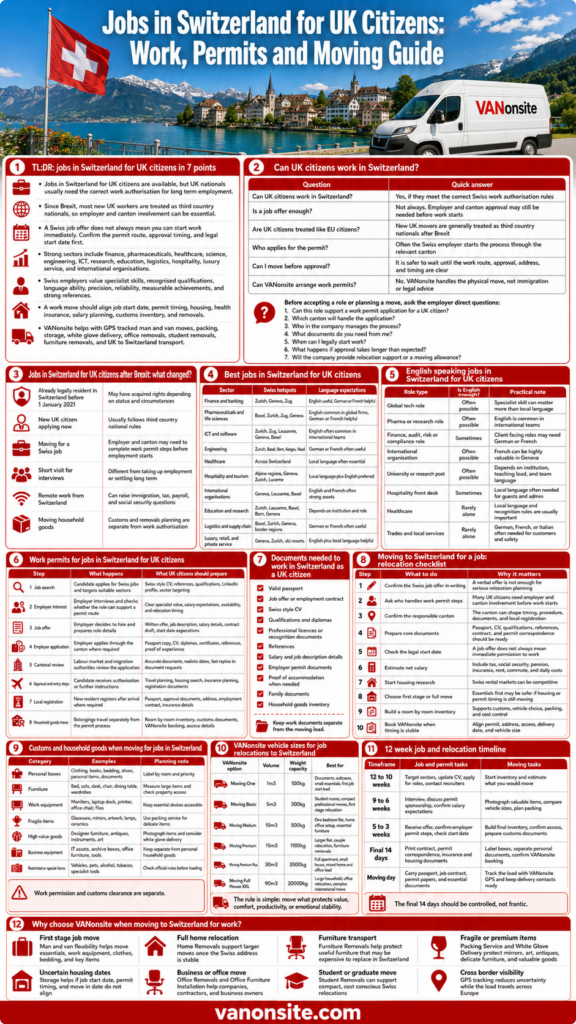
TL:DR: jobs in Switzerland for UK citizens in 7 points
- Jobs in Switzerland for UK citizens are available, but UK nationals usually need the correct work authorisation for long term employment.
- Since Brexit, most new UK workers are treated as third country nationals, so employer and canton involvement can be essential.
- A Swiss job offer does not always mean you can start work immediately. Confirm the permit route, approval timing, and legal start date first.
- Strong sectors include finance, pharmaceuticals, healthcare, science, engineering, ICT, research, education, logistics, hospitality, luxury service, and international organisations.
- Swiss employers value specialist skills, recognised qualifications, language ability, precision, reliability, measurable achievements, and strong references.
- A work move should align job start date, permit timing, housing, health insurance, salary planning, customs inventory, and removals.
- VANonsite helps with GPS tracked man and van moves, packing, storage, white glove delivery, office removals, student removals, furniture removals, and UK to Switzerland transport.




Can UK citizens work in Switzerland?
Yes, UK citizens can work in Switzerland, but they usually need the correct Swiss work authorisation before employment begins. A British passport alone does not give automatic access to the Swiss labour market in the way many people remember from the pre Brexit years.
UK citizens coming to Switzerland to work from 1 January 2021 are generally treated as third country nationals. This means the Swiss employer often has to play an active role. For many jobs, the employer must apply through the relevant cantonal immigration and labour market authorities before the employee can start work legally.
The important point is simple: a job offer is not always the same as permission to work. It may be the trigger for the permit process, not the end of it.
| Question | Quick answer |
|---|---|
| Can UK citizens work in Switzerland? | Yes, if they meet the correct Swiss work authorisation rules |
| Is a job offer enough? | Not always. Employer and canton approval may still be needed before work starts |
| Are UK citizens treated like EU citizens? | New UK movers are generally treated as third country nationals after Brexit |
| Who applies for the permit? | Often the Swiss employer starts the process through the relevant canton |
| Can I move before approval? | It is safer to wait until the work route, approval, address, and timing are clear |
| Can VANonsite arrange work permits? | No. VANonsite handles the physical move, not immigration or legal advice |
Before accepting a role or planning a move, ask the employer direct questions:
- Can this role support a work permit application for a UK citizen?
- Which canton will handle the application?
- Who in the company manages the process?
- What documents do you need from me?
- When can I legally start work?
- What happens if approval takes longer than expected?
- Will the company provide relocation support or a moving allowance?
These questions protect you. A move to Switzerland can become expensive if you book housing, removals, flights, storage, or furniture delivery before the legal start date is secure.
Official sources to check before making decisions:
- GOV.UK Living in Switzerland
- Swiss SEM information for UK nationals
- Working in Switzerland as a foreign national
- Swiss EDA visa and entry information from the UK
Jobs in Switzerland for UK citizens after Brexit: what changed?
Brexit changed the rules of the road. Before Brexit, UK citizens had a different position under the free movement framework. Since 1 January 2021, new UK workers are generally outside EU or EFTA free movement rules. For most new applicants, the practical message is clear: treat the move as a structured third country work route, not a simple European relocation.
This is not a closed door. It is a narrower door. It rewards stronger applications, clearer employer need, better documents, and realistic timing.
| Situation | What it means for UK citizens |
|---|---|
| Already legally resident in Switzerland before 1 January 2021 | May have acquired rights depending on status and circumstances |
| New UK citizen applying now | Usually follows third country national rules |
| Moving for a Swiss job | Employer and canton may need to complete work permit steps before employment starts |
| Short visit for interviews | Different from taking up employment or settling long term |
| Remote work from Switzerland | Can raise immigration, tax, payroll, and social security questions |
| Moving household goods | Customs and removals planning are separate from work authorisation |
Some UK citizens who were already legally resident in Switzerland before the end of the transition period may have acquired rights. Their situation can be different from someone applying now from the UK. If you are planning a fresh move today, rely on current official guidance, not old forum posts or pre Brexit stories.
For new UK job seekers, the post Brexit shift means employers may need to think harder before hiring, the canton can become central to the work route, and specialist skills may carry more weight. Housing and removals should wait until work timing is clearer.
Best jobs in Switzerland for UK citizens
The best jobs in Switzerland for UK citizens are usually roles where a candidate brings something sharper than a general application. Switzerland is selective. Employers often look for specialist skills, recognised qualifications, clean references, sector experience, and a clear reason why the candidate is worth the work permit process.
English speaking jobs exist, especially in multinational companies, technology, pharma, finance, research, and international organisations. Still, German, French, or Italian can dramatically widen options depending on where you want to live. Zurich and Zug often reward German. Geneva and Vaud often reward French. Ticino often rewards Italian. For customer facing, healthcare, public sector, hospitality, and local service roles, language can be decisive.
In 2024, EURES identified shortage pressure in areas including science and engineering professionals, health professionals, and information and communications technology professionals. That does not guarantee a job for UK applicants, but it shows where skilled candidates may find stronger labour market logic.
| Sector | Swiss hotspots | Why UK citizens may fit | Language expectations |
|---|---|---|---|
| Finance and banking | Zurich, Geneva, Zug | UK experience in finance, compliance, fintech, risk, audit, insurance, and wealth management can be valued | English useful, German or French helpful |
| Pharmaceuticals and life sciences | Basel, Zurich, Zug, Geneva | Research, quality, regulatory, medical affairs, clinical, and technical profiles can be attractive | English common in global firms, German or French helpful |
| ICT and software | Zurich, Zug, Lausanne, Geneva, Basel | Developers, cloud specialists, cyber security, data, AI, product, DevOps, and enterprise systems roles can fit well | English often common in international teams |
| Engineering | Zurich, Basel, Bern, Aargau, Vaud | Mechanical, electrical, civil, automation, robotics, energy, and precision engineering skills can stand out | German or French often useful |
| Healthcare | Across Switzerland | Skilled workers may find demand, but recognition and language are critical | Local language often essential |
| Hospitality and tourism | Alpine regions, Geneva, Zurich, Lucerne | Luxury hotels, ski resorts, guest services, operations, and events can suit experienced candidates | Local language plus English preferred |
| International organisations | Geneva, Lausanne, Basel | Policy, legal, humanitarian, project, communications, administration, and programme roles can suit international profiles | English and French often strong assets |
| Education and research | Zurich, Lausanne, Basel, Bern, Geneva | Universities, laboratories, research institutes, and international education may value UK academic experience | Depends on institution and role |
| Logistics and supply chain | Basel, Zurich, Geneva, border regions | UK trade, customs, operations, procurement, freight, and supply chain experience can transfer well | German or French often useful |
| Luxury, retail, and private service | Geneva, Zurich, ski resorts | Premium client service, household management, luxury retail, concierge, and high trust roles can suit strong UK profiles | English plus local language helpful |
Before applying, match your profile to the Swiss market. Ask what specialist skill you offer, which canton has employers in your sector, which local language matters, whether your qualifications are recognised, and whether the role is likely to justify employer effort for a third country hire.
English speaking jobs in Switzerland for UK citizens
English speaking jobs in Switzerland for UK citizens do exist, but they are not evenly spread across every sector. They are most common in international companies, global tech teams, pharmaceuticals, finance, research, universities, start ups, and international organisations. They are less common in local public services, healthcare, trades, small domestic businesses, and customer facing roles where local language fluency is essential.
English can open the first door. Local language can open the next ten.
| Role type | Is English enough? | Practical note |
|---|---|---|
| Global tech role | Often possible | Specialist skill can matter more than local language |
| Pharma or research role | Often possible | English is common in international teams |
| Finance, audit, risk or compliance role | Sometimes | Client facing roles may need German or French |
| International organisation | Often possible | French can be highly valuable in Geneva |
| University or research post | Often possible | Depends on institution, teaching load, and team language |
| Hospitality front desk | Sometimes | Local language often needed for guests and admin |
| Healthcare | Rarely alone | Local language and recognition rules are usually important |
| Trades and local services | Rarely alone | German, French, or Italian often needed for customers and safety |
Use specific search terms instead of broad searches, such as “English speaking software engineer Zurich,” “English speaking pharma Basel,” “English compliance jobs Geneva,” or “English speaking research jobs Lausanne.” Also search directly on company career pages. Many Swiss roles do not appear in the same places UK candidates expect.
Do not exaggerate language ability. Use recognised levels where possible, such as English C2, German B1, French A2, or Italian A2. If your local language level is low, show a plan: “German A2, currently studying toward B1” sounds more credible than pretending fluency.
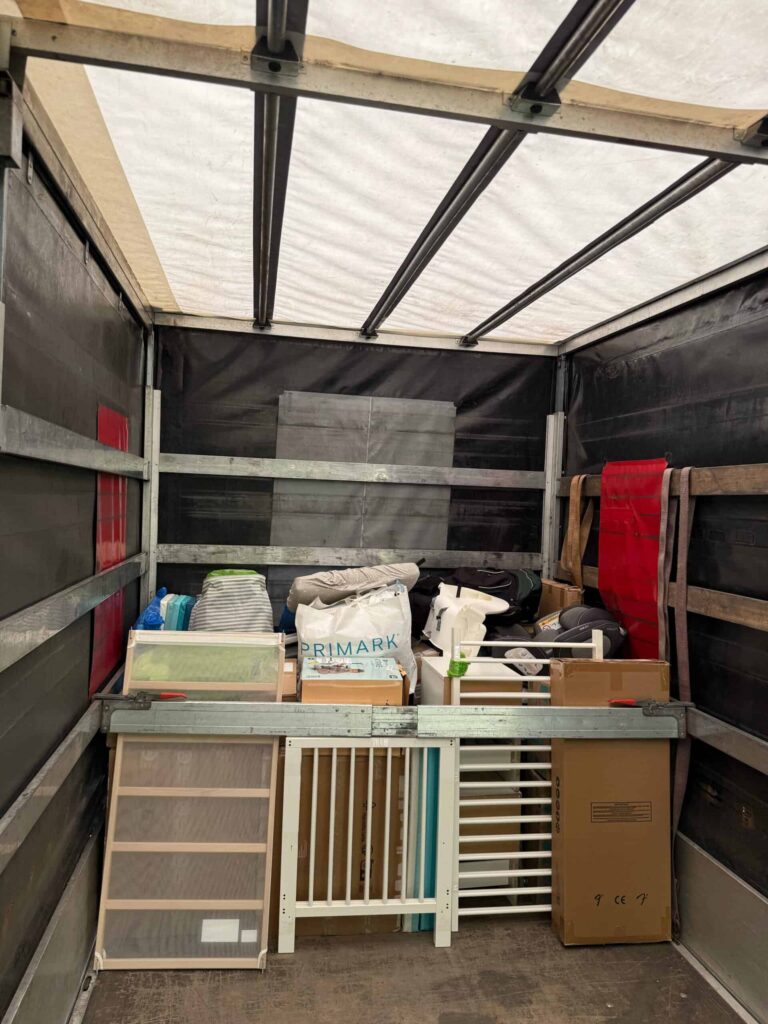
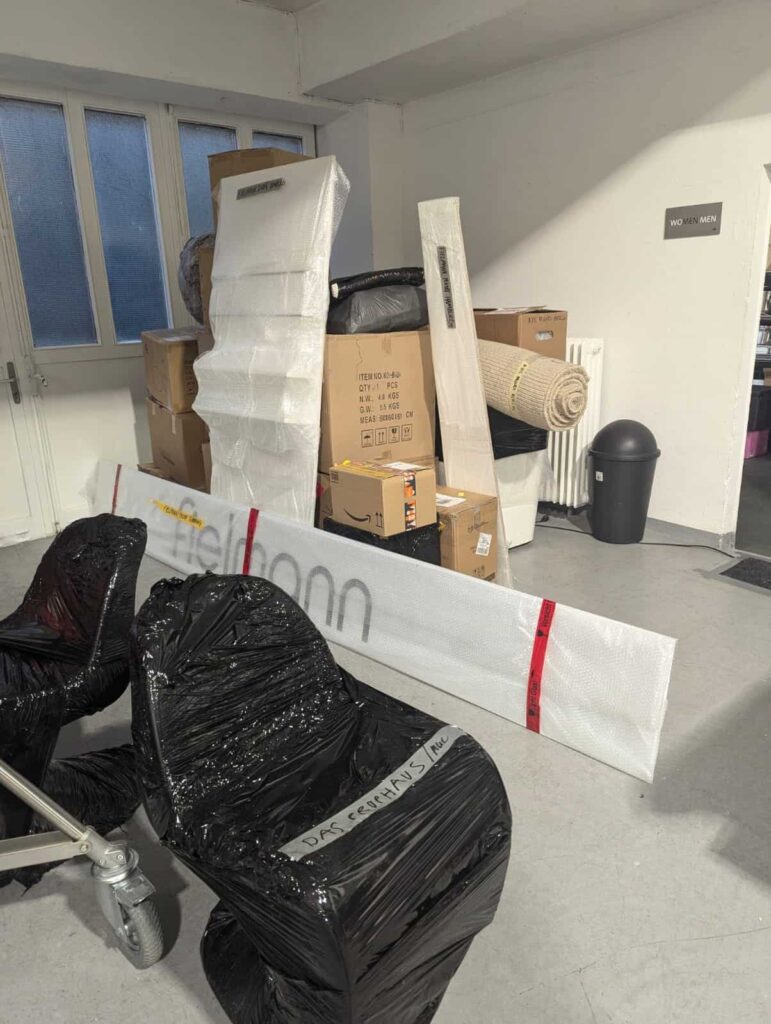
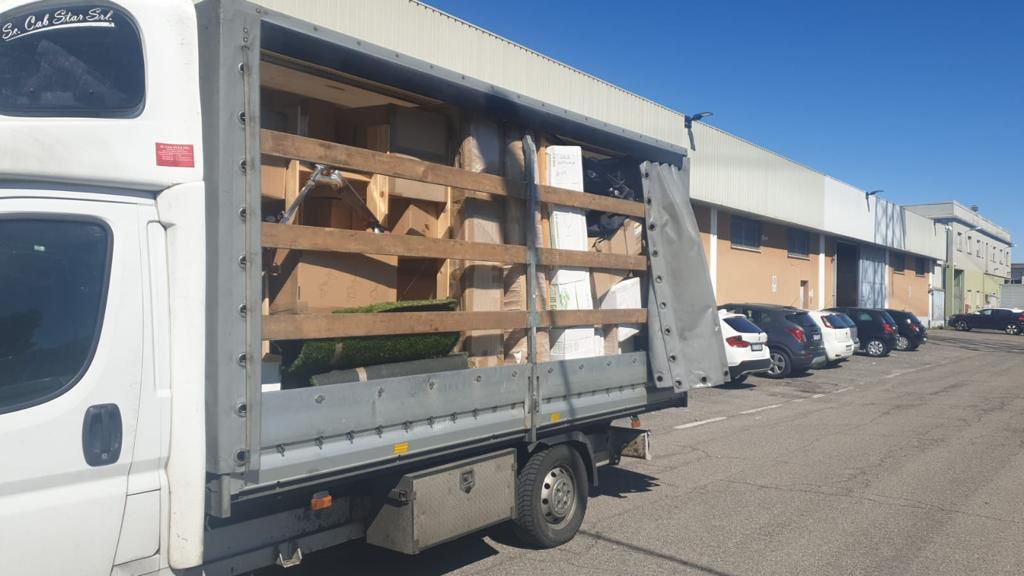
English speaking roles can move fast when the employer needs a rare skill. That speed can put pressure on housing and removals. A staged relocation can help. You might first move essentials: documents, clothes, laptop equipment, monitors, office chair, bedding, and a few boxes. VANonsite man and van services can support that first stage.



Work permits for jobs in Switzerland for UK citizens
Work permits are the turning point for many UK applicants. You can have a brilliant CV, a warm interview, and a Swiss employer who wants to hire you, but the work route still needs to be legal, approved, and correctly timed.
Since Brexit, most new UK citizens moving to Switzerland for work are treated as third country nationals. The work permit route can depend on the job, employer, canton, duration, salary, qualifications, and applicant profile. In many cases, the employer is central because the employer may need to apply through the relevant cantonal authorities before the employee can start work.
For many long term roles, the employer must show that the hire makes sense under Swiss labour market rules. Switzerland may consider whether the role could be filled by Swiss, EU, or EFTA labour market candidates before a third country national is approved. Specialist qualifications, seniority, salary level, industry need, and clear business justification can all matter.
| Step | What happens | What UK citizens should prepare |
|---|---|---|
| Job search | Candidate applies for Swiss jobs and targets suitable sectors | Swiss style CV, references, qualifications, LinkedIn profile, sector targeting |
| Employer interest | Employer interviews and checks whether the role can support a permit route | Clear specialist value, salary expectations, availability, and relocation timing |
| Job offer | Employer decides to hire and prepares role details | Written offer, job description, salary details, contract draft, start date expectations |
| Employer application | Employer applies through the canton where required | Passport copy, CV, diplomas, certificates, references, proof of experience |
| Cantonal review | Labour market and migration authorities review the application | Accurate documents, realistic dates, fast replies to document requests |
| Approval and entry steps | Candidate receives authorisation or further instructions | Travel planning, housing search, insurance planning, registration documents |
| Local registration | New resident registers after arrival where required | Passport, approval documents, address, employment contract, insurance details |
| Household goods move | Belongings travel separately from the permit process | Room by room inventory, customs documents, VANonsite booking, access details |
Before you resign from a UK job, book removals, or pay a Swiss rental deposit, ask the employer whether the role can support a permit application, who manages the process, which canton is responsible, what documents are needed, what the realistic timeline is, and when you can legally start work.
Remote work can be tempting, but living in Switzerland while working for a UK employer can create immigration, tax, payroll, social security, employer compliance, and insurance issues. It should not be treated as an easy workaround. Get professional advice before doing it long term.
VANonsite does not arrange work permits, submit immigration applications, or provide legal advice. Its role begins where physical relocation planning matters. Once your employer process, legal start date, Swiss address, and delivery timing become clearer, VANonsite can help move your belongings safely from the UK to Switzerland.
How to find jobs in Switzerland from the UK
Finding jobs in Switzerland from the UK is possible, but it works best when the search is focused. Switzerland is not a market where vague applications usually shine. Employers want relevance. They want to see why your experience fits their role, sector, canton, and business need.
Start before moving. For most UK citizens, moving first and job hunting later can be risky because work authorisation, salary level, canton, housing, health insurance, and relocation costs all connect. A job led move is usually safer.
A strong Swiss job search starts with 4 decisions: sector, canton, language, and permit reality. Once those are clear, your applications become sharper.
| Source | Best for | Practical tip |
|---|---|---|
| Company career pages | Direct applications to multinationals and Swiss employers | Build a target employer list and check weekly |
| Professional roles, recruiters, networking, visible expertise | Optimise your profile for Swiss role titles and locations | |
| jobs.ch | Broad Swiss job market search | Good for roles across sectors and cantons |
| jobup.ch | French speaking Switzerland, especially Geneva and Vaud | Useful for Geneva, Lausanne, Vaud, NGOs, and services |
| Job-Room and public employment tools | Swiss labour market visibility and employer context | Helpful for market research and role terminology |
| EURES Switzerland information | Labour market insights and sector context | Use it to understand shortage areas and regional demand |
| Specialist recruiters | Finance, pharma, tech, engineering, executive roles | Choose recruiters with Swiss market experience |
| University career pages | Research, academic, student, and graduate roles | Useful for Zurich, Lausanne, Basel, Bern, and Geneva roles |
| International organisation portals | Geneva and global policy roles | Check UN, NGO, diplomacy, humanitarian, legal, and programme roles |
Official source: Finding a job in Switzerland on ch.ch
A Swiss friendly CV should be clear, structured, and evidence rich. Include full contact details, a professional summary tailored to the role, nationality and relocation status where helpful, key skills matched to the advert, measurable achievements, education, certifications, honest language levels, tools or technical stack, and clean PDF formatting.
Be honest about UK nationality and permit needs. A clean sentence can help: “UK citizen currently based in London, open to relocation to Switzerland, aware that employer supported work authorisation may be required.”
CV and interview tips for UK citizens applying in Switzerland
Swiss employers often value precision, reliability, qualifications, punctuality, and clear evidence. They want to understand exactly what you have done, which tools you used, what results you delivered, and why your profile fits the role.
Think of your Swiss CV as a clean professional dossier, not a loud sales flyer. It should be structured, measured, and easy to verify. Swiss hiring often rewards calm evidence over dramatic self promotion.
| CV element | What to include | Why it matters |
|---|---|---|
| Contact details | Name, phone, email, LinkedIn, current location | Makes communication fast and professional |
| Relocation note | UK citizen, open to Switzerland relocation, aware work authorisation may be needed | Avoids late stage surprises |
| Professional summary | 3 to 5 lines tailored to the exact Swiss role | Helps the employer see your fit quickly |
| Key skills | Skills matched to the job advert | Keeps the CV focused |
| Achievements | Numbers, outcomes, savings, revenue, risk reduction, delivery results | Swiss employers often trust evidence more than adjectives |
| Work history | Dates, role titles, employers, scope, responsibilities | Shows progression and reliability |
| Education and certifications | Degrees, diplomas, licences, tools, compliance, safety, technical training | Important for permit and role assessment |
| Languages | Honest levels such as English native, German B1, French A2 | Language expectations differ by canton and role |
| References | Available on request or named if appropriate | Supports credibility |
Do not write “responsible for operations.” Write what changed because you were there. Did you reduce errors by 18%? Manage a £2 million portfolio? Lead 12 people? Cut delivery time by 22%? Complete a migration under budget? Improve compliance scoring? Numbers are proof.
Swiss interviews can feel more direct and detail oriented than some UK applicants expect. Prepare evidence. If you claim a skill, expect a follow up. If you mention a project, expect numbers. If you say you want Switzerland, expect the interviewer to ask why.
Ask interview questions that protect your move: has the company hired UK citizens before, who manages the permit process, which canton handles the application, what is the realistic start date, is relocation support available, what language level is expected, and can the company provide documents needed for housing applications.
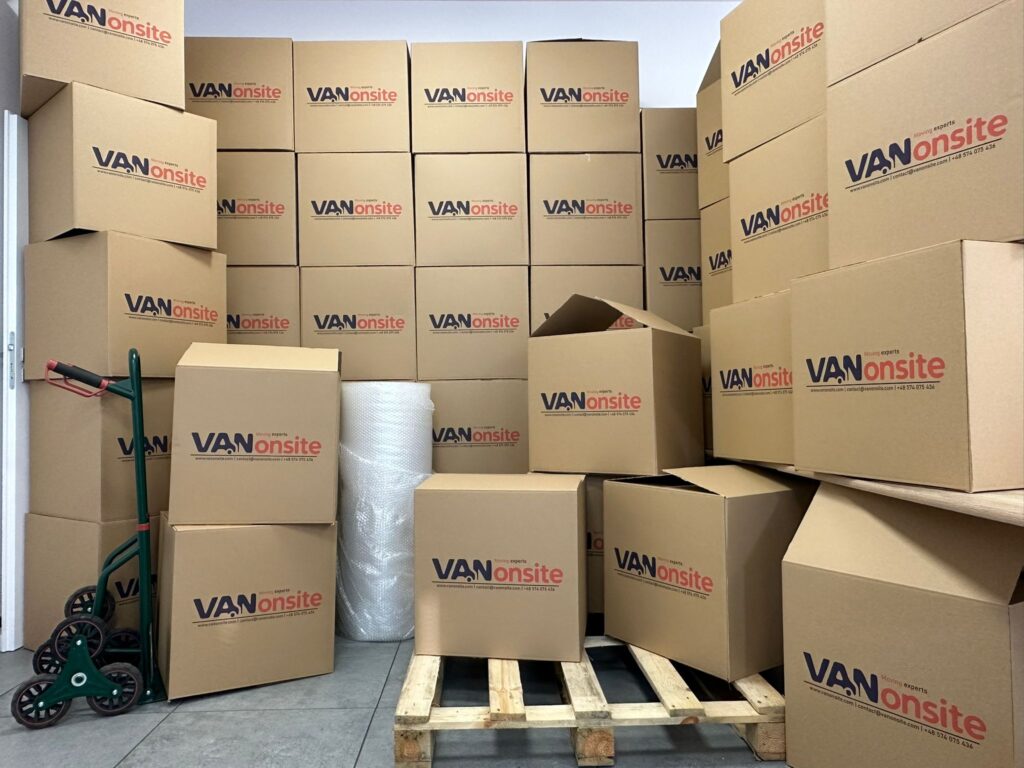
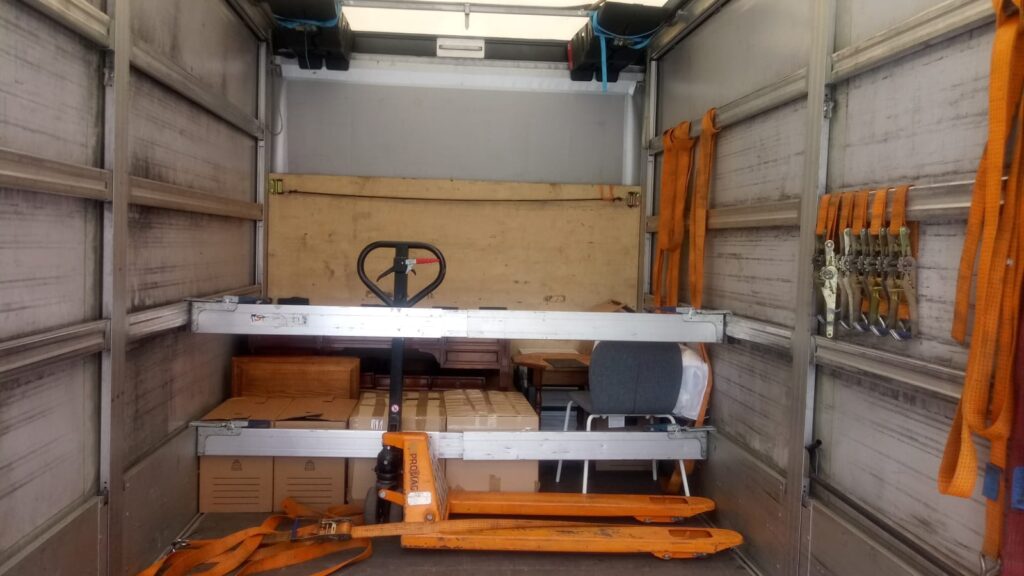
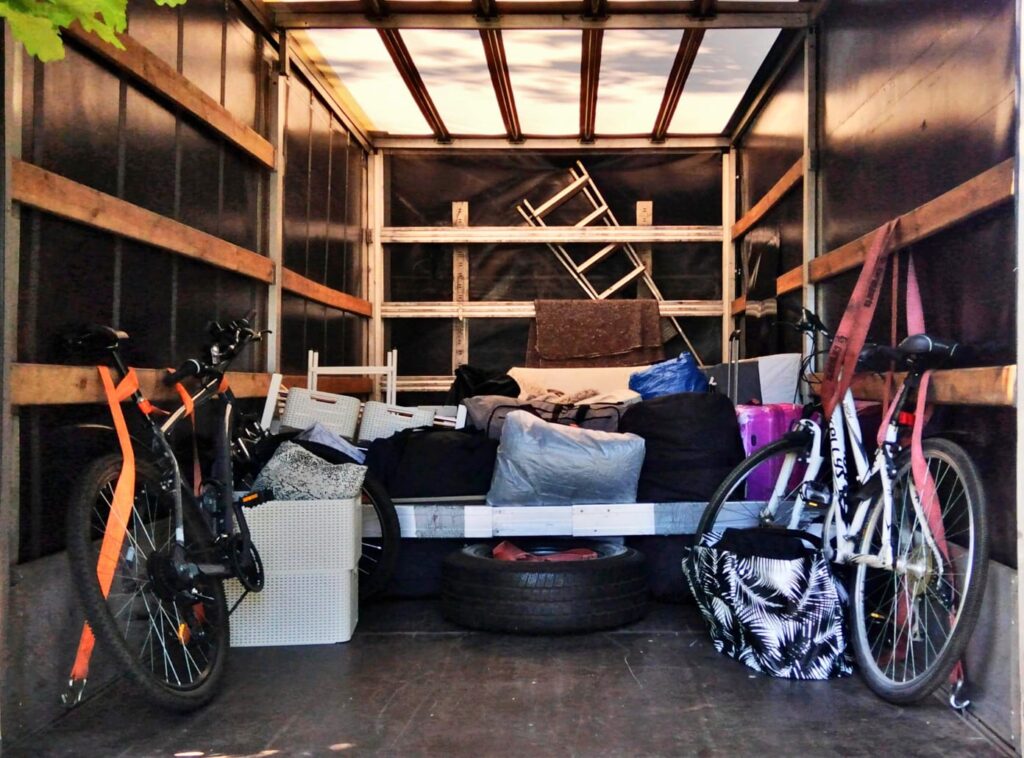
You do not need to book the van during your first interview, but you should start thinking like someone who may need to move quickly. List the items that would matter in your first 30 days: passport, contract, certificates, laptop, monitors, office chair, clothes, bedding, medication, and essential kitchen items.


Salaries and cost of living for UK citizens working in Switzerland
Swiss salaries can be higher than UK salaries in many sectors, but salary alone does not tell the full story. Switzerland can also be expensive. Rent, health insurance, childcare, groceries, commuting, home setup, and relocation costs can all change the real value of a job offer.
For jobs in Switzerland for UK citizens, the smartest question is not “Is the salary higher than in the UK?” It is “What will my net household life look like after tax, social security, pension contributions, health insurance, rent, food, transport, and moving costs?”
| Factor | Why it matters |
|---|---|
| Gross salary | Often attractive in Switzerland, but it is not the final answer |
| Tax and social security | Deductions vary by canton, family status, salary, and role |
| Pension contributions | Swiss occupational pension deductions can reduce take home pay while adding long term value |
| Health insurance | Premiums are a visible monthly cost and can be significant for families |
| Rent | Zurich, Geneva, Zug, Basel, and Lausanne can be expensive |
| Childcare | Can be a major family cost and should be checked early |
| Transport | Public transport is excellent but still needs budgeting |
| Food and daily spending | Groceries, restaurants, and services can cost more than UK movers expect |
| Home setup | Buying furniture and essentials in Switzerland can be costly |
| Relocation costs | Moving the right items can protect first year cash flow |
The first 90 days can be the most financially intense part of the move. Plan for rental deposit, first rent, health insurance premiums, temporary accommodation, public transport, furniture and essentials, work equipment, childcare setup, moving, packing, customs inventory, storage, and an emergency buffer.
Should you move furniture or buy in Switzerland? It depends on quality, replacement cost, property size, and timing. Home office equipment, quality furniture, kitchen basics, children’s items, art, mirrors, antiques, and sentimental pieces may be worth moving. Cheap worn furniture may not justify vehicle space.
VANonsite can help match the move to the salary reality. A compact man and van load can move work essentials first. Moving Medium or Moving Premium can support a flat or couple relocation. Moving Premium Plus or Moving Full House XXL can carry larger households, mixed home and office loads, or complex moves.
Where should UK citizens look for jobs in Switzerland?
UK citizens should look for jobs in Switzerland where their skills, language level, sector experience, and relocation plans match the local market. Switzerland is compact, but it is not uniform. Zurich does not feel like Geneva. Basel is not Zug. Lausanne, Bern, Ticino, and Alpine regions each have their own rhythm, language, industries, salaries, and housing pressure.
| Region or city | Strong job areas | Relocation note |
|---|---|---|
| Zurich | Finance, technology, insurance, engineering, headquarters, fintech, consulting | Strong salaries, high rent, German helpful, excellent transport |
| Geneva | International organisations, finance, NGOs, luxury, diplomacy, legal, commodities | French helpful, highly international, competitive housing market |
| Basel | Pharmaceuticals, life sciences, chemicals, research, quality, regulatory roles | Strong specialist market, German helpful |
| Zug | Finance, crypto, commodities, technology, headquarters, private capital | Attractive business climate, high housing demand, German useful |
| Lausanne and Vaud | Research, education, technology, sport organisations, start ups, life sciences | French helpful, strong student and professional mix |
| Bern | Public sector, engineering, administration, healthcare, rail, public services | German helpful, more stable pace |
| Ticino | Tourism, finance, cross border business, services, hospitality | Italian often important, English alone can be limiting |
| Alpine regions | Hospitality, tourism, seasonal roles, luxury service, outdoor brands | Seasonal timing and language matter |
Zurich is strong for finance, insurance, tech, fintech, consulting, engineering, and headquarters roles. Geneva suits international organisations, NGOs, finance, diplomacy, commodities, legal services, luxury, and communications. Basel is powerful for pharma, life sciences, chemicals, research, quality, and regulatory work. Zug can suit finance, commodities, crypto, technology, and corporate services. Lausanne and Vaud are strong for research, education, technology, sport organisations, and life sciences.
A regional job strategy should guide the physical move. If your Swiss role is temporary, a compact man and van load may be smarter. If the role is permanent and housing is stable, full home removals may protect more value than buying everything again after arrival.
Documents needed to work in Switzerland as a UK citizen
Documents can make or break the pace of a Swiss job move. For UK citizens, the employer may need clear paperwork for the work authorisation process, and you may need separate documents for entry, residence registration, housing, health insurance, customs, and the physical move.
| Document | Why it matters | Practical tip |
|---|---|---|
| Valid passport | Needed for identity, travel, work authorisation, and registration | Check expiry date before applying |
| Job offer or employment contract | Supports the employer and permit process | Keep signed and draft versions |
| Swiss style CV | Shows skills, dates, qualifications, languages, and experience | Keep it concise and evidence based |
| Qualifications and diplomas | Supports specialist skill and role suitability | Scan certificates and transcripts |
| Professional licences or recognition documents | Essential for regulated roles | Check recognition early |
| References | Builds trust with the employer | Prepare names and contact details |
| Salary and job description details | May support the employer application | Keep official role and salary correspondence |
| Employer permit documents | Needed where the employer supports the process | Respond quickly to HR or legal requests |
| Proof of accommodation when needed | May support registration or local admin | Rental agreement or temporary address can help |
| Family documents | Needed if dependants move | Marriage certificate, birth certificates, school records where relevant |
| Household goods inventory | Needed for customs and removals planning | Build a room by room list before booking transport |
Official sources:
- Swiss SEM UK nationals working in Switzerland
- Working in Switzerland as a foreign national
- Swiss residence permits on ch.ch
- GOV.UK Living in Switzerland
Some professions require recognition, registration, or local approval before you can work fully in Switzerland. Healthcare is the clearest example, but education, law, engineering, finance, childcare, and technical roles can also involve extra checks depending on the job.
Keep work documents separate from the moving load. Your passport, job contract, permit correspondence, diplomas, professional licences, insurance information, family documents, customs inventory, and VANonsite booking details should travel with you personally.
Moving to Switzerland for a job: relocation checklist
Moving to Switzerland for a job is a legal, financial, emotional, and logistical move all at once. A job offer may start the journey, but the move only becomes safe when the work authorisation, start date, housing, insurance, customs paperwork, and removals plan all point in the same direction.
| Step | What to do | Why it matters |
|---|---|---|
| 1 | Confirm the Swiss job offer in writing | A verbal offer is not enough for serious relocation planning |
| 2 | Ask who handles work permit steps | Many UK citizens need employer and canton involvement before work starts |
| 3 | Confirm the responsible canton | The canton can shape timing, procedure, documents, and local registration |
| 4 | Prepare core documents | Passport, CV, qualifications, references, contract, and permit correspondence should be ready |
| 5 | Check the legal start date | A job offer does not always mean immediate permission to work |
| 6 | Estimate net salary | Include tax, social security, pension, insurance, rent, commute, and daily costs |
| 7 | Start housing research | Swiss rental markets can be competitive |
| 8 | Choose first stage or full move | Essentials first may be safer if housing or permit timing is still moving |
| 9 | Build a room by room inventory | Supports customs, vehicle choice, packing, and cost control |
| 10 | Book VANonsite when timing is stable | Align permit, address, access, delivery date, and vehicle size |
A staged move can work well when a new job starts before permanent housing is ready. Essentials first may include clothes, documents, work equipment, bedding, basic kitchen items, and a few comfort pieces. Full home removals can follow once the lease, delivery access, and work start date are secure.
Before booking delivery, check floor level, lift size, stair width, parking, loading bay availability, building move in rules, quiet hours, key contact, and whether furniture needs disassembly. Good access details help VANonsite match the right vehicle, team, timing, and packing approach.
Customs and household goods when moving for jobs in Switzerland
Work permission and customs clearance are separate. A Swiss employer may help with work authorisation, but that does not automatically clear your belongings through customs. Your household goods need their own planning, paperwork, and inventory.
Used household effects may qualify for favourable treatment if conditions are met, but new goods, commercial stock, office equipment, vehicles, pets, alcohol, tobacco, and restricted items need extra checks.
Official customs links:
| Category | Examples | Planning note |
|---|---|---|
| Personal boxes | Clothing, books, bedding, shoes, personal items, documents | Label by room and priority |
| Furniture | Bed, sofa, desk, chair, dining table, wardrobes | Measure large items and check property access |
| Work equipment | Monitors, laptop dock, printer, office chair, files | Keep essential devices accessible |
| Fragile items | Glassware, mirrors, artwork, lamps, ceramics | Use packing service for delicate items |
| High value goods | Designer furniture, antiques, instruments, art | Photograph items and consider white glove delivery |
| Business equipment | IT assets, archive boxes, office furniture, tools | Keep separate from personal household goods |
| Restricted or special items | Vehicles, pets, alcohol, tobacco, specialist tools | Check official rules before loading |
If you are moving as a contractor, consultant, founder, or business owner, list business equipment separately. Office furniture, IT assets, archive boxes, samples, tools, or commercial goods should not be mixed vaguely with personal items.
VANonsite cannot replace official customs guidance, but it can help make the physical move more controlled. A room by room inventory, correct vehicle choice, packing support, and GPS tracked transport all reduce uncertainty.
VANonsite vehicle sizes for job relocations to Switzerland
A new job in Switzerland can move fast, but your belongings should not move blindly. A start date, onboarding plan, rental deposit, work permit timing, and first week admin can all arrive at once. VANonsite helps match your inventory to the right vehicle, from a compact man and van load for essentials to a full home or office relocation.
| VANonsite option | Volume | Weight capacity | Best for |
|---|---|---|---|
| Moving One | 1m3 | 100kg | Documents, suitcases, small essentials, first job start load |
| Moving Basic | 5m3 | 300kg | Student rooms, compact professional moves, first stage relocation |
| Moving Medium | 10m3 | 500kg | One bedroom flat, home office setup, essential furniture |
| Moving Premium | 15m3 | 1100kg | Larger flat, couple relocation, furniture removals |
| Moving Premium Plus | 30m3 | 3500kg | Full apartment, small house, mixed home and office load |
| Moving Full House XXL | 90m3 | 20000kg | Large household, office relocation, complex international move |
A compact move can be the smartest first step if the job starts before long term housing is ready. Storage can also help if your UK move out date and Swiss move in date do not line up. The rule is simple: move what protects value, comfort, productivity, or emotional stability. Home office equipment, quality furniture, kitchen basics, children’s items, art, mirrors, antiques, and business equipment may need careful planning.
12 week job and relocation timeline
A Switzerland job move works best when the career timeline and relocation timeline support each other. For UK citizens, the employer process, permit timing, canton procedures, housing search, health insurance, customs inventory, and removals plan all connect.
| Timeframe | Job and permit tasks | Moving tasks |
|---|---|---|
| 12 to 10 weeks | Target sectors, update CV, apply for roles, contact recruiters | Start inventory and estimate what you would move |
| 9 to 6 weeks | Interview, discuss permit sponsorship, confirm salary expectations | Photograph valuable items, compare vehicle sizes, plan packing |
| 5 to 3 weeks | Receive offer, confirm employer permit steps, check start date | Build final inventory, confirm access, prepare customs documents |
| Final 14 days | Print contract, permit correspondence, insurance and housing documents | Label boxes, separate personal documents, confirm VANonsite booking |
| Moving day | Carry passport, job contract, permit papers, and essential documents | Track the load with VANonsite GPS and keep delivery contacts ready |
The final 14 days should be controlled, not frantic. Print and save digital copies of your contract, permit correspondence, passport, insurance documents, housing documents, employer contacts, customs forms, inventory, and VANonsite booking details. Do not pack passports, permits, certificates, prescriptions, laptops, or essential documents into the van.
With VANonsite GPS tracking, you can follow the load while you focus on arrival tasks: keys, registration, health insurance, employer onboarding, commute planning, and settling into your first Swiss week.
Common mistakes UK citizens make when job hunting in Switzerland
Jobs in Switzerland for UK citizens can be a brilliant opportunity, but the search rewards discipline. Many mistakes happen before the first interview. Avoid these common traps:
- Applying as if Brexit did not change work rules.
- Treating a job offer as automatic work permission.
- Hiding work permit needs until late in the process.
- Applying broadly instead of targeting high fit roles.
- Ignoring canton and language expectations.
- Underestimating Swiss cost of living.
- Accepting salary without calculating net household life.
- Booking removals before permit and address timing are clear.
- Moving everything without checking Swiss replacement costs.
- Choosing a mover without GPS tracking or European relocation experience.
| Mistake | Better approach |
|---|---|
| Applying everywhere | Target sectors, cantons, and roles where you have strong evidence of value |
| Ignoring permit needs | Ask employers early about sponsorship, work authorisation, and canton process |
| Assuming English is enough | Learn which local language matters for the canton and role |
| Comparing only salary | Compare salary, tax, insurance, rent, childcare, commuting, and moving costs |
| Booking the van too early | Align job start, permit, housing, customs, and delivery timing |
| Moving without an inventory | Build a room by room list before choosing a vehicle |
| Packing key documents in boxes | Carry passport, contract, permits, certificates, and customs papers personally |
| Buying everything after arrival | Compare Swiss replacement costs before leaving useful items behind |
| Treating Switzerland as one market | Match your profile to the right city, canton, sector, and language area |
| Choosing an untracked mover | Use GPS tracked European transport for visibility and control |
Why choose VANonsite when moving to Switzerland for work?
A job move to Switzerland can be thrilling, but it can also feel intense. You may be handling work authorisation, housing, registration, health insurance, onboarding, salary planning, and a new commute at the same time. Your belongings should not become another source of uncertainty.
VANonsite supports UK citizens moving to Switzerland for work with flexible, GPS tracked European transport. Whether you need a compact man and van load for a first job start, a full home removal once housing is stable, or storage between addresses, VANonsite helps make the physical move feel controlled.
| Relocation need | How VANonsite helps |
|---|---|
| First stage job move | Man and van flexibility helps move essentials, work equipment, clothes, bedding, and key items |
| Full home relocation | Home Removals support larger moves once the Swiss address is stable |
| Furniture transport | Furniture Removals help protect useful furniture that may be expensive to replace in Switzerland |
| Fragile or premium items | Packing Service and White Glove Delivery protect mirrors, art, antiques, delicate furniture, and valuable goods |
| Uncertain housing dates | Storage helps if job start date, permit timing, and move in date do not align |
| Business or office move | Office Removals and Office Furniture Installation help companies, contractors, and business owners |
| Student or graduate move | Student Removals can support compact, cost conscious Swiss relocations |
| Cross border visibility | GPS tracking reduces uncertainty while the load travels across Europe |
VANonsite services include VANonsite removals to Switzerland, Furniture Removals, Home Removals, Packing Service, White Glove Delivery, Office Removals, Student Removals, Office Furniture Installation, and VANonsite removals to UK if your career later takes you back to Britain.
Before requesting a quote, prepare your UK collection postcode, Swiss delivery city or canton, preferred dates, number of boxes by room, furniture list, photos of fragile items, access details, and whether you need packing, storage, white glove delivery, office removals, student removals, or full household transport.
FAQ: jobs in Switzerland for UK citizens
Can UK citizens work in Switzerland?
Yes. UK citizens can work in Switzerland, but usually with the correct work authorisation. Since Brexit, most new UK citizens moving for Swiss employment are generally treated as third country nationals, so employer and canton involvement may be needed before work starts.
Are there jobs in Switzerland for UK citizens?
Yes. Jobs in Switzerland for UK citizens exist, especially for skilled candidates in finance, pharmaceuticals, technology, engineering, healthcare, research, education, logistics, international organisations, luxury service, and other specialist roles.
Is English enough to work in Switzerland?
Sometimes. English can be enough in some multinational companies, technology teams, pharma roles, finance departments, research groups, and international organisations. German, French, or Italian can dramatically increase job options.
Can I move to Switzerland after getting a job offer?
Do not assume you can move and start work immediately. A job offer may trigger the work authorisation process, not complete it. Confirm employer steps, canton approval, legal start date, housing timing, and removals before sending your belongings.
Do UK citizens need a work permit in Switzerland?
In many long term employment cases, yes. The exact route depends on nationality, role, employer, canton, duration, salary, qualifications, and personal circumstances.
Which Swiss cities are best for UK job seekers?
Zurich, Geneva, Basel, Zug, Lausanne, Vaud, Bern, Ticino, and Alpine regions can all work depending on sector and language. Zurich is strong for finance and tech. Basel is powerful for pharma. Geneva suits international organisations and finance.
Can I work remotely from Switzerland for a UK company?
Remote work from Switzerland for a UK company can create immigration, tax, social security, payroll, insurance, and employer compliance issues. Get professional advice before doing it long term.
What documents do UK citizens need for jobs in Switzerland?
Common documents include a valid passport, Swiss style CV, job offer or contract, diplomas, certificates, professional licences where relevant, references, job description, salary details, permit correspondence, accommodation documents, and family documents if dependants move.
Should I move furniture to Switzerland or buy after arrival?
It depends on quality, replacement cost, property size, and timing. Home office equipment, quality furniture, kitchen basics, children’s items, art, and sentimental pieces may be worth moving.
Can VANonsite help after I get a job in Switzerland?
Yes. VANonsite can handle the physical move with GPS tracked transport, man and van options, packing, storage, white glove delivery, office removals, student removals, furniture removals, home removals, and vehicle sizes from 1m3 to 90m3.
Summary and next steps
Jobs in Switzerland for UK citizens are still within reach, but the route rewards preparation. A strong job offer, the right work authorisation process, clean documents, realistic salary expectations, clear housing plans, and a proper removals strategy should all work together.
Can UK citizens work in Switzerland? Yes, but the answer is not automatic. After Brexit, most new UK workers need to respect Swiss third country rules, employer involvement, and cantonal procedures. The more specialist your skills, the cleaner your documents, and the clearer your relocation plan, the stronger your position becomes.
Switzerland rewards precision. Your job search should be targeted. Your CV should be evidence led. Your interview answers should be practical. Your salary comparison should include tax, social security, health insurance, rent, childcare, transport, and first year setup costs. Your moving plan should follow the job route, not race ahead of it.
Once the job path is clear, the physical move needs the same discipline. Build an inventory. Choose the right vehicle. Keep documents close. Separate work equipment from household goods. Decide what should move first and what can wait. Track the journey.
With GPS tracked transport, man and van flexibility, packing support, storage, white glove delivery, office removals, student removals, furniture removals, home removals, and vehicle sizes from 1m3 to 90m3, VANonsite supports UK citizens moving to Switzerland for work with confidence and care.
Plan your move with VANonsite removals to Switzerland. If your career later takes you back to Britain, see VANonsite removals to UK.