
Moving to Sweden with a disability can be fast, safe, and dignified when access, equipment, and support are planned together from day one. This guide turns a complex journey into clear steps with short sentences, strong transitions, inclusive checklists, and action‑oriented tables. It also showcases VANonsite advantages: trained teams, live GPS tracking on every load, specialist Packing Service and White Glove Delivery, and right‑size vans from 5 m³ to 90 m³ for narrow streets or full‑house moves.
TL;DR:
- Build an Access Profile for both homes (stairs, lifts, door widths, parking bays, quiet hours). Share it with your move planner early.
- Keep equipment safe: list medical/assistive devices (wheelchairs, CPAP, scooters, hoists) and flag batteries or oxygen for compliant handling.
- Choose the right capacity: 5, 10, 15, 30, or 90 m³. Tight access may favour two smaller vans or a shuttle.
- Route for comfort: consider overnight ferries (cabins, pet options) or bridges via Denmark for flexible arrival windows.
- Pack inclusively: large‑print/high‑contrast labels, colour coding, and Open‑First boxes with meds, chargers, and mobility spares.
- Costs vary by volume, access, route, season, service level — see live bands on Removals to Sweden and request a tailored plan.
- Arrival week: handle folkbokföring → personnummer → ID‑kort/BankID, GP choice, utilities and accessibility setup. See How to Relocate to Sweden.
Inclusive planning: start with an Access Profile
Great moves start with accessibility in mind. Capture constraints early, then match crew, van, route, and timing. Keep sentences short. Prioritise safety and dignity.
How to measure (quick method)
- Doors: measure clear opening (mm) with the door fully open; note any lips/thresholds.
- Lifts: note door width and cabin WxD x H; test with the widest wheelchair/device.
- Stairs: count steps per flight + landing sizes; photograph tight turns.
- Parking: measure kerb‑to‑door distance and any height/length limits.
- Ramps: a safe general rule is ≈ 1 cm rise per 12 cm run (1:12); include non‑slip mats in winter.
Crew briefing template (paste into booking)
- Resident preferences: pacing, quiet times, sensory notes, safe words/signals.
- Critical items: meds, CPAP, wheelchair battery, transfer boards, hoist parts.
- Load path: which doors/elevator, narrowest point, any glass/fragile zones.
- Placement: required 90 cm pathways, reachable shelves (80–120 cm).
- Emergency: who to contact; building rules; lift outage plan.
Pros & cons at a glance for disabled movers
- Pros: digital‑first services, accessible public transport in major cities, high English fluency, strong consumer protections.
- Cons: housing competition in big hubs, long winters/darker days, older buildings with tighter stairwells.
Health, meds & assistive technology continuity
Keep care continuous across borders. Coordinate documents, spares, and power.
Medication & records (carry with you)
- Daily/critical meds in original packs + prescriptions/doctor letters.
- Separate Do‑Not‑Ship pouch: IDs, Bank/ID docs, meds, chargers, device manuals.
- Travel‑day timing: align dosing with ferry/bridge schedules.
Devices & spares (declare special items early)
- Wheelchairs/scooters: note dimensions, tyre type, spare tubes.
- Lithium batteries: record model/capacity; remove/declare; some batteries must travel separately.
- CPAP/oxygen/monitors: carry personally; pack adapters; backup masks/hoses.
- Hoists/rails/ramps: disassembly plan; screws in labelled bags.
Power & plugs (quick reality check)
- Sweden and most of Europe use 230V/50Hz and Type F (Schuko) sockets — typically compatible with NL/DE devices. Still, check device labels.
Medical waste & sharps
- Do not place sharps or medical waste on the van. Use approved containers and carry personally where appropriate.
Battery declaration — simple math
When asked for battery size, you can compute Watt‑hours (Wh):Wh = Volts (V) × Amp‑hours (Ah)
Example: 24V × 8Ah = 192 Wh.
| Device | V | Ah | Wh (V×Ah) | Note |
|---|---|---|---|---|
| Power wheelchair | 24 | 8 | 192 Wh | Remove/declare; protect terminals |
| Scooter battery | 36 | 10 | 360 Wh | May require separate handling |
| CPAP backup | 12 | 5 | 60 Wh | Keep with passenger |
Share battery specs during quoting so we pack and route compliantly.
Handover between doctors (practical tips)
- Keep a one‑page medication list with dosages/times.
- Bring summaries of diagnoses, devices, and any allergies.
- Photograph device settings as a backup.
For arrival admin (ID chain, GP selection) see How to Relocate to Sweden.


Packing, protection & inclusive labelling
Aim for safe handling and quick setup at destination with minimal physical strain.
The 5‑step system
- Declutter early (−10–20% volume).
- Zone by room and accessibility (bedside, bathroom, mobility spares).
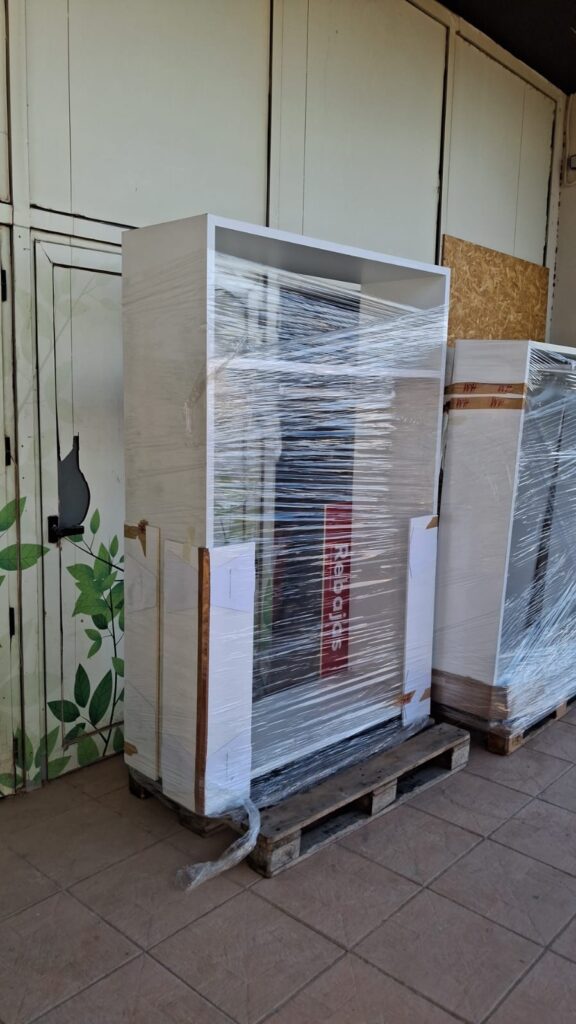
- Protect with double‑walled boxes, corner guards, furniture blankets.
- Label large‑print/high‑contrast; add tactile dots/braille where useful.
- Open‑First: meds, hygiene, chargers, bed linen, mobility tools.
White Glove Delivery — when to upgrade
- Bed height and chair transfer setup on arrival.
- Placement to maintain ≥ 90 cm pathways and 80–120 cm reach heights.
- Reassembly of rails, grab bars (where permitted) and safe transfer checks.
Fragile & special items matrix
| Item | Protection & notes | Label |
|---|---|---|
| Medical monitors/devices | Original cases; shock‑safe padding; keep upright | FRAGILE P1 |
| Wheelchair/scooter parts | Box spares; protect controls; remove batteries if req. | SPECIAL P1 |
| Glass/ceramics | Wrap individually; soft bed; no voids | FRAGILE P1 |
| Appliances | Drain hoses; tape doors; bag screws | HEAVY P2 |
| Art/frames | Corner guards; consider White Glove | FRAGILE P1 |
Sensory‑aware moves
- Agree quiet loading times; reduce sudden noises; soft‑close protection.
- Use signal cards or simple colour codes for crew communication.
Labelling legend (fast room placement)
- Colours: Kitchen = Yellow; Living = Blue; Bedroom 1 = Red; Bedroom 2 = Green; Bathroom = Aqua.
- Code:
ROOM–Category–## (Priority 1–3)e.g.,BED1–Clothes–12 (P1); add QR to an inventory photo when possible.
Vehicle choice & van sizing (with access in mind)
Right‑size for safety, speed, and dignity. All shipments are GPS‑tracked with proactive ETAs.
| Vehicle | Capacity | Max Weight | Best For | Example Load |
|---|---|---|---|---|
| Moving Basic | 5 m³ | 300 kg | Minimal/student/compact loads | 20–30 boxes + wheelchair |
| Moving Medium | 10 m³ | 600 kg | 1–2 rooms | Boxes + small sofa + hoist frame |
| Moving Premium | 15 m³ | 1,000 kg | 2–3 rooms | Bed + wardrobe + mobility spares |
| Moving Premium Plus | 30 m³ | 3,500 kg | Family apartment + equipment | Multiple rooms + appliances |
| Moving Full House XXL | 90 m³ | 20,000 kg | Whole home/office & adaptations | Full household + ramps/rails/crates |
Access‑driven choices
Old‑town lanes or tight courtyards → use two smaller vans or a shuttle. Long carries (50 m+) → add crew and trolleys; schedule lifts. Lift cabin limits → disassemble large frames.
Weight vs volume (quick reality check)
- Dense items (books, tools, pantry) hit weight limits before space is full.
- Share photos of libraries/workshops; we balance weight across the van.
Three‑step sizing method (recap)
- Count boxes by room (kitchen is dense): small ×3 ≈ 1 m³; medium ×2 ≈ 1 m³.
- Add furniture (sofa 1–2 m³; bed+wardrobe 2–3 m³; dining set 2–3 m³).
- Add 10–15% buffer for padding and last‑minute items.
Routes & timing for comfort and predictability
Choose routes that support rest, routine, and reliable ETAs.
- Overnight ferries (e.g., DE↔SE): cabins for rest, pet‑friendly, fewer winter road miles.
- Denmark bridges + Øresund: precise arrival control; tolls apply.
- Hybrid: short ferry (Puttgarden ↔ Rødby) + bridges — balanced sea/road time.
Accessibility along the way — book accessible cabins or seats; request nearby lifts/ramps; plan service‑area breaks with accessible toilets; carry a comfort kit.
Route picker matrix
| Priority/Constraint | Best choice | Why it helps |
|---|---|---|
| Predictable morning delivery | Bridges via Denmark | Full control of arrival timing |
| Winter storms/heavy snow | Overnight ferry | Reduces road risk, cabin rest |
| Motion sensitivity | Bridges | Fewer sea conditions to manage |
| Fatigue management | Overnight ferry | Sleep in cabin; shorter road legs |
| Pets/service animals | Ferry (pet cabins) | Dedicated spaces & scheduled breaks |
Accessibility checklist for ferries/bridges
- Request accessible cabin/seat and near‑lift parking.
- Confirm toilet accessibility on deck level.
- Ask about service animal relief areas and documentation.
- Keep Open‑First bag handy for boarding/landing.
- Save toll/booking references with reg numbers.
Weather decision triggers (we use these to switch plans)
- Amber/Red weather alerts on route.
- Sustained high‑wind forecasts for short ferries.
- Bridge closures/road blocks ahead.
- In each case we flip between ferry‑led and bridge‑led plans and push a new GPS ETA to you.
What you can and can’t pack (quick compliance)
Safety rules still apply. Declare special items early so we can route them safely.
| Category | OK? | Notes |
|---|---|---|
| Personal household goods | ✅ | Standard packing rules apply |
| Medicines (personal use) | ✅/⚠️ | Keep with you; original packs + prescriptions |
| Refrigerated meds | ⚠️ | Use a personal cool bag/pack; do not place on the van |
| Medical devices (CPAP, monitors) | ✅/⚠️ | Carry with you where possible; note power needs and adapters |
| Wheelchairs/scooters (lithium) | ⚠️ | Remove/declare batteries; insulate terminals; some travel separately |
| E‑bike/e‑scooter batteries | ⚠️ | Declare model/capacity; often separate handling |
| Oxygen/pressurised cylinders | ❌ | Not permitted in the shipment; arrange safe personal carriage |
| Aerosols/toiletries (small) | ⚠️ | Limited personal quantities only; keep upright; avoid bulk in groupage |
| Paints, fuels, strong chemicals | ❌ | ADR restricted; do not pack |
| Cleaning liquids/bleach | ⚠️/❌ | Avoid; risk of leaks; buy at destination |
| Alcohol/tobacco | ⚠️ | Personal‑use limits; avoid placing in shared/groupage loads |
| Plants/soil/aquariums | ⚠️/❌ | Often restricted; ship dry (no water/soil) if moving the tank |
Meds & device essentials (keep with you)
- Daily meds for 7–10 days; spare masks/tubes/chargers; doctor letters.
- A4 Medication List with dosages/times; emergency contacts.
- Backup glasses/hearing‑aid batteries; small first‑aid kit.
Battery & ADR quick rules (plain‑English)
- Share model & Wh. If unknown, use Wh = V × Ah.
- Tape/insulate terminals; place batteries in protective sleeves/cases.
- Large lithium units may travel separately from the main load for safety.
- When unsure, ask via Removals to Sweden — we’ll advise the compliant route.
What to photograph & list (for smooth customs/building access)
- High‑value items (serials); special devices; assembled furniture; any pre‑existing marks.
- Access photos: narrow doors/turns; lift interior; parking distance; height limits.
Decision tree — is it OK to pack?
- Is it liquid, pressurised, or flammable? → likely don’t pack.
- Is it a battery over a few hundred Wh? → declare and follow guidance.
- Is it perishable or needs chilling? → carry personally.
- Still unsure? → ask; we’ll route items safely.
Link ADR questions and special‑item declarations to Removals to Sweden.
How much does it cost to move to Sweden?
We don’t publish fixed prices here. Costs vary by volume/weight, access, route, season, and service level (DIY, Packing Service, White Glove). For live capacity bands and a tailored plan, see Removals to Sweden.
Cost drivers
- Volume & weight: determines van size and crew time.
- Access: stairs, long carries (50m+), shuttle vans, lift bookings.
- Route & season: ferries/bridges, winter buffers, overnight cabins.
- Service mix: DIY vs Packing Service; White Glove for placement/assembly.
- Timing windows: quiet‑hour slots or low‑stimulus periods may require precise scheduling.
Keep costs lean (without cutting safety)
- Declutter 10–20%; right‑size via photo/video survey.
- Reserve parking/lifts; share codes and distances.
- DIY pack non‑fragiles; let pros handle glass/medical devices.
- Flexible dates help secure efficient capacity.
Example bundles (no prices)
| Scenario | Volume | Services | Notes |
|---|---|---|---|
| Compact move with powered chair | 5–10 m³ | DIY pack + pro device handling | Battery declared; keep chair controls protected |
| Family flat incl. hoist & rails | 20–30 m³ | Packing Service + White Glove | Lift booking; placement to 90 cm pathways |
| Large home + winter arrival (ferry cabin) | 60–90 m³ | Full pack + White Glove | Overnight ferry; staged delivery |
Cost estimator worksheet (no prices)
Use this to prepare your quote call. Fill volume rows, tick services, and note access.
| Input | Your notes |
|---|---|
| Estimated volume (m³) | |
| Heavy/ dense items (books/tools) | |
| Stairs/long carry (distance in m) | |
| Lift booking required? (Y/N, times) | |
| Parking bay distance (m) | |
| Route preference (ferry/bridges) | |
| Season window (month) | |
| DIY vs Packing Service | |
| White Glove needed? | |
| Flexible dates (Y/N) |
Pricing FAQs
Can I get a cheaper groupage option?
Yes, for small volumes and flexible windows. Fragile/liquid restrictions are stricter.
What increases cost at the last minute?
Date changes, extra items beyond the inventory, access issues (no parking, broken lift), and additional stops.
Is dedicated capacity worth it?
For medical devices, strict schedules, or winter arrivals — yes. You get tighter ETAs and fewer handling steps.
Get your Accessible Move Plan & ETA — we’ll size the van, set the route, and share a live GPS link. See Removals to Sweden.


Move‑day playbook (inclusive, step‑by‑step)
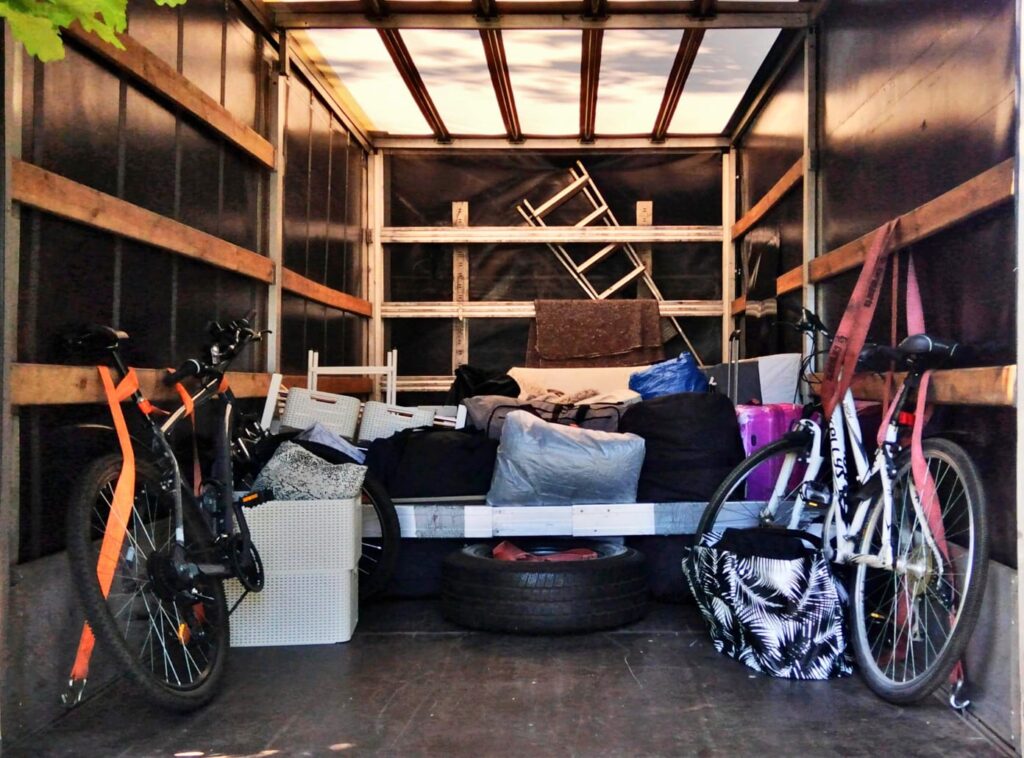
Day‑before — charge mobility devices; pack chargers and spares; confirm quiet hours/timing; print permits and lift bookings; prepare Open‑First boxes (meds, hygiene, bed linen, tools, chargers). Place a Do‑Not‑Ship pouch with IDs, meds, and batteries.
Morning of the move — meet crew lead; review Access Profile; agree signals and pacing; protect floors/doors; pre‑stage items to reduce carries; keep meds and critical devices with you; test chair/scooter battery levels.
Transit — follow GPS ETA; adjust for ferries/bridges; planned rest breaks; if weather escalates, we switch route and push a new ETA.
Arrival (first 2 hours) — colour‑code placement; assemble bed first; clear ≥ 90 cm pathways; connect critical devices; test chargers/CPAP; set safe charging spots for lithium units (dry, ventilated, off soft furnishings); remove packaging.
First 72 hours — ID chain (folkbokföring → personnummer → ID‑kort/BankID); register with a Vårdcentral (GP) (bring med list); utilities, internet, parking apps, recycling; schedule any follow‑up White Glove placement if needed.
Crew signals & pacing (optional)
- Green = continue; Amber = slow/quiet; Red = pause.
- Ear defenders or quiet hours on request; avoid sudden noises. Acceptance checklist (leave‑behind)
- Inventory signed; photos of any remarks; meters photographed; packaging removed; keys/codes returned.
- Next‑day call slot booked for aftercare.
Accessibility risk register (template)
Identify and neutralise friction points ahead of time.
| Risk/constraint | Mitigation | Owner |
|---|---|---|
| Lift out of service | Book ground‑floor shuttle; add crew for stairs | VANonsite |
| Long carry > 50 m | Extra trolleys/ramps; staged loading | VANonsite |
| Noise sensitivity | Quiet window; soft‑close; signals agreeed | Both |
| Weather (ice/snow) | Winter mats; ferry‑led route; buffer day | VANonsite |
| Lithium battery handling | Separate packing; insulated terminals; with you | Both |
Sensory‑friendly schedule (example)
- 07:30–08:00 crew briefing in quiet tones.
- 08:00–09:30 protected packing of critical items.
- 09:30–09:45 calm break.
- 09:45–12:00 loading with minimal beeps/alerts.
- Afternoon transit in planned rest increments.
Aftercare
- 24–48h check‑in; schedule any repositioning.
- Debris/packaging removal if booked.
- Quick claim workflow with photos if needed.
First week in Sweden: quick admin & accessibility setup
- Population registration (folkbokföring) at Skatteverket; then personnummer.
- ID‑kort & BankID for banking and e‑services.
- Bank account, utilities, broadband, parking permits and local waste collection.
- Healthcare: choose a Vårdcentral; bring records; request medication continuity.
- Housing: map accessible routes within the building; agree delivery windows with building management for any follow‑up items.
Arrival‑week micro‑timeline (printable)
| Day | Priority admin | Home setup focus |
|---|---|---|
| 0 | Utilities & internet; parking app | Bed assembly; Open‑First boxes |
| 1 | Skatteverket → personnummer | Clear 90 cm pathways; safe charging |
| 2 | Bank account + BankID | GP registration; med list submitted |
| 3 | School/transport where relevant | Recycling schedule; debris removal |
Handy apps & tips (examples)
- Parking and public transport apps vary by city; download local ones on Day 0.
- Many buildings require booking of lifts for bulky deliveries — ask reception.
Document pack & quick translations
- Passport/ID; tenancy/ownership papers; employment/admission letters.
- Medication list and device details; insurance documents.
- Keep digital copies; prepare brief translations of key terms for smooth check‑ins.
Mobility & parking basics
- Ask your municipality about accessible parking permits and resident bays.
- Save vehicle plate and permit numbers in your phone; photograph the bay signage.
Home adaptations — where to start
- Note grab‑bar locations, ramp needs, and safe transfer zones.
- Book a follow‑up visit for White Glove placement or additional assembly.
Common roadblocks & quick fixes
- No proof of address yet? → Use tenancy letter + utility activation email.
- No lift booking available? → Plan a two‑stage unload with ground‑floor staging.
- Router delayed? → Use mobile hotspot to complete online registrations.
Full arrival checklist in How to Relocate to Sweden.
Families, students & carers (special scenarios)
- Families with disabled children: school records, therapy schedules, transport plans; unpack sensory spaces first; schedule quiet hours.
- Students: dorm access rules; lighter volumes (5–10 m³); book early in term windows.
- Carers: coordinate arrival with care rosters; White Glove for fast setup; store spares in clearly labelled bins.
Education & therapy continuity
- Request letters from current teachers/therapists; translate if needed.
- Pack an IEP/plan summary in your Do‑Not‑Ship pouch.
- Set up a calm homework/therapy corner on Day 0–1.
Student move tips
- Confirm dorm access hours and lift rules; lighter volumes often fit 5–10 m³.
- Label Open‑First for study kit, meds, and chargers.
Carer coordination
- Share rosters; place key items at reachable heights; leave a simple home map for rotating carers.
Sensory‑friendly home layout (starter plan)
- Keep 90 cm pathways clear; place switches and chargers at reachable heights.
- Reduce clutter and cable trip risks; add soft‑close pads on doors/cabinets.
- Use contrasting colours for edges, steps, and important handles.
Service animals & travel days
- Check ferry/route pet rules; pack documents, food, and relief kit.
- Reserve quiet cabins or seats; plan breaks around known rest areas.
Handover template for carers (copy/paste)
- Daily routine: meds times, meals, therapies.
- Access: door codes, lift rules, parking notes.
- Safety: emergency contacts; device charging rules; quiet hours.
FAQs
Do EU citizens need a visa to move to Sweden?
EU/EEA/Swiss citizens do not need a visa; focus on arrival registrations. See How to Relocate to Sweden.
Can you move powered wheelchairs and scooters?
Yes. Share model/battery details early. Lithium batteries may need special handling.
Can service animals travel on ferries?
Yes, with proper documentation. Book pet‑friendly cabins/kennels and plan relief breaks.
Can you install grab bars or rails?
We handle placement and assembly of furniture and equipment. For fixed structural work, we can coordinate with you/your building manager.
How far in advance should I book?
6–8 weeks is ideal. Earlier for peak months and winter.
Can I track the van live?
Yes. Every vehicle is GPS‑tracked with proactive ETA updates.
What if my lift breaks on the day?
We deploy a shuttle plan and extra crew where feasible, then re‑time the delivery.
Do you offer storage if my home isn’t ready?
Yes. Short‑term storage and staged delivery are available on request.
Can you pack only my fragile or medical items?
Absolutely — book Packing Service just for sensitive zones and devices.
Why choose VANonsite
- Live GPS tracking and plain‑language ETA messages.
- Right‑size vans (5–90 m³) to match narrow lanes or full‑house moves.
- Packing Service and White Glove Delivery for sensitive/medical items.
- Accessible route planning (bridges/ferries), winter playbook, and backups.
- Transparent scoping: photo/video survey, clear inventory, capacity bands (see Removals to Sweden).




Outcome‑focused table
| Your concern | Our solution | What it means |
|---|---|---|
| Safe handling of medical equipment | Pro packing/crating; battery/oxygen policies | Compliance + protection |
| Predictable ETAs & lower stress | Live GPS + two route options (ferry/bridges) | On‑time, fewer surprises |
| Narrow streets & complex access | Shuttle plans; smaller vans; lift scheduling | Reach the door without risk |
| Fast setup at destination | White Glove placement & assembly | Comfort from hour one |
Service tiers & add‑ons (at a glance)
| Tier / Add‑on | What’s included | Best for |
|---|---|---|
| Standard Move | Van + crew, basic protection, GPS updates | Small/medium shipments with simple access |
| Packing Service | Pro packing materials + trained packers | Kitchens, glass, tech, medical devices |
| White Glove Delivery | Room‑by‑room placement, assembly, debris removal | Fast comfort, accessibility‑first setup |
| Dedicated Capacity | Direct route, flexible timing, fewer touch‑points | Time‑critical, medical equipment, winter moves |
| Short‑Term Storage | Secure storage + staged delivery windows | Housing gaps, renovations, phased setups |