TL:DR (7 bullets)
- Build a focused 30 day plan that actually works. Declutter 10–20 percent, right size your vehicle, choose a weather‑smart corridor to Bergen, and prepare a clean customs inventory with box numbers and realistic values.
- Handle paperwork early to swerve delays. EU/EEA registration, a police appointment, your D‑number, and a tax card. This guide points only to official Norwegian resources.
- Claim duty‑free relief on used household goods when eligible. Present a precise, room‑by‑room list at the border with proofs of residence abroad.
- Choose the smartest route for the season. Hirtshals → Bergen ferry to cut road miles, Hirtshals → Kristiansand/Stavanger → E39 for flexible legs, or Kiel → Oslo → E16/E134 for winter stability.
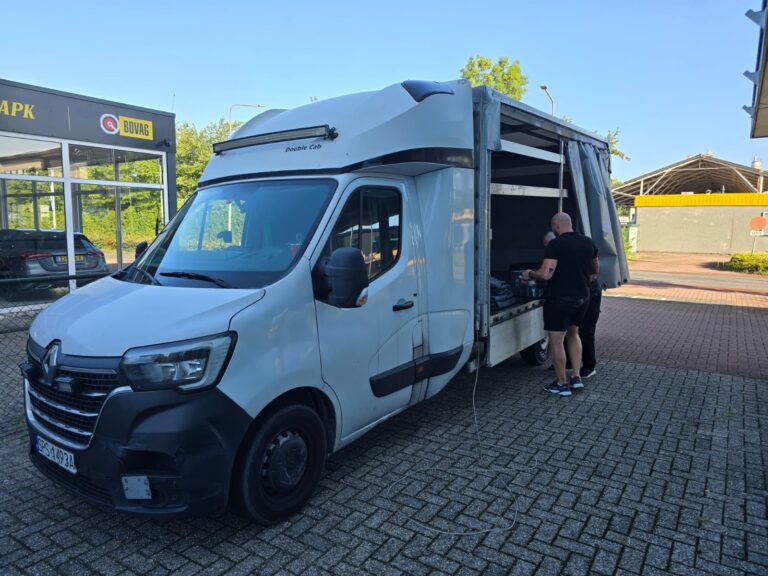
- Match capacity to your life from 5 to 90 m³ and watch payload. Use a shuttle van for Bryggen‑style lanes, steep streets, and tight old‑town access.
- Buy peace of mind. Book professional packing, White Glove care for art and instruments, Last Minute support when timing is tight, and follow every mile with live GPS tracking.
- Keep costs lean without cutting safety. Reduce volume, pre‑book lifts and loading bays, travel off‑peak, and align ferry cabins with delivery windows. Start with a transparent quote at VANonsite Removals to Norway.
Introduction
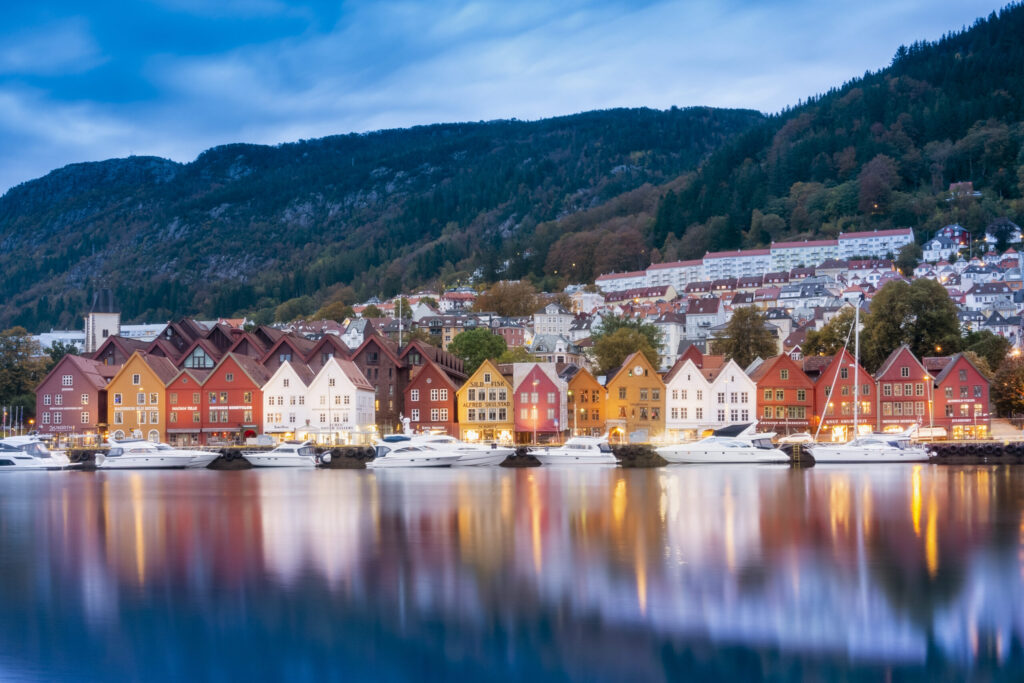
Moving to Bergen Norway feels like stepping into a watercolor that never dries. Rain‑washed streets glow, wooden facades lean over cobbles, and fjord light shifts from silver to gold in minutes. Your move should keep the magic and lose the mayhem.
That is where VANonsite shines. Meticulous planning, winter‑aware routing, and crews who protect floors and corners as if they were their own. Furniture dismantled and reassembled with care. Professional packing that tames chaos. And live GPS so you can watch your belongings glide up the coast or roll in from Oslo. Short sentences. Clear prices. Clean delivery.




Snapshot: Bergen Essentials vs Mainland EU
| Topic | Mainland EU (DE/NL/IE) | Bergen (Vestland, NO) |
|---|---|---|
| EU/EEA status | EU | Norway is EEA, Schengen |
| Power plugs | Type F (DE/NL), Type G (IE), 230V | Type F, 230V |
| Currency | EUR | NOK |
| Driving side | Right (DE/NL), Left (IE) | Right |
| Winter driving | Mild to moderate | Frequent rain, snow at altitude, slick cobbles, tunnels and fjord roads |
| Time zone | CET/CEST (DE/NL), GMT/IST (IE) | CET/CEST |
| City tolls | Limited | Toll ring via AutoPASS; seasonal studded‑tyre fees may apply |
| Terrain | Flat to rolling | Steep streets, tight lanes near Bryggen, many tunnels/bridges |
| Nearest airport | — | Bergen Airport Flesland (BGO) |
| Rain reality | Standard European rainfall | Frequent showers; plan moisture‑safe packing and covered loading |
| Daylight pattern | Typical mid‑latitudes | Long summer days, short winter days, no polar night |
| Access & parking | Regular urban access | Residents‑only zones, loading bay permits, gradients; shuttle van often helpful |
Key takeaway
Bergen’s beauty lives beside weather and topography. Plan for rain, steep lanes, tolls, and precise last‑mile access. Add time buffers, moisture‑safe packing, and a shuttle option so delivery day feels calm, not chaotic.
Your 30‑Day Move Timeline
T‑30 to T‑21 days
- Room‑by‑room inventory with approximate values; flag fragile or high‑value items.
- Measure access: door widths, stair turns, lift size, on‑street loading. Photograph tight corners and cobbles.
- Pick your corridor (see routes below) and pencil ferry windows.
- Right‑size capacity: 5, 10, 15, 30, or 90 m³ and validate payload if you own lots of books/tools.
- Start paperwork folder: ID, contracts, tenancy, pet docs, and passport photos.
- Decide insurance level; list declared values. Mark items for White Glove.
T‑20 to T‑10 days
- Declutter 10–20 percent to cut volume and cost.
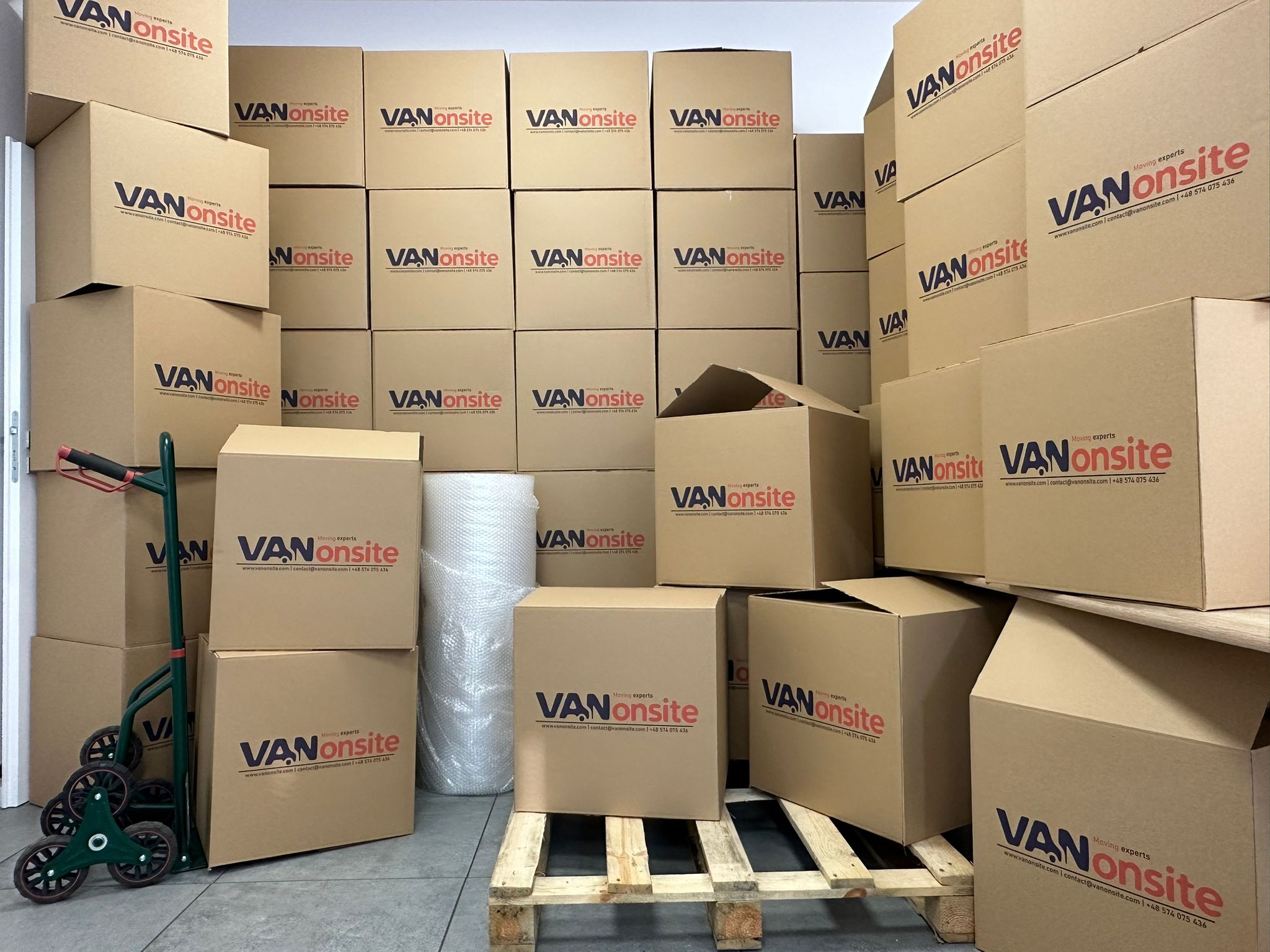
- Book materials or Packing Service; order wardrobe boxes and dish barrels.
- Notify providers; set mail redirection. Pre‑book lifts and parking at both ends.
- Lock ferry cabins and timings. Align with delivery slot options.
- Draft your customs inventory grouped by room and item type.
T‑9 to T‑3 days
- Label two sides of each box; add box numbers and color by room.
- Photograph valuables; record serial numbers.
- Pack an essentials kit: documents, chargers, tools, bedding, warm layers, rain gear.
- Defrost and drain appliances 24 hours before loading.
- Confirm access restrictions, gate codes, and concierge contacts.
T‑2 to T‑1 days
- Protect floors and corners. Stage heavy items near exits with clear walkways.
- Photograph meter readings and prepare keys.
Moving day
- Walkthrough with crew lead; confirm handling and first‑off boxes.
- Sign a short condition note; keep passports and valuables with you.
- Track progress live with GPS; share link with your building manager.
In transit
- Keep devices charged for ferry check‑ins and weather advisories. Rest well on overnight sailings.
Week 1 in Bergen
- Register residence if staying over 3 months; secure D‑number and tax card.
- Open a bank account, activate Vipps. Set up AutoPASS.
- Choose a GP via Helsenorge and update address. Unpack essentials first.
Documents & Formalities (Official Links Only)
Follow this order and use official guidance only. We include quick “Start here / Bring / Do next” blocks so your appointments are frictionless.
1) EU/EEA registration & police appointment
- Start here: UDI rights & obligations for EU/EEA nationals: https://www.udi.no/en/want-to-apply/rights-and-obligations-of-eu-eea-nationals/
- Book: Police registration appointment: https://www.politiet.no/en/services/residence-permit-and-registration/
- Bring: Valid passport or national ID, employment or study contract, housing contract or confirmation, printed application receipts.
- Do next: Save your registration certificate; you will often be asked for it at the bank and by employers.
2) D‑number / ID number & tax card
- Why: Needed for banking, payroll, healthcare identification and many public services.
- Where: Norwegian Tax Administration: https://www.skatteetaten.no/en/
- Bring: Passport/ID, address confirmation, employment contract where applicable.
- Do next: Once issued, share your D‑number with your bank and employer; request a tax card.
3) Customs for household goods (duty‑free when eligible)
- Rules: Moving with used household goods may be duty free if conditions are met. Official guide: https://www.toll.no/en/private/import/moving-to-norway/
- Inventory: Create a room‑by‑room list with values and box numbers. Mark fragile and high‑value items. Keep proof of residence abroad to support your relief claim.
- At the border: Follow signage to a manned customs office or red channel when required. Present inventory and documents calmly; keep originals handy.
4) Vehicles (bring or import)
- Road rules & registration: Statens vegvesen: https://www.vegvesen.no/en/
- Customs & taxes: Norwegian Customs overview: https://www.toll.no/en/private/
- Seasonal note: Winter tyres and studded tyre zones have local rules. Verify dates and fees before you drive.
5) Healthcare
- Set up: Helsenorge explains eligibility and choosing a GP: https://www.helsenorge.no/en/
- Tip: You may select a GP after you receive your identity number/D‑number.
6) Tolls & city specifics
- AutoPASS: Register for toll payments and some ferry payments: https://www.autopass.no/en/
- Bergen kommune: Parking, loading bays, and local rules: https://www.bergen.kommune.no/
7) Pets (if applicable)
- Entry rules: Norwegian Food Safety Authority guidance on bringing animals: https://www.mattilsynet.no/language/english/bring-animals-to-norway
- Tip: Keep microchip, vaccination booklet, and any treatment certificates together with your travel papers.
Printable document pack (bring to appointments)
| Document or task | Issued by / Where | When to do it | Bring to appointment |
|---|---|---|---|
| EU/EEA online registration | UDI | Before arrival or Week 1 | ID, employment or funds, housing proof |
| Police registration appointment | Police | Week 1–2 | ID, UDI confirmation, housing proof |
| D‑number and tax card | Norwegian Tax Administration | Week 1–2 | ID, address, employment contract where applicable |
| Customs duty‑free relief for used goods | Norwegian Customs | At border / on entry | Inventory list, proof of residence abroad |
| Vehicle import or temporary use | Statens vegvesen & Norwegian Customs | If bringing a car | Registration docs, purchase proof, ID |
| Healthcare and GP choice | Helsenorge | Week 1–3 | ID/D‑number, address |
| Pets entry documentation | Norwegian Food Safety Authority | Before travel | Microchip, vaccinations, vet certificates |
Border checklist (expanded)
- Itemized inventory with realistic values and box numbers.
- Proof of previous residence outside Norway if claiming duty‑free relief on used goods.
- Valid ID and proof of address or intended stay in Norway.
- Pet documents where relevant.
- Appointment confirmations and ferry or route bookings.
- Ready cash or cards for tolls/parking in the first days.
Regulations change. Recheck the official links just before you travel.

Route Planning To Bergen (Corridors That Work)
Pick a corridor that fits your origin, season, and energy levels. Then lock ferry windows and build a small weather buffer.
| Route choice | Typical pattern from EU origins | Best for | Pros | Consider |
|---|---|---|---|---|
| Hirtshals → Bergen ferry | NL/DE → Denmark → Hirtshals → overnight ferry to Bergen | Bergen city and nearby municipalities | Fewer Norwegian road miles; arrive rested | Weather dependent; summer cabin demand |
| Hirtshals → Kristiansand/Stavanger → E39 | NL/DE → Denmark → Hirtshals → short ferry → E39 north to Bergen | Flexible timings, west‑coast towns | Shorter sea legs; flexible driving stages | More road miles; plan tunnel/bridge tolls |
| Kiel → Oslo → E16/E134 | NL/DE → Kiel overnight → Oslo → E16/E134 via Voss to Bergen | Winter stability, eastern pickups | Predictable schedule; services en route | Longer Norwegian drive; mountain weather windows |
| All road via Sweden | NL/DE → Denmark → Sweden → west into Bergen region | Pets, maximum control | Full timetable control; good rest‑stop network | Longest road time; winter conditions in the north |
Drive time ranges & pacing (indicative)
- Hirtshals → Bergen ferry: arrive Hirtshals by late afternoon, overnight sailing, morning arrival, then 20–45 minutes to central districts.
- Kristiansand/Stavanger → E39: plan 1.5–2.5 driving days north depending on stops, weather, and tunnel timings.
- Kiel → Oslo → E16/E134: 2–3 driving days after the ferry, plus a weather buffer for the mountain sections.
- All road via Sweden: 3+ driving days; best for tight pet schedules and full control.
Seasonal strategy
- Winter: Choose routes with fewer mountain passes; add a 12–24 hour buffer. Keep warm layers and traction aids in the cab.
- Summer: Book cabins early and aim for midweek sailings. Tourist traffic can slow old‑town access.
- Shoulder seasons: Great value and steadier weather; still keep a buffer for rain and fog.
Last‑mile reality in Bergen
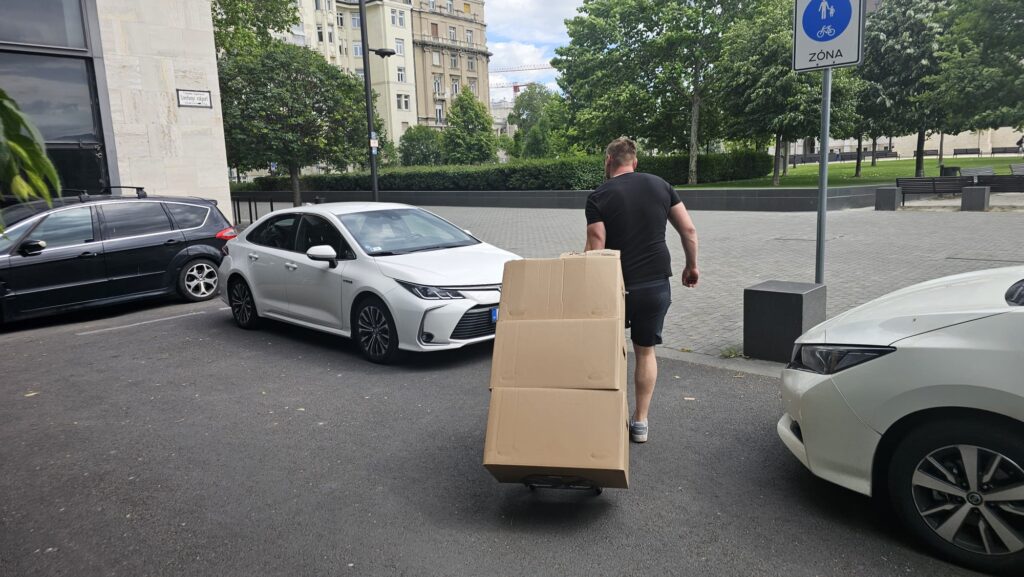
- Narrow lanes near Bryggen and steep gradients favor a shuttle van from a nearby loading zone.
- Time deliveries outside rush hours and tourist peaks for cleaner access.
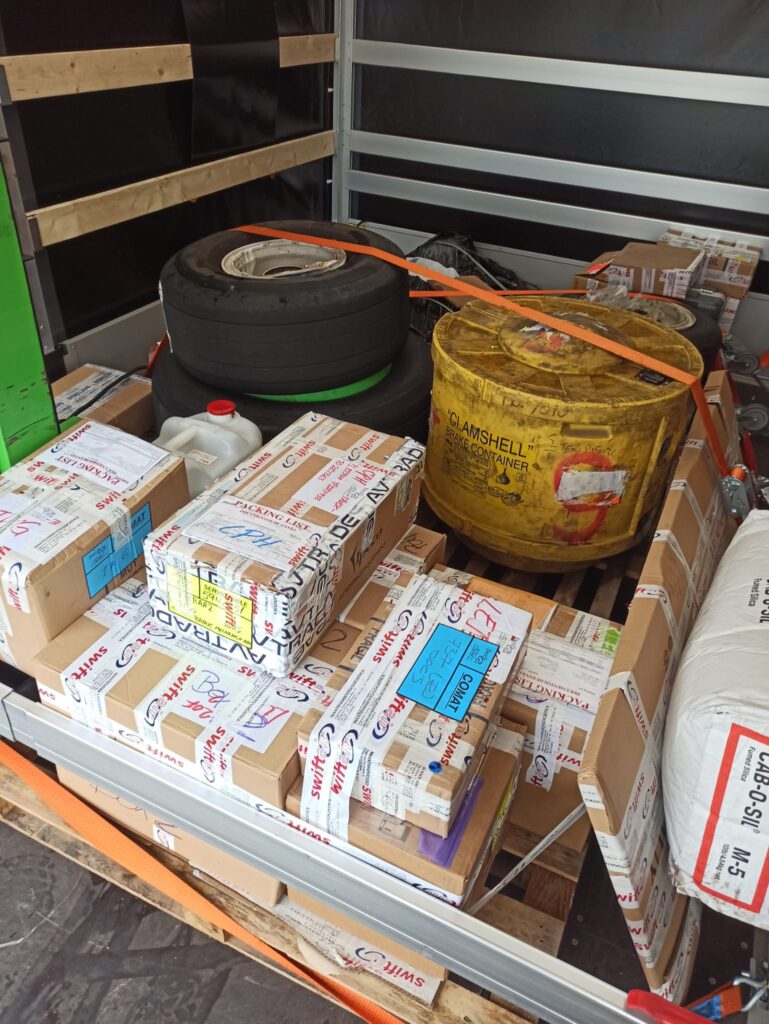
- Share driveway photos, turn radii, height limits, and loading distances when you book.
- Check municipal guidance for temporary loading/parking: https://www.bergen.kommune.no/
Contingency planning
- Keep an alternative corridor in mind in case of ferry cancellations or mountain closures.
- Share all ferry bookings with your coordinator so loading and delivery windows align.
- Build a simple communication plan for key handovers so nobody waits in the rain.
Vehicle Sizes & What Fits
Pick capacity by both cubic meters and payload. Use your inventory list, count dense categories, then choose one of the sizes below. We can also split or shuttle for old‑town access.
Quick chooser table
| Service | Volume | Max Payload | Ideal For | What usually fits | Access notes |
|---|---|---|---|---|---|
| Moving Basic | 5 m³ | 300 kg | Studio essentials, students | 40–70 mixed boxes, compact desk, 1 chair, TV up to 40″, two suitcases | Great where parking is short or lanes are tight |
| Moving Medium | 10 m³ | 600 kg | Small apartment | 70–120 boxes, double bed, small sofa, coffee table, 2 bookshelves | Good for narrow streets with short carry |
| Moving Premium | 15 m³ | 1000 kg | 1–2 bed flat | 120–180 boxes, king bed, 3‑seater sofa, dining for 4, washer or dryer, 2 bikes | Standard Bergen choice; validate payload |
| Moving Premium Plus | 30 m³ | 3500 kg | Larger flats, partial house | 180–350 boxes, 3 beds, large sectional, wardrobes, freezer, bikes, garden items | Check turning circle and gradients |
| Moving Full House XXL | 90 m³ | 20000 kg | Full family home | 350–700 boxes, full room sets, outdoor gear, workshop tools, sports equipment | Often staged unload; shuttle for old‑town |
What fits by service
- 5 m³: student kit, 60 boxes, compact desk, bedside table, two suitcases.
- 10 m³: 100 boxes, double bed, small sofa, TV, two bookshelves, hallway storage.
- 15 m³: 150 boxes, king bed, 3‑seater sofa, dining set, washing machine, bikes.
- 30 m³: 250 boxes, 3 beds, large sectional, wardrobes, chest of drawers, deep freezer.
- 90 m³: full family home, garden furniture, gym machine, ski gear, workshop racks.
Rules of thumb
- 60 L box ≈ 0.06 m³. Fifty boxes ≈ 3 m³.
- 3‑seater sofa: 1.4–1.8 m³. King bed with frame: 1.5–2 m³.
- Books, files, tools, ceramics spike payload. Size by kg as well as m³.
Capacity quick calculator
- Count boxes × 0.06 m³, add major furniture volumes, then add a 10–15 percent buffer for awkward shapes.
- If total payload estimate exceeds the service limit, step up one size or split the load.
Payload pitfalls to avoid
- Overpacking large boxes with books. Use small boxes for dense items.
- Forgetting appliances and plants weight.
- Assuming elevator access; many Bergen buildings have stairs only.
Access checks for Bergen
- Loading bay permits, toll ring timing, height limits in garages.
- Old‑town lanes, cobbles, and gradients; plan shuttles where needed.
- Share driveway photos and turn radii so we can right‑size the vehicle.
When to split or shuttle
- Tight last mile to Bryggen‑area addresses.
- Morning priority delivery of essentials, afternoon for remainder.
- Renovation phasing or storage in transit.
Popular add‑ons by vehicle size
- 5–10 m³: Fragile pack for kitchen and glass, GPS link for landlords.
- 15–30 m³: Furniture Removals, floor protection kit, evening delivery window.
- 90 m³: White Glove for art, two day unload, item‑specific insurance riders.
Services That Remove Friction
Moving should feel orchestrated, not improvised. Here is how we eliminate friction on Bergen routes so you arrive calm, on time, and in control.
Included by default
- Dedicated move coordinator who owns your timeline, permits, ferry windows, and contingency plan.
- Last Minute Moving capacity for urgent handovers with rapid deployment.
- Live GPS tracking on every load with ETA updates you can share with landlords or building managers.
- Photo checkpoints at load and delivery so condition is documented and claims are simple.
- Premium protection: floor runners, door‑jamb guards, corner protectors, mattress and sofa covers.
- Moisture‑aware handling for Bergen rain with barriers and insulated wrapping on sensitive items.
Add what you need
- Packing Service: full pack, fragile only, or unpack on arrival. Carton supply, labeling system, and itemised inventory included.
- White Glove Delivery: soft crating, climate considerate handling, room‑of‑choice placement, debris removal.
- Furniture Removals: methodical disassembly and reassembly with parts bagged and labeled.
- Home Removals • Office Removals • Student Removals • Storage for staged moves.
Bergen‑focused bundles
| Bundle name | What is included | Best for | Typical impact |
|---|---|---|---|
| Smart Start | Fragile‑only Packing Service, Live GPS, Moving Premium | 1–2 bed flats, light inventories | Faster loading, fewer damages |
| Old Town Access Kit | Shuttle van + main truck, extra mover, floor and corner protection | Bryggen‑area lanes and gradients | Safer last mile, zero repeat attempts |
| Family Fjord | Moving Premium Plus, Furniture Removals, partial unpack for kitchen and kids’ rooms | 3–4 room households in hilly districts | One trip, quick first night setup |
| Gallery Care | White Glove Delivery, item‑specific riders, custom picture cartons | Art, instruments, collectibles | Maximum protection and clean placement |
Plan → Protect → Place
- Plan: Virtual pre‑move survey, inventory confirmation, parking permits, and ferry coordination. Route selection with weather buffers and a clear handover timeline.
- Protect: Premium materials, moisture barriers, and corner guards. Barcoded or numbered labels, photo checkpoints, and GPS visibility from door to door.
- Place: Color‑coded room labels, furniture reassembly, room‑of‑choice placement, and optional unpack for essentials. Debris collection so your home starts clean.
Communication cadence & transparency
- Confirmation email with plan and contacts after booking.
- Status update at packing start, loading complete, ferry check‑in, and 2 hours before arrival.
- Live GPS link shared with you and building management on request.
What we cannot ship for safety/legal reasons
- Fuel, gas cylinders, fireworks, perishable foods, live plants in soil, and certain chemicals. Ask your coordinator for the restricted list.
Packing Like a Pro
- Heavy in small boxes, light in large. Use dish barrels and wardrobe cartons.
- Plates vertical; glasses in segmented dividers. Zero rattles.
- Electronics in anti‑static sleeves; remove batteries; photograph cable setups.
- Label two sides, number every box, and color by room.
- Weatherproofing for rain: mattress/sofa covers, moisture barriers, silica packs for instruments and electronics.
Box cheat sheet
| Box type | Liters | Best for | Notes |
|---|---|---|---|
| Standard 60 L | 60 | Books, kitchenware, general items | Keep weight manageable |
| Wardrobe box | 100+ | Hanging clothes | Crease‑free arrival |
| Dish barrel | 60 | Plates and bowls | Thicker walls; pack plates vertical |
| Picture carton | var. | Mirrors, framed art | Corner protectors and face shields |
| Lamp box | tall | Floor lamps, shades | Wrap shades separately; fill voids |
Bergen‑proof packing protocol
- Stage by zones. Group items by room and fragility. Keep electronics and instruments indoors until the last minute to avoid condensation.
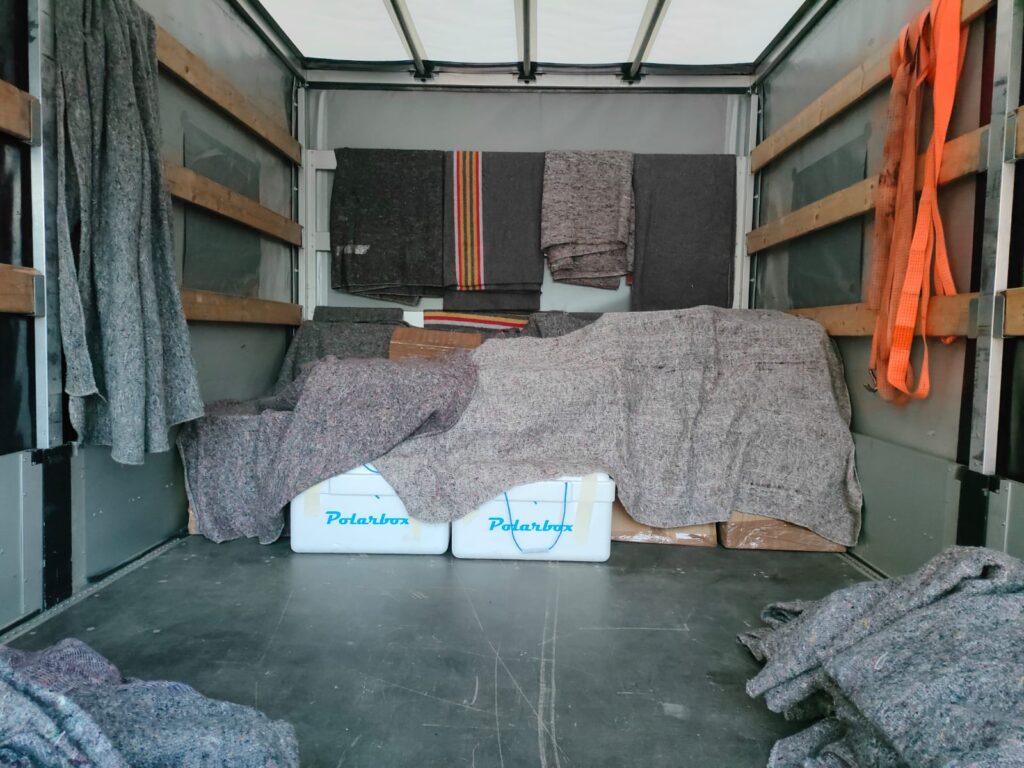
- Wrap for rain. Use mattress and sofa covers, then a light shrink layer. Add kraft paper on top so grips are secure when wet.
- Seal like a pro. Two strips on the base, one along the seam, two across the top. No open flaps.
- No rattles. Fill voids with paper or bubble. Shake test. If you hear it, pad again.
- Moisture control. Add silica or desiccant to electronics, instruments, and photo boxes.
- Load order. Heavy and stable first, fragile and essentials last for quick access if weather turns.
- Unpack priority. Kitchen, bedding, kids’ room. Electronics last so they can acclimatise to room temperature.
Materials checklist
| Material | Why it matters in Bergen rain | Quantity cue per 15 m³ |
|---|---|---|
| Double wall cartons | Resist crush and moisture better | 60–90 |
| Dish barrels + dividers | Plates travel vertical and snug | 6–10 |
| Wardrobe cartons | Faster load, no creases | 4–8 |
| Mattress/sofa covers | Waterproof barrier for soft furniture | 3–6 |
| Stretch film | Secondary moisture layer and bundling | 2 rolls |
| Kraft paper | Non‑slip layer for handling when wet | 1 roll |
| Bubble wrap | Cushion glass and electronics | 2 large rolls |
| Corner protectors | Save tables, frames, and artwork | 20–30 |
| Silica gel packs | Damp control for tech and instruments | 30–40 |
| Tape + tape gun | Fast, strong seals | 12 rolls + 1 gun |
| Marker set + labels | Clear, legible room and item IDs | 2 sets |
Room‑by‑room hacks
- Kitchen: Plates vertical in dish barrels. Pans nested with paper between. Knives tip‑guarded and bundled.
- Living room: Cables photographed and bagged per device. TV in original box or picture carton with screen shield.
- Bedroom: Wardrobe cartons for speed. Vacuum bags only for soft textiles, not leather or down.
- Kids’ room: Pack a “first night” box with bedding, night light, school kit.
- Garage and sports: Drain fuel, remove batteries, clean and dry skis and bikes. Wrap drivetrains and use fork spacers where possible.
- Art and instruments: Soft crate or picture carton with corner guards; add item‑specific rider if valuable.
Labeling that saves time
| Label element | Example | Why it helps |
|---|---|---|
| Box number | K‑12 | Lets you find items on the inventory fast |
| Room code | K for Kitchen, BR for Bedroom | Color‑coded delivery speeds up placement |
| Fragility | Fragile, This Side Up | Prevents tilt in tight stairwells |
| Priority | 1, 2, 3 | First‑off boxes arrive in the right order |
Wet‑weather load and unload SOP
- Cover the path with floor runners and corner guards.
- Create a covered handoff point at the door.
- Wipe plastic wraps to keep grip secure.
- Keep towels and spare wraps ready for quick re‑seals.
- Pause for heavy downpours if visibility drops; safety beats speed.

Cost Factors & Bergen‑Specific Scenarios
| Cost driver | What influences it | How to reduce |
|---|---|---|
| Distance & route | Corridor choice, detours, season | Pick the most direct seasonal corridor; avoid storm days |
| Ferries & tolls | Cabin type, vehicle length, toll ring timing | Book early, standard cabins, plan toll‑friendly timings |
| Volume & weight | Box count, bulky items, dense loads | Declutter 10–20 percent; right‑size capacity |
| Access & parking | Stairs, long carries, old‑town lanes | Pre‑book bays; add shuttle van for tight last mile |
| Packing complexity | Fragility, custom crates, owner vs pro pack | Self‑pack basics; pro‑pack fragile and high‑value |
| Special items | Pianos, art, aquariums, gym machines | Use White Glove selectively |
| Season & weather | Winter pacing, summer peaks | Add a weather buffer; aim for shoulder seasons |
| Waiting time | Keys, concierge delays, ferry changes | Confirm keys; share live GPS with building managers |
| Storage/split loads | Storage days, second address drops | Consolidate dates; combine deliveries |
Cost levers you control
- Volume discipline. Ten boxes fewer can change your vehicle size and ferry costs.
- Access certainty. A pre‑booked loading bay beats three loops around the block.
- Smart packing scope. Self‑pack basics and let pros handle glass, art, and instruments.
- Seasonal timing. Shoulder seasons often deliver better ferry and accommodation rates.
- Single trip strategy. Align keys and flights so everything lands in one coordinated window.
Bergen access modifiers
| Modifier | What triggers it | Typical mitigation |
|---|---|---|
| Shuttle van requirement | Tight old‑town streets, steep approaches | Stage at a nearby zone and shuttle loads |
| Long carry | 40–80 m from truck to door | Extra mover and rolling dollies |
| Stair‑only buildings | No lift or narrow lifts | Smaller team plus more passes, time slot |
| Evening or weekend window | Building rules or your arrival times | Coordinate concierge and neighbors |
Scenario snapshots
- Hamburg → Bergen: 30 m³ up to 2500 kg. Hirtshals ferry or Kristiansand/Stavanger + E39. Choose Premium Plus, Furniture Removals, optional shuttle for old town.
- Amsterdam → Bergen: 15–30 m³. Hirtshals direct ferry to Bergen. Choose Premium or Premium Plus, fragile‑only packing, evening delivery.
- Dublin → Bergen: 15–30 m³. France corridor to Hirtshals; ferry to Bergen. Choose Premium/Premium Plus, book cabins early in summer.
Ready‑to‑quote checklist
- Clear inventory with room groups and values.
- Photos or video of access at both ends.
- Preferred corridor and date window.
- Packing scope and any White Glove items.
- Special constraints like pets, art, or instruments.
Next step
Get a fast, transparent estimate with a coordinator who understands Bergen’s last mile: VANonsite Removals to Norway.
Insurance & Peace of Mind
Choosing the right cover means you sleep well even when the weather turns or a ferry is delayed. Pick an option that matches your inventory and how it is packed.
| Option | What it covers | Best for | Notes |
|---|---|---|---|
| Basic carrier liability | Limited per‑kilo coverage during transit | Minimal risk, low‑value moves | Not designed for art or collectibles |
| Full value protection | Repair, replace, or cash settle up to your declared value | Most home moves | Declare realistic totals; pick a sensible deductible |
| Item‑specific riders | Extra cover for single high‑value pieces | Art, instruments, designer furniture | Pair with White Glove handling |
| Storage coverage | Goods held between load and delivery | Staggered moves or renovation gaps | Confirm start and end dates of storage |
What is usually excluded
- Wear and tear, scratches from normal handling, and inherent vice.
- Self‑packed fragile items that were inadequately protected.
- Liquids, perishables, prohibited or hazardous goods.
- Moisture or temperature damage not caused by an insured event.
- Pre‑existing damage or undocumented condition.
Coverage examples (simple math)
- Declared value 25,000. Deductible 250. A glass cabinet is damaged for 700. Expected payout ≈ 450 after the deductible, subject to policy terms.
- TV valued at 1,200 with the same deductible. Total loss leads to ≈ 950 payout after the deductible, subject to valuation and policy terms.
How to choose your level
- List high‑value pieces and their receipts or recent market values.
- Add up room totals, then add a 10–15 percent buffer.
- Decide who packs what. Let pros pack glass, art, and instruments to keep coverage strong.
- Pick a deductible that you would be comfortable paying out of pocket.
Simple claims steps
- Note visible damage on the delivery sheet before the crew leaves.
- Photograph the item and packaging from several angles.
- Share box number, description, and proof of value with your coordinator.
- Keep packaging until the claim is closed.
Evidence to keep handy
- Photos taken before loading and at delivery.
- Serial numbers for electronics and instruments.
- Purchase receipts or bank statements for high‑value items.
- The numbered box list matching your customs inventory.
Claim timeline guide
- Day 0: Record on delivery note and take photos.
- Day 1–3: Send details to your coordinator with values and box numbers.
- Day 3–7: Loss adjuster review and follow‑up questions where needed.
- Up to closure: Settlement or repair plan agreed in writing. Always check your policy for specific deadlines.
After Arrival: First‑Week Checklist (Official Links)
- Register your move and address with the Norwegian Tax Administration: https://www.skatteetaten.no/en/
- EU/EEA registration & police appointment if staying over 3 months.
UDI guide: https://www.udi.no/en/want-to-apply/rights-and-obligations-of-eu-eea-nationals/
Police: https://www.politiet.no/en/services/residence-permit-and-registration/ - Get your D‑number / ID number & tax card: https://www.skatteetaten.no/en/
- Healthcare setup via Helsenorge, choose your GP: https://www.helsenorge.no/en/
- Vehicle rules for temporary use/import/winter tyres: https://www.vegvesen.no/en/
- Road tolls & ferries: register AutoPASS: https://www.autopass.no/en/
- Customs follow‑ups for late shipments: https://www.toll.no/en/private/
- Parking & local rules in Bergen kommune: https://www.bergen.kommune.no/
- Mail forwarding with Posten: https://www.posten.no/en/change-of-address
First‑week action plan
- Days 1–2: Secure your D‑number appointment, set up temporary mobile data or Wi‑Fi, and register AutoPASS. Photograph meter readings and collect building rules.
- Days 3–5: Bank account application with your ID or D‑number, request BankID once eligible, and activate Vipps. Choose a GP on Helsenorge.
- Days 6–7: Update employer and school with your address. Arrange waste and recycling collection through Bergen kommune. Map your daily route and try a toll‑efficient schedule.
Banking & digital life
Open a bank account once you have your identification number or D‑number. Many banks then enable BankID which unlocks digital services. Activate Vipps for everyday payments.
Driving in Bergen
Expect rain, tunnels, and a toll ring. Learn local winter requirements via Statens vegvesen: https://www.vegvesen.no/en/
Keep a scraper, reflective vest, and compact umbrella in the car. Plan tyre changes in advance, and check any studded tyre fees published by Bergen kommune.
Helpful numbers
Fire 110. Police 112. Ambulance 113. Non‑emergency police 02800.
FAQs (Bergen‑specific)
- How long does it take to reach Bergen?
From northern Europe, plan 3–6 days door to door, depending on origin, season, ferries, and access. - Do I need winter tyres?
Norway has strict winter driving rules and local requirements. See Statens vegvesen: https://www.vegvesen.no/en/ - How do Bergen tolls work?
Register with AutoPASS for seamless toll payments and check local guidance via Bergen kommune. - Is old‑town access difficult?
Narrow lanes and gradients can limit large vehicles. We plan shuttles and timed deliveries to avoid issues. - Can I track my shipment live?
Yes. Every VANonsite load includes live GPS. - Do you offer storage if my new home is not ready?
Yes. Short or long‑term storage with tracked inventory. - What paperwork do EU/EEA citizens actually need for Bergen?
If staying over 3 months, complete EU/EEA registration online with UDI, then attend your police appointment. For ID and tax, request a D‑number and tax card from Skatteetaten. Use the official links in this guide. - What should I present at the border for duty‑free household goods?
A room‑by‑room inventory with values and box numbers, plus proof of residence abroad if you apply for relief. Follow Norwegian Customs guidance: https://www.toll.no/en/private/import/moving-to-norway/ - Can I bring plants, alcohol, or food?
Many plants, perishable foods, and certain quantities of alcohol are restricted. Always check Norwegian Customs rules before packing: https://www.toll.no/en/private/ - What if the ferry is cancelled or a mountain pass closes?
Your coordinator will switch to the alternate corridor, adjust delivery windows, and update you via GPS and SMS. We build a weather buffer into Bergen moves. - When is the best time of year to move to Bergen?
Shoulder seasons often balance calmer weather and better ferry availability. Winter is feasible with planning and tyres suited to conditions. Summer requires earlier bookings. - Which Bergen districts are simplest for access?
Newer blocks with lifts and marked loading bays are easier. Historic quarters near Bryggen can be steep and narrow, so we plan shuttle vans and timed windows. - Can you disassemble and reassemble furniture, including IKEA?
Yes. See Furniture Removals for careful dismantling, parts bagging, and reassembly in the right rooms. - Do you offer partial packing only for fragile items?
Yes. Our Packing Service offers fragile‑only, full pack, or unpack‑on‑arrival options. - Can you move pianos, artwork, and instruments?
Yes, under White Glove Delivery with custom protection and item‑specific riders. - What insurance should I pick?
Most families choose full value protection. Use the Insurance section above to size your cover and deductible. - How big is 15 m³ in practical terms?
Roughly 120–180 standard 60 L boxes plus key furniture for a 1–2 bed flat, subject to payload. See the Vehicle Sizes table for detail. - Do I need a parking permit for move day?
Many buildings do. Check guidance and loading bay options with Bergen kommune: https://www.bergen.kommune.no/ - How quickly can you help with a last minute move?
Our Last Minute Moving capacity is designed for urgent handovers. Share your inventory, dates, and access photos to activate a rapid plan.
Summary
Moving to Bergen blends fjord drama with city comfort. Keep the magic and skip the chaos by locking a season‑smart corridor, right sizing your capacity from 5 to 90 m³, and preparing a numbered, customs‑ready inventory. Finalise EU/EEA registration, your police appointment, D‑number, and tax card through official sites. Pack for rain with moisture‑aware materials, protect heirlooms with White Glove, and track every mile with live GPS. Pre‑book ferry cabins and Bergen loading bays, register AutoPASS, and build a small weather buffer so delivery day stays calm.
When you are ready, get a clear, itemised quote at VANonsite Removals to Norway and arrive in Bergen confident, organised, and dry. Need extras fast? Last Minute Moving, Packing Service, Storage, and shuttle vans for old‑town access are on call.