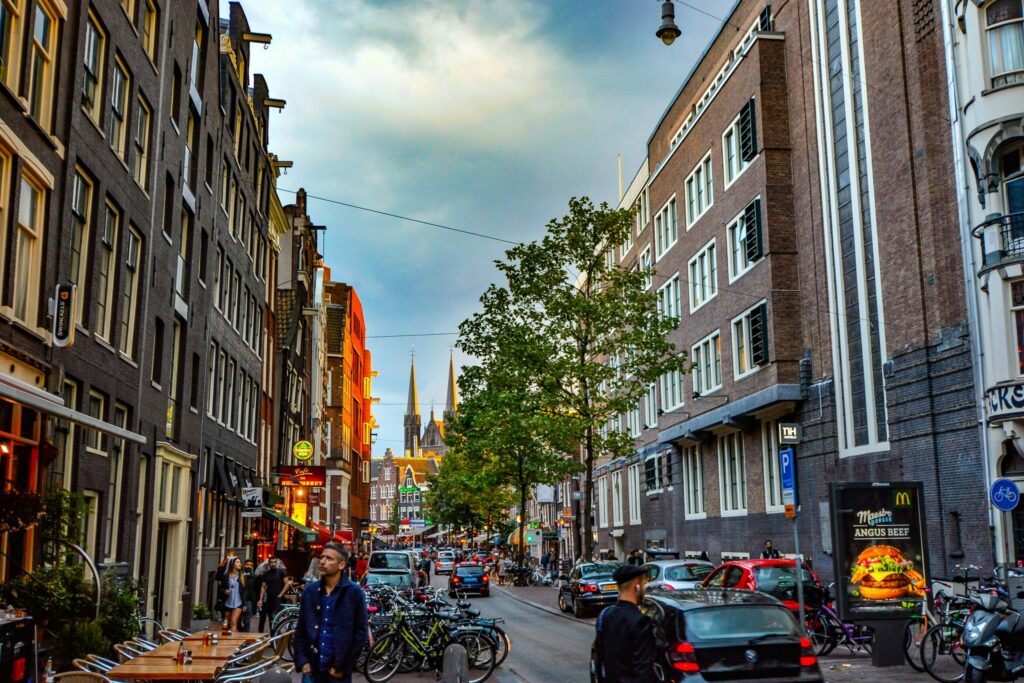
Removals to Denmark from the UK need a route plan, a defensible inventory and clear responsibility for customs paperwork before the vehicle is loaded. VANonsite bases the move on actual cubic volume, access at both properties, packing requirements and the choice between part-load and dedicated transport. Request an automatic email estimate on our Denmark removals page, then confirm the inventory, access and services before accepting a final offer. If the consignment is mainly sofas, wardrobes or other large items, see furniture removals to Denmark.
For current relief conditions and the personal-property declaration, check the official Danish Customs Agency guidance. Qualification depends on your circumstances and the goods being moved, so it should be confirmed rather than assumed.
TL;DR
- Post-Brexit reality: duty relief is conditional, not automatic. Check personal property relief requirements with Toldstyrelsen.
- Customs essentials: agree who prepares the customs declaration and your personal-property declaration before collection.
- People paperwork: passports, visas or SIRI approvals where relevant. After landing, register CPR, set up MitID, choose a GP on Sundhed.dk, and create your SKAT tax card.
- Right vehicle, realistic quote: share box sizes, furniture dimensions and heavy items, plus access photos. Bedroom count alone is not a load measurement.
- Route planning: possible crossings include Dover–Calais/Dunkirk and Harwich–Hook of Holland. Agree a delivery window for your actual route; do not book travel against an assumed transit time.
- Pack for handling: use suitable boxes, labels on two sides and a clearly marked Day 1 box. Ask about Packing Service or White Glove support for items needing specialist protection.
- Compare options: offer a date range, reserve lifts and loading bays, and ask whether groupage is available for your small load. Flexibility does not guarantee a discount.
- Control and care: agree protection, liability terms and delivery updates in the booking. Ask which tracking method is available for your vehicle.
- Next step: request an email estimate, then share the details needed to confirm scope, price and dates.
Introduction
Removals to Denmark from UK often involve two deadlines that do not line up: leaving the UK property and receiving the Danish keys. Before choosing transport, decide where your belongings can wait, who can accept delivery and how much flexibility each address allows.
A London collection with a reserved loading bay is a different job from a third-floor flat with no lift. VANonsite uses your inventory and access details to plan the transport and discuss packing support. Confirm the agreed service, liability terms and delivery updates before booking, rather than assuming every option is included.
Start with an email estimate for your move → Removals to Denmark


Post‑Brexit paperwork: what changed and what did not
Residence and visas at a glance
- EU/EEA/Swiss nationals living in the UK can usually move under free movement based on work, study or sufficient means. On arrival in Denmark, register grounds and address to obtain CPR. Guidance: Life in Denmark → https://lifeindenmark.borger.dk/
- UK nationals and other non EU citizens need the correct Danish residence route. Most permits are handled by SIRI (Danish Agency for International Recruitment and Integration) → https://nyidanmark.dk/
Customs and duty relief for personal property
For a move from Great Britain, duty and VAT relief for personal property depends on the Danish Customs Agency conditions, including:
- Normally at least 12 consecutive months living outside the EU, with belongings continuing in the same personal use.
- Evidence that you owned the belongings before moving; valuable items may require receipts showing six months of ownership.
- Normally import within 12 months after moving. Earlier import requires additional conditions; lending, pledging or renting during the first 12 months triggers duties and VAT.
- Provide the personal-property declaration and supporting evidence as well as the carrier or shipping agent’s customs clearance declaration.
Check the current relief conditions and any exclusions with SKAT/Toldstyrelsen → https://www.skat.dk/ and Danish Customs → https://www.toldst.dk/
Your documents pack for border and settlement
For the shipment
- Passport copy for the shipper
- Numbered inventory with room codes and simple descriptions
- Proof of your previous address showing your residence history outside the EU and your new address in Denmark (tenancy or purchase)
- Indicative move plan or booking confirmation showing dates and route
- Transport paperwork agreed with the carrier, including a CMR only where applicable to the shipment
- Any special declarations for vehicles, alcohol or restricted goods
For living in Denmark (bring originals where possible)
- Passport or national ID, marriage/birth certificates if relevant
- SIRI approval or proof of EU grounds where applicable
- Tenancy or housing confirmation, employment or admission letters
- Appointment confirmations for Borgerservice, Sundhed.dk or SKAT
Timeline you can follow
- 4–6 weeks before departure. Confirm your residence route with SIRI or the EU route, collect proofs of address and ownership, and draft your numbered inventory.
- 2–3 weeks before. Confirm the crossing plan, lift bookings, parking responsibilities and access photos. Discuss Storage in Transit before booking if the key dates do not match; availability and charges need confirmation.
- Load day. Keep your inventory and original documents with you. Confirm which transport documents are required, including a CMR where applicable, and who is responsible for each declaration.
- Arrival week. Register CPR and address at Borgerservice, set up MitID, select a GP on Sundhed.dk, and create your SKAT tax card.
Tip: keep document copies available offline on your phone. If paperwork or keys are delayed, contact VANonsite before collection to discuss a revised plan; storage or delayed delivery must be agreed, not assumed.
What you can bring, what to avoid
Permitted and restricted at a glance
| Category | Bring in van? | Notes | Source / check |
|---|---|---|---|
| Personal household goods | Check scope | For your own use, owned and used before the move, numbered inventory | SKAT: https://www.skat.dk/ |
| Alcohol and tobacco | Declare first | Not covered by household-relocation relief. Confirm taxes and carriage acceptance separately. | SKAT / Danish Customs |
| Food | Check first | Do not assume acceptance. Check the item, origin and import rules before packing. | Danish Customs |
| Plants, soil, seeds | Often no | Biosecurity limits. Check before shipping garden items. | Danish Agri Agency: https://lbst.dk/ |
| Lithium batteries and e‑bikes | Check first | Declare the device, battery type and condition before packing. Follow the carrier’s instructions; do not dismantle batteries based on this guide. | Carrier acceptance and transport requirements |
| Pressurised containers | Often no | Aerosols, gas canisters, solvents restricted. | Danish Customs |
| Medicines | Carry yourself | Original packs and prescriptions. | Lægemiddelstyrelsen: https://laegemiddelstyrelsen.dk/ |
| Valuables and documents | Carry yourself | Passports, jewellery, deeds do not go in the load. | Personal checklist |
| Firearms and ammunition | No | Prohibited in removals loads. Specialist licensing and carriage rules apply. | Danish Police / Customs |
| Vehicles and mopeds | By arrangement | Separate process for import and registration. | SKAT Motor info via https://www.skat.dk/ |
| Pets | Separate rules | Arrange pet travel separately and check species-specific entry requirements. | Danish Food Administration (English) |
Good practice
- Photograph unusual items and share with your planner before load day.
- Keep passports, cash, jewellery, deeds and essential medications with you.
- Declare garden tools, barbecue equipment and any fuel or gas items before packing. Confirm acceptance and preparation with the carrier; do not put gas cylinders into ordinary household boxes.
Pets: follow EU pet travel rules from the Danish Food Administration. If in doubt, ask us for the latest checklist before you book.
VANonsite plans: volume and weight limits
| Plan | Volume | Weight limit | Check before booking |
|---|---|---|---|
| Moving Basic | 5 m³ | 300 kg | Box sizes and access |
| Moving Medium | 10 m³ | 500 kg | Furniture dimensions |
| Moving Premium | 15 m³ | 1,100 kg | Appliances and packing |
| Moving Premium Plus | 30 m³ | 3,500 kg | All rooms and garage |
| Moving Full House XXL | 90 m³ | 20,000 kg | Survey and route access |
Inventory examples, not guaranteed vehicle capacities
| Load | What to list | Access question |
|---|---|---|
| Boxes | Count and dimensions | Who carries them? |
| Bed and sofa | Sizes, dismantling | Will they turn on stairs? |
| Appliances | Sizes and weight | Lift capacity? |
| Family furniture | All rooms and outdoor items | Legal parking nearby? |
| Large consignment | Photos and a detailed inventory | Is a survey needed? |
Fast chooser
- Boxes: count by size and flag books or tools, which can reach weight limits before filling the available space.
- Furniture: give dimensions and state whether beds, wardrobes and tables will be dismantled.
- Appliances: list each item separately with size, weight where known and preparation needs.
- Whole-house moves: include the loft, shed and garage so the planned load matches collection day.
Access rules that keep quotes accurate
- Stairs and carry distance. State the floor at each address, whether a lift is usable and the distance from legal parking to the entrance. Ask what handling allowance and extra charges apply to your offer.
- Lift sizes. Measure lift interior and door width. Share photos with a tape on the floor and lift entrance.
- Street access. Flag low bridges, width limits, one-way streets and gated courtyards. Ask whether shuttle transport is necessary and available, and confirm its cost before booking.
- Parking permits. Check the local council or building rules for loading bay reservations. Agree who applies, pays and confirms the space; an ordinary parking spot may not allow loading.
Vehicles and protection
- Confirm vehicle access, any relevant local restrictions and the protective materials included for your furniture and building. Flag items needing crates or unusual handling before collection.
- White Glove option for heirlooms, art and high value furniture.
- Packing Service for kitchens and glass.
- Agree delivery updates and a contact method. If GPS tracking is important to you, ask whether it is available for the booked vehicle.
Service cross links: Furniture Removals • Home Removals • Packing Service • White Glove Delivery • Office Removals • Storage • Student Removals
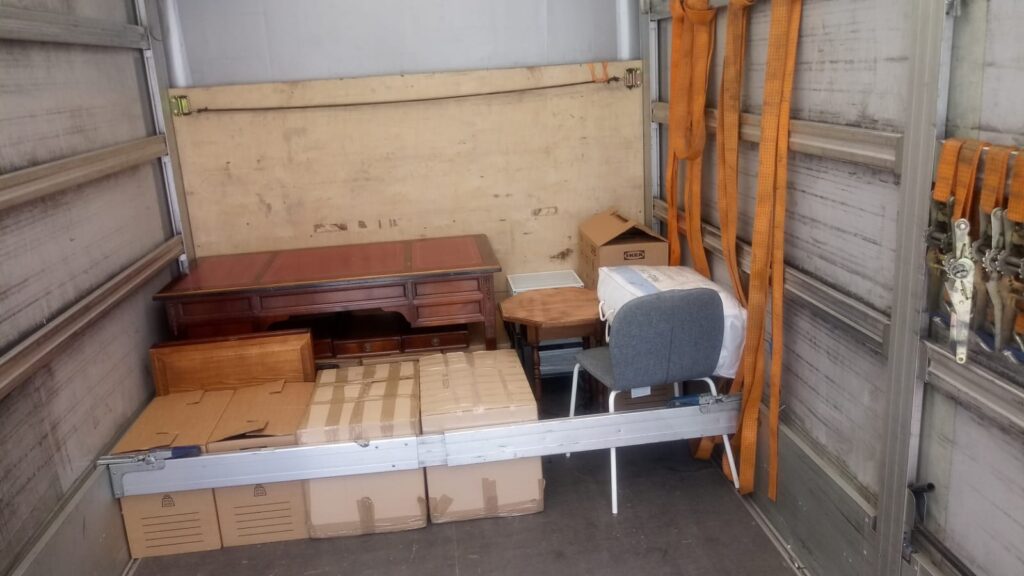
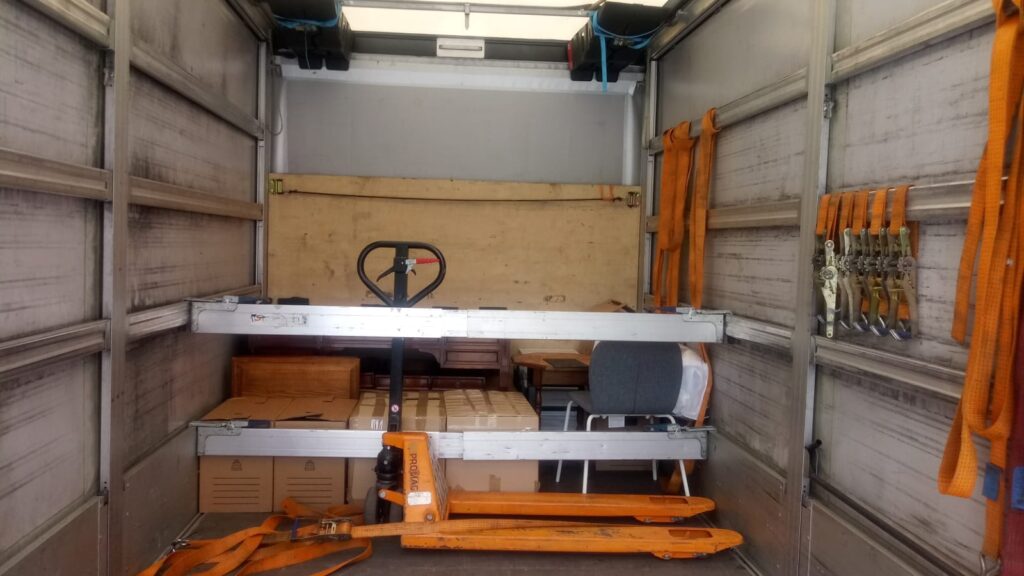
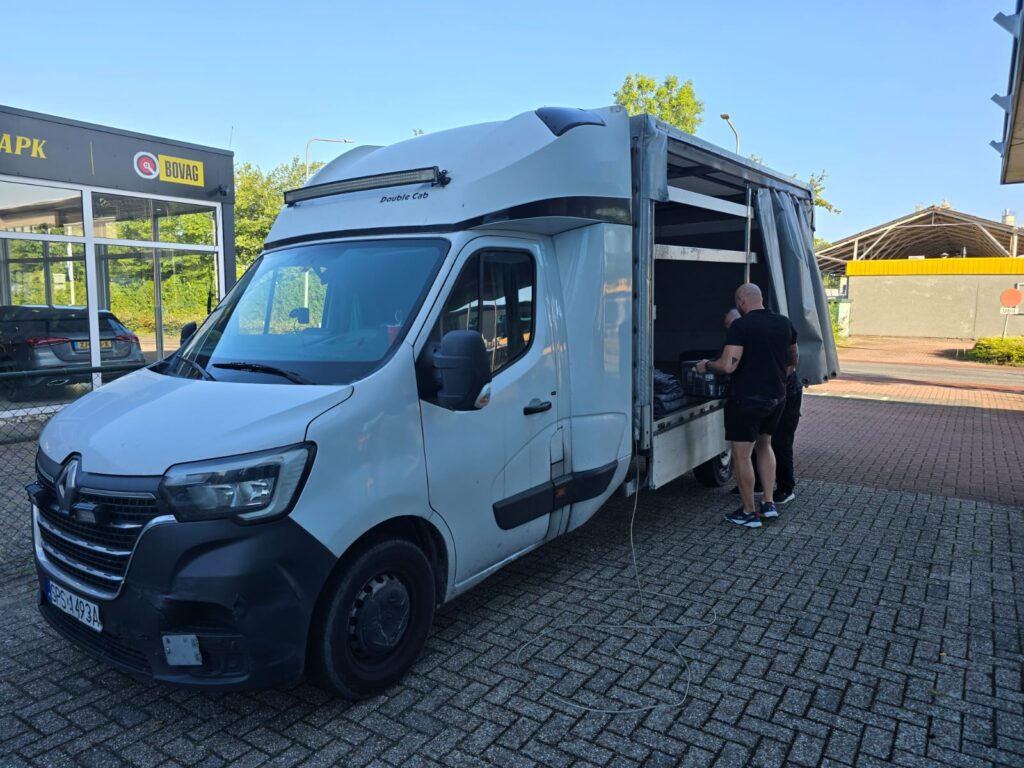
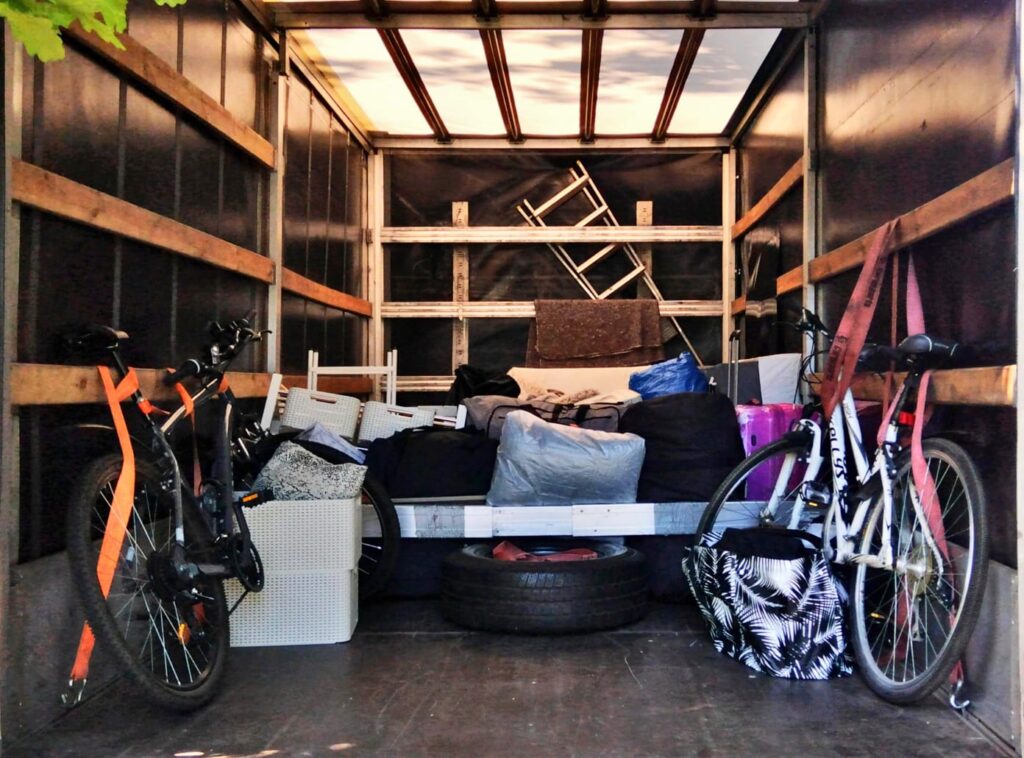
Routes and realistic timelines (UK → DK)
Primary corridors
- Dover–Calais/Dunkirk → FR/BE/DE motorways → DK
- Harwich–Hook of Holland → NL/DE → DK
- North Sea options for Scotland and North England origins via NL/BE ports
Route-specific planning checks
- London → Copenhagen: confirm parking and building access before agreeing the delivery window.
- Manchester → Aarhus: include both full addresses, not just the cities, in the estimate request.
- Edinburgh → Odense: allow for the UK collection leg when discussing dates.
- Birmingham → Aalborg: flag key handover restrictions before confirming transport.
- Bristol → Copenhagen: check lift booking times at the destination before reserving a slot.
When timing matters
- Dedicated transport can suit a move that needs its own route plan. Ask what collection date and delivery window can actually be confirmed.
- Part loads depend on compatible consignments and a shared schedule. Compare the actual offer and delivery window, not an assumed saving.
- Winter weather or bank holidays can influence ferry capacity. We build buffers where needed and keep you updated.
Driver hours and overnighting
- The itinerary needs room for applicable driving and rest requirements, crossings and customs. An overnight location or delivery day should come from your agreed transport plan, not a generic example.
- Confirm which crossings are booked and whether a change in ferry or tunnel timing affects the delivery window. Tell the planner about non-negotiable lift or key appointments.
Collection and delivery planning stages
| Stage | Before loading | Crossing plan | Delivery check |
|---|---|---|---|
| Collection | Inventory and access agreed | Confirm booked route | Recipient and key time |
| Delivery | Update arrival window | Check any delays | Booked handling and rooms |
Access and permits
- Book elevator windows and loading bays on both sides.
- Share height limits, low bridges and courtyard turns. If shuttle transport is needed, confirm feasibility, responsibility and cost in advance.
- Copenhagen inner city often benefits from early morning delivery slots and pre arranged parking.
Packing blueprint (speed plus protection)
Essentials kit: double wall boxes, wardrobe boxes, bubble and paper, stretch film, blankets, mattress and sofa covers, corner guards, tape gun, fragile labels, markers, zip bags for screws.
Room by room: cushion kitchenware, use suitable TV packaging, bag mattresses and protect bikes. Dismantle furniture only where the construction allows it.
Fragile playbook: prevent movement inside each package and protect corners. Follow the maker’s guidance for mirrors, finishes and instruments; do not put adhesive tape directly on delicate surfaces.
Label system: mark the destination room, unpacking priority and inventory number on two sides.
Box sizes and best uses
| Box type | Typical internal size | Best for | Avoid |
|---|---|---|---|
| Small box | 35 × 25 × 25 cm | Books, tinned food, tools, dense items | Bulky linens or lampshades |
| Medium box | 45 × 30 × 30 cm | Kitchenware, toys, mixed items | Heavy books to the brim |
| Large box | 60 × 40 × 40 cm | Bedding, pillows, light bulky items | Plates, glassware, liquids |
| Wardrobe box | 50 × 50 × 100 cm with rail | Hanging clothes, coats | Overloading with shoes at base |
| Art/TV crate | As required | TVs, framed art, mirrors | Loose packing without corners |
Disassembly cheat sheet
- Photograph each item before and after disassembly.
- Bag screws and fittings, label with painter tape, tape to the item or drop into a zip bag marked with the box number.
- Remove table legs where possible.
- Empty and secure drawers.
- Protect rugs according to their material and construction. Use a suitable outer wrap; avoid adhesive tape directly on the fabric.
Appliances – make them move ready
- Prepare the fridge and freezer according to the manufacturer’s instructions, allowing time to defrost, drain and dry before collection.
- Fit the washing machine’s correct transit bolts as directed by the manufacturer; ask a qualified person if unsure.
- Dishwasher drained and hoses capped.
- Gas cookers disconnected by a qualified professional.
- Secure cables with tape and place remotes in a Zip bag in your Day 1 box.
Do not pack list
- Cash, passports, jewellery, heirloom documents.
- Pressurised canisters, fuels, paints, solvents.
- Perishables and open liquids.
- Undeclared lithium batteries or battery-powered equipment; confirm acceptance and packing instructions first.
Eco friendly tips
- Reuse sound, clean cartons where suitable and ask how to recycle or reuse packing material after delivery. Do not assume a debris collection service is included.
- Donate usable items before packing day to lighten the load.
- Flatten and return boxes for reuse when possible.
Packing timeline
- T 14 to T 10 – order materials, start with storage areas and out of season items.
- T 9 to T 7 – bedrooms and books, label by room and priority.
- T 6 to T 4 – kitchen non essentials, art and mirrors into crates.
- T 3 to T 2 – living room, electronics, back up data.
- T 1 – Day 1 box, bedding, toiletries, medications, chargers, kettle, mugs, basic tools.
Illustrative materials checklist: adjust to your actual inventory
| Home size | S | M | L | Wardrobe | Bubble rolls | Tape |
|---|---|---|---|---|---|---|
| Studio | 10–15 | 10–15 | 2–4 | 1–2 | 1–2 | 2–3 |
| 1‑bed | 15–20 | 15–20 | 4–6 | 2–3 | 2–3 | 3–4 |
| 2‑bed | 20–30 | 20–30 | 6–8 | 3–4 | 3–4 | 4–6 |
| 3–4 bed | 30–45 | 30–45 | 8–12 | 4–6 | 4–6 | 6–8 |
Self pack vs Pro pack vs White Glove
| Option | Scope to agree | When to discuss |
|---|---|---|
| Self pack | You pack; agree loading and handling | Simple, well-protected goods |
| Pro pack | Confirm items, materials and time | Fragile or time-sensitive packing |
| White Glove | Agree specialist protection and handling | Art, antiques or high-value furniture |
Add ons: Packing Service for kitchens and glass; White Glove for art and antiques.
Pricing, quotes and ways to save
Cost drivers: distance and corridor, true m³ and weight, access (stairs or long carry or shuttle), service level, timing, ferries and tolls.
Dedicated vs groupage
| Option | Best for | Cost check | Schedule |
|---|---|---|---|
| Dedicated | A specific route plan | Quote for scope and dates | Confirm the window |
| Groupage | A compatible shared load | Compare the full offer | Flexibility needed |
UK → Denmark: details that change your quote
| Move | Load check | Access | Option | Cost driver | Date check | Preparation |
|---|---|---|---|---|---|---|
| London → Copenhagen | Box sizes | Parking | Ask about shared | Volume | Flexible window | Number boxes |
| Manchester → Aarhus | Furniture sizes | Lift | Ask about dedicated | Handling | Key time | Access photos |
| London → Odense | Appliances | Stairs | Compare options | Weight | Lift booking | Prep appliances |
| Birmingham → Aalborg | All rooms | Carry distance | Plan the load | Crew time | Recipient | Include garage |
| Edinburgh → Copenhagen | Full inventory | Both addresses | Compare options | Distance | Collection leg | List fragile items |
These are planning examples, not tariffs or delivery promises. Request an automatic email estimate, then confirm the inventory, access, optional services, exclusions and dates before booking.
Confirm the included scope in your offer
- The vehicle, crew and loading or unloading assistance included for your inventory
- The agreed protection for furniture, floors, doors and shared areas
- Liability and insurance terms, limits, exclusions and any requirements for owner-packed goods
- Any dismantling and reassembly, including items the crew cannot work on
- Delivery to the agreed rooms, with stairs and carry distances declared
- Arrival updates, contact details and any tracking available for the booked vehicle
Optional services to discuss before booking
- Full or partial Packing Service
- Specialist White Glove handling or crating, subject to an agreed item list
- Storage in Transit, if available, with duration, handling and delivery charges agreed
- Protection for declared high-value items: check available terms before assuming extra insurance
- Unpacking or packing-material removal, only if specifically agreed
Possible surcharges to avoid
- Waiting time from unbooked lifts or missing permits
- Undeclared stairs, a lift that cannot be used or a longer carry than agreed
- Shuttle where streets are too narrow for a large vehicle
- Re delivery if no access on the day
- Parking fines where bays are not reserved
How to save without stress
- Offer a range of suitable dates and compare the available transport options
- Reserve lifts and loading bays early
- Send a photo inventory and access photos so we right size the van
- Ask whether groupage is available and suitable for your compact load
- Prepare self-packed items in time, or book packing support with a clearly agreed scope
Fast quote checklist
- Box count and sizes, furniture dimensions, photos and any heavy or fragile items
- Access photos and notes (stairs, lift, parking)
- Preferred dates plus flexibility window
- Service choice: self pack or Packing Service or White Glove
Request your email estimate, then confirm the scope → Removals to Denmark
Moving with family (schools, healthcare, housing)
Schools and childcare that actually work
- How to enrol
- Choose your municipality and area.
- Contact the local school admissions office and submit your child’s details and preferred start date.
- Prepare documents: passport or ID, proof of Danish address, vaccination record, previous school reports.
- Arrange a school visit and an assessment of language support if needed.
- Confirm start date and class placement.
- Types of schools at a glance
| Option | Language | Fees | Good for |
|---|---|---|---|
| Municipal public school | Danish with language support | Free | Most families, fast integration |
| International school | English or bilingual | Tuition charged | Mobile careers, continuity |
| Private/Independent school | Mostly Danish | Moderate fees | Alternative pedagogy, smaller classes |
- Childcare: look for vuggestue (0–2), børnehave (3–5) and SFO after school care. Places can be tight in Copenhagen suburbs. Apply early via your municipality.
- Government guidance: Life in Denmark schooling overview → https://lifeindenmark.borger.dk/
Healthcare that feels human
- CPR and yellow card: register your address, then obtain your CPR and health card. Choose a GP on Sundhed.dk → https://www.sundhed.dk/.
- What is covered: GP visits and public hospitals are covered. Referrals unlock specialists. Dental is mostly private for adults. Municipal dental care exists for children and teens.
- Pharmacies: look for Apotek. Keep prescriptions in original packaging when travelling.
- Emergencies: dial 112. Keep your address and door code ready.
- Useful portal: Life in Denmark health section → https://lifeindenmark.borger.dk/
Housing without headaches
- Deposits and rent: expect up to 3 months’ deposit plus up to 3 months’ prepaid rent for long lets. Always get a receipted handover.
- Move‑in report: complete an indflytningsrapport with timestamped photos on day one. Note every mark and meter reading.
- Pets and clauses: check if pets are allowed. Add written consent to the contract.
- Utilities and internet: set up electricity and broadband as soon as you sign. Keep meter photos.
- Noise and neighbours: quiet hours are common. Respect building house rules posted in stairwells.
- Renting basics and address registration: Life in Denmark → https://lifeindenmark.borger.dk/
EU citizens vs non EU: quick pathfinders
If you are EU/EEA/Swiss
- Move under free movement. If staying more than 3 months, document your grounds such as work or study and register your address to obtain CPR.
- Typical order: EU residence documentation with SIRI → register address and CPR → choose GP on Sundhed.dk → set up MitID → create SKAT tax card.
- Nordic citizens often follow a simplified path. Check details on Life in Denmark → https://lifeindenmark.borger.dk/ and SIRI → https://nyidanmark.dk/.
If you are a UK national or other non EU citizen
- You need the right Danish permit before moving. Common routes include work, the Pay Limit Scheme, researcher, student and family reunification. Start at SIRI → https://nyidanmark.dk/.
- After your permit is issued, complete local steps: CPR, MitID, GP selection on Sundhed.dk, and SKAT tax card.
- Keep passports, approval letters and housing confirmation handy for your Borgerservice appointment.
Documents pack to prepare
- Passport or national ID.
- Proof of housing in Denmark.
- Employment contract or university admission where relevant.
- Marriage or birth certificates for family routes.
- Travel insurance until your CPR and health card are active.
Authoritative links: Life in Denmark https://lifeindenmark.borger.dk/ • SIRI https://nyidanmark.dk/ • Sundhed.dk https://www.sundhed.dk/ • SKAT https://www.skat.dk/
Moving day playbook (hour by hour)
Origin: Load Day
- T 72 to T 24: confirm lifts and permits, finish packing, defrost freezers, prep Day 1 box. Confirm parking suspensions and cone placements. Share door codes and access photos.
- Before arrival: agree the contact method and collection window. Report weather or access changes to the planner as soon as you know about them.
- T 0 arrival window: crew arrival, ID check, safety briefing, full walkthrough. Note pre existing marks. Agree load order and fragile priorities.
- Before handling: confirm the booked protective materials and lift arrangements. Set a keep-with-you area for documents, keys and valuables that must not be loaded.
- T +30 to +120: systematic packing or wrapping as booked. Kitchen glass last. Mattress and sofa covers on. Cross check box numbers with the inventory.
- T +120 to finish: load by zones. Heaviest low, fragile on top. Final sweep, meter photos, photos of common areas.
- Handover: check the agreed paperwork, including a CMR where applicable. Record the loaded inventory and confirm the delivery contact and access plan.
Transit
- Use the agreed contact channel for arrival updates. GPS, where available, does not replace confirmation of the delivery window; crossings, customs and required rest can change the plan.
- For the crossing, confirm which document copies the carrier needs, including a CMR where applicable. Keep original personal documents with you.
Destination: Delivery Day
- Before delivery: confirm access with the recipient and the agreed arrival window. Use only authorised parking or loading arrangements.
- T 0: protective materials installed. Quick walkthrough to confirm rooms and colour labels.
- During unloading: check item numbers and room labels. Ask for the beds or essentials to be prioritised where practical; assembly and appliance work require prior agreement.
- Final check: review items and any booked reassembly, record concerns and complete the delivery paperwork, including a CMR where applicable.
Aftercare
- Check the delivered inventory and report concerns promptly, with photos and item numbers. Follow the agreed reporting terms. Unpacking, debris collection or Storage in Transit require a separate agreement and available capacity.
Day 1 box should include
Toiletries, two outfit changes, chargers, kettle, mugs, tea or coffee, snacks, bedding, towels, basic tools, scissors, bin bags, medication, baby items, pet food and lead, power strip, light bulbs.
Keep with you, do not load
Passports, IDs, visas, keys, cash, jewellery, laptops, hard drives, birth and marriage certificates, prescriptions, travel tickets, tenancy contracts, SIRI or EU residence letters.
Weather plan
Shoe covers, extra floor runners, towels, winter gloves, rock salt in winter, fan or water in summer. Inform the crew of any slippery paths.
Compliance checklists
Documents pack
Passports or visas, residence documents, numbered inventory, agreed transport paperwork, including CMR where applicable, ferry or tunnel booking, insurance certificate, lift bookings, parking permits, tenancy or purchase contract, proof of previous address, contact sheet for crew and planner.
Access pack
Lift booking window, stair widths and turns, door codes, loading distance in metres, height limits with photos, best parking location marked on a map, cone plan for the bay.
Customs and border pack for DK import
Evidence of residence history outside the EU, proof of new address, dated move plan, any vehicle papers, list of restricted items if relevant. Keep originals with you and give the crew clear copies.
Fragile pack
TV and art crates, corner guards, bubble and paper, painter tape for labels, condition photos of heirlooms, White Glove notes where booked.
Data and valuables
Device backups, cloud logins saved, chargers, travel folder in your carry on. Carry jewellery, cash and deeds yourself.
Contact and comms
Crew chief mobile, planner mobile, ferry reference, building manager or concierge number, parking enforcement contact for both addresses.
Who keeps what
| Pack | You carry | Crew carries |
|---|---|---|
| Documents | Originals and permits | Agreed copies; CMR if applicable |
| Access | Codes, keys, permits | Printed permits for windscreen |
| Fragile | Condition photos on phone | Packing list and crate list |
File naming tip
Use a simple scheme like DK-move_Inventory_Box-023_kitchen-glass.pdf and DK-move_Access_London-lift-booking.jpg so files are easy to find during checks.
FAQ
- Do I pay customs when moving from UK to Denmark?
Relief is conditional. Check your circumstances and declarations with Toldstyrelsen before loading. - How long does UK to Denmark take?
Confirm a route-specific delivery window before booking. Shared loads, crossings, customs, access and the collection address affect the plan. Do not use a generic number of days to arrange flights or keys. - Can you handle last minute moves?
Ask about Last Minute Moving. A 1–3 day option may be possible for a suitable route when capacity, access and paperwork allow; it is not a promise for every UK-to-Denmark move. - Is groupage suitable for fragile items?
Suitability depends on the item, packing and handling arrangements. Discuss White Glove support where needed and agree protection before including fragile goods in a shared load. - What size vehicle do I need for house removals UK to Denmark?
Provide dimensions, box sizes and weight concerns, not just a bedroom count. Access and packing also affect the usable load. VANonsite can review the inventory when preparing the transport plan. - Can I bring my car?
Check SKAT for vehicle import, registration and taxes before shipping a car to Denmark. - Are there student or small removals options?
Ask about small-load transport and groupage for your actual route and dates. Compare the complete offer and handling scope, not a package name alone. - How much does it cost to move from the UK to Denmark?
The offer depends on inventory, distance, access and service scope. Request an email estimate, then confirm heavy items, stairs, packing, customs responsibilities and the delivery window before accepting the final price. - How much does it cost to ship a small load from the UK to Denmark?
Ask whether groupage is available for your boxes or furniture. Compare the full scope, including handling at both addresses and any exclusions. Parcel or pallet services have different acceptance and delivery arrangements. - What should I confirm before booking UK-to-Denmark removals?
Check the inventory, access, recipient, key dates, packing scope and customs responsibilities. Obtain the agreed price, exclusions and collection and delivery windows in writing; do not assume a service is included because it appears in a general guide. - Can flexible dates reduce the cost of UK-to-Denmark removals?
They may allow a compatible shared load or a different transport plan. Ask for available options and compare their full costs and delivery windows; flexibility is not a guaranteed saving. - Can I request the move in English?
Use the English Denmark removals page and explain your inventory, addresses and date constraints. For residence or municipal procedures, ask the relevant authority which language and documents it accepts. - Should I take all my furniture to Denmark?
Compare the cost of transport, packing, access and replacement for each large item. Measure the destination rooms and doorways before paying to move furniture that may not fit.
Summary
A useful UK-to-Denmark moving plan starts with the actual inventory and the two properties. Measure what matters, explain heavy or fragile items, and confirm who is responsible for paperwork and access. Compare shared and dedicated options against your key dates, then agree the price and service scope before booking.
At a glance
- Paperwork first: SIRI or EU route for people, EU personal property relief for goods, CPR and MitID on arrival.
- What to bring: household goods listed on a numbered inventory. Keep passports and valuables with you.
- Load planning: dimensions, box sizes, heavy items and access determine the transport plan.
- Timing: agree the route-specific window; Last Minute Moving availability is conditional.
- Pricing: request an email estimate, then confirm packing, specialist handling, storage and any exclusions.
- Family ready: schools, healthcare and housing steps mapped before the truck rolls.
- Moving day: check the inventory, agreed handling, delivery recipient and applicable transport documents.
Ready to move with confidence?
- Request your email estimate → Removals to Denmark
- Compare routes from other origins: Ireland→Denmark • Spain→Denmark • Denmark→Sweden • Denmark→UK