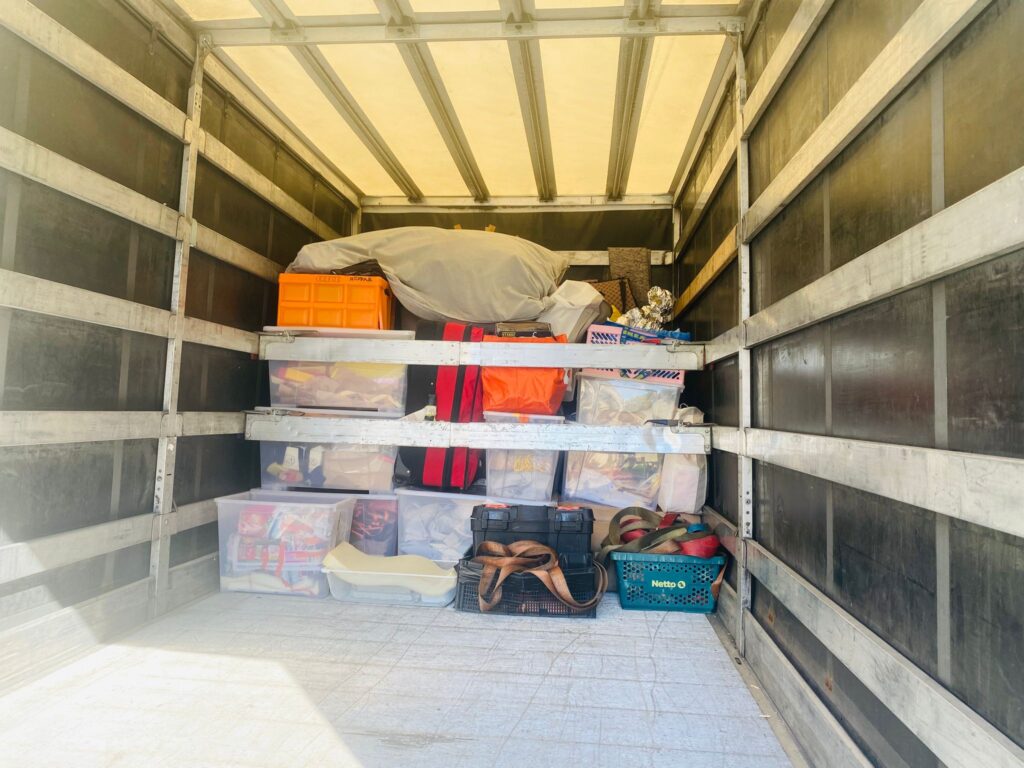
White glove delivery means planning what happens to an item beyond the vehicle door. For furniture, that can include protection, carrying into the property, unpacking, agreed assembly, positioning and packaging removal. The important word is agreed: the label alone does not tell you which tasks, floors or materials a quotation covers.
This checklist helps private customers, furniture retailers and interior designers turn a delivery request into a clear scope. VANonsite uses the item dimensions, weight, access and destination requirements to plan its white glove furniture delivery. Use the same information when comparing providers, so a doorstep price is not mistaken for a complete in-room service.
White glove, two-person and doorstep delivery describe different things
Doorstep delivery describes an endpoint. Two-person delivery describes the crew. White glove describes a level of handling and finishing work. A two-person crew may be necessary for a heavy table, but its presence does not automatically include assembly, wall fixing or taking away packaging. Equally, a smaller item may need careful unpacking and placement without needing the same crew or equipment as a wardrobe.
Ask the provider to list the actual work. If you need carrying assistance, see VANonsite two-person delivery; if the job includes several specialist tasks, start with the broader white glove delivery service and identify each requirement before booking.
Six details that make a furniture delivery plan usable
1. Measure the item in the condition it will travel
Provide packed dimensions, weight, photographs and the number of separate pieces. A table with removable legs needs a different plan from a bonded stone top. Say who will remove parts, protect edges and keep fittings together. Identify finishes that cannot be gripped, stacked or exposed to unsuitable packing materials.
2. Measure the route into the room
Include the narrowest doorway, lift opening, lift capacity, stair turns and corridor restrictions. Photographs of the approach are often more useful than “second floor, lift available”. Record the distance from the legal unloading point to the entrance, and whether the building requires a booked loading bay or lift slot.
3. Define protection and unpacking
Specify which items need wrapping or crating, whether existing packaging must remain intact, and where unpacking can happen. Discuss protection for floors and contact surfaces. For a retailer delivery, agree how the team handles a carton that arrives visibly damaged before the customer signs for it.
4. Name the assembly tasks
“Assembly included” needs an item list and instructions. Attaching a table base, rebuilding a wardrobe and connecting an appliance are different jobs. Confirm the agreed furniture assembly, required parts and any specialist work separately. Do not assume that electrical, plumbing or structural fixing work is covered by a delivery booking.
5. Agree the final position and packaging plan
Mark the room and intended position before the crew arrives. Establish whether packaging is removed, left for inspection or retained for a possible return. At VANonsite, unpacking, agreed assembly, placement and packaging removal should be recorded in the booked scope. They are not automatically included because a request uses the words “white glove”.
6. Confirm the delivery window and receiving contact
Provide a contact who can grant access, confirm placement and sign the handover. Ask how schedule changes will be communicated and which timing is confirmed. For a cross-border route, identify the document responsibilities and any customs work before collection. A timed building slot must fit the transport plan, not just the opening hours of the showroom.
Comparing white glove providers by their published scope
VANonsite, SFI Logistics and Firstpoint Logistics all describe more than basic transport. The useful differences are the agreed tasks and the fit for your route. This comparison uses their official service descriptions checked on 28 October 2026. It is published by VANonsite and is not an independent quality ranking.
Legend: ✓ means described as available, subject to the provider’s quotation and terms. An option may cost extra. “Confirm” means the reviewed description does not settle that point, not that the service is unavailable. Scroll the table sideways on smaller screens.
| Requirement | VANonsite | SFI Logistics | Firstpoint Logistics |
|---|---|---|---|
| Room placement | ✓ Carry-in and final position agreed before booking | ✓ Positioning described | ✓ Room-of-choice placement described |
| Assembly | ✓ Specified furniture tasks, where booked | ✓ Assembly and installation described | ✓ Assembly or installation if required |
| Packaging removal | ✓ Where included in the written scope | ✓ Removal and recycling described | ✓ Removal described |
| Vehicle arrangement | Confirm capacity and transport format for the route | Confirm the load plan | ✓ Dedicated delivery described |
| Delivery updates | Confirm contact and update arrangements | Confirm the tracking process | ✓ Driver-app delivery windows described |
| European furniture route | ✓ Cross-border collection and delivery planning | Confirm the specific route | Confirm the specific cross-border route |
Sources: VANonsite furniture service, SFI delivery and installation, and Firstpoint’s white glove guide. SFI describes an extensive installation service; Firstpoint describes dedicated delivery and app-based updates. Those strengths should be considered alongside your actual job requirements. Public descriptions alone cannot establish which company has higher customer satisfaction.
A useful request describes the difficult part
For example, “collect one dining table and deliver to a flat” leaves the crew guessing. A better request gives the packed top dimensions and weight, whether the base is separate, the collection contact, the receiving floor, lift measurements, parking distance, assembly instructions and the exact placement needed. This is an example of the information to provide, not a claim about a completed VANonsite job.
VANonsite brings those details into one plan covering collection, protection, transport and the agreed finishing work. If an access measurement changes, tell the team before collection so the handling and capacity can be checked again. A clear scope is more useful than an unsupported promise that every delivery is identical.
What changes the cost of white glove delivery?
The route, dimensions, payload, crew, protection, access time and assembly tasks all affect the price. Storage, a restricted delivery slot or an additional collection can also change the plan. Compare the same requirements rather than a headline transport price. Where needed, ferry crossings and customs clearance are quoted separately; an automated estimate is not confirmation that all specialist work is included.
Check the handover before the crew leaves
Check the items against the inventory, inspect accessible surfaces and confirm the agreed assembly and placement. Record visible issues and keep photographs and relevant packaging where appropriate. Read the booking terms for liability, exclusions and the claims procedure. Careful delivery planning reduces uncertainty; it cannot replace the terms that apply to the individual booking.
Request a furniture delivery estimate with a clear scope
Enter the collection and delivery addresses below. In Notes, describe the furniture, access and finishing work you need. The form sends an automatically calculated estimate by e-mail; VANonsite then needs to confirm the handling scope and feasibility before booking. Send measurements, photographs and assembly instructions separately to [email protected], because this form has no attachment field.