
Leaving France can feel like closing a book mid sentence. The cafés fade, the language changes, and suddenly your head is full of UK practicalities. Keys. Postcodes. Paperwork. A delivery window that cannot slip.
If you are moving from France to UK, this guide gives you clear answers fast. You will get realistic cost bands, a step by step timeline, and the exact documents that keep border checks smooth after Brexit. You will also see packing rules that prevent damage, route tips for Eurotunnel versus ferry, and a simple plan for your first week back in the UK.
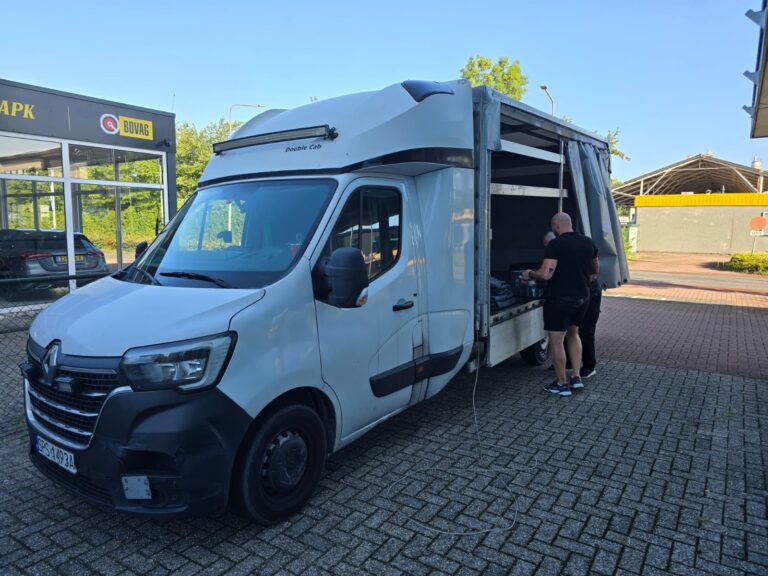
VANonsite supports cross border moves with premium handling and GPS tracking on every load, so your shipment stays visible from pickup to delivery. For smaller moves, a direct man and van run can be the smartest, safest choice.
TL:DR
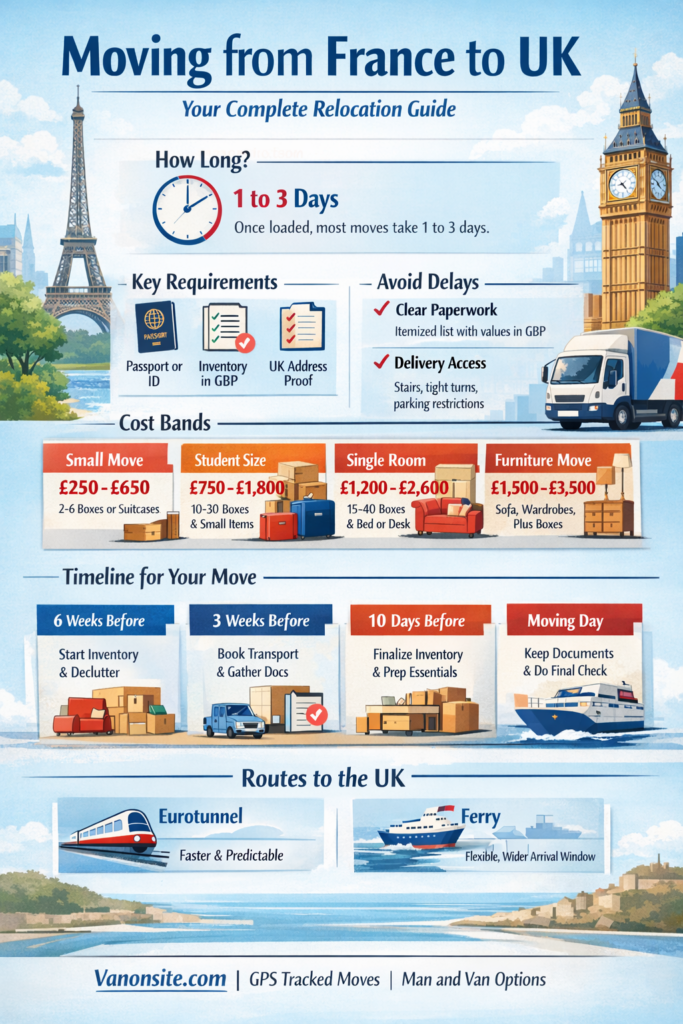
- Most moves take 1 to 3 days once loaded, depending on distance, crossing, and delivery access.
- Paperwork clarity and delivery access are the biggest delay drivers.
- A direct man and van is often ideal for compact loads and tight timing.
- Direct transport is usually faster and more predictable. Shared transport can be cheaper but comes with wider delivery windows.
- Decluttering 20% and choosing a midweek pickup can reduce handling time and lower your final cost.
- After Brexit, a clear inventory in GBP plus consistent names and address formatting prevents most delays.
- Pack smart: keep boxes under 20 kg, label two sides, fill voids, protect corners, strap to stop movement.
Quick answers first
How long does moving from France to UK take
Once loaded, most moves take 1 to 3 days. Delivery windows stretch when paperwork is unclear or the final drop off is harder than expected.
What causes delays most often
Two things create the majority of delays:
- Paperwork clarity: vague inventories, missing values in GBP, inconsistent names or address formatting.
- Delivery access: stairs, tight turns, long carry distances, parking restrictions. Access issues can add 30% to 60% more handling time.
A simple win: send two photos in advance. One street view showing where the van can stop. One photo of the tightest hallway or stair turn.
When man and van is enough
A direct man and van option is often the best fit when the load is compact and timing matters:
- 6 to 25 boxes
- suitcases plus a few small furniture items
- a student sized move
- a single room move with light items
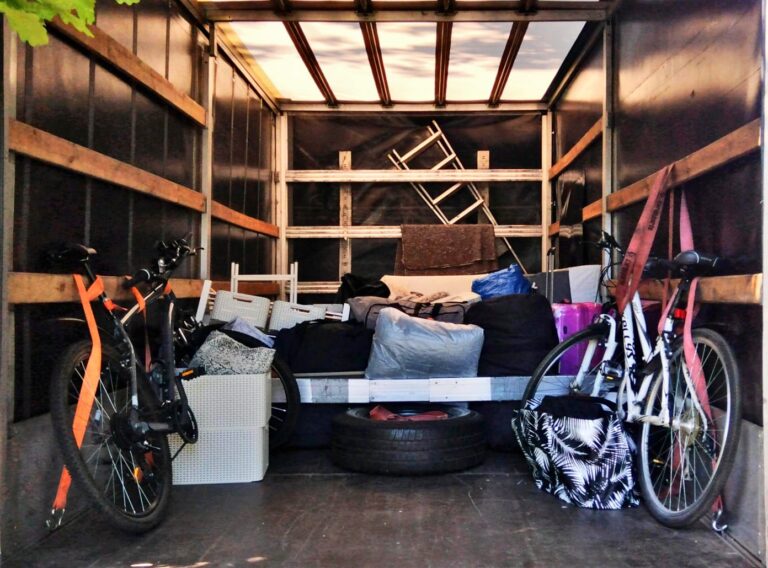
If you are moving bulky furniture, appliances, or a multi room load, a bigger vehicle is usually safer. It gives you 10% to 15% breathing space for blankets, corner guards, and secure strapping.
Direct vs shared transport
- Direct transport is about control. Fewer touch points, a tighter delivery window, less handling.
- Shared transport is about price flexibility. It can reduce cost, but delivery windows are wider and routing adds variables.
If your items are fragile or you have a must arrive by date, direct transport is usually the calmer choice.
Related France and UK routes
- Removals France to UK
- Removals to France
- Moving to France from UK
- Removals to France from UK
- International removals UK to France
Planning your move
A smooth move is not luck. It is three pillars handled in the right order: documents, capacity, timing.
Documents
Border checks after Brexit are usually routine when your document pack is clear.
- Passport or ID
- An itemised inventory with values in GBP
- A statement that the goods are personal and not for resale
- Receipts for brand new items
- UK address proof when relevant
Keep names and address formatting consistent. That one detail prevents the most frustrating delays.
Capacity
Capacity is not just van size. It is also how safely you can load.
Aim for 10% to 15% breathing space. It gives room for protection and strapping, and it reduces scuffs caused by tight pressure points.
Quick rules:
- If you are between two vehicle sizes, go up.
- If furniture is involved, go up.
- If you have lots of books or tools, mention it early. Weight changes planning.
Timing
Timing is where many moves get expensive.
Choose a delivery window that matches reality, not hope. Access complexity can add 30% to 60% handling time, so stairs, lifts, and parking distance should be part of the plan from day one.
Staged moves versus one run:
- Choose one run when you want a clean, fast reset and you can pack everything in one go.
- Choose a staged move when you need essentials first, you are waiting on keys, or you want to reduce volume before the final run.
If you stage shipments, keep one master inventory and mark what is in each shipment.
Moving from France to UK costs
Costs vary by load size, access, and transport type. The best way to budget is to start with a realistic band, then tighten your number with an accurate item list and access details.
Price bands by load size
| Load band | What it looks like | Typical fit | Indicative range |
|---|---|---|---|
| Micro load | 2 to 6 boxes or suitcases | direct man and van or shared space | £250 to £650 |
| Boxes only | 6 to 25 boxes | compact van, direct or shared | £450 to £1,200 |
| Student sized | 10 to 30 boxes plus 1 to 3 small items | direct man and van | £750 to £1,800 |
| Single room move | 15 to 40 boxes plus desk or bed frame | medium van, direct preferred | £1,200 to £2,600 |
| Furniture focused | sofa, table, wardrobes plus a few boxes | premium van, more protection time | £1,500 to £3,500 |
| Full household | multi room contents, bulky items, appliances | larger plan | quote based |
These are ranges because access is time. Stairs, long carries, tight turns, and parking restrictions can add 30% to 60% more handling time. Weight matters too. Ten book boxes can add 150 to 250 kg quickly.
What changes the price most
- Volume and weight hotspots: books and tools push payload and labour time.
- Access: stairs, no lift, long carries over 15 metres, tight doors and turns.
- Direct vs shared transport: shared can be cheaper, direct is more predictable.
- Packing level: self pack versus partial packing versus full packing.
- Weekday and season: midweek can be calmer by 10% to 20%.
Safe savings
These savings reduce cost without increasing risk:
- Declutter 20%.
- Choose a midweek pickup.
- Send access photos and share honest access details.
- Build a clear inventory in GBP.
Timeline checklist
Use this timeline to stay calm and avoid last minute overpaying.
6 weeks before
- Choose a rough delivery window.
- Start a master inventory and update it weekly.
- Declutter room by room, aim for 20% less volume.
- Note special items, fragile electronics, artwork, instruments.
Mini checklist:
- Inventory started
- Declutter plan set
3 weeks before
- Decide direct or shared transport.
- Confirm access at both ends, stairs, lift size, parking distance.
- Gather UK address proof if relevant.
Mini checklist:
- Transport type chosen
- Access confirmed
10 days before
- Finalise inventory values in GBP.
- Separate new items and keep receipts.
- Pack an essentials kit for the first 72 hours.
Mini checklist:
- Inventory readable
- Essentials kit ready
48 hours before
- Finish packing non essentials.
- Print key documents and save a copy on your phone.
- Take two access photos at both ends.
Mini checklist:
- Documents printed
- Photos ready
Moving day
- Keep documents, keys, chargers, and medication with you.
- Do a final sweep, cupboards, storage areas, behind doors.
- Confirm delivery contact number and update method.
First 72 hours in the UK
- Unpack essentials first.
- Set up a simple admin station for paperwork.
- Check key items against the inventory.
Fast reset advice:
- Open first: chargers, kettle, meds, bedding.
- First 24 hours: work items, paperwork, toiletries.
- First week: the rest.
Documents and customs after Brexit
Your belongings cross a border. Clear paperwork keeps checks routine and prevents costly waiting time.
UK documents checklist
- Passport or ID
- UK address proof when relevant, tenancy agreement or completion documents
- Itemised inventory with values in GBP
- Statement that goods are personal and not for resale
- Receipts for brand new items
Official UK guidance:
- Check how to declare personal goods you bring into or take out of the UK
- Transfer of Residence relief
- Bringing goods into the UK for personal use
France side notes
Most personal moves only need clear UK focused paperwork. French side export guidance is useful if you are unsure about categories, restrictions, or special goods.
Inventory example
| Room | Item | Qty | Value GBP |
|---|---|---|---|
| Kitchen | plates and glass | 1 box | 45 |
| Bedroom | clothes | 1 box | 60 |
| Office | monitor | 1 | 120 |
| Living room | desk chair | 1 | 80 |
Notes that prevent delays:
- Keep names and address formatting consistent.
- Use realistic second hand values.
- Separate new items and attach receipts.
- If you ship in stages, keep one master inventory and mark each shipment.
What not to ship
Do not pack items that can leak, burn, pressurise, or corrode. One restricted item can slow the whole move, and it can also create a safety risk inside the vehicle.
Restricted items commonly include:
- aerosols
- paint, varnish, solvents, thinners
- flammables of any kind
- gas canisters and camping fuel
- fuel containers, even if they seem empty
- strong chemicals and cleaners that can leak
- damaged batteries and swollen power banks
If you are unsure about an item, ask before packing it. A simple rule works well: if it can leak, burn, or pressurise, do not pack it. Buy it again in the UK.


Packing and protection standards
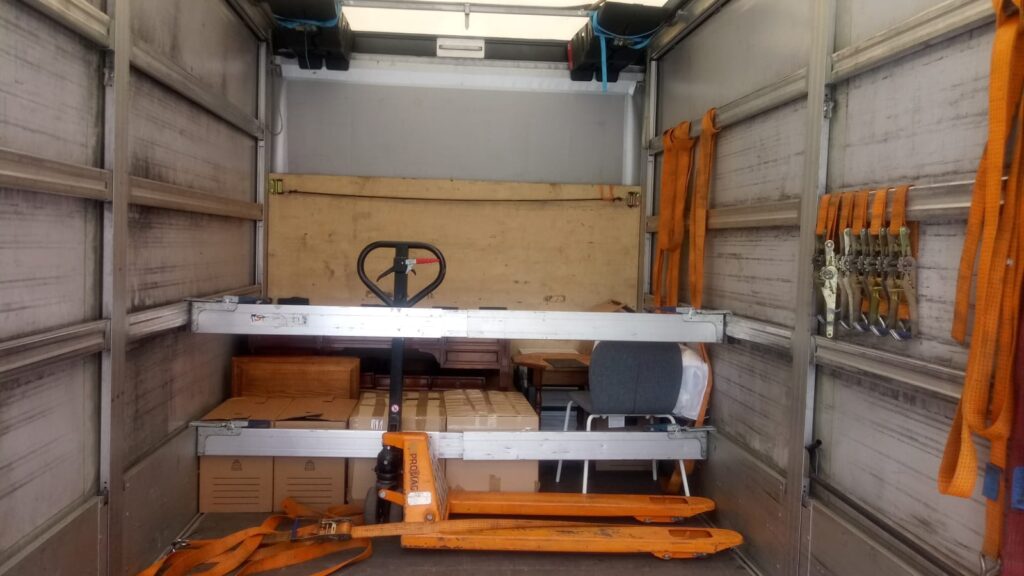
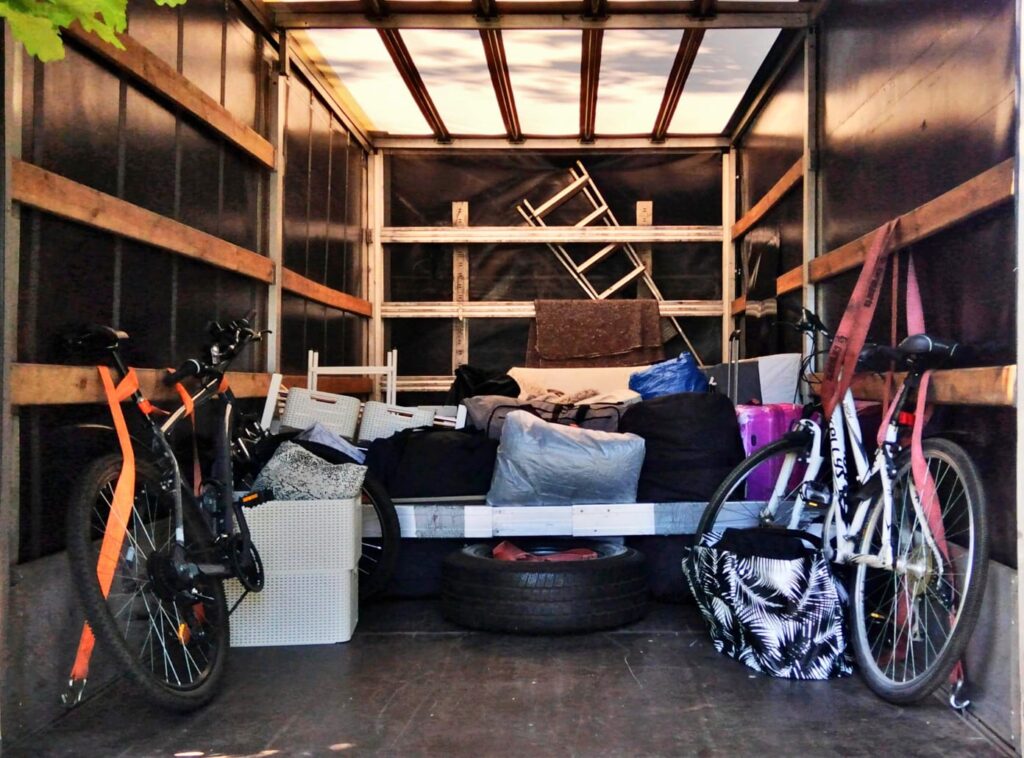
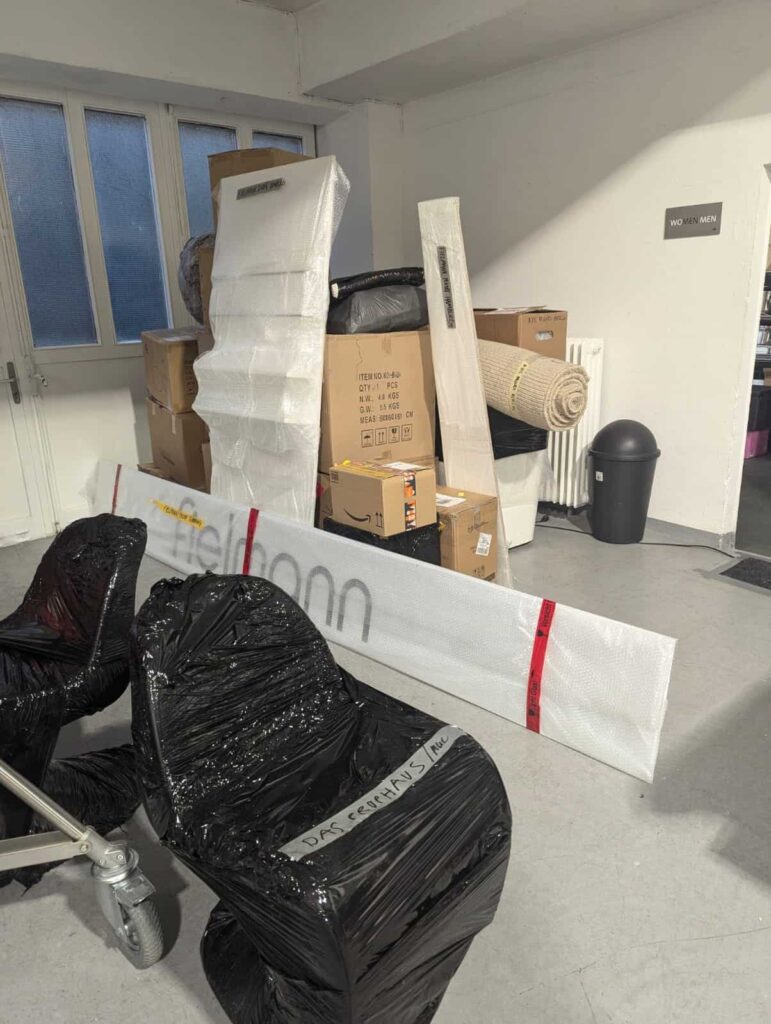
Packing is where most damage is either prevented or invited. The aim is stability. Nothing rattles; Nothing slides; Nothing gets crushed.
Five rules that reduce damage:
- keep boxes under 20 kg
- label two sides with room name plus box number
- fill voids so nothing rattles
- protect corners and edges on furniture
- strap items so nothing slides during braking
Two small habits make a big difference:
- tape box bottoms in an H pattern so they do not blow out
- keep liquids in your own luggage, not in moving boxes
Packing materials table
| Material | Why it matters | Best for |
|---|---|---|
| Double wall boxes | prevents collapse | books, kitchen, fragile |
| Packing paper | reduces scratches | plates, glass |
| Bubble wrap | absorbs impact | lamps, frames |
| Stretch film | locks moving parts | drawers, cabinets |
| Furniture blankets | prevents scuffs | sofas, tables |
| Corner guards | protects edges | wardrobes, bed frames |
| Foam sheets | protects glossy finishes | lacquered and polished items |
Quick packing checklist
- fragile items: wrap, cushion, then mark FRAGILE on two sides
- electronics: protect screens, keep cables in a labelled bag
- books: use small boxes, do not overload
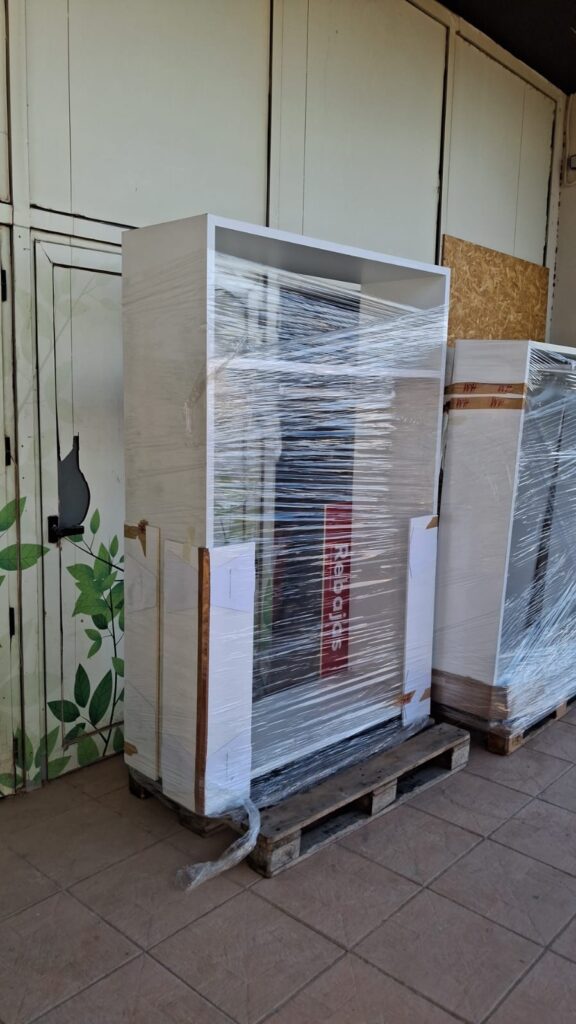
- wardrobes and cabinets: lock doors with stretch film, protect corners
Optional add ons:
Vehicle sizing for moving from France to UK
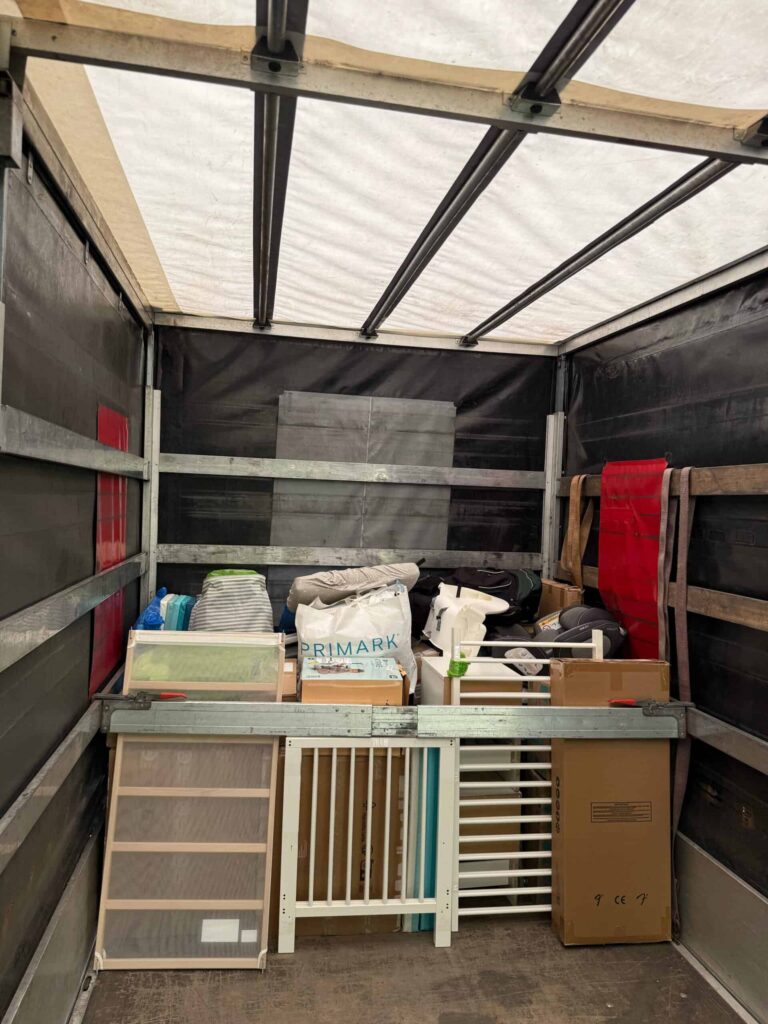
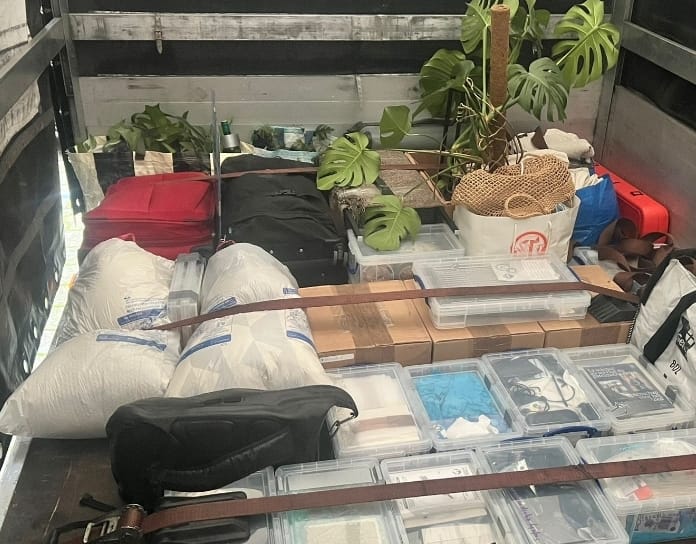
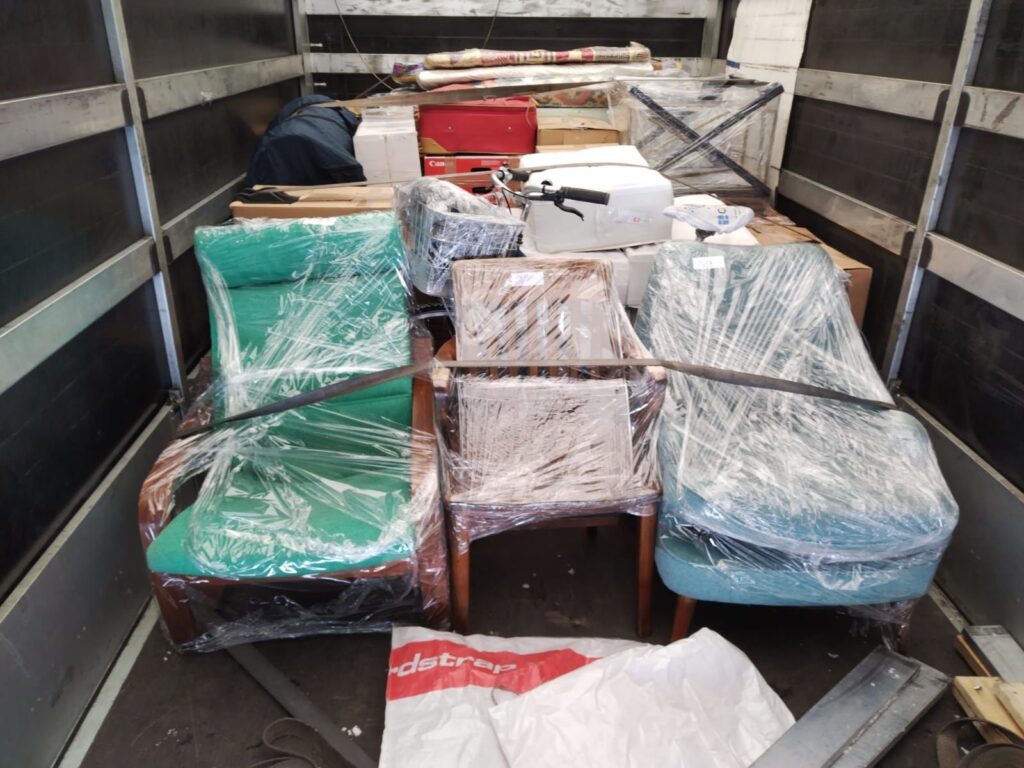
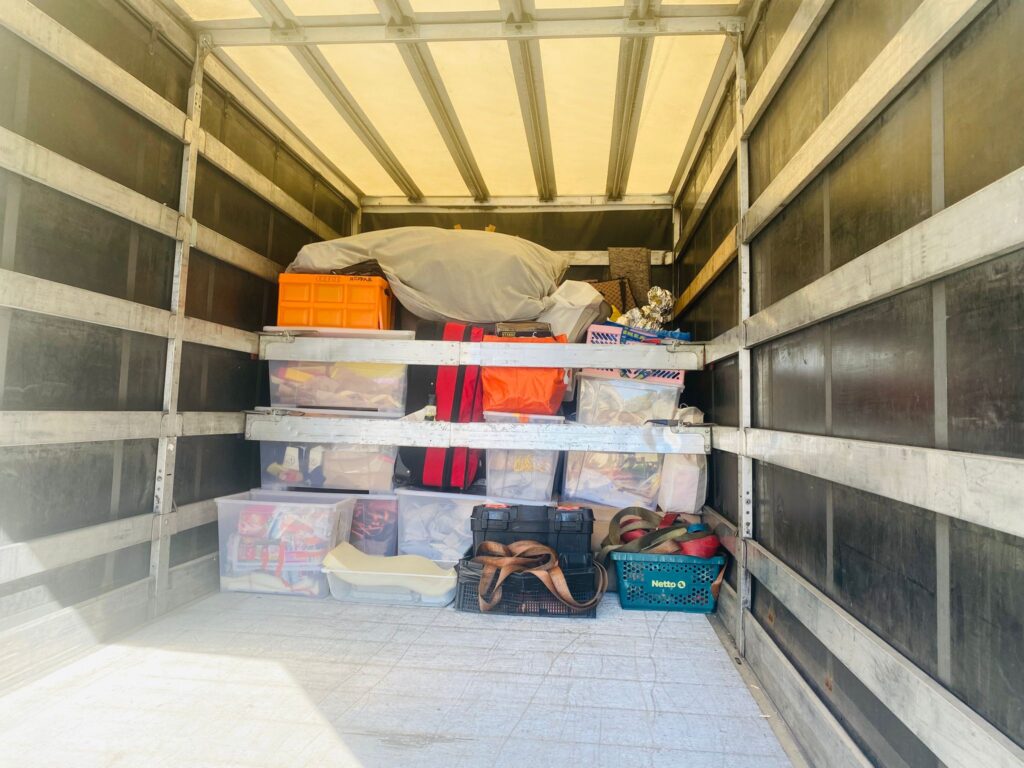
Choose a vehicle with 10% to 15% breathing space. That space is not wasted. It is what gives you room for blankets, corner guards, and safe strapping, so items do not grind against each other during braking.
VANonsite vehicle sizes
| Option | Volume | Payload | Best for |
|---|---|---|---|
| Moving One | 1 m3 | 100 kg | micro loads, suitcases, a few boxes |
| Moving Basic | 5 m3 | 300 kg | student room, boxes only |
| Moving Medium | 10 m3 | 500 kg | single room move, light furniture |
| Moving Premium | 15 m3 | 1,100 kg | 1 to 2 bed load |
| Moving Premium Plus | 30 m3 | 3,500 kg | 2 to 3 bed load, bulky sets |
| Moving Full House XXL | 90 m3 | 20,000 kg | full household |
Quick fit guide
- Moving One: essentials only, suitcases, compact box runs
- Moving Basic: boxes only, student moves, light loads with easy access
- Moving Medium: single room plus a few pieces of furniture
- Moving Premium: furniture focused moves where safe spacing matters
- Premium Plus and above: multi room loads and bulky sets
A direct man and van run often fits compact moves when timing is tight. It also reduces handling touch points, which is helpful for fragile or high value items.
Two fast checks before you choose
- Volume check: a medium box is about 0.05 m3. Twenty medium boxes is about 1 m3.
- Weight check: one book box can weigh 15 to 25 kg. Ten book boxes can add 150 to 250 kg quickly.
If you are between sizes, go up one level. Tight stacking is where scuffs, crushed boxes, and last minute changes appear.
Routes and crossings into the UK
Route choice affects arrival windows, and arrival windows affect unloading timing. If your building has strict unloading hours or limited parking, predictability can matter as much as speed.
Eurotunnel vs ferry
| Option | Best when | Watch outs | Typical time impact |
|---|---|---|---|
| Eurotunnel | you want speed and a tighter delivery window | strict check in timing | often saves 1 to 3 hours |
| Ferry | you want flexibility and more sailing options | weather and peak queues | can add 1 to 4 hours |
Practical tip: if you have a time limited unloading slot, Eurotunnel usually gives a calmer arrival window. If you are flexible on delivery time, ferry routes can work well.
UK delivery access checklist
Access can add 30% to 60% more handling time, so confirm these details before moving day:
- parking distance from van to entrance, ideally under 15 metres
- stairs and tight turns, note the narrowest point
- lift size and door width if there is a lift
- building rules, concierge hours, and time limits
Two photos that prevent delays:
- street view showing where the van can stop
- the tightest part of the route, hallway or stairwell
Bonus: add one quick measurement of your narrowest doorway. It prevents awkward surprises and protects bulky items.
Arrival in the UK
The first days after moving from France to UK can feel like living out of boxes. The goal is not to unpack everything. The goal is to get your life running again fast, with the least friction.
First 72 hours
Start with a small win that changes your mood. Make one room functional, then expand.
- unpack essentials first, chargers, kettle, bedding, toiletries, medication
- set up an admin station for documents, one folder and one tray, nothing floating around
- check key items against the inventory, flag anything missing while it is still fresh
- take quick photos of any damage before you recycle packaging
- keep one clear surface free, table or desk, it becomes your calm zone
If you have a delivery that includes fragile items, do not rush the unwrapping. Keep blankets and corner guards on until items are in their final place.
First week essentials
Keep it practical. Win the basics early. The UK setup feels much lighter once these are handled.
- utilities and internet, confirm start dates and access to meters
- GP registration basics, start the process early if you can
- banking and address updates, update key accounts and set up direct debits
- council tax and local services, register and check what is included in your area
A simple tactic: pick one admin task per day for seven days. It keeps momentum without burning your energy.
Here is a fast checklist you can screenshot:
| Day | Focus | Outcome |
|---|---|---|
| 1 | essentials unpacked | sleep and shower sorted |
| 2 | internet and utilities | home runs smoothly |
| 3 | banking and address | payments and mail stable |
| 4 | council tax | local registration done |
| 5 | GP registration | healthcare setup started |
| 6 | unpack one room | daily life feels normal |
| 7 | inventory close out | loose ends tied up |
Why VANonsite for moving from France to UK
When you are moving from France to UK, trust is built in small moments. A precise time window. A careful lift through a tight turn. A message that tells you exactly where your load is.
VANonsite is built around control. Premium handling reduces damage risk, flexible vehicle sizes stop you paying for air or suffering tight stacking, and GPS tracking on every load keeps the move visible from pickup to delivery.
| What you need | Why it matters | How VANonsite supports it |
|---|---|---|
| Predictable timing | protects handovers and arrival plans | realistic windows and clear scheduling |
| Lower damage risk | fewer scuffs and breakages | protection first loading and secure strapping |
| Visibility | reduces stress | GPS tracking on every load |
| Flexibility | plans change fast | scalable vehicle sizes and add ons |
If your move is compact and time sensitive, a direct man and van run can be a smart fit. If your move is furniture heavy, sizing up for 10% to 15% breathing space protects finishes and reduces pressure marks.
Useful services:
FAQs
How long does moving from France to UK take
Most moves take 1 to 3 days once loaded. The two biggest variables are border flow and delivery access. Stairs, long carries, and tight turns can add 30% to 60% more handling time.
How much does it cost for a small move
Most small moves land between £250 and £1,800. The lower end is boxes with easy access. The higher end usually includes stairs, long carries, heavier items, or a tighter delivery window.
Direct vs shared transport, what is better
Direct transport is usually faster and more predictable. Shared transport can be cheaper, but it often widens delivery windows and adds routing variables.
If your delivery day matters, or your items are fragile, direct transport is often the calmer value.
Is man and van enough
Yes for compact loads and a few items. A direct man and van is often the smartest choice for boxes, suitcases, and a small furniture piece or two.
For furniture heavy loads or bulky sets, choose a larger vehicle with 10% to 15% breathing space. Tight stacking is where scuffs and crushed boxes happen.
What paperwork do I need after Brexit
For most personal moves, keep one clean folder, printed and saved digitally:
- passport or ID
- UK address proof when relevant
- itemised inventory with values in GBP
- statement that goods are personal and not for resale
- receipts for brand new items
How detailed should my inventory be
Detailed enough that a stranger can understand it without guessing.
- clear item names, no “misc”
- quantities and box numbers when possible
- realistic second hand values in GBP
- consistent names and address formatting across every document
What causes delays most often
- vague inventory, missing values, inconsistent details
- access surprises, no parking, stairs, tight turns
- restricted items packed by mistake
Two photos prevent most surprises: the street stopping point and the tightest hallway or stair turn.
How to get a quote that matches reality
Send:
- pickup and delivery postcodes
- box count estimate
- top 5 biggest items
- heavy items, books, tools, gym equipment
- floor number, lift details, and parking distance at both ends
- two access photos
What should I do first after I arrive in the UK
Start with a fast reset.
- Unpack essentials, bedding, chargers, kettle, toiletries.
- Set up an admin station for documents.
- Close out your inventory and flag issues quickly.
Summary
Moving from France to UK is easiest when you stick to three pillars: documents, capacity, timing.
- Documents: a clear inventory in GBP and consistent details prevent delays.
- Capacity: choose a vehicle with 10% to 15% breathing space so items can be protected and strapped.
- Timing: plan access early, parking distance, stairs, tight turns.
If you want a quote that matches reality, share your postcodes, box count, and top 5 items. Add parking distance, stairs, and two access photos. Then choose direct or shared transport based on urgency and request a quote.