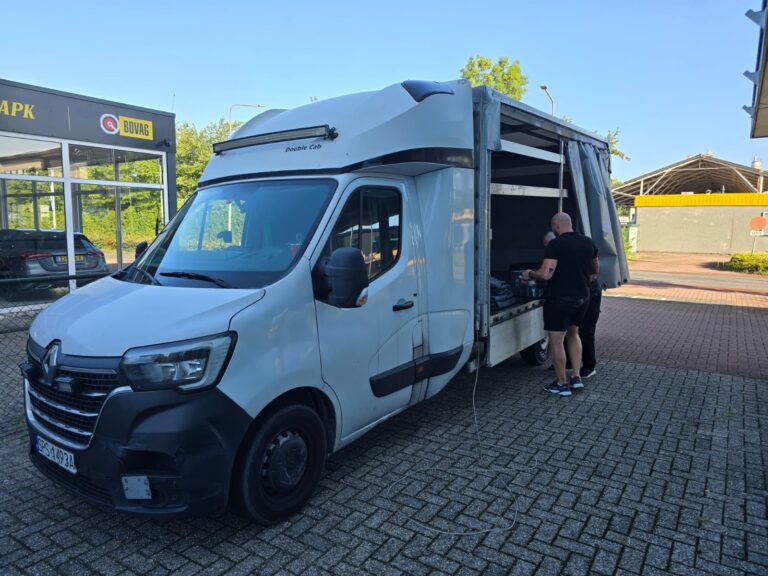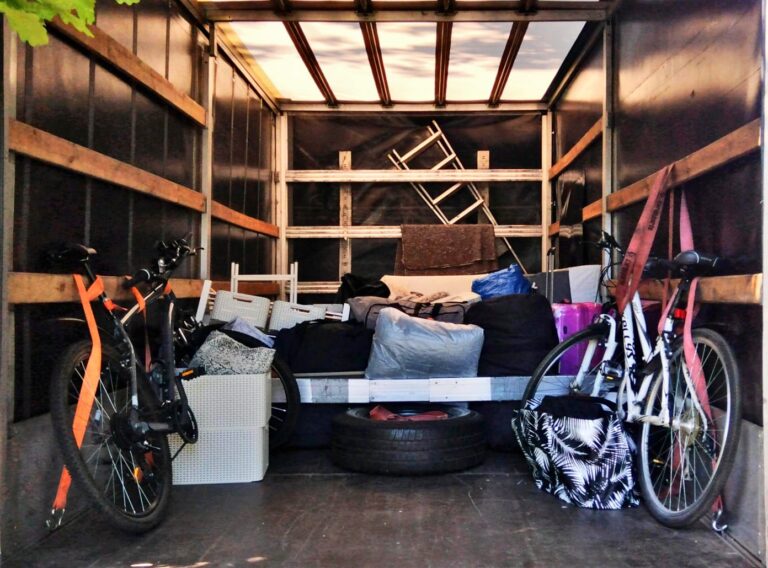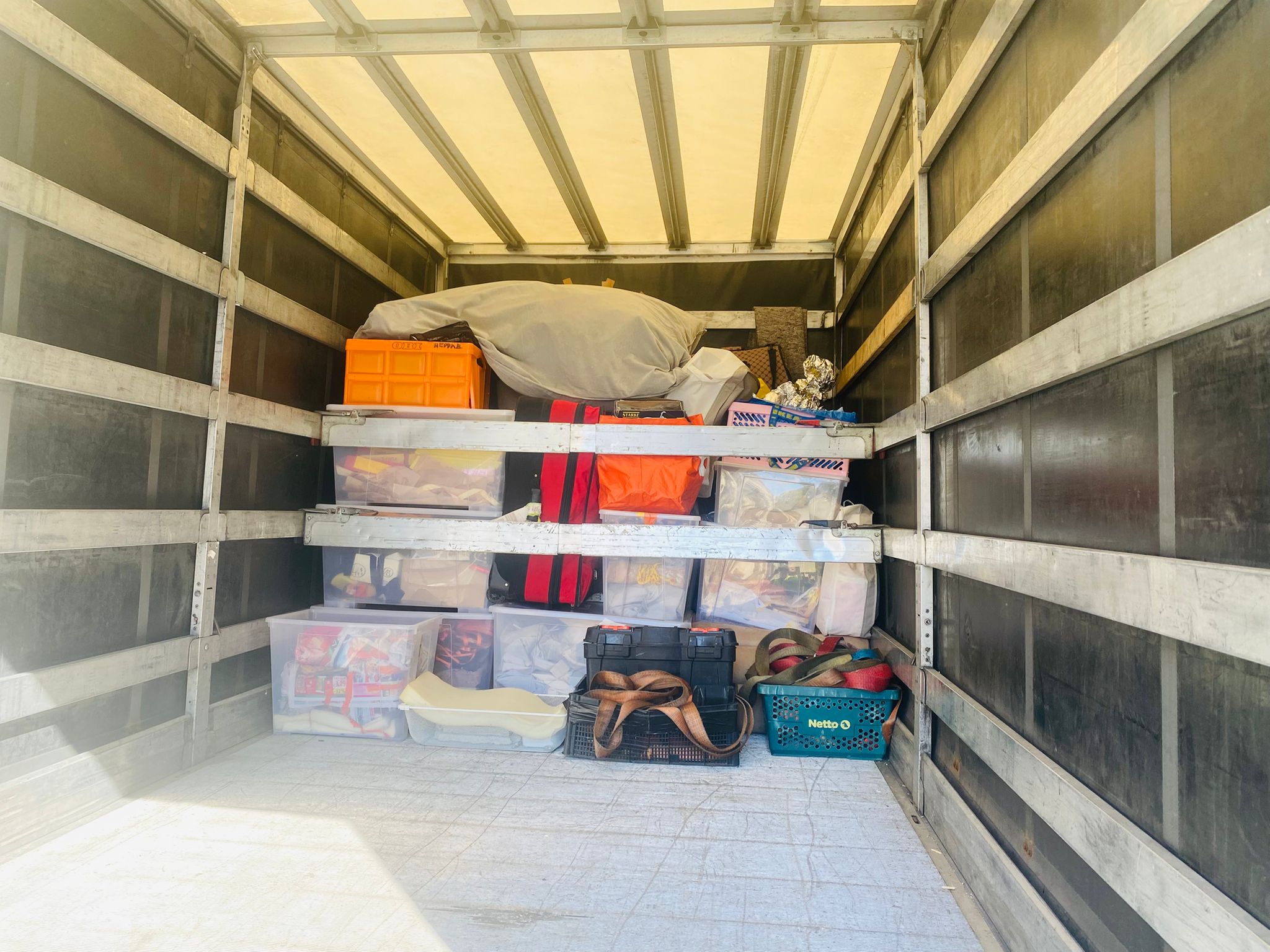

International removals from the UK to France should begin with the real load, both addresses and the date constraints – not a generic price per mile. A sofa from London to Paris, twenty boxes from Manchester to Lyon and a furnished house from Edinburgh to Provence require different vehicle capacity, crossing plans, customs preparation and crews. VANonsite checks those details first, then matches the move to part-load or dedicated transport.
Enter the collection and delivery addresses, inventory, access and preferred dates in the automatic removals quote calculator. It provides an immediate estimate based on the information supplied. A route specialist can then validate the volume, customs situation, access and service scope before booking.
- Small load or flexible dates: compare a planned part-load route.
- Full house, fixed handover or fragile consignment: compare dedicated capacity.
- Furniture or sofa only: send dimensions, photographs and access details.
- Move from Great Britain: prepare for a UK-EU customs border and identify the purpose of the move.
- Urgent requirement: ask for a conditional Last Minute Moving availability check, not an assumed transit promise.
UK to France removals: choose the service around the constraint
The right service is decided by the part of the move that cannot be compromised. For one customer that is a tenancy handover at 10:00; for another it is keeping a grand piano on one vehicle; for a third it is reducing cost on a flexible box-and-furniture load. VANonsite uses the same measured inventory to compare realistic options, so a cheaper quote is not quietly based on a smaller scope.
| Move profile | Option to compare first | Question that decides |
|---|---|---|
| Boxes, a sofa or selected furniture with flexible dates | Part load | Can collection and delivery fit a coordinated route window? |
| Studio or small flat with a firm key date | Part load and dedicated | Is schedule control worth more than route sharing? |
| Furnished home or dense household load | Measured dedicated capacity | Which vehicle meets both usable volume and payload? |
| Fragile, high-value or presentation-sensitive pieces | Dedicated with handling plan | How many handling stages and what protection are acceptable? |
| Urgent move with complete documents | Last-minute availability check | Can the exact route be operated safely and legally? |
Part-load removals to France
Part load means reserving measured space on a route shared with compatible consignments. It can suit boxes, student moves, furniture and smaller homes when the customer can work with a collection and delivery window. The saving comes from sharing route capacity, not from reducing the care given to the load. Every item still needs to be inventoried, protected and labelled.
Ask whether goods remain on the same vehicle, how the route window is confirmed, what updates are included and how access time is handled. Read the dedicated part-load removals to France page if route flexibility is your main cost lever.
Dedicated UK-France transport
A dedicated vehicle is planned around one consignment. It is often the stronger option for a full household, a fixed completion date, complex access or a fragile set that should have fewer handling stages. Dedicated does not mean immune to customs, weather, crossing disruption, access limits or legal driving hours. The confirmed operating window must still be based on the actual addresses and load.
What we need to price the move accurately
A quote is only as reliable as the brief behind it. “One-bedroom flat” does not reveal a corner sofa, 70 book boxes, a fifth-floor carry or a French village street that a large vehicle cannot enter. Give the same complete brief to every company you compare.
| Input | Useful detail | Why VANonsite checks it |
|---|---|---|
| Addresses | Full addresses or precise postcodes in the UK and France | Sets positioning, crossing and last-mile route. |
| Inventory | Item list, box count, photos and dimensions of bulky pieces | Determines usable volume, payload and securing. |
| Access | Floor, lift, stairs, parking point, carrying distance and restrictions | Changes vehicle suitability and crew time. |
| Dates | Preferred dates, hard deadlines and genuine flexibility | Shows whether part load is workable. |
| Handling | Packing, dismantling, reassembly, fragile and heavy items | Defines labour, materials and equipment. |
| Customs context | Main-residence move, second home, temporary stay or commercial goods | The correct document route depends on purpose and eligibility. |
For selected furniture, photograph the item, doorway, stair turns and nearest legal parking point. Measure width, height and depth before dismantling, and state who will dismantle it. For a whole home, use a room-by-room inventory or video survey. For boxes, group the contents honestly instead of writing “miscellaneous” throughout.
Customs for household removals from the UK to France
Great Britain is outside the EU customs territory, so a removal to France is not the same as moving between two EU Member States. The exact process depends on where the goods start, who owns them, why they are entering France and whether the customer qualifies for relief. Northern Ireland can follow different arrangements; identify the collection nation and circumstances before the route is booked.
French Customs currently explains that a person transferring a main residence from a non-EU country may be eligible for relief from duties and taxes when the conditions are met. Its guidance includes prior residence outside the EU, prior private use of the goods, a time window for importing them and restrictions on disposal after entry. It also distinguishes a main-residence transfer from furnishing a second home. Check the current French Customs transfer-of-residence guidance for your situation.
The same official guidance asks for a detailed, valued, dated and signed inventory in two copies, the applicable declaration form and evidence of the former and new main residence when relief is claimed. Alcohol, tobacco, some vehicles, professional equipment and goods for resale can be treated differently. This page is operational guidance, not a decision that every consignment qualifies for relief.
- Build one master inventory: number boxes and list large items separately.
- Keep dates consistent: the transport booking, residence evidence and declarations should describe one coherent move.
- Separate private and commercial goods: stock, work equipment and newly purchased items should not be hidden inside a household list.
- Disclose controlled items: alcohol, tobacco, plants, food, medicines, weapons, batteries and vehicles need an early check.
- Keep documents accessible: do not pack the only copies inside the load.
VANonsite can identify the transport information and documents needed for the booked service and coordinate the removal route. Customs eligibility, tax, immigration and residency decisions belong to the competent authorities or an appropriately qualified adviser. For a more detailed operational checklist, use the removals to France customs guide.
Crossing and route planning are part of the service
The shortest line on a map is not always the best removal plan. Ferry or Channel Tunnel choice depends on the UK collection, French destination, vehicle, booking availability, customs process and the work scheduled on both sides of the crossing. A London-to-Paris move has a different positioning problem from Glasgow-to-Nice or Bristol-to-Brittany.
| Example corridor | What shapes the plan | Detail to send early |
|---|---|---|
| London or South East to Paris and northern France | Urban loading, crossing slot and French access rules | Parking, floor, lift booking and delivery window. |
| Midlands or North West to Normandy or Brittany | UK positioning and the practical port corridor | Real load size and date flexibility. |
| Scotland or North East to central or southern France | Longer positioning before the crossing and driver-hours plan | Hard deadline, collection access and receiving contact. |
| UK to Lyon, the Alps or Provence | Distance after entry, seasonal road conditions and last-mile access | Exact commune, road width, height limits and unloading point. |
| UK to rural France | Whether the booked vehicle can reach the property | Gate width, turning space, surface and recent approach photos. |
VANonsite does not use one advertised transit time for every corridor. The route specialist confirms a realistic window after checking the load, access, documents, crossing and legal driving limits.
House, sofa, furniture and box removals
Full and partial house moves
A house removal needs more than a vehicle size. The operating plan should cover packing responsibilities, dismantling, load order, key dates, access at both homes and the items needed first in France. The separate house removals UK to France page goes deeper into full-home planning while this page remains the primary international service route.
Sofa and furniture removals
For a sofa, wardrobe, dining set or selected furniture, dimensions and access often matter more than the item count. Confirm whether legs, doors or frames can be removed; photograph narrow stairs and turns; and identify glass, stone or delicate finishes. See furniture removals UK to France for a furniture-specific preparation plan.
Boxes and personal belongings
A box-only move can be operationally simple but still needs a customs-ready list. Number every carton, use clear content groups, keep each box within a safe handling weight and disclose high-value or regulated items separately. The moving boxes from the UK to France guide covers this distinct small-load intent.
Packing and access: where avoidable costs appear
Good packing makes the load stackable, identifiable and stable. It does not mean forcing a heavy book collection into large cartons or wrapping furniture without protecting corners and surfaces. Use smaller double-wall boxes for dense goods, fill voids, label two sides and keep fixings in item-specific bags. Tell the team about stone, glass, artwork, instruments, safes and batteries before collection.
- Measure lift doors and the internal lift car at both properties.
- Confirm the nearest legal stopping point and the real carrying distance.
- Report controlled streets, height limits, gates and building time slots.
- Remove or identify items that need dismantling before collection.
- Keep passports, medication, keys, valuables and first-night essentials with you.
- Reserve parking or building access where local rules require it.
If the household cannot be prepared safely in time, add packing services to the quote. State whether you need materials, fragile-only packing, full packing, dismantling or reassembly. That prevents quotations with different scopes from appearing comparable.
How a VANonsite UK-to-France move is planned
- Automatic estimate: enter both addresses, dates, inventory and access in the calculator.
- Specialist validation: the route team checks volume, payload, handling, customs context and missing details.
- Service decision: compare part load and dedicated transport against the same load and constraints.
- Preparation: confirm the final inventory, documents, packing, contacts and access plan.
- Collection and delivery: count and identify the load, coordinate the crossing and confirm the receiving plan in France.
The most useful request contains the top five largest items, photographs of both entrances, the final box count and the date that genuinely cannot change. Start with the UK-to-France removal estimate; add those details in the notes so the review can focus on the real operational risks.
Urgent and last-minute removals to France
VANonsite offers Last Minute Moving. A 1-3 day option can be one possibility for a suitable dedicated move after collection, but it is not a universal promise. It depends on an appropriate vehicle and crew, the exact UK and French addresses, access, measured load, document readiness, crossing availability and legal driving limits.
For an urgent check, send the complete brief at once. A fast answer based on “a few things” is not a reliable plan; a photographed inventory with dimensions and documents can be assessed quickly.
Why customers use VANonsite for UK-France removals
VANonsite treats this corridor as a combination of route, capacity, customs and handling decisions. The team checks what is actually moving, whether the booked vehicle fits both properties, which dates are fixed and what the quotation assumes. That makes it easier to compare options without confusing a low headline price with a complete move.
- One operational brief from UK collection to French delivery.
- Part-load and dedicated options based on a measured inventory.
- Customs preparation integrated with the route plan.
- Packing, dismantling and specialist handling defined before collection.
- Automatic estimate followed by human validation for the booked service.
International removals UK to France: common questions
How much do removals from the UK to France cost?
The quote depends on both addresses, usable volume and weight, access, dates, packing, customs work and whether transport is shared or dedicated. Use the automatic calculator for a starting estimate, then have the route team validate the inventory and scope.
How long does a UK-to-France removal take?
There is no honest universal duration. Origin, destination, part-load or dedicated service, customs readiness, access, crossing availability and legal driving requirements determine the confirmed collection and delivery window.
Can I move just a sofa or a few pieces of furniture?
Yes, subject to route capacity and the item details. Send dimensions, photographs, both postcodes and access information. Part load may suit flexible dates; dedicated transport can suit a fixed handover or fragile pieces.
Do I need a customs inventory?
For a main-residence transfer from Great Britain, French Customs currently asks for a detailed, valued, dated and signed inventory when relief is claimed. The exact requirements depend on the consignment and eligibility, so confirm the current official guidance before collection.
Is part load suitable for a house move?
It can suit a measured partial household or a smaller home with flexible dates. A larger load, fixed key date or complex handling may be better served by dedicated capacity. Compare both against the same final inventory.
Can VANonsite complete the move in 1-3 days?
It may be possible through Last Minute Moving for an appropriate dedicated job, but it is conditional. Vehicle and crew availability, addresses, access, load, documents, crossing and legal driving limits must support the plan.
Get a UK-to-France removals estimate
Use the automatic quote calculator with the actual addresses, dates and inventory. Add stairs, lift, parking distance, largest items and whether the move is a main residence, second home or another type of shipment. VANonsite can then turn the estimate into a route-specific removal plan.