
Furniture is never just furniture. A sofa remembers your Sundays. A table holds a decade of quick dinners and slow conversations. So when you are moving furniture from France to UK, you are not only moving heavy objects. You are moving the pieces that make a place feel like home.
This guide is built to be direct, practical, and fast. It shows you how to plan moving furniture from France to UK without the usual regrets: scuffs on corners, pressure marks on upholstery, delivery windows that slide, and paperwork that turns into delays. You will also find a clear route through furniture removals from France to UK after Brexit, including what documents to prepare, how to build an inventory in GBP, and how to avoid the mistakes that slow border checks.
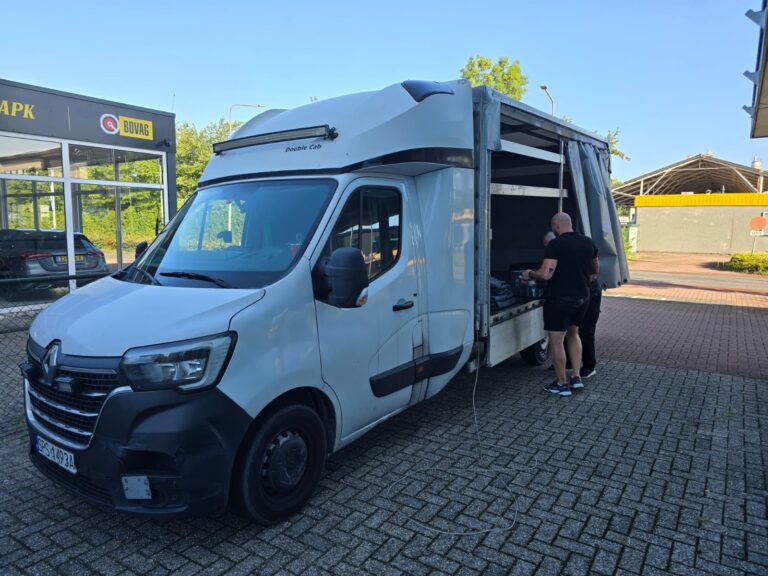
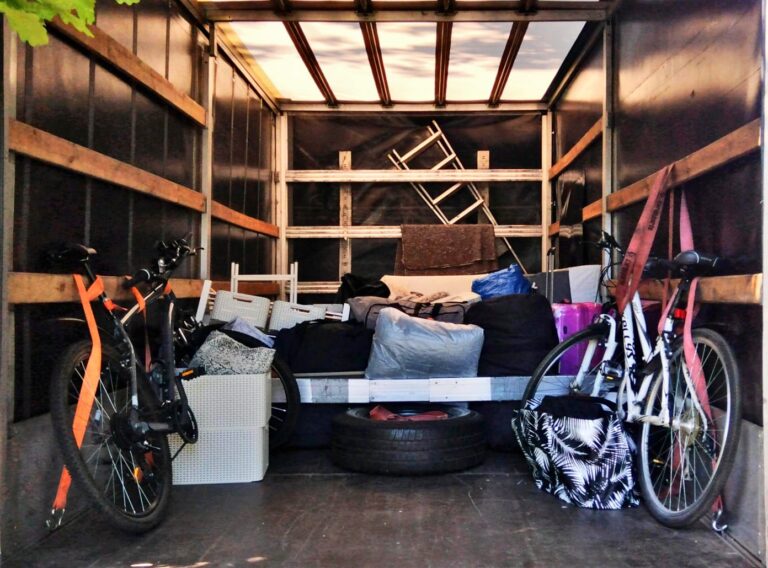
Whether you need a direct man and van for one to three key items, or a larger vehicle for a room set, the goal stays the same: fewer touch points, safer spacing, and calm control. VANonsite supports this with premium handling and GPS tracking on every load, so you can plan your day without guessing.
TL:DR
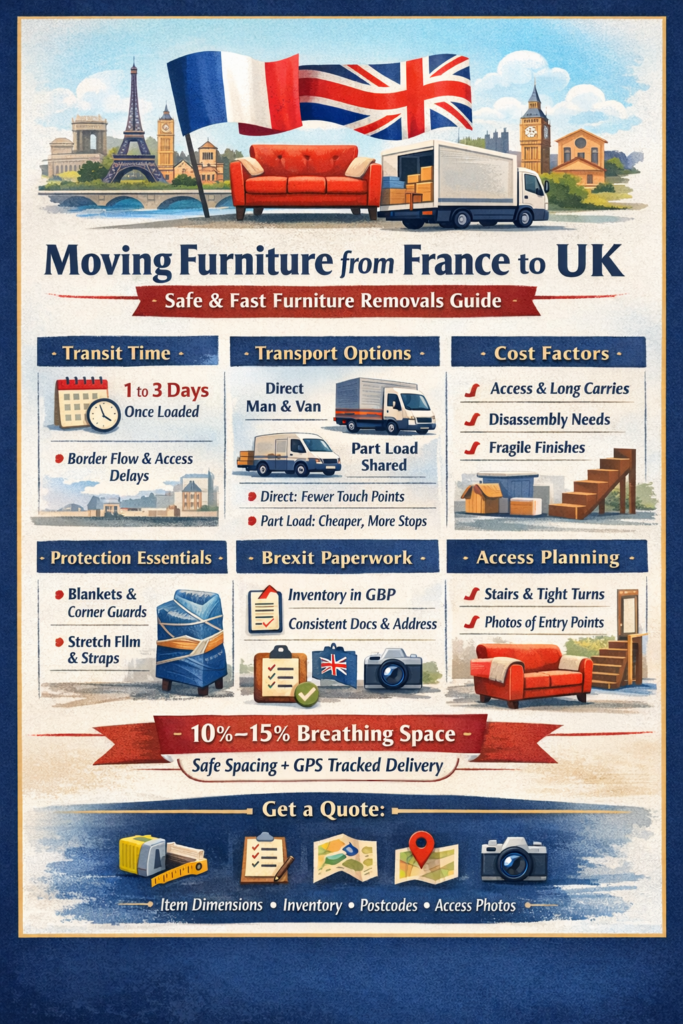
- Most moving furniture from France to UK deliveries take 1 to 3 days once loaded, with border flow and delivery access as the biggest variables.
- Direct transport usually means fewer touch points, safer spacing, and a tighter delivery window. Part load can be cheaper but adds routing risk.
- Costs rise fastest with access and long carries, disassembly needs, fragile finishes, and vehicle size. Decluttering 20% can reduce handling time.
- After Brexit, keep a clear inventory in GBP and use consistent names and address formatting across all documents to prevent delays.
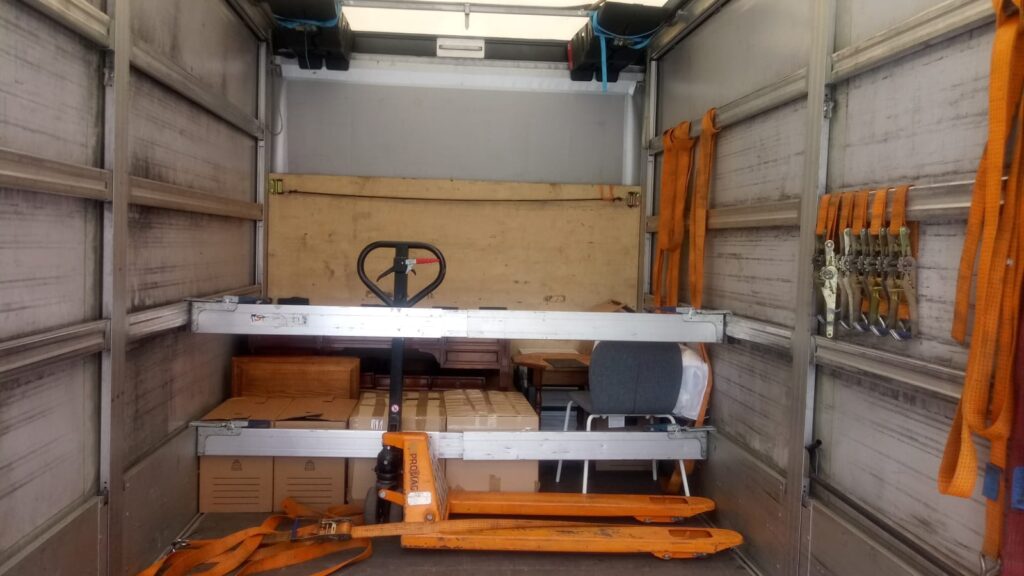
- Protect furniture with a simple stack: blankets, corner guards, stretch film, straps. Never stack heavy boxes on soft furniture.
- Choose a vehicle with 10% to 15% breathing space so wrapped items are not compressed under load pressure.
- For an accurate quote, send top 3 item dimensions, a simple item list with quantities, both postcodes, and two access photos.
Quick answers first
How long it usually takes
Once loaded, most furniture deliveries take 1 to 3 days. The time window shifts when either paperwork is unclear or delivery access is harder than expected.
The biggest delay drivers:
- Paperwork clarity: vague inventory lines, missing values in GBP, inconsistent names and addresses.
- Access: stairs, tight turns, narrow doors, and long carry distances. Difficult access can add 30% to 60% more handling time.
A simple win: send two photos in advance, the street stopping point and the tightest hallway or stair turn.
When man and van is enough
A direct man and van is often the safest budget choice for compact furniture loads because it reduces touch points.
It is usually enough for:
- one to three key pieces, sofa, table, wardrobe
- a compact room set
- furniture plus a small number of boxes
Choose a larger vehicle when you need safe spacing for wrapped items. Furniture needs 10% to 15% breathing space to avoid pressure marks.
Direct vs part load in one paragraph
Direct transport is typically safer for furniture because it means fewer handovers and less stacking pressure. Part load can be cheaper because you share space, but routing adds variables and the risk of tight stacking increases. If your pieces are high value, fragile, or hard to replace, direct is usually worth it.
Biggest red flags that cause damage
Most furniture damage is predictable. These are the warning signs:
- no blankets, corner guards, or straps
- heavy boxes stacked on sofas or upholstered chairs
- tight stacking with zero breathing space
- rushed loading, no plan for corners and door frames
- access not discussed, then extra fees or delays on the day
Related France and UK routes
- Removals France to UK
- Removals to France
- Moving to France from UK
- Removals to France from UK
- International removals UK to France
- Furniture Removals
What counts as moving furniture from France to UK
Furniture moves cover everything from a single statement piece to a full home setup. The planning changes with size, fragility, and how replaceable your items are.
Load types
- Single item delivery: sofa, dining table, wardrobe, antique cabinet
- Room set: bedroom set, living room set, office set
- Furniture plus boxes: furniture items plus 6 to 40 boxes
- High value pieces: antiques, designer items, glass, mirrors, high gloss finishes
Why furniture moves are different
Furniture damage usually comes from three sources:
- Corners and edges hit door frames and stair turns.
- Finish rubbing under vibration when items are not wrapped and strapped.
- Stacking pressure when heavy items compress upholstery or high gloss surfaces.
That is why good furniture removals from France to UK are built around protection, spacing, and strapping, not just getting it in the van.
Scenario vs best transport type
| Scenario | Typical items | Best transport | Why it matches |
|---|---|---|---|
| Single item | sofa or wardrobe | direct man and van | fewer touch points, tighter timing |
| Room set | bed, wardrobe, bedside tables | direct transport | safe spacing, less stacking pressure |
| Furniture plus boxes | sofa plus 10 to 25 boxes | direct or part load | depends on urgency and fragility |
| High value pieces | antiques, glass, designer | direct plus extra protection | lower risk, calmer handling |
Costs for moving furniture from France to UK
The price of moving furniture from France to UK depends on three things that are hard to fake: how much space your items need, how hard they are to handle at the door, and how much protection time they require. Mileage matters, but furniture moves are usually won or lost on access and handling.
Below are realistic planning bands. They help you budget quickly. Then you tighten the price by sharing your top 3 item dimensions, access details, and a simple list of items.
| Load type | What it looks like | Indicative range |
|---|---|---|
| Single item | one sofa, wardrobe, table, or cabinet | £650 to £1,600 |
| A few items | 2 to 6 pieces plus a few boxes | £950 to £2,400 |
| Room set | bedroom set or living room set | £1,600 to £3,800 |
| Partial home | key furniture plus boxes, staged move style | £2,200 to £5,200 |
These ranges exist because access is time. Stairs, tight turns, and long carries can add 30% to 60% more handling time. That extra time is labour, and labour is a big part of furniture moves.
What changes the price most
- Access and long carries: parking over 15 metres, stairs with no lift, narrow doors.
- Disassembly and reassembly needs: wardrobes, bed frames, tables, and some sofas often travel safer with partial disassembly.
- Fragile finishes: high gloss, veneer, glass, mirrors, antiques.
- Direct vs part load: part load can reduce cost, but direct transport usually gives a tighter window and fewer touch points.
- Vehicle size and spacing: furniture needs 10% to 15% breathing space.
Safe savings
- Declutter 20% so you reduce volume and handling time.
- Choose a midweek pickup when possible. Availability can be calmer by 10% to 20%.
- Send access photos early.
- Share an accurate item list with quantities plus the dimensions of your top 3 pieces.
Direct vs part load: what is safest for furniture
For moving furniture from France to UK, this choice shapes both risk and predictability.
- Direct transport means your furniture travels on a dedicated run.
- Part load means your items share space with other shipments.
| Factor | Direct transport | Part load |
|---|---|---|
| Cost | usually higher upfront | often lower upfront |
| Delivery window | tighter | wider |
| Touch points | fewer | more possible |
| Damage risk | lower with planned spacing | higher if stacking is tight |
| Best for | fragile finishes, antiques, must arrive by dates | flexible dates, sturdy items, budget focused |
When direct transport is worth it
Choose direct when:
- your pieces are high value, fragile, or emotionally irreplaceable
- access is difficult at either end
- you have a must arrive by date, or you are coordinating keys and parking windows
Timeline checklist for furniture moves
Furniture moves feel easy when your prep is boring and consistent. This timeline keeps you ahead of the stress.
3 weeks before
This is planning week. Decisions now prevent damage later.
- choose direct transport or part load based on urgency and fragility
- list every furniture piece and note material, solid wood, veneer, glass, high gloss
- measure the narrowest door and the tightest stair turn at pickup and delivery
- decide what needs disassembly, legs, shelves, mirrors, headboards
- confirm parking distance and any building rules
Mini checklist:
- item list complete
- access measured at both ends
- disassembly plan started
10 days before
This is protection week.
- build your inventory with values in GBP
- photograph each main piece from two angles, especially existing marks
- buy materials or book packing support
- choose a labelling system, for example Living Room 01, Bedroom 02
Mini checklist:
- inventory drafted
- photo record started
- materials ready
7 days before
Make furniture easy to move.
- empty drawers and cabinets
- remove loose shelves and wrap them separately
- bag fixings, label them, and tape the bag to the item using stretch film
- mark fragile pieces with clear labels, for example DO NOT STACK
Mini checklist:
- furniture stabilised
- fixings bagged and attached
- fragile tags prepared
48 hours before
Protect moving day.
- finalise the inventory and values
- clear corridors and protect door frames
- confirm contacts at pickup and delivery
- set aside essentials you keep with you
Mini checklist:
- inventory finalised
- routes confirmed
- essentials separated
Moving day
- keep documents with you, not in the van
- flag the tightest turn first and agree the lifting route
- make sure corners and edges are protected before moving through doorways
- confirm the delivery update method
First 72 hours in the UK
- unwrap carefully and keep protection on until final placement
- check items against photos and inventory while it is still light outside
- set up one room first, then expand


Paperwork after Brexit for furniture removals from France to UK
Delays cost time and money. Reviews often blame the border, but the real trigger is usually an unclear inventory or inconsistent details.
Documents checklist
Keep one folder, printed and saved digitally:
- passport or ID
- UK address proof when relevant, tenancy agreement or completion documents
- itemised inventory with values in GBP
- statement that goods are personal and not for resale
- receipts for brand new items
UK government links:
- Check how to declare personal goods you bring into or take out of the UK
- Transfer of Residence relief
- Bringing goods into the UK for personal use
Inventory example with materials and values
| Item | Qty | Material | Notes | Value GBP |
|---|---|---|---|---|
| Sofa, 2 seater | 1 | fabric | wrapped, do not stack | 450 |
| Wardrobe | 1 | solid wood | disassembled, fixings attached | 380 |
| Dining table | 1 | wood and metal | legs removed, corners protected | 320 |
| Mirror | 1 | glass | bubble wrap plus board | 90 |
Consistency rules that prevent border issues
- keep names and address formatting identical across documents
- use realistic second hand values
- separate brand new items and attach receipts
- if you ship in stages, keep one master inventory and mark each shipment
- label boxes and furniture so inventory lines match what is physically loaded
What not to ship
When you are moving furniture from France to UK, one restricted item can slow the entire run. It can also create a safety risk inside the vehicle. Keep your shipment clean and predictable so border checks stay routine and loading stays safe.
Do not ship:
- aerosols of any kind
- paint, varnish, solvents, thinners
- flammables and firelighters
- gas canisters and camping fuel
- fuel containers, even if they seem empty
- leaking chemicals and strong cleaners
- batteries or power banks that are damaged, swollen, or hot to the touch
- any item that could spill, corrode, or react when packed tightly
If you are unsure, ask before packing. The simplest rule works every time: if it can leak, burn, pressurise, or corrode, do not pack it. Replace it in the UK.
Packing and protection standards for furniture
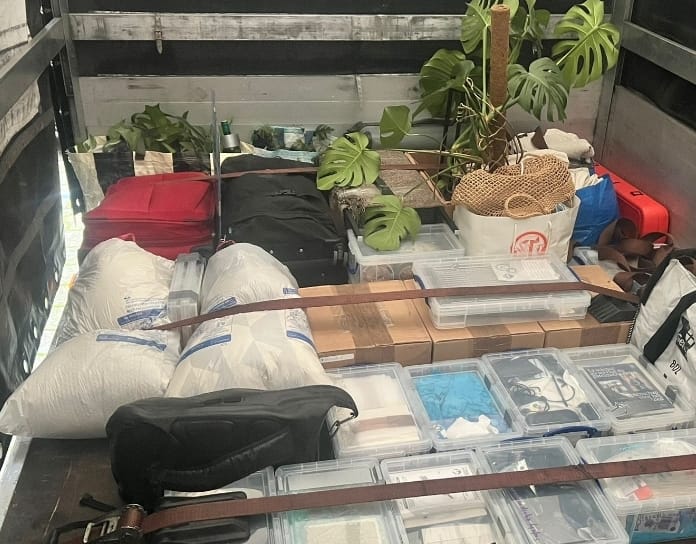
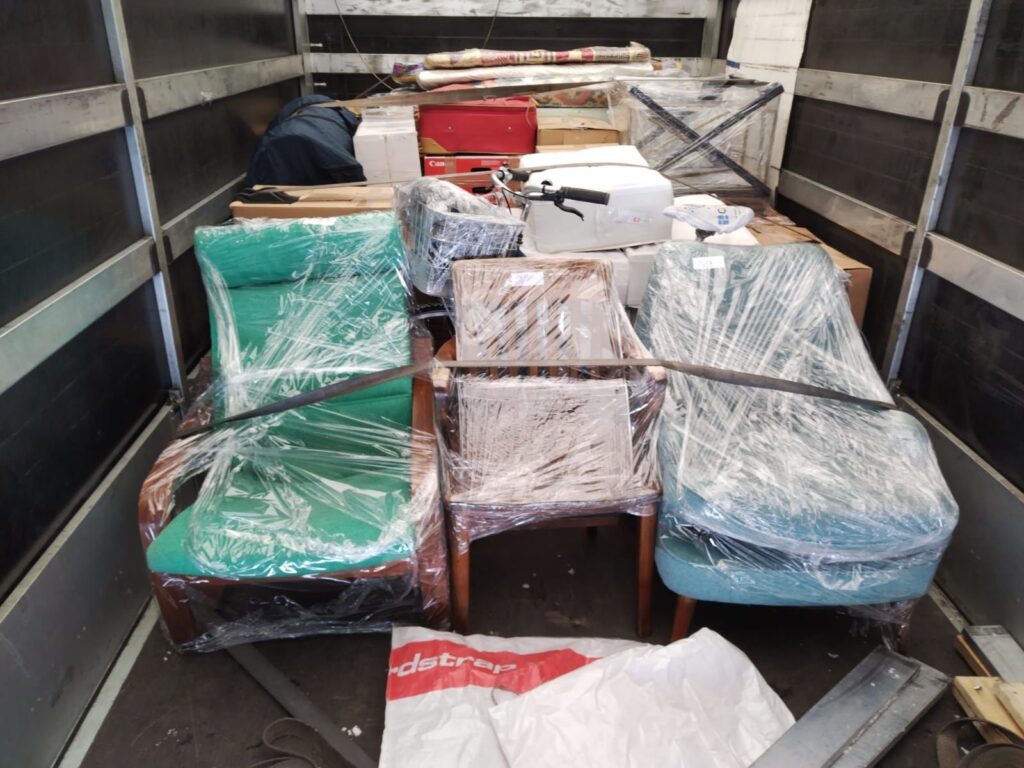
The fastest way to ruin a move is friction. Furniture finishes rub under vibration, corners catch on door frames, and pressure marks appear when loads are stacked too tightly. The fix is not complicated. It is a consistent protection system, applied in the right order.
Protection stack
- blankets to cushion the main surface
- corner guards to protect impact points
- stretch film to lock protection in place and stop rubbing
- straps to prevent shifting during braking
Rules that prevent scuffs and pressure marks
- protect corners before furniture goes through doorways
- lock doors and drawers with stretch film, not tape directly on finishes
- wrap legs and protruding parts so they cannot snag
- never stack heavy boxes on soft furniture
- keep boxes under 20 kg so they do not crush lower layers
- leave breathing space so wrapped furniture is not compressed under load pressure
Fast prep checklist
Do this before wrapping. It makes protection easier and prevents hidden damage.
- empty drawers and cabinets
- remove loose shelves and wrap them separately
- bag fixings, label them, and attach them to the item using stretch film
- mark fragile pieces clearly, for example DO NOT STACK
Materials and best use
| Material | Best use | Why it matters |
|---|---|---|
| Furniture blankets | sofas, tables, wood furniture | prevents scuffs and surface rubbing |
| Corner guards | wardrobes, bed frames, table tops | protects impact points on turns |
| Stretch film | drawers, cabinet doors, blanket lock | stops movement and friction |
| Bubble wrap | mirrors, glass panels, fragile parts | absorbs shocks |
| Foam sheets | high gloss surfaces | prevents micro scratches |
| Cardboard sheets | table tops and flat sides | adds a hard shield |
| Straps | large pieces and stacked loads | prevents shifting during braking |
Optional add ons:
Vehicle sizing for moving furniture from France to UK
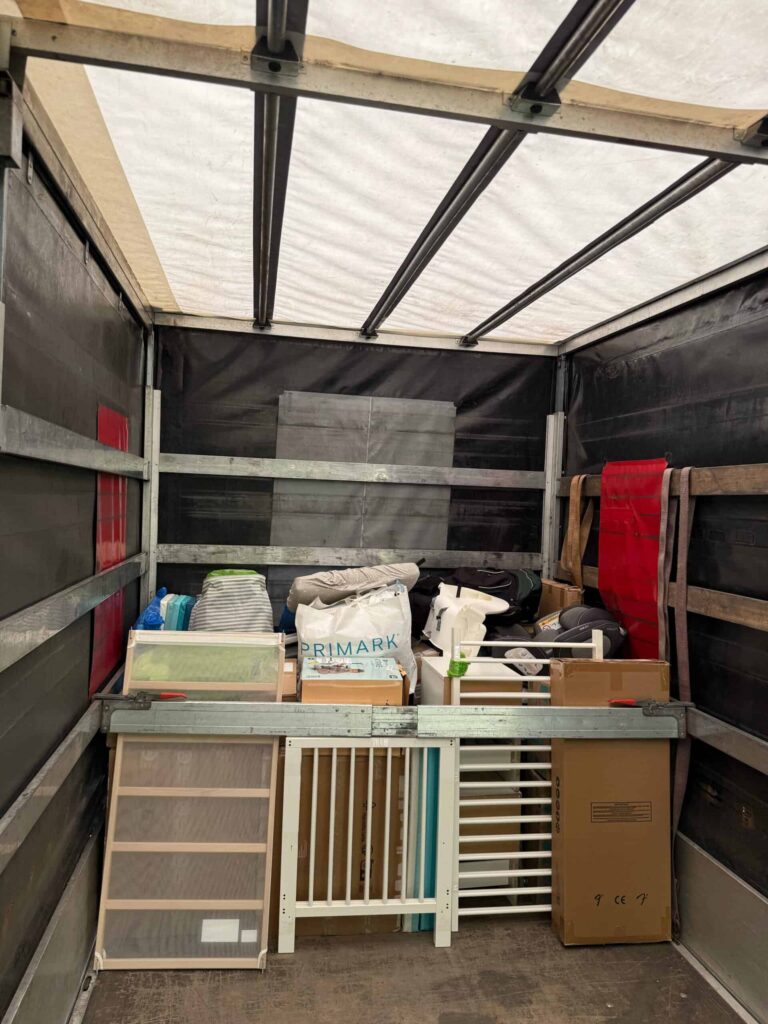
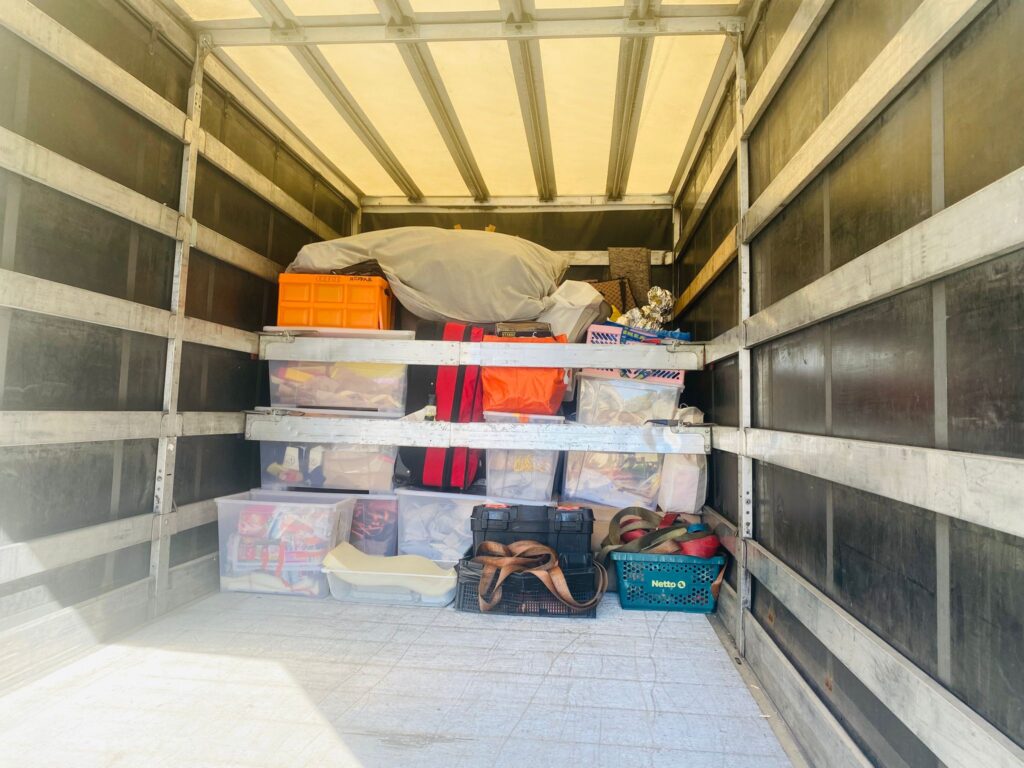
Furniture needs space. Plan 10% to 15% breathing space for protection and strapping. That extra room is not “empty”. It is what stops pressure marks on upholstery, rubbing on lacquered finishes, and last minute reshuffles that slow loading.
| Option | Volume | Payload | Best for |
|---|---|---|---|
| Moving One | 1 m3 | 100 kg | micro loads, a small chair, a few boxes |
| Moving Basic | 5 m3 | 300 kg | a few items, boxes plus one piece |
| Moving Medium | 10 m3 | 500 kg | compact room set, sofa plus table |
| Moving Premium | 15 m3 | 1,100 kg | full room set with safe spacing |
| Moving Premium Plus | 30 m3 | 3,500 kg | multiple room sets, bulky wardrobes |
| Moving Full House XXL | 90 m3 | 20,000 kg | full home furniture move |
Quick fit guide for moving furniture from France to UK:
- One to three key items: direct man and van is often ideal
- Room set: Moving Premium is usually the sweet spot because spacing prevents pressure marks
- Several bulky pieces plus boxes: Moving Premium Plus keeps stacking calm and controlled
Two fast checks:
- Measure your top 3 items, length, width, height. Add one photo of each piece for grip points and fragility
- Flag weight hotspots. Solid wood, stone tops, and big wardrobes can change payload planning quickly
A small rule that saves money: if you are between sizes, go up one level. Paying for breathing space is usually cheaper than paying for damage, delays, or a second run.
Routes and delivery access in the UK
The crossing is only half the story. The last 20 metres from van to doorway is where furniture gets scratched. Plan access early, because access can add 30% to 60% more handling time.
Eurotunnel is often fastest. Ferry can be flexible.
| Option | Best when | Watch outs | Typical time impact |
|---|---|---|---|
| Eurotunnel | you want speed and a tighter window | strict check in timing | often saves 1 to 3 hours |
| Ferry | you want flexibility | weather and peak queues | can add 1 to 4 hours |
Access checklist to confirm before delivery day:
- parking distance, ideally under 15 metres
- stairs and tight turns, note the narrowest point
- lift size and door width if there is a lift
- narrowest doorway measurement for bulky items
- building rules, concierge hours, time limits
Two photos that prevent surprises:
- street view showing where the van can stop
- the tightest hallway or stairwell
Bonus tip: add one quick door measurement in centimetres and a note on whether the door opens fully. It is a small detail that prevents big delays.
Why VANonsite for moving furniture from France to UK
When you are moving furniture across a border, little details decide the outcome. A blanket on the right corner. A strap in the right place. A delivery window that stays honest.
VANonsite supports moving furniture from France to UK with protection first handling, flexible vehicle sizing, and GPS tracking on every load. That means fewer surprises, fewer touch points, and safer spacing for wrapped items.
| What you need | Why it matters | How VANonsite supports it |
|---|---|---|
| Lower damage risk | furniture shows marks fast | blankets, corner guards, safe spacing, secure strapping |
| Predictable timing | delivery windows matter | realistic windows, clear updates, access planning |
| Visibility | reduces stress | GPS tracking on every load |
| The right van size | tight stacking causes pressure marks | options from compact to full house, with 10% to 15% breathing space |
| Extra care when needed | high value pieces need calm handling | packing support and white glove options |
| Flexibility | plans change fast | direct transport or part load, plus storage if you need it |
Relevant links:
FAQs
How long does moving furniture from France to UK take
Most moves take 1 to 3 days once loaded. Border flow and delivery access are the biggest variables. Stairs, long carries, and tight turns can add 30% to 60% more handling time.
Is part load safe for furniture
It can be safe, but it adds routing variables and touch points. It also raises the risk of tight stacking if spacing is not planned.
If your pieces have fragile finishes, glass, high gloss, or they would hurt to replace, direct transport is often the safer choice.
Is man and van enough
A direct man and van is often perfect for one to three key pieces or a compact room set. It works best when timing is tight and you want fewer touch points.
If you have multiple bulky pieces, or you need safe spacing for wrapped furniture, size up.
What paperwork do I need after Brexit
Keep one tidy folder, printed and saved digitally:
- passport or ID
- UK address proof when relevant
- itemised inventory with values in GBP
- statement that goods are personal and not for resale
- receipts for brand new items
How do I avoid damage
Use the protection stack and keep breathing space. Then follow these two rules.
- never tape directly onto polished or high gloss finishes
- never stack heavy boxes on soft furniture
Also strap items to stop movement. Vibration is what turns minor rub into visible wear.
How do I get a quote that matches reality
Send:
- pickup and delivery postcodes
- dimensions of your top 3 pieces
- a simple item list with quantities
- access details at both ends, floor number, lift, parking distance
- two access photos, street stopping point and tightest hallway or stair turn
Summary
This guide gives you the complete playbook for moving furniture from France to UK without scuffs, pressure marks, or last minute chaos. You learned what typically controls delivery time, usually 1 to 3 days once loaded, and what really causes delays: unclear paperwork and underestimated access, which can add 30% to 60% more handling time.
You also saw how to choose the right transport style. Direct transport usually means fewer touch points and a tighter delivery window. Part load can be cheaper, but it adds routing variables and can increase stacking pressure if spacing is tight.
Most importantly, you now have a practical system for safer furniture removals from France to UK:
- Documents: a clear inventory in GBP, consistent names and addresses, and receipts for new items keep border checks smooth.
- Capacity: the right van size with 10% to 15% breathing space prevents rubbing and compression and makes strapping safer.
- Timing: access planning is non negotiable. Parking distance, stairs, tight turns, door measurements, and two simple photos prevent the most common surprises.
- Protection: blankets, corner guards, stretch film, and straps, applied in order, stop friction and shifting.
If you want the next step to feel easy, send your top 3 item dimensions, a simple item list with quantities, both postcodes, and two access photos. Then request a quote and choose direct or part load based on how much control you want over the delivery window.