
Introduction
Moving to Germany can feel exciting, liberating, and slightly overwhelming all at once. One day you are comparing cities, rental prices, and job options. The next, you are staring at documents, transport quotes, customs questions, and a growing pile of boxes in the hallway. The good news is simple. A move to Germany becomes far easier when you break it into clear steps and choose the right removals support from the start.
This guide answers the real questions quickly. It explains what to do before the move, which documents matter, how customs may affect household goods, how to choose between man and van and fuller removals, what the move may cost, and how to make the first week in Germany feel more stable. It also naturally positions VANonsite removals to Germany as a reliable option without sounding pushy.
For many people, the hardest part is not the distance. It is the feeling that everything matters at once. Housing, paperwork, transport, packing, budget, furniture, first-week admin, maybe even a new job or university start date. That is why strong moving to Germany tips should do more than list generic advice. They should create order. When the sequence is right, the move becomes much less fragile.
Germany also rewards preparation. A rushed move often feels heavier than it needs to. A structured move, by contrast, feels sharper, calmer, and more controllable. That is where the right removals partner can make a visible difference. VANonsite offers flexible service sizes, secure European transport, and GPS tracking for every load, which matters when your belongings are crossing borders rather than simply crossing a city.
Whether the relocation involves a full family household, a student setup, selected furniture, or a lower-volume man and van move, the smartest route is always the same at the core: legal clarity first, logistics second, smooth landing third.
Quick Answer: What Are the Best Moving to Germany Tips?
The best moving to Germany tips are the ones that protect timing, paperwork, budget, and peace of mind at the same time. The move works best when you:
- confirm your legal route early
- secure accommodation before finalising logistics
- gather documents before booking the full move
- build a detailed inventory
- choose the right removals size for the actual load
- separate essentials from the main shipment
- prepare for your first week before the van arrives
That is the core logic of a smooth relocation. Germany rewards preparation. The more clearly the move is planned, the less fragile it feels.
Each of those points matters for a reason. Confirming your legal route early prevents the transport side from running ahead of the paperwork side. Securing accommodation before finalising logistics gives the move a real landing point. Gathering documents before booking the full move reduces last-minute stress and helps everything feel more anchored.
The same logic applies to the removals side. Building a detailed inventory sharpens both quote accuracy and customs readiness where relevant. Choosing the right removals size for the actual load protects both budget and service fit. Separating essentials from the main shipment makes the first 48 to 72 hours far easier. Preparing for your first week before the van arrives helps Germany feel functional faster.
If you want the shortest possible version, it is this:
- get the paperwork right
- know exactly what you are moving
- match the service to the real load
- keep first-week essentials with you
- think beyond moving day
Those five ideas solve a surprising percentage of relocation stress.
Why Moving to Germany Feels Bigger Than a Normal Move
A move to Germany is rarely just about transport. It usually blends paperwork, personal goals, housing pressure, work or study timelines, and the emotional weight of leaving one life behind while trying to start another. That is why even a simple route can start feeling complicated if the steps are taken in the wrong order.
Part of that pressure comes from the fact that a relocation to Germany often touches several parts of life at once. You may be choosing a city, comparing rent, thinking about work, organising a school or university start, preparing documents, and trying to work out how much of your home should actually travel with you. Even a move that looks modest on paper can feel enormous in real life because it is not only about boxes. It is about transition.
That is also why the move should be treated as a real life change rather than a rushed delivery job. When people approach the relocation as if it were only about loading and unloading, the stress tends to multiply. Housing gets confirmed too late. Documents are scattered. Inventory is vague. First-week essentials disappear into the main load. The result is not a harder country. It is a weaker sequence.
The reassuring truth is that most relocation stress does not come from Germany itself. It comes from poor sequencing. When the order is right, the move starts to feel dramatically more manageable. Legal questions are handled before the removals date becomes urgent. Housing is sorted before the arrival becomes abstract. Inventory is prepared before the quote becomes guesswork. Essentials are packed separately before the first week becomes a scramble.
A useful way to think about the move is to divide it into three connected layers:
- Preparation, which covers legal route, city choice, housing, and paperwork
- Logistics, which covers inventory, service selection, customs where relevant, and packing
- Landing, which covers first-week essentials, registration, and settling in fast
That three-part view often changes the emotional tone of the whole relocation. Instead of looking like one giant leap into uncertainty, the move starts to look like a sequence of practical decisions. That shift matters. It turns the process from heavy to doable.
Who This Guide Is For
This guide is for people who want more than generic relocation advice. It is for readers who need a practical route through the move and want to understand what kind of planning actually fits their situation. Although the keyword is broad, the people behind it are not all making the same move.
Some readers are relocating because a job offer has changed the pace of everything. Others are moving with children and want the transition to feel calmer from the first night. Some are students trying to move efficiently on a tighter budget. Some are couples building a new life together. Others are not moving a whole household at all. They simply need selected furniture or a more compact load transported safely.
This guide speaks directly to:
- professionals relocating for work
These movers often work to fixed start dates and need the legal route, housing, and transport plan to align cleanly. - families moving house
Family relocations carry more emotional and practical weight. The challenge is not only volume. It is stability, routine, and making the landing feel less chaotic. - students planning a lower-volume move
Students often need a smarter, leaner setup. This is where a man and van option can make strong practical sense, especially for staged or essentials-first moves. - couples starting fresh in Germany
These moves often sit between compact and full-house removals. The service needs to stay flexible without becoming too light. - people moving selected furniture only
Not every move is a full relocation. Sometimes the real task is transporting a few important pieces safely, especially bulky or sentimental items. - business owners planning an office move
Office relocations need speed, organisation, and a service that minimises disruption while protecting equipment and workflow.
What matters here is recognition. A student with a laptop, clothes, and a few boxes does not need the same removals structure as a family relocating an entire home. A professional starting a new job in Germany may need tight timing and precise coordination. A furniture-only move should not be forced into the same model as a full domestic transfer.
That is why one keyword can hide very different real-life moves. The best guide should make each reader feel seen quickly. The best removals partner should make each version of the move workable.
Step-by-Step Moving to Germany Checklist
Most relocation anxiety comes from not knowing what should happen first. The move becomes dramatically easier when it is broken into a clear order. You do not need to solve everything in one day. You need to solve the right things in the right sequence.
1. Confirm your legal route
The first step is to understand why you are moving and what legal path applies. Work, study, family, and long-term relocation do not always follow the same logic. That is why the legal side should come first, not halfway through the removals process. If the route is still unclear, it is risky to lock in a full move too early.
2. Choose where in Germany you want to live
City choice shapes more than lifestyle. It affects rent, commute, daily rhythm, how quickly you can settle, and sometimes even the type of removals service that makes sense. A compact city-centre flat with difficult access may create different logistics from a suburban house with easier unloading.
3. Secure housing or temporary accommodation
Even temporary housing creates a landing point. It turns the move from abstract planning into something real. It also helps with address-related admin, first-week planning, and the emotional relief of knowing exactly where the move is heading.
4. Gather your core documents
Once the route and destination are clearer, collect the documents that support the move. This is the stage where the relocation starts becoming organised instead of theoretical. Passports, contracts, housing confirmations, insurance details, and any route-specific paperwork should already be easy to access.
5. Build a detailed inventory
The inventory supports pricing, customs where relevant, and smarter packing. More importantly, it forces you to look honestly at what is actually moving. That creates control. A vague inventory creates guesswork. A precise inventory creates better quotes, better packing, and fewer surprises.
6. Choose the right removals model
Now the move is ready to be matched with the right service. Some relocations work well with a lean man and van setup. Others need fuller removals support because of volume, furniture, timing, or emotional pressure. The right model should fit the real load, not the version of it you wish were true.
7. Pack essentials separately
The first 48 to 72 hours should not depend on unpacking everything. Documents, medication, chargers, basic toiletries, first-night clothing, and the items you genuinely need immediately should stay with you. This one decision can dramatically reduce stress after arrival.
8. Prepare for the first week in Germany
A move is not finished when the van leaves. The first week matters. Registration, practical admin, daily essentials, and making the new home functional all shape how the relocation feels in hindsight. Planning that week before the move begins gives you a much calmer landing.
The deeper point of this checklist is simple: a smooth relocation is usually a well-sequenced relocation. Big moves start feeling lighter when they stop looking like one huge event and start looking like a chain of connected decisions.
Documents You May Need Before Moving to Germany
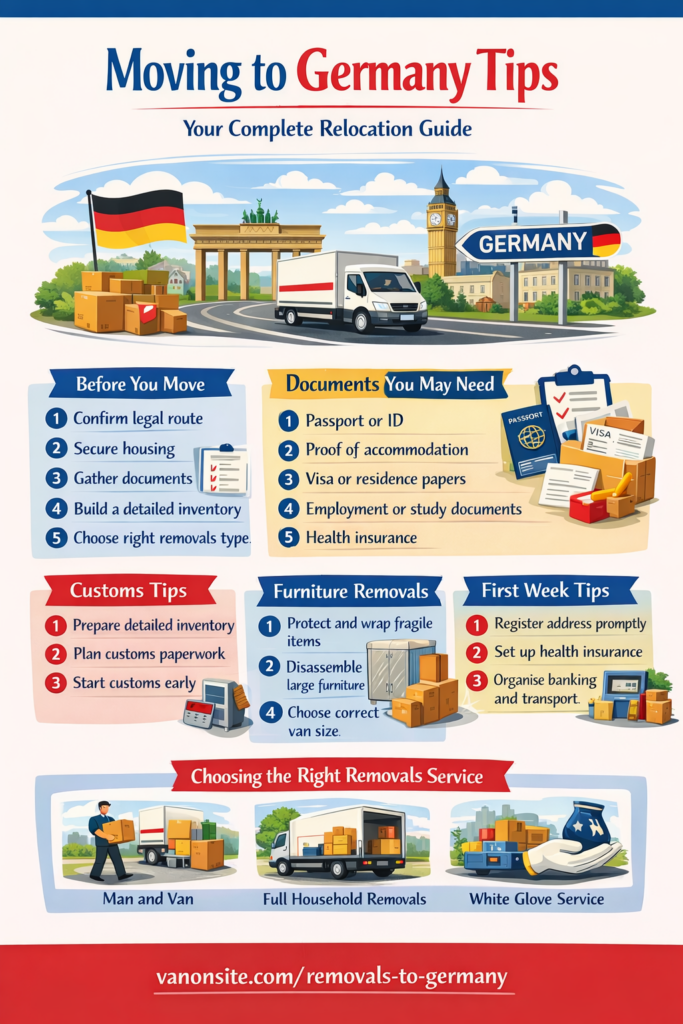
Good paperwork does not make a move glamorous, but it does make it manageable. When people feel lost before relocating to Germany, it is often because their documents are scattered across inboxes, screenshots, printed folders, and half-finished notes. Clear paperwork creates control. It gives the move shape. It helps you make better decisions earlier, and it reduces the kind of last-minute panic that can sour the entire experience.
The easiest way to stay organised is to sort everything into five groups. That turns one intimidating pile of admin into a system you can actually use.
Identity documents
These are the documents that prove who you are and support travel itself.
- passport
- national ID if relevant
- travel documents for family members
These should always stay easy to reach. They should travel with you, not inside the main load. It is also wise to keep both printed and digital copies of the essentials, especially if more than one person is moving.
Purpose-of-move documents
These explain why you are relocating and what legal route may apply.
- job contract
- university confirmation
- self-employment paperwork
- family-reunion evidence
This group matters because Germany often rewards clarity. The more coherent your documents are, the easier it is to understand which residence or visa route makes sense for your move.
Housing documents
These documents create a real destination for the move.
- tenancy agreement
- temporary accommodation confirmation
- landlord details
Even temporary accommodation can make the whole relocation feel more grounded. It supports first-week planning and helps with address-related admin after arrival.
Health and insurance documents
These documents protect you from avoidable friction in the first days and weeks.
- health insurance confirmation
- prescriptions or important medical records if relevant
This category is easy to underestimate until you need it quickly. Health-related documents should stay close, especially if the move includes ongoing treatment, medication, or family members with specific needs.
Removals and customs documents
This is where the paperwork starts affecting the logistics side directly.
- household inventory
- transport confirmation
- customs paperwork where relevant
This group should be kept especially tidy because it connects your belongings to the story of the move. It supports quote accuracy, smoother loading, and customs clarity where customs apply.
A simple way to reduce stress is to keep your documents in three formats at once:
- a physical folder you travel with
- a digital folder on your phone or laptop
- a backup stored securely online
That three-layer approach feels almost excessive until the moment it saves you.
When you need official guidance, Germany’s official immigration portal Make it in Germany is the strongest starting point, especially alongside the official entry process.
Do You Need a Visa to Move to Germany?
In many cases, this is the first big question people need answered before anything else starts to feel solid. Do you actually need a visa to move to Germany? The answer is not universal, because it depends on nationality and on the real reason for the move.
Work, study, family, and longer-term residence routes differ. The legal route should be reasonably clear before a full move is booked, especially if the relocation involves a large household load, fixed dates, or a higher budget.
A useful comparison looks like this:
| Reason for moving | What to check first | Best practical angle |
|---|---|---|
| Work | visa or residence route | contract, recognition, start date |
| Study | student route | admission, funds, accommodation |
| Family | family-based rights | relationship documents, address |
| Long-term relocation | residence planning | timeline, insurance, registration |
The table gives structure, but real life tends to be more layered. Someone moving for work may be relocating a partner, dealing with qualification recognition, and trying to line up a strict start date. A student may be balancing admissions, accommodation, and budget limits all at once. A family route can carry more document pressure because timing and proof often matter more than people expect.
That is why the smartest moving to Germany tips always place legal clarity before removals commitment. If the legal route is still blurry, it is often wiser to delay major transport decisions than to rush into a full move based on assumptions. Once the route is confirmed, the rest of the move becomes easier to shape around real dates and real requirements.
Official sources to use naturally in this section include Visa types in Germany and the page for a work visa for qualified professionals. These help the reader move from guesswork to grounded next steps.
Customs Tips When Moving to Germany
Customs is one of those topics people often avoid until it becomes urgent. That is understandable, but it is rarely helpful. If goods are entering Germany from outside the EU, customs can matter a great deal. The good news is that customs becomes much less intimidating once it is treated as part of the plan rather than an awkward extra to deal with later.
The most important thing to understand is this: household goods should not be treated like ordinary parcel shipping. A move is not just a shipment. It is a structured relocation. That is why the paperwork should tell one consistent story and why a strong inventory matters more than many people first realise.
The core customs points are these:
- customs can matter when goods are entering Germany from outside the EU
- household goods should not be treated like ordinary parcel shipping
- a strong inventory matters more than people think
- customs paperwork should tell one consistent story
- planning customs early protects timing later
That last point is especially important. Planning customs early does not only protect paperwork. It protects the emotional tone of the move. Delayed customs questions can ripple into delivery timing, unpacking, and the first week in Germany. Early preparation usually reduces that friction dramatically.
The inventory is the anchor of this section. It should be detailed enough to reflect the real contents of the move, not just broad categories written in haste. A weak inventory creates uncertainty. A strong one improves clarity for both the customer and the removals process.
It helps to think of customs documents as answering five quiet questions without confusion:
- who is moving
- from where
- to where
- why the relocation is happening
- what household goods are part of the move
When those answers stay consistent, the whole process feels steadier.
For official guidance, the best source to link here is German Customs, transferring residence. It gives readers a reliable framework without pushing them toward guesswork.


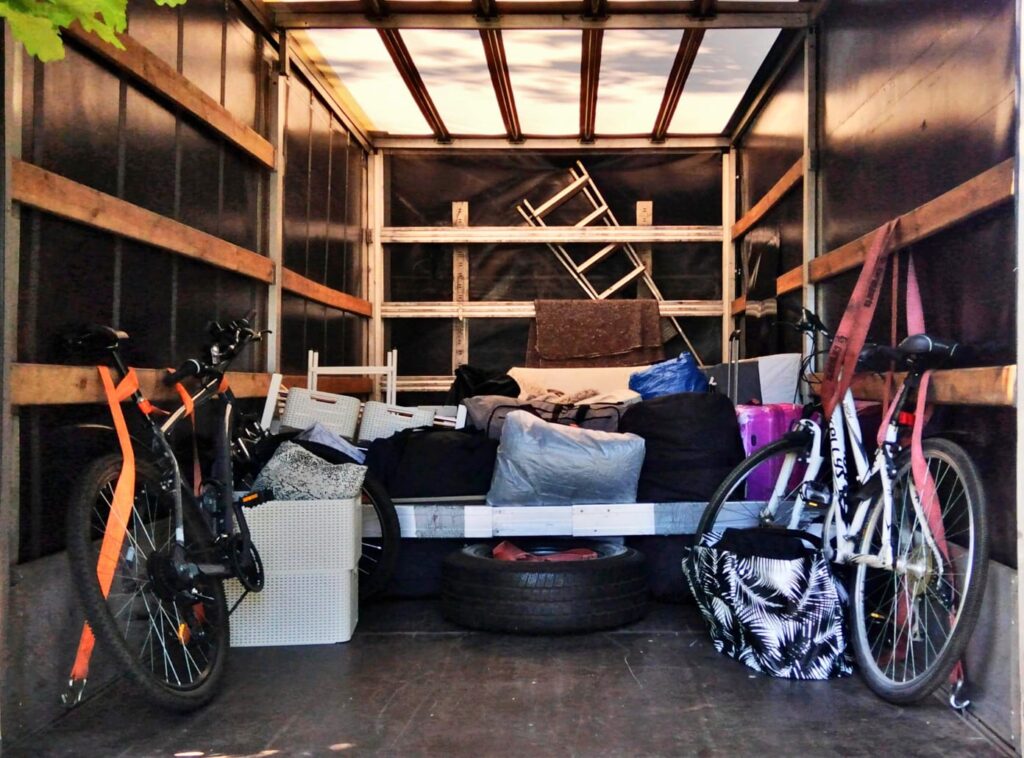
Moving Furniture to Germany Safely
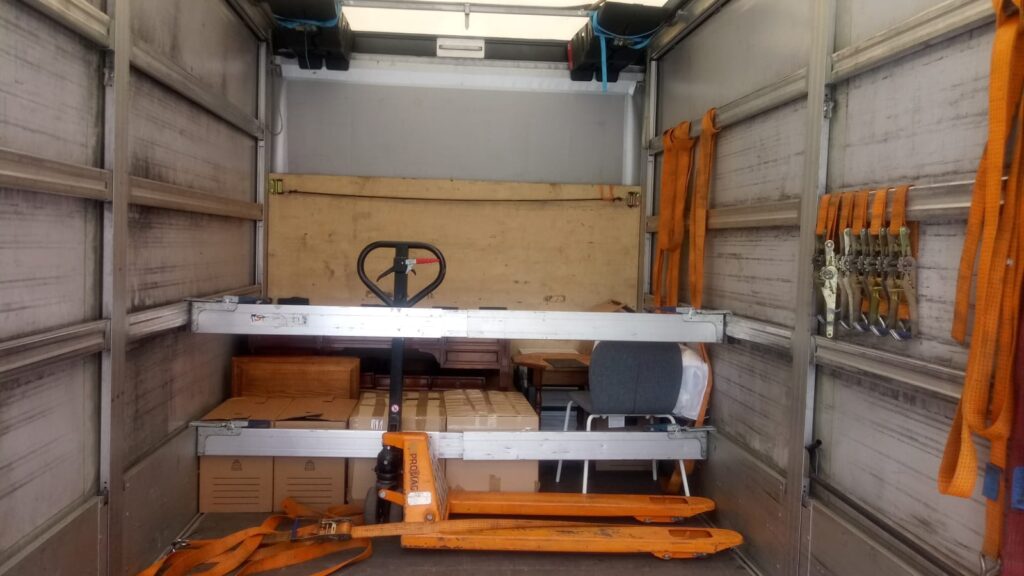
Furniture is rarely just another category on an inventory list. In many relocations, it becomes the part of the move that changes the whole equation. A sofa that needs awkward lifting, a wardrobe that must be dismantled, a dining table that suddenly takes over the load plan, or a fragile mirror that cannot simply be replaced can all shift the size, timing, and emotional weight of the move.
That is why moving furniture to Germany safely deserves careful planning from the start. Bulky items do not just take up space. They affect how the load is measured, which service level makes sense, how long loading and unloading take, and how much preparation is needed before moving day. A few large pieces can turn what looked like a compact move into something much more layered.
Furniture is usually the hardest part of the move for four clear reasons:
- it changes the volume faster than people expect
- it creates access issues in stairwells, lifts, and narrow entrances
- it often needs disassembly, wrapping, and more careful handling
- it can carry emotional or financial value far beyond ordinary household items
A practical comparison looks like this:
| Moving profile | Typical load | Best solution |
|---|---|---|
| Student or solo mover | essentials and compact load | man and van |
| Small flat | furniture and boxes | medium removals setup |
| Family house | full household load | full removals |
| Premium items | fragile or high-value pieces | white glove delivery |
That table helps the reader recognise their situation quickly, but the real value comes from asking sharper questions before the quote stage:
- Which furniture pieces genuinely need to move?
- Which items are bulky enough to reshape the service size?
- Which pieces need disassembly or stronger wrapping?
- Which items are essential for the first week after arrival?
- Which items are high-value enough to justify white glove handling?
Those questions protect both budget and peace of mind. They also reduce one of the most common moving mistakes: underestimating how much furniture distorts pricing and service fit.
Disassembly matters most when large items cannot travel safely or efficiently in one piece. Beds, wardrobes, shelving systems, large desks, and certain dining tables often become easier to protect, load, and fit once dismantled properly. Stronger wrapping matters when the item has fragile surfaces, glass elements, sharp corners, or finishes that scratch easily. Premium items may need even more care, especially if condition and presentation are part of their value.
This is exactly where internal links can work naturally and helpfully. Furniture Removals fit awkward or bulky individual pieces. Home Removals make more sense for full household transitions. Packing Service is especially useful when the move includes fragile pieces or a tighter timeline. White Glove Delivery is the better fit for delicate, premium, or high-value furniture that needs extra protection.
The emotional side matters too. Furniture is often what makes a new place feel usable fastest. If the bed arrives safely, the table is ready to use, and the fragile pieces survive the journey in good condition, the first days in Germany feel far steadier. In that sense, furniture planning is not only about transport. It is about comfort on the other side.
Man and Van or Full-Service Removals?
This is one of the most practical decisions in the whole move because it shapes cost, stress level, timing, and how much work you will still be carrying yourself. The right choice is not based only on the headline quote. It depends on volume, timing, access, emotional pressure, and the furniture profile of the move.
A man and van service can be an excellent fit when the move is compact, relatively light, and still manageable without a larger removals structure. It often works well for students, solo movers, staged relocations, or essentials-first plans where not everything is travelling at once.
Full-service removals become much stronger when the move is heavier, more time-sensitive, or emotionally demanding. Families, larger homes, furnished flats, complex access, and bigger furniture loads usually benefit from more structure and less manual strain.
A clear comparison looks like this:
| Option | Best for | Main advantage |
|---|---|---|
| man and van | smaller or staged moves | flexibility and lower cost |
| full-service removals | larger homes and family moves | more structure and less stress |
| white glove delivery | premium items | extra care and presentation |
The strongest choice usually becomes obvious when you answer a few honest questions:
- Is the move small enough to stay efficient?
- Are you moving only essentials, or your full daily life?
- Do you have awkward or fragile furniture?
- Would more structure save more stress than it costs?
A compact move can often stay beautifully efficient with a man and van setup. A family move rarely feels as calm if the service is too light for the real load. A premium furniture move may not need full-house removals, but it may still deserve white glove support for the most delicate pieces.
The deeper point is simple: the right service should fit the actual move, not the cheapest version of it. This is where VANonsite has a natural advantage. Flexible service sizes allow readers to match the move to reality, whether that means a lean man and van option, a broader household removals plan, or more protective handling for premium items.
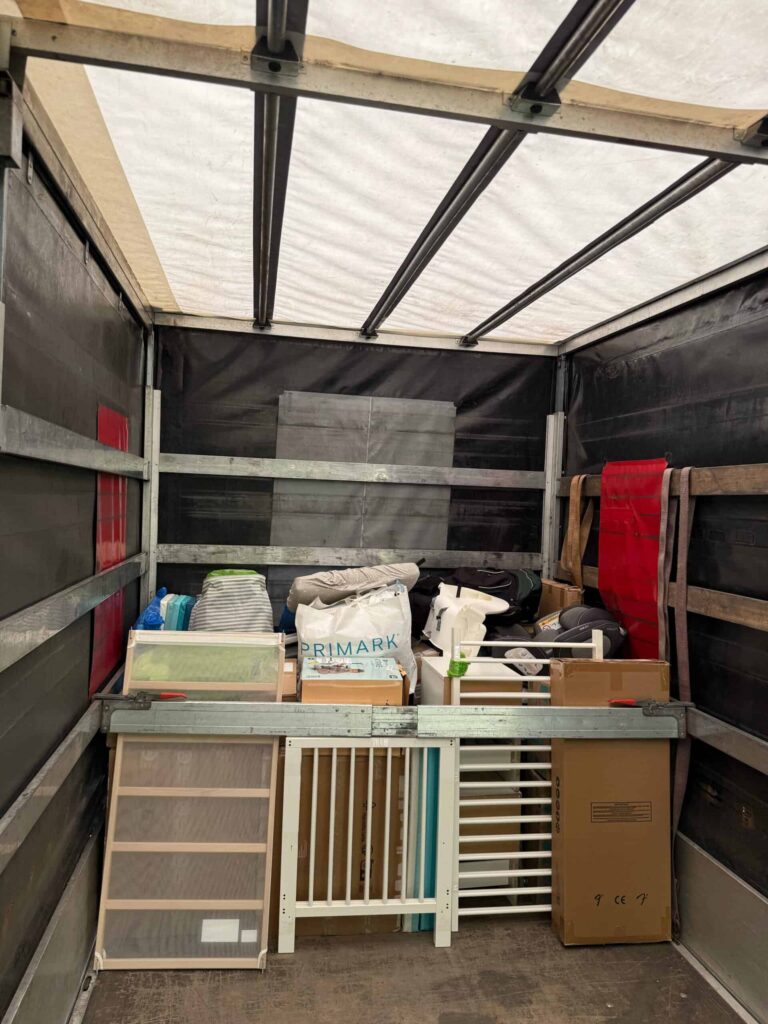
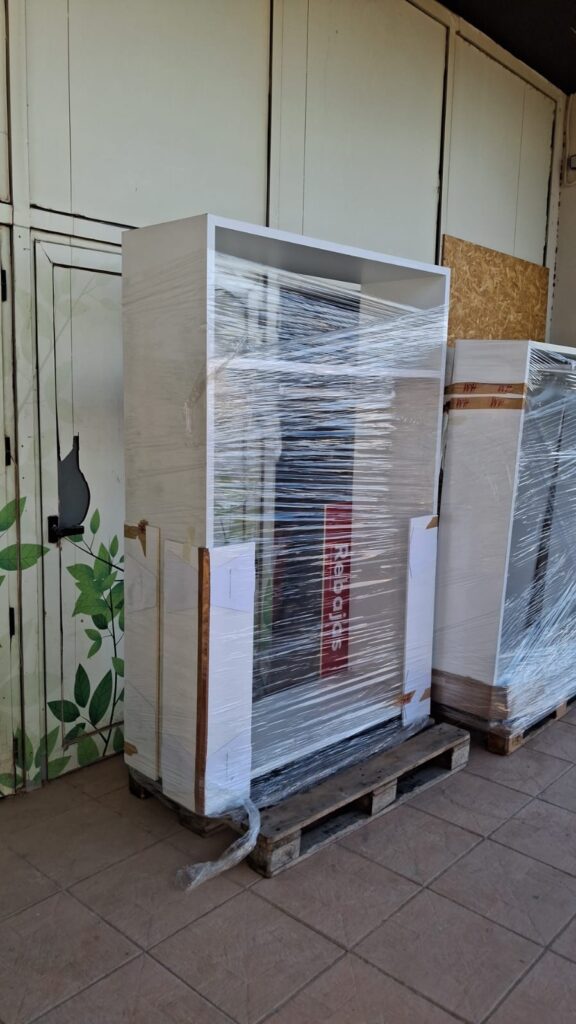

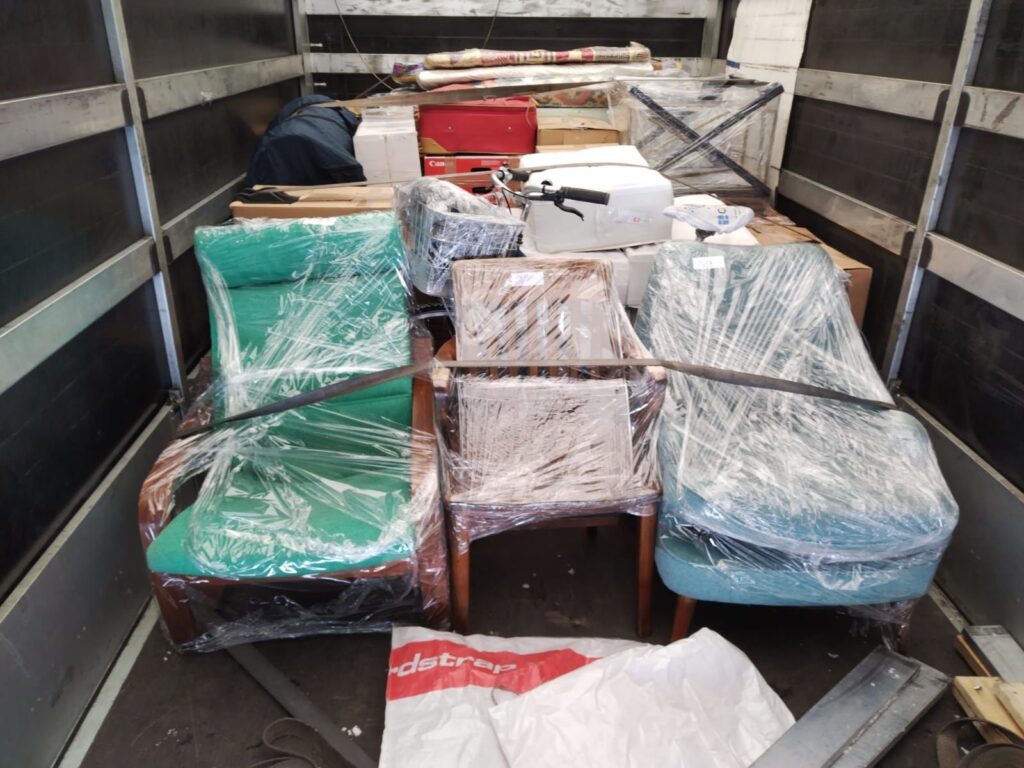
How Much Does Moving to Germany Cost?
Cost is one of the first questions almost every mover asks, and for obvious reasons. A relocation to Germany can feel thrilling, but it can also feel financially sharp. People want clarity before they commit. They want to understand what drives the quote, what quietly pushes the price higher, and how to avoid paying for the wrong kind of service.
The honest answer is that moving to Germany does not come with one flat price. The total cost depends on the shape of the move, not just the route on the map. Two people moving to the same German city can receive very different quotes if the volume, access, timing, and handling needs are different.
The main cost drivers are usually these:
- route and total distance
- volume and weight
- access at both properties
- customs complexity where relevant
- packing support
- fragile-item handling
- urgency and booking timing
Each of these changes the real price in a practical way. Route and total distance affect the base transport cost, but that is only one layer. Volume and weight often have a much bigger impact than people first expect because they shape the vehicle size, the handling time, and the whole service structure. Access at both properties matters because stairs, narrow hallways, lifts, limited parking, or awkward entrances all create extra work.
Then there are the layers that people often underestimate. Customs complexity matters when the route makes customs relevant. Packing support matters when the move includes fragile items, premium furniture, or a tighter deadline. Fragile-item handling matters because proper protection saves far more than it costs when damage is avoided. Urgency and booking timing matter because rushed moves usually feel less flexible and often become more expensive.
A useful way to explain pricing is to break it into five layers:
- Transport layer for distance, route, and vehicle size
- Handling layer for stairs, access, bulky items, and loading complexity
- Protection layer for packing support and fragile-item care
- Timing layer for urgent moves or narrow moving windows
- Complexity layer for customs and route-specific admin where relevant
That structure helps readers understand why the cheapest quote is not always the cheapest move. A low headline number can quickly become poor value if the vehicle is too small, the move needs to be split, the fragile items are underprotected, or the time pressure creates avoidable problems.
VANonsite service sizes make this much easier to visualise:
| Service size | Capacity | Weight limit | Best for |
|---|---|---|---|
| Moving One | 1 m3 | 100 kg | urgent essentials and documents |
| Moving Basic | 5 m3 | 300 kg | student or compact moves |
| Moving Medium | 10 m3 | 500 kg | one-room flat or staged load |
| Moving Premium | 15 m3 | 1100 kg | one to two-bedroom move |
| Moving Premium Plus | 30 m3 | 3500 kg | larger household move |
| Moving Full House XXL | 90 m3 | 20000 kg | full house relocation |
That table is more than a technical reference. It is a decision tool. It helps the reader picture what kind of service genuinely fits the move. Someone sending urgent essentials should not think about the move the same way as a family relocating a full home. A student with 5 m3 of belongings does not need the same setup as a house move with 30 m3 or more.
A practical reading of the sizes looks like this:
- Moving One works best for small urgent loads where speed matters most
- Moving Basic suits student moves and compact relocations
- Moving Medium fits smaller flats and staged household moves
- Moving Premium is often right for one to two-bedroom moves
- Moving Premium Plus suits larger homes and heavier furniture loads
- Moving Full House XXL is designed for full-house relocations on a much bigger scale
The key idea is simple. Price should follow fit. The real goal is not to chase the smallest number on the screen. The real goal is to choose the service that protects the move, matches the actual load, and reduces the risk of repeat handling, rushed packing, and expensive mistakes.
Packing Tips for Moving to Germany
Packing often looks simple until it becomes the reason everything else starts feeling chaotic. Good packing does not only protect plates and glass. It protects timing, first-week comfort, and the emotional tone of the whole move. The best packing tips are usually the least glamorous ones, but they save the most stress.
The fastest practical rules are these:
- label by room and priority
- keep documents and medication with you
- separate first-night essentials
- protect fragile items early
- do not leave packing for the final 24 hours
- keep chargers, toiletries, and basic kitchen items accessible
Those points matter because they create order before the move gets loud. Label by room and priority so you are not opening ten boxes just to find one kettle or one laptop cable. A simple label such as “kitchen, first day” or “bedroom, urgent” can save a surprising amount of frustration.
Keep documents and medication with you because these are not ordinary packed items. They belong with the traveller, not with the main load. Separate first-night essentials so the first evening does not feel like a scavenger hunt. Clothes, toiletries, chargers, bedding basics, medication, snacks, and children’s essentials if relevant should all stay easy to reach.
Protect fragile items early rather than leaving them until the final rush. Fragile items usually need more time, more wrapping, and more care than people expect. Do not leave packing for the final 24 hours because rushed packing is often careless packing. It creates weaker labels, more breakage risk, and more confusion on arrival.
Keep chargers, toiletries, and basic kitchen items accessible because these are exactly the things people need first and misplace most often.
A useful packing rhythm is:
- start with non-essential rooms and seasonal items
- pack fragile items earlier than you think you need to
- label by room and urgency, not just by category
- keep one essentials bag or box outside the main load
For readers who want to reduce manual stress or protect delicate items more carefully, Packing Service fits naturally here. It is especially helpful when time is tight, the move is larger, or the furniture and fragile pieces need a higher level of protection.
The deeper truth about packing is simple. Good packing makes the move feel calmer because it reduces tiny moments of chaos. Those moments add up fast. Strong packing turns them into control.
First Week in Germany: What to Do After Arrival
The first week after arrival often decides how the whole move feels in hindsight. If those first days are chaotic, even a well-run transport process can feel heavier than it should. If the landing is calm, practical, and clear, Germany begins to feel less like a temporary stop and more like the start of a new life.
That is why this part of the move deserves more attention than people usually give it. The relocation is not really finished when the van is unloaded. It keeps unfolding through registration, early admin, local setup, and the small routines that make daily life work. A strong first week reduces anxiety because it creates function fast.
The main priorities usually include:
- registration basics
- health insurance and early admin
- local transport and phone setup
- unpacking by function, not by panic
- building a calm routine fast
For official registration context, Berlin’s government page is a useful example of how the process works and why timing matters: Anmeldung within 14 days.
A simple way to approach the first week is to divide it into three practical layers.
Function
This is about what you need to make daily life work immediately. It includes documents, chargers, medication, bedding, basic toiletries, kitchen essentials, transport access, and a working phone setup. You do not need the whole home unpacked. You need the right things available at the right time.
Clarity
This is about what must stay easy to find. Passports, registration paperwork, insurance details, housing documents, banking information, and first-week admin papers should never disappear into random boxes. Good clarity removes the kind of stress that turns simple tasks into exhausting ones.
Stability
This is about what makes the new home feel usable fastest. A made bed, one functioning room, enough kitchen basics for breakfast, clean clothes, and a basic rhythm for the first mornings can make an enormous emotional difference. Stability is what turns arrival into relief.
Unpacking by function, not by panic, is one of the smartest moving to Germany tips in this whole guide. Start with the things that make the home work, not with the boxes that happen to be nearest the door. That mindset can change the first 72 hours dramatically.
It also helps to ask one powerful question before you arrive: what five things would make Germany feel manageable in the first 48 hours? If you know the answer before moving day, the landing becomes much calmer.
Common Mistakes to Avoid When Moving to Germany
Most moving mistakes do not look dramatic at the beginning. That is exactly why they become expensive later. A rushed assumption, a missing inventory, or the wrong service size may feel small in the planning phase, but those small cracks often widen once the move is under pressure.
The most common mistakes to avoid are these:
- booking too early without legal clarity
- underestimating customs or paperwork
- building no inventory
- choosing only by price
- using the wrong vehicle size
- packing fragile items too casually
- failing to separate essentials
- treating the move like a local delivery
Booking too early without legal clarity creates pressure in the wrong direction. The transport side starts moving faster than the paperwork side, and that imbalance can make the whole relocation feel unstable.
Underestimating customs or paperwork often seems harmless until timing becomes tight. Strong documents and a strong inventory save stress later.
Building no inventory weakens everything at once. Quotes become less accurate, customs becomes less clear, and packing becomes more chaotic.
Choosing only by price can be one of the most expensive mistakes in disguise. A lower headline number may mean the wrong vehicle size, weaker protection, or a service that does not fit the actual move.
Using the wrong vehicle size creates avoidable problems on both sides of the move. Too small, and the relocation becomes cramped or fragmented. Too large, and the budget may be carrying more than necessary.
Packing fragile items too casually leads to a kind of regret that is hard to forget. A damaged mirror, scratched table, or poorly protected sentimental item changes the emotional tone of the arrival immediately.
Failing to separate essentials makes the first 24 to 72 hours far harder than they need to be. A few smart decisions before moving day can eliminate that friction completely.
Treating the move like a local delivery is the deeper mistake behind many of the others. A move to Germany is a transition, not just a shipment. It needs stronger sequencing, better preparation, and more honest planning.
Why Movers Choose VANonsite for Germany Removals
People rarely choose a removals company based only on transport. They choose based on trust, fit, and whether the service makes the move feel more controlled. That matters even more when the relocation crosses borders and carries more moving parts.
VANonsite stands out naturally because it addresses the real shape of a move to Germany, not just the distance involved. The strongest reasons readers may choose VANonsite include:
- secure European removals
- GPS tracking for every load
- flexible service sizes
- support for furniture, family, student, office, and urgent moves
- strong fit for both man and van and larger removals
- careful handling and fast delivery
These points matter because they answer real concerns. Secure European removals matter when your belongings are crossing countries, not just crossing a street. GPS tracking for every load matters because visibility lowers stress. Knowing where your belongings are can make the entire move feel more transparent and more trustworthy.
Flexible service sizes matter because not every move has the same profile. A student move, a couple’s relocation, a full family household, and an urgent furniture delivery should not all be treated the same way. A service that can support both man and van moves and larger removals gives the customer a better chance of paying for fit instead of excess.
Support across furniture, family, student, office, and urgent moves matters because real life does not arrive in tidy categories. Some relocations are planned for months. Others suddenly accelerate. Some are emotionally simple and logistically hard. Others are logistically simple but emotionally heavy.
Careful handling and fast delivery are not just service features. They shape the memory of the move itself. People remember whether the transition felt calm, whether the fragile pieces arrived safely, and whether the first days in Germany started well.
That is why this section builds trust without noise. VANonsite does not need to sound loud. The value is already clear: secure transport, route visibility, flexible sizing, and a practical fit for many different kinds of moves to Germany.
Final Checklist Before Booking Your Move
Before you confirm the move, it helps to stop and run one final honest check. This is where paperwork, logistics, timing, and cost all meet. A strong final checklist protects the shape of the move because it catches weak points before they turn into stress.
The final checklist should include:
- confirm legal route and move window
- estimate load volume honestly
- gather documents and address proof
- prepare the inventory
- choose the right service level
- separate essentials from the main load
- compare care, timing, and fit, not just price
Each point matters. Confirm legal route and move window because timing means very little if the legal side is still unclear. Estimate load volume honestly because underestimating the move is one of the fastest ways to create avoidable problems.
Gather documents and address proof so the relocation already feels organised before the transport is locked in. Prepare the inventory because it strengthens customs clarity, quote accuracy, and smarter loading. Choose the right service level because fit protects both budget and peace of mind.
Separate essentials from the main load because your first days should not depend on opening every box. Compare care, timing, and fit, not just price because the best move is rarely the one with the smallest headline number. It is the one that lands well.
A good final self-check is to ask yourself four simple questions:
- Do I know the legal route I am moving on?
- Do I know the real size of the load?
- Are my important documents easy to reach right now?
- Am I choosing the service for fit, not only for price?
If the answers feel clear, the move is already on much stronger ground.
FAQ
These are the questions many readers ask once the move starts feeling real rather than theoretical.
What are the most important moving to Germany tips?
The most important moving to Germany tips are to confirm your legal route early, secure housing before finalising logistics, prepare your documents, build a detailed inventory, choose the right removals size, keep essentials with you, and plan the first week before arrival.
Do I need a visa to move to Germany?
That depends on your nationality and the reason for your move. Work, study, family, and longer-term residence routes can follow different rules. The safest approach is to confirm the legal route before committing to a full relocation.
Do I need customs paperwork when moving to Germany?
You may, especially if your goods are entering Germany from outside the EU. In those cases, customs paperwork and a clear inventory can matter a great deal.
Is man and van enough for moving to Germany?
Sometimes, yes. A man and van option can work very well for smaller, staged, or lower-volume moves. For larger homes, complex furniture, or higher-stress relocations, fuller removals support is often the better fit.
How much does moving to Germany cost?
The cost depends on route, distance, volume, access, timing, packing needs, fragile-item handling, and customs complexity where relevant. That is why two similar moves can still receive different quotes.
Can I move furniture to Germany safely?
Yes, but furniture needs realistic planning. Bulky or fragile pieces affect service size, handling needs, and overall move structure. Safe transport depends on matching the load to the right service.
How early should I book a removals company?
Earlier is usually better, especially if your move has a fixed job start, a family schedule, larger furniture volumes, or route-specific paperwork. More lead time usually creates more control.
What should I do in my first week in Germany?
Focus on registration, health insurance and early admin, local transport and phone setup, and making the home function quickly. Unpack by usefulness, not by panic.
Ready to Plan Your Move?
If you want moving to Germany tips that go beyond generic advice, the most important step is choosing a removals plan that fits your real move. VANonsite offers a practical solution for everything from compact man and van transport to full household relocations, with secure European delivery and GPS tracking for every load.
A smoother move starts with the right structure before the first box is lifted.