
Furniture removals to Bulgaria need more than spare vehicle space. A sofa, wardrobe, dining table or inherited cabinet must be measured, protected for its actual surface and planned through both properties before collection. VANonsite builds the move around the item list, photographs, access and required handling rather than treating furniture as oversized parcels.
Use the automatic estimate below as a starting point. Then send the collection and delivery postcodes, preferred dates, photographs, dimensions and any stairs, lifts, parking restrictions or long carrying distances. We use that evidence to assess the volume, crew, protection and vehicle option and to prepare a quotation for the agreed scope.

When this furniture service is the right fit
This page is for furniture-led consignments between Bulgaria, the UK and other European locations: a few bulky pieces, the contents of one room, furniture bought or inherited abroad, or selected items left after a wider move. The defining feature is not a fixed number of objects. It is the need to plan protection, handling and usable vehicle space around individual pieces. For the complete service map, start at the removals to Bulgaria hub.
| Your consignment | Best page | Main planning evidence |
|---|---|---|
| Sofa, dining set, wardrobe or several selected pieces | Stay on this furniture-removals page | Item dimensions, materials, photographs and access |
| Cartons, personal effects and only one or two small pieces | Small removals to Bulgaria | Carton count, loose-item list and approximate volume |
| Complete contents of a flat or house | House removals to Bulgaria | Room-by-room survey, appliances, furniture and cartons |
| A mixed international relocation needing an overview | International removals to Bulgaria | Origin, destination, full inventory and required services |
A single object can still require specialist assessment. Pianos, safes, stone tables, large glass panels, antiques and pieces requiring a hoist are not routine furniture jobs simply because the item count is low. Identify them at the first enquiry so we can confirm whether suitable handling can be arranged.
Build an inventory that reflects transport-ready size
Furniture quotations become unreliable when the inventory says only “one wardrobe” or “a few chairs”. Models vary, modular sofas separate in different ways, and dismantled furniture may occupy less floor space but create more individual pieces. Record the transport-ready dimensions wherever possible.
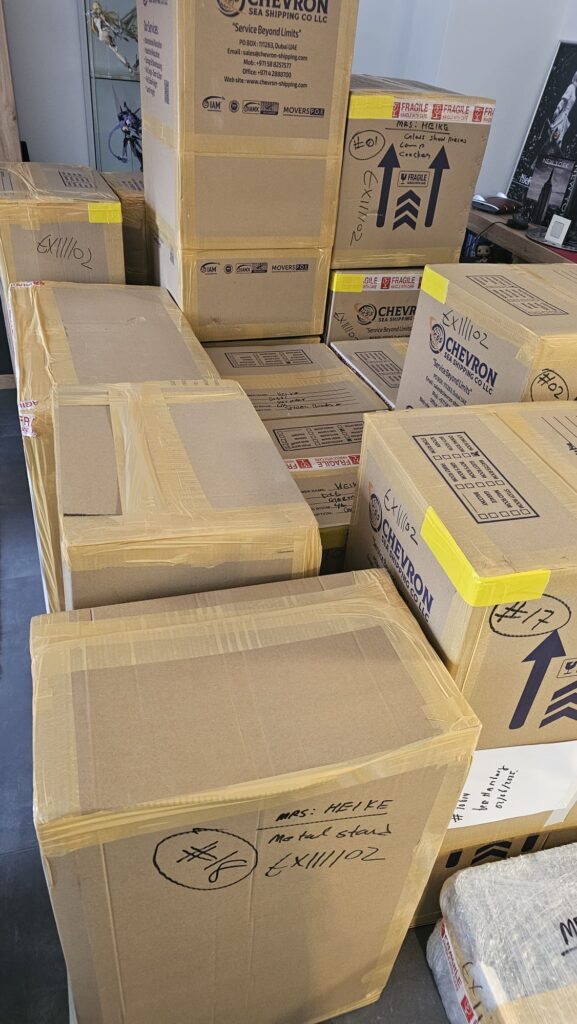
- Number each item. Use one line for every sofa section, cabinet, table, chair, bed component, mattress, artwork or loose object.
- Measure length, width and height. State whether the measurement is assembled or dismantled and include projecting arms, feet or handles.
- Describe the material. Solid wood, veneer, lacquer, leather, glass, stone and fabric need different contact protection.
- Photograph every side. Images help identify construction, detachable sections and pre-existing marks before packing.
- Flag weight and handling limits. Tell us about stone tops, mechanisms, filled drawers, awkward balance points and anything that cannot be tilted.
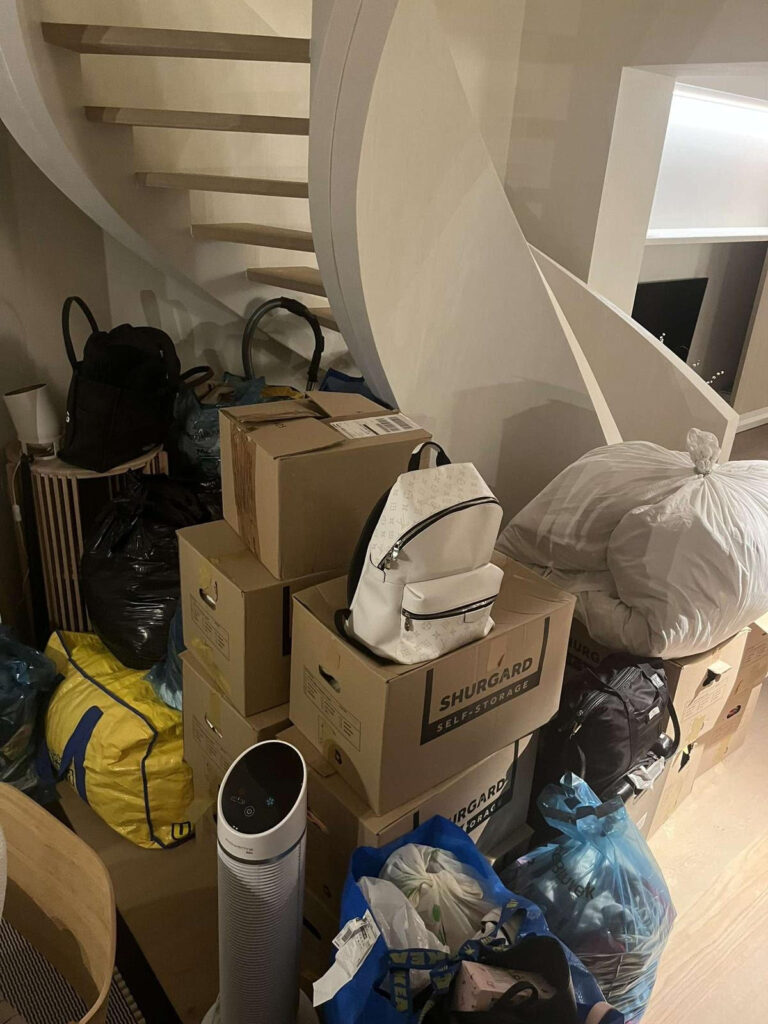
- List associated cartons separately. Cushions, fittings, lamps and decorative objects still use capacity and need labels.
A slow video walkthrough is useful when the list is long. Show the item, its route to the entrance, the stairs or lift and the proposed stopping place. Avoid filming identity documents, keys, family photographs or other private details. If the inventory changes after quotation, report it before collection so the load plan and agreed scope can be reviewed.
Access decides how furniture can be moved
The vehicle journey is only part of a furniture removal. A three-seat sofa may fit the van but not turn on a narrow landing. A wardrobe may leave one property assembled but require dismantling at a Bulgarian apartment. Before booking, compare the item dimensions with doors, corridors, stairwells, lifts and gates at both addresses.
- Measure the narrowest doorway and note whether the door can open fully.
- Give the lift door, cabin and weight-limit details; “there is a lift” is not enough.
- Show tight corners, sloped ceilings, low beams and stair turns in photographs.
- State the floor number and whether there are steps before the main entrance.
- Explain where a removal vehicle can legally and safely stop and estimate the carrying distance.
- Confirm any building booking, concierge rule, restricted delivery period or parking arrangement.
Do not assume that dismantling solves every access problem. Some glued, antique or mechanically complex furniture should not be taken apart without the right assessment. Where access is uncertain, send a continuous video from the item to the vehicle position before the quotation is finalised.
Protection should match the surface and construction
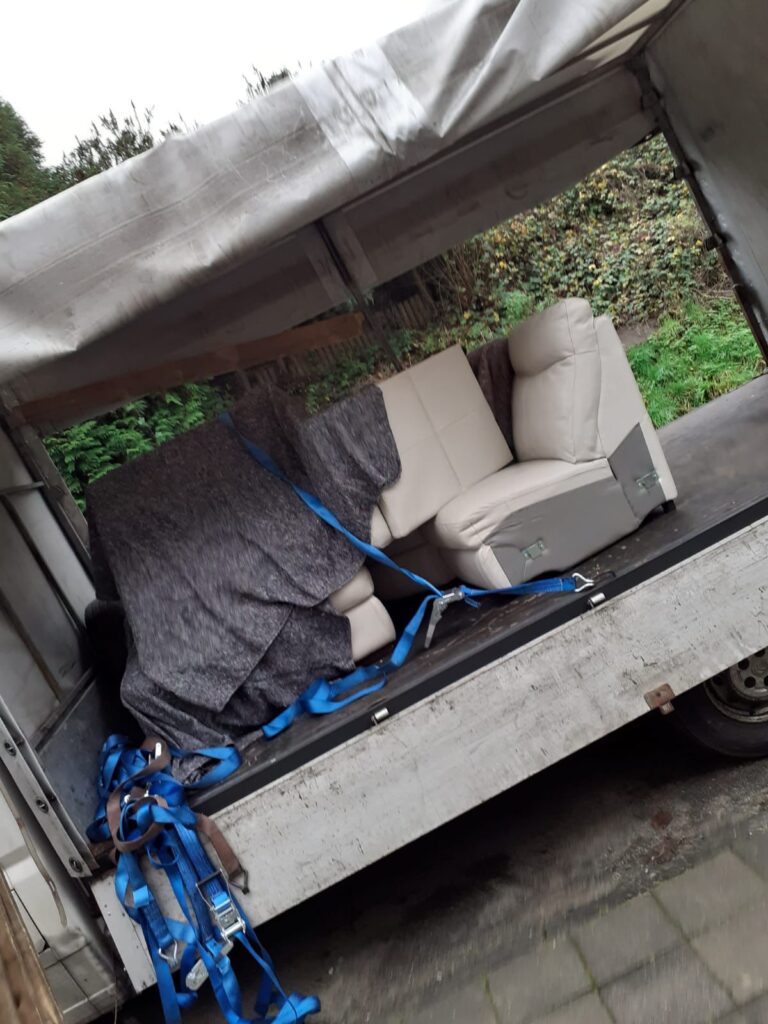
Good furniture packing controls movement, abrasion, pressure and moisture without putting harmful material directly against a delicate finish. The correct method depends on the piece. A fabric sofa, lacquered cabinet and stone-topped table should not be wrapped as though they were identical.
| Furniture type | Planning priority | Common preparation point |
|---|---|---|
| Upholstered sofa or chair | Clean contact layer, corner protection and shape support | Remove loose cushions and check detachable feet |
| Painted, lacquered or veneered cabinet | Abrasion-free surface protection and stable orientation | Secure or remove shelves and doors as agreed |
| Table with glass or stone top | Separate rigid protection and an approved carrying position | Confirm whether the top detaches and record its weight |
| Bed and mattress | Clean cover, labelled components and protected edges | Bag fixings and identify matching frame parts |
| Flat-pack or modular furniture | Panel-edge protection and controlled hardware | Label panels before dismantling and avoid mixed fixing bags |
Never place adhesive tape directly on wood, paint, leather or fabric. Empty drawers unless their contents and construction have been specifically assessed, and remove loose shelves, keys and fittings. Photograph dismantling stages if reassembly is required. VANonsite packing services can be requested for selected pieces or a wider consignment; the quotation should state exactly which materials and tasks are included.
Part load or dedicated furniture transport?
Furniture can travel as an allocated part load when the measured items match compatible route capacity and the customer can work with coordinated collection and delivery windows. A dedicated option reserves capacity around one booking and may suit a larger set, access appointment or time-sensitive handover. The choice should follow the inventory and operational constraints, not a generic promise.
| Question | Part load | Dedicated option |
|---|---|---|
| Capacity | Measured furniture uses allocated shared capacity | Vehicle capacity is planned around one booking |
| Dates | Collection and delivery windows are coordinated with the route | The route is planned around the agreed job and availability |
| Good fit | Flexible selected pieces with a stable inventory | Urgent, larger or appointment-sensitive furniture consignments |
| Evidence required | Accurate transport-ready volume and date flexibility | Inventory, access, deadline, route and crew needs |
Read the full shared-capacity process on part-load removals to Bulgaria. For an eligible urgent dedicated route, VANonsite may be able to offer a 1–3 day transit after collection through Last-Minute Moving. Availability, route, access, documents and the agreed collection slot must be confirmed first; this is not a standard timetable for shared furniture loads.
What changes the price of shipping furniture to Bulgaria?
The price is built from usable vehicle capacity and the work required to move the pieces safely. Two inventories with the same item count can produce different quotations when one includes a modular sofa at ground level and the other contains heavy cabinets on an upper floor without a suitable lift.
- transport-ready volume, weight and shape of every item;
- collection and delivery locations and the viable route;
- stairs, lifts, carrying distance, parking and restricted access;
- crew time, dismantling, reassembly and specialist handling;
- packing materials and whether preparation is full or selected-item;
- part-load flexibility or dedicated capacity;
- declared circumstances, documents and any agreed additional service.
For a fuller explanation of pricing inputs, use removals to Bulgaria costs. That page owns the cost-comparison intent; this page explains the furniture evidence that makes a quotation accurate. Check whether packing, dismantling, reassembly, access labour and disposal of agreed packing materials are included instead of comparing totals with different scopes.
Documents depend on the route, not the furniture label
A move between Bulgaria and another EU country is not the same administrative route as a move between Great Britain and Bulgaria. Ownership, residence circumstances, item type, origin and destination can affect the information required. Do not rely on an old checklist copied from another move.
For Great Britain departures, review current official guidance on transfer of residence where relevant and provide a clear inventory and truthful item values or circumstances when requested. For EU consumer and residence information, consult the European Union’s Your Europe residence guidance. VANonsite can coordinate transport information for the booked move, but the customer remains responsible for accurate declarations and for obtaining specialist advice where necessary.
Do not pack passports, money, jewellery, medicines, essential keys or irreplaceable records inside furniture. Flag batteries, liquids, aerosols, fuels, chemicals, plants, food, weapons or other restricted goods before booking. A locked cabinet does not make an undeclared item acceptable for transport.
Collection, loading and delivery checks
On collection day, keep the agreed route through the property clear and ensure dismantling decisions have already been made. Match every item to the numbered inventory, keep fixings with the correct piece and photograph the prepared condition. If another person is handing over the furniture, give them the final inventory and contact details rather than asking them to interpret an old quotation.
At delivery, the receiving area should be ready before unloading begins. Confirm the final room for large items because repeated movement inside the property creates unnecessary handling. Count the labelled pieces, check accessible surfaces and note any visible issue on the delivery record at handover. Reassembly should cover only the items and tasks agreed in the quotation.
Practical examples: what we need before quoting
| Example | Useful evidence | Likely decision point |
|---|---|---|
| Three-seat sofa to a Sofia apartment | Overall and separated dimensions, lift cabin, stair turns and parking | Whether it can enter the property and whether feet or sections detach |
| Dining set and sideboard from the UK | Table-top material, chair count, cabinet shelves, documents and access video | Protection method, transport-ready volume and route administration |
| Wardrobes and beds from a Bulgarian house | Assembled sizes, fixing method, dismantling responsibility and destination rooms | Crew time, labelled components and agreed reassembly |
| Inherited cabinet and framed artwork | Condition photographs, construction, dimensions, values where requested and receiver details | Suitability, selected-item packing and handling plan |
These are planning examples, not fixed service packages. The actual recommendation follows the route, verified access, inventory, required preparation and available capacity.




Frequently asked questions
Can VANonsite move only one sofa or cabinet to Bulgaria?
Potentially, yes. Send dimensions, photographs, both addresses, access and preferred dates. A single bulky or heavy item still needs a suitability and handling assessment before an option can be confirmed.
Should I dismantle furniture before collection?
Only where dismantling is appropriate for the construction and has been agreed. Measure access first, photograph the piece, label components and keep fixings in a marked bag. Do not dismantle glued, antique or complex mechanical furniture without suitable advice.
Is part load suitable for furniture?
It can be when the transport-ready volume is accurate, the pieces can be protected and the collection and delivery windows are flexible enough for compatible route capacity. Date-critical or access-sensitive consignments may require a dedicated option.
Can you pack and reassemble the furniture?
Selected packing, dismantling or reassembly can be discussed. Send clear photographs and construction details. The final quotation should identify the exact pieces and tasks included; do not assume every item can safely be dismantled or rebuilt.
How do I get an accurate furniture-removal quotation?
Complete the estimator and provide a numbered inventory, transport-ready dimensions, photographs, both addresses, access details, preferred dates and required services. Accuracy at this stage reduces avoidable changes when the crew reaches the property.
Request a furniture-removal assessment
Send VANonsite the item evidence before choosing a transport option. We will review the furniture, access, route and required preparation together, then define the scope that the quotation covers. For selected pieces and bulky consignments, that practical review is the difference between a generic price and a move that can actually be carried out at both addresses.
Prepare your list, take clear photographs and request your quotation. If the inventory is a complete household rather than furniture-led, continue to house removals to Bulgaria; for a flexible shared-capacity consignment, compare the dedicated part-load guide.