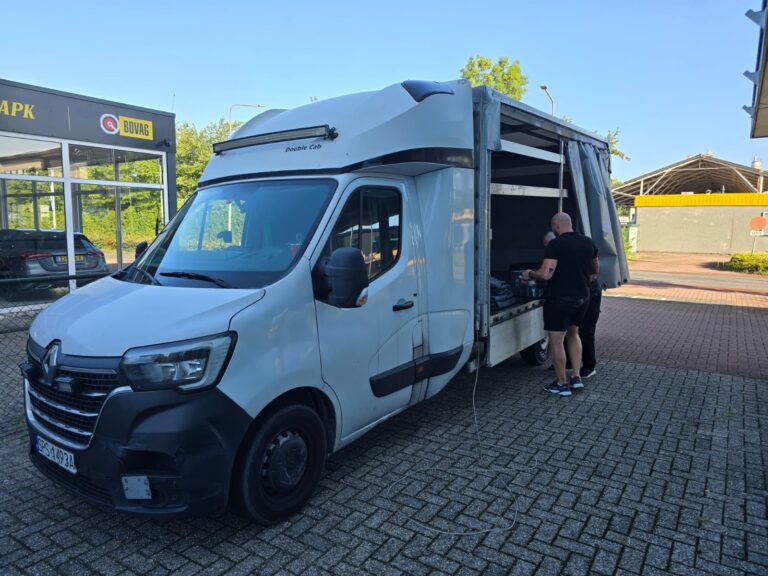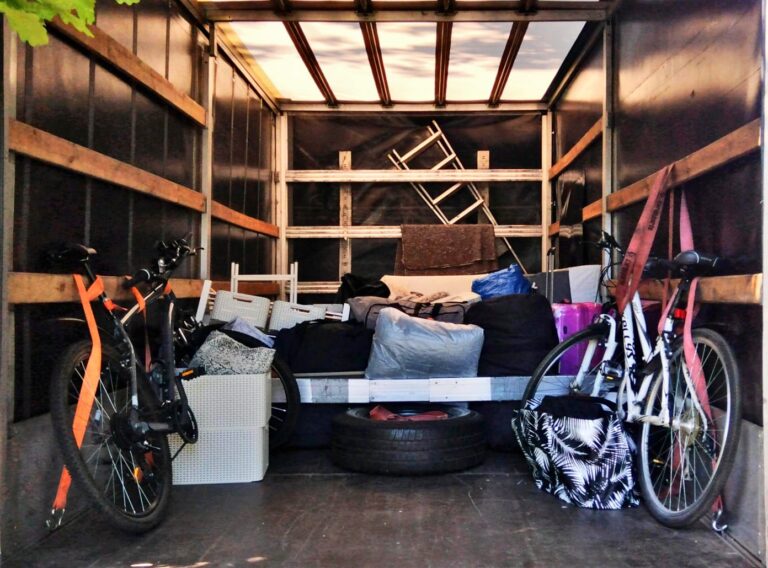

Make your removals to Luxembourg from UK simple and predictable. VanOnSite manages everything end‑to‑end — pre‑move video survey, export‑grade packing, Brexit‑savvy customs guidance, secure EU road transport via Eurotunnel/ferry, timed delivery, and room‑by‑room placement — so your new life in Luxembourg starts on Day One, not Week Three.
Follow the quote with a short credibility paragraph that reassures UK movers: we align collection with completion dates, coordinate building access on both sides, and give proactive updates at every milestone. Whether it’s a compact flat or full house removals UK to Luxembourg, you get one coordinator, clear timelines, and zero guesswork.
USP snapshot (expanded):
- Dedicated move coordinator — one point of contact from survey to sign‑off
- Flexible load models — dedicated full loads or value‑optimised part load for smaller consignments
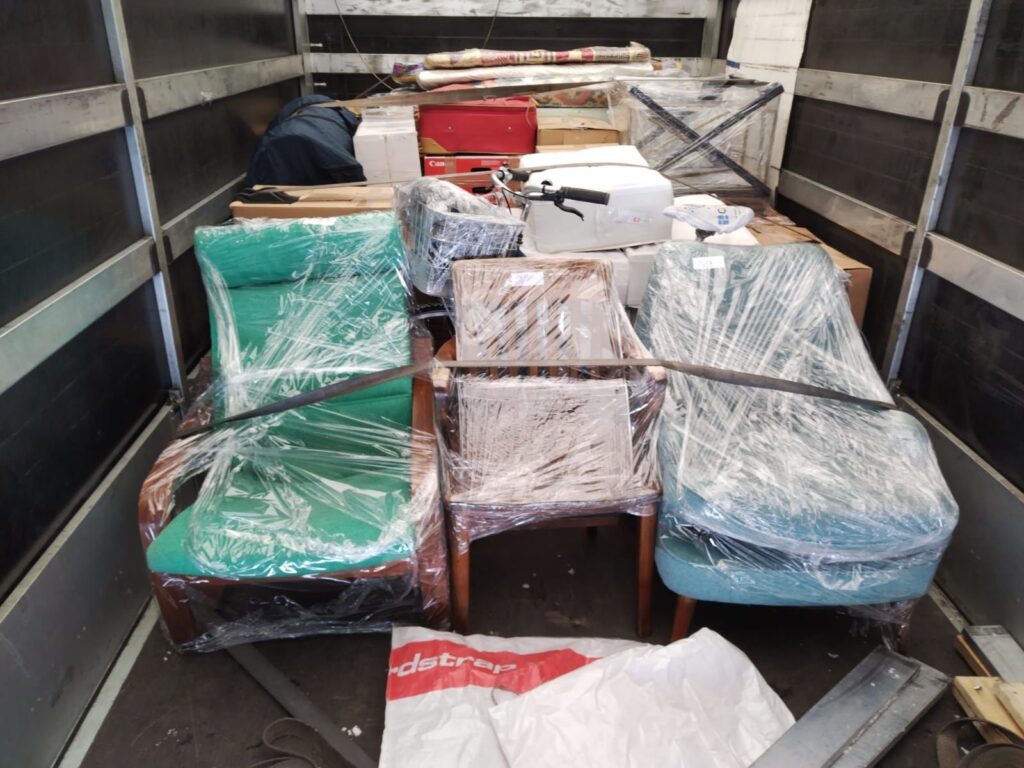
- Furniture expertise — dismantling/reassembly, export wrapping, custom crating for glass, marble, artwork
- Brexit‑ready paperwork — practical help with inventory, ToR/duty‑relief eligibility, and compliance
- Predictable windows — realistic ETAs, text/email updates, and live check‑ins on the route
- Storage bridging — short‑term storage if keys or completion dates don’t align
- Insurance choice — standard liability or full‑value protection for art/antiques
- Access management — lift bookings, parking permits, narrow‑street shuttles in UK and Luxembourg
Plan your route → Removals to Luxembourg
See how international moves work → International Removals to Luxembourg
TL;DR — The Move in 12 Decisions
A quick, scannable list that previews the guide and nudges a quote request. Each decision removes uncertainty and speeds up delivery day.
- Choose your load model — dedicated full load for fixed dates; part load for best value and flexibility.
- Book a video survey — accurate volume drives vehicle size, crew time, and delivery window.
- Sort documents early — passport/ID, signed inventory, proof of UK residence and LU address; check ToR/duty‑relief options.
- Pick packing method — pro packing for fragiles/high‑value; assisted self‑pack for sturdy items.
- Protect special pieces — crate artwork, glass, marble; plan for pianos/oversized items.
- Reserve access — lifts, parking bays, concierge approvals; flag long carries and tight stairwells.
- Label like a pro — room + contents + sequence; add colour stickers; pack a 48‑hour essentials box.
- Select insurance level — standard liability vs full‑value protection with photo inventory.
- Lock dates early — month‑ends and summer peak fill fast; earlier booking = better routing.
- Understand transit updates — collection, border, depot, out‑for‑delivery; broader windows for part load.
- Plan storage bridging — if keys don’t align, keep goods secure and insured between stages.
- Sign‑off cleanly — room‑by‑room placement, reassembly, debris removal, and exceptions noted on delivery sheet.
Prefer a 2‑minute overview? See International Removals to Luxembourg or go straight to a tailored quote → Removals to Luxembourg.
Why Luxembourg (for UK Movers)
If you’re planning removals to Luxembourg from UK, you’ll find a rare blend of career opportunity and everyday simplicity. Luxembourg delivers short commutes, a multilingual culture where English is widely used, and family‑friendly systems that make settling in fast — ideal for staged house removals UK to Luxembourg or full‑home moves on fixed dates.
Why it works for UK movers:
- Career upside: thriving finance, EU institutions, tech and logistics; international teams where English is common.
- Effortless mobility: free nationwide public transport simplifies commuting and weekend exploring.
- Quality of life: top‑tier safety, green spaces, and well‑run public services.
- Family readiness: international schools, bilingual programmes, and plenty of parks/playgrounds.
- Compact scale: cross‑town journeys are short; city energy with countryside calm.
- Gateway location: quick trips to France, Germany, and Belgium for work or leisure.
Everyday life snapshot (no prices)
| What you’ll notice | Practical takeaway |
|---|---|
| Multilingual daily life | English helps at work; French/German unlock more services |
| Short commutes | Plan moves for off‑peak delivery windows to ease access |
| Free public transport | Combine with part‑load deliveries for flexible arrivals |
| Safe, tidy neighbourhoods | Reserve lift/parking slots; respect local move‑in rules |
| International community | Join expat groups to fast‑track local tips and contacts |
Related reading: Moving to Luxembourg from Ireland: The Complete Guide (country tips relevant to UK movers, too).
Explore country basics: International Removals to Luxembourg.
Service Options for UK → LU
Choosing the right service model is the fastest way to balance speed, certainty, and value. Below we expand full load vs part load, add real‑world scenarios for house removals UK to Luxembourg, and compare transport modes you can mix for a perfect fit.
Full Load vs Part Load (What’s the difference in practice?)
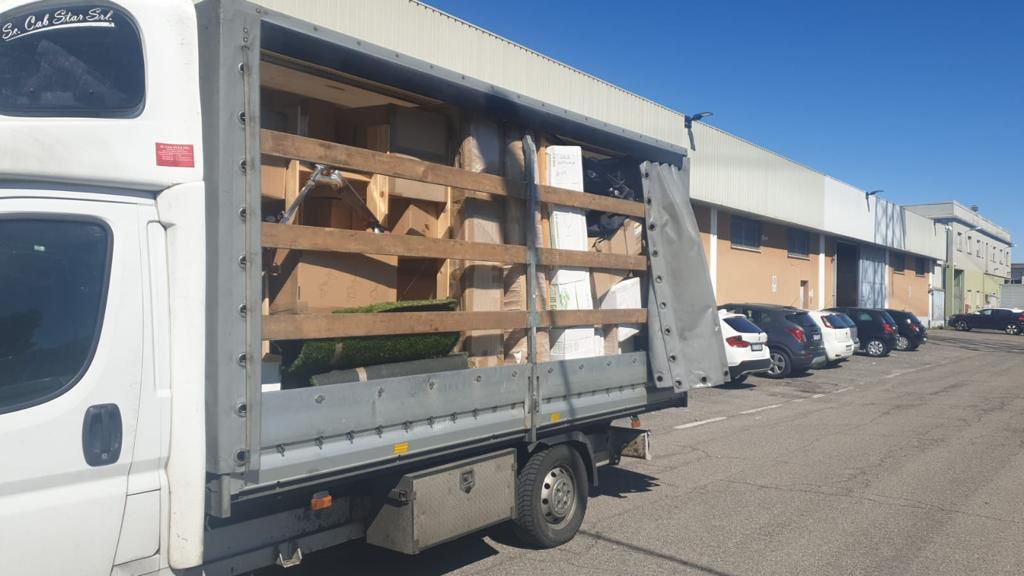
Full Load (Dedicated Vehicle) — Your goods are the only consignment on the vehicle. Best for whole‑home moves, fixed completions, or when you want minimal handling and maximum date control.
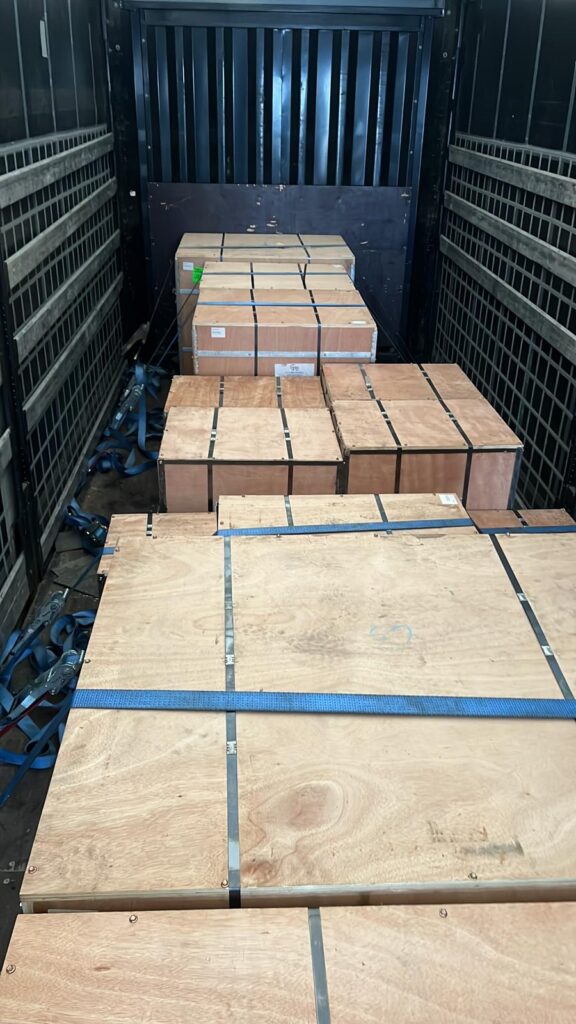
Part Load (Shared Vehicle) — Your goods travel with other consignments on the same UK→EU route. Ideal for smaller shipments or staged moves; you accept a broader delivery window in exchange for better value and a lower carbon footprint.
How Part Load Works — 6 Steps
- Video survey confirms volume and special handling.
- Space is reserved on a scheduled UK→Luxembourg run.
- Items are export‑wrapped, barcoded, and consolidated at the hub.
- You receive route updates as the tour is finalised.
- Delivery window is agreed (you’ll get a call‑ahead on approach).
- Room‑by‑room placement and basic reassembly at destination.
Decision Helper — Which should I choose?
- Pick Full Load if: you have a fixed key handover, a family‑size inventory, pets/children to settle fast, or many fragile/oversized pieces.
- Pick Part Load if: you’re flexible on dates, moving a one‑bed/partial home, or splitting shipments (essentials now, the rest later).
Common Misconceptions
- “Part load means rough handling.” — False. Protection levels are identical; the only change is routing and delivery window.
- “Full load is always faster.” — Usually, but not if access constraints require shuttle vans at destination; planning is key.
Options at a Glance (no prices)
| Option | Best for | Speed | Date certainty | Handling touchpoints | Considerations |
| Full Load | Whole homes, fixed completions | Fast | High | Minimal | Dedicated crew/vehicle; ideal for fragile/oversize |
| Part Load | Small shipments, staged moves, value focus | Moderate | Medium | More | Wider delivery window; excellent value & footprint |
| Road | Most UK→EU household moves | Balanced | High | Low | Coordinate lift/parking; Eurotunnel/ferry choice |
| Air | Urgent essentials/IT | Fastest | High | Very low | Weight/size limits; often used as split shipment |
Part‑Load Variants
- Groupage standard: best value, shared route, standard delivery window.
- Express part load: small dedicated van for essentials with tighter ETA.
- Micro‑move: boxes‑only or student moves; highly flexible scheduling.
Road Mode: Eurotunnel vs Ferry (quick view)
| Route choice | Typical use case | Notes |
| Eurotunnel | Time‑sensitive full loads | Fast border crossing; reliable in rough weather |
| Ferry | Value‑optimised part loads | More sailing options; plan around port traffic |
Example Scenarios (no prices)
- House removals UK to Luxembourg, 3‑bed home: Full Load, timed delivery on completion day; crating for glass/marble; lift booked at destination.
- One‑bed flat, flexible dates: Part Load with assisted self‑pack; essentials delivered first, storage bridging for the rest.
- Remote worker, urgent setup: Air add‑on for monitors/IT + Part Load for furniture the following week.
Not sure which model fits? Ask VanOnSite.
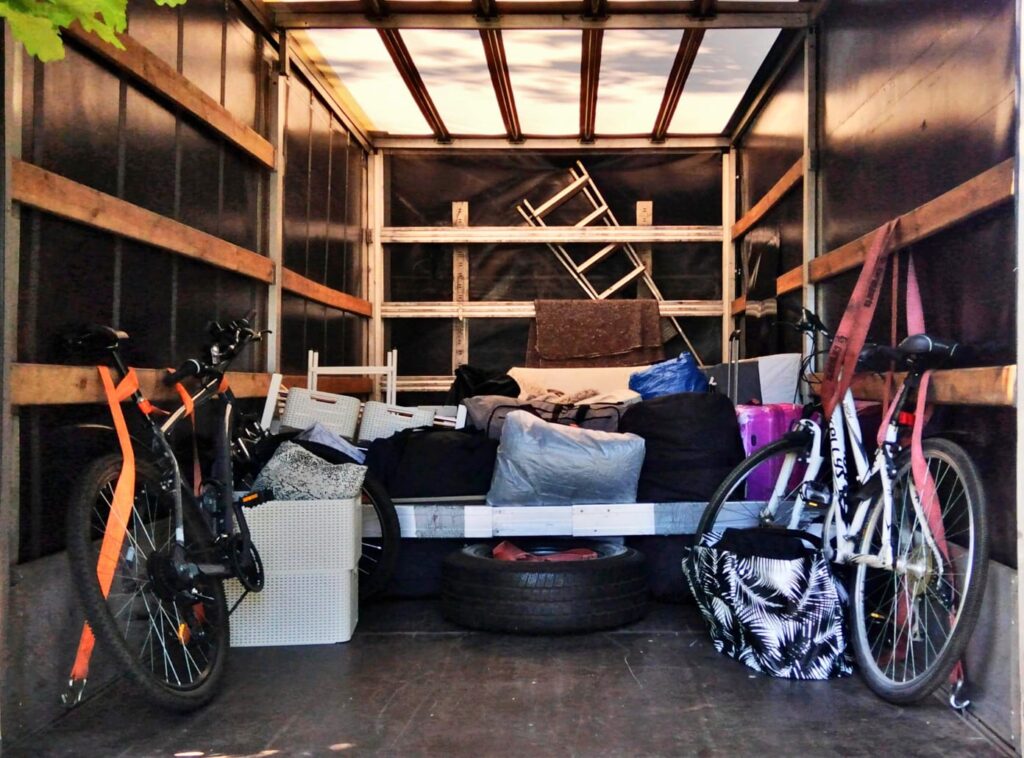


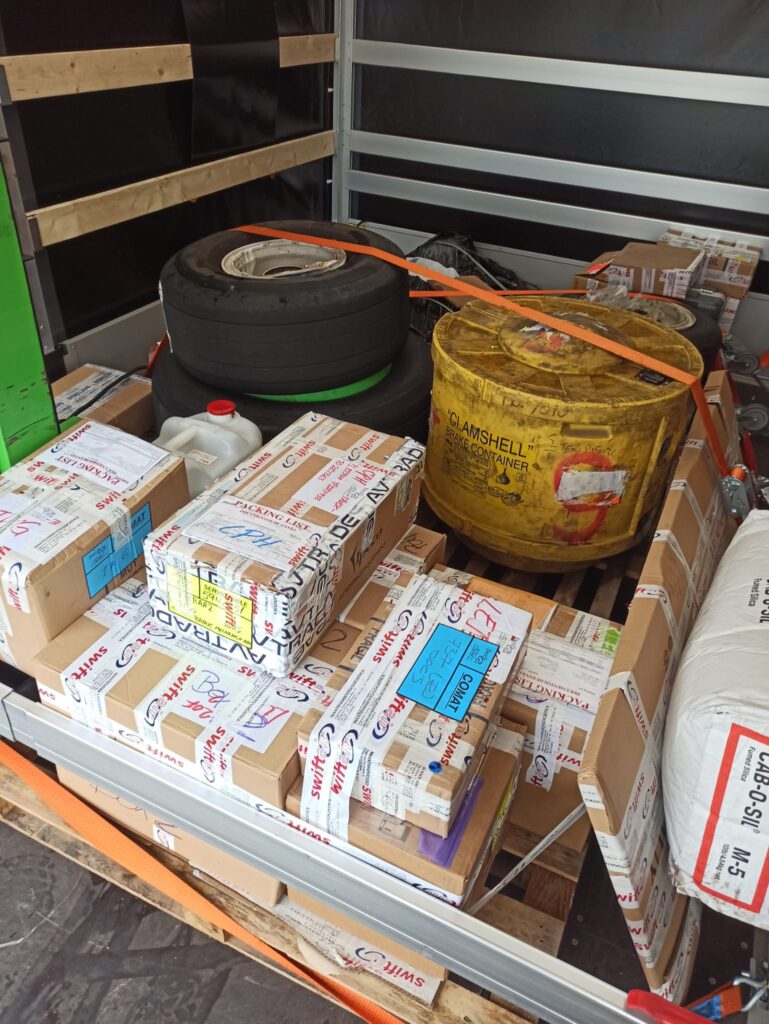

Route & Transit from the UK
Clear routing and realistic timing make removals to Luxembourg from UK feel predictable. This section explains how your shipment travels, what updates you’ll get, and how we manage last‑mile delivery in Luxembourg.
Typical corridors (UK → EU → LU)
- Collection across the UK → Channel crossing via Eurotunnel (Folkestone–Calais) or Channel ferries (e.g., Dover–Calais/Dunkirk, select south‑coast routes) → fast FR/BE motorway network → Luxembourg.
- Routing is chosen for reliability on your dates: traffic, weather, port conditions, and access constraints at both addresses.
- For house removals UK to Luxembourg with fixed completions, we prioritise direct legs and tighter windows.
Transit time bands (indicative, no prices)
Use these as planning guides; your coordinator will confirm the specific window for your addresses and season.
| Configuration | Typical door‑to‑door | What to expect |
| Full Load (dedicated) | 2–4 working days | Direct routing, minimal handling, tighter ETA |
| Part Load (groupage) | 3–7 working days | Consolidated route; broader delivery window |
| Express van (small loads) | 1–2 working days | Rapid pickup/arrival for essentials |
| Split shipment (air + road) | 0–2 days for air items; 3–7 days for furniture | Essentials first, furniture follows |
Timing depends on access, distance, ferry/tunnel availability, and seasonal peaks. We’ll align expectations before you book.
Milestones & what you’ll receive
| Milestone | What happens | You receive | Your action |
| Collection | Crew packs/loads; inventory signed; photos as needed | ETA window confirmation | Keep phone on; secure permits |
| Channel crossing | Vehicle boards Eurotunnel/ferry | Crossing update (text/email) | None — just stay reachable |
| EU arrival/hub | Barcode scan at hub (for part loads) / direct transit | Status update with next ETA | Flag any access changes |
| Out for delivery | Truck leaves last hub/overnight stop for your address | Call‑ahead on approach | Book lift/parking; prep floor protection |
| Arrival & sign‑off | Placement & reassembly; debris removal; paperwork | Completed paperwork copies | Walkthrough, note exceptions |
Last‑mile in Luxembourg (access planning)
- Reserve parking/loading with your building manager or commune; confirm lift size and booking slots.
- Narrow streets or height restrictions? We schedule shuttle vans for final metres to your door.
- For apartments, protect lifts and corridors; some buildings require coverings and proof of insurance — we provide this on request.
- If your part load delivery window spans multiple hours, we’ll text on approach so you can meet the crew.
If something changes (contingency playbook)
- Completion date slips: we hold in short‑term storage bridging and reschedule the last‑mile leg.
- Severe weather/port disruption: we switch crossing (tunnel ↔ ferry) or re‑route via alternative FR/BE corridors.
- Access blocked on the day: crew performs an on‑site assessment; we deploy shuttle vehicles or reschedule with priority.
Want the most reliable window for your address and dates? Removals to Luxembourg.
Customs & Post‑Brexit Compliance (Plain English)
Post‑Brexit moves are perfectly doable — they just need tidy paperwork and realistic timelines. Use this section to demystify customs, reduce risk, and keep your removals to Luxembourg from UK moving without surprises. This is practical guidance, not legal advice; your coordinator confirms the exact forms for your route and personal circumstances.
What you usually need (core docs)
Before packing, assemble these essentials. Having them ready speeds up clearance and insurance.
- Passports/ID for all adults relocating.
- Signed, itemised inventory (packing list) with room labels and approximate values (for insurance planning).
- Proof of former UK residence (e.g., council tax, utility bill, tenancy/sale completion letter).
- Proof of new Luxembourg address (lease, purchase contract, or employer letter confirming accommodation).
- Declaration that goods are used personal effects (not for resale) — included with your inventory.
- Duty/tax relief evidence where applicable (e.g., transfer of residence relief accepted by the destination authority).
- Building/lift permissions and parking reservations at both ends.
Helpful extras (case‑by‑case)
- Power of Attorney so your mover can lodge/receive paperwork on your behalf.
- Vehicle documents (if relocating a car/motorbike): logbook and proof of ownership.
- Pet documents if applicable: microchip, vaccinations, and compliant travel papers.
- High‑value evidence: purchase receipts/appraisals/photos for antiques/art.
Quick comparison — EU personal effects vs non‑EU obligations (no prices)
Use this table to set expectations. Your coordinator confirms which column applies to you.
| Scenario | What it means in practice | What we do for you |
| Moving household goods | Personal effects, used items, not for resale | Prepare inventory; match labels to boxes |
| Seeking duty/tax relief | Evidence you’re relocating residence (ToR‑style relief) | Check eligibility; attach supporting documents |
| Including a vehicle/pets | Extra paperwork and checks may be required | Coordinate specialists and timing |
Naming and formats differ by authority; we’ll align your paperwork with the correct destination requirements.
Step‑by‑step: paperwork & clearance flow
- Survey & inventory — we document contents, special items, and values for insurance planning.
- Document pack — you supply IDs and address proofs; we draft the inventory/declarations.
- Export prep — labels match the inventory; fragile/high‑value pieces are photo‑documented.
- Channel crossing — your shipment travels via Eurotunnel/ferry with paperwork ready.
- EU entry & checks — barcode scan (for part loads) and administrative checks as required.
- Delivery authorisation — when cleared, your goods proceed to last‑mile delivery and sign‑off.
Save‑time tips (real‑world wins)
- Use consistent names and addresses across all documents; mismatches trigger questions.
- Don’t pack prohibited items (aerosols, solvents, fuel, perishable foods, live plants, cash/jewellery). Ask for the current list.
- Seal liquids upright in rigid containers; avoid loose bags — especially on part load services.
- Photograph valuables before packing; keep a digital folder with PDFs/photos in cloud storage.
We keep your data secure and only retain copies as long as operationally necessary for your move.
Need document help or eligibility checks? Start with Removals to Luxembourg.
Furniture & Special Items
Premium handling protects value and buys peace of mind — especially for house removals UK to Luxembourg with heirlooms, art, or oversized pieces. Below is exactly what’s covered, how we prepare, and how you can help the day run like clockwork.
What’s included in professional handling
We combine trained crews with the right materials and a methodical plan.
- Export‑grade protection — double‑walled cartons, foam sheeting, quilted blankets, edge guards.
- Home protection — floor runners, door/banister covers, corner guards.
- Dismantling & reassembly — beds, wardrobes, modular sofas, selected flat‑pack according to manufacturer guidance.
- Custom crating — for glass/marble tops, mirrors, artworks; optional shock/tilt indicators.
- Inventory & labelling — numbered items with room codes; hardware bagged and attached to parent furniture.
- Room‑by‑room placement — directed by your colour‑coded room plan; debris removal on request.
Special items & methods (examples)
| Category | Method (summary) | Notes |
| Antiques/heirlooms | Soft wrap + crate; gentle handling; photo record | Consider full‑value protection |
| Pianos/oversize | Skid boards, stair crawlers/hoists, frame wraps | Measure stair turns/door widths |
| Artwork & mirrors | Corner protectors + crate + glass tape | Mark UP/FRAGILE clearly |
| Glass/marble tables | Leg removal; rigid board sandwiching; crate tops | Avoid shock; keep upright |
| TVs/monitors | Original box or TV crate; screen protector | Keep cabling bagged/labelled |
| Bikes/gym equipment | Partial disassembly; frame protection; tie‑downs | Remove accessories/pedals |
Part‑load best practice for furniture
Part loads are as safe as full loads when packed correctly. Follow these specifics:
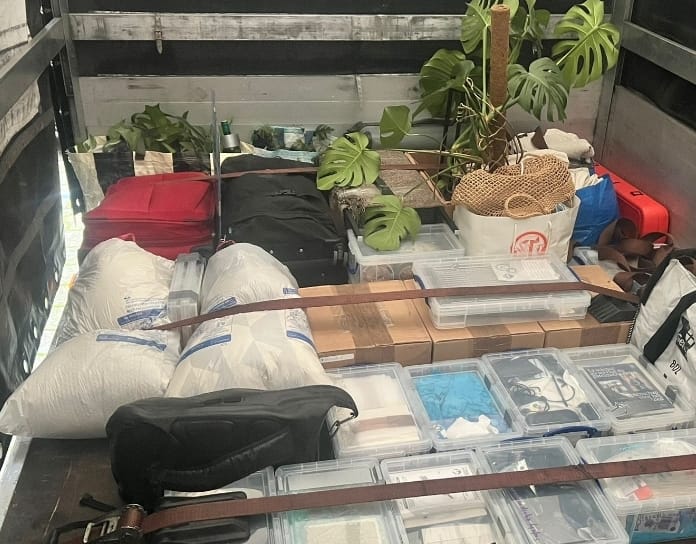
- Use rigid, sealed cartons or crates — no loose bags.
- Crate fragile/awkward items (glass, marble, artwork) to avoid touchpoints.
- Label two sides with room + item; keep barcode labels visible.
- Avoid liquids and restrict powders/aerosols per guidance; moisture can migrate during consolidation.
Disassembly & reassembly matrix (quick view, no prices)
| Item | Typical disassembly at origin | Reassembly at destination |
| Beds (standard) | Headboard/rails off | Yes |
| Wardrobes | Doors/shelves off (if needed) | Yes |
| Modular sofas | Sections separated | Yes |
| Flat‑pack (large) | As required for safe handling | Yes (where feasible) |
| Trampolines/sheds | Full disassembly | By arrangement |
Your prep checklist (client actions)
Add these small tasks to your timeline for a faster, safer move.
- Empty drawers; remove loose/fragile contents.
- Photograph high‑value pieces and any pre‑existing marks.
- Keep all hardware (bolts, pegs, remotes) in a labelled Hardware bag.
- Pre‑measure tight turns, stairwells, and lift dimensions.
- Set aside a no‑pack zone for passports, keys, medication, chargers.
Discuss your furniture plan and crating options → Removals to Luxembourg.
Packing Strategy (Time‑Saving, Damage‑Reducing)
Smart packing is the easiest way to cut transit risk and speed up delivery day for your removals to Luxembourg from UK. The goal is simple: fewer touchpoints, clearer labels, and boxes that crews can stack safely — whether you choose full load or part load.
The 12 smart steps
- Declutter early — donate/sell duplicates; every unused kilo adds handling time.
- Choose pro‑pack or assisted pack — pro‑pack for fragiles and artwork; assisted for sturdy items.
- Use double‑walled cartons — they stack better and resist compression in groupage.
- Respect the ~20 kg rule — heavy = small boxes; light/bulky = large boxes.
- Wrap fragiles correctly — paper wrap → bubble → divider set (dishes/glass).
- Disassemble sensibly — beds, tables, modular sofas; bag and tape hardware to parent item.
- Label two sides + top — room code + contents + sequence (e.g., K‑12 Pans & lids).
- Colour‑code rooms — stickers help crews place boxes fast at destination.
- Back up IT — copy data, remove ink/toner, coil and label cables.
- Seal liquids upright — rigid containers, tape caps; avoid in part load if possible.
- Pack a 48‑hour essentials box — bedding, toiletries, chargers, kettle, kids’ items, pet kit.
- Photo inventory — snap valuables and room setups; useful for reassembly and insurance.
Room & label system (2‑minute setup)
Adopt a simple code: Room code – box number – contents. Keep a master list on your phone.
| Code | Room (example) | Label example |
| K | Kitchen | K‑12: Pans & lids |
| LR | Living Room | LR‑03: Books A–F |
| BR1 | Bedroom 1 | BR1‑07: Clothes (W) |
| BA | Bathroom | BA‑02: Towels |
| ST | Storage | ST‑05: Sports gear |
Fragile & special care pack
- Plates: vertical in dish barrels with dividers; paper wrap each piece.
- Glasses: stem up/down alternating; fill voids with paper.
- Pictures/mirrors: corner guards + picture boxes; tape a large X across glass.
- TVs/monitors: original cartons or TV crate; never lay flat.
- Stone/glass tops: crate only; carry upright with edge protection.
IT & electronics
- Back up data; remove batteries/ink; bag cables with the device name.
- Take a photo of cable layouts before disconnecting.
- Use anti‑static bags for drives; keep remotes in the Hardware bag.
The 48‑hour essentials
One box per household member if possible: bedding set, 2–3 outfits, toiletries, meds, chargers, basic cookware, snacks, cleaning wipes, small toolkit, paperwork folder.
Materials quick guide
| Box/Material | Best for | Why it matters |
| Small box | Books, tools, tinned food | Keeps heavy loads compact |
| Medium box | Clothes, toys, linens | Most versatile size |
| Large box (bulky) | Duvets, cushions | For light items only |
| Wardrobe carton | Hanging garments | Crease‑free, fast unpack |
| Dish barrel | Plates, glassware | Dividers prevent edge pressure |
| Picture/mirror box | Frames, canvases | Protects corners and surfaces |
| TV crate | Screens | Rigid protection, upright transport |
| Mattress cover | Mattresses | Hygiene and handling grip |
| Sofa/chair covers | Upholstery | Dust & abrasion protection |
| Packing paper | Fragiles, kitchenware | Clean cushioning vs newspaper ink |
| Bubble wrap | Electronics, art | Shock absorption |
| Stretch/shrink wrap | Bundling cushions, doors | Keeps components together |
| Tape (solvent‑free) | All cartons | Strong seal; easier to remove |
| Marker pens | All cartons | Clear labelling |
| Zip bags for hardware | Screws, bolts, remotes | Nothing goes missing |
Pro‑pack vs assisted pack
| Option | Best for | You get | Consider if… |
| Professional pack | Whole homes, fragile/valuable items | Trained crew, materials, fast & safe packing | You want minimal disruption and risk |
| Assisted self‑pack | Smaller moves, budget‑conscious, part load | Materials guidance, QC at collection | You have time and can follow the 12 steps |
Day‑before checklist
- Defrost and drain appliances; remove shelves where possible.
- Box or crate everything loose — no bin bags.
- Confirm lift bookings/parking permits; keep permits visible.
- Photograph meter readings and valuable items.
- Pack the No‑Pack Zone (passports, keys, chargers, medication).
- Stage boxes by room near the exit, heavy at the bottom, labels facing out.
Prefer the crew to handle packing end‑to‑end? Start here → Removals to Luxembourg.
Cost Drivers (No Prices)
Understanding what actually moves the needle helps you plan smarter removals to Luxembourg from UK — especially when choosing between full load and part load for house removals UK to Luxembourg.
What actually changes your quote?
| Driver | What changes the quote | How to influence (no prices) |
| Volume / weight | More cubic metres = larger vehicle/crew time | Declutter; accurate survey; flat‑pack where sensible |
| Access constraints | Stairs, long carries, narrow streets, shuttle requirements | Reserve parking/lifts; flag tight turns in advance |
| Dates & seasonality | Month‑ends, summer peaks, bank holidays | Book early; consider mid‑week collections |
| Flexibility / part load | Wider delivery window lowers cost | Choose part load if dates are flexible |
| Service scope | Pro‑packing, unpacking, crating, debris removal | Mix & match: pro‑pack for fragiles, assisted for the rest |
| Special items | Pianos, oversized furniture, art/antiques | Pre‑measure; approve crating plan |
| Storage bridging | Holding goods between key dates | Decide up‑front; align storage with final address timing |
| Documentation readiness | Missing/late papers cause delays | Prepare IDs, inventories, proofs early |
| Distance / routing | Tunnel vs ferry, detours, weather | We’ll optimise route and switch crossings if needed |
| Insurance level | Standard liability vs full‑value protection | Choose cover that matches item value/risk |
| Last‑minute changes | Re‑planning crews/vehicles | Lock details post‑survey; communicate changes promptly |
Value tips (without cutting corners)
- Use part load for staged setups or small consignments.
- Let the crew pack fragiles while you self‑pack sturdy items.
- Ensure access permits and lift bookings are secured to avoid waiting time.
- Keep labels consistent with the inventory to speed delivery day.
- Confirm insurance before collection; it’s cheaper than damage.
See your configuration → Get a tailored plan.
Timeline & Checklist (From UK House to LU Home)
A phased schedule helps you stay in control and avoid last‑minute stress. Use the expanded timeline below as a planning blueprint for removals to Luxembourg from UK — adaptable to both full loads and part load.
Recommended timeline (expanded)
- 10–12 weeks out — Initial planning
Book a video survey; shortlist dates; choose full vs part load; start assembling IDs, proof of UK address, and draft inventory. - 8–10 weeks out — Confirm suppliers
Compare service scopes; lock your mover; discuss crating for glass/marble/art; agree provisional ETAs. - 6–8 weeks out — Permissions & notices
Apply for building/lift bookings and parking permits at both addresses; give notice to landlord or schedule completion/move‑out; notify childcare/schools. - 4–5 weeks out — Materials & early packing
Order cartons and protective materials; begin with non‑essentials; photograph valuables; create colour‑coded room plan. - 3 weeks out — Special handling & storage plan
Finalise crating list; measure stair turns/lifts; arrange storage bridging if keys won’t align; confirm insurance level. - 2 weeks out — Admin & utilities
Submit change‑of‑address to banks, insurers, subscriptions; schedule UK utility final readings; line up Luxembourg internet/mobile. - 7–5 days out — Final sort & disassembly plan
Declutter one last time; set a No‑Pack Zone; dismantle non‑essential furniture; label boxes on two sides + top. - 72–48 hours out — House ready
Defrost/drain appliances; box all loose items (no bin bags); protect floors for crew routes; prepare meter photos and keys. - Move day (origin) — Load & paperwork
Crew walkthrough; floor/door protection; load sequence; inventory sign‑off; confirm delivery window and contacts. - Transit — Updates en route
Receive crossing/hub updates; remain reachable; flag any access changes at destination. - Arrival (0–4 hours) — Placement & reassembly
Room‑by‑room placement per colour codes; reassemble beds/wardrobes; remove debris; note any exceptions on paperwork. - Arrival (24–72 hours) — Settle essentials
Unpack kitchen/bathroom/bedrooms; register with local commune; set up banking, internet, and healthcare registrations as applicable.
Change‑of‑address & admin checklist (guide)
| Service/Provider | When to notify | How (typical) | Notes (no prices) |
| Banks & credit cards | 2–3 weeks before | Online/phone | Update mailing address & travel notifications |
| Utilities (UK) | 1–2 weeks before | Online | Final readings; provide forwarding address |
| Insurance | 2 weeks before | Online/email | Home/contents; consider storage cover |
| Employer/Payroll | 2–3 weeks before | HR portal | Update address/tax residency as applicable |
| Subscriptions | 2 weeks before | App/website | Redirect or cancel |
| GP/Dentist/Vet | 1–2 weeks before | Phone/email | Transfer records if needed |
| Vehicle admin | Before departure | Online/post | Check requirements if relocating a vehicle |
This list is illustrative; your coordinator can help you adapt it to your situation.
Responsibility matrix (expanded, no prices)
| Stage | Main actions | Owner |
| Plan & Survey | Video survey, route model, special items | You + VanOnSite |
| Bookings & Access | Dates, permits, parking/lifts | You + VanOnSite |
| Packing & Materials | Supply materials, pro‑pack/assisted pack | You + VanOnSite |
| Crating & Special Handling | Artwork/glass/pianos prep | VanOnSite |
| Admin & Documentation | IDs, inventory, address proofs, insurance selection | You |
| Transit | Routing, status updates, delivery window confirmation | VanOnSite |
| Last‑mile & Delivery Day | Placement, reassembly, debris removal | Crew + You |
| Post‑delivery | Exceptions log, aftercare, storage bridging if needed | VanOnSite |
Delivery Day & Aftercare
A smooth handover on delivery day means faster settling in — especially important for house removals UK to Luxembourg with children, pets, or remote‑work setups. Use this section to brief your household and avoid avoidable delays.
Morning‑of checklist (origin)
- Keep phones charged and reachable; share contact details with your coordinator.
- Clear hallways and lift/stair access; reserve lifts/parking and display permits.
- Isolate the No‑Pack Zone: passports, keys, medication, chargers, important docs.
- Walk through with crew lead; highlight fragile/priority rooms and access constraints.
On arrival at destination (first 30 minutes)
- Brief the crew on room codes/colours; confirm placement plan and any shuttle needs.
- Protect floors/corners; agree the load‑in sequence (bedrooms first for families).
- Identify where packaging debris can be staged for removal.
During placement & reassembly
- Direct room‑by‑room placement; keep doorways clear.
- Reassemble beds/wardrobes and connect essential appliances first.
- Use your 48‑hour essentials boxes to make the first night comfortable.
Sign‑off & exceptions
- Walkthrough with the crew lead; check furniture positions and assemblies.
- Note any exceptions on the delivery sheet; keep copies of paperwork/photos.
- Confirm debris removal and next‑day check‑in (if arranged).
First‑week aftercare
- Register with your commune; set up utilities/internet and local waste/recycling.
- Unpack by zones: kitchen → bedrooms → bathroom → living spaces.
- Photograph meter readings; schedule any snag‑fix or missing‑part visits.
- Join local expat groups/school networks; map local transport (it’s free nationwide).
Need precise delivery‑day timings and access planning? Coordinate here → Removals to Luxembourg.
Settling in Luxembourg
Short paragraph + bullets: public transport (free nationwide), multilingual services, expat groups, international schools, weekend trips to FR/DE/BE.
Deep‑dive: International Removals to Luxembourg.
FAQs
Below are concise, practical answers specific to removals to Luxembourg from UK. We avoid prices here — for a tailored plan use Removals to Luxembourg.
Do I need a visa to live in Luxembourg as a UK citizen?
Short visits are usually visa‑free, but living and working long‑term typically requires residence/work authorisation. You’ll also need to register with your local commune after arrival. Always check the latest official guidance before you move.
Plan your timeline: see the checklist above.
What customs paperwork is needed after Brexit?
A signed itemised inventory, proof you’re relocating (old UK address + new LU address), passport/ID copies, and declarations that the goods are used personal effects. Where eligible, we help prepare duty/tax‑relief evidence (transfer‑of‑residence style).
Document help: Start here.
How long does UK→LU transit take?
Indicatively: 2–4 working days for dedicated full loads, 3–7 working days for part load groupage, and 1–2 working days for express small‑van shipments. We’ll confirm your specific window based on addresses, season, and access.
Full load or part load — which is better for me?
Full load = maximum date control and minimal handling (best for whole homes). Part load = broader window and strong value (great for smaller shipments or staged setups). Protection levels are the same.
Learn more: International Removals to Luxembourg.
Can I self‑pack to save money?
Yes. Many clients self‑pack sturdy items and ask us to pro‑pack fragiles, artwork and IT. Follow the 12‑step packing plan above; we can supply materials and quality‑check at collection.
How early should I book my move?
Ideally 6–8 weeks ahead (earlier for summer/month‑ends). Part‑load runs fill as routes finalise; dedicated dates are best secured once your survey is complete.
Do you offer storage if my key dates don’t align?
Yes, short‑term storage bridging keeps goods secure and insured between UK collection and LU delivery. We’ll coordinate release directly into your final address window.
What about parking and lift permits in Luxembourg?
Many buildings/communes require temporary parking or lift reservations. We’ll brief you on what to request and provide insurance/crew details if the building asks for them.
Can you handle cars, bikes, or pets?
Yes, by arrangement. Vehicles/pets need additional paperwork and timing. Tell us early so we can coordinate specialists and align with your household goods delivery.
Are there items you can’t move?
Hazardous substances, fuel/solvents, aerosols, perishable food, live plants, and cash/jewellery are restricted. Ask for the current prohibited list before packing.
What happens if my completion date slips?
We place your consignment into storage bridging, protect the inventory, and reschedule the last‑mile leg. You’ll receive a revised ETA and updated delivery window.
How is my furniture protected in transit?
Export‑grade wrapping, floor/door protection, custom crating for glass/marble/art, and room‑coded labels. On delivery we reassemble agreed items and remove debris.
Is insurance included?
We offer standard liability and full‑value protection. We’ll help you match cover to your inventory and risk profile.
Need an answer we didn’t cover? Ask VanOnSite — we’ll tailor guidance to your situation.