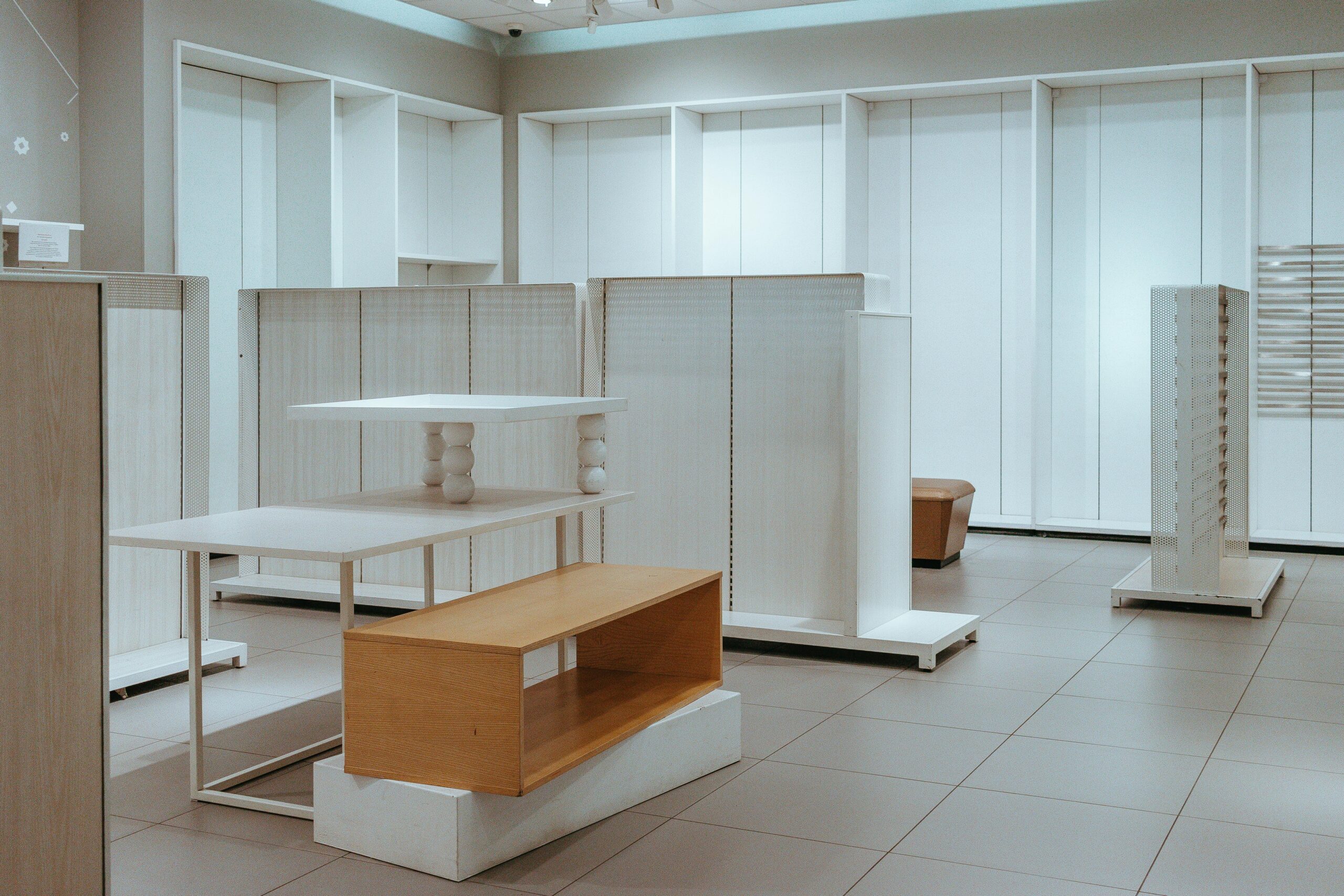
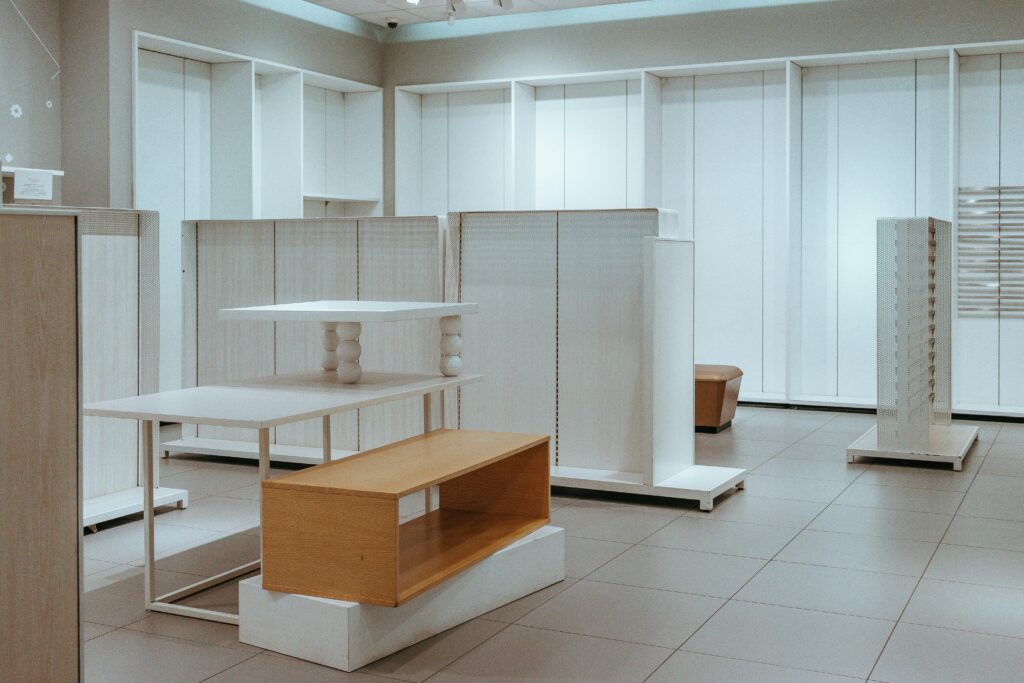
A shop can look almost ready and still be miles away from opening day. The fixtures may be delivered. The counters may be standing. The keys may already be in your pocket. Yet the reality behind the shutters can tell a harsher story. Shelving is still half-installed. Back-of-house storage is chaotic. The customer flow feels awkward. Staff do not know where anything belongs. The space is technically there, but it is not truly alive.
That is exactly why choosing the right shop fitting company matters.
A professional shop fitting company does far more than bring items to site. It helps turn an empty or unfinished retail unit into a space that feels practical, polished, and ready for customers. It connects transport, installation, storage, sequencing, and opening readiness into one coherent process. For brands launching new stores, relocating a showroom, or rolling out multiple sites across Europe, that joined-up approach can save days of delay and protect thousands in lost trading time.
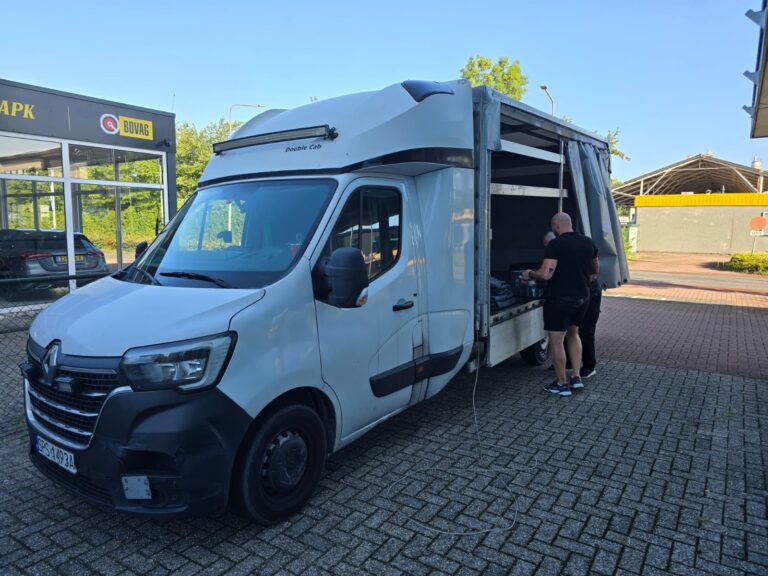
VANonsite supports commercial transport, furniture installation, packing, storage, and white glove delivery across Europe. Every load can be tracked with GPS, which gives businesses better visibility when timing is tight and every missed hour can slow the launch.
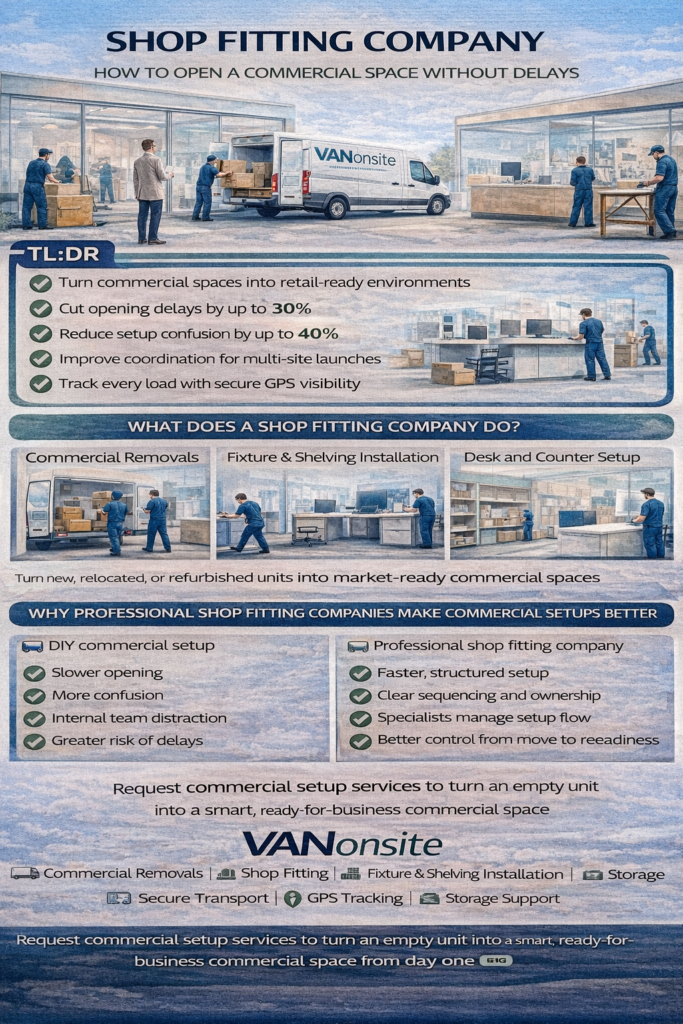
TL:DR
- A shop fitting company helps businesses move, install, organise, and prepare a retail or commercial space so it is ready for customers and staff from day one.
- Professional support can include transport, fixture installation, counters, shelving, storage setup, phased opening support, and practical coordination.
- A structured setup process can reduce opening delays by up to 30% and cut on-site confusion by up to 40%.
- Smaller openings may suit a man and van model, while larger commercial projects usually need broader planning and higher-capacity vehicles.
- Good fixture and furniture installation directly affects customer flow, staff efficiency, first impressions, and daily trading rhythm.
- For multi-site and cross-border rollouts, one provider handling more of the process can reduce friction, handover mistakes, and wasted time.
- VANonsite supports commercial setups across Europe with flexible vehicle sizes, GPS tracking, packing support, storage, and office furniture installation.
If you want a retail or commercial space to feel sharp, functional, and ready to trade rather than rushed and unfinished, the right shop fitting company can make the difference between a stressful launch and a confident one.
What Does a Shop Fitting Company Do?
A shop fitting company helps businesses transform an empty unit, a refurbished retail space, or a relocated commercial site into a place that actually works. That sounds straightforward, yet the gap between a delivered interior and an operational commercial space is often much larger than people expect.
A shop is not ready because the fixtures have arrived. It is ready when the counters are properly installed, the shelving makes sense, the stockroom is organised, the customer route feels natural, and staff can begin work without fighting the space. That is where a strong shop fitting company creates real value.
At its best, a shop fitting company connects several critical layers of the launch into one clear process. Instead of leaving the business to coordinate transport, unloading, installation, storage, and layout refinement separately, it brings those stages together so they support one another.
A shop fitting company can help with:
- commercial removals
- shelving and fixture installation
- desk and counter assembly
- reception or service desk setup
- stockroom and back-of-house setup
- storage placement
- man and van support for smaller commercial projects
This matters because a store or showroom is never just a room with products inside it. It is part logistics, part customer experience, and part brand theatre. If the layout is awkward, sales suffer. If the setup is rushed, staff lose time every day. If the presentation feels uneven, customer confidence drops before anyone says a word.
A professional shop fitting company thinks beyond simple installation. It considers how the space will work once real people move through it. Where should customers pause? Where should staff access stock quickly? Which zones need to feel open and which need to stay efficient in the background? Those are the questions that separate a basic setup from a commercial space that performs well.
That practical layer is what separates a provider that merely delivers fixtures from a shop fitting company that helps the space perform commercially. The strongest setups do not just fill a room. They shape behaviour. They guide movement. They reduce hesitation. They make daily work feel smoother for staff and more intuitive for customers.
This is especially important in retail and customer-facing environments because small layout flaws multiply quickly. A counter positioned a little too tightly can create a queue problem every day. A shelving run that interrupts sightlines can weaken product visibility. A stockroom that is installed without practical flow in mind can quietly drain staff time for months. These are not dramatic problems, yet they are expensive over time.
A better shop fitting company also helps businesses sequence decisions more intelligently. It knows that the order of operations matters. If the wrong items are brought in first, the unit clogs up. If customer-facing fixtures are installed before access routes are protected, the team starts working around problems instead of through a plan. If storage is treated as an afterthought, the whole space can feel messy within the first week.
That is why delivery alone is never enough. Delivered fixtures without structure can create more pressure instead of less. A stronger shop fitting company turns delivered pieces into a working commercial environment with better rhythm, better flow, and faster readiness.
Who Needs a Shop Fitting Company?
Any business opening, upgrading, relocating, or expanding a retail or customer-facing commercial space can benefit from a shop fitting company. The need becomes even stronger when opening dates are fixed, teams are lean, or the commercial space must reflect brand quality from the very first day.
This is not only relevant for large retail chains. Smaller businesses often benefit just as much because they have less room for error. If a growing retailer loses three trading days to setup delays, the cost is felt fast. That loss shows up in staffing inefficiency, missed sales, delayed merchandising, and a weaker first impression.
A shop fitting company is especially useful for:
- independent retailers opening a first store
- brands expanding into new cities or countries
- franchise operators launching new locations
- companies relocating a shop or showroom
- businesses refreshing commercial interiors
- brands standardising layouts across multiple locations
Typical examples include:
- A boutique brand opens its first flagship store and needs the space to feel premium immediately.
- A retailer launches a second location in another city and wants the same look and operational logic as the first.
- A showroom relocates to a larger site and needs fixtures reinstalled with minimal downtime.
- A franchise group opens several units in parallel and needs consistency across rollout stages.
- A smaller commercial project uses a man and van approach for urgent fixture delivery and compact setup.
What these cases all share is pressure. Retail and commercial launches create many overlapping demands at once. There are opening dates, staffing plans, stock arrivals, access windows, branding expectations, and physical installation challenges all happening in the same narrow window. A professional shop fitting company helps convert that pressure into a more controlled process.
Different commercial models feel that pressure in different ways. An independent retailer may need to protect every opening day because cash flow is tighter and early customer impression matters hugely. A franchise operator may need consistency more than anything else, because one weakly executed site can damage the perceived quality of the whole network. A premium showroom may need presentation precision because the environment itself is part of the sales argument.
There is also a scale effect. The more locations a brand opens, the more damaging inconsistency becomes. One site may feel polished, while another feels improvised. One team may receive a clear setup sequence, while another works around delays and clutter. A stronger shop fitting company helps smooth those differences and makes rollout standards easier to repeat.
There is also a strong customer-facing reason businesses choose this kind of support. A commercial unit is not just a physical location. It is a message. Customers decide very quickly whether a space feels credible, appealing, and worth spending time in. If the environment looks rushed, cluttered, or unfinished, the business starts from a weaker position.
That is why a shop fitting company is not only about logistics. It is about readiness, presentation, and commercial confidence. It helps the business open with more control and far less chaos.
Why Businesses Choose a Professional Shop Fitting Company
Many businesses start with the same assumption: if the shop fixtures arrive on time and the team works hard, the opening should come together. In practice, that approach often creates more problems than it solves. Internal teams are already juggling stock, staffing, branding, systems, suppliers, and launch deadlines. Adding full commercial setup to that list can turn an exciting opening into a messy grind.
That is why businesses choose a professional shop fitting company. The service creates structure where retail launches usually create friction. Instead of spreading the burden across several overextended people, it gives the project a stronger sequence and a cleaner line of execution.
| DIY commercial setup | Professional shop fitting company |
|---|---|
| Slower opening | Faster, structured setup |
| More confusion | Clear sequencing and ownership |
| Internal team distraction | Specialists manage setup flow |
| Greater risk of delays | Better control from delivery to readiness |
The commercial case is clear. Better sequencing can reduce setup confusion by up to 40%. A more controlled launch can reduce opening delays by up to 30%. In many cases, that means a store or showroom can begin operating 1 to 2 days sooner, which is often far more valuable than businesses realise.
There is also a psychological advantage. When staff enter a commercial space that feels ready, morale rises. They can focus on customers, merchandising, and operations instead of solving layout problems and carrying boxes. That shift matters, especially during the first days when people are learning the rhythm of the new space.
A professional shop fitting company also reduces hidden waste. Repeated handling, blocked access routes, incorrect delivery order, rushed installation, and weak staging all create soft costs. These may not appear neatly in the budget at first, yet they eat time, create frustration, and weaken the opening.
Another major advantage is consistency. Internal teams may work with energy, yet not always with the same judgment from one area to the next. A product display zone may look excellent, while the back-of-house setup remains clumsy. A counter may be placed quickly rather than correctly. Better shop fitting company support creates steadier standards across the whole space.
That consistency matters more than many businesses first assume. In commercial environments, weak decisions rarely stay isolated. A rushed counter position affects queueing. Poor staging affects installation speed. Awkward back-of-house setup affects replenishment and staff movement. Small compromises spread through the operating day and quietly reduce performance.
A professional shop fitting company also protects management attention. Store owners, operations leads, and launch managers already carry enough. Every hour spent solving delivery problems, layout confusion, or on-site sequence issues pulls them away from stock planning, recruitment, staff training, and customer readiness. The value of good setup support is not only what it installs. It is also what it stops the client from having to firefight.
There is a presentation benefit too. When a space opens cleanly, the business looks sharper. When it opens with visible friction, the brand feels less controlled. That first impression affects staff confidence, customer trust, and even how suppliers perceive the operation.
For brands rolling out multiple sites, this matters even more. A repeatable commercial setup process can help one location feel aligned with the next, which strengthens brand identity and makes operations easier to replicate.
What Is Included in Shop Fitting Company Services?
Strong shop fitting company services should feel connected. The business should not have to coordinate one company for transport, another for shelving installation, another for premium pieces, and then solve layout issues alone. The strongest commercial launches happen when each stage supports the next.
That means delivery should make installation easier. Installation should strengthen layout precision. Layout precision should make the store or showroom more usable, more attractive, and more ready to trade.
A good shop fitting company understands that commercial setup is not one action. It is a chain. If transport is mistimed, installation slows down. If installation is rushed, layout quality drops. If layout quality drops, the customer experience weakens and staff lose speed every single day. That is why better providers treat the launch as one coordinated system rather than a pile of disconnected tasks.
This also explains why one joined-up service often outperforms a patchwork of smaller suppliers. Every handover creates risk. One supplier blames another. One team arrives too early. Another cannot work because the site is blocked. A stronger shop fitting company narrows those weak points and creates a cleaner route from empty shell to trading-ready environment.
Transport and Commercial Relocation Coordination
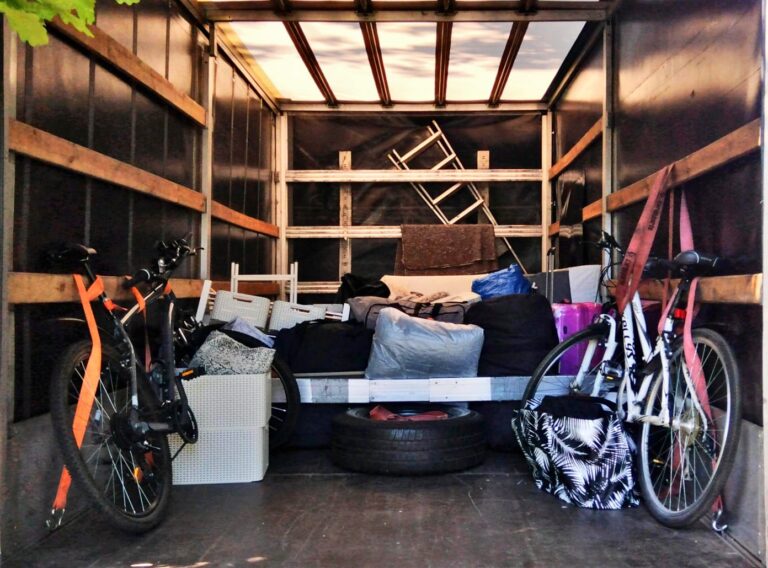
Many retail and commercial launches begin with movement. Fixtures, stockroom units, counters, display furniture, and support equipment all need to reach the space in a sensible order. That is why transport and relocation support sit at the core of what a strong shop fitting company provides.
This often includes:
- room or zone-based unloading
- delivery order planning
- reduced repeated handling
- better staging for installation
If these steps are weak, the space fills with friction. Fixtures block access. Counters arrive too early. Installation teams work around clutter instead of with a sequence. Better coordination prevents that chain reaction before it starts.
It also protects pace. Every unnecessary movement drains time. Every wrongly staged item forces another lift, another carry, another delay. Good transport coordination is not only about getting items to site. It is about getting them to the right place, in the right order, with the fewest wasted steps.
A more experienced shop fitting company will also think about what the space needs first, not only what is easiest to unload. Customer-facing zones, key counters, and critical display runs often deserve priority. That kind of sequencing can make a space feel commercially alive much earlier in the day.
Shelving, Fixtures, and Furniture Installation
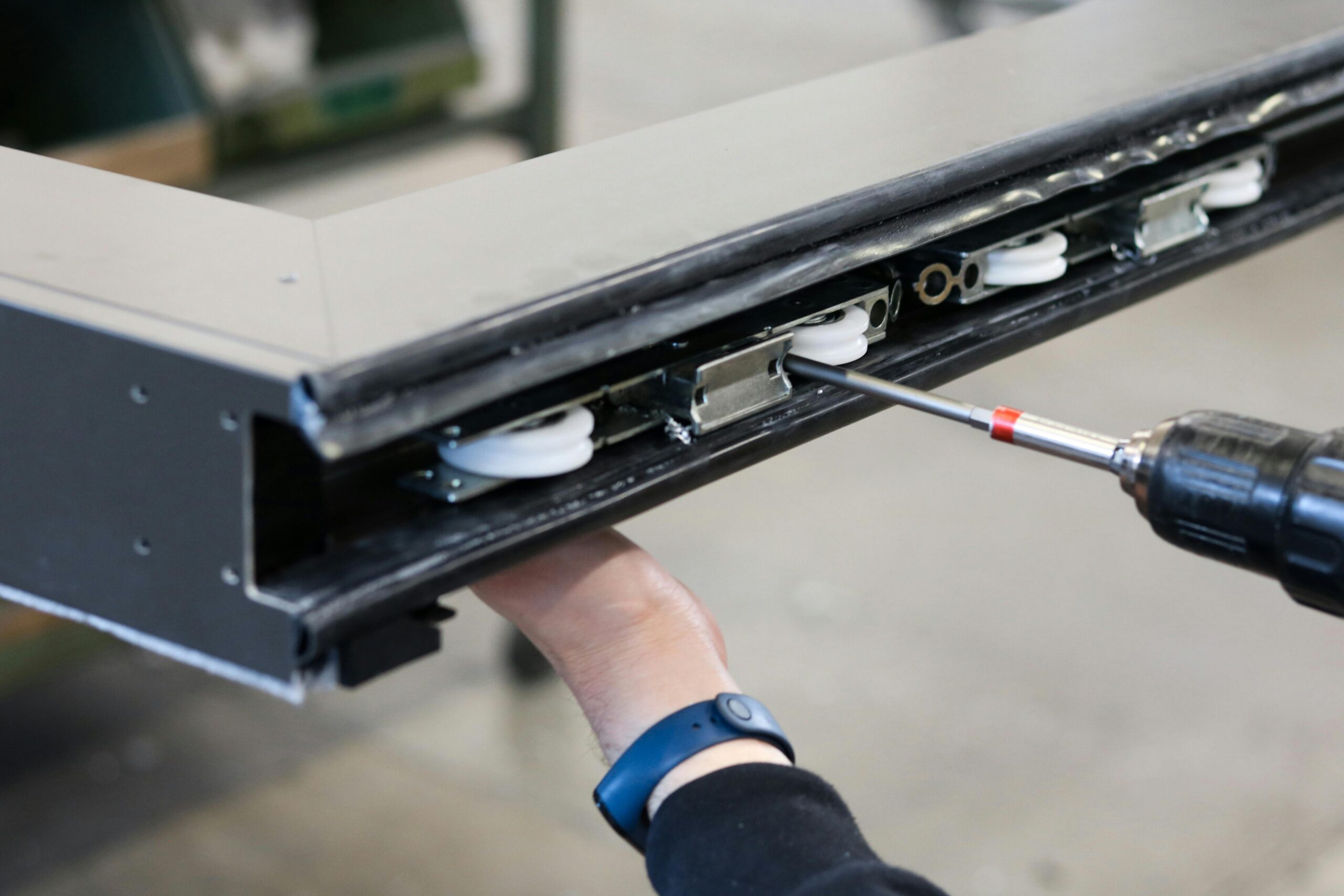
This is the visible heart of what many people imagine when they hear shop fitting company, and for good reason. Shelving, display units, counters, wall fixtures, and support furniture shape both the look and the usability of the space.
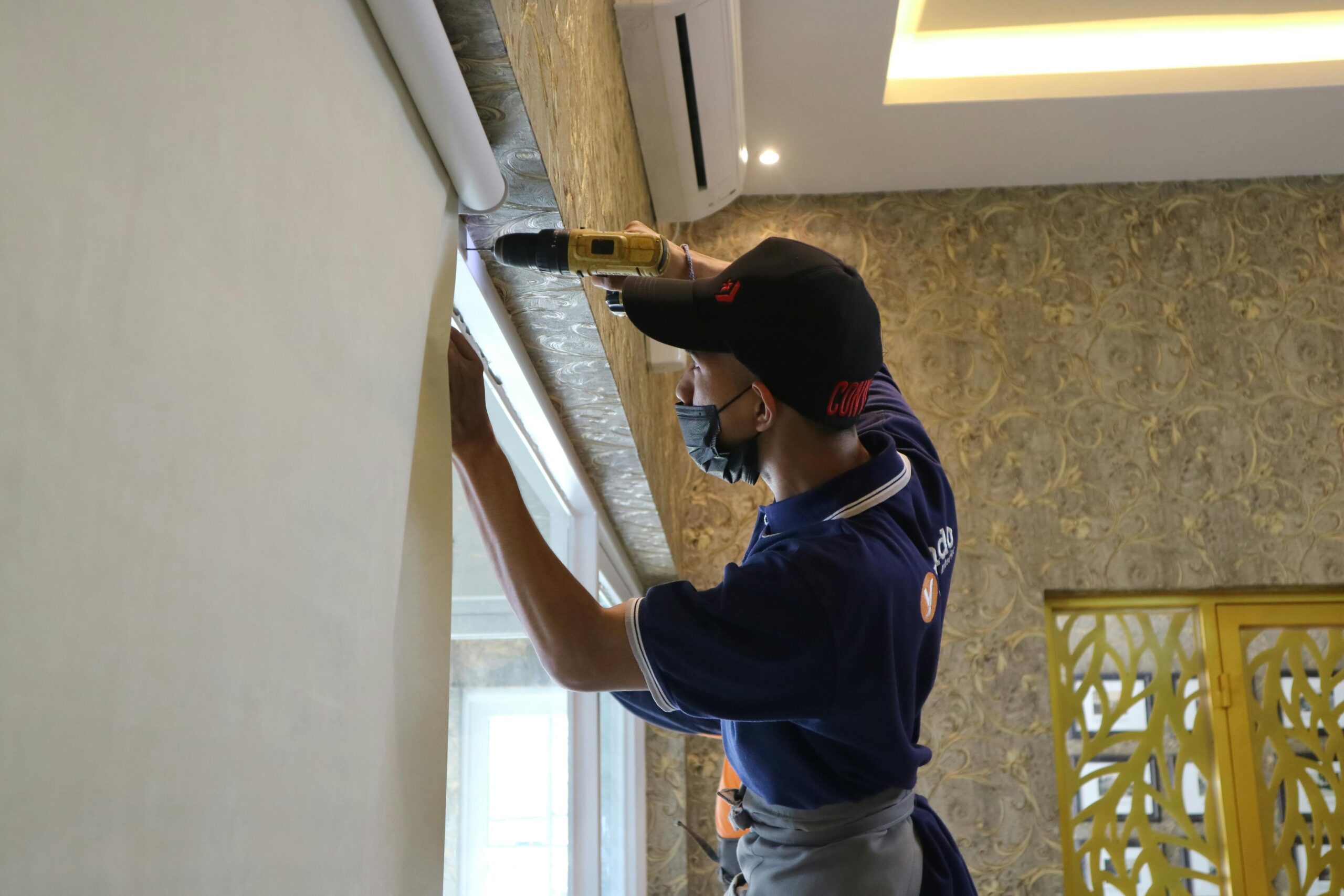
A better provider does not just install pieces. It helps shape a layout that supports customer flow, merchandising logic, and daily staff movement. That is why office furniture installation can also be relevant in some commercial settings, especially where desks, back-office zones, or service points are involved.
This stage has enormous commercial weight. A shelf that interrupts sightlines changes product visibility. A display unit placed too tightly narrows circulation. A counter installed without enough working space can slow service and irritate both staff and customers. These are not decorative details. They shape performance.
A stronger shop fitting company also thinks about balance. Which fixtures need to drive attention. Which areas should feel open. Which zones need to remain practical above all else. When that balance is right, the space feels more natural, more persuasive, and easier to operate.
Service Desk, Checkout, and Reception Setup
Counters and customer-facing desks often have disproportionate impact. They shape how the brand feels within seconds. A checkout that feels cramped or poorly placed creates friction. A service desk that looks polished and accessible builds trust immediately.
This can include:
- checkout counter positioning
- service desk assembly
- front-of-house alignment
- small layout refinements
These zones are often where commercial performance and first impression meet, which is why they deserve more care than simple installation alone.
A well-placed counter can improve queue comfort, staff confidence, and transaction speed. A weak setup can do the opposite. It can create bottlenecks, awkward waiting patterns, and a subtle sense that the store is less organised than it should be. A stronger shop fitting company sees these areas as operational anchors, not just pieces of furniture.
Stockroom, Storage, and Back-of-House Organisation
Retail and commercial spaces do not function well if only the visible front looks good. The hidden working zones matter just as much. Stockrooms, shelving access, support areas, and internal storage all shape how smoothly the team operates.
A strong shop fitting company helps organise these zones so they support speed, clarity, and order rather than becoming daily obstacles.
This matters because back-of-house friction rarely stays hidden. If staff cannot reach stock quickly, replenishment slows. If storage is awkward, the front of house becomes cluttered. If the support zone is badly arranged, everyday tasks take longer than they should. A stronger setup process protects the space from those quiet inefficiencies.
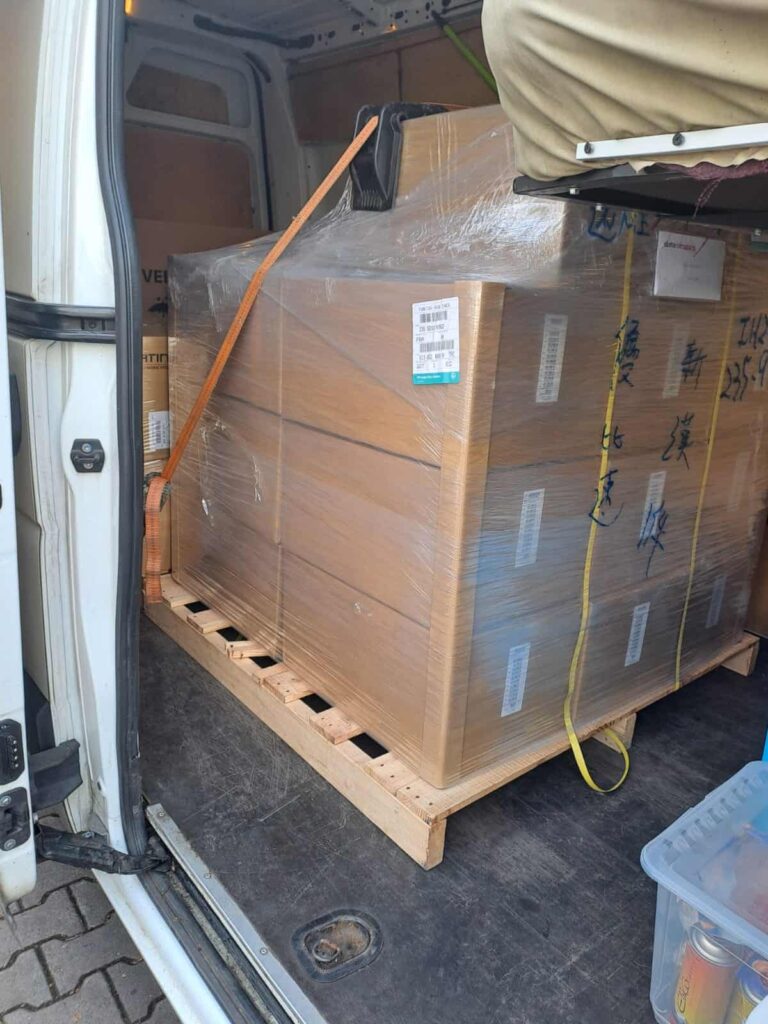
Packing, Delivery, and Storage Support
Commercial launches rarely move in a perfect line. Fixtures may arrive early. Contractors may overrun. Access windows may shift. In those moments, packing services and storage support become extremely valuable.
Storage can be the quiet stabiliser that keeps a pressured opening from collapsing into clutter. It gives the business room to sequence the launch properly instead of forcing everything into the space before it is actually ready.
That flexibility can save a project. Without it, the site can become overloaded too early, making every later task slower and more frustrating. With it, the business keeps more control and can protect the sequence that actually makes the opening work.
White Glove Handling for Premium Retail Fixtures
Some commercial spaces depend heavily on presentation. Premium counters, glass display units, bespoke fixtures, and branded furniture pieces need more careful treatment. White glove delivery helps protect those items and preserve the finish that shapes customer perception.
This is especially valuable in premium retail, boutique environments, showrooms, and customer-facing spaces where one damaged element can weaken the whole atmosphere. A careful shop fitting company protects not only the item itself, but also the emotional quality of the finished space.
Phased Setup for Multi-Zone Openings
Not every area of a shop or commercial space needs to be live at the exact same time. In larger projects, it often makes more sense to phase the launch.
This can mean:
- front-of-house first
- checkout or service areas first
- customer circulation zones first
- storage and secondary areas later
Phased shop fitting company support helps reduce chaos and makes opening feel more realistic and controlled.
Phasing is often what saves larger projects from turning into an exhausting blur. Instead of pushing every part of the site to completion at the same second, the business can bring the most valuable areas online first, reduce pressure, and keep refining the space with better control.
It also helps management think more clearly. When priority zones are defined early, faster decisions can be made on site without sacrificing quality. That is one of the most practical advantages a stronger shop fitting company brings to the launch.
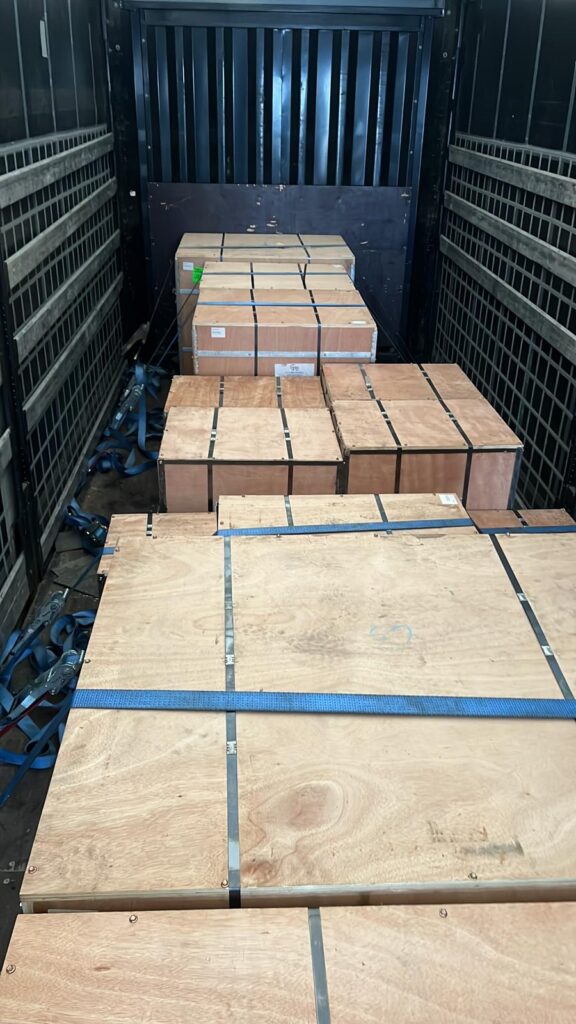

Shop Fitting Company for New Store Openings
A new commercial unit has a strange kind of tension. From the street, it can look almost there. The signage may be up. The interior lighting may be on. Yet inside, the space can still feel like a half-finished stage set rather than a real place of business.
That is why a shop fitting company becomes so valuable during new store openings.
A new opening needs more than visual appeal. It needs practical readiness. Shelving must hold stock properly. Counters must support customer interactions. Back-of-house areas must help staff move efficiently. Customer flow must feel natural. Without those details, even a beautiful space can underperform.
A shop fitting company helps turn an empty unit into a customer-ready environment by supporting:
- fixture and shelving installation
- service desk and checkout setup
- stockroom and support-zone organisation
- phased launch planning
- man and van support for smaller retail openings
This matters because the first trading days often shape how the store is remembered. Customers notice whether the space feels polished or improvised. Staff notice whether the layout helps them work or slows them down. The business feels that difference immediately.
A new store opening also creates a rare kind of pressure. Every detail is visible. The first customers are often the most curious. The team is learning in real time. Stock placement, circulation logic, checkout flow, and back-of-house efficiency all begin to matter at once. A stronger shop fitting company helps turn that pressure into a more stable launch.
It also reduces the risk of opening into avoidable friction. Without proper setup, even attractive stores can feel clumsy. Shelving may be in place but hard to replenish. Counters may look good but create slow queue movement. Service zones may exist but fail under real customer volume. Better setup reduces those weak points before the first day of trade.
For smaller openings, a man and van setup may be enough to move essential items quickly and efficiently. For larger openings, a more structured installation and staging process is usually what protects the launch from becoming overwhelmed.
A good new-store setup also reduces firefighting. Instead of solving shelving problems, blocked access, and badly staged stock during opening week, the business can focus on merchandising, staffing, and customer experience. That is a major commercial advantage.
Another benefit is confidence. When a new site opens in a more controlled way, staff tend to settle faster. They trust the space more quickly. They can focus on service instead of adaptation. That emotional shift can be surprisingly valuable in the first days of a launch.
Shop Fitting Company for Relocation and Reinstallation
Relocating a store or showroom can look simpler than opening from scratch, yet it often creates its own kind of complexity. The furniture and fixtures already exist, but they still need to be moved, reinstalled, and adapted to the new unit properly.
That is where a shop fitting company becomes especially useful.
This kind of support is valuable when a business needs to:
- relocate an existing store or showroom
- reinstall fixtures after transport
- phase setup to reduce downtime
- bring customer-facing areas online sooner
Relocation often creates a false sense of security. Once the items reach the new space, people assume the hard part is over. In reality, that is often only the midpoint. Counters still need positioning. Shelving still needs alignment. Customer flow still needs to work in a new footprint. Back-of-house storage often needs a completely different configuration.
That is why a better shop fitting company treats reinstallation as part of a fresh operational plan rather than a simple repeat of the old space. What worked in one shop may not work in the next. Room proportions change. Sightlines change. Circulation changes. The setup should adapt accordingly.
For smaller commercial moves, a man and van model may still be the right solution, especially where the footprint is compact and the opening window is tight. For larger relocations, though, a more structured move-and-reinstall sequence almost always gives the business more control.
One of the biggest advantages here is continuity. When relocation and reinstallation are handled as one connected flow, there are fewer handover gaps, fewer misplaced items, and fewer moments where nobody clearly owns the next step. That clarity can shorten downtime significantly.
Relocation also has a hidden emotional dimension. Teams are often attached to the rhythm of the old space, even when they are ready to move on. If the new site feels awkward or unfinished, that resistance grows. If the new site feels sharper and better planned, people adopt it faster. A strong shop fitting company helps make that transition feel like progress rather than disruption.
There is also a commercial upside in treating reinstallation as a redesign opportunity. The business can correct old inefficiencies, refine customer flow, improve sightlines, and rethink stockroom logic instead of simply rebuilding yesterday’s layout inside a new shell. That is one of the biggest strategic gains in a well-managed move.
Documents and Practical Checks Before Commercial Setup
Even the strongest shop fitting company cannot rescue every project from weak preparation. Practical checks still shape the pace, cost, and success of the launch.
Before commercial setup begins, businesses should confirm:
- building access permissions
- loading bay rules
- parking and delivery windows
- landlord approvals
- room or zone labels and priority order
These details may sound dull, yet they can decide whether setup day feels smooth or painfully slow. A missed access rule, weak zone labelling, or unclear delivery window can ripple through the whole project.
A practical setup pack should include:
- the latest floor plan with zone labels
- building and access contacts
- delivery confirmations
- priority area list
- handling notes for fragile or premium fixtures
If a project includes local legal or administrative requirements, those should be linked only to the relevant government or public authority source for that country.
A stronger shop fitting company also helps identify physical constraints before arrival. Are the corridors wide enough for counters? Are floor protection rules in place? Is the stockroom actually ready? These checks are easy to overlook, yet they often decide how well the whole installation day performs.
For city-centre commercial spaces, access and parking can be especially sensitive. If local requirements apply, they should always be verified through the relevant authority rather than guessed from habit or old project assumptions.
It is also worth confirming the real readiness of the site, not just the apparent one. A unit may look finished, yet still contain contractor materials, incomplete flooring, blocked access points, or unresolved handover details. A better pre-launch check catches those issues before they steal time from installation.
Another overlooked point is document clarity. If one floor plan is being used by the business, another by the installer, and a third by the landlord or contractor, confusion becomes almost inevitable. A stronger shop fitting company pushes for one clear version of truth because that saves time where it matters most, on site.
Why Furniture and Fixture Installation Matters in Commercial Setup
Among all the moving parts inside a commercial launch, installation is one of the most decisive. It is the stage where the space stops being a project and starts becoming a place that can actually serve customers.
That is why installation sits near the centre of what a strong shop fitting company delivers.
It matters because:
- shelving and counters shape customer flow
- display units affect usability and visual impact
- poor installation weakens both operations and first impressions
- good installation helps the space feel ready from day one
Poor installation creates friction. Good installation creates momentum.
A shelf that interrupts flow changes how customers move. A checkout that feels cramped affects queue comfort. A display zone that is slightly off-balance can weaken the whole visual rhythm of the shop. These may look like small issues, yet they compound quickly in daily operation.
Strong installation also protects investment. Retail fixtures, counters, and display units can be expensive. Weak assembly or careless handling can damage that investment before the business has even opened properly.
There is also a brand effect. Customers do not usually analyse installation consciously, yet they feel it. A commercial space that flows well feels polished and trustworthy. One that feels improvised can quietly weaken the brand.
That is why a stronger shop fitting company treats installation not as a final technical step, but as a commercial performance tool.
A smarter installation process also improves staff behaviour in subtle ways. When the layout supports movement naturally, people work with less hesitation. Replenishment becomes faster. Service zones feel calmer. Customers read the space more intuitively. Over time, these small advantages can create a surprisingly powerful difference in daily performance.
That improvement becomes even more valuable at busy times. During opening weekends, promotional periods, or high-footfall days, weak installation problems become much more visible. Bottlenecks intensify. Queues feel worse. Staff work harder for the same result. A better shop fitting company protects the space from those avoidable stress points before they become daily frustration.
Installation also affects commercial psychology. A balanced display feels more inviting. A well-positioned service counter feels more reassuring. A clear circulation route feels easier to trust. These effects are subtle, yet they can shape how long customers stay, how confidently they browse, and how naturally they move toward a purchase.
There is also a maintenance benefit. Properly installed fixtures tend to remain more stable, safer, and easier to work around over time. Weakly installed elements often need repeated adjustment, create low-level annoyance for staff, and gradually make the environment feel worn faster than it should. A stronger installation process protects the long-term quality of the space as well as the opening impression.
In practice, this means installation is not only a finishing stage. It is one of the points where commercial performance, brand presentation, and staff efficiency all meet. That is exactly why the best shop fitting company support treats it with so much care.
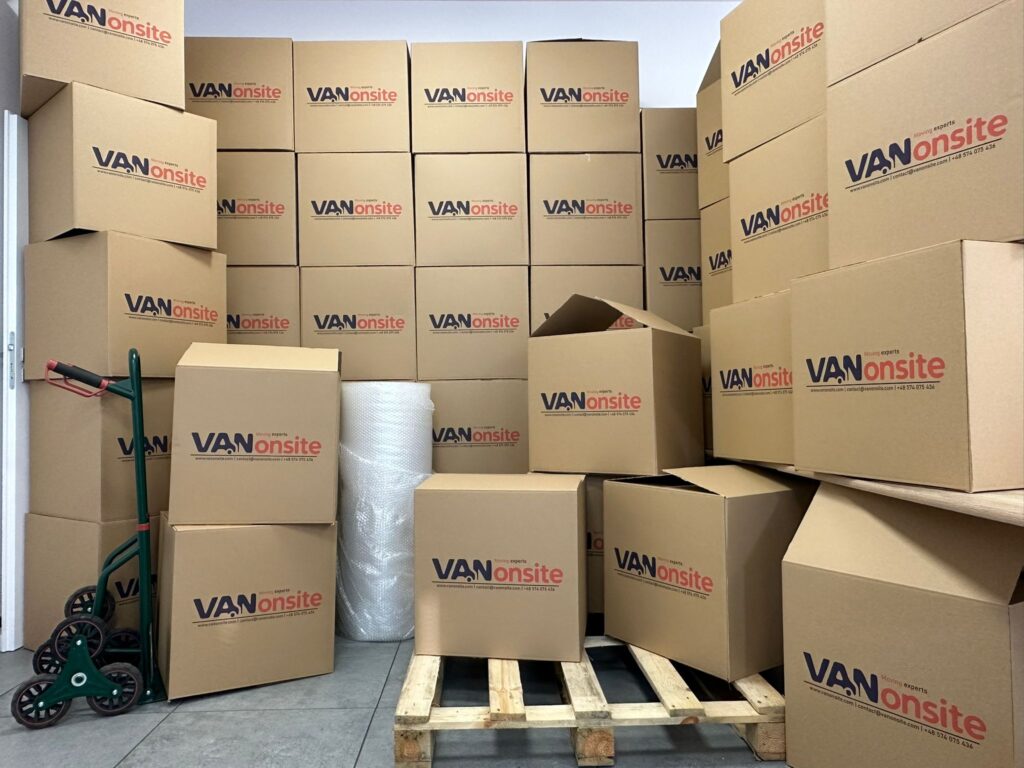

Choosing the Right Vehicle for a Shop Fitting Company Project
The right vehicle affects far more than transport price. It shapes timing, unloading logic, site clutter, and how efficiently the whole project can move from delivery to readiness.
| Vehicle option | Capacity | Max load | Best use case |
|---|---|---|---|
| Moving One | 1 m3 | 100 kg | Small urgent shop items |
| Moving Basic | 5 m3 | 300 kg | Compact retail setup projects |
| Moving Medium | 10 m3 | 500 kg | Small shop opening |
| Moving Premium | 15 m3 | 1100 kg | Medium commercial move and setup |
| Moving Premium Plus | 30 m3 | 3500 kg | Large retail launch and installation |
| Moving Full House XXL | 90 m3 | 20000 kg | Full commercial relocation and complete setup |
For smaller setups, a man and van model may be enough. For larger projects, a higher-capacity vehicle often reduces repeat trips and helps keep the installation sequence cleaner.
The right decision depends on more than volume. Access conditions, unloading restrictions, delivery windows, and phased setup plans all matter too. A vehicle that is technically large enough may still be the wrong choice if it overwhelms the site or complicates access.
The cheapest option is not always the smartest one. Too small a vehicle can drag the project out. Too large a vehicle can create city-centre access headaches. Better matching protects both cost and pace.
A stronger shop fitting company also thinks in sequence, not just in cubic metres. In some projects, two smartly timed deliveries will outperform one oversized drop that floods the unit too early. That is the kind of planning that keeps a commercial setup controlled rather than chaotic.
Typical Shop Fitting Company Timeline
A good commercial launch does not happen by luck. It happens because the project moves through a clear sequence with fewer avoidable surprises.
A strong timeline does more than list dates. It creates order. It helps teams make important decisions early, before the pressure rises. It also reduces the number of costly surprises that tend to appear when too much is left until the last moment.
2 to 6 Weeks Before Opening or Move
This is the planning stage. Inventory, layout, priorities, and any premium or complex fixture needs should be clarified here.
At this stage, teams should:
- confirm fixture inventory and dimensions
- review floor plans against real space conditions
- identify customer-facing priorities
- flag premium or awkward items needing special handling
- confirm whether storage may be needed
This is also the stage where the smartest commercial launches quietly win. If something is going to slow the project later, it usually starts here. Maybe a counter size does not match the actual access path. Maybe the stockroom has less usable depth than expected. Maybe the layout looks clean on plan but does not support real customer circulation. A stronger shop fitting company helps catch those problems before they become expensive.
This is the right moment to define commercial priorities clearly. Which zone has to look perfect on day one. Which area can be phased. Which fixture is essential for opening, and which can follow later without damaging the launch. Businesses that answer these questions early usually move faster and with less stress.
1 to 2 Weeks Before Installation
This is the preparation stage. The goal is to remove uncertainty before it reaches the site.
This usually includes:
- confirming building access contacts
- aligning zone labels with the latest layout
- checking which areas must go live first
- confirming who approves fast decisions on setup day
At this stage, small mismatches become visible. A zone label may not match the latest plan. A contractor may still be finishing one area. A priority counter may be scheduled too late in the delivery order. These problems are still manageable here. On setup day, they become expensive.
A stronger shop fitting company will also push for decision clarity at this point. Who approves layout adjustments on site. Which zone takes priority if time tightens. Which items are fragile or visually critical. When those answers exist before installation, the day runs with far less hesitation.
24 to 48 Hours Before Setup Day
This is the final control stage. It is where small mismatches are discovered before they create expensive delay.
That means checking:
- access and delivery windows
- contractor handover status
- parking or loading rules
- final site contact availability
- any timing changes affecting delivery or installation
This stage often feels administrative, yet it can save the whole launch. One access rule change. One blocked loading point. One unfinished contractor task. One missing contact number. Any of these can ripple through the entire setup sequence.
This is also the right time to confirm the real readiness of customer-facing zones. It is not enough for a space to look nearly finished. It needs to be ready to receive fixtures, safe for the team, and clear enough for work to move without obstruction.
Setup and Installation Day
This is execution. A strong shop fitting company will unload, stage, install, align, and refine in the right order.
A smooth setup day often follows this flow:
- zone-based unloading
- staged item placement
- shelving and counter installation
- customer-facing area setup
- storage and support-zone organisation
- early layout refinements
What makes this sequence powerful is not just speed. It is logic. Zone-based unloading reduces clutter. Staged placement protects the installation rhythm. Early customer-facing setup helps the space begin to feel commercially alive before the whole project is complete.
A better shop fitting company also keeps watch for weak points in real time. Is one display line too tight. Is the service counter affecting circulation. Is the stockroom layout causing unnecessary movement. Those small refinements can dramatically improve how the space works once customers arrive.
24 to 72 Hours After Setup
This is the refinement stage. It includes small repositioning, presentation adjustments, packaging removal, and confirmation that the key zones actually work in practice.
This matters because many commercial spaces look fine on plan and still need small changes once people begin moving through them.
This is when a space shifts from installed to truly usable. Teams start noticing where movement feels natural and where it does not. The business begins to see whether the front-of-house zones support customer confidence and whether the back-of-house areas support speed.
Small changes made here can have outsized value. A slight counter adjustment can improve queue logic. A display shift can strengthen sightlines. A storage change can reduce wasted movement. Good refinement work gives the space a more polished final rhythm.
A stronger timeline also protects the team from decision fatigue. When more key decisions are made early, fewer rushed compromises happen on opening day.
Common Mistakes Businesses Make When Opening a Commercial Space
Commercial setups often fail in predictable ways, even when the business has strong intent and a good-looking concept.
Common examples include:
- assuming the store is ready when fixtures arrive
- poor zone labelling
- weak layout planning
- ignoring access restrictions
- underestimating installation time
- choosing the wrong vehicle size
- trying to coordinate too many suppliers without one clear lead
There are deeper mistakes too. Some teams leave too many layout choices until the final day. Others focus only on speed and forget customer flow. Some treat a commercial launch like a domestic move, which almost always creates more friction than expected.
One of the biggest risks is fragmented accountability. When nobody clearly owns the full flow, small failures multiply. A missed delivery slot affects installation. Weak staging affects counters. Poor access planning slows everything. Suddenly the project is losing time on every front.
Another frequent mistake is prioritising visual completion over operational readiness. A space can look full and still work badly. The counters may be in place, yet the flow may feel wrong. The shelving may look finished, yet stock access may be awkward. Better shop fitting company support plans for daily performance, not just appearance.
A further mistake is underestimating how much pressure opening week puts on the team. If installation choices are still unresolved when staff arrive, every small decision starts competing with training, merchandising, customer preparation, and daily operations. That kind of overlap drains energy fast and creates errors that could have been avoided earlier.
Another common issue is weak priority setting. Not every part of a commercial space carries the same weight, yet many teams try to finish everything at once. In reality, customer-facing zones, service areas, and core circulation paths usually matter most first. A stronger shop fitting company helps define those priorities early so the opening feels more stable even before every secondary detail is complete.
Businesses also often underestimate how quickly clutter affects perception. A few misplaced boxes, unfinished support areas, or badly staged fixtures can make the whole space feel less polished. Customers rarely analyse the reason in detail, yet they feel the effect immediately. That is why setup discipline matters as much as visual design.
A final common failure is underestimating the emotional effect of a weak opening. If the team starts in a cluttered, awkward, half-ready environment, the mood drops fast. That first impression can linger much longer than people expect.
Why VANonsite Is a Strong Choice as a Shop Fitting Company in Europe
VANonsite is a strong choice as a shop fitting company because it combines range, speed, and practical control in a way that supports real commercial openings.
It supports:
- commercial setup projects across Europe
- secure and fast transport
- GPS tracking for every load
- practical services from packing to installation
- support for small and large commercial projects
- premium handling where finish matters
| Business need | Relevant VANonsite support |
|---|---|
| Commercial relocation | Transport and setup support |
| Fixture and furniture installation | Office furniture installation |
| Protected packing | Packing services |
| Premium item care | White glove delivery |
| Timing gaps | Storage |
| Urgent changes | Last minute moving |
That matters because commercial openings rarely move in a perfectly straight line. Some are small and urgent. Others are larger, phased, and spread across multiple locations. A provider that can support more of the process reduces fragmentation and gives the business a steadier launch path.
GPS tracking adds another layer of control. When teams know where critical items are, they can make calmer decisions, adjust more intelligently, and reduce uncertainty during high-pressure opening windows.
VANonsite also benefits from the way its services reinforce one another. Packing services protect items before movement. Office furniture installation helps convert delivery into usable commercial space. White glove delivery protects premium finish and presentation. Storage gives the project breathing room where timing gaps appear.
That service overlap is especially valuable for businesses that do not want to coordinate several providers for one launch. When removals, installation, packing, premium handling, and storage sit closer together, there are fewer handovers, fewer missed details, and a much cleaner path to opening day.
There is also a practical scaling advantage. Some projects need a compact man and van model with a few fixtures and fast turnaround. Others need phased transport, premium care, larger vehicle capacity, and a more controlled installation rhythm. VANonsite can support both lighter and heavier commercial setups, which makes it easier for brands to use one reliable partner across different project sizes.
Another strength is flexibility under pressure. Real commercial launches rarely follow a perfectly clean script. A contractor may overrun. An access window may change. A premium item may need different handling. A better shop fitting company is valuable not because the world stays perfect, but because it helps the business stay stable when the world does not.
For businesses opening, relocating, or rolling out multiple commercial spaces across Europe, that combination can be extremely valuable. One provider managing more of the process usually means fewer handovers, fewer mistakes, and a cleaner route from empty unit to customer-ready environment.
FAQ
What does a shop fitting company do?
A shop fitting company helps businesses move, install, organise, and prepare a retail or commercial space so it is ready for customers and staff. That can include transport, fixture installation, storage setup, counters, shelving, and practical opening support.
Does a shop fitting company include furniture installation?
Often, yes. A strong shop fitting company usually includes installation of shelves, counters, service desks, support furniture, and, where relevant, office furniture installation.
Can a shop fitting company help with relocation?
Yes. Many commercial projects involve relocation support, especially when an existing store, showroom, or customer-facing space must be reinstalled in a new unit quickly.
Is man and van enough for a small retail setup?
Sometimes. A man and van solution can work well for lighter, smaller, or urgent commercial setups. Larger projects often need more structured transport and installation support.
How long does a commercial setup usually take?
A small commercial setup may be completed in one day. Larger or phased projects often take several days depending on volume, access complexity, and how much installation is required.
Can a shop fitting company support multi-site rollouts?
Yes. This is one of the strongest use cases for a professional shop fitting company, especially when brands want consistency across several locations.
Does VANonsite work across Europe?
Yes. VANonsite supports commercial setup projects across Europe, which is especially useful for brands opening or relocating spaces in multiple cities or countries.
Can storage be used during setup?
Yes. Storage is often valuable when timing shifts, contractors overrun, or the space is not fully ready when core items arrive.
What vehicle size is best for a shop fitting project?
That depends on the volume, access conditions, and installation sequence. The right provider should match the vehicle to the actual project rather than making a rough guess.
What is the difference between delivery and full commercial setup support?
Delivery gets the items to the site. Full shop fitting company support turns those items into an operational commercial environment through installation, staging, layout refinement, and readiness checks.
Can a shop fitting company help reduce opening delays?
Yes. A stronger shop fitting company can reduce delays by improving delivery sequence, staging, installation timing, and early priority setting. That is especially valuable when opening dates are fixed and lost trading days matter immediately.
Why is one integrated provider often better than several separate suppliers?
Using one provider usually means fewer handover mistakes, clearer accountability, and less duplicated effort. When transport, installation, storage, and premium handling are better connected, the commercial launch tends to feel more controlled and less fragile.
Ready to Plan Your Commercial Setup?
A strong opening is not built on luck. It is built on timing, transport, installation, sequencing, and calm execution.
The right shop fitting company protects time, budget, and opening momentum. It helps businesses prepare retail and commercial spaces across Europe without drowning in avoidable friction.
Whether you need office furniture installation, packing services, white glove delivery, storage, or a flexible man and van model for smaller projects, VANonsite can support the full journey.
The stronger the plan at the beginning, the sharper the commercial space feels at the end.
That is the real value of working with a stronger shop fitting company. The space opens with more confidence. The team settles faster. The brand looks more controlled from the first day. Instead of losing energy to avoidable setup friction, the business can focus on customers, product presentation, and growth.
If your next store, showroom, or commercial interior needs to feel ready, polished, and operational without unnecessary chaos, this is the right moment to put a better launch structure in place.
Request your commercial setup quote and open a space that feels ready from the first day.