Introduction
Removals to Denmark from Spain should feel exciting, not exhausting. With a sharp plan, trusted movers, and real time GPS tracking, your move becomes a clean, confident stride. From sunlit Barcelona flats to Madrid lofts and onward to Copenhagen townhouses, every item deserves careful choreography. We handle ferries, routes, permits, parking, and timing so you do not have to. VANonsite brings right sized vans, professional packing, punctual crews, and transparent pricing. You get calm communication, protective materials, and a single point of contact from quote to handover. Start with a quick inventory and we will size your van, map the fastest corridor, and lock your date.
TL;DR
- EU to EU move: household goods for personal use usually travel duty free. Check SKAT for allowances on alcohol and tobacco, plant rules, and any edge cases. Flag hazardous items like lithium batteries or aerosols.
- Sort documents early: Life in Denmark for CPR and address, SIRI for non EU permits, SKAT for your tax card, MitID for banking. Keep Spanish exit steps handy with Agencia Tributaria and Seguridad Social.
- Share a photo inventory to size the van precisely from 5 to 90 m³. If access is tight, two smaller trips can be smarter than one oversized truck.
- Choose your route: Mediterranean up through France and Germany, or ferry options via Italy or the UK depending on timing. Typical transit is 2 to 3 days door to door.
- Pack smart: double wall boxes, labels on two sides, wrap plates vertically, and prepare a Day 1 essentials box. Add Packing Service or White Glove for art and antiques.
- On moving day: secure parking and elevators, clear hallways, load large items first, sign the inventory, and track your shipment live with GPS.
- After arrival: complete CPR, tax card, GP and healthcare, Digital Post and NemKonto. If keys are delayed, use storage and phased delivery to stay stress free.
Why Spain to Denmark removals are simpler than you think
Both Spain and Denmark sit in the EU single market. Most personal household goods move duty free when they are for your own use. Roads are excellent, Schengen travel keeps border checks minimal, and building access rules are predictable in Danish cities. Fewer moving parts means fewer delays and smoother handovers.
You benefit from:
- One market rules for typical household effects within the EU.
- Reliable motorway corridors across France and Germany with predictable rest stops.
- Danish buildings with elevator booking systems, quiet hours, and clear loading bays.
- Crews trained for compact streets, courtyards, and heritage stairwells.
- Live GPS tracking on every VANonsite load so you always know where your belongings are.
- Consistent 230 V power and EU plugs, so appliances and lamps from Spain usually work on arrival.
When might it be trickier?
- Historic stairwells or no lift above the second floor.
- Long carry from street to door or courtyard height limits.
- Narrow old town streets that require smaller vans and shuttle loading.
- Winter weather on the northern leg.
Share these details early and we will plan the right vehicle, crew, and timing to keep everything calm.
Access intel we love
- Elevator size and booking window, stair width and turns, street width, height limits, distance from loading bay to door, and any resident quiet hours.
Pro tip: If keys are delayed, combine short term Storage with phased delivery to avoid rush fees and stress. Book your slot here: Removals to Denmark.
Documents and registrations you actually need
For EU citizens, the process is straightforward. A few timely steps keep everything crisp and compliant.
In Denmark
- Life in Denmark portal for newcomers, address registration, and CPR: https://lifeindenmark.borger.dk/
- SIRI for permits if you are a non EU national or in a special category, and for EU residence documents where applicable: https://nyidanmark.dk/
- SKAT for your tax card and vehicle or import topics after arrival: https://www.skat.dk/
- MitID digital ID for banking and public services: https://www.mitid.dk/
- Digital Post (e Boks) for official letters: https://www.eboks.com/danmark/en
- NemKonto to link your bank account for public payments: https://www.nemkonto.dk/
From Spain before you leave
- Agencia Tributaria for tax residence, Modelo 030 address changes, and exit formalities: https://sede.agenciatributaria.gob.es/
- Seguridad Social for coverage questions and portability certificates where applicable: https://www.seg-social.es/
- DGT for driving licence matters if you need updates: https://www.dgt.es/
- Administración General for guidance on padrón and general procedures. Check your ayuntamiento for local padrón rules: https://www.administracion.gob.es/
Quick checklist
- Passport or ID, tenancy or purchase agreement, job or study letter, travel bookings.
- Digital copies of confirmations from Life in Denmark, SKAT, MitID, and SIRI if relevant.
- If you are non EU, secure the correct Danish permit with SIRI before you move.
What you can and cannot bring from Spain
Moving household goods within the EU is typically duty free for personal use. Know the exceptions and plan smart so everything arrives safely.
Allowances and controls
- Alcohol and tobacco have personal allowances. Check SKAT for current guidance and quantities: https://www.skat.dk/
- Food and animal products for personal use are usually fine within the EU. Large quantities or specialty items can face limits. Keep receipts and pack sealed.
- Plants, soil, seeds can face restrictions to protect biosecurity. Verify before shipping garden items.
Hazardous or sensitive items
- Lithium batteries and e bikes: remove detachable batteries and pack terminals safely. Tell us in advance so we can advise on compliant transport.
- Pressurised containers: aerosols, gas cylinders, paint, varnish, fuels, and solvents require special handling or cannot travel in household shipments. Share a list and we will suggest safe alternatives.
- Medications: carry in original packaging with prescriptions where applicable.
- Valuables and documents: passports, jewelry, cash, bonds, and irreplaceable papers travel with you, not in the van.
Vehicles and bikes
- If you are importing a car to Denmark, review registration, taxes, and timing on SKAT: https://www.skat.dk/
- For bikes and e bikes, remove loose accessories and pack chargers separately.
Simple packing win
- Create a small box labeled Open First with a kettle, cups, bedding, toiletries, basic tools, and chargers. It turns your first night into a soft landing.
Routes from Spain to Denmark and realistic timelines
Spain to Denmark routes usually combine motorways across France and Germany. Choose the corridor that matches your origin city and schedule.
Common corridors
- Barcelona or Valencia to Copenhagen via AP-7 to A9, A7, then German A1 to Denmark.
- Madrid to Aarhus via A1 to AP-1, then A63 to A10 in France, through Germany to Jutland.
- Seville or Malaga to Odense via A-4 to AP-1, or via Mediterranean AP-7, then north through France and Germany.
Typical transit windows
- Barcelona to Copenhagen: about 2 to 3 days door to door
- Madrid to Aarhus: 2 to 3 days
- Seville to Odense: 3 days
Times assume legal driver hours and normal weather. Winter or special access needs may add time.
Sample itineraries that work
| Day | Route example |
|---|---|
| Day 0 | Load in Spain. Motorway to northern Spain or southern France. Overnight stop. |
| Day 1 | France to Germany corridor. Overnight near Hamburg or Bremen. |
| Day 2 | Germany to Denmark. Deliver in Copenhagen, Odense, or Aarhus. |
Coachmaker tips
- Book hotels with secure van parking if self driving any leg.
- Summer and holiday periods need earlier scheduling for lift bookings and municipal permits.
- Share your route choice with us. We will sync crew plans so loading and delivery align perfectly.
VANonsite van sizes that fit your home
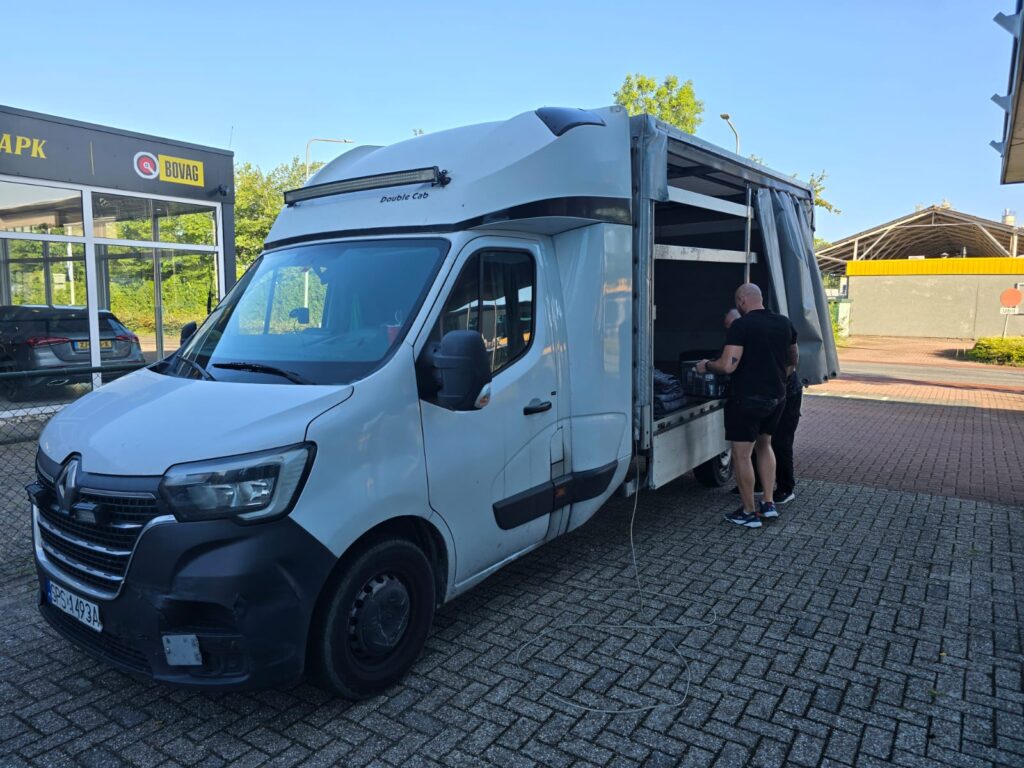
Right size saves money and time. Our fleet covers minimalist studios to full family homes.
| VANonsite vehicle | Approx. volume | Max load | Best for |
|---|---|---|---|
| Moving Basic | 5 m³ | 300 kg | Student essentials, light moves |
| Moving Medium | 10 m³ | 600 kg | One bedroom flats, compact furniture |
| Moving Premium | 15 m³ | 1000 kg | Two bedrooms or bulkier items |
| Moving Premium Plus | 30 m³ | 3500 kg | Three to four bedrooms, light office moves |
| Moving Full House XXL | 90 m³ | 20000 kg | Full house moves, large offices |
Fast chooser
- Studio or student room with 20 to 30 boxes: Moving Basic or Moving Medium
- One bedroom with sofa and wardrobe: Moving Medium
- Two bedrooms or solid wood pieces: Moving Premium
- Three to four bedrooms or mixed furniture plus appliances: Moving Premium Plus
- Full family home and garden gear: Moving Full House XXL
Measure once, move once
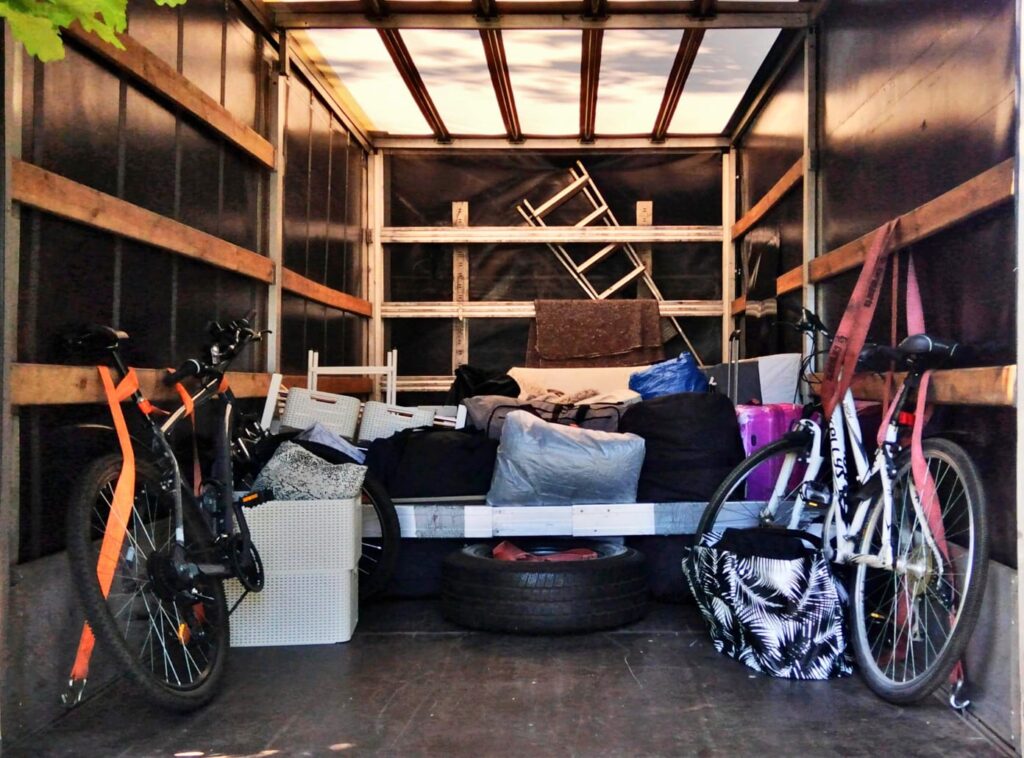
- List your biggest items and measure in meters. Multiply length x width x height to get m³. Add 10 to 15 percent for padding and odd shapes.
- Typical box volumes for quick math: small 45 x 35 x 35 cm ≈ 0.055 m³, medium 55 x 35 x 35 cm ≈ 0.067 m³, large 60 x 40 x 40 cm ≈ 0.096 m³.

What it costs from Spain to Denmark and how to save
Your price reflects five levers: distance, volume, access, packing, timing. We combine these into one clear quote so you know exactly what you are paying for.
Included in a VANonsite quote
- Professional crew and right sized vehicle
- Fuel, mileage and pre approved tolls
- Basic goods in transit insurance and protective blankets
- Live GPS tracking of your load
Add if needed
- Full or partial Packing Service with materials
- Disassembly and reassembly
- White Glove Delivery for art and antiques
- Storage with flexible redelivery
- Parking permits billed at cost
What usually influences price the most
- Stairs or no lift above the second floor
- Long carry from door to van over 20 to 30 meters
- Bulky pieces that need special handling like a piano or American fridge
- Tight delivery windows or evening service
Scenario planner
| Move type | Distance guide | Volume guide | Best van | Time window | Smart tip |
|---|---|---|---|---|---|
| Student room | 1,500 to 2,500 km | 5 to 10 m³ | Moving Basic or Medium | 2 to 3 days | Pack tight, avoid oversized boxes |
| One bedroom | 1,500 to 2,500 km | 10 to 15 m³ | Moving Medium | 2 to 3 days | Reserve elevator and parking early |
| Two bedrooms | 1,500 to 2,500 km | 15 to 18 m³ | Moving Premium | 2 to 3 days | Disassemble wardrobes and beds beforehand |
| Family home | 1,500 to 2,500 km | 25 to 35 m³ | Moving Premium Plus | 3 days | Consider split delivery or short term storage |
| Full house with garden | 1,500 to 2,500 km | 60 to 90 m³ | Full House XXL | 3 to 4 days | Share photos of access points and garden gear |
Ways to save
- Move midweek outside peak season.
- Pre box small items and label two sides.
- Reserve elevators and parking early.
- Share photos for accurate van sizing.
Packing that protects and speeds things up
Great packing is compound interest. It pays off all day. Use this expanded checklist to protect every piece and speed up loading and unloading.
Essentials
- Double wall boxes, wardrobe boxes, optional dish barrels, bubble wrap, packing paper, stretch film, furniture blankets, mattress and sofa covers, corner protectors
- Tape gun, FRAGILE stickers, waterproof marker, color dots, inventory sheets
- Zip bags for screws and fittings, cable ties, painter’s tape for doors and drawers
- Ratchet straps or tie downs for safe in‑van anchoring
- Gloves and a sharp box cutter or scissors
Materials calculator
| Home size | Typical box count | Bubble wrap | Tape rolls | Wardrobe boxes |
|---|---|---|---|---|
| Student room or studio | 15–25 | 10–20 m | 3–4 | 1 |
| One bedroom | 25–40 | 20–40 m | 4–6 | 2 |
| Two bedrooms | 40–60 | 40–70 m | 6–9 | 3 |
| Three bedrooms | 60–90 | 70–120 m | 9–12 | 4–5 |
Best practices
- Pack room by room and label two sides with room and contents.
- Wrap plates vertically and pad gaps with paper or towels.
- Place heaviest boxes at the bottom; split books into multiple small boxes.
- Photograph cable setups before you unplug; bag cables and remotes together.
- Create a Day 1 box with bedding, toiletries, kettle, and chargers.
- Cushion glass and ceramics with the towel rule: one soft layer around each piece.
- Remove lamp shades and bulbs; box them separately with padding.
- Tape hardware to furniture in a labeled bag or place in a small labeled jar.
- Bag liquids and keep them upright; avoid mixing chemicals.
- Do a gentle shake test for fragile boxes. If you hear movement, add padding.
Labeling that speeds unloading
- Color code by room and number each box. Example: Blue 07 Kitchen, pots and pans.
- Add a small priority tag such as Open First or Seasonal.
- Keep a simple inventory list mapping numbers to contents. It saves time at delivery.
Furniture prep
- Wardrobes: empty, remove shelves, secure doors with painter’s tape.
- Beds: remove bedding, bag fixings, photograph slat direction for fast rebuild.
- Sofas and chairs: remove legs where possible; protect corners with foam.
- Appliances: defrost freezers 24 hours before, drain washing machines, secure drums with transit bolts.
Do not pack list
- Passports, cash, jewelry, original deeds, essential medications – carry these with you.
- Pressurised containers, fuels, loose lithium batteries – ask us for safe alternatives.
Sustainability wins
- Reuse cartons from local marketplaces and recycle afterward.
- Choose paper based padding where possible.
- Right size the van to cut extra trips and emissions.
Add our Packing Service if time is tight. Use White Glove Delivery for art, instruments, and antiques that deserve delicate handling.
Moving day playbook
Moving day rewards crisp choreography. Follow this schedule to keep stress low and momentum high.
24 hours before
- Confirm crew arrival window and driver contact.
- Print or save parking and elevator permits for both addresses.
- Finish the fridge, defrost freezers, and air them dry.
- Set aside a valuables kit with passports, keys, contracts, medications, and chargers.
Morning of the move
- Clear hallways and protect floors with runners or blankets.
- Reserve a quiet room for kids and pets so the loading zone stays safe.
- Walk the crew through access, elevator rules, and fragile priorities.
During loading
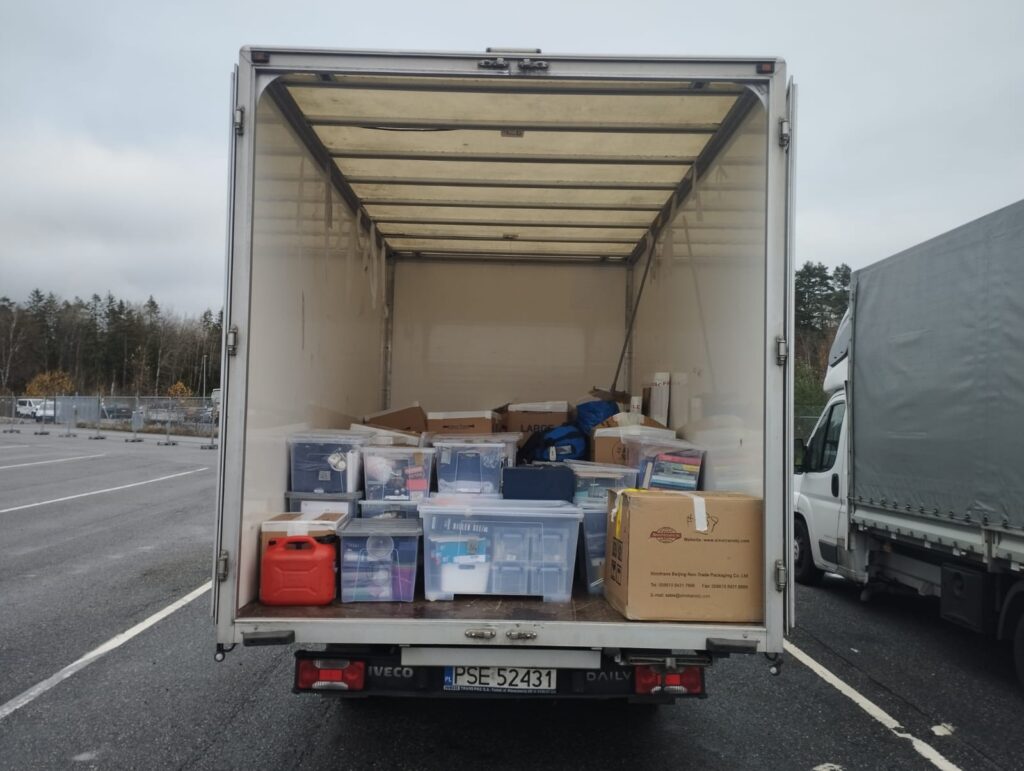
- Load big items first, then medium boxes, then light and fragile last.
- Keep a small toolkit, tape, and zip bags handy for screws and brackets.
- Take meter readings and a quick set of exit photos before you lock up.
En route
- Use the live GPS link to follow progress in real time.
- Share the tracking link with anyone receiving at the destination.
Delivery and handover
- Ensure destination parking is clear and elevator is booked if needed.
- Direct items by room to avoid re‑handling.
- Assemble beds first for a restful first night.
- Sign the inventory and note any issues immediately so we can resolve them quickly.
If dates slip
- Ask for short term storage and phased delivery. We can hold your goods and deliver when your keys are ready.

After you arrive in Denmark
In your first 30 days, tick off the essentials and you will feel settled fast. Keep confirmations in one digital folder so every step is easy to show and simple to update.
- Register your address and CPR via Life in Denmark: https://lifeindenmark.borger.dk/
- Tax card with SKAT so payroll runs correctly: https://www.skat.dk/
- Healthcare registration and choosing your GP on Sundhed.dk after CPR: https://www.sundhed.dk/
- MitID for banks and public services: https://www.mitid.dk/
- Digital Post (e‑Boks) to receive official letters online: https://www.eboks.com/danmark/en
- NemKonto to link your bank account for public payments: https://www.nemkonto.dk/
- Vehicles: if importing a car, review registration and taxes with SKAT/Motor: https://www.skat.dk/
Timeline at a glance
- Days 1–3: CPR and address, order health card, activate Digital Post, book GP.
- Days 3–7: Apply for tax card, open a bank account, set NemKonto, sort mobile and internet.
- Weeks 2–4: Daycare or school, vehicle matters if relevant, home and liability insurance.
Settle-in checklist
- Utilities and broadband set up; note meter readings at move‑in.
- Tenant essentials: read your inspection report and document any defects.
- Join local recycling and bulky‑waste schedules from your kommune website.
Why VANonsite is the stress free choice
Because you want speed without chaos and care without drama. We pair meticulous planning with warm, proactive communication from the first quote to the final placed box.
- Rapid booking, including Last Minute Moving for tight timelines
- Live GPS tracking on every load with shareable ETA updates for family or building managers
- Transparent, written quotes with clear line items and no surprises
- Dedicated move coordinator who stays with you from booking to handover
- Building‑friendly execution: elevator scheduling guidance, parking permit tips, floor and corner protection, certificates of insurance on request
- Flexible extras: Packing Service, White Glove Delivery, Storage‑in‑Transit, disassembly and reassembly
- Right sized, clean fleet for courtyards and narrow streets; shuttle solutions where access is tight
- Care protocol: furniture blankets, straps, corner guards, itemized inventory and optional photo handover
- European coverage, compliant handling for pianos, artworks, and e‑bikes with detachable batteries
- Sustainability touches: route optimization to cut dead miles and reusable protection where possible
Service guarantees
- Clear time windows with live updates if conditions change
- One point of contact who answers fast and solves problems
- Proof of delivery and room‑by‑room placement
Ready to roll? Book here: Removals to Denmark
FAQ
Do I need customs clearance when moving from Spain?
Household goods for personal use are typically duty free within the EU. Always check SKAT for edge cases: https://www.skat.dk/
Can you move my car, bike, or piano?
Yes. Tell us sizes and we will plan safe loading and route access.
How fast can you book a last minute slot?
Often within days, sometimes the next day when capacity allows.
Can I store items in transit?
Yes. We can hold your goods and deliver when your keys are ready.
Can I track my belongings?
Yes. Every VANonsite load is GPS tracked with updates you can share.
How much to relocate to Denmark?
Prices depend on five levers: distance, volume, access, packing, and timing. EU to EU routes from Spain usually take 2 to 3 days. A student move at 5 to 10 m³ costs far less than a full house at 60 to 90 m³. Lifts, parking permits, and heavy or fragile items can add handling time. Share an inventory, access photos, and dates for a fixed written quote. We include crew, vehicle, mileage, approved tolls, protective materials, and GPS tracking.
How to move to Denmark after Brexit?
If you are a UK national moving from Spain, you are a non EU citizen for Danish immigration. You normally need a residence basis such as work, study, family, or self employment and should apply via SIRI before relocating: https://nyidanmark.dk/. After arrival, register CPR and address on Life in Denmark: https://lifeindenmark.borger.dk/, then obtain your tax card with SKAT: https://www.skat.dk/. If you held rights under the Withdrawal Agreement in Denmark, follow SIRI’s specific guidance.
Can I get paid to move to Denmark?
There is no general Danish government program that pays individuals to move. Employers sometimes offer relocation packages, and highly skilled roles may include moving support. Check official job resources at Work in Denmark: https://www.workindenmark.dk/. Municipal integration help exists for eligible residents, but it is not a cash grant to cover private removals.
Can I relocate to Denmark?
Yes. EU citizens can move under free movement, then register address and CPR for stays over three months via Life in Denmark. Non EU citizens typically apply for the right permit with SIRI before travel. After arrival, set up your tax card at SKAT and obtain MitID for banking and public services. Links: https://lifeindenmark.borger.dk/ • https://nyidanmark.dk/ • https://www.skat.dk/
Is moving to Denmark difficult?
With planning, it is very manageable. The logistics are simple within the EU single market. The biggest hurdles are housing access, elevator bookings, and winter timing. We handle packing, permits, and route choreography; you handle CPR, tax, and MitID on arrival. For non EU cases, start early with SIRI.
Where is the cheapest place to live in Denmark?
Housing is most expensive in Copenhagen and the north of Zealand. Many newcomers find better value in Jutland and on Funen. Cities and towns such as Aalborg, Esbjerg, Randers, Kolding, Horsens, Herning and parts of Odense are generally more affordable than the capital. Prices vary by neighborhood and commute, so compare municipal sites and listings before you choose.
Summary
Relocating from Spain to Denmark is smooth when you follow a clear playbook. Because both countries are in the EU single market, your household goods usually move duty free and transit is predictable across France and Germany. The smart sequence is simple: prepare documents, size the van, choose the route, pack with care, coordinate access, and complete your CPR and tax setup after arrival.
What this guide delivered
- Documents that matter: Life in Denmark for CPR and address, SIRI for non EU cases, SKAT for your tax card, MitID, Digital Post and NemKonto.
- What you can bring and what to avoid, including lithium batteries, pressure cans and car import steps with SKAT.
- Proven routes and realistic timelines from Barcelona, Madrid and Andalusia to Copenhagen, Aarhus and Odense.
- VANonsite van sizes from 5 to 90 m³ so you pay for the space you need, not air.
- Transparent pricing drivers and a scenario planner with time windows and savings tactics.
- Packing formula, materials calculator, labeling system, and a moving day playbook that keeps momentum high.
- After arrival checklist for CPR, GP, banking and utilities so you feel at home fast.
Why VANonsite
Punctual crews, protective materials, right sized vehicles, and live GPS tracking on every load. One coordinator guides you from quote to handover with clear updates and zero chaos.
Next steps
- Share your photo inventory for an exact van size and firm quote.
- Lock your dates and preferred corridor. We sync crew and permits.
- Book now: Removals to Denmark