
Is the Netherlands cheaper than the UK? Not as a country-wide rule. Housing, city, household size, healthcare, transport and salary can reverse the answer. London is usually a very different calculation from a regional UK city; Amsterdam is not a fair stand-in for every Dutch municipality. The useful question is: which destination leaves your household with more disposable income after the costs you cannot avoid?
This 2026 comparison uses current official sources where comparable data exist and explains where a direct number would be misleading. It also separates recurring living costs from the one-off cost of moving. If you already know the route, use the automatic VANonsite form below for an initial transport estimate.

Cost of living in Netherlands vs UK: the short answer
| Cost | Netherlands | United Kingdom | What changes the result |
|---|---|---|---|
| Housing | Supply pressure in popular Dutch cities can dominate the budget | Very wide regional range, with London far above many areas | Exact address, property size and commute |
| Healthcare | Standard health insurance is generally compulsory for people who live or work there | NHS access and possible immigration charges depend on status | Household, visa route and cover |
| Transport | Cycling and integrated public transport may reduce car dependence | Cost varies sharply between London, other cities and rural areas | Work pattern and weekly journey |
| Food and utilities | Both move with inflation, energy contracts and household habits | Use the same basket and month | |
| Tax and net salary | Gross offers are not directly comparable across currencies and systems | Current rules and personal deductions | |
| Moving setup | Deposit, temporary stay, furniture and international transport are one-off costs | Inventory, access and date flexibility | |
For many people, housing and net income decide the result. A Dutch city may reduce car costs but add a mandatory health-insurance premium. A regional UK city may offer cheaper housing than London, but the job may require a car or rail season ticket. The answer must be calculated as a complete monthly system.
Housing costs: compare an address, not two averages
Housing creates the largest difference for many households. Statistics Netherlands reports continuing pressure on supply: its 2026 housing dashboard estimates a shortage equal to 5% of the housing stock in 2025 and shows that median housing costs took 20.1% of disposable household income in 2024. Those figures describe national conditions, not the rent a new arrival will find in Amsterdam, Rotterdam or Eindhoven.
The UK’s official range is equally important. The latest Office for National Statistics private-rent bulletin, published in August 2026, reports an average UK private rent of £1,393 in July 2026. London averaged £2,317, while the North East averaged £783. One national UK number therefore hides a difference of almost three to one between those two regions.
These Dutch and UK figures are not a like-for-like city comparison, so they should not be placed in a “winner” table. Instead, collect three live listings that meet the same requirements in each destination: bedrooms, floor area, furnished status, commute and contract length. Add deposit, agency or setup costs, local taxes, parking and utilities. If suitable homes are not actually available, an attractive average has no practical value.

Food and household shopping
Old online comparisons often quote a loaf, coffee or restaurant price without a date, shop or exchange rate. That creates false precision. Food inflation changes the result quickly, brands are not identical, and a Dutch euro price cannot be compared with a sterling price until both are converted on the same day.
Build a repeatable household basket instead:
- the same quantity of milk, bread, eggs, fruit, vegetables, meat or substitutes;
- the brands or quality level you would genuinely buy;
- one weekly takeaway or meal out if that reflects your routine;
- cleaning, toiletries and pet supplies;
- delivery charges or travel to the supermarket.
Price the basket from current supermarkets in both target postcodes, convert it once and record the date. Repeat after a month if the decision is close. This produces a personal comparison that remains more useful than a generic “Netherlands is X% cheaper” claim.
Transport: a bicycle can change the entire calculation
The Netherlands can be less expensive for a household that can replace a car with cycling and public transport. That advantage depends on the actual route, weather tolerance, school journey and whether the employer expects office attendance. Include bicycle purchase and maintenance, train or bus subscriptions and occasional car hire.
In the UK, the comparison is location-specific. London public transport is extensive but can be a major line in the budget; another city may support a simpler bus or walking commute, while rural living may require one or two cars. Calculate the full weekly journey, including station parking, fuel, insurance and the last mile. A cheaper home far from work can become the more expensive option.
Healthcare: include what each system requires
People who live or work in the Netherlands are generally required to take out standard health insurance. The Dutch government explains the obligation and cover on its current health-insurance page. Check the premium, excess, allowances and cover for every household member rather than using an old average from a blog.
In the UK, NHS eligibility and any Immigration Health Surcharge depend on residence and immigration circumstances. Prescriptions, dentistry, optical care and private cover can still create costs. Begin with the official GOV.UK moving-to-the-UK guidance and include continuity of treatment if anyone uses regular medication or specialist care.
This is a clear example of why headline comparisons fail: one system has an obvious monthly premium, while the other may spread costs through tax, visa charges and services outside core NHS treatment.
Utilities, internet and local charges
Energy use depends on property size, insulation, heating type, tariff and occupancy. A compact modern flat can cost less to run in either country than an older detached home. Ask for an energy label or certificate, identify what the rent includes and request recent usage information where available.
- electricity and gas or district heating;
- water and wastewater charges;
- internet and mobile contracts;
- Dutch municipal and water-board charges where applicable;
- UK council tax and any single-person discount eligibility;
- television or media charges relevant to how you watch content;
- service charges for an apartment or managed property.
Do not assume a landlord’s quoted rent is the complete housing cost. Request a written list of included and excluded items before comparing two properties.
Tax, salary and purchasing power
A salary comparison must start with net pay. Use the same exchange-rate date, then deduct the costs that apply to your household. Tax treatment depends on residence, income type, allowances, pension and personal circumstances. A relocation article cannot safely calculate that result for every reader.
Check the Dutch Tax Administration’s current individual guidance and the official UK Income Tax rates and allowances. If an employer refers to an expatriate concession, obtain written confirmation that you meet the current conditions. Do not build the household budget around a benefit that has not been approved.
After estimating net income, subtract housing, healthcare, commuting, childcare, debt and regular transfers to family. Then compare the amount and percentage left for savings. That is purchasing power for your decision; a country-level salary average is not.

Childcare, education and household type
A single professional and a family with two young children can reach opposite conclusions. Childcare hours, subsidies, school meals, transport and after-school care can outweigh modest differences in groceries. Check eligibility using official rules and the actual provider near the proposed address.
Students should add tuition status, housing deposits, travel and the ability to work. Retirees should compare healthcare access, pension tax treatment and travel to family. Remote workers need written permission from the employer and professional advice on tax and social-security obligations. The correct answer to Netherlands vs UK cost of living is household-specific.
One-off relocation costs people forget
The first-month budget is not the normal monthly budget. Include deposits, temporary accommodation, travel, document fees, utility setup, basic furniture, cleaning and time away from work. International removals are another separate line.
A useful way to avoid a misleading comparison is to model the first 90 days, not just one ideal month. For each country, record the cash needed before arrival, the costs due in the first week and the expenses that begin after registration. A housing deposit can leave the account before the first salary arrives; temporary accommodation can overlap with a permanent tenancy; and a car, parking permit or commuter ticket may not be necessary until the final address is known. This timing matters as much as the headline total.
Keep three versions of the plan: a minimum budget, a likely budget and a contingency budget. The minimum version should contain only confirmed essentials. The likely version should reflect the home, commute and routine you genuinely expect. The contingency version should allow for a delayed handover, extra storage, a return journey or a missing document. Do not reduce the buffer simply to make one country appear cheaper.
Couples should also test the figures on one income, even when both people expect to work. Families can model childcare starting later than planned. People moving for a new job should check whether the employer reimburses relocation expenses and whether reimbursement is paid before or after receipts are submitted. These scenarios turn a broad cost of living in Netherlands vs UK comparison into a decision that reflects real cash flow.
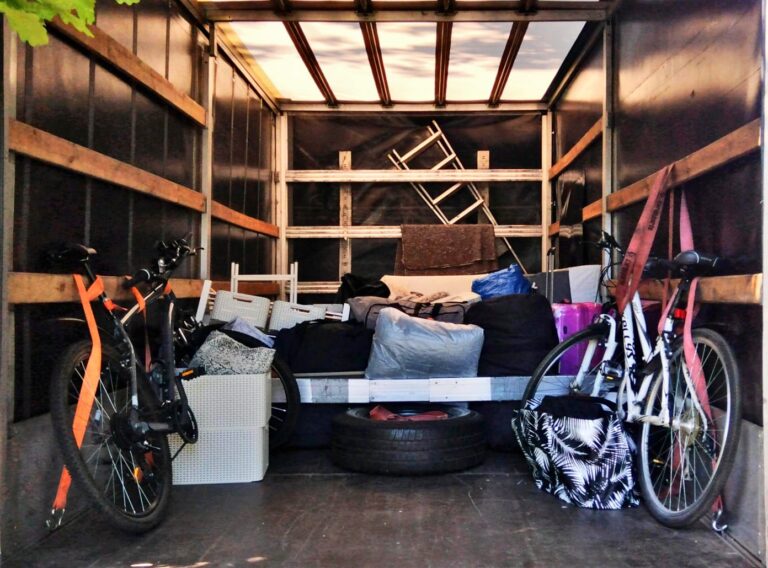
A VANonsite quote is based on the route and work involved: volume and weight, both postcodes, part-load or dedicated transport, access, crew time, crossing, customs readiness, packing and special items. It is not calculated from living-cost statistics. A photo inventory and access pictures make the estimate more accurate.
- For the UK-to-Netherlands direction, see international removals from UK to Netherlands.
- Use the removals to Netherlands hub for destination services.
- For delivery in Britain, use removals to UK.
- For the broader lifestyle choice, read Netherlands or UK: which is better to live in?.
Part-load can suit a smaller consignment with flexible dates. A dedicated vehicle gives tighter control for a full home or fixed schedule. Where availability, route and crossing, access, documents and the agreed collection slot all permit, VANonsite can assess a Last-Minute Moving option of approximately 1–3 days. It is a conditional express service, not a universal promise.

Build a fair monthly comparison
Create one row for each cost and one column for each destination. Use live prices for the same month and convert currency once. Mark every assumption that is not yet confirmed.
- Net household income.
- Rent or mortgage plus local property charges.
- Energy, water, internet and mobile.
- Healthcare premium, visa-related charges and regular treatment.
- Commuting, car or bicycle costs.
- Food, household goods and eating out.
- Childcare, school and activities.
- Travel to family and annual trips.
- Debt, pension and required insurance.
- Monthly savings and emergency buffer.
Add a separate setup column for the move. Finally, test a difficult month: higher energy use, an unexpected journey or one income delayed. The more resilient budget is often the better destination even if its normal-month total is slightly higher.
Frequently asked questions
Is the Netherlands more expensive than the UK?
It can be, especially when scarce housing and mandatory health insurance dominate the budget. The UK can be more expensive for a London-based household. Compare the actual cities, net salary and commute rather than applying one answer nationally.
Which country has cheaper rent?
Neither country is consistently cheaper in every location. ONS data show a very large range inside the UK, and CBS reports significant Dutch supply pressure. Compare current suitable listings in the two target areas.
Is healthcare cheaper in the UK?
The funding models differ, so a premium-only comparison is incomplete. The Netherlands generally requires standard insurance; UK costs depend on immigration status, tax, possible surcharge and services outside core NHS care.
How often should I update the comparison?
Refresh housing, exchange rate, tax assumptions and major contracts immediately before accepting a job or signing a tenancy. Record the source and date beside each number.
How do I get an accurate removal estimate?
Provide both postcodes, dates, a complete inventory or photographs, floor and lift details, parking distance and any fragile or heavy items. The automatic quote is the starting point; VANonsite then confirms the operational scope.
Verdict: is the Netherlands cheaper than the UK?
Sometimes, but not reliably enough to decide from a national average. The Netherlands can benefit a household that avoids car costs and secures suitable housing, while its health-insurance requirement belongs in the budget. The UK offers a much wider housing range than London alone suggests, but transport and regional job access can change the saving. Build a city-specific, after-tax comparison with current sources. Once the destination is settled, use the VANonsite calculator to price the move itself as a separate decision.