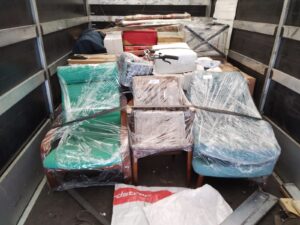
If you are searching for removals to Spain part loads, you probably want one thing: a safe move that does not feel like paying for an entire empty van.
A part load move is simple. You share space in a vehicle going your route, so you pay for the space you use, not the whole trip. It is often the smartest way to handle:
- part load removals to Spain for boxes and smaller household sets
- small removals to Spain like a studio move, student move, or a few key items
- furniture-only shipments when you are not moving your whole home
VANonsite runs European relocations with speed, careful handling, and GPS tracking for every load, so you can follow your items like you follow a rideshare.
TL:DR
- Part load removals to Spain let you pay for space used, not a whole vehicle, often saving 20% to 60% versus a full load.
- Best for small removals to Spain: boxes, student moves, studio flats, and furniture-only shipments.
- You still get a premium man and van experience, with professional handling and clear communication.
- Choose the right capacity fast: 5 m³ for compact moves, 10 to 15 m³ for small flats, bigger only if volume demands it.
- Delivery is route-based, commonly a few days to two weeks, so flexible dates usually unlock the best value.
- Paperwork matters most for UK to Spain moves after Brexit, keep an inventory and check official customs guidance early.
- Want less stress and fewer breakages, add packing or white glove delivery, especially for fragile or high-value items.
What “removals to Spain part loads” actually means
A part load removal to Spain is a shared-space transport option. Your belongings travel in a van or truck that is already heading to Spain. You book a portion of that space.
Think of it like carpooling, but for your sofa, boxes, bike, or half a home. The result is usually a better price, less wasted capacity, and a faster decision than juggling multiple couriers.
If you want the classic, flexible feel of a man and van service, but you only need part of the vehicle, part loads are the sweet spot.
What you are really buying with a part load
You are buying three things. Not just transport.
- Shared mileage: you split long-distance costs with other customers on the same route.
- Professional loading: your items get strapped, padded, and positioned to avoid movement.
- Route certainty: the vehicle is already going to Spain, so your delivery fits a planned run.
That is why part loads feel so efficient. They turn a big, expensive cross-border trip into a smart slice of a route that already exists.
Typical part load sizes, in real terms
Most part loads sit in a practical range. That is why this option is perfect for part load removals to Spain and small removals to Spain.
- 1 to 5 m³: boxes, suitcases, bikes, student essentials
- 5 to 10 m³: studio moves, compact furniture sets, small flats
- 10 to 15 m³: one-bedroom moves, heavier mix of boxes and furniture
If your move is bigger than that, a full load starts to make more sense. Still, there are exceptions when you are flexible and happy to split the move into phases.
How part loads are priced and measured
Part loads are usually measured by:
- volume in m³
- estimated weight
- handling effort (stairs, long carries, tricky access)
A sofa can take more space than 25 boxes. Meanwhile, books can hit payload limits faster than you expect. A good quote balances both.
A quick example so it clicks
Imagine you are moving to Valencia with:
- 18 medium boxes
- a double bed frame
- a mattress
- a small desk
That often lands around 6 to 9 m³, depending on item dimensions. With a part load, you are not paying for a full van crossing Europe. You are paying for your share of space on a Spain-bound route.
Part loads vs full loads at a glance
A quick comparison helps you choose without overthinking.
| Option | Best for | Typical delivery style | Biggest advantage | Watch-outs |
|---|---|---|---|---|
| Part load | Boxes, small flats, a few rooms, furniture sets | Scheduled route with a delivery window | Often 20% to 60% cheaper than hiring a whole vehicle | You share space, so timing is route-based |
| Full load | Whole homes, tight deadlines, high privacy | Direct pickup, direct delivery | Fastest and most predictable | Costs more because you book the entire vehicle |
| Courier parcels | 1 to 6 boxes, non-fragile items | Parcel network | Simple for small items | Rough handling risk, size limits, less control |
Those savings are not magic. They come from shared mileage and shared route costs. Your final price still depends on volume, distance, and access.
What makes a part load feel premium
Part load does not mean second-rate. The difference is planning.
- Proper protection: blankets, wrap, corner protectors, and tight stacking
- Inventory clarity: clear list and labels so nothing gets misplaced
- Live visibility: VANonsite provides GPS tracking, so you can plan the handover with confidence
When those three are handled well, part loads stop feeling like a compromise. They start feeling like the clever option.
When part loads beat full loads (and when they do not)
Part load removals to Spain shine when your move is not huge and you can accept a sensible delivery window.
Choose part loads when value matters and timing is flexible
Part loads are built for people who want maximum value without cutting corners. They are especially strong if you are moving in stages, or if you do not want to rush a big life change.
Part loads are perfect if you are moving:
- A studio or one-bedroom setup
- A student room or shared flat
- A few high-value pieces, like a sofa, bed, or dining set
- A hybrid move where you drive or fly with essentials and ship the rest
VANonsite can pair part loads with services like Furniture Removals or Student Removals, depending on what you are sending.
The 30-second decision rule
If you want a fast way to choose, use this:
- If your items fit under 15 m³ and you can accept a delivery window, choose part load removals to Spain.
- If you are close to 30 m³, want privacy, and need a fixed day, choose a full load.
- If it is only a handful of boxes, a part load is often still better than parcels because it is gentler and more controlled.
Real-life scenarios that suit part loads
These are common, high-converting cases where part loads simply make sense.
- Small removals to Spain for a new job
You fly with essentials. Your boxes and key furniture follow by van. - Furniture-only relocation
You keep the sentimental pieces. You sell the rest. Clean and efficient. - Student move to Spain
You need a desk, a chair, a suitcase stack, and a few boxes. Nothing more. - Downsizing move
You are moving into a smaller home in Spain, so you take only what you truly love.
When a full load is the smarter move
Full loads are worth it when risk is high and flexibility is low.
Consider a full load if:
- You must deliver on a fixed date with almost zero flexibility
- You are moving a whole house and your volume is high
- You want the vehicle sealed for privacy from pickup to drop-off
Edge cases where part loads need extra care
Part loads can still work here, but you should be honest about the trade-offs.
- Very fragile items (art, antiques, delicate glass)
- Tight access (narrow streets, no parking, multiple flights of stairs)
- Hard deadlines (key handover at a strict hour)
In those cases, the fix is usually simple: better packing, better protection, or a premium handling option.
If you are unsure, the fastest way is to estimate your volume (next section) and compare timelines.
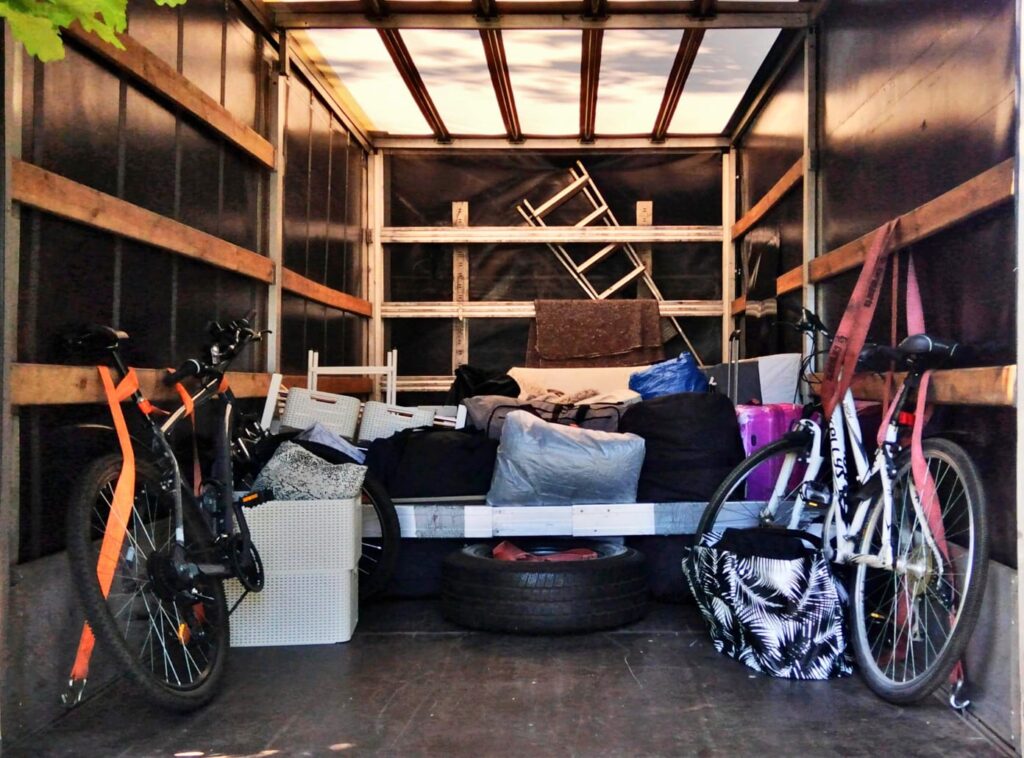


Part load pricing explained (without the boring bits)
Part load pricing is mostly driven by space, weight, route, and handling effort. You do not need to guess. You just need to know what affects the quote.
Here is what typically moves the needle:
- Volume (m³) and the shape of items (sofas and wardrobes are space-hungry)
- Weight (books, gym gear, tools, and dishware add up fast)
- Pickup and delivery access (stairs, narrow streets, no lift)
- Packing level (loose items take longer and risk damage)
- Waiting time (keys not ready, no parking, long carry distance)
- Season and urgency (summer and last-minute dates can cost more)
A good removals company will ask the right questions upfront so you do not get surprise extras later.
What your quote usually includes
A strong quote is not just a number. It is clarity. Most part load removals to Spain quotes are built from a few predictable building blocks:
- Base transport cost: the distance and route complexity
- Space reserved: your m³ allocation inside the vehicle
- Handling time: loading and unloading effort
- Protection level: blankets, straps, wrap for furniture
- Admin and planning: route scheduling, manifests, and coordination
If you want a clean quote, your job is to make the move legible. Clear inventory, clear access, clear timing.
The fastest way to lower your price without sacrificing safety
You do not need to haggle. You need leverage.
- Be flexible on pickup and delivery windows
Flexibility often reduces costs because it lets your load fit the route puzzle. For many routes, flexibility can reduce the quote by 10% to 25% compared to fixed-day demands. - Make access easy
Parking restrictions, long carries, or 4 flights of stairs add labor time. Labor-heavy access can add 5% to 15% depending on complexity. - Pack smart, or choose professional packing
Loose items slow everything down. If your packing is tight and labeled, loading is faster. If you want maximum speed and fewer breakages, Packing Services is the shortcut. - Avoid the “last minute chaos tax”
Urgent moves compress the schedule. That pressure can push pricing up by 10% to 30% in peak periods.
These percentages are typical levers, not promises. The point is simple: timing and access often matter as much as distance.
Mini price scenarios that match real life
Use this table as a sanity check when you are deciding between part loads and a full load.
| Scenario | Likely volume | What drives the quote most | Best way to keep it lean |
|---|---|---|---|
| Student move, boxes + suitcase stack | 1 to 5 m³ | Access and timing more than distance | Flexible dates, compact packing |
| Small removals to Spain, studio basics | 5 to 10 m³ | Space reserved, plus stairs | Pre-pack, reserve parking |
| Furniture-only set (bed + sofa + table) | 6 to 12 m³ | Item shape and protection needs | Disassemble where possible, wrap well |
| One-bedroom light household | 10 to 15 m³ | Volume plus labor time | Inventory list, elevator booked |
If you are moving something awkward, shape matters. A wardrobe can take the same space as 30 to 40 boxes, even if it is not heavy.
The 7 details that make your quote accurate on the first try
Send these and your quote gets sharper fast:
- Pickup and delivery postcodes
- Floor level at both addresses
- Elevator availability and size
- Parking distance from door to van (in meters)
- List of big items (sofa, bed, wardrobe, appliances)
- Estimated box count and box size
- Your preferred window (and your flexible window)
That last point matters more than most people expect. Flexible windows are the hidden superpower of part load removals to Spain.
A quick way to estimate your volume
If you want a rough estimate in under 3 minutes:
- Count medium boxes (about 0.05 m³ each)
- Add big items (sofa, bed, wardrobe, desk)
- Add 10% buffer for awkward shapes and soft items
As a gut check:
- 10 medium boxes can be about 0.5 m³
- A typical sofa can be around 1.5 to 2.5 m³ depending on size
A simple item cheat sheet
These are typical ranges to help you estimate quickly. Real dimensions vary, but this gets you close.
| Item | Typical volume (m³) | Typical weight (kg) | Notes |
|---|---|---|---|
| Medium moving box | 0.05 | 10 to 18 | Books sit at the heavy end |
| Large moving box | 0.10 | 10 to 20 | Light but space-hungry |
| Armchair | 0.8 to 1.2 | 15 to 35 | Bulky shape matters |
| 2 to 3 seater sofa | 1.5 to 2.5 | 40 to 90 | Corner sofas can be bigger |
| Mattress (double) | 0.6 to 1.0 | 20 to 45 | Vacuum bags do not shrink this |
| Wardrobe | 1.2 to 2.2 | 50 to 120 | Disassembly helps a lot |
| Washing machine | 0.4 to 0.6 | 60 to 90 | Heavy, stable, needs protection |
You do not need perfection. You need a usable estimate.
Vehicle sizes: pick the right van for your move
VANonsite offers multiple vehicle sizes. This helps you match your load, so you are not paying for air.
Below is a practical guide, based on VANonsite capacity bands.
| VANonsite vehicle size | Capacity | Max payload | Best fit examples |
|---|---|---|---|
| Moving One | 1 m³ | 100 kg | A few boxes, suitcases, small essentials |
| Moving Basic | 5 m³ | 300 kg | Student room, small removals to Spain, a few items + boxes |
| Moving Medium | 10 m³ | 600 kg | Studio or small one-bedroom |
| Moving Premium | 15 m³ | 1000 kg | One-bedroom to two-bedroom light move |
| Moving Premium Plus | 30 m³ | 3500 kg | Two-bedroom, heavier furniture mix |
| Moving Full House XXL | 90 m³ | 20000 kg | Whole-home moves, large households |
If you are booking a man and van style move with part load logic, the goal is simple: choose the smallest option that fits with a buffer.
Choose your vehicle in 60 seconds
- Count your boxes and list your big items.
- Convert boxes into volume (medium boxes are about 0.05 m³ each).
- Add your big items using the cheat sheet above.
- Add 10% to 15% buffer so nothing is crushed or awkwardly forced.
- Check payload risk: if you have lots of books, tools, or gym gear, weight can bite before space does.
You now have a realistic target m³. Pick the nearest capacity above it.
Box count sanity check
This is a fast visual guide for medium boxes, assuming good packing and a sensible buffer.
| Capacity band | Approx medium boxes | Best for |
|---|---|---|
| 1 m³ | up to 15 to 20 | suitcases, essentials, small shipments |
| 5 m³ | up to 80 to 100 | student move, small removals to Spain |
| 10 m³ | up to 160 to 180 | studio move, compact one-bedroom |
| 15 m³ | up to 240 to 260 | one-bedroom plus furniture |
| 30 m³ | up to 500 to 540 | two-bedroom, heavier mix |
Boxes are the easy part. Furniture is where space disappears, especially when items are not disassembled.
Common part load scenarios
- Single furniture set + 10 to 20 boxes: often fits into 5 to 10 m³
- Student move with desk + chair + boxes: often fits into 5 m³
- Small flat with sofa and bed: often fits into 10 to 15 m³
Quick “what should I book” examples
These are practical, conversion-friendly examples that match common enquiries.
- Small removals to Spain, 25 boxes + bike
Often around 2 to 4 m³ depending on box size. A part load inside the right route is ideal. - Furniture-only: sofa + bed + mattress + 12 boxes
Often 6 to 11 m³ depending on sofa shape and whether the bed disassembles. - One-bedroom move: sofa, bed, wardrobe, table, 35 boxes
Commonly 12 to 18 m³. You may sit on the edge of a part load and a fuller vehicle slot.
Your actual needs depend on item sizes. A corner sofa can swallow space like a black hole.
The complete relocation plan to Spain
A calm move is not about luck. It is about timing.
Whether you are booking removals to Spain part loads for a smaller shipment or a fuller household run, this timeline keeps everything tight, clear, and low-stress. It also works brilliantly for part load removals to Spain and small removals to Spain, where the biggest risk is last-minute chaos, not distance.
45 to 31 days before
Start early and you buy yourself one priceless thing: options.
- Decide your move style: part load, full load, or staged shipments
- Create a simple inventory list with quantities (even a phone note works)
- Measure bulky items (sofa, wardrobe, bed) so you avoid nasty surprises
- Pick your delivery goal: fastest, cheapest, or most flexible
If you want the agility of a man and van feel but with long-distance planning, this is the week to lock it in.
30 to 21 days before
Now you turn decisions into a plan.
- Decide what goes by van and what travels with you
- Take quick photos of items (helpful for inventory and condition notes)
- Book your move window and share access details
- If you need packing help, consider Packing Services
- If your dates are uncertain, ask about storage so you can separate moving from key handover pressure
20 to 14 days before
This is the sweet spot for preventing the most common move mistakes.
- Start a “Spain-first” box: bedding, kettle, chargers, toiletries, basic tools
- Sort your paperwork (documents section below)
- Confirm building rules: lift bookings, loading zones, quiet hours
- Confirm your parking plan at both ends, especially in city centres
- Cull aggressively: selling or donating 15% to 30% of items can cut volume, cost, and packing time
13 to 7 days before
This week decides how your delivery day feels.
- Pack room by room, do not mix rooms unless you love chaos
- Label boxes with room + priority (example: “Kitchen, Open First”)
- Set aside fragile essentials that you will personally carry
- Disassemble bulky furniture if possible and bag the hardware, tape it to the item
- Pack heavy items in smaller boxes, aim for 12 to 18 kg per box so lifting stays safe
If you have premium furniture or sentimental pieces, consider White Glove Delivery so the final handover feels controlled, not rushed.
72 to 24 hours before
This is the friction-removal zone. Small tasks here save hours later.
- Confirm your pickup and delivery contact numbers
- Keep passports, residence documents, and any customs paperwork with you
- Back up keys, access codes, and lift bookings
- Create a “Do Not Load” corner for luggage and personal essentials
- Drain and dry appliances if needed, especially washing machines
Moving day
A smooth day is mostly about flow.
- Walk through the property once and identify the load order (big items first, fragile last)
- Keep a clear path from door to vehicle so time is not lost on obstacles
- Do a final room sweep, check cupboards, balconies, and storage spaces
- Keep your Spain-first box and important documents out of the main load
With VANonsite, you can also track the trip with GPS, which makes handover planning far less stressful.
First 48 hours in Spain
This is where you turn a delivery into a home.
- Unpack essentials first: bedding, towels, kitchen basics
- Check fragile items early, report issues quickly if anything is wrong
- Keep packaging for a day or two until you are sure everything is accounted for
A smooth move is mostly about removing friction from the day itself.


Documents and customs: EU moves vs UK after Brexit
This is where many people get stressed, mostly because they search too late. The fix is simple: separate residency paperwork from goods transport paperwork. They overlap, but they are not the same.
If you are moving within the EU
In many cases, moving household goods within the EU is simpler because there is free circulation of goods. Still, keep a basic inventory and proof of address handy. It is practical, and it prevents headaches.
If you are staying long term, you will also want to understand residency steps. Spain’s official public administration portal explains how EU citizens register their residence in Spain here:
For many everyday tasks in Spain, you will also hear the same recurring items mentioned. Not because they are scary, but because they unlock everything else.
- Valid passport or national ID card
- Proof of address in Spain (rental contract, property deed, or similar)
- Proof of income or means (requirements vary by situation)
- A clear inventory list for your move, even for small removals to Spain
If you need to book immigration-related appointments (common for several processes), Spain’s official appointment system for Extranjería is here:
If you are moving from the UK to Spain after Brexit
The UK is treated as a “third country” for EU customs purposes. That can mean extra documentation for your household goods, especially if you want to claim relief on personal belongings.
Spain’s Tax Agency explains the rules around importing personal belongings when you transfer your residence from a non-EU country, including conditions for relief and exemptions:
For UK-side guidance about goods moving in or out of the UK, HMRC provides official information on declaring personal goods:
- https://www.gov.uk/guidance/check-how-to-declare-personal-goods-you-bring-into-or-take-out-of-the-uk
And if you are settling in Spain, the UK government maintains a practical overview for British nationals:
UK to Spain move checklist for your shipment
These are the items that most often speed things up and reduce back-and-forth.
- A dated inventory list with values, even if approximate
- Proof you have owned and used the goods (common expectation for personal effects)
- Proof of address change (old and new)
- Passport details and contact information
- A clear list of restricted items you are not shipping (avoid alcohol, tobacco, and anything prohibited)
If you want a clearer, human-friendly breakdown, these VANonsite Spain resources are worth reading before you pack the first box:
- Removals to Spain
- What do you need to move to Spain
- How much money do I need to move to Spain after Brexit
- How long can British stay in Spain
If you want to avoid costly missteps, this one is also worth your time:
Packing that survives the road
Spain is not “next door” for most Europe-to-Spain routes. Even a careful trip has vibrations, heat changes, and the occasional sharp turn.
If you want your items to arrive looking like they did at pickup, focus on three things: tight packing, smart protection, and clear labeling. Do that, and your part load stops feeling like a gamble. It feels like control.
Packing rules that prevent damage
The goal is simple: no movement inside the box, and no movement between boxes.
- Heavy items low, light items high
- Fill empty space so nothing shifts
- Wrap fragile items individually, not as a pile
- Use double-wall boxes for books and glass
- Tape every seam, not just the middle
The 3-minute packing checklist
Use this before you close the first box. It saves heartbreak later.
- Choose the right box size
Use smaller boxes for heavy items. Aim for 12 to 18 kg per box. Your back will thank you. - Create a soft shock absorber
Use paper, bubble wrap, clothing, or foam to fill gaps. Empty space is the enemy. - Seal like you mean it
Tape in an H pattern on top and bottom. This reduces split seams on long routes. - Label with purpose
Write room, priority, and fragile warnings. Add arrows for “This Side Up” where it matters. - Separate heat-sensitive items
Candles, cosmetics, and certain electronics dislike temperature swings. Keep them with you if possible.
How to pack the most common “problem items”
Some items are famous for arriving bruised. Here is how to disarm the risk.
- Plates and glassware: pack vertically, like records, with padding between each piece
- TVs and monitors: keep the original box if you can, otherwise use corner protectors and thick wrap
- Mirrors and frames: tape an X on the glass, then wrap and protect corners
- Wardrobes and dressers: remove drawers, pad corners, and keep hardware in a labeled bag
- Mattresses: use a proper mattress bag, keep it dry, avoid dragging it on the ground
A simple protection table
| Item type | Best protection | Extra tip |
|---|---|---|
| Fragile kitchenware | double-wall box + wrap | pack upright, fill gaps fully |
| Furniture edges | blankets + corner guards | protect every sharp corner |
| Electronics | original box or foam wrap | keep cables in labeled bags |
| Art and mirrors | hard board + wrap | tape an X on glass before wrapping |
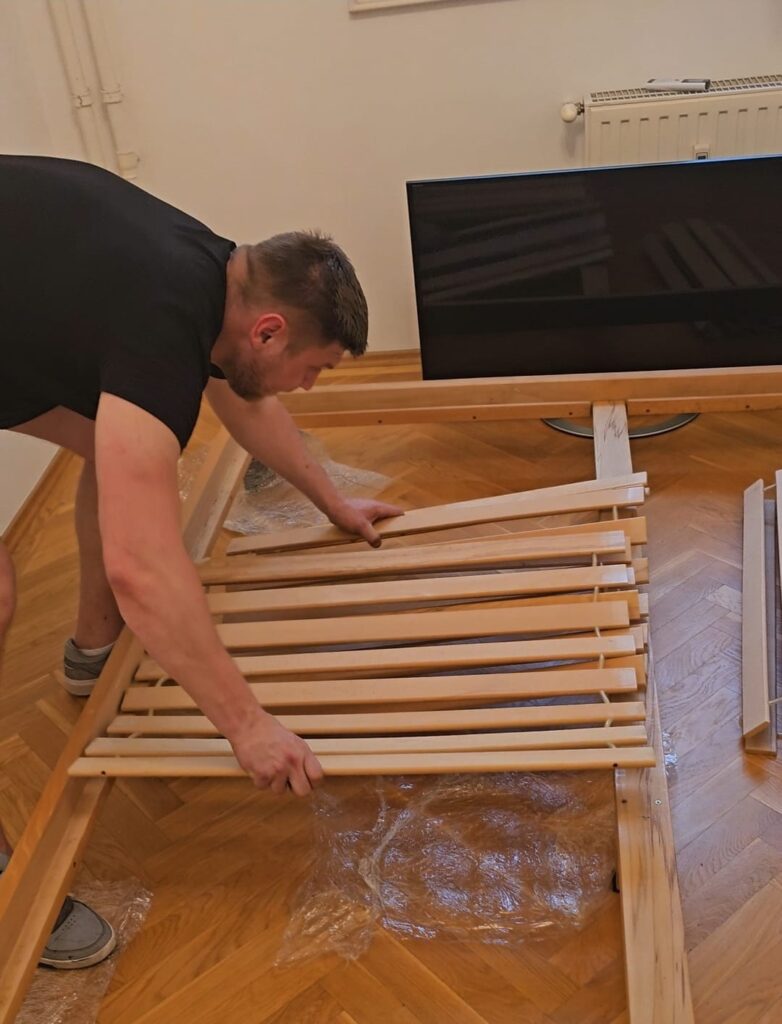
Should you dismantle furniture for a part load?
Often, yes. Disassembly reduces volume and prevents cracked corners.
- A dismantled bed frame can save 0.5 to 1.5 m³ depending on size.
- A table with legs removed stacks cleaner and resists impact.
If you are shipping furniture, pairing part loads with Furniture Removals keeps the process focused and safer.
If you would rather skip the stress, Packing Service is designed for people who want speed and protection.
White glove option for delicate deliveries
If you are shipping high-value pieces or you want careful placement in the new home, White Glove Delivery is the calmer choice. It is especially useful for furniture-only moves or premium interiors.
Delivery day: how to make it smooth
Delivery day can feel like a movie montage, until the van arrives and you realise you have not measured the lift.
Here is how to keep control. The secret is removing tiny points of friction before they grow teeth.
Before the van arrives
These steps reduce delays and protect your items.
- Reserve parking if your area requires it
- Measure tight corners and stairwells
- Keep keys, access codes, and lift booking confirmed
- Clear the hallway and protect floors if you care about scratches
- Keep pets and small children out of the loading path
The 10-minute access check
Do this once at pickup and once at delivery.
- Can the vehicle legally stop where you need it to stop?
- How far is the carry from van to door, in meters?
- Are there steps, tight turns, or a small elevator?
- Do you need to book the lift or speak to building management?
A carry of 30 meters feels normal. A carry of 100 meters starts to cost time. Time is the quiet cost driver.
During unloading
The best unloading is calm, not fast.
- Walk through the home once and decide where big items go
- Check fragile boxes early
- Keep your “Spain-first” box separate so it is not buried
- Match boxes to rooms immediately so you do not create a cardboard maze
- Photograph any pre-existing damage in stairwells and corners, it avoids awkward conversations later
A simple delivery sign-off routine
This takes five minutes and saves hours.
- Count the big items first (sofa, bed, wardrobe, appliances)
- Do a quick scan of fragile boxes and electronics
- Confirm nothing is left in the vehicle
With VANonsite, you also get GPS tracking for every load, so you can plan your day instead of guessing. That visibility is especially reassuring for part load removals to Spain, where timing is route-based.
If your move involves offices or business equipment, check Office Removals for a route that respects downtime.
Add-on services that can save your move
Part loads are already efficient, but the right add-ons turn a move from exhausting to almost civilised. Think of them like seatbelts for your timeline. They reduce risk, reduce stress, and often cut the messy bits that eat hours.
VANonsite can combine removals to Spain part loads with the services below. Each one solves a specific pain point, so you only pay for what actually helps.
The core add-ons, and what they really do
- Last Minute Moving when plans change fast
- Best for: sudden job starts, landlord deadlines, flights booked before the packing was real
- Why it matters: last minute moves often fail because of coordination, not distance
- Home Removals for full household support
- Best for: families, multi-room moves, long lists of “please do not forget that box”
- Why it matters: a structured home removal can reduce packing chaos and missing items
- Furniture Removals for item-focused shipping
- Best for: sofas, beds, wardrobes, dining sets, single-room upgrades
- Why it matters: furniture is bulky, awkward, and easy to scuff without proper protection
- Storage when your keys and your delivery date do not align
- Best for: gap weeks, renovation delays, temporary stays, waiting for the new lease
- Why it matters: storage removes the pressure to force a delivery on the wrong day
- Student Removals for compact, budget-smart moves
- Best for: boxes, a desk, a chair, a small set of essentials
- Why it matters: students often move light, but deadlines are tight and budgets are tighter
Two upgrades that make part loads feel premium
These are not required for every move. But when they fit, they feel like relief.
- Packing Services
- Best for: fragile kitchens, busy schedules, people who want speed and fewer breakages
- Why it matters: professional packing can cut loading delays and protect items on long routes
- White Glove Delivery
- Best for: delicate furniture, higher-value interiors, “please place it exactly here” deliveries
- Why it matters: it turns arrival day into a clean handover, not a scramble
Quick chooser table
Use this to pick the right add-on in under a minute.
| Your situation | Most helpful add-on | What it protects | Typical impact |
|---|---|---|---|
| You have a tight deadline | Last Minute Moving | timing, coordination | reduces delays and cancellations |
| You are moving more than one room | Home Removals | completeness, workflow | fewer missed items, smoother loading |
| You are shipping bulky items | Furniture Removals | corners, surfaces | fewer scuffs, cleaner stacking |
| Your new place is not ready | Storage | flexibility | prevents forced delivery on the wrong day |
| You are moving light and fast | Student Removals | budget, simplicity | efficient small removals to Spain |
| You hate packing, or items are fragile | Packing Services | breakage risk | less damage, faster loading |
| You want careful placement | White Glove Delivery | final condition | calmer, more controlled delivery |
If you want the agility of a man and van but with stronger logistics, these add-ons are what make it feel professional.
The biggest mistakes when moving to Spain
Most moving disasters are quiet. They start as tiny shortcuts. The painful part is that each mistake looks harmless at first. Then it multiplies.
The classic mistakes, and the real fix
- Underestimating volume, then rushing on packing day
- Why it hurts: you end up with loose items, crushed boxes, and last-minute stress
- Fix: estimate volume, then add 10% to 15% buffer. Disassemble big items to save space
- Not confirming access, then paying for waiting time
- Why it hurts: no parking, no lift booking, long carries, locked gates
- Fix: confirm parking and access at both ends. Measure tight corners and stairwells
- Packing liquids and food that cause leaks and smells
- Why it hurts: one leak can ruin clothes, books, and soft furniture
- Fix: do not ship opened liquids. Keep essentials with you. Ship only sealed, safe items
- Leaving paperwork to the last week
- Why it hurts: missing documents can slow customs and add avoidable admin stress
- Fix: create a simple folder early. Keep copies on your phone and print a backup
Extra mistakes that cost people money
- Packing heavy items in huge boxes
- Fix: keep heavy items in smaller boxes, aim for 12 to 18 kg per box
- Mixing rooms inside the same box
- Fix: pack room by room, label with room and priority so unpacking takes hours, not days
- Forgetting the “first night” setup
- Fix: keep a Spain-first box for bedding, chargers, toiletries, a kettle, and basic tools
- Choosing the cheapest option without checking protection and handling
- Fix: ask how items are secured and protected. A cheap move is expensive when it arrives damaged
If you want a deeper list of traps to avoid, this guide is a strong read:
And if you want the full calm, legal, fast approach, use this:
Quick FAQ
Is a part load removal to Spain safe for fragile items?
Yes, if packing is tight and items are secured so nothing shifts. For glass, TVs, art, or premium furniture, pairing part load removals to Spain with Packing Services and White Glove Delivery is the safest route. It reduces breakage risk and keeps surfaces clean.
How fast is a part load delivery to Spain?
It depends on route planning and pickup density. Most part loads land within a few days to two weeks. If you want the best price, flexibility usually helps. If you want the tightest timing, ask for a more direct slot.
Can you do door-to-door with a man and van feel?
Yes. You can still book a door-to-door experience with a man and van style service. The difference is that with part loads you are sharing vehicle space, not sharing your attention. Your items are still handled, protected, and delivered to your address.
What if I only need small removals to Spain?
That is exactly what part loads are built for. A few boxes, a bike, a bed, or a compact studio move fits neatly into the smaller bands. For students, the easiest option is often Student Removals.
How do I know what size I need?
A simple shortcut is to list big items, count boxes, and add a buffer.
- Medium boxes are often around 0.05 m³ each
- Add 10% to 15% buffer so nothing is forced or crushed
- Keep box weight around 12 to 18 kg so lifting stays safe
If you are shipping furniture only, Furniture Removals keeps the plan clean.
Can I track my shipment?
Yes. VANonsite provides GPS tracking for every load, which is especially reassuring for removals to Spain part loads. You can plan your day instead of guessing.
What items should I not ship?
Avoid anything that can leak, spoil, or create a customs headache.
- Open liquids
- Food that can melt or spill
- Perishables
- Anything restricted or prohibited by law
If you are unsure, keep it simple and carry it yourself.
What happens if my new home is not ready?
This is where Storage is a lifesaver. It removes the pressure to force delivery on the wrong day and can protect you from expensive last-minute changes.
Can you help with a full home move too?
Yes. If your volume is higher or you want end-to-end coordination, Home Removals is the better fit.
I am moving from the UK after Brexit. What should I read first?
Start with the practical guides so you avoid paperwork surprises.
- What do you need to move to Spain
- How long can British stay in Spain
- Biggest mistakes when moving to Spain
Book your removals to Spain part load with VANonsite
Spain is exciting. It also comes with a thousand tiny decisions. Your move does not need to be one of the painful ones.
If you want removals to Spain part loads that feel fast, safe, and fully controlled, here is the quickest way to get a clean quote.
Send these 5 details and get a sharp answer fast
- Pickup postcode and delivery postcode
- Your flexible window and your ideal date
- Floor level and lift access at both addresses
- Box count plus a list of big items
- Any fragile or high-value pieces
Choose your support level
- Transport only for simple, well-packed small removals to Spain
- Packing help when time is tight or items are fragile
- White glove delivery when you want careful placement and premium handling
- Storage when keys and timing do not match
A quick checklist you can copy
- Boxes: number and size
- Big items: sofa, bed, wardrobe, appliances
- Access: stairs, lift, parking distance in meters
- Special items: TV, art, glass, instruments
- Timing: flexible window plus the date you prefer
Start here:
If you want the calm, legal, fast approach in one place, this guide pulls it together:
If you are moving from the UK after Brexit, read this before you finalise your plan:
A good move feels like this: you close the door on the old place, take a breath, and your new life in Spain starts without drama. That is the standard VANonsite aims for, every time.