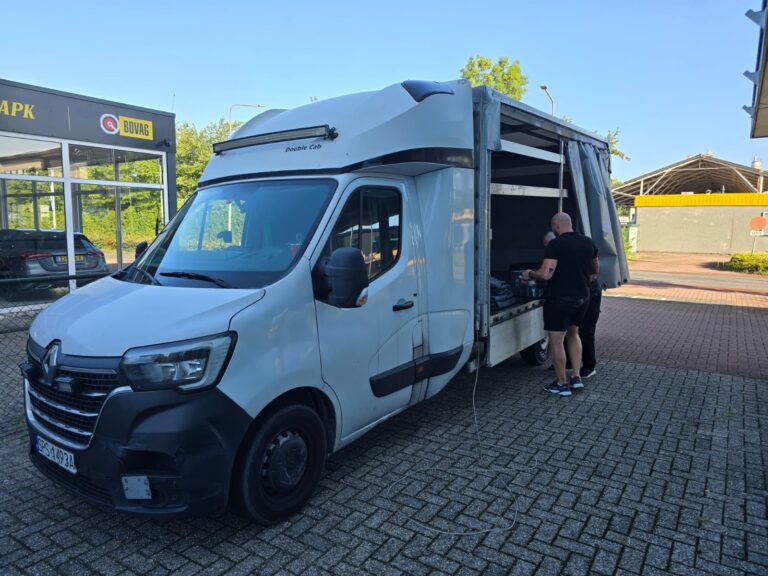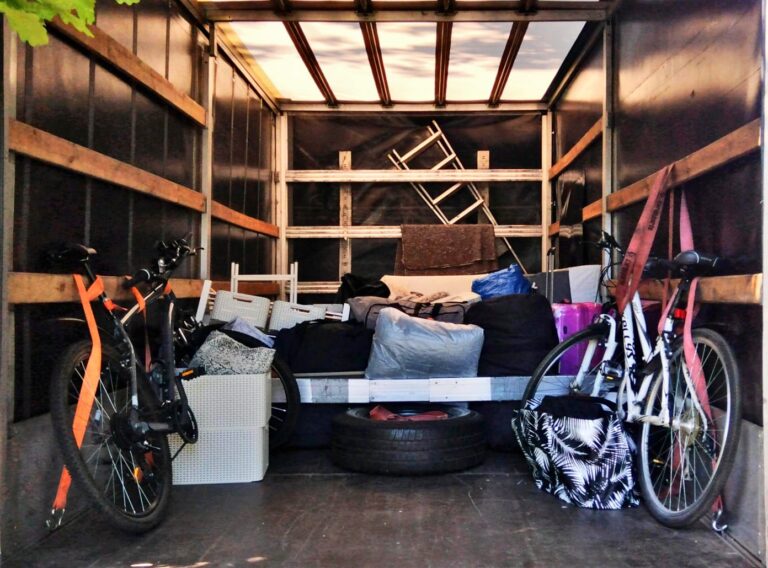

How to relocate to Sweden — start with a clear plan, the right paperwork, and a trusted cross‑Europe mover. In this complete guide, you’ll learn timelines, documents, routes, and how much does it cost to move to Sweden, plus how VANonsite keeps your shipment safe with live GPS and right‑size vans.
TL;DR:
- Plan 8–10 weeks out with a room‑by‑room inventory and dates.
- EU/EEA vs non‑EU: check permits, register on arrival, apply for a personnummer and taxes.
- How much does it cost to move to Sweden: from ~€300 to €8,000+ depending on volume, distance, access, and services (see price table below).
- Pick the right van size: 5 m³, 10 m³, 15 m³, 30 m³, or 90 m³ based on your load and building access.
- Protect belongings: Packing Service, Furniture Removals, and White Glove Delivery for fragile or premium items.
- Route & season: ferries/bridges, winter readiness, and live GPS tracking for real‑time transparency.
- Decide with confidence: pros and cons of moving to Sweden, then get a tailored quote via Removals to Sweden.
Why Sweden? Quick snapshot
Sweden offers an exceptional quality of life, pristine nature, and well‑run cities that consistently rank highly for safety and liveability. English is widely spoken, which makes everyday communication simple while you learn Swedish at your own pace. Public services are efficient, digital administration is advanced, and commuting is straightforward thanks to reliable transport.
At a glance, newcomers appreciate:
- Predictable processes and transparent rules for work, residence, and taxation.
- Strong work–life balance supported by flexible hours and generous leave.
- Family‑friendly policies, bike‑friendly cities, and access to forests and the archipelago.
Because demand for housing can be high in major hubs, planning matters. With the right timeline, documents, and a dependable moving partner, the journey from first box to first fika is smooth and stress‑light.
Pros and cons of moving to Sweden
Before you commit, weigh both sides. This balanced view will help you choose confidently and prepare smartly for your relocation to Sweden.
Pros
- Strong social infrastructure and a high level of personal safety.
- Excellent work–life balance, outdoor access, and clean environments.
- Widespread English proficiency enables quick integration for newcomers.
- Efficient digital services (e‑ID, online admin) and predictable bureaucracy.
- Reliable public transport and well‑maintained roads suited to year‑round travel.
- Family‑friendly culture with generous parental leave and child‑care options.
- International communities in Stockholm, Gothenburg, Malmö, and Uppsala.
Cons
- Higher cost of living, especially in Stockholm and Gothenburg; budgeting is essential.
- Long, dark winters; the weather demands good clothing and planning.
- Housing can be competitive in major cities; start searching early and be flexible.
- Some processes (e.g., registrations or appointments) can take time to complete.
- Swedish language becomes important for certain careers and deeper integration.
- Progressive taxation may feel unfamiliar; understand net pay and deductions.
In practice, many expats find that thoughtful preparation offsets most drawbacks. A structured plan, realistic budget, and a reliable mover such as VANonsite make the transition noticeably easier.
Step‑by‑step: planning your relocation
Relocating across borders works best with a clear timeline. Below is a practical sequence you can adapt.
8–10 weeks before
Start early. Define what you’re moving, your destination, and potential dates.
- Shortlist neighborhoods and schools (if relevant).
- Create an inventory and measure bulky items.
- Request a personalised quote and route advice via Removals to Sweden.
6–8 weeks before
At this stage, secure logistics and handle paperwork.
- Decide on van size and loading options.
- Gather key documents (passports, contracts, medical records).
- Plan special handling for antiques, art, or IT equipment.
4 weeks before
Focus on practical downsizing and packing strategy.
- Donate, sell, or recycle items you won’t take.
- Book Packing Services if you want pros to do it for you.
- Confirm building access, parking permits, and elevator slots.
1–2 weeks before
Refine the details.
- Label boxes room‑by‑room and number them.
- Separate “Day‑1 essentials” (documents, chargers, toiletries).
- Share gate codes and contact data with your driver team.
Move week
Keep it calm and coordinated.
- Protect floors and doors; reserve elevators if needed.
- Track your shipment via GPS and stay informed in real time.
- Prepare for winter conditions if moving between October–March.
Arrival in Sweden
Settle in smoothly.
- Check the delivered inventory against your list.
- Assemble essential furniture first.
- Book White Glove Delivery if you want placement, assembly, and debris removal handled for you.

Documents, visas, and registrations (EU & non‑EU)
Relocation paperwork depends on your citizenship and purpose of stay. Because rules evolve, confirm requirements with official Swedish authorities before you travel.
EU/EEA/Swiss citizens: right of residence & registration
You can live and work in Sweden under freedom of movement. However, to settle long‑term you usually register in the population register (folkbokföring) if you plan to stay 12 months or more.
What to prepare
- Valid passport or national ID card.
- Proof of housing (rental/ownership agreement or accommodation letter).
- Proof of employment or sufficient funds; or an enrolment letter if you’re a student.
- Family documents (marriage/birth certificates). Bring certified translations and, where relevant, an apostille.
Key steps after arrival
- Book a visit with the Tax Agency (Skatteverket) to register your address and apply for the population registration. Bring originals.
- Once you receive your personnummer (personal identity number), apply for a Swedish ID‑kort.
- Open a bank account and obtain BankID via your bank.
- Register with the Social Insurance Agency (Försäkringskassan) for healthcare coverage.
Short stay: If you’ll be in Sweden less than 12 months, you may receive a samordningsnummer (coordination number) instead of a personnummer.
Non‑EU/EEA citizens: permits first, then registration
Most non‑EU/EEA citizens need a residence permit approved before entering Sweden (work, study, or family). Typical evidence includes a valid passport, employment contract that meets local conditions, proof of funds/tuition (for students), comprehensive insurance, and suitable housing.
After arrival
- Attend any required biometrics/collection for your residence card, if instructed.
- If you plan to stay 12 months or more, register with Skatteverket for folkbokföring to obtain a personnummer.
- Apply for a Swedish ID‑kort, then set up a bank account and BankID.
- Register with Försäkringskassan for access to public healthcare.
Timing varies by case and season. Build buffer time into your move plan.
Healthcare & insurance
Bring insurance that covers you until you are formally registered. EU citizens may use the EHIC for medically necessary care during a temporary stay. After folkbokföring, register with Försäkringskassan for ongoing coverage. Keep vaccination records for all family members.
Driving licences, vehicles & winter rules
- Driving licences: EU licences are generally valid in Sweden. Non‑EU licences are usually valid for a limited period; check if you must exchange or re‑test after settling.
- Bringing a car: confirm any customs/VAT exemptions for household moves, register the vehicle, and book a technical inspection. Sweden has seasonal tyre requirements and can require winter tyres in cold conditions—plan accordingly.
Pets & family members
- Pets (dogs/cats): microchip, rabies vaccination, and correct documentation (e.g., EU Pet Passport or equivalent). Verify entry rules and waiting periods.
- Family: prepare passports, proof of relationship, housing evidence, and—if applicable—translations and apostilles. Schools often ask for academic transcripts and immunisation records.
Fast document checklist
Have both paper and digital copies:
- Passports/IDs, birth and marriage certificates.
- Work contract or admission letter; proof of funds/insurance.
- Housing documents and contact details for landlords or HR.
- Medical and vaccination records; prescriptions.
- Driving licence(s), car registration, and insurance.
- Pet documents.
- Power of attorney for a trusted person, if helpful.
Typical timeline (indicative)
- 8–10 weeks before: gather documents, book appointments, apply for permits (non‑EU), plan route and ferries.
- 4–6 weeks before: confirm decisions, organise translations/apostilles, secure housing.
- Week 1 in Sweden: folkbokföring appointment and any residence‑card steps.
- Weeks 2–6: personnummer issued (varies), open bank account, arrange mobile/internet, register with Försäkringskassan.
- Month 1–3: Swedish ID‑kort, vehicle registration/inspection if you imported a car.
Always verify the latest requirements with Swedish authorities. Rules and processing times can change.
Tip: Keep certified copies of key documents and store digital backups. A dedicated “admin folder” in your carry‑on saves time at appointments.
What you can and can’t bring
As you plan how to relocate to Sweden, it helps to know what’s welcome at the border and what needs extra paperwork. Sweden is in the EU single market, so moving from another EU country is generally simpler than from outside the EU; however, some categories remain restricted regardless of origin.
Household goods (personal use)
Most household items are fine when they’re for personal use and part of a household move. To speed customs checks and ferry crossings:
- Prepare a numbered inventory (room → items → box numbers) and keep values for high‑value goods.
- Clean outdoor gear (bikes, tents, tools) to remove soil or plant material.
- Empty and defrost fridges/freezers; drain fuel from lawn equipment.
- Avoid shipping cash, passports, or jewellery—carry these with you.
Restricted or prohibited items
Some items require permits, extra declarations, or are not allowed:
- Alcohol & tobacco: subject to duties/allowances; large quantities can trigger taxes and inspections. When in doubt, don’t ship alcohol with household goods.
- Food: perishable goods are discouraged. Products of animal origin from outside the EU may be restricted; dry, sealed, shelf‑stable foods are safer choices.
- Plants, seeds, soil & wood: often need phytosanitary certificates; certain species/soil are prohibited to prevent pests.
- Medicines: bring only personal‑use quantities in original packaging with prescriptions. Some substances are controlled and may require prior authorisation.
- Weapons, ammunition, sprays & hazardous materials: firearms, replicas, pepper spray, fireworks, gas cylinders, paints, solvents, and cleaning chemicals are restricted or prohibited.
- CITES & cultural items: ivory, certain woods, shells, and heritage objects can require CITES permits or may be banned.
- Batteries & flammables: lithium batteries (e‑bikes, power tools) may have transport restrictions; remove batteries where possible and declare them.
Always check current Swedish customs guidance for exact rules before packing restricted categories.
Electronics & appliances
Sweden uses 230V/50Hz and Type F (Schuko) sockets. Many EU devices are compatible, but:
- Bring adaptors if needed; consider a surge protector for sensitive equipment.
- Smart TVs/streaming gear may require region settings. Keep receipts/serial numbers for high‑value electronics in your inventory.
Vehicles (cars, motorcycles, e‑bikes)
If you’re importing a vehicle as part of your move:
- Keep registration, proof of ownership, and insurance ready; check any applicable duties or exemptions for household moves.
- Book technical inspection and plan for winter tyres in season.
- For e‑bikes/PMDs, note battery transport rules and provide model details to your mover.
Pets
Bringing pets is straightforward with preparation:
- Microchip and rabies vaccination are standard; carry an EU Pet Passport or official health certificate.
- Check entry rules, treatments, and waiting periods well in advance.
- Use an airline‑approved or vehicle‑safe carrier and pack familiar bedding and water.
Paperwork for your shipment
Create simple documentation to prevent delays:
- A master inventory (box numbers, contents, room destination).
- Separate list for high‑value/fragile items; note serial numbers for electronics.
- A “Do Not Ship” pouch for documents, keys, cash, and medications you’ll carry personally.
Quick reference: allowed vs restricted (summary)
| Category | OK to Bring? | Notes |
|---|---|---|
| Clothes, books, furniture | ✅ | Personal use; include on inventory |
| Alcohol/tobacco | ⚠️ | Allowances/taxes apply; better not to ship |
| Perishables & animal products | ⚠️/❌ | Restrictions from non‑EU; prefer sealed, shelf‑stable |
| Plants, seeds, soil | ⚠️/❌ | Often need certificates; some banned |
| Medicines | ✅/⚠️ | Personal use with prescription; some controlled |
| Weapons/hazardous chemicals | ❌ | Prohibited or permit‑only |
| Lithium batteries | ⚠️ | Declare; follow transport rules |
| Pets | ✅/⚠️ | Microchip, rabies, correct paperwork |
A quick compliance check before you pack avoids delays at ferries or borders. If you’re unsure, ask us to review your inventory and we’ll flag risk items early.
How much does it cost to move to Sweden?
Pricing depends on distance, volume/weight, access (stairs, parking), ferry/tunnel fees, seasonality, packing level, and add‑ons. To make planning easier, here are indicative ranges (for guidance only; your quote may differ):
| Scenario (example) | Typical Volume | Route Distance | Indicative Price Range* |
|---|---|---|---|
| Studio apartment | 5 m³ | 300–800 km | €300–€900 |
| 1–2 rooms | 10 m³ | 800–1,200 km | €700–€1,400 |
| 2–3 rooms | 15 m³ | 1,000–1,500 km | €1,000–€1,900 |
| Family home | 30 m³ | 1,200–2,000 km | €1,800–€3,500 |
| Large household | 90 m³ | 1,500–2,500 km | €4,000–€8,000 |
*Estimates only; access conditions, ferries/bridges (e.g., Øresund), season, and services like packing or white glove delivery can change the final price.
For a precise figure with timing and route planning, request your tailored quote: Removals to Sweden.
Key cost drivers (quick checklist)
- Volume (m³) & weight (kg): larger or heavier loads cost more and may require bigger vans or multiple trips.
- Distance & route: long mainland routes are cheaper than those requiring ferries/bridges (e.g., Øresund) or mountain passes in winter.
- Access: narrow streets, no lift, or long carry distances increase labour time.
- Season & timing: peak months and winter conditions can affect availability and pricing.
- Service level: DIY packing vs Packing Service, standard delivery vs White Glove Delivery.
- Special items: pianos, artwork, servers, or safes need extra materials and handling.
Typical line items you may see on a quote
| Component | What it Covers | Notes |
|---|---|---|
| Transport base rate | Vehicle, fuel, driver(s), tolls | Varies by distance and van size |
| Labour/handling | Loading, unloading, stairs | Access and item complexity matter |
| Packing materials | Boxes, tape, wraps, crates | DIY lowers this; pro‑pack saves time |
| Ferry/bridge fees | Øresund, Baltic ferries | Charged at cost + planning buffer |
| Parking/permits | Reserved bays, city permits | Arrange early to avoid delays |
| Insurance | Transit cover for goods | Ask about coverage level & exclusions |
| White Glove add‑on | Room placement, assembly, debris removal | Ideal for premium or time‑sensitive moves |
Sample scenarios (illustrative)
| Route & Example | VAN Size | Load (m³ / kg) | Notes | Indicative Total* |
|---|---|---|---|---|
| Warsaw → Stockholm (via ferry) | Moving Medium | 10 m³ / ≤600 kg | One‑bedroom mix; standard access | €900–€1,400 |
| Berlin → Gothenburg (bridge) | Moving Premium | 15 m³ / ≤1,000 kg | 2–3 rooms; lift at destination | €1,200–€1,900 |
| Copenhagen → Malmö (Øresund) | Moving Premium Plus | 30 m³ / ≤3,500 kg | Family apartment; parking permit | €1,800–€2,800 |
| Munich → Uppsala (long haul) | Moving Full House XXL | 60–80 m³ / ≤10,000 kg | Partial household + outdoor gear | €3,200–€6,000 |
*Illustrative only. Your final figure depends on season, exact addresses, access, and chosen services.
How to save money on your move to Sweden
- Right‑size the van: avoid paying for unused space; share an inventory for an exact fit.
- Consolidate deliveries: flexible dates allow groupage where suitable.
- Declutter: reduce volume before packing; donate or sell bulky items.
- DIY where it makes sense: pack non‑fragiles yourself; let pros handle glass, art, and appliances.
- Optimise access: reserve parking and lifts at both ends to cut labour time.
- Seasonal flexibility: mid‑week and shoulder seasons can be more cost‑effective.
Want a line‑by‑line estimate based on your exact route and access? Request a tailored quote via Removals to Sweden.
Choosing the right van size (with examples)
Selecting the right capacity keeps costs fair and protects your items. VANonsite offers flexible options:
| VANonsite Vehicle | Capacity | Max Weight | Best For | Example Load |
|---|---|---|---|---|
| Moving Basic | 5 m³ | 300 kg | Minimalist moves, student room, parcels | 20–30 moving boxes + a bike |
| Moving Medium | 10 m³ | 600 kg | 1–2 rooms, light furniture | Boxes + small sofa + desk + TV |
| Moving Premium | 15 m³ | 1,000 kg | 2–3 rooms, heavier pieces | Bed + wardrobe + dining set + boxes |
| Moving Premium Plus | 30 m³ | 3,500 kg | Family apartments, medium homes | Multiple rooms + appliances |
| Moving Full House XXL | 90 m³ | 20,000 kg | Large homes or office moves | Full household + outdoor items |
Volume vs weight vs access — what actually limits you
- Volume (m³): how much physical space your load occupies.
- Weight (kg): heavy loads can hit the weight cap before the space is full.
- Access constraints: door widths, staircases, elevators, loading zones, and long carries can limit which van can safely reach you.
Quick estimator: rooms → volume
| Home Size | Typical Range |
|---|---|
| Studio / student room | 4–6 m³ |
| 1‑bedroom | 8–15 m³ |
| 2‑bedroom | 15–25 m³ |
| 3‑bedroom | 25–40 m³ |
| 4‑bedroom+ / house | 40–70+ m³ |
These are planning ranges. Share a photo/video walk‑through for a pinpoint recommendation.
When to combine vans or split deliveries
- Tight streets or rural access: two smaller vans may be faster than one very large vehicle.
- Elevators & time windows: splitting loads can fit building rules and reduce wait time.
- Phased moves: deliver essentials first, storage later.
Decision helper (fast)
- Mostly boxes + a few small pieces → Moving Basic / Moving Medium.
- 1–2 rooms with sofa/bed/wardrobe → Moving Premium.
- Family apartment with appliances → Moving Premium Plus.
- Whole‑house or mixed home/office → Moving Full House XXL.
Not sure which size you need? Share your inventory and photos for a fast recommendation via Removals to Sweden.
Packing, protection, and specialty items
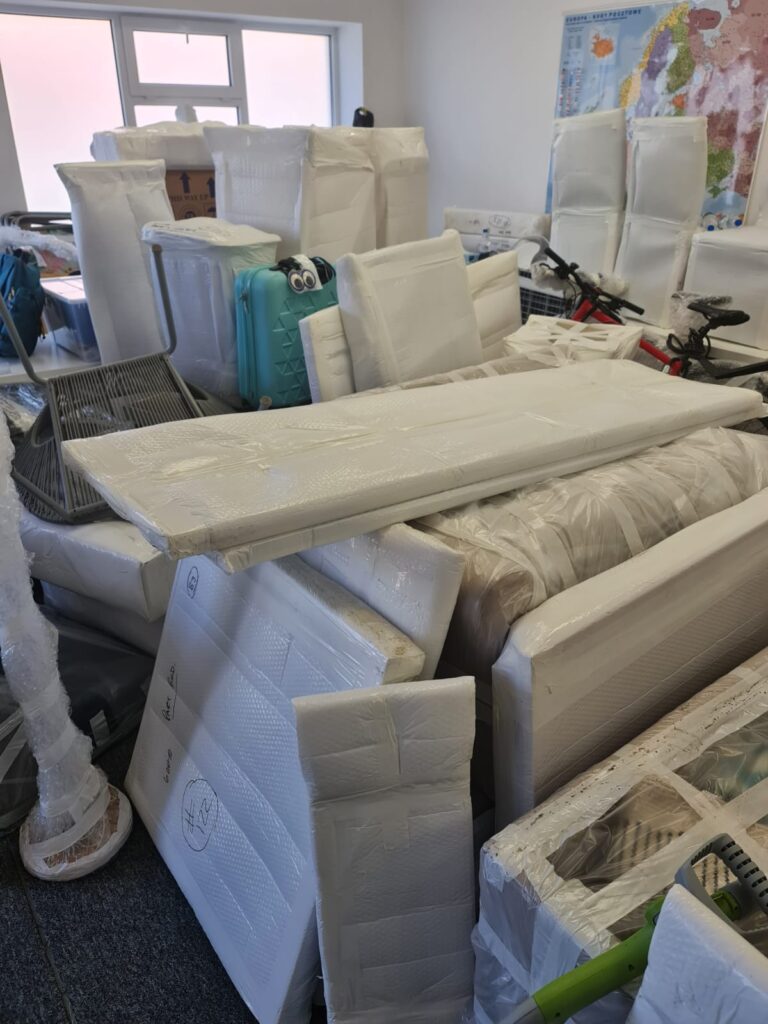
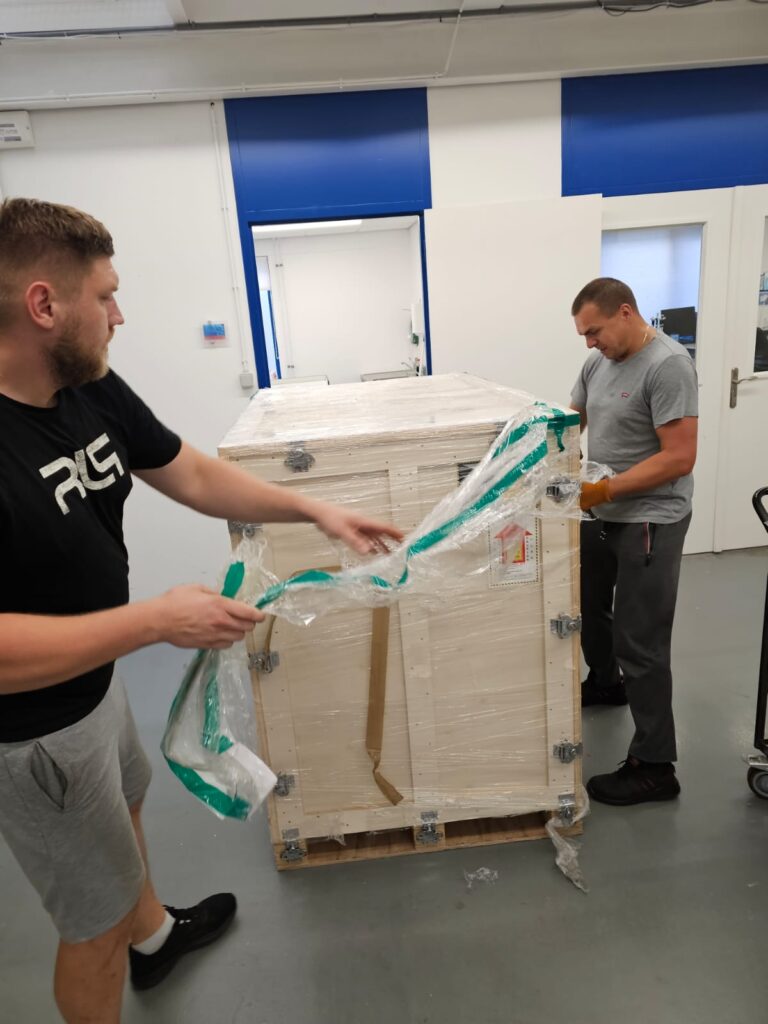
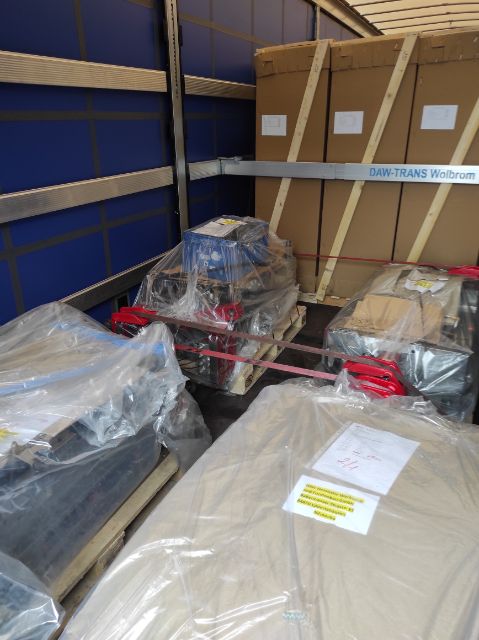
Good packing prevents surprises. You can DIY or let us handle it. Below you’ll find a practical system that keeps things safe and speeds up your Swedish move day.
Pack‑like‑a‑pro: 5‑step system
- Sort & shrink (Week −4): donate/sell anything you won’t use in Sweden; aim to cut 10–20% of volume.
- Zone your home (Week −3): pack by room and use‑case (kitchen daily, kitchen storage, office cables).
- Protect right (Week −2): wrap corners, remove shelves, bag screws/bolts, and tape them to the furniture.
- Label & index (Week −1): box code = Room‑Category‑Number (e.g., KITCH‑Fragile‑07) and add to your inventory.
- Essentials first (Move week): one “Open‑First” box per person + one for the home (kettle, bedding, tools, meds, chargers).
Box sizes & best uses
| Box Type | Typical Size | Ideal For | Notes |
|---|---|---|---|
| Small | ~40×30×30 cm | Books, tools, tins | Heavier items → smaller boxes to protect backs |
| Medium | ~60×40×40 cm | Kitchenware, decor | Most versatile; don’t overload with plates |
| Large | ~60×40×60 cm | Bedding, pillows | Keep light but bulky; fill voids with softs |
| Wardrobe | Tall with rail | Hanging clothes | Prevents creasing; pack shoes at base |
| Dish‑barrel / crate | Double‑walled | Glass, plates | Use dividers; cushion with paper/foam |
Prefer double‑walled boxes for long European routes. Weak cartons collapse in transit.
Labelling that saves hours
- Two‑point labelling: two adjacent sides + the top; include room, content, priority (1–3).
- Colour code: one colour per room; place colour stickers on door frames at destination.
- Inventory app or sheet: match codes to photos for insurance and faster placement.
Fragile & high‑value items
- Use corner protectors and floating‑box technique (item doesn’t touch sides).
- Wrap framed art face‑to‑face with cardboard, then bubble; mark THIS SIDE UP.
- For TVs/monitors, keep original packaging or request custom crates.
- Carry jewellery, passports, data drives, and prescriptions personally.
Specialty items (pianos, artworks, IT, appliances)
- Pianos & large instruments: keyboard locks, skid boards, stair straps, climate awareness.
- Art & antiques: temperature‑safe wraps, shock sensors on crates if required.
- Servers/PCs: photos of cable layouts, anti‑static bags, rigid crates.
- Appliances: drain hoses, tape doors, protect coils; keep transit bolts for washers.
Eco‑friendly packing
- Reuse sturdy boxes; choose recyclable paper over plastic where possible.
- Use towels/linen as void‑fill.
- Ask for rental crates to cut single‑use packaging.
Insurance & documentation
- Note serial numbers for electronics; photograph valuables pre‑pack.
- Ensure your transit cover matches declared values and route.
- Keep a printed copy of your inventory and key receipts with your travel documents.
Professional support when you want it:
- Professional Packing Service — full/partial packing by specialists.
- Furniture Removals — disassembly, padded wrapping, careful loading.
- White Glove Delivery — room placement, assembly, packaging removal at destination.
If you prefer to pack yourself, use double‑walled boxes, protect corners, and label by room and priority. Keep documents and valuables with you.
Winter driving, ferries & route planning
Swedish winters are beautiful—and demanding. With VANonsite, your route is planned for safety and speed, from tyre choice to ferry timings and bridge crossings.
Winter readiness in practice
- Tyres & traction: appropriate winter tyres when conditions require; chains available for severe stretches.
- Vehicle prep: de‑icing fluid, screen wash rated for sub‑zero, emergency kit (blanket, first‑aid, torch).
- Timing: earlier departures to maximise daylight; flexible windows if a storm front approaches.
Ferries vs bridges — which route makes sense?
| Option | Typical Use Case | Pros | Considerations |
|---|---|---|---|
| Ferry crossing | Long continental routes | Rest on board; avoids long winter drives | Sailing schedules; check‑in cut‑offs; weather delays |
| Bridge/land route (e.g., via Øresund) | Shorter hops via Denmark | Predictable timing; no embarkation | Tolls; winter driving the whole way |
We plan both options and book tickets/slots within your move timeline.
Rural roads & city access in winter
- Rural/archipelago deliveries: allow buffer for ploughed roads and narrower lanes.
- City centres: pre‑arrange parking bays and loading windows; lifts can be busy—reserve slots.
- Building protection: floor runners, door guards, and snow‑mats reduce slip risk.
Live GPS tracking & communication
- Follow your van in real time; receive ETA updates and handover prompts.
- Share gate codes and key‑holder contacts securely; we coordinate access on arrival.
- If weather diverts the route, you’ll see the change and updated ETA immediately.
What to keep handy (winter edition)
- Warm layers, gloves, and spare socks for door‑to‑door work.
- Ice scraper, grit/salt for steps, and robust doormats.
- Hot drinks, snacks, power banks, and printed addresses.
With routes, vehicles, and schedules tuned to Nordic conditions, your how to relocate to Sweden plan stays on track—even in January.
Move‑day checklist and arrival in Sweden
A short checklist keeps everything on track — expand it into clear phases for a smooth how to relocate to Sweden experience.
The day before (T‑24h)
- Confirm parking, permits, and lift reservations at both addresses.
- Finish packing non‑essentials; leave only the Open‑First boxes and overnight bags.
- Photograph high‑value/fragile items; back up device data.
Morning of the move (T‑0h)
- Keep hallways clear; protect floors and door frames.
- Separate items not to load (documents, meds, keys).
- Walk the crew through access notes, no‑lift floors, and fragile items.
Handover at origin
- Review the inventory with the team lead; agree on loading order.
- Verify special handling (art, TV, glass) and note anything dismantled.
- Photograph meter readings and lock windows/doors.
In transit
- Track your van live with GPS; you’ll get ETA checkpoints.
- Be reachable for ferry/bridge confirmations or access questions.
- If plans change (weather, traffic), you’ll see the updated route instantly.
Arrival in Sweden (first 2 hours)
- Tick off items against the inventory as they come in.
- Direct room placement; prioritise kitchen, beds, and work setup.
- Inspect furniture and appliances; report any issues on the spot.
- Book White Glove Delivery if you want assembly and packaging removal handled immediately.
First 72 hours
- Assemble essentials; recycle packing materials.
- Set up utilities, internet, and transport cards; register for waste collection if needed.
- Begin local registrations as required (see Section 4).
Open‑First box essentials (quick guide)
| Category | Items to Pack |
|---|---|
| Personal | IDs, Bank cards, meds, chargers, change of clothes |
| Kitchen | Kettle, mugs, cutlery, pan, snacks, cleaning cloths |
| Bedroom | Bedding, pillowcases, night light |
| Tools | Multi‑tool, screwdriver set, duct tape, utility knife |
Why choose VANonsite
Relocating to Sweden is simpler with a specialist partner. VANonsite provides:
- Live GPS tracking of every load—transparency from door to door.
- Speed and safety: experienced drivers, careful loading, and reliable ETAs.
- Flexible services: Last Minute Moving, Furniture Removals, Home Removals, Packing Services, White Glove Delivery, Office Removals, Storage, and Student Removals.
- Right‑size vehicles to match your volume and budget (from 5 m³ to 90 m³).
What we do differently
- Right‑sized planning: we match volume, weight, and access to the optimal van and crew.
- Real‑time transparency: GPS tracking + proactive ETA updates keep you in control.
- Care for valuables: custom crates and White Glove options for fragile or premium items.
- Route mastery: ferries, bridges, and winter timing handled end‑to‑end.
- Fast turnarounds: Last‑Minute Moving slots for urgent relocations.
- Sustainability in mind: route consolidation where suitable to cut mileage.
Services at a glance
| Service | Best For | Ideal When |
|---|---|---|
| Packing Service | Busy schedules, fragile collections | You want a faster, safer pack with pro materials |
| Furniture Removals | Bulky/complex furniture | Disassembly/reassembly and padded protection needed |
| White Glove Delivery | Premium, precise placement | You want room setup and packaging removed on day one |
| Office Removals | Teams and equipment | Downtime must be minimal and desk setups precise |
| Storage | Staged or delayed moves | You need a gap between pickup and delivery |
| Student Removals | Small, fast moves | Budget‑friendly, compact loads (5–10 m³) |
Next steps
- Share your inventory and dates.
- Pick your van size and service level.
- Confirm access details (permits, lifts, distances).
- Track your van with live GPS.
- Settle in — we can assemble, place, and remove debris.
Get moving today: Removals to Sweden.
FAQs
How to relocate to Sweden quickly?
Book early, declutter, and choose the right van size. Use professional packing to save days. With GPS tracking and a coordinated route, your delivery stays on schedule. For urgent timelines, ask about Last Minute Moving.
How much does it cost to move to Sweden?
It depends on volume, distance, access, season, and service level. Typical moves range from ~€300 for compact loads to €8,000+ for full households. See the tables above, then request a fixed quote via Removals to Sweden.
What documents do I need to relocate to Sweden?
Requirements vary by citizenship and length of stay. As a rule, prepare:
- Valid passport/ID and housing proof (lease or accommodation letter).
- Employment contract/admission letter or proof of funds and insurance.
- Family documents (marriage/birth certificates) with translations/apostilles.
- Driving licence, vehicle papers (if importing), and medical/vaccination records.
See Section 4 for full checklists.
Do I need a visa or residence permit?
EU/EEA/Swiss citizens can live and work under freedom of movement; register if staying 12+ months. Non‑EU citizens typically need a residence permit before arrival (work, study, or family).
How long does it take to get a personnummer?
Timeframes vary by case and season. Book your Skatteverket appointment early; bring originals. After registration, apply for a Swedish ID‑kort and set up BankID.
Is English enough to live in Sweden?
Yes—English is widely spoken. Learning Swedish helps with career growth, community life, and certain public services.
How do I choose the right van size?
Match your inventory to volume/weight and access. VANonsite offers 5 m³, 10 m³, 15 m³, 30 m³, and 90 m³ options. Share photos or a room‑by‑room list for a fast recommendation (see Section 7).
How do you protect fragile or premium items?
We combine pro materials with methodical handling. Choose Packing Services and White Glove Delivery for custom crating, room placement, assembly, and debris removal.
Can I track my shipment in real time?
Yes. Every load is tracked with live GPS, so you always know where your belongings are and when they’ll arrive.
What are the pros and cons of moving to Sweden?
Pros: safety, nature, efficient services, and work–life balance. Cons: higher costs, long winters, and competitive housing. See Section 2 for a balanced breakdown.
Do you offer packing and furniture disassembly?
Yes. Our Packing Services save time and reduce damage. For bulky items, Furniture Removals includes padded wrapping, disassembly/reassembly, and careful loading.
Do you move offices or students to Sweden?
Absolutely. We handle Office Removals with minimal downtime and Student Removals sized perfectly for dorms and studios.
Do you offer storage or partial moves?
Yes. We can stage deliveries, store items between pickup and arrival, or split loads to match access windows and building rules.
What can’t I bring?
Avoid hazardous materials and check restrictions on alcohol/tobacco, plants/seeds/soil, animal products, medicines, and lithium batteries. See Section 5 for details and a quick reference table.
When is the best time of year to move to Sweden?
Shoulder seasons are often cost‑effective. Winter moves are fine too—our Nordic routes, tyres, and schedules are tuned for snow and ice (see Section 9).
How do ferries and bridges affect cost and timing?
Routes via Øresund Bridge or Baltic ferries add tolls or sailing fees and may influence ETAs. We plan, book, and adjust in real time to keep schedules on track.
Is insurance included?
Transit cover is available; choose the coverage level that matches your declared values. Photograph valuables and keep an itemised inventory.
How do I get a firm quote and book?
Share your inventory, addresses, access notes (permits, lifts, distances), and dates. We’ll recommend the right van size and service level, then confirm a fixed quote via Removals to Sweden.