
St Gallen is one of Switzerland’s most quietly impressive cities. It does not have the restless pace of Zurich or the international glitter of Geneva, yet it offers something many newcomers value even more: stability, safety, clean streets, reliable public transport and a calmer way to build a life.
The cost of living in St Gallen Switzerland is still high by European standards. Rent, health insurance, groceries and services can feel expensive at first, especially if you are moving from another European country. However, St Gallen is often more manageable than Switzerland’s largest cities. For many expats, families, students and professionals, it offers a stronger balance between Swiss quality of life and monthly affordability.
A single person should usually plan around CHF 2,900 to CHF 3,700 per month including rent. A couple may need around CHF 4,700 to CHF 6,500, while a family of four should prepare for CHF 7,500 to CHF 10,500 or more, depending on housing, childcare and lifestyle.
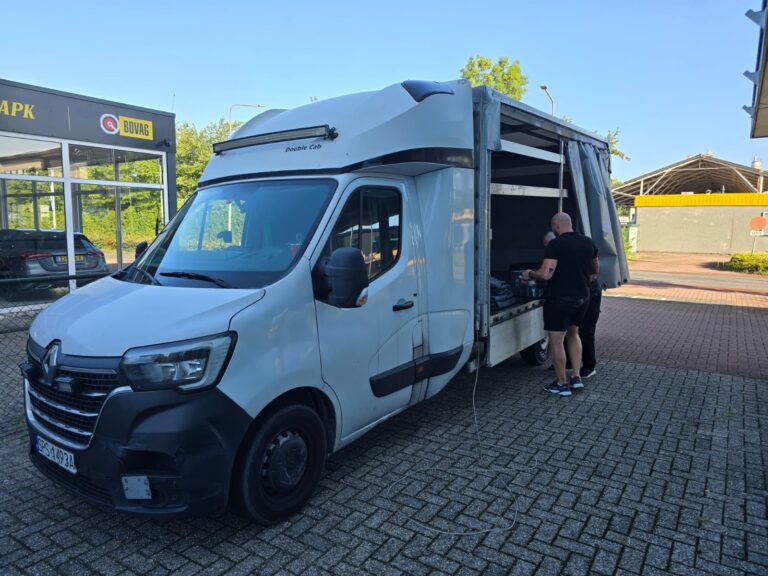
If you are relocating to St Gallen, your budget should include more than monthly bills. Moving costs, deposits, insurance, furniture, registration and customs paperwork can all affect your first month. VANonsite supports European moves to Switzerland with flexible van sizes, GPS tracking for every load, packing support, door to door delivery and practical man and van options for smaller relocations.
TL:DR
- The cost of living in St Gallen Switzerland is high, but usually more balanced than in Zurich, Geneva or Lausanne.
- A single person should budget around CHF 2,900 to CHF 3,700 per month including rent.
- A couple may need around CHF 4,700 to CHF 6,500 per month, depending on apartment size and lifestyle.
- A family of four should plan for CHF 7,500 to CHF 10,500 or more, especially if childcare is needed.
- Rent is often the biggest cost, followed by health insurance, groceries and childcare.
- Public transport is strong, so many residents can live comfortably without a car.
- Moving costs can be controlled by choosing the right VANonsite package, from small man and van transport to full house removals.




Cost of Living in St Gallen Switzerland: Quick Answer
The cost of living in St Gallen Switzerland is expensive compared with most European cities, but less intense than in Switzerland’s biggest economic centres. You still need a strong income and a realistic budget, but St Gallen can offer better value than Zurich, especially when it comes to housing.
A careful student in shared accommodation may live on CHF 1,800 to CHF 2,500 per month. A single professional renting a modest apartment should usually prepare CHF 2,900 to CHF 3,700. Couples can often share costs efficiently, while families need a wider safety margin because larger apartments, health insurance and childcare can raise monthly spending quickly.
| Household type | Lean monthly budget | Comfortable monthly budget | Main cost pressure |
|---|---|---|---|
| Student | CHF 1,800 to CHF 2,500 | CHF 2,600 to CHF 3,100 | Room, food, insurance |
| Single professional | CHF 2,900 to CHF 3,700 | CHF 3,800 to CHF 4,600 | Rent, insurance, lifestyle |
| Couple | CHF 4,700 to CHF 6,500 | CHF 6,600 to CHF 7,800 | Apartment size, leisure |
| Family of four | CHF 7,500 to CHF 10,500 | CHF 10,600 to CHF 12,000+ | Rent, healthcare, childcare |
These figures are planning ranges. Your final budget will depend on rent, insurance choice, commuting habits, food spending and whether you move furniture to Switzerland or buy everything after arrival.
Rent and Housing in St Gallen
Rent is usually the largest monthly expense in St Gallen. The city is not cheap, but it can be more forgiving than Zurich or Geneva. This is one of the main reasons why professionals, students and families look at St Gallen as a serious relocation option.
A room in a shared flat may cost around CHF 650 to CHF 1,000 per month. A studio or small apartment often starts around CHF 1,100, while a comfortable one bedroom apartment can cost CHF 1,300 to CHF 1,800. Families looking for three bedrooms should usually plan from CHF 2,000 to CHF 3,200, depending on location, condition and size.
| Housing type | Typical monthly cost |
|---|---|
| Room in a shared flat | CHF 650 to CHF 1,000 |
| Studio apartment | CHF 1,100 to CHF 1,600 |
| 1 bedroom apartment | CHF 1,300 to CHF 1,800 |
| 2 bedroom apartment | CHF 1,600 to CHF 2,400 |
| 3 bedroom apartment | CHF 2,000 to CHF 3,200 |
| Larger family property | CHF 3,000 to CHF 4,500+ |
When comparing the cost of living in St Gallen Switzerland, rent is the area where smart planning can save the most money. Living slightly outside the city centre can reduce monthly costs while still keeping you close to public transport, schools and services.
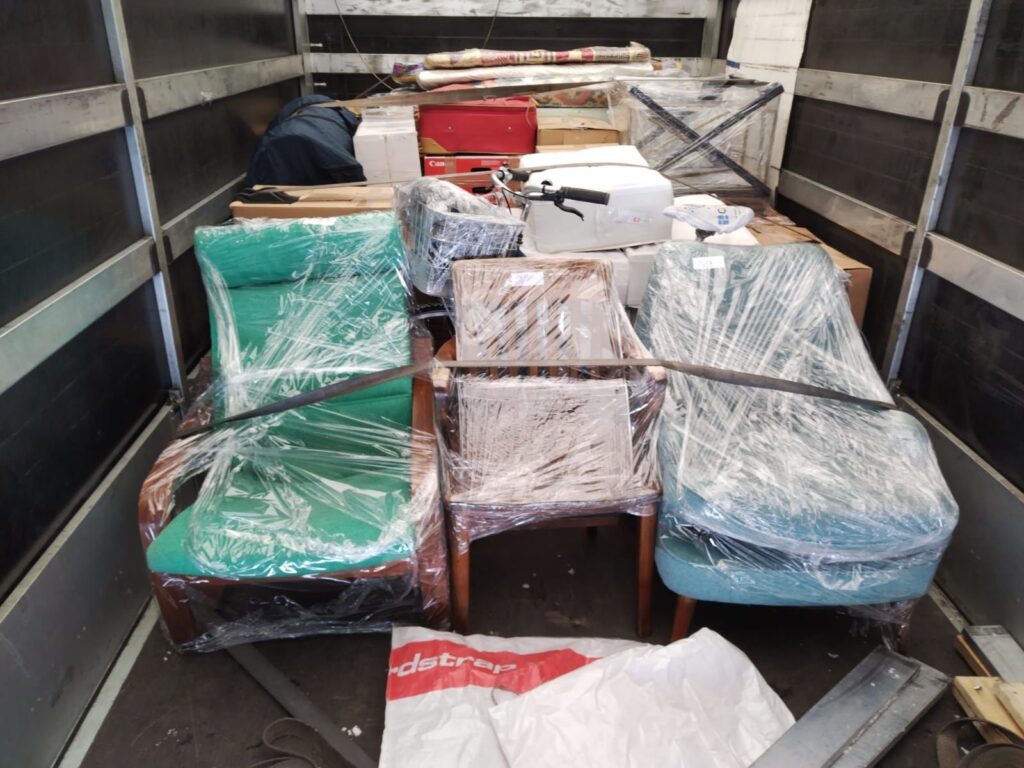
Before moving furniture, check the apartment layout carefully. Swiss buildings can have narrow staircases, strict parking rules and small lifts. A professional man and van service can make delivery much easier, especially when access needs to be planned in advance.
Groceries and Everyday Prices
Groceries in St Gallen are expensive, but they are predictable. Once you learn where to shop and how to plan meals, monthly food costs become easier to control. Cooking at home, buying seasonal products and avoiding frequent restaurant lunches can make a major difference.
A single person may spend CHF 450 to CHF 700 per month on groceries. A couple may spend CHF 800 to CHF 1,200. A family of four should often expect CHF 1,200 to CHF 1,800, depending on diet, children’s ages and eating habits.
| Product or service | Approximate price in St Gallen |
|---|---|
| Milk, 1 litre | CHF 1.80 to CHF 2.00 |
| Bread, 500 g | CHF 2.50 to CHF 3.20 |
| Rice, 1 kg | CHF 3.00 to CHF 4.00 |
| Eggs, 12 | CHF 5.50 to CHF 7.00 |
| Local cheese, 1 kg | CHF 18.00 to CHF 25.00 |
| Chicken fillets, 1 kg | CHF 20.00 to CHF 28.00 |
| Apples, 1 kg | CHF 2.50 to CHF 4.00 |
| Potatoes, 1 kg | CHF 1.40 to CHF 2.50 |
| Cappuccino | CHF 4.50 to CHF 5.50 |
| Inexpensive restaurant meal | CHF 22.00 to CHF 28.00 |
| Meal for two, mid range restaurant | CHF 100.00 to CHF 130.00 |
Restaurant prices can surprise newcomers. A casual lunch may cost as much as several home cooked meals. If you want to keep the cost of living in St Gallen Switzerland under control, start with groceries and dining habits. Small daily choices can save hundreds of francs each month.
Utilities, Internet and Phone Costs
Utilities in St Gallen depend on apartment size, insulation, heating system and personal usage. Winter can increase heating costs, while newer apartments may be more efficient.
For an 85 m² apartment, basic utilities may range from CHF 200 to CHF 390 per month. Internet usually costs around CHF 40 to CHF 60, while mobile phone plans often sit between CHF 20 and CHF 50.
| Monthly cost | Typical amount |
|---|---|
| Basic utilities for 85 m² apartment | CHF 200 to CHF 390 |
| Internet | CHF 40 to CHF 60 |
| Mobile phone plan | CHF 20 to CHF 50 |
| Fitness club | CHF 50 to CHF 80 |
| Streaming and subscriptions | CHF 20 to CHF 70 |
Always check whether your rent includes additional charges. In Switzerland, the advertised rent may not always tell the full story. Heating, maintenance and shared building costs can add CHF 150 to CHF 350 to your monthly housing budget.
Public Transport and Mobility
St Gallen is a practical city for people who do not want to own a car. Public transport is reliable, clean and well connected. For many residents, buses, trains and occasional car rental are enough.
A local one way ticket may cost around CHF 3.50, while a monthly public transport pass can start around CHF 72 depending on zones. Petrol, parking, insurance and maintenance make car ownership much more expensive than many newcomers expect.
| Transport cost | Approximate price |
|---|---|
| Local one way ticket | CHF 3.50 |
| Monthly public transport pass | CHF 72+ |
| Taxi start | CHF 5.50 |
| Gasoline, 1 litre | CHF 1.70 to CHF 1.90 |
| Resident day ticket | Around CHF 48.00 |
If you commute around Eastern Switzerland, regional travelcards can be useful. For people working partly from home, public transport may be enough for daily life. This can lower the cost of living in St Gallen Switzerland significantly compared with owning a car.
Health Insurance in St Gallen
Health insurance is mandatory in Switzerland, and it is one of the most important costs to include in your budget. The national average premium for 2026 is CHF 393.30 per month, but your actual price depends on age, deductible, provider, canton and insurance model.
| Person | Planning estimate |
|---|---|
| Adult | CHF 300 to CHF 500 per month |
| Young adult | CHF 220 to CHF 420 per month |
| Child | CHF 90 to CHF 180 per month |
| Family of four | CHF 800 to CHF 1,400 per month |
Many newcomers underestimate this cost. They calculate rent and food, then suddenly need to pay for insurance, deposit, transport passes, registration, furniture and moving services during the same period.
Compare insurance providers early. A higher deductible can reduce monthly premiums, but it also increases your out of pocket risk. The cheapest policy is not always the safest choice, especially for families.
St Gallen vs Other Swiss Cities
St Gallen can be a strong choice if you want Swiss quality of life without the highest housing pressure. Everyday prices are still close to Swiss standards, but rent can be more reasonable than in Zurich or Geneva.
| City | Single person monthly costs excluding rent | Family of four monthly costs excluding rent | General impression |
|---|---|---|---|
| St Gallen | Around CHF 1,450 | Around CHF 5,300 | Balanced, compact, calm |
| Zurich | Around CHF 1,530 | Around CHF 5,650 | Global, career focused, expensive |
| Geneva | Around CHF 1,380 | Around CHF 5,050 | International, premium housing |
| Basel | Around CHF 1,400 | Around CHF 5,150 | Cultural, business friendly |
| Bern | Around CHF 1,350 | Around CHF 5,000 | Stable, relaxed, family friendly |
The main difference is often not groceries or public transport. It is rent. Zurich may offer higher salaries, but apartment hunting can be more competitive and expensive. St Gallen gives many newcomers a softer landing while still offering Swiss infrastructure and a high standard of living.
Sample Monthly Budget for a Single Professional
A single professional moving to St Gallen should prepare for both normal monthly spending and first month setup costs. The first month is usually the most expensive because you may need a deposit, temporary housing, insurance, furniture and moving support.
| Category | Monthly estimate |
|---|---|
| Rent | CHF 1,300 to CHF 1,800 |
| Utilities and internet | CHF 250 to CHF 350 |
| Health insurance | CHF 300 to CHF 500 |
| Groceries | CHF 450 to CHF 700 |
| Public transport | CHF 70 to CHF 150 |
| Dining and leisure | CHF 250 to CHF 600 |
| Personal costs | CHF 150 to CHF 350 |
| Total | CHF 2,770 to CHF 4,450 |
A careful single person can manage the cost of living in St Gallen Switzerland with disciplined choices. Modest housing, home cooking, public transport and smart insurance comparison can make the city much more comfortable.
Sample Monthly Budget for a Couple
Couples often get better value because they share rent, utilities and household essentials. However, lifestyle choices can quickly push the budget higher. Frequent restaurants, weekend trips, two phone plans and premium gym memberships add up fast.
| Category | Monthly estimate |
|---|---|
| Rent | CHF 1,700 to CHF 2,500 |
| Utilities and internet | CHF 300 to CHF 430 |
| Health insurance | CHF 600 to CHF 1,000 |
| Groceries | CHF 800 to CHF 1,200 |
| Transport | CHF 140 to CHF 300 |
| Dining and leisure | CHF 500 to CHF 1,200 |
| Personal costs | CHF 300 to CHF 700 |
| Total | CHF 4,340 to CHF 7,330 |
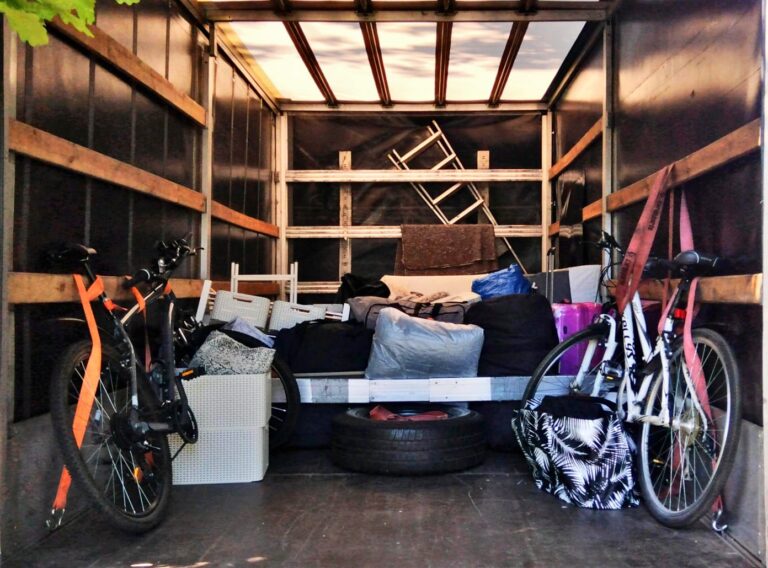
For couples relocating from another European country, it may be more cost effective to move key furniture than to buy everything again in Switzerland. Beds, desks, sofas and wardrobes can be expensive locally. VANonsite can help match the load to the right vehicle size, so you do not pay for unnecessary space.
Sample Monthly Budget for a Family of Four
Families need the strongest financial buffer. St Gallen is safe, clean and appealing for children, but larger apartments, health insurance and childcare can make monthly spending rise quickly.
| Category | Monthly estimate |
|---|---|
| Rent | CHF 2,200 to CHF 3,500 |
| Utilities and internet | CHF 350 to CHF 550 |
| Health insurance | CHF 800 to CHF 1,400 |
| Groceries | CHF 1,200 to CHF 1,800 |
| Transport | CHF 250 to CHF 600 |
| Childcare or school extras | CHF 500 to CHF 2,500 |
| Clothing and personal costs | CHF 500 to CHF 1,000 |
| Leisure and emergency buffer | CHF 600 to CHF 1,200 |
| Total | CHF 6,400 to CHF 12,550 |
A family move is not only about transporting boxes. It involves school dates, rental keys, furniture, paperwork, customs clearance and emotional pressure. Good logistics help the first weeks feel organised instead of overwhelming.
Is St Gallen Good for Students?
St Gallen can be an excellent student city. It is compact, safe and well connected, with a strong academic reputation. Students can often live more affordably than professionals if they share accommodation and keep restaurant spending low.
A student budget may range from CHF 1,800 to CHF 2,500 per month. Private studios, frequent travel and regular eating out can push that much higher.
| Student expense | Monthly estimate |
|---|---|
| Shared room | CHF 650 to CHF 1,000 |
| Food | CHF 350 to CHF 600 |
| Health insurance | CHF 220 to CHF 420 |
| Public transport | CHF 70 to CHF 120 |
| Books and supplies | CHF 50 to CHF 150 |
| Leisure | CHF 150 to CHF 400 |
For international students, moving only essential items can be smart. VANonsite’s Moving One or Moving Basic options can fit boxes, clothes, books, small furniture and personal items. A compact man and van move may be easier than paying for excess luggage or buying every item after arrival.
Required Documents When Moving to St Gallen
Switzerland is efficient, but it expects good preparation. Documents, registration and deadlines matter. New residents usually need to register with the local authorities after arrival. In St Gallen, registration is handled through the local residents’ registration office or official online systems.
Useful official information can be found here:
- St Gallen residence registration
- Swiss residence permits on ch.ch
- State Secretariat for Migration
- Moving to Switzerland on ch.ch
| Document | Why you need it |
|---|---|
| Passport or national ID | Identity confirmation |
| Rental agreement | Proof of address |
| Employment contract or university confirmation | Permit and registration support |
| Residence permit or visa documents | Legal stay |
| Health insurance confirmation | Mandatory Swiss coverage |
| Inventory of household goods | Customs clearance |
| Customs form for household effects | Importing personal belongings |
| Vehicle documents, if applicable | Car import and registration |
If you are moving household goods to Switzerland, customs preparation is essential. Switzerland is not in the EU customs union, so your belongings may need proper documentation even if they are personal items. You can check official Swiss customs information here: Swiss customs household effects.

Moving Your Belongings to St Gallen
The cost of living in St Gallen Switzerland is not only about monthly bills. Your first month may include a rental deposit, temporary accommodation, insurance, furniture, customs paperwork, storage and transport. This is why relocation planning is so important.
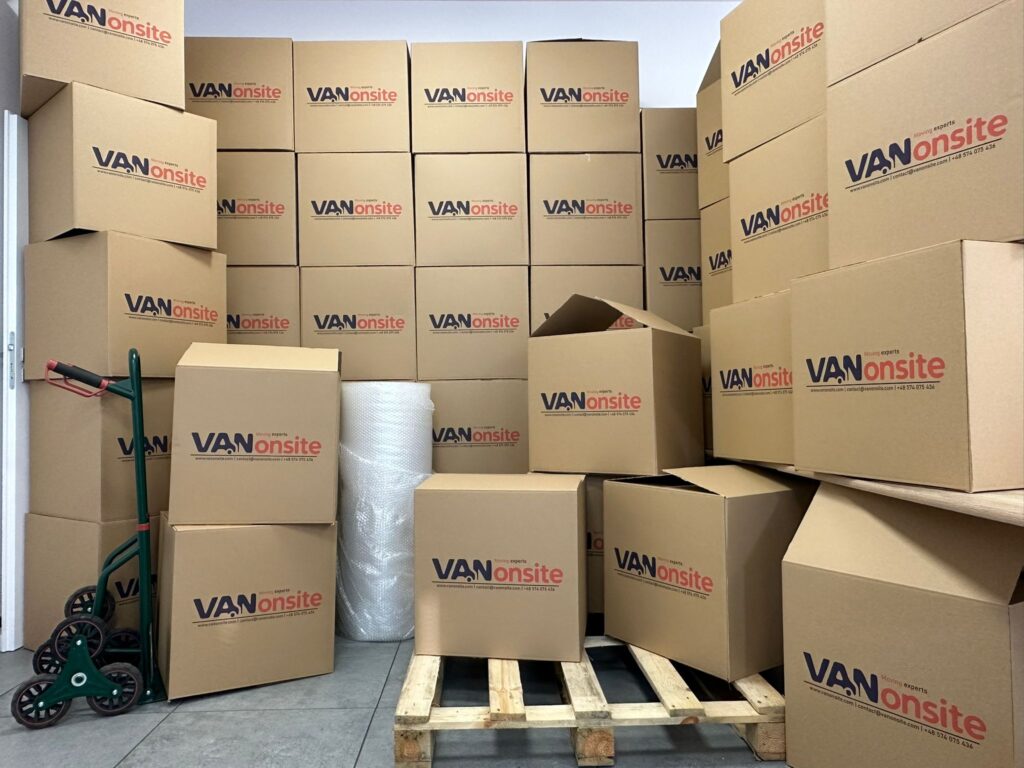
VANonsite offers flexible options for different move sizes:
| VANonsite package | Capacity | Best for |
|---|---|---|
| Moving One | 1 m³, 100 kg | Documents, boxes, urgent items |
| Moving Basic | 5 m³, 300 kg | Student move, small room |
| Moving Medium | 10 m³, 500 kg | Studio or compact apartment |
| Moving Premium | 15 m³, 1,100 kg | 1 bedroom home, furniture removals |
| Moving Premium Plus | 30 m³, 3,500 kg | Family apartment or larger move |
| Moving Full House XXL | 90 m³, 20,000 kg | Full house relocation |
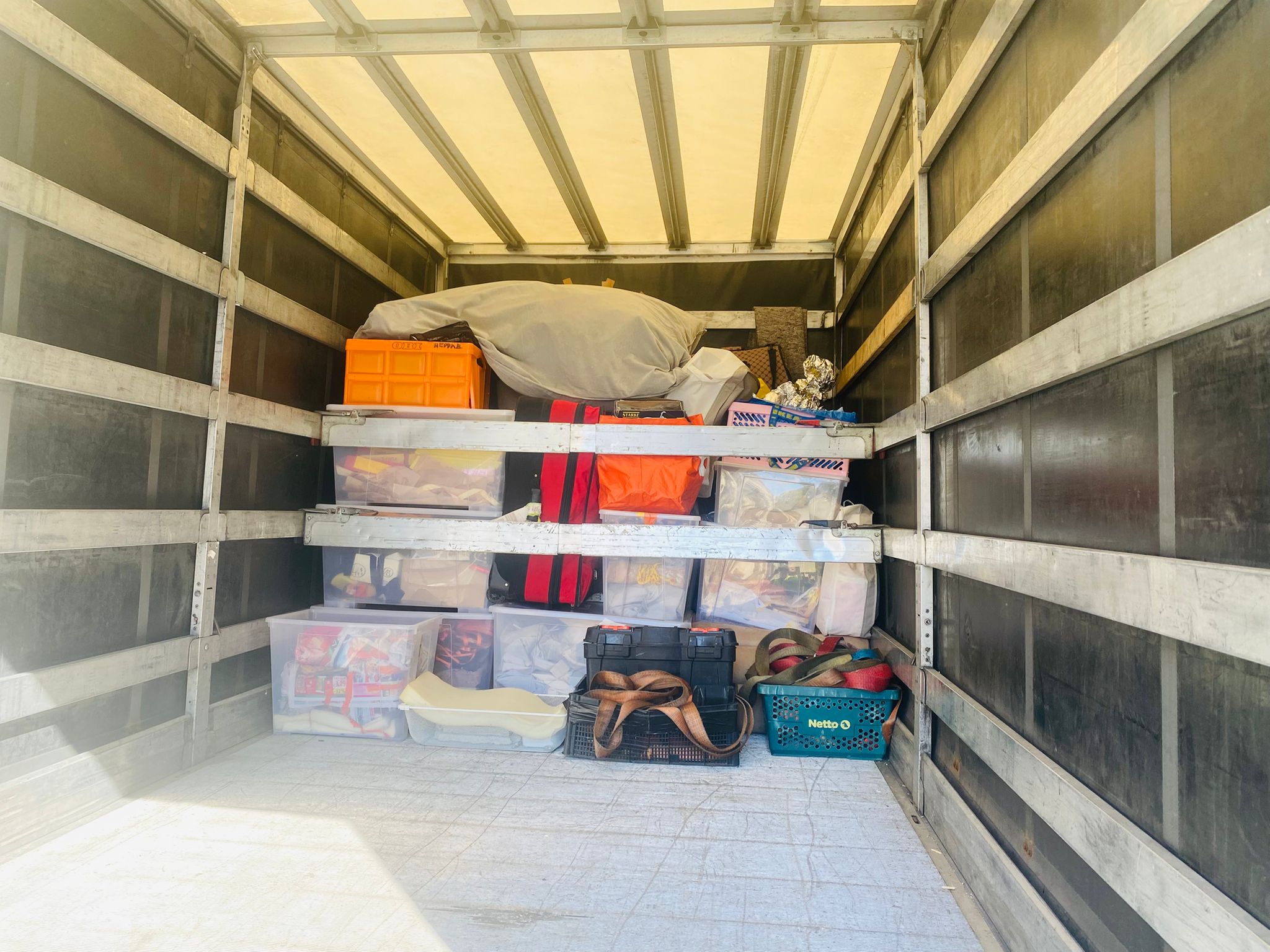
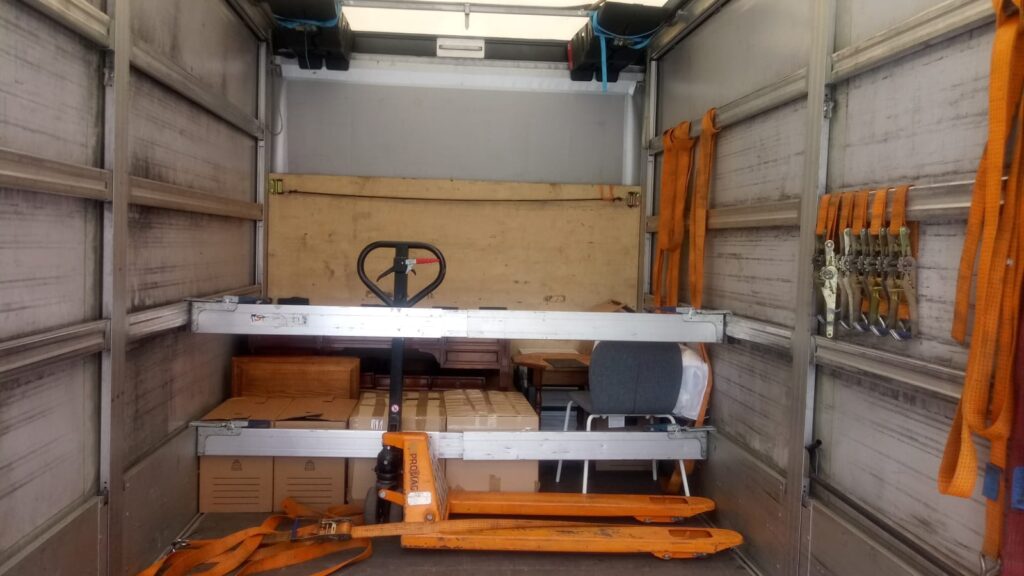
Smaller moves may only need a man and van service. Larger relocations may require a dedicated vehicle, packing support and careful customs preparation. VANonsite supports both situations with GPS tracked transport, practical planning and door to door European removals.
For Switzerland, details matter. Access rules, border documents and delivery timing can all affect the move. The right moving company reduces the risk of damage, delay and last minute stress.
What Can You Bring to St Gallen?
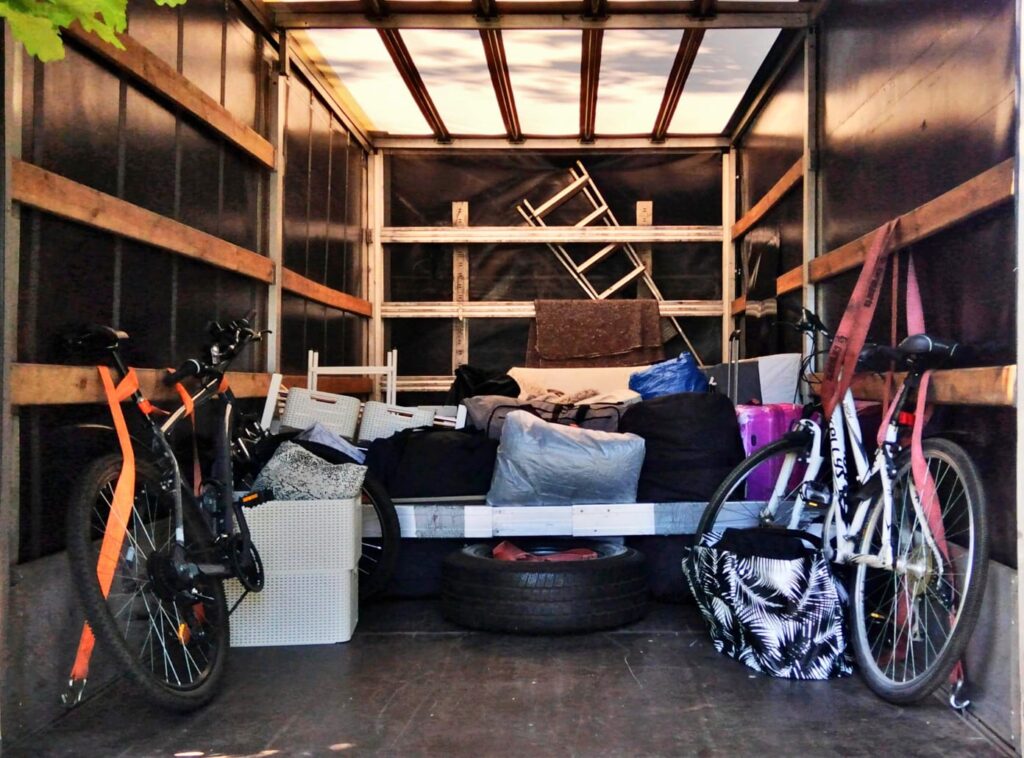
Most personal household goods can be brought when relocating to Switzerland, provided they meet customs conditions and are for personal use. This can include furniture, clothing, books, kitchenware, bicycles, office equipment and student materials.
Good items to move include:
- Beds, mattresses and essential furniture
- Desks, office chairs and home office equipment
- Clothing and personal items
- Kitchenware and small appliances
- Books, study materials and children’s items
- Bicycles and sports equipment
- Fragile or sentimental items
Be careful with alcohol, tobacco, food, plants, pets, vehicles and high value goods. Rules may vary, and customs officers can ask for documents. If you have delicate furniture, antiques, designer pieces or expensive electronics, professional packing can protect your budget as well as your belongings.
How to Lower the Cost of Living in St Gallen Switzerland
You cannot make Switzerland cheap, but you can make your spending more predictable. The difference between a stressful budget and a calm one often comes down to practical decisions made before arrival.
- Rent outside the strict city centre if you do not need to be central every day.
- Compare health insurance providers as early as possible.
- Use public transport instead of buying a car.
- Cook at home during the working week.
- Buy seasonal groceries and avoid impulse shopping.
- Choose a smaller apartment for the first year.
- Move essential furniture instead of replacing everything locally.
- Use the correct moving package to avoid paying for empty van space.
- Keep a first month buffer of at least CHF 3,000 to CHF 5,000.
- Book your relocation early if possible, especially during busy summer months.
This is where the cost of living in St Gallen Switzerland becomes easier to manage. Prices may still be high, but fewer costs will surprise you.
Best Areas to Live in St Gallen
St Gallen is compact, but neighbourhood choice still matters. Students may want to stay close to the university. Families often prefer quieter residential districts. Professionals may value fast train access. Remote workers may care more about space, light and calm.
| Area type | Best for | Budget note |
|---|---|---|
| City centre | Singles, students, professionals | Higher rent, maximum convenience |
| Near university | Students and academic staff | Seasonal demand can be strong |
| Residential outer districts | Families and couples | Better space for money |
| Commuter villages | Families and hybrid workers | Lower rent, more travel planning |
| Near train links | Zurich commuters | Convenient but more competitive |
If you are moving with a larger load, check parking and building access before delivery day. A good apartment can still be difficult to move into if the staircase is narrow, the lift is small or the street has limited stopping space.
Pros and Cons of Living in St Gallen
St Gallen is polished, calm and practical, but it may feel quiet for people who want big city energy. The city suits people who value safety, order, nature and reliable infrastructure.
| Pros | Cons |
|---|---|
| Safer and calmer than many European cities | Still expensive compared with most of Europe |
| Often better rent value than Zurich | Health insurance is a serious monthly cost |
| Strong public transport | German skills are very useful |
| Good for students and families | Restaurants and services are costly |
| Beautiful old town and green surroundings | Smaller job market than Zurich |
| Excellent Swiss infrastructure | First month costs can be intense |
For many newcomers, the balance is worth it. St Gallen gives you Swiss structure with a gentler rhythm. It is clean, efficient and liveable, without feeling as pressured as the biggest Swiss hubs.
Why Choose VANonsite for a Move to St Gallen?
A move to Switzerland is not only transport. It is a chain of details: inventory lists, customs documents, packing, timing, parking, building access and the pressure of starting life in a new country.
VANonsite helps make that process smoother. The company provides professional European removals, GPS tracking for every load, flexible vehicle sizes and support for different types of relocations.
VANonsite services include:
- Last Minute Moving
- Furniture Removals
- Home Removals
- Packing Service
- White Glove Delivery
- Office Removals
- Storage
- Student Removals
- Office Furniture Installation
- Man and van solutions for smaller moves
If you are comparing the cost of living in St Gallen Switzerland, include relocation in your real first month budget. Transport is not just a side cost. It affects whether you arrive organised, whether your belongings are protected and whether your first week feels calm or chaotic.
For a tailored quote, visit removals to Switzerland.
FAQ About the Cost of Living in St Gallen Switzerland
Is St Gallen cheaper than Zurich?
Yes, St Gallen is usually cheaper than Zurich for rent. Everyday costs such as groceries, transport and health insurance are still high, but housing can be more manageable.
How much does a single person need in St Gallen?
A single person should usually budget around CHF 2,900 to CHF 3,700 per month including rent. A careful student or flat sharer may spend less, while a professional with a central apartment may spend more.
Is St Gallen good for families?
Yes, St Gallen can be a strong choice for families. It is safe, clean, compact and well connected. Families should budget carefully for rent, healthcare and childcare.
Do I need a car in St Gallen?
Not necessarily. Public transport in St Gallen is reliable and well connected. Many residents can live comfortably without a car, especially if they work locally or commute by train.
Is health insurance expensive in St Gallen?
Yes. Swiss health insurance is one of the biggest fixed monthly costs. Adults should often plan around CHF 300 to CHF 500 per month, depending on provider, deductible and insurance model.
What is the biggest monthly cost in St Gallen?
Rent is usually the biggest cost, followed by health insurance, groceries and childcare for families. Transport can stay reasonable if you use public transport instead of owning a car.
Can VANonsite help with small moves to St Gallen?
Yes. VANonsite offers flexible options for smaller moves, including man and van transport, student removals and compact loads. Larger packages are available for apartment, family and full house relocations.
Plan Your Move to St Gallen with Confidence
The cost of living in St Gallen Switzerland rewards people who prepare early. Rent needs research. Health insurance needs comparison. Customs paperwork needs attention. Your first month needs a safety buffer.
Once the essentials are under control, St Gallen can become a wonderful place to live. It is safe without feeling sterile, beautiful without being flashy and practical without losing charm. It gives you Swiss structure with a softer rhythm.
If you are moving to St Gallen from another European country, VANonsite can help you plan the transport side with care. From a small man and van move to a full household relocation, the right vehicle size, GPS tracked delivery and professional handling can make your Swiss start smoother from the first day.
Request your Switzerland moving quote and arrive prepared, protected and ready for what comes next.