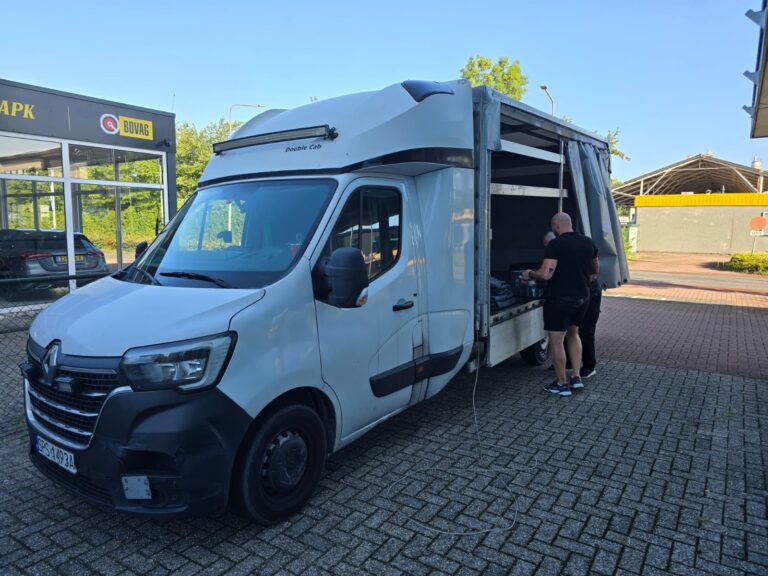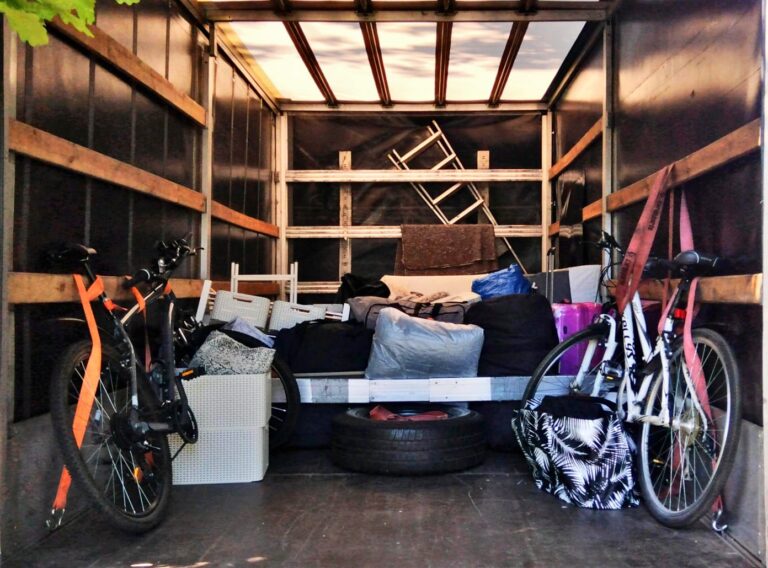

Moving from Germany to England is absolutely possible, but it no longer feels like a light weekend operation with a few boxes and a hopeful playlist. Since Brexit, the journey needs more precision. You need to think about visas, customs, healthcare, documents, timing, and the safest way to move everything you actually care about. That may sound daunting at first. In reality, it becomes far more manageable when the move is broken into clear steps and handled with a removals plan that respects the new rules.
This is exactly where smart preparation changes everything. Instead of scrambling at the last minute, you can build a move that feels controlled, calm, and surprisingly efficient. If you are planning on moving from Germany to England for work, study, family, or a fresh start, this guide will walk you through the essentials quickly and clearly. It will also help you understand when a lean man and van service makes sense, when you need fuller removals support, and how a company like VANonsite can make the journey feel safer with secure transport and GPS tracking for every load.
Quick Answer: Can You Move from Germany to England?
Yes, you can move from Germany to England.
However, the exact process depends on three things: your nationality, your immigration status, and the reason for the move. For British and Irish citizens, the route is different from the one faced by most other nationals. For many other people, especially those moving for work, study, or family reasons, visa rules may apply. On top of that, moving from Germany to England now involves customs planning for household goods in a way that many people did not have to think about before Brexit.
The most common reasons people make the move are:
- work
- study
- family relocation
- returning to the UK
- business or office move
So the short answer is simple. Yes, you can move from Germany to England, but the move needs more structure than it used to. The smoother your planning, the lighter the move feels.
What Changed After Brexit When Moving from Germany to England?
Before Brexit, moving between Germany and England felt far more straightforward. The route was simpler, the paperwork lighter, and the whole journey often felt like a practical life change rather than a legal puzzle. That changed when freedom of movement between the UK and the EU came to an end.
What many people still underestimate is how deeply that shift changed the rhythm of relocation. It was not just one rule changing on paper. It changed how people plan the move, when they book transport, what documents they gather first, and how confidently they can commit to dates. A journey that once felt like a clean logistical task now sits much closer to a full international relocation.
Now, moving from Germany to England usually requires a more careful approach. Immigration rules depend more heavily on nationality and visa route. Household goods may need customs planning. Documents matter more. Timing matters more. Even the order in which you do things matters more.
The biggest changes are easy to summarise:
- freedom of movement between the UK and EU ended
- immigration rules now depend more heavily on nationality and visa route
- household goods and personal belongings may require customs planning
- the move needs more documentation and better timing than it did before
Each of those points touches the real life side of the move. If your nationality affects your visa route, then it also affects when you should book removals. If customs now matter more, your inventory list becomes more than a convenience. It becomes part of the move’s backbone. If documentation matters more, last-minute packing becomes far riskier than it once was.
This is also why the emotional feel of the move has changed. Before Brexit, many people could focus mainly on where they wanted to live and how quickly they could get there. Now, there is often more tension in the planning stage. People want certainty before they commit. They want cleaner timelines. They want fewer nasty surprises. That is exactly why precision has become such a powerful advantage.
What used to feel straightforward now rewards precision. Small gaps in planning can cost time, money, and peace of mind. That does not mean the move is out of reach. It simply means the smartest movers treat it like a proper international relocation, not a casual cross-border trip.
Who Can Move from Germany to England?
This is where many readers mentally stop and ask the real question: does this apply to me? In most cases, the answer is yes, but the route changes depending on your situation.
The most important thing to understand is that moving from Germany to England is not one single journey with one single checklist. Two people can make the same route in the same month and still face completely different realities. One may be returning to the UK with clear status and a simple plan. Another may be moving for work and waiting on visa confirmation; Another may be relocating as a student with tight deadlines and a limited budget; Another may be moving a family of four with a pet, a full house load, and a school calendar to think about.
You may be planning on moving from Germany to England if you are:
- A British citizen returning home after living in Germany
- A German citizen moving for work or study
- An EU citizen using a family route
- A professional relocating for a job offer
- A student moving to an English university
- A family moving with children and a full household
Each of these groups faces a slightly different rhythm. A professional relocating for work may need to coordinate sponsorship, contract dates, and housing. A student may be balancing a limited budget with strict term deadlines. A family move usually carries more emotional and logistical weight, because it is not just about boxes. It is about routines, schools, furniture, pets, and daily life.
British citizens returning to England often have a simpler status path, but that does not mean the move itself is simple. They still need to think about customs, transport, healthcare setup, housing, and the first practical days after arrival. German citizens and other EU nationals may need to think much more carefully about visa routes depending on the purpose of the move. That difference alone can shape the entire timeline.
Students usually need speed, clarity, and cost control. Their move is often smaller in volume, but more sensitive in timing. Missing accommodation dates or term deadlines can turn a modest relocation into a stressful one very quickly. Professionals moving for work often need a plan that looks smooth from the outside because the job start date leaves little room for wobble. Families, meanwhile, need more than transport. They need stability. They need a move that protects everyday life while it is being rebuilt.
This is why moving from Germany to England should never be treated like a one-size-fits-all process. The route that makes sense for a solo renter moving to Manchester is not the same route that works for a family relocating to Surrey with a full house worth of belongings. The more honestly you define your move, the easier it becomes to choose the right transport, timeline, and service level.
Do You Need a Visa to Move to England from Germany?
This is one of the first questions people ask, and rightly so. In many cases, it is the question that determines whether the rest of the move can even be scheduled with confidence.
Whether you need a visa depends on your nationality and the reason for moving. British and Irish citizens follow a different path from most other nationals. For many other people moving from Germany to England for work, study, or family reasons, the UK visa system becomes one of the central parts of the move.
That point is crucial because your immigration route shapes the whole schedule. It affects when you can move, what documents you need, how confidently you can book transport, and whether it is smarter to move in one trip or in stages.
In practical terms, the visa question is not just a legal issue. It is a planning issue. If your route is still uncertain, booking a full household move too early can create pressure you do not need. If your status is clear, the rest of the relocation becomes easier to map out. That is why the smartest movers treat visa clarity as one of the earliest checkpoints, not something to deal with once the boxes are already half packed.
Here is a simple overview:
| Reason for moving | What to check first | Best content angle |
|---|---|---|
| Work | work visa route | job offer, sponsorship, timing |
| Study | student visa route | acceptance, budget, accommodation |
| Family | family route | relationship proof, residence plan |
| Returning to UK | eligibility and practical setup | customs, NHS, housing |
That table gives a quick snapshot, but real life is always slightly messier and more human than any chart suggests. Someone moving for work may be balancing a sponsored role, a start date, a tenancy deadline, and a full household load all at once. A student may be working with a smaller budget and a far tighter calendar. A family route can be emotionally charged because it usually involves far more than moving objects. It involves reassembling daily life.
This is why moving from Germany to England should never be planned around assumptions or second-hand stories. A friend’s experience may sound similar to yours, but their nationality, sponsor status, family situation, or timeline may be very different. One small legal difference can reshape the whole move.
If you are unsure about your position, always check the official UK government pages before committing to the full move. That is especially important if you are planning on paying deposits, signing a tenancy, or booking a large household relocation. When the visa side is clear, everything else becomes easier to sequence. It also becomes far easier to decide whether a compact man and van move is enough or whether your situation calls for a fuller removals plan.
Documents You Need Before Moving from Germany to England
Paperwork may not be the glamorous part of a relocation, but it often decides whether your move feels smooth or stressful. When moving from Germany to England, the right documents do more than satisfy a formal requirement. They shape your customs process, your timeline, your legal clarity, and your confidence on moving day.
At a minimum, most people should prepare:
- valid passport or travel document
- visa documents if required
- proof of address in England
- job offer or university acceptance if relevant
- tenancy agreement or temporary accommodation details
- health-related documents if needed
- inventory list for household goods
- customs paperwork where applicable
- pet travel documents if travelling with animals
That is the basic framework, but smart movers take it one step further. They separate their paperwork into clear folders. One for identity and travel, one for visa or status documents; One for housing and arrival details; One for the move itself, including inventory and removals paperwork.
This matters more than people think. A missing printout can slow the day down. A buried document can create unnecessary panic. A strong paperwork system, by contrast, makes the whole move feel cleaner and more stable.
If your move involves household goods, your inventory list becomes especially important. It supports customs, helps organise the load, and gives you a stronger overview of what you are actually moving. That is one reason professional movers often ask for a clear list early.
It also helps to think in terms of document layers rather than one single pile of papers. Your first layer is identity and legal status; Your second is housing and arrival proof; Your third is removals and customs paperwork; Your fourth is practical first-week material, such as health information, key phone numbers, and booking confirmations. Once you separate documents this way, the move starts to feel less like a paper storm and more like a system.
A useful structure looks like this:
- Identity documents such as passports and travel documents
- Visa or status documents where relevant
- Housing documents such as tenancy agreements or temporary accommodation confirmation
- Moving documents such as inventory lists, customs paperwork, and removals confirmations
- Pet and health documents if your move includes animals or ongoing medical needs
This structure becomes especially helpful on stressful days. Instead of searching through emails while the van is being loaded, you know exactly where everything is. That does not just save time. It saves emotional energy.
If you are travelling with pets, your pet paperwork should never be buried in the general moving file. Keep it separate and easy to reach. If you are moving valuable or fragile items, keep purchase records, photos, or notes that could support identification if needed. If you are moving in stages, label the paperwork that relates to the first load and the later load separately. Small systems like these reduce chaos more than people expect.
A printed set and a digital set are both worth having. Your printed documents should travel with you, not in the main load. Your digital copies should be easy to access from your phone. This is one of those simple habits that feels almost too obvious to mention until the moment it saves the day.
The emotional truth is this: paperwork feels dull until it becomes the thing protecting the move. Then it feels priceless. Strong documents do not only prove who you are or where you are going. They make the whole relocation more stable, more believable, and easier to manage from the first plan to the final delivery.
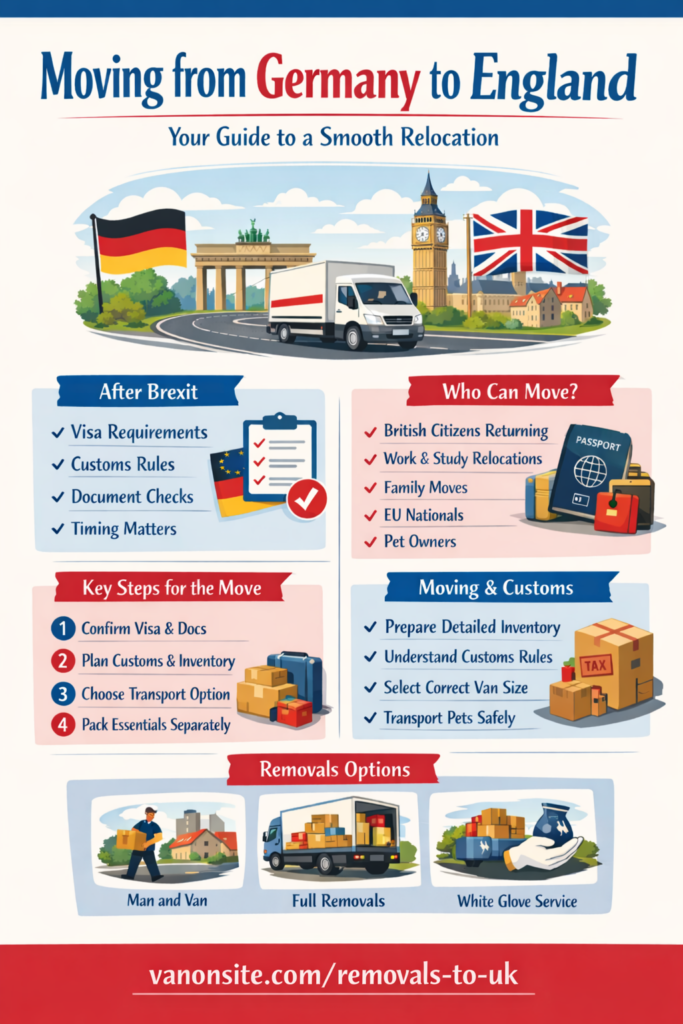
Step-by-Step Timeline for Moving from Germany to England
A good move is rarely built on speed alone. It is built on sequence. The order of decisions matters. When the order is wrong, even simple relocations can start to feel tangled. When the order is right, the move becomes lighter and far easier to control.
What makes this timeline so important is that post-Brexit moves punish rushed sequencing. People often focus on the visible parts first, such as choosing a city, booking transport, or starting to pack, while the less visible parts quietly decide whether the whole move will stay smooth. The smarter approach is to treat the relocation like a chain. Each link should support the next one.
A practical timeline usually looks like this:
- Confirm your visa or residence route if needed
Before anything else, make sure you understand the legal basis for your move. This one step shapes almost everything that follows. It affects whether you can fix a moving date confidently, whether you should move in one go or in stages, and how much risk you take on when booking transport. - Secure accommodation in England
Even temporary housing helps shape the rest of the process. It gives the move a destination that feels real, helps you organise first-week life, and reduces the emotional fog that often comes with international relocation. - Gather documents and moving paperwork
This includes identity documents, housing proof, and customs-related paperwork. Do not wait until the final week. Document stress has a nasty habit of turning simple tasks into long, draining ones. - Build a clear inventory of what you are taking
This helps with customs, planning, and choosing the right service size. It also forces one of the healthiest moving questions of all: what genuinely deserves to come with you? - Decide whether you need a man and van move or full removals
Smaller relocations often need a leaner service. Larger ones need more structure. This decision is not only about price. It is about how much support your move actually needs. - Prepare customs-related steps for personal belongings
Do not leave this until the last moment. Customs usually feels abstract until it suddenly becomes the point where a smooth move starts dragging. - Pack essentials separately from the main load
Your first 24 to 72 hours should not depend on opening every box. A strong essentials bag creates an arrival that feels human, not chaotic. - Move and settle your first-week priorities quickly
Healthcare, phone setup, transport, and key admin tasks should follow fast. The sooner your life starts functioning, the sooner England feels like a destination rather than a temporary holding point.
You can also think about the move in three broader phases:
- Preparation phase: visa, housing, documents, inventory
- Logistics phase: service choice, customs planning, packing, scheduling
- Arrival phase: essentials, healthcare, local setup, first-week stability
That wider view helps because it stops the move from feeling like a single giant task. Instead, it becomes a sequence of manageable blocks. That is psychologically powerful. Big moves feel lighter when they are broken into parts with a clear order.
That order protects both your time and your energy. It also helps you avoid one of the most common relocation mistakes: booking transport before the rest of the move is stable enough to support it.
Moving Furniture and Household Goods from Germany to England
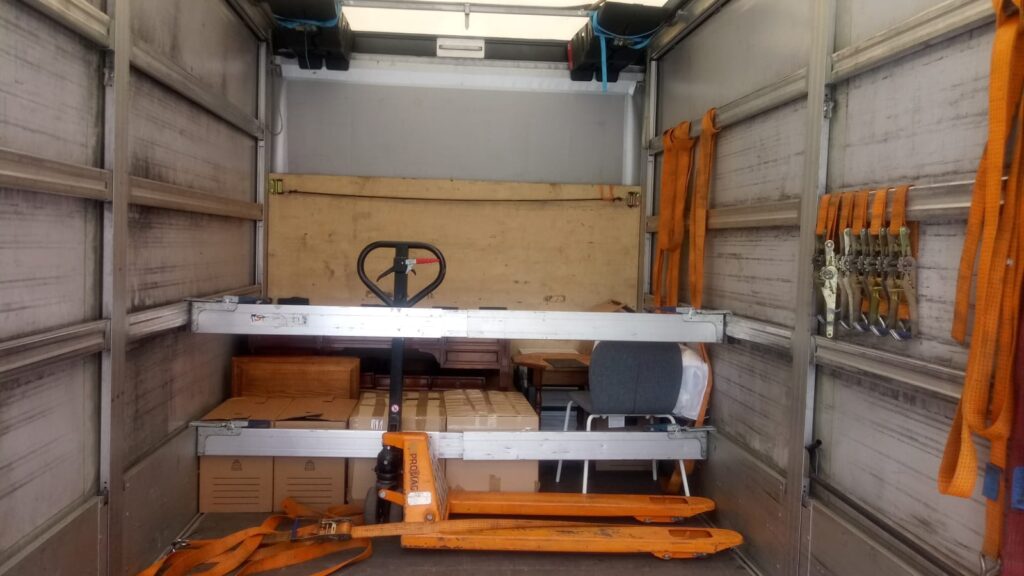
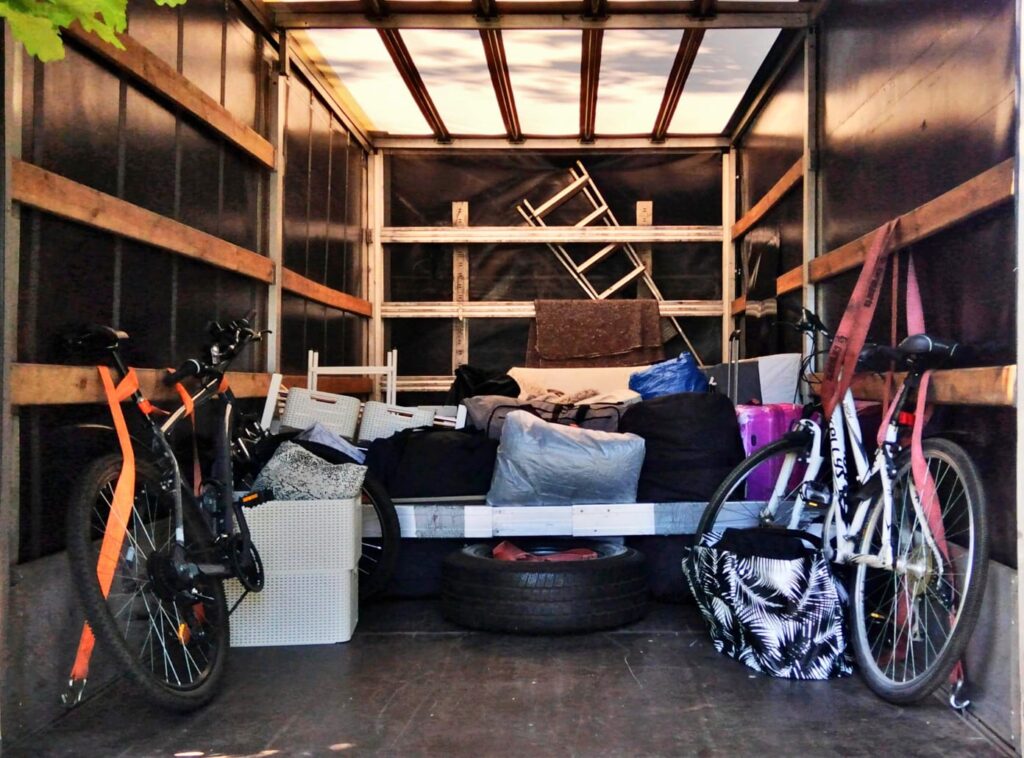
This is where moving from Germany to England becomes real. Not theoretical. Not aspirational. Real. The move stops being a plan on paper and becomes a sofa, a bed frame, six kitchen boxes, two bicycles, a television, a desk, a dozen awkward little items, and a growing question about what absolutely needs to come with you.
The truth is simple. Different loads need different solutions.
A student or solo renter moving with essentials may be best served by a man and van option. It is lean, flexible, and often more cost-effective. A couple moving a furnished flat may need more space and more structure. A family carrying a full household, children’s items, appliances, and sentimental pieces usually needs a more carefully managed removals plan.
That is why the transport side should never be guessed. It should be matched to the load.
A practical comparison looks like this:
| Moving profile | Typical load | Best fit |
|---|---|---|
| Student or solo mover | boxes and essentials | man and van |
| One-bedroom flat | furniture and standard household items | medium removals option |
| Family home | multiple rooms, heavy furniture | full removals |
| Premium move | fragile or high-value items | white glove delivery |
When planning the load, ask yourself a few direct questions:
- What needs to arrive immediately?
- What is heavy, awkward, or fragile?
- What no longer deserves space in the van?
- What could be packed more securely with professional help?
Those questions sound simple, but they do serious work. They separate emotional clutter from practical necessity. They also help you avoid one of the classic moving mistakes: paying international transport rates for items you do not really want, use, or need.
There is also a hidden cost in underestimating awkward items. A wardrobe, dining table, office chair, screen, or bike can distort the whole shape of a load. What looks manageable on a list can become surprisingly bulky in the real world. That is why experienced movers do not judge a relocation only by item count. They think about volume, weight, fragility, and access all at once.
A useful way to think about household goods is to divide them into four simple categories:
- Immediate essentials such as clothes, chargers, work gear, and first-week basics
- Core household furniture such as beds, sofas, tables, wardrobes, and storage pieces
- Fragile or premium items such as mirrors, artwork, glass, electronics, and designer furniture
- Question-mark items that may not be worth moving once cost and effort are considered
This is exactly where VANonsite services become useful in a natural way. Furniture Removals fit bulky items. Home Removals work well for full household relocations. Packing Service can save hours and reduce breakage risk. White Glove Delivery makes more sense for fragile, premium, or high-value pieces.
If you are moving a lighter load, a man and van solution can be a sharp choice. It works especially well for students, solo movers, staged relocations, or anyone sending essentials first. If you are moving a fuller home, the logic changes. A larger removals setup usually creates better value because it protects timing, reduces handling mistakes, and gives heavier items the space they actually need.
The emotional side of this matters too. Arriving in England without the right essentials, or finding that your fragile items were packed badly, can sour the first days of an otherwise exciting move. Smart transport planning protects more than furniture. It protects your landing.
The right moving plan does not just protect furniture. It protects your arrival. If your essentials are easier to find, your fragile items are better packed, and the load is matched to the correct vehicle size, the first days in England feel dramatically lighter.
Customs Rules When Moving from Germany to England
Customs is one of the biggest reasons post-Brexit moves feel different. It is also one of the easiest areas to underestimate.
England is outside the EU customs union, which means personal belongings and household goods need a stronger customs story than they once did. Depending on your circumstances, some belongings may qualify for Transfer of Residence relief, but that does not remove the need for proper planning.
At a minimum, customs-friendly moves rely on four things:
- a detailed inventory list
- consistent information across documents
- clear proof of the move itself
- timing that makes sense in relation to your relocation
A relocation is not the same as sending parcels. Household moves need a stronger customs story and better paperwork. The more clearly your documents explain what is being moved and why, the easier the process usually becomes.
That is why inventory matters so much. Instead of vague descriptions, aim for clearer entries. Not “household items,” but “4 living room boxes, coffee table, floor lamp, bookshelves.” That level of detail creates less friction and gives customs a cleaner picture of the load.
It also helps to think about customs as a narrative, not only a formality. Your documents should tell one clear story: who is moving, from where, to where, why the move is happening, and what belongings are part of that relocation. When the paperwork tells that story cleanly, the process feels more coherent. When it does not, the risk of delays rises.
A strong customs setup usually benefits from these habits:
- using specific descriptions instead of vague categories
- making sure names and addresses match across documents
- avoiding last-minute changes that create inconsistency
- separating what travels with you from what travels in the main load
Many people also underestimate how emotionally draining customs friction can be. It is not only about delay. It is about uncertainty. When a move is already carrying enough pressure, uncertainty is often the heaviest part. That is why customs preparation is worth far more than the time it takes.
There is another practical truth here: a proper international move needs a removals partner that understands the difference between local transport and cross-border logistics. That experience matters because customs-sensitive moves do not reward guesswork. They reward clarity, timing, and consistency.
If you rush this section, delays are far more likely. If you handle it early, the move feels calmer, cleaner, and far easier to trust.
Moving Pets from Germany to England
For many people, a move is not complete unless the pet comes too. That makes this one of the most emotionally loaded parts of the relocation. A pet is not a box to schedule or a chair to wrap. A pet is routine, attachment, trust, and daily comfort. That is exactly why this part of the move deserves extra care.
Moving pets from Germany to England requires careful timing and exact preparation. The rules are especially important for dogs, cats, and ferrets. Microchipping, rabies vaccination, and travel documents all matter. If even one part is missing or mistimed, the journey can become stressful very quickly.
This is not a section to improvise. It is a section to plan early.
Before travel, make sure you check:
- whether your pet is microchipped correctly
- whether the rabies vaccination is valid and timed properly
- whether the travel document or animal health paperwork is complete
- whether the route into Great Britain follows the official rules
Those four points may look simple, but together they form the spine of the journey. When one of them is missed, the rest of the move can start to feel shaky. That is why pet planning should sit alongside visa planning and customs planning, not behind them.
It also helps to think about the move from the animal’s perspective. Long travel, changes in routine, new smells, new sounds, and a new home can all create pressure. The smoother the journey, the calmer the first days tend to be. That means practical details matter more than ever.
A strong pet-moving plan usually includes:
- an early check of vaccination dates and document validity
- a travel routine that keeps the pet as calm as possible
- easy access to food, water, familiar items, and medication if needed
- a clear arrival plan so the animal is not dropped into chaos
If your pet is anxious, older, or has medical needs, that preparation becomes even more important. You do not want moving day to be the moment you realise a medication note, feeding plan, or travel detail was forgotten.
The first 24 hours after arrival matter too. A pet that lands in a calm, predictable environment usually settles faster than one that arrives into noise, open boxes, and confusion. This is one more reason why smart packing helps. If the human side of the move is less chaotic, the animal side usually becomes easier as well.
When a pet is involved, the move becomes more than a logistics task. It becomes a responsibility layered with emotion. That is why the safest route is to use official UK guidance and build the pet plan well before the removals date.


First Week After Arrival in England
The first week after arrival often decides how the whole move feels in hindsight. If those early days are scattered, tired, and disorganised, even a successful relocation can feel heavier than it should. If they are planned, the move begins to settle into real life much faster.
This is where many people make a subtle mistake. They plan the route to England in detail, then treat the first week almost as an afterthought. In practice, that week is the bridge between transport and real life. It is where the move either starts to feel grounded or continues to feel uncertain.
Your first priorities should usually include:
- registering with a GP
- setting up healthcare basics
- organising a bank account and mobile phone
- sorting transport and local essentials
- keeping important documents close in the first week
This is also why your essentials bag matters so much. You should not need to unpack your full load to find medicine, chargers, first-week clothing, identity papers, or housing documents.
A useful mental split is this:
- First-night essentials cover what you need in the first 12 hours.
- First-week essentials cover what you need in the first 3 to 7 days.
That one distinction makes arrival feel more manageable. Instead of living out of chaos, you create a softer landing.
It can also help to think in terms of three small first-week goals:
- Function
Make daily life work quickly. That means healthcare basics, phone access, payment methods, transport, and enough unpacked essentials to live comfortably. - Clarity
Keep documents, addresses, booking details, and key contacts easy to reach. The first week becomes far easier when you are not hunting through bags or boxes for basic information. - Stability
Create a calmer environment early. Make the bed. Unpack a few core items. Set up what you use every day. Small acts of order make a big emotional difference.
The first week is also when people often realise the value of separating the move into layers. Your full household load may still need time to settle into place, but your daily life should not have to wait for every last box. This is why good removals planning protects more than the journey itself. It protects the beginning of life on the other side.
If you have children, this week matters even more. If you have a pet, it matters more again. The calmer your environment, the faster everyone usually settles. In that sense, the first week is not only about tasks. It is about atmosphere.
One smart trick is to decide before the move which five things will make England feel functional fastest. For one person that may be a working phone, clean clothes, a kettle, medication, and transport access. For another it may be the bed, the laptop setup, school items, pet supplies, and a local grocery plan. That tiny bit of forethought often saves a surprising amount of strain.
A well-handled first week does not mean everything is perfect. It means the essentials are working, the pressure is lower, and the new place starts to feel liveable rather than temporary. That shift is powerful. It is when the move stops being just a relocation and starts becoming a new chapter.
How Much Does Moving from Germany to England Cost?
This is one of the most practical questions in the whole process, and for good reason. People do not just want inspiration when they search for moving from Germany to England. They want numbers, logic, and a realistic sense of what will make the final bill rise or fall.
The honest answer is that the final cost depends on more than just mileage. Distance matters, of course, but it is only one part of the picture. In practice, moving costs are shaped by the full character of the move: how much you are taking, how complex the customs side is, how accessible the properties are, and whether the service needs to be fast, flexible, or highly protective.
When moving from Germany to England, the main cost drivers usually include:
- distance and route
- volume and weight of the load
- customs and documentation complexity
- access issues such as stairs or narrow entrances
- packing support
- premium handling for valuable or fragile items
- urgency or last-minute timing
That list matters because it shows why two seemingly similar moves can land in very different price ranges. A compact student move from Berlin to London may cost far less than a family relocation from Munich to a village in southern England, even if the distance difference looks modest on paper. Volume, access, and complexity often carry just as much weight as geography.
The biggest cost mistake people make is focusing only on the cheapest starting figure. A low headline price can become far less attractive if the van is too small, packing is rushed, access is difficult, or premium items are not protected properly. In other words, the cheapest quote is not always the cheapest move.
A better question is this: what service level gives you the best value for the real move you are making?
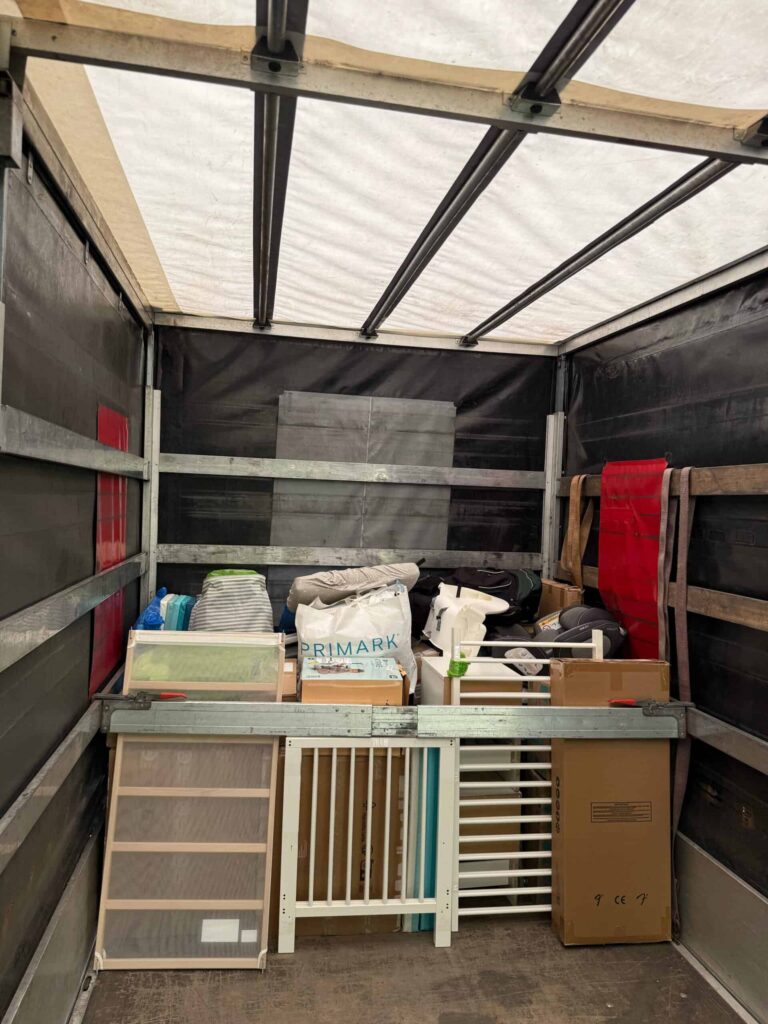
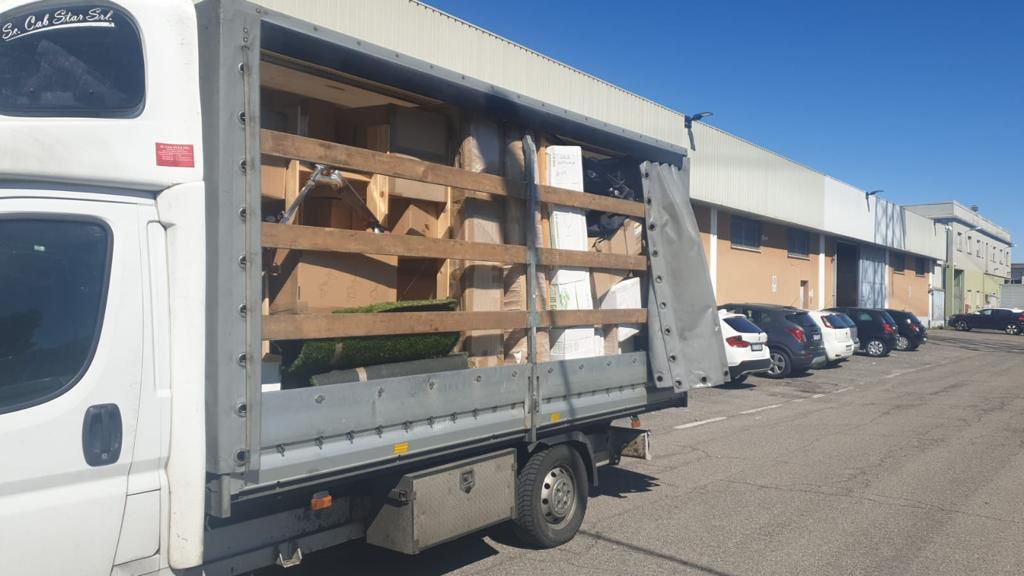
That is where VANonsite vehicle sizes make it easier to match the move to the right scale:
| Service size | Capacity | Weight limit | Best for |
|---|---|---|---|
| Moving One | 1 m3 | 100 kg | urgent essentials, documents |
| Moving Basic | 5 m3 | 300 kg | student move, compact load |
| Moving Medium | 10 m3 | 500 kg | one-room flat, part load |
| Moving Premium | 15 m3 | 1100 kg | one to two-bedroom move |
| Moving Premium Plus | 30 m3 | 3500 kg | larger flat, family move |
| Moving Full House XXL | 90 m3 | 20000 kg | full house relocation |
This table is more than a size chart. It is a decision tool. It helps you avoid one of the classic moving traps: either paying for far more vehicle space than you need or underestimating the load and ending up with a stressed, cramped, expensive solution.
A simple way to think about it is this:
- Moving One works when speed matters most and the load is tiny
- Moving Basic makes sense for students or very lean room moves
- Moving Medium gives breathing room for a modest flat or staged relocation
- Moving Premium is often the sweet spot for one to two-bedroom homes
- Moving Premium Plus suits larger flats, heavier furniture, and more complex family loads
- Moving Full House XXL is for serious household relocations where underestimating space would be a costly mistake
This matters because the difference between a compact student move and a full family relocation can be substantial. In real life, the cost gap can easily stretch from a lean budget-friendly move into a far larger investment once furniture, stairs, customs paperwork, and packing support enter the picture.
It also helps to think about cost in layers, not just as one total number:
- Transport cost linked to distance, route, and vehicle size
- Handling cost linked to stairs, access, awkward furniture, or difficult loading conditions
- Protection cost linked to packing support or fragile-item handling
- Timing cost linked to urgency, limited availability, or last-minute scheduling
- Complexity cost linked to customs readiness and document quality
Once you see the move this way, pricing becomes easier to understand. It also becomes easier to control. Good preparation does not only lower stress. It often lowers cost too.
Some people reduce costs by moving in stages. They send immediate essentials first, then move the larger household load later once housing or paperwork feels fully secure. That can work especially well for solo movers, students, or people with uncertain start dates. Others save more by doing the whole move in one structured trip, especially when the household load is larger and repeated handling would only create more cost.
The smartest strategy is not always the cheapest on paper. It is the one that protects the move from expensive mistakes.



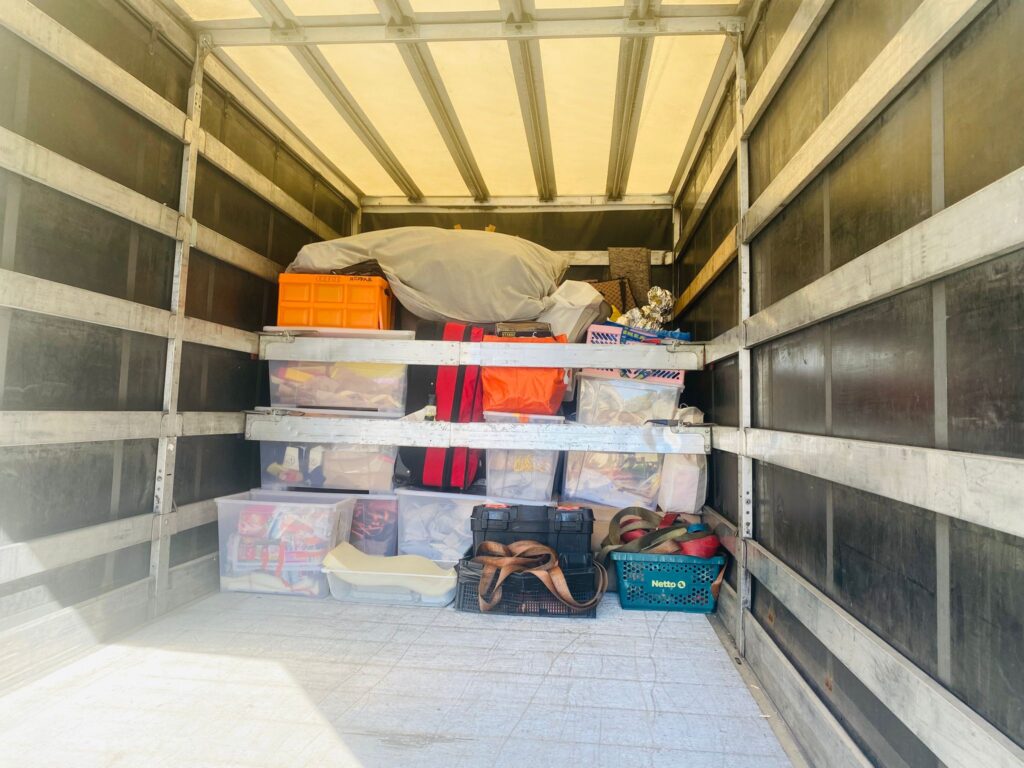
Best Moving Option: Man and Van or Full-Service Removals?
This decision shapes both your budget and your stress level. It also shapes how much of the move you carry on your own shoulders.
A man and van service is often ideal for smaller or staged moves. It offers flexibility, speed, and tighter cost control. Full-service removals, by contrast, make more sense when the move is larger, heavier, more fragile, or simply too complex to run like a light transport job.
The difference is not just about size. It is about how much structure the move needs.
A simple comparison looks like this:
| Option | Best for | Main advantage |
|---|---|---|
| man and van | smaller or staged moves | flexibility, speed, cost control |
| full-service removals | family or full home moves | more structure, less stress |
| white glove delivery | premium items | extra care and presentation |
A man and van move can be a brilliant solution when the relocation is relatively lean. It works especially well for students, one-room moves, essentials-first relocations, and people who want a fast, direct, more budget-conscious option. If the load is clear, compact, and not too fragile, man and van often feels refreshingly efficient.
Full-service removals begin to shine when the move grows in complexity. If you are moving a family home, coordinating a tighter schedule, dealing with bulkier furniture, or trying to avoid the grind of doing every single part yourself, more structure often becomes better value. It creates more protection, more predictability, and less strain on the people making the move.
White glove delivery belongs in its own category. It makes the most sense for fragile, premium, sentimental, or designer items where presentation and care matter as much as transport itself. For some moves, that service is not a luxury. It is a safeguard.
If you are unsure which option fits, ask yourself these practical questions:
- Is the move small enough to stay lean without becoming stressful?
- Do you need flexibility more than structure?
- Are you moving high-value or fragile pieces?
- Would repeated lifting, packing, and handling create more risk than savings?
- Is this a staged relocation or a full household move?
Those questions usually make the answer much clearer.
If you are moving one room of essentials, man and van may be exactly the right fit. If you are transporting a full home, fragile furniture, and a tighter family timeline, a larger removals package is often worth every penny because it removes friction at every step.
Another way to think about it is emotional cost. A very lean service can save money when the move is simple. But if the move is more complex, too little support can create extra pressure, repeat handling, delays, and unnecessary exhaustion. At that point, a fuller removals setup often feels less like an upgrade and more like the correct tool for the job.
VANonsite can support both lean man and van relocations and larger full-service cross-border moves, which makes the decision far easier. You do not have to force your move into the wrong shape. The smarter choice is the one that matches the real size, weight, and emotional load of the move itself.
Common Mistakes to Avoid When Moving from Germany to England
Some moving mistakes are loud and dramatic. Most are not. Most arrive quietly, then grow into bigger problems when you least need them. That is exactly what makes them dangerous. They often look harmless at the beginning, almost small enough to ignore. Then they start pulling at the rest of the move, adding delay here, stress there, and cost where you were hoping for control.
The most common mistakes include:
- leaving customs too late
- packing without a clear inventory
- choosing the wrong van size
- booking too early before visa clarity
- forgetting pet rules
- arriving without a first-week plan
- treating an international move like a local move
Each of these looks manageable in isolation. Together, they can turn a promising move into a stressful one. This is why structured planning matters so much. It protects the move from unnecessary friction and keeps the process from becoming reactive.
Leaving customs too late is one of the costliest mistakes because customs has a way of staying invisible until suddenly it is the only thing in the room. If your paperwork is vague, inconsistent, or rushed, it can create avoidable delays and uncertainty at exactly the moment when you want the move to feel most stable.
Packing without a clear inventory creates a double problem. First, it weakens the customs side of the relocation. Second, it makes the practical side of moving much harder. Without a solid inventory, you lose visibility. You know less about what is in the van, less about what should arrive first, and less about whether your load actually matches the service you booked.
Choosing the wrong van size sounds like a minor planning error, but in real life it often becomes expensive. A van that is too small can create last-minute reshuffling, repeat transport, or stressful compromises. A van that is too large can push the budget up without giving you meaningful extra value. That is why correct sizing matters far more than people think.
Booking too early before visa clarity is a classic post-Brexit trap. It is easy to understand why people do it. They want momentum, They want a date on the calendar. They want the move to feel real. But if the legal side is not steady yet, early booking can create the wrong kind of pressure. Suddenly the move is chasing the paperwork instead of being built around it.
Forgetting pet rules can turn an already emotional move into a painful one very quickly. When people focus on furniture, routes, and documents for themselves, the animal side of the relocation can accidentally slip too far down the list. That is why pet planning should never sit in a separate mental box. It belongs inside the core move timeline.
Arriving without a first-week plan is one of the quietest mistakes and one of the most draining. Nothing dramatic may happen on paper, yet the first days feel harder than they need to. If you cannot quickly access medication, documents, chargers, child essentials, or pet supplies, the emotional cost rises fast.
Treating an international move like a local move sits underneath many of the other mistakes. It creates the wrong expectations from the start. Local moves can tolerate more improvisation. Cross-border relocations after Brexit usually cannot. They need more structure, more foresight, and more respect for the parts you do not physically see, such as customs or status timing.
A useful way to think about mistakes is not in terms of blame, but in terms of friction. Every weak decision adds friction. Every strong decision removes it. The smoother moves are rarely smoother because the people making them are lucky. They are smoother because the invisible pressure points were handled early.
Why People Choose VANonsite for Germany to England Moves
When people book a removals company for an international move, they are not just paying for transport. They are paying for trust, timing, and control. In a move that already carries uncertainty, that matters enormously.
That is why people choose VANonsite for Germany to England moves. The service is built around what movers actually need:
- secure European removals
- GPS tracking for every load
- flexible vehicle sizes
- support for furniture, home, student, office, and urgent moves
- practical options from man and van to full removals
- careful handling and fast transport
That combination matters. GPS tracking brings reassurance. Flexible sizing helps protect budgets. Broader service coverage means you can move one room, a flat, a family home, or selected premium items without feeling pushed into a rigid model.
What makes this especially valuable is that international moves rarely fit a neat template. One person may need a man and van solution for a student move with strict timing and a light load. Another may need a larger household setup with structured scheduling, careful handling, and more breathing room for a family relocation. Another may only need selected furniture or fragile premium items transported with extra care. A removals partner is most useful when it can handle those different shapes without making the customer feel boxed in.
VANonsite also fits naturally into the emotional reality of this kind of move. People are rarely just moving objects. They are moving life stages, routines, ambitions, and pressure. They want the logistics side to feel calmer, not heavier. That is why visibility matters, that is why careful handling matters. That is why service flexibility matters.
GPS tracking for every load adds more than convenience. It adds confidence. The ability to know where your belongings are during a cross-border move changes the emotional temperature of the whole journey. It turns uncertainty into something more visible and more manageable.
Flexible vehicle sizes matter for the same reason. They help match the service to the real move, not to a generic assumption. That protects the budget, but it also protects the planning logic. A customer with a compact load should not be forced into a bloated solution. A customer with a fuller house move should not be squeezed into an option that is too lean.
Careful handling matters because damage risk is not just financial. It is emotional too. People remember the first broken item more vividly than a smooth three-day process. Good handling protects furniture, but it also protects trust.
Fast transport matters because prolonged limbo is exhausting. The longer your life feels split between two countries, the more draining the move becomes. Strong timing shortens that limbo and helps the new chapter begin with more momentum.
In a move that already carries emotional pressure, that kind of clarity is worth a great deal. It is one reason the right removals partner can change not just the logistics of the move, but the feel of it.
Final Checklist Before You Move
Before moving day arrives, run through a final calm check. It only takes minutes, but it can save hours of stress. This is not a formality. It is the final moment where small details stop becoming loose ends and start becoming confidence.
Make sure you have:
- passport ready
- visa route confirmed if needed
- accommodation arranged
- customs documents prepared
- inventory complete
- removals booked
- valuables packed separately
- first-night essentials ready
- pet documents ready if relevant
That list is the core, but a really strong final check goes one step further. Ask yourself a few plain, practical questions before moving day begins:
- Do you know exactly which bag travels with you and which items go in the main load?
- Do you know where your passport, tenancy details, and key booking confirmations are right now?
- Do you have enough essentials for the first 24 hours without opening every box?
- Do you know what has to be handled first when you arrive in England?
These questions sound basic, yet they catch some of the most frustrating last-minute gaps. A move rarely falls apart because of one dramatic event. More often, it gets heavier because of ten small oversights that should have been caught in a calm final review.
It also helps to split your last check into three layers:
- Documents
Passport, visa paperwork if needed, housing details, customs material, pet documents, and key confirmations. - Essentials
Medication, chargers, valuables, first-night clothing, toiletries, snacks, and the daily items you will actually need before the main load is fully unpacked. - Move-day clarity
Know the collection time, the delivery plan, the key contact numbers, and what should happen first if anything changes.
That kind of preparation lowers emotional pressure immediately. Instead of moving day feeling frantic, it starts to feel sharper and more controlled.
A good checklist does more than prevent mistakes. It lowers the emotional temperature of the move. It also turns uncertainty into action, which is one of the best gifts you can give yourself before a major relocation.
FAQ
Can I move from Germany to England after Brexit?
Yes. Moving from Germany to England after Brexit is still completely possible, but the route is more structured than it used to be. Immigration rules, customs planning, and document order matter more now. The move is still realistic. It simply rewards better planning.
Do I need a visa to move from Germany to England?
That depends on your nationality and the reason for the move. British and Irish citizens have a different route from many other people moving for work, study, or family reasons. If your position is unclear, confirm the visa side before committing to a full household move.
Can I take my furniture from Germany to England?
Yes. However, furniture and household goods should be supported by a strong inventory and a proper customs plan. The more clearly the load is documented, the smoother both transport and customs tend to be.
Do I pay customs when moving to England?
Some belongings may qualify for relief depending on the circumstances, but customs planning still matters. It is safest to treat this as a core part of the move rather than a detail to handle later.
Is a man and van enough for moving from Germany to England?
For smaller or staged relocations, yes. For larger homes or more fragile loads, full removals support is often the better option. The right answer depends on the size, weight, fragility, and complexity of the move.
How long does it take to organise a move from Germany to England?
Simple moves can come together quickly, but a smoother move usually benefits from planning several weeks ahead, especially if visas, housing, pets, or full household loads are involved. The more moving parts you have, the more valuable early sequencing becomes.
What should I keep with me on moving day?
Keep your passport, visa papers, chargers, medication, valuables, first-night clothing, and the documents you may need in the first 24 to 72 hours. These items should stay with you, not disappear into the main load.
Can I move pets from Germany to England?
Yes, but the rules need to be followed carefully. Microchip, rabies vaccination, and the correct travel documents all matter. Pet planning should start early, not in the final few days.
What is the cheapest way to handle moving from Germany to England?
The cheapest route is often a smaller man and van move with only the essentials. However, the cheapest option on paper is not always the best value if it creates repeat handling, delays, or avoidable stress. Good value comes from matching the service to the real move.
Is it better to move everything at once or in stages?
That depends on your timeline, housing certainty, budget, and visa clarity. For some people, moving in stages reduces risk and spreads the cost. For others, a single well-planned move is more efficient and less draining.
Ready to Make the Move Feel Easier?
Moving from Germany to England is more complex than it used to be, but it does not have to feel chaotic. With the right documents, a smart timeline, and a removals plan that actually fits the size and shape of your life, the move becomes far more manageable.
That is the real goal. Not just getting your belongings across Europe, but arriving with more calm, more control, and fewer avoidable problems waiting for you on the other side.
Whether you are relocating a few essentials, a student setup, or a full family household, VANonsite helps turn a complicated international move into something calmer, safer, and easier to control. From careful packing to secure transport and GPS tracked delivery, the service is built for people who want clarity, not chaos.
If you want the move to feel sharper, smoother, and far less stressful, the smartest next step is to choose a service that matches the real shape of your relocation. That might mean a fast man and van solution, a larger structured removals setup, or extra care for fragile and high-value items. What matters is fit. When the fit is right, the whole move gets easier.