
International removals to Croatia start with three decisions: what must travel, how much flexibility you have on dates, and where the vehicle can actually unload. A delivery to a Zagreb apartment, a coastal house or an island address needs a different access plan. This guide helps you compare dedicated and shared transport, prepare an itemised inventory and separate transport arrangements from customs and residence requirements. It covers moves from different European origins; the UK-specific paperwork is relevant only when your route crosses the applicable customs border.
Before requesting a price: list the furniture and boxes, give both addresses and describe stairs, lift dimensions and the distance from parking to the door. Include an island destination or a fixed key handover in the notes. VANonsite’s service form sends the calculated price by e-mail. Availability, packing, special handling and any customs representation must be confirmed for your particular move before booking.
Choose your next step:
- Request a route-specific estimate: Removals to Croatia
- Moving from a UK address? Read the House Removals from UK to Croatia guide alongside the official requirements for your circumstances.
Why Croatia for an International Move?
Your reason for moving might be work, family, retirement or a second home. For the removal itself, the useful distinction is the destination address, not a general promise about Croatian living costs. Check whether the property is furnished, when you will receive the keys and which large pieces will fit through its entrance. Zagreb, Split, Dubrovnik and Istria are not interchangeable delivery points: send the exact town and postcode rather than just the region.
Decisions that shape the move:
- What stays and what travels: compare replacement costs with the space, weight and handling needed for your existing furniture.
- Who can receive the goods: identify an available person at the Croatian address if you will arrive separately.
- Property readiness: confirm that renovations, utilities and access arrangements will allow unloading and safe storage indoors.
- Origin and route: state the country of collection. Customs requirements cannot be inferred from your nationality alone.
Destination checks:
- City apartment: measure the lift door and cabin, note the floor and check the building’s rules for loading and lift use.
- Coastal address: photograph the final approach, parking area and any pedestrian-only section. A street address alone may not show a long carry.
- Rural property: check gates, drive width, turning space and the surface between the vehicle and entrance.
- Island property: provide the island and final address, not only the mainland ferry port. Confirm the crossing, receiving arrangements and last-leg access before agreeing delivery dates.
Planning a retirement move? The Retiring to Croatia from the UK guide covers a different set of planning questions from the transport checklist below.
Service Types for International Removals
Compare services using the actual inventory and date constraints. A bedroom count is a starting description, not a reliable measure of the required vehicle space or payload. Photograph bulky items and give their dimensions, including packaging where relevant.
Full Load (Dedicated Vehicle)
- Best when: you want to discuss a dedicated vehicle or have a delivery constraint that a shared route may not accommodate. Check availability against the exact addresses and inventory.
- Confirm in the offer: whether the vehicle is dedicated to your consignment, the agreed loading capacity and whether any transfer or additional handling is planned.
- Transit: request a route-specific collection and delivery plan. Do not treat a generic number of driving days as a confirmed door-to-door appointment.
- Useful distinction: dedicated transport can give more control over routing, but traffic, access, crossings and customs may still affect the schedule.
- Consider: compare the total written scope, not just the headline price. A larger vehicle is of little help if it cannot approach either property.
Part Load / Groupage
- Best when: your shipment does not require a dedicated vehicle and you can accept an agreed collection and delivery window.
- How it works: consignments share vehicle space on a planned route. The price also depends on weight, access and handling, not simply cubic metres.
- Delivery window: ask which dates are provisional and when they become confirmed. Other collections and deliveries may affect the sequence.
- Trade-off: shared transport may be economical when there is a suitable route. Compare the offer for your dates rather than assuming it is always cheaper.
- Plan around essentials: keep first-night belongings with you if the delivery window is wider than your travel dates. Read the Part Load Services guide before choosing shared transport.
Furniture‑Only & Special Care
- Best when: you are moving selected furniture or items needing a handling assessment, rather than an entire household. Identify pianos, stone tops, artwork and unusually heavy equipment separately.
- Prepare for assessment: provide dimensions, approximate weight, photographs and the route through both buildings. Ask which protection, crew and disassembly tasks are included.
- Room placement: specify the final room and any stairs or restricted turns. Specialist equipment and reassembly are not implied by a standard delivery request. See Furniture Removals to Croatia for item-level preparation.
Comparison Table: What’s Best for You?
| Service Type | Best For | Load Basis | Transit Plan | Delivery | Price Basis | Date Needs |
|---|---|---|---|---|---|---|
| Full Load | Dedicated route request | Item list | Route-specific | Confirm slot | Written scope | State fixed dates |
| Part Load / Groupage | Shared transport | Space and weight | Shared route | Agreed window | Available route | Window flexibility |
| Furniture-Only | Selected items | Sizes and weight | Item-specific | Check access | Handling scope | Agreed dates |
Packing, storage, specialist lifting and additional cover need a separate scope check. Do not assume that a local warehouse, hoist or custom crate is available or included because it appears in a general moving guide.
End‑to‑End Process: How International Removals to Croatia Work
From inventory to delivery:
- Describe the shipment: send an item list, box count, dimensions of bulky pieces and clear access notes. Ask whether further photographs or an assessment are needed.
- Review the offer: distinguish the calculated estimate from the confirmed booking. Check the service type, addresses, dates, labour, packing and exclusions in writing.
- Prepare the properties: agree lawful parking and building access with the relevant owners or authorities. Allocate responsibility for permits and any island crossing.
- Pack and record: agree who supplies materials and packs each item. Keep numbered boxes and the item list consistent; update the list if the load changes.
- Before loading: separate documents and belongings travelling with you. Identify fragile and priority items and record existing damage before they enter the vehicle.
- Check the customs route: where declarations are required, identify the responsible representative and required documents before collection. Booking a mover is not approval of a relief application.
- During transport: keep the agreed contact channel available. Confirm how progress updates will be provided rather than assuming every shipment includes a live tracking link.
- If the plan changes: clarify the effect of inspections, crossing disruption or missed access on delivery and any additional costs before accepting a revised arrangement.
- At delivery: check the inventory and visible condition with the receiving person. Room placement, reassembly, unpacking and waste removal must match the booked scope.
- After delivery: retain the transport documents and condition photographs. Follow the stated procedure and deadlines if anything is missing or damaged.
Check these before collection:
- Written liability or insurance terms, including limits, exclusions, owner-packed items and the reporting procedure.
- Access details (parking permits, narrow streets, lift size, stair counts)
- Special handling notes (antiques, artwork, pianos, glass/marble crating)
- Restricted-item acceptance for batteries, liquids and powered tools. Do not dismantle or drain equipment without the appropriate instructions.
- Photos/serial numbers for high‑value pieces
- “Essentials box” and a clearly marked “Do Not Pack” bag
- A fallback receiving arrangement if keys are delayed; any storage location, duration and redelivery cost must be agreed separately.
Why choose Van On Site for an international move to Croatia
Choose VANonsite for a move planned around the consignment rather than a generic house-size label. A sofa’s dimensions, a lift’s usable space and the distance from parking to your door are practical details that affect the vehicle and handling plan. For Croatia, add any island crossing or restricted final approach to that information. Our Removals to Croatia form is the starting point for a calculated e-mail estimate. Describe what needs transporting and which dates cannot change; then check the confirmed scope before booking. The customer reviews below describe individual experiences, not a guarantee of the same timing or inclusions on every route.


Documents, Customs & Compliance (Post‑Brexit aware)
What you need for smooth clearance
Keep personal documents separate from the load
- Carry your valid travel documents with you, not in a removal carton. Your own entry and residence requirements are separate from the transport booking.
- Keep the delivery address, property contact and evidence of access available. Confirm which address or residence evidence the relevant authority requests.
- For a UK-origin move, have origin details available and obtain the route-specific document checklist before collection.
Move/consignment documents
- A numbered inventory describing the goods and values where required. Confirm the authority’s language and format requirements instead of assuming an English list is sufficient.
- Packing list & carton count; photos/serial numbers of high‑value items
- CMR waybill (road freight) or equivalent transport document
- Any authorisation required by the appointed customs representative. Confirm who represents you and which procedure applies; a transport booking alone is not that authorisation.
Residence is a separate process
- Use the Croatian Ministry of the Interior’s guidance for EEA nationals or third-country nationals, as applicable. Different procedures apply; a property deed or removal booking is not a residence permit.
- OIB: confirm the Croatian personal identification number requirements with the relevant authority. Do not assume the mover applies for it on your behalf.
Personal administration, not a universal customs checklist
- Check health-insurance evidence with the authority handling your residence application. Transporting your household does not establish healthcare entitlement.
- Income, savings and purpose-of-stay evidence may belong to a residence application. Check your applicable procedure before sending financial documents to anyone.
Duty/tax relief on household goods (typical criteria)
- For transfers from a third country, Croatian Customs describes a normal requirement of 12 consecutive months outside the Union before moving. See its returnees and immigrants guidance; relief is not automatic.
- Qualifying personal property generally must have been owned and used for at least six months before the move and remain intended for the same personal use. Exceptions require the authority’s assessment.
- The relevant customs office decides the application and evidence required. Confirm import timing and any later restrictions on lending, hiring or selling the goods before relying on relief.
- Alcohol, tobacco, commercial transport and business equipment are among the exclusions described by Croatian Customs. A shipment is not duty-free merely because the cartons contain household belongings.
Restricted/prohibited highlights
- Flag weapons, ammunition and hazardous chemicals separately; check the applicable legal restrictions and carrier acceptance before packing anything of this kind.
- Ask about plants, soil, food, aerosols, gas cylinders and paint or solvents before adding them to the inventory. Import requirements and transport restrictions are separate checks.
- Keep essential medicines with you. Check their destination rules and carry any required supporting documentation; original packaging alone does not establish permission to import them.
If you’re also importing a car (summary)
- Treat a vehicle as a separate import and registration project, not as another household carton. Keep ownership and registration information available for the applicable procedure.
- Check conformity and inspection requirements with the relevant Croatian authority before committing to vehicle transport.
- Croatian Customs distinguishes potential import duty/VAT relief from the separate special motor-vehicle tax. Do not assume household-goods relief removes every vehicle charge; obtain an assessment for the particular car.
Pets (if applicable)
- For travel from Great Britain, follow the current GOV.UK pet travel guidance and consult your vet about microchipping, rabies vaccination and an animal health certificate. An EU pet passport is not a substitute for a certificate for a pet owner resident in Great Britain.
- Check the pet’s route and carrier rules separately from the household shipment. Northern Ireland and other origins can have different arrangements; do not put an animal in the removal load.
Quick tips that save days
- Keep digital + paper copies; name files clearly
- Label every box; match labels to the inventory; mark Do Not Load items
- Get the applicable document checklist early and agree a review deadline before collection. Do not assume paperwork sent a week ahead has already been cleared by customs.
- Declare batteries, liquids and powered equipment for an acceptance check. Follow manufacturer and transport instructions rather than applying a blanket rule to remove every battery or drain every machine.
Simple compliance timeline
- Before agreeing dates: identify your residence procedure and any customs-relief application. Ask the responsible authority or representative which evidence and lead times apply.
- Before collection: finalise the inventory and confirm the requested address evidence and representation documents. Report additions instead of loading unlisted items.
- Move day: carry passports, permits, high‑value list and essentials bag
Helpful deep dives:
- Paperwork steps & checklists → Complete Relocation Guide
- Request an e-mail estimate and describe your route: Removals to Croatia. Confirm the required customs responsibilities in the written service scope.

Packing Like a Pro (or Let Pros Handle It)
Packing and loading are different tasks. Long-distance road transport exposes items to vibration and pressure from neighbouring cartons, while a long carry or staircase adds handling risks. Match protection to the item’s finish, weight and construction. A well-packed box still needs an accurate label and inventory; wrapping does not itself satisfy a customs requirement.
Do/Don’t Checklist
Do:
- Use double‑wall cartons and furniture blankets; add corner/edge protectors.
- Assess glass, stone and artwork individually: use a suitable protective system and seek specialist advice where a crate or frame is needed. Do not assume ordinary cartons will protect a heavy tabletop.
- Colour‑code labels by room; add a unique box ID that matches your inventory.
- Seal with professional tape on all seams (H‑tape method) and reinforce bottoms.
- Photograph high‑value items before packing for condition evidence.
Don’t:
- Overfill cartons or leave empty voids (use paper/foam to fill gaps).
- Mix heavy + fragile in the same box.
- Tape directly on polished/painted finishes – use wrap first.
- Add liquids, aerosols, fuel-containing equipment or food only after the relevant acceptance and restrictions checks. Do not conceal them inside a box labelled household goods.
- Assume every device uses the same battery procedure. Declare the battery type and follow the agreed instructions; embedded batteries may require specialist handling rather than removal.
Packing Materials – Quick Reference
| Material | Best Use | Avoid/Notes |
|---|---|---|
| Double-wall cartons | Books and household items | Observe weight rating |
| Wardrobe boxes | Hanging clothes | Do not overload the rail |
| Divided cartons | Glassware and crockery | Protect each piece and fill voids |
| Cushioning and paper | Compatible fragile surfaces | Check finish compatibility |
| Furniture blankets | Furniture surface protection | Keep clean and secure without adhesive on finishes |
| Corner protectors | Compatible frames and edges | Use the correct fit |
| Stretch film | Bundling over suitable protection | Do not apply directly to sensitive finishes |
| Specialist crates | Individually assessed fragile or heavy items | Protection and labour require agreement |
| Moisture-control materials | Where recommended for the item | Not a substitute for dry packing or storage |
Room‑by‑Room Pro Tips
- Kitchen: Use dish barrels with dividers; wrap each glass/plate; pack knives in guards or roll in card; label This Side Up.
- Living room: Wrap sofas and armchairs with blankets + film; TVs in original boxes or custom boxes with corner foam.
- Bedrooms: protect mattresses and keep furniture hardware in labelled bags. Keep those bags with the item record rather than taping adhesive directly to a finished surface.
- Home office: back up data, label cables and follow the manufacturer’s transport instructions for printers and monitors. Removing ink, toner or applying screen film is not suitable for every model.
- Garage/shed: disclose powered tools, fuels and batteries before packing. Follow manufacturer preparation instructions and agree acceptance; do not treat draining a machine as sufficient clearance for transport.
- Artwork & mirrors: protect the face and corners with suitable materials. Avoid adhesive on artwork or glass unless a specialist has specified it; agree protection for valuable or heavy pieces individually.
- Electronics: label leads and remotes, protect the equipment and declare batteries. Follow the specific preparation instructions for the device instead of removing batteries by default.
Labelling & Inventory That Customs Love
- Assign each box a unique ID (e.g., K‑01, BR‑07) and list contents in a spreadsheet.
- Keep a photo inventory for high‑value items; note serial numbers.
- Keep a copy of the inventory accessible outside the shipment. A copy inside a carton cannot be consulted easily at collection, inspection or delivery.
Your Essentials Box (carry with you)
- Passports, permits, meds/prescriptions, chargers, basic tools, kettle/mugs/tea, first‑night linens, and a small cleaning kit.
Prefer help with packing? Include the items and required level of protection in your Removals to Croatia estimate request. Confirm materials, packing labour and any specialist crate as part of the written scope, not an assumed inclusion.

Costs & Pricing – What Affects Your Quote
Two moves with the same approximate cubic volume can require different handling and resources. Weight, collection point, final access and the booked service matter alongside space. Compare like-for-like written offers and identify exclusions. This guide does not publish a universal Croatia price because it would not describe your actual route and load.
Primary factors
- Volume and weight: give dimensions and approximate weights of bulky pieces as well as a box count. The load must fit both usable space and the booked vehicle’s payload.
- Origin and destination: provide both complete addresses, including any island crossing or difficult final approach. A country pair alone is not a priced route.
- Service type: Dedicated Full Load vs. shared Part Load/Groupage.
- Access and handling: describe stairs, usable lift space, carry distance and any special equipment that needs assessment. Establish who arranges lawful parking.
- Date constraints: distinguish preferred dates from a hard handover deadline. Availability for a particular route must be checked, not inferred from the season.
- Additional tasks: identify packing, disassembly, storage or specialist handling explicitly, with their availability and costs confirmed in the offer.
- Liability and insurance: compare the actual terms, limits, exclusions and any additional cover cost. Do not equate carrier liability with an unrestricted contents policy.
Information that makes offers comparable:
| Factor | What to compare | Information to provide |
|---|---|---|
| Volume and weight | Space and payload required | Item list, box count and bulky dimensions |
| Service type | Dedicated or suitable shared route | Fixed dates versus acceptable windows |
| Origin and destination | Actual route and final leg | Complete addresses and any island destination |
| Access | Crew and handling requirements | Floor, lift sizes and carry distance |
| Date constraints | Availability for the requested period | Key dates and genuinely flexible alternatives |
| Packing | Labour, materials and owner-packed items | Which pieces need assistance |
| Storage | Facility, duration and redelivery terms | Likely delay and receiving fallback |
| Special handling | Assessed equipment and protection | Photos, dimensions and approximate weights |
| Liability and insurance | Limits, exclusions and additional cover | Declared values and packing responsibility |
| Delivery flexibility | Provisional versus confirmed dates | Receiving contact and building access slots |
Example scenarios (illustrative only):
| Scenario | Option to assess | Decision to check |
|---|---|---|
| Small household, flexible dates | Part load | Does the available route window fit your plans? |
| Larger household, fixed handover | Dedicated transport | Can the required dates, capacity and access be confirmed? |
| Selected fragile furniture | Item-specific handling | What protection, crew and equipment are included? |
Savings playbook (quick wins):
- Reduce the load before requesting a price, then keep the submitted inventory accurate. Changes after booking can affect space, labour and cost.
- Give a genuine date range if you can be flexible. Request the available options instead of assuming a shared route will fit any week.
- Combine addresses (one pickup/one drop) where possible to reduce handling.
- Reserve parking and share access info (stairs, lifts) to minimise labour time.
- Agree packing responsibility: identify owner-packed cartons and any fragile pieces needing help. Check the effect of that arrangement on liability or insurance terms.
- Compare alternative dates when feasible. A saving is only established by the offers for your actual shipment, not a generic off-season promise.
Request a calculated e-mail estimate: Removals to Croatia. Add access, inventory and date constraints in the notes.
Transit Times & Delivery Windows
Agree these timing details before booking:
| Service Type | Transit Basis | Collection Notice | Delivery Window |
|---|---|---|---|
| Full Load (Dedicated) | Exact route and booked scope | Agree confirmation process | Confirm date and access |
| Part Load / Groupage | Available shared route | Agree collection window | Confirm receiving flexibility |
Set a workable contact plan:
- At booking: distinguish confirmed dates from a provisional route window and identify the receiving contact.
- Before collection: agree when the collection window will be confirmed and make parking or building arrangements that depend on it.
- Before delivery: ask how and when the receiving person will be notified. Do not book local labour around an unconfirmed arrival time.
- On the delivery day: keep the agreed phone number available and report any last-minute access problem promptly.
- At the property: ensure the receiving person can open gates or booked access areas. Do not assume the driver has keys or permission to enter.
Factors to include in the schedule:
- Crossings: ferry availability and disruption can change the route. An island delivery also needs a plan for the final leg, not merely arrival at a mainland port.
- Customs, where applicable: document review and release are separate from vehicle travel. Keep any required evidence available and avoid treating a provisional ETA as customs approval.
- Road conditions: traffic, weather and restrictions may affect arrival. Ask what happens if the planned delivery window changes.
- Property access: a pedestrian street, unavailable lift or occupied loading area can prevent the planned unload. Confirm any alternative handling arrangement and its cost in advance.
- Shared routes: other stops can affect delivery order. Plan around the agreed window rather than expecting a dedicated-vehicle schedule.
Pro tips to keep things predictable:
- Reserve parking at both addresses; share gate codes and lift dimensions.
- Keep phones on; respond quickly to scheduler messages.
- If a date cannot change, say so before requesting the service. Dedicated transport is an option to assess, not an automatic guarantee of a fixed appointment.
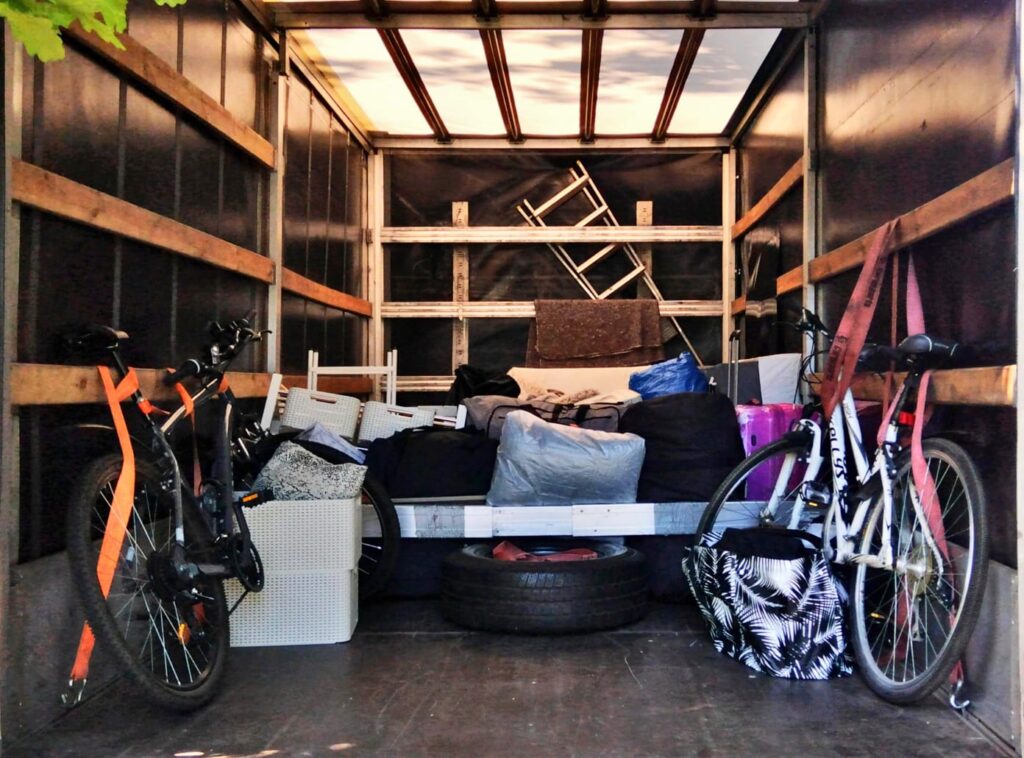
Storage & Staging Options
If the keys and the shipment cannot arrive together, decide where the goods can safely wait before collection is booked. Keeping items at origin, arranging separate storage and changing the delivery date are different options with different costs. A vehicle waiting outside a property is not a storage contract.
- Storage at origin: ask which location and dates are available, who operates it and how collection from storage will be charged. Do not assume climate control, round-the-clock CCTV or sealed containers without written facility details.
- Holding between transport stages: confirm whether it is possible, where it would occur and who remains responsible for the goods. A transit delay should not be described as an included storage service.
- Storage near the destination: obtain a named facility and written terms before depending on it. This guide does not confirm that VANonsite operates a Croatian warehouse or guarantees immediate redelivery.
- Phased deliveries: list which items must arrive first and ask whether separate trips are feasible. Additional drops can require additional handling and transport charges.
- Restricted final access: assess the actual distance, stairs and need for a smaller vehicle or equipment. A nearby staging point cannot be assumed to be available or authorised.
- Inventory and cover: retain a condition record and check the terms during every storage or transfer stage. Transport cover does not automatically establish storage cover.
If storage may be needed: describe the likely delay in your Removals to Croatia request and ask for the options and their terms before making arrangements.
Settling In: First 14 Days in Croatia
Use the following as an unpacking and administration plan, not a legal deadline calendar. Establish your residence, healthcare and vehicle requirements before departure; some steps may be needed before the goods arrive. The applicable rules depend on your citizenship, status and circumstances.
Days 1–3: Essentials
- Take meter readings; photograph water/electricity/gas.
- Book utilities & broadband activation; confirm ISP installation date.
- Unpack your essentials box; assemble beds and basic kitchenware.
- Buy local SIM or set up a mobile plan for reliable contact.
Administration to check before departure and on arrival
5. Confirm the applicable residence and address-registration procedure with the Croatian Ministry of the Interior; do not postpone it to an arbitrary day in this checklist.
6. Check whether you need an OIB for the tasks you are undertaking.
7. Confirm healthcare eligibility and insurance arrangements independently of the removal.
8. Prepare the documentation requested by your chosen bank or utility provider.
9. Check local waste and building arrangements with the property contact.
Days 8–14: Make the home usable
10. If bringing a vehicle, follow its separately agreed import and registration plan.
11. Identify the health services you are entitled to use and keep relevant records accessible.
12. Learn useful Croatian address and delivery phrases.
13. Check local transport and services around the new property.
14. Review household cover and retain the inventory, transport documents and delivery photographs.
For retirement-specific preparation, see Retiring to Croatia and check any legal requirements with the relevant authority.
FAQs
How far in advance should I book international removals to Croatia?
Request availability once you have a realistic inventory and date range. Say whether you are still waiting for keys or have a non-negotiable handover. There is no universal advance-booking period that guarantees a vehicle or a particular delivery date.
Can I mix part load with a few priority items on express service?
Ask for the feasibility and price of two separately scoped consignments. A priority trip and a shared load have separate handling and scheduling requirements; a hybrid arrangement is not a standard inclusion or a guaranteed saving.
Are my goods insured door-to-door? What coverage levels exist?
Review the actual offer and terms before booking. Confirm whether the arrangement is carrier liability, insurance or additional cover, including limits, exclusions, owner-packed goods, storage and claim deadlines. Do not assume every item is covered for its full replacement value.
What items are restricted or need special permits?
Declare unusual items before packing, especially batteries, fuels, chemicals, plants, food, weapons and medicines. Acceptance for transport and permission to import are different questions. Obtain the applicable guidance for the route rather than relying on a general household-goods label.
Do you disassemble/reassemble furniture and mount appliances?
Specify the item and task in the request and check the written scope. Packing and carrying a wardrobe do not automatically include rebuilding it. Gas, electrical, plumbing or wall-mounting work needs an appropriate separately arranged professional; this guide does not promise a local installation partner.
What are typical transit times to Croatia?
Confirm the schedule against your origin, destination, inventory and service. Dedicated and shared transport have different planning constraints. VANonsite also offers last-minute moving options, including 1–3-day transport where feasible, but that is not a universal Croatia delivery promise or a substitute for a confirmed route plan.
Can you pack for me?
Include the requested packing tasks and fragile items in the estimate request. Confirm who supplies materials and which items need specialist assessment. A custom crate, conservation-grade protection or packing of every carton must not be assumed to be included.
Do you offer storage if my keys are delayed?
Tell VANonsite about the possible delay before booking. Any storage option needs confirmation of availability, facility, cost, access, cover and redelivery. Do not rely on an unnamed UK or Croatian warehouse or assume storage is included in transport pricing.
How are quotes calculated?
Provide the route, dates, inventory and access details. Volume is useful, but weight, handling and the booked tasks also matter. The service form sends the calculated price by e-mail; confirm the final scope and availability before treating it as a booking.
What paperwork do I need?
Keep a consistent inventory and follow the checklist for your origin and customs procedure. Personal residence formalities are a separate process. Confirm the documents with the responsible authority or appointed representative rather than assuming one checklist applies to every international move.
Request your calculated e-mail estimate through Removals to Croatia.
Give both addresses and your collection date, then use the notes for the item list, stairs, lift dimensions, carry distance, fragile pieces and any island destination. Explain which dates are flexible and which are fixed. These details help turn a price request into a transport plan that can be checked before booking.
What to confirm with your estimate:
- Exact addresses and access: collection and final delivery, including any island crossing or restricted approach.
- Packing responsibility: materials, labour and separately assessed protection for fragile or unusual items.
- Customs responsibility: the applicable procedure and who provides representation where required.
- Date status: which collection and delivery dates are confirmed, provisional or subject to a route window.
- Total scope and terms: included tasks, exclusions, additional costs and liability or insurance conditions.
- For UK-specific preparation, use the Complete Relocation Guide alongside the relevant official requirements.
- Considering shared transport? Read Part Load Services and compare the available window with your travel and key dates.
- Moving selected furniture? Use the Furniture Removals Guide to prepare dimensions, access and protection questions.
- Planning retirement? → Retiring to Croatia (lifestyle, healthcare, admin checklist)