Heavy machinery is unforgiving. One loose strap, one wrong ramp angle, one tight street you did not anticipate, and a “simple delivery” turns into an expensive delay.
If you are searching heavy machinery removals to France, you want certainty. You want to move valuable equipment without dents, downtime, or paperwork surprises. This guide is built to do exactly that.
You will learn how to plan heavy machinery removals to France, how to measure and document your load, when France may require transport exceptionnel authorisation, what to pack and crate, and how to reduce risk from doorways to delivery.
Ready to discuss a route and timeline today? Start here: Removals to France.
TL;DR
- heavy machinery removals to France start with measurements: weight, dimensions, and access constraints
- If the load is oversized or heavy, France may treat it as transport exceptionnel and require authorisation
- A tidy inventory plus serial numbers makes paperwork faster and safer
- Crating is often the difference between safe arrival and expensive repair, and non EU wooden packaging may need ISPM 15 compliance
- Route planning matters more than distance: bridges, low tunnels, city centre restrictions
- Insurance and condition photos protect your budget and your nerves
- GPS tracking turns uncertainty into control on long routes




Who needs heavy machinery removals to France
heavy machinery removals to France are not only for giant factories. Any business that relies on precision, weight, uptime, or liability can need specialist transport.
Here is the simple truth: a machine does not have to be enormous to be expensive. A 900 kg CNC with a delicate spindle can be more fragile than a 9,000 kg steel frame. That is why heavy machinery removals to France should be planned with the same discipline you would use for a production restart.
Common use cases include:
- Manufacturing and production lines: presses, conveyors, packaging lines
- Construction and site equipment: compactors, generators, attachments
- Workshops and garages: lifts, compressors, diagnostic rigs
- Warehouses and logistics hubs: pallet wrappers, racking components, dock equipment
- Medical and laboratory equipment: imaging devices, sterilisation units, delicate systems
- Hospitality and commercial kitchens: bulky, fragile, high value units
The real reason businesses choose specialist transport
Most companies book heavy machinery removals to France for one of these three reasons.
- Downtime hurts: one delayed delivery can cost 5% to 20% of a week’s revenue, depending on the operation
- Access is tight: narrow entrances, time windows, and restricted streets change everything
- Risk is asymmetric: one mistake can exceed the entire transport cost
If you are relocating a line, upgrading a workshop, opening a new site, or delivering equipment for a project deadline, you are already in the world of heavy machinery removals to France.
Quick fit check
Use this mini test. If you answer “yes” twice, treat the move as specialist.
- Is the item over 500 kg?
- Is it sensitive to tilt, shock, or vibration?
- Would damage stop production or breach a service contract?
- Do you need a forklift, crane, or tail lift?
- Could access be limited by doors, stairs, ramps, or parking rules?
Reality check: the move is not only transport. It is timing, access, and compliance. That is why heavy machinery removals to France should be planned like a project, not a parcel.
What counts as heavy machinery
For heavy machinery removals to France, “heavy” is less about a single number and more about consequences. If one wrong move can damage the machine, the building, or the team, treat it as heavy machinery.
Typical ranges you will see in real quotes:
- Weight: 500 kg to 20,000 kg or more
- Footprint: anything that cannot pass a standard doorway without planning
- Sensitivity: equipment that fails from shock, vibration, tilt, or temperature swings
Also watch for weight concentration. A machine can be “only” 1,200 kg yet still overload a ramp or a lift if the load sits on a small base.
Typical items that trigger heavy machinery removals to France
- CNC machines and lathes
- Industrial compressors
- Presses and frames
- Pallet wrappers
- Forklifts and warehouse units
- Generators and power systems
- Boilers, chillers, and plant room equipment
Quick table: machinery type vs key risk
| Machinery | Typical risk | What matters most |
|---|---|---|
| CNC and precision tools | Shock and vibration | Crating, cushioning, slow handling |
| Presses and bulky frames | Weight concentration | Floor load, lift plan, route checks |
| Generators and compressors | Fluids and leakage | Drain rules, sealing, documentation |
| Medical equipment | Sensitivity and liability | White glove handling, insurance |
A plain definition that makes quoting easier
If you want heavy machinery removals to France to go smoothly, describe your item using five facts.
- Weight in kg
- Overall dimensions in cm
- Centre of gravity if known
- Sensitivity: “tilt sensitive”, “vibration sensitive”, “fragile components”
- Handling needs: forklift pockets, lifting points, or “requires crane”
Where man and van can still be relevant
A man and van can be ideal for smaller machines, boxed components, spare parts, and urgent accessories that support a larger installation. It is not always about the biggest vehicle. It is about the smartest fit for the load.
If your machine has a control panel, glass screen, or calibration needs, treat packaging as a safety system. It is the fastest way to protect heavy machinery removals to France from hidden damage.
The 10 questions to answer before you book
The quote becomes accurate and the move becomes calmer when you answer these questions upfront. This checklist is built for heavy machinery removals to France.
- Exact dimensions and weight, including base and protrusions
- Is it one piece or can it be dismantled
- Does it contain fluids, batteries, or fragile components
- Pickup and delivery addresses with access details
- Floor number, lift size, stairs, door widths
- Loading equipment available on site: forklift, crane, dock
- Required delivery date and acceptable delivery window
- Any shutdown timeline for production
- Insurance requirement and declared value
- EU or non EU origin for customs planning
A single missing detail can cost hours. Door width is the classic trap. Measure twice, breathe once, then book.
The data pack that gets you a faster quote
For heavy machinery removals to France, you will get better answers when you send a small, clean “data pack” on day one.
- Two photos of the machine from each side
- A close up of the serial plate
- A photo of the doorway you must pass through
- Weight and dimensions in one line
- Your preferred pickup date and delivery date
Use a format like this:
- Weight: 2,450 kg
- Size: 220 cm x 140 cm x 185 cm
- Handling: forklift pockets, centre of gravity unknown
The hidden questions people forget
These details often decide whether heavy machinery removals to France run smoothly.
- Can the machine be tilted, or must it stay upright
- Do you have a shutdown window, for example 48 hours
- Is there a booking system for your loading bay
- Are there noise limits that block early morning loading
- Do you need a delivery appointment with a specific contact
Quick table: question to ask vs why it matters
| Question | Why it matters | What it prevents |
|---|---|---|
| Door width and tightest turn | Determines handling gear | Stuck loads and rebooking |
| Floor and lift capacity | Determines safe route inside | Building damage and delays |
| Fluids and batteries | Determines packing and safety | Leakage, fines, refusals |
| Dismantling possibility | Reduces footprint and risk | Oversize permits and extra cost |
| Declared value | Sets insurance scope | Costly disputes later |
If you want heavy machinery removals to France to feel clean, treat information like currency. The clearer you are, the faster the move gets.
Planning timeline for heavy machinery removals to France
For heavy machinery removals to France, time is protection. The earlier you confirm specs and access, the less you pay for last minute fixes.
A practical rule: build a 10% time buffer into the plan. If the move is 10 days, protect yourself with 1 extra day. That buffer is how you avoid panic.
30 to 21 days before
- Confirm specs and take condition photos
- Decide if dismantling is needed
- Start the permit check for oversized loads
- Identify who signs off at pickup and delivery
20 to 11 days before
- Confirm route constraints and site access
- Prepare documents and inventory
- Arrange lifting equipment if required
- Confirm loading bay bookings and time windows
10 to 4 days before
- Finalise packing and crating
- Confirm insurance and delivery contacts
- Lock loading plan and time slots
- Prepare spare parts box for reassembly, labelled and sealed
3 to 0 days before
- Label, seal, verify fluids policy
- Final walkthrough at pickup
- Confirm GPS tracking and delivery updates
- Set a delivery day call schedule, for example updates every 2 to 3 hours
If you only have 14 days
Sometimes the move is urgent. heavy machinery removals to France can still be smooth, but you must compress the work.
- Day 1 to 2: specs, access photos, serial numbers, declared value
- Day 3 to 5: route check, permit check if needed, lifting plan
- Day 6 to 10: crating, packing list, appointment scheduling
- Day 11 to 14: pickup, transit, delivery, handover
The shutdown window strategy
If production stops during pickup, protect the restart.
- Stage packing in advance so the machine is disconnected for the shortest time
- Prepare labels, bolts, and small parts bags before shutdown
- Keep a reassembly checklist on paper and on phone
If you are working with a strict production shutdown window, build a buffer. Even a 10% time buffer can protect your restart date.
Permits and route planning in France
This is the section that saves projects. For heavy machinery removals to France, route planning often matters more than the kilometres.
France uses the concept of transport exceptionnel for loads that exceed standard limits. If your machinery is oversized or overweight, authorisation may be required.
Key ideas to understand:
- When dimensions or weight exceed standard limits, authorisation may be required
- Route reconnaissance matters: bridges, tunnels, narrow streets, time restrictions
- Escorts may be required for certain categories
Official sources:
How to tell if permits might be needed
If you are planning heavy machinery removals to France, do not guess. Build the answer from measurements.
Start with three facts:
- Total weight, including cradle or base
- Total width, height, and length at the widest points
- Whether the load can be dismantled to reduce size
If your machine can be broken into two safer pieces, you may avoid exceptional classification and cut risk at the same time.
What route reconnaissance really means
For heavy machinery removals to France, a route is not just a line on a map. It is a chain of constraints.
- Bridge weight limits
- Low tunnels, canopies, and overhead wires
- Tight turns at industrial estates and roundabouts
- Narrow village roads and one way systems
- City centre access windows and controlled zones
- Roadworks, detours, and seasonal traffic pressure
A route check is not bureaucracy. It is how you prevent the most expensive word in logistics: “turn back.”
City centres and controlled access
If delivery is in a dense area, share details early. heavy machinery removals to France into city centres can require time windows, reserved unloading space, and strict staging.
Collect and share:
- Whether parking must be reserved
- The maximum vehicle size that can approach the entrance
- The distance from vehicle to door
- Any gate codes, barriers, or security checks
If access is tight, smaller vehicles can win. A man and van solution is often ideal for urgent components, spare parts, or smaller machines that must reach a city centre site quickly.
Quick table: what changes when a load becomes exceptional
| Situation | What changes | Your best move |
|---|---|---|
| Standard load | Normal route options | Focus on packaging and timing |
| Oversize or overweight | Permit and route checks | Start early, share exact specs |
| Tight city centre access | Parking and time windows | Choose agile vehicles, staged delivery |
A fast permit prep list
If you suspect the load may be exceptional, these details make heavy machinery removals to France smoother.
- Accurate measurements with photos
- Pickup and delivery time windows
- A contact who can approve onsite changes
- A backup delivery day in case permits delay scheduling
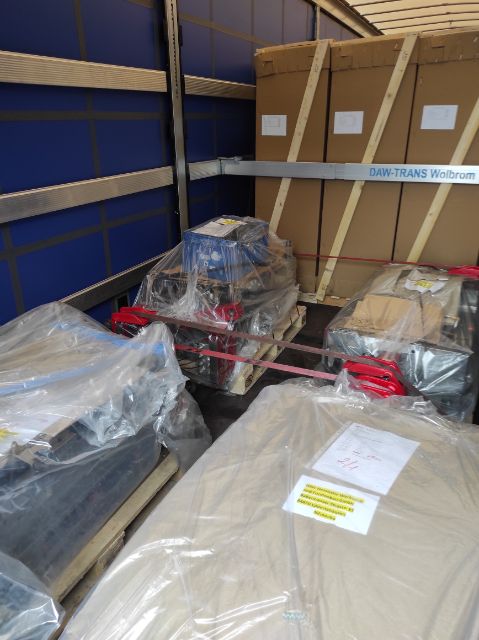
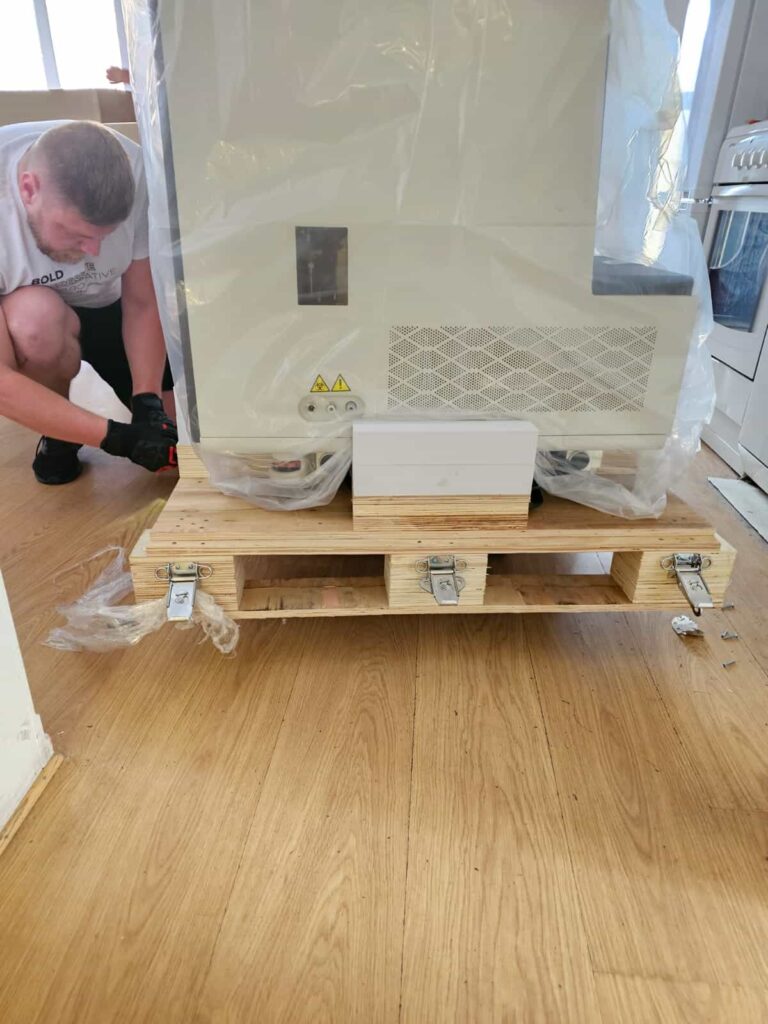
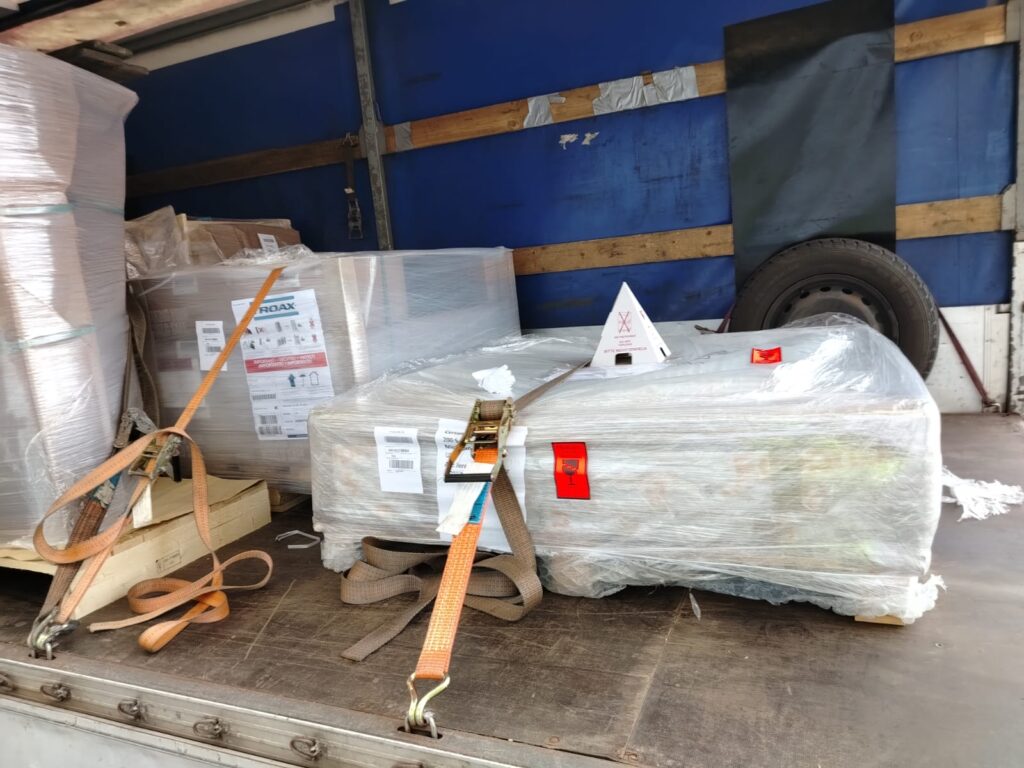
Documents checklist for heavy machinery removals to France
Paperwork should be boring. Boring paperwork moves faster. For heavy machinery removals to France, this is your minimum set.
Must have documents
- Inventory with item names and serial numbers
- Photos of condition before packing
- Commercial invoice or valuation for insurance
- Packing list with crate or pallet numbers
- Delivery addresses and onsite contacts
Documentation that prevents disputes
Add these if possible:
- Maintenance record or calibration note for sensitive machines
- Dismantling notes and reassembly steps
- A signed pickup condition form
Customs and border references
Rules differ by origin and purpose. Always confirm with customs for your specific case.
The document bundle that keeps deliveries smooth
For heavy machinery removals to France, aim to keep everything in one shared folder and one printed pack.
Include:
- Inventory and packing list
- Photos and condition report
- Insurance confirmation
- Delivery contact sheet
- Any site rules or booking confirmations
A simple habit: name files with date plus location, so the right document is found in seconds.
Inventory template that works
Serial numbers are not only admin. They reduce confusion when parts are separated, and they protect your claim if anything is damaged.
| Item | Serial number | Weight | Packing unit | Notes |
|---|---|---|---|---|
| CNC Mill | SN 739201 | 2,450 kg | Crate 01 | Upright only |
| Control cabinet | SN 739201-C | 180 kg | Crate 02 | Fragile panel |
| Tooling box | NA | 60 kg | Box 01 | Sealed, labelled |
Packing list format that drivers love
A packing list should be readable in seconds.
- Crate 01: CNC Mill, 2450 kg, upright only, lifting points marked
- Crate 02: Control cabinet, 180 kg, fragile, no stacking
- Box 01: Tooling and accessories, 60 kg
Add two signals for safety:
- “No stack” where relevant
- “Centre of gravity” if known
Condition report in 5 photos
If you want heavy machinery removals to France to feel protected, take these five photo types before packing.
- Full machine front view
- Full machine rear view
- Close up of control panel
- Close up of serial plate
- Any existing scratches or dents
That is often enough to prevent arguments later.
Customs rules: EU moves vs non EU imports
For heavy machinery removals to France, customs complexity depends on origin. Your first step should always be official guidance, because rules change depending on whether the move is a sale, a relocation, a repair, or a temporary project.
Start with French Customs.
If you are moving machinery within the EU
For many EU to EU moves, heavy machinery removals to France are simpler at the border. Still, “simpler” is not “paperwork free”. Your documents are what stop delays at loading bays, ports, and reception desks.
Keep:
- Invoice or valuation document
- Packing list with crate and pallet numbers
- Serial numbers and photos
- Delivery appointments and site contact sheet
- Transport paperwork for the route
Even when border checks are lighter, your paperwork is still your protection. Serial numbers and photos reduce friction.
If you are importing from outside the EU
For non EU origin, heavy machinery removals to France can involve formal customs clearance.
Expect that:
- Customs declarations may apply
- Duties and VAT may apply depending on status and purpose
- Extra checks may be triggered by wood packaging, batteries, or fluids
Use: French Customs information in English.
Two pathways that change everything
When planning heavy machinery removals to France, decide early which reality you are in.
- Permanent import or sale: standard import logic can apply, with VAT and duties depending on classification and terms
- Temporary admission: for short term projects, demos, fairs, testing, or repairs, you may be able to use a temporary admission procedure
If you are moving equipment temporarily, France provides guidance on the ATA Carnet:
The documents that speed up clearance
If you want heavy machinery removals to France to stay fast, bundle these documents in one folder.
- Inventory with item description and serial number
- Packing list with crate numbers, weights, and “upright only” notes
- Valuation or invoice
- Contract note: sale, relocation, rental, repair, or temporary use
- Photo set: machine, serial plate, control panel, crate exterior, crate markings
Quick comparison table
| Situation | What to prepare | What it prevents |
|---|---|---|
| EU to France move | Invoice or valuation, packing list, serial numbers | Delivery refusals and admin loops |
| Non EU import | Customs folder plus clear purpose of shipment | Delays and unexpected costs |
| Temporary project | Temporary admission pathway and supporting proof | Paying full taxes when not needed |
Wood packaging can trigger delays
If your heavy machinery removals to France include crates or dunnage from non EU origins, ISPM 15 can apply. This is one of those details that feels small until it becomes a gate.
Official reference:
Practical rule: ensure wood packaging is treated and properly marked, and keep a photo of the stamp in your customs folder.
Packing, crating, and securing heavy equipment
For heavy machinery removals to France, packaging is not decoration. It is engineering.
Your goal is not only “no scratches”. Your goal is no hidden damage. Precision machines can arrive looking perfect and still fail on day one if vibration or tilt was wrong.
What good protection really does
A good crate or protective pack does three things:
- Reduces shock and vibration damage
- Protects exposed parts and control panels
- Speeds safer stacking and handling
Choose the right protection level
For heavy machinery removals to France, pick the packaging method like you would pick insurance. Match it to risk.
| Protection method | Best for | The trade off |
|---|---|---|
| Palletised and strapped | Robust equipment, short handling chain | Higher exposure to knocks |
| Partial crate and shielding | Machines with vulnerable panels | More prep time, safer transit |
| Full crate | Precision, high value, long distance | Higher cost, highest protection |
When crating is strongly recommended
Crating is often essential when:
- The machine has delicate calibration parts
- Control panels and screens are exposed
- The route includes long distance travel
- The load will be handled multiple times
- The delivery site has tight access and requires careful manoeuvring
If you want a premium, careful approach for sensitive equipment, White Glove Delivery is built for that.
Before you pack: stabilise the machine
The safest heavy machinery removals to France start before the first strap.
- Lock moving parts where possible
- Remove and box loose accessories, label them, and number them
- Protect screens, control panels, and protruding components
- If the machine contains fluids, confirm the policy and prevent leakage
Securing that prevents regret
Think of securing as two layers: internal stability, then external restraint.
Internal stability:
- Block and brace so nothing can shift inside the crate
- Protect fragile points with cushioning and edge guards
- Mark “upright only” if tilt is not allowed
External restraint:
- Strap angles should pull down and inward, not sideways
- Use corner protectors so straps do not cut into packaging
- Use anti slip mats or base fixing so the load cannot creep
Non EU wooden packaging and ISPM 15
If crates or dunnage come from non EU origins, ISPM 15 rules can apply.
Official reference:
Practical rule: photograph the ISPM 15 stamp and store it with your packing list. It can save hours.
Quick checklist: the labels that save your delivery day
For heavy machinery removals to France, labelling is not cosmetic. It is instruction.
- Weight marked clearly on each crate or pallet
- Centre of gravity noted if relevant
- “No stack” where required
- “Upright only” if tilt is not allowed
- Fragile points labelled
- Crate number matched to packing list
A simple “no movement” test
Before pickup, do a practical test.
- Push each crate gently from two sides
- If anything shifts, reinforce it
A stable crate is a calm crate. This is one of the cheapest wins in heavy machinery removals to France.
When you want packing handled end to end
If you want fewer breakages, faster loading, and less stress, use a professional packing team. The Packing Service is designed to keep the move clean and controlled.
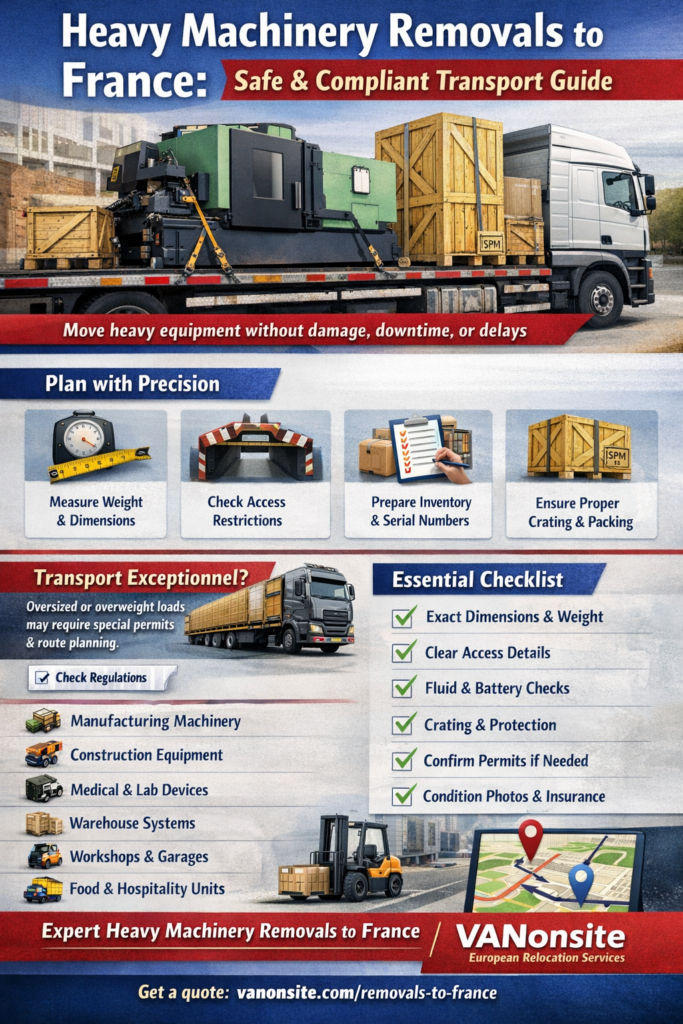
Loading and delivery: access, lifting, and site safety
Heavy machinery removals are won or lost at the doorway.
For heavy machinery removals to France, access planning should be collected like data, not guessed. Your machine can survive the highway and still lose the battle to a 92 cm doorway.
Capture the five numbers that matter
Before loading day, confirm these measurements in writing. It reduces delays and can cut onsite decision time by 30%.
- Door widths at the tightest point, in cm
- Corridor width and the sharpest turning angle
- Lift internal dimensions and maximum load in kg
- Ramp angle and floor load limits
- Distance from vehicle parking to final position, in metres
The access questions that prevent “stand still” time
For heavy machinery removals to France, idle time is a hidden cost. Ask these questions early.
- Is there a loading bay booking system?
- Are there noise limits that restrict early morning unloading?
- Is there a security gate, sign in desk, or site induction?
- Does the building require protective floor covering?
- Do you need a delivery appointment with a named contact?
Decide your lifting plan
Most problems in heavy machinery removals to France are not caused by distance. They are caused by handling.
Choose your lifting plan based on reality.
- Forklift: fast, strong, perfect for pallets and machines with forklift pockets
- Crane: essential for high thresholds, rooftop access, or tight manoeuvres
- Tail lift: useful where no dock exists, but confirm weight limits
- Skates and rollers: best for short internal moves on strong floors
If you have a machine over 1,500 kg, confirm on paper who provides the forklift or crane. It is a small step that can save a whole day.
Small table: access issue vs solution
| Problem | Typical fix |
|---|---|
| Narrow entrance | Dismantle, rotate, or use smaller handling gear |
| No loading dock | Tail lift, ramps, or local lifting support |
| Restricted street access | Timed delivery slot, permits, smaller vehicle |
| Weak floor or fragile tiles | Spread load with plates, use skates, plan route |
| Tight internal turns | Rotate, remove doors, use spotters and slow moves |
Safety rules that protect people and buildings
For heavy machinery removals to France, safety is speed. It prevents rework.
- Set a clear “no go zone” during lifts
- Use two spotters for tight turns
- Keep hands away from pinch points
- Move in slow, controlled steps
- Never rush a ramp
A simple habit: do a 5 minute toolbox talk before the first lift. It reduces mistakes when adrenaline is high.
The access photos that save you hours
For heavy machinery removals to France, photos are not optional. They are the fastest route to a correct plan.
Take and share:
- The entrance from the street
- The tightest doorway, with a tape measure visible
- The narrowest corridor turn
- The lift interior, plus a photo of its load plate
- The unloading zone and parking rules
- Any ramps, steps, or slopes on the path
Good photos turn problems into plans.
When man and van helps on delivery day
A man and van option can be brilliant for staged delivery. Use it for urgent components, accessories, control cabinets, or spare parts that must arrive before the main machine. It keeps heavy machinery removals to France moving even if permits or cranes affect the main schedule.
Insurance and risk control
This section is where you protect your budget. For heavy machinery removals to France, risk control is not paranoia. It is professionalism.
Think of it like this: insurance is your seatbelt. Documentation is your airbag. You want both.
Do this every time
- Declare value honestly
- Photograph condition and serial numbers
- Confirm coverage scope: transit, loading, unloading
- Confirm exclusions: vibration, moisture, improper packing
- Keep documentation together, and keep backups
The 10 minute documentation ritual
If you do nothing else, do this. It can protect 100% of the value of your claim.
- Take 6 to 10 photos of the machine before packing
- Photograph the serial plate clearly
- Photograph the control panel and sensitive points
- Photograph the machine fixed to the base or inside the crate
- Photograph crate markings: weight, upright only, no stack
- Save everything in one folder with a date and location
A practical rule: if a machine is worth five figures, it deserves five minutes of documentation.
What to ask about coverage
For heavy machinery removals to France, ask these questions in plain language.
- Is loading and unloading included, or only transit?
- Is the declared value the full replacement value or a capped limit?
- Does the policy require professional packing or crating?
- How fast must a claim be reported, 24 hours or 7 days?
Quick table: risk vs protection
| Risk | Where it happens | Best protection |
|---|---|---|
| Shock and vibration | Transit, rough roads | Full crate, cushioning, slow handling |
| Tilt damage | Ramps and tight turns | Upright only labels, trained spotters |
| Moisture and corrosion | Winter, long routes | Wrap, desiccants, sealed crate |
| Access damage | Doorways and floors | Route plan, skates, protective plates |
| Missing parts | Disassembly stage | Numbered boxes, photos, packing list |
Declared value and the silent trap
Some businesses under declare to reduce cost. It feels clever until the worst day arrives.
For heavy machinery removals to France, under declaring by 30% can leave you exposed by thousands. Declare honestly. Protect the project.
Keep a claims kit ready
If something goes wrong, speed matters.
Keep:
- Your photos and condition report
- Inventory and packing list
- Delivery note signed on arrival
- A short written timeline of what happened
Your machine is your revenue. Protect it like it is.
Pricing: what drives the quote
For heavy machinery removals to France, pricing is driven by complexity, not only distance. Two moves can be 900 km apart and still feel like different universes. One has clear loading bays and straight access. The other has a narrow street, a strict appointment window, and a machine that must stay upright.
The main factors that change the price
- Weight, dimensions, and whether it becomes transport exceptionnel
- Distance and route constraints, including low bridges and city restrictions
- Need for escorts, permits, and time windows
- Packing and crating complexity, especially for precision machines
- Lifting equipment and onsite handling: forklift, crane, skates, tail lift
- Insurance level and declared value
- Waiting time risk: if the site is not ready, costs can rise fast
A simple pricing map
Use this quick table to understand what you are paying for in heavy machinery removals to France.
| Cost driver | What it usually means | How it affects the quote |
|---|---|---|
| Oversize or overweight | Possible authorisation and route checks | Higher planning time and compliance cost |
| Tight access | Smaller vehicle, more handling time | More labour and slower handling |
| Precision equipment | Extra protection and careful handling | Higher packing and risk control cost |
| Multiple handling points | More loading and unloading stages | Higher damage risk and time on site |
| Fixed delivery appointment | Narrow time window | Less flexibility and higher scheduling pressure |
Vehicle size can make or break the budget
Picking the right van or truck early is one of the fastest ways to keep heavy machinery removals to France cost effective.
VANonsite vehicle sizes:
| Vehicle option | Volume | Payload | Best for |
|---|---|---|---|
| Moving One | 1 m3 | 100 kg | Small parts, urgent accessories, documents |
| Moving Basic | 5 m3 | 300 kg | Boxed components, light equipment |
| Moving Medium | 10 m3 | 500 kg | Compact machines and packed modules |
| Moving Premium | 15 m3 | 1100 kg | Heavier items with careful packing |
| Moving Premium Plus | 30 m3 | 3500 kg | Larger machines and consolidated loads |
| Moving Full House XXL | 90 m3 | 20000 kg | Very large projects and heavy moves |
A common mistake: booking too small, then needing a second trip. That can increase the total cost by 40% to 70% once time windows and extra handling are added.
How to reduce cost without reducing safety
You can often lower the quote by 10% to 25% without cutting corners, simply by removing uncertainty.
- Provide accurate measurements early: weight, dimensions, and whether the machine can be dismantled
- Share access info: door widths, lift load plate, parking rules, ramp angle
- Reduce idle time: confirm who provides the forklift or crane, and book the time slot
- Consolidate pickups: fewer stops often means lower risk and fewer hours
- Choose the right vehicle size the first time
- Prepare a clean packing list: fewer “mystery boxes” means faster handling
The cheapest mistake is still expensive. The smart save is planning.
Why VANonsite for heavy machinery removals to France
If you are planning heavy machinery removals to France, you need three things: speed, safety, and visibility. You do not want vague updates. You want the kind of clarity that lets you schedule technicians, restart production, and sleep.
VANonsite delivers premium transport across Europe with a focus on careful handling and fast execution. Every load can be GPS tracked, which turns “Where is it?” into a confident timeline.
Start here:
What you get with VANonsite
- GPS tracking so you can follow progress in real time
- A detail led approach to loading and delivery, built around access reality
- Practical communication: fewer surprises, cleaner handovers
- Flexible options for urgent jobs and staged projects
Match the service to the move
For heavy machinery removals to France, the best service is the one that matches your risk profile.
- Last Minute Moving when your timeline is brutal and every hour counts
- Storage when you need staged delivery or site readiness is uncertain
- Packing Service when protection needs to be professional and consistent
- White Glove Delivery when the machine is sensitive, high value, or reputation critical
The VANonsite advantage in one glance
| Your challenge | What VANonsite does | Result |
|---|---|---|
| Tight delivery windows | Structured planning and clear updates | Less downtime pressure |
| High value equipment | Safer packing and handling options | Lower damage risk |
| Complex access | Practical routing and staging | Fewer onsite delays |
| Long distance transport | GPS visibility | Better scheduling and control |
Where man and van fits heavy machinery removals to France
A man and van can be the secret weapon inside heavy machinery removals to France when the job is about agility.
Use man and van for heavy machinery removals to France when:
- You are delivering control cabinets, tooling, accessories, or spare parts ahead of the main machine
- Access is tight and a smaller vehicle is the only realistic option
- Time window is sharp and you need a direct, no detours run
- You are moving a partial load to keep installation moving
If you want a fast quote with a clear plan, start on the France page:
FAQ: heavy machinery removals to France
You are not the first person to feel overwhelmed by this. Heavy equipment moves create a special kind of pressure because the stakes are real. These answers are designed to give you quick clarity, without the fluff.
How do I know if I need a transport exceptionnel permit?
If your load is oversized or overweight beyond standard limits, France may classify it as transport exceptionnel. The fastest way to stay compliant is to start with accurate measurements, then use official guidance.
Start here:
Practical tip for heavy machinery removals to France: if you are unsure, assume the answer might be “yes” until proven otherwise. Planning early is cheaper than rerouting late.
What documents are needed for customs clearance?
At minimum for heavy machinery removals to France: an inventory with serial numbers, a packing list, and a valuation or invoice. For non EU origin, check Douane for the correct declaration pathway.
Official information in English:
If you are moving temporarily for a project, demo, or fair, you may need a temporary admission route. France provides guidance on ATA Carnet here:
Can you move machinery into a city centre location?
Yes. heavy machinery removals to France into city centres are possible, but success depends on access planning.
Share these details early:
- Parking rules and whether unloading space must be reserved
- Door width at the tightest point
- Distance from vehicle to final position
- Lift load plate photo if the machine goes upstairs
If access is extremely tight, a staged plan can be smarter. A man and van run for accessories and control cabinets can keep the site moving while the main machine arrives on a separate schedule.
Do you offer packing, crating, and white glove handling?
Yes. For heavy machinery removals to France, protection is often the cheapest insurance you can buy.
- Use the Packing Service for consistent, professional preparation
- Use White Glove Delivery when the equipment is sensitive, high value, or reputation critical
Can I track the shipment in real time?
Yes. GPS tracking helps heavy machinery removals to France feel calm because you know where the load is and when it arrives. It also helps you coordinate technicians, site access, and installation windows.
How early should I book heavy machinery removals to France?
For standard loads, 2 to 4 weeks is a strong baseline. If you suspect permits, escorts, cranes, or strict time windows, start earlier.
A quick guide:
- Simple, palletised load: 7 to 14 days can work
- Precision machine with crating: 14 to 28 days is safer
- Possible transport exceptionnel: allow extra time for checks and authorisation
What information should I send to get a fast quote?
For heavy machinery removals to France, speed comes from clarity. Send a small “data pack”:
- Weight and dimensions
- Photos of the machine on all sides
- Photo of the serial plate
- Pickup and delivery addresses
- Access photos: doorway, corridor turn, lift load plate
- Your target dates and any hard delivery appointment
This reduces back and forth and can cut planning friction by 30%.
Can you move only spare parts or accessories urgently?
Yes. This is where man and van can be perfect. Many projects use man and van for urgent parts, tooling, and accessories, especially when the main machine move has crane bookings or permit timing.
What is the biggest mistake people make?
Underestimating access.
For heavy machinery removals to France, the road is rarely the problem. The problem is the last 20 metres: narrow doors, fragile floors, sharp turns, or a lift that cannot handle the load.
Measure doorways. Photograph the lift plate. Confirm parking rules. Those three steps prevent the most common delays.
How do you reduce the risk of hidden damage?
Hidden damage usually comes from vibration, shock, or tilt.
To protect heavy machinery removals to France:
- Use crating for precision machines
- Mark “upright only” where needed
- Cushion fragile components and control panels
- Avoid loose parts by boxing, numbering, and sealing
- Take condition photos before and after packing
If the machine is sensitive, White Glove Delivery is often the safest choice.
Final checklist and call to action
Before you book heavy machinery removals to France, run this final checklist. It is short on purpose. It forces the details that prevent delays.
The 12 point final checklist
- Measure weight and dimensions, including protrusions
- Photograph the serial plate and control panel
- Confirm whether the machine can be dismantled
- Create an inventory with serial numbers
- Build a packing list with crate or pallet numbers
- Confirm access at pickup: doorway, turns, loading bay rules
- Confirm access at delivery: parking, ramps, floors, lift load plate
- Decide the lifting plan: forklift, crane, tail lift, skates
- Check permits if the load may be exceptional
- Confirm insurance scope and declared value
- Pack, crate, and secure with zero internal movement
- Book the delivery appointment and name a receiving contact
Want a fast quote and a clean plan?
Start here and share your measurements and photos: