Moving to Switzerland sounds like a promise. Clean cities. Alpine air. Reliable trains. Safe streets. Strong salaries. A life that feels organised, calm and quietly premium. Yet before you start picturing morning coffee beside Lake Geneva or weekend hikes above Zurich, one question needs a clear answer: what is the real price of living in Switzerland?
The answer is direct. Switzerland is expensive, but it is not unpredictable. If you know the numbers before you arrive, the shock becomes a plan. Rent, health insurance, groceries and transport are the biggest costs. The first month is usually the most demanding because you may need a rental deposit, moving service, temporary accommodation, registration fees, insurance setup and home essentials all at once.
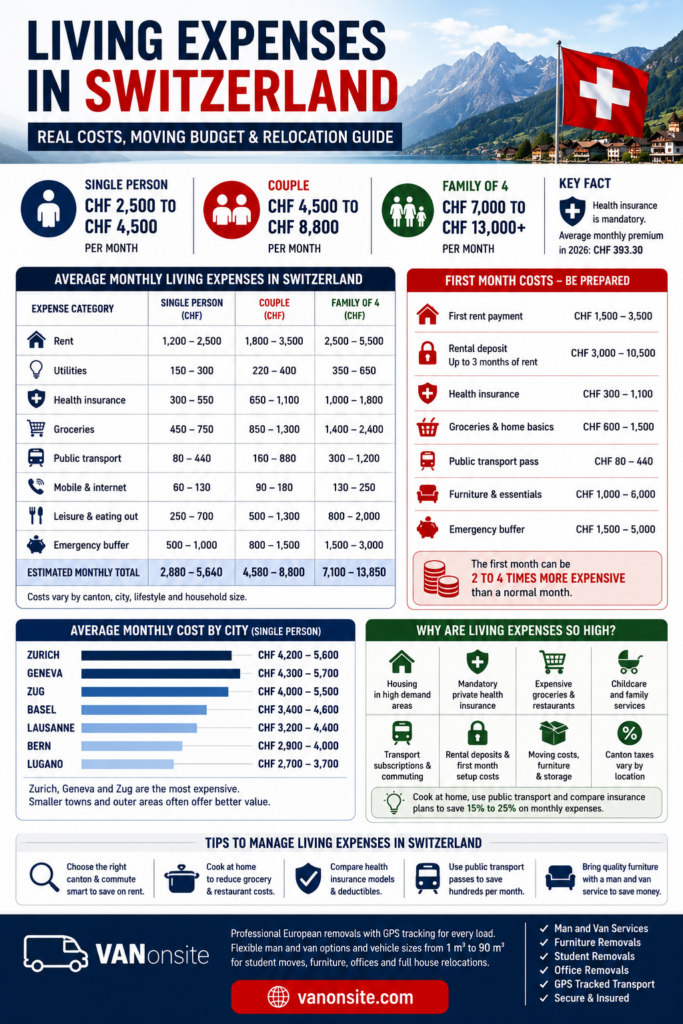
For a single person, the price of living in Switzerland often starts from around CHF 2,900 to CHF 5,600 per month, depending on location and lifestyle. A couple may need CHF 4,500 to CHF 8,800 per month. A family of four should often prepare for CHF 7,000 to CHF 13,800 or more, especially in Zurich, Geneva, Zug, Lausanne or other high demand areas.
A move to Switzerland is not only about packing boxes. It is about entering a new financial rhythm. VANonsite helps make that first step safer and simpler with professional European removals, flexible man and van options, GPS tracking for every load and secure transport for household goods, furniture, student belongings and office equipment.
If you are planning your relocation, explore VANonsite removals to Switzerland.
TL:DR
- The price of living in Switzerland is high, but strong wages, safety and excellent public services can make the move worthwhile.
- A single person should usually budget CHF 2,900 to CHF 5,600 per month, including rent, food, health insurance, utilities and transport.
- Rent is the biggest cost, and a rental deposit can reach up to 3 months of rent.
- Health insurance is mandatory and can cost around CHF 300 to CHF 550 per adult per month, depending on canton, deductible and provider.
- Groceries are much more expensive than in many European countries, so cooking at home can reduce monthly spending by 15% to 25%.
- Household goods may be imported duty free if you transfer your residence to Switzerland and meet customs conditions.
- A professional man and van service from VANonsite can reduce stress, protect your belongings and help you move with better timing, tracking and control.




Quick Answer: What Is the Price of Living in Switzerland?
The price of living in Switzerland is one of the highest in Europe. However, most expenses follow a clear pattern. Rent, mandatory health insurance, groceries, utilities, transport and leisure form the core of a monthly budget.
A careful single person outside the most expensive districts may live on around CHF 2,900 to CHF 3,600 per month. In Zurich or Geneva, the same person may spend CHF 4,500 or more. Families face a much heavier budget because larger apartments, food, insurance, childcare and transport multiply quickly.
| Cost Category | Single Person | Couple | Family of Four |
|---|---|---|---|
| Rent | CHF 1,500 to CHF 2,700 | CHF 2,000 to CHF 3,600 | CHF 3,000 to CHF 5,500 |
| Utilities | CHF 180 to CHF 320 | CHF 250 to CHF 420 | CHF 350 to CHF 650 |
| Health insurance | CHF 300 to CHF 550 | CHF 650 to CHF 1,100 | CHF 1,000 to CHF 1,800 |
| Groceries | CHF 500 to CHF 800 | CHF 900 to CHF 1,400 | CHF 1,500 to CHF 2,400 |
| Public transport | CHF 90 to CHF 440 | CHF 180 to CHF 880 | CHF 300 to CHF 1,200 |
| Mobile and internet | CHF 60 to CHF 130 | CHF 100 to CHF 200 | CHF 150 to CHF 300 |
| Leisure and eating out | CHF 250 to CHF 700 | CHF 500 to CHF 1,200 | CHF 800 to CHF 2,000 |
| Estimated monthly total | CHF 2,880 to CHF 5,640 | CHF 4,580 to CHF 8,800 | CHF 7,100 to CHF 13,850 |
The price of living in Switzerland can look severe on paper, but it becomes easier to manage when you divide costs into essential spending and comfort spending. Rent and health insurance are the foundations. Restaurants, premium apartments, frequent travel and private services are the accelerators.
Why Is the Price of Living in Switzerland So High?
The price of living in Switzerland is high because the whole system is built around quality, stability and strong purchasing power. Swiss wages are often higher than in neighbouring countries. Public infrastructure is excellent. Cities are clean. Trains are reliable. Services are well organised. At the same time, labour, housing, healthcare and food production are costly.
Switzerland does not feel expensive only because of luxury spending. It feels expensive because everyday life is polished. That polish has a price.
The biggest cost drivers are:
- Housing in popular cities and cantons.
- Mandatory private health insurance.
- Fresh food, meat, dairy and restaurant meals.
- Childcare and family services.
- Transport subscriptions and commuting.
- Rental deposits and first month setup costs.
- Moving costs, furniture delivery and storage.
Many people still accept the price of living in Switzerland because the rewards are real. Public transport works beautifully. Crime is low. Salaries are competitive. Nature is close. Administration can be strict, but it is usually clear. For many newcomers, life feels more secure, more efficient and more predictable.
The true challenge usually appears during the first 30 days. Before your first Swiss salary arrives, you may already need cash for rent, deposit, insurance, registration, moving and daily essentials. That is why your relocation budget should be stronger than a normal monthly budget.
Rent in Switzerland: The Cost That Shapes Everything
Rent is usually the largest part of the price of living in Switzerland. According to the Swiss Federal Statistical Office, the average monthly rent in Switzerland was CHF 1,451 in 2023, but newcomers often pay more because they usually rent in competitive urban areas.
Zurich, Geneva, Zug, Basel, Lausanne and the Lake Geneva region can be especially expensive. Smaller towns and commuter areas may offer better value, but transport time and job location must still make sense.
| Housing Type | Typical Monthly Rent |
|---|---|
| Studio outside a major city centre | CHF 1,100 to CHF 1,700 |
| 1 bedroom apartment in Zurich or Geneva | CHF 2,000 to CHF 3,200 |
| 2 bedroom apartment in Basel, Bern or Lausanne | CHF 2,200 to CHF 3,800 |
| 3 bedroom family apartment in a major city | CHF 3,500 to CHF 5,500 |
| More affordable canton apartment | CHF 1,500 to CHF 2,800 |
| Temporary furnished apartment | CHF 2,000 to CHF 6,000 |
A rental deposit can reach up to 3 months of rent. If your apartment costs CHF 2,400 per month, the deposit may be CHF 7,200. Add the first month of rent, furniture, insurance and moving costs, and the first financial step becomes serious.
This is where many budgets break. People calculate the monthly price of living in Switzerland, but forget the entry cost. The first month is not a normal month. It is a launch month.
How to reduce rent pressure
You can reduce the price of living in Switzerland by choosing location wisely. A prestigious postcode looks attractive, but it can drain your budget quickly.
Consider these practical steps:
- Live near a train line instead of inside the city centre.
- Compare cantons before signing a lease.
- Choose a smaller apartment for the first 6 to 12 months.
- Avoid expensive furnished apartments unless you truly need them.
- Calculate commuting costs before choosing a cheaper location.
- Check whether utilities are included or billed separately.
Sometimes a slightly smaller apartment in a well connected town gives you a better life than a larger apartment with a stressful commute.
Food and Groceries: The Cost You Feel Every Week
The price of living in Switzerland becomes very visible in the supermarket. Bread, cheese, meat, fruit and household basics often cost more than newcomers expect. A simple basket can feel surprisingly heavy on the wallet during the first weeks.
A single person may spend CHF 500 to CHF 800 per month on groceries. A couple may spend CHF 900 to CHF 1,400. A family of four can easily spend CHF 1,500 to CHF 2,400, especially if they buy meat, organic products or convenience food often.
| Item | Typical Price Range |
|---|---|
| Milk, 1 litre | CHF 1.50 to CHF 2.30 |
| Bread loaf | CHF 2.50 to CHF 5.00 |
| Eggs, 12 | CHF 5.00 to CHF 8.50 |
| Chicken breast, 1 kg | CHF 22 to CHF 35 |
| Apples, 1 kg | CHF 3.00 to CHF 5.50 |
| Coffee in a cafe | CHF 4.50 to CHF 6.50 |
| Simple lunch outside | CHF 18 to CHF 30 |
| Dinner for 2 in a mid range restaurant | CHF 80 to CHF 140 |
The easiest way to control the price of living in Switzerland is to cook at home during the first months. Reducing restaurant meals from 5 times per week to 2 times per week can save CHF 250 to CHF 500 per month.
Smart grocery habits help immediately:
- Shop at Aldi, Lidl, Denner, Migros Budget and Coop Prix Garantie.
- Plan meals around weekly discounts.
- Buy meat less often, but choose better quality when you do.
- Cook larger portions and freeze them.
- Avoid doing every shop in small city centre convenience stores.
- Compare cross border shopping options if you live near Germany, France or Italy.
The price of living in Switzerland rewards attention. Ten small choices can reduce a food budget by 15% to 25% without making daily life feel poor.
Health Insurance: Mandatory and Easy to Underestimate
Health insurance is one of the most important parts of the price of living in Switzerland. Every resident must arrange basic health insurance. Prices depend on canton, age, provider, deductible and insurance model.
The Swiss Federal Office of Public Health reports an average monthly premium of CHF 393.30 for 2026. In practice, many adults pay around CHF 300 to CHF 550 per month. Families may pay CHF 1,000 to CHF 1,800 per month or more, depending on location and policy choices.
You can check official information at the Swiss Federal Office of Public Health.
Several factors affect your health insurance price:
- Canton of residence.
- Age group.
- Deductible level.
- Provider.
- Standard, family doctor, HMO or telemedicine model.
- Accident cover status.
- Optional supplementary insurance.
Choosing the lowest premium is not always the best move. A cheaper policy may come with a higher deductible or fewer convenient care options. The right choice depends on your health needs, your family situation and your comfort with risk.
When planning the price of living in Switzerland, treat health insurance as a fixed cost, not an optional expense. It belongs in your budget from day one.
Utilities, Internet and Mobile Costs
Utilities are not always the most shocking part of the price of living in Switzerland, but they still deserve attention. Heating, electricity, water and building charges may be included partly in rent or billed separately. Read the lease carefully before signing.
A single person may spend CHF 180 to CHF 320 per month on utilities and basic home services. Couples may spend CHF 250 to CHF 420. Families may spend CHF 350 to CHF 650, depending on apartment size, heating system and usage.
| Service | Typical Monthly Cost |
|---|---|
| Electricity, heating and water | CHF 120 to CHF 350 |
| Internet | CHF 45 to CHF 90 |
| Mobile plan | CHF 20 to CHF 80 |
| TV and media related costs | CHF 30 to CHF 50 |
| Household insurance | CHF 20 to CHF 60 |
During the first 3 months, keep your home setup lean. Switzerland can tempt newcomers into stacking subscriptions, premium mobile plans and convenience services. Wait until your income and spending pattern are clear before upgrading.
Transport in Switzerland: Excellent, Reliable and Not Cheap
Switzerland has one of the best public transport systems in Europe. Trains, trams, buses and boats connect the country with rare precision. For many residents, living without a car is realistic.
Transport still affects the price of living in Switzerland. A local city pass may cost CHF 70 to CHF 120 per month. A 1 month GA Travelcard for adults costs CHF 440 in 2nd class. An annual adult GA Travelcard in 2nd class costs CHF 3,995.
| Transport Option | Typical Cost |
|---|---|
| Local city monthly pass | CHF 70 to CHF 120 |
| 1 month GA Travelcard, adult, 2nd class | CHF 440 |
| Annual GA Travelcard, adult, 2nd class | CHF 3,995 |
| Parking in major cities | CHF 150 to CHF 350 per month |
| Fuel, insurance and maintenance for a car | CHF 400 to CHF 900 per month |
If you commute daily between cantons, a travelcard may be worth it. If you work from home or travel occasionally, local passes and saver tickets may be more sensible.
For moving day, public transport is not a solution. Carrying boxes, furniture, fragile items and office equipment across borders requires space, timing and protection. A professional man and van service gives you speed and control that trains cannot provide.
Moving Costs to Switzerland: The First Month Is the Real Test
The monthly price of living in Switzerland is only half the story. The first month can be the hardest part of relocation.
You may need to pay for temporary accommodation, rental deposit, first rent, moving transport, insurance, registration fees, furniture, kitchen equipment and emergency cash. The first month can easily cost 2 to 4 times more than a normal month.
| First Month Expense | Estimated Cost |
|---|---|
| Rental deposit | CHF 3,000 to CHF 12,000 |
| First month rent | CHF 1,500 to CHF 5,500 |
| Temporary accommodation | CHF 800 to CHF 3,000 |
| Health insurance setup | CHF 300 to CHF 1,800 |
| Furniture and home basics | CHF 500 to CHF 4,000 |
| Moving service | Depends on volume, route and urgency |
| Registration and admin fees | CHF 50 to CHF 250 |
| Emergency buffer | CHF 1,000 to CHF 3,000 |
A single person should ideally arrive with CHF 6,000 to CHF 10,000 in accessible relocation funds. A couple may need CHF 10,000 to CHF 18,000. A family can need CHF 18,000 to CHF 30,000 or more, especially when the rental deposit is high.
VANonsite helps reduce relocation pressure by offering professional European removals, GPS tracked transport and flexible vehicle sizes. When transport is organised properly, you reduce the risk of delays, damaged furniture, rushed hotel stays and expensive last minute fixes.
VANonsite Vehicle Sizes for Moving to Switzerland
A move to Switzerland does not always require a large truck. Some people need a compact man and van service for a student room. Others need a full house relocation with serious capacity, careful loading and strong planning.
VANonsite offers several vehicle options, so you can match the move to your actual volume.
| VANonsite Option | Volume | Weight Capacity | Best For |
|---|---|---|---|
| Moving One | 1 m3 | 100 kg | Suitcases, boxes, small student items |
| Moving Basic | 5 m3 | 300 kg | Studio essentials, compact man and van move |
| Moving Medium | 10 m3 | 500 kg | Small apartment or light furniture removals |
| Moving Premium | 15 m3 | 1,100 kg | 1 bedroom flat and larger furniture |
| Moving Premium Plus | 30 m3 | 3,500 kg | Full apartment or office removals |
| Moving Full House XXL | 90 m3 | 20,000 kg | Large home, business move or complex relocation |
Choosing the right vehicle matters. If the van is too small, your move becomes stressful. If it is too large, you may overpay. VANonsite can help match the vehicle to the distance, urgency, item type and estimated volume.
The company also supports Last Minute Moving, Furniture Removals, Home Removals, Packing Service, White Glove Delivery, Office Removals, Storage, Student Removals and Office Furniture Installation.
Required Documents When Moving to Switzerland
Documents can turn a smooth move into a stressful one if they are not ready. Switzerland is orderly, but it expects accuracy. If you bring household goods, furniture, vehicles, animals or professional equipment, check official requirements before loading the van.
For household goods, official Swiss customs information is available from the Federal Office for Customs and Border Security. General relocation guidance is available on ch.ch moving to Switzerland.
Prepare these documents:
- Passport or national identity card.
- Completed customs form for household effects.
- Detailed inventory list.
- Proof of transfer of residence.
- Lease agreement or confirmation of accommodation.
- Employment contract, study confirmation or residence permit, if applicable.
- Proof that imported goods have been used personally for at least 6 months.
- Vehicle documents, if importing a car.
- Pet documents, if moving with animals.
The price of living in Switzerland can rise quickly if your delivery is delayed because paperwork is incomplete. Storage, hotel nights and repeat trips are expensive. Preparation is cheaper than panic.
Residence Registration and Permits
After moving, you generally need to register with your new commune of residence. Official guidance from ch.ch says residents are generally expected to register within 14 days of moving.
You can check official registration information here: ch.ch change of address and registration.
If you stay in Switzerland for more than 3 months, you may need a residence permit. Permit rules depend on nationality, purpose of stay and employment status. Official permit information is available here: Swiss residence permits on ch.ch.
For entry and visa guidance, use the official FDFA page: Entry into Switzerland and residence.
Bring these items for registration:
- Passport or identity card.
- Rental contract or proof of address.
- Employment contract or study documents.
- Civil status documents, if required.
- Passport photo, if required by your commune.
- Health insurance information, if already available.
- Payment method for local fees.
Registration connects to permits, insurance, banking, employment and your legal life in Switzerland. Treat it as a priority, not a small errand.
Moving With Furniture: What Is Worth Taking?
The price of living in Switzerland makes furniture decisions important. Should you move your belongings or buy replacements after arrival?
If your furniture is valuable, comfortable, custom made or emotionally important, moving it can make sense. If it is cheap, damaged or easy to replace, selling it before relocation may be smarter.
It is often worth moving:
- High quality furniture.
- Ergonomic office chairs and desks.
- Expensive mattresses.
- Designer items.
- Family pieces.
- Specialist equipment.
- Items that would cost much more to replace in Switzerland.
It may be better to sell or donate:
- Damaged flat pack furniture.
- Very cheap shelving.
- Old mattresses.
- Bulky low value items.
- Duplicate kitchenware.
- Furniture that will not fit Swiss apartment dimensions.
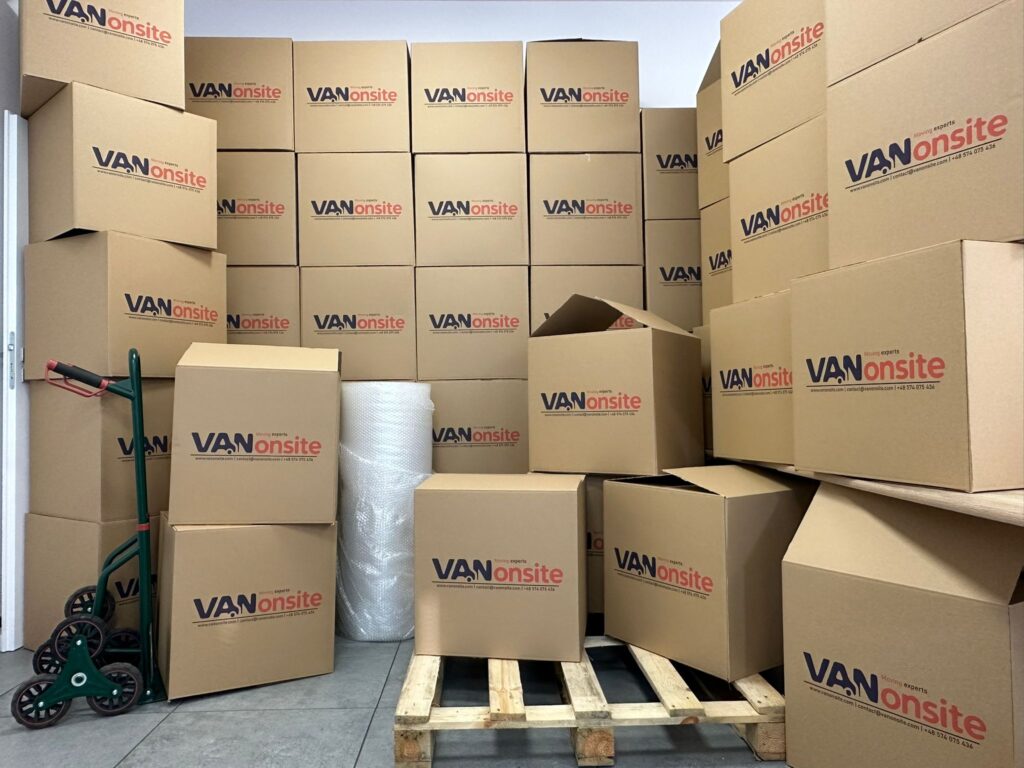
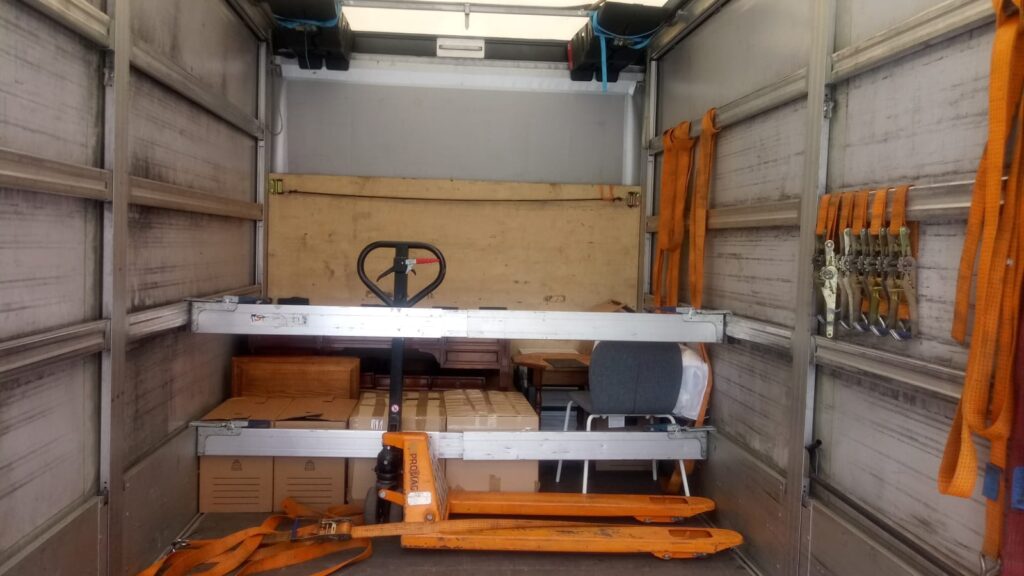
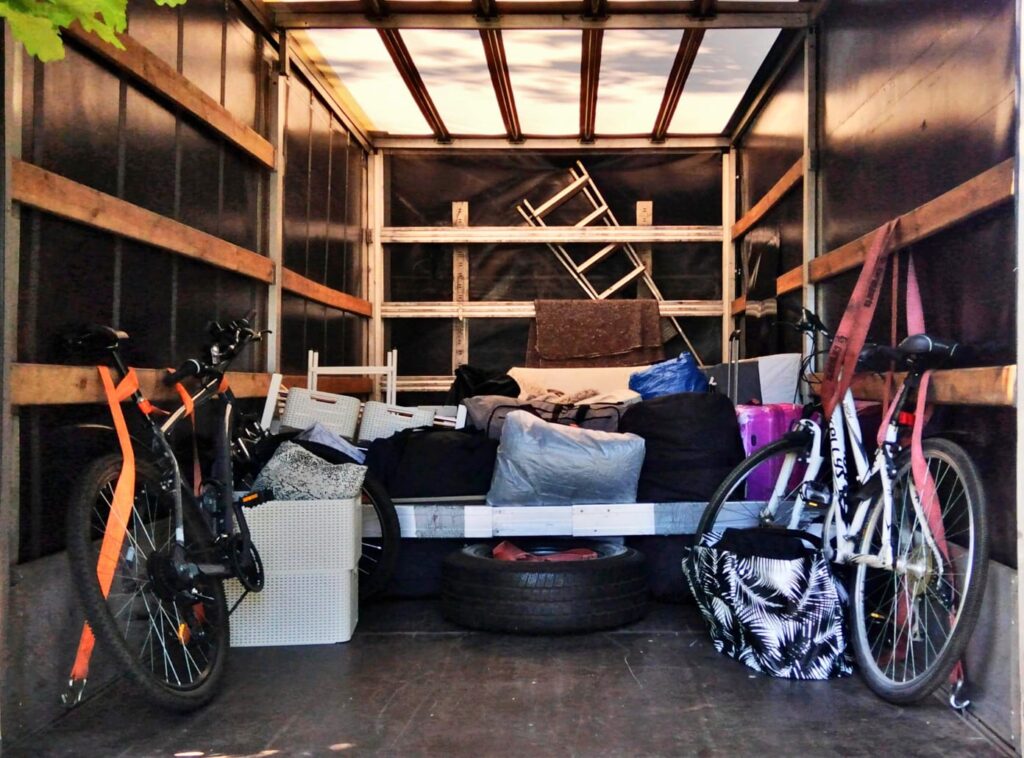
VANonsite Furniture Removals can help protect valuable pieces and reduce damage risk. Good loading, proper securing and reliable delivery matter when furniture is crossing borders.


Student Moves to Switzerland
Students often feel the price of living in Switzerland more sharply because income is limited. Rent, insurance and food can dominate the budget. A room in a shared apartment may still cost CHF 700 to CHF 1,400 per month in popular cities.
| Student Cost Category | Monthly Estimate |
|---|---|
| Shared room or small studio | CHF 700 to CHF 1,800 |
| Health insurance | CHF 250 to CHF 500 |
| Groceries | CHF 350 to CHF 650 |
| Local transport | CHF 60 to CHF 120 |
| Mobile and internet share | CHF 30 to CHF 80 |
| Study materials and leisure | CHF 200 to CHF 600 |
| Estimated total | CHF 1,590 to CHF 3,750 |
For students, a compact man and van move can be ideal. You may not need a large vehicle. You may need speed, careful timing and a realistic price. VANonsite Student Removals can support smaller relocations with professional care and secure transport.
Office and Business Moves to Switzerland
The price of living in Switzerland matters for individuals, but businesses must also think about setup costs. Office rent, staff salaries, insurance, furniture and equipment can all be substantial.
For office removals, time is money. A delayed desk installation or missing equipment can disrupt work for days. VANonsite supports Office Removals and Office Furniture Installation, which is useful when a company needs a controlled move with clear delivery timing.
Business moves often include:
- Desks and chairs.
- Monitors and IT equipment.
- Archive boxes.
- Meeting room furniture.
- Reception items.
- Specialist tools.
- High value office furniture.
For premium or fragile deliveries, White Glove Delivery adds another layer of care. This is useful when items need careful handling, room of choice delivery or a more refined service experience.
How to Lower the Price of Living in Switzerland
You cannot make Switzerland cheap. You can make it smarter.
The price of living in Switzerland becomes easier to handle when you remove waste from your first 90 days. Most overspending happens because newcomers try to solve every problem at once.
Use this strategy:
- Rent smaller for the first year.
- Choose a canton with realistic commuting costs.
- Compare health insurance carefully.
- Cook at home 70% to 80% of the time.
- Buy some furniture second hand.
- Move only belongings that are worth transporting.
- Use a professional man and van service instead of chaotic self moving.
- Keep an emergency fund of at least 1 to 2 months of living costs.
- Track recurring subscriptions.
- Avoid lifestyle inflation after your first Swiss salary.
The price of living in Switzerland punishes guesswork. It rewards planning. A little discipline at the beginning can save thousands of francs during the first year.
Budget Example: Single Professional Moving to Zurich
Imagine a single professional moving to Zurich with one bedroom worth of belongings. The lifestyle is comfortable, but not extravagant.
| Category | Monthly Cost |
|---|---|
| Rent | CHF 2,300 |
| Utilities | CHF 250 |
| Health insurance | CHF 430 |
| Groceries | CHF 650 |
| Transport | CHF 120 |
| Mobile and internet | CHF 90 |
| Leisure | CHF 500 |
| Total monthly cost | CHF 4,340 |
First month setup may include:
| Setup Cost | Amount |
|---|---|
| Rental deposit, 3 months | CHF 6,900 |
| First month rent | CHF 2,300 |
| Temporary accommodation | CHF 1,200 |
| Furniture and essentials | CHF 1,500 |
| Moving service | Route and volume dependent |
| Emergency buffer | CHF 2,000 |
This example shows why the price of living in Switzerland must be planned before arrival. A strong salary helps, but cash flow matters even more during the transition.
Budget Example: Family Moving to Lausanne
Now imagine a family of four moving to Lausanne or the Lake Geneva area. They need a larger apartment, more insurance, a bigger food budget and careful school planning.
| Category | Monthly Cost |
|---|---|
| Rent | CHF 4,200 |
| Utilities | CHF 520 |
| Health insurance | CHF 1,450 |
| Groceries | CHF 2,000 |
| Transport | CHF 500 |
| Mobile and internet | CHF 220 |
| Leisure and children activities | CHF 1,200 |
| Total monthly cost | CHF 10,090 |
For a family, the first month can become a serious financial mountain. A rental deposit alone may reach CHF 12,600 on a CHF 4,200 apartment. Add moving, insurance, temporary accommodation and home basics, and the relocation budget can pass CHF 25,000.
In this situation, booking the right VANonsite vehicle is not a small detail. It protects the whole move. A family cannot afford avoidable delays when school, work and housing deadlines are already pressing.
Should You Rent a Van Yourself or Use a Man and Van Service?
At first, self moving can look cheaper. Then reality arrives. Fuel, tolls, border paperwork, loading, unloading, parking access, damage risk, insurance limitations and time off work all add weight.
A professional man and van service can be the better choice when:
- You are moving across borders.
- You have furniture or fragile items.
- You need GPS tracking.
- You want help choosing the right vehicle size.
- You cannot risk late delivery.
- You need last minute moving support.
- You want one clear transport solution instead of several improvised steps.
VANonsite is built for European removals, which makes it a strong fit for Switzerland. The service is not only about transport. It is about timing, protection and peace of mind.
Moving Checklist for Switzerland
A move feels lighter when the plan is visible. Use this checklist as your relocation spine.
8 weeks before moving
- Confirm job, study place or relocation reason.
- Research cantons and city costs.
- Estimate the price of living in Switzerland for your household.
- Start looking at apartments.
- Decide what to sell, donate or move.
6 weeks before moving
- Contact VANonsite for moving options.
- Choose the right vehicle size.
- Start your inventory list.
- Check passport and identity documents.
- Review Swiss customs rules.
4 weeks before moving
- Gather lease, job contract and residence documents.
- Compare health insurance providers.
- Book packing service if needed.
- Label fragile and high value items.
- Confirm delivery access at both addresses.
2 weeks before moving
- Prepare an essentials box.
- Print customs documents.
- Confirm moving day details.
- Separate documents from packed luggage.
- Clean and photograph valuable items.
Moving week
- Keep passport, contracts, insurance papers and inventory with you.
- Make sure boxes are labelled by room.
- Protect electronics and fragile items.
- Confirm phone availability on delivery day.
- Track your shipment if using VANonsite GPS support.
First 14 days after arrival
- Register with your commune.
- Finalise health insurance.
- Open or activate a Swiss bank account.
- Set up utilities and internet.
- Check delivered items.
- Keep receipts and customs paperwork.
Final Verdict: Is the Price of Living in Switzerland Worth It?
The price of living in Switzerland is high. Rent can be demanding. Health insurance is a serious monthly cost. Groceries can sting. The first month can feel like a financial storm.
Yet Switzerland gives something back. Safety. Order. Clean cities. Strong salaries. Excellent public transport. Beautiful nature. Reliable infrastructure. A quality of life that feels calm, capable and deeply reassuring.
The key is to move with precision. Know your numbers. Prepare your documents. Choose the right vehicle. Protect your belongings. Avoid panic spending. A move to Switzerland should feel like a confident beginning, not a chaotic leap.
VANonsite helps make that possible with secure removals to Switzerland, GPS tracked transport, flexible man and van services and professional support for homes, students, furniture and offices.
If you are ready to move, plan it properly from the first box: book removals to Switzerland with VANonsite.
FAQ: Price of Living in Switzerland
What is the average price of living in Switzerland for one person?
A single person should usually budget CHF 2,900 to CHF 5,600 per month. The final amount depends mostly on rent, canton, health insurance, groceries and lifestyle.
Is Switzerland more expensive than Germany or France?
Yes. The price of living in Switzerland is usually higher than in Germany or France, especially for rent, groceries, restaurants, childcare and health insurance.
How much money should I save before moving to Switzerland?
A single person should ideally prepare CHF 6,000 to CHF 10,000 for the first month and emergency costs. A family may need CHF 18,000 to CHF 30,000 or more, depending on rent deposit and moving volume.
How much is rent in Switzerland?
Rent varies heavily by canton and city. A 1 bedroom apartment in Zurich or Geneva can cost CHF 2,000 to CHF 3,200 per month, while more affordable locations may be lower.
Is health insurance mandatory in Switzerland?
Yes. Basic health insurance is mandatory for residents. Premiums depend on canton, age, provider, deductible and insurance model.
Can I move household goods to Switzerland duty free?
Yes, in many cases. Household goods may be imported duty free if you transfer your residence to Switzerland and meet customs conditions, including personal use requirements.
Is a man and van service good for moving to Switzerland?
Yes. A man and van service is ideal for students, professionals, small apartments, furniture removals and last minute relocations. VANonsite also offers GPS tracking, which gives extra confidence during an international move.
Which VANonsite option is best for a small move?
Moving One or Moving Basic may suit a small student move, suitcase move or compact apartment relocation. For furniture, Moving Medium or Moving Premium may be a better fit.
How can I lower the price of living in Switzerland?
Choose location carefully, compare insurance, cook at home, avoid unnecessary subscriptions, use public transport wisely and move only the belongings that are worth transporting.
What documents do I need when moving to Switzerland?
You usually need identity documents, an inventory list, customs form, proof of transfer of residence, lease or accommodation proof and supporting work or study documents. Vehicle and pet moves require extra paperwork.