
Furniture removals from France to the UK need more planning than an ordinary local delivery. A sofa collected from a fourth-floor apartment in Lyon, an inherited cabinet leaving a house near Bordeaux, and the contents of a holiday home in Provence all create different requirements for access, protection, vehicle space and customs paperwork.
VANonsite plans the move around the furniture you actually have, the route between both properties and the access at each address. The service can suit a single item, several important pieces or a larger furniture-led household load. Start with the automatic estimate on this page, then use the guidance below to decide whether a part load, dedicated vehicle or last-minute option fits your move.
Get an instant estimate for your France-to-UK move
Enter the real collection and delivery addresses and choose the load size that reflects your furniture. The existing calculator provides an initial route-based estimate; unusual access or fragile pieces are reviewed during practical planning.





What counts as a France-to-UK furniture removal?
A furniture removal does not have to mean emptying an entire property. It may involve one bulky item that cannot travel by parcel courier, selected pieces that are expensive or difficult to replace, or the furniture portion of a wider relocation.
Typical loads include:
- a single furniture item, such as a sofa, wardrobe or chest of drawers;
- a dining table with chairs and removable leaves;
- an antique cabinet, mirror or inherited piece that needs careful handling;
- a bed frame, mattress and bedroom furniture;
- furniture from a French holiday home or second property;
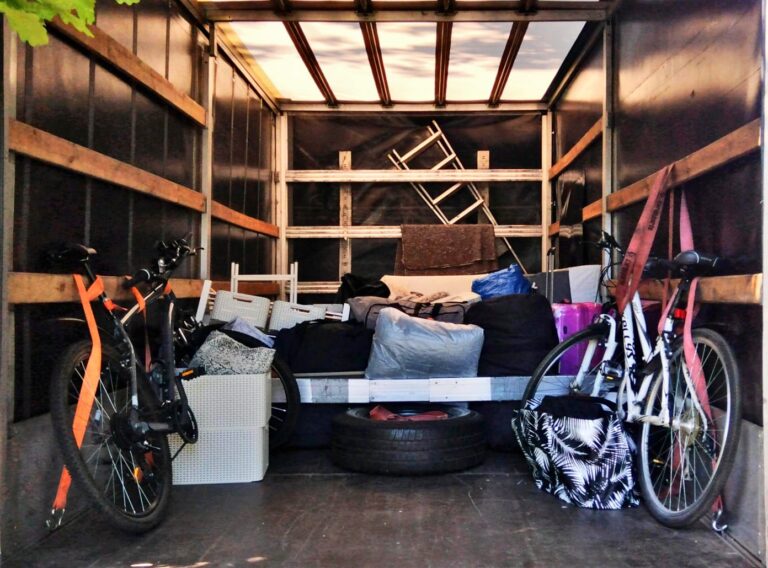
- household furniture accompanied by boxes, artwork or bicycles.
The most useful distinction is not simply “small” or “large”. A marble-topped table may occupy less space than a sofa but require more people, a safer lifting route and a different loading position. A flat-packed wardrobe may take little room after disassembly, while a solid or delicate cabinet may need to travel upright with protection around every edge.
This is why an accurate inventory matters. Item names help, but dimensions, photographs and access details show how the load can be handled and what vehicle space it will need.
Part load, dedicated or last-minute vehicle: which should you choose?
There is no single best transport model for every furniture move. The right choice depends on the pieces, the flexibility of the dates and how much control you need over the route.
| Option | Best suited to | Date flexibility | Handling and route | Main trade-off |
|---|---|---|---|---|
| Part load | Smaller, robust loads that can share planned vehicle space | Usually more flexible | Your load travels as part of a coordinated route | Efficiency depends on matching your collection and delivery with the wider route |
| Dedicated vehicle | Fragile, bulky or time-sensitive furniture; larger loads | Collection and delivery are planned around one booking | The vehicle is assigned to your load for the agreed run | Normally uses more vehicle capacity than a shared option |
| Last-minute dedicated option | An urgent move when a suitable crew and vehicle can be allocated | Limited by live availability | Direct planning for the available route and collection slot | Availability and timing cannot be assumed before the move is checked |
When a part load makes sense
A part load France to UK service can be a sensible choice when the dates are flexible and the furniture can be protected within a shared plan. It may suit a table and chairs, a compact bedroom set, or several pieces from a second home. The inventory still needs to be precise: a “wardrobe” could mean a light, dismantled unit or a large solid-wood piece that dictates the loading order.
Part load does not mean casual loading. The important questions are whether each piece can be protected properly, whether its shape works with the available space, and whether the route matches the agreed collection and delivery requirements.
If the shipment is mainly boxes, luggage and only a few compact items, use the dedicated guide to small and part-load removals from France to the UK. This keeps furniture-specific planning on this page and routes lighter consignments to the correct service intent.
When a dedicated vehicle is the better fit
A dedicated vehicle gives the move its own transport plan. This is often the clearer choice for delicate finishes, glass, awkward dimensions, difficult access or dates connected to a property handover. It also reduces the need to design the load around other consignments.
For urgent circumstances, a France-to-UK transit of 1–3 days may be available as a dedicated or last-minute option. It is not the standard or a guaranteed time for every booking. Feasibility depends on the route, suitable vehicle and crew availability, customs readiness, property access and the collection slot agreed for the job. See how the last-minute moving service is assessed before relying on this option.
How VANonsite plans the move
A good cross-border furniture move is decided before the first item reaches the vehicle. VANonsite uses the inventory, dimensions and property information to plan the handling and route rather than treating every load as a generic “man and van” booking.
- Build the inventory. List each item and note whether it is solid, disassembled, fragile, unusually heavy or accompanied by removable parts.
- Check dimensions and access. Measure the largest pieces and the narrowest relevant door, lift or stair turn. Photographs of the street and difficult internal access can reveal issues that measurements alone miss.
- Match the service to the load. The planning stage determines whether the move is better suited to shared space, a dedicated vehicle or an urgent last-minute run.
- Agree the protection plan. Items that need disassembly, hard edge protection, separate glass packing or a no-stack position should be identified in advance.
- Prepare the customs information. Personal belongings, purchased furniture and inherited goods may not follow the same customs treatment. Consistent descriptions and supporting documents matter.
- Confirm collection and delivery access. Parking distance, floor, lift availability, restricted hours and the final carrying route are checked at both addresses.
- Load in a planned order. Heavy, stable pieces form the safe base where appropriate; soft, glazed and delicate items are kept away from pressure and movement.
The full booking and preparation sequence is explained on how VANonsite plans your move. For broader household moves rather than a furniture-focused load, see international removals from France to the UK.
Furniture protection for a cross-border journey
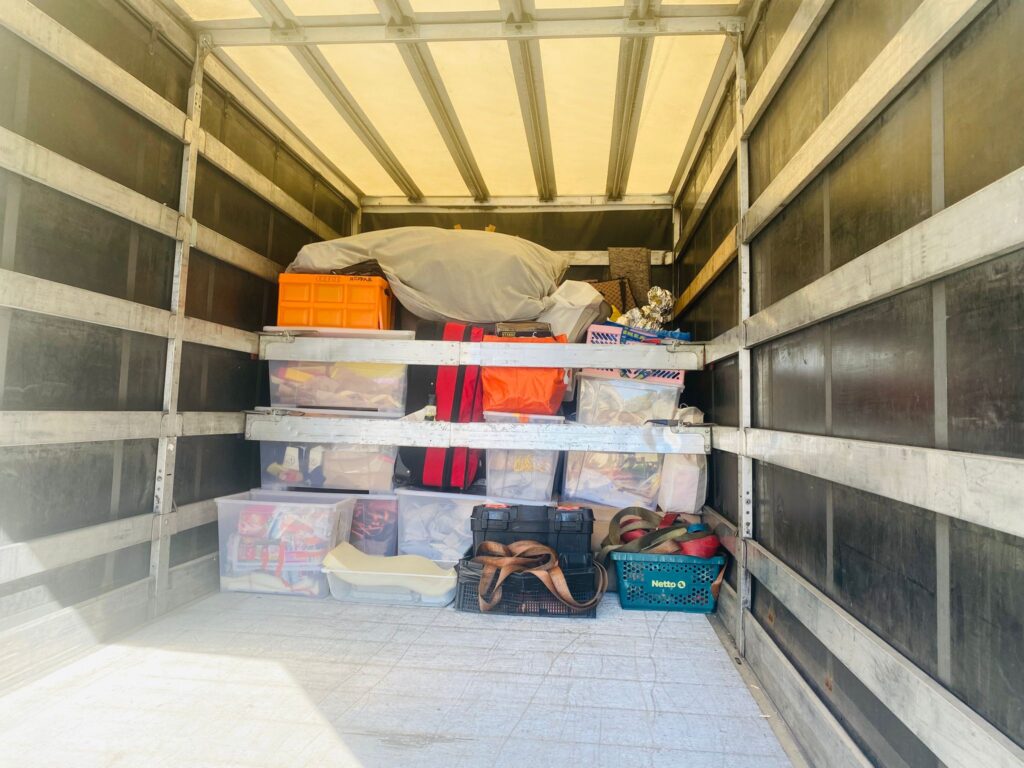
Furniture rarely fails because of the motorway distance alone. Damage is more often connected to doorways, stair turns, unprotected contact points, loose components or movement inside the vehicle. Protection therefore starts with the path from the room to the van.
Disassembly should solve a real handling problem
Removing table legs, bed rails, shelves or wardrobe doors can make an item safer to carry and easier to protect. It should not be done automatically. Older furniture, particleboard fixings and delicate joints may not tolerate repeated dismantling. The decision should consider the construction of the item, the available doorway and whether the part can be reassembled securely.
Every removed shelf, bracket and fixing needs its own labelled bag. Loose drawers and doors should not be left free to move during lifting or transit. Adhesive tape should not be placed directly on polished, painted or veneered surfaces.
Match protection to the material
- Sofas and upholstered chairs: cover clean surfaces before applying outer protection; keep hard-edged boxes and furniture away from upholstery.
- Wood, veneer and lacquered finishes: use clean blankets and edge protection, then secure the covering without adhesive touching the finish.
- Mattresses: use a clean, closed protective cover and keep the mattress away from damp or dirty items.
- Glass and mirrors: remove detachable panels where safe, protect both faces and edges, and clearly identify them as non-stackable.
- Stone or marble: confirm the weight and construction before lifting. Tops may need to travel separately in an appropriate orientation.
- Antiques and inherited furniture: record existing marks and construction details before collection, especially where previous repairs affect safe lifting points.
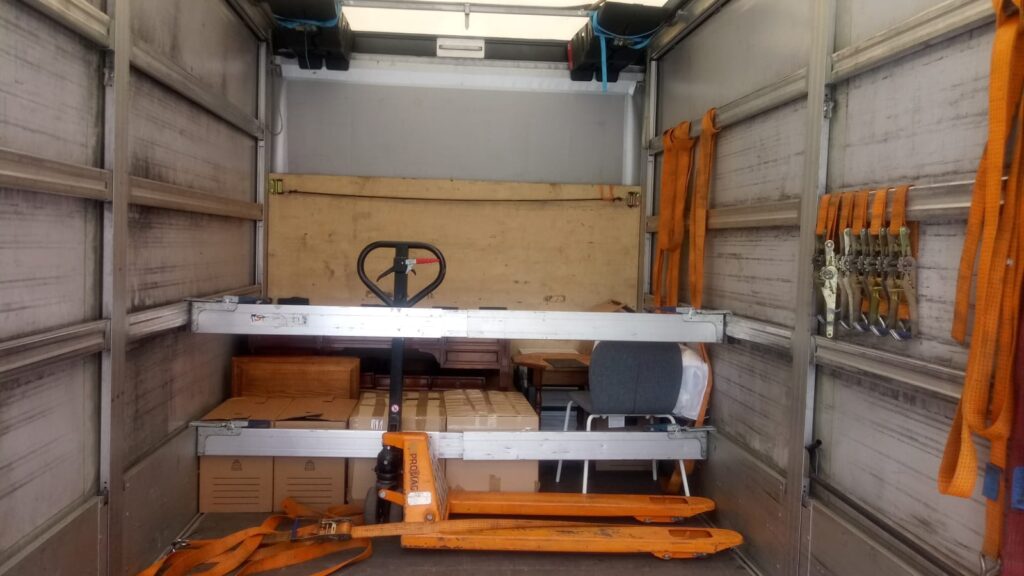
Inside the vehicle, straps should prevent movement without crushing the piece they secure. The loading order must allow enough room for protection and avoid placing dense items on soft or glazed surfaces. A van that is technically large enough can still be the wrong fit if the last pieces have to be forced into unplanned gaps.
VANonsite also provides furniture removals across Europe for routes beyond France and the UK.
Customs when moving furniture from France to the UK
Furniture entering the UK from France is a customs movement. The correct treatment depends on why the goods are moving, who owns them and whether they are personal effects, goods connected with a change of residence, inherited items or a recent purchase. A list that simply says “household contents” is unlikely to give a carrier or customs representative enough information to plan the declaration correctly.
For a personal relocation to Great Britain, you may be eligible for Transfer of Residence relief. HMRC states that the relief has specific conditions and requires prior approval. Its guidance also explains that goods shipped separately need the reference from the ToR1 application for the import declaration. Eligibility is decided by HMRC, not by the removal company, and not every shipment qualifies.
Before collection, check the current official guidance:
As a practical starting point, prepare an itemised inventory with understandable descriptions and realistic values. Keep names and addresses consistent across the documents. Separate personal belongings from newly purchased items, and retain invoices or other evidence when relevant. If goods were inherited, bought for resale, imported for a business or sent from a second home without a transfer of residence, do not assume that personal-relocation relief applies.
Rules also differ depending on whether delivery is to Great Britain or Northern Ireland. If the circumstances are unclear, confirm the route with HMRC or an appropriate customs agent before the collection date. VANonsite can support the transport and customs-information process, but the authority or appointed customs representative determines the declaration requirements and relief eligibility.
Route and property access checks
France to UK furniture transport involves two access plans as well as the international route. A vehicle that can reach a rural house in Normandy may not be suitable for a restricted street in London. Likewise, an apartment collection in Paris, Lyon or Nice may involve loading restrictions, underground parking limits, a small lift or a long carry from the building entrance.
Confirm the following for both addresses:
- where the vehicle can legally and safely stop;
- the approximate distance from the vehicle to the entrance;
- the floor and whether a suitable lift is available;
- the width of narrow doors and the tightest stair or corridor turn;
- building or concierge access hours;
- low bridges, weight limits, gates or narrow lanes near the property;
- whether a parking arrangement or local permission may be needed.
Two kinds of photograph are particularly useful: one showing the likely stopping point from the street, and one showing the tightest internal access point. For an awkward item, add photographs that show its full shape and the parts that can or cannot be removed.
This information is not paperwork for its own sake. It helps determine the vehicle, crew and protection method before the day of collection. It also prevents a heavy cabinet or sofa from arriving at a doorway that was never realistically large enough.
What determines the price?
There is no responsible fixed price for every France-to-UK furniture move. The cost is calculated from the actual route and work involved, not from the item name alone.
The main factors are:
- Collection and delivery locations: the distance, crossing plan and how each address fits the route;
- Volume and load shape: the space needed after protective wrapping, including pieces that cannot be stacked;
- Weight and handling: solid wood, stone, large glass panels and awkward shapes may affect the crew or equipment required;
- Property access: stairs, lifts, long carries, restricted streets and limited loading times change the work at each end;
- Packing and preparation: the level of protection, disassembly and reassembly agreed for the job;
- Timing: flexible part-load dates, a dedicated run and an urgent last-minute option use vehicle capacity differently;
- Customs readiness: missing or inconsistent information can prevent the move from following the planned schedule.
The automatic estimator on this page is the quickest way to connect your route and load size with an initial estimate. Use accurate information rather than choosing a smaller load category to obtain a lower figure. Final planning still depends on the real inventory and access conditions, so photographs and dimensions make the next step more useful.
Common mistakes that cause damage or delays
1. Describing the load too loosely
“Furniture and boxes” does not show whether the van needs room for a dismantled bed, a heavy cabinet or a marble table. A weak inventory can lead to the wrong space or protection plan.
2. Mentioning access only on collection day
A narrow staircase, controlled parking zone or distant loading point changes how the crew approaches the job. Send the details and photographs while the move is being planned.
3. Leaving shelves, drawers and fittings loose
Loose parts can move, open or fall during handling. Remove and label them where appropriate, or secure them without putting adhesive directly on the furniture finish.
4. Mixing customs categories
Personal effects, purchases, inherited pieces and commercial goods may require different evidence or treatment. Describe them honestly and check the applicable guidance before shipping.
5. Using protection without a loading plan
A wrapped sofa can still be damaged by a hard-edged box placed on top of it. Protection, position and restraint have to work together throughout the journey.
Frequently asked questions
Can VANonsite move one piece of furniture from France to the UK?
Yes, a single furniture item can be assessed as its own move or as a possible part load. Provide the collection and delivery locations, dimensions, material, weight if known, photographs and access information. A sofa, wardrobe or antique cabinet can require very different handling even when each is described as one item.
Is a part load safe for furniture?
It can be, provided the pieces are suitable for the planned space and are protected and restrained correctly. Part load is most practical when dates are flexible. Delicate surfaces, glass, unusual shapes or furniture that cannot be stacked may make a dedicated vehicle the better option after the inventory is reviewed.
What customs documents do I need after Brexit?
The requirements depend on the goods and the reason for the move. Start with an itemised inventory and check the current GOV.UK guidance. If you are transferring your normal residence to Great Britain, you may need HMRC approval and a ToR reference before the goods are shipped. Eligibility cannot be assumed.
Can VANonsite pack or dismantle the furniture?
Packing and disassembly needs should be identified when the move is planned. Some tables, beds and wardrobes travel more safely in sections; other pieces can be weakened by unnecessary dismantling. Share photographs of the construction and access so the appropriate preparation and protection can be discussed for the actual item.
What access information should I provide?
For both properties, provide the floor, lift availability, likely parking position, carrying distance and any narrow door or stair turn. Add a street photograph and a photograph of the most difficult internal access point. For bulky pieces, dimensions of both the furniture and the narrowest opening are especially useful.
How does the automatic estimate work?
The estimator uses the route and load information entered in the existing form to produce an initial estimate. It does not replace the practical checks needed for unusual furniture or difficult access. Enter the real load size and route, then provide clear dimensions, photographs and access details when the move is reviewed.
Plan your furniture move from France to the UK
Start with the automatic estimate and describe the load as it really is. The route, protected volume, furniture construction and access at both properties determine the right plan. Flexible, robust loads may suit part-load transport; fragile, awkward or time-sensitive furniture may be better served by a dedicated vehicle. If the move is urgent, VANonsite can check whether the conditional 1–3 day last-minute option is feasible for the route and available resources. The form already on this page gives you the first practical step without adding unnecessary fields.
For planning in the opposite direction or wider France services, visit removals to France.