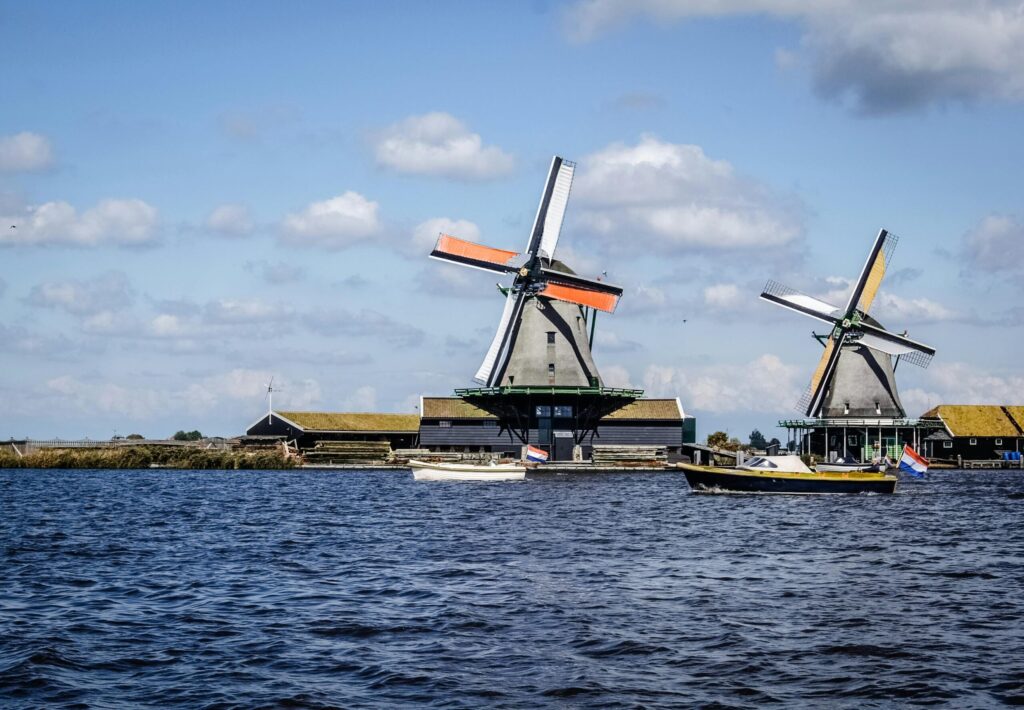
Ireland vs Netherlands is a choice between two successful European countries with very different daily rhythms. Ireland gives English-speaking newcomers an immediate language advantage, a strong international business environment and access to dramatic coast and countryside. The Netherlands offers compact cities, extensive cycling infrastructure and fast connections to continental Europe. Both can provide an excellent life, but both also have difficult housing markets.
The right answer is not found in a generic cost-of-living percentage. Compare the exact job, take-home income, home, commute, healthcare position and immigration route available to your household. Then calculate the move using the same inventory and date window. Ireland is an island, so the ferry and route choice are part of the removal plan; the Netherlands can be reached entirely by road from much of continental Europe.

Ireland vs Netherlands: the quick verdict
| Your priority | Ireland may fit better | The Netherlands may fit better |
|---|---|---|
| Language | You want to work and handle daily life mainly in English from arrival | You can begin in English but are willing to learn Dutch for wider career and community options |
| Career | Your confirmed role connects to technology, pharmaceuticals, finance, medical devices, business services or another international employer | Your confirmed role connects to technology, logistics, engineering, energy, food, trade or international services |
| Daily transport | Your home and work are connected by a practical bus, rail or driving route | You want cycling to replace many local car journeys and rail to connect compact cities |
| Housing | You have secured a suitable home and understand the commute beyond central Dublin | You have secured housing despite shortage pressure in the most popular Dutch regions |
| Geography | You value island life, Atlantic coast and an English-speaking social environment | You value continental connections, dense cities and short international rail or road routes |
Practical answer: Ireland often suits people who place English-language work and social life first. The Netherlands often suits people who prioritise cycling, urban connectivity and access to mainland Europe. Choose only after housing is realistic, because an attractive salary loses much of its value when rent or commuting consumes the difference.
Cost of living: housing changes the result
Old tables of average rent, groceries and transport age quickly and rarely compare equivalent places. Dublin should not be measured against a smaller Dutch city, just as Amsterdam should not be compared with rural Ireland. The type of tenancy, property condition, energy performance and commute can matter more than the country average.
Create two budgets from current offers:
- net income from the actual employment contract;
- rent, deposit and temporary accommodation for a real property;
- utilities based on the building and its energy performance;
- healthcare or insurance costs for each household member;
- childcare, school transport and partner commuting;
- car ownership, public transport and bicycle costs;
- flights or ferries for regular visits to family.
Ireland’s Residential Tenancies Board publishes a quarterly rent index based on registered tenancies, while Statistics Netherlands monitors housing availability and affordability. Use these sources to understand market pressure, then verify the address with current listings. They are more reliable than a global crowdsourced average but still cannot tell you what home you can secure next month.

Housing: prepare before accepting the start date
Ireland’s rental market is not one Dublin price. Cork, Galway, Limerick and regional towns have different supply and commuting trade-offs, while a role described as hybrid can still require regular office attendance. Check the tenancy, landlord and property before transferring money. If temporary accommodation is necessary, include its full duration in the relocation budget.
The Dutch market is also tight. Amsterdam is only one option: Rotterdam, The Hague, Utrecht, Eindhoven and surrounding towns can create different combinations of rent, work and rail access. Registering at the address may be important for administration, so confirm that the proposed tenancy supports legal registration.
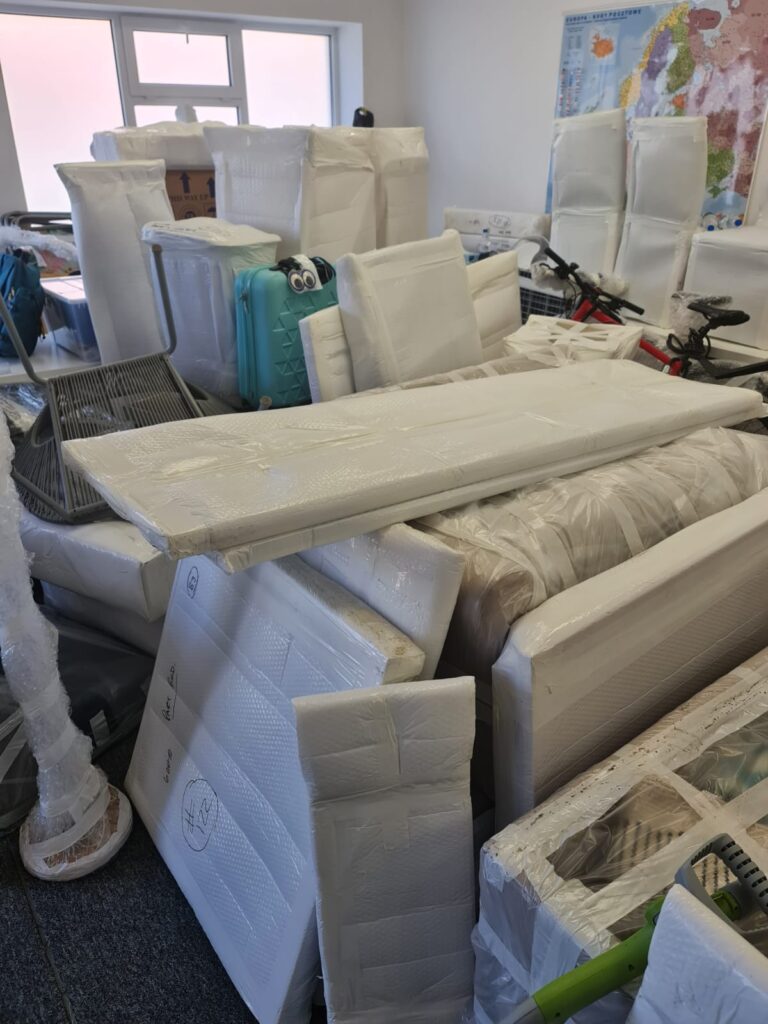
Property access affects the move in both countries. Irish rural lanes, city-centre loading restrictions, narrow Dutch staircases and lift booking rules can change the crew, equipment and schedule. Share entrance photos, floor information and the walking distance from vehicle to door before the quotation is confirmed.
Jobs and salaries: compare net outcomes
Ireland hosts international employers across technology, pharmaceuticals, medical devices, finance and business services. English removes one barrier, but it does not remove competition, professional recognition requirements or the need to live within a workable distance of the job. A higher Dublin salary can be offset by housing and commuting.
The Netherlands has major employment clusters in technology, logistics, engineering, energy, food, finance and trade. English is common in selected multinational teams, while Dutch expands the range of roles and supports long-term integration. Do not assume that a job advertised in English guarantees an English-only workplace or public life.
For both countries, compare written offers after income tax, social contributions, pension, insurance, childcare and commuting. Verify probation, notice period, relocation support and how many office days are required. Remote work across borders can create tax and social-security consequences, so obtain advice for the exact arrangement.
Residence, work and registration
Moving to Ireland
Ireland’s official immigration guidance distinguishes EU, EEA and UK nationals from people arriving under other routes. EU free movement allows EU nationals to live and work in Ireland without a visa or employment permit. Many people from outside the EU, EEA or UK need immigration permission, and work may also require an employment permit. People in relevant non-EU categories staying for 90 days or more must register their immigration permission.
Read the current route that applies to you at Ireland’s Department of Justice immigration guide and official work and immigration requirements.
Moving to the Netherlands
If you plan to stay in the Netherlands for more than four months, government guidance says to register with the municipality within five days of arrival. The municipality records you in the Personal Records Database and provides a BSN. Short stays use a separate non-resident registration route. Immigration and work permission still depend on nationality and purpose.
Use the official checklist: what to arrange when moving to the Netherlands.
Healthcare: the systems are not equivalent
Ireland has a public health system, but access and charges depend on the service and your eligibility. A medical card can provide access to certain services without charge, but eligibility is assessed and should not be assumed. Some residents also choose private insurance. Confirm your own position with the Health Service Executive before relying on a budget estimate.
The Netherlands generally requires people who live or work there to take out Dutch health insurance. Official guidance says to arrange it quickly and no later than four months after arrival when the obligation applies, with coverage from the arrival date. The position can differ for some students, international employees and people insured through another system, so use official guidance rather than a flat monthly figure.
Language, culture and integration
Ireland’s English-speaking environment can reduce the friction of opening accounts, speaking to a landlord and joining workplace conversations. Irish remains an official language and an important part of national culture, but English dominates most daily interactions. Integration still depends on the location, workplace and effort made beyond an expat circle.
In the Netherlands, strong English proficiency can make arrival manageable, particularly in international cities. Dutch becomes more valuable as soon as you look beyond a multinational office, deal with local information or build long-term community ties. The communication style can feel direct; that is a cultural difference, not evidence that one country is friendlier.
Transport and everyday mobility
Ireland’s mobility depends heavily on location. Dublin has buses, rail and tram services, while many regional or rural routines are easier with a car. A beautiful countryside address may add a substantial commute, and island geography makes international road travel dependent on a sea crossing.
The Netherlands is built around shorter distances. Cycling can handle school, shopping and many commutes, while rail links major cities. That does not mean every Dutch address is car-free: industrial areas, late shifts and rural locations still need route-specific checks. Test the home-to-work journey at the times you will travel.
Families and students
Families should compare available childcare, school places, housing space and both adults’ commutes. English-language schooling is not the same as an available place near the home. In the Netherlands, cycling can simplify daily logistics when the route is safe and practical; in Ireland, location choice can determine whether a car is essential.
Students should check tuition classification, housing, immigration conditions, healthcare and permitted work. English-language study may make Ireland attractive, while the Netherlands offers many international programmes, but neither option solves the housing search. A small removal can include boxes, a bicycle, books and a desk without paying to replace useful belongings.
Moving between Ireland and the Netherlands
Ireland and the Netherlands are both in the EU customs territory, but the physical route still needs specialist planning. A direct sea route and a route crossing Great Britain have different schedules and transit considerations. Ferry availability, sailing cut-offs, driver hours, access and the agreed delivery window all affect the plan. An inventory remains essential even when ordinary used household goods move within the EU.
Start with removals to Ireland or removals to the Netherlands. For the wider transport scope, see international removals, packing services and storage.
Information VANonsite needs before confirming the move
- collection and delivery postcodes;
- preferred date windows and any fixed handover deadline;
- a room-by-room inventory with dimensions for bulky pieces;
- photos of stairs, lifts, entrances and parking access;
- fragile items and furniture needing dismantling or extra protection;
- any storage gap between collection and delivery.
The move can then be matched to a part-load or dedicated option. Where availability, ferry route, access, documentation and the agreed collection slot permit it, the Last-Minute Moving service may support a 1–3 day transit option. This is conditional on the confirmed route and schedule, not a universal delivery promise.
Decision checklist
- Compare net income from actual job offers.
- Shortlist three homes you could realistically secure.
- Test the commute at normal working hours.
- Confirm immigration and work rights for every household member.
- Check healthcare and insurance using official guidance.
- Include childcare, travel home and temporary accommodation.
- Create a removal inventory and photograph access.
- Request comparable quotations using the same dates and belongings.
If the budgets remain close, spend a normal working week in both shortlisted locations. Make the commute, shop for groceries, view neighbourhoods after dark and speak to letting agents. The most accurate Ireland versus Netherlands answer is a specific address and routine, not a broad lifestyle ranking.
Frequently asked questions
Is Ireland or the Netherlands cheaper?
Neither country is always cheaper. Dublin and Amsterdam are both expensive housing markets, while regional alternatives create different results. Compare current rent, net salary, insurance and commute for the exact places available to you.
Which is easier for English speakers?
Ireland provides the clearest language advantage because English is used throughout daily life. The Netherlands is highly accessible in English in many international settings, but learning Dutch expands career and community options.
Do removals between Ireland and the Netherlands require customs clearance?
Ordinary household goods moving between two EU countries are different from an import from the UK, but the chosen route may involve transit through Great Britain. Vehicles, restricted goods and unusual items can have separate requirements. Confirm the inventory and route before collection.
Can VANonsite handle a small move?
Yes. A few boxes, bicycle and desk can be planned differently from a furnished family home. The appropriate service depends on verified volume, access, route and timing, which is why the quote form asks for the move details.