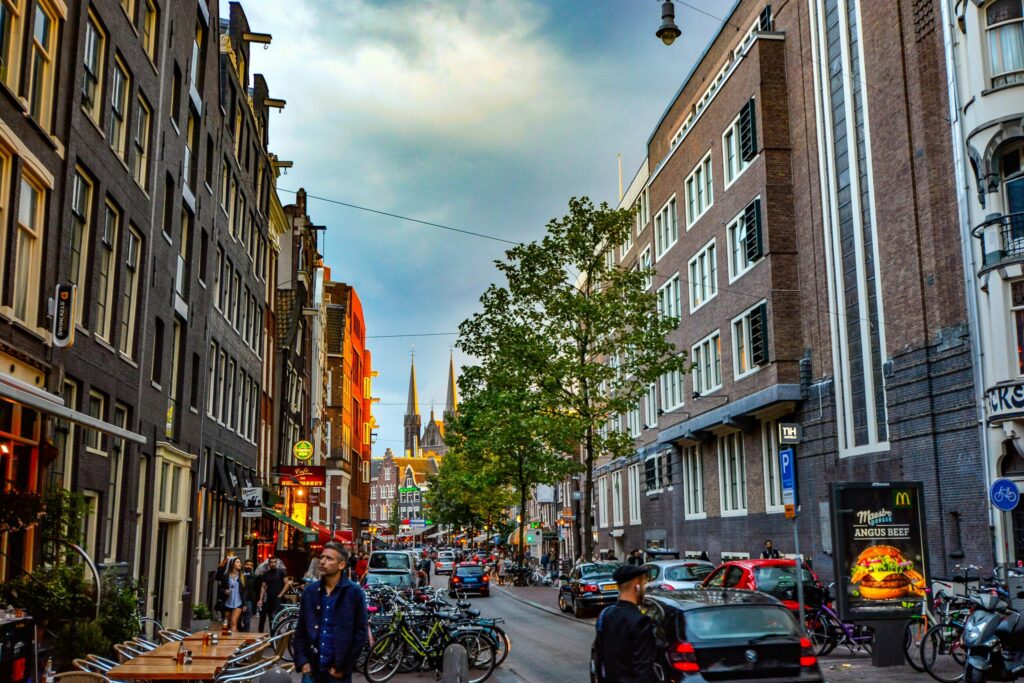
Netherlands vs Germany: the short answer
The Netherlands is often the easier first landing for an English-speaking professional who wants compact cities, cycling and a highly international working environment. Germany is often the stronger choice for someone who wants a wider range of cities, a larger industrial job market, more regional variety and the option to live outside the most expensive urban centres.
Neither country is automatically better. Your result will depend far more on the job offer, city, housing contract, family needs and language plans than on a national ranking. Use the comparison below to decide which trade-offs fit your move.
Netherlands vs Germany at a glance
| Decision factor | Netherlands | Germany |
|---|---|---|
| Best first fit for | English-speaking professionals, people who value cycling and compact urban life | People comparing several city sizes, industrial careers and more varied regional lifestyles |
| Housing search | Can be highly competitive in the Randstad and university cities | Varies sharply by city, with very different conditions in Munich, Berlin and smaller regional centres |
| Working in English | More realistic in international companies, especially in larger business and technology hubs | Possible in international teams, but German becomes more important for administration and many local roles |
| Daily transport | Excellent for cycling and short multimodal journeys | Stronger range of long-distance rail, regional transport and car-oriented options |
| Administration after arrival | Municipality registration, BSN and Dutch health insurance are central steps | Address registration and continuous health insurance are central steps |
| Good choice if you want | A smaller, connected country with an international feel | A larger country with more choice between major cities, smaller towns and distinct regions |
This is a practical comparison, not a promise about salary, rent or waiting times. Those change by city, household and contract. Compare a real job offer and a real housing option rather than relying on a national average.
Cost of living: compare the city, not only the country
A simple “Germany is cheaper” or “Dutch salaries are higher” answer is rarely useful. Amsterdam and Munich can both put heavy pressure on a relocation budget, while a move to Groningen, Leipzig, Eindhoven or a smaller regional centre can produce a very different calculation. Rent is only one part of it.
Build your comparison from the actual monthly commitments you will have:
- net income after tax and compulsory deductions;
- rent, deposit, service charges and whether utilities are included;
- health insurance and any household-specific cover;
- childcare, school travel or commuting costs;
- parking permits, public transport or the cost of keeping a car;
- the one-off cost of temporary accommodation if your permanent home is not ready on arrival.
The housing contract deserves particular attention. A furnished listing may reduce what you need to move, but it can also include items you do not want to pay to transport twice. An unfurnished property may mean more volume on moving day, stair access checks and a longer unloading slot. Photograph access, measure the largest furniture and confirm whether there is a lift before asking for a removal quote.
Jobs, salaries and language
The Netherlands has a concentrated international employment market. Amsterdam, Rotterdam, The Hague and Eindhoven attract multinational, logistics, technology, finance and engineering teams. It is possible to begin some roles in English, but Dutch still matters for long-term integration, local services and career progression outside international workplaces.
Germany offers a much larger and more varied employment map. Berlin is not the same labour market as Munich, Hamburg, Frankfurt, Cologne or a manufacturing region in the south. International roles exist, but German is more likely to affect the number of jobs available to you and how independently you can deal with landlords, local offices and service providers.
Compare offers using annual net income, working hours, probation terms, location and the cost of the commute. A higher gross salary can lose its advantage if it requires an expensive city-centre home or a long daily journey. If you work remotely, confirm whether the employer permits cross-border or long-term remote work before choosing a home in the other country.
Housing: where the decision often becomes real
Housing availability is often the practical bottleneck in a Netherlands vs Germany decision. Start with three questions: where must you be for work, how long can you tolerate commuting, and what proof will a landlord require?
In the Netherlands, widening the search beyond the most obvious city can help, but only if the rail or road connection suits your working pattern. In Germany, the national picture hides major local differences. A smaller city may offer more space, yet local language and transport frequency can become more important.
Do not schedule the household delivery simply from the tenancy start date. First confirm key collection, parking or loading restrictions, floor level, lift dimensions and the time when the property is actually accessible. In canal districts, historic centres and streets with limited stopping space, the distance from the vehicle to the door can change the crew and handling plan.
Registration and residence after the move
EU citizens can move to another EU country to live, work, study or look for work, subject to the applicable conditions and registration formalities. The European Union explains the general residence rules on its official residence rights page. Non-EU citizens should check the rules for the specific country and purpose of stay before committing to a moving date.
After arrival in the Netherlands
If you will live in the Netherlands for more than four months, the Dutch government says you should register with the municipality within five days of arrival. Registration enters you in the Personal Records Database and provides the BSN used for government and healthcare contacts. See the current steps on Government.nl.
After arrival in Germany
People living in Germany must register their address with the local Residents’ Registration Office. Requirements and appointment availability are local, so check the authority for your destination city before arrival. The federal government portal provides a current overview of housing and registration in Germany.
Administrative rules change. Treat the official pages as the source of truth and verify the documents required for your nationality, household and destination.
Healthcare: mandatory in both, structured differently
Healthcare is not accurately compared by quoting one flat monthly price. In the Netherlands, people who come to live or work generally need Dutch health insurance, with specific timing and exceptions depending on their situation. The Dutch government explains that cover should be arranged as quickly as possible and generally no later than four months after arrival. Check the current compulsory health insurance guidance.
Germany also requires health insurance. Most employees use statutory insurance, while private insurance is available only in particular circumstances. Contributions and eligibility depend on income and status, so a fixed expat premium is misleading. The federal portal describes the difference between statutory and private health insurance.
Transport, daily life and the shape of your week
The Netherlands rewards a compact routine. Cycling can realistically replace many short car journeys, and the combination of bicycle and rail shapes where people choose to live. That is a practical advantage if your home, work and school sit within the same connected urban area.
Germany gives you more geographic choice, but the trade-off varies. A major city may support a car-free lifestyle, while a smaller town or industrial site may make a car more useful. The long-distance rail network connects far more territory, yet your daily experience depends on the regional and local connection closest to your home.
Test the actual door-to-door journey at the times you will travel. A home that looks cheaper on a map can become less attractive once transfers, service frequency and parking are included.
Family life and education
For families, the decisive issue is usually not which national system ranks higher. It is whether a suitable school or childcare place exists near the home you can secure, which language the child will enter, and how the daily journey fits the parents’ work.
Ask schools and local authorities directly about admission dates, catchment areas, waiting lists and required documents. International education can be valuable during a short assignment, but a local school may support deeper integration for a permanent move. This decision should be made before the removal date because it often changes the preferred neighbourhood and the amount of temporary accommodation required.
Which country is better for you?
Choose the Netherlands if…
- your confirmed job is in an international team and you can start in English;
- cycling, compact cities and short multimodal journeys suit your routine;
- you have already solved the housing question in the city or commuter area you need;
- you prefer a smaller country where major urban centres are relatively close together.
Choose Germany if…
- your profession benefits from the larger industrial and regional job market;
- you want to compare several very different cities and regions;
- you are ready to use German for more of your administration and daily life;
- you value access to both large urban centres and smaller towns with different cost and space trade-offs.
If both options still look equal, compare the two real offers you have in front of you. Housing availability, net household income and the daily commute usually reveal the better answer faster than a generic country ranking.
Moving between the Netherlands and Germany
A Netherlands-Germany household move is an intra-EU route. Goods can circulate between EU member states without internal customs duties or routine customs controls, as explained by the European Commission. That does not remove the need for a precise inventory, suitable protection, access planning and correct handling of restricted or unusual items.
A move between Great Britain and either country is different because it crosses the EU customs border. The paperwork depends on the direction, residence status and goods. VANonsite checks the route and inventory before collection so the transport plan can reflect the actual border and access requirements.
For an accurate quote, send:
- collection and delivery postcodes;
- a clear inventory or room-by-room photos;
- the preferred collection and delivery window;
- floor level, lift details, parking distance and any restricted access;
- items that need dismantling, packing or two-person handling.
Depending on the volume and deadline, the practical choice may be a cost-efficient part-load or a dedicated vehicle. A last-minute collection can sometimes be arranged, but availability must be confirmed for the route and date.
Plan the move with VANonsite




Compare your destination, then price the real route
VANonsite plans European household moves around the actual volume, access and timing. Check the destination service page, enter the route and inventory, and receive an automatic initial quote without changing the details you have already prepared.
Frequently asked questions
Is it better to live in Germany or the Netherlands?
The Netherlands may suit you better if you want compact cities, cycling and an international workplace where English can be enough at the start. Germany may suit you better if you want a wider choice of regions, a larger industrial job market and more variation in city size. A confirmed job, housing offer and commute are better decision tools than national averages.
Is Germany cheaper than the Netherlands?
Germany can offer more lower-cost regional options, but the answer changes by city. Munich may be more expensive than a smaller Dutch city, while Amsterdam can be more expensive than many German locations. Compare rent, service charges, insurance, commuting and net income for the exact addresses you are considering.
Can I live in the Netherlands and work in Germany?
Cross-border living and working is possible, particularly for EU citizens, but tax, social insurance and employment rules depend on where you live, work and how often you cross the border. Check the current official rules and obtain professional advice for your circumstances before signing contracts.
Do I need health insurance in both countries?
Health insurance is mandatory in both countries, but the systems work differently. In the Netherlands, residents and workers generally arrange Dutch basic insurance. In Germany, statutory and private insurance have different eligibility rules. Cross-border workers should verify which country’s system applies to them.
Does VANonsite handle moves from Germany to the Netherlands and back?
Yes. VANonsite handles European household and furniture transport in both directions. The team can plan a part-load or dedicated move after checking the inventory, route, access and required timing.