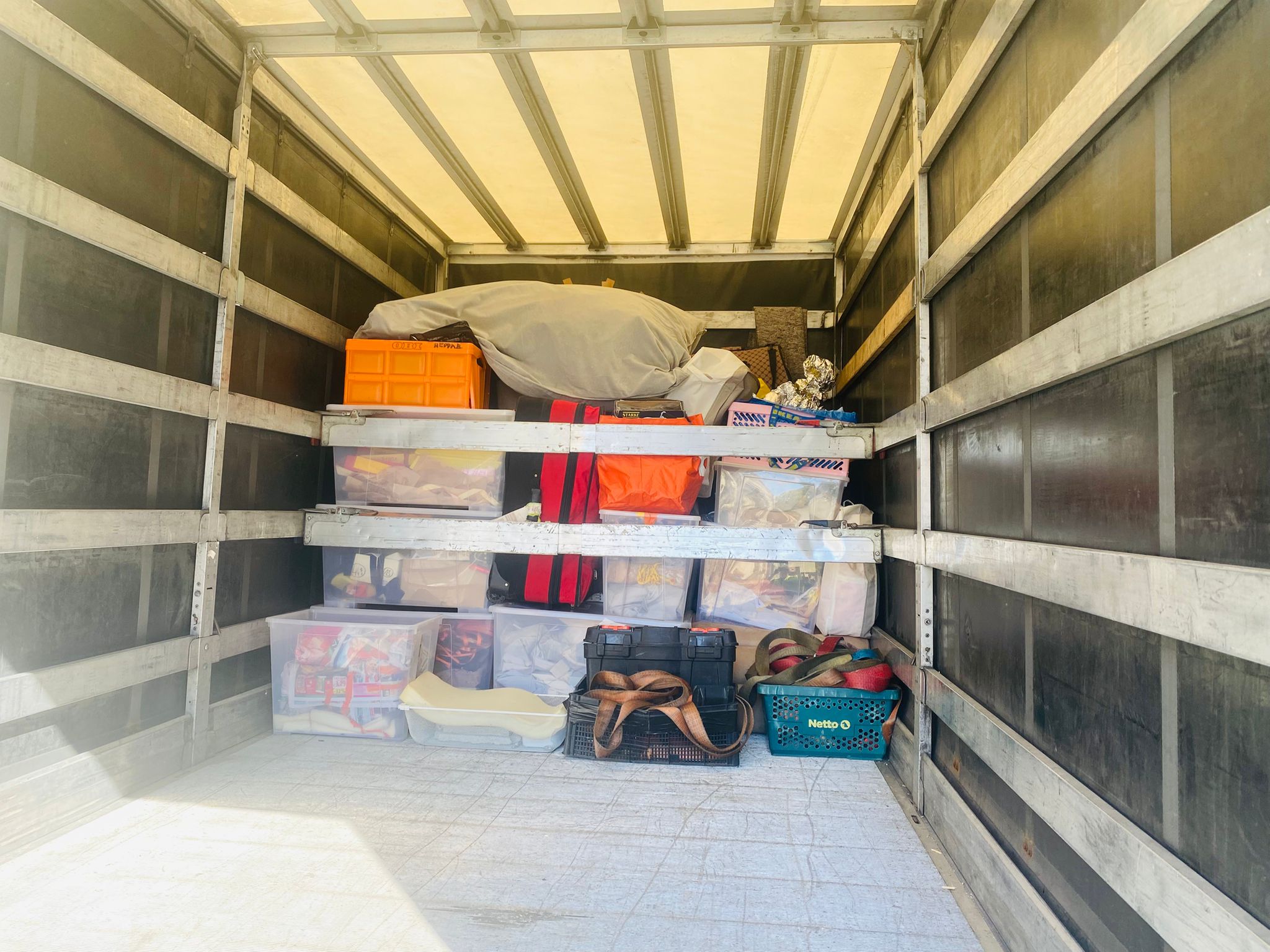

How to move to Estonia depends first on who is moving, why they are relocating and where the household goods begin their journey. An EU citizen moving from Germany, a British family leaving the UK and a non-EU specialist joining an Estonian employer face different residence and customs steps. This guide separates those decisions and shows how to prepare the inventory, access and transport plan. If your destination is already confirmed, the automatic VANonsite quote form on our Estonia service page provides an initial route estimate. Residence permission, tax and customs relief are always decided by the relevant authorities.
How to move to Estonia: the short answer
- Confirm the residence and work route that applies to every household member.
- Secure an address that can be used for lawful residence registration.
- Build a dated, itemised inventory and identify restricted or unusual goods.
- Separate an EU-origin move from an import entering Estonia from outside the EU customs territory.
- Give the removal company both addresses, access photographs, load dimensions and realistic date windows.
- Keep passports, medicines, keys and essential records with you rather than in the vehicle.
The order matters. A transport booking cannot create residence rights, and a residence permit does not automatically establish customs relief for household goods. VANonsite plans the physical relocation around the confirmed route and documents, while the customer remains responsible for immigration, tax and customs declarations unless a separate representative has been formally appointed.
E-Residency is not permission to live in Estonia
Estonia’s digital services attract founders and remote workers, but e-Residency is frequently misunderstood. It provides a digital identity for using selected online services and managing an Estonian company. It does not grant citizenship, physical residence, entry to Estonia or travel rights in the EU. A person who wants to live in Estonia must qualify through the residence route that applies to their nationality and purpose.
Check the current position through the official e-Residency FAQ before making housing or transport commitments. Treat a company registration, employment contract and residence permission as separate questions.
Residence and registration: identify your route first
EU and EEA citizens generally have a different path from third-country nationals. The correct process can also change with employment, study, family relationships or temporary protection. Do not copy a checklist written for another nationality. Confirm the route directly with the Estonian Police and Border Guard Board or a qualified adviser, then align the tenancy and moving date with the official decision.
EU and EEA citizens
Free movement makes relocation more straightforward, but it does not mean there is nothing to arrange. A person settling in Estonia normally needs a suitable address and must complete the applicable residence registration and identity-document steps. The exact procedure and timing should be verified before arrival, especially when the tenancy begins later than the employment or study date.
British and other non-EU citizens
British citizens do not use a UK Transfer of Residence form to obtain Estonian import relief. UK ToR is a British customs process for people importing belongings into the UK. Someone moving from Great Britain to Estonia must instead check Estonian residence rules and the Estonian customs conditions for personal property arriving from outside the EU. Other non-EU nationals should do the same for their own residence category. A visa, a residence permit and duty relief answer different questions and should not be treated as interchangeable documents.
Customs: EU origin and non-EU origin are different moves
| Origin of household goods | Main planning issue | What to prepare |
|---|---|---|
| Another EU member state | Ordinary goods in free circulation normally move within the EU customs territory without an import declaration at an internal border | Accurate inventory, transport record and checks for restricted or exceptional items |
| Great Britain, Switzerland or another non-EU origin | The goods enter the EU customs territory and import formalities can apply | Customs-ready inventory, proof of identity and residence history, transport documents and evidence requested for any relief claim |
| Mixed or unusual shipment | Vehicles, alcohol, tobacco, commercial goods, new purchases and regulated items can follow separate rules | Declare the items before quotation and obtain authority guidance before loading |
The Estonian Tax and Customs Board explains that qualifying people moving from outside the EU may be able to import personal property without import duties when specific conditions are met. Its guidance includes residence-history, prior-possession and continued-use conditions, and it requires supporting evidence. Relief is not automatic. The authority recommends applying well before the goods arrive. Read the current Estonian customs guidance for moving to Estonia.
A useful customs inventory is in English or Estonian, dated and signed, with descriptions and realistic current values. Avoid a single line such as “20 boxes, household goods”. Number the cartons and separate furniture, electronics, tools, artwork and other individually identifiable pieces. For a non-EU import, the sender and recipient shown in the transport documents may also matter to the relief application.
Build an inventory that can be used on moving day
A good inventory is not only a price list. VANonsite uses it to calculate usable load volume, check weight, choose protection, create a loading order and verify delivery. Begin room by room, including storage units, cellars, lofts, balconies and garages.
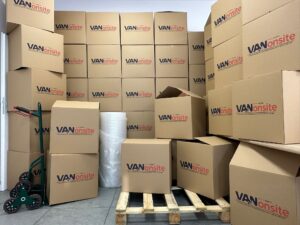
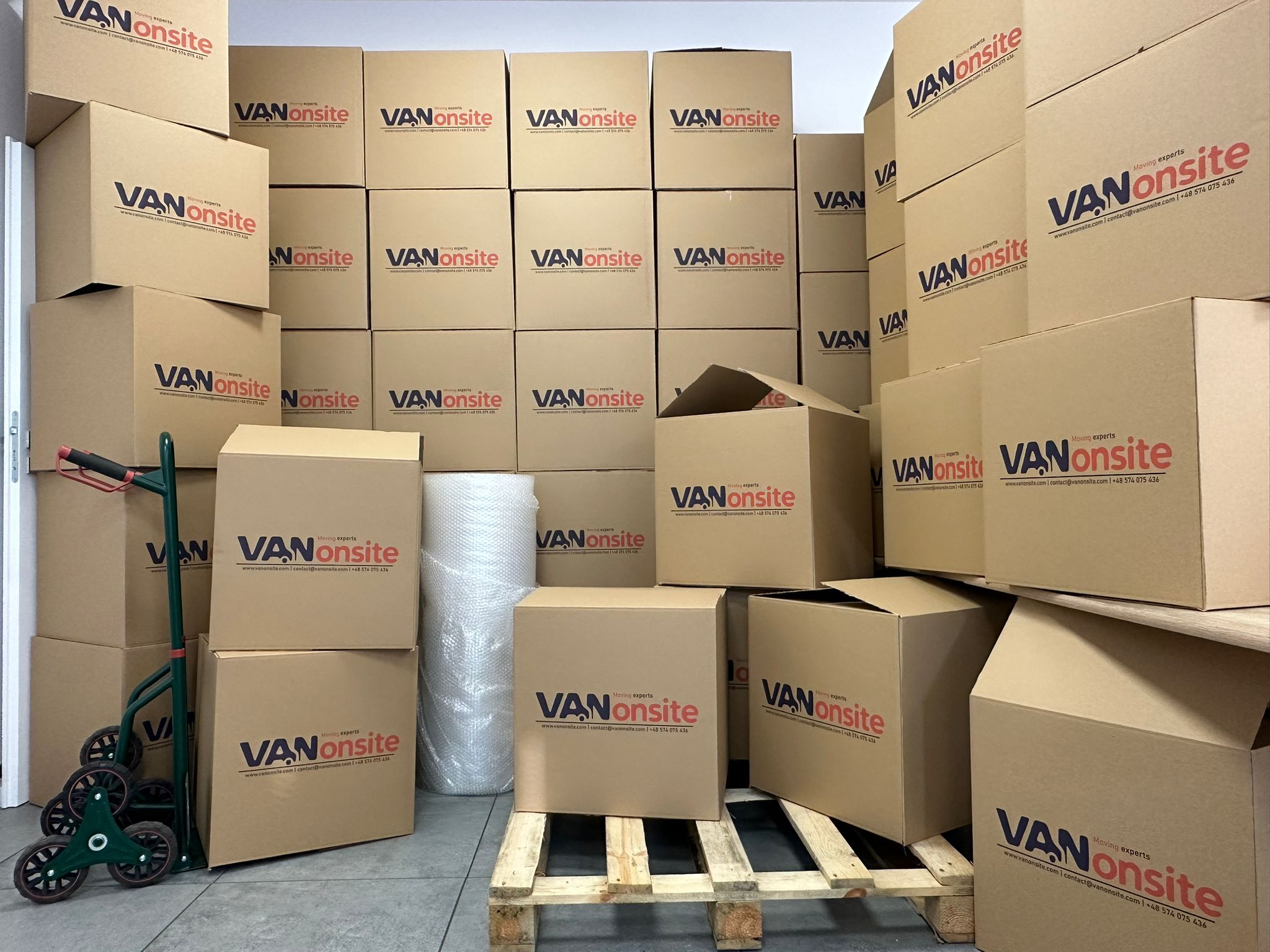
- Cartons: number each box and describe the contents by category, not simply “miscellaneous”.
- Furniture: record width, height and depth, and state whether dismantling is possible.
- Dense items: flag books, records, tools, weights and machinery because payload can become critical before volume.
- Fragile items: identify glass, mirrors, stone, art, instruments and electronics that need specific protection.
- Regulated or unusual goods: declare alcohol, tobacco, food, plants, batteries, medicines, weapons, cultural objects, vehicles, new goods and business stock before booking.
Photographs are most useful when they show scale. Place a tape measure beside bulky pieces, photograph labels on appliances and show how an item must pass through the narrowest doorway or turn. This gives the planner evidence that a bedroom count cannot provide. If glass, artwork, instruments or finished furniture need specialist protection, define the scope of professional packing services before the collection date.
Access in Tallinn, Tartu, Pärnu and regional Estonia
The city name does not describe the final carry. A Tallinn apartment may have controlled street access, a small lift or a timed loading area. A wooden building in Tartu may have a narrow staircase. A coastal or rural property can add an unmade approach, seasonal conditions or limited space to turn a larger vehicle. Winter weather also changes the value of early access checks.
For both collection and delivery, send one photograph of the legal vehicle stopping point and another showing the tightest section between the vehicle and the room. Add the floor, lift-door and cabin dimensions, stair width, gate width, walking distance and any building booking procedure. If access is complicated, a short video beginning at the road and ending beside the largest item is often more useful than ten isolated photographs.
Part-load or dedicated transport to Estonia?
| Service | Often suitable for | Trade-off to confirm |
|---|---|---|
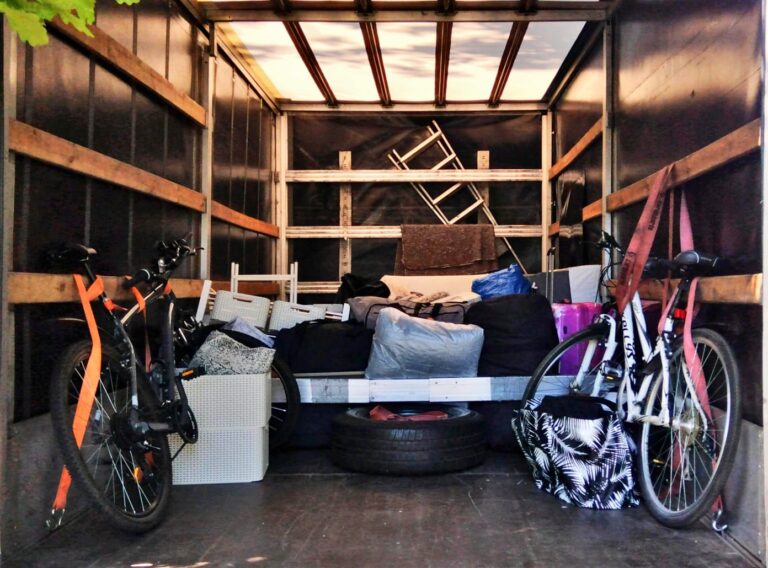
| Part-load | Smaller or medium consignments with flexible dates | The load and timetable must fit a coordinated route and available capacity |
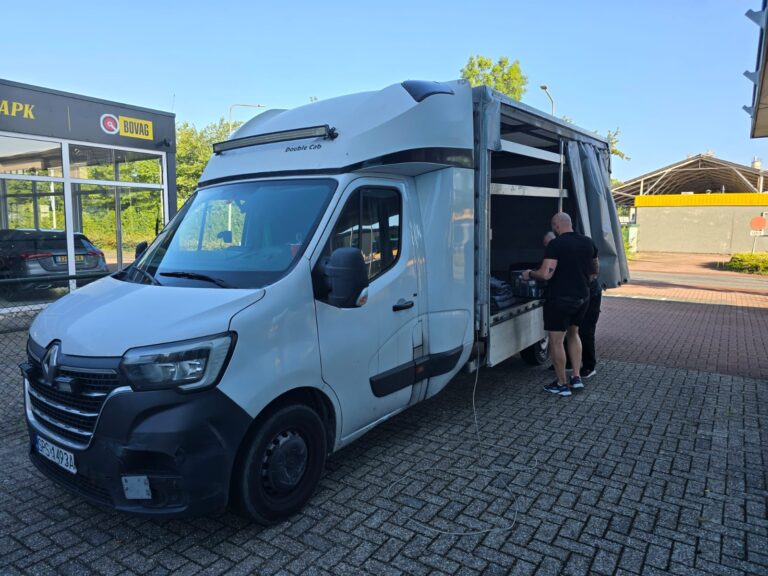
| Dedicated vehicle | Larger households, fixed handovers or exclusive capacity | The final vehicle still depends on measured volume, weight and access |
| Compact dedicated service | Selected furniture, boxes or a time-sensitive small move | Exact dimensions and handling requirements are essential |
Part-load is not automatically the cheapest option, and dedicated transport is not automatically the fastest. Route compatibility, collection flexibility, ferry or crossing requirements, customs readiness, driver-hours rules and property access all affect the plan. For a shipment entering the EU from Britain or another third country, review the separate customs clearance service before capacity is reserved. The commercial removals to Estonia hub owns the service and quotation intent. This article remains the preparation guide, which helps prevent competition between two pages for the same search purpose.
Work, housing and the first-month budget
Do not choose Estonia from a generic table of rent and salaries. Compare a real job offer with homes that are currently available in the area where you would live. In the second quarter of 2026, Statistics Estonia reported national average gross monthly pay of €2,243 and median pay of €1,840, but national figures do not predict a particular profession, county or take-home income. Use the authority’s current wage data and compare it with the actual employment contract.
Build the first-month budget separately from a normal monthly budget. Include the deposit, temporary accommodation, utilities, transport, insurance, residence-document costs, basic household setup and the removal itself. Confirm whether the proposed address can be registered and whether the tenancy includes furniture. Do not transfer money solely to reserve an unseen property without verifying the landlord, contract and address.
A practical timeline for the move
Before booking transport
- Confirm the residence route and expected decision sequence.
- Verify the destination address, keys and registration position.
- Prepare the inventory, photographs and access information.
- Identify customs requirements if the goods begin outside the EU.
- Choose a realistic date window around employment, tenancy and document readiness.
One week before collection
- Freeze the agreed inventory and report additions immediately.
- Confirm parking, lift reservations and responsible contacts.
- Label cartons by number and destination room.
- Separate prohibited, restricted and carry-with-you items.
- Check that the customs and transport documents match the sender, recipient and goods.
At delivery
Make sure keys, access permission and a responsible adult are available in the agreed window. Direct numbered cartons to their rooms and check individually listed furniture against the inventory. Report visible damage or a missing item promptly under the agreed terms. Decide furniture placement before any contracted assembly begins so the crew is not repeatedly moving heavy pieces through the property.
How long does a move to Estonia take?
There is no reliable country-wide promise. Timing depends on origin, destination, service type, route availability, access, customs readiness and the agreed collection slot. Part-load must fit a coordinated route, while a dedicated vehicle gives greater schedule control but remains subject to the actual journey and legal driving requirements. Where availability, route, access, documents and the confirmed collection slot permit, VANonsite’s Last-Minute Moving service may support a 1 to 3 day transit option. This is assessed individually and is not a standard guarantee for every Estonia move.
Frequently asked questions
Do I need e-Residency before moving to Estonia?
No. E-Residency is a digital business identity and does not grant a right to live in Estonia. Check the residence route for your nationality and purpose separately.
Do household goods from the UK need an Estonian customs process?
Goods arriving from Great Britain enter the EU customs territory, so import formalities can apply. Relief may be available when the official conditions are met, but the Estonian authority decides eligibility. Prepare the inventory and residence evidence before dispatch.
Can I use the British ToR form for a move to Estonia?
No. The UK Transfer of Residence process concerns imports into the UK. A move into Estonia must follow Estonian and EU rules.
Can VANonsite move a few boxes or selected furniture?
Yes, subject to the goods, route, access and available capacity. Exact dimensions and weight help the team compare part-load with compact dedicated transport.
What gives the most accurate removal estimate?
Provide both addresses, preferred and flexible dates, a complete inventory, dimensions of bulky items, photographs or a video survey, floor and lift information, parking distance and details of fragile or regulated goods. A bedroom count alone is not enough.
Turn the Estonia plan into an accurate route estimate
VANonsite combines the inventory, access, origin and document readiness into one operational plan. Use the automatic estimator above, then send photographs and dimensions so the team can verify the right vehicle and service.
See removals to Estonia options