
Furniture removals UK to Germany start with the pieces you actually want to send. Measure each item, decide what can be dismantled and check the narrowest doorway or stair turn at both addresses. Then confirm the packed load, handling and documents with VANonsite. A sofa that fits the vehicle but cannot reach the German apartment needs a different plan before collection, not a workaround on delivery day.
This guide covers furniture collected in the UK for delivery in Germany. Give the exact collection postcode, including whether the origin is in Northern Ireland, so the transport and customs arrangements can be checked for that location. For an item list collected elsewhere, use our broader furniture removals to Germany guide.
VANonsite can assess furniture, packing and access together. Send photographs of sofas, wardrobes, beds, tables and fragile pieces, plus the floor, lift and vehicle stopping point at each property. Request your UK-to-Germany furniture quote through the existing Germany service form. The figure is sent by e-mail; confirm the inventory and written scope before booking.
| Load | Type | Limit | Check |
|---|---|---|---|
| Few items | Moving One | 1 m³, 100 kg | Size |
| Light pieces | Moving Basic | 5 m³, 300 kg | Weight |
| Mixed load | Moving Medium | 10 m³, 500 kg | Space |
| With boxes | Moving Premium | 15 m³, 1,100 kg | Access |
| Large load | Moving Premium Plus | 30 m³, 3,500 kg | Order |
| High volume | Moving Full House XXL | 90 m³, 20,000 kg | Crew |
These are the published VANonsite package limits, not a rule for the size of every physical vehicle. Both volume and weight must fit, including protective materials and any furniture that cannot be stacked. A heavy cabinet can reach the weight limit before the available space is used. The cost also depends on the route, access, packing, date windows and the handling you request.


Decide which furniture belongs in the move
Start with the new property rather than the old room. Check where the sofa, bed or wardrobe will stand, whether it fits through the entrance and whether you still need it. Keeping a valued piece can make sense; paying to move a cabinet that cannot be installed does not.
For each item, record what it is made from, its condition and any loose or delicate parts. A glass top, polished finish or weak flat-pack joint changes the preparation. Take photographs before wrapping so the original condition and dismantled parts are clear at collection and delivery.
A household relocation and the delivery of newly bought furniture are different customs situations. Tell VANonsite which applies before the quote is finalised. Do not label a new purchase as used household goods or assume that a removal booking grants customs relief.
What changes on the UK-to-Germany route?
The furniture has to pass through two properties as well as a cross-border route. A narrow UK hallway, a Channel crossing and a German building time slot can each affect collection and delivery. Confirm the actual route and both handover windows before arranging key exchanges around an expected arrival.
Before anything is lifted, key details should be clear:
- How much furniture is going.
- Which items are fragile, heavy, antique, or oversized.
- Whether large pieces can be dismantled.
- How easy collection and delivery access will be.
- What capacity, payload and crew the packed load requires.
- Which documents may be required for customs.
Protect the parts that will meet pressure: sofa arms, table edges, wardrobe corners and glass panels. Do not assume that a wrapped piece can be stacked or that the same securing method suits every finish. Flag heavy, tall or unstable furniture so the loading plan can account for it.
Use descriptions that match the shipment: for example, a used oak dining table, six chairs and one sofa, with quantities and condition noted. Add dimensions, dismantled parts and values where requested for the relevant customs procedure. A single line reading “furniture” gives neither the crew nor the customs process a useful inventory.
Agree the contact method and available progress updates with VANonsite. GPS tracking can be discussed for the booking, including which stages it covers. A ferry crossing or a handover should not be confused with uninterrupted visibility of every item from room to room.
Agree the handling included in your booking
Separate transport from the tasks around it. Who packs the furniture, dismantles the bed, carries it down the stairs and reassembles it in Germany? Ask for those responsibilities in the written scope. A quote for vehicle transport alone is not the same service as inside collection and room placement.
For a few pieces with flexible dates, compare a shared consignment with exclusive vehicle capacity. For a larger or fixed-date move, ask which option can meet the actual handover requirements. Neither a “man and van” label nor a large package confirms the number of crew or the handling included.
Discuss these parts of the job with VANonsite before booking:
- Collection from your UK home, flat, storage unit, student accommodation, or office.
- The crew and lifting support needed for the dimensions, weight and access.
- Wrapping, blankets, securing and any specialist preparation agreed for the items.
- Help with sofas, beds, wardrobes, tables, dressers, cabinets, desks, and chairs.
- European road transport from the UK to Germany.
- Available progress updates and GPS tracking for the booked service.
- Delivery to your new German home, apartment, office, student room, or storage unit.
- Capacity and payload matched to the measured consignment.
- Packing, storage or specialist handling where separately requested and agreed.
Ask about White Glove Delivery if placement or additional care is needed. Specify dismantling, assembly and delicate-item preparation rather than treating them as automatic extras. Confirm the applicable liability or insurance terms separately from the handling plan.
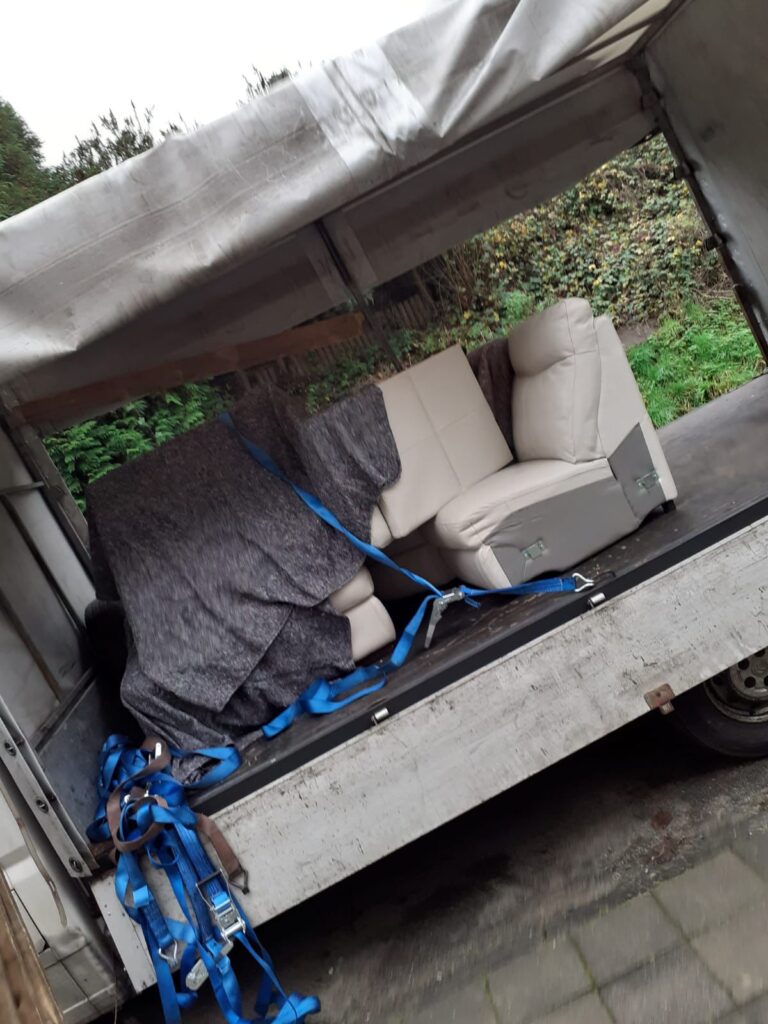
Prepare the furniture move in five steps
Use the same item list for the quote, packing and collection check. Keep it updated when you sell a piece, add cartons or change the delivery address. These five steps connect the load to a workable handover at both properties.
Step 1: Create a Full Inventory
List the sofas, beds, wardrobes, tables, cabinets, desks, mirrors, appliances and cartons that are actually travelling. Count sets and detachable parts separately where necessary. Note condition, delicate materials and any item whose weight is unknown rather than guessing a figure.
Measure the furniture in the condition in which it will travel. A table with its legs removed needs different space from an assembled table; a sofa with protective padding is larger than its bare frame. Do not choose capacity from a generic sofa or bedroom estimate. Send dimensions and photographs so the load can be assessed.
A strong inventory should include:
- Item name and quantity.
- Length, width and height after agreed dismantling and packing.
- Estimated weight if known.
- Photos of bulky or valuable pieces.
- Notes on disassembly.
- Pickup and delivery floor.
- Lift availability.
- Parking restrictions.
- Fragile materials such as glass, marble, mirrors, or polished wood.
Step 2: Check capacity and access together
Check the narrowest point on the carrying route, not only the van space. Include stair turns, lift doors, the lift interior and the distance from a lawful stopping point to the entrance. The table below shows what to record for furniture that can otherwise be difficult to quote accurately.
| Item | Check | Why | Do |
|---|---|---|---|
| Sofa | Packed size | Tight turns | Take photos |
| Tall unit | Loose parts | Weak joints | Agree how to take apart |
| Bed | Bed parts | Extra care | Label fittings |
| Glass or stone top | Size and weight | Extra care | Flag before quote |
| Boxes | Count and size | Total load | List every box |
| Stairs and lift | Gap size | Carry route | Take photos |
The package limits above provide a starting point, but the vehicle and crew still need to match the job. A piece may fit by volume while exceeding payload or being unsafe to stack. Tell VANonsite about a long carry, restricted parking or an item that will not fit the lift before the transport is agreed.
Step 3: Plan Packing and Protection
Identify glass, mirrors, polished wood, stone, loose fittings and weak joints before choosing the protection. Follow the maker or specialist guidance for valuable pieces. Do not put adhesive directly on a delicate finish or start dismantling an antique simply because a flat-pack wardrobe can be taken apart.
Before collection day:
- Empty drawers and cupboards.
- Remove detachable shelves, legs, and glass panels where sensible.
- Protect corners, handles, and polished surfaces.
- Use mattress covers.
- Label dismantled parts clearly.
- Keep screws and fittings in sealed bags.
- Photograph valuable pieces before packing.
- Tell your mover about fragile, oversized, unusually heavy, or high value items.
Discuss professional packing support if you cannot prepare the vulnerable parts yourself. Ask which materials, wrapping and specialist preparation are included for your furniture. Photograph the agreed condition and keep fittings with the correct item.
Step 4: Prepare Documents for UK to Germany Customs
For collection in Great Britain, check the export arrangements and the import procedure for Germany before loading. Professional removals are not automatically covered by traveller allowances for accompanied baggage. Give the exact origin, destination and purpose of the shipment so the applicable procedure can be confirmed.
Before moving day, check the GOV.UK customs declaration checker, GOV.UK guidance on declaring personal goods you bring into or take out of the UK, German Zoll guidance on transferring residence, and German Zoll information on staying in Germany.
| Document or information | Why it may be useful |
|---|---|
| Passport or national ID | Confirms your identity |
| Proof of UK address | Shows your previous residence |
| Proof of German address | Supports the destination and relocation purpose |
| Detailed inventory | Lists furniture and household goods |
| Estimated value of goods | Helps describe the shipment |
| Proof items are personal belongings | Helps separate household goods from commercial goods |
| Transport booking details | Connects the goods to the planned move |
| Any required customs forms | May be needed depending on your circumstances |
Confirm who prepares each declaration, which evidence must be supplied and when it will be checked. Keep accessible copies of the inventory and relevant documents rather than packing the only set inside a wardrobe. The UK departure requirements and the German import decision are separate checks.
Step 5: Book Early Where Possible
Start once the inventory and likely handover dates are known. Book enough time for the actual packing, dismantling, access permissions and document checks. A fixed number of weeks in a general article cannot confirm vehicle availability or a delivery date for your move.
If a tenancy deadline or job start makes the move urgent, use the separate Last Minute Moving service. Transport in 1-3 days is one service possibility, subject to the route, availability, load, access and document readiness. Ask VANonsite to confirm whether it is viable for this booking.


What affects the cost of moving furniture to Germany?
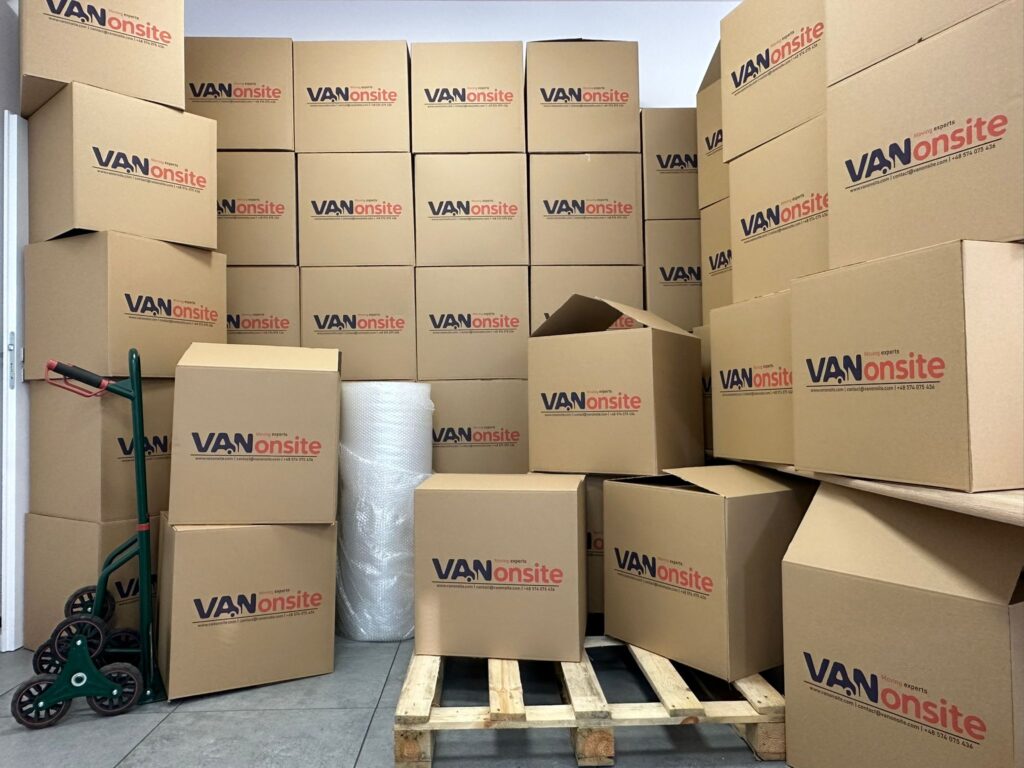
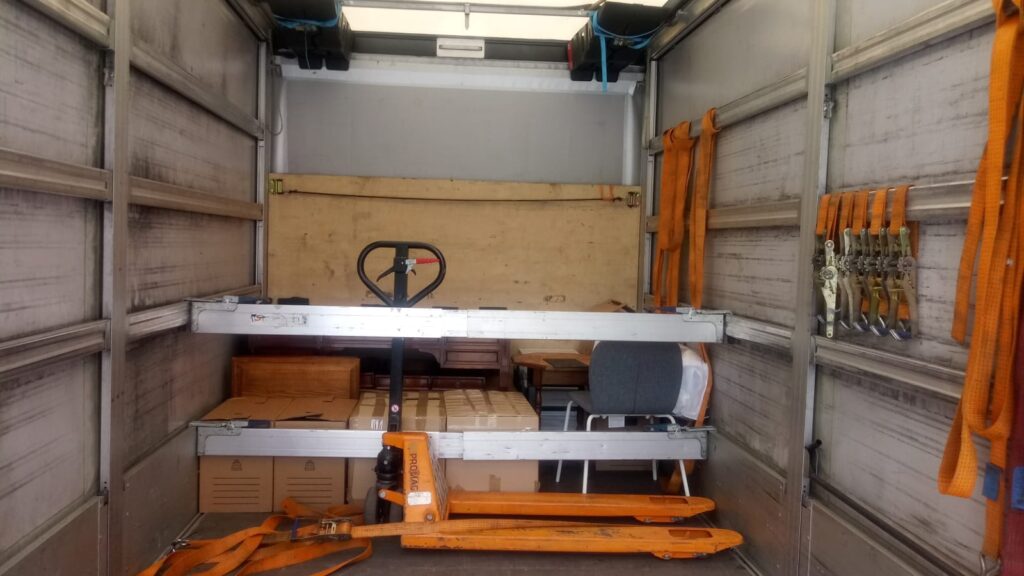
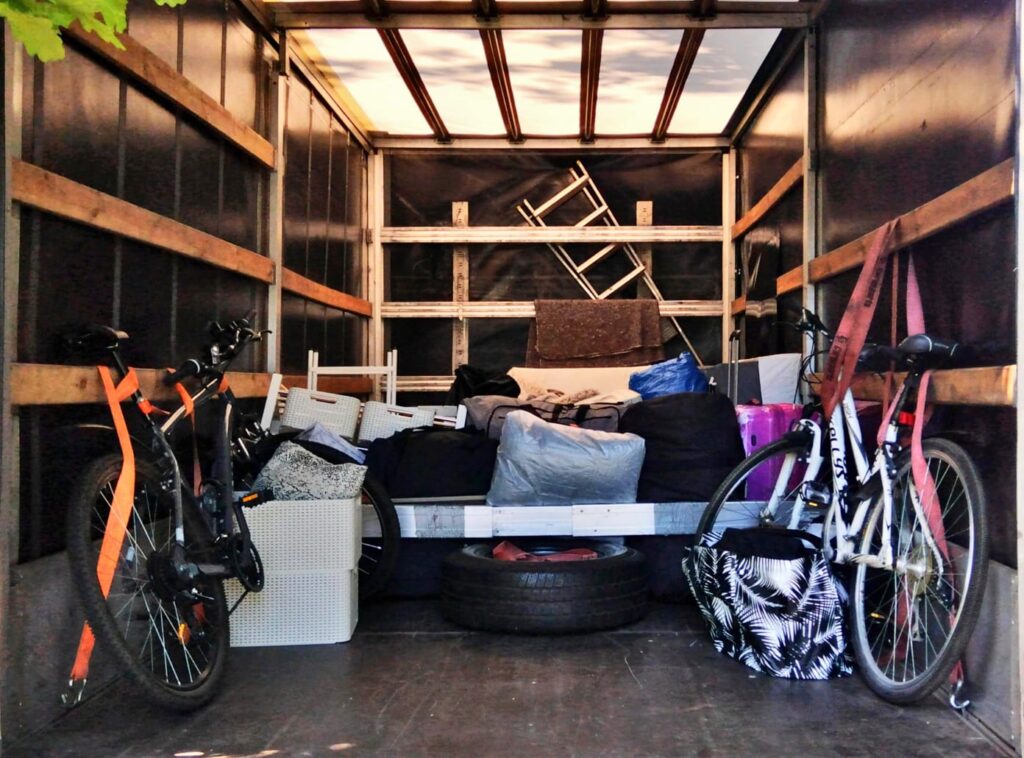
Compare proposals using the same packed item list, two addresses and handling scope. A few pieces collected from the ground floor and a larger load carried down several flights are different jobs even if the road distance is similar. Ask what the quote includes before comparing the headline amounts.
| Cost factor | Why it matters | Ask in the quote |
|---|---|---|
| Volume in m3 | Larger loads need larger vehicles or more space | Which capacity is booked? |
| Weight | Heavy furniture affects loading and vehicle suitability | Does the load fit payload? |
| Distance | London to Berlin differs from Manchester to Munich | Which route is proposed? |
| Access | Stairs, no lift, narrow streets, or parking limits add labour time | Are stairs and carries included? |
| Packing | Materials and preparation affect the work required | Who packs each item? |
| Date windows | A fixed deadline can change the viable transport plan | Are both handovers agreed? |
| Customs paperwork | The relevant export and import tasks must be assigned | Who handles each step? |
| Delivery type | Placement and assembly may be separate tasks | What is explicitly included? |
A package is a capacity limit, not a guarantee that a certain number of bedrooms or furniture pieces will fit. Two similar homes can have very different loads. Check the measured inventory, weight and protective materials together before choosing a category.
Give both postcodes rather than only “UK to Germany”. A collection in Edinburgh and delivery in Munich is a different route from London to Cologne. Add the stopping point, floor, lift and receiving contact at each address so route planning and property access are considered together.
To get a stronger quote, send VANonsite:
- Total number of furniture items.
- Approximate volume or dimensions.
- Number of boxes.
- Pickup and delivery postcodes.
- Floor levels and lift availability.
- Parking restrictions.
- Packing requirements.
- Preferred moving date.
- Any urgent timing needs.
Check whether the proposal includes packing, dismantling, inside carrying, waiting, storage and customs-related services. Confirm any conditions for changes to the inventory or access. The written scope is the useful comparison, not an assumed all-inclusive price.
How Long Do Furniture Removals UK to Germany Take?
Ask for collection and delivery windows for the actual booking. Shared routing, exclusive capacity, Channel crossings, document readiness and property access can affect the plan. Packing time, collection time and time in transit are separate parts of the schedule.
State the point at which somebody can hand over the goods in the UK and the earliest time somebody can receive them in Germany. If the building has restricted lift or loading times, include those details. Keep essentials with you if an unplanned delay would leave you without them.
| Move type | Timing to confirm | Timing factors |
|---|---|---|
| Single item or small load | Collection and delivery windows | Item size, access, delivery distance |
| Student or room move | Handover at both properties | Boxes, mattress, desk, accommodation dates |
| One bedroom flat | Packing and access readiness | Inventory, packing, access |
| Family home move | Packing and collection plan | Volume, customs documents, parking, route planning |
| Full house or office relocation | Crew and capacity schedule | High volume, multiple rooms, heavier furniture |
| Last minute move | Availability for the actual route | Vehicle availability, urgency, document readiness |
Send the inventory, photographs, postcodes, access notes and any immovable deadline together. VANonsite can then assess the available option rather than work from incomplete details. Refer to the Last Minute Moving link above for urgent transport, not as a standard timetable for every shipment.
Which furniture should you move or replace?
Compare the transport and handling cost with replacement, but include what the piece means to you and whether it fits the new property. A valuable cabinet may be worth sending; a damaged wardrobe that cannot be reassembled needs a different decision. Make the choice before finalising the load.
| Worth moving | Think twice before moving |
|---|---|
| Solid wood furniture | Cheap flat pack items that are easy to replace |
| Designer sofas, premium beds, ergonomic chairs | Damaged chipboard wardrobes or unstable shelving |
| Antique, vintage, or sentimental pieces | Low value bulky furniture |
| Quality office furniture | Items that will not fit the new property |
| Dining sets, cabinets, and beds in excellent condition | Furniture with mould, pests, water damage, or structural weakness |
Check condition as well as value. Look at joints, surfaces, removable panels and the maker’s disassembly instructions. Confirm that the piece will fit through the German entrance and into its intended room before deciding that replacing it is unnecessary.
If you are unsure, divide furniture into three groups:
- Must move: valuable, essential, sentimental, or hard to replace.
- Maybe move: useful, but only if space and cost make sense.
- Leave behind: damaged, cheap to replace, too large, or no longer needed.
Update the inventory when you remove a piece. Less furniture may change the capacity needed, but do not assume a particular percentage saving. Route availability, handling and the remaining items still determine the proposal.
Protect surfaces, fittings and fragile parts
A furniture blanket protects a different problem from an edge guard or a secure fitting bag. Prepare each item for its shape and finish, and make the vulnerable points clear to the crew. Wrapping alone does not replace stable loading and an agreed handling plan.
Before moving day:
- Empty drawers, cupboards, and cabinets.
- Remove loose shelves, glass panels, detachable legs, and fragile fittings where possible.
- Photograph valuable items before wrapping.
- Label furniture parts clearly.
- Put screws, bolts, and brackets into sealed bags.
- Wrap corners, legs, handles, and exposed edges.
- Use mattress covers.
- Protect polished wood from friction.
- Keep tools, documents, chargers, toiletries, medication, snacks, and clothes in a separate essentials box.
Keep exposed edges and delicate finishes protected while leaving the crew able to identify the item and its orientation. Do not use a one-material approach for glass, upholstery and polished wood. The table is a preparation checklist, not a guarantee against damage.
| Item type | Recommended protection | Why it helps |
|---|---|---|
| Sofas and armchairs | Furniture blankets, stretch wrap, corner protection | Reduces fabric marks and pressure damage |
| Mattresses | Mattress cover or sealed protective bag | Protects against dust and moisture |
| Glass tables and mirrors | Bubble wrap, cardboard, edge guards, clear labelling | Reduces breakage risk |
| Wooden furniture | Blankets, soft wrap, corner guards | Protects polished surfaces and edges |
| Wardrobes and cabinets | Empty interior, secured doors, shelves packed separately | Reduces loose movement |
| Office furniture | Cable management, labelled parts, protected surfaces | Keeps related parts together |
Discuss specialist preparation with VANonsite for antique joints, large glass panels, stone tops or other fragile pieces. Packing requirements and protection terms should be agreed before collection. An item marked “fragile” still needs suitable materials and a feasible carrying route.
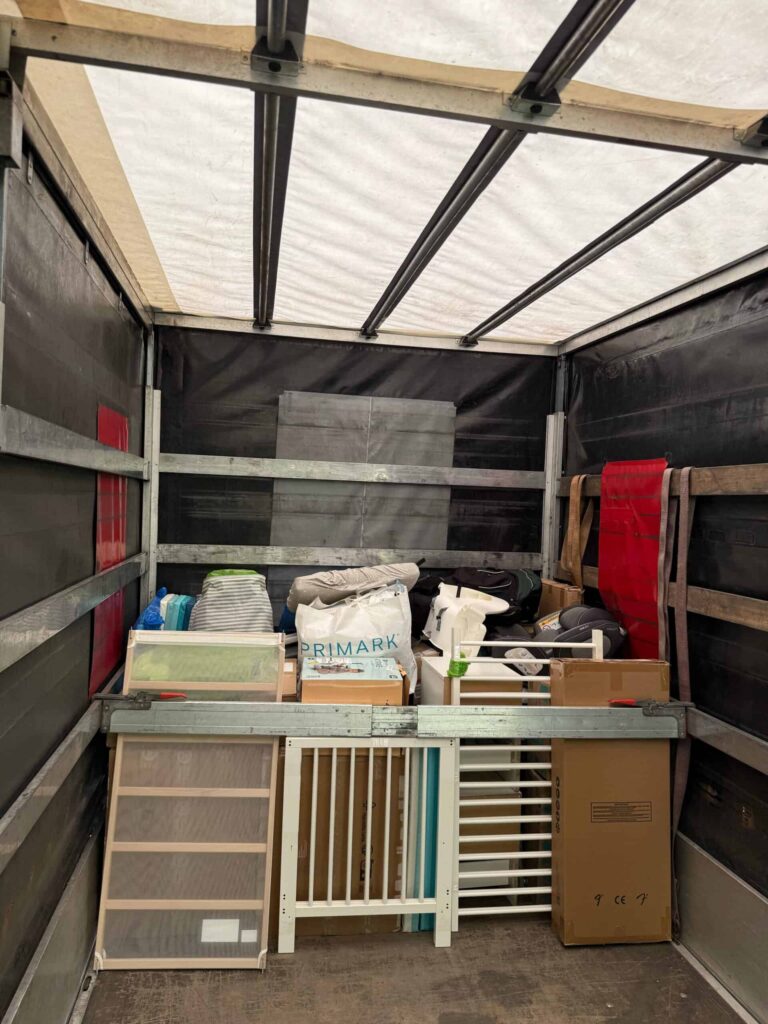
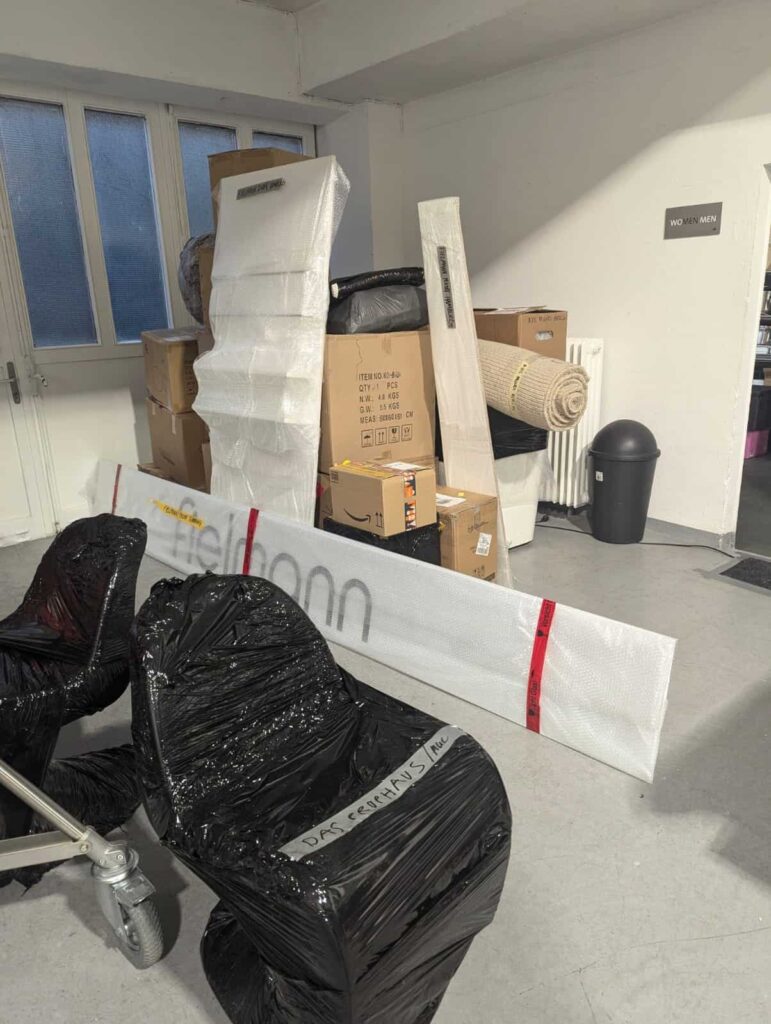
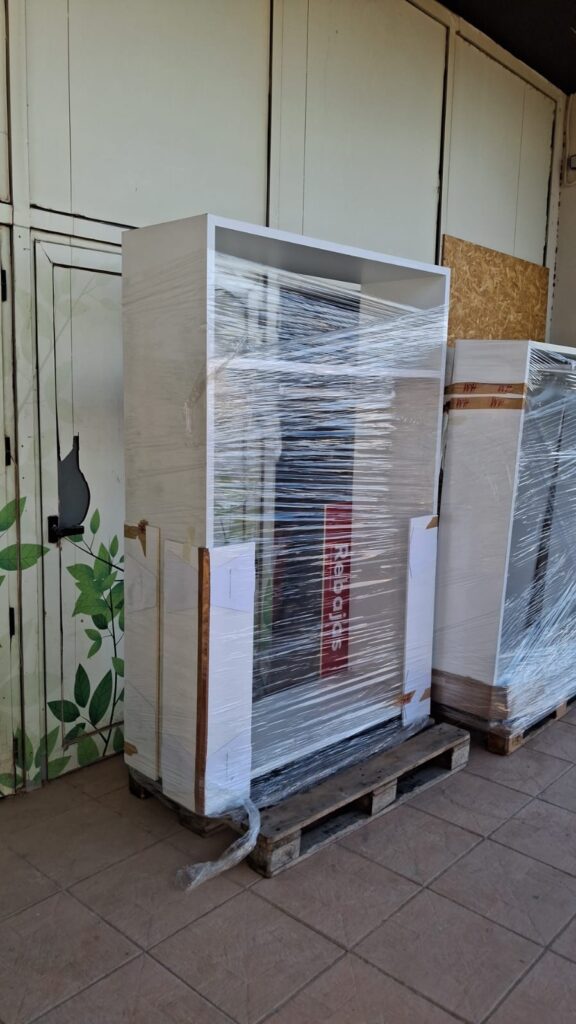
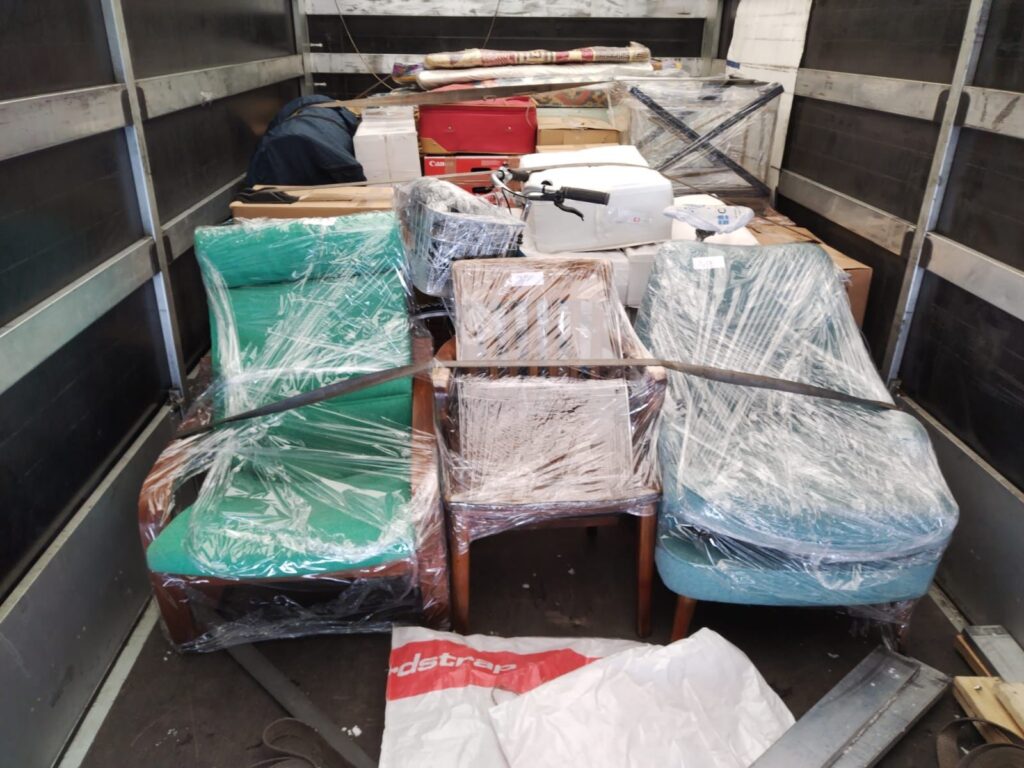
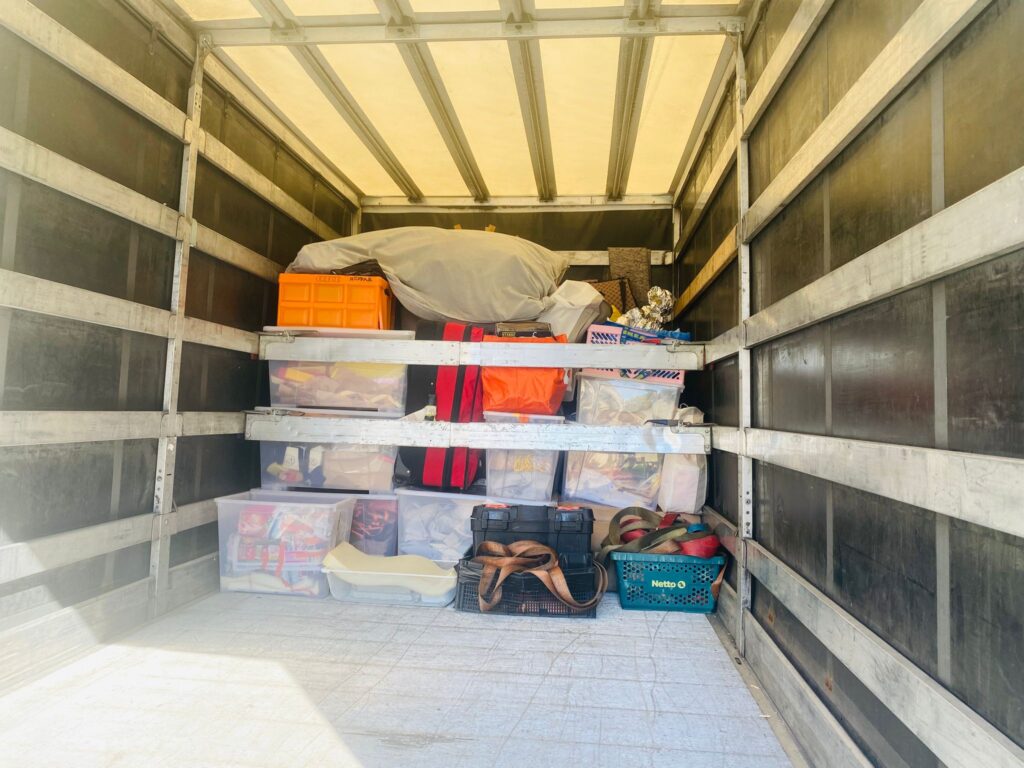
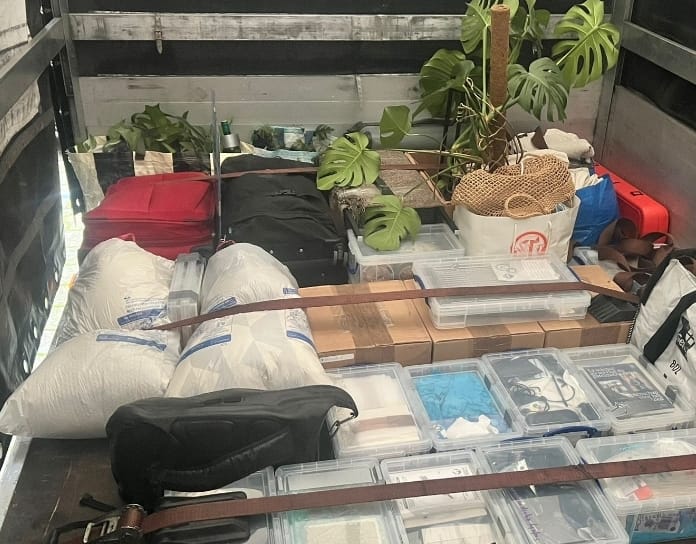
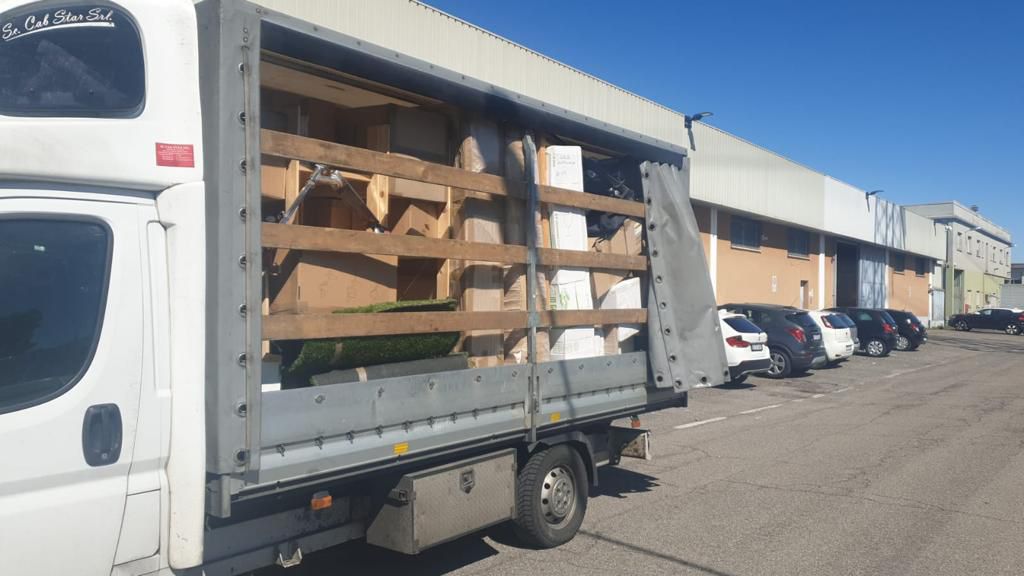
Selected furniture, full household or urgent transport?
Define the scope before selecting a service. Sending a sofa and a desk is a different job from a furnished household, but either can involve difficult stairs or a fixed deadline. The inventory, access and handover windows matter more than the label.
Small Furniture Move
For selected pieces, ask whether a coordinated shared route or exclusive capacity is available. Be clear about date flexibility and whether collection or delivery needs more than one person. Small volume does not make a heavy or awkward item a simple parcel.
The smaller published package limits are:
- Moving One: 1m3, up to 100kg, subject to the packed item dimensions.
- Moving Basic: 5m3, up to 300kg, for a consignment within both limits.
- Moving Medium: 10m3, up to 500kg, including furniture protection and cartons.
Family Home Move
If the furniture forms part of a wider household move, include all cartons, appliances and stored items in the same inventory. Avoid reserving capacity for the visible furniture while forgetting loft, shed or cupboard contents. Confirm the required vehicle and crew with VANonsite.
| Load | Type | Limit | Check |
|---|---|---|---|
| Mixed item list | Moving Premium | 15m3, 1100kg | Weight and packing |
| Larger load | Moving Premium Plus | 30m3, 3500kg | Crew and access |
| High volume | Moving Full House XXL | 90m3, 20000kg | Vehicle and route |
Urgent Relocation
For an urgent UK-to-Germany move, give the hard deadline and explain what is ready now. Include the furniture list, access photographs and document status. The separate Last Minute Moving service may offer 1-3 day transport where viable; VANonsite must confirm the option rather than a general article promising the deadline.
Customs and Required Documents When Moving Furniture from UK to Germany
German transfer-of-residence relief is conditional. Zoll sets tests for prior residence outside the EU, possession and use of the goods, import timing and their continued purpose. Ordinary furniture delivery, new purchases and business stock do not automatically qualify. Check the applicable procedure before agreeing the transport.
Use Zoll’s transfer-of-residence guidance for the German conditions and written application using form 0350. For the UK departure, review the customs declaration checker and the personal-goods guidance. Confirm how these rules apply to your professional removal.
| Document or proof | Why it may be needed |
|---|---|
| Passport or national ID | Confirms your identity |
| Inventory list | Shows what furniture and household goods are being moved |
| Estimated values of goods | Helps describe the load |
| Proof of residence change | Supports transfer of residence context where applicable |
| UK address proof | Shows previous residence or collection point |
| German address proof | Confirms destination and relocation purpose |
| Transport booking details | Connects the goods to the planned move |
| Ownership evidence for high value items | Helps show valuable furniture is personal property |
| Purchase documents for newer items | May be useful if items are recent or high value |
| Packing list or box list | Supports the main inventory |
Keep new purchases and any goods not belonging to the household clearly identified. Do not hide them under a general furniture description. Ask what evidence the relevant customs office requires for your circumstances; a quote and an inventory do not themselves grant relief.
How VANonsite plans a furniture consignment
VANonsite can bring the furniture list, packing needs, capacity and delivery access into one transport plan. Send the difficult details early: the stair turn, the heavy cabinet, the fragile finish or the receiving time slot. Confirm the service responsibilities in writing so the proposed move matches the load.
| VANonsite strength | Why it matters for UK to Germany moves |
|---|---|
| Progress updates | Agree contact and any available GPS |
| Published package limits | Check volume and weight together |
| Selected-item options | Discuss the available shared or exclusive plan |
| Packing Service | Agree item-specific preparation |
| White Glove Delivery | Specify placement and extra handling |
| Home and Office Removals | Include the complete inventory |
| Storage options | Agree location, dates and onward delivery |
| Last Minute Moving | Assess route and document readiness |
For wider household planning, use the UK-to-Germany removals guide. For this furniture booking, agree the inventory, handling, access and both handover windows with VANonsite. Optional services should be explicit in the proposal rather than assumed.
UK to Germany Furniture Removals Checklist
Use this checklist before booking:
- Measure large furniture.
- Decide what to move, sell, donate, or store.
- Create a full inventory.
- Photograph high value furniture.
- Check UK and German customs guidance.
- Prepare ID and address documents.
- Confirm capacity and payload for the measured load.
- Book packing support if needed.
- Confirm parking and building access at both addresses.
- Keep essentials separate from the main load.
- Agree the available progress updates and contact method.
- Inspect furniture after delivery.
Use the same final inventory at quotation, collection and delivery. If the list or access changes, tell VANonsite before loading so the plan can be checked again.
Common Mistakes to Avoid
Check these points before the collection date. Each can change the capacity, crew, documents or carrying route:
- Guessing the van size without measuring furniture.
- Forgetting customs documents.
- Packing glass, mirrors, marble, and polished surfaces too casually.
- Leaving wardrobes, drawers, and cabinets full.
- Ignoring parking restrictions at either address.
- Treating a general article timetable as a confirmed booking.
- Comparing quotes without checking what is included.
- Choosing the cheapest option when furniture is valuable or sentimental.
- Forgetting an essentials box for the first 24 hours in Germany.
Compare capacity and payload, packing responsibilities, loading support, carrying distance, delivery windows, available tracking and customs-related tasks. Ask what happens if access or the item list changes. Confirm the applicable protection terms separately; careful handling is not a substitute for checking liability or insurance.
Keep the accepted scope with your final item list and photographs. At handover, check the number of pieces and record visible condition rather than relying on memory of the original quote.
Questions about furniture removals UK to Germany
How Much Do Furniture Removals UK to Germany Cost?
There is no reliable price from an item count or bedroom label alone. Packed dimensions, weight, route, access, timing and handling determine the work. Request a furniture quote for Germany with the same inventory you intend to send, then check the written inclusions.
Can I Use a Man and Van Service for Moving Furniture from UK to Germany?
Ask VANonsite about the available arrangement for your furniture list, access and dates. Selected pieces may suit a smaller consignment or coordinated shared route. A heavy wardrobe, several flights of stairs or specialist packing can still require a different crew and handling plan.
Do I Need Customs Documents When Moving Furniture from UK to Germany?
Check the UK departure and German import arrangements for the actual shipment. Used belongings in a residence transfer and newly purchased furniture are different cases. Zoll decides eligibility for German relief; booking transport does not replace the application or evidence.
How Should I Pack Furniture for a UK to Germany Move?
Empty cupboards, secure loose parts, label fittings and photograph condition. Agree dismantling and materials suited to the finish, glass or upholstery. Ask about professional packing for delicate pieces rather than relying on a fragile label alone.
Is GPS Tracking Available for Furniture Removals UK to Germany?
Ask which GPS tracking and progress updates are available for your booking and which stages they cover. Agree the contact method for collection, transit and delivery. Do not assume that every shared, ferry or handover stage provides continuous tracking.
What Vehicle Size Do I Need for Moving Furniture from UK to Germany?
Send the packed dimensions, weight where known and complete inventory. The published package limits range from Moving One to Moving Full House XXL, but vehicle space and payload must both fit the consignment. A household label is not a substitute for measuring furniture.
How Long Do Furniture Removals UK to Germany Take?
Confirm collection and delivery windows for the actual route, crossings, documents and access. For urgent transport, ask about the separate Last Minute Moving service. Its 1-3 day possibility depends on the booking being viable and available, not on a universal UK-to-Germany timetable.
Can VANonsite Move Office Furniture from the UK to Germany?
Discuss desks, chairs, cabinets and other office items with VANonsite using an itemised inventory and access details. Identify whether they are personal belongings or business assets, because the customs treatment and supporting documents can differ.
Can I Move Only One Piece of Furniture from the UK to Germany?
Yes, a selected piece can be assessed on its own. Send its packed dimensions, approximate weight, condition photographs and access details. Moving One has a published limit of 1m3 and 100kg; a single large or heavy item may need more capacity or handling.
Is It Worth Moving Old Furniture from the UK to Germany?
Compare condition, sentimental value, replacement cost, transport scope and whether it fits the new room. Check joints and disassembly instructions before sending older furniture. A low purchase price does not make a damaged or awkward piece economical to move.
Request your furniture move to Germany
Prepare the item list, packed dimensions and access photographs before booking. Identify who will release the furniture in the UK and who will receive it in Germany. Include any date that cannot move so VANonsite can assess a viable route and handover plan.
Specify packing, dismantling, room placement, assembly or storage if needed. Agree the capacity, crew, collection and delivery windows, progress updates and applicable protection terms in the written proposal. This is how a selected furniture consignment becomes a defined job rather than an assumed all-inclusive service.
Use the Germany removal quote form to provide both addresses, your preferred collection date and contact details. In Notes, add the inventory, dimensions, floor, lift, stopping point and handling needs. The quotation is sent by e-mail; confirm any remaining details with VANonsite before reserving transport.
If furniture is only part of the relocation, use the UK-to-Germany household planning guide. If collection is outside the UK, return to the broader furniture guide linked at the start of this article.
Keep the final inventory and agreed scope accessible on collection day. Report additions or access changes before loading, then check the delivered pieces against the same list in Germany.