
Planning removals to Northern Ireland requires more than choosing a van and setting a moving date. Your belongings may need to travel hundreds of miles by road, cross the Irish Sea by ferry and reach a property with limited access, narrow streets or restricted parking.
A successful move starts with accurate planning. You need to know how much space your belongings require, whether the shipment is suitable for part-load transport and which services should be included. Packing, storage, furniture assembly and access conditions can all affect the final price and delivery schedule.
VANonsite provides professional removals to Northern Ireland for households, students, businesses and customers transporting individual items. Services include GPS tracking for every load, flexible vehicle sizes, packing support, storage, man and van transport, furniture removals and complete home or office relocations.
Whether you are moving from London to Belfast, Glasgow to Derry or another European city to Northern Ireland, this guide explains the process, costs, transport options, documents and practical steps needed for a secure move.
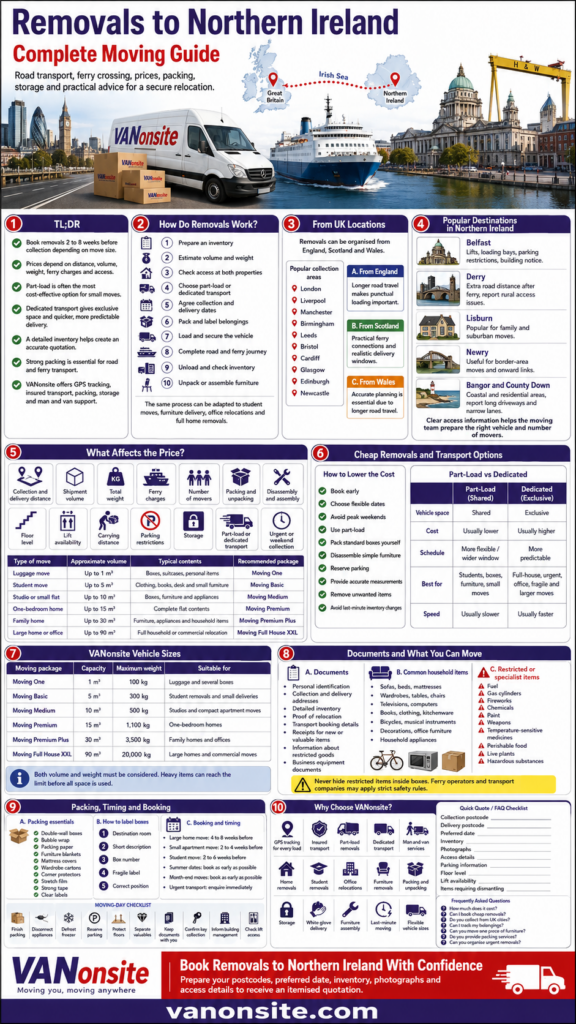
TL:DR: Removals to Northern Ireland
- Book removals to Northern Ireland 2 to 8 weeks before collection, depending on the size and complexity of the relocation.
- Prices depend on distance, volume, weight, ferry charges, property access and the selected transport model.
- Part-load transport is usually the most cost-effective option for students, furniture deliveries and smaller moves.
- Dedicated transport provides exclusive vehicle space, quicker transit and more predictable collection and delivery times.
- A detailed inventory helps the removal company select the correct vehicle and prepare an accurate quotation.
- Strong packing is essential because belongings are exposed to road vibration, ferry movement and changes in temperature.
- VANonsite offers GPS tracking, insured transport, man and van support, packing, storage and removals across Northern Ireland.




How Do Removals to Northern Ireland Work?
Most removals to Northern Ireland combine road transport with a ferry crossing. The moving team collects your belongings, protects larger items, loads the selected vehicle and secures everything for the journey.
The vehicle then travels to a suitable ferry terminal. After crossing the Irish Sea, it continues by road to the final destination.
A typical removal process includes:
- Preparing an inventory.
- Estimating the shipment volume and weight.
- Checking access at both properties.
- Selecting part-load or dedicated transport.
- Agreeing collection and delivery dates.
- Packing and labelling belongings.
- Loading and securing the vehicle.
- Completing the road and ferry journey.
- Unloading and checking the inventory.
- Unpacking or assembling furniture when required.
The same process can be adapted to a small student move, a single sofa, an office relocation or a full family home.
Before requesting a quotation, prepare photographs and dimensions of bulky items. A sofa, wardrobe or piano may occupy more space than expected. Accurate measurements also help determine whether furniture can pass through doorways, lifts and staircases.
Removals to Northern Ireland From UK Locations
Removals to Northern Ireland from UK cities can be organised from England, Scotland and Wales. The most suitable route depends on the collection postcode, ferry availability, shipment size and final destination.
Popular collection areas include:
- London
- Liverpool
- Manchester
- Birmingham
- Leeds
- Bristol
- Cardiff
- Glasgow
- Edinburgh
- Newcastle
The road distance to the ferry terminal affects both price and timing. A move from Liverpool may involve less road mileage than a move from London. However, the shortest route is not always the best option. Ferry schedules, loading duration, driver hours and delivery access must also be considered.
Removals From England to Northern Ireland
Removals from England to Northern Ireland are popular among families, students, professionals and businesses relocating to Belfast, Lisburn, Newry and other locations.
Moves from southern England require longer road travel before the ferry crossing. This means punctual loading is especially important. If the vehicle misses the scheduled ferry because packing is unfinished or access is blocked, the entire delivery may be delayed.
Collections from northern England may offer quicker access to ferry terminals. Smaller shipments can often be transported through part-load or man and van services, while full homes usually require dedicated transport.
Removals From Scotland to Northern Ireland
Scotland offers practical connections for removals to Northern Ireland, particularly for collections around Glasgow, Ayrshire and western regions.
Although the road section may be shorter, the schedule still depends on ferry availability, weather and loading time. Customers should receive a realistic delivery window rather than a promise based only on distance.
Removals From Wales to Northern Ireland
Moves from Cardiff, Swansea and other Welsh locations usually travel through England before reaching the ferry terminal.
The longer road section makes accurate planning essential. Parking, access, loading duration and the final inventory should all be confirmed before collection.
Popular Destinations in Northern Ireland
Professional removal companies in Northern Ireland should be able to reach both major cities and smaller rural locations.
Removals to Belfast
Belfast is the most common destination for household, student and office moves. Access conditions vary significantly across the city.
Modern apartment buildings may offer lifts and loading bays, while older streets can have narrow entrances and limited parking. Before moving day, check whether:
- Parking can be reserved
- Building management requires notice
- The lift is large enough
- Loading is restricted at certain times
- A large vehicle can stop near the entrance
Clear access information allows the moving company to prepare the correct vehicle and number of movers.
Removals to Derry
Derry requires additional road travel after the ferry crossing. This should be included when estimating the delivery window.
Customers moving to rural properties near Derry should provide details about narrow roads, gates, low bridges, steep driveways and turning space. In some cases, a smaller shuttle vehicle may be necessary.
Removals to Lisburn
Lisburn is a popular destination for family moves and suburban relocations. Properties may offer easier parking than central Belfast, although access should still be checked in advance.
Removals to Newry
Newry is located close to the border with the Republic of Ireland. It is frequently chosen by customers moving between Northern Ireland and Ireland.
Those continuing to Dublin, Cork, Galway or another destination in the Republic can read the complete guide to removals to Ireland.
Removals to Bangor and County Down
Bangor, County Down and surrounding areas attract families and professionals looking for coastal locations and quieter residential areas.
Long driveways, narrow lanes and restricted parking should be reported before collection. This prevents unexpected delays at the final stage of the move.
How Much Do Removals to Northern Ireland Cost?
There is no universal price for removals to Northern Ireland. The final cost depends on the individual shipment and required services.
Two customers moving between the same cities may receive different quotations because one shipment contains 8 m³ of belongings and the other contains 25 m³.
The main pricing factors include:
- Collection and delivery distance
- Shipment volume
- Total weight
- Ferry charges
- Number of movers
- Packing and unpacking
- Furniture disassembly
- Furniture assembly
- Floor level
- Lift availability
- Carrying distance
- Parking restrictions
- Temporary storage
- Part-load or dedicated transport
- Weekend or urgent collection
A detailed inventory is more useful than describing the property as a one-bedroom or three-bedroom home. People own different amounts of furniture, equipment and personal belongings.
| Type of move | Approximate volume | Typical contents | Recommended package |
|---|---|---|---|
| Luggage move | Up to 1 m³ | Boxes, suitcases, personal items | Moving One |
| Student move | Up to 5 m³ | Clothing, books, desk and small furniture | Moving Basic |
| Studio or small flat | Up to 10 m³ | Boxes, furniture and appliances | Moving Medium |
| One-bedroom home | Up to 15 m³ | Complete flat contents | Moving Premium |
| Family home | Up to 30 m³ | Furniture, appliances and household items | Moving Premium Plus |
| Large home or office | Up to 90 m³ | Full household or commercial relocation | Moving Full House XXL |
Photographs are recommended for wardrobes, sofas, gym equipment, tools, artwork and unusual objects. They help the moving company calculate the correct capacity and protection requirements.
Cheap Removals to Northern Ireland
Cheap removals to Northern Ireland are possible without sacrificing security. The key is reducing unnecessary costs rather than choosing an unreliable provider.
One of the most effective ways to lower the price is to reduce the volume. Selling, donating or recycling unused belongings may allow you to select a smaller vehicle.
You can also save money by:
- Booking early
- Choosing flexible dates
- Avoiding peak weekends
- Using part-load transport
- Packing standard boxes yourself
- Disassembling simple furniture
- Reserving parking
- Providing accurate measurements
- Removing unwanted furniture
- Avoiding last-minute inventory changes
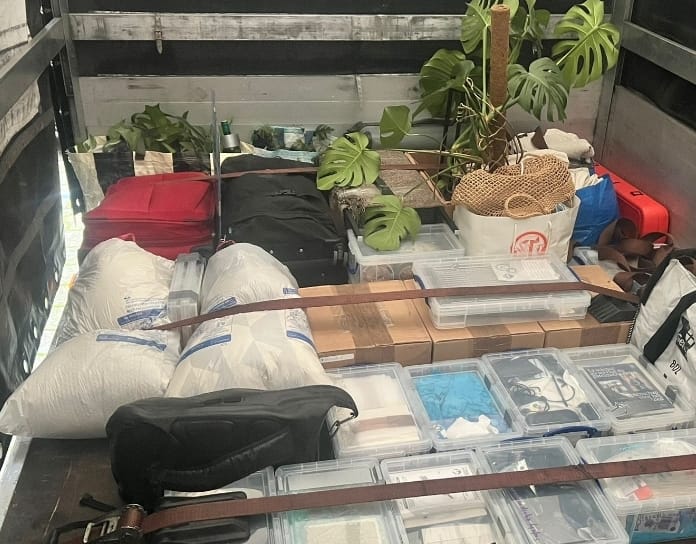
Part-load transport is often the best solution for cheap removals to Northern Ireland. Your shipment shares vehicle space with other compatible loads travelling in the same direction.
However, always examine the quotation carefully. A very low price may exclude ferry costs, stairs, labour, insurance, waiting time or delivery to the final property.
The best cheap removals to Northern Ireland still include secure loading, suitable transport and clear communication.
Part-Load or Dedicated Transport
The choice between part-load and dedicated transport affects price, flexibility and delivery time.
Part-Load Removals
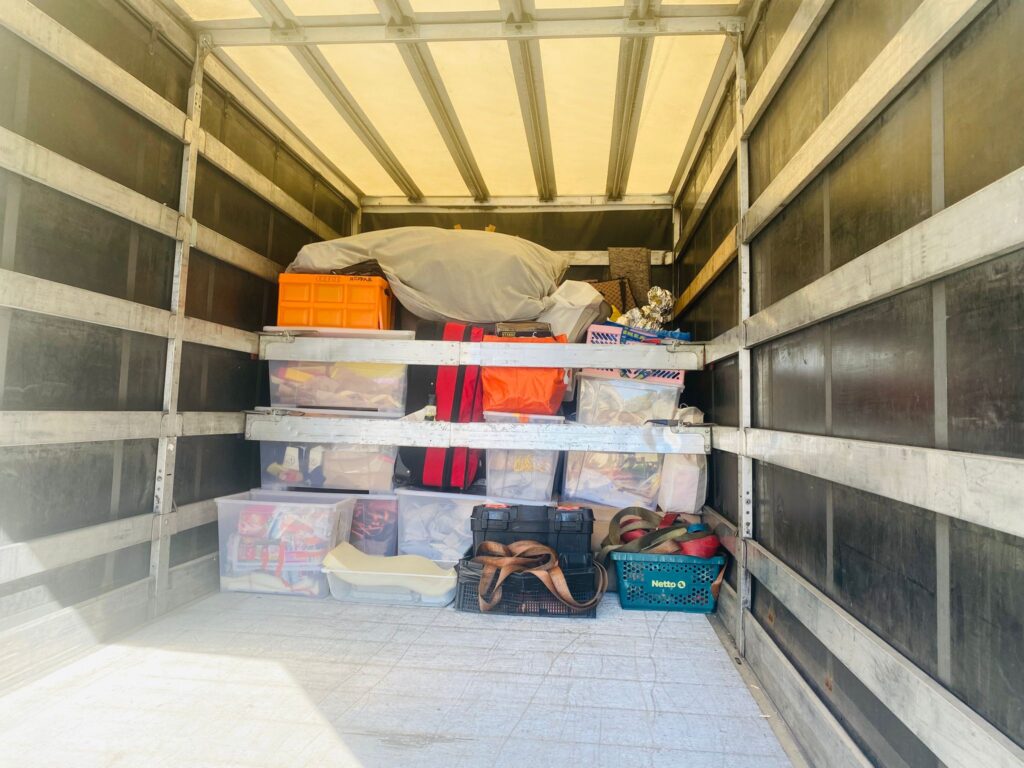
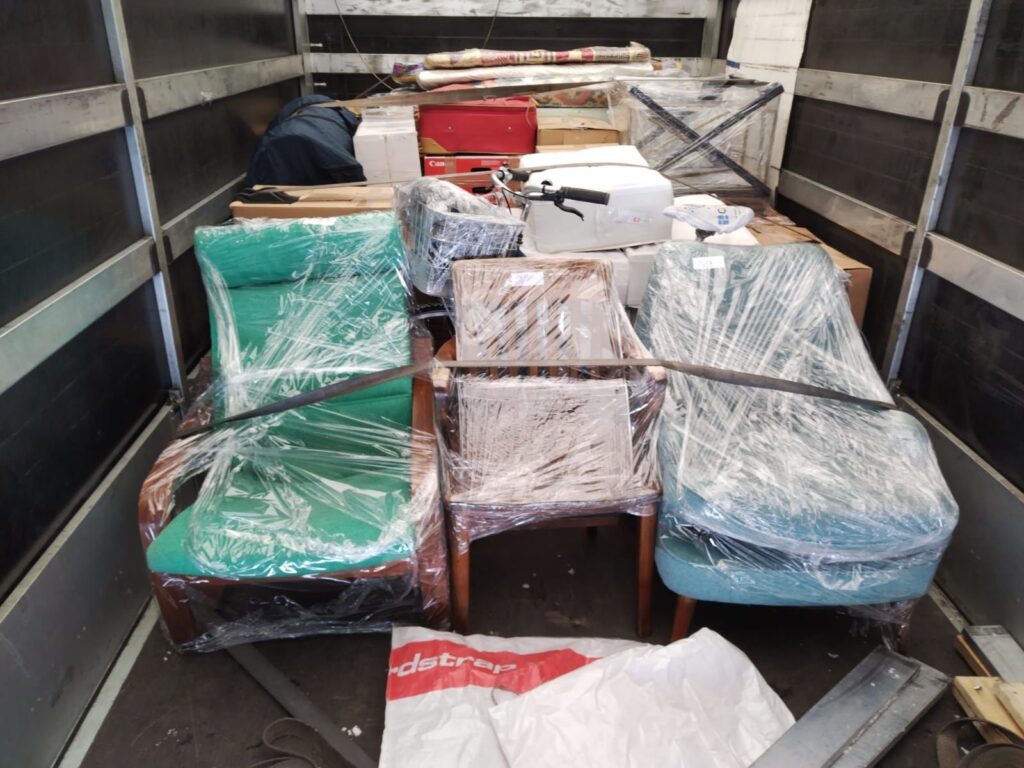
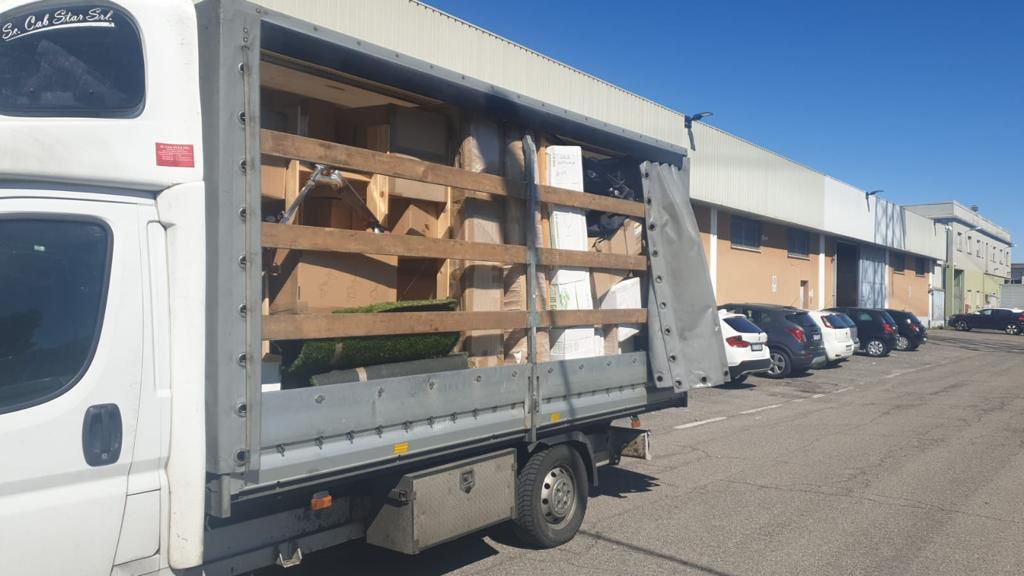
Part-load removals combine several shipments inside one vehicle. Each shipment is separated, labelled and secured.
This option is suitable for:
- Student moves
- Small apartment removals
- Furniture deliveries
- Boxes and luggage
- Flexible delivery dates
- Budget-focused relocations
The main advantage is lower cost. Customers pay for the space used rather than the complete vehicle.
The delivery window may be wider because the route includes other collections or deliveries. Part-load transport is therefore best for customers who can accept some flexibility.
Dedicated Removals
Dedicated transport gives one customer exclusive use of the vehicle.
It is recommended for:
- Full-house moves
- Fixed collection dates
- Urgent relocations
- Office moves
- Fragile belongings
- High-value furniture
- Larger shipments
Dedicated removals to Northern Ireland usually offer faster transit and fewer handling stages. The route can be planned around one shipment, making delivery more predictable.
VANonsite Vehicle Sizes
Selecting the correct vehicle is essential. A vehicle that is too small may require a second journey, while an unnecessarily large vehicle can increase the cost.
| Moving package | Capacity | Maximum weight | Suitable for |
|---|---|---|---|
| Moving One | 1 m³ | 100 kg | Luggage and several boxes |
| Moving Basic | 5 m³ | 300 kg | Student removals and small deliveries |
| Moving Medium | 10 m³ | 500 kg | Studios and compact apartment moves |
| Moving Premium | 15 m³ | 1,100 kg | One-bedroom homes |
| Moving Premium Plus | 30 m³ | 3,500 kg | Family homes and offices |
| Moving Full House XXL | 90 m³ | 20,000 kg | Large homes and commercial moves |
Both volume and weight must be considered.
Books, tools, metal equipment and gym weights can reach a vehicle’s weight limit before filling all available space. Furniture and bedding may occupy significant volume without being particularly heavy.
VANonsite can review your inventory and recommend the most suitable package.
Documents and Customs Requirements
The documents required for removals to Northern Ireland depend on the collection country, the type of belongings and whether the goods are personal or commercial.
Customers should normally prepare:
- Personal identification
- Collection and delivery addresses
- A detailed inventory
- Proof of relocation
- Transport booking details
- Receipts for new or valuable items
- Information about restricted goods
- Supporting documents for business equipment
Used household belongings may be treated differently from newly purchased products or goods intended for sale.
Commercial equipment, retail stock and newly purchased items may require additional transport procedures. Therefore, explain clearly what is included in the shipment.
People moving from outside the United Kingdom should check the current customs rules before collection. Requirements can apply to food, plants, medicines, alcohol, tobacco, weapons and controlled products.
What Can You Move to Northern Ireland?
Most household belongings can be transported when they are packed safely and declared accurately.
Common items include:
- Sofas
- Beds
- Mattresses
- Wardrobes
- Tables
- Chairs
- Televisions
- Computers
- Books
- Clothing
- Kitchenware
- Bicycles
- Musical instruments
- Decorations
- Office furniture
- Household appliances
Certain items require specialist arrangements or may be refused.
Examples include:
- Fuel
- Gas cylinders
- Fireworks
- Chemicals
- Paint
- Weapons
- Temperature-sensitive medicines
- Perishable food
- Live plants
- Hazardous substances
Never hide restricted items inside boxes. Ferry operators and transport companies may apply strict safety rules.
Packing for Removals to Northern Ireland
Packing quality directly affects the condition of your belongings. Items may be exposed to road vibration, ferry movement and pressure from stacked boxes.
Useful packing materials include:
- Double-wall boxes
- Bubble wrap
- Packing paper
- Furniture blankets
- Mattress covers
- Wardrobe cartons
- Corner protectors
- Stretch film
- Strong tape
- Clear labels
Heavy belongings should be placed in smaller boxes. Lighter items such as bedding and clothing can be packed in larger cartons.
Fragile objects should not move inside the box. Fill empty spaces with paper, foam or another protective material.
VANonsite offers professional Packing Services for customers who need full packing, partial packing or protection for selected valuables.
How to Label Moving Boxes
A clear labelling system makes unloading faster.
Each box should include:
- The destination room
- A short description
- A box number
- A fragile label when necessary
- An indication of the correct position
Keep a separate inventory matching the box numbers. This makes it easier to confirm that every item has arrived.
Furniture Removals to Northern Ireland
Furniture removals to Northern Ireland may involve one item, several rooms or an entire household.
Before collection, measure:
- Furniture dimensions
- Doorways
- Staircases
- Corridors
- Lifts
- Building entrances
VANonsite Furniture Removals can include protective wrapping, transport, unloading and optional assembly.
Common shipments include:
- Sofas
- Beds
- Wardrobes
- Dining tables
- Cabinets
- Antique furniture
- Designer furniture
- Office desks
- Flat-pack furniture
Drawers and doors should be secured before transport. Fragile finishes require blankets, corner guards and strong wrapping.
For delicate or high-value belongings, White Glove Delivery can include two-person handling, room-of-choice placement, unpacking and assembly.
Home Removals to Northern Ireland
Complete Home Removals may include planning, packing, loading, transport, unloading and furniture assembly.
Decluttering should begin several weeks before collection. Removing 10% to 20% of unnecessary belongings can reduce the required vehicle size and packing time.
A home removal inventory should include furniture, boxes, appliances, garden items, loft contents and garage equipment.
Student Removals to Northern Ireland
Student Removals are usually smaller, but they often take place during busy periods.
Students commonly move:
- Clothing
- Books
- Computers
- Bedding
- Kitchen equipment
- Bicycles
- Desks
- Chairs
- Small furniture
Moving One and Moving Basic are practical options for compact student relocations.
A man and van service can also help when accommodation has stairs, limited parking or no lift.
Office Removals to Northern Ireland
Office removals require accurate planning to reduce downtime.
Businesses may need to relocate:
- Desks
- Chairs
- Computers
- Monitors
- Documents
- Storage units
- Meeting tables
- Specialist equipment
Every box should be labelled by department, room or employee. IT equipment should receive additional protection.
VANonsite provides Office Removals and Office Furniture Installation. Services can include disassembly, transport, assembly and workstation placement.
Man and Van Removals to Northern Ireland
A man and van service is suitable for smaller moves that still require professional handling.
It can be used for:
- Student relocations
- Single-item deliveries
- Small apartment moves
- Furniture collections
- Luggage transport
- Short-notice moves
An international man and van service must still account for ferry schedules, driver hours and vehicle weight limits.
Providing an accurate inventory is essential, even when the shipment appears small.


Storage During a Move
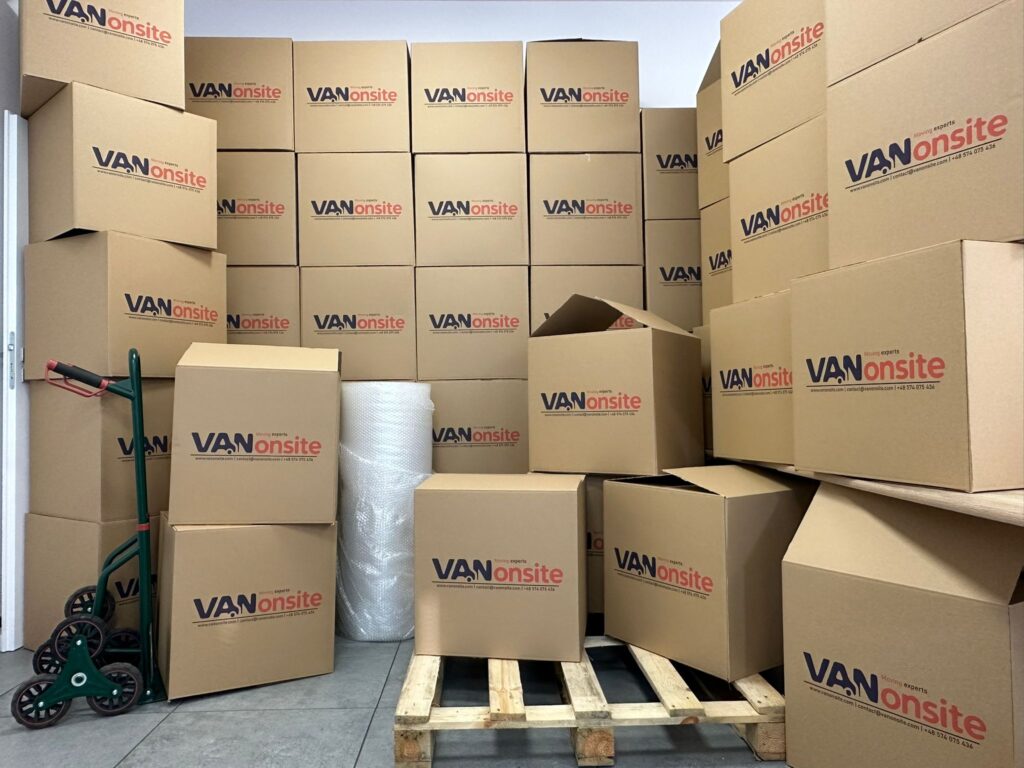
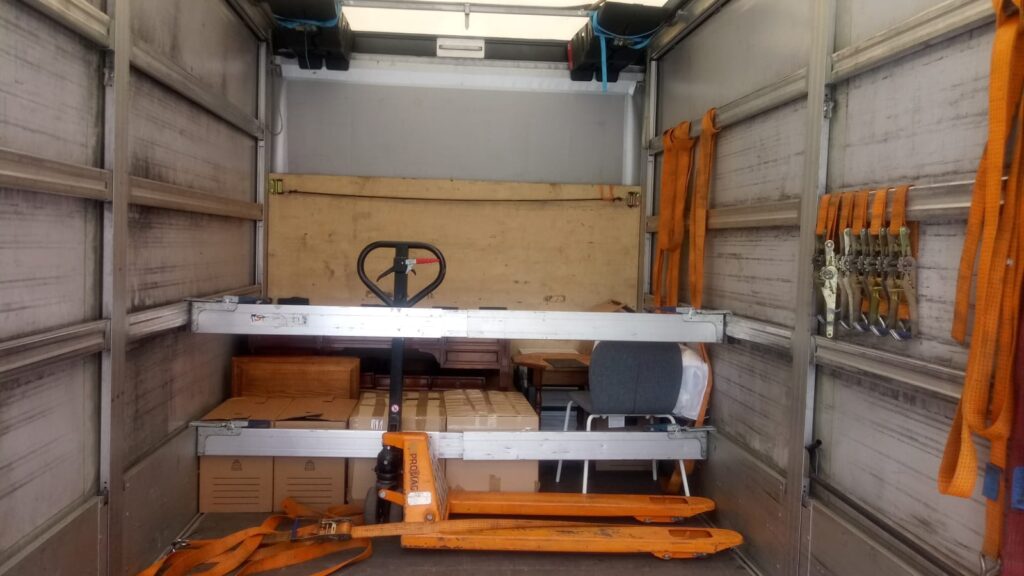
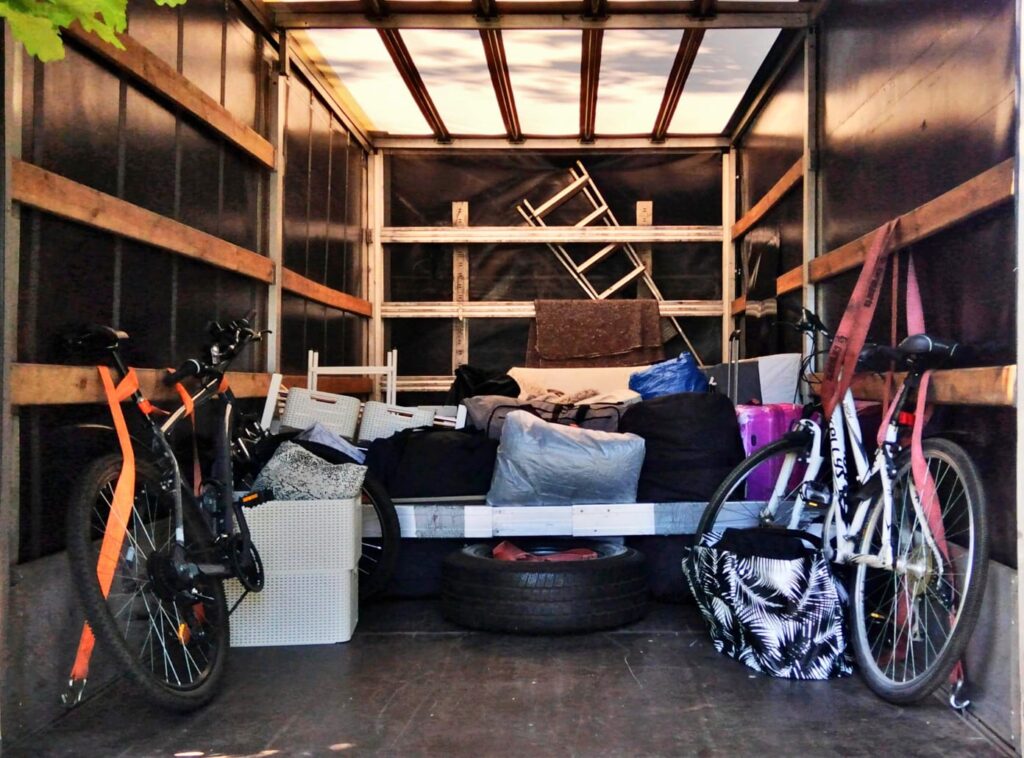
Storage can be useful when the new property is not ready or delivery dates do not match.
Customers may need storage because:
- Renovation work is unfinished
- Property completion is delayed
- The customer is travelling
- Furniture must be delivered in stages
- The new home is smaller
- Office equipment requires temporary holding
Short-term storage can create flexibility and prevent rushed decisions. Ask whether collection from storage and final delivery are included in the quotation.
How Long Do Removals to Northern Ireland Take?
Transit time depends on:
- Collection location
- Ferry availability
- Weather
- Traffic
- Loading time
- Vehicle type
- Driver hours
- Delivery access
- Transport model
Dedicated transport usually provides the most direct schedule. Part-load transport can take longer because the route may include other collections and deliveries.
Large moves also require longer loading and unloading appointments. A 30 m³ family move cannot be handled as quickly as several boxes and a suitcase.
Ask for a realistic delivery window before confirming the booking.
When Should You Book?
Recommended booking times are:
- 4 to 8 weeks before a large home move
- 2 to 4 weeks before a small apartment move
- 2 to 6 weeks before a student move
- As early as possible for summer dates
- As early as possible for month-end moves
- Immediately for urgent transport
Last-minute removals to Northern Ireland may be possible when a suitable vehicle and ferry connection are available.
To receive a quick quotation, provide both postcodes, the preferred date, photographs, an inventory and access information.
How to Prepare for Moving Day
Preparation can reduce loading time and prevent missed ferry connections.
Before the team arrives:
- Finish packing loose items
- Disconnect appliances
- Defrost the freezer
- Reserve parking
- Protect floors
- Empty lofts and sheds
- Separate valuables
- Keep documents with you
- Photograph fragile belongings
- Confirm key collection
- Inform building management
- Check lift access
At the destination, make sure the vehicle can stop near the entrance.
Long carrying distances, narrow stairs or restricted parking may require additional labour.
Best Removals to Northern Ireland
The best removals to Northern Ireland should provide more than a low price.
A reliable provider should offer:
- Experience with ferry routes
- Clear quotations
- Suitable insurance
- Correct vehicle capacity
- Secure packing standards
- GPS tracking
- Storage options
- Responsive communication
- Furniture assembly
- Written terms
- Realistic delivery windows
The best provider is the one that matches the service to your shipment, schedule and property access.
How to Compare Removal Companies in Northern Ireland
When comparing removal companies in Northern Ireland, ask each provider the same questions.
Useful questions include:
- Is ferry transport included?
- Are loading and unloading included?
- What vehicle will be used?
- Is the shipment shared?
- Is GPS tracking available?
- Are stairs included?
- What happens if the ferry is delayed?
- Is furniture disassembly available?
- Is storage available?
- Are there waiting-time charges?
A professional quotation should clearly explain what is included and what may cost extra.
Common Moving Mistakes
Frequent mistakes include:
- Underestimating volume
- Ignoring weight limits
- Booking too late
- Using weak boxes
- Forgetting parking restrictions
- Failing to measure furniture
- Packing restricted goods
- Providing incomplete addresses
- Choosing the cheapest quotation without checking exclusions
- Leaving essential documents in the moving vehicle
Another common problem is changing the inventory after booking. Adding a wardrobe, sofa and several boxes may require a different vehicle.
Report all changes as early as possible.
Why Choose VANonsite?
VANonsite provides professional removals to Northern Ireland with a focus on security, flexibility and communication.
Services include:
- GPS tracking for every load
- Insured transport
- Part-load removals
- Dedicated transport
- Man and van services
- Home removals
- Student removals
- Office relocations
- Furniture removals
- Packing and unpacking
- Storage
- White glove delivery
- Furniture assembly
- Last-minute moving
- Flexible vehicle sizes
GPS tracking gives customers greater visibility during transport. The vehicle range also allows smaller shipments and complete household moves to be matched with suitable capacity.
Frequently Asked Questions
How much do removals to Northern Ireland cost?
The cost depends on distance, volume, weight, ferry charges, access and additional services. A detailed inventory is required for an accurate quotation.
Can I book cheap removals to Northern Ireland?
Yes. Part-load transport, flexible dates and reducing the shipment volume can lower the price.
Do you offer removals to Northern Ireland from UK cities?
Yes. Collections can be arranged from England, Scotland and Wales, including London, Liverpool, Manchester, Birmingham, Glasgow, Edinburgh, Bristol and Cardiff.
Can I track my belongings?
VANonsite provides GPS tracking for every load, giving customers greater confidence during transport.
Can you move one piece of furniture?
Yes. Single-item furniture transport can be organised using part-load or man and van services.
Do you provide packing services?
Yes. Customers can choose complete packing, partial packing or protection for selected fragile items.
Can you organise urgent removals?
Last-minute removals to Northern Ireland may be available when a suitable vehicle and ferry booking can be secured.
Book Removals to Northern Ireland
A secure move starts with accurate information.
Prepare your collection and delivery postcodes, preferred date, inventory, photographs and access details. VANonsite can then recommend the correct vehicle, transport model and service package.
From compact student relocations to complete family and office moves, VANonsite provides removals to Northern Ireland supported by GPS tracking, professional handling and flexible vehicle capacity.
Request an itemised quotation and plan your move with confidence.