Introduction
Is Switzerland a good place to live? Yes, for many people it is one of the best countries in Europe for safety, salaries, healthcare, public transport and long term stability. It is clean, organised and visually spectacular, with alpine views, calm cities and a standard of daily life that can feel almost cinematic.
Yet Switzerland is not a cheap dream. It is expensive, rule driven and highly structured. Rent can be intense. Health insurance is compulsory. Housing applications can be competitive. Customs paperwork matters when you bring household goods. If you move without planning, the first few months can feel financially sharp.
This guide gives a direct, practical answer to the question: is Switzerland a good place to live? It covers cost of living, jobs, housing, healthcare, family life, safety, documents, Swiss cities and the real process of moving your belongings.
For people relocating from another European country, the physical move is a major part of the journey. VANonsite supports secure removals to Switzerland with GPS tracked transport, professional packing, flexible man and van options and vehicle sizes from 1 m³ to 90 m³.
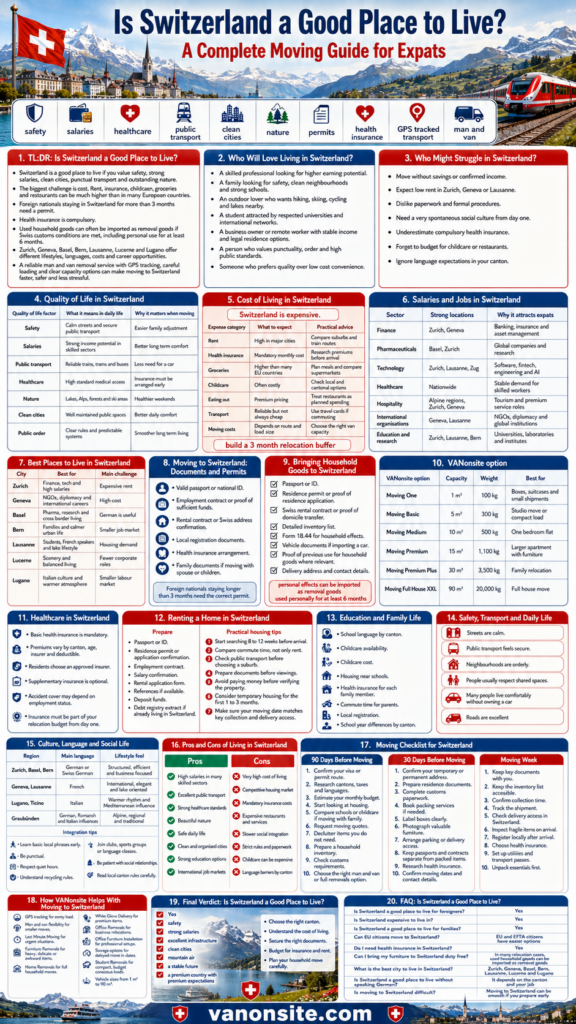
TL:DR: Is Switzerland a Good Place to Live?
- Switzerland is a good place to live if you value safety, strong salaries, clean cities, punctual transport and outstanding nature.
- The biggest challenge is cost. Rent, insurance, childcare, groceries and restaurants can be much higher than in many European countries.
- Foreign nationals staying in Switzerland for more than 3 months need a permit, according to the official Swiss government portal ch.ch.
- Health insurance is compulsory, and Switzerland’s Federal Office of Public Health says compulsory insurance gives residents access to good medical care.
- Used household goods can often be imported as removal goods if Swiss customs conditions are met, including personal use for at least 6 months.
- Zurich, Geneva, Basel, Bern, Lausanne, Lucerne and Lugano offer different lifestyles, languages, costs and career opportunities.
- A reliable man and van removal service with GPS tracking, careful loading and clear capacity options can make moving to Switzerland faster, safer and less stressful.




Is Switzerland a Good Place to Live for Expats?
Is Switzerland a good place to live for expats? In most cases, yes, especially for people who want structure, security and strong career opportunities. The country attracts professionals in finance, pharmaceuticals, technology, engineering, healthcare, education, logistics and international organisations.
Switzerland works well for people who like systems. You register locally. You arrange insurance. You respect quiet hours. You recycle carefully. You prepare documents before appointments. At first, this can feel strict. Later, many expats begin to see it as part of the country’s quiet brilliance.
The reward is a life that often feels calm and well built. Trains run reliably. Streets are clean. Public spaces are cared for. Lakes and mountains are close. In one week, you can work in Zurich, swim after office hours, take a weekend train into the Alps and return to a city that feels safe at night.
Still, Switzerland does not suit everyone. If your budget is fragile, your job situation is unclear or you expect cheap housing, the country can feel harsh. Switzerland offers premium quality, but it expects premium preparation.
Who Will Love Living in Switzerland?
Switzerland is especially attractive to people who want more than a beautiful view. It suits those who want dependability, financial opportunity and a strong sense of public order.
You may love living in Switzerland if you are:
- A skilled professional looking for higher earning potential.
- A family looking for safety, clean neighbourhoods and strong schools.
- An outdoor lover who wants hiking, skiing, cycling and lakes nearby.
- A student attracted by respected universities and international networks.
- A business owner or remote worker with stable income and legal residence options.
- A person who values punctuality, order and high public standards.
- Someone who prefers quality over low cost convenience.
For these groups, the answer to “is Switzerland a good place to live?” is usually yes. Switzerland can feel like a finely crafted watch: precise, polished and made to last.
Who Might Struggle in Switzerland?
Switzerland can be difficult for people who arrive without a plan. The first shock is usually financial. A rental deposit, first month’s rent, insurance premiums, transport pass, furniture delivery and basic household setup can create a heavy first bill.
You may struggle if you:
- Move without savings or confirmed income.
- Expect low rent in Zurich, Geneva or Lausanne.
- Dislike paperwork and formal procedures.
- Need a very spontaneous social culture from day one.
- Underestimate compulsory health insurance.
- Forget to budget for childcare or restaurants.
- Ignore language expectations in your canton.
So, is Switzerland a good place to live if you want a relaxed, low cost lifestyle? Not always. It is better for people who want safety, structure and excellence, and who are ready to pay for them.
Quality of Life in Switzerland
Switzerland’s quality of life is one of its strongest advantages. The country is clean, safe and deeply practical. Public transport is excellent. Healthcare is highly regarded. Nature is never far away. Even ordinary routines, such as commuting, shopping or walking through town, often feel more peaceful than in many other countries.
| Quality of life factor | What it means in daily life | Why it matters when moving |
|---|---|---|
| Safety | Calm streets and secure public transport | Easier family adjustment |
| Salaries | Strong income potential in skilled sectors | Better long term comfort |
| Public transport | Reliable trains, trams and buses | Less need for a car |
| Healthcare | High standard medical access | Insurance must be arranged early |
| Nature | Lakes, Alps, forests and ski areas | Healthier weekends |
| Clean cities | Well maintained public spaces | Better daily comfort |
| Public order | Clear rules and predictable systems | Smoother long term living |
This is why the question “is Switzerland a good place to live?” is not only about money. It is about how daily life feels. For many expats, the calmness becomes addictive. The country may be expensive, but it gives a lot back in comfort, security and time saved.
Cost of Living in Switzerland
Switzerland is expensive. That is not a stereotype. It is a fact newcomers must take seriously. The Swiss Federal Statistical Office reported that Switzerland’s price level in 2024 reached 158.8 index points, making it the most expensive country in that comparison.
However, high prices are only one side of the story. Salaries in many sectors are also strong. The real question is not simply “Can I afford Switzerland?” but “Will my income match Swiss costs?”
Typical monthly pressure points include:
- Rent and rental deposit.
- Mandatory health insurance.
- Groceries.
- Childcare.
- Restaurants and cafés.
- Public transport passes.
- Parking and car ownership.
- Furniture, repairs and household services.
| Expense category | What to expect | Practical advice |
|---|---|---|
| Rent | High in major cities | Compare suburbs and train routes |
| Health insurance | Mandatory monthly cost | Research premiums before arrival |
| Groceries | Higher than many EU countries | Plan meals and compare supermarkets |
| Childcare | Often costly | Check local and cantonal options |
| Eating out | Premium pricing | Treat restaurants as planned spending |
| Transport | Reliable but not always cheap | Use travel cards if commuting |
| Moving costs | Depends on route and load size | Choose the right van capacity |
Before moving, build a 3 month relocation buffer. Include rent, deposit, insurance, food, transport, permit costs, customs paperwork and emergency funds. Switzerland can be magnificent, but it does not reward poor financial planning.
This is also where a precise moving quote matters. VANonsite offers flexible load sizes, from Moving One at 1 m³ and 100 kg to Moving Full House XXL at 90 m³ and 20,000 kg. You can match the vehicle to your real load instead of paying for space you do not need.
Salaries and Jobs in Switzerland
Is Switzerland a good place to live for career growth? Yes, especially if you work in a skilled or in demand sector. Swiss employers often offer strong salaries, professional standards and international opportunities.
However, competition can be fierce. Employers may expect qualifications, experience, references and language skills. English can be enough in some multinational companies, but German, French or Italian will improve your options.
| Sector | Strong locations | Why it attracts expats |
|---|---|---|
| Finance | Zurich, Geneva | Banking, insurance and asset management |
| Pharmaceuticals | Basel, Zurich | Global companies and research |
| Technology | Zurich, Lausanne, Zug | Software, fintech, engineering and AI |
| Healthcare | Nationwide | Stable demand for skilled workers |
| Hospitality | Alpine regions, Zurich, Geneva | Tourism and premium service roles |
| International organisations | Geneva, Lausanne | NGOs, diplomacy and global institutions |
| Education and research | Zurich, Lausanne, Bern | Universities, laboratories and institutes |
For many professionals, “is Switzerland a good place to live?” becomes a salary equation. If your income covers rent, insurance, daily costs and savings, Switzerland can feel extraordinary. If it does not, even simple routines can feel expensive.
Best Places to Live in Switzerland
Switzerland is small, but lifestyle changes quickly between cantons. Language, taxes, rent, job markets and social culture can shift within a short train journey.
| City | Best for | Main challenge |
|---|---|---|
| Zurich | Finance, tech and high salaries | Expensive rent |
| Geneva | NGOs, diplomacy and international careers | High cost |
| Basel | Pharma, research and cross border living | German is useful |
| Bern | Families and calmer urban life | Smaller job market |
| Lausanne | Students, French speakers and lake lifestyle | Housing demand |
| Lucerne | Scenery and balanced living | Fewer corporate roles |
| Lugano | Italian culture and warmer atmosphere | Smaller labour market |
Zurich is one of the strongest choices for careers. It is polished, efficient and international, with a powerful job market and excellent public transport. The downside is housing cost.
Geneva is elegant, global and French speaking. It suits people working in NGOs, diplomacy, finance and international organisations. It is also expensive, with strong housing pressure.
Basel is excellent for pharmaceuticals, research and cross border living. Its location near France and Germany gives it a practical international feel.
Bern is calmer and more relaxed. It suits families and people who want beauty, stability and city convenience without Zurich’s intensity.
Lausanne is youthful, scenic and popular with students. Lucerne offers postcard beauty and strong lifestyle appeal. Lugano brings Italian language, lake views and a warmer rhythm, although job options are more limited.
Moving to Switzerland: Documents and Permits
Switzerland is organised, but you must follow the rules. Foreign nationals staying longer than 3 months need the correct permit. The State Secretariat for Migration also explains that people who want to work or live in Switzerland for more than 3 months need a short stay permit, residence permit or permanent residence permit.
EU and EFTA citizens benefit from easier movement rules, but residence still needs to be handled correctly. Prepare:
- Valid passport or national ID.
- Employment contract or proof of sufficient funds.
- Rental contract or Swiss address confirmation.
- Local registration documents.
- Health insurance arrangement.
- Family documents if moving with spouse or children.
Non EU and non EFTA citizens usually face stricter rules. Employment based relocation may require employer sponsorship, approval before arrival, proof of qualifications and quota availability. In this case, start early and check the official Swiss migration guidance before making irreversible plans.
If you are moving household goods, the legal side and transport side are connected. Customs documents, inventory lists and proof of relocation can affect how smoothly your belongings enter Switzerland.
Bringing Household Goods to Switzerland
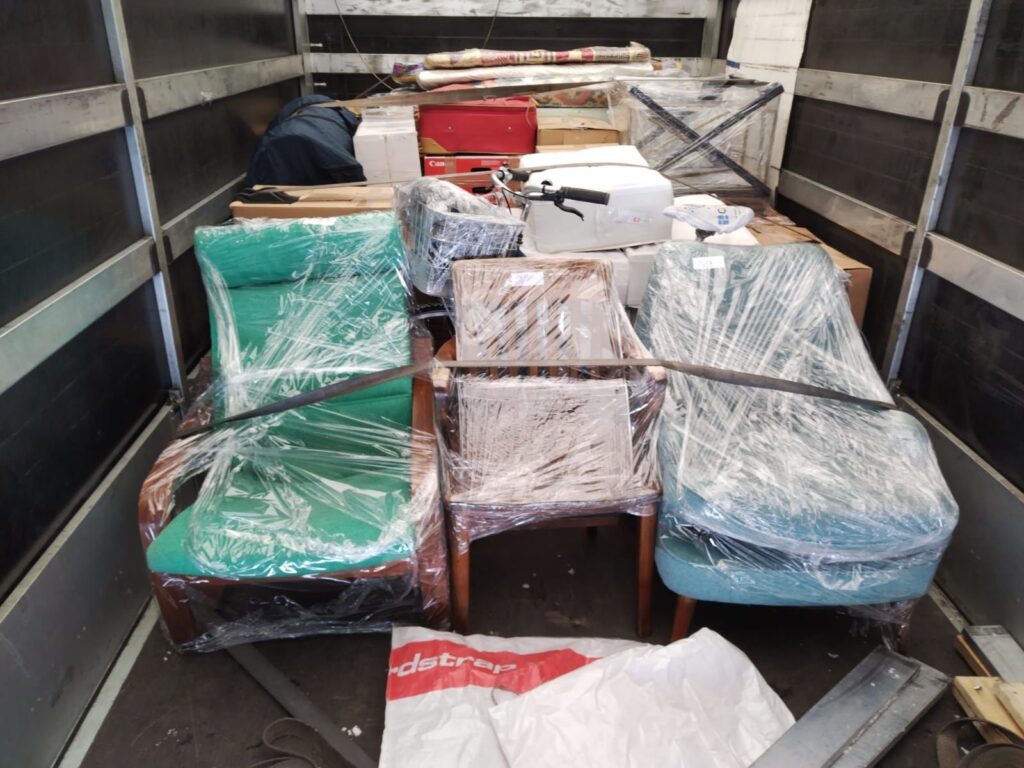
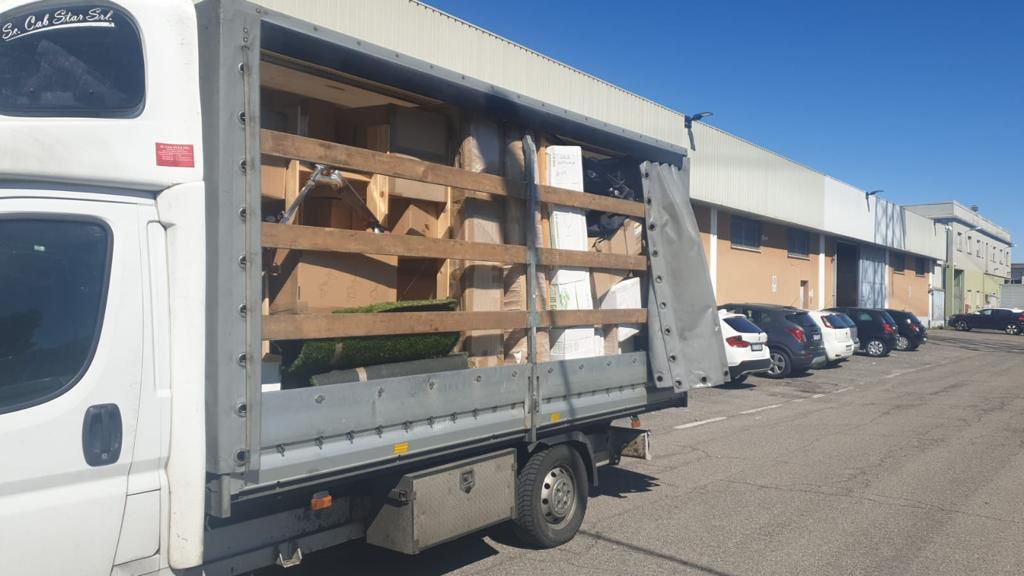
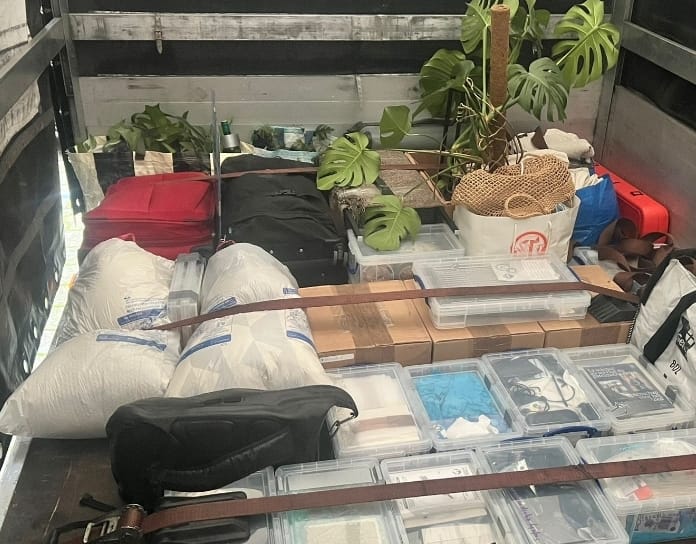
Moving to Switzerland is not just about loading boxes into a van. Customs matters. Timing matters. Inventory accuracy matters.
Swiss customs states that personal effects can be imported as removal goods if requirements are met, and imported articles must generally have been used personally for at least 6 months and continue to be used after importation. The official customs procedure also states that form 18.44 for household effects should be presented at the customs office when importing removal goods.
Prepare a clear moving file with:
- Passport or ID.
- Residence permit or proof of residence application.
- Swiss rental contract or proof of domicile transfer.
- Detailed inventory list.
- Form 18.44 for household effects.
- Vehicle documents if importing a car.
- Proof of previous use for household goods where relevant.
- Delivery address and contact details.
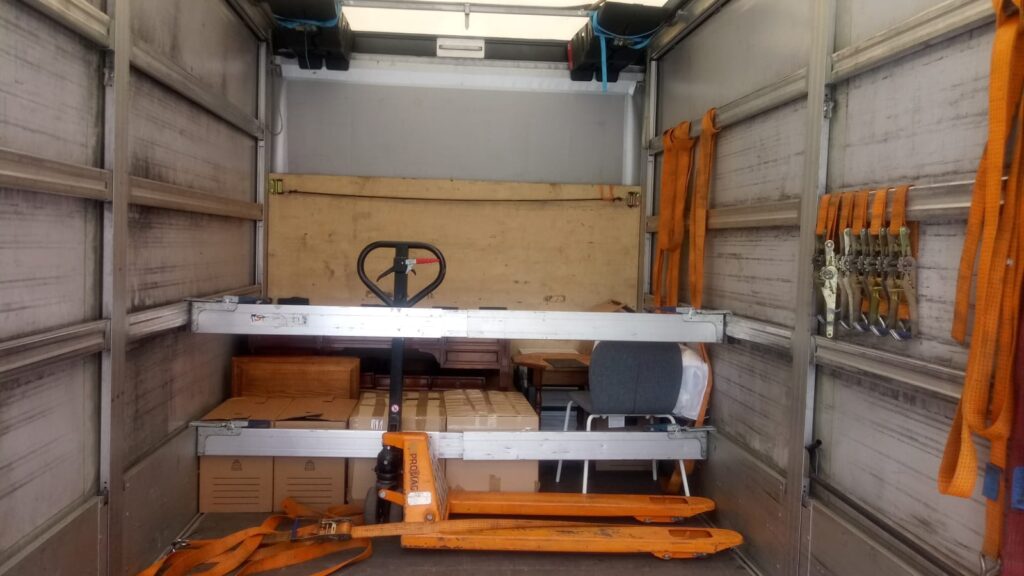
This is where a professional man and van service becomes more than convenience. A careless move can create delays, confusion or extra cost. VANonsite helps customers plan secure European transport with GPS tracking, careful loading and suitable vehicle capacity.
| VANonsite option | Capacity | Weight | Best for |
|---|---|---|---|
| Moving One | 1 m³ | 100 kg | Boxes, suitcases and small shipments |
| Moving Basic | 5 m³ | 300 kg | Studio move or compact load |
| Moving Medium | 10 m³ | 500 kg | One bedroom flat |
| Moving Premium | 15 m³ | 1,100 kg | Larger apartment with furniture |
| Moving Premium Plus | 30 m³ | 3,500 kg | Family relocation |
| Moving Full House XXL | 90 m³ | 20,000 kg | Full house move |
For a smoother start, choose a removals partner that understands border timing, inventory discipline and careful handling.
Healthcare in Switzerland
Healthcare is one of the reasons many people answer yes when asked, “is Switzerland a good place to live?” Medical standards are high, and the system is well organised. But newcomers need to understand one essential rule: health insurance is compulsory.
The Federal Office of Public Health explains that compulsory health insurance gives anyone living in Switzerland access to good medical care. Its official information for residents also covers the requirement to obtain insurance, premium comparisons, subsidies and co-payment.
Newcomers should know:
- Basic health insurance is mandatory.
- Premiums vary by canton, age, insurer and deductible.
- Residents choose an approved insurer.
- Supplementary insurance is optional.
- Accident cover may depend on employment status.
- Insurance must be part of your relocation budget from day one.
Is Switzerland a good place to live if healthcare matters to you? Yes, but only if you understand the insurance model and budget for it properly.
Renting a Home in Switzerland
Housing is often the first serious test of Swiss life. Renting is common, but the market can be competitive. In popular cities, a good flat may attract many applicants, and landlords often expect complete documents.
Prepare:
- Passport or ID.
- Residence permit or application confirmation.
- Employment contract.
- Salary confirmation.
- Rental application form.
- References if available.
- Deposit funds.
- Debt registry extract if already living in Switzerland.
Practical housing tips:
- Start searching 8 to 12 weeks before arrival.
- Compare commute time, not only rent.
- Check public transport before choosing a suburb.
- Prepare documents before viewings.
- Avoid paying money before verifying the property.
- Consider temporary housing for the first 1 to 3 months.
- Make sure your moving date matches key collection and delivery access.
Is Switzerland a good place to live if you want easy housing? Not always. The market can be demanding. But once settled, housing quality, clean neighbourhoods and strong local services often make the effort worthwhile.
Education and Family Life
Switzerland is a good place to live for many families because it combines safety, clean public spaces, outdoor activities and strong education. Children can grow up with reliable transport, lakes, mountains and a high level of independence.
Public schools are generally well regarded, but the language depends on the canton. German, French or Italian may shape your child’s daily life. International schools are available in major cities, although fees can be high.
Families should plan for:
- School language by canton.
- Childcare availability.
- Childcare cost.
- Housing near schools.
- Health insurance for each family member.
- Commute time for parents.
- Local registration.
- School year differences by canton.
The emotional benefit is powerful. Many parents value the calm feeling of children using public transport, walking through clean streets and enjoying safe outdoor spaces. For families with the right budget, Switzerland can be exceptional.

Safety, Transport and Daily Life
Safety is one of Switzerland’s strongest advantages. It is not only about statistics. It is about how life feels. Streets are calm. Public transport feels secure. Neighbourhoods are orderly. People usually respect shared spaces.
This sense of safety changes daily life. You walk more. You use trains more. You worry less about small things. For many expats, that peace of mind becomes priceless.
Public transport is another major strength. Trains, trams, buses and boats connect daily life with impressive precision. Many people live comfortably without owning a car, especially in cities and well connected towns.
Driving can still be useful in rural areas, mountain regions or family life. Roads are excellent, but parking can be expensive and winter conditions require preparation.
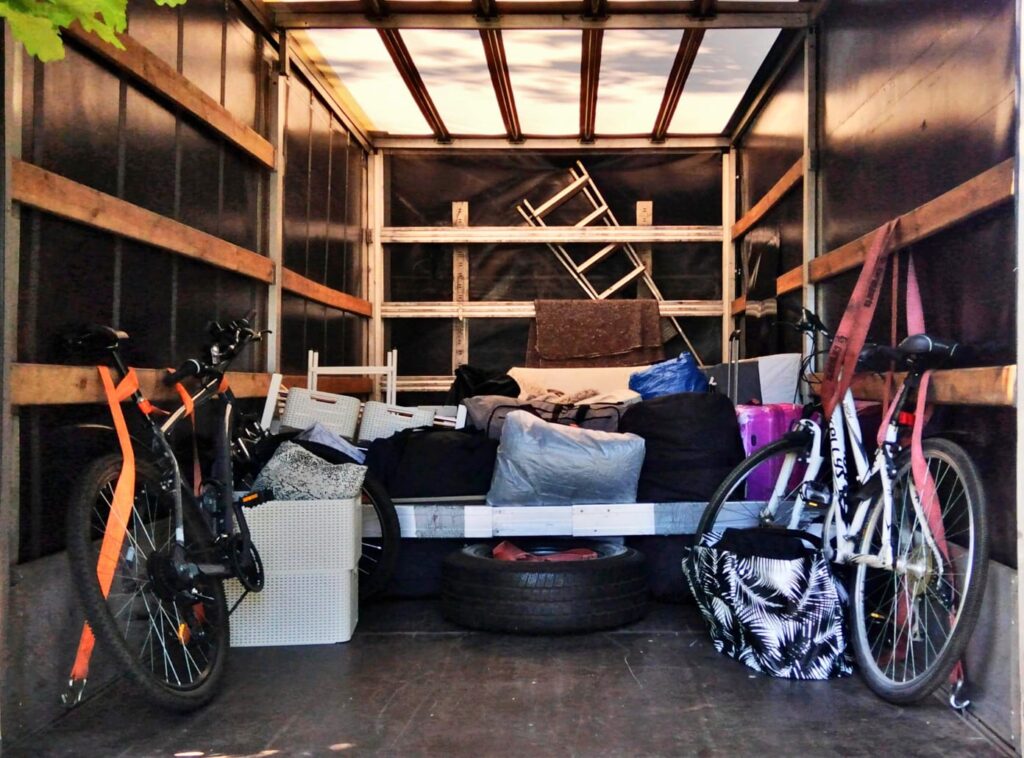
If you are moving furniture or a full household, a casual van plan is risky. Swiss streets, delivery access, building rules and timing can be demanding. A professional man and van team can save time, protect belongings and reduce stress.
Culture, Language and Social Life
Swiss culture can feel reserved at first. People are polite, punctual and private. Newcomers sometimes mistake this for coldness, but relationships can become loyal and sincere over time.
Switzerland has 4 national languages: German, French, Italian and Romansh. In practice, your canton shapes your daily life.
| Region | Main language | Lifestyle feel |
|---|---|---|
| Zurich, Basel, Bern | German or Swiss German | Structured, efficient and business focused |
| Geneva, Lausanne | French | International, elegant and lake oriented |
| Lugano, Ticino | Italian | Warmer rhythm and Mediterranean influence |
| Graubünden | German, Romansh and Italian influences | Alpine, regional and traditional |
Integration tips:
- Learn basic local phrases early.
- Be punctual.
- Respect quiet hours.
- Understand recycling rules.
- Join clubs, sports groups or language classes.
- Be patient with social relationships.
- Read local canton rules carefully.
Is Switzerland a good place to live socially? It can be, but it rewards patience. You may not build instant friendships, but you can build durable ones.
Pros and Cons of Living in Switzerland
No country is perfect. Switzerland delivers exceptional quality, but it expects money, preparation and discipline in return.
| Pros | Cons |
|---|---|
| High salaries in many skilled sectors | Very high cost of living |
| Excellent public transport | Competitive housing market |
| Strong healthcare standards | Mandatory insurance costs |
| Beautiful nature | Expensive restaurants and services |
| Safe daily life | Slower social integration |
| Clean and organised cities | Strict rules and paperwork |
| Strong education options | Childcare can be expensive |
| International job markets | Language barriers by canton |
So, is Switzerland a good place to live? Yes, if your budget, career and expectations match the country. It is less suitable if you need low costs, informal systems or instant social warmth.
Moving Checklist for Switzerland
A Swiss relocation becomes easier when you break it into clear steps.
90 Days Before Moving
- Confirm your visa or permit route.
- Research cantons, taxes and languages.
- Estimate your monthly budget.
- Start looking at housing.
- Compare schools or childcare if moving with family.
- Request moving quotes.
- Declutter items you do not need.
- Prepare a household inventory.
- Check customs requirements.
- Choose the right man and van or full removals option.
30 Days Before Moving
- Confirm your temporary or permanent address.
- Prepare residence documents.
- Complete customs paperwork.
- Book packing services if needed.
- Label boxes clearly.
- Photograph valuable furniture.
- Arrange parking or delivery access.
- Keep passports and contracts separate from packed items.
- Research health insurance.
- Confirm moving dates and contact details.
Moving Week
- Keep key documents with you.
- Keep the inventory list accessible.
- Confirm collection time.
- Track the shipment.
- Check delivery access in Switzerland.
- Inspect fragile items on arrival.
- Register locally after arrival.
- Choose health insurance.
- Set up utilities and transport passes.
- Unpack essentials first.
VANonsite helps make this stage smoother with GPS tracking, careful loading, flexible capacity and European removals experience. Whether you need Student Removals, Furniture Removals, Home Removals, Office Removals, Storage, Packing Service or White Glove Delivery, the goal is simple: protect the move so you can focus on your new life.
How VANonsite Helps With Moving to Switzerland
A move to Switzerland deserves more than a rushed van and vague promises. Your belongings may cross borders, pass through customs and arrive at a high value property where timing and condition matter. Precision is essential.
VANonsite supports European relocations with:
- GPS tracking for every load.
- Man and van flexibility for smaller moves.
- Last Minute Moving for urgent situations.
- Furniture Removals for heavy, delicate or awkward items.
- Home Removals for full household moves.
- Packing Service for safer transport.
- White Glove Delivery for premium items.
- Office Removals for business relocations.
- Office Furniture Installation for professional setups.
- Storage options for delayed move in dates.
- Student Removals for compact, budget conscious loads.
- Vehicle sizes from 1 m³ to 90 m³.
This flexibility matters because not every Swiss move is the same. A student going to Lausanne does not need the same capacity as a family moving to Zurich. A business relocating office furniture to Geneva needs different handling than someone sending 10 boxes to Basel.
For secure, GPS tracked and carefully planned relocation support, explore VANonsite removals to Switzerland.
Final Verdict: Is Switzerland a Good Place to Live?
Is Switzerland a good place to live? Yes, if you want safety, strong salaries, excellent infrastructure, clean cities, mountain air and a stable future. Switzerland is not cheap, and it does not pretend to be. It is a premium country with premium expectations.
For the right person, that trade feels worth it. You get reliable trains, serious work opportunities, beautiful weekends, strong healthcare, safe streets and a daily rhythm that feels unusually well built. For the wrong budget or mindset, Switzerland can feel strict and expensive.
The best answer is this: Switzerland is a good place to live if you prepare properly. Choose the right canton. Understand the cost of living. Secure the right documents. Budget for insurance and rent. Plan your household move carefully.
With the right plan and a reliable removals partner, moving to Switzerland can feel less like a leap into uncertainty and more like the beginning of a sharper, calmer and more rewarding chapter.
FAQ: Is Switzerland a Good Place to Live?
Is Switzerland a good place to live for foreigners?
Yes, Switzerland is a good place to live for foreigners with stable income, the correct residence status and realistic expectations about cost. It offers safety, strong salaries, clean cities, excellent public transport and high quality healthcare.
Is Switzerland expensive to live in?
Yes. Switzerland is expensive, especially for rent, insurance, childcare, restaurants and services. However, salaries in many skilled sectors are also high, which helps balance the cost for well prepared expats.
Is Switzerland a good place to live for families?
Yes, Switzerland is a good place to live for families who value safety, education, outdoor life and clean public spaces. The main challenges are rent, childcare costs and language integration.
Can EU citizens move to Switzerland?
EU and EFTA citizens have easier options than many third country nationals, but they still need the correct residence formalities for longer stays. Foreign nationals staying longer than 3 months need a permit.
Do I need health insurance in Switzerland?
Yes. Health insurance is compulsory in Switzerland, and residents must arrange basic insurance through an authorised insurer.
Can I bring my furniture to Switzerland duty free?
In many relocation cases, used household goods can be imported as removal goods if Swiss customs conditions are met. Items generally need to have been personally used for at least 6 months and continue to be used after importation.
What is the best city to live in Switzerland?
Zurich is best for careers and finance, Geneva for international organisations, Basel for pharma, Bern for calmer city life, Lausanne for students, Lucerne for scenery and Lugano for Italian speaking lifestyle.
Is Switzerland a good place to live without speaking German?
It depends on the canton and your job. English may work in some international companies, but German, French or Italian will improve housing, work and social integration.
Is moving to Switzerland difficult?
Moving to Switzerland can be smooth if you prepare early. The key steps are permit planning, housing, health insurance, customs documents, inventory preparation and choosing a reliable removals company.