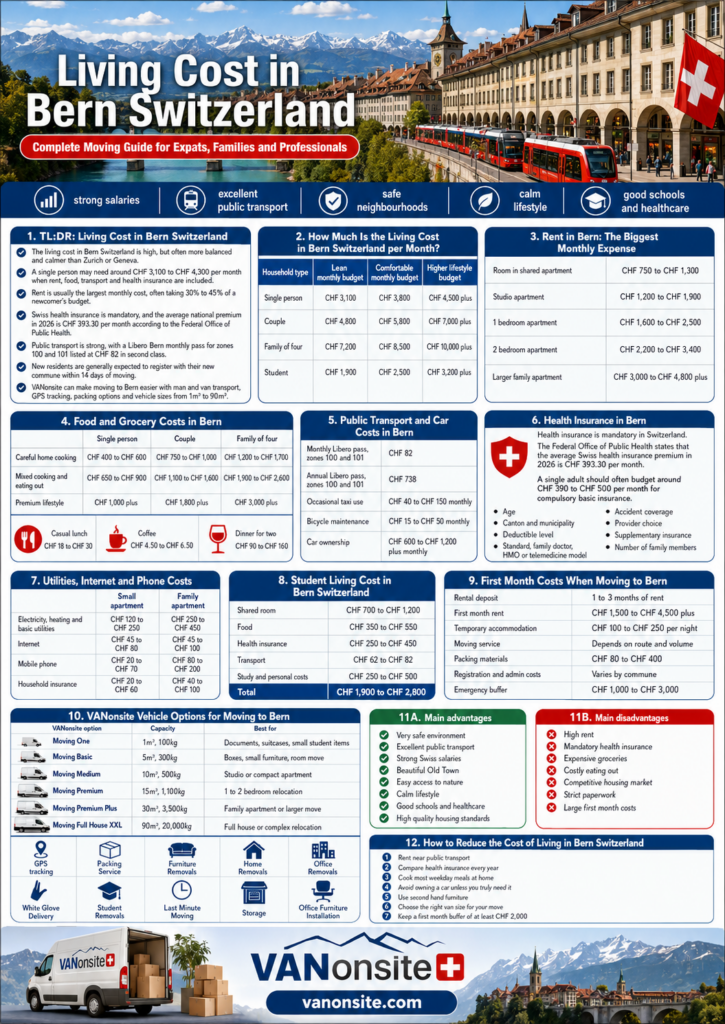
The living cost in Bern Switzerland is high, but it comes with a kind of everyday comfort that is difficult to measure only in francs. Bern gives you clean streets, excellent public transport, safe neighbourhoods, mountain views, strong salaries and a calmer rhythm than Zurich or Geneva. It is expensive, yes. Yet for many expats, families, students and professionals, the city feels balanced, secure and deeply liveable.
As a practical starting point, a single person in Bern should usually plan around CHF 3,100 to CHF 4,300 per month, depending on rent, health insurance, transport and lifestyle. A couple may need around CHF 5,000 to CHF 6,500 per month, while a family of four can easily need CHF 7,500 to CHF 9,500 or more. The final figure depends strongly on housing. A shared room and a central private apartment create two completely different budgets.
If you are moving to Bern, your financial plan should include more than rent and groceries. The first month can be intense. Rental deposits, temporary accommodation, health insurance, registration, customs documents, packing materials and transport can all arrive at the same time. This is why many people choose a professional man and van relocation service instead of trying to manage the move alone.
VANonsite supports European moves to Switzerland with GPS tracked transport, careful handling, flexible vehicle sizes and practical relocation support. If Bern is your next chapter, a safe and organised move can make the beginning feel much smoother. You can explore the service here: Removals to Switzerland.
TL:DR: Living Cost in Bern Switzerland
- The living cost in Bern Switzerland is high, but often more balanced and calmer than Zurich or Geneva.
- A single person may need around CHF 3,100 to CHF 4,300 per month when rent, food, transport and health insurance are included.
- Rent is usually the largest monthly cost, often taking 30% to 45% of a newcomer’s budget.
- Swiss health insurance is mandatory, and the average national premium in 2026 is CHF 393.30 per month according to the Federal Office of Public Health.
- Public transport is strong, with a Libero Bern monthly pass for zones 100 and 101 listed at CHF 82 in second class.
- New residents are generally expected to register with their new commune within 14 days of moving.
- VANonsite can make moving to Bern easier with man and van transport, GPS tracking, packing options and vehicle sizes from 1m³ to 90m³.




How Much Is the Living Cost in Bern Switzerland per Month?
The living cost in Bern Switzerland depends on four main factors: rent, household size, health insurance and lifestyle. Food, transport and leisure matter too, but housing and insurance usually shape the budget first.
Bern is the Swiss capital, but it does not feel frantic. The Aare river wraps around the Old Town, trams move quietly through clean streets, and daily life has a steady, polished rhythm. You pay for that quality. However, compared with the larger business hubs, Bern can feel more grounded and easier to manage.
| Household type | Lean monthly budget | Comfortable monthly budget | Higher lifestyle budget |
|---|---|---|---|
| Single person | CHF 3,100 | CHF 3,800 | CHF 4,500 plus |
| Couple | CHF 4,800 | CHF 5,800 | CHF 7,000 plus |
| Family of four | CHF 7,200 | CHF 8,500 | CHF 10,000 plus |
| Student | CHF 1,900 | CHF 2,500 | CHF 3,200 plus |
These figures should be treated as planning ranges. The cost of living in Bern Switzerland can shift by 20% to 35% depending on whether you live alone, share a flat, own a car, eat out often or rent close to the centre. A student in shared housing will experience Bern very differently from a family renting a large apartment near a school.
The smartest approach is to calculate fixed costs first. Rent, health insurance, utilities, phone, transport and basic food should come before restaurants, weekend trips and leisure spending.
Rent in Bern: The Biggest Monthly Expense
Rent is the heavyweight in the living cost in Bern Switzerland. It can make the city feel manageable or painfully expensive. The rental market is competitive, especially for attractive apartments near the centre, the main station or well connected residential areas.
Most landlords expect a clean application. You may need ID, proof of income, employment details and sometimes references. It is also common to pay a rental deposit of up to three months’ rent. This money is usually protected in a rental deposit account, but it still affects your arrival budget.
| Property type | Estimated monthly rent |
|---|---|
| Room in shared apartment | CHF 750 to CHF 1,300 |
| Studio apartment | CHF 1,200 to CHF 1,900 |
| 1 bedroom apartment | CHF 1,600 to CHF 2,500 |
| 2 bedroom apartment | CHF 2,200 to CHF 3,400 |
| Larger family apartment | CHF 3,000 to CHF 4,800 plus |
If you want to reduce the living cost in Bern Switzerland, start with location. Living slightly outside the centre can cut rent without damaging your quality of life. Bern is compact, and public transport is excellent. A flat near a tram, bus or train connection can be more valuable than a more expensive central address.
For families, rent becomes even more important. More bedrooms, storage space, access to schools and safe outdoor areas can increase prices quickly. Still, Bern rewards careful planning. It is green, calm and family friendly, so paying more can bring genuine everyday value.
Food and Grocery Costs in Bern
Groceries are another major part of the living cost in Bern Switzerland. If you are moving from Poland, Spain, Portugal, Italy or many parts of Central Europe, supermarket prices may feel sharp at first. Meat, cheese, fresh produce and convenience foods are often much more expensive than newcomers expect.
The good news is that food spending is flexible. Cooking at home, shopping with a list, buying seasonal products and choosing supermarket own brands can lower the monthly budget without making life feel limited.
| Food budget type | Single person | Couple | Family of four |
|---|---|---|---|
| Careful home cooking | CHF 400 to CHF 600 | CHF 750 to CHF 1,000 | CHF 1,200 to CHF 1,700 |
| Mixed cooking and eating out | CHF 650 to CHF 900 | CHF 1,100 to CHF 1,600 | CHF 1,900 to CHF 2,600 |
| Premium lifestyle | CHF 1,000 plus | CHF 1,800 plus | CHF 3,000 plus |
Restaurants can raise the budget fast. A simple lunch can cost CHF 18 to CHF 30, while dinner for two in a mid range restaurant can easily reach CHF 90 to CHF 160. Coffee, bakeries and work lunches may seem harmless, but over a month they quietly add up.
A smart routine helps. Cook most weekday meals at home, prepare simple lunches for work and keep restaurants as a treat. This alone can reduce the cost of living in Bern Switzerland by several hundred francs per month.
Public Transport and Car Costs in Bern
Bern is one of those cities where not owning a car can feel like freedom, not sacrifice. Trams, buses and trains are clean, regular and well connected. For many residents, a public transport pass is enough for commuting, shopping, appointments and weekend movement around the city.
A Libero Bern travelcard for zones 100 and 101 is listed at CHF 82 per month for adults in second class. The annual second class option is listed at CHF 738, which makes public transport a predictable and efficient part of the monthly budget.
| Transport item | Estimated cost |
|---|---|
| Monthly Libero pass, zones 100 and 101 | CHF 82 |
| Annual Libero pass, zones 100 and 101 | CHF 738 |
| Occasional taxi use | CHF 40 to CHF 150 monthly |
| Bicycle maintenance | CHF 15 to CHF 50 monthly |
| Car ownership | CHF 600 to CHF 1,200 plus monthly |
Car ownership can increase the living cost in Bern Switzerland very quickly. Insurance, fuel, parking, tyres, servicing and repairs can become a heavy monthly burden. Unless you live outside the city, commute to a poorly connected area or need a vehicle for work, public transport is usually the cleaner and cheaper option.
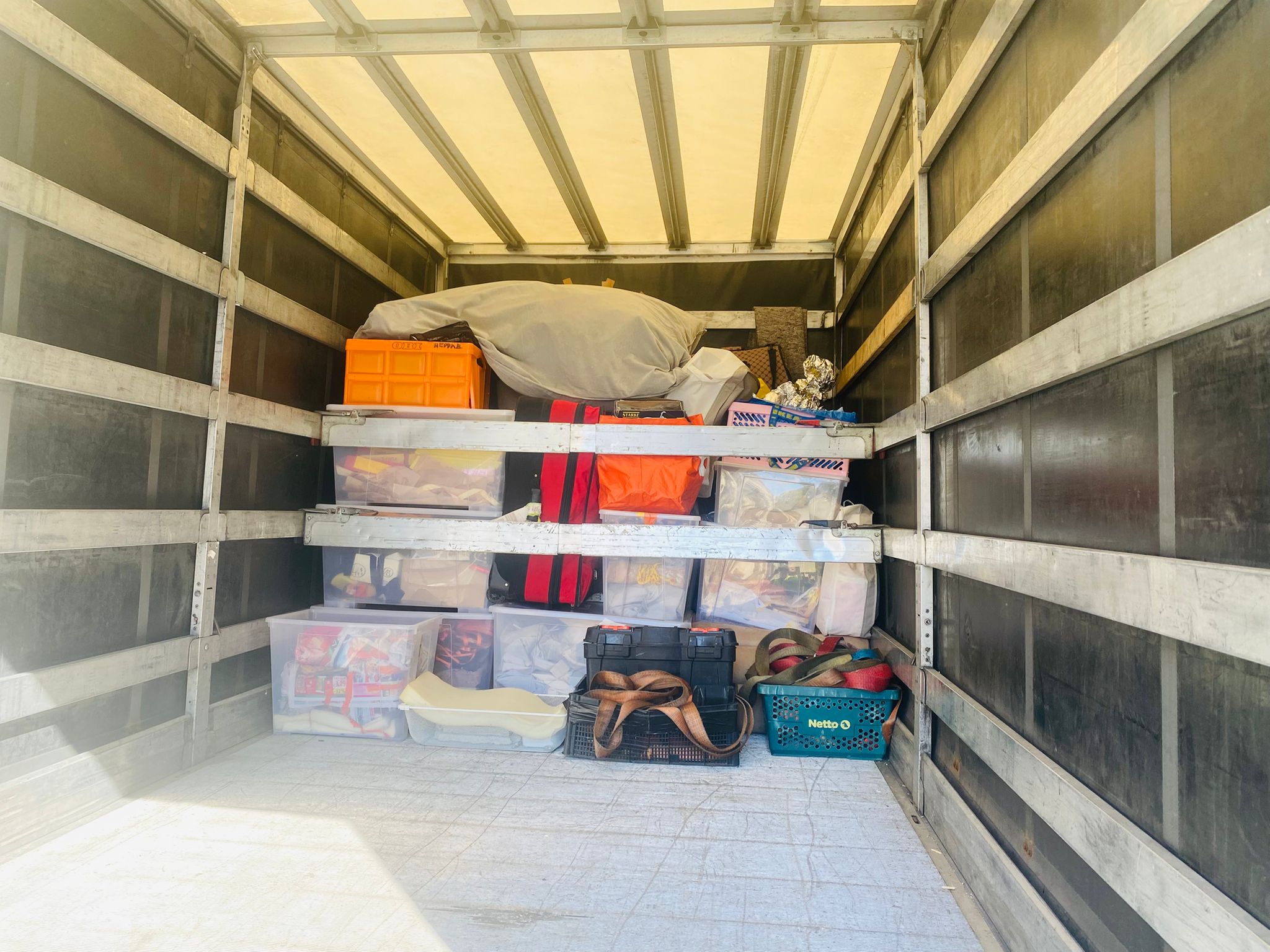
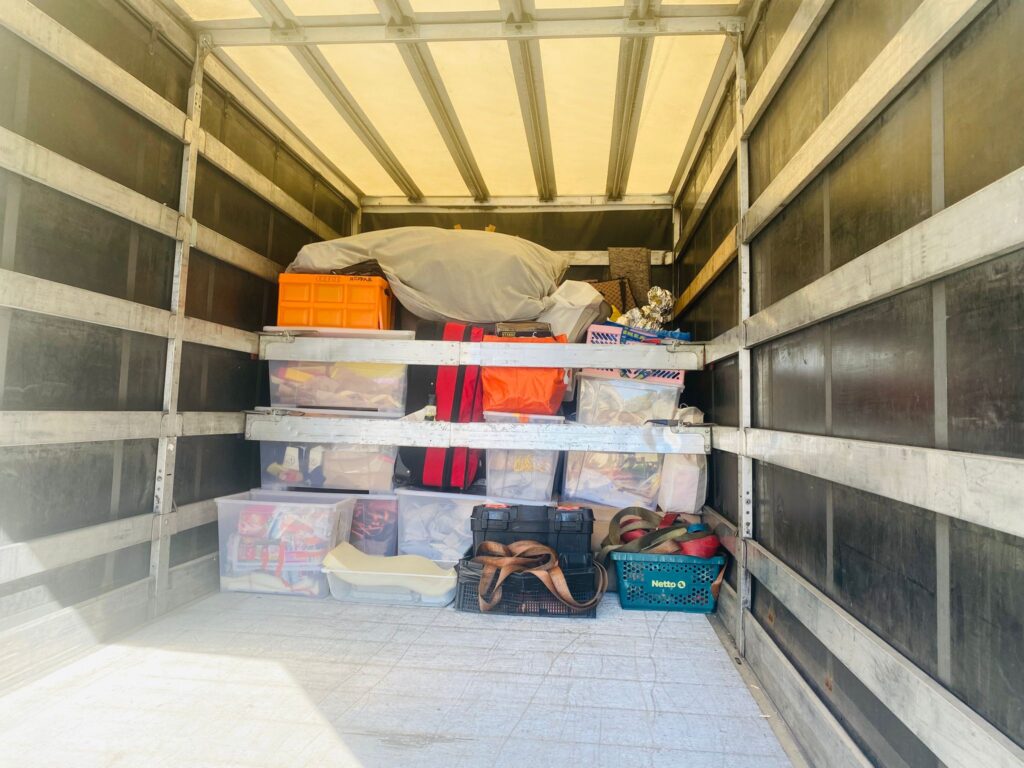
For the move itself, however, transport is a different matter. Self driving a loaded rental van into Switzerland can be stressful, especially with customs requirements and strict timing. A professional man and van service such as VANonsite can be a safer choice when furniture, fragile items or family belongings are involved.
Health Insurance in Bern
Health insurance is mandatory in Switzerland. It is also one of the most important fixed costs to include in your monthly plan. The Federal Office of Public Health states that the average Swiss health insurance premium in 2026 is CHF 393.30 per month.
For Bern, your exact premium depends on your age, postcode, deductible, insurance model and provider. A single adult should often budget around CHF 390 to CHF 500 per month for compulsory basic insurance. Some people will pay less, while others will pay more.
Several factors influence your health insurance cost:
- Age
- Canton and municipality
- Deductible level
- Standard, family doctor, HMO or telemedicine model
- Accident coverage
- Provider choice
- Supplementary insurance
- Number of family members
Families should treat health insurance as a serious budget pillar. Children need coverage too, although premiums are lower than for adults. When you calculate the living cost in Bern Switzerland for a family, do not simply multiply food and rent. Insurance can become one of the largest recurring expenses.
Utilities, Internet and Phone Costs
Utilities in Bern are usually predictable, but they depend on apartment size, building age, heating system and energy efficiency. Some rental prices include certain building charges. Others do not. Always check this before signing a lease.
| Expense | Small apartment | Family apartment |
|---|---|---|
| Electricity, heating and basic utilities | CHF 120 to CHF 250 | CHF 250 to CHF 450 |
| Internet | CHF 45 to CHF 80 | CHF 45 to CHF 100 |
| Mobile phone | CHF 20 to CHF 70 | CHF 80 to CHF 200 |
| Household insurance | CHF 20 to CHF 60 | CHF 40 to CHF 100 |
A newer apartment may cost more in rent but less in heating. An older apartment may look cheaper until winter bills arrive. That is why the cost of living in Bern Switzerland should be calculated as a full monthly picture, not only as rent.
Internet and mobile costs can be controlled. Compare contracts before signing. Newcomers often overpay because they want to settle quickly. A little patience can save money every month.
Eating Out, Leisure and Lifestyle Costs
Bern is not only about bills. It is a beautiful place to live. You can walk under historic arcades, swim in the Aare, visit museums, cycle through calm neighbourhoods and take quick train trips into the mountains.
Still, leisure spending can rise quickly. A few restaurant meals, café stops, gym membership and weekend trips can add CHF 400 to CHF 1,000 per month to your budget.
| Lifestyle item | Estimated cost |
|---|---|
| Casual lunch | CHF 18 to CHF 30 |
| Coffee | CHF 4.50 to CHF 6.50 |
| Dinner for two | CHF 90 to CHF 160 |
| Gym membership | CHF 60 to CHF 120 monthly |
| Cinema ticket | CHF 18 to CHF 25 |
| Weekend trip | CHF 100 to CHF 400 |
A single professional can live well with a leisure budget of CHF 300 to CHF 700 per month. If you ski, travel often, eat out frequently or choose premium fitness clubs, plan higher. Switzerland offers unforgettable experiences, but they rarely come cheaply.
Family Living Costs in Bern
For families, the living cost in Bern Switzerland is shaped by space, childcare and routine. The city is safe, clean and excellent for children, but the numbers need attention.
Families often need:
- A larger apartment
- Higher rental deposit
- Health insurance for every family member
- Childcare or after school care
- Winter clothing
- Sports equipment
- Public transport passes
- More furniture and household goods
- A larger moving vehicle
Childcare can be one of the most challenging costs, especially for younger children. Fees vary depending on income, provider, hours and subsidies. If both parents work full time, childcare should be researched before arrival.
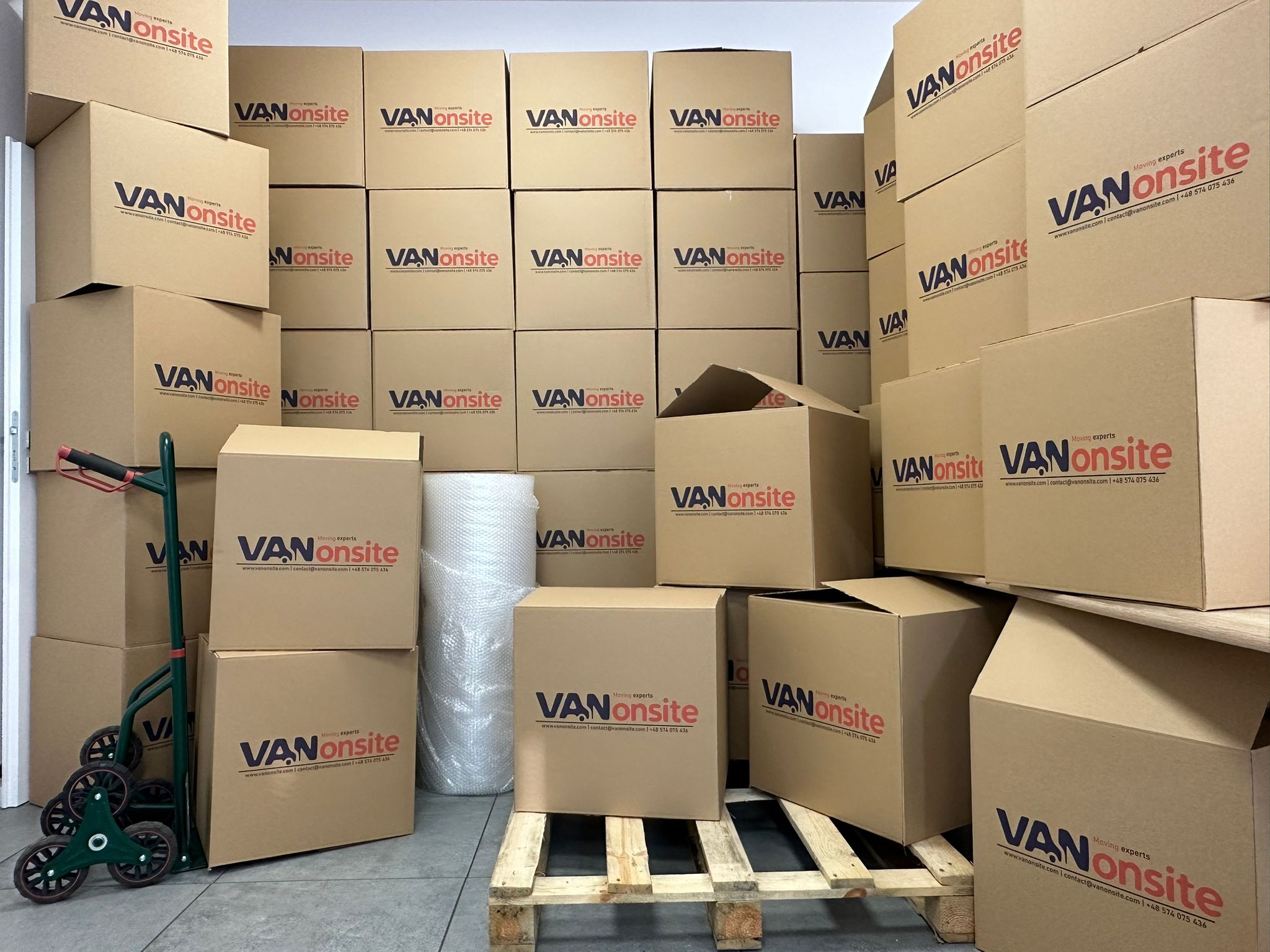
This is also where the moving plan becomes important. A family relocation rarely fits into a tiny van. VANonsite offers several vehicle sizes, from Moving One at 1m³ and 100kg to Moving Full House XXL at 90m³ and 20,000kg. A larger and better organised move can save time, reduce damage risk and help the family settle faster.
Student Living Cost in Bern Switzerland
Students can reduce the living cost in Bern Switzerland by sharing accommodation, using public transport carefully and moving only essential belongings. Even then, Bern is still a Swiss city. It requires discipline and a realistic budget.
| Student expense | Monthly estimate |
|---|---|
| Shared room | CHF 700 to CHF 1,200 |
| Food | CHF 350 to CHF 550 |
| Health insurance | CHF 250 to CHF 450 |
| Transport | CHF 62 to CHF 82 |
| Study and personal costs | CHF 250 to CHF 500 |
| Total | CHF 1,900 to CHF 2,800 |
Students should avoid bringing too much. A few boxes, a bike, clothes, books, a monitor and personal items may be enough for the first year. A small man and van move can be more convenient than sending many separate parcels, especially when moving from another European country.
VANonsite can support student removals with smaller capacity options, including Moving One at 1m³ and Moving Basic at 5m³. This helps students avoid paying for more space than they need.
First Month Costs When Moving to Bern
The first month is usually the most expensive. Many newcomers underestimate it. They calculate monthly life, but forget the arrival shock.
You may need to pay rent, deposit, hotel nights, transport, insurance, registration, packing materials and basic furniture purchases almost at the same time. This is why a relocation buffer is essential.
| One time cost | Planning estimate |
|---|---|
| Rental deposit | 1 to 3 months of rent |
| First month rent | CHF 1,500 to CHF 4,500 plus |
| Temporary accommodation | CHF 100 to CHF 250 per night |
| Moving service | Depends on route and volume |
| Packing materials | CHF 80 to CHF 400 |
| Registration and admin costs | Varies by commune |
| Emergency buffer | CHF 1,000 to CHF 3,000 |
A safe first month budget can easily be 3 to 5 times your normal monthly rent. This does not mean Bern is impossible. It means the move should be treated like a project.
The living cost in Bern Switzerland becomes easier to manage when your transport is predictable. VANonsite provides GPS tracking for every load, which helps customers follow their belongings during the journey. That visibility matters when your life is packed into boxes and crossing borders.
VANonsite Vehicle Options for Moving to Bern
Different moves need different vehicles. A student with 12 boxes does not need the same space as a family moving a full home. Choosing the right capacity helps control the relocation cost and avoids paying for unused space.
| VANonsite option | Capacity | Best for |
|---|---|---|
| Moving One | 1m³, 100kg | Documents, suitcases, small student items |
| Moving Basic | 5m³, 300kg | Boxes, small furniture, room move |
| Moving Medium | 10m³, 500kg | Studio or compact apartment |
| Moving Premium | 15m³, 1,100kg | 1 to 2 bedroom relocation |
| Moving Premium Plus | 30m³, 3,500kg | Family apartment or larger move |
| Moving Full House XXL | 90m³, 20,000kg | Full house or complex relocation |
VANonsite is suitable for people who want a reliable man and van solution with professional handling. The company also offers Last Minute Moving, Furniture Removals, Home Removals, Packing Service, White Glove Delivery, Office Removals, Storage, Student Removals and Office Furniture Installation.
If you are moving valuable furniture, fragile items, office equipment or family belongings, professional packing can be worth the extra cost. Damage is expensive. Stress is expensive too. A well packed move protects both your budget and your peace of mind.
Required Documents When Moving to Bern Switzerland
A move to Switzerland requires more than a packed van. Documentation depends on nationality, length of stay, employment situation and family status. Official information about residence, registration and permits is available through the Swiss government portal ch.ch and the State Secretariat for Migration at sem.admin.ch.
Common documents may include:
- Valid passport or national ID
- Employment contract or proof of income
- Rental agreement or accommodation confirmation
- Health insurance confirmation
- Marriage certificate, if moving with a spouse
- Birth certificates, if moving with children
- School or university documents
- Inventory list for household goods
- Customs declaration for personal belongings
- Vehicle documents, if importing a car
- Pet passport and vaccination records, if moving with animals
After arrival, residents are generally expected to register with their new commune within 14 days of moving. Do not leave this until later. Registration can affect permits, insurance, employment administration and practical settlement. Switzerland rewards people who handle paperwork early.
Customs Rules for Household Goods
Customs is one of the most important parts of moving to Bern. The Federal Office for Customs and Border Security explains rules for importing household effects into Switzerland at bazg.admin.ch. In many cases, personal household goods can be imported when you transfer your residence to Switzerland, but documentation must be correct.
Prepare before loading day. A clear inventory list can save time and prevent confusion at the border.
Useful customs checklist:
- Prepare a detailed inventory of boxes and furniture.
- Keep personal goods separate from commercial goods.
- Do not hide restricted or questionable items.
- Label boxes clearly.
- Keep rental, work and residence documents accessible.
- Prepare required customs forms where applicable.
- Tell your mover if you have follow up shipments.
- Check vehicle and pet rules separately.
A professional man and van company with European relocation experience can make this process smoother. VANonsite helps customers organise transport, loading and delivery in a way that supports a cleaner move into Switzerland.
Living Cost in Bern Switzerland Compared With Zurich and Geneva
The living cost in Bern Switzerland is high, but Bern often feels more balanced than Zurich or Geneva. Zurich is sharper, faster and highly business driven. Geneva is international, diplomatic and often expensive in the premium rental market. Bern has a softer rhythm.
| City | Cost feeling | Best for |
|---|---|---|
| Bern | High but balanced | Families, professionals, government, calm city life |
| Zurich | Very high | Finance, technology, international careers |
| Geneva | Very high | NGOs, diplomacy, luxury lifestyle |
| Lausanne | High | Students, French speaking professionals |
| Basel | High | Pharma, cross border professionals |
Bern may not offer the largest job market in Switzerland, but it offers dignity, safety and comfort. The quality of life per franc can be strong for people who value nature, order, public transport and a slower pace.
This matters when choosing where to relocate. A slightly higher salary in another city does not always mean a better life. Commute time, rent, stress and lifestyle costs can change the whole equation.


How to Reduce the Cost of Living in Bern Switzerland
The best way to reduce the living cost in Bern Switzerland is not to become miserly. It is to remove waste. Smart choices can cut 10% to 25% from monthly spending without making life feel small.
Practical ways to save:
- Rent near public transport instead of paying extra for the centre.
- Compare health insurance every year.
- Choose the right insurance model for your health needs.
- Cook most weekday meals at home.
- Buy a monthly or annual transport pass if commuting often.
- Avoid owning a car unless you truly need it.
- Use second hand furniture for the first apartment.
- Bring essential furniture from home if transport costs make sense.
- Choose the right van size for your move.
- Keep a first month buffer of at least CHF 2,000.
- Avoid rushed rental decisions.
- Use professional packing for fragile or high value items.
Moving costs can also be reduced by planning early. Last minute decisions are often expensive. However, if your move is urgent, VANonsite also offers Last Minute Moving support, which can be useful when plans change suddenly.
Best Areas to Live in Bern for Different Budgets
Bern is compact, so you do not always need the most central address. The right neighbourhood can lower rent while keeping your commute comfortable.
| Area type | Best for | Budget impact |
|---|---|---|
| Old Town and central Bern | City lovers and professionals | Highest |
| Near main station | Commuters | High |
| Family suburbs | Families and long term residents | Medium to high |
| Outer districts | Budget conscious renters | More affordable |
| Nearby towns | Larger homes and commuters | Often better value |
New arrivals often make one mistake: they try to find the perfect permanent home immediately. A smarter approach is to rent something practical first, learn the city, then choose a long term home after 6 to 12 months.
This can protect your budget. It can also protect your sanity. Bern is easy to love, but every neighbourhood has its own rhythm.
Is Bern Worth the Cost?
Bern is expensive, but it is not empty luxury. It gives something back. The city feels safe, grounded and quietly beautiful. There is a rare pleasure in walking home along the Aare, hearing trams in the distance and seeing the Alps appear on a clear day.
The living cost in Bern Switzerland makes sense for people who value stability, clean infrastructure, public transport, nature and family life. It may feel too expensive for people who want low rent, cheap restaurants and a fast nightlife scene.
Main advantages:
- Very safe environment
- Excellent public transport
- Strong Swiss salaries
- Beautiful Old Town
- Easy access to nature
- Calm lifestyle
- Good schools and healthcare
- High quality housing standards
Main disadvantages:
- High rent
- Mandatory health insurance
- Expensive groceries
- Costly eating out
- Competitive housing market
- Strict paperwork
- Large first month costs
In simple terms, Bern is not the cheapest choice. It is a premium choice. For the right person, the value is real.
Why Move to Bern With VANonsite?
A move to Bern is not just a transport job. It is a border crossing, a documentation task, a timing challenge and an emotional transition. Your belongings need to arrive safely, but you also need the process to feel controlled.
VANonsite helps customers move across Europe with reliable man and van transport, GPS tracking and flexible vehicle sizes. Whether you are moving a few boxes, a student room, a family apartment, office furniture or a full house, the service can be matched to the scale of the move.
Key VANonsite benefits include:
- GPS tracking for every load
- European removals to Switzerland
- Flexible vehicle sizes from 1m³ to 90m³
- Packing services for fragile items
- Furniture removals
- Home removals
- Office removals
- White Glove Delivery for premium items
- Student removals
- Last Minute Moving
- Storage options
- Office Furniture Installation
The living cost in Bern Switzerland is already a serious financial decision. Your relocation should not add chaos. With professional transport, careful planning and clear communication, the first stage of your Swiss life can feel smoother from day one.
Start here: Removals to Switzerland.
FAQ About Living Cost in Bern Switzerland
What is the average living cost in Bern Switzerland for one person?
A single person should usually plan around CHF 3,100 to CHF 4,300 per month when rent, food, health insurance, transport, utilities and basic lifestyle costs are included. Shared accommodation can reduce the total significantly.
Is Bern cheaper than Zurich?
Bern is often more balanced than Zurich, especially for people who choose housing carefully and do not need a car. Zurich can offer higher salaries in some sectors, but rent and lifestyle costs are often heavier.
How much rent should I expect in Bern?
A room in a shared apartment may cost CHF 750 to CHF 1,300 per month. A studio can cost CHF 1,200 to CHF 1,900, while a 1 bedroom apartment may sit around CHF 1,600 to CHF 2,500. Family apartments are often above CHF 3,000.
Is health insurance mandatory in Bern?
Yes. Health insurance is mandatory in Switzerland. The average Swiss premium in 2026 is CHF 393.30 per month, according to the Federal Office of Public Health.
Can I live in Bern without a car?
Yes. Many residents live comfortably without a car. Bern has strong tram, bus and train connections, and a monthly public transport pass can be far cheaper than car ownership.
What documents do I need when moving to Bern?
You usually need ID, proof of employment or income, rental confirmation, health insurance details, registration documents and customs paperwork for household goods. Requirements depend on nationality and personal situation.
How soon do I need to register after moving to Bern?
In general, new residents are expected to register with their commune within 14 days of moving. It is best to confirm the exact local process before arrival.
Can VANonsite help with a move to Bern?
Yes. VANonsite supports removals to Switzerland with man and van transport, GPS tracking, packing services, furniture removals, home removals, student removals, office removals and flexible vehicle options from 1m³ to 90m³.
Final Thoughts: Plan the Budget, Then Plan the Move
The living cost in Bern Switzerland is high, but it can be managed with clear planning. Rent, health insurance and food are the biggest monthly costs. Public transport helps reduce car dependency, while careful housing choices can protect your budget for years.
Before you move, prepare your first month budget, check registration rules, organise customs documents and choose the right transport option. A professional move can prevent avoidable damage, delays and stress.
If Bern is your next chapter, make the journey there feel calm, secure and well organised. VANonsite offers trusted removals to Switzerland with GPS tracking, flexible van sizes and professional European relocation support.
Get started here: Removals to Switzerland.