
Removals to Germany from the UK work best when the transport plan, customs evidence and access at both properties are built from the same confirmed inventory. VANonsite plans the move around the real collection and delivery addresses, item dimensions, preferred dates and the way each property can be reached. That produces a useful service scope instead of a headline price based only on the number of bedrooms.
This guide is for household moves from England, Scotland or Wales to Germany. Northern Ireland has a different customs context, so the departure country must be confirmed before the document workflow is agreed. Use the automatic calculator below for an immediate starting estimate. Then send photographs, the inventory and access details so VANonsite can check vehicle capacity, route and responsibilities before booking.

What makes a UK to Germany removal quote accurate?
| Planning input | What to send | What it decides |
|---|---|---|
| Addresses | Full collection and delivery addresses | Road route, crossing and final access |
| Inventory | Numbered boxes, furniture, appliances, dimensions and photos | Capacity, payload, protection and loading order |
| Dates | Preferred date, hard deadline and genuine flexibility | Part-load, dedicated or urgent feasibility |
| Access | Parking, floor, lift, stairs, carrying distance and restrictions | Vehicle choice, crew time and handling equipment |
| Goods status | Used household effects, recent purchases, business or controlled items | Document and customs questions |
| Service scope | Packing, dismantling, storage and room placement | Work included in the written proposal |
Two moves from a two-bedroom flat can require completely different capacity. Books, tools, wardrobes and appliances use space and payload differently from cartons of clothing. Garages, lofts, balconies and storage units are frequent sources of late additions. VANonsite therefore works from one dated inventory version that can be reconciled at quotation, collection and delivery.
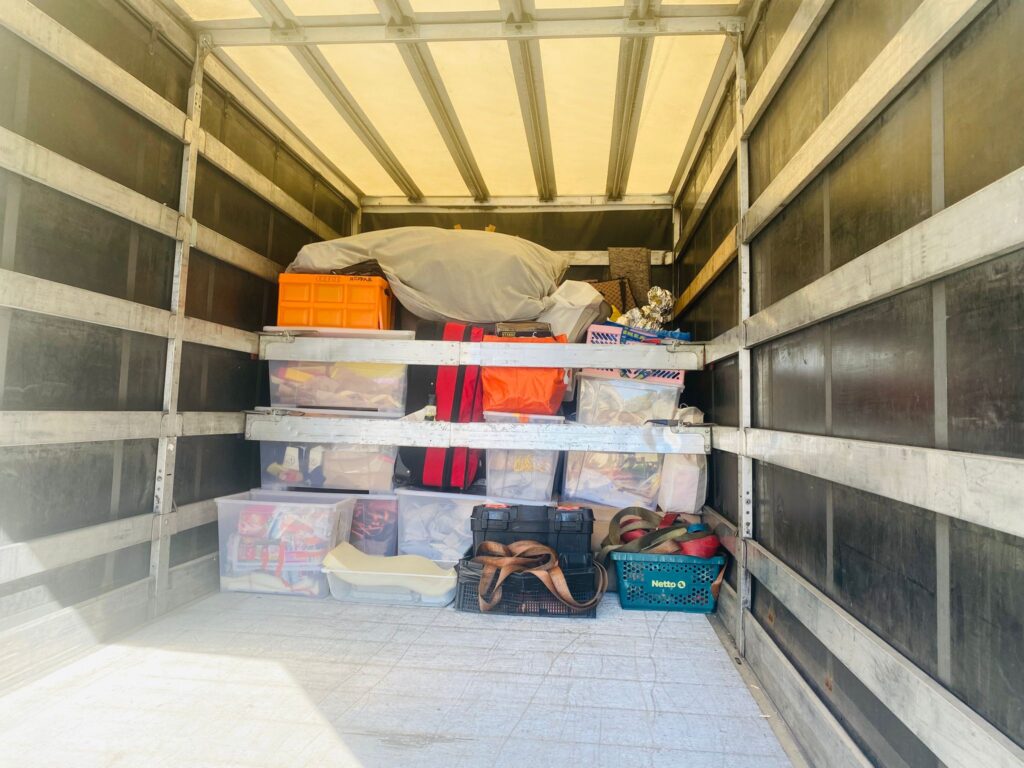
Part-load or dedicated removals to Germany?
A part-load uses compatible space on a coordinated European route. It can be a sensible fit for boxes, selected furniture, a smaller flat or a staged relocation when the dates allow a collection and delivery window. The consignment is still inventoried and protected separately. Sharing vehicle capacity does not remove the need for clear ownership, customs evidence or a reliable handover.
Dedicated transport reserves capacity around one move and gives the route fewer dependencies on other collections. It may be the better operational choice when a tenancy ends, keys change hands, work starts on a fixed date or a full household must travel together. VANonsite compares both formats against the actual load and deadline. Customers with a flexible smaller consignment can review the dedicated part-load removals to Germany service before choosing.
Customs after Brexit: plan the evidence before collection
A commercial household removal from Great Britain enters the EU customs territory. German Customs explains that personal property and household effects may qualify for import-duty relief when a person transfers their normal place of residence, but relief is conditional. It is not automatic simply because the belongings are used or transported by a removals company.
The current German Customs transfer-of-residence guidance describes eligibility conditions, excluded goods and the time limits that can apply. It states, among other conditions, that the former residence is normally outside the EU for at least twelve months and that non-consumable goods are generally possessed and used for at least six months before the move. Separate consignments can be possible within the stated import period. The authority or appointed representative decides how the current rules apply to an individual case.
HMRC’s customs declaration checker helps identify whether goods leaving the UK need a declaration, while the personal-goods declaration guidance distinguishes personal from commercial goods and points to additional restrictions. VANonsite defines the transport information and agreed support; the proposal should also name who supplies evidence, who submits each declaration and who answers customs questions.
Build one customs-ready inventory
- Give every carton a unique number and destination room.
- Describe contents accurately instead of using only “miscellaneous”.
- List furniture, appliances, bicycles and other large pieces separately.
- Identify recent purchases, alcohol, tobacco, business equipment and controlled goods for review.
- Record serial numbers or photographs where they help prove identity or condition.
- Link labelled fittings and hardware to the dismantled item they belong to.
- Freeze the final version before loading and record any authorised change.
Supporting documents depend on the customer and procedure. They may include identification, evidence of the former UK residence, proof of taking up residence in Germany, ownership or prior-use evidence and the relevant transport papers. Do not work from a copied checklist whose source or date is unknown. If the move includes unusual or high-value goods, raise them early through VANonsite’s customs-clearance support.
Route planning is more than driving time
The physical journey can combine a UK collection, a Channel crossing, transit through another country and delivery in Germany. The workable option depends on the complete addresses, vehicle, crossing availability, legal driving schedule and destination access. A route to Cologne is not the same operation as a delivery to Berlin, Munich or a rural address near the Austrian border.
A quoted service window should cover the connected chain, not just road distance from a map. A delayed key handover, missed loading slot or unresolved document can affect the crossing and delivery plan. VANonsite confirms the route after the load and addresses are known, then keeps the collection and receiving contacts aligned with the agreed window.
Collection access in the UK
London, Manchester, Birmingham and a rural Scottish collection create different working conditions. A postcode does not reveal whether a legal loading place exists, how far the team must carry the goods or whether a wardrobe will turn on the stairs. Provide the floor, lift size, stair shape, doorway width, parking restrictions and walking distance. Photographs or a short video can resolve uncertainty before the vehicle arrives.
If a concierge or building manager controls the lift or loading bay, reserve the slot before the service is finalised. Tell VANonsite about low bridges, gated roads or weight restrictions on the approach. These details influence the usable vehicle and loading sequence; discovering them on collection day can affect the rest of the route.
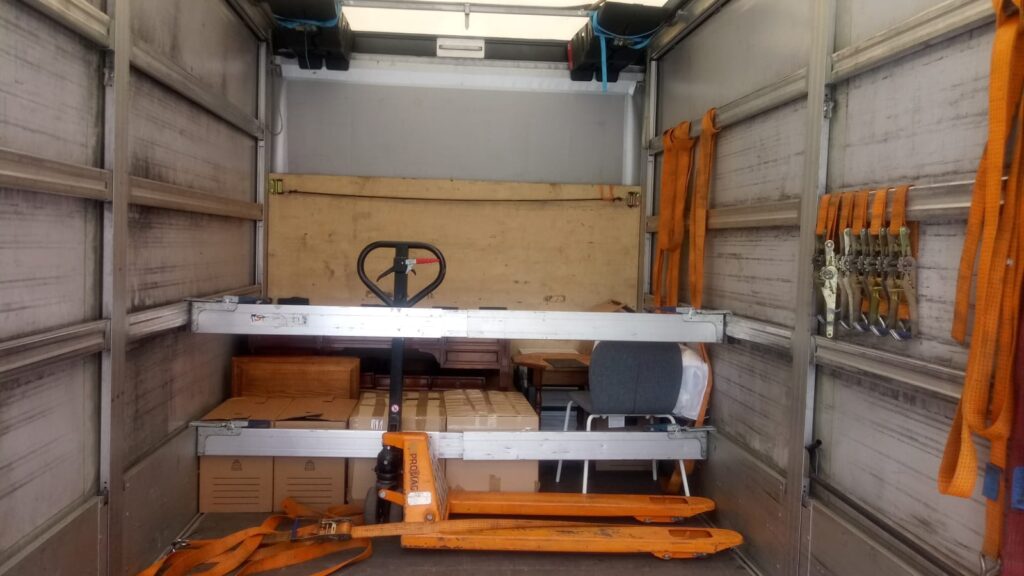
Delivery access in Germany
German city-centre deliveries can involve limited loading space, pedestrian areas, environmental zones or building rules. Rural properties can have narrow approaches, height limits or nowhere for a long vehicle to turn. Requirements differ by municipality and address, so the customer or property manager should verify the current local rules rather than assume that one permit works everywhere.
Confirm the legal stopping point, gate and doorway dimensions, carry distance, floor, lift and any booked loading period. If the primary vehicle cannot reach the door, a smaller transfer vehicle or extra handling may need to be planned. The receiving person should have keys, the inventory and authority to sign the handover.
Furniture, fragile items and dismantling
Furniture protection should follow the material and handling stages. Upholstery, polished timber, glass, stone, artwork and electronics do not need the same preparation. State which pieces must be dismantled, who performs the work and whether reassembly at the German address is included. Label fittings and photograph complex assemblies before they are separated.
For a consignment centred on sofas, wardrobes, tables or selected household pieces, use the focused furniture removals to Germany guidance. Customers who want VANonsite to supply materials or prepare the load can add professional packing services. The written scope should list the rooms and items covered rather than use the ambiguous phrase “full packing”.
What changes the cost of removals to Germany?
- Occupied volume and payload: the final goods determine usable capacity.
- Complete route: both addresses affect mileage, crossing and delivery access.
- Service format: shared capacity and a dedicated vehicle use different schedules.
- Handling: stairs, lifts, long carries and difficult pieces change the labour plan.
- Packing and assembly: materials and work must be stated item by item.
- Customs scope: document readiness and appointed responsibilities affect preparation.
- Timing: a flexible window creates different options from a fixed completion deadline.
A responsible quote needs more than two city names. Start with the calculator, then replace estimates with measurements and access evidence. If cost is the main decision, the focused UK to Germany removal price guide explains how to compare scope without treating an incomplete headline figure as the final price.
How to compare removal companies for Germany
| Question to ask | What it tests |
|---|---|
| Which inventory version is priced? | Whether capacity is based on the same load |
| Is the vehicle shared or dedicated? | How route and dates are organised |
| Which access assumptions are included? | Whether labour matches both properties |
| Who packs, dismantles and reassembles? | Where handling responsibility changes |
| Who completes each customs action? | Whether the border workflow has an owner |
| Is delivery a date or a range? | What the customer can safely coordinate |
| How are additions handled? | Whether the proposal survives a realistic change |
Compare like with like before comparing totals. A low figure may exclude packing, stairs, waiting, difficult access or customs support. VANonsite’s broader removals to Germany hub connects the route with the available service types. A full household can also use the detailed house removals to Germany guide.
The VANonsite route-control process
- Estimate: enter the complete addresses, date and contact details.
- Measure: provide the inventory, dimensions and photographs.
- Check access: document parking, carries, stairs, lifts and restrictions.
- Select capacity: compare workable part-load and dedicated options.
- Assign customs tasks: identify the documents and the person responsible for each action.
- Confirm scope: review packing, collection, crossing, delivery and change rules.
- Reconcile: check the numbered inventory at handover in Germany.
This sequence connects sales, transport and delivery to one evidence set. It also gives the customer clear decision points. VANonsite does not need to promise that every move is identical; its specialist value is in identifying the constraints early and designing the right operation around them.
Can VANonsite deliver in 1-3 days?
VANonsite’s Last-Minute Moving service can sometimes support delivery in 1-3 days. This depends on vehicle availability, the route and crossing, access at both properties, customs-document readiness and the agreed collection slot. It is not a universal transit-time guarantee and is not the standard timetable for every part-load or Germany removal.
For an urgent assessment, send the final inventory and both complete addresses immediately. State the hard deadline and identify any missing documents. VANonsite can then check whether dedicated urgent transport or another available format fits the real constraints without skipping protection, customs or access planning.
Frequently asked questions
Do removals from the UK to Germany require customs documents?
A commercial household removal from Great Britain enters the EU customs territory. The exact declaration, evidence and potential transfer-of-residence relief depend on the customer and goods. Confirm the procedure and responsible parties before collection.
Can I move only furniture or a few boxes?
Yes, subject to the inventory, route and available capacity. A measured smaller consignment may suit part-load transport or a compact dedicated vehicle. Dimensions and photographs help prevent a small move from being priced on the wrong space assumption.
Is part-load always the cheapest service?
No. Shared capacity can be efficient when the load and dates fit an available route, but the overall decision also depends on handling, deadline, access and any storage. Compare part-load and dedicated transport using the same final inventory.
How do I receive a reliable written quote?
Use the calculator, then send the complete addresses, preferred date, numbered inventory, photographs, furniture dimensions and access information. Identify fragile, heavy, recent-purchase or unusual goods and state any fixed deadline before the service is selected.
Calculate your removal to Germany
Use the calculator near the top for an immediate starting estimate. Follow with the final inventory, photographs and access details. VANonsite can then recommend a route-specific service, define the work included and identify any remaining customs or handling information before booking.